




Abstract
The frequency, intensity and variability of emotional experiences increase in early adolescence, which may be partly due to adolescents’ heightened affective sensitivity to social stimuli. While this increased variability is likely intrinsic to adolescent development, greater mood variability is nevertheless associated with the risk of internalising psychopathology. Early adolescents (N = 58, ages 13–14) reported their social context and mood when prompted by a smartphone application. Valence, arousal, and their variability were compared across social contexts using multilevel regression models. Social contexts were defined by the presence of close others, peripheral others, both, or neither. Arousal was lower when alone. Valence was lower and more variable, and arousal was more variable when alone than in either close or peripheral company. This is the first time that level and variability of valence and arousal in adolescent affect have been shown systematically to differ for the same individual in different daily-life social contexts.
Introduction
Adolescence is a developmental transition period involving physical and mental changes that facilitate the adoption of increasingly adult-like social roles and behaviours. One particularly important change is the increased motivational and affective salience of social stimuli (Crone & Dahl, 2012; Forbes & Dahl, 2010; Foulkes & Blakemore, 2016). Concurrently, the importance of peers in the adolescent’s social landscape begins to overtake that of their family (Masten et al., 2009; Nelson et al., 2005; Saxbe et al., 2015). This social reorientation facilitates greater independence from family, but also entails some degree of dependence on, and interdependence with, friends (Steinberg & Silverberg, 1986; Weeks & Pasupathi, 2010). This brings with it a greater need for cognitive flexibility to allow the adolescent to adapt their behaviour to a wider diversity of social contexts with increasingly distinct group norms (Crone & Dahl, 2012). At the same time, the onset of adolescence is accompanied by an increase in the frequency of negative affect, and the intensity and variability of affective experiences (Bailen et al., 2019). Adolescent affect differs from adulthood affect similarly to these differences from preadolescent childhood, with adolescents experiencing more frequent high-intensity (positive and negative) affect than adults, and more variable affect than adults (Larson et al., 1980; Larson & Richards, 1994; see also; Maciejewski et al., 2015). Additionally, adolescents’ positive affect becomes less frequent and intense, and negative emotions become more frequent, with age (Larson et al., 2002). Similarly, as pubertal development progresses, the rate at which adolescents report sadness or irritability increases, while excitement decreases (Meininger et al., 2004). While the exact mechanisms remain unknown, these affective changes may be partly driven by the adolescent-onset of heightened reward value of social inclusion and acceptance enabling even very small, perhaps trivial social interactions to produce large affective responses, such as a ‘mood-swing’ (Nelson et al., 2005; Silvers et al., 2012). The present study, therefore, sought to explore how adolescents’ day-to-day affective experiences differed between social contexts.
The circumplex model of affect represents emotional states in two perpendicular dimensions; valence and arousal – i.e., the hedonic quality or (un)pleasantness of an emotional state and the degree of alertness or subjective activation produced by an emotional state, respectively (Gurtman & Pincus, 2003; Posner et al., 2005). Together, valence and arousal are sometimes called ‘core affect’, because of their ability to summarise the raw, pre-attributional feelings at the ‘core’ of a particular affective state or (post-attribution, an) emotion (Posner et al., 2005; Russell, 2003). It is also common, however, for operationalisations of affect to use two unipolar scales for valence; positive affect and negative affect (see Larsen et al., 2007). Nevertheless, if the arousal dimension is included in the circumplex, the unidimensional bipolar valence scale fits ratings of emotion-words equally well (Rubin & Talarico, 2009). Moreover, collapsing the multiple dimensions of (say) fear, anger and sadness into a unipolar negative affectivity dimension entails loss of information, including, crucially, arousal. We therefore use the circumplex here because we are interested in the arousal dimension in addition to valence.
Experimental evidence suggests that adolescents who experience high arousal in social situations have worse psychosocial functioning and more internalising symptoms (Szollos et al., 2019) and that individual adolescents are less able to cope with social stress and show more externalising behaviours, when their arousal is higher (Feagans Gould et al., 2008). Similarly, affective variability is also associated with psychosocial health, with greater variability predicting more internalising problems and aggression (Neumann et al., 2011; Schneiders et al., 2006).
Studies of affect dynamics (such as variability) often use ecological momentary assessment (EMA). In EMA studies, participants are asked to carry a device that periodically instructs them to answer questions about their current mental state. This approach minimizes recall and response bias, has high ecological validity, and measurements can be made several times per day, for several consecutive days, without imposing an excessive participation burden. (Heron et al., 2017; van Roekel et al., 2019).
Numerous studies have investigated how individuals’ affective dynamics are related to their attributes, such as psychopathology (see Bailen et al., 2019; and Reitsema et al., 2021 for reviews). A recent meta-analysis of 102 studies of affective dynamics in children and adolescents found that adolescents with internalising disorders experienced more anxiety and less intense positive emotions than their typical peers (Reitsema et al., 2021). The same study also found greater variability in the positive affectivity and sadness reported by children and adolescents with internalising disorders than their typical peers, and externalising disorders were also associated with more variable sadness. However, comparatively few adolescent affective dynamics studies have investigated their associations with social contexts within-subjects. Of those few studies, most defined contexts in relation to the social reorientation hypothesis, contrasting family with peers. For example, a study of socioeconomically disadvantaged adolescents found reduced negative affect following minor stressors when in the company of peers or, to a lesser extent, family (Uink et al., 2017). Another study found that in both depressed and control seven-to-seventeen-year-olds, negative affect was greatest when alone, lower with family, and lowest with peers, and that level and variability of negative affect was higher in the depressed group (Silk et al., 2011). Several other studies focussed on loneliness; one such study found that state loneliness was higher when alone, and showed a relief effect when moving into the company of friends, but a spill-over effect when moving into the company of family (van Roekel et al., 2015). Furthermore, trait loneliness and depressive symptoms have each been associated with both state loneliness and emotional reactivity to (i.e., the magnitude of the change in emotional state immediately following) perceived social inclusion and exclusion (Ha et al., 2019; van Roekel et al., 2016, 2018). One study that did not emphasise social reorientation instead compared the company of close (i.e., family and friends) to peripheral (e.g., acquaintances) others (Lennarz et al., 2016). That study found that anxious-depressive emotions in thirteen-to-sixteen-year-olds were lower in the presence of a close other, but did not differ between the adolescent being alone or with peripheral company. These findings were interpreted as reflecting the importance of social support in coping, and as evidence that, within a close relationship, even entirely passive social support (i.e., ‘supportive presence’) aids emotion regulation (Beckes & Coan, 2011; Coan, 2008; Coan et al., 2006).
Taken together, this wealth of knowledge generated by EMA studies provides an empirical basis for piecing together a picture of adolescents’ emotional landscapes. For adolescents, social acceptance, inclusion, rejection and exclusion are powerful, highly salient motivators, toward which their attention and emotion are readily drawn. This may make social situations intensely rewarding, threatening, or both, depending on who else is present, their social position (in terms of social status and the availability of supportive relationships), and individual differences in coping or social competence (for example).
Nevertheless, EMA studies of adolescent affective dynamics typically focus on positive and negative affect (i.e., two orthogonal unipolar scales rather than one bipolar valence scale) and do not include an arousal dimension. Only two studies identified in Reitsema and colleagues’ meta-analysis (2021; see their supplementary table S3) included measures of arousal in an adolescent sample. One study reported that adolescents’ arousal and valence rise across the morning, and fall across the late afternoon and evening, (Barber et al., 1998). The other study found that low-arousal positive-valence mood is associated with higher self-efficacy for abstinence from cigarettes in late-teenage smokers seeking to quit (Hoeppner et al., 2014). However, neither of these studies analysed variability, nor did they compare social contexts. To our knowledge, therefore, no study has yet included an arousal dimension in an investigation of the associations between adolescent affective dynamics and social contexts that occur in their daily lives.
The present study, therefore, used EMA to investigate associations of social context with the level and within-person variability of valence and arousal in the everyday mood of young adolescents (age range: 12.5–14.0 years). We compared these variables between contexts in which the adolescent was in physical space with close (i.e., friends, partners and family) or peripheral (i.e., classmates and acquaintances) company, both (hereafter ‘mixed company’), or neither (i.e., alone). Given the importance of social media and other forms of remote contact for adolescents, we also investigated these ‘virtual’ social contexts. We compared valence, arousal, and their variability between contexts in which the adolescent was in online or other remote contact with close or peripheral contacts, both (hereafter, ‘mixed contacts’), or neither. We predicted that adolescents, being highly socially motivated, would have higher valence when in (any) company than when alone, and that when in close company, the supportive social presence would facilitate emotion regulation and therefore result in less variable valence than when alone. The relative paucity of past research precludes the generation of theoretically and empirically grounded predictions for arousal. We expected the results for remote contact to broadly mirror those for in-person company.
Methods
Participants
Participant Characteristics.
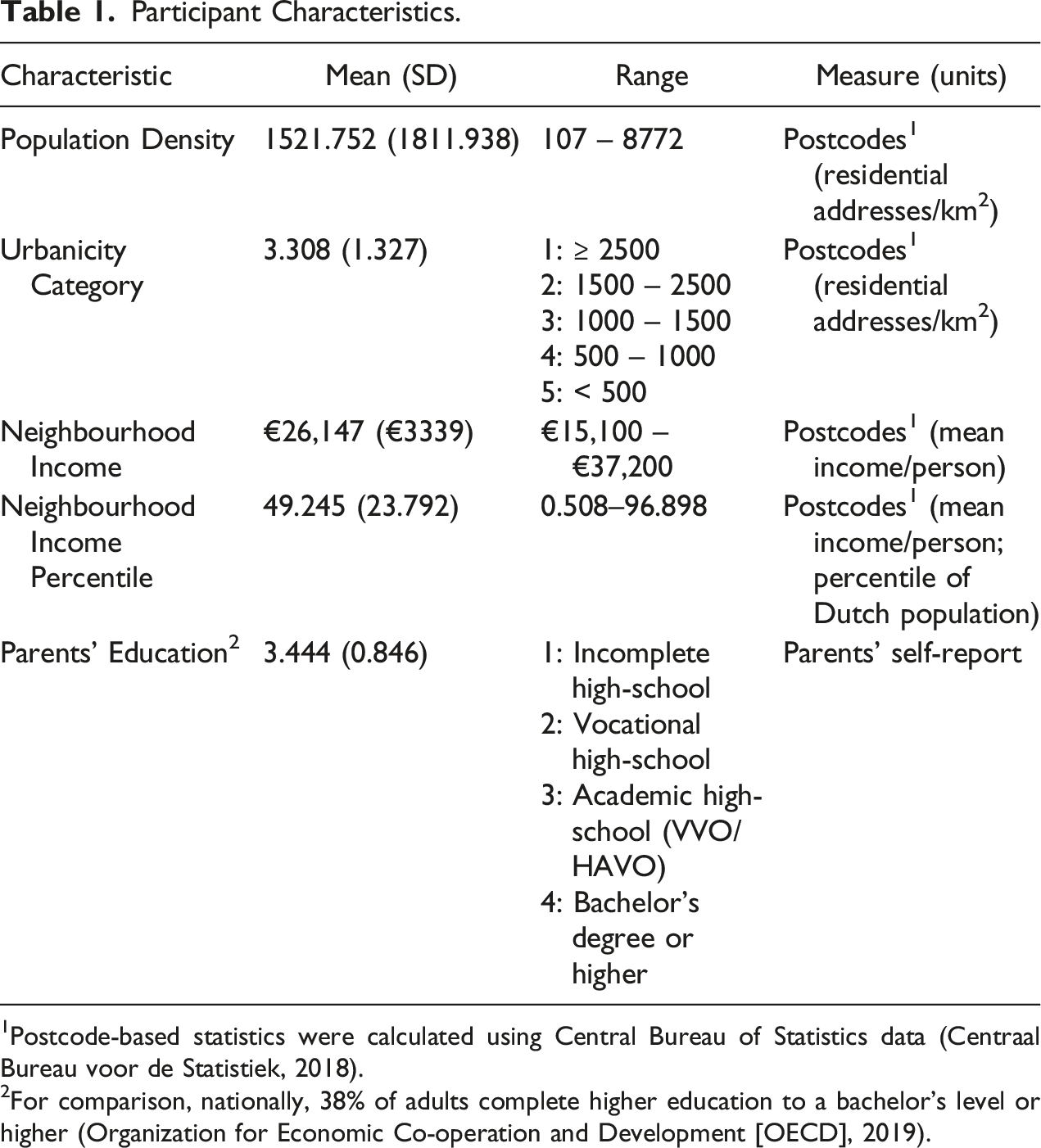
1Postcode-based statistics were calculated using Central Bureau of Statistics data (Centraal Bureau voor de Statistiek, 2018).
2For comparison, nationally, 38% of adults complete higher education to a bachelor’s level or higher (Organization for Economic Co-operation and Development [OECD], 2019).
Procedure
Both the participant and their parent(s) or guardian(s) provided written informed consent to participate in the #SOCONNeCT project following a letter and an information evening to inform them of the protocol and aims of the study, and their rights as participants. Parent(s) or guardian(s) of participants in the subsample who also participated in the EMA subproject provided written informed consent to participate in the additional project, as did the participants themselves. This occurred after they received a letter explaining what participation would involve. Participants, parents and guardians had the opportunity to ask questions of the research team before or after providing consent. Participants were sent an SMS containing a link to install the app before the start of data-collection, and the research team were available via SMS for any technical (or any other) questions. Participation took place over the course of seven days, beginning on a Monday. Participants received eight prompts in the day, plus reminders for prompts that had not been responded to. Participants were paid €15 for participating, on the condition that a minimum of 60% of momentary assessments were completed. The EMA data used here were collected in 2018.
The #SOCONNeCT project was approved by the Scientific and Ethical Review Board of the Vrije Universiteit, Amsterdam.
Measures
Please note that all materials were presented to participants in Dutch. English translations of these materials are used in the following descriptions, but the original Dutch in which items were presented to participants is available in the supplementary materials (Supplemental Appendix I). Data were collected using an Ecological Momentary Assessment (EMA) method. Participants were asked to report on their mood, social context, and feelings of inclusion and exclusion through a purpose-built Android smartphone application (hereafter ‘the app’). The app sent push notifications (hereafter a ‘beep’) at pseudorandom times with a minimum interval of 60 minutes during school hours (0800–1600, Monday to Friday; this includes the school hours of all participating schools, and therefore also includes time before and/or after school in most cases) and 30 minutes otherwise. Participants were instructed to silence their phones during lessons so that the beeps would not interrupt the class. 10 and 15 minutes after a beep, if the participant had not yet responded they received reminder notifications; beeps to which participants did not respond expired after 60 minutes during school hours and after 20 minutes otherwise. This corresponds to an expected average of 3.37 beeps in school and 4.63 beeps outside school on each weekday they participated. The app only sent beeps between 0730 and 2100 on weekdays and between 0900 and 2230 on weekends.
Participants reported on their immediate social context. Specifically, the type of company they were in (in physical space), whether they had been in remote contact with somebody (e.g. by phone, social media, text-based messaging, etc.) and the type of contact. The types of company and contact participants could select were; ‘friends’; ‘best friends’; ‘romantic partner’; ‘family’; ‘classmates’; and ‘acquaintances’. Additionally, to statistically control for events between measurements, we asked participants whether they had had a significant social interaction since the previous measurement, and if so, whether that interaction was positive, negative or neutral (participants were not asked specify the type of contact with whom an inter-beep interaction took place).
Participants rated their agreement with a number of statements about affective states. Responses were recorded on a continuous scale between 1 and 7, accurate to four decimal places, using sliders. Items used in the present study were eight mood items, and six items about feelings of inclusion or exclusion. These mood and inclusion items were chosen based on the high validity and reliability reported in van Roekel et al. (2014). The mood items, which were prefaced with ‘I feel’, were: ‘happy’; ‘irritated’; ‘cheerful’; ‘calm’; ‘anxious’; ‘gloomy’; ‘satisfied’; and ‘lonely’. Inclusion items were asked whenever the participant reported being with others in-person at the time of the beep, and whenever the participant reported online (e.g., social media, telephone) contact just before the beep. The inclusion items were the same for both in-person company and remote contact. If the participant reported both in-person company and remote contact, the inclusion items were rated twice, once regarding in-person company and once regarding remote contact. The items were as follows: ‘I feel involved in this company’; ‘I feel comfortable in this company’; ‘I am part of this company’; (reverse-scored) ‘I feel left out’; ‘I feel judged in this company’; and ‘I’d rather be alone’.
Preparation of Data
Where a participant provided fewer than five responses in a day, the data from that day for that participant was discarded. An explanation of why this number of responses was chosen as a minimum for inclusion is provided in the supplementary materials (Supplemental Appendix II). This resulted in the removal of 397 responses (including the responses from the 45 participants who were thereby entirely removed from the analyses), leaving 2220 responses from 58 participants included in the analyses.
Normalisation and Centring
Normalising Transformations of EMA Response Variables.
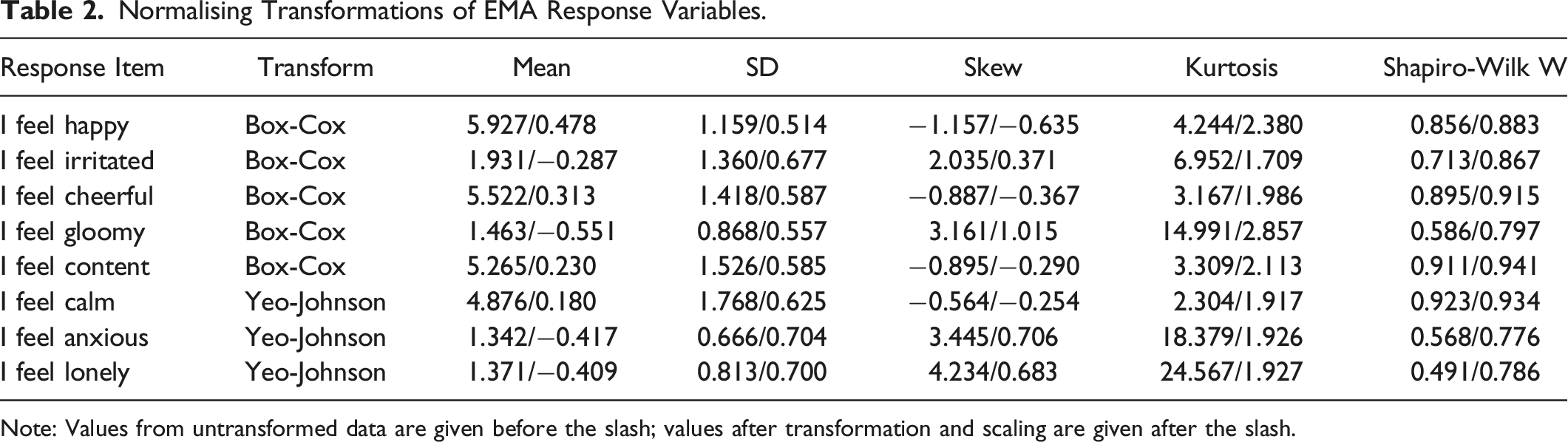
Note: Values from untransformed data are given before the slash; values after transformation and scaling are given after the slash.
Calculation of Valence and Arousal
Each mood item was assigned fixed values of valence and arousal based on the mean ratings obtained by Moors et al. (2013), centred relative to the original rating scale. Pythagoras’ theorem was applied to convert these pairs of values into vectors of length one in the valence-arousal state-space (thus assigning equal total weight to each item, split between the dimensions according to the relative absolute magnitude of the valence and arousal rating for the item). Figure 1 shows the resulting position of each item in the valence-arousal state-space. These vectors were then each multiplied by the corresponding participant rating and summed into a new vector representing the participant’s overall mood. Finally, this vector was scaled to the square root of twice the mean of the absolute magnitudes of the response variables. The resulting variables, valence and arousal, were normalised with a Yeo-Johnson transformation and centred and scaled to have means of 0 and variances of 1. Hereafter we will refer only to these transformed values, unless otherwise specified. A more detailed explanation of this step is provided in the supplementary materials (Supplemental Appendix III). EMA Mood Items’ Positions on The Valence-Arousal Circumplex.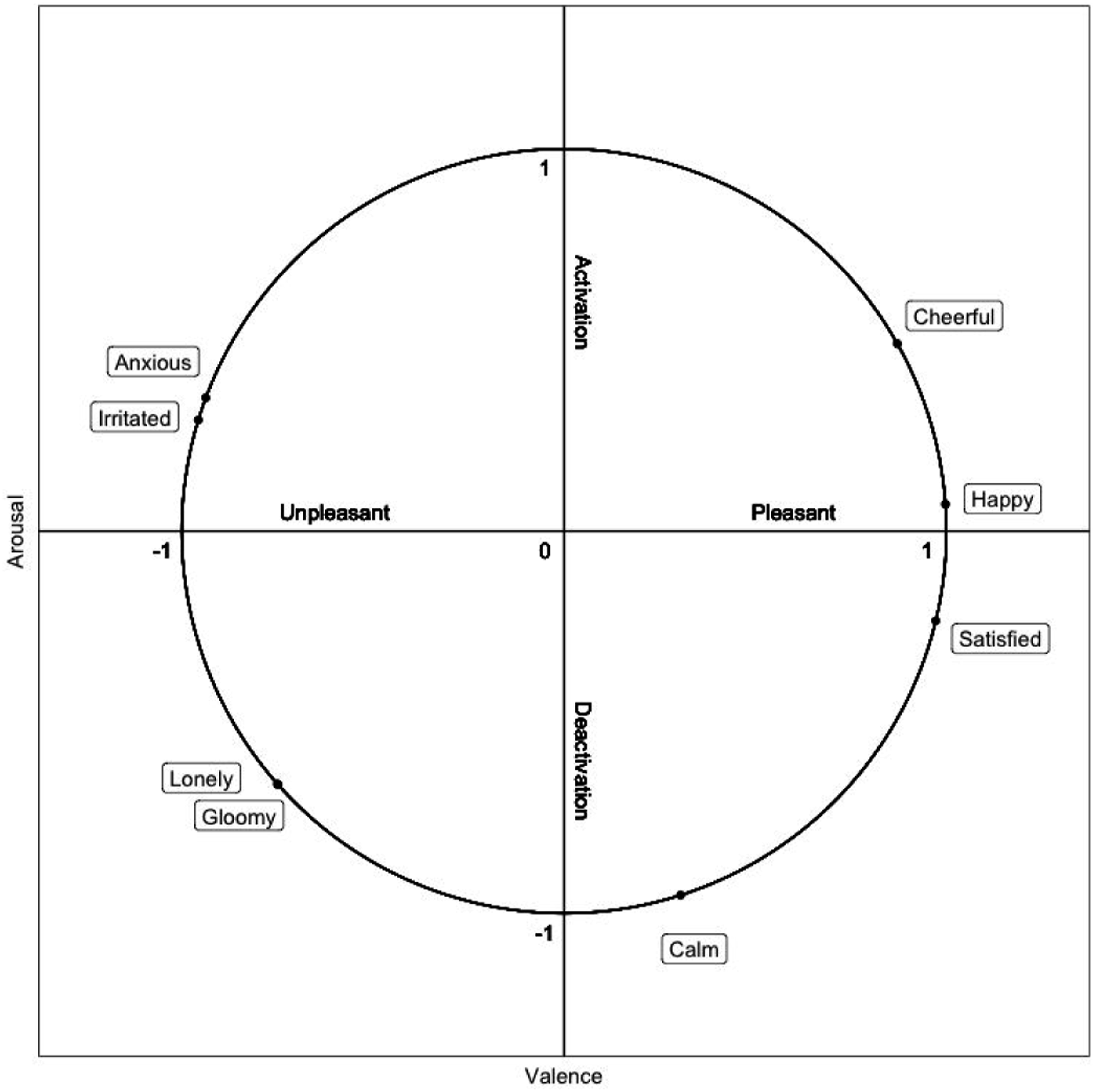
Context Variables
Context Variables.
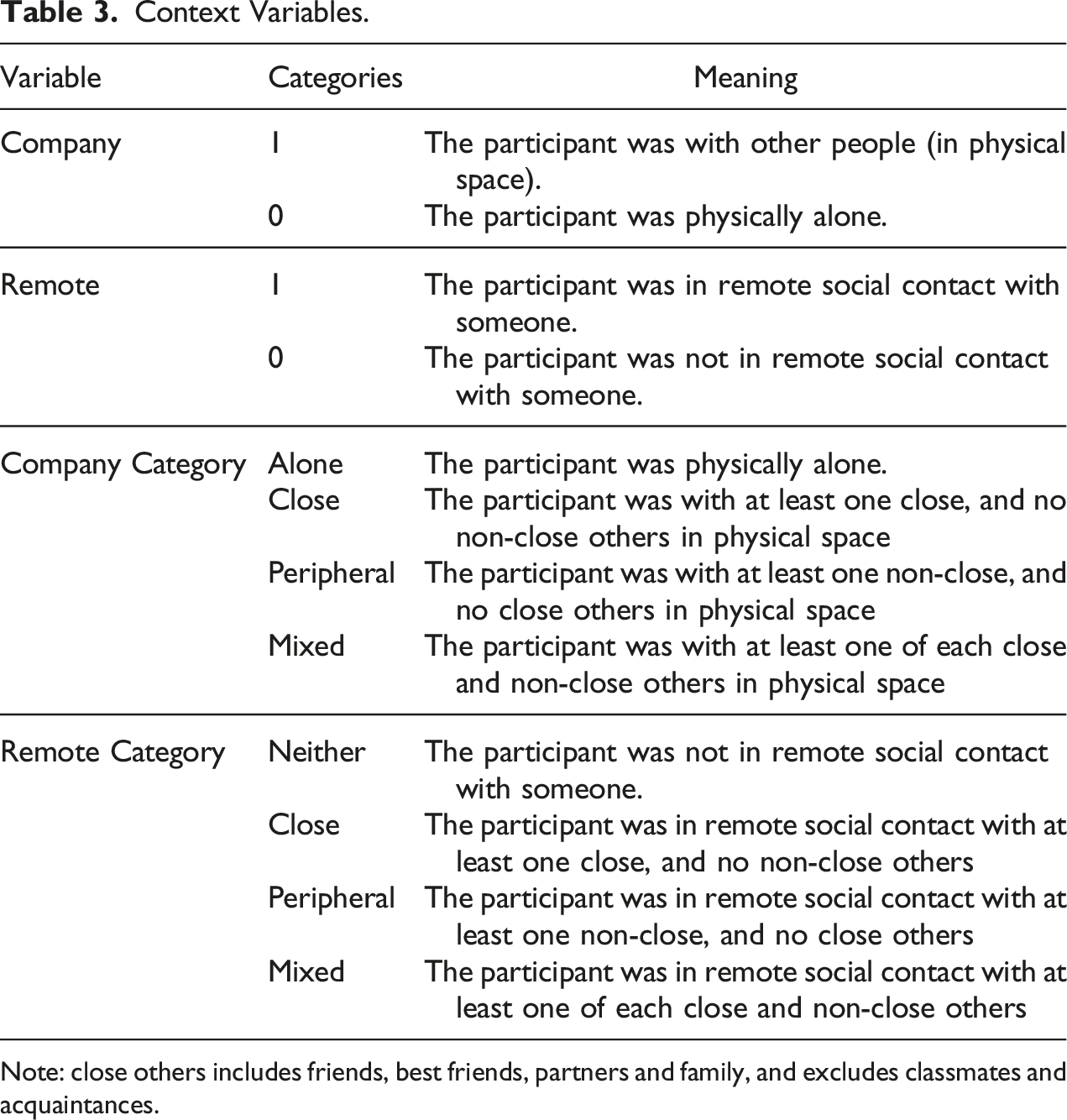
Note: close others includes friends, best friends, partners and family, and excludes classmates and acquaintances.
Additionally, a composite ‘Inclusion’ variable was created by summing the item scores, and was then scaled to have range ∈[0,1], where higher values indicate greater inclusion.
Detrending
Daily and weekly trends in the affective states of EMA participants, such as effects of tiredness in the morning and evening, and of anticipating the weekend, reduce the accuracy of estimates of variability (Barber et al., 1998; Jahng et al., 2008). Therefore, for the purposes of our second research question these trends were removed from the data by regressing each mood dimension (i.e., valence and arousal) on random linear and quadratic effects of time of day and day of week (Monday = 1, …, Sunday = 7), and an effect of type of day (weekend = 1), grouped by participant and with intercepts fixed to 0. The residuals of these regressions were centred and scaled to have means of 0 and variances of one to give our “detrended mood” (or for a specific dimension, “detrended valence” and “detrended arousal”) variables.
Analyses
Holm-Bonferroni family-wise error correction on an a priori α of 0.05 was used throughout to compensate for the inflationary effect of testing multiple related models on type-I error risk. Partial pooling of error terms in mixed-effects models effectively controls for the multiple comparisons taking place within such a model, but we still need to control for the fact that several such models are reported. The families of tests to which this was applied are detailed in the supplementary materials (Supplemental Appendix IV). All analyses were performed in the statistical programming language R (R Core Team, 2020), and used R packages including, lme4 (Bates et al., 2015), nlme (Pinheiro et al., 2022), lmtest (Zeileis & Hothorn, 2002) and psych (Revelle, 2022), in the RStudio IDE (RStudio Team, 2020).
Influence of Social Context on Mood
To characterise the effects of social context on each dimension of mood, first, four sets of mixed-effects regression equations were constructed stepwise by adding control variables to an initial model with random intercepts (per participant) and a fixed effect of (a) company and (b) remote contact on (a) valence and (b) arousal. In the first step, the dependent variable (valence or arousal of mood) is predicted by the fixed effect of interest (company or remote contact), with a fixed intercept and a random intercept per participant. In the second step, a random slope of the fixed effect is added. In the final step, the following control variables were added as fixed effects: time of day, time of day squared, type of day (weekend = 1), and the inter-beep interaction valence (0 = no interaction, or the interaction was neutral, +1 = a positive interaction, −1 = a negative interaction).
Next, to compare the relative contributions of different types of company or remote contact, the analyses were repeated, replacing the fixed effect of interest (company or remote contact) with an effect of the category of company or remote contact (only close, only other, and mixed company/contacts were dummy-coded as 0 (false) or 1 (true) and thus the reference category, coded as a 0 in all three dummy-variables, was alone/neither) as the fixed effect of interest, and random intercepts per category per participant, instead of a random slope, were added at step 2.
Finally, to test for gender differences in these effects, we added a main effect of gender and a gender-by-context interaction to each of the final-step regressions. In each case, the residual variance, adjusted R2 and AIC were calculated for the model at each step, and are reported in the results tables.
Influence of Social Context on Affective Variability
Whilst a variety of approaches to quantifying the dynamics of an EMA timeseries exist, by far the most common is within-person variability (hereafter, variability), which represents the variance of the latent distribution of states (Houben et al., 2015). We tested for effects of company, category of company, remote contact and category of remote contact, on affective variability. Affective variability was compared across contexts using a method adapted from Jahng et al. (2008). As above, this comparison was performed separately for arousal variability (AV) and valence variability (VV). First, the mean of detrended mood (i.e., detrended valence or detrended arousal) for the participant (participant mean) and for the day (nested within participants; day mean), was calculated. Detrended mood was then estimated by a fixed intercept, a random slope of participant mean, grouped by participant, and a random slope of day mean, grouped by days within participants. We called this the homoscedastic model: with equal numbers of rows for each participant, the residual variance of this model would be the mean within-day within-person variability across all participants. Next, heteroscedastic models were constructed by specifying a variance structure such that separate variances are estimated for the residuals corresponding to measurement moments with a particular social context. These models were then compared to the corresponding homoscedastic model with a likelihood ratio test. To test the pairwise significance of the differences in variance, we then constructed models in which separate variances were estimated for two of the four contexts, with the remaining two contexts’ variances being assumed to be equal and therefore pooled into a single variance estimate; these models therefore estimated three variances. We then compared each of these to the model in which every context’s variance is estimated separately, with likelihood ratio tests. Where the four-variance model was significantly better than the three-variance model, the difference in variances between the contexts whose variances were combined in the three-variance model can be considered statistically significant. We also compared affective variability between boys and girls (regardless of the momentary social context), using the same approach.
Results
Summary Statistics
Descriptive Statistics and Correlations for All Study Variables.
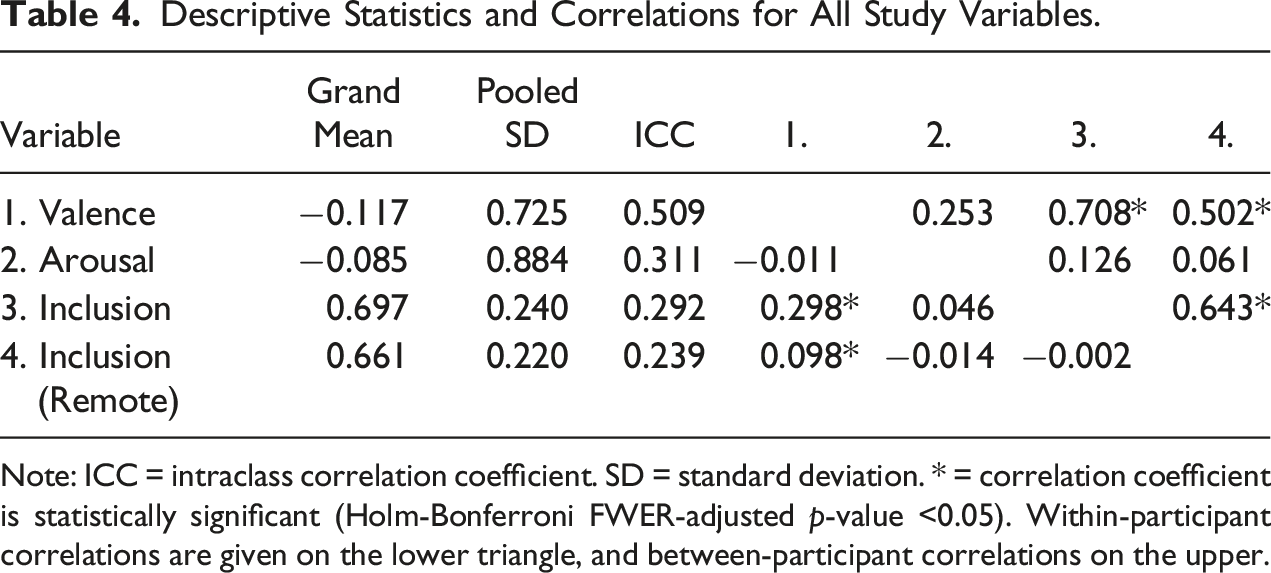
Note: ICC = intraclass correlation coefficient. SD = standard deviation. * = correlation coefficient is statistically significant (Holm-Bonferroni FWER-adjusted p-value <0.05). Within-participant correlations are given on the lower triangle, and between-participant correlations on the upper.
Summary of Observations in Each Context Category.
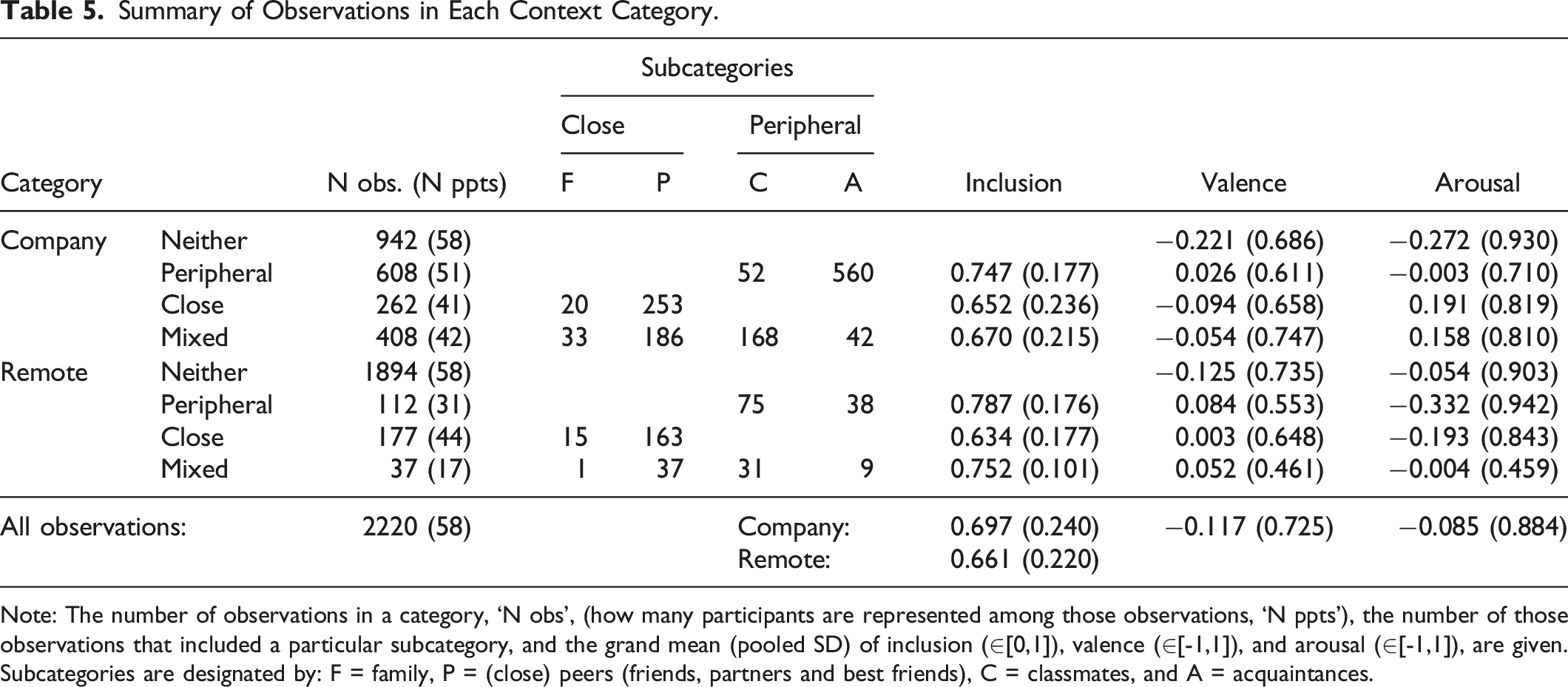
Note: The number of observations in a category, ‘N obs’, (how many participants are represented among those observations, ‘N ppts’), the number of those observations that included a particular subcategory, and the grand mean (pooled SD) of inclusion (∈[0,1]), valence (∈[-1,1]), and arousal (∈[-1,1]), are given. Subcategories are designated by: F = family, P = (close) peers (friends, partners and best friends), C = classmates, and A = acquaintances.
Influence of Social Context on Mood
Summary of Effects of (In-Person or Remote) Social Contexts on Valence and Arousal.
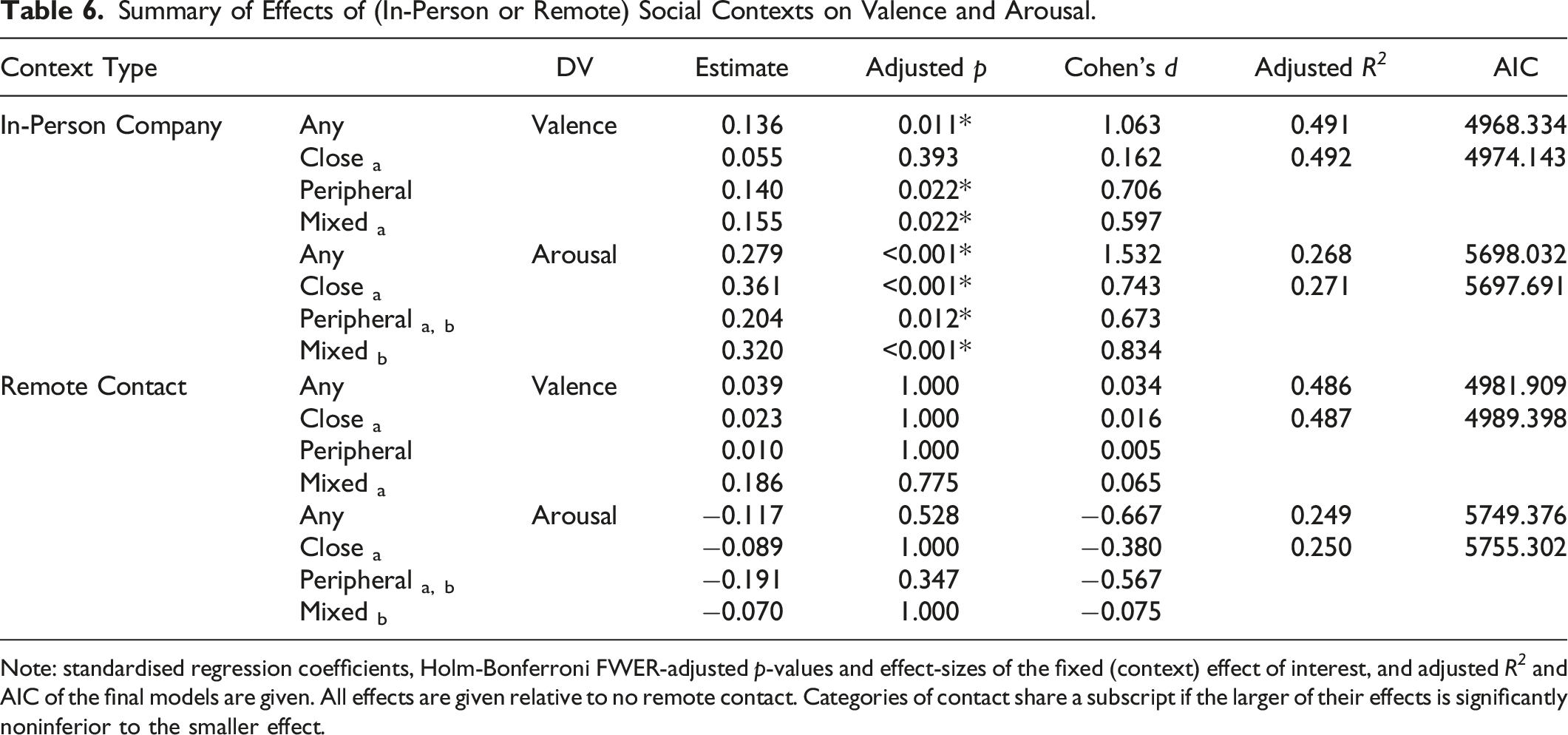
Note: standardised regression coefficients, Holm-Bonferroni FWER-adjusted p-values and effect-sizes of the fixed (context) effect of interest, and adjusted R 2 and AIC of the final models are given. All effects are given relative to no remote contact. Categories of contact share a subscript if the larger of their effects is significantly noninferior to the smaller effect.
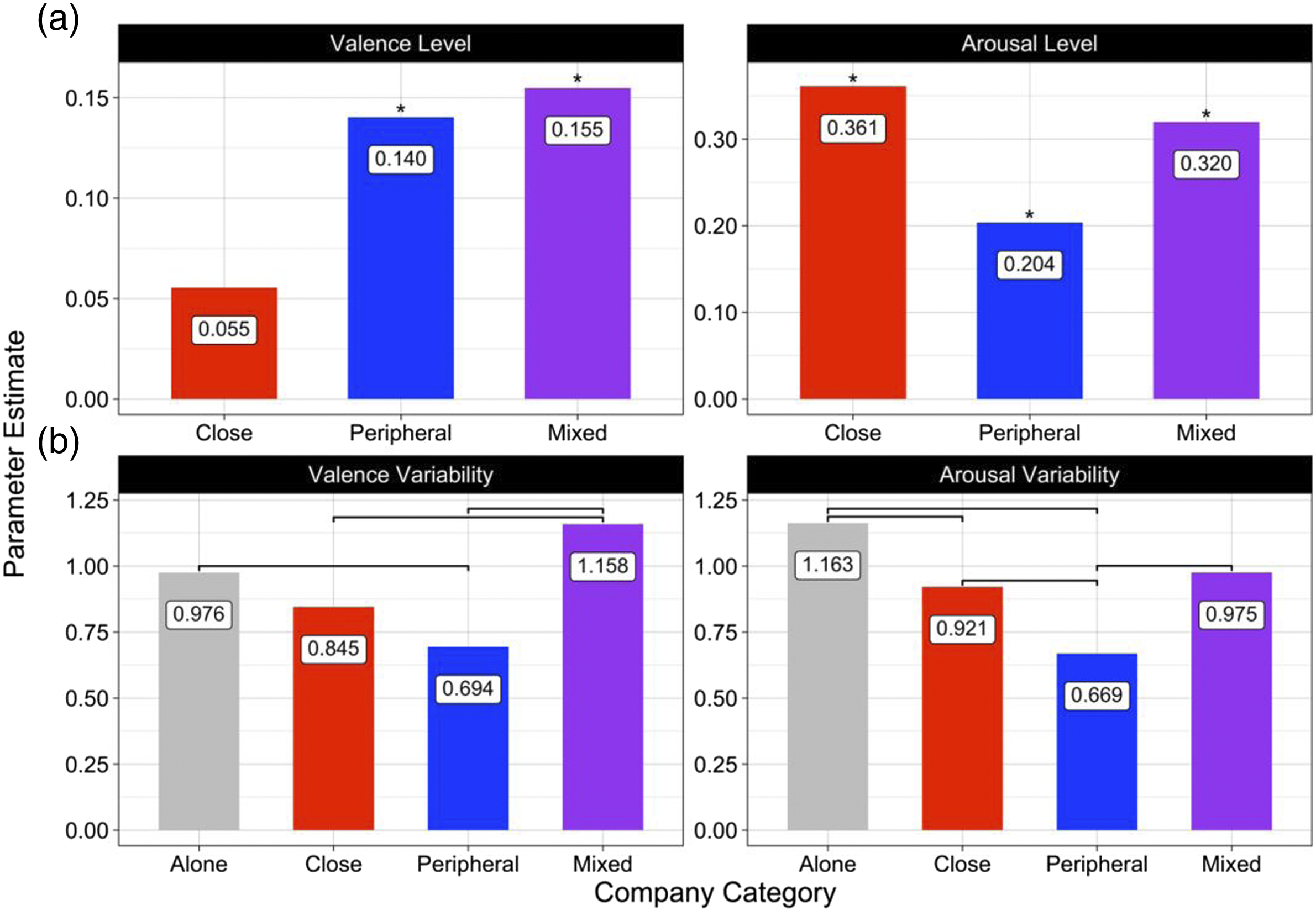
In-Person Company’s Effect on Affect. Note: (a) Levels of Valence (left) and Arousal (right). Parameter estimates are the fixed-effect regression coefficients corresponding to the company category (Alone is fixed to 0; see Table 5); significant differences from Alone are marked with an asterisk. (b) Variability of Valence (left) and Arousal (right). Parameter estimates are model-implied within-person residual variances (see the four-variance models in Table 6); crossbars show statistically significant comparisons.
The results of the analyses of remote contact effects are given in full in Tables S5-S8 and summarised in Table 6 (lower half). We did not detect any significant effects of remote contact. The results of the analyses of gender effects are given in full in Tables S9-S12. No significant main effects of gender or gender-by-context interaction effects were found.
Influence of Social Context on Affective Variability
Summary of Effects of In-Person Company on Variability of Valence and Arousal.
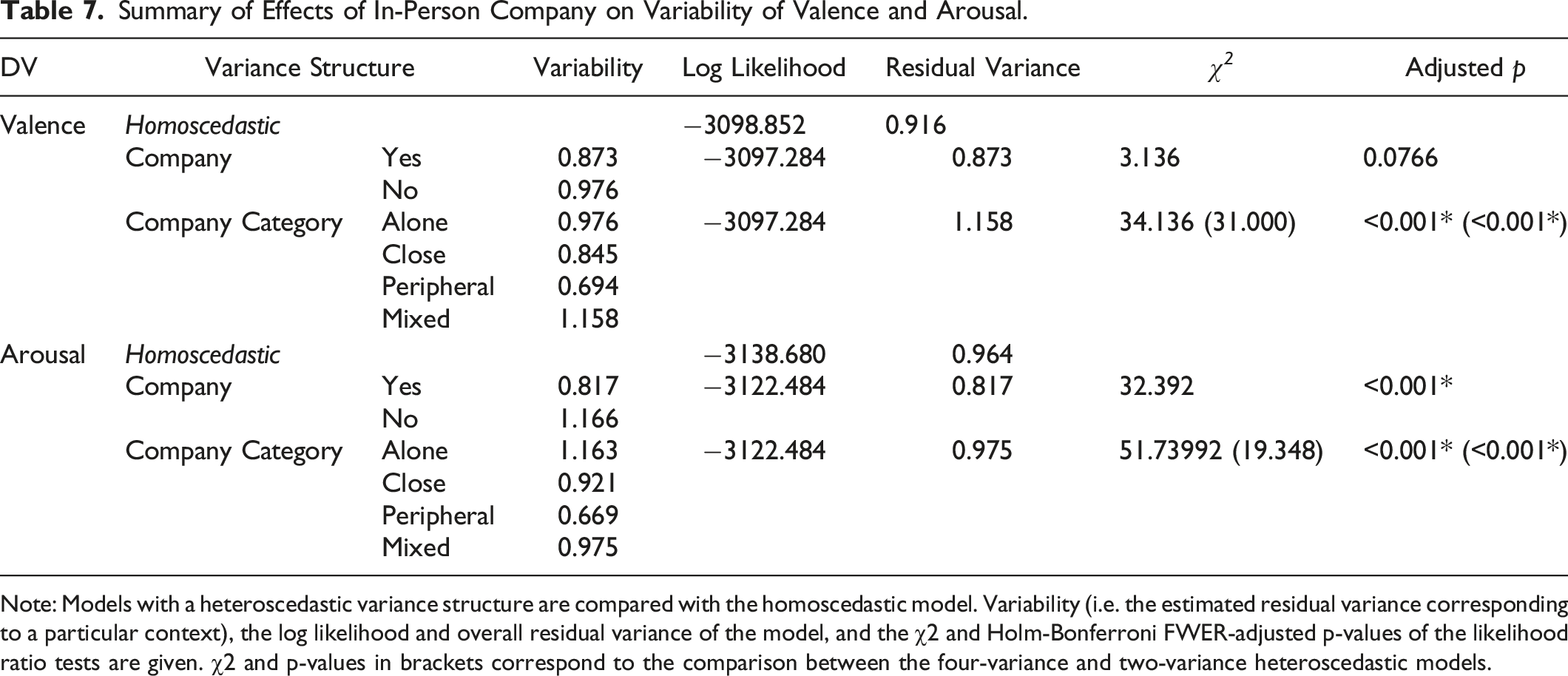
Note: Models with a heteroscedastic variance structure are compared with the homoscedastic model. Variability (i.e. the estimated residual variance corresponding to a particular context), the log likelihood and overall residual variance of the model, and the χ2 and Holm-Bonferroni FWER-adjusted p-values of the likelihood ratio tests are given. χ2 and p-values in brackets correspond to the comparison between the four-variance and two-variance heteroscedastic models.
Pairwise Tests of Difference in Variability Between In-Person Company Categories.
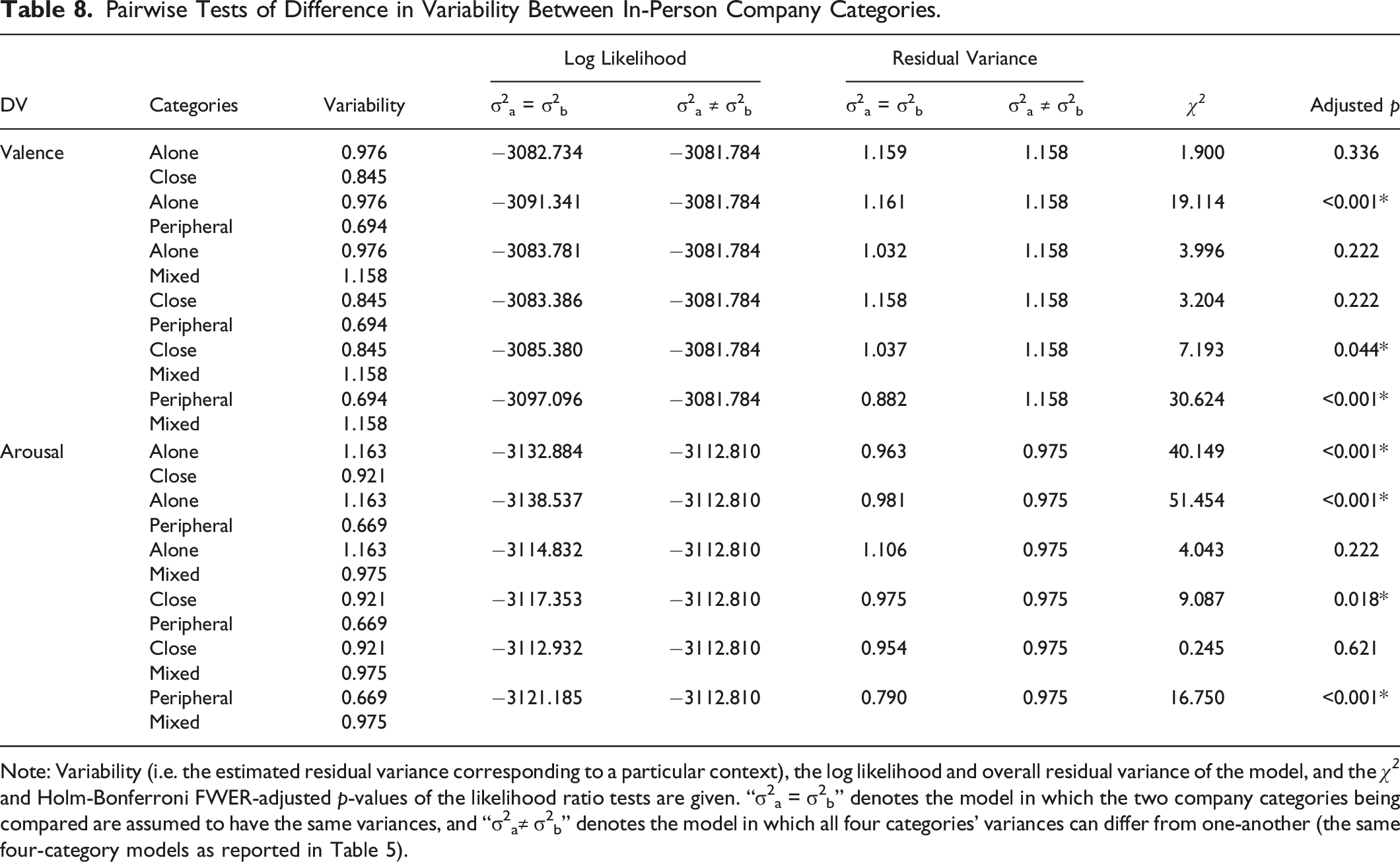
Note: Variability (i.e. the estimated residual variance corresponding to a particular context), the log likelihood and overall residual variance of the model, and the χ 2 and Holm-Bonferroni FWER-adjusted p-values of the likelihood ratio tests are given. “σ2a = σ2b” denotes the model in which the two company categories being compared are assumed to have the same variances, and “σ2a≠ σ2b” denotes the model in which all four categories’ variances can differ from one-another (the same four-category models as reported in Table 5).
Summary of Effects of Remote Contact on Variability of Valence and Arousal.
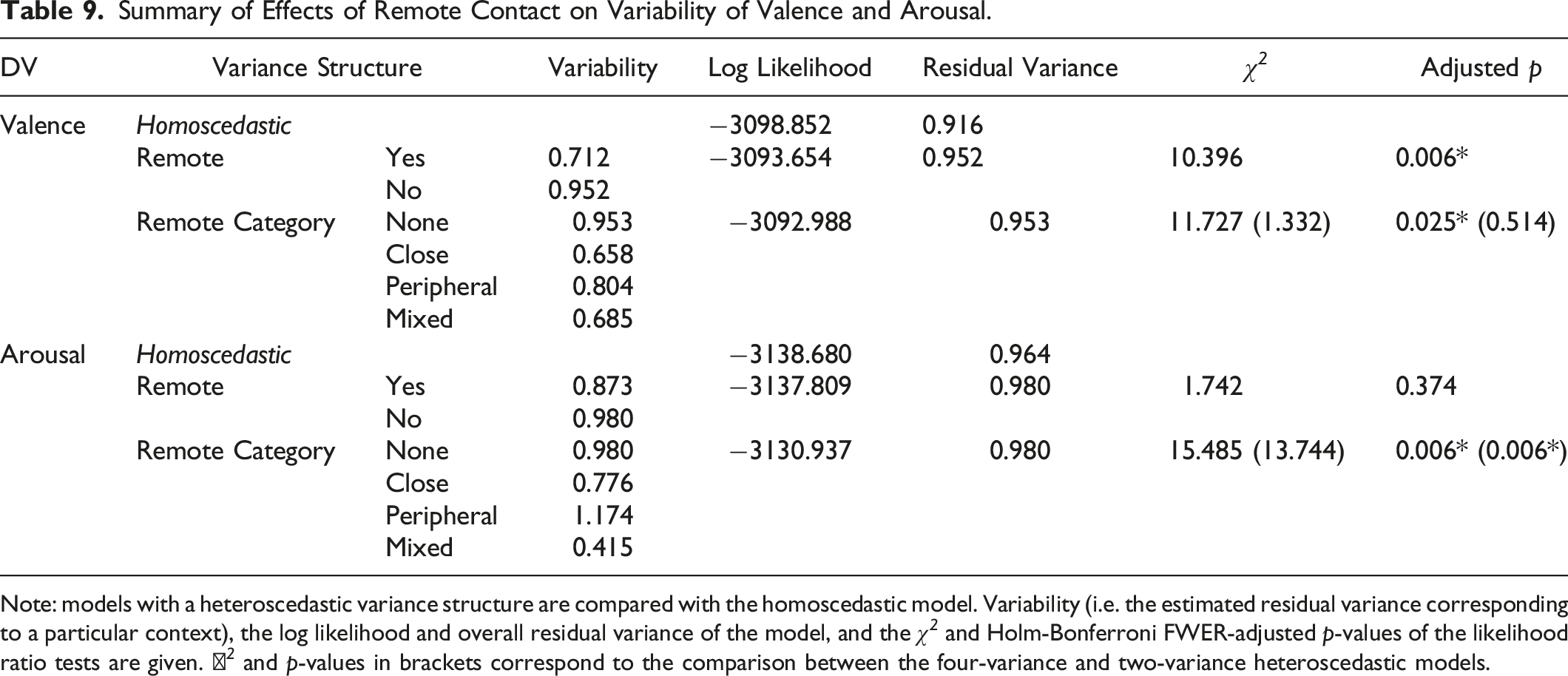
Note: models with a heteroscedastic variance structure are compared with the homoscedastic model. Variability (i.e. the estimated residual variance corresponding to a particular context), the log likelihood and overall residual variance of the model, and the χ 2 and Holm-Bonferroni FWER-adjusted p-values of the likelihood ratio tests are given. Χ 2 and p-values in brackets correspond to the comparison between the four-variance and two-variance heteroscedastic models.
Pairwise Tests of Difference in Variability Between Remote Contact Categories.
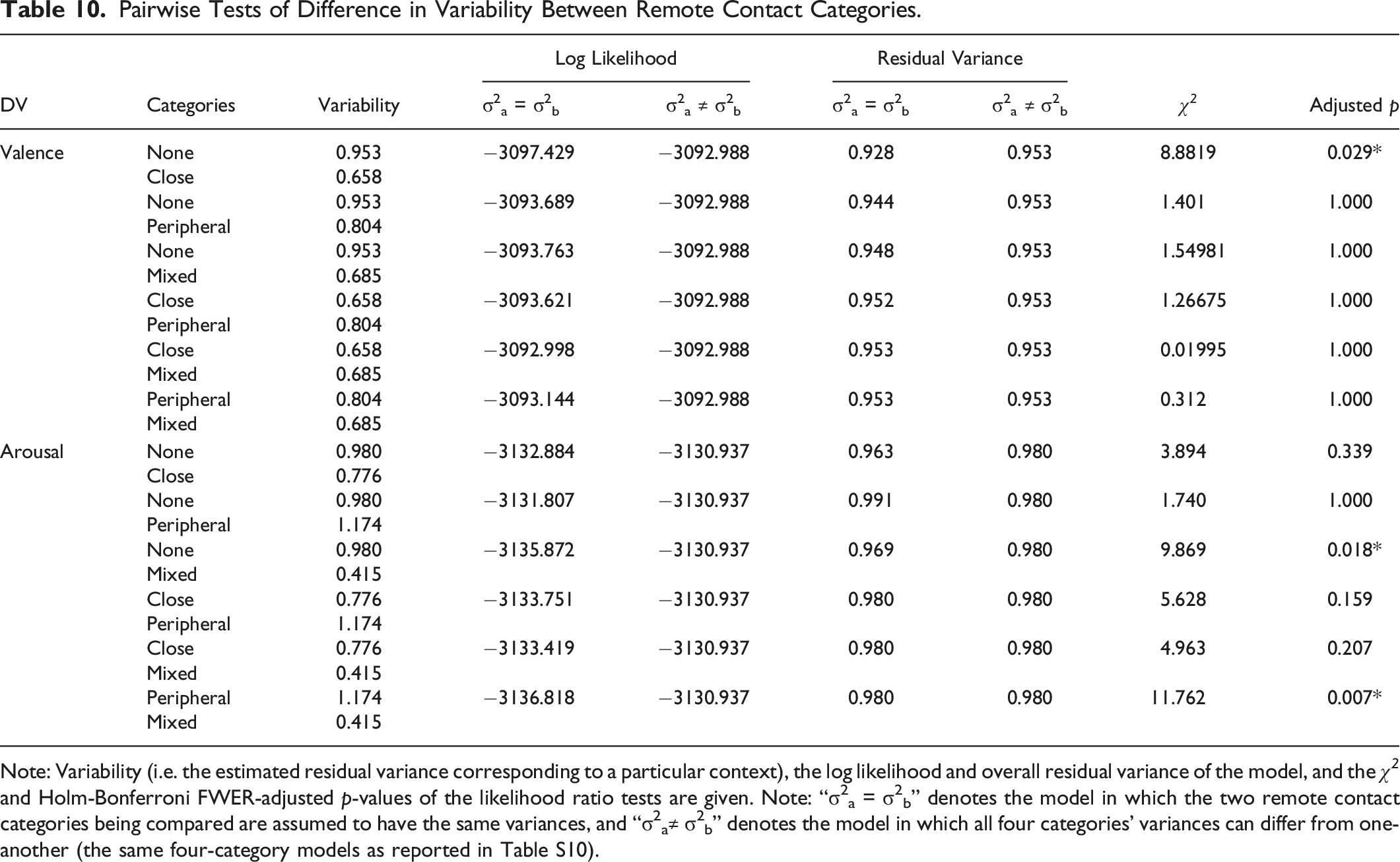
Note: Variability (i.e. the estimated residual variance corresponding to a particular context), the log likelihood and overall residual variance of the model, and the χ 2 and Holm-Bonferroni FWER-adjusted p-values of the likelihood ratio tests are given. Note: “σ2a = σ2b” denotes the model in which the two remote contact categories being compared are assumed to have the same variances, and “σ2a≠ σ2b” denotes the model in which all four categories’ variances can differ from one-another (the same four-category models as reported in Table S10).
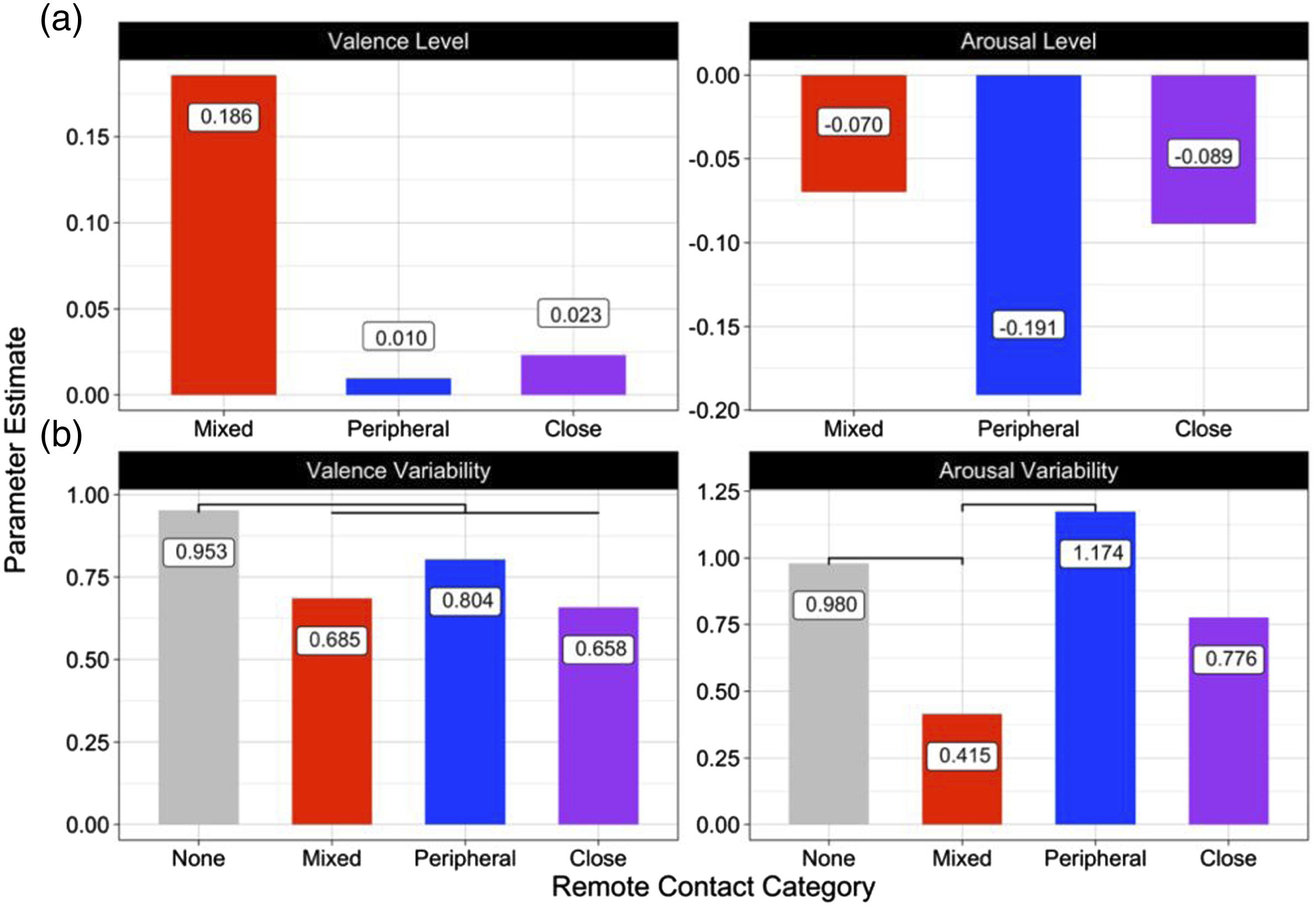
Remote Contact’s Effect on Affect. Note: (a) Levels of Valence (left) and Arousal (right). Parameter estimates are the fixed-effect regression coefficients corresponding to the company category (Alone is fixed to 0; see Table S9); no significant differences from Alone were detected. (b) Variability of Valence (left) and Arousal (right). Parameter estimates are model-implied within-person residual variances (see the four-variance models in Table S10); crossbars show statistically significant comparisons (crossbar without ticks indicates categories grouped together before comparison).
Summary of Effects of Gender on Variability of Valence and Arousal.
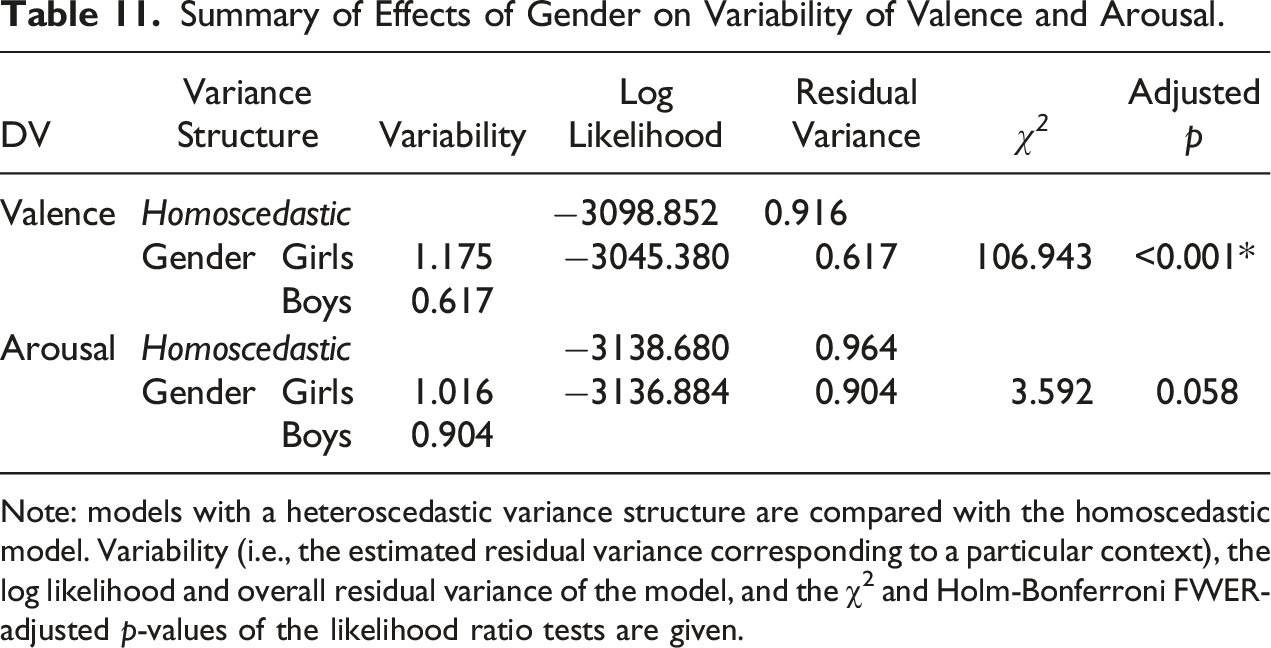
Note: models with a heteroscedastic variance structure are compared with the homoscedastic model. Variability (i.e., the estimated residual variance corresponding to a particular context), the log likelihood and overall residual variance of the model, and the χ2 and Holm-Bonferroni FWER-adjusted p-values of the likelihood ratio tests are given.
Discussion
We investigated the effects of social contexts on the level and within-person variability of core affect (valence and arousal) in the self-reported mood of adolescents. In-person company, but not remote contact, was associated with higher valence and arousal. The effect on arousal was significant for all categories of company. Valence was significantly higher when in either peripheral or mixed (i.e., close and peripheral) company than when alone. The small difference in valence between being alone and being in the company of close others was not significant. In-person company was also associated with lower arousal variability (AV); this effect was statistically significant for close or peripheral company, but not for mixed company. AV was lowest when only peripheral company was present. Categories of company also differed in valence variability (VV), which was significantly higher when in mixed company than when in either close or peripheral company, and when alone than when in close company. These results are summarised in Figure 2.
Remote contact was not significantly associated with the level of valence or arousal, but was associated with variability. VV was higher when not in remote contact (with anyone); when types of contact were separated out, however, the only category with detectably lower VV than no contact was contact with close others. AV did not differ depending on whether there was any remote contact (i.e., when close, peripheral and both were aggregated into a single category); but was significantly lower when in remote contact with a mixture of close and peripheral others as compared to when in remote contact with only peripheral others, and when not in remote contact with anyone. However, due to relatively few observations in which the adolescents were in remote contact with peripheral others, nonsignificant differences in variability between peripheral contacts and other remote context categories may be attributable to a lack of statistical power. These results are summarised in Figure 3. We found no significant effects of gender on the levels of valence or arousal, nor on AV, but VV was significantly higher in girls.
Consistent with adolescence as a period of heightened social motivation, adolescents reported higher arousal and valence when in company than when alone. Unexpectedly, while valence was significantly higher in peripheral company (vs. alone), no significant difference was found for close company (vs. alone). This suggests several overlapping hypothetical possibilities. Firstly, we speculate that in the presence of peripheral others, adolescents’ propensity to suppress expression of or downregulate negative emotions may increase (see e.g.; Uink et al., 2017), as may their propensity to express positive emotions, perhaps resulting from a desire to give peripheral others a positive impression. This could produce a positive bias in their subjective awareness and/or reporting of emotion when in peripheral company, with whom impression-management may be a more important motivator than with close company. Secondly, although there were relatively few measurement moments when adolescents reported the company of their family, the close company category combines family (including parents) with peer friendships and romantic attachments. Consistent with the social reorientation from parents to peers that occurs during adolescence, therefore, valence may be elevated in the company of close peers but lowered in the company of family, resulting in the two effects averaging out to zero. Thirdly, negative emotional responses to interactions with peripheral others may tend to be smaller than with close others. Unlike with close others, where the loss of a social bond is a possible outcome, with peripheral others there may be more to be gained from positive interactions than lost from negative ones (Fiorilli et al., 2019; c.f. Jones et al., 2005). Therefore, the emotional impact of an interaction may be greater for positive interactions when they occur with peripheral others, and for negative interactions when they occur with close others. Moreover, negative interactions may occur less with peripheral others than with close others because there are fewer topics in which both parties have a stake, and so interests or perspectives may less frequently conflict in emotionally significant ways. Fourthly, activities such as co-rumination, which may produce a temporary lowering of mood, occur more in closer relationships and are unlikely to occur with peripheral others (Bastin et al., 2018; Kennedy-Moore & Watson, 2001). Therefore, a positive effect of close company on valence may be confounded by the tendency to seek to be in a supportive social context before engaging in activities that direct attention to negative-valence, emotionally-charged topics.
Future studies could investigate these possibilities using a combination of EMA (self-report) and remote sensing (which can be continuous and passive, such as galvanic skin response as a proxy for arousal) methods. Further, by concentrating a similar number of measurement moments over shorter time-scales, more detail about individual interactions could be collected. Additionally, future studies should test the replicability of our findings, since the non-significance of the association of close company with valence could be due to a lack of statistical power, because close company had the fewest observations of the categories of in-person company.
Arousal variability (AV) was lower when in close or peripheral company than when alone. While this may suggest that supportive social presence indeed facilitates emotion regulation, the finding that AV was elevated in close or mixed company relative to peripheral company seems to undermine that explanation. One way to reconcile these findings could be to return to our earlier suggestion that adolescents may experience milder emotional reactions in interactions with peripheral (than close) others, perhaps again related to the higher stakes of interactions with close others (Fiorilli et al., 2019). Unexpectedly, arousal was not significantly less variable in mixed company than when alone, and was significantly higher in mixed company than peripheral company only. This could hypothetically arise from the relative social complexity of such contexts provoking vigilance to (social) threats. That is, peripheral others, whose intentions and behaviour are harder to predict, might do something deleterious to one’s social standing among the also-present close others. In doing so, the peripheral other would present a social threat that could not occur in the absence of close others. Alternatively, the greater range of contexts encompassed in this category (e.g., the participant might be interacting with a mixed group, or only interacting with close others while peripheral others are also present) could also explain an unexpectedly high estimate of variability in mixed company. Similarly, valence was less variable when in close or peripheral company, than when alone or in mixed company. Surprisingly, though, valence variability did not significantly differ between close and peripheral company, which we again suggest may reflect an increased emotional impact of interactions with close than peripheral others, thus counteracting the expected tendency for close others’ ‘supportive presence’ to facilitate emotion regulation.
These results show that differences in social contexts are associated with substantial intraindividual differences in emotional variability. This may support the idea that in adolescents, emotional variability may be an early indicator of dynamic effects of the social environment on emotional dysregulation and internalising symptoms more broadly. If so, rather than a sign of emotional dysregulation per se, emotional variability would reflect a combination of two factors; both the magnitude of an individual’s emotional responses and the extent to which their social environment contains emotionally powerful stimuli. Additionally, a less predictable social environment may increase the emotional impact of unexpected social stimuli (Bar-Anan et al., 2009), particularly rejection (van der Veen et al., 2013). If chronic, this unpredictability could increase the individual’s dispositional emotional response to a social stressor (Hollis et al., 2013; see also Will et al., 2016). Indeed, past EMA studies in adolescents have associated trait loneliness with greater emotional reactivity to social inclusion and exclusion (Ha et al., 2019; van Roekel et al., 2016, 2018). Future EMA research could investigate whether the social conditions leading to trait-level loneliness concurrently increase the perceived unpredictability of the adolescent’s social environment (e.g., because social isolation reduces learning opportunities). The same future studies could also investigate to what extent the experience of unpredictable social environments mediates the association between trait loneliness and emotional reactivity to social inclusion and exclusion.
The present findings also point toward new theoretical directions in the study of socioemotional development in adolescence. Pubertal development increases sensitivity to social reward and punishment, which increases the affective and motivational salience of social acceptance and rejection. This leads to larger affective responses to social inclusion and exclusion, which in turn increases susceptibility to social influence (Falk et al., 2014; Peake et al., 2013). Greater capacity for context-dependent social adaptation develops during adolescence, and (social) emotions play an important role in regulating such adaptations (Crone & Dahl, 2012; Fanselow, 2018). This adaptability is a valuable social skill, since social norms can vary radically depending on the context, even with the same group of individuals; compare a mathematics class with team sports during those pupils’ lunch hour, for example. The short-term advantages of behavioural, cognitive and affective adaptation to context provoked by strong emotional responses to social acceptance and rejection (i.e., avoiding faux pas) do have longer-term benefits in terms of social status and access to social support (Sachser et al., 2011). However, the intensity and frequency of social emotions during adolescence makes it likely that social situations will be persistently perceived as high-stakes – threatening, but potentially very rewarding – elevating arousal in those contexts, as the present study indeed found. Indeed, adolescents who display higher arousal in social situations tend to have more internalising symptoms and worse psychosocial functioning (Szollos et al., 2019), and an acute increase in an adolescent’s arousal level is associated with a concurrent worsening of externalising behaviour and social coping (Feagans Gould et al., 2008). Moreover, the socioemotional regulation of behaviour depends on changes in emotional state occurring when an individual moves between contexts or behavioural styles, and greater overall variability of emotional state is associated with worse physical and mental health (McEwan, 2000; Neumann et al., 2011; Sachser et al., 2011; Schneiders et al., 2006).
Thus, one potential framework for future research investigating the role of circumstantial factors (e.g., the frequency of emotionally charged contexts or events in one’s daily life) in the pathogenesis of mood disorders may be found in the concept of allostasis. Allostasis is a theoretical framework for understanding how biological systems maintain stability through change (e.g., maintaining stable temperature by responding to a newly cold environment by shivering). If allostasis is one side of the coin, homeostasis is the other. Allostasis contributes to pathogenesis when repeated exposure to stressors results in higher allostatic load – the level of dysregulation in allostasis, which causes adaptive responses to stressors to become prolonged and/or blunted (under- or over-habituation, respectively; see Juster et al., 2010; McEwen & Akil, 2020). It may be useful to conceptualise internalising disorders in a similar way, with dimensions of affect triggering adaptative responses to the social and/or emotional demands of a context. In adolescents, these adaptations may tend to be related to the adoption and performance of peer group norms, since one of the greatest social risks one can take is to violate a group norm. However, since group norms are rarely explicit and must therefore be inferred from cues such as which behaviours are most common, adolescents may attend to the ways they differ, especially in social behaviour, from their peer- or friendship- group and try to conceal or minimise those differences (Cross et al., 2017; Hatzenbuehler & Pachankis, 2016; Pearson & Rose, 2021), which is associated with a greater risk of depression (e.g., Thomas & Bowker, 2015; Botha & Frost, 2020). Greater differences will result in a greater attentional burden, and more attention directed toward self-monitoring and metaperception. This influence on how attention is allocated increases vulnerability to social anxiety, and the attentional burden may also hinder social skill development (Spence & Rapee, 2016). Future research using EMA in adolescents could explore how patterns of heightened or variable arousal differ between contexts in which the adolescent experiences varying levels of pressure to conform, and whether patterns of negative valence and of arousal predict which adolescents are vulnerable to which internalising disorder(s).
Limitations
This study has a number of limitations. First, our study was limited in its power to detect effects by the size of the dataset. In several cases, differences between categories of company or contact were insignificant for those categories with the fewest observations. It is therefore especially important in this instance not to confuse the absence of evidence for a true difference, with evidence that no such difference exists.
Second, due to the limitations of our sample size, we had insufficient power to analyse more narrowly-defined social contexts, or to control for the influence of in-person contact in the analysis of remote contact, and vice versa. This issue may be compounded by contemporary adolescents’ tendency to engage in simultaneous online and in-person social interactions, and the increasing ubiquity of devices (especially ‘smart-phones’) that allow an individual to be connected to the internet at all times.
Third, we did not obtain specific information about the adults in the child’s environment. The role of teacher-student relationships in adolescents’ socio-emotional functioning at school is an additional important factor future EMA studies should consider investigating. Relatedly, we used heterogeneous groupings of company based on closeness rather than the specific relationship, combining family and friends, and within the family category, we did not collect information on the type of family member(s).
Fourth, the response items used did not have an even distribution over the circular space of the circumplex, which may have reduced the precision of the estimations of valence and arousal in those areas with less coverage; high arousal emotions in particular may have been most affected by this limitation. There is therefore a possibility that some of the extracted arousal values, and therefore some estimates of arousal and arousal variability may have been artefactually lowered by this issue. Future work could investigate the correlations between this method of extracting circumplex arousal-valence values from emotion word ratings, and direct ratings of the arousal and valence dimensions.
Fifth, the present study did not investigate moment-to-moment changes in emotion. Measures including instability (reflecting the likelihood of large, fast mood changes) and inertia (reflecting the influence of earlier mood states on later mood states) have to our knowledge only been applied to differences between individuals, rather than contexts. These measures depend on consecutive measurements (Houben et al., 2015; Jahng et al., 2008), and are not reported on here due to insufficient statistical power when using only measurement pairs with a constant context.
Finally, the present study used a sample of academically-able, educationally-advantaged Dutch adolescents. This work therefore cannot be directly generalised to other contexts and groups; the effects of social context will necessarily differ as the social context itself, or one’s position within that context, changes. Further work is therefore needed to establish whether these effects generalise to less advantaged, and/or academically-able adolescents, and to cultures outside of western Europe.
Conclusions
In this first investigation of how adolescents’ core affect (valence and arousal) differs between social contexts, we have demonstrated that our sample of 58 Dutch thirteen-to-fourteen-year-olds’ moods were more positive and activated when sharing physical space with another person. Their moods were also less variable when in the company of peripheral or close others than when alone. However, somewhat consistent with the suggestion that adolescents’ high emotional variability is driven by strong emotional responses to social stimuli, their moods were also more variable in mixed (i.e., close and peripheral) than peripheral (and, in the valence dimension, close) company. Moreover, arousal was more variable in close than peripheral company. In sum, the present study demonstrates for the first time that adolescent affect systematically and intra-individually differs between social contexts in arousal as well as valence, and in variability as well as level, providing insight into the role of social context in determining adolescent mood, particularly in the under-researched arousal dimension. Finally, by demonstrating that core affect variability differs intra-individually between social contexts, our findings support the need to further investigate social antecedents of individual differences in core affect dynamics across contexts, in order to identify the role of everyday social experiences in the development of emotional dysregulation and related psychopathology in adolescence.
Supplemental Material
Supplemental Material - Social Contexts, Momentary Mood and Affective Variability in Early Adolescence: An Exploratory Ecological Momentary Assessment Study
Supplemental Material for Social Contexts, Momentary Mood and Affective Variability in Early Adolescence: An Exploratory Ecological Momentary Assessment Study by Reubs J. Walsh, Mariët van Buuren, Miriam Hollarek, Hester Sijtsma, Nikki C. Lee, and Lydia Krabbendam in The Journal of Early Adolescence
Footnotes
Declaration of Conflicting Interests
The author(s) declared no potential conflicts of interest with respect to the research, authorship, and/or publication of this article.
Funding
The author(s) disclosed receipt of the following financial support for the research, authorship, and/or publication of this article: This research was supported by European Research Council Consolidator Grant (no. 648082) awarded to LK.

Supplemental Material
Supplemental material for this article is available online.
Author Biographies
References
Supplementary Material
Please find the following supplemental material available below.
For Open Access articles published under a Creative Commons License, all supplemental material carries the same license as the article it is associated with.
For non-Open Access articles published, all supplemental material carries a non-exclusive license, and permission requests for re-use of supplemental material or any part of supplemental material shall be sent directly to the copyright owner as specified in the copyright notice associated with the article.
