




Abstract
There is some indication that discrimination as well as low levels of life satisfaction render young people at risk of cyberhate victimization. Adopting a socio-ecological perspective, this paper examines whether supportive family, peer and school environments may buffer against the effects of perceived discrimination and low life satisfaction on cyberhate victimization. Data from four countries (N = 3396) of the EU Kids Online IV survey on children aged 11–17 (51% girls) revealed a positive association between perceived discrimination and cyberhate victimization, but this impact was moderated by supportive family and peer environments. A negative association between life satisfaction and cyberhate victimization was mitigated by peer support. However, no associations with the school context were found. The current study provides new insights on how social support on different levels of the social environment may buffer against potential risk factors for cyberhate victimization and can inform decision-makers towards intervention and prevention strategies.
There is an increasing interest in research on cyberhate and the implications for young people, mainly in Anglo-Saxon countries where the interest in the dissemination potential of the Internet and how it is used for propaganda by hate groups has grown since the 1990s (Chau & Xu, 2007; Franklin, 2010; Gerstenfeld et al., 2003). Hate speech has been defined as all forms of expression which spread, incite, promote, or justify hatred, discrimination, xenophobia and other forms of hatred based on intolerance (Council of Europe, 2018). In the UK, for instance there is some evidence that hate crimes are overall increasing and that online hate crimes represent 40% of all incidents (Williams et al., 2020). Cyberhate has been considered as online xenophobia, denigration, discrimination, harassment and advocacy of violence against specific social groups because of assigned or selected characteristics (Blaya, 2019; Wachs & Wright, 2018). Whilst there is considerable overlap between cyberhate and the concept of cyberbullying, there are some crucial differences between these two forms of online aggression. In contrast to cyberbullying, cyberhate victims are chosen on specific identified or supposed group characteristics and it is focused on targeting communities rather than the individual (Hawdon et al., 2015; Williams & Burnap, 2016M. L. Williams & Burnap, 2016).
Similar to cyberbullying, prevalence rates of cyberhate vary across different studies. These variations may be due to genuine differences in prevalence rates but may also be explained by inconsistencies in definition and measurement (Smith et al., 2019). Prevalence rates of exposure to cyberhate for adolescents have been reported as 30% among a sample of 12–18 years old French students (Blaya, 2019) whilst a study across eight countries within Europe, North America and Asia reported exposure to cyberhate at 49%, ranging from 31% in India to 69% in Spain (Wachs et al., 2019). Direct cyberhate victimization was reported by 14.3% of 12–18 years old students in the French sample (Blaya, 2019) whereas the cross-national study including Europe, North America and Asia found prevalence rates for ethnic- and religious-based cyberhate victimization to range between 11% and 18% (Wachs, Costello et al., 2020). Moreover, research by EU Kids Online across seven European countries showed that between 3% and 13% of young people in each country had received hateful or degrading messages or comments against them or their community online (Machackova et al., 2020). The rates of cyberhate reviewed here confirm that cyberhate is part of the lives of many young people. Exposure is rather common and direct victimization affects a considerable number. The consequences of such victimization go beyond individuals as it also affects the community they belong to and jeopardises social cohesion. Similar to cyberbullying, the lack of consensual definition of cyberhate limits the possibility of having a clear understanding of the rates as well as their underlying causes. There is a need for a wider empirical knowledge of the processes at stake on how young people can be supported in order to inform intervention.
There are some indications that adolescents from minority or highly discriminated groups as well as those lower in life satisfaction are more likely to experience online hate (Keipi et al., 2018; Llorent et al., 2016; Stoilova et al., 2021). Given that cyberhate is a form of online aggression that is aimed against the group or community an individual belongs to (Foxman & Wolf, 2013; Oksanen et al., 2014), adolescents belonging to highly discriminated groups, such as those from religious or ethnic minorities, should be particularly vulnerable to being victimised. Furthermore, adolescents displaying low levels in aspects of life satisfaction have been shown to be more likely targets of aggression due to their perceived otherness or lack of fit with normative expectations of the dominant group as well as lack of agency (Kowalski & Limber, 2013; Valois et al., 2001; Wachs, Görzig et al., 2020Wachs, Görzig, et al., 2020) all of which render them vulnerable to victimization (Arseneault et al., 2010). However, the presence of social support has shown to act as a protective factor against the risks of online aggression in general (e.g. Fanti et al., 2012; Kowalski et al., 2014; Zych et al., 2019). In the current study we apply a socio-ecological approach to consider whether social support at various levels of the social environment, such as support by family, peers and schools, acts as a buffering agent against the risk of cyberhate victimization for those who indicate belonging to a discriminated group or display low life satisfaction.
Discrimination and Life Satisfaction as Risk Factors for Cyberhate Victimization
There is some consensus that offline and online hate victimization overlap, suggesting that targets of offline discrimination are similar targets of discriminatory behaviours online, such as cyberhate (Baldry et al., 2017; Kubiszewski et al., 2015; Waasdorp & Bradshaw, 2015). Cyberhate is focused on the community or social group; hence, those from discriminated backgrounds are more likely targets. Indeed, it was shown that exposure to cyberhate is associated with physical offline victimization (Oksanen et al., 2014) and cyberhate based on ethnicity, origin and religion was associated with offline victimization and hate crimes in general (Räsänen et al., 2016; Williams et al., 2020). Several studies show that ethnic minority young people are targeted by cyberhate (Blaya, 2019; Oksanen et al., 2019). Oksanen and colleagues (2014) showed that amongst 15–18 years olds one out of five (21%) were victims of cyberaggression on their social networking sites (SNS) based on sexual orientation, physical appearance or ethnic background. Further, in a longitudinal study of the risk and protective factors associated with online victimization involving the Teen Life Online and the Schools Project in the US, it was shown that discriminated against minority students (i.e., Latinos and African Americans) were more likely to be targets of cyberhate amongst a subsample of 340 students from grades 6–12 (Tynes, 2015).
Amongst adolescents belonging to a group targeted by discrimination, those from ethnic or religious groups appear to be most at risk of victimization by cyberhate (Bauman et al., 2021; Tynes et al., 2008). This may be because, unlike other discriminated groups (e.g. sexual minorities), belonging to a certain ethnic or religious group or community tends to be mostly coherent within a family which may make those characteristics more likely to be a source for discrimination at an early stage when family ties tend to be stronger. Other types of identities that may be grounds for discrimination are more likely to result in community or group affiliations at later developmental stages (e.g. political affiliation, sexual orientation; Pew Research Centre, 2013; Russo & Stattin, 2017). Consequently, whilst discrimination in this age group may not exclusively be based on religious and ethnic affiliations, these appear to be the most prevalent types of discrimination showing an association with group or community-based hate messages online.
Life satisfaction is considered a global judgement of subjective well-being which is composed of three parts, positive affect, negative affect as well as domain satisfaction (Diener et al., 1999). Children with lower levels of happiness or life satisfaction are more likely to be exposed to negative online content, cyberhate, discrimination or violent extremism (Stoilova et al., 2021; Stoilova & Livingstone, 2021). Moreover, associations of some aspects of life satisfaction with online aggression have been demonstrated in adolescent samples by studies on cyberhate (e.g. Tynes et al., 2008; Wachs, Gámez-Guadix et al., 2020). It should be noted, however, that these studies utilise cross-sectional designs that limit the possibilities of causal interpretation. Thus, though some studies interpret the associations by framing life satisfaction or well-being as an outcome, the effect may be opposite, or bi-directional (Gámez-Guadix et al., 2013; Keipi et al., 2018).
An extensive review of cross-sectional, longitudinal and experimental studies has shown life satisfaction to be a causal precursor for various personal, behavioural, psychological and social outcomes (see Lyubomirsky et al., 2005). Whilst greater life satisfaction is said to allow for greater social advancement and coping resources as well as buffering against negative behavioural reactions (Diener et al., 1999; Lazarus, 1991), lower life satisfaction has been associated with being victimised (e.g., being bullied, Arseneault et al., 2010; threatened or injured, Valois et al., 2001). Adolescents for whom aspects of life satisfaction were lower have been found to be more likely targets of aggression offline (Arseneault et al., 2006; Reijntjes et al., 2010) as well as online (Görzig, 2016a; Görzig & Frumkin, 2013; Gradinger et al., 2009; Juvonen & Gross, 2008; Oksanen et al., 2014; Spears et al., 2009; Ybarra & Mitchell, 2004). It was put forward that the display of low levels of aspects of life satisfaction may confer the child’s otherness and ‘signal to others that a child may be an easy target’ (Arseneault et al., 2010; Kowalski & Limber, 2013, p. S14;). It is argued here that adolescents displaying lower levels of life satisfaction may be more vulnerable to being targets of cyberhate given that cyberhate is targeting individuals online due to the otherness of the group they are seen to belong to and those low in life satisfaction may appear different in some way as well as lacking self-esteem and agency or the resources for defending themselves (Kowalski & Limber, 2013; Wachs, Görzig et al., 2020).
A Socio-ecological Framework of Social Support
In Bronfenbrenner’s socio-ecological theory (Bronfenbrenner, 1979), the social environments in which people live, such as school, family and peer groups, potentially mediate or moderate the quality of interactions between individuals. Family, peers and schools have been considered the key socialisation agents for adolescents (Bandura, 2005). Moreover, strong social support networks were identified as protective factors, decreasing the odds of becoming a target of online aggression and buffering from potential risk factors (e.g. Fanti et al., 2012; Kowalski et al., 2014; Zych et al., 2019). A socio-ecological framework is applied in the current research to consider whether support from family, peers and school may protect from the risk of cyberhate victimization for those who report belonging to a group targeted by discrimination or are displaying low life-satisfaction. Previous research in this context has focused on the study of risk and protective factors and their impact for bullying (e.g. Espelage et al., 2014) and cyberbullying (e.g. Cross et al., 2015; Görzig & Machackova, 2016; Smith et al., 2019; Zych et al., 2019). Due to the emergence of cyberhate victimization as a relatively recently researched topic, especially in relation to adolescence, we will be additionally utilising evidence from the literature on cyberbullying and online aggression to inform our hypotheses on environmental risk and protective factors in the form of social support.
Young people who lack social support networks were shown to be attractive and suitable targets for offenders both in online and offline contexts (Choi et al., 2019). The nature of offline social support also affects the risk for cyberhate victimization (Räsänen et al., 2016). Social support by families, peers and schools have generally been found to be crucial protective factors for online aggression (Antoniadou et al., 2016; Athanasiades et al., 2016; González-Cabrera et al., 2018; Willoughby, 2019). Family support is related to (cyber)bullying behaviours whereby emotional support proved to be protective of cyberbullying involvement (Fanti et al., 2012). Instructive parental support of a child’s internet use has shown to be negatively related with cyberbullying victimization and fosters successful coping mechanisms (Görzig & Machackova, 2016). Moreover, whilst weak family attachment was associated with exposure to cyberhate (Oksanen et al., 2014), instructive parental support was negatively associated with religious and ethnic based cyberhate victimization (Wachs, Costello et al., 2020) whereby family support was found to strengthen the use of positive coping mechanisms in a cyberhate scenario (Wright et al., 2021). Social support further reduces the negative effects of discrimination (Borowsky et al., 2013; Bowleg et al., 2013; Kendrick et al., 2012; Steers et al., 2019). Specifically, amongst those from discriminated groups, strong family ties are particularly relevant (Austin & Craig, 2013; Klein & Golub, 2016). Due to improvement of coping mechanisms as well as the particular relevance for discriminated against groups, social support and family support in particular, should buffer against these risk factors for cyberhate victimization.
Peer support networks are the strongest protective factors against cyberbullying amongst young people (Kowalski et al., 2014; Zych et al., 2019). Peer support has also been found to be effective in interventions against cyberhate amongst the Roma community in Bulgaria (Regan, 2020). In addition, aspects of life satisfaction have shown to be negatively associated with being victimised online and this association was moderated by social belonging to offline groups (i.e. family, friends and school) but not online groups (Kaakinen et al., 2018). Adolescents low in life satisfaction have shown to benefit strongly from social support, especially within their own peer group online as well as offline (Frison et al., 2016; Oberle et al., 2011). Therefore, social support in general and particularly amongst a peer group should buffer against the negative association of life satisfaction with cyberhate victimization.
A positive school climate that provides a safe and supportive environment was found to be protective for (cyber)bullying victimization (Barón et al., 2016; Bevilacqua et al., 2017; Choi et al., 2019; Gage et al., 2014; Hinduja & Patchin, 2017; Kowalski et al., 2014; Simão et al., 2017). In contrast, a hostile school environment has been linked with a higher likelihood of cyberbullying victimization (Hong et al., 2016; Smith & Steffgen, 2013). Moreover, youth from groups targeted by discrimination have shown to lack social support in the form of reduced sense of belonging to societal institutions, such as schools (Roche & Kuperminc, 2012). Generally, those at greater risk of cyberhate victimization, due to discrimination or low life satisfaction, should particularly benefit from supportive relationships within family, peer and school environments. Social support from these key socialisation agents in adolescence should instigate a sense of belonging, reaffirm self-confidence and levels of assertiveness thereby diminishing them as easy targets of aggression (Kowalski et al., 2014; Sharp, 1996).
The Present Study
Cyberhate is positively linked to discrimination as well as negatively to young people’s general life satisfaction (e.g. Keipi et al., 2018; Tynes et al., 2008; Wachs, Gámez-Guadix et al., 2020). It is proposed here that young adolescents having experienced discrimination are also at risk to be victimised by cyberhate due to both targeting communities or group memberships (Räsänen et al., 2016; Williams et al., 2020). Further, it is put forward that those low in aspects of life satisfaction are displaying a sense of otherness as well as lack of defence resources which similarly may make them more likely targets of cyberhate (Kowalski & Limber, 2013). There is a need to further understand the boundary conditions when considering cyberhate victimization and possibly predict or protect from cyberhate. Therefore, the current study investigates the potentially moderating effects of supportive environments in terms of family, school and peer groups in a socio-ecological approach. These are thought to be particularly relevant as in contrast to the proposed vulnerabilities to cyberhate outlined above (e.g. otherness, different community or group memberships) these should convey a sense of belonging to a group or community, portray resources and strengths, and thereby counteract the initial triggers for victimization (Kaakinen et al., 2018; Kowalski et al., 2014; Roche & Kuperminc, 2012).
We focus on cyberhate based on racism, xenophobia or religious criteria as there is some evidence that this form of cyberhate is the most frequently reported and the most increased lately (Blaya, 2019; Oksanen, 2017; Williams et al., 2020) particularly amongst younger adolescents (UK Safer Internet Centre, 2016). The current study takes advantage of being able to use representative samples from four countries (the Czech Republic, France, Poland and Romania) from a larger cross-national data set (EU Kids Online IV; Smahel et al., 2020). The four countries were selected out of 18, due to the availability of the variables of interest in the data, no cross-national differences are hypothesised. The hypotheses are H1: Discrimination will positively predict cyberhate victimization. H2: Life satisfaction will negatively predict cyberhate victimization. H3: Supportive family, peer and school environments will act as moderators for the association between discrimination and cyberhate victimization. More supportive environments will weaken or reverse the predicted positive association. H4: Supportive family, peer and school environments will act as moderators for the association between life satisfaction and cyberhate victimization. More supportive environments will weaken or reverse the predicted negative association.
Method
Participants and Procedure
The study utilises survey data from the EU Kids Online IV (EUKO IV) project which focuses on the online risks and opportunities for European children (Smahel et al., 2020). Specifically, this study uses survey data from 3396 children and adolescents from four involved countries (the Czech Republic, France, Poland and Romania). All four countries asked questions concerning experiences with cyberhate and collected data from adolescents aged 11 to 17 (Mage = 14.00; SD = 1.91; 51.0% girls). Using listwise missing data exclusion, this study utilises the following data: the Czech Republic (n = 1626; Mage = 14.20; SD = 1.77; girls: 51.1%), France (n = 657; Mage = 13.63; SD = 1.82; girls: 45.5%), Poland (n = 592; Mage = 13.84; SD = 2.09; girls: 54.1%) and Romania (n = 521; Mage = 13.99; SD = 2.12; girls: 53.9%). Listwise data exclusion did not affect the gender distribution but resulted in a small but significant overrepresentation of older children (0.53 years, t(4825) = −8.689, p < .001, Cohen’s d = −.274). However, both, age and gender were controlled for in our analyses. The presented sample was used in all analyses exclusive of weighting. Descriptive statistics of the representative sample with population weights can be found in the EUKO IV technical report (Zlamal et al., 2020).
Data collection in these countries took place from October 2017 to May 2018 using CASI/CAWI (computer-assisted self-interviewing and computer-assisted web interviewing) which reduces social desirability to sensitive questions (such as cyberhate victimization). The sampling in the Czech Republic, Poland and Romania was carried out via schools, where the data was collected in school classrooms. In France, household sampling was used, and data was collected with an online survey of households (details are available in the technical report; Zlamal et al., 2020). In France, participants were offered an incentive of a small financial donation (€1.8) which could be sent to a charity of their choosing; in the other countries, no incentives were used. In all four countries, the data collection followed basic ethical guidelines and was approved by research ethics committees of involved national institutions. Participants were guaranteed anonymity and they were given an opportunity to skip any questions or not answer them. Written informed consent of a legal representative and oral consent of the participant were obtained prior to the data collection.
Measures
Dependent Variable
Cyberhate Victimization
In the survey, cyberhate was introduced as ‘hateful or degrading messages or comments online, against people or certain groups of people. This could for example be Muslims, Migrants, Jews, Roma, etc'. The participants were then asked ‘In the past 12 months, have you ever received hateful or degrading messages or comments online, against you or your community?' Thereby, capturing the group or collective aspect that differentiates cyberhate from other forms of cybervictimization. Participants could answer yes or no to this initial question. Those who said they were victimised were then asked about the frequency: 'In the past 12 months, how often did this happen?' with a 4-point scale from 1 (a few times) to 4 (daily or almost daily). We transformed these two variables into a single variable with a 5-point scale from 0 (never), including those who answered no to the initial question) to 4 (daily or almost daily). The items were developed by a group of international experts from the EUKO network (see www.eukidsonline.net; Audrin & Blaya, 2020). The questionnaire was tested by cognitive interviewing, a technique used for testing survey questionnaires including computerised questionnaires (CATI, CAPI and Web). It assesses the way participants understand and respond to the questions they are presented. We tested the questionnaire to check if any questions posed difficulties or generated any other understanding than the one originally intended due to the cognitive processing of what was asked (Willis, 2005).
Independent Variables
Discrimination
Perceived discrimination was adapted from the Everyday Discrimination Scale with 10 items (Williams et al., 1997, 2020). Due to the focus of the present study on group membership characteristics targeted by cyberhate, items not referring to ethnic, religious, or collective identities were excluded (e.g. those referring to ‘height or weight’) resulting in the following items: ‘Do you sometimes feel that you are treated badly because of the following?’ – ‘because of where my family is from’, ‘because of my skin colour’, ‘because of my religion’. A dichotomous variable indicating a previous experience with any form of such discrimination was then created (0 = no, 1 = yes).
Life Satisfaction
The life satisfaction measure was adapted from a ladder measure developed by Cantril (1965) and used by the Health Behaviour in School-aged Children (HBSC) study (Currie et al., 2010). The HBSC study assessed life satisfaction among 11 13–15 year-old children and the Cantril scale was tested as useful to evaluate adolescents’ life satisfaction with 10–17 years old (Currie et al., 2010; Mazur et al., 2018). Participants were asked to indicate their current life satisfaction on an 11-point scale (0–10): ‘Here is a picture of a ladder. Imagine that the top of the ladder “10” is the best possible life for you and the bottom “0” is the worst possible life for you. In general, where on the ladder do you feel you stand at the moment?’. Children indicated the number on the picture of the ladder.
Family Support
We used three items with a 4-point scale (1 = not true, 4 = very true) (α = .77) – ‘When I speak someone listens to what I say’ was adapted from Health Behaviour in School-aged children survey (WHO, 2015); ‘My family really tries to help me’ was developed by Zimet and colleagues (1988) in Multidimensional Scale of Perceived Social Support (MSPSS); and ‘I feel safe at home’ was developed by the EUKO network. This composite scale has been successfully used elsewhere (e.g. Mikuška et al., 2020).
Peer Support
Three items with the same 4-point scale (α = 0.90) adapted from the MSPSS (Zimet et al., 1988) were employed – ‘My friends really try to help me’; ‘I can count on my friends when things go wrong’; ‘I can talk about my problems with my friends’.
School Support
Five items with the same 4-point scale (α = 0.84) were adapted from Health Behaviour in School-aged Children (HBSC) study (Currie et al., 2010): ‘I feel like I belong in my school’; ‘I feel safe at school’; ‘Other students are kind and helpful’; ‘Teachers care about me as a person’; ‘There is at least one teacher I can go to if I have a problem’.
Sociodemographic Characteristics
Participants indicated their age and gender (0 = boys). Countries of data collection were coded as dummy variables.
Data Analyses
Descriptive statistics were performed for all variables to determine means or proportions by country. Multiple regression-based moderation analyses were performed using the PROCESS macro version 3.4 for SPSS 25 (Hayes, 2018) applying 5000 bias-corrected bootstrap samples to address the skewed nature of the dependent variable. Cyberhate victimization was entered as the dependent variable and discrimination as well as life satisfaction as predictors. Family, peer and school environment were tested as moderator variables examining two-way interactions with each of the predictors. Participants’ age, gender and dummy coded country variables (using France as reference category) served as control variables. Grand mean-centring was performed for continuous variables. Complete case analyses without the use of weights were performed for all statistics.
Results
Descriptive Statistics
Descriptive Statistics for Cyberhate Victimization, Discrimination, Life satisfaction, Family-, Peer- and School-Environment.
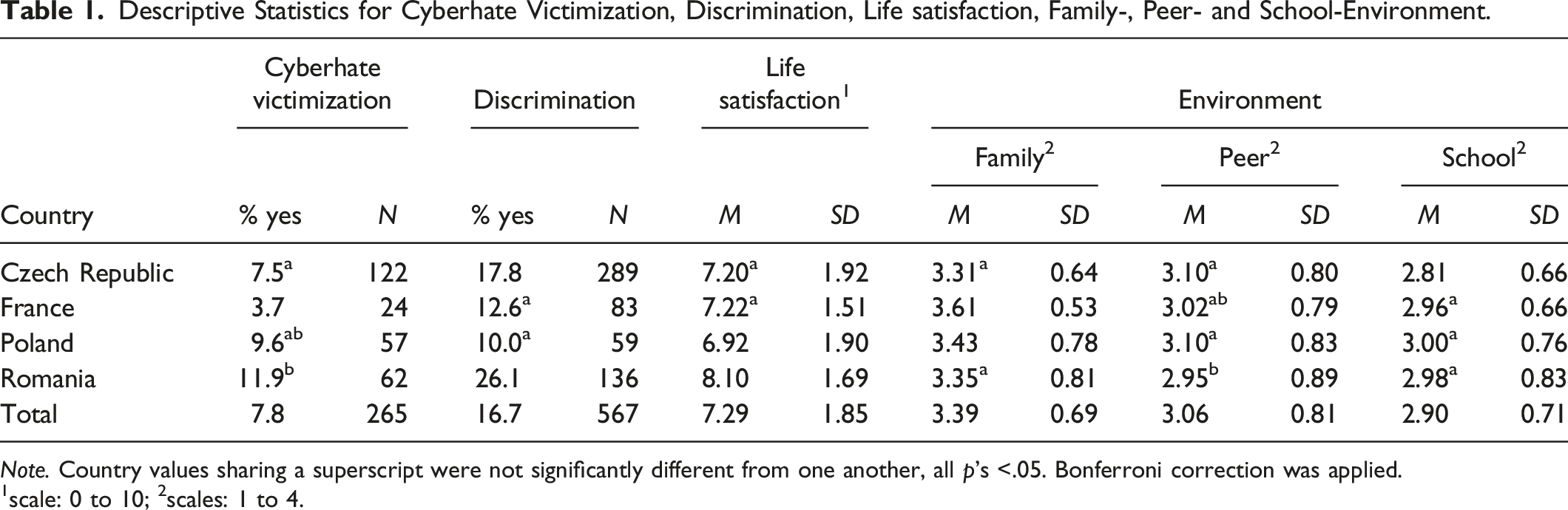
Note. Country values sharing a superscript were not significantly different from one another, all p’s <.05. Bonferroni correction was applied.
1scale: 0 to 10; 2scales: 1 to 4.
Bivariate Correlations between Cyberhate Victimization, Discrimination, Life satisfaction, Family-, Peer- and School-Support.
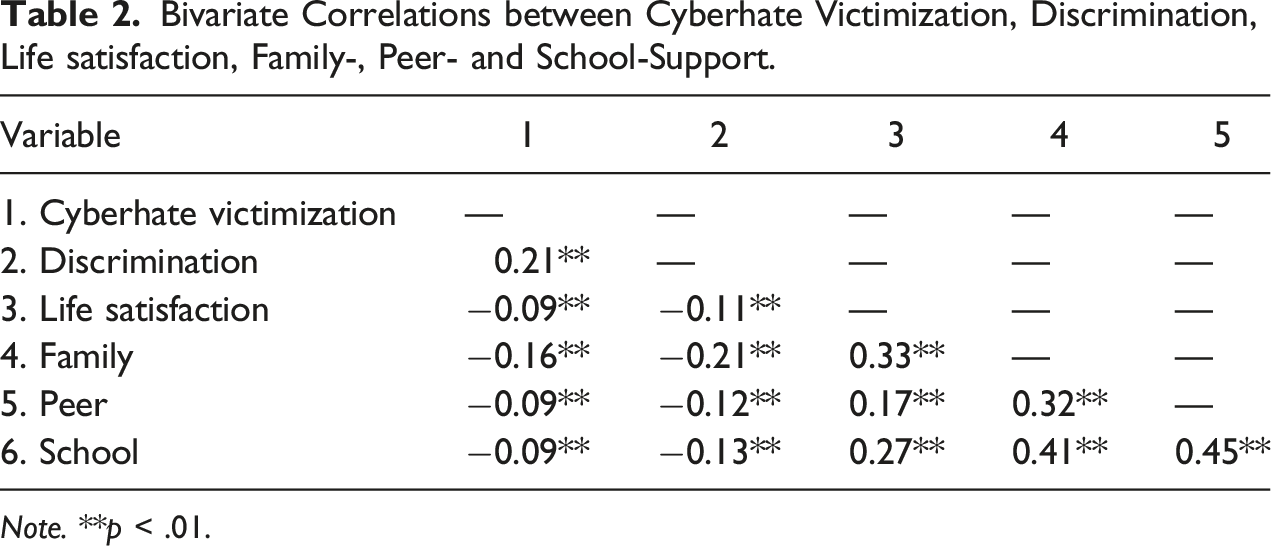
Note. **p < .01.
Moderation Analyses
Linear Regression for Discrimination and Life Satisfaction on Cyberhate Victimization by Supportive Environment.
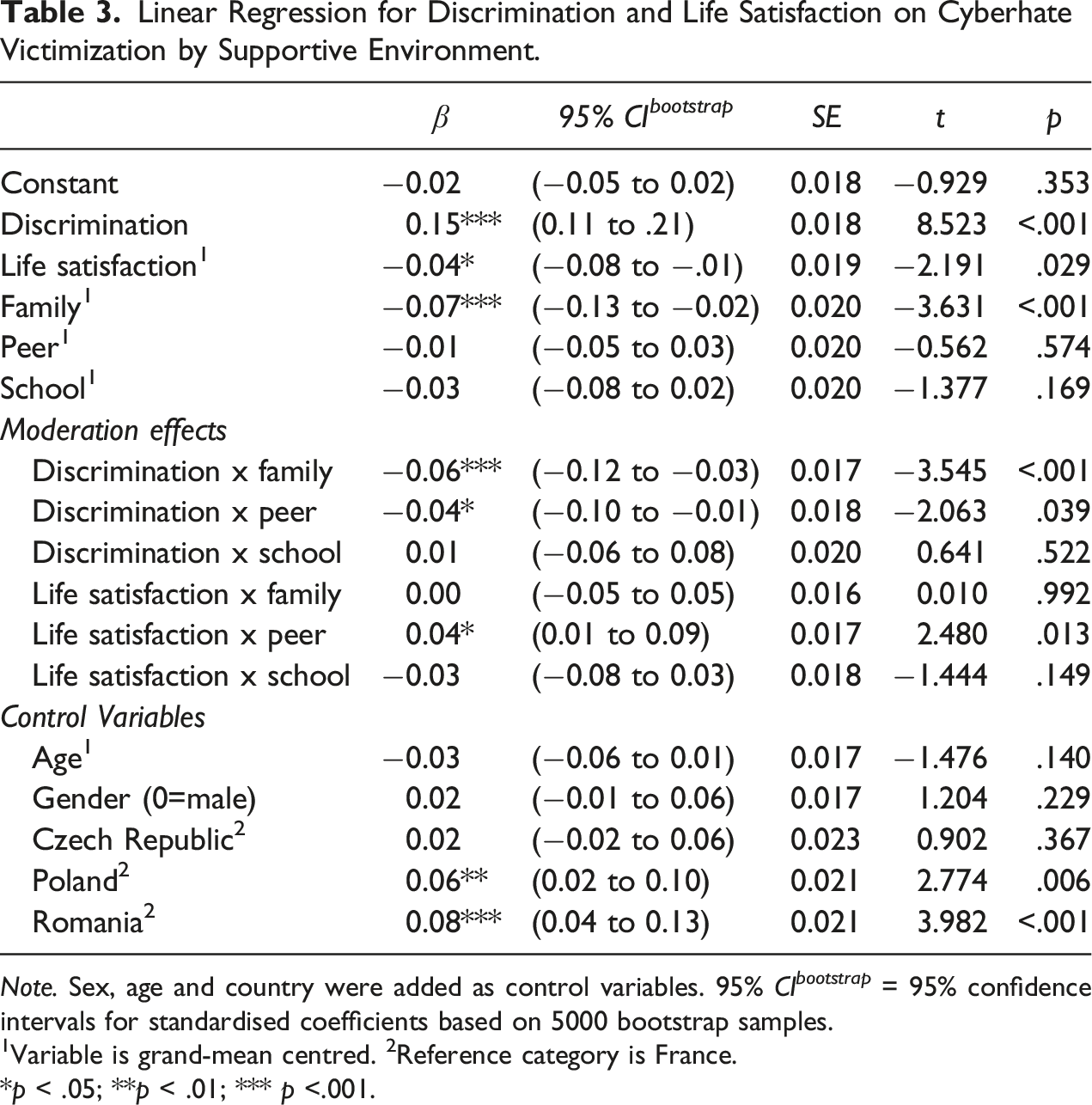
Note. Sex, age and country were added as control variables. 95% CI bootstrap = 95% confidence intervals for standardised coefficients based on 5000 bootstrap samples.
1Variable is grand-mean centred. 2Reference category is France.
*p < .05; **p < .01; *** p <.001.
As hypothesised significant moderation effects emerged for family and peer support on the effects of discrimination (β = −.06 and −.04; p < .001 and .05, respectively) and for peer support on the effects of life satisfaction (β = .04; p < .05). Against predictions, family support did not moderate the effect of life satisfaction and school support did neither moderate the effect of discrimination nor of life satisfaction on cyberhate victimization (Table 3).
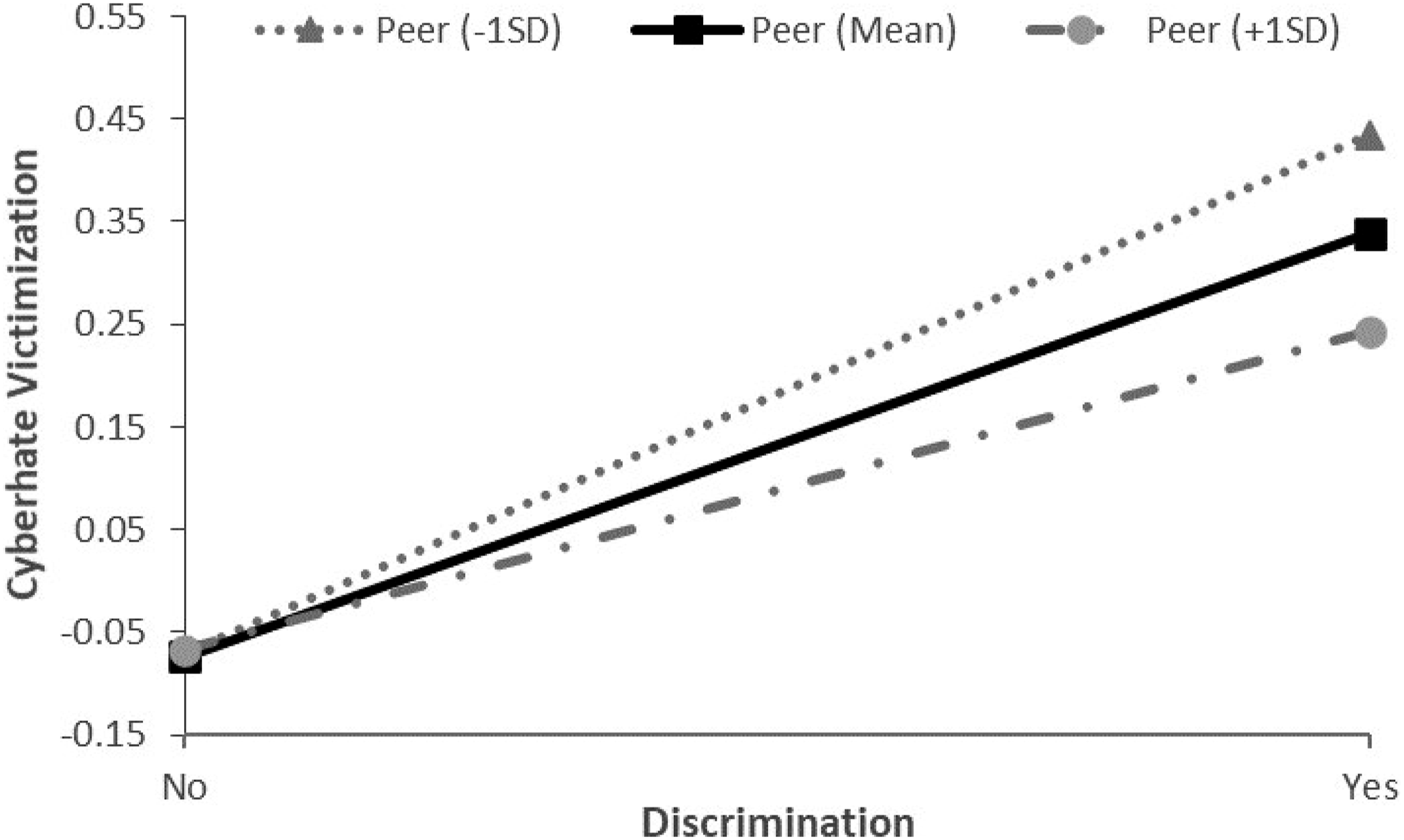
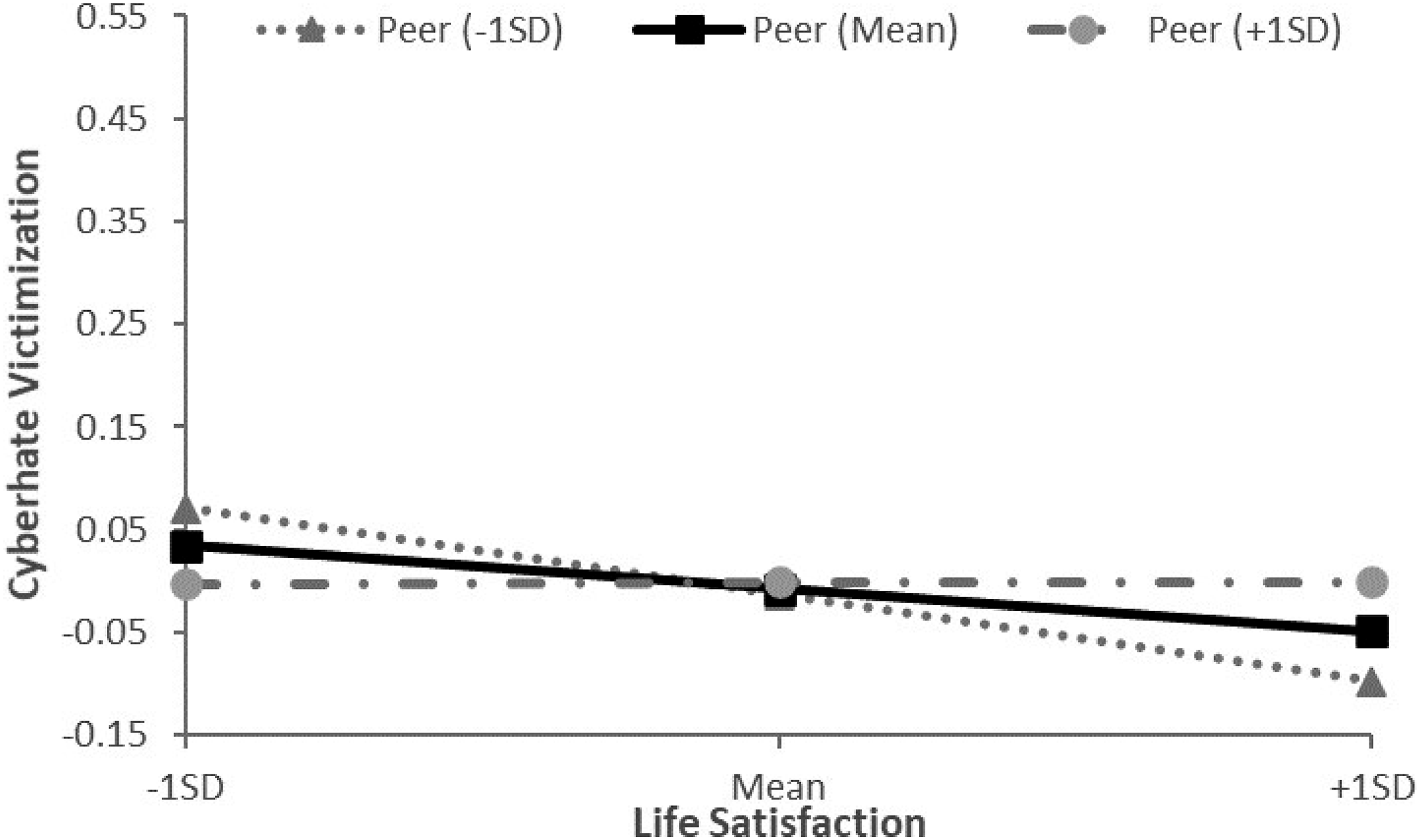
Closer inspection of the significant moderations revealed that the positive association between discrimination and cyberhate victimization lessens with more supportive family and peer environments. The association between experiencing discrimination and frequencies of cyberhate victimization was stronger when the family or peer environments were less supportive (β = .22 and .19; SE = .02 and .03; p’s < .001, respectively, at −1 SD) compared to when the family environment or peer environments were more supportive (β = .10 and .12; SE’s = .03; p’s < .001, respectively at +1 SD; Figures 1 and 2). Further, the negative association of life satisfaction with cyberhate victimization disappeared with a more supportive peer environment. The negative association between life satisfaction and cyberhate victimization was stronger when the peer environments was less supportive (β = −.08; SE = .02; p < .001, at −1 SD) and became insignificant when the peer environment was more supportive (β = .00; SE = .03; p = .983, at +1 SD; Figure 3). Simple Slopes for the Regression of Discrimination on Cyberhate Victimization at Different Levels of Family Support (Standardised Scores). Simple Slopes for the Regression of Discrimination on Cyberhate Victimization at Different Levels of Peer Support (Standardised Scores). Simple Slopes for the Regression of Life Satisfaction on Cyberhate Victimization at Different Levels of Peer Support (Standardised Scores).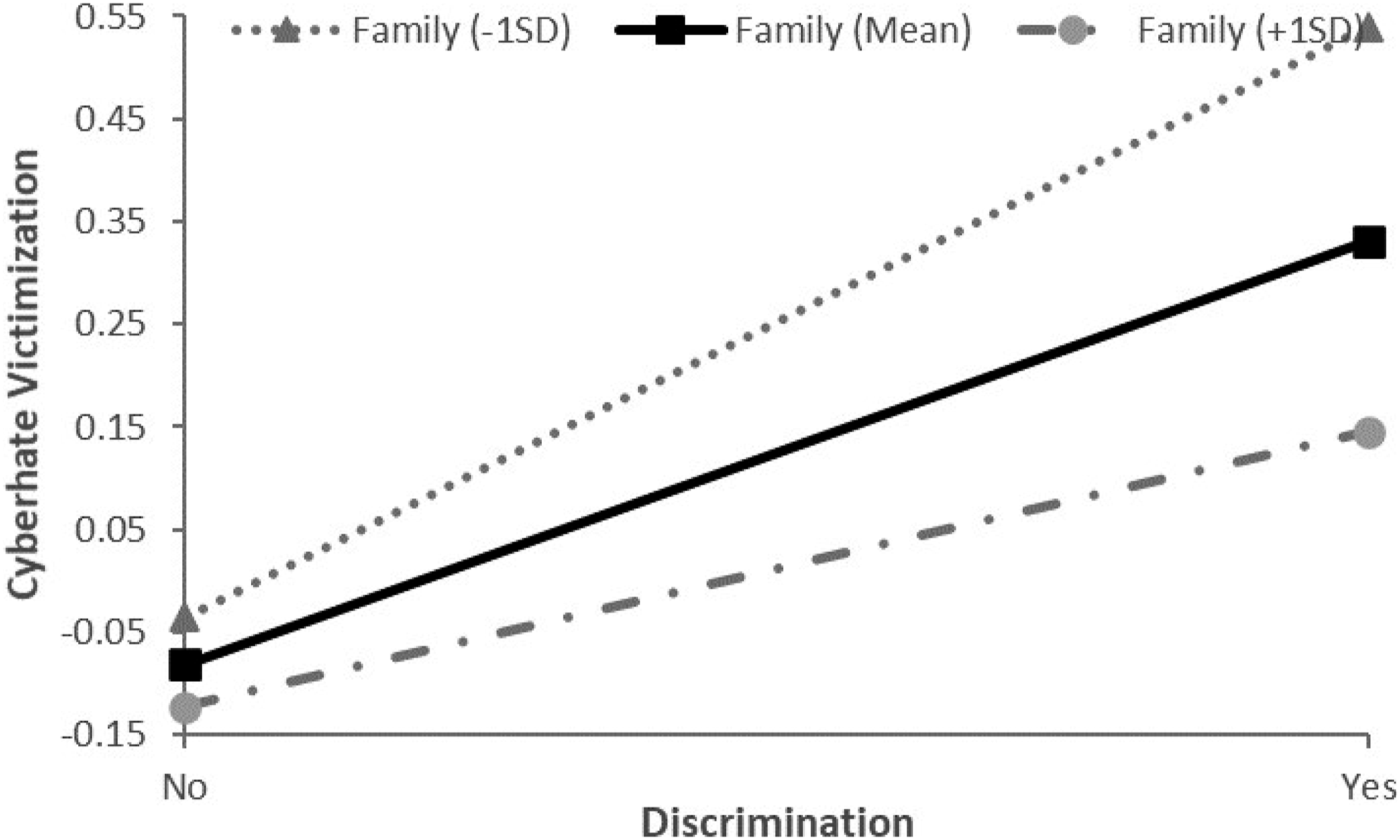
Discussion
The present study aimed to investigate whether adolescents perceiving to be discriminated as well as those who display low life satisfaction are more likely to experience cyberhate victimization. It was further sought to determine whether both of these factors could be buffered against by environmental support in terms of family, peers and school. Predictions were confirmed for perceived discrimination as well as low life satisfaction which were shown to be significantly associated with cyberhate victimization. It was further confirmed that a more supportive family environment reduced the likelihood of experiencing cyberhate victimization amongst those who reported discrimination but not amongst those with lower life satisfaction. In addition, a supportive peer environment was shown to reduce these associations for both, those who reported discrimination as well as lower life satisfaction. Against predictions school support did not affect the association with victimization for either of these factors.
The increase in risk of cyberhate victimization amongst those who reported to be discriminated confirms assumptions due to the conceptual relations between discrimination and cyberhate. Cyberhate is a form of online aggression that is targeted not only towards individuals but, similar to discrimination, towards the group an individual belongs to (Foxman & Wolf, 2013; Oksanen et al., 2014). Hence, those who reported to be discriminated should also be more likely to be targeted by cyberhate on the basis of their group membership. The current finding is in line with other research showing that those who belong to minority groups are more vulnerable to cyberhate and cyberbullying victimization (Blaya, 2019; Tynes, 2015). Similar to the relations between cyberbullying and bullying these findings highlight associations between offline and online contexts (Blaya et al., 2020; Görzig, 2016b). Further research is needed toward a better understanding of the processes that lead individuals to be involved in online hate as well as offline discrimination and to include both types of victimization in intervention programmes. However, given the weak effect of the present findings, it may further be concluded that there are other factors at play explaining cyberhate victimization beyond the discriminated group membership assessed in the current study. Perhaps, not only those are recipients of cyberhate who, as in the in the current study, report to be discriminated because of their origin or religious group memberships. There may be other group memberships that are basis for discrimination that have not been captured by this research as well as other group identities not assessed here that may pose a risk for victimization by cyberhate in adolescence which should be considered in future studies.
Those with a lower life satisfaction also showed higher vulnerability for cyberhate victimization. This finding is in line with the literature that those with lower life satisfaction are individuals who for various reasons are more prone to be targets of aggression or victimization in general (Arseneault et al., 2010; Oksanen et al., 2014; Tynes et al., 2008; Wachs, Gámez-Guadix et al., 2020). Lower life satisfaction is usually associated with and may even create various levels of disadvantage in society (e.g. lower social and economic resources and success; Lyubomirsky et al., 2005). Those who are somewhat worse of, such as in form of low life satisfaction, and in particular if they are perceived as such, are at risk to be ridiculed or the target of aggression by others because of their difference as well as lower levels of self-esteem and agency to defend themselves (Kowalski & Limber, 2013; Wachs, Görzig et al., 2020). These are behaviours usually displayed towards members of less powerful groups in order to maintain the status quo and power relations between groups in society (Pratto et al., 2006; Tajfel, 1982). However, it should be noted as well that the effect was weak, and the direction of the effect is not clear. The relation between life satisfaction and victimization by online aggression in general has been discussed to be bi-directional (Gámez-Guadix et al., 2013; Keipi et al., 2017). Hence, for the current study, it may well be that life satisfaction is affected by cyberhate victimization or that there is a cyclical process at play. There is further need for longitudinal research to determine the nature and direction of these effects.
The current findings regarding environmental support are in line with assertions by socio-ecological systems theory proposing that different environmental levels need to be considered separately as well as in interactions with individual characteristics (Bronfenbrenner, 1979). Differential findings emerged for the environmental support variables studied in the current research (i.e. family, peers and school) as well as their interactions with individual characteristics (i.e. perceived discrimination, life satisfaction).
Family support emerged as a protective factor. A supportive family environment showed to be protective towards experiencing cyberhate victimization in general as well as to buffer against this risk due to perceived discrimination. These findings complement previous research showing that an empathetic and caring family can act as a protective factor against various online risks (Chen et al., 2017; Fanti et al., 2012). Further, the buffering effect of family support from the effect of perceived discrimination on victimization supplements findings showing that amongst discriminated groups strong family bonds are particularly important (Austin & Craig, 2013; Klein & Golub, 2016). This may be even more so the case where parents or caretakers and their children share the characteristics on which they are discriminated as was likely the case for those indicated by the measurement in the current study (i.e. ethnicity and religion). In the current study family support did, however, not protect against the negative effects of low life satisfaction. It may be that the sources for the low life satisfaction, as discussed above, are shared or originate within the family which may then render those families, where support would be particularly needed, less resourceful in providing this.
Peer support emerged as a buffer against the risk of cyberhate victimization due to perceived discrimination as well as low life satisfaction. Peers and social support have shown to become increasingly important particularly as a young person enters the period of adolescence (Hall-Lande et al., 2007; Johns et al., 2018; Leung & McBride-Chang, 2013). Like family support, support from friends in the same age group appears to buffer against the effects of perceived discrimination. A young person who belongs to a group from a discriminated background, who feels acceptance and receives support inside and perhaps also outside of this group, may feel more resilient to the effects of perceived discrimination on cyberhate victimization and might be able to develop greater self-confidence and assertiveness that would act as a protective factor against aggression offline as well as online (Sharp, 1996; Wachs, Görzig et al., 2020). These findings further solidify research showing that social support can generally buffer against the negative effects of being discriminated (Borowsky et al., 2013; Bowleg et al., 2013; Kendrick et al., 2012; Steers et al., 2019).
Peer support also protected against the negative effects of low life satisfaction which supports evidence that particularly adolescents do benefit from friendship and support within their own age group when in distress (Frison et al., 2016; Oberle et al., 2011) and that this kind of protective factor also holds for cyberhate victimization. Social identity and the feeling of belonging to a group act as a protective factor for both risk and victimization as it is a source of social support and in-group protection due to the sharing of common norms, behaviours and values (Hymel & Swearer, 2015). This appears to be particularly important for those who may otherwise be perceived to show a lack of fit with normative expectations due to the display of low life satisfaction (Kowalski & Limber, 2013; Valois et al., 2001). This finding confirms the need for further investigation on the in-group values and their impact as protective or risk factors concerning cyberhate victimization.
Against expectations, school support did not appear to have any effect on the risk of victimization by cyberhate. This was surprising insofar as school climate and school safety emerged as one of the strongest factors in intervention and prevention efforts against cyberbullying (Bevilacqua et al., 2017; Choi et al., 2019; Fanti et al., 2012; Hinduja & Patchin, 2017; Kowalski et al., 2014; Simão et al., 2017; Zych et al., 2019). Perhaps it is here where one of the distinctions between cyberhate and cyberbullying surfaces. Whilst cyberbullying is online aggression amongst individuals from the same group (Leung et al., 2018) often involving the same protagonists as victims and perpetrators who attend the same school and share the same class (Wegge et al., 2014), cyberhate is online aggression towards another group or an individual belonging to that group (Blaya, 2019; Hawdon et al., 2015). Therefore, if the support or climate is more positive within a group (i.e. school or classroom) this may affect cyberbullying but perhaps not cyberhate.
It should further be noted that the measure assessing peer support in the current research, refers to peers in terms of friends, which can be in and outside of school, whilst the measure assessing school support also refers to peers but in the same classroom; these may be class-based friends but may as well be perpetrators of cyberbullying or cyberhate and thus may not be considered as potential support in case of difficulties or cyberhate victimization. Research suggests that minority youth socialise with other young people from the same community (Graham & Echols, 2018) and they might find in-group support out of school. This difference in assessment may explain the on first sight seemingly contradictory findings between peer and school support in the current study. Moreover, the measure for school support also included two questions about teachers. As previously demonstrated, students tend not to talk about their online negative experiences to school staff due to the perception that school staff will not be able to deal properly with the issue and even exacerbate or for fear of being laughed at by other students (Li, 2010). Hence, the specific content addressed by the measurement used in the present research may have contributed to the lack of findings for school support.
In addition to the predicted effects a significant albeit weak effect of a supportive family environment was shown to reduce the overall risk of cyberhate victimization, and a significant effect emerged for countries amongst the control variables whilst the effects of age and gender were not significant. The findings on age and gender, although not a focus of this research, are in line with descriptive findings from EUKO IV data (Machackova et al., 2020) as well as other research in Germany and Finland (Oksanen et al., 2014; Räsänen et al., 2016; Wachs, Gámez-Guadix et al., 2020) whilst differential findings have been shown elsewhere when using different samples or including different sets of correlates (Gámez-Guadix et al., 2020; Wachs & Wright, 2019). These divergent findings demonstrate the need for more uniform definitions and methodologies in this line of research, specifically, when representative findings about key demographic predictors are of interest (Smith et al., 2019).
Implications
Relating the present findings back to the concept of risk and protective factors, a few implications emerge. In the case of cyberhate victimization in adolescence, a supportive family environment has shown to reduce the overall risk of cyberhate victimization. Further, the vulnerability for those who reported to be discriminated was reduced by supportive family as well as peer environments and the vulnerability for those with low life satisfaction was reduced via a supportive peer environment. It may therefore be suggested to educate and support parents and families in relation to cyberhate as well as support and empathy towards adolescents in general. This approach is supported by research suggesting that parental education and an empathic instructive approach to mediation in social media use positively influences their children’s media use whilst restrictive parental mediation as well as mediation based on the use of technical devices only, proved to be non-effective or contraindicated to protect young people from cybervictimization (Baldry et al., 2018; Chen et al., 2017; González-Cabrera et al., 2018; Görzig & Machackova, 2016; Kowalski et al., 2014; Wachs, Costello et al., 2020).
Further, the young people from minority groups likely to be submitted to hateful aggressions would benefit from specific support as well as their families so that they are provided the skills and assertiveness to develop coping strategies including breaking the law of silence. This is even more important as it has been shown that minority young people may not talk to their parents in order to protect them (Blaya, 2019; Blaya & Bergamaschi, 2019). Lastly, peers may be educated about the importance of empathy and support of their friends who may show lower life satisfaction or are from other minority groups. Intercultural education at the school level proves to be effective in diminishing blatant and obvious discriminatory attitudes and schools might have an important role to play on this aspect of cyberhate (Bergamaschi & Blaya, 2020). These implications highlight that specifically those from disadvantaged backgrounds may benefit from support. Provision should be considered by social services, schools or youth clubs where vulnerable groups can be reached and supported.
Limitations
The current study and its findings are not without limitations. Firstly, a cross-sectional design limits the possibilities of causal interpretations and no information about the consent rate was available which might have caused a selection bias that is not known about. Further, the assessment of cyberhate victimization is not as inclusive as some of the proposed definitions. For example the description focuses on examples of a specific set of group identities. A similar limitation applies to the discrimination measure. Whilst the use of these measures was considered with the particular (young) age group in mind, it is possible that the present study is underreporting prevalence with a potential bias towards the specified groups. Further, effect sizes or explained variance are generally small across all effects in the current study. The potential non-inclusiveness of the measures may be a contributing factor; however, more likely is that the nature of cyberhate victimization is multi-faceted and cannot be determined by one set of predictor variables alone. A further limitation was the unavailability of information about respondents’ ethnicity or religion. Even though their perceived discrimination due to these characteristics was assessed, this might not indicate their actual socio-demographic background. Moreover, as far as discrimination is concerned, the offline perceived discrimination experiences by the participants might also occur online but we did not ask this specific question and it would be relevant to investigate the overlap between offline and online discrimination further in order to inform intervention programmes.
In addition, the generalisability of our sample is limited as a listwise data exclusion for missing data in our analysis resulted in a small overrepresentation of older children in our sample. However, the difference was very small (0.53 years). Further, age was controlled for in all our analyses, therefore we believe our findings show no or only a minimal bias toward older children.
Future Directions
To address some of the remaining questions as well as limitations of the current study, future research should explore the use of more inclusive measures whilst keeping ethical considerations tailored to specific age groups in mind. Also, longitudinal as well as more complex models with a greater number of explanatory variables may be investigated in an intersectional approach. In addition, it may be worth considering different types of cyberhate victimization by, for example, differentiation between different types of targeted subgroups. In the same vein, qualitative research or content analyses could be conducted to explore the specific nature of cyberhate content.
Conclusion
Cyberhate seems to be part of the lives of many young people and particularly of those who report perceived discrimination and low life satisfaction as they are more at risk to be victimised. The exploration of the potential buffering effect of family and peer support shows that these sources of support tend to mitigate the effects of discrimination and reduce the risk of cyberhate victimization. Although family support does not have a positive impact on the young people who report low life satisfaction, it might be interesting to investigate further what would be the conditions to improve the family effectiveness in that matter. Surprisingly, school support does not seem to have any impact. There again, some further investigation on the different types of support within the school but also differences in school climates would be relevant. As stressed by the American Jewish Committee Berlin (2017) quoted by Bauman et al., (2021) teachers find it challenging to deal with discriminatory behaviours and intercultural issues. This last point might lead students not to rely on teachers’ support.
Beyond these considerations, there is a clear need for further research to investigate the types of social supports that would be most effective according to age and gender to reduce risk and mitigate the consequences of cyberhate that can also alter the trust of the young people in others such as family and peers (Näsi et al., 2015). Cyberhate represents a serious individual and societal hazard that deserves the strongest attention from the scientific community.
Footnotes
Author Contributions
Anke Görzig and Catherine Blaya share first authorship, Marie Bedrosova, Catherine Audrin and Hana Machackova share second authorship. Correspondence should be addressed to Dr. Anke Görzig: a.goerzig@gre.ac.uk
Declaration of Conflicting Interests
The author(s) declared no potential conflicts of interest with respect to the research, authorship and/or publication of this article.
Funding
The author(s) disclosed receipt of the following financial support for the research, authorship and/or publication of this article: This research was co-funded by grants from Facebook, the International Observatory of Violence in Schools for France and the Czech Science Foundation, grant number 19-27828X (project FUTURE). The data for this study were collected within the EU Kids Online IV survey (see Smahel et al., 2020; Zlamal et al, 2020).
