




Abstract
The middle school transition year poses known challenges to early adolescent adjustment, particularly for students from ethnic and racial minoritized backgrounds who face ethnic and racial discrimination from school personnel and classmates. Drawing on a sample of 711 African American and Latinx sixth-grade students attending 17 schools, we employed latent class analysis and latent transition analysis to explore the nature of and changes to perceived ethnic and racial discrimination during the beginning and end of sixth grade. We also examined the possibility that perceived ethnic–racial discrimination could be diminished through a school-based, universal program for teachers to improve the school ecology. Findings revealed four distinct classes concerning perceived ethnic–racial discrimination, with patterns over time highlighting the malleability of perceived ethnic–racial discrimination during the first year of middle school. Findings provide direct implications for understanding and improving ethnic and racial minoritized students’ school experiences at the middle school transition.
Keywords
Ethnically diverse middle schools have been conceptualized as settings with great potential to benefit early adolescents’ adjustment. From this perspective, exposure to peers and adults from other racial and ethnic groups; opportunities to form peer relationships across racial and ethnic groups; and the potential for balances of power that emerge with strong representation of members of diverse racial and ethnic groups set the stage beginning in the first year of middle school for subsequent positive academic and mental health outcomes (Graham, 2018). Realizing the potential benefits of racially and ethnically diverse middle schools is threatened if students from ethnic and racial minoritized groups, including African American and Latinx students, experience ethnic–racial discrimination from teachers and peers. The term minoritized is used to characterize how African American and Latinx adolescents are placed in a minority position, regardless of the numerical presence of their group (Benitez, 2010). In American schools, ethnic–racial discrimination is an experience that perpetuates the minoritization of African American and Latinx students, and is particularly salient during adolescence (Umaña-Taylor, 2016). Interactions among students and teachers expand and diversify at the same time as adolescents gain the cognitive capacity to recognize that their treatment by others in their schools may be associated with their ethnic or racial group membership. Indeed, the prevalence of perceived discrimination on the whole increases significantly for African American and Latinx adolescents as they move through adolescence (Umaña-Taylor, 2016), and threatens their academic and behavioral adjustment during middle and high school, and beyond (Chavous et al., 2008; Unnever et al., 2016; Wong et al., 2003).
The primary aim of the present study is to investigate the dynamic patterns of African American and Latinx early adolescents’ perceived discrimination from peers and teachers during sixth grade, their transition year into middle school. The context of the study sample, an efficacy trial of a professional development program designed to help sixth-grade teachers create a more supportive middle school transition, provides a unique opportunity to address an additional and exploratory aim: the extent to which patterns of minoritized early adolescents’ perceptions of discrimination are responsive to professional development that supports teachers’ efforts to improve the social-emotional context of sixth grade. These aims address current gaps in understanding developmental patterns of ethnic–racial discrimination for minoritized adolescents, and provide preliminary understanding into the potential malleability of these perceptions.
Conceptualizing Perceived Ethnic–Racial Discrimination
According to the Integrative Model for Studying Developmental Competencies in Minority Youth (García Coll et al., 1996; Marks & Garcia Coll, 2018), minoritized adolescents may experience school-based discrimination from both peers and adults. Discrimination reflects social stratification processes associated with their racial and ethnic group membership, as well as their dual social roles as student and as peer. An extension of this model has been proposed to apply to White youth, in that racial privilege and dominance confers both benefits and costs to Whites (Seaton et al., 2018). However, the definition of ethnic–racial discrimination identifies the subordinate ethnic–racial group as being differentially and uniquely affected by the dominant racial groups’ behaviors (Williams et al., 2003). Thus, although White youth may perceive and experience discrimination due to their race, the privilege of belonging to the dominant racial group places them in a markedly different position than that of their minoritized youth counterparts. Accordingly, the remainder of this literature review and the focus of this study are on ethnic–racial discrimination perceived by minoritized students.
Consistent with this perspective, discrimination from teachers appears to reflect negative academic and behavioral expectations toward ethnic and racial minoritized students (McKown & Weinstein, 2002; Tenenbaum & Ruck, 2007) and is associated with academic difficulties (Benner & Graham, 2013). In contrast, discrimination from peers may be more attributable to classroom racial diversity (Faye Jackson et al., 2006) and is associated with psychological maladjustment (Benner & Graham, 2013).
Researchers have identified general trends in perceived discrimination from teachers and peers among minoritized youth. For instance, longitudinal study of African American, Dominican, and Chinese early adolescents at the end of sixth, seventh, and eighth grade revealed a linear decrease in perceptions of peer discrimination, but a relatively stable trajectory across years for adult discrimination (Niwa et al., 2014). Following a variable-centered approach, these researchers have focused on distinctions in trends of perceived discrimination from teachers versus peers. Although valuable for establishing overall patterns of change, variable-centered approaches presume limited heterogeneity in the psychological behaviors measured by these variables and can overlook distinct subgroups of students not captured by the overall population mean (e.g., Beltz et al., 2016; Howard & Hoffman, 2018). Yet, minoritized adolescents’ experiences of discrimination from both teachers and peers may occur simultaneously during the course of the school day, and the combinations of discrimination experienced from both sources likely distinguish adolescents in meaningful ways. Person-centered approaches identify emergent groupings of students based on similarities within a set of behaviors or characteristics (e.g., perceptions of types and sources of discrimination), providing a more holistic understanding of a given population (Lanza & Cooper, 2016). When extended to longitudinal analysis, person-centered approaches offer insight into changes in these intraindividual patterns over time while accounting for the heterogeneity of specific behaviors (e.g., types and sources of discrimination) (Beltz et al., 2016).
Following a person-centered approach, McNeil Smith & Fincham (2016) used latent class analyses to identify subgroups of African American 8th and 11th graders differentiated by their perceived discrimination from teachers and peers. Three distinct classes emerged: a low discrimination class, including a majority of students with low probabilities for perceiving any discrimination from teachers or peers; a high peer and teacher discrimination class, including a modest proportion students with a high probability for perceiving both peer and teacher discrimination; and a high teacher discrimination class, including a small but meaningful proportion of students with high probabilities for perceiving teacher discrimination but low probabilities for perceiving peer discrimination. Using latent transition analyses, which estimate how membership in subgroups may change over time, these researchers found that among the students classified into the group with comparatively high probability of perceiving racial discrimination by peers and/or teachers during eighth grade, 40–60% moved into a low discrimination group at 11th grade (McNeil Smith & Fincham, 2016). The results of this study underscore that when perceived discrimination from teachers and peers are considered simultaneously, subgroups of adolescents have distinct experiences that are particularly concerning for a small, but significant proportion of students. Longitudinal studies from both variable- and person-centered approaches suggest that perceived discrimination among early adolescents across multiple years is malleable. To date, however, identification of subgroups is limited to late middle school (i.e., 8th grade); the extent to which such groupings are present early in students’ middle school experience has not yet been addressed.
School-Based Discrimination During the Middle School Transition Year
Tenets of life course theory help to conceptualize the nature of and changes to perceived ethnic–racial discrimination from teachers and peers, among minoritized adolescents during the first year of middle school. Life course theory frames adjustment as an interplay of individual developmental growth (i.e., cognitive, psychological, and physical) with social contextual factors, and highlights the significance of contextual transitions, such as school transitions (Benner, 2011). School transitions can alter students’ adjustment by introducing different “situational imperatives,” which include behavioral expectations, social roles, and social ties. Interpersonal relationships both influence and are influenced by adjustment during transitions and act as social convoys that carry individuals through the transition. Ethnic and racial stratification in American society penetrates social contexts and individuals’ adjustment by compromising opportunities for students from ethnic and racial minoritized groups at the point of school transitions (Benner, 2011; Benner & Graham, 2009). Findings from a meta-analysis examining perceived ethnic–racial discrimination and social-emotional distress point to the middle school years as a particularly problematic schooling context for African American and Latinx youth, with greater effect sizes reported in children aged 10–13 years compared to older adolescents (Benner & Graham, 2009).
Consistent with a life course framework, perceptions of school-based ethnic–racial discrimination reflect an interplay of developmental and school contextual changes (Umaña-Taylor, 2016). As children enter early adolescence, their cognitive capacity to perceive racism and discriminatory experiences deepens (Quintana, 1998), coincidentally with the move from elementary into middle school. The middle school transition is well known for imposing new situational imperatives simultaneous with early adolescents’ developmental changes. As they enter middle school, students must forge new relationships and a new peer ecology with multiple, unfamiliar teachers, and both familiar and unfamiliar peers (Barber & Olsen, 2004; Farmer et al., 2011a). During the 6th grade transition year specifically, peer norms increasingly devalue academic engagement and prosocial behaviors in favor of academic disengagement and disruptive, socially aggressive behavior (Bellmore et al., 2011aBellmore, Nishina, & Graham, 2011; Galván et al., 2011). Middle school peer ecologies can also foment peer victimization (Dijkstra et al., 2009), which has been found to align with reports of racial discrimination in both Latinx and African American adolescents (Seaton et al., 2013). Moreover, increases to ethnic and racial segregation in peer relationships typical of the middle school transition may contribute to early adolescents’ increased concerns for safety, victimization, and loneliness (Juvonen et al., 2018).
At the same time, ethnic and racial discrimination may infiltrate students’ experiences through differential expectations for student behaviors and success from teachers. Compared to their experiences with fifth grade teachers in elementary school, students entering sixth grade in ethnically and racially diverse middle schools experience teachers who maintain significantly less efficacy for managing classroom behavior and students’ peer relationships, and for engaging students (Fives & Buehl, 2009; Ryan et al., 2015). Less efficacious teachers have less organized classrooms, and provide less instructional and emotional support to students (Ryan et al., 2015). Harsher disciplinary strategies against students from ethnic and racial minoritized groups by school personnel are a widespread problem (Chavous et al., 2008). More generally, teachers hold lower expectations for ethnic and racial minoritized students than for White students (Boser et al., 2014). Although much of the literature distinguishes peer and teacher contexts, in sixth grade, students’ experiences with peers are shaped in part by their relationships with teachers, and the classroom instructional context (Chang et al., 2004). Taken together, the literature suggests that the expectations and norms from peers and teachers are dynamic and intertwined during the middle school transition year, in ways that likely penetrate minoritized students’ experiences of discrimination.
Intervention in the School Ecology and Perceived Discrimination
Numerous situational imperatives introduced at the transition into middle school create a social context that has the potential to cultivate perceptions of discrimination from classmates and teachers. Universal interventions aimed to help educators promote supportive school ecologies could help to reduce the likelihood that students perceive discrimination from either teachers or peers. To our knowledge, such programs have not been tested for their impact on perceived discrimination. Results of a non-experimental study of the Developmental Designs socio-emotional learning intervention, however, found that African American and Latinx students who reported greater exposure to teacher practices designed to promote students’ social, behavioral, and academic competence experienced greater growth in exploration of aspects of their racial identity (Rivas-Drake et al., 2019). These researchers have posited that universal interventions delivered by teachers to address social-emotional aspects of schooling could support educational equity for minoritized students through fostering protective mechanisms such as racial–ethnic identity against discrimination (Jagers et al., 2018; Rivas-Drake et al., 2019).
In the present study, schools were part of a larger project designed to test the efficacy of the Behavioral, Academic, and Social Engagement (BASE) program. The BASE program is a universal program that provides professional development to help sixth-grade teachers promote a school ecology that enhances students’ development of behaviors and relationships that lead to positive academic, behavioral, and social adjustment for all students (Farmer et al., 2013; Motoca et al., 2014). The efficacy of the BASE program has been demonstrated in two distinct randomized controlled trials to change multiple aspects of the situational imperatives of social ecology of the school. In a sample of schools serving African American, Latinx, Native American, and White sixth graders, intervention schools maintained a peer culture that more strongly supported academic effort and achievement as well as discouraged victimization and social aggression as compared to control schools (Farmer et al., 2011b; Hamm et al., 2014). Impact analyses have revealed that ethnic–racial minoritized students perceived greater peer acceptance of academic effort, and reported greater school valuing and school belonging, and less classroom defiance in intervention versus control schools (Dawes et al., 2020; Hamm et al., 2010, 2011).
The theory of change for the BASE program does not include students’ perceptions of ethnic–racial discrimination, and students’ perceived discrimination was not a primary outcome of the professional development program. However, some of the mechanisms through which the universal intervention has its effects are teacher practices suggested to be related to ethnic–racial minoritized students’ perceived discrimination in diverse schools, including improved knowledge and support of positive student peer dynamics; encouragement of effort and achievement for all students; proactive classroom management; and more engaging instruction (Hamm et al., 2010, 2011, 2014; Motoca et al., 2014). Thus, although this universal program does not focus explicitly on the ethnic–racial social climate or intergroup relations, the findings reveal improvement to aspects of the situational imperatives of the social ecology for all students in ethnically and racially diverse schools, as well as some benefits specifically for students from ethnic and racial minoritized groups. Therefore, this study context provides an opportunity to explore the potential for a universal intervention program focused on improving middle school ecology to diminish the extent to which African American and Latinx students experience discrimination.
The Present Study
In the present study, we applied latent class analyses to investigate if subgroups of African American and Latinx early adolescents, differentiated by their perceptions of discrimination from teachers and peers, were evident at the beginning and end of the middle school transition year (sixth grade). By applying latent transition analyses, we also assessed the extent to which students’ experiences shifted during this year. Longitudinal studies of perceived ethnic and racial discrimination have assessed a single time point annually. Assessing students early and late in the transition year provides insight into stability and change in perceptions as students adapt to the new school environment (Benner & Graham, 2011). A latent transition approach can reveal the extent to which certain subgroups differentiated by their perceptions of discrimination appear particularly malleable to change.
Specifically, we hypothesized that sixth-graders would fall into classes delineated by both probability (high, moderate, or low) and source (peer and teacher) of ethnic and racial discrimination. Moreover, given evidence that perceived discrimination is malleable across multiple school grades (McNeil Smith & Fincham, 2016; Niwa et al., 2014), and that the middle school transition year involves significant change to students’ perceptions of support and treatment from classmates and peers (Galván et al., 2011; Niehaus et al., 2012), we hypothesized that students falling in classes with high probabilities for perceived teacher and/or peer racial–ethnic discrimination early in sixth grade would be more likely to transition into classes reflecting low probabilities for perceived discrimination late in sixth grade, while patterns of students falling into classes with low probabilities for perceived ethnic–racial discrimination would be stable over time.
An exploratory aim of the study was to examine the potential for a school-wide intervention, designed to help teachers support early adolescents’ productive social and academic classroom behaviors, to disrupt perceived ethnic–racial discrimination. We hypothesized that as compared to students in control schools, students in schools that implemented the BASE program would be more likely to transition from classifications reflecting high probabilities for perceiving ethnic-racial discrimination early in sixth grade to classifications involving lower probabilities for perceiving ethnic–racial discrimination at the end of sixth grade.
We focused the study on African American and Latinx 6th graders, and on varying probabilities for and sources of discrimination as a basis for groups, guided by recent theorizing that encourages attention to heterogeneity within racial–ethnic minoritized groups (i.e., Williams & Deutsch, 2016). We centered our analyses on African American and Latinx students specifically, excluding White attendees in participating schools, given the prevalence and deleterious implications of school-based perceived discrimination specifically for ethnic and racial minoritized adolescents (Umaña-Taylor, 2016). Although we distinguished subgroups of minoritized students based on their perceived discrimination, as opposed to their ethnic and racial group memberships, we conducted follow-up analyses that included ethnic–racial group as a covariate for each aim, to better account for differences in cross-sectional and longitudinal patterns of perceived discrimination between African American and Latinx students. Previous research has revealed mixed findings pointing to both similarities and differences in prevalence and sources of discrimination by African American and Latinx adolescents (Fisher et al., 2000; Greene et al., 2006; Rosenbloom & Way, 2004; Tenenbaum & Ruck, 2007).
Method
Data for this study were drawn from a larger study of 24 schools designed to test the efficacy of the BASE program for improving students’ social, behavioral, and academic adjustment in the middle school transition year (i.e., sixth grade). Three cohorts of schools were recruited, in each of three consecutive years. The perceived ethnic-racial discrimination measure was administered in five schools in the first cohort, and in all schools in the remaining cohorts, for a total of 17 schools, based on school district approvals of the study. The larger study followed a cluster randomized control trials design in which matched pairs of schools were randomly assigned to intervention or control condition. Intervention condition schools received the BASE program professional development program for teachers; matched control schools were offered the program following completion of the research study. Multi-level analysis of the classroom observation fidelity instrument for the project indicated that teachers in intervention schools had classroom environments and instructional practices more in line with the BASE program model compared to teachers in control schools (Dawes et al., 2020). The study was explained to all sixth grade students by project staff in classrooms; informed consent materials were sent home with students to be returned to classroom teachers. Implementation of the program occurred in one of the three academic years: 2012–2013; 2013–2014; or 2014–2015.
Participants
Demographic Characteristics of Participating Schools.
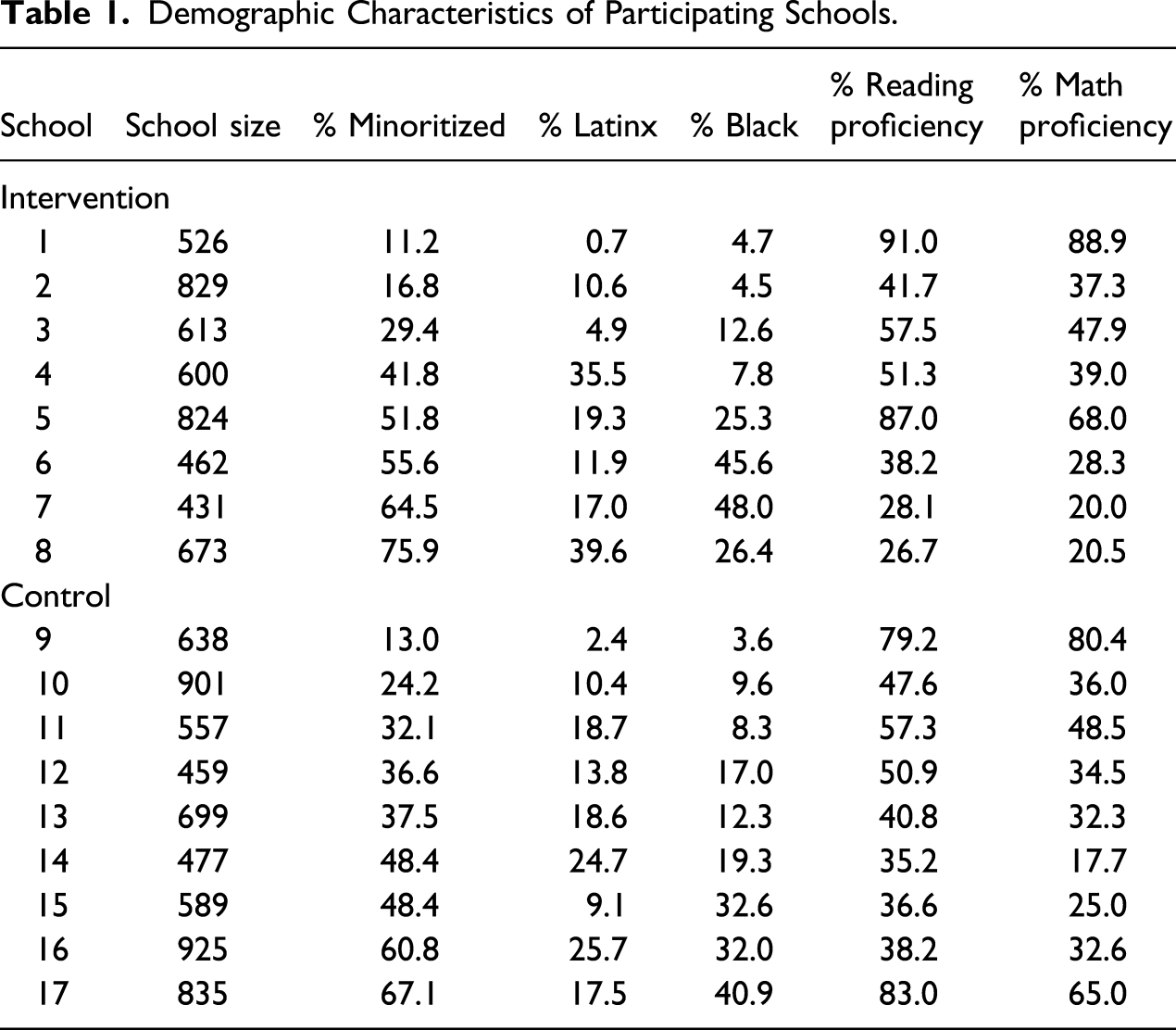
Only ethnic–racial minoritized participants were included in this study considering that ethnic–racial discrimination is highly salient for individuals of ethnic–racial minoritized groups (Douglass & Umaña-Taylor, 2017; Fisher et al., 2000). Because only a small number of students were Asian, American Indian, or multi-racial, the final analytic sample only included African American and Latinx students. The subsample of 711 students from African American (n=389) or Latinx (n=322) backgrounds included approximately even numbers of males and females. Both gender and ethnicity were comparable across the control and BASE program schools. Specifically, students were 52% female in both control and BASE program schools, and 389 identified as African American (53.5% control and 46.5% BASE program) and 322 as Latinx (49.4% control and 50.6% BASE program).
Measures
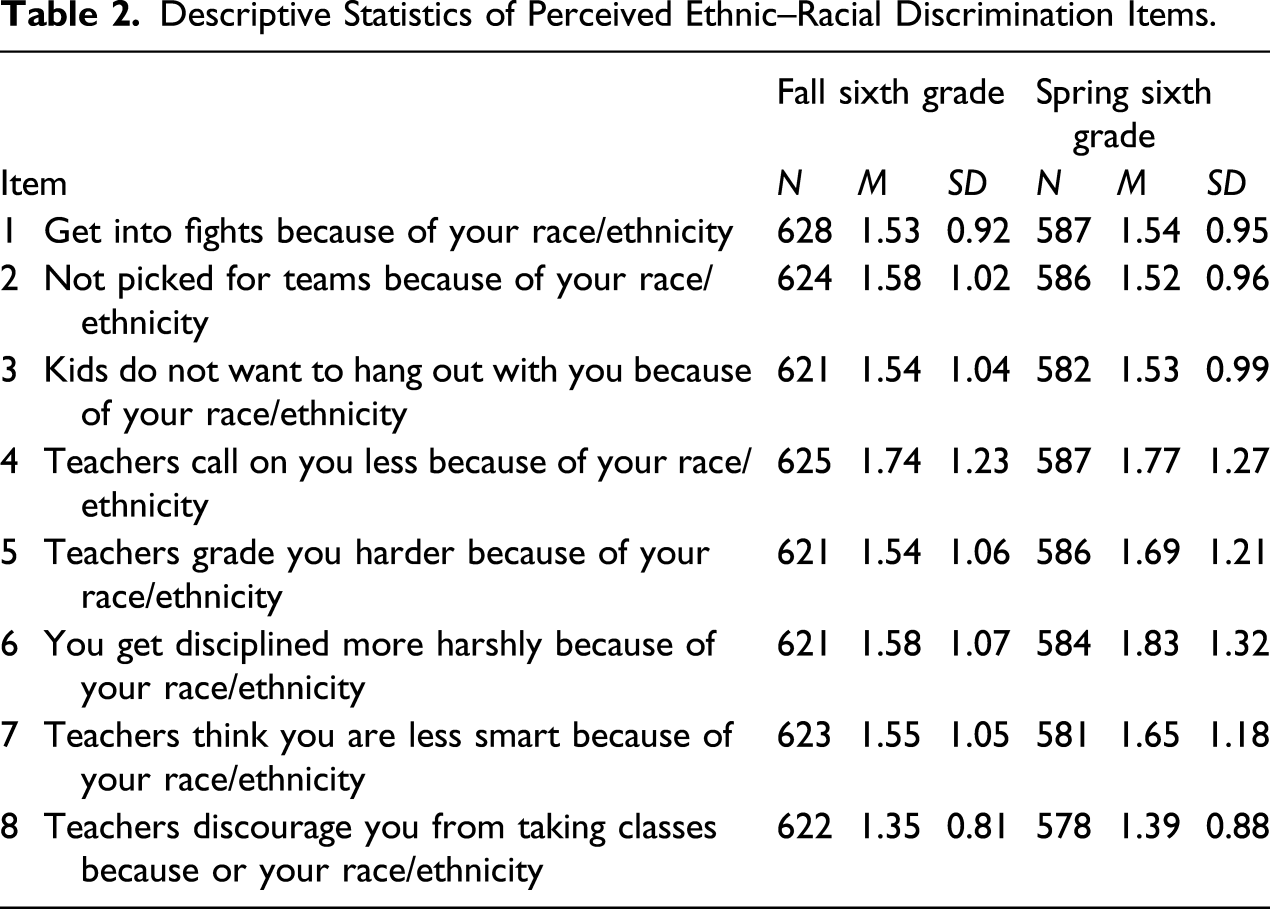
Students’ ethnic–racial group and gender were obtained from school records. Because only African American and Latinx students were included in this study, ethnic–racial group was dummy coded, where African American students were coded as the reference group. Perceived ethnic–racial discrimination by peers and teachers was measured using a scale developed by the Maryland Adolescent Development in Context Study (MADICS, Wong et al. 2003). Students rated their perceived frequency for experiencing ethnic–racial discrimination by teachers (five items) and peers (three items) on a 5-point scale from never (1) to everyday (5). For example, “how often do you feel that teachers grade you harder than they grade other kids because of your race/ethnicity?” asked about teacher discrimination, and “how often do you feel that kids do not want to hang out with you because of your race/ethnicity?” asked about peer discrimination. The scale has adequate psychometric properties (Wong et al., 2003), with Cronbach’s alpha coefficients (
Intervention Implementation
Professional development part of the BASE program builds teachers’ understanding of the social and academic ecology of their schools, and the contributions of peers to classroom and academic behaviors. The program involves focused training on early adolescent social dynamics and the application of evidence-based strategies to help students develop productive relationships in ways that benefit both individual students as well as the broader classroom and school context. Proactive, evidence-based classroom management and instructional strategies with the aim not to “fix” students but instead, to use the classroom environment to support and sustain students’ productive behavior complete the training (Farmer et al., 2013). Teachers complete over 16 hours of professional development that includes a comprehensive, face-to-face 1.5 day summer institute; six online modules that address early adolescence, classroom social dynamics, engaging instruction, and proactive classroom management; and a minimum of 4 hours of video conference consultation with a staff intervention specialist to discuss implementation of recommended strategies to teachers’ own classroom contexts. In two randomized controlled trials involving over 40 schools including those in the present study, fidelity of implementation analyses demonstrated that teachers in intervention schools had classroom environments and instructional practices significantly more aligned with the intervention model as compared to teachers in control schools (Dawes et al., 2020; Hamm et al., 2014).
Analytic Strategy
Identification of distinct classes of perceived ethnic–racial discrimination experiences over time was completed using latent class analysis (LCA) and latent transition analysis (LTA) procedures in SAS 9.4 (Lanza et al., 2015; SAS Institute Inc., 2013). For the first research aim, identifying patterns of perceived ethnic–racial discrimination at the beginning and end of sixth grade, LCA was used to identify latent (unobserved) groups of students based on their perceived ethnic–racial discrimination. LCA is a person-centered technique that estimates class membership probabilities and item-response probabilities conditional on class membership to classify unobserved subgroups in a population (Lanza & Collins, 2008). Models with varying number of classes were compared based on statistical fit and theory. Although there is no commonly agreed upon statistical indicator for determining number of classes, simulations conducted by Nylund et al. (2007) suggest that in addition to considering the conceptual meaning, both the Bayesian information criterion (BIC) and the bootstrap likelihood ratio test (BLRT) are consistent measures for class enumeration. The BLRT estimates the log likelihood difference distribution resulting in a p value signifying whether the k-1 class model is rejected in favor of the k class model (LCABootstrap, 2016). The BIC is based on the log likelihood of the fitted (k class) model, with preferred models minimizing BIC. Thus, comparative fit was evaluated with the BIC, the sample size adjusted BIC (SBIC), BLRT, entropy, and conceptual meaning of the model. A clustering variable dummy coded for school membership was included in the LCA models for comparative fit of all statistical indicators except BLRT due to its underlying assumptions (Dziak & Lanza, 2016). We plotted class probabilities from each model to analyze theoretical and conceptual fit visually. To facilitate interpretations and comparisons, item-response probabilities at or below .3 were considered “low,” probabilities between .3 and .7 were considered “moderate,” and probabilities at or above .7 were considered “high” (Nylund-Gibson & Choi, 2018). In the final LCA models intervention status and ethnic-racial group were included as covariates to examine their associated effects on class membership at both time points. In the case of significant differences between African American and Latinx students, we explored LCA separately for each subgroup, with ethnic–racial group included as a grouping variable. Because the statistical package used to estimate LTA models (PROC LCA PROC LTA (2015)) in SAS) requires measurement invariance for clustered data, these models did not account for school membership.
To examine the second research aim, identifying patterns of perceived ethnic–racial discrimination longitudinally from the beginning to the end of sixth grade, LTA was conducted to model changes in class membership from the Fall of sixth grade to the Spring of sixth grade. LTA is an extension of LCA that permits latent class membership to change over time by using a matrix of transition probabilities between two time points (Lanza & Collins, 2008). Latent classes were constrained to be equal across time and groups, and parameters were estimated to identify the prevalence of class membership at each grade and the probability of transitioning across classes or remaining in the same class from Fall to Spring.
Finally, the third exploratory aim, examining associations between being in a BASE program school and changes in patterns of perceived ethnic–racial discrimination over time, was addressed by measuring odds ratios for the probability of changing class membership across time accounting for differences between control and intervention schools. A follow-up model with intervention status as a transition covariate (i.e., predictor of transition probabilities), and ethnic-racial group as a time 1 (Fall) covariate (i.e., predictor of latent class memberships at time 1), on the entire sample was conducted. The final LTA used intervention status as a grouping variable to isolate transition probabilities for the BASE program and control groups.
For LCA and LTA models including intervention status and ethnic–racial group as covariates (i.e., predictors), SAS requires the designation of a reference group to compare the odds of class membership against. Given the positive implications of students falling or moving into the class associated with the lowest probabilities for ethnic–racial discrimination, and that previous research using covariates in LCA and LTA has designated the healthiest class or the class associated with the lowest levels of stress as a reference group (Connell et al., 2008; Pat-Horenczyk et al., 2016), the class associated with the lowest probabilities for discrimination was selected as a reference group for these analyses.
The LCA and LTA procedures in SAS handle missing data using a full-information maximum likelihood (FIML) technique, where students with data for at least one variable (i.e., the participant answered at least one item on the perceived ethnic–racial discrimination scale) were included in the analysis, but those without covariate data were excluded. Missing data for each of the LCAs completed was 11.7% during the Fall and 17.2% in the Spring, but because the LTA drew from two time points, all cases were included (0% missing data).
Results
Descriptive Statistics of Perceived Ethnic–Racial Discrimination Items.
Patterns of Perceived Ethnic–Racial Discrimination
First, to examine patterns of perceived ethnic–racial discrimination, we conducted latent class analysis at the beginning and end of sixth grade. We hypothesized that sixth graders would fall into classes delineated by both probabilities (high, moderate, or low) and source (peer and teacher) of ethnic and racial discrimination.
Model Fit
Model Fit Statistics for 2-5 Class Solutions for Ethnic–Racial Discrimination During Fall (n = 628) and Spring of Sixth Grade (n = 589).
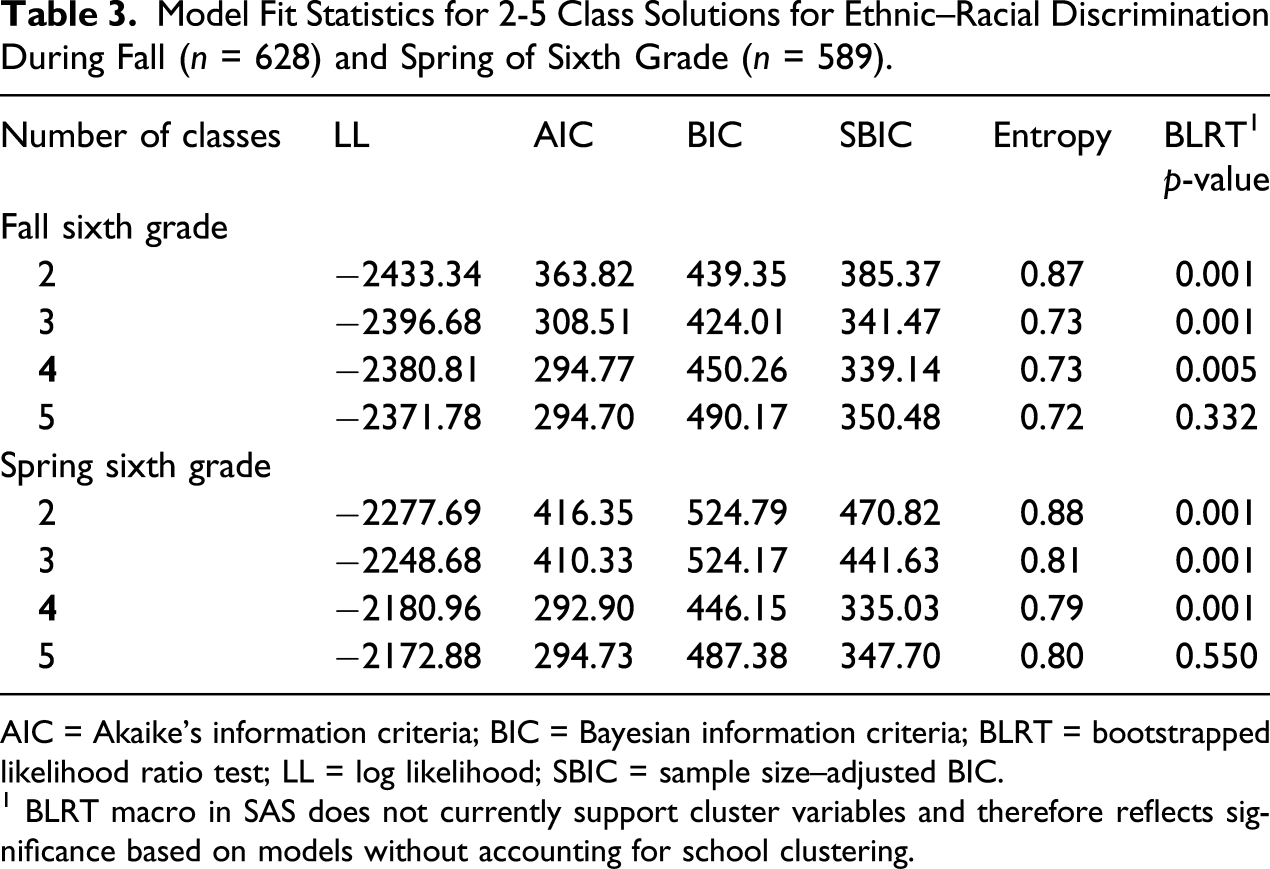
AIC = Akaike's information criteria; BIC = Bayesian information criteria; BLRT = bootstrapped likelihood ratio test; LL = log likelihood; SBIC = sample size–adjusted BIC.
1 BLRT macro in SAS does not currently support cluster variables and therefore reflects significance based on models without accounting for school clustering.
Description of Latent Classes
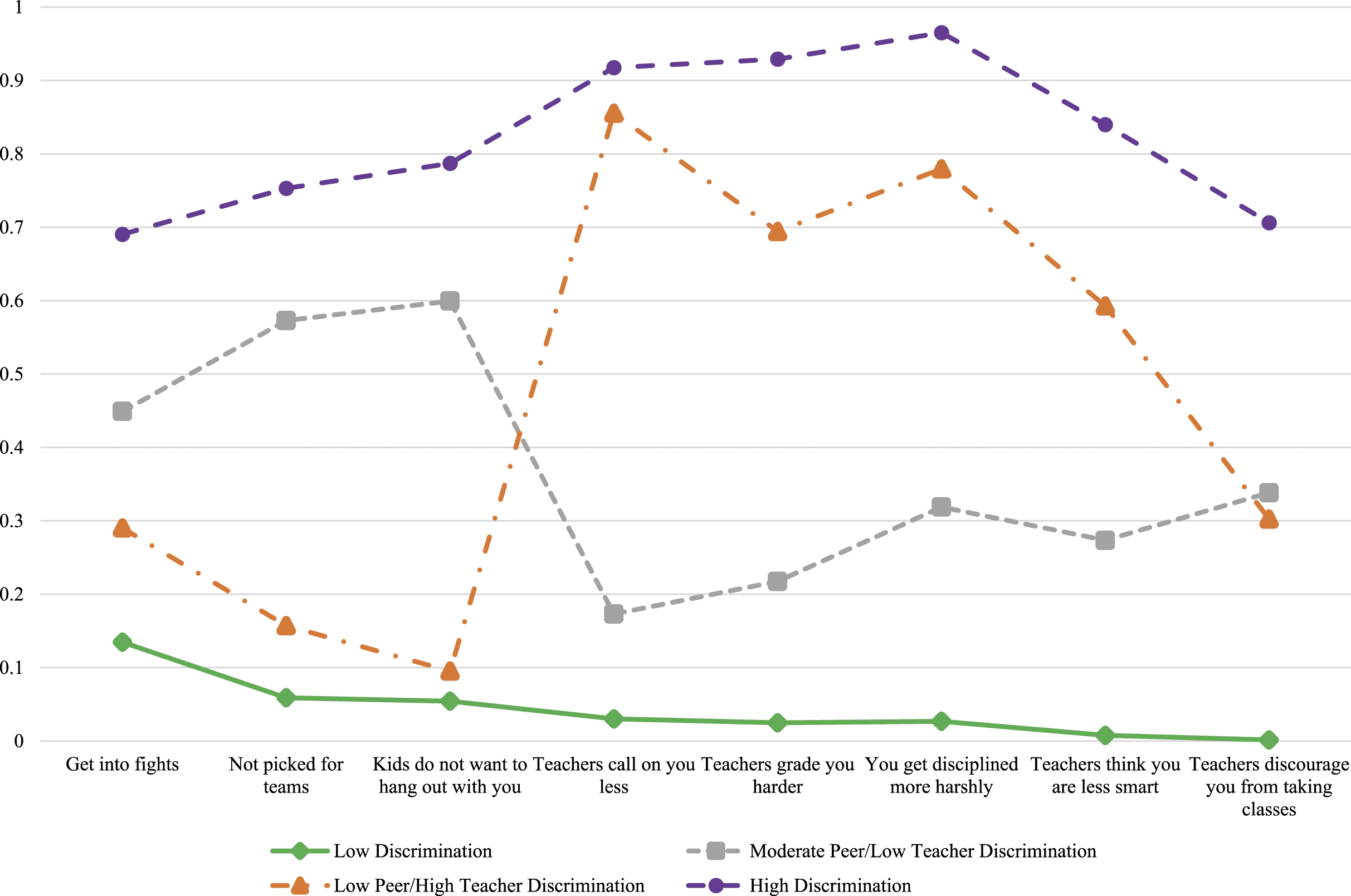
Figures 1 and 2 display profile plots of the 4-class solution for Fall and Spring, which show item-class probabilities for each of the four classes. Classes were labeled according to probabilities across each of the items. Students in the first class, labeled Low Discrimination (L-D), were unlikely to report perceiving either teacher- or peer-based ethnic–racial discrimination in school. This class included the highest number of students at both Fall and Spring, with 46.48% and 48.17% of students in this class, respectively. The second class, labeled Moderate Peer/Low Teacher Discrimination (MP/LT-D), included students unlikely to perceive ethnic–racial discrimination by teachers, but moderately likely to perceive it from peers. This class constituted the second largest group during the Fall and Spring, with 26.61 and 19.67%, respectively. The third class, labeled Low Peer/High Teacher Discrimination (LP/HT-D), represented students likely to perceive ethnic–racial discrimination by teachers, but unlikely to perceive peer ethnic–racial discrimination. In the Fall, this class included 16.33% of students and in the Spring it included 13.60%. Finally, the fourth class was labeled High Discrimination (H-D) and included the lowest number of students during the Fall (10.58%), but higher numbers in the Spring (18.56%). Students in this class were highly likely to perceive both teacher- and peer-based ethnic–racial discrimination at school. Latent class profile for 4-class solution: Fall of sixth grade (n = 628). Latent class profile for 4-class solution: Spring of sixth grade (n = 589).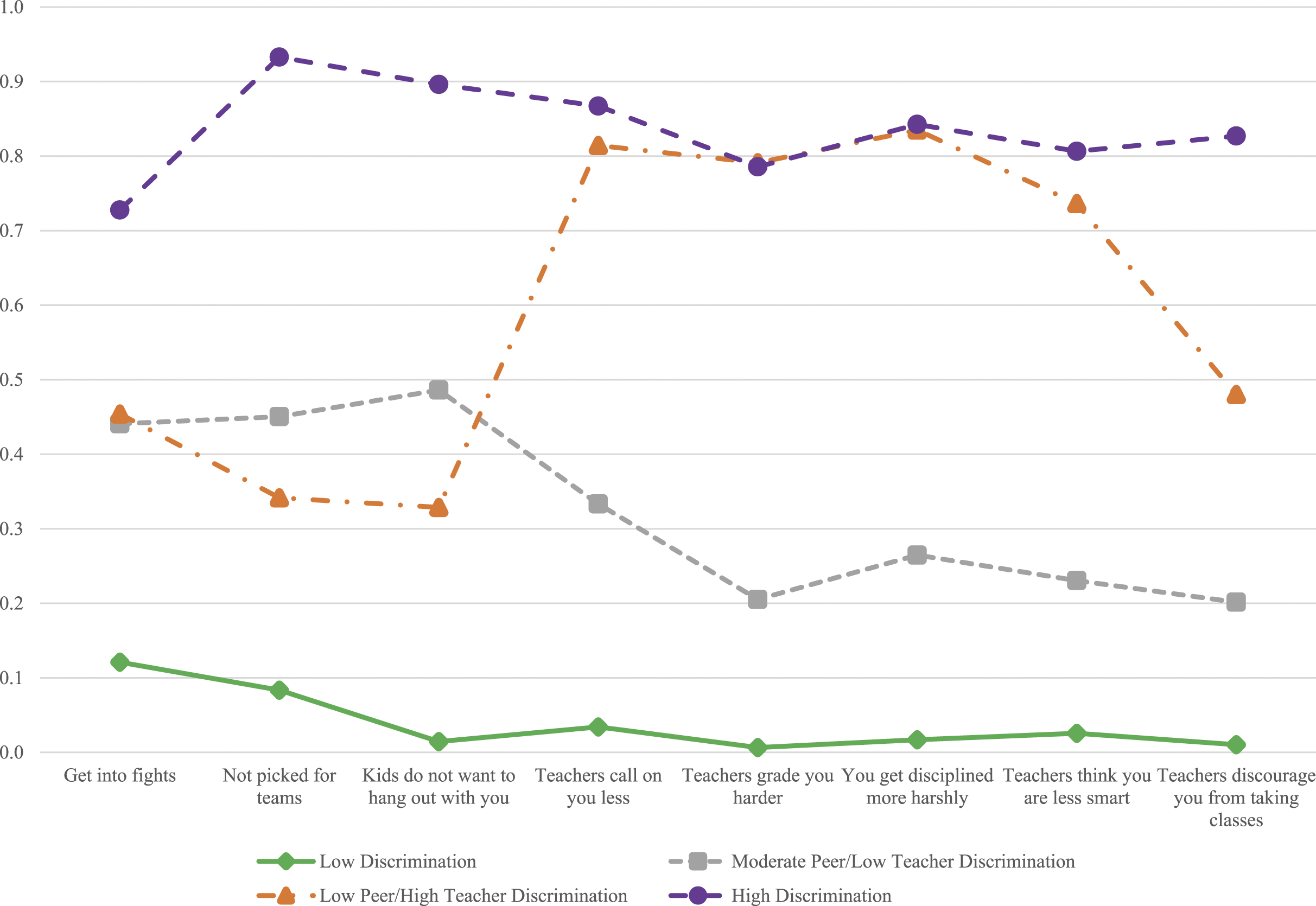
Predictors of Class Membership
To better understand differences in patterns of perceived ethnic–racial discrimination cross-sectionally, intervention status and ethnic–racial group were included as covariates in the LCA models, using the L-D class as a reference group.
Intervention Status as a Predictor of Class Membership
By including intervention status as a covariate, this analysis first addresses the question: Do students in the intervention group have lower odds for falling in the discrimination classes compared to the L-D class during the Fall or during the Spring? Although differences in class membership were not expected for intervention status in the Fall, differences in the Spring could be important indicators of an intervention effect. As expected, intervention status was not significantly related to class membership in the Fall (p = .40). During the Spring, however, intervention status was significant (p < .001), with participation in the BASE program associated with lower odds for falling into the H-D class (OR 0.58, 95% CI 0.40, 0.86) and the LP/HT-D class (OR 0.51, 95% CI 0.28, 0.94) compared to the L-D class. In other words, students in BASE program schools were more likely to be classified into groups characterized by low probabilities for both peer and teacher discrimination than they were to be classified into groups characterized by either high probabilities for both peer and teacher discrimination or high probabilities for teacher discrimination. None of the other classifications were significantly related to intervention status.
Ethnic–Racial group as a Predictor of Class Membership
By including ethnic–racial group as a covariate, this analysis addresses differences in latent class membership probabilities between African American and Latinx students. Ethnic–racial group was significantly related to class membership in the Fall (p < .001), but not in the Spring (p = .08); however, follow-up analyses exploring ethnic–racial group as a predictor of falling into a discrimination classes (H-D, MP/LT-D, or LP/HT-D) compared to the L-D classes in the Fall were not significant. This finding suggests that significant differences pertaining to ethnic–racial group were not related to the L-D class, requiring a different reference group in the analysis. Indeed, visual analysis of Fall class membership probabilities presented separately for African American and Latinx students by including ethnic–racial group as a grouping variable (see Supplemental Figures 1 and 2) suggested that differences may be more salient between the MP/LT-D and LP/HT-D classes. When examining differences with the MP/LT-D class as a reference group (the class with the next lowest probabilities for discrimination), Latinx ethnic–racial group was associated with a lower odds for falling into the MP/HT-D class compared to the MP/LT-D class (OR 0.24, 95% CI 0.07, 0.86).
Longitudinal Patterns of Perceived Ethnic–Racial Discrimination
Changes in class membership from the Fall to the Spring of sixth grade were explored using LTA. We hypothesized that students falling in classes with high probabilities for perceiving teacher and/or peer racial–ethnic discrimination early in sixth grade would be more likely to transition into classes reflecting low probabilities for perceiving discrimination late in sixth grade, while patterns of students falling into classes with low probabilities for perceiving ethnic–racial discrimination would be stable over time.
Transition Probabilities: Fall to Spring of Sixth Grade.
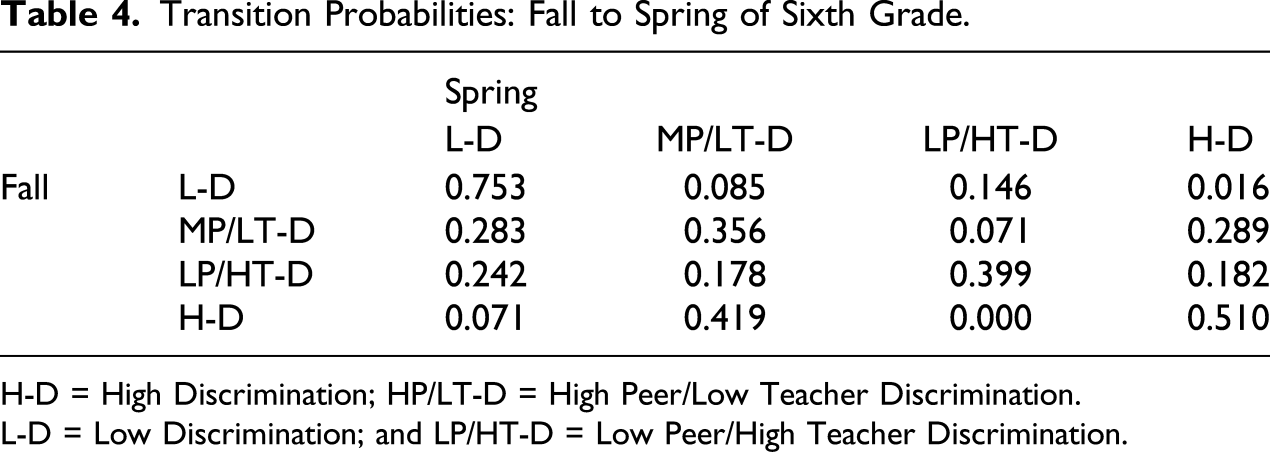
H-D = High Discrimination; HP/LT-D = High Peer/Low Teacher Discrimination.
L-D = Low Discrimination; and LP/HT-D = Low Peer/High Teacher Discrimination.
Intervention Status and Transition Probabilities
To explore significant differences in transition probabilities between classes, a follow-up model to calculate a binary odds ratio (OR) was estimated for the probability of transitioning into the L-D class compared to any other class, co-varying for intervention. For this analysis, we also included ethnic–racial group as a time 1 (Fall) covariate in order to account for racial–ethnic group differences from the Fall LCA. However, considering that intervention status, but not ethnic–racial group, was associated with class membership probabilities for time 2 (Spring), only intervention status was included as a predictor of change in class membership. We hypothesized that as compared to students in control schools, students in schools that implemented the BASE program would be more likely to transition from classifications reflecting high probabilities for perceiving ethnic–racial discrimination early in sixth grade to healthier classifications involving lower probabilities for perceiving ethnic–racial discrimination at the end of sixth grade.
Intervention Status as a Predictor for Transitioning into Low Discrimination Class versus any Other Class.
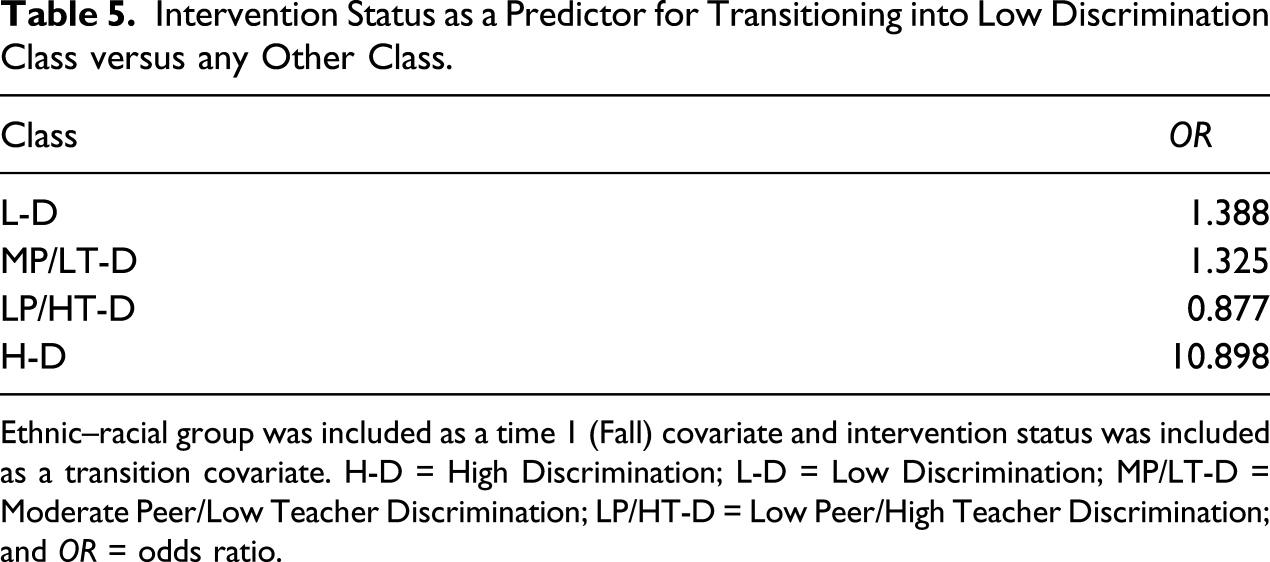
Ethnic–racial group was included as a time 1 (Fall) covariate and intervention status was included as a transition covariate. H-D = High Discrimination; L-D = Low Discrimination; MP/LT-D = Moderate Peer/Low Teacher Discrimination; LP/HT-D = Low Peer/High Teacher Discrimination; and OR = odds ratio.
Transition Probabilities for Control and Intervention: Fall to Spring of Sixth Grade.
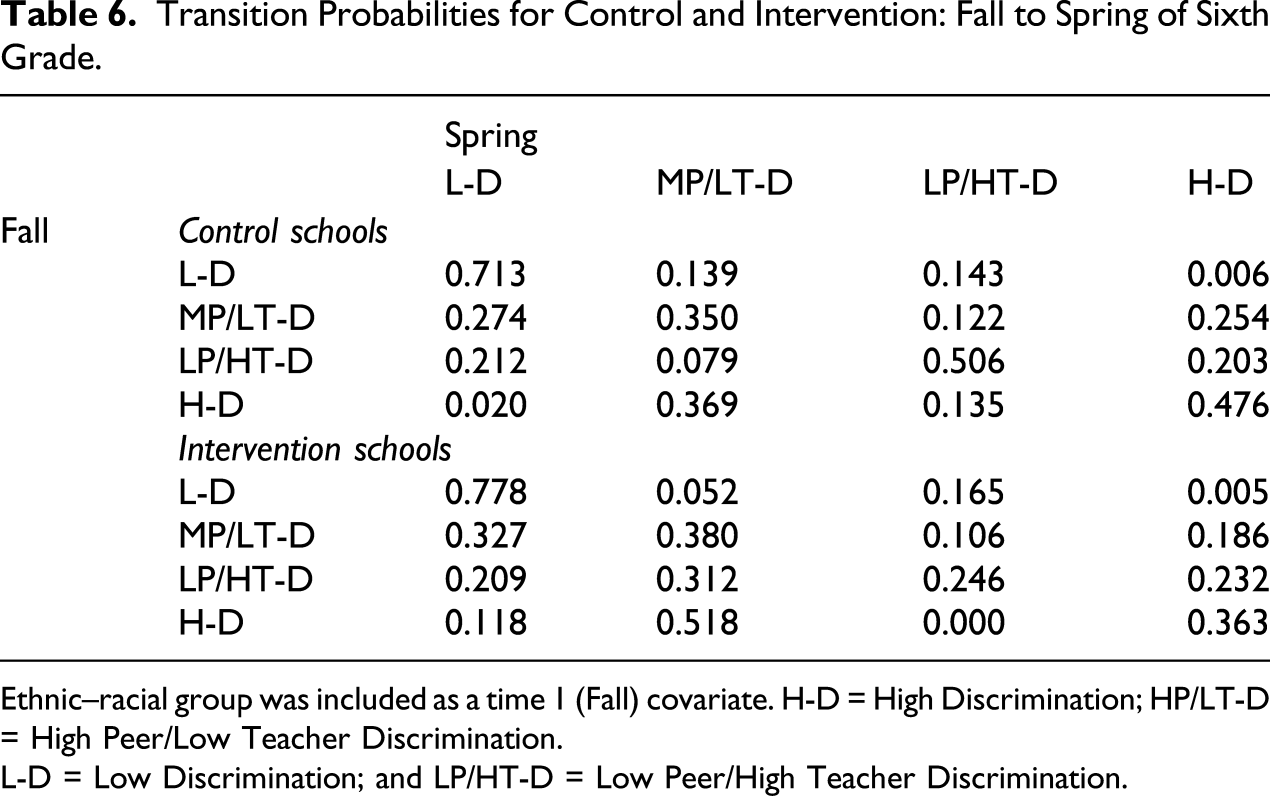
Ethnic–racial group was included as a time 1 (Fall) covariate. H-D = High Discrimination; HP/LT-D = High Peer/Low Teacher Discrimination.
L-D = Low Discrimination; and LP/HT-D = Low Peer/High Teacher Discrimination.
Discussion
This study explored the nature of early adolescents’ perceived ethnic–racial discrimination and how those perceptions changed across the middle school transition year in a contemporary sample of African American and Latinx sixth graders attending 17 racially and ethnically diverse metropolitan middle schools in the southeastern United States. We based the study in the conceptual premise that ethnically and racially diverse middle schools have the strong potential to promote positive academic and mental health outcomes (Graham, 2018), but not if early adolescents from ethnic–racial minoritized groups perceive these environments as discriminatory. As researchers identify ways in which ethnically and racially diverse schools support positive outcomes, it is critical to understand both the experiences that threaten positive outcomes as well as potential ways to reduce those threats while promoting a supportive school culture.
We grounded the study in life course theory (Benner, 2011), which emphasizes the intersection of developmental changes with school contextual factors, particularly the expectations and interpersonal relationships among students and teachers introduced by the middle school transition. Our study yielded three main findings. First, the results expand the literature by capturing patterns of perceived ethnic–racial discrimination during a critical time in development and schooling adjustment, the first year of middle school. Approximately half of the students were classified by a low probability for perceived discrimination. The remaining half could be categorized into one of three classes that involved higher probabilities for perceived discrimination by peers, teachers, or both at Fall and Spring of the middle school transition year.
Second, the findings reveal significant changes to perceived ethnic–racial discrimination during this pivotal year. Although previous research has identified variable patterns of ethnic–racial discrimination between a considerable expanse of school years (i.e., eighth and 11th grades; McNeil Smith & Fincham, 2016), the present study focused on changes from the beginning to end of sixth grade. Students classified as perceiving low discrimination from teachers and peers remained fairly stable over the sixth-grade year, whereas students whose classifications reflected higher probabilities for perceived ethnic–racial discrimination by peers, teachers, or both teachers and peers exhibited varying degrees of change. These patterns intimate the potential for improved perceptions during the school year and following early adolescents’ entry into middle school.
Third, our exploratory findings suggest that some of the malleability in students’ perceived ethnic–racial discrimination was related to the implementation of a school-wide intervention designed to promote a positive school ecology. This finding underscores the potential for educators to create healthy school ecologies in ways that improve the school experience for students of ethnic and racial minoritized backgrounds. Successful prevention and intervention efforts implemented early in the middle school transition have strong implications for the remainder of schooling experiences, given the short- and long-term impact of perceived discrimination on adolescents’ academic, social, and emotional adjustment (Umaña-Taylor, 2016).
Patterns of Perceived Ethnic–Racial Discrimination
We hypothesized that students’ perceived discrimination would be differentiated by probability (high, moderate, or low) and source (peer and teacher) of discrimination. We observed that four patterns characterized student perceptions at both the beginning and end of sixth grade: a grouping of nearly half the sample, with a low probability for perceived discrimination from either teachers or peers; and three classifications that involved higher probabilities for perceived discrimination by either teachers (13–16%), peers (19–26%), or both teachers and peers (10–18%). Our findings that perceived ethnic–racial discrimination were differentiated by source aligns with prior results. McNeil Smith and Fincham (2016) reported three subgroups of 8th and 11th grade Black students based on perceived teacher and peer racial discrimination measured with the same instrument as the present study: Students with a high probability for reporting both teacher and peer racial discrimination; students with a high probability for reporting teacher, but not peer, racial discrimination; and students with low probabilities for reporting both teacher and peer racial discrimination. For 8th graders, respectively, these groups included 10%, 12%, and 78% of students, with most falling in the latter subgroup involving low probabilities for any discrimination. Unlike the results from the present study, the results from this previous work did not identify a subgroup of students with a high or moderate probability of peer, but not teacher, discrimination.
Our analyses of participants’ reports in the present study also diverge from prior results based on patterns of teacher and peer discrimination using person-centered methods by identifying a greater percentage of students who could be classified by moderate to high probabilities for perceiving discrimination from teachers and/or peers. More specifically, approximately half of the sample in the present study were likely to perceive ethnic–racial discrimination during sixth grade whereas other studies of older middle schoolers using similar methods report considerably lower proportions (i.e., 22% reported in 8th grade students; McNeil Smith & Fincham, 2016). Findings from the present study do appear to align with those reported in other 6th grade samples (Niwa et al., 2014), however previous studies did not examine patterns of peer and teacher discrimination together. Thus, differences in findings from the present study compared to prior person-centered research (McNeil Smith & Fincham, 2016) may be attributable to meaningful differences in sample characteristics related to participant age and grade level.
A novelty of the present study is the focus on perceived discrimination during sixth grade, the first year of middle school. A life course perspective, which integrates both developmental and contextual contributions to adjustment, helps to conceptualize why adolescents earlier in middle school (and in particular, shortly after the transition into middle school) would perceive higher levels of discrimination than older middle school students. A spike in prevalence of perceived discrimination occurs around sixth grade, at approximately 10–12 years old, likely corresponding to developing cognitive abilities to recognize discrimination as well as to entry into a larger and more diverse school social context (Umaña-Taylor, 2016). Perceived ethnic–racial discrimination may moderate across early adolescence, as cognitive capacities to interpret complex social information mature and as adolescents acclimate to their middle school social environment. Yet, as children enter into adolescence and high school, prevalence of perceived discrimination appears to increase (Umaña-Taylor, 2016), although few studies have captured changes longitudinally. In one of the only longitudinal studies examining peer and adult discrimination as perceived by Dominican, African American, as well as Chinese students at the end of 6th, 7th, and 8th grade, the majority of adolescents (64%) were in a cluster involving at least one form of discrimination in both forms (Niwa et al., 2014). All clusters related to peer discrimination were found to decrease annually from 6th to 8th grade, with a noticeable drop from 6th to 7th grade, but trajectories for adult discrimination remained stable. The authors postulated that the decrease in peer discrimination from early to late middle school may follow a similar trajectory to bullying behaviors, with a high increase in 6th grade, but a decline through middle school (Niwa et al., 2014). Taken together, the results of this study and other longitudinal studies, particularly those that combine the sources of discrimination with change over time, point to the complexity of early adolescent experiences with discrimination in schools.
Although racial–ethnic differences were not the primary focus of the study, our analyses did reveal potential differences between African American and Latinx students during the Fall of the middle school transition year. It is unclear if these differences emerged as an artifact of smaller sample sizes or are in fact representative of each ethnic and racial group. Still, the varying patterns across the classes distinguished by moderate probabilities for perceived discrimination during the Fall are noteworthy. For African Americans students, these classes included item probabilities that were highly variable; for Latinx students, these classes included item probabilities that appeared to be more moderate (i.e., showing less variability). Moreover, compared to African American students, Latinx students appeared more likely to be categorized into a group involving only peer discrimination compared to a group involving both peer and teacher discrimination. It is possible that in these samples, teachers held more negative expectations for African American youth as compared to Latinx youth. Note, however, that findings from a previous meta-analysis largely indicate the reverse (i.e., that, compared to White students, negative teacher expectations for Latinx students were worse in magnitude than they were for African American students; Tenenbaum & Ruck, 2007). Because these differences were not maintained at the Spring time point, and because of the known heterogeneity within these groups both in terms of cultural and ethnic differences, as well as belonging to diverse schools and communities, these differences should be interpreted with caution. Indeed, previous research points to both similarities (e.g., Fisher et al., 2000; Rosenbloom & Way, 2004) and differences (e.g., Greene et al., 2006) in perceived discrimination from peers between African American and Latinx students. In the light of the current study’s findings and the discrepant results in previous work, future research could investigate contextual factors, such as variations in peer network composition, as well as cultural variability within ethnic-racial groups, beyond ethnic–racial group differences (Williams & Deutsch, 2016).
Changes in Perceptions of Ethnic–Racial Discrimination during Sixth Grade
Previous longitudinal studies have involved a single assessment of perceived ethnic–racial discrimination collected across multiple years; these studies indicate that perceived discrimination changes across extended periods of time (e.g., Greene et al., 2006; McNeil Smith & Fincham, 2016; Niwa et al., 2014). By exploring changes to ethnic–racial discrimination within a single and pivotal academic year and using LTA, we demonstrated the changing nature of perceived ethnic–racial discrimination across a relatively short time-span. Indeed, students who perceived minimal to no discrimination from teachers and peers early in the middle school transition year were unlikely to perceive ethnic–racial discrimination later that year. However, students who did perceive discrimination early were likely to report different patterns of perceived discrimination later in the school year, for instance, shifting from perceived discrimination from both teachers and peers to peers only, or to perceptions of low or minimal discrimination from either teachers or peers, at the end of the year. These findings support our second hypothesis that patterns of minimal or low probabilities for perceived discrimination from teachers or peers would be relatively stable, but that high probabilities for perceived discrimination from teachers and/or peers would change over the course of a year. These findings also reinforce the potential for exposure of diverse peer and adult relationships to positively influence the middle school experience (Graham, 2018).
Interpreted within a life course framework, these changes may in part reflect the natural evolution of school and classroom ecologies that occur over a school transition year as students adjust to a new and more socially complex school environment (Benner, 2011). Students’ friendships and peer group affiliations are naturally disrupted as they move from elementary to middle school. For many African American and Latinx adolescents, this transition introduces a different numerical representation of their ethnic–racial group than was present in elementary school, which can pose numerous adaptation challenges during the transition year (Graham, 2018). Not surprisingly, peer relationships are dynamic across the middle school transition year, as students negotiate relationships with both familiar and unfamiliar peers (Hardy et al., 2002). In one study, nearly 40% of African American early adolescents changed peer group affiliation across a single school year, arguably to find accepting and affirming peers (Faircloth & Hamm, 2011). During the middle school transition year in ethnically and racially diverse middle schools, if cross-ethnic friendships form early in the year, intergroup attitudes improve across the school year (Graham, 2018). These changes may yield improved perceptions of discrimination. A similar developmental trajectory may occur for student-teacher relationships. Studies of Dutch and Indonesian students suggest that within the first year of secondary school, teacher involvement declines early in the year in tandem with the increasing complexity of classroom practice, but increases toward the end of the year after students and teachers have acclimated to the settings (Maulana et al.,, 2013, 2014). Although similar studies are not available for ethnic-racial minoritized youth in the United States, findings from the current study do suggest that, at least in terms of perceived ethnic–racial discrimination, these relationships may indeed improve within one academic year.
School-wide Intervention Associations with Changes to Perceptions
Following from a life course perspective, adolescents’ perceived ethnic–racial discrimination from peers and teachers occurs in response to experiences within their school context (Benner, 2011). Our finding that implementation of a universal intervention intended to help teachers improve the school ecology may have collateral benefits to perceived discrimination identifies a potential means to improve student experiences. Reducing the prevalence of perceived ethnic–racial discrimination during sixth grade is particularly important given its long-term negative consequences for self-esteem, problem behaviors, and academic motivation (Unnever et al., 2016; Wong et al., 2003). Given that the BASE program has been shown to improve aspects of school ecology more broadly (Farmer et al., 2011b, 2013; Motoca et al., 2014), the finding that it may thwart perceived ethnic–racial discrimination provides further evidence of its utility for fostering healthier school environments for ethnically and racially diverse students.
The mechanisms of influence behind the effects of the BASE program on perceived discrimination are not clear, as this program does not explicitly include attention to diminishing ethnic–racial discrimination, and teachers’ practices are directed toward improving the behaviors and experiences of all students. However, a life course interpretation suggests that the introduction of this program into schools created changes to the situational imperatives students experienced, through expectations for behavior and interpersonal relationships. That is, the mechanisms through which the program works, such as improved teacher understanding of classroom peer dynamics, improved classroom management, and more engaging instruction, may have created a social and academic school context that encouraged more positive relationships among students and more productive classroom behaviors (Hamm et al., 2010, 2011, 2014; Motoca et al., 2014). For example, BASE program schools, compared to control schools, developed peer ecologies that placed less social value on aggression (Hamm et al., 2011). Stereotyping of ethnic–racial minoritized youth may be less prevalent in schools when aggression is less normative (Bellmore, Villarreal, & Ho, 2011). The findings represent a novel and important contribution to understanding levers of change to perceived discrimination within schools; future studies of this intervention, and other school-wide universal programs, can investigate underlying mechanisms. Because BASE program has been demonstrated to improve critical social and behavioral aspects of school adjustment, schools should consider adopting this or similar models to address the barriers students from ethnic and racial minoritized groups face in academic settings.
Limitations
The present study offers novel contributions to the literature, including investigation of a recent sample of predominantly African American and Latinx students during the middle school transition year. At the same time, there are notable limitations with this study. African American and Latinx sixth graders attended schools in which their racial or ethnic group was in a numerical minority, and the findings may not generalize to students of other backgrounds, races, and ethnicities. However, research findings, including those guided by a life course perspective, increasingly demonstrate the significance of school diversity in students’ experiences of discrimination (e.g., Bellmore et al., 2012; Benner & Graham, 2013; Graham, Taylor, & Ho, 2009; Seaton & Yip, 2009). It was beyond the scope of this sample and analytic approach to systematically investigate how changes to perceived discrimination during sixth grade were shaped by variations in school diversity. Future research could investigate similar questions in samples with more schools, and with a broader array of school diversity. Moreover, because of small sample sizes for specific ethnic and racial groups, separate patterns specific to African American and Latinx students were not conducted, but instead ethnic–racial group was explored in relation to classifications based on the entire sample (see Niwa et al., 2014, for a similar approach). We do not argue that experiences are comparable for students from different ethnic and racial backgrounds; future studies can pursue similarities and differences in the classification patterns of racial–ethnic discrimination among African American and Latinx youth during this critical time in development. A similar limitation is that ethnic and racial discrimination were not distinguished in measurement. Despite important historical differences between phenotypic characteristics (race) and cultural differences (ethnicity), conceptualizations related to experiences of ethnic and racial identity have identified considerable overlap between the two phenomenon and thus captured experiences pertaining to both (Umaña-Taylor, 2016). Finally, findings from this study are limited to students’ report of perceived discrimination, not objective measures of discriminatory behaviors. Although the perceived discrimination instrument used in the present study is well validated (Wong et al. 2003) and frequently used, it is possible that adolescents under-reported frequency of discrimination, a common issue with self-report discrimination measures (e.g., Benner & Graham, 2013; Rivas-Drake et al., 2009).
Conclusion
As early as the beginning of sixth grade, following the transition into middle school, nearly half of students with ethnic and racial minoritized backgrounds report ethnic–racial discrimination by teachers and peers. Fortunately, over the course of the academic year, these patterns of perceived ethnic–racial discrimination change, and may even diminish. The significant toll of ethnic–racial discrimination on school-aged youth is well established (Chavous et al., 2008; Fisher et al., 2000; Seaton & Yip, 2009), making eliminating instances of teacher and peer discrimination a priority in schools. One prospect for reducing perceived ethnic–racial discrimination is to improve the school’s social ecology, and the current findings provide preliminary support for the BASE program universal intervention. This study marks an important step toward understanding African American and Latinx early adolescents’ experiences of discrimination at school, and toward identifying feasible practices for mitigating these experiences.
Supplemental Material
sj-pdf-1-jea-10.1177_02724316211036745 – Supplemental Material for Changes in African American and Latinx Students’ Perceived Ethnic–Racial Discrimination During the Middle School Transition Year
Supplemental Material, sj-pdf-1-jea-10.1177_02724316211036745 for Changes in African American and Latinx Students’ Perceived Ethnic–Racial Discrimination During the Middle School Transition Year by Marisa E. Marraccini, Jill V. Hamm and Thomas W. Farmer in The Journal of Early Adolescence
Supplemental Material
sj-pdf-2-jea-10.1177_02724316211036745 – Supplemental Material for Changes in African American and Latinx Students’ Perceived Ethnic–Racial Discrimination During the Middle School Transition Year
Supplemental Material, sj-pdf-2-jea-10.1177_02724316211036745 for Changes in African American and Latinx Students’ Perceived Ethnic–Racial Discrimination During the Middle School Transition Year by Marisa E. Marraccini, Jill V. Hamm and Thomas W. Farmer in The Journal of Early Adolescence
Footnotes
Declaration of conflicting interests
The author(s) declared no potential conflicts of interest with respect to the research, authorship, and/or publication of this article.
Funding
The author(s) disclosed receipt of the following financial support for the research, authorship, and/or publication of this article: This work was supported by a grant from the Institute of Education Sciences [R305A110079]. Marisa Marraccini’s effort was supported by the National Institutes of Health [K23MH122775]. The views expressed in this work are those of the authors and do not represent the granting agency.

Supplemental Material
Supplemental material for this article is available online.
Author Biographies
References
Supplementary Material
Please find the following supplemental material available below.
For Open Access articles published under a Creative Commons License, all supplemental material carries the same license as the article it is associated with.
For non-Open Access articles published, all supplemental material carries a non-exclusive license, and permission requests for re-use of supplemental material or any part of supplemental material shall be sent directly to the copyright owner as specified in the copyright notice associated with the article.
