



Abstract
This article argues, using a case study on Elsevier's business, that despite its many merits, the Open Science Movement has not succeeded in lowering the margins of for-profit academic publishing. Accordingly, regulations other than the ones suggested by the movement should be introduced to regulate this business. In conclusion, some reasons in favour of one proposal are briefly reviewed.
Introduction
In recent years, several initiatives have set in motion what has been dubbed the Open Science Movement. Some notable examples are the UNESCO recommendations on open science, the San Francisco Declaration on Research Assessment (DORA), the Coalition for Advancing Research Assessment (CoARA), and Plan S.
The central idea of the Open Science Movement is not only that research findings should be made publicly available, but also that researchers should concentrate on more than just research findings. Adherents to the movement should not only strive to make their findings open access but also contribute to open science more broadly by, among other things, sharing their methodologies, prioritising mentoring, and actively participating in cooperative research groups. 1
Proposals to promote open science include changing the system of research assessment and bringing together funding institutions to reform the system of academic dissemination. The UNESCO recommendations on open science, DORA, and CoARA, fall into the former category. They set forth systems of research assessment that, rather than focusing primarily on publication output and impact factors, give a premium to research that adheres to the principles of open science. The idea here is to incentivize researchers to contribute to an open science society by taking this into account in evaluating their work (Leonelli et al., 2015). Plan S, on the other hand, falls in the latter category. This is a more top-down approach in which a series of major funding institutes (cOAlition S) create formal requirements for the research they sponsor to be open access.
I accept the central ideas of the Open Science Movement. That is, I accept that making scientific knowledge publicly available, sharing methodologies, and so forth is good for science. I also accept that the aforementioned proposals to promote an open science society are effective. What I want to ask is whether the Open Science Movement can also resolve economic issues that our reliance on relatively few for-profit publishers has caused.
Academic publishing is not extremely wasteful. The revenues of even the most successful academic publisher pale in comparison to the overall spending on research. This being said—as academics have long been pointing out (Larivière et al., 2015; McGuigan, 2004)—there are issues with the margins of academic publishers. Traditionally, academic publishers do not offer compensation to the authors, the reviewers, or the editors of the articles they publish. This creates an environment in which a very significant portion of revenues is turned into profits. Because research spending allocated to academic publishing is not a very significant part of overall spending, this situation is not extremely wasteful. But since academic publishing is a multimillion-pound business offering a public service, it bears discussing whether their margins could be lowered.
Prima facie, the Open Science Movement offers a straightforward way to reduce the margins of academic publishers. If alternatives to costly academic publishers become widely available, the argument goes, then either academic publishers adjust their practices or they go out of business, especially if a premium is placed in research assessment on research that adheres to the principles of open science and funders require the research they sponsor to be open access. Thus, advocates of the Open Science Movement argue in favour of open access journals publishing for fees vastly lower than the fees of academic publishers (Van Noorden, 2013; Young, 2009), and more recently, some have started to argue for altogether replacing publishing with alternative infrastructures (Brembs et al., 2023; Heesen & Bright, 2021). 2
The problem with this proposal is that academic publishers have adjusted their practices to the new environment that the Open Science Movement has created, but their margins have not lowered. The economics of academic publishing is considerably opaque (Lawson et al., 2016), but there are studies indicating that the profits of publishers have continued to grow despite the success of the Open Science Movement (Grossmann & Brembs, 2021; Khoo, 2019). The present paper aims to further substantiate this while beginning to dispel the opacity of the economy of academic publishing. In particular, I develop a case study comparing the development of Elsevier's open-access publications with the development of its margins. As it turns out, Elsevier has made open-access publishing a very significant part of its business, and it is now moving to acquire alternative infrastructures, but this has not led to a significant reduction in its margins.
The Open Science Movement has had a great impact, among other things, in making scientific knowledge more publicly available and promoting the free sharing of scientific methodologies. However, this movement has not succeeded in improving the economy of scientific dissemination. Accordingly, a separate set of policies should be introduced to regulate the industry.
This paper has the following structure. In section 2, I make a few remarks about my methodology. In section 3, I give evidence that academic publishing is not extremely wasteful. In section 4, I illustrate where improvements could be made, namely in connection with the margins of academic publishing, how the Open Science Movement seems to offer a solution, and how it failed to deliver. In section 5, I draw the conclusion that a separate set of policies should be introduced to regulate academic publishing, and I briefly outline a promising proposal based on the works of, among others, Aczel et al. (2021), Cheah and Piasecki (2022), and Seghier (2024).
Methodology
My analysis focuses on the data provided in the annual financial reports of RELX plc, which is the parent company of Elsevier. These reports contain detailed information about revenues and profits of RELX's scientific, technical and medical division, dominated by Elsevier, as well as their volume of submissions and publications, volume of open-access publications, and so forth. Reports going back to the year 2000—though my analysis need not go back that far 3 —are available at the following link: https://www.relx.com/investors/annual-reports/2024
I focus on Elsevier because it is the market leader. According to their 2024 report, they publish 17% of the world's scientific articles. My considerations about Elsevier do generalise to other major publishers; the central points I make about Elsevier can be made about Taylor & Francis, for instance. 4 But even if my considerations did not generalise, Elsevier controls such a large part of the industry that an analysis of its finances has value on its own right.
I use RELX's reports for my evaluation because these contain the data that the company itself has approved. Considering metrics that REXL has not approved may lead to a dispute about whether the data is reliable. Using RELX's own data circumvents this issue. If a problem with the economy of publishing can be detected considering the data that publishers accept, then regardless of whether a greater problem can be detected through other means, we have reasons to act.
Data about research and development spending in the UK—which I use to substantiate the claim that publishers’ revenues pale in comparison to research spending—is from the UK Office of National Statistics. Data about research and development spending in the US—which I use for the same purpose—is from the US National Centre for Science and Engineering Statistics. In principle, a fuller analysis may consider records from other countries. But because my central point is that publishers’ revenues are only a very small fraction of research and development spending, this seems unnecessary. If the revenues of Elsevier, which operates worldwide, are a relatively small fraction of research spending in the UK and US alone, then a fortiori, they are a small fraction of spending worldwide. My data about the composition of academic employment in the UK—which I use towards the end, in my comparison between possible policy recommendations—is taken from the UK Higher Education Staff Statistics (HESA).
The Good News
If academic publishing were extremely wasteful, we would expect to see that a significant portion of academic spending is allocated to that. This, if it were the case, would be reflected in the relative size of the revenues of academic publishers compared with the size of spending. If the revenues of Elsevier were measurably high compared with the spending in research and development, that would indicate that comparatively little goes into infrastructure, equipment, and researchers themselves, while dissemination takes too much. The good news is that this is not the case.
If the UK and the US total domestic research and development spending—which includes both private and public spending—are compared with the revenues of Elsevier, then very clearly the revenues of Elsevier are just a very small fraction of spending. In 2013, for instance, Elsevier's revenue in the whole of geographical Europe is about 2% of the total domestic research and development spending in the UK, which is but one of the countries in the region in which Elsevier operates (Table 1). Things are slightly different if instead we concentrate on public spending, but of course, much of the revenues of Elsevier in the UK come from the private sector. Moreover, even concentrating on public spending, Elsevier's revenues are small compared to spending. Elsevier's European revenues in 2013 are about 6.5% of the UK government's gross expenditures in research and development, which again, is but one of the countries in the region in which Elsevier operates (able 1).
Current Values in Millions.
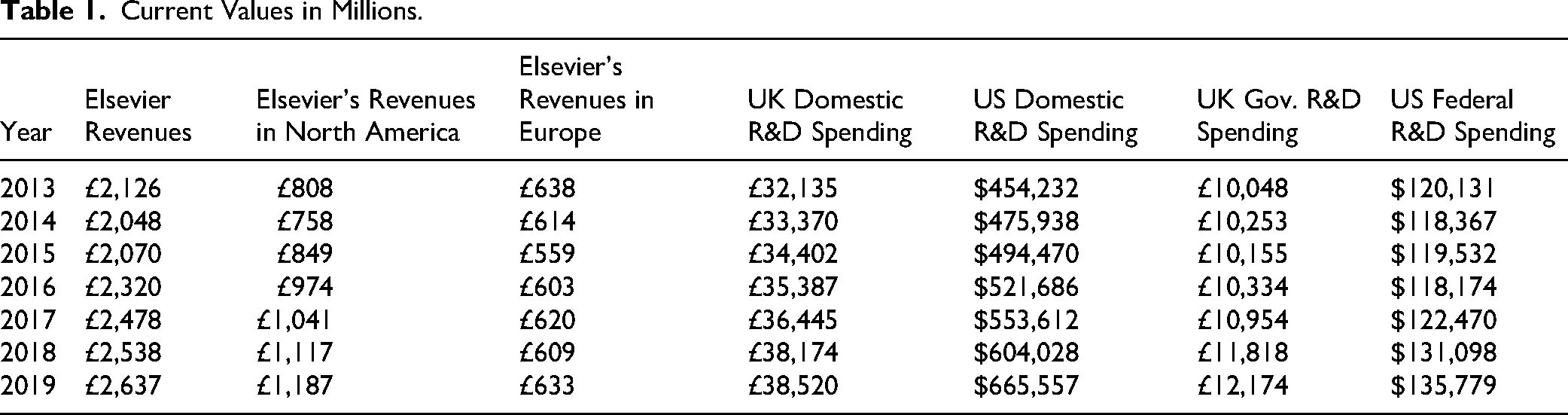
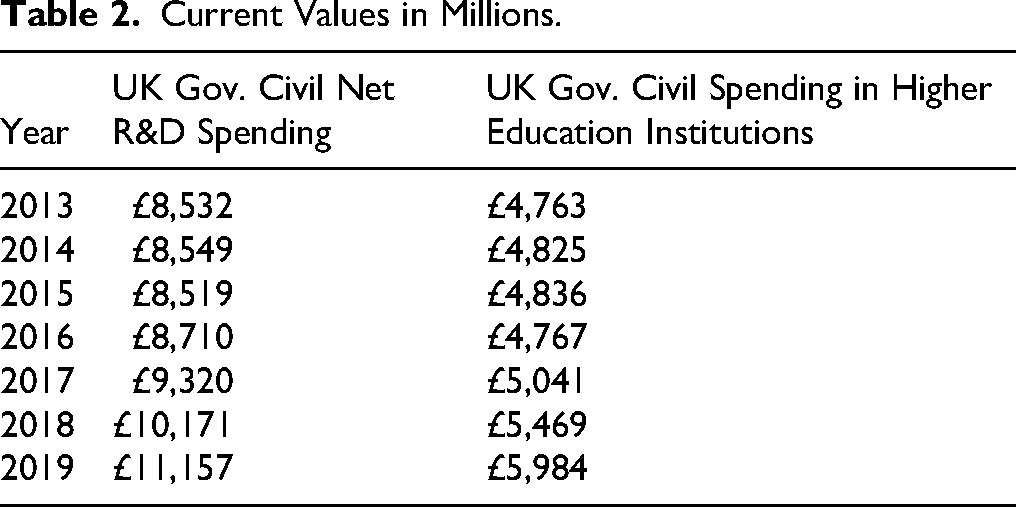
One could argue that we should concentrate on different statistics. For instance, one could protest that the figures of UK government gross expenditures in research and development I gave include defence spending in research and development, which one could argue, do not contribute significantly to Elsevier's revenues. It is unclear that this is true, but regardless, even if we concentrate on the UK government's civil gross expenditures in research and development, the picture does not change significantly. Throughout the 2013–2019 period, defence spending was a relatively small part of total spending in research and development (Table 2). If we concentrate on an even smaller fraction of the government's gross expenditures, say, we look at the civil spending in higher education institutions alone, then the revenues of Elsevier turn out to be significant (Table 2). But concentrating on higher education institutions alone is unreasonable because, clearly, higher education institutions are only some of the institutions that use Elsevier's services.
Current Values in Millions.
In addition to all this, it should be noted that not all of Elsevier's revenues derive from the publication of research. If we are trying to detect waste in academic publishing—journal publications specifically—we should set aside revenues from other sources. RELX's reports do not give precise figures about this, but the reports from 2018 to 2021 say “primary research [journals] accounts for around half of revenues.” Thus, we might need to go as far as halving the figures I gave in Table 1 for Elsevier's revenues. This seems to rule out the possibility that significant waste can be detected in academic publishing. Academic publishing is just too small a part of overall spending for there to be significant waste there.
The Bad News
Even though they are relatively small compared with overall spending, the revenues of publishers are still counted in millions. Thus, it is very much worth asking whether the money that goes into publishing could be spent more wisely. The bad news comes here.
I show data about the evolution over time of Elsevier's profits shortly, but first, let us concentrate on the 2012 figures, which give us a sense of how profitable the company was before the Open Science Movement led to a significant change in the industry (Table 3).
Current Values in Millions.
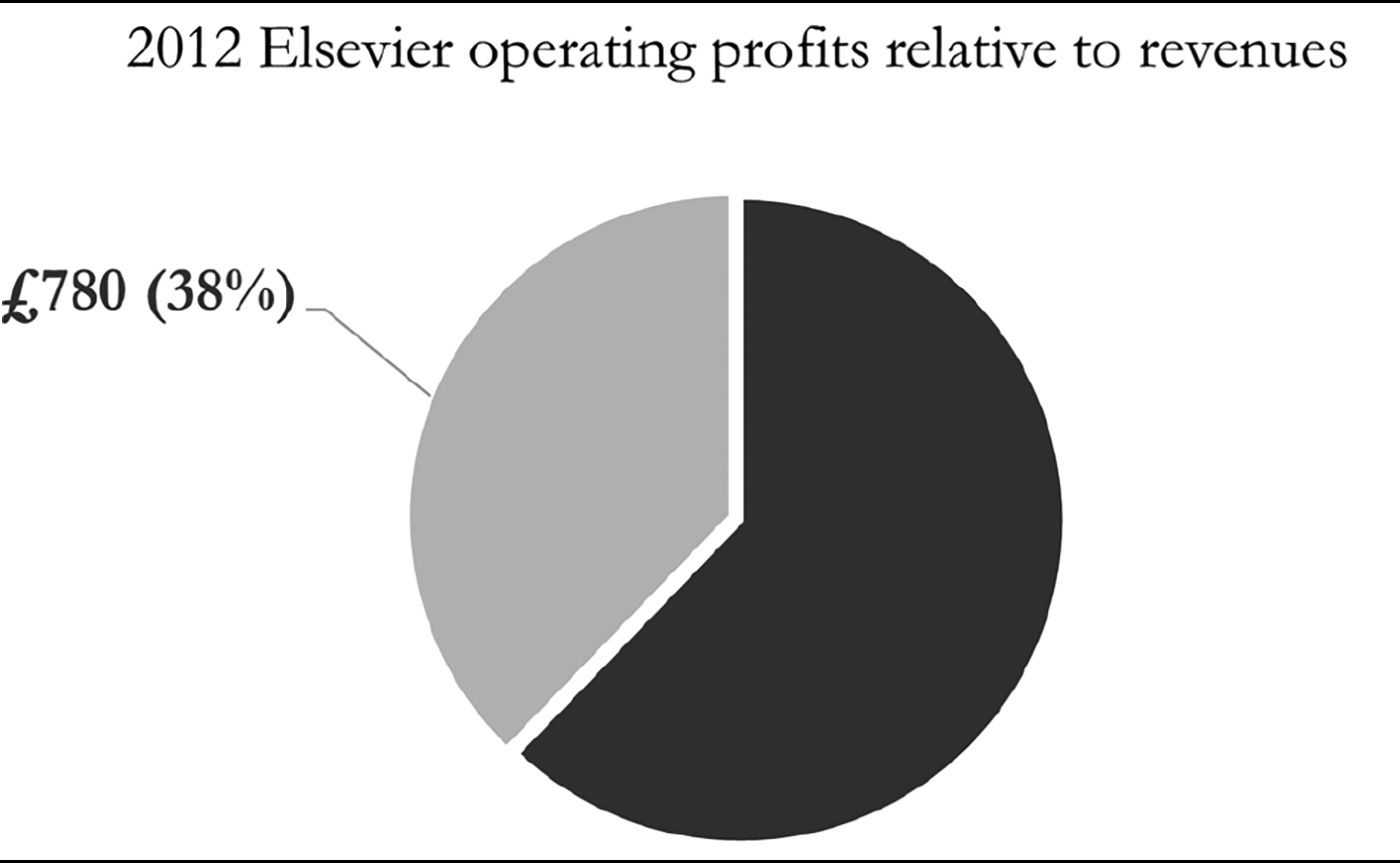
When the current system was being set up, academic journal publishing was a very small business to which academics contributed on a volunteer basis; many journals would have struggled to stay afloat if they had to pay academics for their services. Later, though, when in the mid-1960s academic journal publishing developed into a large international industry, the practice that academics work for journals on a volunteer basis was preserved. As a result, in 2012, Elsevier had extremely low costs.
Of course, there can be some debate about how much profit a company offering a public service should make. Those who are more inclined to accept high returns on capital invested in public services will be happy with higher margins than those who think that private capital invested in public services should have low returns. But, regardless of this dispute, we can agree that profits amounting to nearly 40% of revenues are too high. To put things in perspective, Thames Waters—one of the companies providing water services in Britain and often criticised for having too high margins—reported profits in 2016 that amounted to about 26% of their revenues. 5
On paper, the Open Science Movement offers a straightforward way to lower the profits of Elsevier. On the one hand, the movement advocates for the creation of open-access journals and repositories where researchers can disseminate their results instead of publishing them through Elsevier's journals. This should diminish the number of submissions that Elsevier's journal receives through free market competition. On the other hand, the movement advocates for placing a premium in research assessment on open-access publications and on research activities that do not lead to publications, while getting funders to commit to open science. This should diminish Elsevier's submissions through regulations by creating an incentive for researchers and funding institutions to work with Elsevier's competition while diminishing the emphasis on publication altogether. Elsevier's business model depends on receiving submissions from researchers. Indeed, volume of submission is one of the primary ways the RELX reports measure growth. Thus, if the Open Science Movement lowers the volume of submissions that Elsevier receives, then either Elsevier changes its business model to adapt to the new environment, or it goes out of business. Either way, the argument goes, Elsevier's margins will lower. The trouble is that the volume of submissions that Elsevier received since 2012 has not diminished, quite the contrary (Table 4).
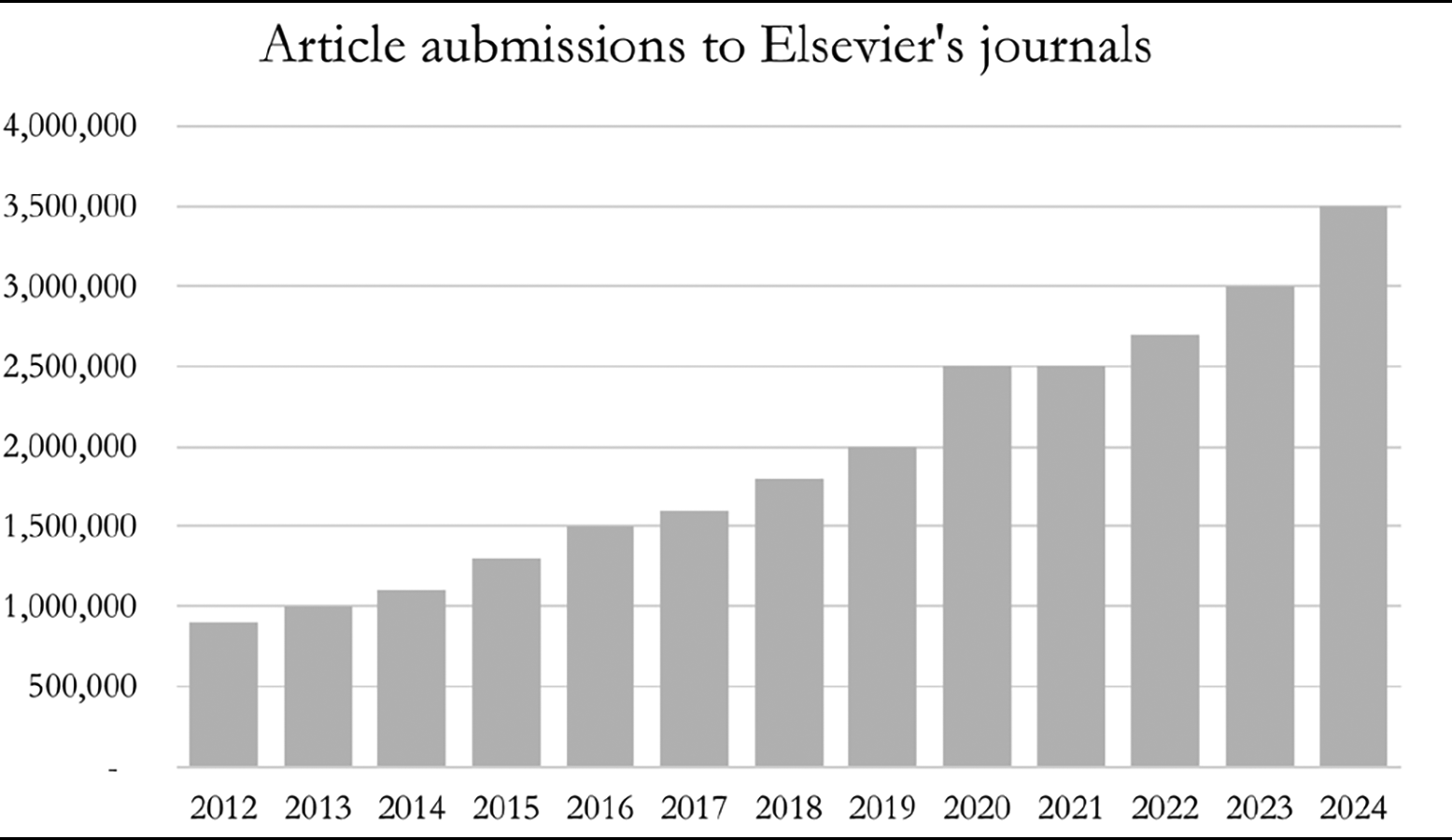
One can argue that the increase in volume of submissions is due solely to the increase in the number of researchers, especially researchers in Asia. In other words, the increase in Elsevier's submissions is caused by demography and has nothing to do with policy. This is very doubtful. 6 But even if it were true, Table 4 shows that the Open Access Movement has not decreased the volume of submissions to Elsevier, no matter what caused this. One can argue that the effects of the Open Science Movement are yet to be seen. This is problematic, though, because no policy should take longer than 12 years to take effect. It is true that good policy should not have abrupt effects, but if it takes too long, it is erring on the side of safety. 7
How could submissions to Elsevier's journals increase as the Open Science Movement was gaining momentum? A clue can be found in the 2012 RELX report. Over the past 15 years alternative payment models for the dissemination of research such as so-called “author-pays open access” or “author's-funder-pays” have emerged. While it is expected that paid subscription will remain the primary distribution model, Elsevier has long invested in alternate business models […] Over 1,500 of Elsevier's journals now offer the option of funding research publishing and distribution via a sponsored article fee.
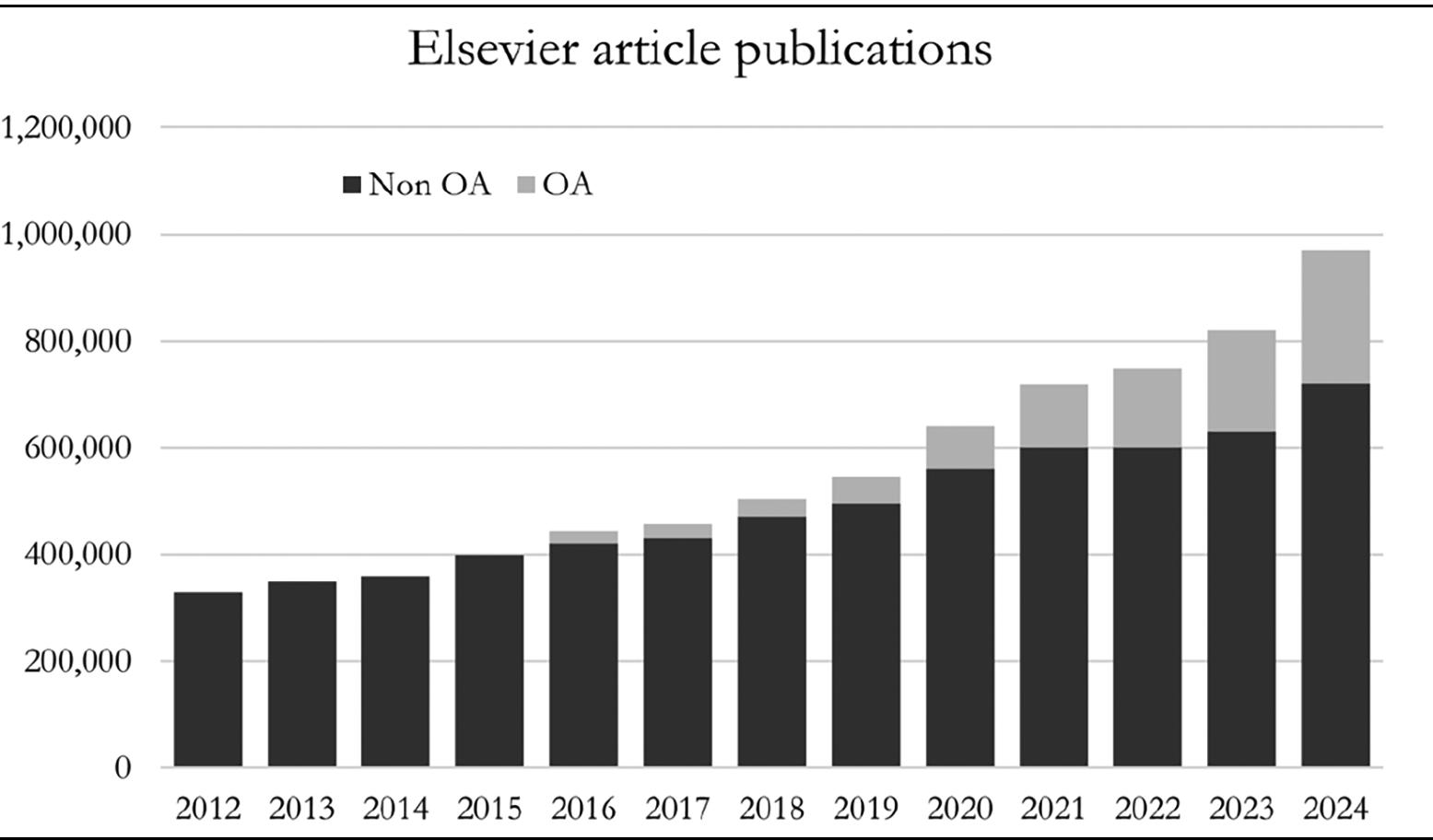
The Open Science Movement did influence Elsevier's business model. The trouble is that it did not affect its margins. The absolute values of profits and revenues continued to increase while margins remained stable (Table 6). 9
Current Values in Millions 12 .
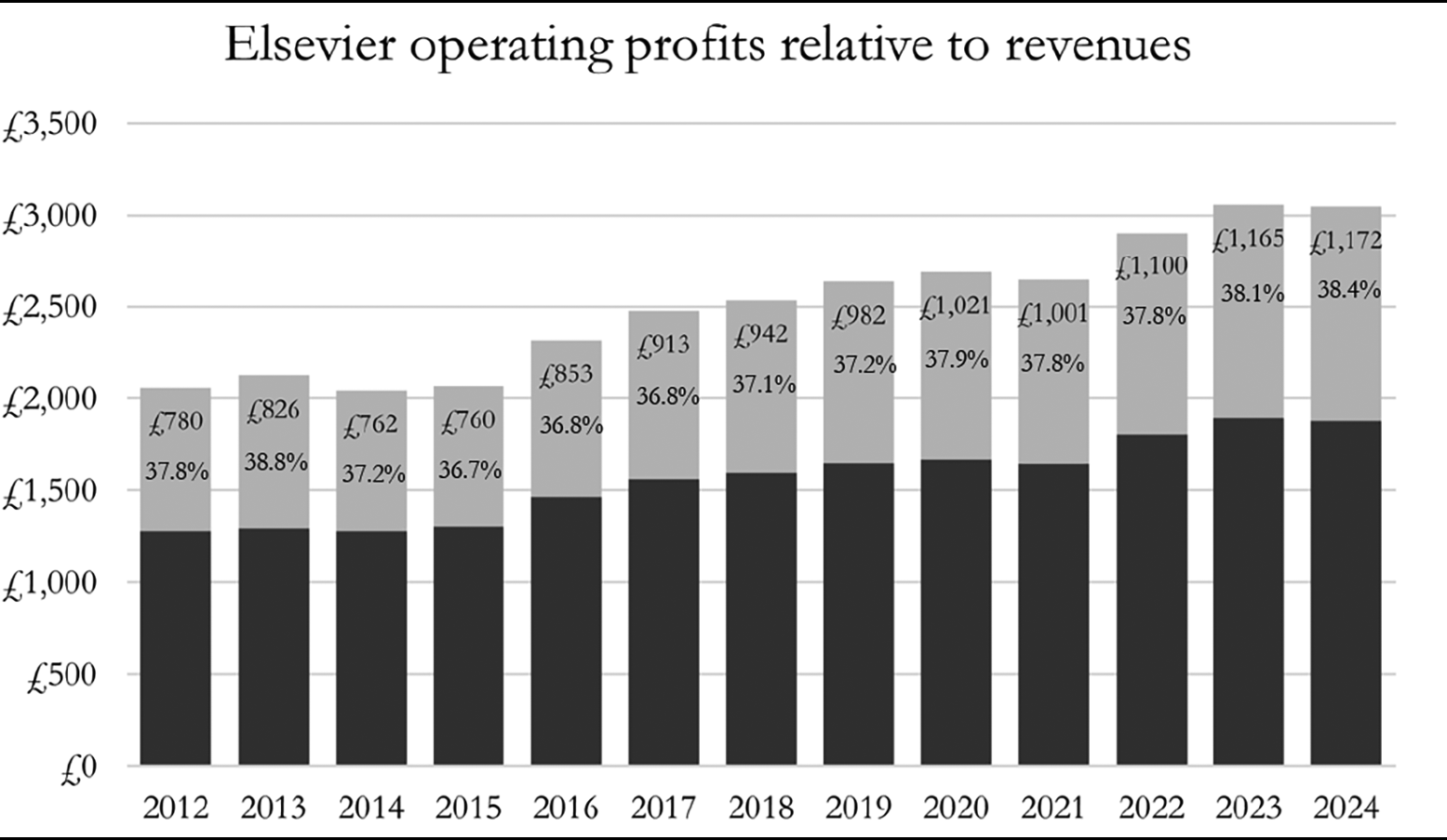
Elsevier incorporated open access publishing in its business model—in this sense, the Open Access Movement was successful—but, as the terminology “author-pays” and “author's-funder-pays” in the quote above indicates, this did not lead to a lowering in the prices. As Lawson et al.'s (2016) analysis also indicates, the cash flow has not substantially changed, although the research is much more widely available.
One might suggest that the new proposals that are now being set forth, including the emphasis on non-result-oriented output of research and the idea of foregoing peer-reviewed publication in favour of alternative infrastructures (Brembs et al., 2023; Heesen & Bright, 2021; Leonelli et al., 2015), will succeed where open access journals have failed. That is, one could argue, as researchers transition towards using cooperative tools for sharing knowledge, academic publishers will finally be forced to change their practices in a way that lowers their margins. The trouble is that in the 2024 RELX report, we find evidence that the company has anticipated this change and is taking actions to adjust its business model to a new environment, just as in 2012 it anticipated a shift towards open-access publishing. Elsevier has [invested in] research solutions, such as SSRN, an open access online preprint community where researchers post early-stage research, Scopus Author Profiles showing preprints to provide an early view into a researcher's focus areas and Digital Commons helping academic libraries showcase and share their institutions’ research via institutional repositories.
What Can We Do?
To be clear, I am not arguing that the policies proposed by the Open Science Movement should be discontinued. On the contrary, my discussion shows that the movement has been measurably successful in making more of the knowledge disseminated by Elsevier freely accessible, which indicates that it was successful with respect to one of its primary raison d'être. What I am arguing is that the movement has not achieved a secondary aim—which it was sometimes said it could achieve (Van Noorden, 2013; Young, 2009)—of lowering the margins of for-profit publishing. Perhaps precisely because this is not one of the movement's primary aims, publishers can accommodate its requests without changing their margins. My conclusion is that a separate set of policies designed specifically to lower publishers’ margins should be introduced in addition to the policies proposed by the Open Science Movement.
The question is, then, what should this policy be? I must remand to another time a discussion articulating the details of a proposal, but I can make a few remarks comparing a few possible suggestions. 10 One possible suggestion would be to renegotiate contracts with academic publishers, thereby lowering their revenues. This is the immediate reaction one might have upon learning that publishers’ have such high margins: institutions should just pay less. In practice, however, this presents several obstacles. Most notably, contracts are often negotiated by individual institutions, which makes it difficult to synchronize actions on a large scale. Another possible suggestion would be to impose a tax on academic publishing. But the topic of taxing capital returns is notoriously politically problematic. In the UK, there currently seems to be very little political will for increasing taxation on capital returns. The proposal that I find more promising—having appreciated that academic publishers have very high margins because authors, reviewers, and editors work on a volunteer basis—is to set regulations imposing that these activities be remunerated by the publishers with the higher margins.
This proposal is not novel. There has long been debate about how peer review should evolve to face the new challenges that academia faces in the twenty-first century, and one of the proposals made in this debate is that reviewers should be retributed (Gonzalez et al., 2022). Advocates of this idea often argue that it would improve the quality of peer review (Cheah & Piasecki, 2022; Seghier, 2024). Here I am adding to the evidence that there are economic reasons to reform the existing system (Aczel et al., 2021), and I am focusing not only on peer review but on authorship and editing as well.
There are a few reasons why this proposal seems promising. First, it is hard to see how, if this proposal were implemented, publishers could circumvent lowering their margins, assuming that prices are not allowed to increase, which is generally easier than lowering existing prices. Publishers’ business model heavily depends on researchers’ labour, no matter in what form this is disseminated. Researchers are an indispensable part of publishers’ business.
Second, this proposal is not ad hoc. It is true in general that corporations that profit handsomely while failing to properly compensate indispensable elements of their workforce should be regulated so that they change their behaviour. This proposal can and should be part of a general policy applying more broadly, rather than addressing academic publishing only.
Third, the redistributive nature of this proposal may begin to address independent problems that academia faces. In the UK, a significant portion of the academic workforce is employed with teaching-only, fixed-term contracts. For these people, writing, reviewing, and editing for academic publishers can be described as hope labour (Kuehn & Corrigan, 2013). That is, this is work done for no pay, in the hope that it will lead to better employment in the future. Researchers with permanent teaching-only contracts also contribute to the profits of academic publishers without direct pay. This rules out the idea that, by and large, researchers doing writing, editing, and reviewing for academic journals are independently paid for this work. Moreover, it is unclear that most teaching and research contracts are paid for the work they do for publishers, since this depends on the allocation of their teaching and research hours. This leaves out a relatively small part of the workforce, some of whom—the fixed-term research-only contracts—may find themselves doing hope labour very soon (Table 7). 11
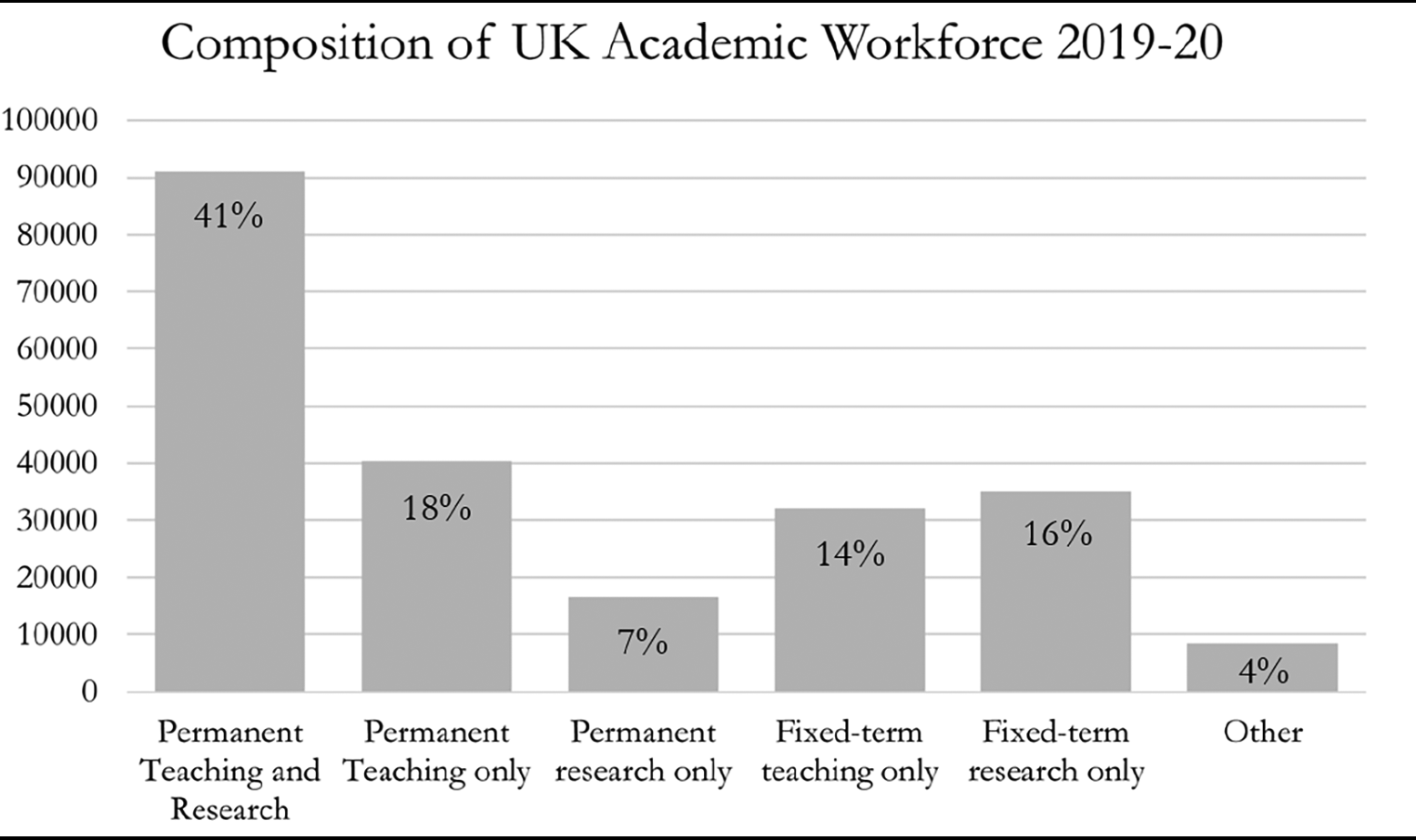
The system of academic publishing was set up when academic publishing was a very small business, and most academics had stable jobs leaving them ample time to volunteer as editors, reviewers, and writers. Neither of these things is true today. Thus, it is unclear why publishers should be allowed to operate as they did then.
Footnotes
Acknowledgements
This work has greatly benefitted from discussions at the Second Midlands Conference in Critical Thought.
Funding
The author disclosed receipt of the following financial support for the research, authorship, and/or publication of this article: This work has benefited from a Humboldt Research Fellowship.
Declaration of Conflicting Interests
The author declared no potential conflicts of interest with respect to the research, authorship, and/or publication of this article.
