




Abstract
Background:
Past research reports a positive relationship between experience with classic serotonergic psychedelics and nature relatedness (NR). However, these studies typically do not distinguish between different psychedelic compounds, which have a unique psychopharmacology and may be used in specific contexts and with different intentions. Likewise, it is not clear whether these findings can be attributed to substance use per se or unrelated variables that differentiate psychedelic users from nonusers.
Aims:
The present study was designed to determine the relative degree to which lifetime experience with different psychedelic substances is predictive of self-reported NR among psychedelic-experienced users.
Methods:
We conducted a combined reanalysis of five independent datasets (N = 3817). Using standard and regularized regression analyses, we tested the relationship between degree of experience with various psychedelic substances (binary and continuous) and NR, both within a subsample of psychedelic-experienced participants as well as the complete sample including psychedelic-naïve participants.
Results/Outcomes:
Among people experienced with psychedelics, only past use of psilocybin (versus LSD, mescaline, Salvia divinorum, ketamine, and ibogaine) was a reliable predictor of NR and its subdimensions. Weaker, less reliable results were obtained for the pharmacologically similar N,N-dimethyltryptamine (DMT). Results replicate when including psychedelic-naïve participants. In addition, among people exclusively experience with psilocybin, use frequency positively predicted NR.
Conclusions/Interpretation:
Results suggest that experience with psilocybin is the only reliable (and strongest) predictor of NR. Future research should focus on psilocybin when investigating effects of psychedelic on NR and determine whether pharmacological attributes or differences in user expectations/use settings are responsible for this observation.
Introduction
In light of the ongoing global ecological crisis due to anthropogenic climate change (Romanello et al., 2021; Rosenzweig et al., 2008), researchers from multiple disciplines strongly emphasized the growing need to understand the cognitive and affective processes involved in pro-environmental behavior, and how to promote behavior change toward sustainability and conservation in the general population (Newell et al., 2014). While ecological behavior is notoriously difficult to predict—being associated with a diverse range of variables, ranging from contact with nature as a child to gender and social class (Gifford and Nilsson, 2014; Newell et al., 2014)—many now consider people’s growing disconnect from nature (Conn, 1998) to be one of the primary drivers behind society’s failure to address these pressing issues (e.g., Schultz, 2000; Zylstra et al., 2014).
A recent line of research found that past use of classic, serotonergic psychedelics positively predicts people’s sense of connectedness with the natural environment (Forstmann and Sagioglou, 2017; Kettner et al., 2019; Nour et al., 2017; Sagioglou and Forstmann, 2022), and thereby, self-reported pro-environmental behavior (Forstmann and Sagioglou, 2017). Yet, when it comes to understanding how psychedelics influence pro-environmental outcomes, most of these studies suffer from a list of shortcomings. They typically do not differentiate between experience with different psychedelic substances, each of which have unique pharmacological attributes and use contexts. In addition, in correlation-based studies, it remains unclear whether the findings reported can truly be attributed to the use these substances, or to confounding variables, such as personality traits, attitudes, or values that are positively related to both substance use and nature relatedness (NR), or due to stereotype-accordant responding (Forstmann and Sagioglou, 2021b). The present research was conducted to address some of these concerns by reanalyzing a combined set of five independent data sets, with a focus on participants experienced with the use of one or multiple psychedelic substances.
Nature relatedness
One of most reliable predictors of self-reported ecological concern and pro-environmental behavior is an individual’s propensity to have a personal connection with nature, and to have affinity and a benevolent attitude toward the natural world (Mayer and Frantz, 2004). This broad, trait-like construct is sometimes conceptualized as NR (Nisbet et al., 2009), environmental identity (Clayton, 2003), love and care for nature (Perkins, 2010), dispositional empathy with nature (Tam, 2013), or inclusion of nature in the self—all of which share substantial empirical overlap, and most likely represent different facets of one underlying construct (Brügger et al., 2011; Nisbet and Zelenski, 2013; Tam, 2013). Hence, a person’s relationship with nature comprises cognitive, affective, and experiential factors, related to, for example, emotional affiliation attitudes, identity, and self-construal. “Nature relatedness is not simply a love of nature, or enjoyment of only the superficially pleasing facets of nature, but rather an awareness and understanding of all aspects of the natural world, even those that are not aesthetically appealing or useful to humans” (Nisbet and Zelenski, 2013, p. 2).
The degree to which people consider themselves a part of nature and nature as part of themselves—a key element of the NR construct—seems to play an especially important role in how people think about environmental issues and how willing they are to implement behavior change toward sustainability. To exemplify, NR was found to positively predict self-reported engagement in pro-environmental behaviors (e.g., Forstmann and Sagioglou, 2017; Otto and Pensini, 2017), as well as willingness to commit to pro-environmental behavior change with regards to transportation, monetary donations, consumer purchases (e.g., organic or fair trade), pollution, or political activism (Nisbet et al., 2009; Tam, 2013, see Mackay and Schmitt, 2019 and Whitburn et al., 2020, for meta-analyses). Furthermore, NR predicts both concern about and knowledge of climate change issues (Nisbet and Zelenski, 2013; Sagioglou and Forstmann, 2022).
In addition to its relation to pro-environmental behavior, NR (and its related constructs) is considered a basic human need (Baxter and Pelletier, 2019), and is positively associated with a host of variables related to psychological well-being, including reduced anxiety (Martyn and Brymer, 2016), happiness and life satisfaction (e.g., Capaldi et al., 2014; Zelenski and Nisbet, 2014), emotional and social well-being (Howell et al., 2011), perceived meaning in life (Cervinka et al., 2012), and personal growth (Nisbet and Zelenski, 2013; see Pritchard et al., 2020, for a meta-analysis). It moderately positively correlates with openness to experience and agreeableness, and weakly correlates with conscientiousness and extraversion (Nisbet et al., 2009). Yet, although it can be acutely affected by active and passive contact with nature (e.g., Whitburn et al., 2018), people’s sense of connectedness with nature is considerably resistant to change. Like most aspects of people’s personality, how individuals respond to their physical environment is known to be a rather stable trait (McKechnie, 1977).
Psychedelics and NR
In addition to research on their potential clinical use (see Muttoni et al., 2019, and Romeo et al., 2021 for overviews), over the last two decades, researchers have begun investigating chronic and acute effects of psychedelic substances on healthy individuals (see Aday et al., 2020; Gandy, 2019; Forstmann and Sagioglou, 2021a, for overviews). For example, psychedelics were found to be able to reliably induce dose-dependent mystical-type experiences with substantial personal meaning in a sample of healthy adults (Griffiths et al., 2011), that had both short and long-term positive effects on their mental well-being and quality of life (Griffiths et al., 2006; 2008). Increases in mood as a result of a psychedelic experience were further found to persist for up to 1 month (Barrett et al., 2020). Likewise, research found an increase in the personality trait of openness to experience in participants after the use of psilocybin (MacLean et al., 2011; see Bouso et al., 2018 for an overview) and Lysergic acid diethylamide (LSD; Lebedev et al., 2016), as well as an increase in the feeling of connectedness to oneself and others (Griffiths et al., 2018; Forstmann et al., 2020; Watts et al. 2017).
Importantly for the present research, recent studies provided initial correlational, longitudinal, and experimental evidence for a positive relationship between the use of classic, serotonergic psychedelic substances and self-reported NR (Argento et al., 2019; Forstmann and Sagioglou, 2017; Kettner et al., 2019; Lyons and Carhart-Harris, 2018; Nour et al., 2017) as well as reported changes in people’s relationship with nature after a psychedelic experience (Kangaslampi et al., 2020; Luke, 2013; Noorani et al., 2018; Studerus et al., 2011). Due to the inherent administrative and logistical issues associated with studies involving administering psychoactive substances, one line of research used a retrospective approach—investigating effects of lifetime experience with psychedelics on NR. For example, in a large scale online study on lifetime experience with psychoactive substances using a sample of healthy U.S.-American adults, Forstmann and Sagioglou (2017) found that experience with classic psychedelic substances positively predicted self-reported pro-environmental behavior via an increase in NR—particularly participants’ tendency to incorporate nature into their self-construal—while simultaneously controlling for use of other psychoactive substances, personality traits, drug use attitudes, and demographic variables. In addition, more recent results revealed that lifetime experience with psychedelics not only predicts self-reported NR, for which responses may be affected by confirmation bias or social desirability (Lange and Dewitte, 2019), but similarly predicts objective knowledge about climate change issues (Sagioglou and Forstmann, 2022).
Providing initial support for a causal relationship between both constructs, in a small sample of patients suffering from treatment-resistant depression, Lyons and Carhart-Harris (2018) found an increase in nature-relatedness after two oral doses of psilocybin, persisting up to 7–12 months post treatment. Likewise, Kettner et al. (2019) found that participants’ self-reported nature-relatedness increased after an experience with a self-administered psychedelic substance, with increases persisting up to 24 months post-experience. In their study, the extent of the increase in NR was dependent on the degree of ego-dissolution participants experienced, in line with previous results from a cross-sectional study (Nour et al., 2017), as well as how strongly participants perceived that their experience was influenced by their natural surroundings. Similarly, in qualitative interviews, indigenous community members in Canada reported a strengthened sense of connection to the natural world directly after participation in a retreat involving the administration of the DMT-containing brew ayahuasca (Argento et al., 2019). Adding to this evidence base of prospective psychedelic-induced changes in NR, Kaertner et al. (2021) found a small increase in NR following a 4-week self-initiated microdosing regimen. Given the multidirectional association between psychedelic substance use, NR, and mental health, a nature-focused, psychedelic-assisted psychotherapy has been theorized to be a promising tool in addressing mental health related issues (Gandy et al., 2020).
One hypothesized mechanism by which psychedelic substances may increase NR is a heightened perception of external unity—a sense of connectedness with elements found in one’s environment that is a core element of the so-called mystical-type experience sometimes occasioned by psychedelics (Barrett and Griffiths, 2017). Such a sense of external unity can be a consequence of substance-induced ego dissolution, that is, a partial or full loss of the concept of self (or a disruption of the distinction between self- and object-representation) during the peak psychedelic experience (e.g., Tagliazucchi et al., 2016). This sense of connectedness may extend to other people, individual external objects, or one’s entire environment (Krippner and Luke, 2009; Watts et al. 2017). A perceived fusion of self and nature, in particular, may increase ascriptions of human mental states to the natural world, potentially promoting feelings of empathy and concerns toward it (see, e.g., Nayak and Griffiths, 2022). Supporting this notion, both mystical-type experiences (Kangaslampi et al. 2020) and experiences of ego dissolution (Kettner et al., 2019; Nour et al., 2017) were found to be associated with self-reported changes in people’s relationship with nature after a psychedelic experience.
However, while lifetime experience assessments are a useful tool to investigate the association between psychedelic use and NR, they suffer from some shortcomings. Any associations between substance use indicators and outcome variables may be attributable to confounding third variables that differ between psychedelic users and nonusers and that also correlate with the respective outcomes. Such variables can be controlled for statistically, and may include demographic variables, such as participant age and gender, personality traits, values, or lifestyles. However, it is often not clear whether the assessed control variables fully capture what differentiates psychedelic users from nonusers, and therefore, whether differences found can be attributed to psychedelic substance use. The same logic applies to findings linking lifetime experience with psychedelics to NR.
Similarly, comparing psychedelic users with nonusers does not consider which particular psychedelic substances users have taken, and the use of which substance is primarily predictive of the outcome variables. Typically, sample sizes are too small to accurately assess the predictive power of individual psychedelic substances. Therefore, for the present research, we reanalyzed a combined dataset comprising five individual samples, in order to analyze the predictive power of lifetime experience with different psychedelic substances. Importantly, the larger dataset allowed us to focus our analyses on a large number of participants who are all experienced with psychedelic substances, thereby controlling for the aforementioned potential confounding variables that differentiate psychedelic users from nonusers.
Comparing different psychedelic substances
Why should one expect different psychedelics to differentially affect NR? And if there are differences, can they be attributed to pharmacological attributes of the substances, differences in user expectations, or differences in the environment in which they were used?
Generally, most psychedelics can be broadly categorized into two classes of substances: tryptamines such as LSD, N,N-DMT, ibogaine, and psilocybin/psilocin, and phenethylamines, such as mescaline and 2C-B (Fantegrossi et al. 2008). Substances in both classes are structurally similar, primarily act on the serotonergic system (i.e., on the 5-hydroxytryptamine (5-HT) receptors), and are known to produce cross-tolerance (e.g., Balestrieri and Fontanari, 1959; Isbell et al., 1961).
Yet, although a substantial part of their subjective effects seems to be due to their action at the 5-HT2A receptor site, the precise mechanism(s) underlying the effects of psychedelic substances is still unknown (see Nichols, 2016, for a review). What is known, however, is that each substance within the two classes shows unique receptor affinity (e.g., Halberstadt and Geyer, 2011). For example, phenethylamine psychedelics typically show high selective affinity for 5-HT2 receptors, while tryptamines also show moderate to high affinity for other 5-HT receptors that mediate behavioral effects (such as 5-HT1, 5-HT6, and 5-HT7 receptors; Nichols, 2016). But even within the tryptamine family, there are noticeable differences. The ergoline LSD, for example, is a moderate dopamine D1 and D2 receptor agonist, which is believed to contribute to its more delusional (i.e., paranoia-related) effects (Borroto-Escuela et al., 2014; Marona-Lewicka et al., 2005), while ibogaine acts as a moderate κ-opioid receptor agonist (Maillet et al., 2015), which may contribute to its efficacy in the treatment of opioid addiction (Alper et al., 1999). In fact, most of the aforementioned substances have additional affinity for off-target receptors that may be relevant to their individual effects (Ray, 2010).
Other pharmacologically distinct substances known to induce psychedelic or hallucinogenic states that can resemble those induced by serotonergic psychedelics include the dissociative anesthetic ketamine (an NMDA receptor antagonist) and salvinorin A (a highly selective κ-opioid receptor agonist) found in the Salvia divinorum plant, both of which were found to have unique receptor affinity and pharmacokinetics.
But does this mean that each psychedelic substance can induce unique subjective effects? Although it has been established that they differ with regard to chemical structure, receptor affinity profile, and metabolization, how these differences map onto the subjective phenomenological effects that users of these substances experience is not yet fully understood.
While differences in subjectively experienced effects between classic psychedelics and dissociative anesthetics have been empirically validated (e.g., Studerus et al., 2010), the same cannot be said for the various substances within the group of serotonergic psychedelics. In fact, some of the early discrimination studies conducted with human participants concluded that people cannot reliably differentiate the acute effects of psilocybin, LSD, or mescaline (e.g., Hollister and Hartman, 1962). Likewise, in a very recently conducted double-blind study, participants who took psilocybin reported similar subjective effects on standardized measures as those who took LSD—although most participants correctly identified which substance they were administered (Holze et al., 2022).
In contrast to these observations, however, there has been a long tradition of anecdotal reports of differences between the effects of various tryptamine psychedelics (e.g., Shulgin and Shulgin, 1997). Such differences in experiences were further observed, for example, in the analysis of larger datasets of written user experiences (e.g., Coyle et al., 2012; Sanz et al., 2018), but have often been attributed to factors unrelated to the pharmacology of the substances, such as dose, expectation, and use context (Studerus et al., 2012). While a thorough investigation into the qualitative differences between the effects of various tryptamine psychedelics is still lacking, some studies found initial evidence for such differences. For example, newer studies on ibogaine found that this substance seems to have unique effects that only partially match those of other tryptamine psychedelics (e.g., Schenberg et al., 2017).
If there are qualitative differences in the effects of serotonergic psychedelics, they might be attributable to the aforementioned differences in receptor affinity profiles. In addition, another pharmacological explanation for certain unique subjective effects might be functional selectivity of the substances (Urban et al., 2007). That is, certain nuanced aspects of their effects may be detected by considering which intracellular signaling pathways these substances activate (Wacker et al., 2017). Supporting the notion of the existence of such nuances, in a large-scale analysis of thousands of individual experience reports of subjective effects of substances, Zamberlan et al. (2018), tested how well receptor affinity profiles of a large number of serotonergic psychedelic substances predicted the principal components of users’ experience reports (see also Ballentine et al., 2022). Profiles comprised binding affinity at 42 receptor sites, including a host of non-5-HT receptors. The authors found positive correlations between binding affinity profile similarity and reported subjective effects similarity when comparing substance pairs, with comparably low within-group similarity for tryptamines—both when it comes to subjective effects and binding affinities—and comparably high within-group similarity for phenylethylamines. In addition, across substances, the authors found certain affinities for receptor sites (even multiple non-5-HT receptors) to significantly predict individual components of users’ reports, and established distinct component profiles for the various substances within both the tryptamine and phenylethylamine families (Zamberlan et al., 2018).
It is important to note, however, when debating differences in subjective effects of psychedelic substances that can be attributed to their pharmacological qualities, that most classic psychedelics are typically not consumed in pure crystalline form. Rather, commonly-used psychoactive fungi, cacti, or plants often include a host of other (potentially) psychoactive compounds that may contribute to their individual effects on the user (e.g., baeocystin in Psilocybe mushrooms, or harmine/harmaline in ayahuasca brews). As such, individually experienced differences between classic psychedelics may be attributable to such entourage effects (e.g., Chue et al., 2022). Likewise, while dose is a factor that is typically controlled for in clinical settings, it involves a substantial degree of guesswork in a naturalistic use context, which may similarly influence individually perceived effects of the substances.
Outside of pharmacological aspects, it has long been known that other variables can profoundly affect the subjectively experienced effects of psychedelic substances, such as a person’s mental states going into the experience (set)—including affective states, expectations (e.g., Kaertner et al., 2021), and intentions (Carhart-Harris et al., 2018)—and their environment (setting; see Leary et al., 1963). For example, in one of the earlier studies on set and setting, Hyde (1960) experimentally manipulated the behavior of their staff (either interpersonally cold, normal, or warm), as well as how much subjects were in control of their environment, and found both factors to substantially influence the quality of subjects’ psychedelic experience.
In addition to these state variables, experiences are likely shaped by trait variables (Haijen et al., 2018), cultural beliefs, values, and knowledge, especially those revolving around substance use (Wallace, 1959), and by how specific physiological effects are interpreted through the lens of what one learns from one’s peer group (Becker, 1953). Providing evidence for both the role of social influence and expectation effects in psychedelic use, a recent study found some participants to experience subjective effects resembling those of moderate to high doses of psilocybin after intake of a placebo, primarily due to the setting and the behavior of confederates (Olson et al., 2020; see Hartogsohn, 2016). Furthermore, people may have different associations with various psychedelic substances, which may originate from culturally transmitted knowledge (e.g., via media portrayals or education), or from objective characteristics of the substance (e.g., whether they are synthetic compounds or found in plants or mushrooms). Such associations may unconsciously affect the subjective experiences the substances induce in their users.
Given their importance, it comes as no surprise that set and setting play an important role in most use contexts, from traditional, ritualistic use to modern, psychedelic-assisted psychotherapy (e.g., Johnson et al., 2008). And users themselves are aware of these factors. In fact, some people travel long distances to partake in psychedelic retreats, just to experience a specific use context (Winkelman, 2005). However, use contexts may differ radically between otherwise pharmacologically similar substances: Some substances are more readily used in ceremonial contexts in places far away from one’s typical environment (e.g., ayahuasca in the Amazonian jungle), at home (e.g., smoked DMT), right where the respective plant grows (e.g., peyote cacti), or at music festivals (e.g., ketamine). All these instances may involve different expectations, intentions, affective states, and social contexts, and thereby contribute to the unique effects of each substance. For example, in the context of psychedelic retreats, it has been argued that that effects of psychedelics on environmental attitudes could be attributed to accidental framing effects (i.e., how administrators and attendants in ayahuasca ceremonies refer to nature in their speech and behavior), although participants themselves may prioritize healing, or, for example, personal development (Harms, 2021).
In sum, both contextual and pharmacological factors suggest that different classic psychedelics may have the ability to induce unique subjective effects in their users, be it because the substances have different pharmacological attributes or are used in different environments, with different intentions in mind. If that is the case, it is reasonable to assume that the degree of experience with different substances should have distinguishable short- and long-term effects on their users—their personality, their cognition, or their behavior. In other words, it would allow to test whether experience with one substance can predict a given outcome variable, controlling for experience with other, related substances.
This is what we sought to do in the present research. As outlined above, previous use of psychedelics has been associated with greater levels of NR in a general population sample (Forstmann and Sagioglou, 2017). However, it remains unclear whether one or multiple psychedelic substances are responsible for this association. Theoretically, both pharmacological as well as contextual factors could play a role in which substances predict the degree to which users incorporate the natural world into their self-construal. For example, it is conceivable that the degree of ego dissolution or an accompanying sense of connectedness or external unity is more pronounced under the influence of one substance than the others, either because of unique pharmacological effects, polysubstance use, or differences in typical dosage. Likewise, it is possible that certain substances (such as mescaline or psilocybin) are more frequently used in natural environments than others, thereby predicting NR to a greater extent.
Study
To determine which psychedelic compound is primarily associated with increases in NR, we reanalyzed the data from five samples that assessed participants’ lifetime experience with various psychoactive substances and their self-reported NR. Importantly, to control for a host of potential confounding variables that may positively relate to both psychedelic substance use and NR, we focused our main analyses on those participants who had used at least one psychedelic substance in the past.
Method
Participants and design
We reanalyzed data from a total of five independent samples, collected in online and offline settings, across multiple countries, including both expert and lay participants (see Table 1, for a detailed overview). In total, those five samples comprised data from 3817 participants (1836 male, 1854 female, 40 nonbinary/other/none; MAge = 30.60, SD = 11.51), after exclusions. Our main regression analyses focused on samples 1 to 4, which comprised a total of 3076 participants (1351 male, 1689 female, 36 nonbinary/other/none; MAge = 30.96, SD = 11.69; see Table 1 for individual sample demographics).
Samples and demographics.
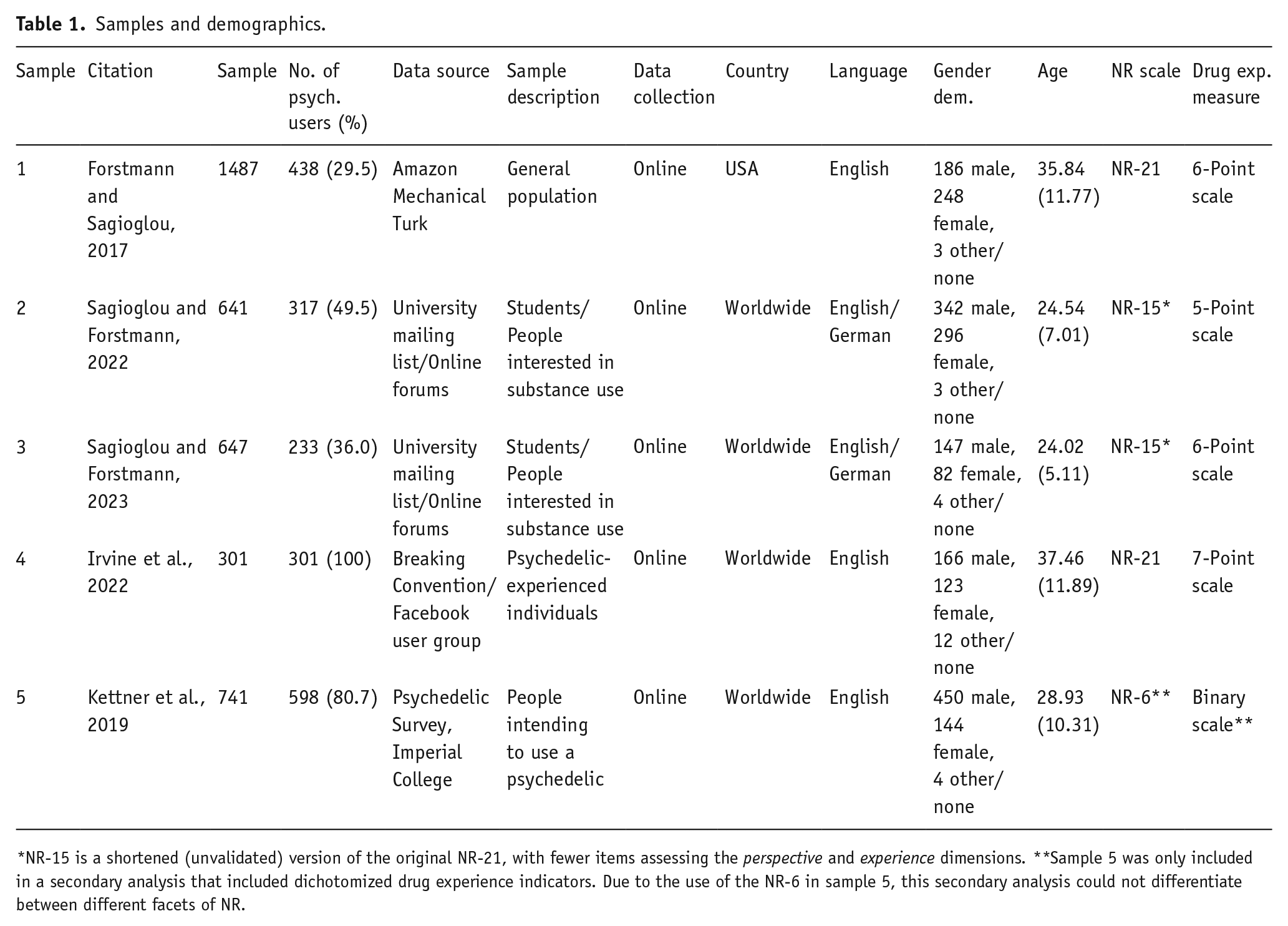
*NR-15 is a shortened (unvalidated) version of the original NR-21, with fewer items assessing the perspective and experience dimensions. **Sample 5 was only included in a secondary analysis that included dichotomized drug experience indicators. Due to the use of the NR-6 in sample 5, this secondary analysis could not differentiate between different facets of NR.
Across samples 1 to 5, 1887 participants have had previous experience with one (or multiple) psychedelic substance. As each sample relied on different questionnaires to assess retrospective substance use—that is, each asked participants about their experience with a different set of substances—we decided to focus our analyses on all substances that are known to be capable of inducing psychedelic/hallucinogenic/visionary states, and that were included in all questionnaires. This list of substances comprises the classic psychedelics psilocybin (N = 1498), LSD (N = 1398), DMT/ayahuasca (N = 625), mescaline (N = 315), and ibogaine (N = 35), as well as ketamine (N = 642), and Salvia divinorum (N = 491), which—despite typically being classified as dissociative substances—are known to be able to induce psychedelic-like states in higher doses.
Sample details
Sample 1 (Forstmann and Sagioglou, 2017) comprised U.S.-American participants, collected using the crowdsourcing platform Amazon Mechanical Turk. To approximate a general population sample, no specific inclusion criteria were implemented. Samples 2 and 3 (Sagioglou and Forstmann, 2022) are convenience samples recruited via a university mailing list, local student Facebook groups, and drug-related forums on the social news aggregation and discussion website reddit.com, and were completed as online surveys. Participants were of various nationalities (mostly from Europe and North America). In sample 4 (Irvine et al., 2022) participants were opportunistically sourced from two online communities of psychedelic users. One set of respondents were attendees of Breaking Convention— a 3-day biennial conference on psychedelic research—and the second was sourced via a research participation request on psychedelic user group on social media platform Facebook. Sample 5 (Kettner et al., 2019) included the baseline assessment from a prospective cohort study of self-selected psychedelic users hosted on a purpose-build website (www.psychedelicsurvey.com). The study was advertised via social media and mailing lists, recruiting participants who were planning to take a psychedelic within the near future.
Materials and data preparation
Substance use
Because the samples employed different questionnaires to assess previous experience with psychoactive substances, we rescaled participants’ responses to these questions in samples 1 to 4 (which used 5- to 7-point Likert-type scales) to values ranging from 0 to 6, with 0 indicating no previous experience with a given substance, and 6 indicating extensive experience. Sample 5 used binary indicators for this assessment (previous experience: no/yes) and thus could not reasonably be rescaled. It was therefore not included in the main analyses. However, for the secondary analyses, we converted the scores of samples 1 to 4 to binary scores (0 = no experience, >0 = experience), and combined these data with those of sample 5.
Nature relatedness
Samples 1 to 4 included 15 or 21-item versions of Nisbet et al.’s (2009) NR scales, which allow for the computation of individual mean scores representing the three subdimensions of NR (NR-self, NR-experience, and NR-perspective), as well as a single score representing overall NR. Sample 5 included the 6-item short version of the NR scale (Nisbet et al., 2013), from which only a single overall NR score can be computed.
The NR-self subscale represents the degree to which people incorporate the natural world into their self-construal, that is, how much they see themselves as part of nature and nature as a part of themselves (e.g., “My relationship to nature is an important part of who I am”). The NR-experience subscale, in turn, represents the degree to which people are physically familiar with the natural world, and how much they enjoy and desire to spend time in the natural world (e.g., “My ideal vacation spot would be a remote, wilderness area”). Lastly, the NR-perspective subscale represents the degree to which people have a worldview that includes an aspect of concern for how human actions affect the natural world (e.g., “Humans have the right to use natural resources any way we want” (reverse-coded)).
In all samples, participants were asked to indicate their agreement with each of the questionnaire items on a scale ranging from 1 (no agreement) to 5 (full agreement). To make scores comparable across samples, we z-transformed them within each sample prior to the analyses.
Demographics and sample indicators
The only demographic variables that were assessed in all samples in a somewhat consistent manner were participants’ age and gender, which we decided to include as covariates in our regression-based analyses. As participant gender was assessed slightly differently across samples, we recoded responses into three categories (male, female, and nonbinary/other/none). We included gender in our regression analyses in the form of two dummy-coded variables. Likewise, to acknowledge other sample characteristics, we also included dummy-coded variables representing which sample the data was originating from as co-variates in these analyses.
Results
Raw correlations
Across the full samples 1 to 4 (N = 3076 users, including those without any psychedelic experience), we investigated the raw rank-order correlations between NR (z-transformed), its subdimensions, and people’s experience with psychedelic substances (Bonferroni-corrected for multiple comparisons). Replicating previous results on the association between psychedelic use and NR (e.g., Forstmann and Sagioglou, 2017), we found that past psychedelic use positively correlated with overall NR, especially its subdimensions NR-self and NR-experience. We found the strongest associations between NR and past experience with psilocybin and LSD, but also (to a weaker extent) with use of DMT, ketamine, and Salvia divinorum (Table 2). Importantly, however, we also observed moderate correlations between the different psychedelic substance use indicators.
Raw correlations (Spearman’s rho) between NR, its subdimensions, and substance use indicators among all participants (samples 1–4, N = 3076).
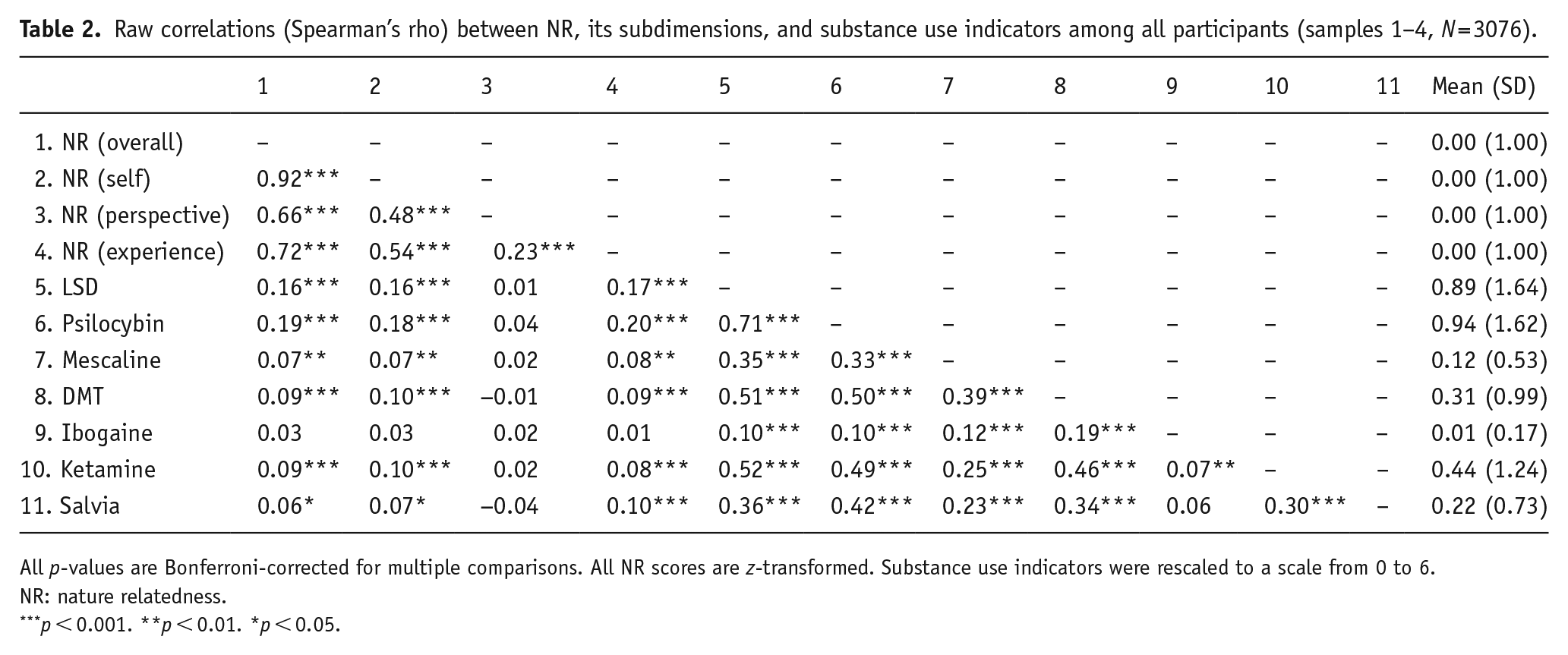
All p-values are Bonferroni-corrected for multiple comparisons. All NR scores are z-transformed. Substance use indicators were rescaled to a scale from 0 to 6.
NR: nature relatedness.
p < 0.001. **p < 0.01. *p < 0.05.
To make sure that associations between substance use and NR are not primarily attributable to other differences between users and nonusers of psychedelics (or psychoactive substances in general), such as demographic variables or personality traits related to sensation seeking, openness to experience, or conscientiousness, we reran the raw correlation analyses on a sample of N = 1280 participants who were experienced with psychedelics. This sample comprised all participants from samples 1 to 4 who indicated having used at least one psychedelic substance once. Here, only psilocybin use positively correlated with the overall NR score (r = 0.15, p < 0.001, Figure 1), as well as with the NR-self (r = 0.15, p < 0.001) and the NR-experience scores (r = 0.14, p < 0.001). In addition, experience with LSD correlated significantly positively with the NR-self subscale (r = 0.10, p < 0.05) (Table 3).
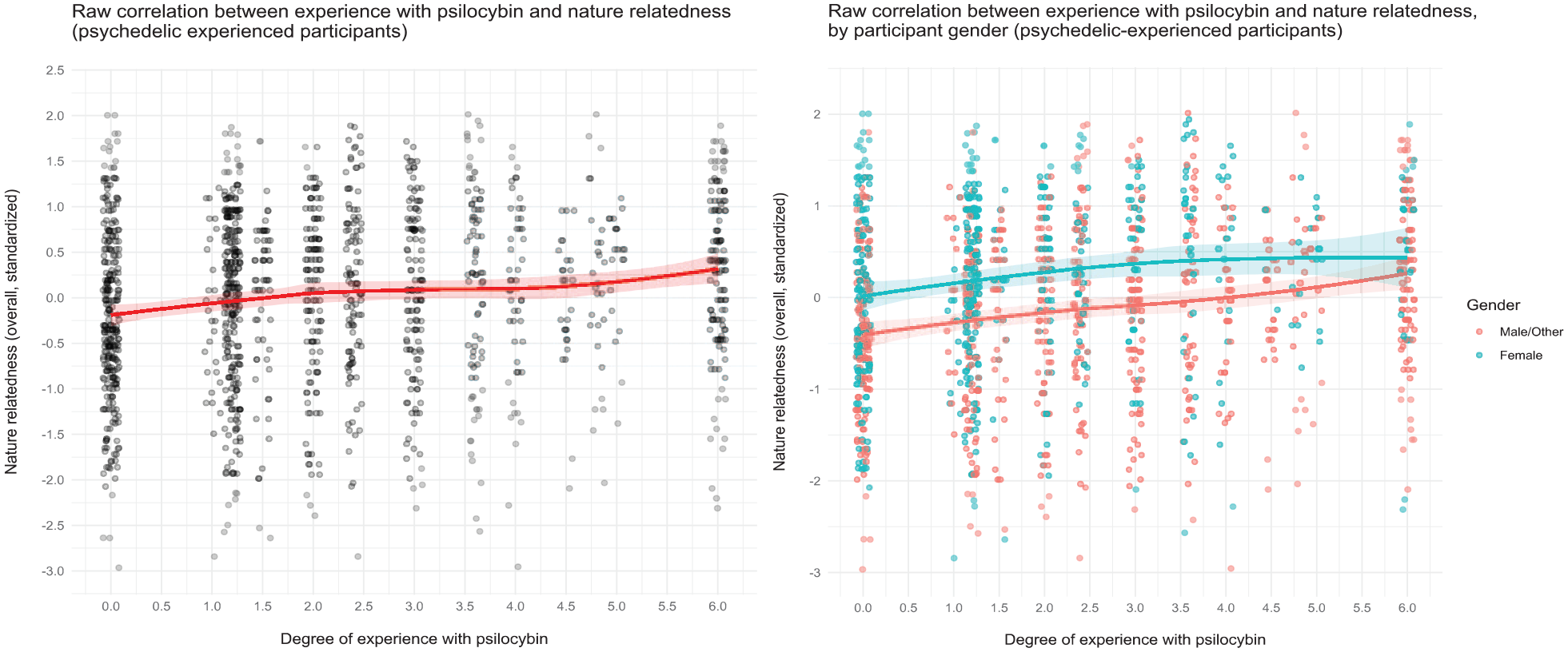
Association between psilocybin use and overall NR.
Raw correlations (Spearman’s rho) between NR, its subdimensions, and substance use indicators among participants experienced with psychedelic substances (samples 1–4, N = 1289).
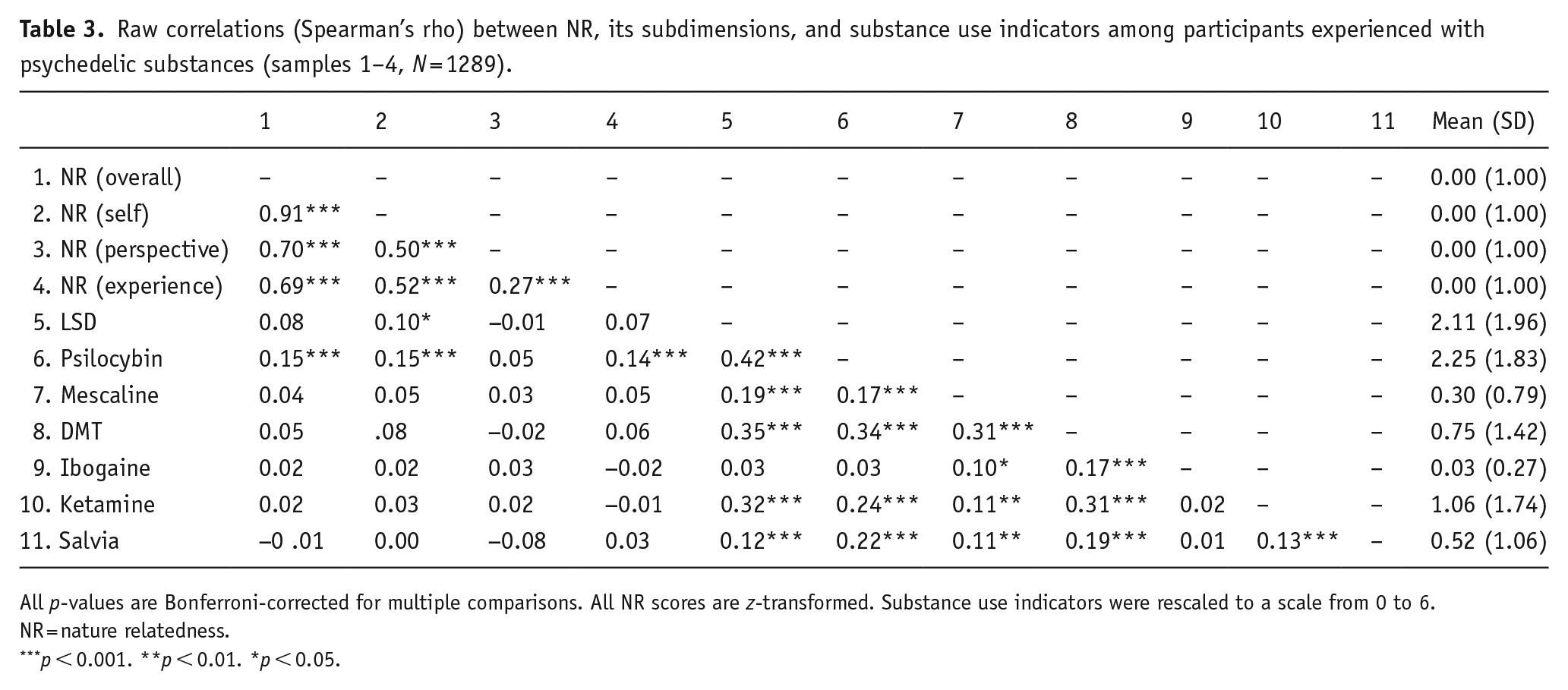
All p-values are Bonferroni-corrected for multiple comparisons. All NR scores are z-transformed. Substance use indicators were rescaled to a scale from 0 to 6.
NR = nature relatedness.
p < 0.001. **p < 0.01. *p < 0.05.
However, due to the strong intercorrelations between the substance use indicators (except for ibogaine), we decided to control for these intercorrelations by determining each variable’s unique predictive power in a linear regression model. We further sought to control for potentially confounding demographic variables—namely participants’ age and gender—as well as for sample of origin.
Main analyses
Overall NR
For our main analysis, including only participants experienced with psychedelic substances from samples 1 to 4 (N = 1289), we regressed the mean score for overall NR onto the seven substance use indicators (Figure 2), age, gender (dummy-coded), and sample of origin (dummy-coded). We found a significant effect for gender (b = 0.44 (β = 0.22), SE = 0.06, t = 7.57, p < 0.001, 95% CI = (0.32; 0.55)) and age (b = 0.01 (β = 0.08), SE < 0.01, t = 2.43, p = 0.015, 95% CI = (0.00; 0.01)), with greater NR among women (see Figure 3) and older participants. Sample of origin did not predict NR. Importantly, however, of the substance use indicators, only psilocybin emerges as a significant predictor of overall NR, b = 0.10 (β = 0.18), SE = 0.02, t = 5.34, p < 0.001, 95% CI = [0.06; 0.13] (Figure 2). In other words, controlling for the intercorrelation between substance use indicators among users of psychedelics, only their past experience with psilocybin was positively associated with self-reported NR. 1
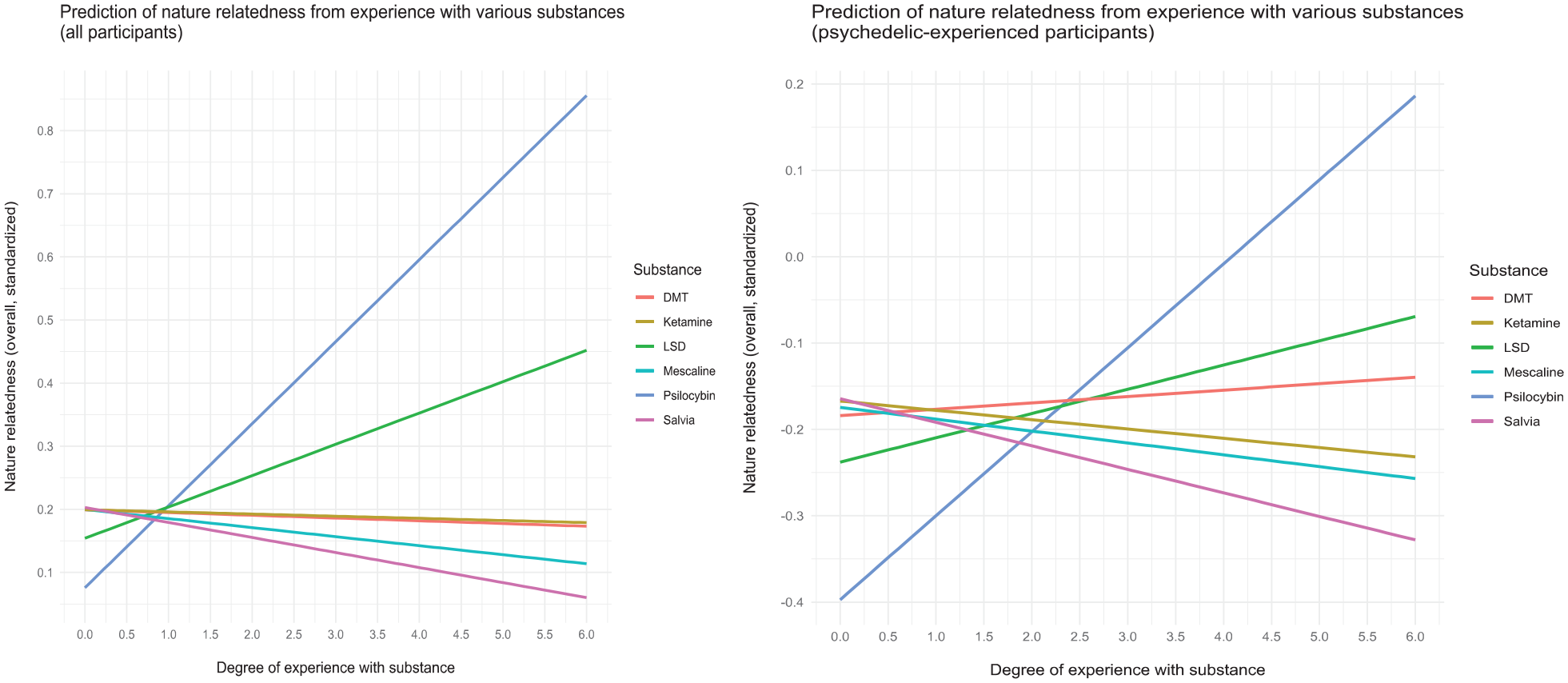
Prediction of NR from substance use experience.
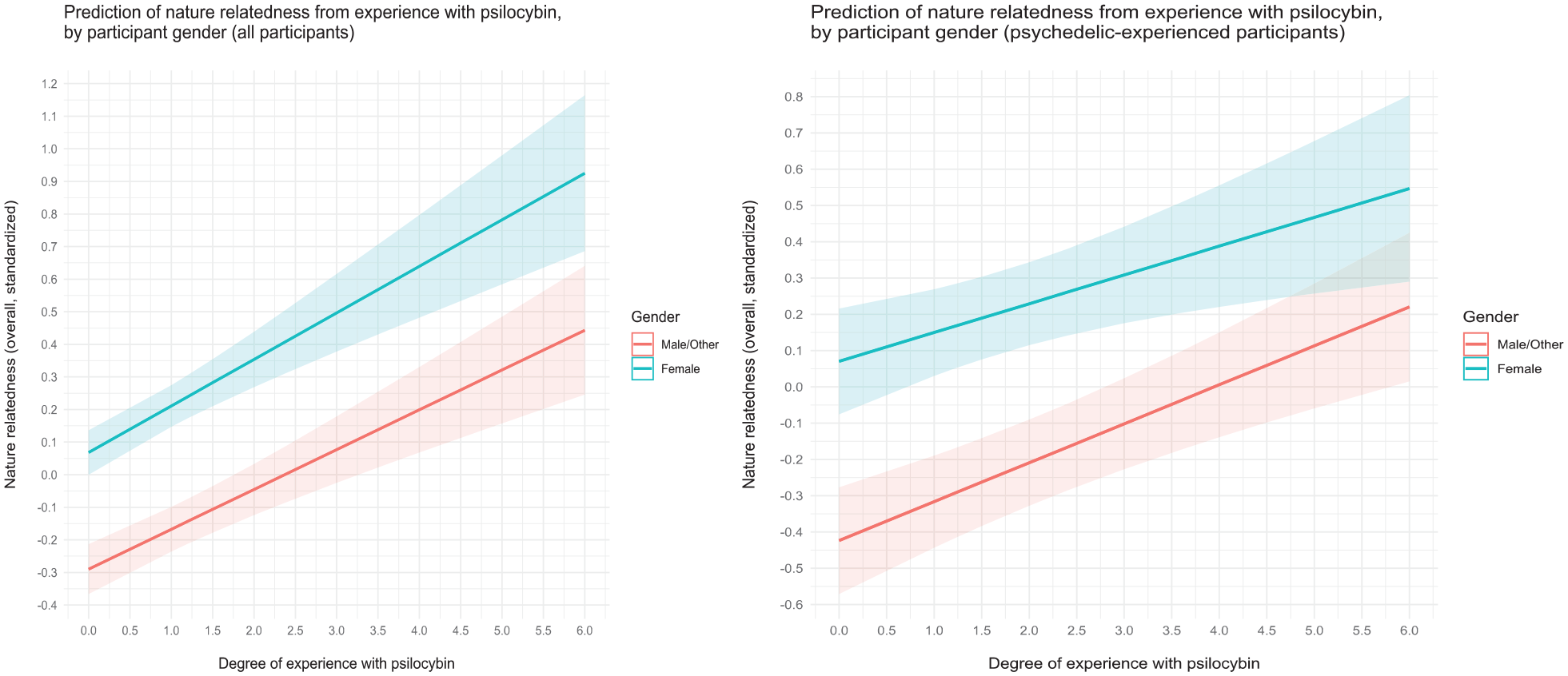
Prediction of NR from experience with psilocybin, separated by gender.
Association between use frequency and NR in users only experienced with psilocybin (versus LSD)
To rule out potential interindividual differences between users and nonusers of psychedelics, we exclusively focused on participants who had experience with a psychedelic substance in the past. However, although unlikely, one could still argue that the typical psilocybin user may be different from the typical LSD or DMT user, and that any association between psilocybin use and NR could be explained by such differences in personality, values, or beliefs. We therefore separately analyzed the data of 153 participants, taken from samples 1 to 4, who had experience with the use of psilocybin, but not a single other psychedelic substance. These people should be most similar with regards to the aforementioned interindividual differences. Even within this specific subsample, we found that psilocybin use frequency positively predicted NR, b = 0.19 (β = 0.24), SE = 0.07, t = 2.86, p = 0.005, 95% CI = [0.06; 0.32]. In other words, among people who never used a different psychedelic substance other than psilocybin, more frequent use corresponds to greater overall NR. In contrast, we similarly analyzed a subsample of participants exclusively familiar with LSD (the second most frequently used psychedelic, n = 96), and found no association between substance use frequency and overall NR, b = 0.08 (β = 0.12), SE = 0.08, t = 1.02, p = 0.312, 95% CI = [−0.08; 0.25].
NR subdimensions
In a second step, we tested how the different substance use indicators predict the three subdimensions of NR, using a (fully saturated) structural equation model (lavaan; Rosseel, 2012). This model regressed the three scores for NR-self, NR-perspective, and NR-experience onto the substance use indicators, age, gender (dummy-coded), and sample of origin (dummy-coded), and accounted for the covariance of the three NR sub-dimensions. All three sub-dimensions of NR significantly covaried (Figure 4). Once more, only use of psilocybin emerged as significant predictor of all three sub-dimensions, NR-self (b = 0.09 (β = 0.16), SE = 0.02, z = 4.93, p < 0.001, 95% CI = (0.05; 0.12)), NR-perspective (b = 0.06 (β = 0.11), SE = 0.02, z = 3.44, p < 0.001, 95% CI = (0.03; 0.10)) and NR-experience (b = 0.07 (β = 0.14), SE = 0.02, z = 3.98, p < 0.001, 95% CI = (0.04; 0.11)) (Figure 4). Of all other substance use indicators, only LSD emerged as a significant predictor of the NR-self subscale, b = 0.04 (β = 0.07), SE = 0.02, z = 2.25, p = 0.024, 95% CI = [0.00; 0.07]. However, while significant, the effect size of this path was decidedly smaller than those for psilocybin.
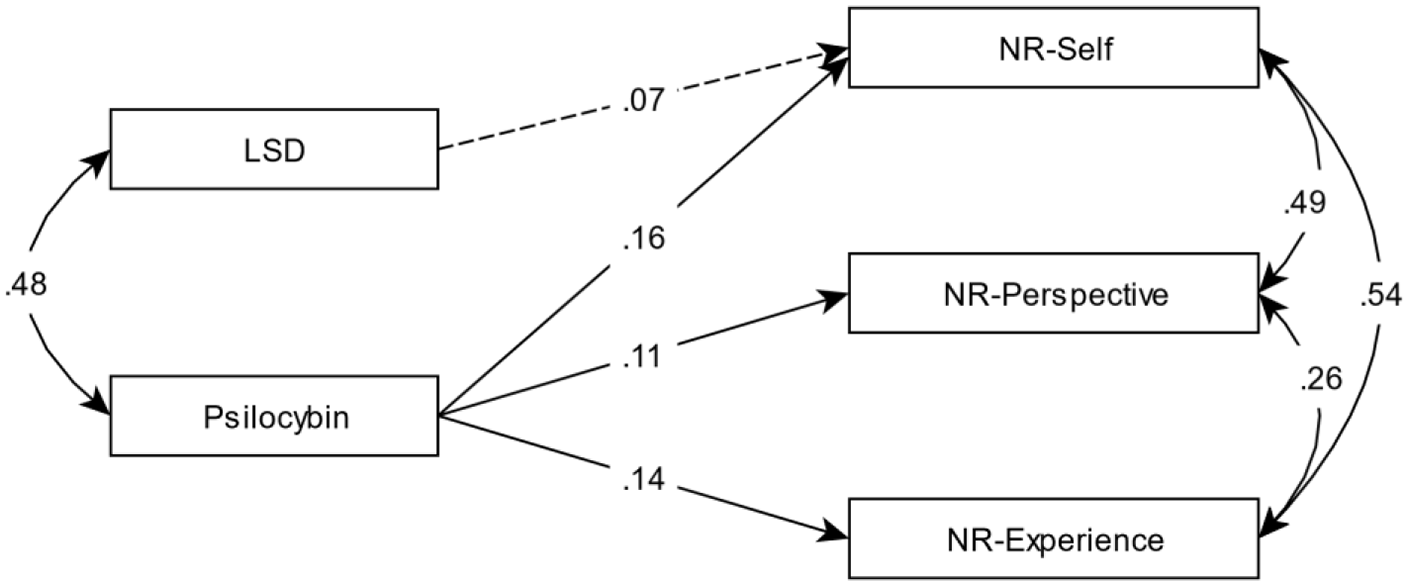
SEM testing the association between psychedelic substance use and the three subdimensions of NR. Values represent standardized regression coefficients. Not displayed are the remaining substances included in the model as well as the covariates for gender, sample (both dummy-coded), and age. The dashed line indicates the weaker, unexpected path for the substance LSD.
In sum, past psilocybin use predicted all three subdimensions of NR. Matching previously found patterns (e.g., Forstmann and Sagioglou, 2017), it most strongly predicted the NR-self subdimension, followed by NR-experience, and NR-perspective. None of the other substance use indicators revealed a comparable pattern of results.
Secondary analyses (binary, including sample 5)
Analysis of users experienced with psychedelics
In our secondary analyses we included data from sample 5, which assessed binary substance use indicators, that is, participants were asked to indicate whether or not they have used a certain substance in the past, without providing information on how often they used it. We therefore recoded all data from sample 1 to 4 to match this coding and reran the main regression analysis, again focusing on participants experienced with psychedelics (N = 1887). Once again, age (b = 0.01 (β = 0.10), SE < 0.01, t = 3.81, p < 0.001, 95% CI = (0.00; 0.01)) and gender (b = 0.39 (β = 0.19), SE = 0.05, t = 8.01, p < 0.001, 95% CI = (0.29; 0.49)) emerged as significant covariates, with women and older participants scoring higher on NR. Importantly, psilocybin significantly predicted overall NR, to a slightly weaker degree (when considering the standardized coefficients) than in the main analysis, b = 0.33 (β = 0.13), SE = 0.06, t = 5.75, p < 0.001, 95% CI = (0.21; 0.44). This may be attributable to lesser power due to the artificial dichotomization of our otherwise continuous data. Unexpectedly, two other substance use indicators emerged as significant, positive (albeit weaker) predictors of NR: mescaline use (b = 0.15 (β = 0.05), SE = 0.07, t = 2.25, p = 0.024, 95% CI = (0.02; 0.27)) and DMT use, b = 0.17 (β = 0.09), SE = 0.05, t = 3.09, p = 0.002, 95% CI = (0.06; 0.27). When adjusting the alpha for multiple comparisons, only DMT use remains a significant predictor.
In sum, using our full sample of participants experienced with psychedelics, experience with psilocybin (disregarding the degree of experience) most strongly predicted NR. To a somewhat smaller extent, experience with the structurally similar substance DMT likewise predicted NR.
Analysis of all participants (including non-experienced users)
Lastly, for the sake of completeness, we also analyzed our full sample of participants from samples 1 to 5, including those who lack any experience with psychedelics (i.e., all 3817 participants), also using the binary substance use indicators.
Matching the findings outlined in the previous paragraph, psilocybin emerged as the strongest predictor of overall NR, b = 0.39 (β = 0.19), SE = 0.05, t = 8.64, p < 0.001, 95% CI = (0.30; 0.48). As in the previous binary analysis, other substance use indicators emerged as significant, positive predictors of NR: LSD use (b = 0.13 (β = 0.06), SE = 0.05, t = 2.77, p = 0.006, 95% CI = (0.04; 0.22)), DMT use, b = 0.18 (β = 0.07), SE = 0.05, t = 3.30, p < 0.001, 95% CI = [0.07; 0.28], and mescaline use (b = 0.13 (β = 0.04), SE = 0.06, t = 2.11, p = 0.035, 95% CI = (0.01; 0.26), which is nonsignificant when adjusting for multiple comparisons).
Still, it is notable that the predictive power of past psilocybin use was about three times as strong as that of the other significant use indicators. Once more, the second largest effect was for experience with DMT, which is also the substance that is chemically and pharmacologically closest to psilocybin. Yet, due to the decreased power as a result of the artificial dichotomization of the substance use indicators, results for the individual psychedelic substances may be less reliable than those in the main analyses detailed above.
Nature access and motivation for nature connection
As briefly outlined above, in addition to pharmacological reasons, another reason for an increase in NR as a function of psilocybin use may be that people are more likely to use psilocybin in nature-based settings or with the intention of feeling closer to nature than they are when they use other psychedelic substances.
Sample 5 asked 741 people about a recent psychedelic experience, including which substances they took, whether they had access to nature during their experience (N = 681), and to what degree they took the substance to enhance their connection with nature (N = 653).
A one-way ANOVA indicated that access to nature (0 = no, 1 = yes) did significantly vary across substances, F(6, 675) = 2.36, p = 0.029. However, this was primarily driven by one outlier: 82% of mescaline users had access to nature during their experience, a number significantly greater than the grand mean across all substances, b = 0.47, SE = 0.14, t = 3.32, p = .006, corrected for multiple comparisons. Access to nature did not significantly differ from the grand mean for the most commonly used substances psilocybin (34%), LSD (35%), smoked DMT (25%) and ayahuasca (36%) (all ps > 0.93, corrected for multiple comparisons).
When it comes to the motives for substance use, the degree to which people indicated they took the psychedelic to increase their connection with nature (on a scale from 1 to 4), did not differ between substances, F(6, 646) = 0.5, p = 0.808. While the motive was moderately high across substances (M = 2.97, SD = 1.03), none of the substances produced scores significantly smaller or greater than the grand mean (all ps > 0.71, corrected for multiple comparisons) or smaller/greater than any other substance (all ps > 0.87, corrected for multiple comparisons).
In sum, from this larger sample of psychedelics users, it does not seem as if access to nature or the motivation to increase one’s connection with nature differ meaningfully between the various psychedelic substances. As such, although a more thorough investigation is needed, it seems unlikely that these factors alone can explain why past experience with psilocybin in particular seems to be the only reliable predictor of NR and its subdimensions.
General discussion
In a combined reanalysis of the data from five individual samples, comprising data collected in different contexts, including both experts and lay people, we found that among people experienced with psychedelic substances, only previous use of psilocybin reliably predicted self-reported NR. Specifically, the strongest predictive effect was found for the NR-self subdimension, that is, the degree to which people incorporate the natural world into their self-construal. In some analyses (and less reliably), use of the structurally similar substance DMT also predicted nature-relatedness and its subdimensions. Results replicated when including psychedelic-naïve participants.
Primarily focusing on participants experienced with psychedelics allowed us to control for a number of potential confounding variables that differ between users and nonusers of psychedelics (or psychoactive substances in general), such as personality traits, values, beliefs, and lifestyle choices, and that may similarly be related to NR. In other words, in this sample, all participants are/were open to having a psychedelic experience, to potentially (but not necessarily) engage in an illegal activity by using an illicit substance, and to admit to doing so. Supporting the notion that psychedelic use in general may be tied to a certain set of personality-related variables, the vast majority of participants in our combined sample (74.9%) had experience with more than one type of psychedelic, and approximately a third of them had experience with four or more different psychedelics. Still, only the degree of experience with psilocybin predicted NR.
While this analysis ruled out many potential confounds, one could still argue that the desire to use psilocybin as compared to other psychedelics is associated with a specific set of interindividual differences that could explain its relation to NR. However, an analysis that only included those participants who had experience with psilocybin but none of the other psychedelics revealed that psilocybin use frequency still significantly predicted NR. In contrast, the same was not the case for exclusive LSD users.
Why tryptamine psychedelics, and psilocybin in particular, are the only reliable predictor of NR is not yet clear. One potential mechanism underlying this relationship is differences in phenomenological effects of the various psychedelic substances, which may be attributable to their unique pharmacological attributes, their use contexts, or different expectations and intentions by their users.
With a few exceptions, too little is known about to what degree differences in phenomenological effects of psychedelic substances are due to their individual pharmacological attributes. We do know, however, about the importance of set and setting in the psychedelic experience (e.g., Carhart-Harris et al., 2018). Use contexts and intentions may therefore indeed contribute to the association between psilocybin use and NR. However, in an analysis of people’s motives for undergoing a psychedelic experience, we did not find differences across substances with regards to people’s desire to connect with nature on a personal level. Likewise, we did not find that people had more access to nature when using psilocybin as compared to other psychedelics. While these results tentatively speak against the hypothesis that increases in NR are primarily due to motives or use settings, one should note that these results were only based on a single sample. Likewise, this analysis only focused on participants’ most recent experience, and not ones they had in the past. More research is necessary to determine how precisely motivations for using different psychedelics and settings in which they are used vary, as well as how this may relate to their acute and chronic effects on their users. For example, a recently published study with Brazilian participants found the use of ayahuasca/DMT to be the primary predictor of overall NR, which may hint at culture differences, for example in use settings, potentially playing a role in the downstream consequences of psychedelic substance use (Longo et al., 2022).
In the samples included in the present analyses, specific questions enquiring about users’ perceptions of the effects of different psychedelics were not issued, and thus, it remains possible these perceptions differed across compounds. For example, naturally occurring psychedelics such as psilocybin may have been seen as more conducive to NR than synthetic psychedelics like LSD. Yet, even if people do not have clear expectations about the effects of different psychedelics, the mere association of a psychedelic with the natural world due to the consumption of a plant or mushroom may be partly responsible for reports of increased NR. In fact, it is possible that people are not consciously aware of these associations, which makes a thorough inquiry into these processes even more difficult. In that regard, although there is some initial evidence that people report encountering plantlike entities during psilocybin or DMT experiences more frequently than during experiences with other substances (Luke et al., 2020), it is not known whether or how this substance anthropomorphization may factor into how use of these substances affects people’s sense of connectedness to nature.
Surprisingly, use of DMT, a substance structurally similar to psilocybin, only emerged as a weak and inconsistent predictor of overall NR. Due to the nature of our combined data analysis across multiple samples, we had to create a composite score of DMT (inhaled) and ayahuasca use, as some samples assessed both with a single item. Yet, despite involving the same primary active compound, the subjective effects of both modes of administration differ to some degree, as ayahuasca experiences usually last substantially longer than those of inhaled DMT (a few hours versus less than 1 hour), often take place in unique use settings (e.g., retreat centers in South America), and involve a brew that comprises additional active compounds such as the monoamine oxidase (MAO) inhibitors harmine/harmaline, which anecdotally give the experience a distinct characteristic. Ayahuasca experiences may therefore more closely resemble psilocybin experiences than inhaled DMT experiences. Future research should therefore try to disentangle the effects of both modes of administration in a suitable sample.
Regardless, given the present results, in the further investigation of the effects of psychedelics on NR, it makes sense to primarily focus on psilocybin as the most likely candidate to have reliable effects. While correlational support for the link between psilocybin use and NR is abundant, there is now a growing need for more elaborate study designs. This could include, for example, larger scale, double-blind, placebo-controlled studies to further establish causality. In addition, more needs to be learned about the reasons for why psilocybin is a better predictor than other psychedelics. In other words, there is a need for studies investigating differences in both subjective and objective effects of various psychedelic substances in otherwise identical settings. Conversely, studies experimentally manipulating the setting in which they take place (e.g., indoors versus outdoors), while otherwise being parallel, would help shed more light on how, for example, access to nature-based environments affects participants’ NR or pro-environmental attitudes and behaviors. Such studies should also include more precise measures of participant expectations, intentions, and desires, to see whether they moderate or mediate the effects of different psychedelics.
Lastly, more is still to be learned about the role that mystical-type or transformative experiences, as well as the experience of ego dissolution play in the association between psychedelic use and NR or pro-environmental behavior. Given the self-transcendent nature of these experiences, they may fit into the 2-pathway model for pro-environmental behavior proposed by Thiermann and Sheate (2020), which considers self-transcendent values one of the psychological pathways mediating the effects of nature connectedness on pro-environmental behavior, alongside dispositional empathy. Considering that they possess not only the capacity to induce self-transcendent experiences but also to enhance empathy (e.g., Dolder et al., 2016; see Blatchford et al., 2021 and Harrild and Luke, 2020 for overviews), psychedelic substances may thus represent an ideal candidate for a novel category of “experiential interventions” aimed at promoting pro-environmental behavior.
In sum, the present results provide a more nuanced view on how the use of certain psychedelic substances (and specifically psilocybin) is associated with people’s sense of connectedness to the natural world. NR is an important factor contributing to individuals’ mental health and well-being (see Gandy et al., 2020), and an increase in NR may constitute one of the pathways through which psychedelic-assisted therapy unfolds its effects in clinical populations—such as in the treatment of mood or substance use disorders. While NR was found to be an important determinant of environmental concern and pro-environmental behavior and has been theorized to play an important role in society’s failure to address climate change issues (e.g., Schultz, 2000; Zylstra et al., 2014), one must weigh these benefits against concerns around risks of psychedelic substance use within in certain groups (e.g., individuals with a family history of psychosis; Johnson et al., 2008). Still, the present findings may contribute to the development of interventions in the clinical domain, help us better understand the intricate effects of different psychedelics, and highlight a need to further investigate how contextual and interpersonal factors interact with substance use to produce lasting changes in cognition and behavior.
Supplemental Material
sj-docx-1-jop-10.1177_02698811221146356 – Supplemental material for Among psychedelic-experienced users, only past use of psilocybin reliably predicts nature relatedness
Supplemental material, sj-docx-1-jop-10.1177_02698811221146356 for Among psychedelic-experienced users, only past use of psilocybin reliably predicts nature relatedness by Matthias Forstmann, Hannes S Kettner, Christina Sagioglou, Alexander Irvine, Sam Gandy, Robin L Carhart-Harris and David Luke in Journal of Psychopharmacology
Footnotes
Declaration of conflicting interests
The author(s) declared no potential conflicts of interest with respect to the research, authorship, and/or publication of this article.
Funding
The author(s) disclosed receipt of the following financial support for the research, authorship, and/or publication of this article

Supplemental material
Supplemental material for this article is available online.
Notes
References
Supplementary Material
Please find the following supplemental material available below.
For Open Access articles published under a Creative Commons License, all supplemental material carries the same license as the article it is associated with.
For non-Open Access articles published, all supplemental material carries a non-exclusive license, and permission requests for re-use of supplemental material or any part of supplemental material shall be sent directly to the copyright owner as specified in the copyright notice associated with the article.
