




Abstract
Background:
Experiences of having an encounter with seemingly autonomous entities are sometimes reported after inhaling N,N-dimethyltryptamine.
Aim:
The study characterized the subjective phenomena, interpretation, and persisting changes that people attribute to N,N-dimethyltryptamine-occasioned entity encounter experiences.
Methods:
Two thousand, five hundred and sixty-one individuals (mean age 32 years; 77% male) completed an online survey about their single most memorable entity encounter after taking N,N-dimethyltryptamine.
Results:
Respondents reported the primary senses involved in the encounter were visual and extrasensory (e.g. telepathic). The most common descriptive labels for the entity were being, guide, spirit, alien, and helper. Although 41% of respondents reported fear during the encounter, the most prominent emotions both in the respondent and attributed to the entity were love, kindness, and joy. Most respondents endorsed that the entity had the attributes of being conscious, intelligent, and benevolent, existed in some real but different dimension of reality, and continued to exist after the encounter. Respondents endorsed receiving a message (69%) or a prediction about the future (19%) from the experience. More than half of those who identified as atheist before the experience no longer identified as atheist afterwards. The experiences were rated as among the most meaningful, spiritual, and psychologically insightful lifetime experiences, with persisting positive changes in life satisfaction, purpose, and meaning attributed to the experiences.
Conclusion:
N,N-dimethyltryptamine-occasioned entity encounter experiences have many similarities to non-drug entity encounter experiences such as those described in religious, alien abduction, and near-death contexts. Aspects of the experience and its interpretation produced profound and enduring ontological changes in worldview.
Introduction
N,N-dimethyltryptamine (DMT), which occurs naturally in a variety of animal and plant species (Halpern, 2004) can produce intense subjective effects, including vivid mental imagery, perceptual and time distortions, changes in thought patterns, and heightened emotional states (Carbonaro and Gatch, 2016; Szára, 1957). When administered via intravenous injection or inhalation, DMT has a very rapid onset and short duration of action, with peak effects occurring within 5 min and resolving within 30 min due to its rapid metabolism (Acosta-Urquidi, 2015; Carbonaro and Gatch, 2016; Strassman et al., 1994; Strassman, 1996; Timmermann et al., 2019). When taken orally with a monoamine oxidase inhibitor, as prepared in the plant admixture ayahuasca, the onset of effects is delayed and the duration may be several hours (Domínguez-Clavé et al., 2016; Riba et al., 2003). Similar to other classic psychedelics, DMT is a Schedule I compound in the US Controlled Substance Act of 1970 with no accepted medical use (Drug Enforcement Administration, 1970).
The neuropharmacological mechanisms of action mediating the effects of DMT are varied and complex, with a primary role for serotonin 2A receptors. However, DMT also has effects elsewhere, including other serotonergic and glutaminergic receptors, trace-amine associated receptors, sigma-1 receptors, with additional interactions with dopamine and acetylcholine functioning (Barker, 2018; Carbonaro and Gatch, 2016; Ray, 2010). A recent placebo-controlled trial examining administration of intravenous DMT (Timmermann et al., 2019) on electroencephalogram (EEG) in humans showed that substantial decreases in total spectral power in alpha and beta bands co-occurring with substantial increases in spontaneous signal diversity and the emergence of delta and theta oscillations during peak effects. Interestingly, these changes in brain activity covaried with the subjective experiences reported by participants, as was observed in an uncontrolled observation of inhaled DMT effects on EEG (Acosta-Urquidi, 2015).
It has been speculated that due to the endogenous presence of DMT in the mammalian brain, including humans (Christian et al., 1977; Dean et al., 2019), DMT may play a role in a variety of non-ordinary states of consciousness such as dreaming, psychosis, spiritual experiences, encounters with non-human intelligence (e.g. alien and unidentified flying object (UFO) encounters), extrasensory perception, out-of-body experiences, and near-death experiences (Gallimore 2013; Grammenos and Barker, 2015; Luke, 2008, 2011, 2012; St. John, 2016, 2018; Strassman, 2001, 2008; Timmermann et al., 2018). However, it is not clear that DMT occurs endogenously in sufficient concentrations to produce pharmacological effects (Barker, 2018; Nichols, 2018).
Although there are numerous anecdotal reports of vaporized or smoked DMT use (e.g. dmt-nexus.me; erowid.org; Luke and Spowers, 2018), empirical research detailing prevalence, patterns of use, and other characteristics of such DMT use is scarce. Drug use data from a US nationally representative survey in 2013/2014 (Palamar and Le, 2018) indicated that DMT, 5-Methoxy-N,N-diisopropyltryptamine (5-MeO-DIPT), and/or alpha-methyltryptamine use are rare (0.7%). Other survey data indicate that the desirable features of smoked DMT include meaningful, insightful or spiritual experiences, the short duration of action, and pleasurable feelings (Cakic et al., 2010; Winstock et al., 2014). A structured qualitative thematic analysis of DMT effects in 19 self-selected users revealed nine themes of the DMT experience including: hallucinations, lucidity, affective distortions, ineffability, extreme intensity, spirituality, distortion in sense of space-time and self, a sense of familiarity, and reports of entering other realities that were sometimes inhabited by other sentient beings (Cott and Rock, 2008). One recent study provided detailed descriptions of experiences of 606 individuals who reported experiences of an encounter with God, ultimate reality, higher power, or an emissary of God after using smoked or vaporized DMT (Griffiths et al., 2019).
Among the most vivid, intriguing, memorable, and sometimes disconcerting experiences that people report after taking a high dose of inhaled or intravenous DMT are those of encountering seemingly autonomous entities or beings (Luke, 2011; Luke and Spowers, 2018; Meyer, 2006; Strassman 2001, 2008). Although description of the nature of the entities, details of the experiences, and meaning attributed to the experiences vary widely, such experiences are apparently not infrequent. Strassman (2008) estimated that at least half of the participants in his studies of high doses of intravenous DMT reported experiences of journeys to invisible or alternative worlds, and that contact with alien beings or entities were a variant of this category.
The present study was undertaken to advance our understanding of DMT-occasioned experiences that are interpreted as an encounter with a seemingly autonomous being or entity. This study was an Internet survey of a large international sample of individuals who reported having had such an experience after having taken a “breakthrough” dose of vaporized or smoked DMT. Detailed questions were asked to characterize participant demographics and the subjective phenomena, interpretation, and persisting changes that people attributed to their single most memorable experience.
Method
Procedure
This study was an anonymous Internet-based survey of individuals who reported having had an experience of having an encounter with a seemingly autonomous being or entity after taking DMT. Respondents were recruited by postings on several websites (e.g. motherboard.com, facebook.com, reddit.com, dmt-nexus.me, bluelight.org, drugs-forum.com), and by sending email announcements. Each advertisement included a hyperlink that directed potential respondents to a secure Web-based survey (hosted by Qualtrics; the full survey is available in the online Supplemental Material). Each person who clicked a study link was presented with a consent document that provided details about the inclusion criteria. Eligible study participants had to endorse being at least 18 years old, being able to read, write and speak fluent English, having taken a “breakthrough” dose of DMT (“that is, one that produced very strong psychoactive effects”), and that they had an experience of encountering a seemingly autonomous being or entity after consuming DMT. Eligible respondents were presented with the survey. The study was approved by the Institutional Review Board at Johns Hopkins University School of Medicine.
Study recruitment flow
Respondents were recruited from February to December 2018. A total of 20,340 people clicked an advertisement link to read more details about the study. Of those, 10,308 consented to participate. Of those who consented, 1129 were excluded because they: reported that they had previously completed the questionnaire (150 individuals), were younger than 18 years old (50), were not fluent in English (103), had no prior breakthrough experience with DMT (342), or had not encountered a seemingly autonomous being or entity (484). Of the remaining 9179 who were eligible for the study, 4610 completed the survey and reported at the end of the survey that they believed their responses were accurate. Of these, 1839 were excluded from analysis because: they reported that they: had a prior diagnosis of a psychotic disorder (103), had consumed other substances which may have affected their DMT experience (1279), or had administered DMT via a route other than smoking or vaporizing (e.g. oral, intranasal, intravenous; 457).
The remaining 2771 respondents were included in the process of assessing data quality, which included a review of IP addresses, a qualitative review of open-ended responses, and examining completion times. Duplicate internet protocol (IP) addresses were identified in 34 surveys, which were excluded. Of the remaining 2737, a qualitative review process identified an additional 176 respondents to be excluded from analyses (63 who revealed they had used multiple substances but did not report this when asked via other questions in the survey), or had used a psychoactive substance other than DMT (e.g. alcohol, cannabis), 36 who reported using changa (i.e. a smokable admixture of plants containing DMT and a monoamine oxidase inhibitor; St. John, 2017), 37 who appeared to be a poor responder (e.g. responses suggested that they were not attending to question content), and 40 with some combination of these various indicators. We also examined completion time to rule out fast responding. Mean completion time was 39 min. No respondents were removed for fast responding. The final sample consisted of 2561 respondents.
Entity survey
The questionnaire (Supplemental Material) was modified from that used to assess God encounter experiences in non-drug and psychedelic drug users (Griffiths et al., 2019). After completion of demographic information, respondents were asked to bring to mind their experience of encountering a seemingly autonomous being or entity after taking DMT. They were instructed that if they had multiple such experiences, they should answer the questionnaire only with respect to their single most memorable experience. The respondents provided a brief written description of the experience and then answered a series of questions about various aspects of the experience and their interpretation of the experience. Details of questionnaire items are provided in the Results section. Briefly, respondents answered questions about descriptive details of the encounter experience (e.g. senses involved, type of communication, best descriptive labels to describe the entity, respondent and entity emotions during the encounter). Other questions probed details of the interpretation of the experience having metaphysical implications (e.g. did the entity exist in some real but different dimension; did the experience alter their fundamental conception of reality; was the entity intelligent, conscious, or sacred; did identification as atheist or agnostic change after the experience). Questions also asked respondents to compare the experience on several dimensions (e.g. personal meaning, psychological insight) to other lifetime experiences and to rate various persisting changes attributed to the experience (e.g. well-being, life’s purpose). Respondents were asked to provide open-ended written responses to questions about whether they received a message, task, or prediction about the future from their entity encounter experience.
Data analyses
Analytic plan
Quantitative analyses included frequency counts and descriptive calculations for all questionnaire responses. For religious orientation data, comparison of changes in religious orientation before and after the encounter experience, z-tests of dependent proportions were used. Bonferroni corrections were used to control for Type I error rate. Results were considered significant when the adjusted p<0.05. Analyses were conducted in SPSS v25 (IBM Corp., 2018). A qualitative analysis was also conducted for the open-ended text box responses to questions about entity encounter experiences: (a) messages, tasks, missions, purposes, or insights, and (b) predictions about the future that were ascertained during the entity encounter. This qualitative approach included a content analysis (Casterlé et al., 2012; Miles and Huberman, 1994), in which each respondent’s written text was reviewed to create a list of themes. This process began with the preparation for coding process described by Casterlé et al. (2012), which included reading all open-ended responses, generating a list of potential themes, and refining themes in an iterative process when they were not initially supported by further review of responses. The next stage was the actual coding process, in which a list of themes was used for each open-ended question and each theme was assigned a numerical code (e.g. 1, 2, 3, 4, 5, etc.) so that links could be made between a respondent comment and the associated theme. The number of responses that were coded into each theme within each open-ended question were then calculated as a proportion of responses out of the total sample. After this process was completed, a random selection of 20% of responses from each open-ended item were then coded independently by an author previously not involved in coding to assess interrater reliability. Rates of agreement were high (95% for prediction themes, and 94% overall for message, task, mission, purpose, or insight themes). All qualitative analyses were conducted by the first three study authors (AKD, JMC, and EGW).
Results
Respondent characteristics
As Table 1 shows, most of the sample (n=2561) reported they were male (77%), Caucasian/white (85%), never married (52%), earned US$35,000 or more in income (52%), and lived in the USA (64%). Average age in the sample was 31.9 (standard deviation (SD)=9.1). Respondents had used DMT an average of 14.5 times (SD=22.9) in their lifetime (Table 2). For most participants (67%) the most memorable entity encounter, which was described in the survey, was their first entity encounter experience with DMT. However, 56% reported having had other such DMT-associated entity encounters either before or after the experience they described in the survey. Of those who had such experiences in the past, this had occurred a median of three (n=849) times before and three (n=1105) times after the reported most memorable experience.
Demographic characteristics of the sample (n=2561). a
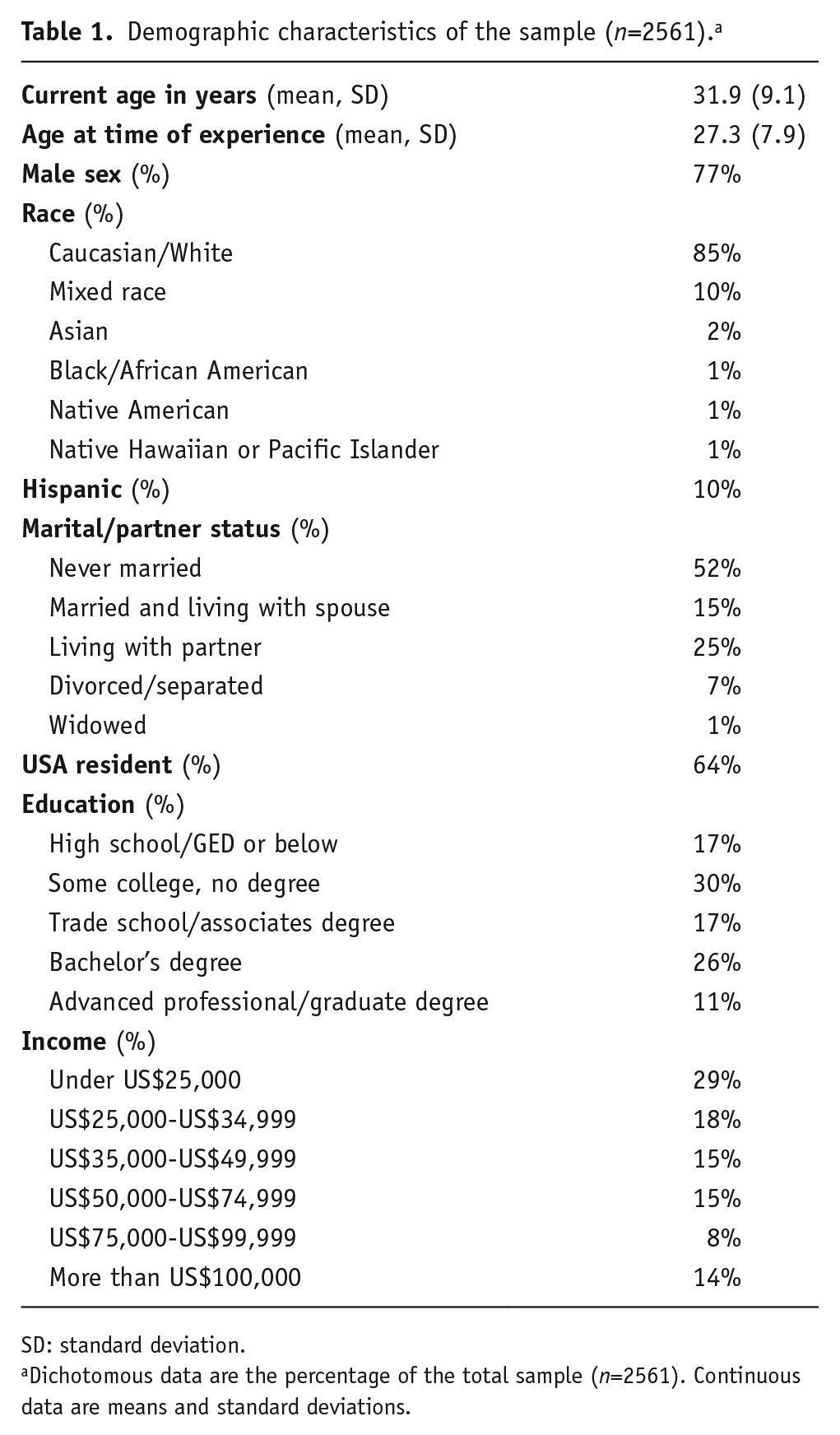
SD: standard deviation.
Dichotomous data are the percentage of the total sample (n=2561). Continuous data are means and standard deviations.
History of N,N-dimethyltryptamine (DMT) use and entity encounter experiences (n=2561).
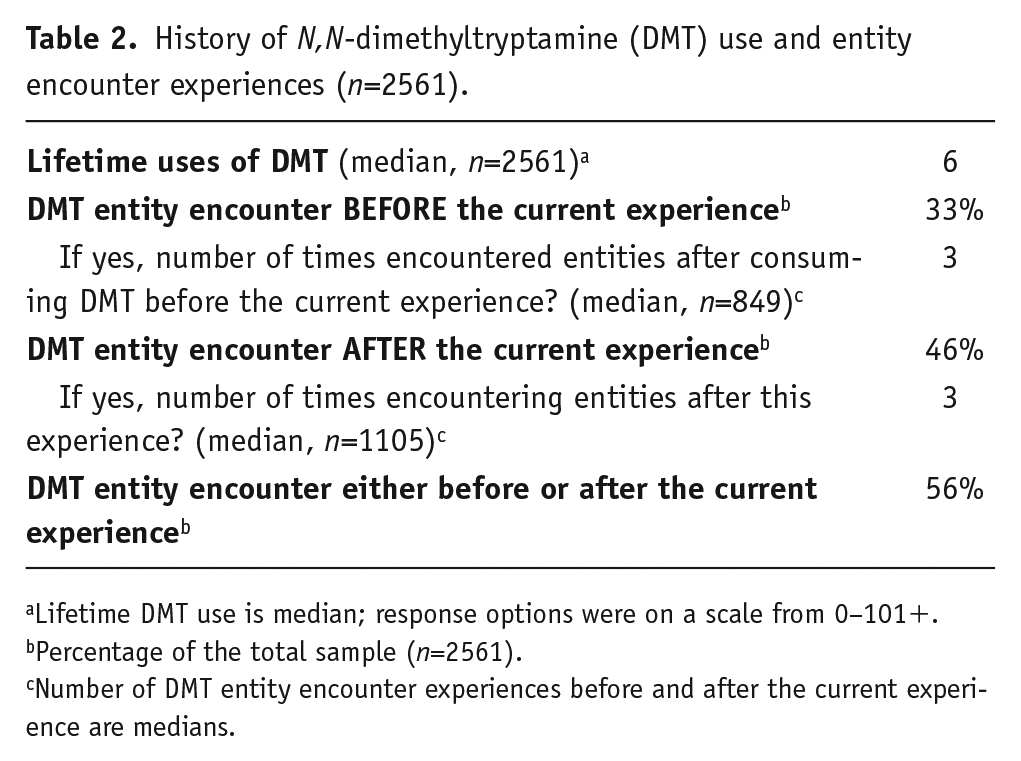
Lifetime DMT use is median; response options were on a scale from 0–101+.
Percentage of the total sample (n=2561).
Number of DMT entity encounter experiences before and after the current experience are medians.
Details of the most memorable entity encounter
As shown in Table 3, 21% of respondents went into the experience with the intention of having an encounter experience, with most (69%) reporting that the entity initiated the encounter. The primary senses involved in the encounter were visual (92%), extrasensory (e.g. telepathic; 85%), auditory (54%), and touch (34%), with less than 10% reporting taste or smell. Most respondents indicated that some form of communication occurred in the encounter, with 49% reporting the communication was one-way (from entity to respondent) and 40% two-way. Very few (2%) respondents reported one-way (respondent to entity) communication.
Descriptions of the entity encounter experiences (n=2561). a
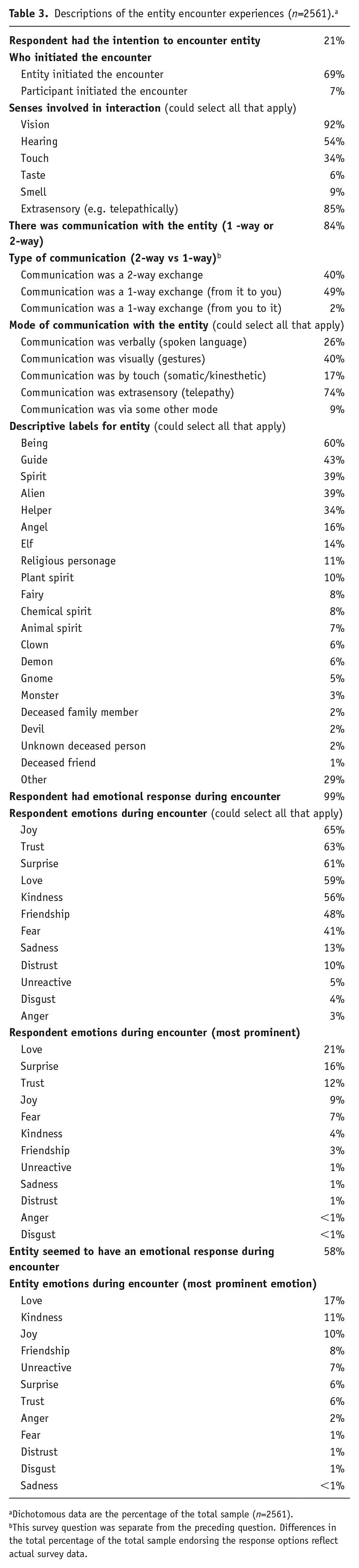
Dichotomous data are the percentage of the total sample (n=2561).
This survey question was separate from the preceding question. Differences in the total percentage of the total sample endorsing the response options reflect actual survey data.
Table 3 also shows that respondents selected a variety of descriptive labels for the entity. The most commonly endorsed were “being,” (60%) “guide,” (43%) “spirit,” (39%) “alien,” (39%) or “helper” (34%). Other labels selected by small proportions of respondents (range 10–16%), included the terms “angel,” “elf,” “religious personage,” or “plant spirit,” and very few (range 1–5%) reporting the terms “gnome,” “monster,” or a “deceased” person. Most respondents reported having had an emotional response to the experience (99%). Respondents reported experiencing joy (65%), trust (63%), surprise (61%), love (59%), kindness (56%), friendship (48%), and fear (41%) during the encounter experience, with smaller proportions reporting emotions such as sadness (13%), distrust (10%), disgust (4%), or anger (3%). In another question, respondents reported that love (21%) was the single most prominent emotion experienced during the encounter. Over one-half (58%) reported that the entity also had an emotional reaction to the encounter. The single most prominent emotion that the entity appeared to have was love (17%), kindness (11%), or joy (10%), with low rates (⩽2%) of emotions with a negative valence (e.g. anger, fear, distrust, disgust, sadness).
Additional details of the most memorable encounter experience and its interpretation having metaphysical implications
Additional details about the interpretation of the encounter experience are shown in Table 4. The low mean respondent rating of familiarity of the experience (1.2) indicates that the average experience was quite unfamiliar (0=“None; Not at all”; 1=“So slight I cannot decide”; 2=“Slight”). Yet, the mean rating of clarity of memories of the experience (59.9) indicated that these memories were between “clear” and “very clear.” Respondent ratings also indicated that the entity encounter seemed more real than normal reality during (81%) and after (65%) the encounter. From their current perspective, three-quarters of respondents reported that the entity existed in some real but different dimension or reality (49%) or in a combination of some real but different dimension or reality and in normal everyday physical reality (26%). A minority of respondents (9%) reported that the entity existed “completely within myself,” or that the entity existed only in normal reality (1%). Most respondents (72%) endorsed believing that the entity continued to exist after their encounter, and that the experience altered the respondent’s fundamental conception of reality (80%). Sixty percent of the whole sample indicated that the experience produced a desirable alteration in their conception of reality whereas only 1% indicated an undesirable alteration in their conception of reality.
Additional details of the encounter experience and its interpretation having metaphysical implications (n=2561). a
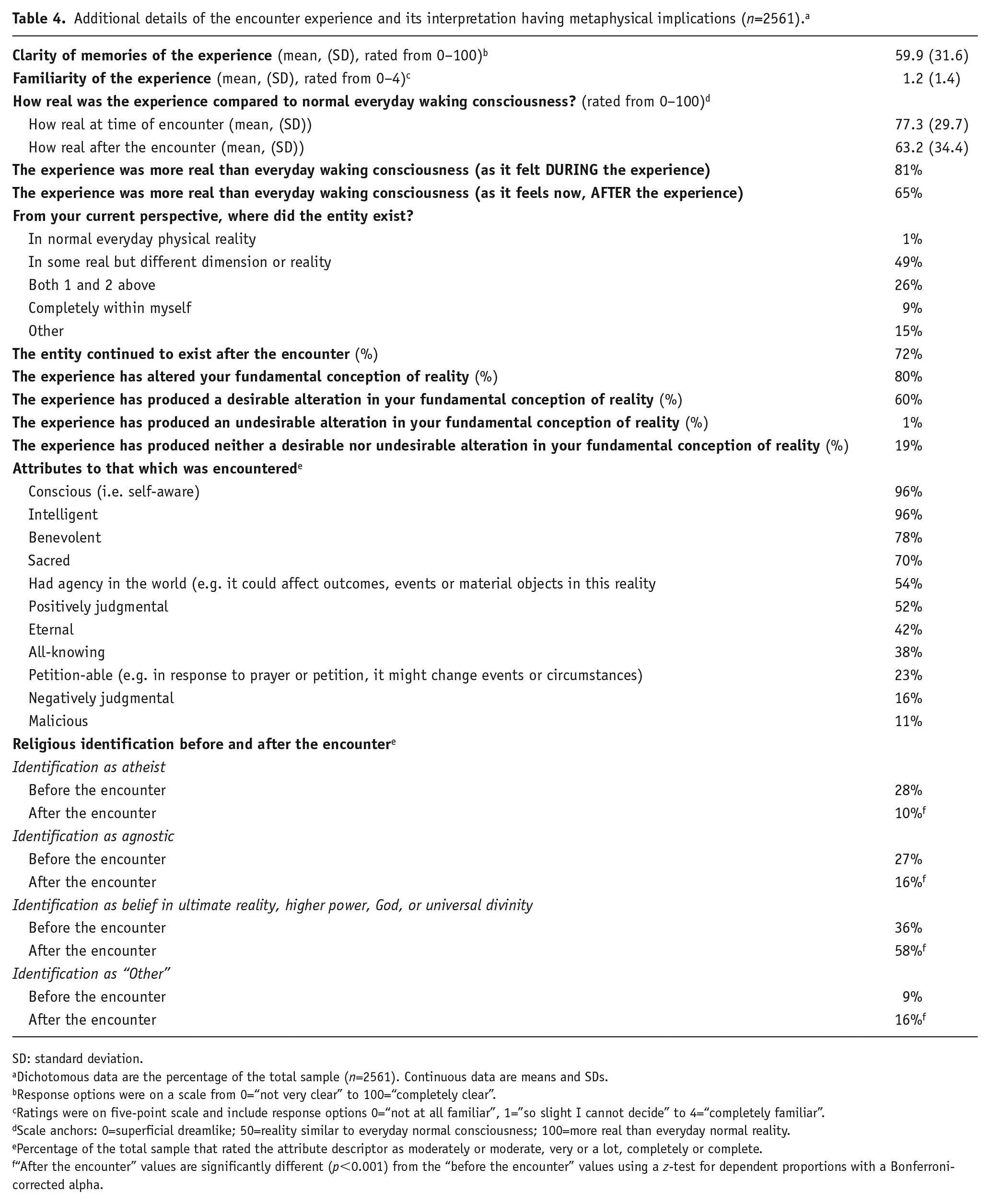
SD: standard deviation.
Dichotomous data are the percentage of the total sample (n=2561). Continuous data are means and SDs.
Response options were on a scale from 0=“not very clear” to 100=“completely clear”.
Ratings were on five-point scale and include response options 0=“not at all familiar”, 1=”so slight I cannot decide” to 4=“completely familiar”.
Scale anchors: 0=superficial dreamlike; 50=reality similar to everyday normal consciousness; 100=more real than everyday normal reality.
Percentage of the total sample that rated the attribute descriptor as moderately or moderate, very or a lot, completely or complete.
“After the encounter” values are significantly different (p<0.001) from the “before the encounter” values using a z-test for dependent proportions with a Bonferroni-corrected alpha.
When asked about the attributes of the entity, a majority of the sample reported that the entity was conscious (96%), intelligent (96%), benevolent (78%), sacred (70%), had agency in the world (54%), and was positively judgmental (52%). Fewer reported that the entity was petitionable (23%), negatively judgmental (16%), or malicious (11%).
Approximately one-quarter of the sample reported that they were atheist (28%) and one-quarter reported they were agnostic (27%) before the entity encounter, but significantly smaller proportions reported they were atheist (10%) or agnostic (16%) after the encounter (pre-post change p values <0.001). Additionally, approximately one-third (36%) of respondents reported that before the encounter their belief system included a belief in ultimate reality, higher power, God, or universal divinity, but a significantly larger percentage (58%) of respondents reported this belief system after the encounter (p<0.001).
Comparison to other lifetime experiences and persisting changes attributed to the experience
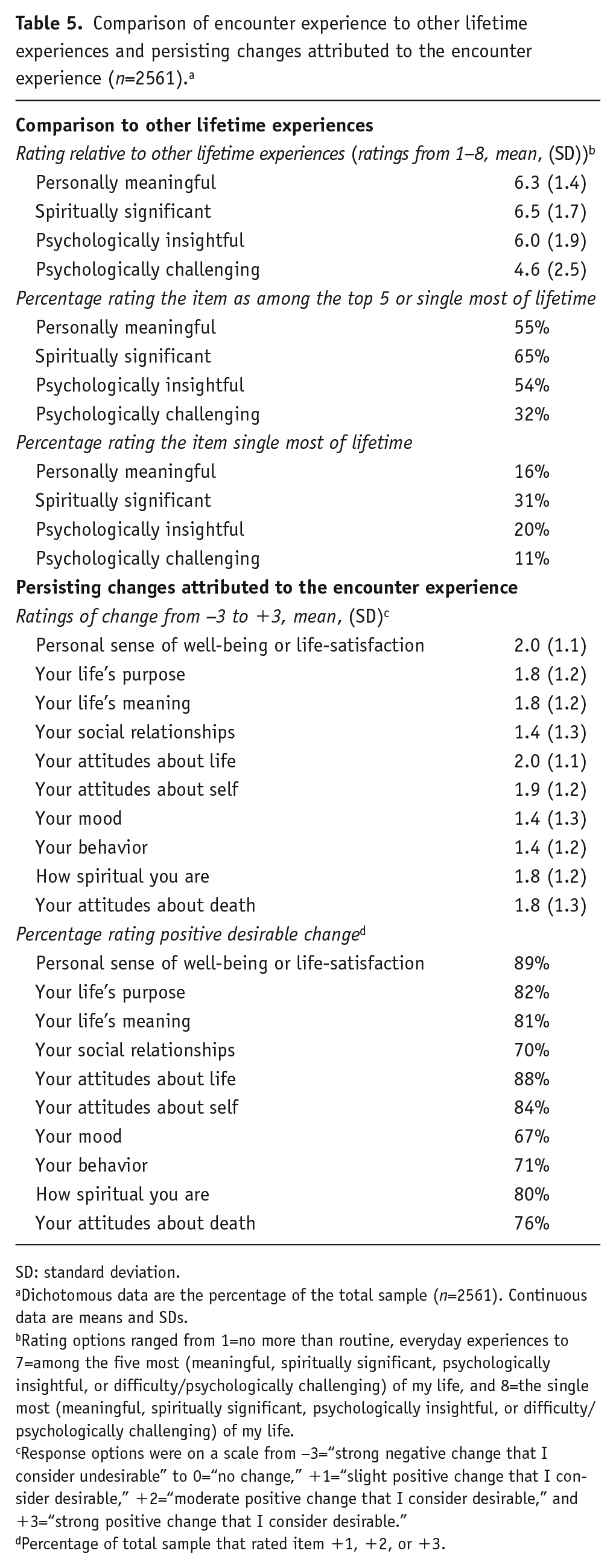
Over one-half (range 54–65%) of the sample reported that the entity encounter was one of the top five or single most personally meaningful, spiritually significant, or psychologically insightful experiences of their lives (Table 5). Approximately one-third (32%) reported that the encounter was one of the top five or single most psychologically challenging lifetime experiences. Table 5 also shows that most respondents reported persisting positive and desirable changes that they attributed to the encounter experience, including well-being and life satisfaction (89%), life’s purpose (82%), life’s meaning (81%), social relationships (70%), attitudes about life (88%) and self (84%), mood (67%), and behavior (71%). In contrast, only 1–5% of the sample reported any negative and undesirable changes in the above domains of functioning.
Comparison of encounter experience to other lifetime experiences and persisting changes attributed to the encounter experience (n=2561). a
SD: standard deviation.
Dichotomous data are the percentage of the total sample (n=2561). Continuous data are means and SDs.
Rating options ranged from 1=no more than routine, everyday experiences to 7=among the five most (meaningful, spiritually significant, psychologically insightful, or difficulty/psychologically challenging) of my life, and 8=the single most (meaningful, spiritually significant, psychologically insightful, or difficulty/psychologically challenging) of my life.
Response options were on a scale from −3=“strong negative change that I consider undesirable” to 0=“no change,” +1=“slight positive change that I consider desirable,” +2=“moderate positive change that I consider desirable,” and +3=“strong positive change that I consider desirable.”
Percentage of total sample that rated item +1, +2, or +3.
Ascertaining a message and predictions about the future
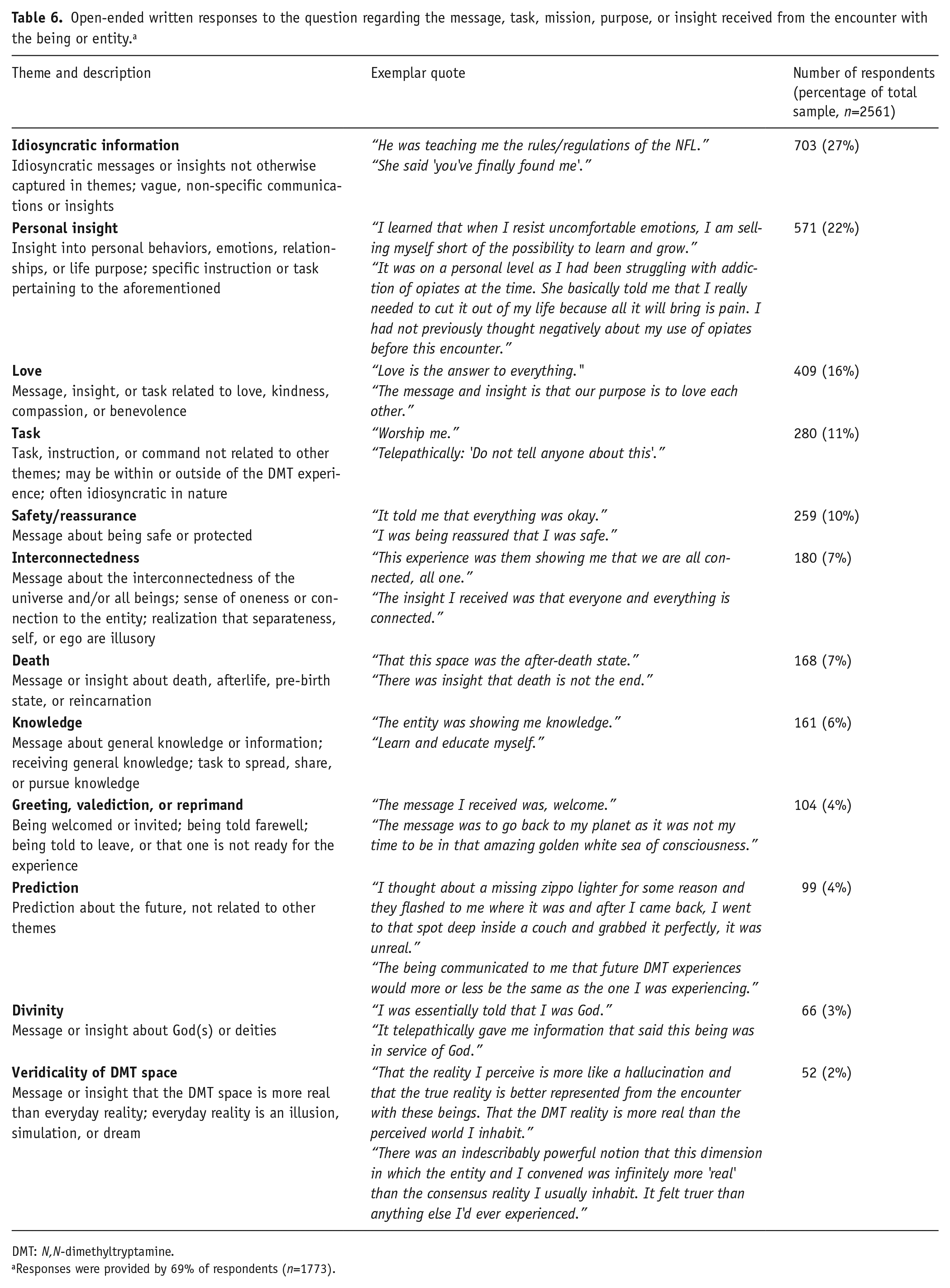
Sixty-nine percent of respondents (n=1773/2561) endorsed that they ascertained a message, task, mission, purpose, or insight as part of their most memorable entity encounter experience. As Table 6 shows, themes in order of descending prevalence (out of the total sample) included “Idiosyncratic information” (27%), “Personal insight” (22%), “Love” (16%), “Task” (11%), “Safety/reassurance” (10%), “Interconnectedness” (7%), “Death” (7%), “Knowledge” (6%), “Greeting, valediction, or reprimand” (4%), “Prediction” (4%), “Divinity” (3%), and “Veridicality of DMT space” (2%).
Open-ended written responses to the question regarding the message, task, mission, purpose, or insight received from the encounter with the being or entity. a
DMT: N,N-dimethyltryptamine.
Responses were provided by 69% of respondents (n=1773).
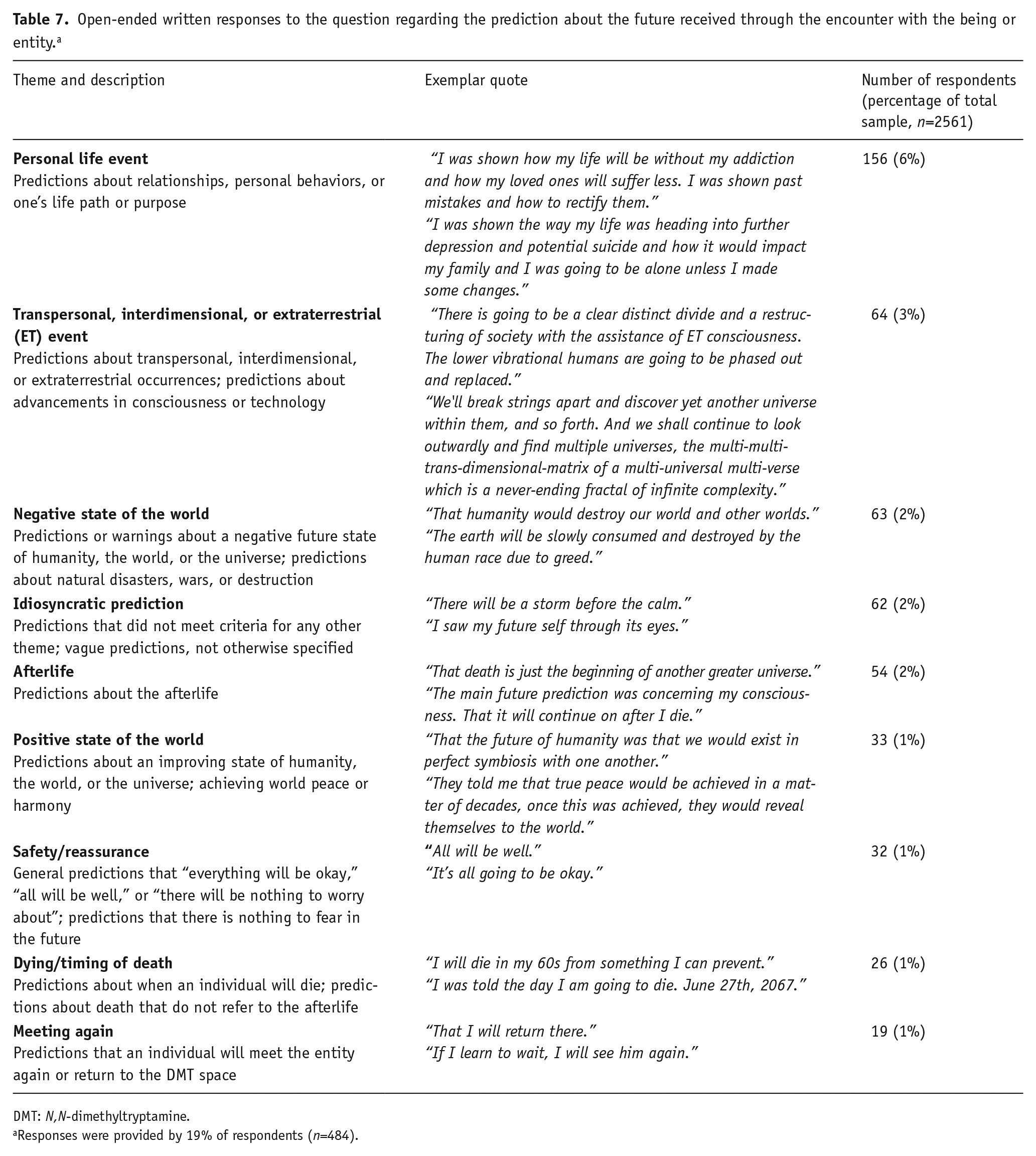
In a second open-ended question, 19% of respondents (n=484/2561) reported that they received a prediction about the future during their most memorable entity encounter experience. As Table 7 shows, themes in order of descending prevalence (out of the total sample) included “Personal life event” (6%), “Transpersonal, interdimensional, or extraterrestrial event” (2%), “Negative state of the world” (2%), “Idiosyncratic prediction” (2%), “Afterlife” (2%), “Positive state of the world” (1%), “Safety/reassurance” (1%), “Dying/timing of death” (1%), and “Meeting again” (1%).
Open-ended written responses to the question regarding the prediction about the future received through the encounter with the being or entity. a
DMT: N,N-dimethyltryptamine.
Responses were provided by 19% of respondents (n=484).
Discussion
The primary aim of this Internet survey study was to characterize the subjective phenomena, interpretation, and persisting changes that people attributed to experiences they reported of an encounter with a seemingly autonomous being or entity after taking a vaporized or smoked dose of DMT. A large number of survey respondents (n=2561) completed the survey with a median number of six lifetime uses of DMT and 67% of respondents answering the survey based on their first DMT-occasioned entity encounter experience.
Similarities of DMT entity encounter experiences to DMT God/ultimate reality encounter experiences
The results of the current survey of DMT-occasioned entity encounter experiences are markedly similar to a survey of DMT-occasioned encounter experiences most frequently interpreted as an encounter with “God”, “ultimate reality”, or “higher power” (Griffiths et al., 2019). The demographics of respondents to both surveys are very similar being predominately male (~80%), White (~85%), residing in the USA (64%), and having a bachelor’s college degree or higher (~35%). These demographics are also consistent with other studies of people who use DMT (Cakic et al., 2010; Palamar and Le, 2018; Winstock et al., 2014). There were numerous other similarities between the DMT God/ultimate reality encounter survey and the present entity encounter survey, including that a minority of respondents had the intention to have an encounter experience, most reported that the encounter was initiated by the entity, the large majority (⩾89%) of respondents reported an emotional response to the experience, the predominant senses involved in the interaction were extrasensory and visual (>80%), about 80% reported communication (a two-way exchange of information) with that which was encountered, most (⩾65%) rated the experience as more real than everyday normal consciousness, most (⩾75%) rated the qualities attributed to that which was encountered (e.g. conscious, intelligent, benevolent), and the high rate of attribution of positive effects of the experience including persisting increases in well-being and life satisfaction. Finally, in both surveys, the percentage of the group that identified as being atheist before the encounter (about 25%) dropped significantly after the encounter (to ~10%).
Although it is beyond the scope of this analysis to statistically compare all identically worded questions across the two surveys, it is notable that ratings of the personal meaning, spiritual significance, and positive enduring effects attributed to the DMT encounter experience (well-being, life purpose and meaning, social relationships, attitudes about life and self, mood, and behavior) were significantly higher in the God/ultimate reality encounter survey than the entity encounter survey (t-tests, p<0.001). Perhaps it is not surprising that greater positive effects are attributed to an experience often interpreted as an encounter with ultimate reality or higher power than one interpreted as an encounter with a seemingly autonomous entity.
A limitation in interpreting differences between the present study and the God/ultimate reality encounter survey is that the descriptors “God”, “ultimate reality”, and “higher power” were not included as terms to describe the autonomous entity or being in current study because the authors assumed, based on previous reports of DMT entity experiences, that such endorsements would be unlikely. Given the similarity of results across the two surveys, the exclusion of those descriptors in the present study is unfortunate.
Similarities of DMT entity encounter experiences to descriptions of nondrug entity encounter experiences
Entity encounter experiences in the absence of DMT or other psychedelics have been described in various contexts including those reported as God encounter experiences (Griffiths et al., 2019), religious prophecy (Strassman, 2014), alien abduction experiences (Jacobs, 2000; Mack, 1994, 2000), near-death experiences (Ring, 1992), UFO experiences which include non-human entity encounters (Hernandez et al., 2018), and a range of other historical and cultural contexts (Hancock, 2007; McKenna, 2018; Winkelman, 2018). In the present survey and consistent with prior descriptions of DMT-associated entity encounters (dmt-nexus.me; erowid.org; Hanna, 2012; Strassman, 2001), respondents commonly endorsed non-specific terms to describe these entities (e.g. “being,” “guide,” “spirit,” “alien,” or “helper”) with a wide variety of more specific terms (e.g. “animal spirit,” “clown,” “demon,” “gnome,” “monster,” “deceased person,” “devil”) being endorsed at low rates (i.e. <10%). These descriptions are somewhat similar to those in the non-drug alien encounter and abduction literature which most commonly describe humanoid entities, but also insectoid, reptilian, spirit/ghost, and animal-type entities (Hernandez et al., 2018; Mack, 1994, 2000). Other similarities between the present survey and surveys of non-drug alien encounter experiences include that communication was most often telepathic or visual and most respondents considered the experience to be positive, reporting increases in appreciation for life, self-worth, compassion for others, and a decreased fear of death (Hernandez et al., 2018; Mack, 2000; Ring, 1992). Differences between the DMT entity encounter survey and non-drug alien encounter experiences include that the latter entities are most commonly described as “greys” (e.g. short humanoid beings having characteristic features such as large bald heads, large oval pupil-less eyes, with spindly legs and arms), that the experiencer is often taken into some kind of alien space craft, and is subjected to medical experiments (Hernandez et al., 2018; Mack, 2000).
Positive and negative emotional responses during the encounter
Almost all respondents (99%) reported having had an emotional response during the encounter, and most (58%) reported that the entity also had an emotional response, with the predominant emotions reported by the respondent for both the entity and themselves being positive (i.e. love, kindness, joy, friendship). Noteworthy, however, is that 41% and 19% of respondents, respectively, also endorsed feeling fear or distrust sometime during the encounter, although these were almost never rated to be the most prominent emotions. The presence of such negative emotions during the experience is consistent with the finding that 32% of respondents rated the experience to be among the five most psychologically challenging experiences of their lifetime. This observation may be consistent with descriptions of alien abduction experiences which are often initially accompanied by an experience of confusion and great fear but later, or with subsequent experiences, may become valued as experiences of transformation or spiritual growth (Mack, 2000).
Entity encounter experiences frequently result in ontological changes in worldview including the belief in the reality of such entities
Previous descriptions of entity encounter experiences occasioned by DMT (Strassman, 2001, 2008), as well as nondrug alien encounter and abduction experiences, near-death experiences (Hernandez et al., 2018; Jacobs, 2000; Mack, 2000; Ring, 1992; Winkelman, 2018), religious prophecy experiences (Strassman, 2014), and naturally occurring God encounter experiences (Griffiths et al., 2019), suggest that such experiences often result in changes in world view including the belief in the reality of such entities. The current survey provides strong evidence of such changes. More specifically, even after the experience, 65% of respondents rated the experience as more real than everyday waking consciousness, 96% believed the entity was conscious and intelligent, 75% thought that from their current perspective the entity existed, at least in part, in a different dimension or realty, 72% endorsed that they believed the entity continued to exist after the experience, and 80% indicated that the experience altered their fundamental conception of reality. Less than 10% endorsed that the experience occurred completely within themselves. The percentage of the group that identified as being atheist or agnostic before the encounter (55%) dropped significantly (to 26%) after the encounter, whereas identification of belief in ultimate reality, higher power, God, or universal divinity increased significantly from 36% to 58%. Significant decreases in identification as atheist have also been reported for both non-drug and psychedelic (psilocybin, Lysergic acid diethylamide (LSD), and ayahuasca) associated God encounter experiences (Griffiths et al., 2019).
Attributions of positive enduring effects
Similar to a previous survey of both psychedelic-occasioned and naturally occurring God encounter experiences (Griffiths et al., 2019), over one-half of the current sample reported that the encounter was one of the top five or single most personally meaningful, spiritually significant, and psychologically insightful experiences of their entire lives. Furthermore, in both studies, respondents attributed to the experience persisting positive changes in subjective well-being and life satisfaction, life purpose and meaning, social relationships, attitudes about life and self, mood, behavior, spirituality, and attitudes about death. Positive changes in appreciation for life, self-acceptance, meaning, and spirituality have also been noted in surveys of individuals who reported having broadly defined UFO encounter experiences, including forcible alien abduction as well as more benign encounters with non-human intelligence (Hernandez et al., 2018; Mack, 2000; Ring, 1992) as well as in discussions of religious prophecy experiences (Strassman, 2014) and of the impact of non-ordinary experiences more generally (Kripal, 2019).
Recent research suggests that psychedelic-occasioned increases in psychological flexibility are associated with decreases in symptoms of depression and anxiety (Davis et al., 2020), and that the psychological flexibility model may be a mechanism for therapeutic changes in mental health in clinical trials with psychedelics (Watts and Luoma, 2020). Although psychological flexibility was not directly assessed in the current study, it is plausible that the previously discussed abrupt ontological shift (i.e. “ontological shock”) associated with DMT-occasioned entity encounter experiences also increase psy-chological flexibility which, in turn, mediate high rates of attribution of enduring positive desirable changes in attitudes, moods and behavior.
Ascertaining messages or predictions about the future
More than two-thirds (69%) of respondents in the present study reported that they ascertained a message, task, mission, purpose, or insight from the entity encounter experience. This is similar to survey findings of naturally occurring and psychedelic-occasioned God encounter experiences (Griffiths et al., 2019). Unique to this study, a qualitative analysis was used to examine the content of these “communications,” which revealed that 22% of these responses involved a personal insight into one’s behaviors, emotions, relationships, or life’s path. Recent research (Belser et al., 2017; Davis et al. 2020; Gasser et al., 2015) suggests that psychological insight is associated with the therapeutic effect of psychedelic experiences; the frequent reporting of psychological insights occasioned by these entity encounters suggests that such experiences may have therapeutic potential. Given that some of these reports involved positively valanced messages or insights about love and safety/reassurance, it is also plausible that these experiences affected the ratings of enduring positive effects of the DMT experience (e.g. desirable changes in mood, behavior, attitudes, and beliefs).
Predictions about the future (Table 7) occurred in about 20% of the respondents in this study, which is similar to survey findings of naturally occurring and psychedelic-occasioned God encounter experiences (Griffiths et al., 2019). Again, these results were extended by examining the content of these predictions using a qualitative analysis. These predictions were most frequently related to personal life events, such as future relationships, patterns of behavior, and glimpses of one’s life trajectory; and less frequently related to transpersonal (e.g. expanding consciousness, ego dissolution, etc.), interdimensional (e.g. moving between dimensions or realities), or extraterrestrial (e.g. alien interventions, cosmic occurrences, etc.) events, the negative state of the world, about afterlife or post-death states of consciousness, and to various other topics (i.e. positive state of world, safety/reassurance, timing of death, meeting again). Such predictions are unverifiable using the current study methodology in anonymous respondents.
Potential harms
Although only a very small percentage (1–5%) of the sample in this study reported enduring negative attributions to their entity encounter experiences, it is important to acknowledge potential harms of such experiences that were not examined in this survey. For example, it is plausible that the survey methodology underestimated the rates of harmful attributions of DMT experiences because individuals who may have had negatively life-disrupting experiences may have been less likely to respond to our recruitment advertisements or to participate in Internet-based research. Similarly, instances of harm may have not been detected because participants were instructed to report on their most memorable experience (which may or may not have included potentially harmful experiences). Additionally, our findings revealed significant decreases in identification as atheist and agnostic and significant increases in belief in ultimate reality, higher power, God, or universal divinity, which may be viewed as positive outcomes by some, but as negative outcomes by others. Likewise, profound changes in ontological worldview, including the belief in a previously unbelieved different dimensions of reality or a belief in the veracity of messages or predictions about the future, might be regarded as important insights by some but could be alarming to others because they may lead to overt physical or psychological harm or because they may be viewed as resulting in the epistemic harm of taking the individual further away from the truth about reality. Although the current study provided no evidence of such harmful outcomes, it will be important for future research to assess the extent to which DMT-occasioned beliefs in previously unbelieved dimensions of reality or in the veracity of messages or predictions about the future might predispose individuals to engage in self-destructive or other harmful behavior, or might indicate the onset of significant psychiatric illness such as a psychotic disorder.
Study limitations
Limitations to this study are similar to those of any retrospective Internet-based survey and include retrospective recall and social desirability biases, the use of a cross-sectional assessment which makes causal interpretations impossible and lacks the ability to determine whether the sample is representative of the entire population of people who ingest DMT. Although evidence suggests that the demographic composition of the population of DMT users is comprised primarily of young adult, White men (Cakic et al., 2010; Palamar and Le, 2018; Winstock et al., 2014), it is possible that there are people who identify with other backgrounds who also have had entity encounters after ingesting DMT but were not willing or able to participate in this study. Also, because respondents were excluded who reported using more than one substance before the entity encounter, using changa, or administering DMT via methods other than vaporizing or smoking, the findings may not represent the entire population of people who have such encounters after taking DMT. Additionally, participants were instructed to report on their most memorable DMT entity encounter experience. Thus, for participants who had more than one experience, the survey results may not be representative of the entire range of such experiences. Finally, it will be important for future studies to determine both the prevalence of DMT-occasioned entity encounter experiences among DMT users and the reliability of having such experiences among those who have taken DMT on multiple occasions.
Conclusion
The present survey study is the largest to date to provide detailed information about the subjective phenomena, interpretation, and persisting changes attributed to experiences people report about having an encounter with a seemingly autonomous entity after inhaling DMT. Aspects of the experience and its interpretation had metaphysical implications for most (80%) of the respondents about their fundamental understanding of the nature of reality. For example, most respondents indicated that the entity had the attributes of being conscious, intelligent, and benevolent, existed in some real but different dimension of reality, and continued to exist after the encounter. These experiences were also rated as among the most meaningful, spiritual, and psychologically insightful lifetime experiences, with persisting positive changes in life satisfaction, purpose and meaning attributed to the experiences. More than half of those who identified as atheist before the experience no longer identified as atheist afterwards. Although further research is needed to provide more information about causality and mechanisms (Winkelman, 2018), it is possible that the “ontological shock” occasioned by these vivid unusual experiences may play an important role in the enduring positive life changes in attitudes, moods, and behavior attributed to these experiences. As such, it is possible that, under appropriate supportive set and setting conditions, DMT could show promise as an adjunct to therapy for people with mood and behavioral problems (e.g. depression and addiction). However, regardless of whether or not DMT will be shown to have therapeutic efficacy, future double-blind human laboratory studies investigating dose-effects and correlated brain activity may provide a unique window into the psychological and biological nature of such anomalous subjective experiences of encounters with nonhuman entities that date back to the beginnings of recorded human history.
Supplemental Material
Entity_Survey – Supplemental material for Survey of entity encounter experiences occasioned by inhaled N,N-dimethyltryptamine: Phenomenology, interpretation, and enduring effects
Supplemental material, Entity_Survey for Survey of entity encounter experiences occasioned by inhaled N,N-dimethyltryptamine: Phenomenology, interpretation, and enduring effects by Alan K Davis, John M Clifton, Eric G Weaver, Ethan S Hurwitz, Matthew W Johnson and Roland R Griffiths in Journal of Psychopharmacology
Footnotes
Acknowledgements
The authors acknowledge helpful discussions with David Luke, PhD and discussions and comments on the manuscript with Christopher Letheby, PhD and Jeffrey Kripal, PhD.
Declaration of conflicting interests
The authors declared no potential conflicts of interest with respect to the research, authorship, and/or publication of this article.
Funding
The authors disclosed receipt of the following financial support for the research, authorship, and/or publication of this article: AK Davis was supported by a National Institute on Drug Abuse postdoctoral training grant (#DA007209). MW Johnson was partially supported by a grant from the Heffter Research Institute. Study conduct and manuscript development were supported by the Center for Psychedelic and Consciousness Research, which is funded by the Steven and Alexandra Cohen Foundation, Tim Ferriss, Matt Mullenweg, Craig Nerenberg, and Blake Mycoskie. The funding sources had no role in the design/execution of this study or the interpretation or communication of findings.

References
Supplementary Material
Please find the following supplemental material available below.
For Open Access articles published under a Creative Commons License, all supplemental material carries the same license as the article it is associated with.
For non-Open Access articles published, all supplemental material carries a non-exclusive license, and permission requests for re-use of supplemental material or any part of supplemental material shall be sent directly to the copyright owner as specified in the copyright notice associated with the article.
