



Abstract
Rape is one of the most demoralizing crimes committed against society on a global scale; however, case progression and conviction are very low as shown by the attrition of cases. Various research studies focus on the victims’ point of view for explaining this phenomenon, usually at the police level. This study employed a mixed-methods approach using an explanatory sequential design to examine rape case attrition in Baguio City, Philippines, through both statistical trends and narrative insights. A quantitative analysis of 273 police-reported cases from 2018 to 2022 was followed by qualitative interviews with 24 professionals, including police officers, prosecutors, judges, clerks of court, and social workers, selected carefully via purposive and snowball sampling. Using a multiple linear regression, it was revealed that filing time at the prosecutor and court level is significant in case attrition; these delays are attributed to the legal process, power imbalances, and societal pressure especially familial influence. They play critical roles in a victim’s decision to disengage, leading to informal settlements as a prevalent approach in rape cases. Moreover, the quantitative findings are further reinforced by the qualitative findings’ key theme: legal procedural delays, victim-centered factors, and an insufficient support system, affecting cases leading to attrition. This study supports a nuanced framework where victim disengagement is not merely a matter of choice but an outcome shaped by intersecting pressures and a lack of strong support from formal institutions. This highlights the need for systemic reform and culturally sensitive interventions, ensuring a strong support mechanism is practiced while pursuing justice toward victim empowerment.
Keywords
Introduction
On a global scale, rape is a highly demoralizing crime that affects individuals in various communities with one in every three women being victimized by physical and sexual abuse (World Health Organization, 2021). Across various legal systems in the past 35 years, average conviction rates have declined from 18% to 12.5% regarding justice administration. Despite legal reforms, most reported cases still have not been tried. There has been slight improvement in police, prosecutor, and court handling of rape and sexual assault. This phenomenon exists in different parts of the world, such as Australia, Canada, England and Wales, Scotland, and the United States, with only 14% of victims reporting based on surveys. Looking at reported cases, only 30% proceed to prosecution, 20% are adjudicated in court, 12.5% are convicted of any sexual offense, and 6.5% are convicted of the original offense charged (Artz and Smythe, 2007; Daly and Bouhours, 2010).
Setting attrition in the international landscape, it is experienced in the UK, which faces a significant attrition problem in rape cases due to rape myths, stereotypes, and ethnicity (Hohl, 2022). Significantly, Sinclair (2020) found that police officers’ decision-making affects how they handle rape cases because greater resources and focus are given to cases which are more likely to be convicted. In other places, like the United States, attrition also exists. Problems like legal and extra-legal factors, including early case removal, rape myths, victim-offender relationships and evidential issues, contribute to the attrition of cases. In addition, the practice of exceptional clearance classification by police, in collaboration with prosecutors at the pre-arrest stage, may contribute to this attrition pathway (Hester and Walker, 2017; Pattavina et al., 2021). Furthermore, in South Africa, Swemmer (2020) analyzed 3,952 reported rape cases, finding that only 65% were referred to prosecution, 18.5% commenced trial, and a mere 8.6% resulted in guilty verdicts. The study identified problematic views based on rape myths and gender stereotyping among presiding officers and prosecutors as factors affecting attrition rates.
The previous statistics further intensify the claim that various studies have identified that widespread ineffectiveness in responding to rape cases has become the norm. It still shows low conviction rates compared to other crimes. A significant number of sexual assault cases drop off when victims decide not to pursue charges, though police reports often lack clear rationales for these decisions; however, the cause of this remains undetermined (Mgolozeli and Duma, 2020; Murphy et al., 2013).
Conceptually, case attrition in criminological literature pertains to the phenomenon where criminal cases fail to proceed or progress through the criminal courts. This happens prior to, during, or following a trial due to victim withdrawal. The participation of legal professionals influences attrition (Jehle, 2012; Lea et al., 2003; Machisa et al., 2023; Murphy et al., 2021). Thus specifically, one of the most common causes of attrition is victim disengagement which refers to the withdrawal or retraction of victims from legal proceedings against their abusers, particularly in cases of intimate partner violence (IPV) (Sleath and Smith, 2017).
Focusing on variables that cause victims to withdraw from judicial proceedings, various research studies suggest its complexity, including the relationship spectrum, which shows how the victim-offender relationship and evidential concerns affect the legal trajectory in cases involving acquaintance, domestic violence, and past child sexual abuse, contributing to attrition (Hester and Walker, 2017; Sleath and Smith, 2017). There are distinct yet interrelated factors that influence victim disengagement. The most common are the victim-perpetrator relationship, vulnerability, and evidential issues. However, the complexity of calculating attrition rates and the need to consider different types of rape cases complicate efforts to address this issue (Artz and Smythe, 2007; Hester and Walker, 2017). For instance, in child sexual abuse cases, attrition before forensic interviews is associated with factors like lack of previous disclosure, single incidents, and the child’s age (Christensen et al., 2016). Furthermore, contact with the abuser and thoughts of reconciliation are both strong predictors of disengagement. Significantly, victims who experience a greater degree of psychosocial separation from their perpetrators are less inclined to withdraw from legal proceedings (García-Jiménez et al., 2020). A variety of factors, such as the absence of forensic examinations, the absence of victim resistance, and stranger assaults, can influence the likelihood of victim withdrawal (Hansen et al., 2017). As a result of victim withdrawal, cases are often thrown out when the victim and the accused have a history of dating (Estrich, 2018). More recently, studies show another disturbing issue as survivors who disengage in the system identify excessive police procedures to be exhausting, added to by inadequate communication and loss of confidence in the legal system as causes for disengagement (Murphy-Oikonen et al., 2022).
In exploring the trajectory of rape cases, the term ‘exit points’ refers to stages where cases most commonly drop off. These exit points are typically observed at three critical junctures: during police investigation, at the prosecutor’s level, and within court proceedings.
However, the dearth of research has shown that the highest attrition occurs during police investigations, whereby research identified strategies to reduce attrition, such as initial attendance by uniformed officers and conducting interviews (Callon et al., 2022). In addition, victim cooperation, evidence availability, case seriousness, and perceived victim credibility are significant predictors of arrest, and case referral to prosecutors remains a primary concern for police officers (Wentz and Keimig, 2019). Conversely, cases with suspect interviews and above-average investigational effort are more likely to be referred to prosecutors (Campbell-Kelly and Garcia-Swartz, 2013).
Furthermore, how police respond to victims can also influence their engagement or withdrawal. The psychological consequences of rape for victims impede their relationship with police officers because post-traumatic stress symptoms, humiliation, and self-blame were perceived as less reliable ‘mad’ or ‘bad’ victims. Although police questioning techniques have improved, victims’ pain and shame have been mistaken for lies (Hansen et al., 2017; Maddox et al., 2011).
As the case advances to the prosecutor’s office, the handling of rape cases remains relatively problematic, as the police investigation still influences it. Legal rationality and prejudiced attitudes can have a significant impact on decision-making processes. Law enforcement personnel and prosecutors select cases they think will result in convictions based on the victim’s credibility and the strength of the evidence (Barnwell and Brown, 2022; Sinclair, 2020).
Moving forward, the last stage of attrition is at the court level, which provides challenges for victims when attrition in the legal procedure is most probable. Research suggests that believability and ‘good’ character are deemed less significant in rape trials; however, this is contrasted by the continued importance of evidence of lack of consent, such as witness testimony, physical injuries to the victim, and the suspect’s use of a weapon (Daly and Bouhours, 2010). In addition, attrition rates are substantially determined by victim credibility, encompassing account inconsistencies and prior false accusations (Hohl and Stanko, 2018).
In contrast, aside from victim-initiated disengagement, an offense-related factor, victim and perpetrator characteristics do not predict disengagement, but offense-related factors such as risk assessment level do (Sleath and Smith, 2017). This is evident in cases where victims who were incapacitated due to substance use and those who did not have post-assault medical examinations are more inclined to retract their statements (Campbell-Kelly and Garcia-Swartz, 2013).
Transitioning to the national setting, recent changes in legal and investigative methodologies are evident in the handling of rape cases in the Philippines. The enactment of R.A. 8353, the Anti-Rape Law of 1997 amended Philippine criminal law by reclassifying rape as a crime against persons, thereby prioritizing the protection of bodily integrity and personal dignity over the previous sole emphasis on chastity, as stipulated in the Revised Penal Code of 1932. The statute broadens the legal definition of rape to include sexual assault, encompassing many forms of sexual violence beyond penile-vaginal contact. Finally, this statute acknowledges the existence of marital rape. Recently, the age of sexual consent has been raised to 16 under R.A. 11648 (Respicio, 17 February 2025).
In terms of assistance, the only law specific to rape victims is RA 8505, 1998 defining the Rape Victim Assistance and Protection Act of 1998. To achieve this, the government will collaborate with its agencies and non-governmental organizations to establish and operate a rape crisis center in every province and city to help rape victims with litigation, witness protection, psychological support, and legal assistance.
Looking back, it is worth questioning whether rape has historically been recognized as a priority issue. Rape rates rose in the 1980s, especially among ethnically diverse girls and college students. Institutional responses were variable and weak despite increased prevalence. In 2006, 685 rapes were reported, including horrifying police custody assaults and 3 years later it increased to 2,585. In 2011, there was the seventh-highest rape rate, excluding unreported instances, according to the European Institute for Crime Prevention and Control. This trend reveals how institutions fail to safeguard at-risk women from sexual abuse (Baloloy, 2014).
In addition, these trends further illuminate the systemic issues, particularly through data on case filing, prosecution, and conviction rates. Statistics suggest that almost half the cases, 46%, were unresolved 2–5 years after their initiation. Of the resolved cases, 60% resulted in convictions. In most cases where the accused is found not guilty, this is due to dismissal on merit based on a child’s reluctance to testify following pressure from family members (University of the Philippines Manila et al., 2016). In addition, recorded in Davao Medical Center, 27% of 1,795 child abuse cases in 2000–2007 were incest, while the Iloilo women’s desk also reports incest and child sexual abuse among 6- to 18-year-olds. This statistic indicates prevalence; nonetheless, it raises a more profound issue over the underreported incidents attributed to societal taboos and the safety apprehensions of survivors. If all unreported incidents were disclosed, the figures would be higher and more alarming (Adelantar et al., 2004; Parrenno et al., 2009, as cited by University of the Philippines Manila et al., 2016; Association CAMELEON, 2024). A more recent investigation has indicated that victims often refer to the litigation of rape cases as a ‘second rape’, particularly during trials, due to the insensitivity in managing victims (Villanueva and Madrunio, 2018).
Behind underreporting and victim disengagement, a discernible pattern emerges in institutional responses to the ‘areglo’ system, which in the Philippine context refers to informal settlements outside court, frequently shaped by social or familial pressures. This occurs despite the legal fact that rape, as a public crime, cannot be resolved through an ‘areglo’ (Respicio, 2024).
This elucidates why, decades after rape emerged as a prominent issue in the 1980s, the same troubling trends persist. Recent police statistics indicate that rape is still among the most often reported crimes in the Philippines. The Philippine Commission on Women (PCW) and the National Baseline Study on Violence Against Children (NBS-VAC) report that 1 in 20 girls and women aged 13–49 years has suffered sexual violence. Incidents happen in all social settings, 13.7% at home, 7.8% in the neighborhood, 7.1% at work, and 5.3% in school (Violence Against Women, Philippine Commission on Women, 2022).
The frequency of child sexual assault is far more concerning. Association CAMELEON (2024) estimates that about 7 million children are sexually assaulted each year in the Philippines, with more than 70% of victims between the ages of 10 and 18 years, and 20% under the age of 6 years. Rape stays the most prevalent kind of sexual abuse despite the introduction of the Anti-Rape Law of 1997, with incest and fondling follow. Finally, based on the PNP CIRAS (Philippine National Police, Crime Information, Reporting and Analysis System) there have been 2,311 rape cases, 2,103 in 2022, and 2,644 in 2023 (Philippine Statistics Authority, 2024).
Beyond statistics, cultural and social norms profoundly shape how victims navigate the justice process. The Philippines is a culturally diverse country with an estimated 14–17 million Indigenous peoples (IPs) belonging to 110 ethno-linguistic groups. IP in the Philippines generally face discrimination and have poor access to basic services (University of the Philippines Manila et al., 2016). In addition, social variables like poverty, broken households, bad parenting, peer influence, family values, victim-blaming, and sociocultural attitudes affect victimization and access to a legal system, which explains the culture of silence and fear of reporting. Understanding that the Filipino family focuses around kinship as the safety net for all its members, strangely, family is essential to their identity and a key source of social support, yet explains much of the sexual violence. Specifically, family members cherish ‘Hiya’ or humiliation. The culture instructs children to keep their morality private and not expose crimes that could bring scandal on their family. In addition, sexuality taboos limit young people’s access to protection and preventive information (Alexander and Saskatchewan, 2020; Baloloy, 2014; University of the Philippines Manila et al., 2016; Vallejo, 2021).
Looking at the regional context of the Cordillera Administrative Region, home to IP known as ‘Igorots’, a rich cultural practice still exists there. According to police data, gender-based violence (GBV) occurrences decreased in 2022. The cases dropped from 651 in 2021 to 586 in 2022. However, the most prevalent crimes where women and children are victims are rape, domestic violence, and child abuse. According to recent statistics, Baguio City had the most incidents (192), followed by Benguet (152), Ifugao (67), Abra (59), Kalinga (61), and Mountain Province (31) (Kinao, 2023). In addition, the Regional Human Rights Situation Report (2020) identified that most of the victims, ranging from 3 to 17 years old, are committed in the region, with two cases involving 3-year-olds. Based on gender, 83% are female victims while 17% are male; both, however, are at a high rate. Accordingly, Cordillera has the most sexual abuse and rape cases in the country, with 30% committed by family members. Igorot’s have suffered the most cases, not including those that were unreported because of fear or settled by tradition. Elders say settling a rape case is better than embarrassing the family or clan. This culture empowers rapists and may perpetuate incest and rape among Igorot’s (Olsim, 2019).
Shifting to the locale of our study area, the district of the Benguet province, Baguio, a high number of cases result in settlement since the perpetrator often enjoys immunity from prosecution under settlement agreements as the family’s sole provider. Of 379 recorded cases, only 82 were filed in court, and most victims are between 21 and 30 years. Approximately 70% are the suspect’s friends or acquaintances, while 30% are incestuous and alcohol-related. Furthermore, attrition of rape cases is also observed; 22 of the 98 reported instances were filed in court in 2016, while 78 were not (Cabreza, 2021; Comanda, 2023).
Although both global and local acknowledgment of rape case attrition as a significant concern within the judicial system exists, current studies frequently contextualize it in terms of procedural deficiencies at institutional levels, specifically the police level. The majority of research concentrates on the factors influencing victims from their perspectives; however, to provide contrast and a more profound analysis, the current study examines the viewpoints of key stakeholders within the criminal justice system managing rape cases. This study aligns with the United Nations Sustainable Development Goals, namely SDG 5: Gender Equality and SDG 16: Peace, Justice, and Strong Institutions, which seeks to end all forms of violence against women and girls, both public and private, by addressing attrition. It further reinforces Target 16.3, which promotes the rule of law and fair access to justice for all citizens in line with the research goal that there is a need to create responsive, inclusive, and accountable institutions.
Theoretical framework
This study explores the phenomenon of rape case attrition in the Philippine criminal justice system through an interdisciplinary theoretical lens involving several elements.
Social construct theory
To situate rape attrition locally, social constructionism challenges the idea that privileged groups are more critical than minority groups by examining how power dynamics and inequalities create racialized, sexualized, and gendered distinctions (Kang, 2017; Murnen, 2014). Taking note, Philippine studies focus on fundamentalist ideals like sex roles among Filipino males and blame women for sexual abuse, arriving at this conclusion should be examined in a social and cultural context (Baloloy, 2014). Relating to the study, looking at the dropping of charges from a social constructivist point of view shows that it is because of the way the law works and how people in that culture think about rape.
Power control theory
Complementing this is power control theory, primarily the family that exercises control early in a person’s life, directing gender and power relations (Wickert, 2022). Family cultural elements make child sexual abuse a persistent issue in the country (Association CAMELEON, 2024). In the Philippines, this theory explains that victims’ decisions are heavily influenced by family members’ control over them, which explains the culture of silence in underreporting rape or not using the legal system.
Feminist theory
From a feminist jurisprudence perspective, it includes multidisciplinary, cross-critical perspectives from liberty, equality, and justice movements on women in varied situations and the institutions that shape them (Bhandari, 2024). In addition, this framework shows promise in assessing and improving police engagement with sexual assault survivors (Hohl, 2022). In the national context, this theory analyzes the various social, cultural, and environmental factors influencing victimized women within the national framework to elucidate the emergence of female victimization and women’s navigation of the judicial system. Sociocultural aspects affect victims’ decision-making, leading to attrition.
Procedural justice theory
Regarding institutional dynamics, procedural justice theory posits that revised regulations and training to enhance police ‘procedural sensitivity’ would elevate police legitimacy and foster trust, confidence, cooperation, and crime reporting (Wickert, 2022). The case of Karen Tayag Vertido v The Philippines, in which an employee was raped by her superior, overturned stereotypes about rape, such as ‘women are inherently untruthful and thus likely to fabricate allegations of rape’ and ‘women should physically resist sexual assault at every opportunity’ (Cusack and Timmer, 2011). The institutional viewpoint of procedural justice theory emphasizes the perceived fairness, transparency, and responsiveness of criminal judicial systems since victims are more likely to withdraw when they see them as delayed, intimidating, or unsupportive, highlighting an empathetic approach toward victims.
Trauma-informed frameworks
Building on this, trauma-informed frameworks empower victims and their families by supporting decision-making. These approaches are distinguished by incorporating trauma comprehension to improve service quality, efficacy, and provision (Champine et al., 2019). This notion addresses insensitive trauma victim therapy by focusing on the right approach (Villanueva and Madrunio, 2018).
These theories suggest that victim-initiated withdrawals are influenced by systemic forces rather than being merely personal decisions, shaped by emotional, social, and procedural realities specific to the Philippine context. This framework offers a thorough perspective for analyzing the interplay of trauma, culture, and legal processes in the context of rape case attrition.
Methodology
This study utilized a mixed-methods approach, specifically an explanatory sequential design, to investigate the dynamics of rape case attrition within the Philippine justice system. The Explanatory Sequential Design consists of two phases: initial collection of quantitative data and an explanation using qualitative data (Draucker et al., 2020). This method was employed to achieve a thorough understanding of attrition patterns in rape cases in Baguio located in the Cordillera Administrative Region of the Philippines.
The initial phase comprised a quantitative analysis of documented rape cases reported to the police in Baguio City from 2018 to 2022, utilizing data sourced from the Crime Incident Reporting and Analysis System (CIRAS) of the Baguio City Police Office (BCPO). Subsequently, the analysis involved identifying cases that experienced attrition, defined as those that did not advance through the police, prosecutor, and court levels. Two hundred seventy-three cases were purposively sampled based on the criteria and data accessibility. Identification points were excluded by the police at the court level in compliance with data privacy laws. The variables include relationship category, type of filing, place of commission, modus operandi, and filing time at the police, prosecutor, and court levels, with specific sub-variables detailed in the appendix. This phase identifies rape case attrition trends based on case characteristics to ensure reliability. A preliminary test of the survey instrument with 30 respondents showed satisfactory internal consistency, with Cronbach’s alpha values ranging from 0.78 to 0.91 for scale items, and content validity was conducted with legal, social, and academic experts.
In quantitative data analysis, descriptive and inferential statistics were used to look at the relationship between case characteristics and attrition using quantitative data. The initial data was numerically coded in Excel as guided by the university statistician, and thereafter, SPSS was employed to perform the multiple regression analysis. This statistical method was selected for its ability to quantify the impact of predictor variables on attrition.
Following the research design, the second phase was conducted using a qualitative approach based on the quantitative approach. The selection process was driven by quantitative data, focusing on individuals involved in the assistance and management of rape cases that experienced attrition. The research employed purposive and snowball sampling methods for participant selection. Initial key informants were chosen through purposive sampling, who then referred additional qualified individuals meeting the established criteria, due to the sensitive nature of rape cases. The participants were systematically identified using data from police, prosecutors, and court records. There were 24 participants, comprising nine police officers, three prosecutors, three clerks of court, two judges, and seven social workers.
The data-collection phase of the qualitative study employed semi-structured interviews. The interviews utilized protocols aimed at gathering insights on legal processes, professional experiences, and support mechanisms. Interviews with participant consent were audio-recorded, transcribed verbatim, and anonymized. Credibility and trustworthiness of qualitative data were established through member-checking and peer-debriefing.
The qualitative data analysis was then conducted, and the significant regression analysis findings were used to generate the interview questions in line with the case study design. The design allowed the researcher to look into the statistical relationships underlying contexts to understand trends and patterns better. Interviews were conducted between October and December 2023, arranged based on participants’ preferences and availability, considering their busy schedules. Qualitative data were transcribed, coded, and analyzed through a manual thematic coding process. This process involves identifying and reporting patterns within the data set and interpreting their inherent meaning. The data were systematically coded using inductive approaches, allowing for the emergence of patterns and categories without pre-determined themes, in alignment with the research objective of remaining open to new insights concerning rape case attrition. Thematic coding is initiated by identifying fundamental codes, which are subsequently organized into sub-themes. From these sub-themes, similar concepts and ideas are integrated to establish the central theme concerning the reasons and factors that contribute to attrition of rape cases within the legal system. This process facilitated thorough analysis of participants’ perspectives, anchoring the findings in empirical evidence and authentic narratives.
Finally, joint integration of findings from the quantitative analysis informed the qualitative inquiry, ensuring that statistical trends were examined in greater depth and that the qualitative data would not only validate but also enhance the understanding of the factors influencing case attrition, especially those identified as significant predictors in the quantitative analysis.
Ethical consideration
The researcher obtained ethical approval from the university to comply with research ethics. Subsequently, a consent form was developed to outline the study’s objectives, participants’ roles, and the limitations regarding their invitation to participate, dependent upon their approval. The letter specified that all participant information, comments, and statistics will be used solely for educational purposes.
In the descriptive analysis, all identifying information, including names, addresses, and contact details, was omitted, as such details are not essential to the study. The researcher carried out confidential interviews as per the participants’ requests. The participants were respected, and their choice to withhold information was meticulously maintained.
The consent form explicitly indicates that participation in the research is voluntary and that no financial compensation will be provided for involvement. The data was stored securely on the researcher’s personal Google Drive, with access restricted exclusively to the researcher throughout both phases of the study. The coding scheme was utilized solely for the identification of interview transcripts. After the data analysis, all relevant data were permanently deleted.
Results and discussion
This section presents the attrition rate and significant influence of case characteristics in terms of the following: relationship category, type of filing, place of commission, modus, felony stage, filing time in the police, prosecutor, and court level to case attrition.
The categorization of victim-perpetrator relationships offers critical insight into patterns of victimization and their influence on case progression within the justice system (see Table 1). Thus, the multiple regression analysis shows that there is no significant link between the victim-perpetrator relationship and case attrition (Beta = −0.028, t = −0.449, p > 0.05).
Case attrition linear regression analysis as predicted by victim perpetrator relationship.
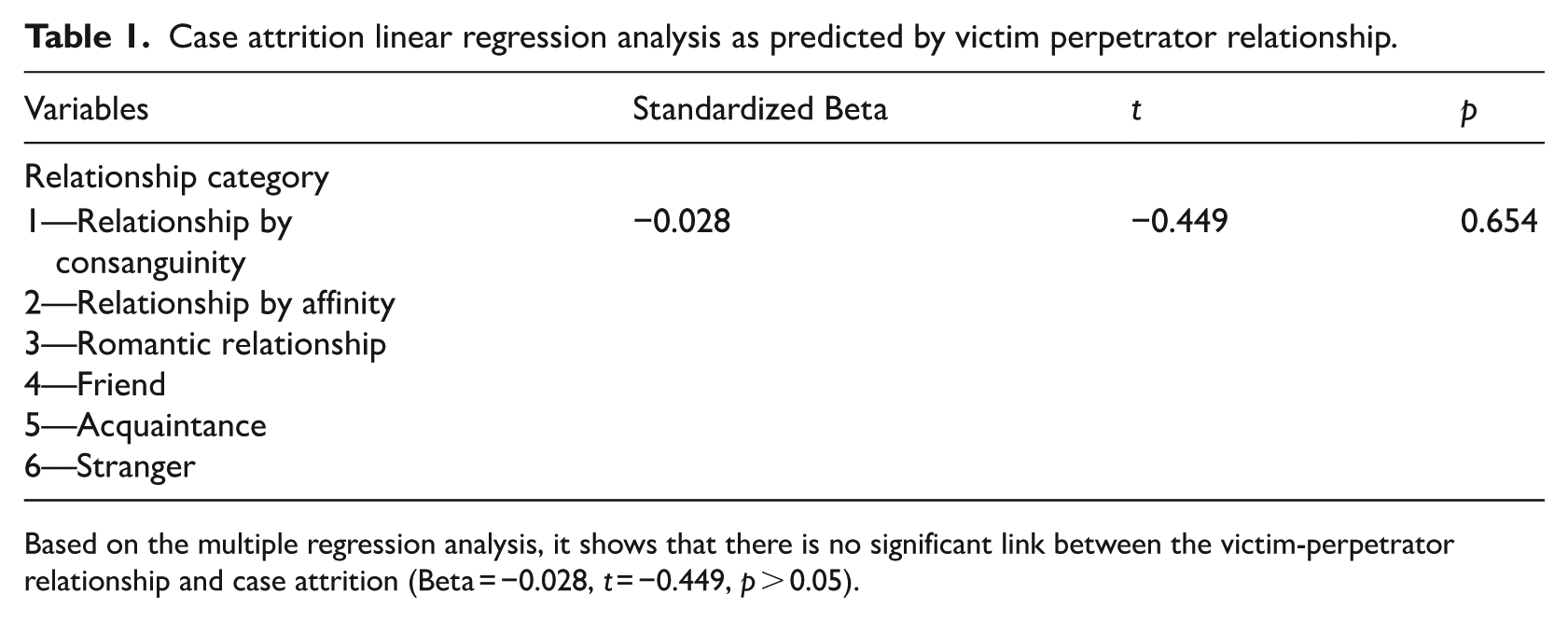
Based on the multiple regression analysis, it shows that there is no significant link between the victim-perpetrator relationship and case attrition (Beta = −0.028, t = −0.449, p > 0.05).
In line with previous studies conducted, there are instances in which victims have sexual consent after the abuse. Many instances also occur when the defense questions the victim’s former relationship or gives contradicting testimony, and the victim loses credibility (Jaffe et al., 2017; Kantor and Twohey, 2020; Sawatsky et al., 2015). The relationship between victim and offender, victim vulnerability, and evidential issues affects case trajectories differently depending on whether cases involve acquaintances, domestic violence, or historical child sexual abuse (Hester and Walker, 2017).
Familial relationships with victims affect their function, making reporting difficult. Post-incident stress causes sufferers to live in continual fear, isolation, social damnation, and excommunication, and a fear that they will be the cause of a broken family (Machmud et al., 2022). In addition, a prior relationship between victim and perpetrator impacts blame attribution, with victims receiving more blame, and perpetrators less when a relationship exists (Bieneck and Krahé, 2011).
The study’s findings underscore the various categories of victim-perpetrator relationships and their impact on victim disengagement. The inherent power imbalance in family and intimate relationships frequently results in victims being silenced or deterred from seeking justice. These findings highlight the necessity for trauma-informed and context-sensitive interventions to assist victims in navigating challenging relational environments.
Rape case attrition as predicted by type of filing
In the Philippine judicial system, rape cases may be initiated by ordinary or inquest filing procedures. Upon apprehension of an accused without a warrant, an inquest immediately following such warrantless arrests evaluates the legality of the detention. At the same time, investigations for regular filings take time but do not require detention (Respicio, 2023).
Findings suggest that the logistics regression analysis showed Beta = −0.106, t = −1.542, and p > 0.05, thereby indicating that filing type does not have a significant relationship with case attrition (Table 2).
Case attrition linear regression analysis as predicted by type of filing.
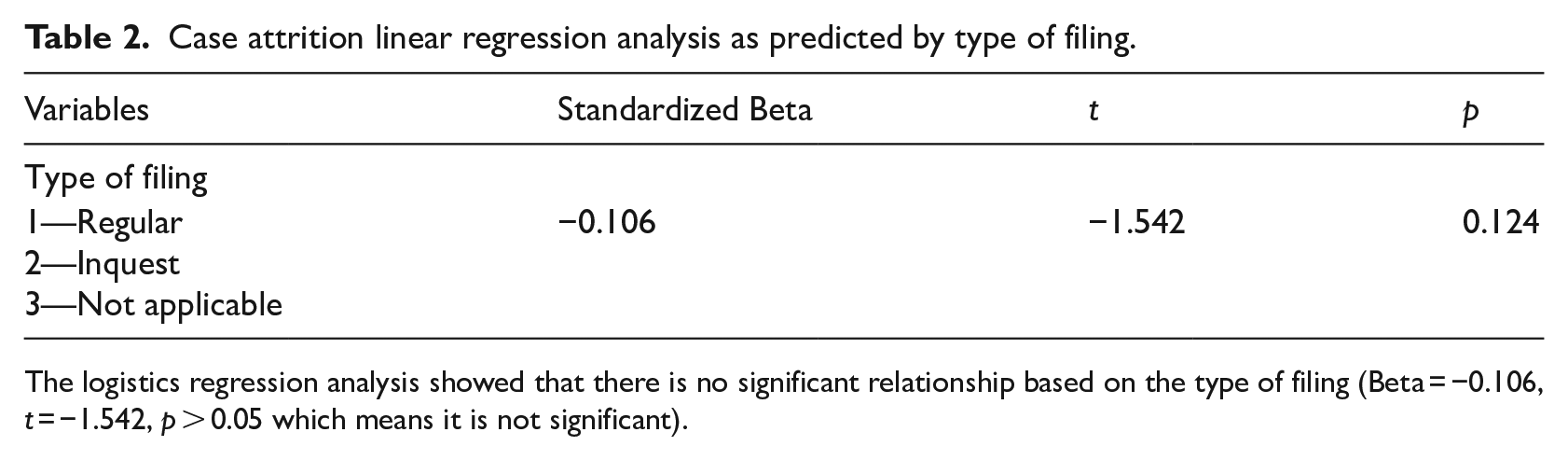
The logistics regression analysis showed that there is no significant relationship based on the type of filing (Beta = −0.106, t = −1.542, p > 0.05 which means it is not significant).
In the data gathered, 12 cases were reported to the police under the ‘Not applicable’ variable; however, no charges were submitted as a result of the victims’ refusal to pursue the charges, and the investigation was never concluded. This further shows that victims often report and suddenly disengage from the system, leaving police officers lost in their investigation.
Focusing on inquest filing may be limited by the regulatory period, a required legal duration for specific actions. Noting that rape cases carry afflictive or capital penalties, the deadline for filing is within 36 hours. This is also in line with Article 125 of the Revised Penal Code, which provides an explicit definition of the term ‘delay in the delivery of detained persons to the proper judicial authorities’ (Act 3815, Revised Penal Code, 1930).
These statistics suggest that time restrictions might require investigators to expedite the process, perhaps resulting in fewer thorough inquiries and diminished evidence quality. Moreover, many criminal investigations are constrained by time for various reasons, leading to unfavorable feelings among police personnel, which might result in prejudices and biases (Ask and Alison, 2017). This indicates the investigators’ dedication to a procedural methodology that emphasizes thoroughness and due process over expediency. By prioritizing deadlines despite the complexities inherent in rape investigations, they ensure that their efforts are not wasted.
The place of commission (Table 3) was categorized only if it was committed in a residential or non-residential area. Thus, in case attrition based on linear regression, a result of Beta = 0.066, a t-value of 1.147, and a significance level of p > 0.05 is not significant; however, the trend pattern emerging is that the probability of legal progress in non-residential cases is marginally greater than that in residential cases.
Case attrition linear regression analysis as predicted by place of commission.
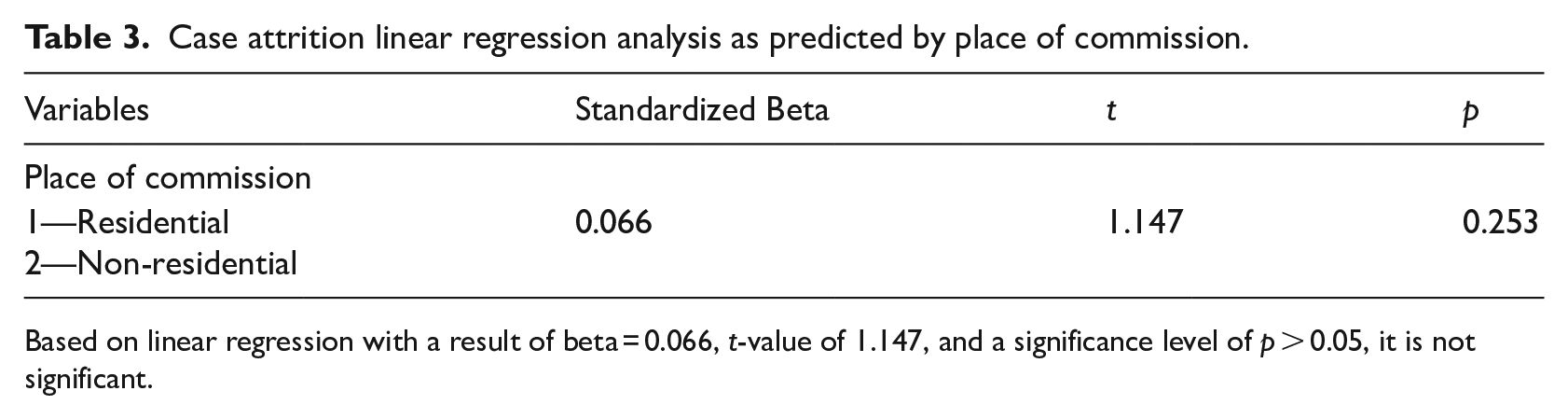
Based on linear regression with a result of beta = 0.066, t-value of 1.147, and a significance level of p > 0.05, it is not significant.
In terms of reporting, victims were more likely to report when the offense occurred in a private location (Kelley et al., 2021). These findings show inherent challenges in investigation, regardless of the place of commission. However, whereas sadly speaking a residential area is considered as a safe place for an individual, it may also be a place of high risk of rape commission as shown by the frequency and consistent with the victim perpetrator relationship that perpetrators have a family relationship over the victim.
Rape case attrition as predicted by of modus
The cases were classified by modus operandi in line with the legal definition, which includes rape committed through force, threats, intimidation, fraudulent machination, abuse of authority, sexual assault, and cases involving minors referred to as statutory rape. The logistic regression analysis indicated no significant relationship between modus and case attrition, as evidenced by Beta = 0.015, t = 0.250, and p > 0.05. The low beta values for various modes indicate that no particular modus significantly impacts case results (see Table 4).
Case attrition linear regression analysis as predicted by Modus.
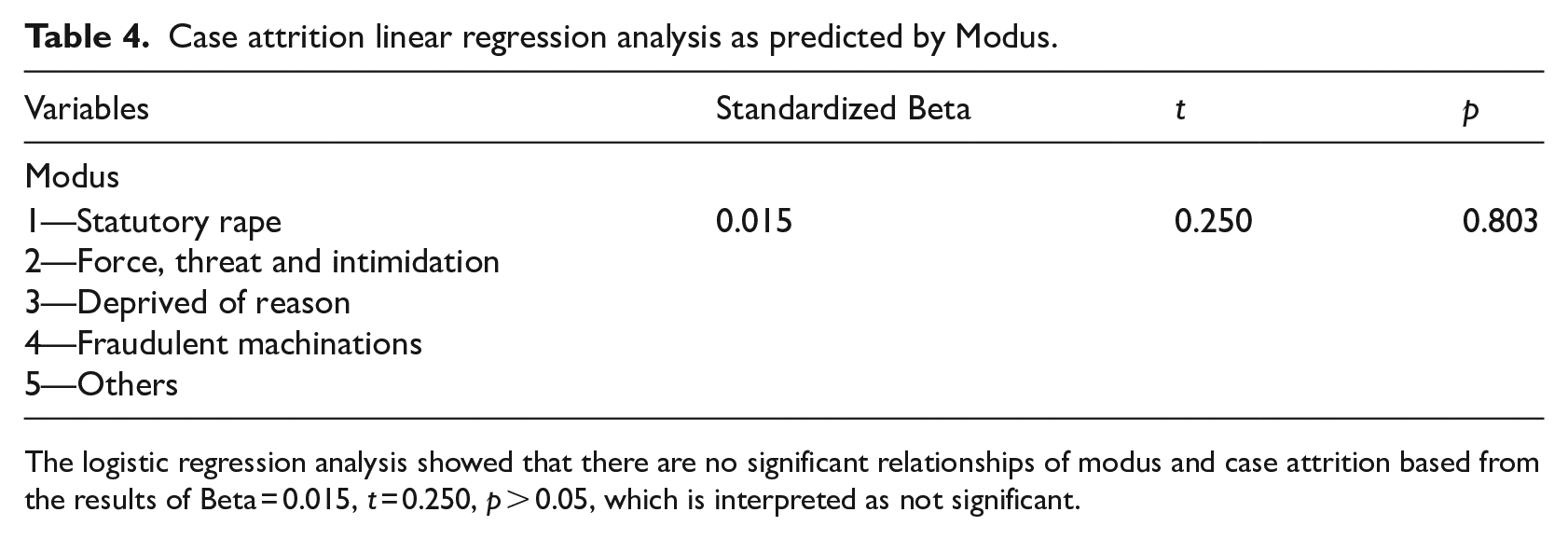
The logistic regression analysis showed that there are no significant relationships of modus and case attrition based from the results of Beta = 0.015, t = 0.250, p > 0.05, which is interpreted as not significant.
Concerning this, Kelley et al. (2021) found that modus operandi influences victim decision-making, as threats of harm increase if the victim reports to authorities. Extending the findings of previous research conducted by Teresa (2020) and Anderson (2019), it was found that alcohol or drugs are used on victims so that they will resist during assault. The use of alcohol in rape trials complicates the evidentiary process, as intoxication of either party may be employed as a defense to assert that the sexual encounter was consensual.
This implies that power, manipulation, or authority plays a central role in the offense influencing attrition. The perpetrator can influence victims through substance abuse, familial ties, physical coercion, and intimidation, thereby affecting their participation in court proceedings. The various modus operandi not only affect the willingness to initiate legal proceedings but also shape the assessment and actions of legal authorities regarding the case, which significantly impacts victim disengagement and leads to attrition.
Rape case attrition as predicted by felony stage
The variable of felony stage in this study is categorized into two classifications: attempted and consummated rape. Under Philippine law, a felony is considered consummated once all the elements necessary for its execution and accomplishment are present. Specifically, for the crime of rape, consummation can occur with mere penile introduction consummated rape, regardless of whether full penetration is achieved (Abanto, 2024). This legal interpretation explains the absence of ‘frustrated rape’ in case records. On the other hand, attempted rape occurs when there is a commencement of execution of an overt act that directly aims to commit rape but is not completed due to causes other than the voluntary desistance of the offender (Respicio, 2025).
In terms of significant relationships, the data shows that attempted offenses have a lower probability of progression than consummated offenses (Beta = 0.091, t = 1.614, p > 0.05), suggesting that this distinction is not statistically significant in the context of rape cases (Table 5).
Case attrition linear regression analysis as predicted by felony stage.
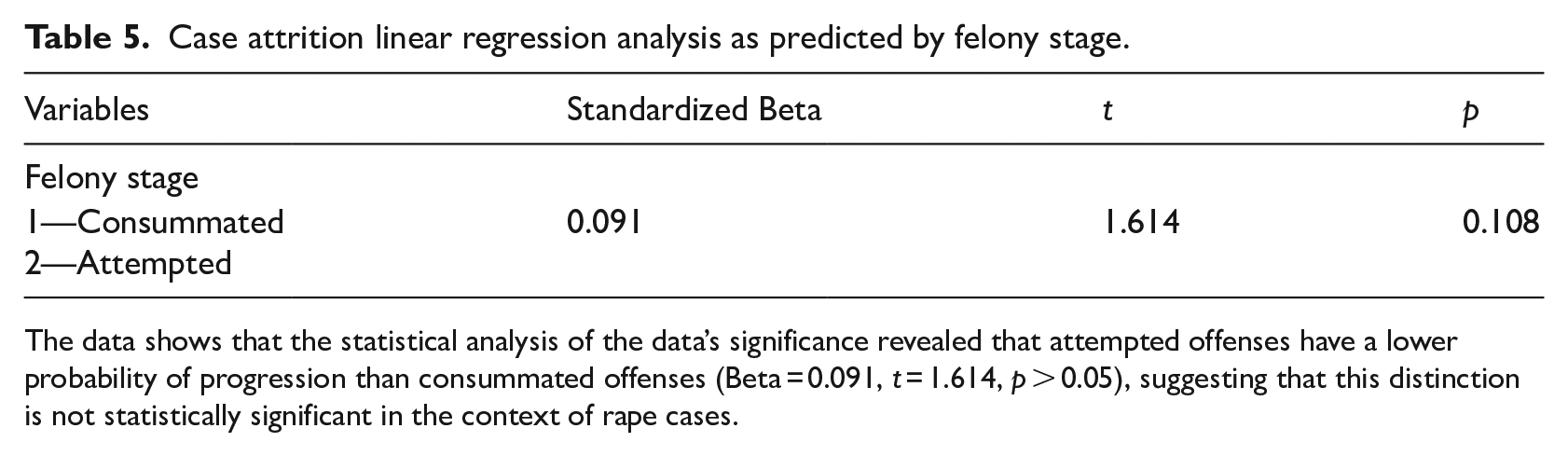
The data shows that the statistical analysis of the data’s significance revealed that attempted offenses have a lower probability of progression than consummated offenses (Beta = 0.091, t = 1.614, p > 0.05), suggesting that this distinction is not statistically significant in the context of rape cases.
In addition, attempted stage rape is challenging to report, as evident from victims delaying reporting and avoiding legal action due to the perceived difficulties of proving their allegation as evident by the six cases reported at the attempted stage in the past 5 years. As explained in a related study, after an assault, victims may feel poor self-esteem, self-blame, and remorse for months or years (Chaudhury, 2017). This aligns with the findings of Association CAMELEON (2024) and King and Bostaph (2023), which show that despite the prevalence of sexual violence, only a small portion of reported cases lead to arrest, prosecution, or conviction, referred to as the tip of the iceberg.
The low frequency of attempted incidents reinforces the stigma of victim-blaming by indicating that victims report crimes only if it is at the consummated stage. However, the country litigates the attempted stage, thus proving it is challenging. If attempted cases remain unreported, the offender may exhibit an increased propensity to engage in further criminal activities or persist in their behavior until legal intervention occurs.
Rape case attrition as predicted by filing time
In this study, filing time refers to the duration between the initial report and the advancement of the case to the following judicial stage. Based on the collected data, filing times were categorized into seven clusters, ranging from the fastest period within 24 hours to the most delayed period extending beyond 3 years. Categorizing filing times this way allowed for a more nuanced analysis of the relationship between delay and case attrition, rather than treating time as a simple linear variable.
The filing time at the police level shows no statistically significant effect on case attrition, as indicated by the weak negative beta coefficient (−0.024), low t-value (−0.341), and high p-value (0.733) (Table 6). Consistently, at the initial stages of investigation, which is deemed crucial, prompt attendance by uniformed officers and conducting interviews decrease the likelihood of attrition (Callon et al., 2022). Victim cooperation, evidence availability, case seriousness, and perceived victim credibility are significant predictors of arrest and case referral to prosecutors (Wentz and Keimig, 2019). This implies that while most cases were reported promptly to the police, the filing period did not significantly affect case attrition, indicating that early reporting does not ensure legal advancement.
Case attrition linear regression analysis as predicted by filing time at the police level.
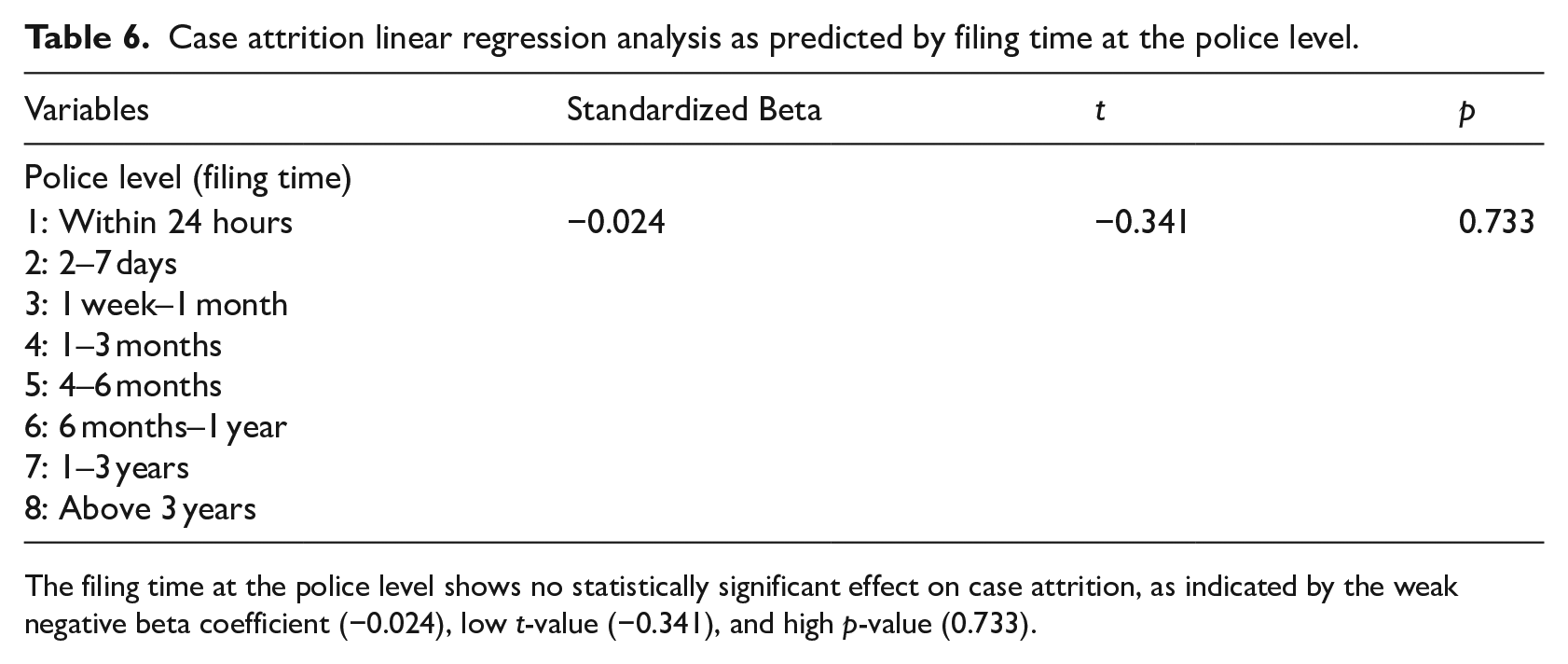
The filing time at the police level shows no statistically significant effect on case attrition, as indicated by the weak negative beta coefficient (−0.024), low t-value (−0.341), and high p-value (0.733).
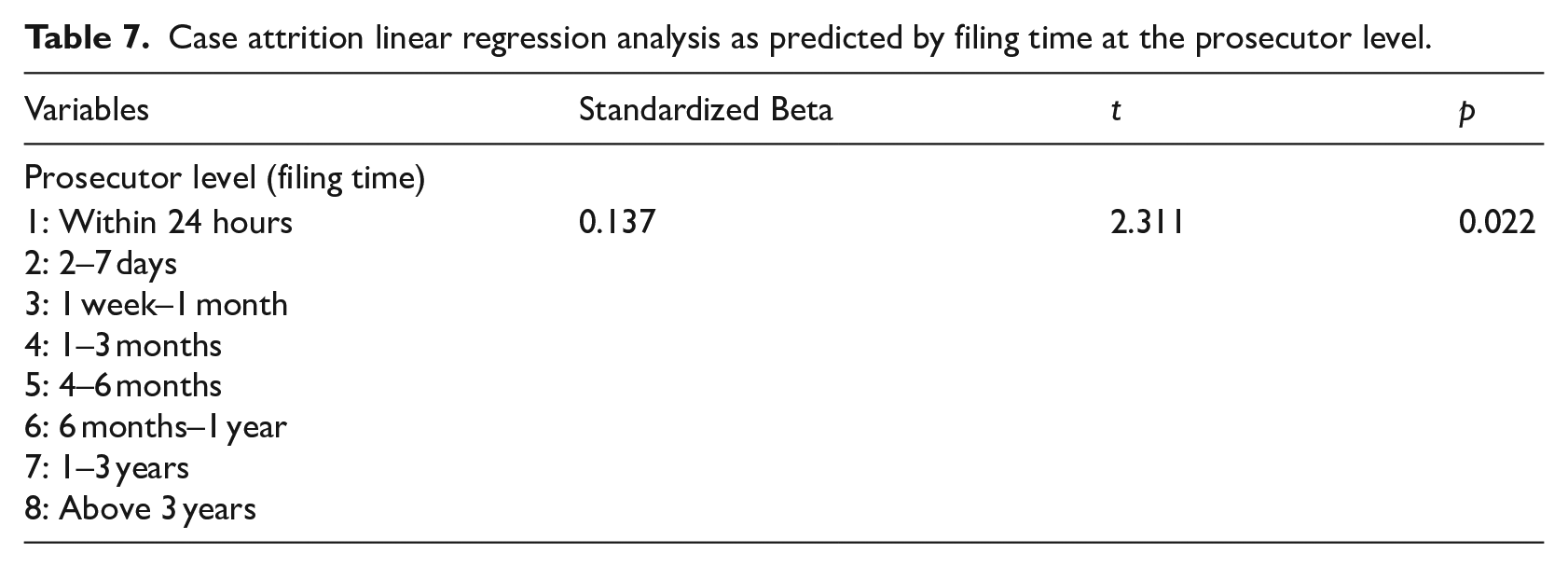
The linear regression results in the prosecutors’ filing timeline. The positive effect of an extended filing period at the prosecutor level (Beta = 0.137, t = 2.311, p < 0.05) demonstrates the intricate and careful preparation required for cases to have enough merit to be presented in court, thereby demonstrating how the legal system ensures fairness before reaching a verdict.
Transitioning to the prosecutor’s filing time, in the Philippines, one of the prosecutor’s roles is to ensure that the victim’s testimony and evidence are presented to the court (Respicio, 2025). The data shows that at the prosecutor level, the Beta = 0.137, t = 2.311, p < 0.05 indicate a significant relationship to case attrition (Table 7).
Case attrition linear regression analysis as predicted by filing time at the prosecutor level.
Consistently, at the global level, rape investigations and prosecutions remain problematic, with victims struggling to be believed and cases progressing through justice systems. Despite legal and policy interventions aimed at improving the criminal justice system’s response to rape complaints, high attrition rates persist, with most reported cases not reaching trial (Artz and Smythe, 2007). Confirming the Columbia Human Rights Law Review (2023), which explained that insufficient or unreliable police evidence may result in trial or pre-trial dismissal, inadequate police investigations, where police fail to take reasonable investigatory steps, are one of the leading causes of wrongful convictions. In essence, investigating calls for a high degree of skill and experience from the investigator, but it can also impede effectiveness and render the case unsuitable for trial in court.
The findings imply that prosecutors adhere strictly to procedural justice to prepare cases for court submission. However, the process falls back to the police level, as the quality of cases filed by the police undergoes further scrutiny by prosecutors to determine whether they will be filed in court. This highlights the need for robust case building at the police level.
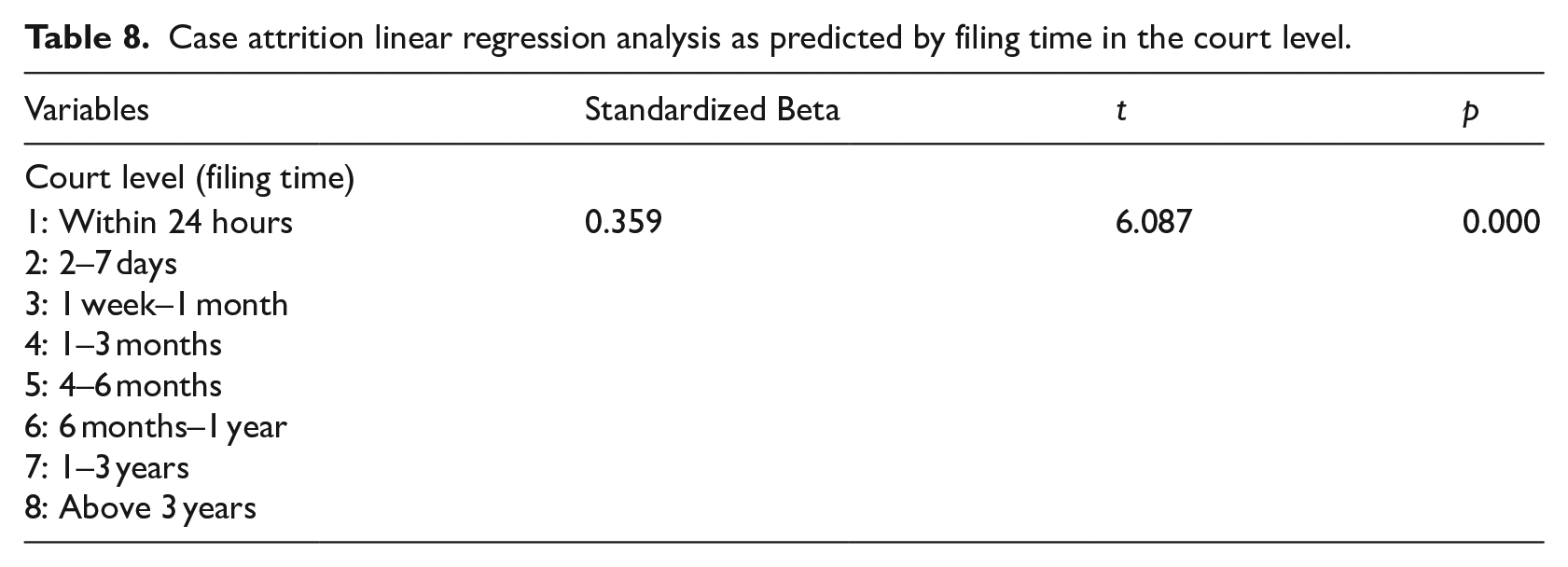
The linear regression findings in the court filing time show a positive and substantial correlation exists between court-level filing times and case attrition probability (Beta = 0.359, t = 6.087, p < 0.001). The p-value (p < 0.001) indicates a strong correlation between case attrition and court filing time, rejecting the null hypothesis. There is strong statistical evidence that longer court filing periods increase case attrition.
After an initial inquiry, to summarize the Philippine criminal justice system, the prosecutor files a case in court to begin proceedings in the Philippine Criminal Justice System. After the accused is arraigned and enters a plea, there is a pre-trial part where evidence and witness lists are discussed. The trial follows, with witness testimony and competing defenses. Trials can last months or years depending on intricacy and court dates. Afterward, the judge rules within weeks or months (Respicio, 2023).
Consequently, the linear regression analysis indicates a significant and positive link between court filing delays and the chance of case attrition as gleaned by the Beta = 0.359, t = 6.087, p < 0.001 (Table 8). The p-value (p < 0.001) indicates strong statistical evidence that longer court filing periods increase case attrition.
Case attrition linear regression analysis as predicted by filing time in the court level.
This finding suggests that procedural inefficiencies at these critical points of case advancement are key contributors to the attrition of rape cases. These findings align with documented observations in the Philippine legal process, where once a case is filed in court, delays occur due to factors such as heavy caseloads, the unavailability of key actors, and repeated resetting of hearings. Despite the structured phases of arraignment, pre-trial, trial, and judgment, prolonged timelines persist (Respicio, 2023). A notable example involved a 10-year delay in ruling due to infrequent hearings, underscoring systemic inefficiencies (SC Suspends Gensan Judge, 2024). Statistics consistently show that 46% of cases remain unresolved 2–5 years after beginning. Findings show that the Philippines’ high family court caseload slows justice; 30% of family courts have no judge (University of the Philippines Manila et al., 2016).
Internationally, similar trends are observed like in England and Wales, over 180 alleged rape victims experienced delays of more than 2 years due to a shortage of qualified barristers and procedural backlogs (Siddique, 2024). Murphy et al. (2021) also report that procedural delay, particularly those involving third-party material and overloaded court dockets, exacerbate attrition risks.
The quantitative findings in this study reinforce the urgent need for judicial reforms focused on minimizing delays and improving case flow efficiency. As Ostrom et al. (2020) emphasize, timeframes in legal processes should not be rigid mandates, but should help ensure procedural progress while maintaining quality outcomes. Ang (2014) similarly argues that efficiency, not just accuracy, must be prioritized in the Philippine justice system especially for sensitive cases like rape.
This implies that delays have significant implications for victims’ psychological resilience. The qualitative phase indicates that prolonged processes contribute to disengagement, exacerbated by emotional stress, insufficient support, and systemic fatigue. Consequently, procedural reform should be integrated with psychosocial support systems to guarantee ongoing survivor involvement in legal processes.
Factors influencing rape attrition patterns in the criminal justice system
Building on the quantitative results, the qualitative phase through thematic analysis was conducted to uncover the nuanced experiences and perceptions underlying the patterns observed presented below with supporting participant excerpts.
Theme 1: legal and procedural delays
The legal and procedural delays delve into the experiences of the prosecutor and court personnel in processing of rape cases that affect the attrition of cases. It clarifies a deeper understanding of the reasons behind attrition.
Sub-theme 1.1: evidentiary issues
This theme highlights and explains that although there are delays in legal procedure, they are rooted in a lack of evidentiary challenges. Further investigation is a cause of delayed reporting, which sometimes causes confusion, and there is no evidence to back up the victim’s claim.
The data to support this shows that most of these cases have been dropped due to lack of evidence, as stated below: The lack of evidence shows that there is a doubt on the case, wherein sometimes it is the basis of the dismissal of the case because there will be no evidence to back up the claim of the victim. (PR1, prosecutor)
Rape cases heavily rely on the evidence considered in these cases, which mainly consist of the victim’s testimony and medical findings (University of the Philippines Manila et al., 2016). This implies that the lack of evidence during prosecution may cause delays or inefficiencies, which lengthen the legal process, make victims more distressed, or weaken the case, contributing to higher attrition rates.
This is also supported by a study of rape cases which found higher levels of acute psychological distress are closely linked to victims’ reluctance to participate in investigations (Hanson et al., 2018, as cited by Budd, 2024). This psychological burden intensifies as the court trial approaches, often requiring increased support to help victims cope with the emotional strain and intrusive legal inquiries (Hester and Lilley, 2017). These challenges are further compounded by evolving procedural issues, such as delays caused by heavy workloads and systemic inefficiencies, heightening victim vulnerability and risk of disengagement (Murphy et al., 2021).
In addition, it has been emphasized that a rushed filing due to inquest procedures may restrict the victim’s capacity to present thorough evidence in support of the complaint distinguished with a preliminary investigation, which allows for thorough evidence assessment, due process for all parties, and trial preparedness. The time needed to process forensic evidence, such as DNA, makes regular filing beneficial for case development. The existing backlog of cases in the criminal justice system exacerbates delays in case filing. Recent studies highlight the complex role of forensic evidence in rape cases. While forensic evidence is often auxiliary and non-determinative in case outcomes (Baskin-Sommers and Newman, 2013), its collection and preservation remain crucial. Victim behavior immediately after the incident can significantly impact evidence quality. Every day post-rape activities like urinating, changing clothes, or showering can compromise forensic evidence, emphasizing the need for public awareness on evidence preservation (Adefuye et al., 2024). Crime scene investigation in rape cases is particularly complex, involving the collection, documentation, and analysis of evidence such as body fluids and DNA to support claims of non-consensual activity (Dawnay and Sheppard, 2023). It represents the intersection of science, logic, and law, requiring detailed documentation, photography, and meticulous evidence handling (Patel, 2024; Singh, 2021).
This implies that delayed reporting significantly hampers investigations by creating evidentiary challenges, often resulting in poorly documented cases that hinder legal proceedings and contribute to case attrition. Added to by the time constraints, pressure on investigators can result in a rushed completion of tasks that undermines the quality of the investigation and impedes case progression.
Sub-theme 1.2: limitation of legal remedies
Despite the availability of legal remedies within the Philippine Criminal Justice System, rape survivors often face limitations in accessing timely and effective justice. As judge C4 stated, ‘Suddenly, they disengage or do not appear, even if we issue a subpoena to reset’.
In response to filing lapses, prosecutors may issue Temporary Restraining Orders (TROs) to prevent contact between parties, aiming to deter coercion and protect victims. While TROs are intended to provide legal protection (Respicio, 2024), they are often perceived as ineffective, mere formalities that do little to prevent extrajudicial settlements, especially once the filing period expires. This procedural gap reinforces the quantitative findings on delays and attrition.
Ultimately, survivors often disengage not due to a lack of remedies, but because the justice process remains slow, re-traumatizing, and unresponsive to their emotional and psychological realities. This highlights the urgent need for trauma-informed reforms and survivor-centered practices to make legal remedies both accessible and practical.
Theme 2: victim-centered factors
This theme shifts focus from legal factors to victim-centered factors, aiming to enhance understanding of the processes at the prosecutor level during the filing stage.
Sub-theme 2.1: victim disengagement in legal proceedings
As defined in the research, victim disengagement refers to the sudden discontinuation of the victim or offended party in the legal system due to a lack of interest, cessation of involvement, abandonment of the case, or non-participation, leading to attrition of the case.
In the absence of victims actively participating, prosecutors may encounter difficulties collecting evidence, constructing a persuasive case, or obtaining convictions. When asked what prosecutors do regarding the victim’s decision, PR2 explained, ‘We cannot do anything if it’s the decision of the victim to already drop out—it’s out of our control as a prosecutor’. This is consistent with the findings that police and prosecutors sometimes attribute the closure of cases as ‘exceptional clearance’ or being classified as inactive to victims’ lack of cooperation (Webster, 2019). This indicates that the victim’s lack of will and resilience leads to disengagement from the system. This situation underscores the limitations of the prosecutor and the court’s roles, as it suggests that if the victim feels powerless, even persuasive efforts may prove insufficient.
Sub-theme 2.2: settlement decisions as case resolving
In Philippines, rape cases are excluded from those eligible for amicable settlement. However, it is observed after filing cases within the legal system. Gulla (2024) reported that both the offended party and the perpetrators often engage in private settlements outside of court, without the participation of legal representatives, despite the prohibition, which is referred to in local language as ‘areglo’.
Consequently, areglo refers to informal settlements or private compromises, often motivated by social or familial pressure. Due to the offense’s serious nature, its prosecution remains under the purview of the state, regardless of a victim’s intent to desist. Attempts at private settlement not only undermine public policy but also compromise the integrity of the justice system in addressing sexual violence (Respicio, 2024). As one participant, PR2, stated, ‘Victims usually enter an amicable settlement’. This shows that the victim abruptly opts for agreement rather than pursuing legal action. In contrast, when asked why victims usually enter an amicable settlement, SW 4, a social worker reasoned, ‘The prolonged duration of cases often leads children to opt for settlement because they want to go home’.
This is consistent with the quantitative research finding that indicates that prolonged duration of rape cases often leads to disengagement, particularly for child victims. Factors contributing to this include victims’ poor financial status, which may force them to accept out-of-court settlements (Akonor and Okorley, 2021).
In addition, rape cases have risen in upland Cordillera provinces like Ifugao, so families, young professionals among them, have urged their community elders to exclude rape victims when they mediate tribal disputes. Instead of addressing the problem head-on, ritual mediation almost always results in a settlement, partly to fulfill the mandate of all tribal agreements to preserve community peace (Inquirer, 2013). Nonetheless, the identical issue persists years later. Upon analyzing the local context of Baguio City, which is distinguished by its diverse cultures, it is clear that the victims opt for settlement. Often, victims decide to settle their cases because they are struggling to go through the exhausting judicial process, which is exacerbated by the financial burden and the difficulties of court procedures (Hent, 2025).
Findings imply and give explanation as to why filing time is significant in case attrition. Despite the legal prohibition against such practices, cases of rape are being settled extrajudicially, which has resulted in the legal system being excluded from decision-making and subsequent case attrition due to disengagement. Emphasizing how delays weaken victims’ perseverance, causing them to resort to attrition, highlights the complexity of circumstances influencing victims’ decisions on extrajudicial settlements.
Theme 3: insufficient support system
This theme delves into the inadequacy of victim support, as survivors often lack guidance on further actions following reporting a crime to the authorities, hence diminishing victim engagement.
Sub-theme 3.1: lack of strong support mechanisms
The delays compound emotional exhaustion and may contribute to decisions to withdraw. Participants highlighted that the waiting time at the prosecutor’s level created immense frustration, often leading to disengagement. This theme aligns with the statistical findings, where the more extended the filing period, the higher the likelihood of case attrition. Although the government provides available support, a problem persists, as one participant stated: ‘There is over-dependency in the DSWD’ (PR2, prosecutor). In the Philippines context, the Department of Social Welfare and Development (DSWD) is a government agency tasked with the rehabilitation and empowerment of victims and survivors of violence, particularly those who have experienced sexual abuse (Inquirer, 2016).
In addition, issues concerning expertise were also raised as stated by participants: ‘Still lacks a support system, there are DSWD presences, but sometimes they lack training, expertise, and resources’ (PR3, prosecutor).
A related discovery underscores the significance of training. Criminal justice authorities mandate trauma-informed training to educate themselves on proper victim decorum and debunk the fallacy of the ‘ideal victim’ in sexual assault. Victims are harmed in and out of court by the ‘ideal victim’ stereotype (Fansher and Welsh, 2023). This notion centers on the most effective method of assisting trauma victims. The lack of training contributes to the fact that the underlying cause is insufficient expertise and knowledge regarding the management of rape cases.
Further problems exist in the quality of implementation, which is attributed to a lack of funds, as evidenced by the statement below: There is support available, but, for example, in the case of medicine, some items may need a request. However, in situations like psychological services, some support systems may only provide ‘pep talks’ for compliance. (PR1, prosecutor)
It signifies the provision of support; however, it is crucial to recognize that while some assistance is free, other mechanisms require prior requests, emphasizing a lack of funds. In addition, a scarcity of funding and knowledge that private institutions charge exorbitant fees for psychological medical interventions are indicators of compliant implementation (McEwan, 2021).
This finding further indicates that a staffing shortage compromises the provision of services to the victim, potentially attributable to financial constraints. In addition, the services are limited in that they only provide coverage to those referred.
This analysis reinforces findings from previous studies that success needs to be established, funded, and maintained through advocacy and support services. Flexible funding and staff shortages plague stakeholders (Al Sharekh and Al Mukhled, 2023; García- Jiménez et al., 2020).
In summary, ineffective victim assistance is hindered not only by the limited support services available to victims but also by implementation that is either non-compliant or inadequate. Addressing this requires procedural reform and a strengthened support system that maintains survivor engagement throughout the justice process, highlighting the lack of support for victims during prolonged legal proceedings.
Sub-theme 3.2: family influence on victim decisions
Focusing on a specific aspect, the family serves as the fundamental unit of society and remains the most frequently sought support in cases of rape. The role of family significantly influences case attrition, as victims often adhere to their family’s standing and decision-making. Consequently, one of the primary recommendations for victims from their family is to disengage from the legal system: It greatly affects the decision of the victim in pushing through his/her case. The family tends to decide not the victim, but the victim somehow just comply with the decision of the family (PO4, policewoman)
The research findings indicate that strong familial connections produce favorable outcomes. Documented negative consequences arise from excessively strong familial bonds, leading to the disregard of victims’ decisions and compelling compliance, regardless of age. The findings align with social construct theory, highlighting the impact of cultural stigmas that discourage women from pursuing litigation or encourage informal settlements. This theory examines the impact of power dynamics in families and communities that lead victims to settle, withdraw, or remain silent.
As suggested by the studies of University of the Philippines Manila et al. (2016) and Tablan (2022), relatives support victims, especially in Filipino communities where family is everything. Attachment to family members has also been found to be a key element for increasing disclosure, a potential protective factor for breaking the norm of silence around violence and preventing further violence. No other institution in Philippines demands as much commitment, sacrifice, and affection as the family, circulating in three main concepts: kapwa or ‘fellow-being’; hiya or ‘shame’; and utang na loob, or ‘debt of one’s being’; understanding these underlying Filipino cultural values of interdependent relationships, respect for parental authority and obedience from children, family cohesion, and meeting familial obligation is paramount.
In addition, family influence is commonly observed if the victims are minors as stated below: In cases involving minors, since they are still under the care of their parents, their family discourage them even if the victims want to pursue the case (SW4, social worker)
The victim’s decision is influenced by the family’s preference for resolution, particularly in cases involving minors who remain under guardianship and parental supervision. Despite victims’ determination, their decision is disregarded. Themes illustrate how gendered power relations and institutional biases marginalize victims within the justice system, consistent with feminist theory.
In line with power control theory in Philippines, where patriarchal norms are prevalent, this theory elucidates the mechanisms of victim-blaming, the influence of male-dominated legal institutions, and the influence of the family’s advice on victims’ decision to follow the family’s advice for disengagement.
Moreover, family discouragement delves into a deeper reason as stated below: Economic standing affects the decision to pursue case not everything can be given for free although the PAO is free but other expenses during trial is a different scenario. (C1, RTC judge)
The findings indicate a dearth of familial assistance and a lack of emphasis on the case entering the judicial system; therefore, this may be ascribed to financial constraints, consistent with the findings that the settlement issue is also due to a lack of resources to keep returning for interviews that involve time sacrifice (Webster, 2019).
In fairness, the rationale for frequently returning for interviews is that individuals involved in the criminal justice system are likely to devote a substantial amount of time and effort to cooperating throughout legal proceedings, mainly so that it is part of case processing during which their presence may be periodically requested.
This finding is consistent with various studies wherein family is highlighted as a support network for victims, especially in assisting rehabilitation after reporting. Especially after a sexual attack, work, finances, and mental health may limit a victim’s resources, making coping difficult. Financial issues and job loss must be overcome before rehabilitation can begin (Crivatu et al., 2021). This is not related to the family’s lack of interest in the legal system, but rather that, given their current living situation, the most practical course of action is to abstain from criminal justice and continue with their lives.
In brief, the data indicates that the discrepancy in support services impacts case attrition. Evidence is particularly evident in the age-based treatment approach, which is additionally influenced by the stringent referral system and family intervention. The crucial nature of the family’s support role is underscored by the fact that the survivors continue to endure emotional distress due to victimization. This indicates that not only formal services but also informal services, particularly those involving families who do not support victims’ decisions to pursue litigation, exhibit deficiencies.
Sub-theme 3.3: disparities in support systems
The selective support system highlights inadequacies in the support service by the identified difference in treatment of adult and minor victims, creating an age disparity in victim treatment because minors are given more attention, and adults are encouraged to be independent. It is emphasized by the existence of selective support services that not all victims have access to or are covered by the government’s free services.
The identified practice that affects the support service is that the social worker service should prioritize minor victims, limiting their service extension to adult victims who need their assistance, as stated below: Social workers are present especially in cases involving minors but for adult victims the social workers are only given upon request. (C1, RTC Judge)
Adult victims may struggle without an assigned social worker, which could harm their mental health and legal ability: Adult victims should not expect special treatment or consideration compared to minors; they should be able to stand on their own. (C1, RTC judge)
This statement further suggests that there is an expectation that adult victims will be more resilient, mature, or accountable in handling the case’s processing requirements; however, not all adults possess the means to do so.
Discussion
In relation to the procedural justice theory, which allows for an evaluation of how various agencies, such as law enforcement, social welfare, and the judiciary, interact, the Philippine case illustrates fragmented coordination. Operations between police and prosecutors create delays, undermining case continuity and victim trust. The absence of a unified support system exacerbates case drop-offs and weakens survivor engagement throughout the justice process.
On the contrary, it is essential to acknowledge that trauma does not discriminate against any age group; both children and adults can experience it. Consequently, providing selective support assistance to victims may inadvertently exacerbate their distress. This is compounded by a stringent referral mechanism that limits such support services as stated below: The survivors are passed on from one agency to another wherein they are repeating every now and then the question and answer to the incident. (SW1, social worker).
Based on the research findings that support services adhere to a rigorous referral process, Vasquez and Houston-Kolnik (2017) assert that a triage system that places greater emphasis on victims in crisis and a consistent referral system impedes therapy and legal aid. Thus, aside from the strict referral method, there is also a problem in establishing a good line of communication, showing how case referrals are complicated (Hester and Lilley, 2017). In a related study, fear of retaliation, offender pressure, legal misunderstanding, or lack of support usually leads to victim retraction as a key cause of attrition in rape cases. This prevents survivors from pursuing justice, making sexual violence prevention harder, resulting in underreporting, impunity, and discouragement (Wieberneit et al., 2024).
Research on rape cases in the Philippines reveals significant challenges in seeking justice and support for victims. Despite legal protections, one in four Filipino women experiences GBV, with 41% not seeking help due to economic, sociopolitical, and cultural barriers (Valdez et al., 2022).
In addition, it is supported by evidence that victims face challenges when attempting to navigate the legal system; however, the burden is exacerbated when they are transferred from one agency to another, which further exacerbates the situation and causes emotional distress for the victims. Consequently, further victims are victimized, which lends credence to the notion that the legal system is ‘exhausting’. This necessitates the integration of a trauma-informed approach framework to address this concern. Victims face significant obstacles, particularly the rigorous referral system, which impedes the effective delivery of support services due to the inadequacies of the support framework. By synthesizing various elements, traumatized victims may opt not to testify or may present conflicting evidence due to the influence of the perpetrator, which can adversely affect the prosecution’s case and result in attrition. This statement elucidates that the attrition rate in rape cases is not reliant upon the modus operandi of the crime, but instead on the effects of the victimization.
This study’s theoretical approach posits that case attrition in rape trials is influenced by an array of legal, social, and emotional factors impacting both victims and justice system participants. The decision to disengage ultimately lies with the victim. However, it is shaped by intricate external factors.
Driven by the hues of International Women’s Day 2025, the concept map (Figure 1) intricately integrates justice (purple), hope (green), and freedom (white) into a unified depiction of the rape survivor’s experience inside the court system (Mishra, 2025). The framework shows the joint integration of data gleaned from the quantitative findings, which show a significant correlation between delayed filing at the prosecutorial level and increased case attrition. These findings are connected to qualitative findings elucidating the underlying reasons why victims often experience emotional fatigue, persistent pressure to settle, and inadequate psychosocial support. These limits intensify as the legal process extends, diminishing the probability of sustained engagement.
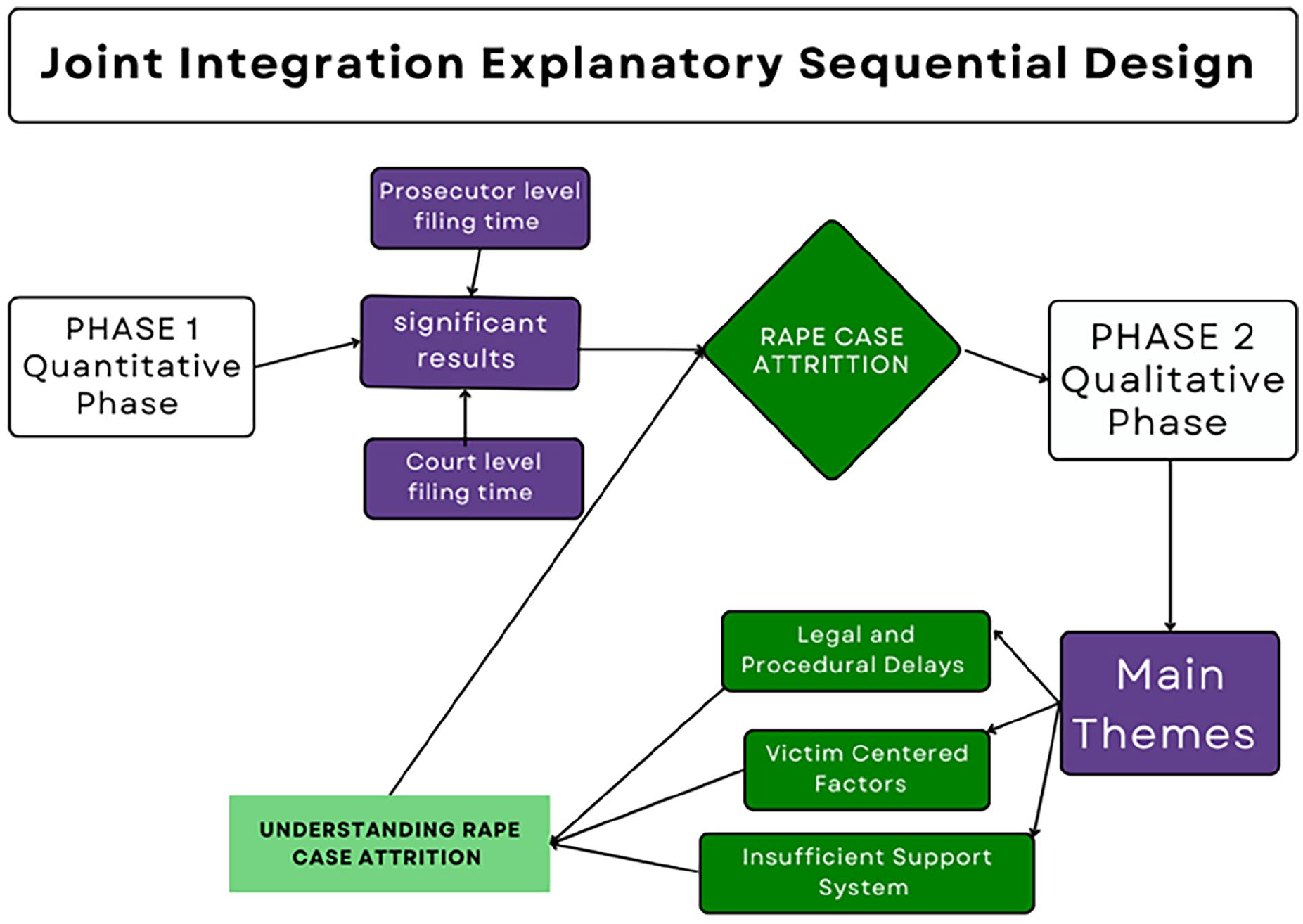
Concept map of joint integration of quantitative findings and qualitative themes (explanatory sequential design).
Despite the presence of formal victim services, attrition persists, suggesting a critical gap in both institutional and informal support systems. Coordination issues and financial hardship further diminish victims’ capacity to pursue justice. Informal structures, particularly familial networks, frequently fail to encourage or enable continued legal participation. This highlights the necessity of strengthening procedural efficiency and the emotional and material support available to survivors, recognizing that disengagement is often a response to systemic shortcomings rather than a lack of resolve.
Strengths and limitations
Notwithstanding its strengths, this study has limitations, particularly focusing on a single region, which may limit generalizability. Moreover, while eight variables provided focused insight, a broader dataset could enrich future analyses, particularly given the lack of availability of data regarding the reasons for the case’s non-progression through the legal system.
In the qualitative findings, the scarcity of rape survivors can be attributed to the sensitivity of the study wherein their statement is only used for corroboration and does not form part as a theme. In addition to the main participants, seven victim survivors were consulted as corroborating informants to validate specific details from primary interviews and case profiles. Nonetheless, this scarcity does not affect the quality of the analysis as the reiterated research gap of the study delves into the potential viewpoints within the broader system handling rape cases, particularly those whose involvement was in legal or administrative in nature. These limitations are addressed by highlighting the study’s strength, which lies in its methodological integration. It uses statistical findings to inform purposive sampling for interviews, allowing both depth and scope in interpreting victim disengagement.
Conclusion
Beyond summarizing findings, the research contributes to a deeper theoretical understanding of disengagement as a multi-dimensional phenomenon, highlighting the significant influence of filing time, support systems, and victim experiences, which shows the interplay of procedural, sociocultural, and emotional determinants affecting victims to disengage in the justice system. Survivors’ decisions are highly influenced by their families, leading to informal settlements as a prevalent approach in rape cases. This study supports a nuanced framework where victim disengagement is not merely a matter of choice but an outcome shaped by intersecting pressures and a lack of strong support from formal or informal institutions. To sum up, addressing case attrition requires structural and social shifts, which should lead to a holistic justice system response, ensuring a strong support mechanism is in practice during this time.
Implications for policy and practice
The insights gained from this qualitative analysis emphasize the need for a more victim-centered approach to legal proceedings, particularly streamlining filing procedures at the prosecutor level to minimize delays. There is a clear need for increased training of key service providers, better emotional support for victims throughout the process, and reforms to address the influence of family members in decision-making. In addition, integrating social work professionals into the legal process may help mitigate the emotional toll of prolonged cases and reduce the rates of victim disengagement. Future studies may benefit from longitudinal designs that trace victim experiences across all three justice system exit points (police, prosecutor, and court) and assess how support interventions affect outcomes.
Footnotes
Acknowledgements
The SIKAP Scholar Award from the Commission on Higher Education (CHED) under Cordillera Administrative Region, Philippines provided funding for this study. This scholarship helped the primary author publish this dissertation. The researcher will always be appreciative to the Commission of Higher Education (CHED) for the scholarship award. The authors thank all the participants in the study, judges, court clerks, prosecutors, police officers, social workers, and survivors for allowing data gathering and giving up their time to give the information needed for the research.
