



Abstract
At international and domestic levels, there is an increasingly well-established evidence base documenting the incidence of non-fatal strangulation or suffocation in intimate partner relationships. While the meaning and significance attributed to this behaviour can be complicated and contested, it is widely acknowledged that the risks involved are substantial. In the context of abusive relationships, it has been recognised as a reliable predictor of increased risk of domestic homicide with new, bespoke non-fatal strangulation or suffocation offences created in England and Wales to improve pathways to prevention, reporting and prosecution. Despite this, research has continued to question the adequacy of existing professional responses in terms of identification, risk assessment and safety planning, as well as understanding of potential links between exposure to strangulation or suffocation and suicidality. This article draws on a detailed analysis of statutory reviews, conducted in England and Wales in certain cases of domestic abuse–related suicide, alongside a series of stakeholder interviews, to explore the incidence and impact of experiencing strangulation or suffocation upon victims. We focus, in particular, on the prevalence and contexts of such experiences; challenges around disclosure and identification; the adequacy of professional risk-assessment and intervention; and understanding of the complex range of physical, cognitive, mental and emotional effects. Documenting the limited consideration often given by agencies and review panels alike to the incidence and impact of non-fatal strangulation or suffocation in these reviews, we highlight, in particular, a lack of attention to its potential to increase risks of suicidality as well as homicide.
At international and domestic levels, there is an increasingly well-established evidence base documenting the incidence of non-fatal strangulation or suffocation within intimate partner relationships (Pritchard et al., 2017; White et al., 2021; Zilkens et al., 2016). A recent survey exploring the prevalence of brain injury among victim-survivors of domestic abuse in England and Wales revealed, for example, that 46% had been strangled by their partner, with 75% being held by them in a way that meant respondents felt that they could not breathe (Brainkind, 2024). Research has also demonstrated that such strangulation may be particularly prevalent in abusive relationships that involve coercive or controlling behaviour (Hoeger et al., 2024; Stansfield and Williams, 2021).
Bows and Herring (2024: 335) have observed that the act of strangulation is itself ‘a symbolic demonstration that the perpetrator can exert significant harm and end the life of the victim whenever they choose’ without preparation or weapon. It can cement a dynamic of control that supplants the need for other violence, with recipients internalising their existential precarity and moderating their behaviour to navigate the risks involved. At the same time, the meaning and significance attributed to non-fatal strangulation or suffocation can be complicated and contested, influenced by the context in which it takes place. The mainstreaming of historically marginalised sexual practices has led to greater normalisation of behaviours including ‘choking’ or ‘breath play’, particularly among young people (Herbenick et al., 2022, 2023; Sharman et al., 2024, 2025); This is often framed as an agentic expression of sexual autonomy, even where it occurs in more broadly coercive or violent relationships (Douglas and Fitzgerald, 2020; Douglas et al., 2024).
Regardless of context, the risks and harms associated with strangulation or suffocation are significant. Restricting another’s airway is an inherently dangerous, and potentially deadly, act. Prior experience of non-fatal strangulation within an abusive relationship has also been found to be a reliable predictor of future fatality in that victims are at a substantially increased risk of being killed by their partner (Glass et al., 2008; Websdale, 2019). In England and Wales, recent analysis of a sample of 396 Domestic Homicide Reviews (DHRs) found that 19% included reference to non-fatal strangulation in the deceased’s abuse history, and that approximately half of victims were ultimately killed by the same person who had previously strangled them (McGowan, 2024). Meanwhile, research using police data has found a substantial presence of non-fatal strangulation in the histories of those suspected to have died by suicide in the context of domestic abuse (20%, n = 20/102 in 2022–2023), with this significantly coinciding with being subject to coercive or controlling behaviour (Hoeger et al., 2024: 10, 13).
Although it is not uncommon for strangulation or suffocation to result in no visible physical injuries (Strack et al., 2001; White et al., 2021; Zilkens et al., 2016), impacts to victims can include bruising and injury around the site of applied pressure, incontinence or loss of consciousness. Long-term difficulties in swallowing and breathing, and an increased propensity to haemorrhaging and strokes have also been identified (Douglas and Fitzgerald, 2020; Foley, 2015; Funk and Schuppel, 2003). Strangulation or suffocation can cause hypoxia, resulting in brain injuries that may manifest in headaches, anxiety, PTSD, depression or difficulties with memory, concentration and rational processing (Bichard et al., 2022; Edwards and Douglas, 2021; Foley, 2015; Funk and Schuppel, 2003). It has been suggested that the risk of brain injury within intimate partner violence is significantly higher, both in terms of percentage and absolute numbers, than the risk in contact sports and military action, despite not having benefitted from the same degree of . . . focus. (Bichard et al., 2022: 1165)
Deciphering the range of health and well-being implications that can result from non-fatal strangulation is, thus, a complicated task. A ‘significant overlap between brain injury (attributable to non-fatal strangulation or suffocation) and mental health symptoms’ (Brainkind, 2024: 6) has been identified, especially in terms of capacities for ‘controlling emotions or reactions’ and ‘figuring out what to do next’ (Brainkind, 2024: 26). Those who experience both acquired brain injury and non-fatal strangulation injuries have been found to be more likely to self-harm, with 57% of respondents in recent research stating that they had thought about ending their lives and 47% reporting a prior attempt to do so (Brainkind, 2024: 39). While ‘low mood and suicidal ideation are commonly experienced following brain injury’, when arising in the context of domestic abuse, experts have also raised the concern that this risks ‘being only viewed in the context of trauma and mental health difficulties’ (Brainkind, 2024: 39), which may in turn present barriers to reporting or promote ill-suited ‘treatment’ pathways.
Against this backdrop, a growing body of work has begun to explore the adequacy of existing agency responses to non-fatal strangulation or suffocation, including in terms of professional identification, risk-assessment, and safety planning, as well as criminal justice interventions. In England and Wales, much of this has focused on the improvement, if any, following the introduction of bespoke offences, which came into force in June 2022. These offences address behaviour that already had the potential to be criminalised under the law of assault, but which evidence suggested was not routinely being reported, investigated, or prosecuted. 1 That research has identified some recent improvement (Bows and Herring, 2024). However, it has also documented ongoing deficiencies in statutory and voluntary sector service responses. Data compiled by the Institute for Addressing Strangulation (IFAS) has revealed, for example, that in the first year of the law’s operation, there were almost 24,000 offences of non-fatal strangulation or suffocation recorded by police in England and Wales, but only 13% resulted in a charge or summons, with evidential difficulties being determined to preclude prosecution in 67% of cases (Smailes, 2024). This chimes with international research suggesting that, though far from uncommon, an absence of visible injury (such as bruising) continues to make police and prosecutors hesitant to investigate or charge when reports of non-fatal strangulation are made, with juries being felt to be reluctant to convict (Douglas and Fitzgerald, 2021; Reckenwald et al., 2020; Strack and Gwinn, 2011).
Outside of the criminal justice arena, research has documented other concerns regarding historic and current agency responses. Through analysis of learning reviews conducted following the death of a victim of domestic abuse (previously known as ‘Domestic Homicide Reviews’ (DHRs) in England and Wales, but to be renamed as ‘Domestic Abuse Related Death Reviews’ (DARDRs)), 2 studies have highlighted ongoing shortcomings in the identification, triage and risk-assessment of victims who experienced non-fatal strangulation or suffocation. IFAS has recently reported, for example, that no specialist domestic abuse risk assessment was completed in relation to 26% of the disclosures of non-fatal strangulation made to professionals or family/friends across a sample of almost 400 DHRs; while in a further 42%, there was no record on file to document whether such an assessment was completed (McGowan, 2024). Other research has also raised more specific concerns regarding health professionals’ identification and curiosity in respect of non-fatal strangulation, as well as around the degree to which policy commitments to recognise incidents as indicative of ‘high risk’ behaviour are, in practice, translating into any discernible difference in handling reports (Bichard et al., 2022).
Much of this work has focused primarily on whether non-fatal strangulation or suffocation is identified and responded to with a degree of urgency and concern that reflects the homicidal risk that those who perpetrate it in abusive relationships may pose to victims. Despite growing recognition of an increased risk also of suicidality among victims, there has – to date – been less detailed attention afforded to the adequacy of professional understanding of these impacts and the extent to which they are accommodated in safety planning or support interventions. By looking specifically at the incidence and impacts of experiencing non-fatal strangulation, as reflected in reviews of domestic abuse–related deaths by suicide in England and Wales, the present study was designed to provide a more evidence-based framework for evaluating responses, including in terms of professional identification and risk-assessment. In what follows, our discussion is divided into five sections. First, we give a brief account of our data and modes of analysis in the study. Thereafter, we explore key findings relating to prevalence and context; disclosure and identification; risk-assessment and safety-planning; and impacts. In closing, we reflect on how scrutiny of responses to non-fatal strangulation or suffocation could be improved within learning reviews, so as to maximise the potential to prevent future deaths.
Data collection and analysis
From May to July 2024, we collated two datasets. The first is a sample of reviews (DHRs/DARDRs) completed in England and Wales in cases where a victim of domestic abuse died by suicide. Others have rightly cautioned against uncritical extrapolation from these reviews as a data source (Rowlands and Bracewell, 2022) and they, by definition, represent only a proportion of deaths by suicide that occur in this context, since reviews will require to be commissioned by a local Community Safety Partnership based on criteria set out in Statutory Guidance (Home Office, 2016). Nonetheless, they provide useful and – sometimes, detailed – insight into the domestic abuse histories of victims and the adequacy of agency interactions. To obtain our sample, we combined a database of suicide reviews collated in previous research (Dangar et al., 2023), with additional reviews identified through IFAS analysis as potentially relevant (McGowan, 2024). We supplemented this with a search of the newly established national DHR/DARDR repository. This yielded a final dataset of 70 suicide reviews, from which we extracted a subset of 32 cases in which we identified the presence of non-fatal strangulation or suffocation in the domestic abuse history. These were identified through a textual search using key words – neck, throat, ligature, strangle, breath, suffocate, choke, or drown (including any permutations thereof from the same root word). For each of these, we produced a narrative summary capturing key facts and findings, alongside observations about the tone, scope and handling of the review process. All text that addressed or alluded to non-fatal strangulation or suffocation was also extracted verbatim.
The deaths involved occurred from 2013 to 2022, with resultant reviews published from 2015 to 2024. This means that many reviews in the sample were conducted in advance of the design or implementation of bespoke non-fatal strangulation and suffocation offences. It is important to bear in mind, however, that this behaviour was criminalised under the law of assault long before the Domestic Abuse Act 2021, and there was a growing evidence base regarding the risks associated with this behaviour in the years prior to the new legislation that one might expect to have been within the awareness of justice and medical professionals. As discussed below, the overwhelming majority of deceased in this sample were female (n = 28 of 32). Their ages at the time of death ranged from early 20s to over 55, but in 70% of the cases where this was noted (n = 19 of 27), they were aged between 25 to 44. The overwhelming majority, where ethnicity was recorded, were described as White British by the review panel (n = 21 of 27). This is broadly in line with the representation of gender, age and ethnicity across the wider cohort of 70 suicide reviews, and maps to pre-existing research which suggests that an over-representation of white victims in both suicide and intimate partner homicide reviews is reflective of lower levels of criminal justice and statutory service engagement among minority ethnic communities (Bates et al., 2021: 45).
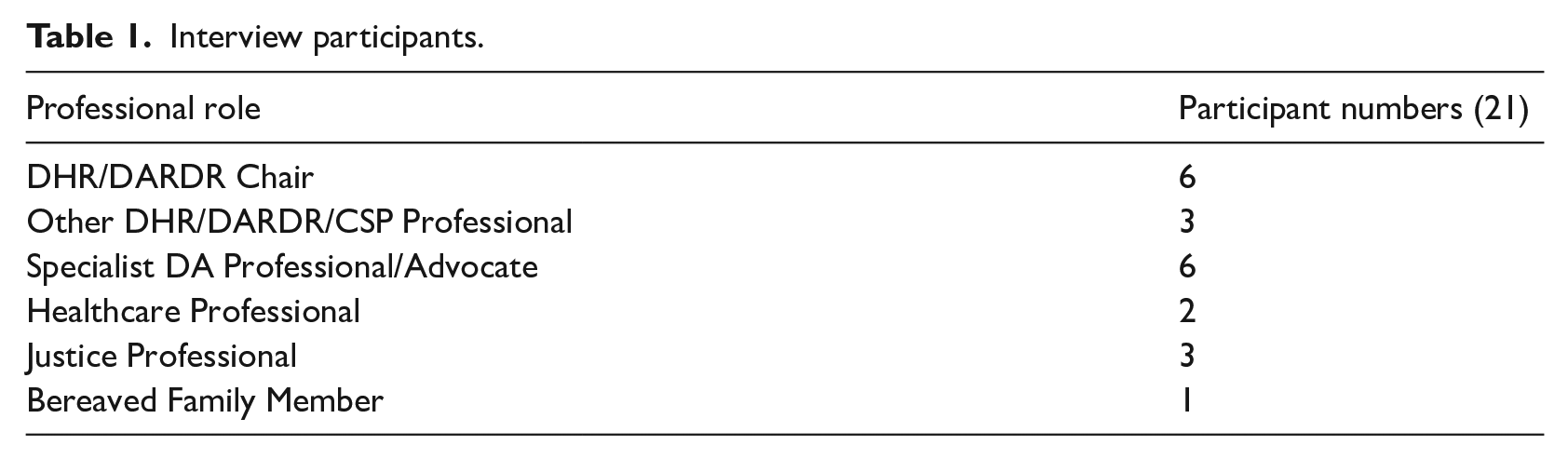
Our second dataset is comprised of semi-structured interviews with professionals (n = 20) across a range of sectors, all of whom had familiarity with the identification, handling and impacts of non-fatal strangulation or suffocation (see Table 1). These participants were identified through a mix of targeted and snowball recruitment, and an open call via the national DHR network. Alongside professionals, we also sought to conduct interviews with family members bereaved by suicide in the context of domestically abusive relationships that involved non-fatal strangulation. To ensure that specialist support was available before and after their participation, we recruited this cohort exclusively through Advocacy After Fatal Domestic Abuse (AAFDA) as an intermediary. Unfortunately, in the timescales of the study, this only yielded one participant; but the perspective that they provided was vital to the research. All interviews were conducted on MS Teams, and typically lasted for 45–60 minutes. A substantial degree of flexibility was built into the interview protocol to reflect the different expertise participants brought with them. With their consent, discussions were recorded. Transcripts of those discussions, along with the summaries and verbatim extracts from the DHRs/DARDRs were then coded and analysed using NVivo qualitative analysis software, deploying a combination of inductive and deductive approaches. The authors developed an initial coding frame collaboratively, by each independently coding a sub-sample of documents on a grounded basis, informed by their prior literature review. From this, synergies were identified, points of inconsistency addressed, and a structure imposed, to enable us to independently apply the coding frame, but with flexibility to flag and add emergent themes as needed on an iterative basis. This generated a coding design with the key themes that reflect the structure of this article.
Interview participants.
The research was conducted throughout in line with ethical approvals secured from the University of Warwick’s Humanities and Social Science Research Ethics Committee. We have sought to remove information that might enable the identification of participating individuals, and interviewees are referred to only by an identifier (e.g. P1) with a high-level indication of their background for the purposes of analysis. In what follows, we outline key themes arising from our data and reflect on their implications for our understanding of non-fatal strangulation or suffocation in the context of domestic abuse, and for our ability to develop more effective mechanisms for identifying and supporting victims.
Prevalence and contexts of strangulation
Interviewees were keen to underscore that the occurrence of non-fatal strangulation or suffocation is far from a new phenomenon, particularly in abusive relationships. Nonetheless, they agreed that it was being more frequently reported or encountered in their professional practice.
Increasing reporting or increasing prevalence?
Some interviewees attributed this to increased awareness of the behaviour, and risks and harms associated with it, which had been precipitated by legislative activity and related training across statutory or voluntary sectors. As P19 (DHR/DARDR Professional) put it, ‘it’s obviously always been happening but since the new . . . Act came in and it’s been given its own offence . . . it’s become more prevalent’. Similarly, P16 (DHR/DARDR Professional) reflected that, while in the past ‘it wasn’t coming up necessarily on DASH risk assessments and the police weren’t bringing it up . . . since the law changed, it’s definitely more obvious, it’s definitely getting more attention’.
Others, however, were more inclined to the view that – notwithstanding any amplifying effects of legislation – increased reporting was also linked to greater prevalence. That prevalence was attributed to an increased normalisation in mainstream culture, suggested to have had most pronounced impacts on young people. As P10 (Justice Professional) put it, while ‘older women probably see it as quite serious . . . younger generations are not in that space . . . strangulation is very often normalised . . . we’ve got young girls, 15 or 16 year olds, who just see strangulation as part of the relationship, part of sexual activity’. P8 (DA Professional) remarked ‘younger women disclose much more freely things like strangulation, suffocation’, which they felt was ‘a generational thing’, in terms of perceived severity of the act and overall willingness to discuss sexual matters.
Estimates regarding frequency varied across professionals. Those working in domestic abuse shelters and refuges reported, for example, that such experiences were ‘common’ among victim-survivors (P1: DA Professional) who would ‘often’ talk about it with peers (P11: DA Professional). However, those who worked primarily in the community observed that rates of disclosure were ‘not as high’ as they would expect: ‘say, for every 10 DASH risk assessments, I would say it’s possibly mentioned in 3’ (P18: Healthcare Professional). As we discuss below, this may be reflective as much of ‘the competence and confidence of the person completing the assessment’ (P18: Healthcare Professional), and their capacity to facilitate such disclosures.
Specifically in the context of DHRs/DARDRs, it was suggested that incidents of non-fatal strangulation or suffocation in domestic abuse histories were frequent. P6 (DHR/DARDR Professional) reported that ‘in the DHRs that I’ve been involved in, both as a panel member and chair, I would say 50% have had non-fatal strangulation’, while P5 (DHR/DARDR Professional) estimated it to be present in 30%–40%, with this being fairly constant regardless of whether death was by homicide or suicide. This is broadly in line with our sample, where across our 70 suicide reviews, 46% (n = 32) included evidence of non-fatal strangulation in the domestic abuse history.
Profiles and contexts of perpetration
Although research on ‘choking’ during consensual sex suggests a potentially more even dynamic, particularly among young people (Sharman et al., 2024, 2025; Smailes and McGowan, 2024), our interviewees were clear that strangulation or suffocation within abusive relationships is a highly gendered phenomena, overwhelmingly performed by men and experienced by women. As P14 (Justice Professional) put it, ‘it’s very much a gender crime . . . I cannot remember any cases of non-fatal strangulation . . . whereby it’s been a man that has been a victim’. This was broadly supported in our review sample, where the majority of deceased were female (88%, n = 28 of 32), with the perpetrator in all those cases having been male; and the strangulation or suffocation having been perpetrated by that male partner on the female victim. There were four cases in our sample that involved male deceased. One of these related to a homosexual relationship. In two others, closer scrutiny indicated that the male deceased were in fact the primary perpetrators of abuse, with it having been them who had used the non-fatal strangulation identified against their female partners. Thus, there was only one case in our sample that involved a female primary perpetrator who was reported to have strangled her male partner.
While interviewees reported that non-fatal strangulation or suffocation was most often encountered in (heterosexual) intimate partner relationships, some also highlighted its existence within familial abuse. As P1 (DA Professional) put it, ‘non-fatal strangulation comes up in familial relationships too. Predominantly, it’s by men to women. So, whether it’s a brother to a sister or dad to daughter. But it’s happening in those cases too’. In only 1 of the 32 reviews in our sample did strangulation occur in a non-intimate relationship – in DHR 20, the deceased reported having been strangled by her brother during an argument, against a wider background in which there were numerous reports of familial abuse perpetrated by her brother and father against her. In the remaining cases where the relationship status between the parties at the time of death was documented, six were married, a further six were cohabiting, and eight had separated. In some instances, the strangulation or suffocation was presented as having been an isolated incident, while in others it was recognised as a repeated occurrence. Men’s physical strength often appeared to assist them in executing acts of strangulation or suffocation which involved – variously – holding down by or grabbing at the throat; use of a belt, rope or cable around the neck; pulling clothing over the mouth and throat; pushing the head into carpet or under water; or applying pillows over the face.
The professionals that we spoke with were, understandably, hesitant to suggest any ‘template’ in terms of the patterns and contexts in which non-fatal strangulation or suffocation might occur. However, several suggested that it was common for men who engaged in this behaviour to have done so with a succession of partners; indeed, P11 (DA Professional) went so far as to suggest that ‘always the perpetrator is the expert . . . the perpetrator has done it before’. This too was supported by our sample to the extent that, in 13 of the 32 reviews, records made available to the DHR/DARDR panel suggested that the deceased’s partner had previously been reported, investigated or convicted in relation to criminality, often including domestic abuse, stalking or harassment, with the suggestion in some of those instances of strangulation of previous partners.
Some interviewees also reflected that, in their experience, strangulation was a tactic deployed relatively early in the relationship, and infrequently repeated or combined with other forms of violence unless or until an abuser felt that their control over the victim was imperilled. P8 (DA Professional) observed, for example, that ‘the patterns I’ve seen would be at the beginning of the relationship when often there’s quite a bit of violence to get that control . . . And you would see it probably if the woman is then starting to show signs of wanting out of the relationship . . . It’s a real tool for ultimate control’. This, according to P12 (Healthcare Professional), underscored a ‘correlation with coercion’ and use of strangulation ‘as a demonstration of power and control’.
There were indeed chronologies in our sample that supported this. In DHR01, for example, it was reported that the deceased (male) had strangled his female partner and pulled her clothing over her head to constrict her airway during sex in the early stages of their relationship, to which she had objected. She disclosed that her partner was ‘very jealous’ and although ‘he promised he would not strangle me’, he continued to do so on occasion, with this prompting her retaliatory violence. Meanwhile, in DHR19, though it was noted that the (female) deceased had previously described her (male) partner’s behaviour as ‘controlling and psychologically abusive, but not violent’, the review also reported that on the day of her suicide, he had ‘come up behind her, put his hands around her throat and said “I can tighten”’. This suggested a deliberate tactic, if not to remind the victim of a prior experience of strangulation, then to underscore her vulnerability to it.
At the same time, interviewees also emphasised that, in other cases, non-fatal strangulation or suffocation could be a routinised experience in the context of a relationship marked by systematic abuse and co-occurring violence. P1 (DA Professional) explained, there’s two experiences that I’ve seen. One where strangulation is something that is a form of violence being used alongside other forms of violence. Not that it becomes normalised but it’s often that people have experienced it more than once . . . The other is where there’s been no prior physical abuse. And it is a really big jump, a really big escalation in violence. The things that I’ve noticed about those experiences in the second group is the perpetrator’s loss of control over the situation.
Again, there were several cases in our sample in this category. In DHR10, for example, the deceased disclosed constant arguments and violence in her relationship, which also involved psychological control and financial abuse. The situation was well known to services, prompting a Multi-Agency Risk Assessment Conference (MARAC) after four reported incidents of abuse in the previous year. In the DHR panel’s report, it was noted that the deceased had disclosed that the perpetrator ‘has physically assaulted her by grabbing her around her throat to strangle her on a few occasions’, although the significance of this against the wider context of escalating violence was not directly addressed. Meanwhile, DHR09 provided a striking example of a case in which the victim’s experiencing non-fatal strangulation was regular and routine, often arising in the context of sexual intercourse with her partner and involving use of his hands and ligatures. The review reported that, on her GP records, ‘there were 26 disclosures relating to suspected or reported domestic violence, most of which were of significant harm, including strangulation to the point where [deceased] lost consciousness’. This violence also extended to punching and kicking, hitting her with a metal object, and making threats to her life. In the report provided to the panel by the local domestic abuse service in DHR09, it was recorded that the victim ‘spoke about numerous physical beatings, sexual assaults and that she had been choked’. Despite this, it was also noted that – by her own admission – the deceased ‘minimised what had happened’. When asked, she maintained to professionals that the strangulation during sex was consented to, although a diary entry reproduced during the DHR stated: ‘one night during sex I felt his hands around my neck . . . Progressively sex got rougher and the more I fight back the more he enjoys it’.
Disclosure and professional identification
All our interviewees highlighted ongoing, and often substantial, barriers to disclosure and reporting experienced by victims of domestic abuse. Some suggested that, in this context, there was nothing specific to non-fatal strangulation or suffocation that posed additional challenges. Others felt there may be distinct barriers, but this varied depending on the parties’ age, attitude and the context in which the act(s) occurred. It was also noted that the circumstances in which victims engaged with professionals, the questions that were asked and the existence of a prior relationship of trust would be crucial in eliciting disclosures from those who may be reluctant.
Barriers to disclosure
One commonly identified barrier related to the absence of visible, corroborating physical injury, which participants suggested made victims more reluctant to report. As P4 (DHR/DARDR Chair) put it, ‘if you’ve got physical signs and bruising . . . being able to take that to the police or another agency might be easier’. Meanwhile, P6 (DHR/DARDR Chair) observed that ‘with police officers, there is still a focus on physical abuse and evidence . . . whereas because with non-fatal strangulation, you don’t necessarily see anything like that, then victims feel that they’re not going to be believed’. Other interviewees also highlighted that loss of oxygen to the brain can diminish victims’ ability to form memories, making ‘the cognitive impacts a huge barrier’ (P7: DA Professional) in terms of confidence to report to authorities that they anticipate will want ‘proof’.
P21 (Family Member) powerfully reflected on the implications of this. Following an attack during which she was strangled to the point of unconsciousness, P21’s daughter had escaped and called the police, but the attending officer was ‘quite disbelieving’. They commented directly to the victim that ‘she hasn’t got much marks around her neck’ and described her account of events as ‘a bit wishy-washy’. As a result, they failed to conduct a thorough investigation, even though, as P21 put it, ‘you don’t always have marks’ and her daughter had been ‘starved of oxygen for a period’ so ‘when she came round, she had no idea of how long she was out for or at what point’.
Other interviewees suggested there can be a particularly acute sense of ‘shame’, ‘humiliation’ or ‘embarrassment’ (P8: DA Professional) associated with this form of abuse. P11 (DA Professional) recounted a case in which the victim ‘just couldn’t talk about it’ to family members, and another where the victim lied to explain her injuries because ‘she’d rather admit to being burnt with cigarettes than being strangled’. P15 (DA Professional) highlighted that part of the difficulty is that, for some victims, strangulation is ‘so tied up with other acts of violence that they actually don’t themselves distinguish that this is something of real severity’; and they suggested this could be particularly challenging where perpetrators account for the behaviour as ‘rough sex’.
This was seen to be reflected in the language used by victims when they took steps towards disclosure, which participants suggested could often be vague, minimising or euphemistic. P2 (DHR/DARDR Chair) said that, in their experience, even when asked directly about whether they had been strangled, choked, suffocated or drowned in domestic abuse risk assessments, victims often provided equivocal responses: ‘more of a, well, no, not really, but sometimes he holds me up against the wall and puts his hands over my mouth or puts a pillow over my face when he doesn’t want me to talk or things like that’. Similarly, P8 (DA Professional) reported that victims they had worked with ‘would often start with saying, he got me up against the wall . . . they wouldn’t always say he had his hands around my neck. They would also say, he tried to choke me . . . they very rarely used strangulation’. Meanwhile P4 (DHR/DARDR Chair) observed that ‘they don’t use the word strangled. They’ll say he put this around my neck or something’.
This echoes previous findings which highlight a tendency to avoid the terminology of strangulation or suffocation. Douglas and Fitzgerald (2020: 277) reported that although one-third of the 24 women who participated in their study said they could not breathe during the incident and 5 lost consciousness, they often relied on expressions such as ‘held around the throat’ or ‘pushed on the neck’ to describe what they experienced. This was also evident in the reviews in our sample. In DHR08, for example, the panel noted inconsistencies in how the deceased responded to questions from police. In making a complaint of rape against her partner, she had initially intimated ‘the relationship was not right’. On further questioning, however, ‘she stated that [partner] had never physically hurt her but went very quiet when further prompted and disclosed that he had put his hands around her neck on two occasions but “not for long though and he did not squeeze my throat”’. In this context, submissions to the review panel from staff at the local refuge also indicated she ‘was “minimising” physical abuse as [partner] was reported to have “dragged her into the house, pushed her around and had his hands around her throat”’.
Professional courage and curiosity
Interviewees emphasised the importance of professional curiosity. As P8 (DA Professional) put it, victims ‘won’t tell you those sorts of things, not straight up’, so professionals need to break down barriers by ‘ensuring . . . trusting support to get women to really talk’. Meanwhile, P17 (DHR/DARDR Chair) underscored that ‘it comes down to . . . hav[ing] the courage and wherewithal to ask the questions because if [the victim] isn’t asked the question, she probably won’t tell you’. At the same time, several worried that there was still a hesitancy among professionals to ask what might be seen as intrusive or sensitive questions. P11 (DA Professional) remarked that ‘I’ve experienced professionals that really don’t want to talk about non-fatal strangulation, particularly the police . . . they find it difficult to speak about’. P18 (Healthcare Professional) likewise reflected that it could be ‘overwhelming for practitioners’ to ‘hear someone talk about fearing for their life and the things that had happened’, while P13 (DA Professional) opined that ‘professionals shy away from it’. Similarly, P15 (DA Professional) recounted that, in the context of providing training around non-fatal strangulation to services, ‘what we’ve heard from professionals . . . is “I don’t want to upset or offend”’ by asking probing questions of potential victims. P17 (DHR/DARDR Chair) reflected that ‘it’s a distinct possibility’ that this reluctance might be fuelled, in particular, by ‘the sexual innuendo of that action’ and a concern that ‘that sort of behaviour is very embarrassing to the victim’. Supporting this view, P6 (DHR/DARDR Chair) also commented that, in their experience, practitioners can often be ‘fearful’ of ‘appearing judgmental’ of their clients or service-users in terms of how they respond.
In addition, other interviewees highlighted that the spaces and places in which victims are expected to disclose are often profoundly ill-suited. As P13 (DA Professional) explained, if you think about a busy accident and emergency department, for example, that’s not conducive to exploring sensitive issues that the victim or survivor might not understand . . . so you’ve almost got a perfect storm. You’ve got the victim that doesn’t necessarily understand the significance of what’s happened and a worker who is fearful of what they might hear because they don’t know how to respond.
In support of this, P1 (DA Professional) recounted a case in which the victim had attended her GP in relation to ongoing symptoms and ‘used terminology like, I was ferociously grabbed by the neck, but didn’t give any other information’. P1 reported that the GP had failed to ask any questions about the context of that grabbing, as a result of which ‘an opportunity was missed around getting [the victim] any additional specialist support’. Similarly, P11 (DA Professional) spoke of cases she had encountered ‘where women have been to a GP and it’s obvious because of the bruises around their neck and injuries they’ve sustained that they’ve been strangled. I’ve said to them, ‘what did the GP say, did he ask you if you’d been strangled?’ ‘No’.
Across our review sample, there was variability in terms of the levels of engagement, openness and professional curiosity demonstrated in victims’ service interactions. In DHR09, for example, there were a series of records of the deceased’s GP broaching the issue of non-fatal strangulation with her. This was positive. However, the review also demonstrated the difficult position faced by the GP when disclosures were made but without the deceased’s consent for any onward referral. The GP spoke with the victim about risks to their safety, and signposted her to the police, but did not consider it appropriate to report the perpetrator directly ‘as [deceased] was noted to have “capacity” and had not given her permission for the GP to break confidentiality’. This highlights the delicate balancing required to protect a safe place for disclosure while taking steps to disrupt patterns of abuse. Although reporting to police does not always guarantee de-escalation of risk or punishment of perpetrators, it was clear in DHR09 that the GP’s decision to respect patient confidentiality reduced the likelihood of other agencies intervening to provide support. When the GP alerted the Adult Safeguarding Team, they closed the case, determining that ‘[deceased] did not have care and support needs’ after enquiring as to whether the GP had made ‘onward referral to a more appropriate service’ and being informed she had not. It took further escalation including a suicide attempt before police were involved, and then only after intervention from the NHS counselling team to whom the victim was referred, who ‘informed the GP that [counsellor] was of the opinion that confidentiality could not be maintained due to the risk’.
In other cases, a lack of professional curiosity was starkly demonstrated. In DHR30, for example, the deceased had made two attempts on her life in the preceding weeks. She disclosed to paramedics that her partner had ‘previously tried to suffocate her by putting pillows over her face, had put a knife to her throat and made threats to slit her throat, and had been generally physically abusive’. She also told them he ‘did not allow her to leave the flat’, was jealous and controlling, and that ‘if [partner] found out that she had spoken to the ambulance crew today, he would kill her’. Although this was shared by the paramedics with Adult Social Care, they took no action other than to refer the case to the community mental health team, who in turn had no further involvement other than to request that the Crisis Team follow up with the victim. While still in the hospital, the deceased was seen by the police. She told the officer that, following a previous report about her partner’s abuse, he had assaulted her as ‘punishment’. As a result, though she agreed to referral to a domestic abuse service, she ‘declined to make a statement to the police and declined to discuss the assaults that she had disclosed earlier in the day’. There was no suggestion in the review of proactivity by officers to facilitate trust or disclosure in this context, and the risk assessment recorded her as having answered ‘no’ to the question on strangulation.
In their report in DHR30, the review panel noted that the deceased had not only disclosed allegations of suffocation, strangulation and coercive control to more than one professional, but had kept a diary that recorded much of the abuse to which she had been subjected. They concluded that whilst it was documented that [deceased] was unwilling to cooperate with an investigation, there was an opportunity for the police to have progressed a criminal investigation . . . (and) to have obtained further evidence to support their investigation, including [her] diary.
The difference this might have made to the victim’s life and death cannot be known. She died within a fortnight of the attempt on her life during which she disclosed to the paramedics. Although that took place in 2021, prior to the new legislation coming into force, her interactions with police occurred at a time in which the issue of non-fatal strangulation, and its significance as a marker of high and escalating risk in the context of domestic abuse, ought to have been familiar.
Siloed responses and system failures
A siloed approach to service provision and justice responses across domestic and sexual abuse was also identified by some interviewees as a particular challenge in this context. The nature and severity of risk posed by strangulation may be comparable whether it occurs during sexual activity or not. However, the primary avenues for reporting and risk-assessment may be divergent, which can preclude the possibility for a more holistic understanding of victims’ experiences. P11 (DA Professional) reflected, for example, that there has been a ‘traditional disconnect and separation between sexual violence and domestic abuse’, which has led to a ‘parcelling out’ of problems or conversations to different specialist services and processes. Similarly, P13 (DA Professional) observed: ‘I think we focus on domestic abuse and we focus on sexual violence, but actually because strangulation overarches both, it tends to fall through the gaps’. In terms of how this can impact on the ground, P1 (DA Professional) noted that – during her work in a refuge – ‘strangulation during sex . . . wasn’t coming through’, but quickly reflected that ‘I didn’t probably ask very much about it’. Conversely, P13 (DA Professional) reflected that – in her work in a sexual assault referral centre – when conducting risk assessments, ‘I probably asked [about it] in a very casual way and didn’t explore what strangulation means to the victim, and didn’t consider it as a high risk’.
In DHR31, we had some insight into how this might impact on disclosures and subsequent investigative and support pathways. There, the fact the deceased disclosed being subject by her partner to strangulation during sex did not appear to have any significant impact on agencies’ risk-assessment. It was recorded as a report of ‘rape that occurred two weeks ago, including many other incidents of sexual offences by the ex-partner including strangulation’ [emphasis added]. But this positioning of the strangulation as a sexual offence matter prevented its more fulsome investigation when the victim later retracted her rape complaint. Despite this occurring in the wider context of a well-documented and high-risk abusive relationship, the officer recorded that ‘there was nothing else to report other than what has already been reported and [deceased] was not prepared to go into any detail. [Deceased] is safe and well in her flat’. The key action noted was simply to contact the council about replacing the locks and door damaged by her ex-partner.
More broadly, interviewees echoed concerns raised in our previous research (Dangar et al., 2023, 2024); over the extent to which professionals – particularly amid substantial resourcing challenges – might be disinclined, or unable, to work with women navigating complex needs and vulnerabilities in order to develop the relationships of trust and support required to elicit and respond to disclosures. P9 (DHR/DARDR Chair) spoke, for example, of a case in which a victim, who had been subjected to non-fatal strangulation in a prior abusive relationship, disclosed incidents with a new partner to both her GP and Social Services. Nonetheless, P9 felt ‘they wrote her off because she was seen as being a problem person’. Likewise, P5 (DHR/DARDR Chair) highlighted several cases where victims developed ‘coping mechanisms’, including ‘resorting to alcohol, . . . resorting to drug abuse, it may be just acquiescing to whatever the perpetrator wants to do, so they become more and more vulnerable’. P5 suggested that agencies often responded to this by seeing them as ‘difficult to engage’ or not desiring support. Certainly, P21 (Family Member) was clear that her daughter’s use of alcohol to cope with trauma arising from her partner’s abuse had significantly impacted on professionals’ treatment of her prior to her death: ‘they were very judgmental’.
This is a significant concern in a context in which our sample highlighted the frequent co-occurrence of vulnerabilities and complex needs. Although likely to be under-inclusive given the reliance on agency identification, we found evidence of victim mental ill-health diagnoses in 26 of the 32 reviews, drug or alcohol dependency in 22, and financial or housing precarity in 20. There was evidence of prior suicide attempts and suicidality in 17 cases, accompanied in 13 reviews by other forms of self-harm, and in over one-third of cases (n = 11), it was documented that the deceased was concerned about social services interventions or otherwise losing custody of their children. In 14 cases, there was evidence indicating that the deceased had been subjected to domestic abuse by partners within at least one prior relationship, and in 10 cases there were documented reports of them experiencing abuse or trauma during their childhood.
The implications of this were evident in review chronologies. In DHR06, for example, the deceased’s father reported to police that his daughter’s partner was subjecting her to abuse. In response, the deceased disclosed she was experiencing escalating violence, stalking, coercive control and repeated incidents of non-fatal strangulation. Recording this, the police also noted that she had admitted to taking cocaine, often following on from the supply and encouragement of her (now estranged) partner. Some of this was corroborated by one of the deceased’s children, who reported that they had witnessed domestic abuse, including acts of strangulation. When the deceased later sought to retract further allegations against her partner, the police and social services initiated child protection measures. Agency records thereafter document that she was ‘often difficult’, with the police describing her as ‘deliberately evasive’. In the period running up to her suicide, her children were taken into care and she was told that she would have to undergo a psychiatric assessment and hair strand drug test. The police noted at this stage that, while her partner had accepted that he ‘tried to strangle’ her, the deceased was refusing to cooperate with their investigation until her children were returned. This illustrates the complex ways in which drug dependency can become both a mechanism of coercive control and a coping strategy in the context of domestic abuse, and highlights the profound impact that loss of custody of children can have on victims’ willingness to engage with services and their wider sense of hopelessness. Although the police rightly took steps to investigate the complaints, and social services have an important role to play in ensuring the safety of children at risk, there was little evidence in DHR06 of recognition, let alone empathetic engagement, with the way in which factors such as drug dependency and child removal might reduce the deceased’s ability and willingness to disclose.
Meanwhile, in DHR07, the fact the deceased ‘mentioned that [partner] had tried to strangle him with a carrier bag’ during an appointment with the local drug and alcohol service was – somewhat remarkably – only referenced in passing. The deceased was described as ‘an individual with complex needs, having substance misuse issues, suffering from mental health issues and presenting suicidal ideation’, all of which, though ‘fluid in nature’, ‘exaggerated his vulnerability to exploitation and abuse’. Despite this, there was no documentation to suggest his disclosure was recorded by any of the agencies with whom he interacted, let alone taken forward as part of a formal risk-assessment or criminal investigation. This was so, despite his case being presented at several multi-agency meetings due to a sequence of other disclosures of abuse. Indeed, the review panel’s awareness of this disclosure did not even come from the report provided by the drug and alcohol service, but instead was referenced in materials provided by the Housing team, prompting the Chair to follow up and ask the drug and alcohol service to ‘double check their records’, upon which they confirmed they could ‘find no record of this report or actions taken’.
All of this means that, as P17 (DHR/DARDR Chair) put it, ‘often non-fatal strangulation is missed’ by professionals. This not only entails that the opportunities for support and intervention are lost, but that victims’ feelings of hopelessness regarding the prospects for justice or safety are confirmed. This can have a profound impact on their future help-seeking behaviour and mental health, which we reflect on further below. What is more, even where incidents of non-fatal strangulation or suffocation are disclosed by victims, or identified by professionals, as we discuss in the following section, our data highlighted some significant ongoing shortcomings in risk-assessment and interventions, which meant that many victims were still left unsupported.
Professionals’ risk-assessment and safety planning
Several interviewees were keen to underscore that, while challenges remain in relation to disclosure and identification, there have been substantial improvements in professional responses to non-fatal strangulation or suffocation over recent years, precipitated or at least accelerated by legislative and training initiatives. P10 (Justice Professional) reported that ‘from a policing perspective, we are asking the questions now where historically we weren’t’ and emphasised that, where identified, this behaviour ‘pushes the risk up’ for officers. P14 (Justice Professional) reflected, ‘I do think [professionals] are getting better . . . partners are contextualising in the free narrative more’ when completing risk-assessments, ‘which is so helpful and important’. Meanwhile, P20 (Justice Professional) identified an ‘enormous shift’ – at least at policy level – in identifying strangulation as a risk factor and a ‘red flag’ for escalation.
We saw some evidence of this in our sample. In DHR29, for example, ‘a good understanding by the attending officers of the importance of asking open questions when completing the DASH’ was remarked upon, as well as ‘good use of the free text boxes’ which enabled them to identify prior incidents of non-fatal strangulation, even though these had not been reported by the victim. At the same time, it was clear that good practice remains ‘patchy’. P20 (Justice Professional) queried the extent to which policy highlighting it as a ‘red flag’ when disclosed or identified was ‘having a material effect’, while P14 (Justice Professional) felt there are still professionals who ‘really like to just tick the box’ during risk-assessments. P15 (DA Professional) reflected that ‘this is still largely not on professionals’ awareness’ and – relaying experience of attending multi-agency meetings where disclosures from victims were highlighted as part of safety-planning – noted that ‘it is quite startling actually how few people recognise that as a serious risk indicator’.
Minimising language, minimising risk
A tendency for professionals still to trivialise the risk involved by relying on minimising language when recording incidents of strangulation or suffocation was often highlighted. P6 (DHR/DARDR Chair) remarked that ‘in a lot of the reports I’ve read, [professionals] talk about the how the victim described it as they were being choked, but choking to different people means different things. You choke when something gets stuck in your throat, and . . . choking is different from being grabbed by the throat, etc.’. Equally, P12 (Healthcare Professional) emphasised that even the language of ‘a grab by the throat’ could be problematic, since this was then often equated by agencies with ‘being grabbed by the arm, or the waist’ when clearly this is not comparable. In this context, P21 (Family Member) recounted being ‘shocked’ on discovering, during the DHR process, that police had described the incidents reported to them by her daughter as ‘[partner] had his hands around her neck while forcing himself upon her’, which she felt was a ‘polite, non-committal’ sanitisation of the brutal reality that ‘he was trying to strangle her while raping her’.
Across our sample, we identified several cases in which such language was relied upon, and rarely challenged. In DHR16, police repeatedly used the phrase ‘grabbed her by the throat’ and referred to the perpetrator’s ‘attempted choking’. In DHR23, though a multi-agency meeting recognised an escalation of violence, the police talked consistently of the perpetrator ‘grabbing [X] by the throat’ across five separate incidents over a 20-month period. And in DHR15, a series of reports were made to police, which included the deceased’s partner breaching bail conditions that required him not to contact her. Nonetheless, in recording one such incident, the police simply said: ‘[partner] had kicked the door in and put his hands around [victim’s] throat’. Police clearly must attend to the language used by complainants when describing or reporting incidents to them, and record this accurately as part of the evidence. However, this does not require them to replicate that language in their own account of events. Moreover, the fact that the offence is now framed using the language of strangulation need not preclude them from using that terminology in its ordinary meaning to depict the nature of the act that has been reported; and, in any event, since these deaths preceded the new legislation (2020, 2021 and 2015, respectively), this would not have been an issue impacting these police officers’ language choice.
There was also a consistent theme that, regardless of the language used by professionals, the space devoted to strangulation or suffocation – both in agency reports to the review panel and in the DHR report itself – was typically extremely limited. In DHR20, for example, it was documented that police attended the family home on 37 occasions but made no referral to a specialist abuse service. The victim not only reported an incident of strangulation as part of a wider catalogue of abuse but made numerous contacts to healthcare professionals regarding chest pains and breathlessness. Nonetheless, across the 74 page panel report, there is only one brief mention of strangulation, and no recommendations targeted at a police response that, following the victim’s complaint, simply recorded on file: ‘[deceased] contacted the police to report that her brother had grabbed her by the throat during a verbal argument. She was uninjured. Her brother was removed from the property. [Deceased] decided not to support any prosecution of her brother’.
This supports a situation in which assessments undertaken by professionals do not always reflect shifts in policy regarding risk-identification and management. In DHR11, for example, two assessments were completed (in 2016 and 2018), both including information about the deceased having been ‘grabbed by the throat’ and ‘in fear for her life’ in the wider context of a relationship replete with reports of violence, coercive control, criminal damage and breach of protective orders. Despite this, neither resulted in anything higher than a ‘medium’ risk level. Although police later acknowledged that ‘a high risk would probably have been expected’, they noted ‘this was not picked up in any oversight’ of officers’ assessments. The police did arrest the perpetrator in relation to one of the incidents of strangulation, but it was recorded that, ‘since there was no independent witness’, no further action was taken when he claimed to have been acting in self-defence. What was followed up, however, was a matter in relation to the deceased’s dog who had bitten her ex-partner during the incident. Children’s Social Care spoke with her about this by telephone, but ‘the focus of this discussion was on the dangers represented by the dog biting’; and it was recorded in the DHR report that the social worker, content that the deceased ‘was compliant in the conversation and was not allowing the dog around the children’, had closed the contact with ‘no apparent attention on domestic abuse’.
Taking testimony seriously
In this context, several interviewees emphasised the importance of taking seriously the anxiety articulated by victims, and their informal testimonial networks of family and friends, who often have an astute appreciation of what the perpetrator is capable of. As discussed above, the severity and impact attributed by those who experience non-fatal strangulation or suffocation may vary. Even those who see the behaviour as reflecting a particular escalation or threat may not appreciate the full scale of risk involved, or may find themselves with reasons to minimise their fear, whether to assist their ability to cope psychologically, to avoid interventions that might antagonise partners and escalate the violence, or to avoid removal of children from their care. Nonetheless, P1 (DA Professional) emphasised that often ‘victims know those people better than anyone and they know what they’re capable of . . . and what lengths they’ll go to in order to keep control’. Thus, P1 argued that a higher priority should be afforded by professionals to victims’ own assessments when they express high levels of fearfulness, irrespective of what indicators on the assessment tool might formally calculate regarding risk levels. Had this been done in the case of DHR11 discussed above, it is likely to have generated a different response.
So too, in other cases in our sample, there was evidence of victims appreciating the degree of risk they were exposed to with greater accuracy than the professionals involved. In DHR09, the victim – notwithstanding a tendency at times to minimise the scale of abuse – had disclosed a catalogue of violent and controlling behaviour and reported to professionals that she was ‘surprised that she was still alive’. Meanwhile, in DHR30, the deceased had sent an email to her mother shortly before her suicide in which she stated ‘I’m just saying that if anything happens to me, it’s him who done it. The last time I was badly beaten and tried to be suffocated’. And in DHR15, though no action appears to have been taken – for example, in respect of harassment orders – following an incident where her partner broke into her home in breach of bail conditions, the deceased was noted to have said to police that ‘she was scared, that there was evidence of escalation and the nature of some of the assaults that, for example, involved strangulation’.
Understanding the range and severity of impact
Some interviewees suggested that these difficulties in terms of identification and risk-assessment could be attributed, fundamentally, to an ongoing preoccupation among professionals with visible physical injury. In certain respects, a focus on physical health and precarity of life is understandable. As P10 (Justice Professional) put it, it is ‘there but for the grace that it’s not fatal’, while P11 (DA Professional) highlighted that ‘there are so many things that can go wrong . . . it’s like giving [domestic abuse perpetrators] a gun’. At the same time, interviewees reflected that the myriad ways in which physical impacts might manifest were often poorly understood, encouraging a cursory approach to criminal justice and medical investigations alike. Certainly, in our sample, though there was some brief reference in reports to bruising, loss of consciousness or difficulties swallowing, there was little consideration of longer-term physical impacts, for example, heightened risk of stroke or paralysis, or brain injury. P2 (DHR/DARDR Chair) talked of frequently interacting with women at the ‘tail end of the really fatal kind of stuff where they’re wetting themselves . . . and with huge indications of brain injury there’. But P12 (Healthcare Professional) felt that, despite evidence of a potentially high incidence of brain injury among victims, ‘no one’s asking them about that, no one’s suggesting they go to the doctor’; and even where they do seek medical help, appropriate diagnostic tests were rarely undertaken. 3
Beyond the physical: emotional and mental well-being
In a context in which experiencing strangulation or suffocation could be a particularly ‘scary’ or ‘significant’ moment for victims – one which ‘made them go, actually my feeling that this person might kill me is probably accurate’ (P1: DA Professional) – there was also a distinct absence of reflection in reviews about the risks this might provoke in terms of emotional and mental health.
P11 (DA Professional) observed: ‘I can’t imagine how scary’ the experience could be since ‘your life is literally in that person’s hands’. Meanwhile P2 (DHR/DARDR Chair) described the shock that can arise from realising that a partner is ‘literally playing with their lives’ and underscored the ‘very visual’ nature of this experience – ‘he’s literally staring at you’, holding you at eye level throughout the act. Other interviewees spoke of what they felt was the ‘existentially shocking’ nature of this form of abuse for some victims (P12: Healthcare Professional) and the ‘really profound’ impact that this could have on their mental health (P1: DA Professional). In this respect, drawing on her work with a cohort of strangulation survivors, P1 reported that ‘all of them have expressed needing – and I say needing because they reflect they probably wouldn’t be here if they hadn’t had it – psychological therapies’, as well as support to deal with ‘significant long-term implications around sleep’, hyper-vigilance, PTSD and anxiety. Without this, P1 was of the view that victims’ feelings of ‘hopelessness or entrapment’ could be ‘really exacerbated’.
The palpable sense of precarity and fear experienced by her daughter was also powerfully expressed by P21 (Family Member), who nonetheless reflected that this was not identified or responded to by the professionals to whom the deceased reached out: ‘they didn’t see the terror that she was suffering from and that impact that went on for a long, long time: that terror, you know, that fear that she was going to die on that day and, you know, afterwards’. In the months between the reported incident of strangulation and her suicide, P21 recounted that her daughter was traumatised, ‘would wake up screaming and shouting’, ‘could barely sleep’, and became increasingly reluctant to go out, feeling ‘trapped from the people who she should have trusted’.
It is not that the reviews were oblivious to the fact that those who experience strangulation in the context of domestic abuse are likely to be fearful. Indeed, the fear that victims reported or were likely to have experienced in the moment, or immediate aftermath, was referenced on several occasions. In DHR12, it was noted that the deceased ‘phones 999 reporting that [partner] had put his hands around her throat. She said she was still able to breathe but was very scared’. In DHR18, it was recorded that the deceased ‘said she was frightened’ during the incident. However, what was lacking was sustained engagement with how this might have impacted a victim’s longer-term emotional well-being or mental health, including in relation to self-harm or suicide. This is not to say that the prevalence of mental ill-health among this cohort, and the engagement that many deceased had with mental health and counselling services during their lifetimes, were not well-documented. But it is to say that the ways in which experiencing strangulation or suffocation may have created or amplified those conditions was not particularly reflected upon, and nor was the extent to which depression, anxiety or hyper-vigilance might best be understood as a rational response to that behaviour rather than something that required psychiatric diagnosis. Indeed, in a context in which some interviewees suggested that symptoms of anxiety, depression or behavioural difficulties, particularly among women, have ‘historically all been attributed to mental health’ conditions, it was felt important to ‘ensure we don’t fall foul of the historical error of attributing it all to psychological trauma’ (P12: Healthcare Professional).
Cognitive impairment, hopelessness and suicidality
The ways in which, in a space of anxiety, trauma and precarity, the cognitive implications of brain injury might have a compounding impact on victims was also not well-acknowledged. P12 (Healthcare Professional) highlighted that parts of the brain most vulnerable to damage due to lack of oxygen play a key role ‘around emotional regulation, judgement, decision-making, and sort of social cognition and navigating relationships’; and these are ‘all the things you need in order to think your way out’ of abusive situations. Thus, victims’ ‘sense of being trapped, and the hopelessness of the situation’ (P12) may be increasingly pronounced, in a context in which previous research has shown that – though trajectories to suicide are complex – feelings of isolation, entrapment, helplessness and hopelessness can be clear indicators of increased risk (Dangar et al., 2023; Munro and Aitken, 2020). P21 (Family Member) reflected on how her daughter ‘had a sense of entrapment . . . she wanted to move on, but there was nobody there to help her’. Although, at the time, P21 had attributed the fact her daughter was ‘always a bit confused, a bit slow coming forward’ to the effects of her alcohol use (as a coping mechanism for the abuse suffered), with hindsight she had come to query whether it was, in fact, linked to her repeated exposure to strangulation. P21 noted, however, that she would never be able to determine this, since ‘nobody had even scanned her [daughter] or looked at her’ for these impacts, which she contrasted starkly to the treatment that she had seen being received by a male family member taken to hospital and scanned as a matter of routine for brain injury after a ‘knock on the football pitch’.
Experiencing non-fatal strangulation or suffocation as a technique of control can reduce victims’ social networks and cultural capital, amplify pre-existing vulnerabilities including in relation to their mental ill-health or substance misuse, and is still too often met with disappointing outcomes from services in terms of their willingness or capacity to intervene. This makes the hopelessness that victims report far from pathological or unexpected: ‘you can’t just see or plan a way out, and suicidality, therefore, logically, seems a solution’ (P12: Healthcare Professional).
Certainly, these dynamics were identifiable in many of the cases in our sample. Although not surprising perhaps given our focus on suicide reviews, it is notable that in 60% (n = 19 of 32) of the cases, there was documented evidence of suicidal ideation or prior suicide attempts. In DHR32, for example, there had been nine separate incidents of the deceased attempting to take her life over the preceding 5-year period, with seven prior admissions to mental health units. In the run up to her suicide, the deceased reported to police that she had been strangled by her new partner. Referrals to a domestic abuse service were not supported, however, ‘due to counter allegations from this incident and previous information around her offending behaviour’, specifically that she had strangled an ex-partner in the context of a relationship involving reciprocal violence. Meanwhile, in DHR26, the deceased had ‘cuts to her wrist’ that she told police were ‘self-inflicted’ because ‘she wanted to die’. Although the police did ultimately refer the deceased for a mental health assessment and arrest her partner on suspicion of rape, their initial response was to arrest her for an assault, which was in self-defence after her partner ‘had grabbed her around the throat’, and to conduct a domestic abuse risk-assessment only in relation to her behaviour.
In DHR04, the deceased had reported her ex-partner who had attended her home and assaulted her, including by ‘holding his hands to her throat’. Although arrested by police, he was subsequently released on bail, which provoked such acute fear in the deceased that the Crown Prosecution Service agreed to appeal the bail decision. In error, the deceased was informed that the appeal had been unsuccessful. After responding that ‘it was like the magistrate had signed her death warrant’ in making that decision, she took her life. That this strangulation incident was a potentially significant moment in the wider chronology of abuse, after which the victim could not tolerate the risk posed by the perpetrator, was not reflected upon by the review panel, despite the psychological and cognitive impacts discussed above. Meanwhile, in DHR09, after multiple disclosures of violence, including repeated strangulation during sex by her partner, and seeking regular assistance from her GP in respect of ‘constant suicidal thoughts’ attributed to the fact ‘she did not ever feel she would be able to escape the situation she was in’, the victim took her life. Having previously told the mental health team that ‘she had given up’, she called the Accident and Emergency department shortly before her suicide and, in response to their suggestion that she contact her GP for help, said ‘everyone turns me away . . . what is the point’.
The role played by experiences of, and professional responses to, non-fatal strangulation or suffocation in individuals’ complex trajectories to suicide was barely explored in the reviews in this sample, which – as noted above – tended to make little more than passing reference to the fact of this behaviour, with acknowledgement of its impacts typically limited to any visible, physical injury and, in some cases, an appreciation of it being a frightening experience for victims of abuse. There is much work yet to be done in understanding these connections, but what our analysis suggests is that, even to the extent that there may now be growing appreciation among professionals about non-fatal strangulation or suffocation indicating a heightened risk of homicide or physical injury, the potential for such experiences to also substantially increase victims’ risk of self-harm or suicidality is not being recognised in delivering service responses.
Concluding reflections: learning lessons through learning reviews
The primary focus of this study was on the role of, and responses to, incidents of non-fatal strangulation or suffocation in the specific context of domestic abuse–related deaths by suicide. Our analysis of suicide reviews, alongside interviews with stakeholders, have generated wider insights, however: around the complexities of conceptualising this behaviour across divergent contexts, specific barriers to identification and disclosure among victims, the comfort and curiosity of professionals in eliciting and responding to reports, and the adequacy of existing risk-assessments in addressing the range of impacts such behaviour might generate. They have also indicated that these complexities and challenges can be amplified by a tendency, often despite their experiential connection, to route professionals’ responses to sexual violence and domestic abuse differently, which can make it difficult to respond holistically to the needs of those who experience non-fatal strangulation or suffocation from partners.
Overall, our findings suggest that, notwithstanding growing awareness of non-fatal strangulation in terms of its prevalence and potential risks, which in England and Wales may have been facilitated at least to a degree by recent legislative intervention, there is still substantial inconsistency of practice that diminishes the prospects for accurate identification and effective support provision. A tendency for professionals to deploy euphemistic or minimising language in documenting incidents still tends towards trivialising the risks and potential impacts involved, regardless of any formal policy that it be recognised in domestic abuse contexts as a ‘red flag’. Moreover, a preoccupation with physical injury and the amplified risk of domestic homicide has left little space for sustained reflection around emotional, cognitive and mental health impacts, which can compound existing vulnerabilities to increase the likelihood of self-harm or suicide.
To the extent that DHRs/DARDRs are, by definition, designed to interrogate past practice in order to capture learning that can be targeted towards improved practice and prevention of future deaths, they have a vital role to play. At the same time, our findings were clear that, as things stand, reviews – at least in suicide cases – were not doing enough to robustly uncover, assess and improve responses to disclosures of non-fatal strangulation or suffocation. Although P3 (DHR/DARDR Professional) observed that, in their experience, panels are ‘getting better at picking up and identifying when there’s mentions about grabbing the throat . . . and picking those up as non-fatal strangulation’, P17 (DHR/DARDR Chair) noted there can still be ‘a massive gap’ in the detail provided ‘from the police and other domestic abuse agencies’ which limits the ability to consider ‘a line of inquiry that needs to be addressed’. Indeed, as P5 (DHR/DARDR Chair) put it, panels still ‘find a single line in an organisation’s [report] that just refers to it and then it’s your responsibility to tease it out’, often at a stage that is really too late in the process.
In this context, some interviewees suggested a pro forma to guide panels when setting their review parameters would be useful since it could include explicit direction to agencies to consider the existence and impact of non-fatal strangulation or suffocation. Others highlighted the need for training of DHR/DARDR professionals – in particular, around the ways in which strangulation ‘impacts on [victims’] mental health and takes [their] fear to a different level’ (P8: DA Professional), with greater use of specialist input ‘to articulate to the panel what it means to have no sense of hope or to feel a real sense of entrapment’ in these cases (P1: DA Professional). Beyond this, the need to be bolder in targeting improvement through panel recommendations was also emphasised. Across our sample, though its treatment was often cursory, there were reviews that addressed non-fatal strangulation and the learning arising from agencies’ handling thereof in recommendations. In DHR17, for example, following a suicide in 2020, there was a recommendation that police ‘consider raising awareness among officers and staff of the significance of strangulation as a form of domestic abuse, with the aim of ensuring that there are no missed opportunities to detect this offence’. But in other reviews, recommendations were significantly disappointing. In DHR06, the panel concluded that the handling of the deceased’s disclosures by police ‘showed good awareness and practice of their domestic abuse policy’, despite the fact their risk assessment only identified her as at ‘medium risk’ when the panel previously indicated that the strangulation in her abuse chronology ought to have positioned her as high risk. Meanwhile, in DHR16, it was noted that police had failed to review CCTV evidence in respect of the deceased’s reports of strangulation and that a disclosure made to a midwife, which identified ‘12 risk factors including attempted choking, harm to others and control’, was never escalated due to ‘error’. Although this may have been thought to give ample grounds for improvement to future practice, no targeted recommendations around strangulation were made.
In the final analysis, then, there have been important steps taken in recognising the incidence and potential impact of non-fatal strangulation or suffocation, particularly where it arises in the context of domestically abusive relationships. There is, however, much more work to be done to fully understand the meanings that people attribute to it, its risks and effects, and the most appropriate means by which to respond through statutory support and criminal justice avenues. In developing this understanding, it is vital that impacts on suicidality are carefully considered.
Footnotes
Acknowledgements
In conducting this research, the authors have benefitted from input from colleagues at the Institute for Addressing Strangulation. Their involvement enabled us to embed on-the-ground expertise into the project’s design, for which we are most grateful. We are also much indebted to those who participated in interviews, and to those deceased whose legacies have informed the analysis from which we hope lessons can be learned. The research was funded by the University of Warwick Research Development Fund.
