




Abstract
McGlynn and Westmarland in 2019 developed a holistic framework for victim-survivor understandings of justice after sexual violence. The framework, named ‘Kaleidoscopic Justice’, highlighted the importance of six components: consequences, recognition, dignity, voice, prevention, and connectedness. Now, we provide the first examination of whether victim-survivors perceive different support services and the criminal justice system (CJS) as achieving kaleidoscopic justice. To do this, we analysed data from an English survey of 586 victim-survivors, using principal components analysis to generate an index of perceived kaleidoscopic justice, descriptive statistics, and thematic analysis on the qualitative responses. The research also tested whether kaleidoscopic justice indicators are related to measures of satisfaction with the CJS. The findings demonstrate that kaleidoscopic justice measures are indeed a good proxy for satisfaction with the justice system. They also suggest that victim-survivors were more likely to view specialised support services as providing kaleidoscopic justice principles. The paper ends with (a) recommendations to government to reorientate CJS responses towards kaleidoscopic justice and increase state funding of specialist support services, and (b) a call to explore whether kaleidoscopic justice could also be a valuable framework for other crimes and in other jurisdictions.
Introduction
The English and Welsh criminal justice system (CJS) has been criticised by researchers, campaigners, and politicians alike for failing victim-survivors of sexual violence (End Violence Against Women (EVAW) Coalition et al., 2020; HM Government, 2021a). It is estimated that over 1.6 million adults in England and Wales have experienced rape since the age of 16 (Office for National Statistics (ONS), 2021). However, only around 16% of victim-survivors report to the police each year, with embarrassment and fears about the justice process cited as common reasons for non-reporting (ONS, 2021; see also Brooks-Hay, 2021). Hohl et al. (2022) argued that criminal justice interventions should be judged on more than substantive outcomes, as the treatment of victim-survivors regularly falls short of expectations regardless of whether a conviction is achieved. Similarly, Holder and Robinson (2021) have called for broader discussions of victim justice, particularly in relation to the different pathways that victims pursue. In doing so, they argued that research should engage with ‘justice in its myriad meanings and forms’ (Holder and Robinson, 2021: 129).
In this paper, we argue that McGlynn and Westmarland’s (2019) concept of kaleidoscopic justice provides a holistic framework for understanding these myriad meanings of justice. Their workshops with 20 victim-survivors highlighted the importance of six principles: consequences, recognition, dignity, voice, prevention, and connectedness. The study also showed that justice comes from a variety of sources, for example, victim-survivors talked about convictions and the formal legal system, but also support services and their wider community (McGlynn and Westmarland, 2019). However, beyond this initial research there has not been any examination of the perceived sources of kaleidoscopic justice and its components. In short, it is not yet clear whether or how this relatively new conceptualisation of justice can be generalised more widely to how victims relate to and experience different services, or how it can be operationalised or measured. This paper, therefore, uses descriptive and bivariate statistics and principal components analysis (PCA) to analyse survey data from victim-survivors who indicated whether a range of services and the criminal justice system delivered consequences, recognition, dignity, voice, prevention, and connectedness. It also examines whether kaleidoscopic justice measures are a good proxy for satisfaction with the CJS, thereby supporting it as a framework with which to guide reform in England and beyond. Qualitative survey responses are also thematically analysed to provide further understanding of how kaleidoscopic justice may be important to victim-survivors.
Literature review
Like many jurisdictions, the English and Welsh CJS has been widely criticised for failing victim-survivors of sexual offences. Conviction rates for rape and ‘serious’ sexual offences (RASSO) in England and Wales dropped sharply over recent years and remain low despite gradual increases since 2021 (HM Government, 2023). In 2019, the Victims Commissioner for England and Wales found that the most common reasons for ‘No Further Action’ (NFA) decisions were because evidential tests were not met (55% of cases) or the complainant disengaged from the investigation (33%). Further research in 2020 suggested that in over two-thirds of cases which ended in NFA, victim-survivors could not recall a reason being given and described a sense of procedural injustice (Molina and Poppleton, 2020). Smith et al. (2022) also highlight repeated failures in police practice, as the Victims Code of Practice (‘Victims Code’) was rarely followed and victim-survivors felt let down by police. For example, one victim-survivor consulting on the project noted that My case ended in a guilty verdict with a ten-year sentence, but when people ask me about my experience it isn’t ‘yay he got put in prison’, it’s ‘well I was let down at this point, and this point, and at this point and this point’. (Smith et al., 2022: 123)
Growing caseloads also meant that victim-survivors of historic sexual abuse were told to wait because there were ‘20 other cases sitting in front of you’ and in one force, around 100 cases were put into a closed inbox for 12 months because of limited resources (Smith et al., 2022). Police themselves acknowledged being ‘massively statistic-driven’, although some officers did recognise the importance of wider outcomes such as safeguarding and listening to victim-survivors (Smith et al., 2022). Furthermore, Molina and Poppleton (2020) found that victim-survivors felt blamed by the criminal legal process, and only 14% of 491 respondents agreed that reporting to police offers justice.
The Crime Survey for England and Wales (CSEW) found that, of those who had experienced sexual assault by rape or penetration since age 16, at least 63% of female victim-survivors, and 47% of male victim-survivors, reported mental or emotional harm after the offence (ONS, 2021). Around 10% of victim-survivors had attempted suicide, 50% had difficulty trusting others or forming relationships, and 33% stopped going out as much (ONS, 2021). Ellison and Munro (2016) suggested that a trauma-informed approach could improve outcomes for victim-survivors participating in the CJS. Hohl et al. (2022) similarly argued for greater recognition of the importance of how police treat victim-survivors, thereby moving concepts of justice beyond a narrow view of substantive outcomes (see also Holder and Robinson, 2021).
Alternative understandings of justice
The CJS traditionally focuses on suspected perpetrators, both in terms of establishing whether they are guilty and if there will be any punishment (Herman, 2005; McGlynn and Westmarland, 2019). This focus is important because any State actions to curtail an individual’s freedom must be safeguarded and strongly tested. However, the last three decades have seen increasing recognition of the rights and interests of other stakeholders in the justice system, especially victim-survivors (Doak, 2008). Academics have, therefore, attempted to reconcile both victim-survivors’ and defendants’ justice needs. For example, in the United States, Herman (2011) emphasised the role of communal responses that run parallel to the legal system, referencing societal obligations to repair harm and support victim-survivors. She argued that all victim-survivors should be offered counselling, community support, and compensation (Herman, 2011). However, this vision of justice leaves the CJS untouched.
Procedural justice theory (PJT) aims to widen the measurement of success in the CJS, from a narrow focus on outcomes to consideration of how people are treated (Flynn and Hodgson, 2017). Originally developed by Tyler and Lind (1992), procedural justice is often tested via general population surveys and tends to focus on public trust in stop-and-search rather than the end-to-end experience of victim-survivors. Procedural justice theory is a ‘group-value’ model, meaning that how authority figures treat an individual is thought to signify that individual’s status and worth in society (Tyler and Lind, 1992). Theorists emphasise the importance of four components – neutrality, respect, voice, and trustworthy motives – as key influences on the perceived legitimacy of police (Antrobus et al., 2015). In Australia, Iliadis and Flynn (2018) examined this in relation to how prosecutors communicate their decisions to sexual violence victim-survivors, and proposed a slightly amended version: validation, voice, being kept informed, and a sense of control. Lorenz (2017) also applied procedural justice theory to victimisation in the United States and highlighted the importance of empathy within the concept of trustworthy motives. Ultimately, though, procedural justice remains focused on a criminal legal response.
Transformative justice rejects the CJS as perpetuating systems of oppression. Instead, theorists call for community responses to crime that transform society for the better, rather than simply aiming to repair the harms caused by offending (Kim, 2021; Whalley and Hackett, 2017). In the United Kingdom, Ackhurst et al. (2022) argued for defunding the CJS to enable focus on prevention and community resolution. For abolition to work, however, most people need to be active members of a community that protects, helps, and nurtures each other. Terwiel (2020) critiqued the violence of the criminal legal system but rejected the idea that this meant a binary choice between abolition and the status quo. Instead, McGlynn (2022) argued for continuum-thinking around reform of the legal system, recognising the potential role of criminal law while also critiquing it.
Kaleidoscopic justice
Kaleidoscopic justice arguably achieves continuum-thinking by recognising that some victim-survivors do want criminal consequences for their perpetrators while also looking to a broader, holistic understanding of justice (McGlynn and Westmarland, 2019). Elsewhere, the kaleidoscope metaphor was used to highlight nuanced and overlapping experiences of researching global citizenship. For example, Eidoo et al. (2011) used the concept to recognise the different positional lenses that each researcher brought to a discussion on citizenship education, describing how these shared discussions created something more dynamic and vibrant than individual understandings in isolation. For McGlynn and Westmarland, the kaleidoscope is similarly used to acknowledge the constantly shifting, multi-perspective, and complex patterns of thinking that emerged when victim-survivors discussed the term ‘justice’.
While the concept is not limited to specific components, McGlynn and Westmarland (2019) identified six justice elements that arose repeatedly in their research: consequences, recognition, voice, dignity, prevention, and connectedness. These components, outlined below, also reflect common themes identified by Holder and Robinson (2021): That justice involves recognising human dignity, goes beyond the individual, and features tensions about how or where justice needs can be met.
Notably, kaleidoscopic justice is compatible and overlapping with the more established theory of restorative justice, sharing many of the same principles. The benefits of restorative approaches after sexual violence are increasingly recognised, but there is also debate about how to manage deeply embedded power dynamics between a victim-survivor and perpetrator (Zinsstag and Keenan, 2017). Restorative approaches tend to rely on the perpetrator(s) acknowledging their guilt, but a significant proportion continues to deny or minimise their actions even after conviction (Dietz, 2020). We, therefore, argue that kaleidoscopic justice provides a broader framework that can incorporate restorative justice and actions relating to the perpetrator(s) but can also be pursued without their involvement. This is because in contrast to restorative justice, it comes solely from the victim-survivor perspective.
For victim-survivors in the kaleidoscopic justice study, the first component of ‘meaningful consequences’ meant accountability for the perpetrator’s behaviour (McGlynn and Westmarland, 2019). This was not simply about punishment or criminal convictions, but also the perpetrator’s reputation in a similar way to reintegrative shaming in restorative justice (see Braithwaite, 2020). In terms of the source of consequences, some participants did point to the CJS, but others argued for looking beyond criminal sanctions and discussed restorative conferencing, financial compensation (which participants rejected as a form of justice), and public awareness about what the perpetrator had done (McGlynn and Westmarland, 2019). The source of consequences, therefore, did not have to be a formal legal institution or direct engagement with the perpetrator.
Another theme in kaleidoscopic justice was that of recognition. Previous literature highlighted the importance of validating and acknowledging the harm, embarrassment, and financial consequences for the victim-survivor (Haldemann, 2008). Within these conceptualisations, validation refers mostly to victim-survivors being believed and acknowledging the crime (Daly, 2017; Herman, 2005; Hester et al., 2023). For McGlynn and Westmarland (2019), though, recognition also encompassed validation of the victim-survivors’ inherent personhood. In terms of sources of this recognition, there was limited talk of the CJS outside the perpetrator admitting guilt. This is unsurprising, as wider research shows victim-survivors do not feel consistently believed by police or courts (Molina and Poppleton, 2020). Indeed, Champion et al. (2021) found that many victim-survivors expected to not be believed or have their experiences trivialised if they reported to police.
The third element of kaleidoscopic justice was dignity. Within academic literature, dignity is often discussed in terms of human rights and affirming the value of all human life (e.g. United Nations, 1948, Universal Declaration of Human Rights). For Kleindienst (2017), dignity comprised both an inviolable ‘initial dignity’, built upon Kant’s belief that there is inherent worth in all human beings, and a ‘realised dignity’, where someone’s value is conferred and reinforced via social interactions. The victim-survivors in McGlynn and Westmarland (2019) spoke mostly about the latter element, for example, by talking about justice as ‘good treatment’. However, there was also recognition of ‘initial dignity’ because respondents highlighted the importance of being valued as people, rather than as a means to an end (namely, a witness to secure the conviction of a perpetrator). Once more, the potential sources of this dignity were highlighted as going beyond the CJS through wider ideas of a ‘decent society’ that values all (McGlynn and Westmarland, 2019).
The fourth aspect of kaleidoscopic justice is voice, for example, enabling victim-survivors to talk about harms using words that are meaningful to them (McGlynn and Westmarland, 2019). Wider research demonstrates that victim-survivors want to tell their story in a safe forum (Jülich, 2006), receive public acknowledgement (Daly, 2017), and have their voice heard (Champion et al., 2021). It, therefore, closely overlaps with the need for recognition. Voice also referred to participation, as victim-survivors wished to actively participate in decisions about their cases (McGlynn and Westmarland, 2019).
The fifth theme was that of prevention. For victim-survivors in the kaleidoscopic justice study, a priority was that others would not go through the same thing in future (McGlynn and Westmarland, 2019). This could involve the criminal legal system, for example, the 2020 Crime Survey for England and Wales suggested that 47% of rape victim-survivors who reported to police did so to protect others (ONS, 2021; see also Brooks-Hay, 2021). Clark (2015) similarly highlighted the importance of prevention rather than ‘individual justice’, with participants feeling that prevention should be a key priority for legal responses. However, McGlynn and Westmarland (2019) also noted the importance of looking beyond conventional criminal proceedings and many participants talked about prevention as wider societal (re)education (see also Jülich, 2006). Potential sources of prevention were, therefore, any people who might hold rape myths or victim-blaming beliefs that could be challenged, for example, friends, family, politicians, and the media (McGlynn and Westmarland, 2019).
The sixth and final element of kaleidoscopic justice was connectedness and feeling ‘whole again’ (McGlynn and Westmarland, 2019). This combined many of the other components (e.g. being recognised, treated with dignity, and having a voice) to rebuild the victim-survivor’s life and sense of self as part of community. Once more, this reflects the principles of restorative justice which note the importance of repairing the ‘social rift’ created by victimisation (Daly, 2017). It also reflects an idea underpinning procedural justice theory that a need for ‘communion’ is one of the most foundational human concerns (Bakan, 1966; see also Abele and Wojciszke, 2007; Hohl et al., 2022). Local communities and specialist support services were identified as ways to access this sense of connectedness (see also Robinson and Hudson, 2011).
For McGlynn and Westmarland (2019), kaleidoscopic justice, therefore, requires a multi-faceted response to victim-survivors. This may involve a reformed CJS, but also includes wider community responses and support from specialist services. In this paper, we, therefore, examine possible sources of kaleidoscopic justice, as well as the relationship between victim-survivor satisfaction with the CJS and the components of kaleidoscopic justice.
Data and method
To assess whether victim-survivors perceive the CJS and support services as providing kaleidoscopic justice, online survey data (n = 586) were collected between 19 May 2020 and 30 June 2020. The research received full ethical approval at the lead and second institutions (reference numbers: R19-P236 and S21-016). The survey covered a range of topics relating to victim-survivors’ experiences of the CJS and support services. The focus was on quantitative questions, but there were several opportunities to provide qualitative reflections and many respondents offered additional free written comments on their experiences.
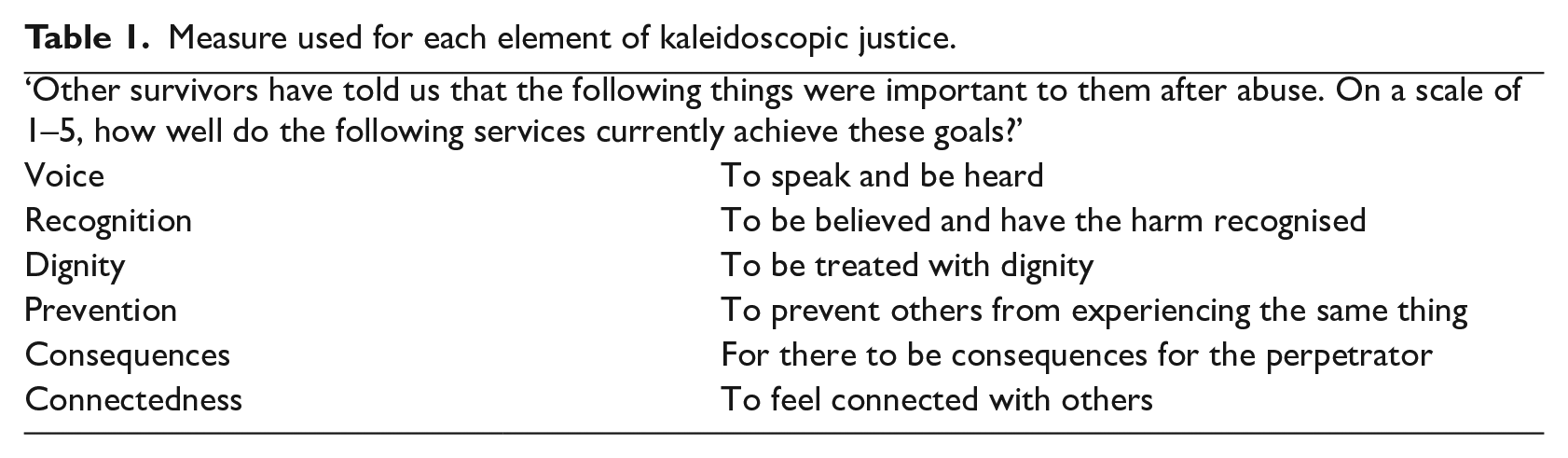
Likert-type scales were used to indicate the extent to which multiple ‘services’ – Rape Crisis Counselling (RCC), Independent Sexual Violence Advisors (ISVAs), Sexual Assault Referral Centres (SARCs), NHS/Mental Health Services (NHS), the Criminal Injuries Compensation Scheme (CICS), and the Criminal Justice System (CJS) – achieved the six elements of kaleidoscopic justice outlined by McGlynn and Westmarland (2019). The exact wording was, ‘Other survivors have told us that the following things were important to them after abuse. On a scale of 1–5, how well do the listed services currently achieve these goals?’. Table 1 outlines the wording used to measure each element. The services were chosen based on their relevance in the wider literature; for example, Smith et al. (2015) highlighted that GPs and statutory health services were the most commonly accessed form of support, while specialist Rape Crisis services were the most highly rated. Police officers tend to emphasise the role of ISVAs and SARCs in supporting victim-survivors (Smith et al., 2022), while Smith and Galey (2018) suggested that the CICS could offer some justice opportunities.
Measure used for each element of kaleidoscopic justice.
Sample and limitations
Sampling occurred opportunistically, initially from social media adverts shared by support services and the Victims Commissioner for England and Wales (n = 285). To avoid solely accessing those who already follow support services, adverts were also sent to panellists from Prolific, a research participant recruiter (n = 301). The inclusion criteria were that participants currently lived in the United Kingdom, identified as having experienced any form of sexual violence, and were over the age of 18 with capacity to consent to participation in research.
The sample over-represented the proportion of victim-survivors who report to police, with 41% of victim-survivors having reported to the police, compared to 16% nationally (ONS, 2021). There are currently no robust data on the socio-demographic profile of victim-survivors reporting to police (see Lovett, 2022), so comparing our sample with the profile of those disclosing rape in the Crime Survey for England and Wales (CSEW) is the best proxy for representativeness. A breakdown of sample characteristics is delineated in Appendix II of Smith and Daly (2020), but it is worth highlighting two features here. Notably, while 11% of our survey respondents were from minoritised ethnic groups, this is slightly lower than the 13% of victim-survivors in CSEW data. Similarly, only 2% of our respondents were male and 2.6% were non-binary or ‘another gender that is not listed’, compared with 5% of victim-survivors being male in the CSEW 1 (ONS, 2021). The survey, therefore, under-sampled men and victim-survivors from minoritised ethnic and racial groups. As sample sizes were small, quantitative analysis could not test whether disability, ethnicity, or gender had an impact on victim-survivors’ experiences of kaleidoscopic justice. There was also no information about demographic characteristics, such as social class or socio-economic status, so these could not be explored as a factor. Future research would greatly benefit from addressing these gaps.
Analysis
The dependent variable was the extent to which victim-survivors perceived each service as providing kaleidoscopic justice. The independent variables were the respondents’ reporting decision, age at the time of the offence, how satisfied they were with the CJS, and whether they would recommend the CJS to a friend. Most of the independent variables were re-coded from a 5-point scale to a 2- or 3-point scale to avoid small sample sizes in the analysis. Both respondents’ satisfaction and whether they would recommend reporting were coded on a scale of 1–3, with 1 representing the negative end of the scale, and 3 the positive responses. All data were analysed using SPSS 27.
The first research question was whether kaleidoscopic justice provides an appropriate framework for improving victim-survivor satisfaction with the CJS. This was answered by using a Kruskal–Wallis H test of (a) the relationship between the kaleidoscopic justice index (KJI) variables with reported satisfaction with the CJS and (b) likelihood of recommending that a friend reports.
The second research question asked whether support services and the CJS were seen by victim-survivors to provide kaleidoscopic justice. To answer this, descriptive statistics were used to show how many respondents indicated each service ‘achieved’ or ‘completely achieved’ each element of kaleidoscopic justice. Then, a principal components analysis (PCA) was used to create a new variable from the first principal component – a kaleidoscopic justice index for each service, combining the six elements to represent the extent to which respondents saw the service as achieving kaleidoscopic justice overall. A PCA reduces the dimensionality of a dataset while still retaining most of the information. To test if relationships were significant, Kruskal–Wallis H tests were run between dependent and independent variables. Qualitative responses were thematically analysed to provide further insights into victim-survivors’ experiences with support services.
Missing data
There were high levels of missing data in the data. However, this was likely to be because respondents had not used that service and so did not answer the question. For this reason, the N is delineated for each question relevant to the analysis being undertaken. A key limitation of the data is that there were no filter variables to establish which services respondents had used, meaning that the reason for missing data could not be confirmed. The extent of missing data in the independent variables was also checked. All the variables had less than 6% of values missing, suggesting that missing data were not an issue in the independent variables.
Findings
Is perceived kaleidoscopic justice related to satisfaction with the CJS?
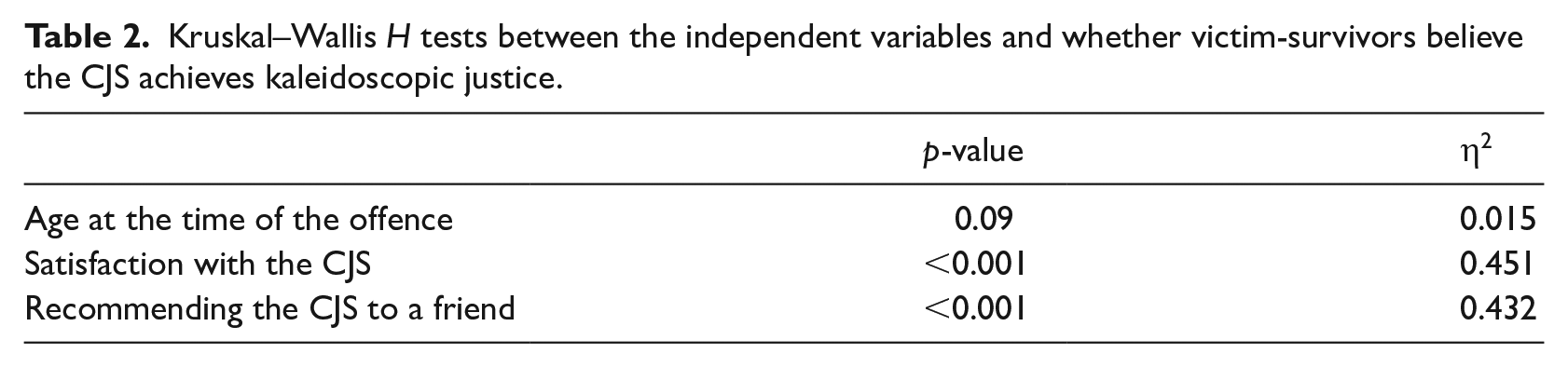
A preliminary question was whether kaleidoscopic justice is a useful framework for improving victim-survivor satisfaction in the CJS. 2 A Kruskal–Wallis H test was used to compare whether responses to each independent variable had a significant relationship with the CJS kaleidoscopic justice index (KJI) (Table 2). It shows that the KJI was closely related to both satisfaction with the CJS and whether the victim-survivor would recommend that a friend reports to police. This suggests that kaleidoscopic justice does provide an appropriate framework for understanding victim-survivor satisfaction with the CJS. Table 2 also shows that whether the respondent was a child, teenager, or adult at the time of the offence did not make a significant difference to whether they saw the CJS as achieving kaleidoscopic justice. Age was the only demographic factor with large enough sample sizes to enable this kind of analysis.
Kruskal–Wallis H tests between the independent variables and whether victim-survivors believe the CJS achieves kaleidoscopic justice.
In terms of qualitative data, there were free-text comments about each of the kaleidoscopic justice components in relation to the CJS. For example, when discussing why they chose to report, several victim-survivors said there was a sense of voice because it ‘allows you to live your truth, and calling out your rapist is empowering’ (490). Victim-survivors also highlighted that a sense of voice through receiving information and being enabled to speak to police was important, particularly because of the sense of injustice when this did not occur. Most of the time, voice was discussed in terms of feeling ignored, ‘misquoted and not listened to’ (455): When I gave my statement, [police officer] was literally falling asleep. I didn’t feel listened to or understood. (739)
3
There were 37 qualitative comments about frustration with not being consistently informed, for example, through a lack of updates or notable differences between the communication styles of different forces: It was difficult to communicate with [police officer], because she would get irritated and defensive whenever I asked for an update. (492) [First police officer] was very helpful in giving me more information but also in a very sensitive way managing my expectations . . . The police investigation itself was done by [a different force] and they were shockingly bad at communicating anything to me, it left me feeling like they weren’t doing anything or didn’t care. (477)
When one victim-survivor used their voice to challenge inappropriate comments from a police officer, they were confronted: I complained to his supervisor who addressed the comments with him. I then received a personal phone call off his mobile saying ‘you’ve upset me because I’ve got this next to my name now’ . . . he was very defensive and did not apologise once. (376)
Victim-survivors also talked about police discontinuing the case if they refused access to their mobile phone or medical records. It is, therefore, important to acknowledge the risk of negative consequences and the power dynamics when victim-survivors do use their voice.
Recognition and dignity were closely linked in the qualitative data, with 42 victim-survivors saying they felt like a burden on police because they were treated insensitively: I felt like my case was just the next one off the ‘in-tray’ pile . . . just a case, not really someone’s whole life being shattered and picked over. (393) I felt totally like everyone there’s [police force] bottom priority and like I was an aggravator or agitator in their eyes for taking up her time. (040)
Victim-survivors emphasised the importance of addressing insensitive treatment because it caused significant harm: My court experience was as bad as the actual sexual assault! I’m living with complex PTSD as a result of the double trauma–the sexual assault and the Crown Court trial. (393) Being cross-examined was as traumatic as the rape, except with the added humiliation of a jury and a public gallery. (123) It was intensely traumatic . . . After going through this intense questioning, [police] advised me not to proceed as there wasn’t enough evidence. I tried to kill myself a week later. (399)
The substantial impact of poor treatment highlights that these components of kaleidoscopic justice are not ‘optional extras’, but rather central to a humane response to sexual allegations.
Despite many negative experiences, though, some victim-survivors viewed the CJS as a potential source of recognition because it could lead to consequences. For example, when explaining why they reported to police, several victim-survivors talked about wanting some form of consequence: I feel that I can’t move on with my life because he has got away with it. (318) I felt as though he was left to carry on his life without any repercussions and do the same to other women. (563)
While these consequences did include conviction and a prison sentence, most focused on other forms of accountability. For example, the process of being investigated was viewed as making the accused take matters, and in turn the victim-survivor, seriously: I think it is very likely the CPS will decline my case or the outcome [will be] found not guilty, but for me personally I know I would have kicked myself if I did not push for the legal proceedings. I felt it was my duty to try to protect others from him. I also wanted him to at least experience the stress of a legal threat. (592) It [the investigation] traumatised me further, I didn’t get justice, I was treated badly by the police. However, the rapist was made aware that there was a complaint against him by a body that he had to respect. (881)
Indeed, as with the original kaleidoscopic justice study, victim-survivors focused on impact to reputation rather than convictions for the sake of punishment: I am doing this on the slim chance that I can bring charges against my rapist and prevent him from working with vulnerable people–as is his career goal. If not for this fact I don’t know if I’d still be putting myself through this. (772)
In this way, consequences were closely tied with prevention and connectedness. Despite ongoing harm to themselves, victim-survivors were motivated by preventing the same things happening to others: Getting justice has completely ruined my life, the only relief for me is that two other kids [who were at risk] didn’t get abused. (454)
Even where the case was discontinued, victim-survivors focused on how it might protect others from disbelief in future because it would corroborate other complaints: The outcome was really not what I hoped but I’m still glad I reported it. I hope that both men’s names are now on permanent record so if/when other victims of theirs come forward those cases are strengthened by my case history. (789)
Finally, in relation to connectedness one victim-survivor highlighted that ‘the awful part about this system is that I’m not allowed to go to group stuff’ (437). This refers to the limitations on group therapy before trial in England and Wales, as part of wider restrictions on therapy aimed at preventing ‘contamination’ of the victim-survivors’ evidence.
Overall, dissatisfaction with the CJS was explained by victim-survivors in ways that closely align to kaleidoscopic justice. As with previous studies, the findings highlight a current lack of justice because of poor treatment, and our data suggest that reforms should focus on improving the CJS’ ability to offer voice, recognition, dignity and respect, consequences, prevention, and connectedness.
Which services were perceived as achieving kaleidoscopic justice?
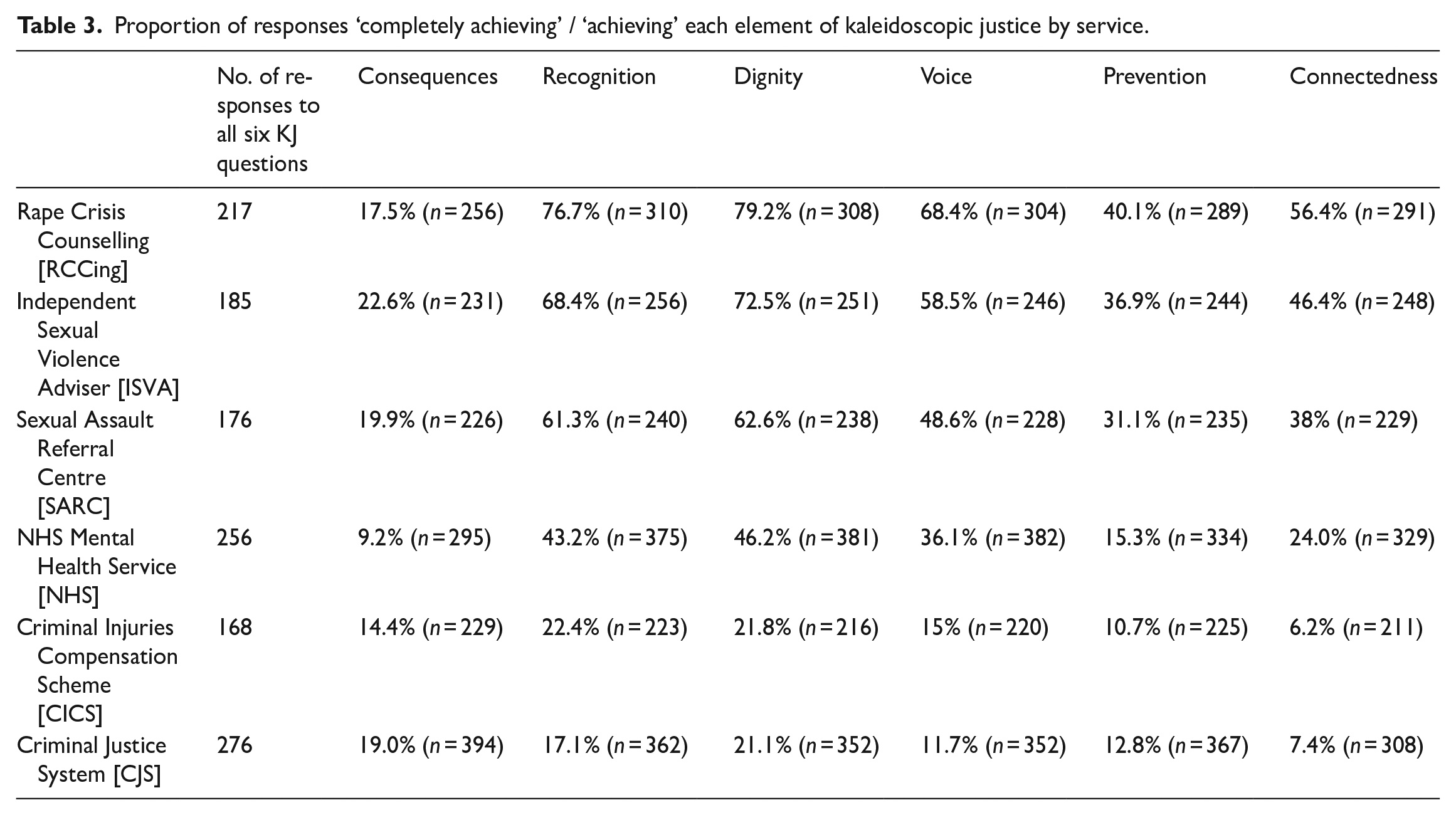
Table 3 and Figure 1 show the proportion of respondents who selected each service as achieving or completely achieving each element of kaleidoscopic justice. The three support services that specialise in sexual violence performed best, especially around the provision of recognition, dignity, and voice. In particular, Rape Crisis counselling was viewed the most positively by victim-survivors across all elements except consequences for the perpetrator.
Proportion of responses ‘completely achieving’ / ‘achieving’ each element of kaleidoscopic justice by service.
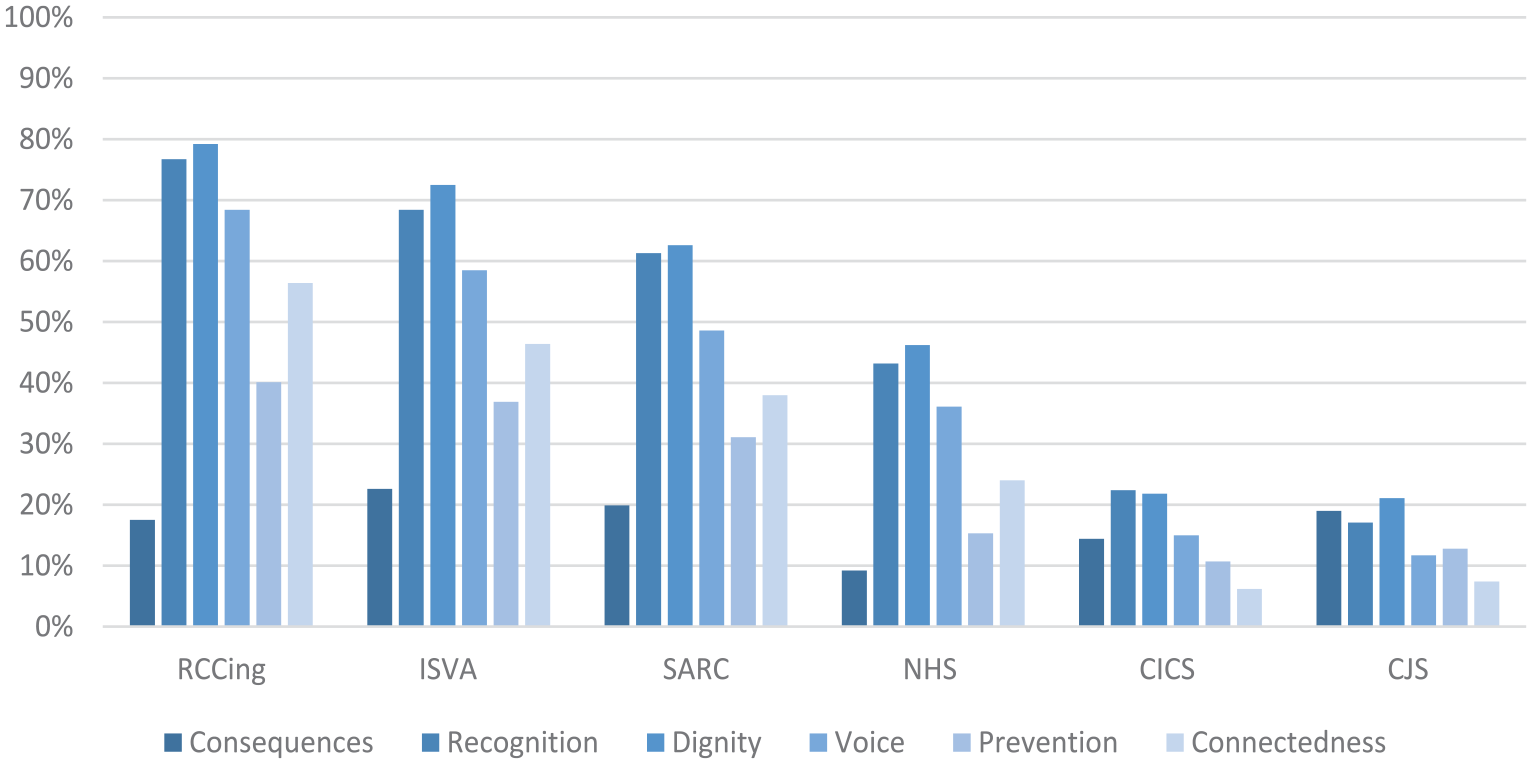
Proportion of responses ‘completely achieving’ / ‘achieving’ each element of kaleidoscopic justice, by service.
By contrast, less than 22% of respondents saw the CJS as achieving any element of kaleidoscopic justice, although it performed comparatively better on consequences and prevention. Even for consequences, SARCs and ISVAs scored higher than the CJS, while Rape Crisis counselling (RCCing) was not far behind. NHS mental health support (NHS) scored the lowest on consequences and was almost as low as the CICS (Criminal Injuries Compensation Service) and CJS for prevention.
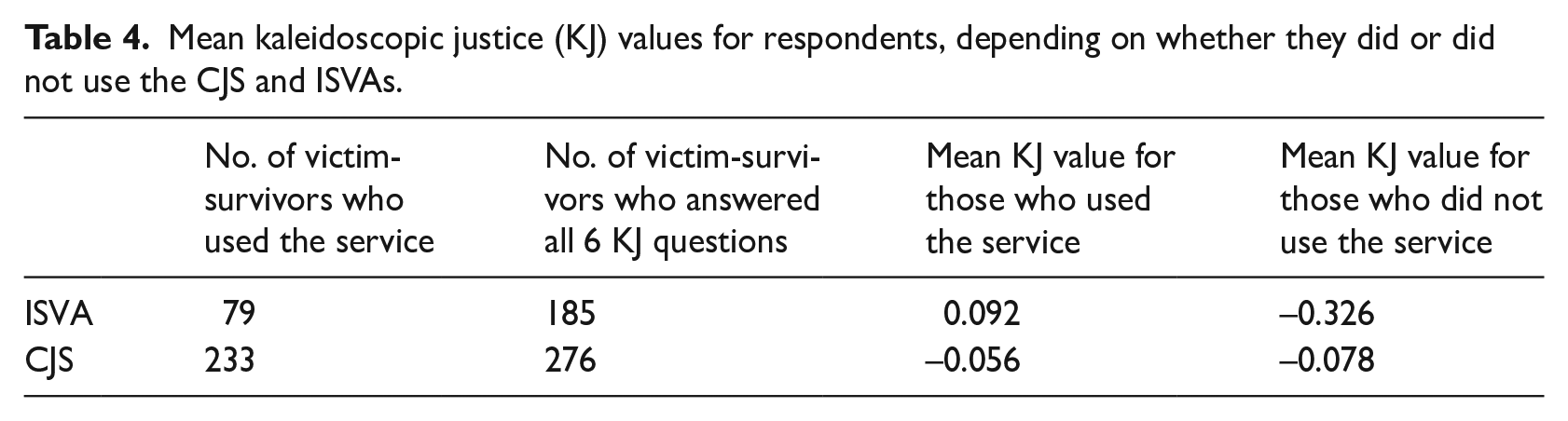
A caveat to these findings is that more responses were given to questions about ISVAs and the CJS than the number of respondents who said they used these services 4 earlier in the survey.
Descriptive statistics in Table 4 show there was little difference in the average perception of kaleidoscopic justice achieved by the CJS, regardless of whether someone chose to report to police. However, for ISVAs, those who did not use ISVAs saw them as less achieving of kaleidoscopic justice than those who did use them.
Mean kaleidoscopic justice (KJ) values for respondents, depending on whether they did or did not use the CJS and ISVAs.
In terms of the qualitative data, we did not ask specific questions about the kaleidoscopic justice components or experiences with different services. Despite this, when asked, ‘Is there anything else you’d like to say?’ or ‘Did you find anything particularly helpful in deciding whether to report to police?’, several victim-survivors noted the justice opportunities that come from support services. Rape Crisis counselling was highlighted as enabling victim-survivors to express conflicting emotions (voice) and have those validated (recognition): The telephone advisors helped me get in touch with my feelings of anger as well as sadness. (739) It was someone who didn’t judge and that was a really big thing for me, that lack of judgement . . . They actually took the time to understand what happened and were accepting. (425)
Rape Crisis was also seen as providing kaleidoscopic justice outside of one-to-one therapeutic relationships. One victim-survivor described the Rape Crisis website as ‘very helpful, particularly in dispelling rape myths’ (531), which is a key part of the prevention. A handful of victim-survivors also referred to a sense of connectedness through volunteering for Rape Crisis and other specialist services: I think that being part of teams of women supporting other women has been a significant form of support for myself too. (500)
ISVAs were highlighted as helpful because they provided information to enable victim-survivors to make choices about whether to report (voice), and because they did not treat victim-survivors instrumentally (dignity): It’s an independent position . . . it’s not tied to any ulterior motive. It’s just so easy to trust her and it’s so easy to disclose and also just sort the whole mess in my head out. (853)
However, three victim-survivors added that it was difficult to access ISVAs due to waiting lists, and one highlighted the limits to voice because legal rules in England and Wales prevent the ISVA from knowing details about the case to avoid ‘contaminating’ their evidence: I found the ISVA very difficult to engage with. I was asked questions like ‘how much would you say this has affected you?’ and ‘has this impacted your life?’ while also not being able to discuss what has happened. (142)
Two victim-survivors mentioned SARCs in the free-text comments, and these both discussed frustration with a lack of empathy or being seen as a whole person (dignity). For example, They did the STD checks I requested, but they were not kind and warm (which was what I was looking for) and they did not offer to refer me for therapeutic help, and I felt too bad to actually ask for it. They sent me away after swabs basically, a transaction. (134)
Similarly, only one victim-survivor discussed statutory mental health support, wishing their GP had referred them for specialist help after disclosing abuse, as they were ‘too afraid’ to ask directly (979). Four victim-survivors mentioned receiving compensation from the Criminal Injuries Compensation Authority (CICA), including one person who noted that I felt a lot like a number . . . I had to appeal in order to get compensation. This was just another person who didn’t believe me. (046)
While these limited comments about services are not representative, they provide some insight into how services might offer elements of kaleidoscopic justice. Victim-survivors sought an empathetic response that acknowledged the harm experienced and recognised their humanity. Independence, and the additional empathy and understanding perceived in specialist organisations, appeared to increase a sense of kaleidoscopic justice. This is supported by the quantitative data that services were more likely to be perceived as achieving kaleidoscopic justice when specialised in sexual violence and independent of statutory agencies (while some ISVAs are not independent, most are housed in third sector services). As specialism and independence decreased, so did the perceived KJI scores.
Discussion
Combined, these findings support the relevance of kaleidoscopic justice principles for victim-survivors. Frustrations with the CJS were apparent when it did not provide a sense of voice, recognition, prevention, connection, consequences, and dignity after sexual violence. Quantitative data also showed that satisfaction with the CJS and likelihood of recommending to a friend were related to whether the CJS was viewed as providing kaleidoscopic justice components. These findings support established literature about the negative experiences of sexual violence victim-survivors in the English and Welsh justice system (Smith et al., 2022).
For example, as with the findings above, the wider literature suggests that being updated on the case is associated with a sense of victim-survivor participation (Hester et al., 2023; see also EVAW Coalition et al., 2020). In England and Wales, the Victims Code of Practice (HM Government, 2021c) promises several points at which the victim-survivor should have voice, but in practice they continue to be sidelined, receiving only sporadic updates and limited accessible information about the case or their rights (HM Crown Prosecution Service Inspectorate (HMCPSI) and HM Inspectorate of Constabulary, Fire and Rescue Services (HMICFRS), 2021). The data above suggested that some victim-survivors felt they were a burden. These problems of insensitive treatment were, therefore, linked to overwork and limited resources. For this reason, Williams (2022) suggested that better training, staffing levels, and mental health care of officers would improve police responses to sexual violence. Given the strong relationship between satisfaction with the CJS and perceptions of achievement of kaleidoscopic justice, officers need to be aware of the implications of their actions (or inaction) on victim-survivors and have the capacity, knowledge, willingness, and skill to positively address this.
In contrast to the CJS, specialised support services have been identified in the literature as working to empower victim-survivors by allowing them to make informed choices. For example, EVAW Coalition et al. (2020: 65) highlighted that, particularly in specialist services ‘by-and-for’ minoritised groups, victim-survivors were viewed as ‘agents of their own healing and transformation’ and so ‘provide[d] opportunities to demonstrate their voice as heard as part of a collective’. The existing literature also suggests that specialist and independent services are well-placed to provide recognition, dignity, and voice because their focus is solely on the interests of the victim-survivor (Hester et al., 2023; see also Smith et al., 2015). Our findings support this, as such services performed well on all components of kaleidoscopic justice. However, it is interesting to note that those who did not use ISVAs saw them as less achieving of kaleidoscopic justice than those who did. It is unclear whether using an ISVA increased positive perceptions of their ability to provide kaleidoscopic justice, or whether those who already had lower opinions chose not to use the service. With the difficulty accessing ISVAs due to long waiting lists and underfunding, it is possible they are less linked to kaleidoscopic justice because victim-survivors were not given access to them.
Although it initially appears counter-intuitive that support organisations such as Rape Crisis are viewed as providing consequences for the perpetrator, this reflects the varied discussions in McGlynn and Westmarland’s (2019) original conception. While 43% of victim-survivors who report to police do so because they want the perpetrator punished (HM Government, 2021b; also Brooks-Hay, 2021), wider ideas of reputational damage were also important (McGlynn and Westmarland, 2019). Indeed, victim-survivors referred to consequences as removing unwarranted honour and status from the perpetrator (see also Herman, 2005; Hester et al., 2023), meaning there is a role for friends and family, as well as wider community. It may be that Rape Crisis counselling, ISVAs, and SARCs provided a sense of consequences because they enabled the victim-survivor to engage with issues of reputation among those known to them. This links to Fraser’s (1998) view that recognition has a collective dimension, and that recognition is closely linked to consequences.
Suzuki (2023) suggested that restorative justice is helpful for victim-survivor recovery after violence because it provides a space for making meaning out of what has happened. While restorative justice seeks this meaning primarily via dialogue with the perpetrator, kaleidoscopic justice highlights the potential role of communion with other survivors or even via the information provided on the Rape Crisis website. This notion of communion is also supported by research with sexual violence survivors, where (re)connection after the stigma of abuse was particularly important (Hohl et al., 2022).
The implications of our finding that specialised support services are a better source of every element of kaleidoscopic justice than the CJS, including consequences, are profound. This necessitates a strategic response from the government that prioritises investment in the services that are already proving most effective in providing each element of justice that victim-survivors have themselves defined as most important to them.
Conclusions
This research provides a first empirical test of kaleidoscopic justice, as outlined by McGlynn and Westmarland (2019). It examined whether kaleidoscopic justice is perceived by victim-survivors to be achieved in the English and Welsh CJS and support services. Findings suggest that specialised support services achieve the goals of kaleidoscopic justice better than the CJS, and provide vital support for victim-survivors. Current practices within the English and Welsh CJS do not enable victim-survivors to achieve kaleidoscopic justice, with fundamental inadequacies continuing to impact victim-survivors’ mental health and cause re-traumatisation. Justice responses to sexual violence should, therefore, look beyond a narrow view of outcomes relating to the alleged perpetrator, and instead focus on wraparound support that views the victim-survivor as a whole person regardless of their role in the investigation and prosecution of rape. This has two key implications for government strategic priorities and investment: (a) a reorientation of CJS responses towards kaleidoscopic justice both in their own work and through improved cooperation with specialist services, and (b) as specialist support services are already more able to provide a strong sense of consequences, recognition, dignity, voice, prevention, and connectedness for victim-survivors, most of whom do not report to the CJS, increased investment in these services is warranted. Overall, this research shows that kaleidoscopic justice provides a useful framework with which to guide CJS reform on sexual violence. It would now be appropriate to explore whether the framework is similarly useful in other jurisdictions and in wider forms of victim justice after violence.
Footnotes
Acknowledgements
The authors would like to thank the victim-survivors who participated in this study as well as Dr. Ellen Daly for her excellent research assistance on the wider project from which this paper arose. Funding for the research was provided by the Office of the Police and Crime Commissioner for Northumbria.
