




Abstract
With the increasing use of information and communication technology, university students are more vulnerable to cyberbullying and cyberstalking than ever before. While prior research has mostly addressed these adverse behaviours separately, the convergence of these phenomena in the education and lives of university students suggests the need to explore them within a more holistic framework. This study presents a narrative systematic review (NSR) that focuses on university students (undergraduate and postgraduate) as victims. Out of 7,518 papers screened, only 61 were eligible for the review, resulting in a comprehensive and critical overview of the risks and protective factors associated with cyberbullying and cyberstalking among university students. The analysis of the review metadata sheds light on the factors that contribute to victims’ adverse experiences and explores best practices and intervention strategies for supporting them. The analysis revealed more research on cyberbullying rather than cyberstalking among university students. Certain risk factors have emerged as particularly relevant, such as underestimation of cyberbehaviour and risky behaviour among victims, along with considerations of gender, age, mental health, personality, and previous face-to-face victimisations. The most significant consequences include negative emotions and psychological vulnerabilities. Self-conscious behaviour and seeking support from family and friends are considered as the most common protective factors. There is a need for academic institutions to engage actively in preventing cyberbullying and cyberstalking through evidence-based programmes. Overall, there is a gap in our understanding of the effectiveness of policies and programmes at the university level.
Introduction
This study focuses on investigating cyberbullying and cyberstalking victimisation in the academic context of higher education (HE), shedding light on their impact on student online experiences and well-being (Kaur and Saini, 2023; Lindsay et al., 2016; Marcum and Higgins, 2019). While prior research has mainly addressed them separately (Abaido, 2020; Fissel and Reyns, 2020; Stevens et al., 2021), the convergence of these phenomena in the education and lives of university students suggests a need to explore them holistically (Al-Rahmi et al., 2019; Kraft and Wang, 2010).
Over the past 15 years, the literature has debated semantic distinctions between cyberbullying and cyberstalking (Durkin and Patterson, 2012; Kamali, 2015; Li, 2007). Nevertheless, there are several compelling reasons for examining cyberbullying and cyberstalking together in the HE context. First, from a semantic perspective, cyberbullying (defined as the deliberate infliction of harm using electronic means) and cyberstalking (characterised by persistent and unwanted electronic communication to harass or intimidate) often overlap, and their definitions tend to be confused by victims (Bauman and Baldasare, 2015; Stevens et al., 2021). Furthermore, cyberbullying and cyberstalking definitions in HE are inconsistent. Cyberstalking often involves adults, whereas cyberbullying mostly affects adolescents and university students (Kamali, 2015). Oksanen et al. (2020, 2022) note that while cyberbullying overlaps with harassment, it is typically studied in schools and, more recently, workplaces. Defining and measuring these concepts remains uncertain, impacting empirical data (Fissel et al., 2024). Second, the misuse of information and communication technologies (ICTs) infiltrates online communication, affecting relationships and social identity (Kaur et al., 2021). As Naidoo (2020) highlights, institutions are urged to intensify research pertaining to cyberstalking and cyberbullying to foster a safer digital environment. Yet, inconsistencies and overlapping in definitions, language, and perceptions hinder a more comprehensive understanding (Kamali, 2015; Kraft and Wang, 2010), necessitating further research to clarify these issues conjointly (Stevens et al., 2021).
Third, the current body of literature predominantly explores these adverse behaviours through quantitative methodologies (Karmakar and Das, 2020; Martínez-Monteagudo et al., 2020). Existing statistics often stem from ad hoc case studies (Cassidy et al., 2016). Less research is devoted to qualitative approaches that can provide valuable insights into intricate relational dynamics and behaviours, enriching the understanding and formulation of adequate institutional support strategies for those affected (Harrison et al., 2022; Meter et al., 2021; Vandebosch and Van Cleemput, 2008). Where they exist, most qualitative investigations primarily target high-school students, leaving a conspicuous gap concerning cybervictimisation in other academic settings. Fourth, cyberbullying and cyberstalking in academic settings drive the need for effective policies and practices (Marcum and Higgins, 2019; Tiamboonprasert and Charoensukmongkol, 2020). In this respect, several studies have drawn attention to the gaps in research within academic settings (Ahlgrim and Terrance, 2021; Kaur et al., 2021; Kraft and Wang, 2010; Marcum et al., 2016; Marcum and Higgins, 2019; Pereira et al., 2016; Reyns, 2019; Reyns et al., 2018; Walker et al., 2011). Some qualitative studies address the impact on indirect victims such as friends and colleagues (Melander, 2010). However, very little empirical evidence assesses the impact of cyberstalking and cyberbullying on academic students as victims (Alexy et al., 2005; Harrison et al., 2022).
As a further point, despite increasing research focusing on these issues, previous systematic reviews often target specific aspects or populations, resulting in fragmented insights (Al-Rahmi et al., 2019; Watts et al., 2017). While some reviews focus on either cyberbullying (e.g. Polanin et al., 2022) or cyberstalking (e.g. Kaur et al., 2021; Stevens et al., 2021), they do not explicitly focus on university student populations and also rely on different search criteria and/or research questions. These fragmented approaches limit the generalisability of findings and highlight the need for a comprehensive synthesis of the existing literature.
This paper aims to understand the interconnected nature of these two phenomena, analyse underlying factors, and identify strategies for prevention and mitigation in an HE setting (Al-Rahmi et al., 2019; Watts et al., 2017). This study addresses the aforementioned gaps through a narrative systematic review (NSR), aiming to provide a comprehensive overview and inclusive synthesis of the interconnectedness of these adverse cyberbehaviours. 1 By analysing both qualitative and quantitative studies, it uncovers risk factors and impacts, guiding future research and intervention development in academic settings. After a brief analysis of the literature, the paper describes the adopted methodology and discusses the main findings, concluding with study limitations and future lines of research.
Cyberbullying and cyberstalking in higher education
Cyberbullying can encompass various actions, including sending, posting, or sharing negative, harmful, false, or malicious content about someone else, with the intention of causing embarrassment or humiliation (Patchin and Hinduja, 2006). It manifests in multiple forms, such as denigration (posting untrue information), flaming (hostile and insulting interaction), harassment (repetitive insults or taunts), and outing (disclosing personal information without consent) (Marcum and Higgins, 2019; Patchin and Hinduja, 2015). Cyberstalking entails harassment and intimidation, involving spying, monitoring, or controlling the victim’s behaviour, such as through hidden webcams, SpyWare, or GPS devices (Smoker and March, 2017). This form of online harassment is often associated with ex-partners and romantic relationships (Begotti and Acquadro Maran, 2019; Kraft and Wang, 2010), with cyberstalkers frequently adopting anonymity through the creation of fake online profiles to pursue and contact their victims. Hence, these adverse behaviours share a common language and technological tools for perpetration. Also, the repercussions for victims often transcend psychological distress to encompass tangible costs, such as medical expenses and loss of wages, as well as intangible costs, including academic performance and social isolation (Çelik et al., 2012; Fissel and Reyns, 2020; Kokkinos et al., 2014).
In recent years, research has highlighted the prevalence and impact of cyberbullying and cyberstalking, presenting them as significant societal concerns. These online behaviours provide perpetrators with a shield of anonymity, enabling them to operate through various digital channels such as cell phones, texts, blogs, and social media platforms (Kamali, 2015; Kowalski and Limber, 2013). Scholars have often viewed cyberbullying and cyberstalking as extensions of traditional bullying and stalking, underscoring their shared aggressive behaviour patterns and harmful intentions (Smith et al., 2006). Given a lack of official statistics, research on online victimisation among university students has varied widely, ranging from 3.7% to 92% due to variations in operationalisation and sampling (Alexy et al., 2005; Bennett et al., 2011; Giumetti et al., 2022; Lindsay et al., 2016).
Previous studies have investigated the risk factors and predictors associated with cyberbullying and cyberstalking among students (Al-Rahmi et al., 2019, 2022; Kircaburun et al., 2018). The authors highlight the challenge victims encounter in distinguishing between brief episodes of intrusiveness or social awkwardness and the onset of a more persistent problem. During the initial phase, cyberstalking and cyberbullying may appear harmless or be misinterpreted. Subsequent research and systematic reviews (Kaur et al., 2021; Shaikh et al., 2021; Stevens et al., 2021) suggest that similar risk factors contribute to cyberbullying and cyberstalking among students, including low self-esteem, insecurity, and ‘internalising behaviour’. In addition, experiences of cybervictimisation in school (Yubero et al., 2017) and a target’s visibility online (Oksanen et al., 2022) are significant factors for increasing the risk of cybervictimisation (Shaikh et al., 2021). Cyberbullying (Shaikh et al., 2021; Yubero et al., 2017) and cyberstalking (Kaur et al., 2021; Stevens et al., 2021) have also a negative impact on student victims’ mental health and well-being. Yubero et al. (2017) found that cyberbullying victims report significantly lower self-esteem and loneliness than non-victims. However, in some studies (e.g. Patchin and Hinduja, 2010), low self-esteem may be a consequence rather than a predictor of cyberbullying victimisation. Other consequences are anxiety, depression, suicidal ideation and suicidal behaviour (Shaikh et al., 2021). Cyberbullying and cyberstalking cause negative emotions, such as fear, distress, concern, or helplessness (Al-Rahmi et al., 2018, 2019).
Kraft and Wang’s (2010) exploratory study of cyberbullying and cyberstalking experiences in a US college found that 20% of cyberbullying victims did not report or tell anyone about the incident; they handled cyberbullying and cyberstalking incidents rather than seeking advice or help from institutional resources. However, the same study highlighted that most victims (72%) reported that family members or friends helped them cope. Previous research noted the importance of developing preventive strategies and interventions (Kaur et al., 2021; Marcum and Higgins, 2019; Shaikh et al., 2021; Stevens et al., 2021). All these dimensions will be extensively analysed in the results and discussion section.
Objectives and research questions
The novelty of this study stems from its concurrent exploration of cyberbullying and cyberstalking. This unified framework is justified by the overlapping nature of their definitions, victims’ perceptions, risk factors and consequences, and the lack of a comprehensive investigation into these associated adverse behaviours.
This NSR also presents an enriched overview of university policies and recommendations to support students (e.g. Kamali, 2015). It also facilitates the formulation of novel protocols and best practices (e.g. Kaur et al., 2021; Kraft and Wang, 2010; Marcum et al., 2016; Marcum and Higgins, 2019; Pereira et al., 2016; Reyns, 2019; Reyns et al., 2018; Walker et al., 2011).
The research questions (RQs) are formulated as follows:
RQ1. What are the predictors/risk factors for cyberbullying and cyberstalking among university students? Understanding the factors contributing to cyberbullying and cyberstalking among university students is essential for developing targeted interventions and prevention strategies.
RQ2. What psychological and emotional consequences have victims experienced? Exploring the psychological and emotional consequences experienced by victims provides insight into the real-world impact of these adverse behaviours and highlights the need for comprehensive support systems to mitigate distress.
RQ3. What are the mitigating/protective factors of cyberbullying and cyberstalking among university students? Identifying endogenous mitigating and protective factors is crucial for designing effective measures that can reduce the incidence and impact of cyberbullying and cyberstalking among university students.
RQ4. What are the best policies and recommendations for university students who are victims of cyberbullying or cyberstalking? Examining the best policies and recommendations provides educational institutions with practical guidance for addressing cyberbullying and cyberstalking and ensures the safety and well-being of their students.
Covering nearly two decades of literature, the dimensions of student risk factors (RQ1), impact (RQ2), and protective factors (RQ3) have remained unexplored within a combined review on cyberbullying and cyberstalking. The absence of a comparative analysis between factors influencing the likelihood of experiencing cyberbullying versus cyberstalking, coupled with the lack of research into victim transformations stemming from adverse cyberbehaviours, highlights the need to explore these dimensions together. Such investigation is a foundation for designing preventive strategies against cyberbullying and cyberstalking among university students. Moreover, a discernible gap exists in formulating unequivocal policies and recommendations conducive to effective management (RQ4).
Methods
NSR search strategy and inclusion/exclusion criteria
A narrative and thematic synthesis identifies the prominent themes emerging from the data (Popay et al., 2006). For conducting the systematic review, as suggested by Kaur et al. (2021) and Behera et al. (2019), a review protocol was adopted to ensure transparency and reproducibility (Tranfield et al., 2003). In addition, to address the NSR objectives, the following phases were implemented:
Identify inclusion and exclusion criteria for papers selection;
Identify the relevant work and eligibility criteria (search strategy);
Data extraction of the selected primary studies;
Synthesis and interpretation of the findings (see Nasheeda et al., 2019; Strech and Sofaer, 2012).
A rigorous approach to literature screening, encompassing cyberbullying and cyberstalking, meticulously follows the precedent set by prior studies and the PRISMA guidelines (Moher et al., 2009; Page et al., 2021). This strategic methodology effectively addresses the semantic convergence highlighted earlier, ensuring the inclusion of all pertinent academic studies. Understanding these phenomena jointly informs best practices and policies. Scoping searches were conducted through three databases across February 2002 and February 2021. The search criteria were refined to guarantee comprehensiveness and elevate the quality and relevance of the review. Specifically, we tailored the criteria to concentrate on cyberbullying and cyberstalking while excluding other types of cyberbehaviours associated with student victimisation.
Full searches were conducted in March 2021 on PsycINFO, PubMed, Scopus, and WebScience following the PRISMA guidelines (Moher et al., 2009; Page et al., 2021). The search terms used were free-text terms combined with Boolean operators (Figure 1). The following terms were used:
(cyberbully* OR cyberbullies OR cyber-bully* OR cyber-bullies OR ‘internet bullying’ OR ‘online bullying’) OR (cyberstalker* OR cyberstalkers* OR cyber-stalk* OR ‘internet stalking’ OR ‘online stalking’) AND (academ* OR higher AND education OR universit* OR college).
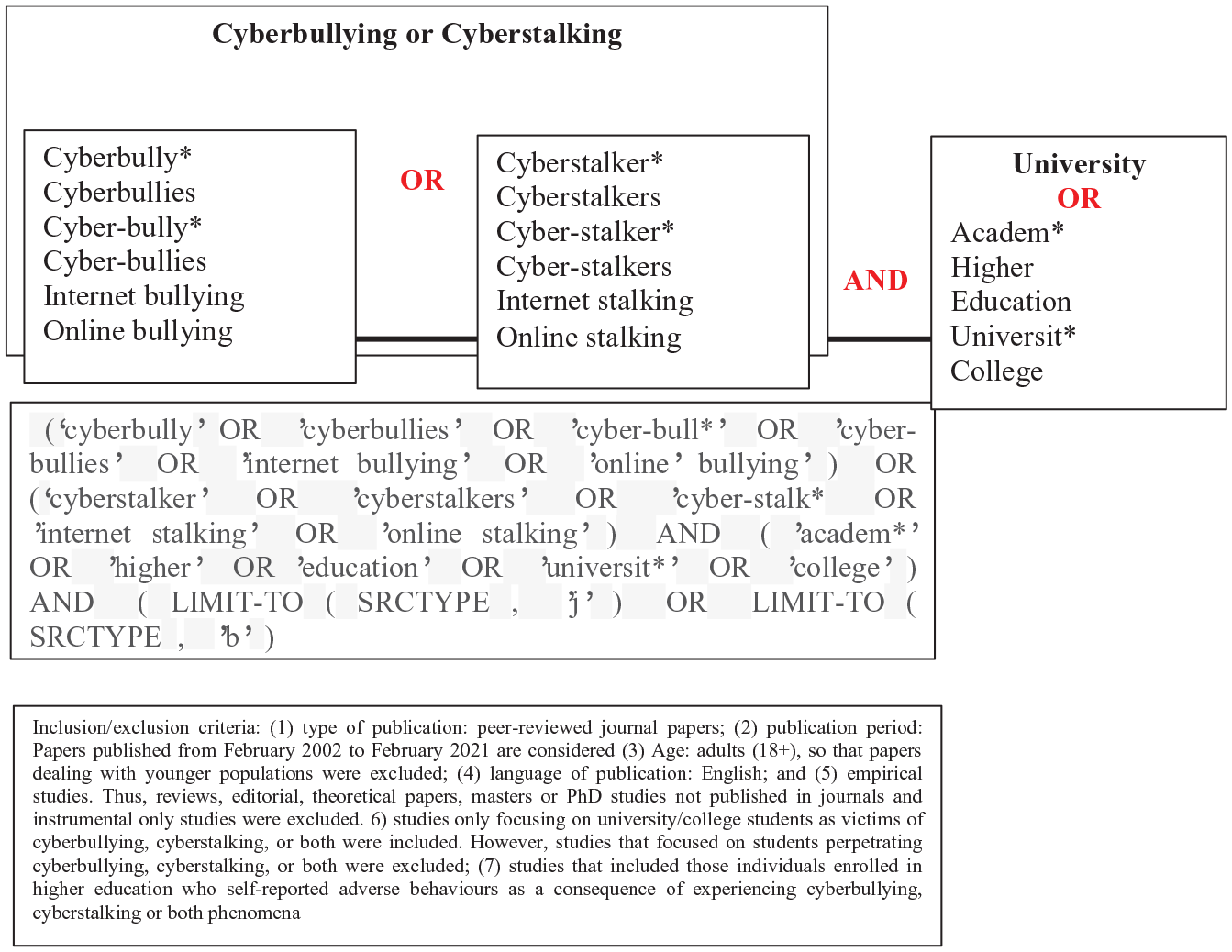
Narrative Systematic Review of search strategy and keywords.
The search strategy was developed in one database and adapted for the other databases. The research team manually searched the reference lists and relevant cited papers and additionally employed ‘citation tracking’. This method involves examining references cited within the included studies (backward citation) and identifying newer studies that have cited the included studies (forward citation), ensuring a comprehensive review of relevant literature on the topic (Hirt et al., 2023).
The inclusion/exclusion criteria are the following: (1) type of publication: peer-reviewed journal papers; (2) publication period: from February 2002 to February 2021; (3) age: adults (18+), so that papers dealing with younger populations were excluded; (4) language of publication: English; (5) empirical studies; (6) studies only focusing on university/college students as victims of cyberbullying, cyberstalking, or both were included – however, studies that focused on students perpetrating cyberbullying, cyberstalking, or both were excluded; (7) studies that included those individuals enrolled in higher education who self-reported adverse behaviours as a consequence of experiencing cyberbullying, cyberstalking or both phenomena.
Thus, reviews, editorials, theoretical papers, Master’s or PhD theses, instrumental studies, and peer-reviewed empirical papers published beyond February 2021 are not included, being the last month of the search. Besides, in the NSR, we have included only peer-reviewed empirical papers focusing on students as victims of cyberbullying, cyberstalking, or both, with the exclusion of perpetrators.
Relevant papers were identified by a single author (x1), and a second coder (x2) independently assessed the eligibility of the selected papers. The researchers included studies examining the experience of cyberbullying and cyberstalking for those enrolled in higher education, particularly where student participants have self-reported experiencing these adverse behaviours. Researchers did not exclude studies based on specific geographical locations, for example, off-campus. The population of interest was university students (undergraduate and postgraduate). Studies were excluded if they focused only on perpetrators and excluded victims, while studies focusing on cyberbullying/cyberstalking victimisation that also discussed/addressed cyberbullying/cyberstalking perpetration were included.
Data extraction and data synthesis
Having identified the potential papers for the NSR, the next step was data extraction. According to Popay et al. (2006), the type of data to be extracted should be based on the review questions. Hence, the researchers sourced the required information from the selected studies using a standardised data extraction template, including the study type and design, aims, and main findings. After identifying potential papers for the NSR, data extraction was implemented.
Quality assessment and data evaluation
The researchers extracted data independently for each study identified. Hence, a quality assessment of the reviewed papers was carried out to determine the methodological quality of each paper. We employed a PRISMA (Preferred Reporting Items for Systematic Reviews and Meta-Analyses) checklist as a quality assessment tool for quantitative, qualitative, and mixed methods studies (Nasheeda et al., 2019; Popay et al., 2006). Due to the high heterogeneity in the design and RQs addressed, we adopted a review-specific checklist to assess further study quality and avoid the risk of bias based on existing study quality checklists and criteria (Nasheeda et al., 2019; Popay et al., 2006). Ultimately, in the final sample, we included the studies that positively covered the following multidimensional quality indicators: (1) Was the study sample size justified? (2) Was the study justification adequate? (3) Was the study methodology described in sufficient detail? (4) Were the results from each study described sufficiently to support the conclusions? (5) Were outcome measures appropriate for the research questions? (Popay et al., 2006). If there was a disagreement in including/excluding the papers, the two researchers discussed the justification for including/excluding the paper and revisited the eligibility criteria until a decision was made.
The overall screening process required several steps. After the database searches were conducted, 7,518 papers were identified for review utilising the search strategy. However, after 249 duplicates were removed, 7,269 papers remained to be screened based on their titles and abstracts; 176 articles were deemed eligible for full-text scrutinisation. Papers that did not meet inclusion criteria and quality indicators were excluded (Figure 2, papers excluded n = 115). Finally, 61 papers were deemed to adhere to the inclusion criteria cited above (Figure 2, PRISMA flow diagram; Table 1, Main findings).
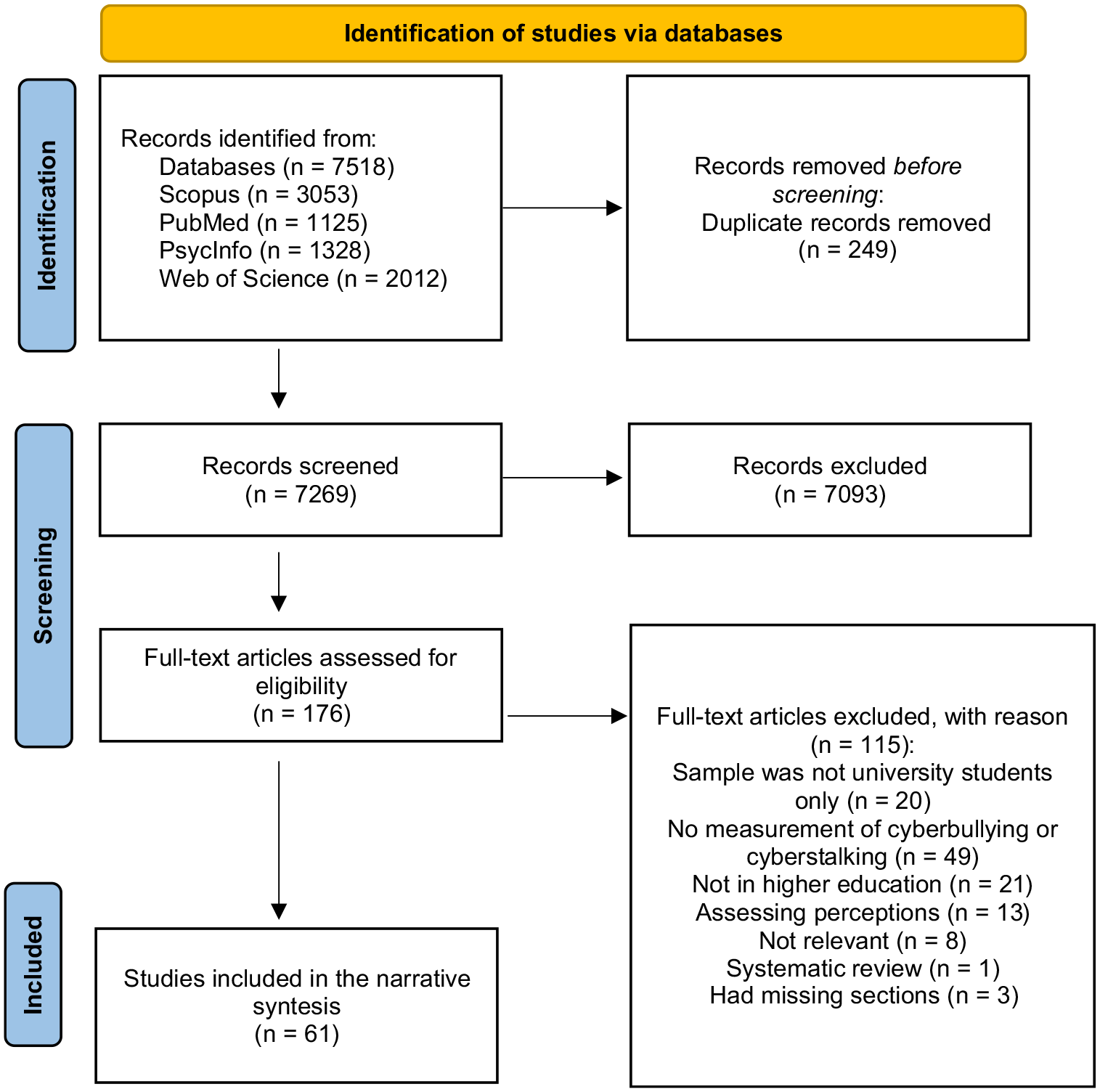
PRISMA flow diagram.
Results
NSR sample characteristics
NSR produced 61 papers relating to adverse cyberbehaviours, 48 focused on cyberbullying, 8 on cyberstalking, and 5 examined both cyberbullying and cyberstalking. The examination of the sample frequency distribution of this sample presents a median of females (expressed as a quota) of 65% and a standard deviation of 14%. Notably, 10% of the studies did not specify gender, 7% included transgender or gender non-conforming individuals, and 5% included female participants only. Regarding the geographical distribution of NSR papers, approximately 47% were set in the Americas and, prevalently, the United States, 23% in Asia, 18% in Europe, and smaller fractions in Oceania (7%) and Africa (5%).
Main themes
The NSR employed thematic analysis techniques (Clarke and Braun, 2013) to review the findings of the selected studies. Three emergent research themes were identified that have been the primary focuses of prior research:
Theme 1: Risk factors (RQ1).
Theme 2: Impact of cyberbullying or cyberstalking (RQ2).
Theme 3: Protective factors, best practices, and policy recommendations for answering (RQ3 and RQ4).
We have elaborated a model (Figure 3) to summarise the findings from NSR to guide the reader in understanding the most relevant dimensions in the ‘Results’ section.
Generally, the literature has mainly focused on the risk factors for the students who are victims of cyberbullying and its consequences. Marginally, previous studies focused on protective factors that can prevent and mitigate the impact of cyberstalking and cyberbullying on university students.
Furthermore, the analysis highlighted a prevalence of studies using the term cyberbullying (as opposed to cyberstalking) among university students. This aspect relates to the greater use of cyberbullying as a term in the academic context.
Moreover, the research highlighted the limited studies on specific populations (e.g. students with disabilities and specific learning needs), and victims of cyberbullying and cyberstalking within the university context.
Finally, our research identified a gap in existing studies regarding the effectiveness of programmes and interventions aimed at mitigating the impact of cyberstalking and cyberbullying. In addition, there is a lack of research on strategies to enhance individuals’ awareness of their online behaviour and its effects on others.
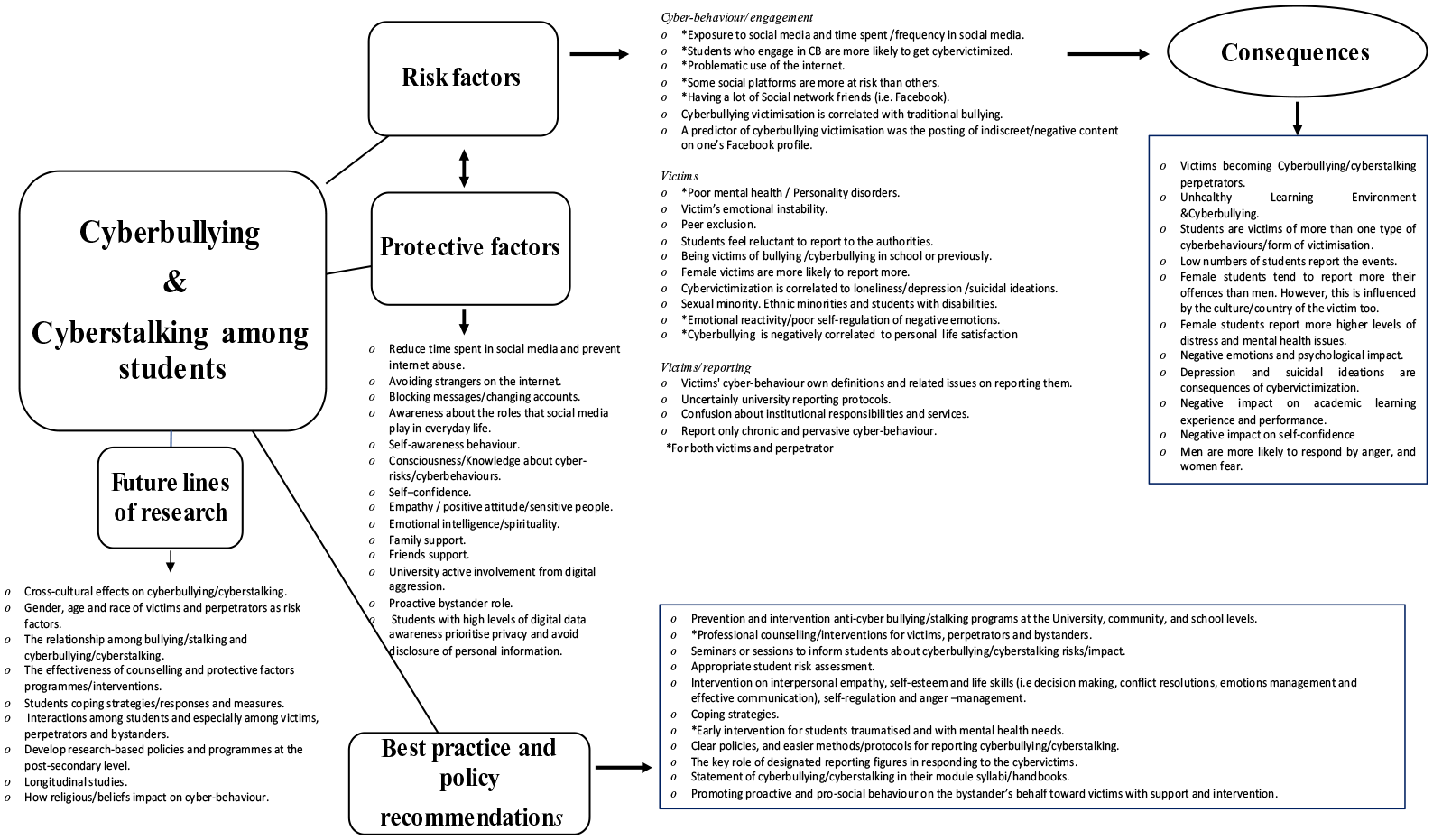
Cyberbullying and cyberstalking victimisation model.
Theme 1 (RQ1): Risk factors
Cyberbehaviours adopted by students may consist of relevant risk factors/predictors for both victims and perpetrators, such as exposure to social media, frequency, time spent on social media in daily life (e.g. Reyns et al., 2011; Spitzberg and Hoobler, 2002; Welsh and Lavoie, 2012), types of social media (Peluchette et al., 2015), and adopting a problematic use of the Internet (Qudah et al., 2019). Being a victim of conventional bullying behaviours (Çelik et al., 2012; Wensley and Campbell, 2012) and being a perpetrator of cyberbullying in high school (Kraft and Wang, 2010) are relevant risk factors for cyberbullying that need to be taken into consideration. Finally, individual factors such as gender (Alexy et al., 2005; Reyns et al., 2011), sexual orientation (Ramsey et al., 2016), and psychological vulnerabilities (Aricak, 2009; Çelik et al., 2012) are relevant risk factors for both cyberbehaviours.
Cyberbullying – engagement and exposure to social media
The analysis of cyberbullying indicated a positive correlation between the use of social media and an increase in victimisation or perpetration (e.g. Arafa and Senosy, 2017; Lindsay and Krysik, 2012; Ramsey et al., 2016). For example, students with increased access to technology reported a higher frequency of cyberbullying victimisation (Ramsey et al., 2016). The literature found that the more time spent on social networking websites, the higher the likelihood of experiencing cyberbullying harassment from a perpetrator known to the victim (Lindsay and Krysik, 2012). Moreover, according to the findings of Arafa and Senosy (2017), students who spend numerous hours on the Internet daily tend to experience higher levels of exposure to and frequency of cyberbullying victimisation.
Other research indicates that students who spend 3 hours or more on the Internet daily are more susceptible to experiencing cyberbullying victimisation (Ozgur, 2015). Subsequently, the results suggest that as social media becomes more accessible to use, exposure to social media increases the potential for cyberbullying victimisation (Al-Rahmi et al., 2019). This outcome is further supported by Peluchette et al. (2015), who identified a significant relationship between mild forms of cyberbullying and the number of Facebook friends, frequency of Facebook use, and the amount of profile information available Using these social platforms (e.g. Facebook, X) increases the risk of cyberbullying and poses a greater risk than having an increased social network of friends. Finally, a relevant predictor of cyberbullying victimisation is posting indiscreet or harmful content, such as comments, photos related to alcohol, sexual activities, or sexually provocative images, on one’s social network profile, for example, Facebook (Peluchette et al., 2015).
Cyberstalking – engagement and exposure of social media
The analysis revealed that the frequency of social media usage impacts cyberstalking victimisation. For example, Reyns et al. (2011) suggest that the risk of experiencing cyberstalking victimisation increases due to some online exposure variables. Exposure includes the amount of time spent online daily, the number of social media profiles, the number of times a person updates their account daily, the number of images posted, and the use of instant messaging.
Social media has become an essential part of everyday life and has created unintended consequences, such as facilitating opportunities for cyberstalking victimisation (Al-Rahmi et al., 2019). As with cyberbullying, the narrative analysis also found a positive relationship between the frequency of visiting social networking accounts and the likelihood of being cyberstalked (Kraft and Wang, 2010). Al-Rahmi et al. (2019) also revealed a significant relationship between using social media as a tool for learning and cyberstalking victimisation. Moreover, online exposure and online disclosure were also significantly associated with cyberstalking victimisation. Again, the inclination of victims to engage in risk-taking behaviour on social media could emerge as a pivotal risk factor in cyberstalking victimisation. Welsh and Lavoie (2012) show that a heightened propensity for assuming online risks directly correlates with an augmented pull for potential perpetrators.
Gender, age, and cyberbullying
The examination of gender variances in cyberstalking victimisation among students exposes a wide-ranging and occasionally inconsistent set of results. In this regard, separate studies by Al Qudah et al. (2020), Tanrikulu and Erdur-Baker (2021), and Zhou et al. (2019) observed that cyberbullying victimisation is more frequent among males than females. In contrast, Arafa and Senosy (2017) found that female students are more vulnerable to cyberbullying exposure. Finally, according to Aricak (2009), there are no significant differences between males and females with regard to being victims of cyberbullying.
One interesting aspect to emerge from the analysis is the different ways in which victims react to forms of cyberbullying according to gender. Reyns et al. (2011) concluded that being female doubles the risk of unwanted contact and harassment. However, a particular reaction to the phenomenon could influence the perception of being a victim of cyberbullying and, consequentially, the need to report the abuse. Equally, males also report more involvement in cyberbullying victimisation and perpetration (e.g. Al Qudah et al., 2020; Leung et al., 2018). This could be explained by findings that males indulge more in cyberbullying compared with females (Al Qudah et al., 2020). Reed et al. (2016) found that male participants reported more positive reactions to some forms of harassment compared with female participants, for example, the receipt of sexually suggestive nude photos. One potential explanation is that men may perceive there to be less of a threat when responding to cyberbullying in comparison to females. It appears that not all students are equally upset by cyberbullying behaviours.
A more recent study focusing on the allocation of blame exhibited significant differences in judgments based on gender, whereby female participants perceived cyberbullying as more harmful than males and recommended more severe punishments for perpetrators (Marr and Duell, 2021). For example, female students reported higher levels of distress because of their victimisation (Bauman and Baldasare, 2015). Furthermore, Arafa and Senosy (2017) found that most female participants experienced anger, hatred, and sorrow. In contrast, males were likelier to experience grief and disappointment. Gender differences, therefore, influence perception, prompting female victims to be more inclined to report events of cyberbullying as they experience psychological repercussions from online interactions (e.g. Lindsay et al., 2016).
In regard to age, Musharraf and Anis-ul-Haque (2018) remarked that younger students were more vulnerable to cyber victimisation. This finding is also supported by previous studies (e.g. Ševčíková and Šmahel, 2009; Zalaquett and Chatters, 2014).
Gender, age, and cyberstalking
Like cyberbullying, the discussion on gender differences in cyberstalking victimisation among students reveals a diverse and sometimes contradictory range of findings within the literature. For instance, Alexy et al. (2005) found a significant likelihood of males being cyberstalked, whereas females were more prone to in-person stalking. This could be associated with different approaches to navigating the Internet; for example, Lindsay et al. (2016) suggest that males exhibit a higher frequency of Internet use than females.
However, the majority of the literature available suggests that females are more at risk of cybervictimisation. Acquadro Maran and Begotti (2019) and Kokkinos and Antoniadou (2019) indicate that cyberstalking victims are predominantly female, with male perpetrators. Reyns et al. (2011) further assert that being female doubles the risk of cyberstalking victimisation for unwanted contact and harassment, triples the risk for online sexual advances, and increases overall victimisation by 1.8 times. Notably, females also demonstrate a higher propensity to report severe responses and stronger reactions to hypothetical cyberstalking cases (Alexy et al., 2005).
Several other studies corroborate these findings, highlighting females’ increased vulnerability to cyberstalking (Kircaburun et al., 2020; Reyns et al., 2018; Van Baak and Hayes, 2018), particularly among those engaging in risky behaviour on multiple social media platforms such as posting inappropriate content, engaging with strangers, and oversharing personal information. Conversely, Berry and Bainbridge (2017) found no significant gender differences in cyberstalking victimisation, contrary to offline stalking patterns.
Similarly, Reyns et al. (2012) and White and Carmody (2018) observe a higher likelihood of women reporting cyberstalking incidents than men. In addition, Lindsay et al. (2016) indicate that both males and females report increased anxiety and depression resulting from cyberstalking by significant others, with women specifically reporting fear as a consequence. However, the same authors also note that males were more likely to experience depression due to online interactions when harassed by someone they knew. In addition, females are more inclined to report cyberstalking instances that cause depression and anxiety, especially if the harassment persists despite requests to stop (Lindsay et al., 2016).
Age is another important risk factor in cyberstalking. As remarked by Alexy et al. (2005), the propensity of young individuals to seek new connections through Internet and social media usage predisposes them to a heightened risk of cyberstalking in contrast to other manifestations of violent and repetitive behaviour. Younger individuals exhibit a notably higher susceptibility to cyberstalking victimisation in contrast to older individuals, thereby highlighting age as a relevant risk factor. In this regard, White and Carmody (2018) found that first-year students are the group most at risk and vulnerable compared with third- and fourth-year undergraduates. This suggests that a combination of age and being new to an HE context could be a risk factor that institutions need to consider.
Sexual orientation, dating violence, and cyberbullying
The papers on cyberbullying highlight the risks associated with this adverse behaviour, such as sexual orientation and dating violence.
Although dating violence, which is defined as ‘aggressive behaviours aimed at controlling and dominating the partner’ (Martínez-Valderrey et al., 2023: 2), and cyberbullying are two distinct phenomena, one of the common links is the explicit objective of intentionally causing pain, humiliation, and suffering to a victim and attempting to control their behaviour. Felipe-Castaño et al. (2019) observe a positive correlation between cyberbullying victimisation and dating violence victimisation. In addition, there was a robust positive correlation between being a victim of dating violence and engaging in perpetration of dating violence. Other research (Haffejee et al., 2020) reveals a positive correlation between experiencing cyberbullying and engaging in dating violence perpetration.
Wensley and Campbell (2012) identify a significant association between cyberbullying and sexuality for males. LGBTQIA+ (lesbian, gay, bisexual, transgender, queer, and intersex) male participants reported a higher percentage of being cyberbullied. Regarding sexual orientation, heterosexuals had a significantly decreased probability of experiencing cyberbullying compared with those who identified as homosexual (Ramsey et al., 2016; see Table 1; Figure 3). Notably, Mace et al. (2016) discovered that heterosexual and sexual minority individuals reported comparable levels of perceived social support in instances of traditional bullying, yet there was a disparity in experiences when it came to cyberbullying. Consequently, an individual’s sexual orientation influences their self-perception of lacking adequate support to cope with such adversities.
Sexual orientation, dating violence, and cyberstalking
The analysis failed to discern definitive data concerning the relationship between sexual orientation and victimisation through cyberstalking. Nevertheless, an association was identified between experiences of dating violence and victimisation by cyberstalking. Specifically, individuals who had encountered cyberstalking were more prone to have been targeted by a previous intimate partner, as evidenced by studies conducted by Alexy et al. (2005) and Kraft and Wang (2010). However, gender and sexual orientation may serve as factors contributing to cyberstalking behaviour, such as the disruption of a relationship or feelings of resentment stemming from the rejection of romantic advances (Begotti and Acquadro Maran, 2019). In this regard, Kraft and Wang (2010) delineate the perpetrator–victim relationship as predominantly involving former romantic partners, encompassing both ex-boyfriends and ex-girlfriends.
Psychological vulnerabilities and cyberbullying
Aricak (2009) identified some psychiatric symptoms, such as interpersonal sensitivity and psychoticism, as significant predictors of exposure to cyberbullying. These findings are corroborated by Kokkinos et al. (2014), who observe that victims of cyberbullying exhibit heightened psychological symptoms, psychopathic traits, and tendencies towards sensation seeking, mirroring characteristics commonly found in the cyberbullies when compared with non-involved peers within the student population. Moreover, cyberbullying and cybervictimisation may encompass students who engage in problematic Internet usage, exhibit particular personality traits, and confront diverse social challenges alongside psychopathological symptoms (Kokkinos and Antoniadou, 2019).
Celik et al. (2012) found that one of the leading predictors of being bullied is emotional instability; there is a positive correlation between emotional instability and bullying. People with fragile and sensitive personalities and emotional instability may have flaws in social interaction. Interestingly, in Tennant et al. (2015), cybervictimisation was a unique significant predictor of depression above and beyond traditional victimisation. Varghese and Pistole (2017) found that victims reported higher depression, loneliness, and maternal attachment anxiety than their peers. Both victims and offenders shared ‘maternal attachment anxiety’ as a potential risk factor. Finally, students who had witnessed psychological, physical, or sexual violence, or cyberbullying in their neighbourhoods were more likely to experience cyberbullying victimisation (Khine et al., 2020). These potential risk factors confirm the importance of offering well-being and counselling services to the student community to prevent mental issues among students.
Longitudinal studies have also supported these results, revealing that students who experienced dramatic situations were initially cybervictims who later became cyberbullies (e.g. Lozano-Blasco et al., 2020). In addition, young female cyberbullying victims are likely to exhibit specific attributes, such as unstable family relationships (laissez-faire parental style, lack of communication and rules, and offensive communication with parents).
Psychological vulnerabilities and cyberstalking
Regarding cyberstalking student victimisation, unhealthy relationships and conflictive communication can be exacerbated in online communication. Technology increases interpersonal conflict through increased miscommunication (Lindsay et al., 2016). ICTs make victims more vulnerable to cyberstalking and harassment through mediated communication (Lindsay et al., 2016). Cybervictimisation positively correlates with poor mental health (i.e. depression, anxiety, and stress) and negatively correlates with well-being (Musharraf and Anis-ul-Haque, 2018). However, we need more studies on the psychological vulnerabilities of victims. Mental health has been primarily studied as an impact of cybervictimisation rather than a risk factor. Furthermore, regarding cybervictim personalities, according to Reyns et al. (2018), low self-control significantly increases the likelihood of cyberstalking victimisation.
Theme 2 (RQ2): Impact of cyberbullying or cyberstalking
Cyberbullying and cyberstalking victimisation among university students is associated with wide-ranging mental illness (e.g. negative emotions, stress, anxiety, depression), learning problems that impact the student academic learning experience and performance (e.g. difficulties in maintaining concentration; Cassidy et al., 2017; Chan and Sheridan, 2021; Faucher et al., 2014; Musharraf and Anis-ul-Haque, 2018), and problematic behaviours (e.g. victims who become perpetrators) (see Table 1 in Appendix 1; Figure 3).
Cyberbullying impact, negative mental and physical health
The papers revealed important mental and physical health consequences of cyberbullying victimisation. The victims need to manage negative emotions, especially anger and fear, due to cyberbullying (e.g. Lindsay et al., 2016; Rivituso, 2014; Yildiz Durak and Saritepeci, 2020) and cope with mental health issues (e.g. Bauman and Baldasare, 2015). Kraft and Wang’s (2010) participants explained that the most common emotions experienced by a victim were anger, upset, humiliation, distress, and sadness. Conversely, Schenk and Fremouw (2012) revealed that 46.2% of their participants (SZ 799 students; 71.6% females) who experienced victimisation felt frustrated, 40.0% felt stressed, 37.9% felt sad or hurt, and 33.8% felt angry. Some participants reported depression, suicidal thoughts, and stress. Similarly, Ho et al. (2020) highlight a positive correlation between cyberbullying victimisation and depressive symptoms, which can nevertheless be mitigated with social support.
Tennant et al. (2015) identified cyberbullying victimisation as a uniquely significant predictor of depression. This outcome was also supported by Selkie et al. (2015), as their findings indicated that cyberbullying victims were three times more likely to meet the clinical criteria for depression than those without cyberbullying victimisation. In addition, Martinez-Monteagudo et al. (2020) indicated that 72.2% of their sample reported high anxiety levels, 68.1% exhibited depression, and 75.2% reported high stress levels. According to Bauman and Baldasare (2015), female students report higher levels of distress and mental health issues than men.
Cyberbullying victims were also identified as experiencing embarrassment, humiliation, isolation, prolonged upset, and suicidal thoughts (Cassidy et al., 2017). However, Peled’s (2019) results suggest that experiencing cyberbullying by SMS causes a decrease in suicidal ideation, whereas experiencing cyberbullying via social networking sites increases the probability of experiencing anxiety. Abaido (2020) revealed that some cyberbullying victims could experience periods of self-harm because of victimisation. Furthermore, Mitchell et al. (2018) suggested that students experience feelings of perceived burdensomeness, which can transform into a risk factor for suicidal ideation when victims experience depressive symptoms. Medrano et al. (2018) suggested that cyberbullying can trigger depression in victims, decrease their quality of life, and negatively affect their social, academic, and emotional lives. Acquadro Maran and Begotti (2019) also revealed the physical consequences of cyberbullying victimisation, including sleep disorders and nausea. Students were also found to experience physical signs of stress, including weight loss, sleep problems, and stomach issues (Cassidy et al., 2017).
Students experiencing cyberbullying also scored significantly higher on loneliness compared with non-victims (Yubero et al., 2017). Selkie et al. (2015) found that female students who had experienced cyberbullying in college had an increased probability of meeting clinical criteria for problematic alcohol use and depression. Peled (2019) identified that experiencing cyberbullying via chat and instant messaging was associated with increased substance use, whereas experiencing victimisation via social networking increased the potential for experiencing low self-esteem. Cyberbullying victims also scored higher in total suicidal behaviours and levels of aggression. According to Schenk et al. (2013), both groups displayed similar psychological maladjustments and antisocial traits. Moreover, adverse mental health is not just a consequence but a predictor of cyberbullying victimisation, whereas hostility and psychoticism significantly predict engaging in cyberbullying (e.g. Aricak, 2009).
Cyberstalking impact and negative mental health
Cyberstalking victims can experience a range of psychological, emotional, physical, social, and financial costs (Chan and Sheridan, 2021). The analysis revealed that being a victim of cyberstalking correlated positively with anxiety, depression, and stress (Musharraf and Anis-ul-Haque, 2018). This outcome was further supported by Acquadro Maran and Begotti (2019). The authors used the State Trait Anxiety Inventory questionnaire, which identified that most participants (30.6%) scored a mild state of anxiety, while a smaller quota scored moderately (14.4%). A marginal percentage denoted severe anxiety (6.1%). Furthermore, the findings revealed gender differences in the emotional consequences of victimisation. Compared with males, females often reported anxiety (40% versus 27%), while the gender gap for depression was less wide (38% vs 24%; see Lindsay et al., 2016). In addition, students were found to experience sadness, anger, fear, paranoia, suicidal thoughts, and a lack of confidence in others (Acquadro Maran and Begotti, 2019; Lindsay et al., 2016). Students who reported cyberstalking victimisation reported increased levels of fear when the perpetrator was not known to them compared with when the perpetrator was known (Lindsay and Krysik, 2012). A sample of young women also indicated experiencing fear when experiencing cyberstalking victimisation (Lindsay et al., 2016).
Unhealthy learning environment and cyberbullying
An unhealthy learning environment was identified as a consequence of cyberbullying victimisation. Both cyberbehaviours can determine an unhealthy learning environment, directly impacting students’ academic learning experience and performance. According to Khine et al. (2020), cyberbullying victimisation was positively associated with difficulty concentrating and understanding lectures and starting or increasing substance abuse.
For example, Al-Rahmi et al. (2019) suggested that victimisation can decrease the positive relationship between a student’s academic performance and social media use for open learning. Similarly, Schenk and Fremouw (2012) found that 23.4% of participants had difficulty focusing on their work due to being victims of cyberbullying. A high frequency of cyberbullying victimisation through social networking or instant messaging also increases the likelihood of academic problems (Peled, 2019). Students who took part in this research also reported experiencing periods of difficulty concentrating, which further impacted their ability to work academically. Feeling uncomfortable in the classroom and having problems asking for help affected the overall grades of students in another study (Cassidy et al., 2017).
Unhealthy learning environment and cyberstalking
Previous studies (Al-Rahmi et al., 2018, 2019, 2022) have shown that cyberstalking negatively impacts students’ academic performance in open learning through social media. In addition, interpersonal relationships among students involved in collaborative learning activities through social media are affected. Hence, both cyberbullying and cyberstalking represent significant risk factors for learning performance (Al-Rahmi et al., 2022).
Theme 3 (RQ3; RQ4): Protective factors, best practices, and policy recommendations
Few studies have focused on protective or mitigating risk factors among university students. Several studies on best practice and policy draw upon protective factors. For this reason, we decided to include these contents within a unified theme. The most relevant factors proposed in the literature for preventing both forms of adverse cyber events (e.g. Donner, 2016; Kokkinos et al., 2014; Kokkinos and Antoniadou, 2019; Kraft and Wang, 2010) are self-awareness of cyberbehaviour and cyber risks (both their own and those of others); avoiding strangers (Al-Rahmi et al., 2019); blocking online the cyber offenders (Kraft and Wang, 2010); and referring to family and friends for support (Figure 3). Very few papers discuss policies on cyberstalking and cyberbullying for students (and staff) in higher education (Arafa and Senosy, 2017; Mace et al., 2016; Marcum and Higgins, 2019; Wozencroft et al., 2015; see Table 1 and Figure 3).
Cyberbullying: Protective factors, best practices, and policy recommendations
Protective factors
Students primarily handle cyberbullying themselves by blocking messages and changing email addresses or cellphone numbers (Kraft and Wang, 2010). General protective measures against cyberbullying and cyberstalking include avoiding strangers on the Internet and using fabricated online personas to protect themselves from deviant behaviours (Al-Rahmi et al., 2019). Furthermore, social media awareness and cyber engagement in everyday life can mitigate the adverse effects of cyberbullying, cyberharassment, and cyberstalking (Al-Rahmi et al., 2019). Also, according to Donner (2016), a significant protective factor is ‘self-awareness’ of social media behaviours. This outcome also includes awareness about the roles that social media plays in everyday life (Al-Rahmi et al., 2019), the adoption of adequate time spent on social media and the prevention of Internet abuse (Donner, 2016), and guarding personal information (Peluchette et al., 2015). Yildiz Durak and Saritepeci (2020) found that students with a high level of Digital Data Security Awareness (DDSA) prioritise privacy, avoid disclosing personal information, and protect themselves from cyberbullying.
Friends, parents, and siblings provide the most effective resources for coping with the consequences of cyberbullying and cyberstalking, and many students rely on them instead of using campus resources (Arafa and Senosy, 2017; Ho et al., 2020; Kraft and Wang, 2010).
Active university involvement in protecting students from digital aggression is considered a relevant protective factor by Bauman and Baldasare (2015). Furthermore, participants with higher empathy towards cyberbullying victims reported fewer positive attitudes towards cyberbullying and perceived their peers as less accepting of cyberbullying behaviour. Increasing empathy towards cyberbullying victims and decreasing favourable injunctive and descriptive norms regarding cyberbullying may reduce cybervictimisation among students. In this regard, programmes to promote the development of empathy among students are suggested (Doane et al., 2014).
Best practices
Studies highlight that cyberbullying is a dangerous behaviour and, like other deviant activities, it can be extremely harmful to victims (Abaido, 2020). It is important to inform students and their support networks of the potentially hazardous effects of being exposed to cyberbullying, thereby increasing institutional and student awareness (Arafa and Senosy, 2017; Haffejee et al., 2020), so that the problem can be addressed effectively (Peluchette et al., 2015). Information regarding cyberbullying, including prevalence, consequences, and news stories, could also be distributed to modify attitudes and perceived norms (Doane et al., 2014).
Furthermore, victims adopt strategies for mitigating the impact of cyberbullying by blocking messages/changing accounts or protecting themselves by avoiding strangers on the Internet (Reyns et al., 2011). In this regard, policies that increase awareness of online offending and interventions for victims and perpetrators should be implemented alongside educating both male and female students about the harm that can be inflicted and the legal and social repercussions of cyberbullying/cyberstalking (Donner, 2016). Similarly, by targeting the whole organisation, students who exhibit problematic Internet use and vulnerable students could be educated through appropriate ICT conduct included in the syllabus. Expertise in ICT departments could contribute to this direction (Kokkinos et al., 2014; Kokkinos and Antoniadou, 2019).
Yadav and Yadav (2018) also proposed considering students’ spiritual and existential well-being when developing and delivering programmes on cyberbullying at all educational levels. These include anger management and emotional regulation education. Therefore, trait anger may be a useful focus for targeted interventions (Wang et al., 2017). Furthermore, working with students on emotional self-regulation (Yadav and Yadav, 2018) can mitigate low self-control (Reyns, 2019; Reyns et al., 2018). According to Doane et al. (2014), creating programmes on empathy development among students can be helpful. However, Kokkinos et al. (2014) indicated that cyber victims scored higher on empathy than cyberbullies and other groups (e.g. bystanders or students not actively involved in the phenomenon).
Whittaker and Kowalski (2015) suggested that researchers and professionals from various disciplines should work together to design prevention and intervention programmes to reduce cyberbullying/cyberstalking behaviour. However, they also acknowledged that prevention efforts are hampered by the inability to keep up with technological demands. As noted, studies show that victims usually refer to their family (Ho et al., 2020) and friends (Abaido, 2020) for support and guidance on whether they decide to report their experience to institutions (university and police forces). Therefore, universities should consider this vital dimension for planning preventive programmes involving student networks and the community. Reporting incidents to the police or legal authorities may also be beneficial in reducing cyberbullying incidents (Abaido, 2020). According to Wozencroft et al. (2015), uncertain university reporting protocols and confusion about institutional responsibilities and services among students can deter offence reporting.
Policy recommendations
To overcome communication barriers, online reporting systems could assist in handling existing cases effectively by identifying perpetrators and supporting victims. Some researchers have suggested that cyberbullying interventions should extend beyond schools and target universities and colleges, focusing on the welfare of non-heterosexual students and policies ensuring a safe learning environment for all students (Wensley and Campbell, 2012). Mace et al. (2016) also recommended supporting victims, implementing email reminders emphasising the importance of seeking support, and distributing university anti-cyberbullying guidelines for effective prevention.
Periodic screening for cyberbullying, counselling services, cyber safety educational programmes, and campaigns to raise awareness are needed for university students (Khine et al., 2020; Varghese and Pistole, 2017). Counselling and seeking mental health support should consider potential interventions for bullies and victims, with detailed programmes designed to combat cyberbullying in educational settings (Abaido, 2020). Researchers have also concluded that besides implementing anti-cyberbullying programmes tailored for university students, it is important to include policies, materials, and guidance for students, parents, and teaching staff (Arafa and Senosy, 2017). Interventions also need to acknowledge the relationship between cyberbullying and suicidal ideation and increase protective factors to decrease the risk of suicide (Martínez-Monteagudo et al., 2020). There is also a need to develop interventions that mitigate cyberbullying and cyberstalking specifically for sexual minority populations, since no interventions specifically focus on this minority group. This is important because LGBTQIA+ males report greater cyberbullying victimisation (Ramsey et al., 2016; Wensley and Campbell, 2012) and may require tailored support from institutions. Most papers that were included in our NSR proposed interesting policies and recommendations, such as targeted educational programmes and reporting protocols for preventing cyberbullying at the university; however, they have not been evaluated for effectiveness (see Table 1).
Cyberstalking: Protective factors, best practices, and policy recommendations
Protective factors
Self-awareness behaviour consists of relevant protective factors of cyberstalking. Victims can decrease their likelihood of experiencing victimisation by refraining from interacting with strangers online (Al-Rahmi et al., 2019), avoiding problematic Internet usage (Kokkinos and Antoniadou, 2019), and engaging in respectful and responsible online interactions.
Sometimes, student victims of cyberstalking handled the adverse events by themselves, blocking messages and changing emails or phone numbers (Kraft and Wang, 2010). The analysis revealed that participants who had previously attended a programme focused on interpersonal violence were more likely to judge the case study as an act of harassment and significantly less likely to label it as cyberstalking.
According to Van Baak and Hayes (2018), a relevant cyberstalking victimisation protective factor involves working on student ‘self-control’. Higher levels of self-control reduced the likelihood of cyberstalking victimisation and offending, thus reducing the threat level of inter-student stalking.
Best practices
The review revealed that a significant strategy for preventing adverse cyberbehaviours involves reducing the time spent on social media and curbing Internet abuse. The amount of time spent on online social networks and the levels of online disclosure of personal information are related to the increased risk of cyberstalking (Welsh and Lavoie, 2012). However, non-digital interventions have been recommended. In White and Carmody’s (2018) research, participants suggested preventive interventions to enhance a positive campus culture. The authors stressed the importance of implementing mandatory programmes for new students, along with potential incentives for peer involvement, for example, in mentoring schemes aimed at fostering a supportive environment.
Online services designed to assist individuals in coping with victimisation may sometimes have a counterproductive effect (e.g. Spitzberg and Hoobler, 2002). Furthermore, White and Carmody (2018) suggested that academic systems should design and promote compulsory prevention programmes to be delivered online, focusing on citizenship and bystander intervention skills for social networking such as Facebook and Twitter.
Policy recommendations
Acquadro Maran and Begotti (2019) recommend creating and implementing straightforward methods of reporting cyberstalking, for example, through a phone application, email, or online chat method that could help victims report their experiences to the police. This idea was also supported by Kraft and Wang (2010), as most of their respondents reported an increased likelihood of reporting cyberstalking incidents to an email address. Almost two-thirds of the participants reported their incidents if this pathway was available. This critical option is low in cost, easy to implement, and an effective means of supporting student victims. In addition, encouraging students to report incidents to the police allows victims to empower themselves and recognise their victimisation and requirements for support (Acquadro Maran and Begotti, 2019).
Al-Rahmi et al. (2019) proposed that policymakers should implement effective anti-bullying programmes because cyberbullying and cyberstalking negatively influence student educational attainment. Alexy et al. (2005) indicated that programmes should focus on interpersonal violence and illustrate the differences between stalking and harassment to ensure proactive change. Importantly, programmes should not utilise a one-size-fits-all approach. They should be tailored to the nature of harassing communication, for example, acknowledging the associated fear and the victim/perpetrator relationship. At the same time, they should educate young adults on what constitutes cyberharassment and cyberstalking, since the definitions often overlap (Leung et al., 2018). All universities should have clear definitions and policy statements on cyberbullying and cyberstalking in the syllabus, with a support strategy and statement about consequences for perpetrators (Bauman and Baldasare, 2015).
Universities could also implement and raise awareness of relevant institutional policies to ensure that they are accessible to students and to enable supervisors to effectively address incidents when they first surface so that issues do not escalate and become widespread (Cassidy et al., 2017). If appropriately trained, supervisors and tutors can provide initial support to victims by actively listening and accessing the services and resources offered within the institution, such as counselling or the well-being team.
Interventions should comprehensibly focus on the victims, aggressors, and bystanders (i.e. spectators of cyberbullying or cyberstalking episodes), since they play an important role in the cessation of the offence and prevention in the short and long terms. Costa Ferreira et al. (2016) discovered that student bystanders who witness cyberbullying incidents but refrain from intervening (displaying inactive behaviour online, such as by defending the victim) face an increased risk of becoming victims or aggressors themselves. In contrast, students who actively intervened were less likely to experience either role. These findings underscore the significance of enhancing students’ interpersonal skills, including self-awareness and empathy, to promote a safer academic environment. The authors have also noted that in social contexts characterised by collectivism, there tends to be greater cohesion among community members and fewer individual standards among students. This underscores the importance of promoting community building and fostering peer support.
Professionals who work in the academic context, such as counsellors and psychologists, should also consider designing interventions based on principles that make people aware of the impact of their behaviour and empower them to make ethically based decisions that may positively impact the lives of all those involved (Costa Ferreira et al., 2016). Doane et al. (2014) tested the theory of reasoned action (TRA) to see if it could explain the motivation for cyberbullying perpetration among students, further explaining that the TRA framework can lead to effective prevention or intervention programmes to reduce negative intentions. Similarly, Felipe-Castaño et al. (2019) highlighted the importance of implementing prevention programmes at universities due to increased Internet and social network access. The authors suggested developing informative programmes and raising awareness and prevention procedures to improve campus security. Mental health professionals should also be aware that cyberstalking victims often experience a heightened fear that may overshadow all other emotions (Alexy et al., 2005). Finally, as we have highlighted for cyberbullying, the effectiveness of the proposed policies and recommendations in an academic context have not been formally evaluated.
Discussion
Cyberbehaviour among university students remains under-researched (Oksanen et al., 2022), especially regarding what prevents cyberbullying and cyberstalking in the academic context, supports victims in coping with the consequences (Begotti and Acquadro Maran, 2019), and the effectiveness of the programmes and policies.
The NSR highlighted a relatively greater gap in the literature on cyberstalking among university students than cyberbullying. However, this may relate to the greater use of terminology related to cyberbullying instead of cyberstalking and cyberharassment. Awareness of differences and similarities among cyberbehaviours could help students to report cyber adverts appropriately. Furthermore, this policy recommendation can reduce the probability of students becoming victims (Al-Rahmi et al., 2019) and/or adopting anti-social conduct in social media (Kokkinos and Antoniadou, 2019). So far, the literature has mainly focused on risk factors and predictors of cyberbullying and cyberstalking among students and their impact on victims. At the same time, there is still a gap in our knowledge of protective factors, and specific groups of the academic population, and the effectiveness of programmes and policies suggested in the literature. Below we highlight practical considerations for preventing cyber aggressions and supporting victims.
A key issue with cyberbullying and cyberstalking is that students often do not recognise early behaviours as problematic (Alexy et al., 2005; Smoker and March, 2017). Victim underestimation and misinterpretation of cyber adverse phenomena facilitate early intervention (Alexy et al., 2005). Furthermore, the ‘inconsistency’ (Stevens et al., 2021) in the scholarly definitions of cyberbullying and cyberstalking greatly affects understanding the phenomena and implementing effective programmes. If scholars can address this definition inconsistency and clarify the similarities and differences between cyberbullying and cyberstalking, academic institutions could support students more effectively. Understanding how student victims perceive and evaluate such behaviours and the impacts on their lives are important factors for developing specific educational programmes, interventions, and public policies to prevent this social problem (Marr and Duell, 2021).
When planning prevention and support strategies, universities need to be aware of the personal characteristics and previous social and psychological experiences of their diverse student populations. Younger students, for example, are more vulnerable to cyber victimisation than older ones (see Musharraf and Anis-ul-Haque, 2018 and other previous studies, e.g. Ševčíková and Šmahel, 2009; Zalaquett and Chatters, 2014) for several interrelated developmental, cognitive, behavioural, and socio-emotional factors. Therefore, mentoring for first-year students, by those in their third and fourth years of study, is particularly beneficial (White and Carmody, 2018). Previous bullying experiences (Çelik et al., 2012; Wensley and Campbell, 2012) and stalking in school are significant risk factors and predictors for both victims and perpetrators of cybervictimisation (Kraft and Wang, 2010).
Although there are inconsistent findings regarding gender for cyberbullying and cyberstalking victimisation (Marcum et al., 2012; Reyns et al., 2011), some studies show that females are more likely to report being victims of cyberbullying. We must consider that females being disproportionately targeted as victims of cyber-aggressions reflects societal dynamics and online behaviour patterns (Hinduja and Patchin, 2008). This can be attributed to traditional gender roles, which may place females lower in a perceived ‘victim hierarchy’, making them more susceptible to cyberharassment (Mishna et al., 2012). In addition, certain online behaviours, such as sharing personal information or expressing emotions openly, may inadvertently increase females’ vulnerability (Kowalski et al., 2019). Power dynamics also play a role, with perpetrators exploiting gender-based imbalances to assert dominance. However, reporting bias and intersectionality further complicate the issue, influencing perceptions and experiences of victimisation across different demographics (Ybarra and Mitchell, 2004). Understanding these dynamics is essential for effectively addressing and mitigating online harassment. Some research, for example, Alexy et al. (2005), found that males were significantly more likely to have been cyberstalked than females. Therefore, a flexible and comprehensive approach to supporting victims from all gender groups needs to be considered by institutions.
Membership in particular groups (e.g. ethnic group, gender, disability, and LGBTQIA+ community) is also a relevant risk factor for both cyberbehaviours (Aricak, 2009; Çelik et al., 2012). This should be considered when offering mentoring or official support for victims. Within the university context, power differentials between faculty, staff, and students can create imbalances that amplify the risk of cybervictimisation, with vulnerable populations such as first-year students or marginalised groups being particularly susceptible. Hierarchical structures within academic institutions may hinder effective reporting and response mechanisms, leaving victims feeling unsupported and disenfranchised. Research by Hinduja and Patchin (2008, 2014a) highlights the significance of organisational climates in influencing cyberbullying prevalence rates, underscoring the need for universities to adopt proactive measures to mitigate such risks. Students may feel inhibited from reporting incidents due to concerns about repercussions or perceived lack of institutional support. Moreover, existing power dynamics among faculty, staff, and students can influence complaints handling, potentially leading to inadequate responses or dismissive attitudes towards victims. These dynamics are reinforced by institutional norms and practices, which may prioritise reputation management over the well-being of individuals.
Consequently, victims may experience heightened vulnerability and reluctance to seek help, exacerbating the negative impact of cyberbullying and cyberstalking within university communities (Hinduja and Patchin, 2014b). Some studies (Kowalski et al., 2014, 2018) emphasise the impact of institutional policies and interventions in addressing cyberbullying within educational settings, advocating for comprehensive strategies encompassing prevention and intervention efforts. Thus, universities must recognise and address the structural factors that contribute to cyberbullying and cyberstalking victimisation, fostering inclusive and supportive environments conducive to the well-being of all students.
Research shows that victims of both adverse cyberbehaviours prefer not to formally report incidents to the institutions. Students often deal with deviant cyberbehaviour independently through their social support networks (Kraft and Wang, 2010). Friends and families are also the most important resources for coping with cyberbullying and cyberstalking consequences, and victims often preferred this support route instead of using campus resources. Therefore, higher education institutions may not be aware of the scope and extent of the problem in their institutions (Myers and Cowie, 2019). These findings imply that higher education institutions should be proactive in education, prevention, and responses to cyberbullying and cyberstalking if their students are to be supported. For prevention, universities should run cyberbehaviour awareness programmes for all students and conduct short- and long-term follow-ups (Alexy et al., 2005; Cassidy et al., 2017).
Unfortunately, there is a lack of evidence for the impact of academic policies and programme effectiveness (just a few studies, e.g. Arafa and Senosy, 2017; Mace et al., 2016; Marcum and Higgins, 2019; Wozencroft et al., 2015). Therefore, academic institutions need to ensure that they understand cyberbehaviour among young people and, according to Pereira et al. (2016: 142), the potential timing and directionality in the ‘evolution’ of cybervictim and cyber aggressor roles. Furthermore, universities need to be more actively involved in implementing projects to promote the development of protective and mitigating factors. They must also consider the impact of cyber aggressions on the wider academic environment (e.g. Donner, 2016; Kokkinos et al., 2014; Kokkinos and Antoniadou, 2019) (Figure 3). The necessity for developing clear and consistent policies regarding cyberbullying and cyberstalking to support university-level students is notably emphasised in the United States and Canada.
Kaur et al. (2021) found that victims reported lowered academic performance and physiological consequences (e.g. disruption of sleep patterns, low mood, irritability, depression). Other research has found that victims experience negative emotions, especially anger, fear, embarrassment, humiliation, isolation, prolonged upset, and suicidal thoughts (Cassidy et al., 2017; Chan and Sheridan, 2021; Stevens et al., 2021) as a consequence of both cyberbullying and cyberstalking (e.g. Lindsay et al., 2016; Rivituso, 2014; Yildiz Durak and Saritepeci, 2020). These can lead to psychological vulnerabilities (anxiety, depression in victims, and decrease their quality of life, including sleep disorders and nausea (Acquadro Maran and Begotti, 2019; Bauman and Baldasare, 2015; Tennant et al., 2015;) and increase substance use (Peled, 2019). Victims need advice and practical solutions to tackle and minimise adverse effects. In this regard, we consider it relevant to plan targeted interventions for students who are at risk of becoming victims or perpetrators of cyberbullying/cyberstalking. These should focus on (1) behaviour self-awareness; (2) self-confidence and effective communication; (3) self-regulation of emotions and anger management; (4) coping strategies and self-empowerment; and (5) social empathy in the academic community and community building (Bussu et al., 2018; Bussu and Burton, 2022a, 2023b; Reyns, 2019; Reyns et al., 2018; Wang et al., 2017; Yadav and Yadav, 2018).
In this respect, the narrative analysis offers recommendations for best practices and improvements in intervention strategies to help universities reduce cyberbullying and cyberstalking incidents that we have discussed in this section (see ‘Results’ section; Theme 3).
One of the most frequently recommended strategies across various countries (including Europe, Asia, North America, and South America) and studies is undoubtedly the improvement of university counselling services and the implementation of prosocial behaviour programmes.
University well-being teams and counsellors should use research findings to implement student outreach services (e.g. counselling services, educational programmes, and awareness raising campaigns (Bussu et al., 2023a, 2023b; Khine et al., 2020; Varghese and Pistole, 2017). Counsellors may also develop outreach programming to increase their knowledge of cyberbehaviours and their potentially harmful effects. Well-being teams could also develop specific programmes focusing on ‘self-control’ to reduce cybervictimisation and offending and to develop resilience (Musharraf and Anis-ul-Haque, 2018).
Limitations and future research
This study presents some limitations that can be considered a basis for future research. The NSR related to specific inclusion and exclusion criteria, which included empirical peer-reviewed papers and excluded other sources such as conferences, books and chapters, and non-peer-reviewed papers. We also acknowledge that the search may be limited by the keywords selected for executing the data collection. For example, the search terms did not include ‘cyber harassment’. Although our searches still found many articles with ‘cyberharassment–cyber harassment’ in the paper, we acknowledge that it is not possible to ensure that we did not miss any studies. Future NSRs may address this limitation by exploring other criteria for evaluating the cyberbullying and cyberstalking literature. It is clear from existing research that the needs of university students are diverse and require a range of targeted responses. From a methodological point of view, we are aware that one limitation of our study is related to the fact that we have analysed papers exclusively published in the English language. Hence, the potential exists for overlooking regional perspectives disseminated in languages other than English. Subsequent future studies ought to incorporate translation services to address this consideration.
Research on cyberbullying and cyberstalking among students has advanced considerably in the past decade. However, there are still ambiguities in definitions and measurements that have ‘implications for the growing body of empirical evidence’ (Fissel et al., 2024: 24). First, there is a need for future research to understand the prevalence of cyberbullying and cyberstalking in higher education. According to Marcum and Higgins (2019), it would be beneficial to replicate studies or implement new surveys to collect data for various ages, roles, and groups. In this way, it would be possible to assess whether predictors and protective factors of cyberbullying and cyberstalking are similar and, on this basis, to plan preventive and supportive programmes for each group. The systematic narrative review has also brought to light a discernible gap in the literature. Notably, non-Western regions, such as Africa, Asia, and India, lack appropriate research. Furthermore, it is noteworthy that most studies predominantly concentrate on the United States.
Second, further cross-cultural studies should explore the impact of cultural differences on cyber-victims’ coping strategies and resilience (Begotti and Acquadro Maran, 2019; Wright et al., 2018). Online surveys could be a useful tool for colleges and universities to allow them to identify whether certain groups of students present a higher risk of victimisation. At the same time, considering the gap in the literature, we need more qualitative studies on students’ cybervictimisation experiences and needs (Bussu et al., 2023a), or at least open questions included in the survey administered among students; Bussu et al., 2023b).
Third, across the globe, there is no centralised law or legal requirement for universities to have anti-cyberbullying/cyberstalking policies in place. Future research must also reflect on current academic strategies and policies to prevent such behaviour in higher education, in particular, how to prevent and manage cybervictimisation and how strategies may be improved or modified to establish effective interventions to reduce cyberbullying and cyberstalking among university students. In this regard, developing research-based policies to support self-awareness is essential. Such strategies might include having an anonymous reporting system for college students to report cyberbullying and cyberstalking incidents (Marr and Duell, 2021).
Finally, considering the gap in the literature (Arafa and Senosy, 2017; Marcum and Higgins, 2019), we need future studies on the impact and effectiveness of programmes and interventions to mitigate the impact of cyberstalking and cyberbullying and strategies to support people to have more awareness of their online behaviour and the impact on other people (students and staff; Bussu et al., 2023a, 2023b). Replicating studies or implementing new surveys to collect data for different ages and statuses would be useful. In this way, it would be possible to assess whether predictors of cyberbullying and cyberstalking are similar and, on this basis, plan preventive and supportive programmes for each group.
In forthcoming investigations, it will be imperative to comprehensively explore the relationship between cyberbullying and cyberstalking victimisation and the likelihood of individuals transitioning to perpetrating cyber-related offences and vice versa, adopting qualitative and mixed methods (Zhang et al., 2022). This exploration is essential in informing the development of efficacious early intervention approaches to break the cycle of cyberbullying and cyberstalking.
According to our analysis, academic scholarship should also investigate mediating factors (e.g. social support and personal characteristics) and the relation among them that might mitigate the consequences of cyberbullying and cyberstalking.
We need rigorous studies to evaluate the effectiveness of policies and recommendations suggested in the literature. Several suggestions and programmes indicated in previous studies were not tested programmes implemented for supporting students as victims of cyberbullying and cyberstalking. Indeed, scholars and universities must exert greater effort in designing and implementing new programmes to prevent such cyberbehaviour and support victims. In addition, evaluating the impact of existing programmes is crucial for reflecting on effective practices and strategies for students. In the coming years, we will witness how artificial intelligence (AI) can assist in preventing cybervictimisation by identifying and addressing potential threats in real-time, enhancing security measures, educating users on safe online practices, disseminating policies, and supporting victims.
Footnotes
Appendix 1
Main findings.
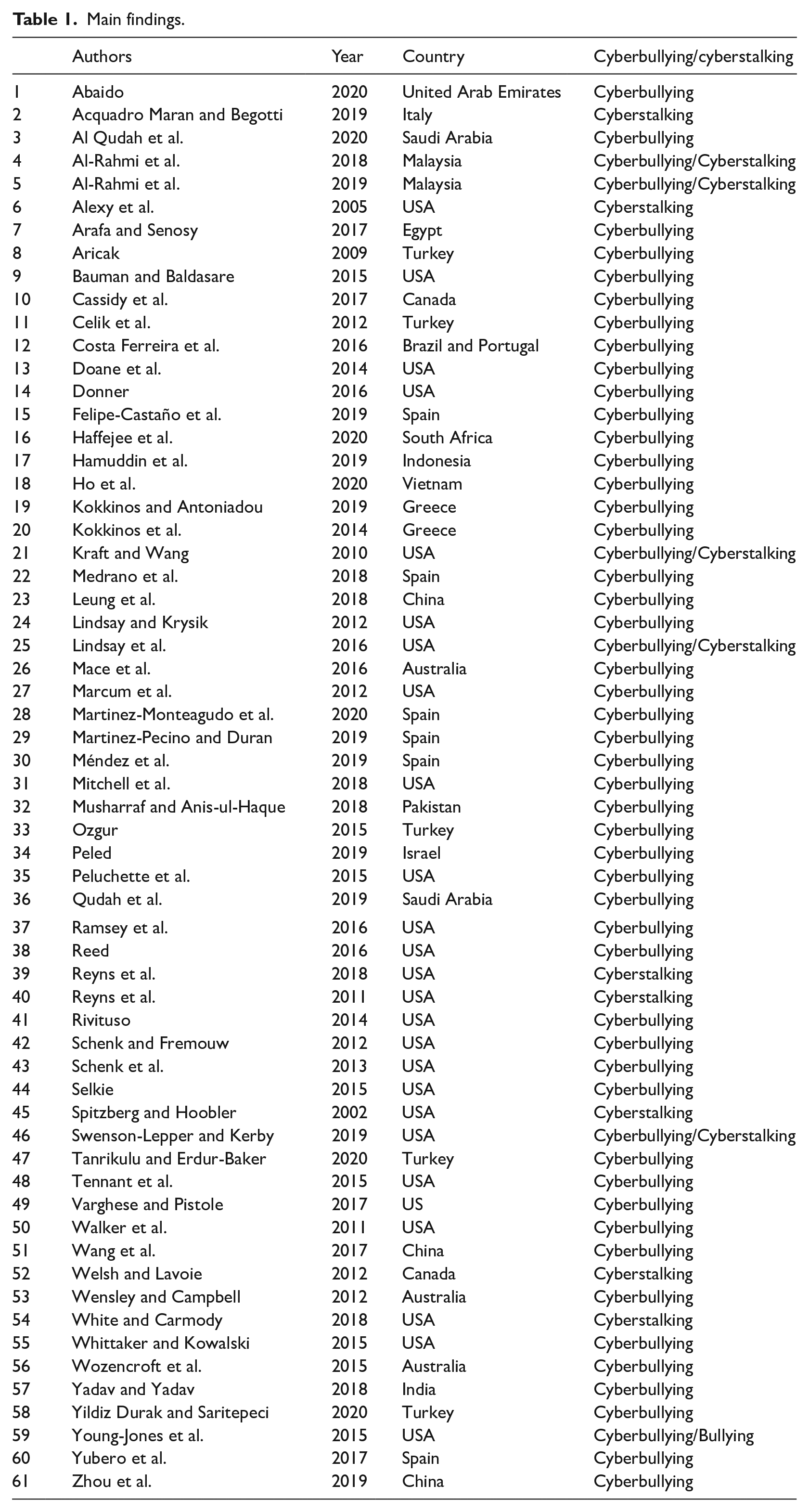
| Authors | Year | Country | Cyberbullying/cyberstalking | |
|---|---|---|---|---|
| 1 | Abaido | 2020 | United Arab Emirates | Cyberbullying |
| 2 | Acquadro Maran and Begotti | 2019 | Italy | Cyberstalking |
| 3 | Al Qudah et al. | 2020 | Saudi Arabia | Cyberbullying |
| 4 | Al-Rahmi et al. | 2018 | Malaysia | Cyberbullying/Cyberstalking |
| 5 | Al-Rahmi et al. | 2019 | Malaysia | Cyberbullying/Cyberstalking |
| 6 | Alexy et al. | 2005 | USA | Cyberstalking |
| 7 | Arafa and Senosy | 2017 | Egypt | Cyberbullying |
| 8 | Aricak | 2009 | Turkey | Cyberbullying |
| 9 | Bauman and Baldasare | 2015 | USA | Cyberbullying |
| 10 | Cassidy et al. | 2017 | Canada | Cyberbullying |
| 11 | Celik et al. | 2012 | Turkey | Cyberbullying |
| 12 | Costa Ferreira et al. | 2016 | Brazil and Portugal | Cyberbullying |
| 13 | Doane et al. | 2014 | USA | Cyberbullying |
| 14 | Donner | 2016 | USA | Cyberbullying |
| 15 | Felipe-Castaño et al. | 2019 | Spain | Cyberbullying |
| 16 | Haffejee et al. | 2020 | South Africa | Cyberbullying |
| 17 | Hamuddin et al. | 2019 | Indonesia | Cyberbullying |
| 18 | Ho et al. | 2020 | Vietnam | Cyberbullying |
| 19 | Kokkinos and Antoniadou | 2019 | Greece | Cyberbullying |
| 20 | Kokkinos et al. | 2014 | Greece | Cyberbullying |
| 21 | Kraft and Wang | 2010 | USA | Cyberbullying/Cyberstalking |
| 22 | Medrano et al. | 2018 | Spain | Cyberbullying |
| 23 | Leung et al. | 2018 | China | Cyberbullying |
| 24 | Lindsay and Krysik | 2012 | USA | Cyberbullying |
| 25 | Lindsay et al. | 2016 | USA | Cyberbullying/Cyberstalking |
| 26 | Mace et al. | 2016 | Australia | Cyberbullying |
| 27 | Marcum et al. | 2012 | USA | Cyberbullying |
| 28 | Martinez-Monteagudo et al. | 2020 | Spain | Cyberbullying |
| 29 | Martinez-Pecino and Duran | 2019 | Spain | Cyberbullying |
| 30 | Méndez et al. | 2019 | Spain | Cyberbullying |
| 31 | Mitchell et al. | 2018 | USA | Cyberbullying |
| 32 | Musharraf and Anis-ul-Haque | 2018 | Pakistan | Cyberbullying |
| 33 | Ozgur | 2015 | Turkey | Cyberbullying |
| 34 | Peled | 2019 | Israel | Cyberbullying |
| 35 | Peluchette et al. | 2015 | USA | Cyberbullying |
| 36 | Qudah et al. | 2019 | Saudi Arabia | Cyberbullying |
| 37 | Ramsey et al. | 2016 | USA | Cyberbullying |
| 38 | Reed | 2016 | USA | Cyberbullying |
| 39 | Reyns et al. | 2018 | USA | Cyberstalking |
| 40 | Reyns et al. | 2011 | USA | Cyberstalking |
| 41 | Rivituso | 2014 | USA | Cyberbullying |
| 42 | Schenk and Fremouw | 2012 | USA | Cyberbullying |
| 43 | Schenk et al. | 2013 | USA | Cyberbullying |
| 44 | Selkie | 2015 | USA | Cyberbullying |
| 45 | Spitzberg and Hoobler | 2002 | USA | Cyberstalking |
| 46 | Swenson-Lepper and Kerby | 2019 | USA | Cyberbullying/Cyberstalking |
| 47 | Tanrikulu and Erdur-Baker | 2020 | Turkey | Cyberbullying |
| 48 | Tennant et al. | 2015 | USA | Cyberbullying |
| 49 | Varghese and Pistole | 2017 | US | Cyberbullying |
| 50 | Walker et al. | 2011 | USA | Cyberbullying |
| 51 | Wang et al. | 2017 | China | Cyberbullying |
| 52 | Welsh and Lavoie | 2012 | Canada | Cyberstalking |
| 53 | Wensley and Campbell | 2012 | Australia | Cyberbullying |
| 54 | White and Carmody | 2018 | USA | Cyberstalking |
| 55 | Whittaker and Kowalski | 2015 | USA | Cyberbullying |
| 56 | Wozencroft et al. | 2015 | Australia | Cyberbullying |
| 57 | Yadav and Yadav | 2018 | India | Cyberbullying |
| 58 | Yildiz Durak and Saritepeci | 2020 | Turkey | Cyberbullying |
| 59 | Young-Jones et al. | 2015 | USA | Cyberbullying/Bullying |
| 60 | Yubero et al. | 2017 | Spain | Cyberbullying |
| 61 | Zhou et al. | 2019 | China | Cyberbullying |
Acknowledgements
The authors express their gratitude to the Executive Editor, Professor Joanna Shapland, and the anonymous referees for their invaluable suggestions, which significantly contributed to the improvement of the manuscript. In addition, they extend their thanks to Dr Sam Burton for his assistance in data collection. They also acknowledge the support provided by Edge Hill University for this research endeavour. Dr Anna Bussu, as the Principal Investigator of the research project, led the writing of the paper and oversaw its revisions.