




Abstract
Irregular migrants are legally excluded from formal employment, regular housing markets, and unemployment benefits, and in the Netherlands, they are also excluded from governmentally funded homeless shelters. While alternative sheltering arrangements have emerged for specific irregular migrants (e.g. minors, victims of human trafficking), unaccompanied adult men were typically still excluded from institutionalized shelter. In 2019, however, the national government launched a sheltering pilot for irregular migrants, which involves unaccompanied adult men in particular. Based on qualitative fieldwork in Rotterdam, and using Van Dijk and Steinmetz’s risk model as a theoretical lens, we argue that irregular status, interacting with other relevant factors such as social capital, co-determines the men’s criminal victimization risks, and fear of crime. In addition, we show how access to shelter changed the meaning and therefore the consequences of irregular status, resulting in both ‘de-marginalization’ and ‘re-marginalization’: victimization risks were generally reported to be lower in the shelter than in the streets, but sheltering also introduced new risks, which were mostly attributed to the co-presence of other sheltered groups, especially marginalized European Union (EU) citizens with a stronger immigration status. Paying attention to immigration statuses, and how they are socially constructed, thus helps to shed light on contemporary criminal victimization risks.
Introduction
A considerable number of individuals reside abroad without the authorization of the host state because they entered through unauthorized means and/or have overstayed a period of legal stay, for example, in cases of unsuccessful asylum applications. Such irregular migrants risk being exposed to conditions of homelessness and marginality due to their undocumented immigration status, which legally excludes them from accessing formal labor markets, housing opportunities, and social welfare benefits (Ataç, 2019; Jiménez-Lasserrotte et al., 2020; Leerkes et al., 2007). Homelessness risks are particularly pertinent among irregular migrants with weaker social networks in the host country, a circumstance frequently observed among those who migrate as pioneers, which for migrants is relatively common among men. In contrast, female migrants, even when involved in irregular migration, often engage in more prestructured and pre-meditated migration projects, frequently following family members’ paths (Siruno et al., 2022).
The marginalization thesis posits that the marginalization experienced by irregular migrants may exert pressure on them to resort to petty criminal activities, such as theft, various forms of violence, and street-level drug dealing (cf. Leerkes, 2009; Van Der Leun, 2015). However, such marginalization can also be expected to amplify irregular migrants’ exposure to risks associated with criminal victimization and fear of crime (also see Fussell, 2011; Smith and Jarjoura, 1988; White et al., 2022; WHO, 2016; Zhong et al., 2017).
In the Netherlands, local-level shelter by non-governmental organizations (NGOs) and, in some cases, municipalities has been in existence since the 1990s, serving as a form of secondary poor relief to mitigate the negative consequences of national social exclusion policies, and provide make-do sheltering alternatives for migrants who are excluded from primary poor relief, for example, the regular welfare state arrangements (Leerkes, 2016). Such sheltering alternatives have mostly emerged in larger cities where irregular stay is concentrated, especially in cities that provide a relatively inclusive environment for migrants lacking legal stay possibilities (Kos et al., 2015), as well as in several smaller cities and towns where NGOs and municipalities began to look for solutions for rejected asylum seekers, especially families, who were residing in the municipality and did not return to their country of citizenship (in the Netherlands, asylum seeker reception centers are typically found outside cities). Partly due to resource constraints, these local-level actors tend to prioritize irregularly staying families and women (cf. Leerkes, 2016), which inadvertently reinforces the marginalization risks for unaccompanied male migrants.
However, in 2019, a landmark decision by the European Committee of Social Rights mandated the Dutch government to institute government-funded shelter for adults, including those without accompanying minors, under the framework known as the Landelijke Vreemdelingen Voorzieningen (hereafter, LVV) or ‘National Aliens Facility’ (Ministerie van Justitie en Veiligheid, 2023). The national government allocates funding for such shelters, while NGOs implement it, operating under the auspices of five local governments across the Netherlands. Participation in the LVV is contingent upon certain conditions, obligating beneficiaries to work toward a more ‘sustainable future perspective’, encompassing certain preparations for repatriation to their respective home countries and/or by helping the authorities explore avenues for regularization, such as through a fresh application for international protection or by applying for a humanitarian residence permit. In practice, the propensity for these individuals to return to their countries of origin remains limited, while a small percentage of the beneficiaries succeed in regularizing their immigration status (Mack et al., 2022).
This study endeavors to delve into the tangible and perceived victimization risks among marginalized unaccompanied male irregular migrants, with a specific focus on delineating the nexus between these risks and their undocumented immigration status. In addition, it seeks to unravel how changes in the social construction of legal status, occasioned by expanded access to government-funded shelter, influence these risks. While some research suggests that shelters may reduce instances of victimization, there also is evidence that shelters perpetuate or even escalate victimization rates and perceptions of risk (Berk et al., 1986; Donley and Wright, 2012; Roth, 2021; Surtees, 2008). We thus ask, How do shelter opportunities for male irregular migrants impact their criminal victimization and fear of crime?
The empirical analysis is based upon fieldwork conducted at De Nieuwe Brug, a shelter managed by the Rotterdam Salvation Army. The fieldwork spanned 2 months during the spring of 2023 and encompassed a spectrum of activities, including the establishment of contact and rapport building, informal conversations, participant observations within the shelter environment, and semi-structured interviews with nine residents and five key informants (staff members and a representative from Stichting LOS, a leading NGO engaged in supporting irregular migrants within the Netherlands).
This study contributes to the realm of criminological research by unveiling the intricate interplay between immigration status, immigration policies, and criminal victimization risks and fear of crime. It underscores the need to analyze immigration status as a social construction, the implications of which are contingent upon contextual definitions (e.g. the provision or denial of shelter access to irregular migrants). Furthermore, this research underscores the importance of studying irregular migrant victimization, a topic that has historically received limited attention in the context of criminological investigations, particularly concerning male immigrants, who have mostly been studied as perpetrators rather than victims of crime (also see McDonald, 2018). While female irregular migrants certainly are at risk of criminal victimization—for example, in abusive relationships and (other) situations of human trafficking (cf. Damsa and Franko, 2023)—the victimization risks among marginalized irregular migrant men should not be overlooked. While this study is centered on the Netherlands, its findings resonate beyond national borders. The phenomenon of state-driven marginalization and the establishment of shelters for irregular migrants are observable in numerous other destination countries across Europe and the United States (Broeders and Engbersen, 2007; Engbersen, 2003; Johansen, 2013). Consequently, this study sets the stage for potential future comparative inquiries into the intricate relationships linking legal status, criminal victimization risks, and shelter provisions.
Analytical framework
Criminal victimization and fear of crime
Criminal victimization pertains to punishable forms of harm or aggression against persons or their property, including physical or mental injury, emotional suffering, or economic loss (OHCHR, 1985; Rader, 2004). Fear of crime can be described as a feeling of alarm, or unease, which is related to the perceived risk of (re)victimization (Rader, 2004). Such fear tends to be accompanied by high levels of stress and anxiety, potentially leading to debilitating and constrained behavior (Fox et al., 2009; Warr, 2000). For irregular migrants, fear of crime can be caused by actual victimization experiences, including street-life violence and during onerous migration journeys (Marchiori, 2006), but can also be due to wider personal and social concerns (Zarafonitou, 2009). For example, it can be triggered by situations that are perceived as threatening, such as shared informal housing in unsafe neighborhoods (Donley and Wright, 2012; Engbersen et al., 2006). As Rader (2004) noted, fear of crime is the emotive component, the perceived risk is the cognitive indicator, and constrained behaviors are considered the behavioral aspect (also see Bukowski and Sippola, 2001).
A substantial portion of migrants is predisposed to various vulnerabilities and victimization risks (McDonald and Erez, 2007; Mostowska, 2014), which is especially true for irregular migrants who are, by law, excluded from a host of institutions, including the formal labor market, regular housing markets and regular welfare arrangements. Such vulnerabilities nonetheless depend on how irregular status is constructed in specific contexts and periods, and how the status intersects with other relevant factors, including social capital and gender. For example, various authors have shown how irregular status acquired a different meaning over time as discourses on irregular migration became more negative, while various policies were implemented to make it harder to reside abroad without state permission (cf. Engbersen and Van Der Leun, 2001; Leerkes et al., 2011). In the 1970s, for example, irregular migrants were mostly seen as ‘spontaneous workers’ in the Netherlands who could quite easily obtain a residence permit. In the 1980s, such migrants were still largely tolerated while many still had de facto access to fiscal numbers which enabled them to work in the formal economy. Since the 1990s, irregular migrants are mostly seen as undesirable ‘illegal’ immigrants, who have been systematically banned from formal labor markets, housing markets, and unemployment benefits (such migrants kept a right to legal counsel and medically necessary care, while minors were still entitled to education). After the 1990s, the securitization of irregular migration continued, but the Netherlands nonetheless implemented a few new instruments to mitigate the most undesirable consequences of its social exclusion policies. These ‘institutional bypassing policies’ include a right for minors and their families to receive shelter, while still being required to leave the country, and a right to safely report crimes to the police without personal information being shared with the immigration police (Timmerman et al., 2020). These changes in the social construction of irregular status mostly resulted in heightened marginalization risks among those who were not deterred by the stricter policies, especially among those with limited social capital (e.g. who lack family ties in the destination country) and symbolic capital (e.g. who are not the first to be seen as deserving a right to receive social support from the wider society, for example, in the form of local-level sheltering paid by NGOs and/or local governments; cf. Leerkes, 2016).
Previous studies see migrants, and irregular migrants in particular, as being disproportionately exposed to certain victimization risks and fear of crime (Delvino and González Beilfuss, 2021; Smith and Jarjoura, 1988; White et al., 2022). These authors see vulnerability as a characteristic of the socio-economic context that irregular migrants risk being inserted into, such as the disadvantage of spending much of their time on the street, home-making strategies, and lack of formal income, along with frequently being racial minorities, all of which are associated with victimization risks.
The risk model provided by Van Dijk and Steinmetz (1983) offers a useful framework to understand irregular migrants’ victimization risks and fear of crime. The first risk factor provided is attractiveness, which defines the extent to which irregular migrants make an attractive target. This can be interpreted, for instance, by the display of goods and cash, since it is impossible to access formal bank accounts and difficult to find safe or private places to store belongings. The second risk factor provided is proximity, which can refer to the extent to which the irregular migrant gets in contact with potential offenders. Victimization chances are not randomly distributed, but are linked to lifestyles, routines, and specific demographic aspects that increase contact chances with potential offenders (Cohen and Felson, 1979; Hindelang et al., 1978 cited in Maxfield, 1987; Pratt and Turanovic, 2015). Under this logic, routines and activities such as home-making strategies, street or shelter networks, and irregular forms of work potentially increase criminal victimization risks (McDonald, 2018). The third risk factor is exposure or vulnerability (hereafter exposure), which can be applied to the degree to which forms of protection or guards are present in the migrant’s social and spatial environment (Steinmetz, 1982; Van Dijk and Steinmetz, 1983). This can be related to real or perceived difficulties in reporting crimes to the authorities out of fear of getting deported, which can ultimately increase both the chances of (re)-victimization and fear of crime (Timmerman et al., 2020).
These risk factors are also part of the structural-choice model of victimization developed by Meier and Miethe (1993). In this model, proximity and exposure to motivated offenders and high-risk contexts such as certain public places (e.g. unsupervised streets) or shelters create ‘structural’ features, enhancing victimization and criminality in specific social interactions. Attractiveness (e.g. showing cash and other valuables due to the lack of private spaces to keep them) and absence of guardianship (i.e. unwillingness to report to police due to fears of being deported) increase the chances of being chosen as an appealing target in a particular space (Meier and Miethe, 1993).
We opted for Van Dijk and Steinmetz’s (1983) risk model because of its straightforward taxonomy of risk dimensions and general applicability (for other applications in qualitative research, see, for example, Block, 1988; Greenberg and Beach, 2013). In addition, the model is credited with allowing researchers to identify concrete policy suggestions (Steinmetz and Van Dijk, 1982).
Between de-marginalization and re-marginalization
Based on the above, it can be argued that the influences of shelter on irregular migrants’ victimization and fear of crime will depend on shelter modifying attractiveness, proximity, and exposure. Two perspectives can be contrasted in that respect.
First, shelters can be viewed as spaces fostering de-marginalization (also see Ambrosini, 2011), diminishing proximity, attractiveness, and/or exposure (Van Dijk and Steinmetz, 1983). Through offering alternative accommodation, storage, and basic socio-economic support, shelters possibly curtail general vulnerabilities and reduce one’s association with delinquent groups in the street (Bretherton and Pleace, 2018; Leerkes, 2016). Moreover, sheltering in the form of LVV possibly enhances opportunities for counseling, aid in securing sustainable solutions for migrants’ irregular status, and access to legal protection (Mack et al., 2022).
Second, shelters could also generate new risks, effectively re-marginalizing rather than fully demarginalizing irregular migrants, increasing certain forms of victimization and fear of crime. For example, shelters bring together a multitude of homeless persons with different backgrounds, which can heighten risks and victimization, especially when those co-present in the shelter grapple with substance abuse, economic burdens, and/or mental health concerns (Tuynman and Planije, 2013, as cited in Asmoredjo et al., 2016; Mostowska, 2014). Furthermore, Asmoredjo et al. (2016) underscore that adult males experiencing homelessness may possess histories of incarceration or psychiatric residency. Possibly, irregular migrants residing in shelters also endure persistent deportation fears and remain hesitant to report crimes to the authorities.
It is also possible that de-marginalization and re-marginalization occur simultaneously and that shelter has a more complex outcome instead of an unequivocal influence on victimization, possibly reducing some types of victimization while simultaneously introducing new risks.
Methodology
Type of data, design, and methods
To investigate the impact of shelter opportunities for male irregular migrants in the Netherlands on victimization and fear of crime, a qualitative research approach was employed. This methodology was selected to comprehend and describe the perceptions, experiences, and characteristics of irregular migrants within shelter settings. The qualitative perspective provided a means to focus on the subjective experiences and perceptions of victimization and fear of crime in shelters, offering a more personal and holistic understanding (Creswell and Creswell, 2017). Given the marginalized position of this group, this approach allowed for open discussion and a deeper exploration of their experiences (Lune and Berg, 2017).
A single case study design was chosen to provide an in-depth, context-dependent examination, generating rich and detailed data that can contribute to middle range theory (also see Flyvbjerg, 2006), in this case on the interrelationships between irregular status, criminal victimization, and fear of crime. This case study approach facilitated the exploration of broader themes related to the safety experiences of irregular migrants within the specific context of shelters (Gray, 2014).
Shelter under the LVV program is provided by different NGOs in Rotterdam, including the Pauluskerk, The Salvation Army, the Nico Adriaans Foundation, and the Organization to Support Undocumented Migrants (ROS; Goezinnen, 2020). The fieldwork was carried out at the Rotterdam Salvation Army, which also is the main provider of homeless sheltering in the Netherlands. The Salvation Army only offers night time shelter.
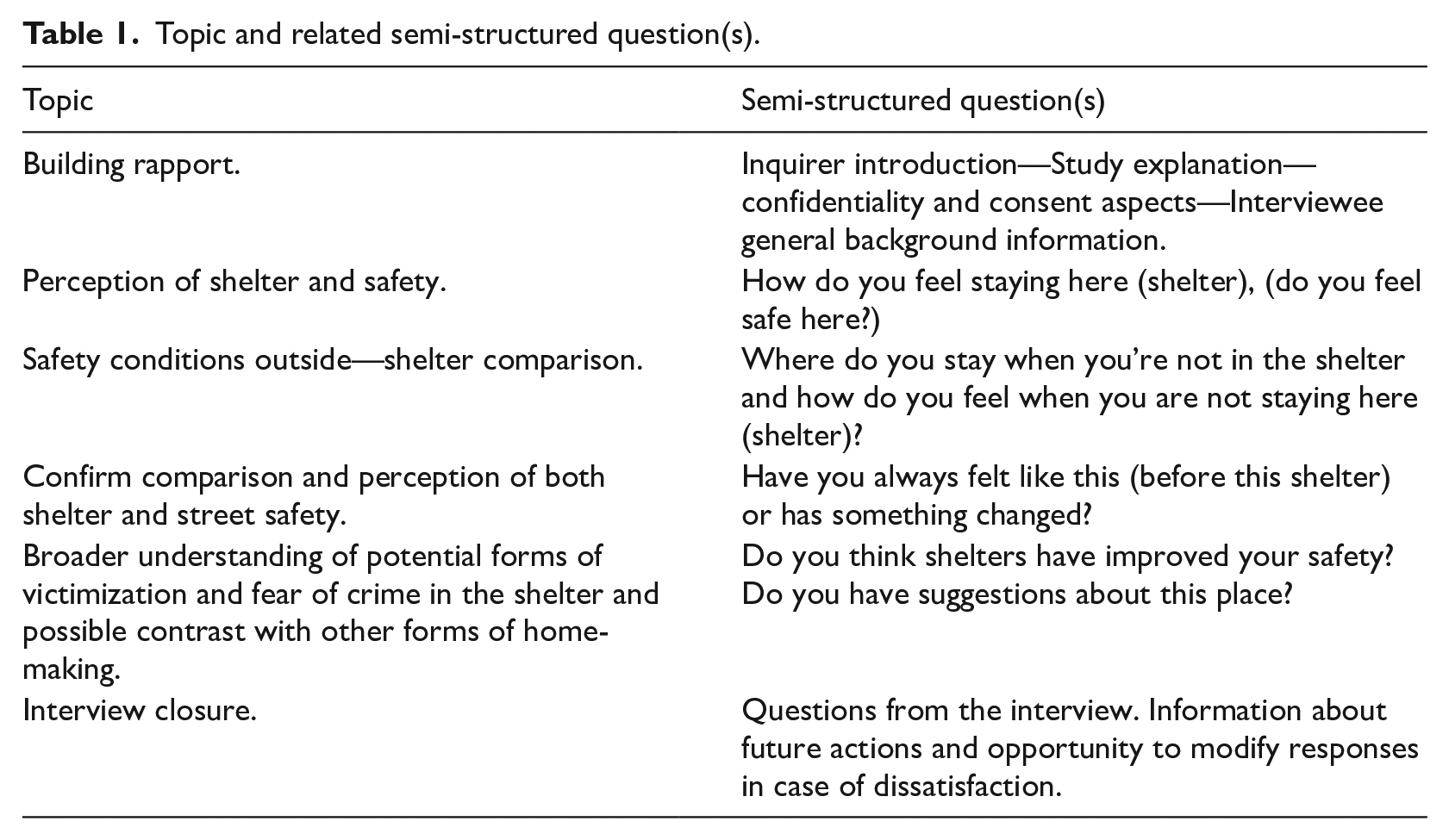
Data collection involved semi-structured interviews conducted by the first author, following a predetermined topic list to ensure systematic exploration while allowing participants to express their perspectives (see Appendix 1—Table 1; Lune and Berg, 2017). Data were collected through audio recordings, field notes from research observations, and interviews (when participants preferred not to be recorded). Transcribed interviews served as primary data, and field notes were integrated for comprehensive insights. This integration of various data sources enhanced the analysis and ensured triangulation (Tracy, 2010).
The study examined victimization and fear of crime among male irregular migrants in Dutch shelters, focusing on participants selected based on LVV program enrolment. The sample included a diverse group from different non-European nationalities, each with unique migration histories, cultural backgrounds, and experiences. For instance, participants originated from countries such as Jordan, Iran, and Syria, among others. Many had faced significant trauma in home countries or during their journey to the Netherlands. Stay duration varied from long-term residents to more recent arrivals. The sample included 14 participants: nine irregular migrants, four staff members and one expert from LOS, the leading NGO supporting irregular migrants in the Netherlands.
Data analysis employed both inductive and deductive coding schemes, allowing for a comprehensive assessment of the empirical support for existing theories while also exploring new themes and categories (Chandra and Shang, 2019; Scheunemann et al., 2015). Atlas.ti software was utilized for systematic and organized data analysis, facilitating the identification of patterns, themes, and categories.
The study faced validity and ethical challenges, such as social desirability bias and participants’ fear of discussing sensitive topics due to their irregular immigration status. To address these challenges, the first author established rapport, maintained confidentiality, and utilized indirect questioning techniques. In consultation with the second author, who has ample experience in conducting research among irregular migrants, and the Rotterdam Salvation Army, it was agreed that the first author would also volunteer at the shelter during the data collection period, and would start volunteering activities 2 weeks before the data collection. This approach allowed the researcher to also engage with participants in regular sheltering activities to build trust and affiliation. Importantly, throughout the research process, regular shelter workers did not exert any pressure on migrant participants, but provided support and helped to address vulnerabilities, such as by helping to explain the research.
Interviews usually took place in the shelter before and after supper, when most of the residents were present. The conversations occurred in an office of the shelter that medical practitioners normally use, providing both privacy for the participants and proximity for both researcher and participant to the staff of the shelter in case of any disturbances (which did not occur). The associated vulnerabilities for both participants and the researcher were also addressed by ensuring flexibility in the topics discussed—participants were ensured that they could always skip or discontinue a topic—and the order in which topics were discussed. Participants were provided with a confidential counselor contact during and after the interviews, allowing them to reach out in case of any psychological discomfort. All participants spoke English reasonably well, but future research could consider using translators and participant diaries to delve deeper into migrants’ experiences, and explore incidents of sexual harassment within shelters, especially for women migrants. Longitudinal surveys could also be implemented to quantitatively corroborate the picture that emerges from our qualitative fieldwork.
Results are presented in relation to the following three sub-questions: (1) What were the men’s experiences concerning criminal victimization outside the shelter? (2) What were the men’s experiences concerning criminal victimization within the shelter? and (3) Through which mechanisms does shelter under the LVV program influence criminal victimization and fear of crime? Figure 1 provides a visual synthesis of the key findings.
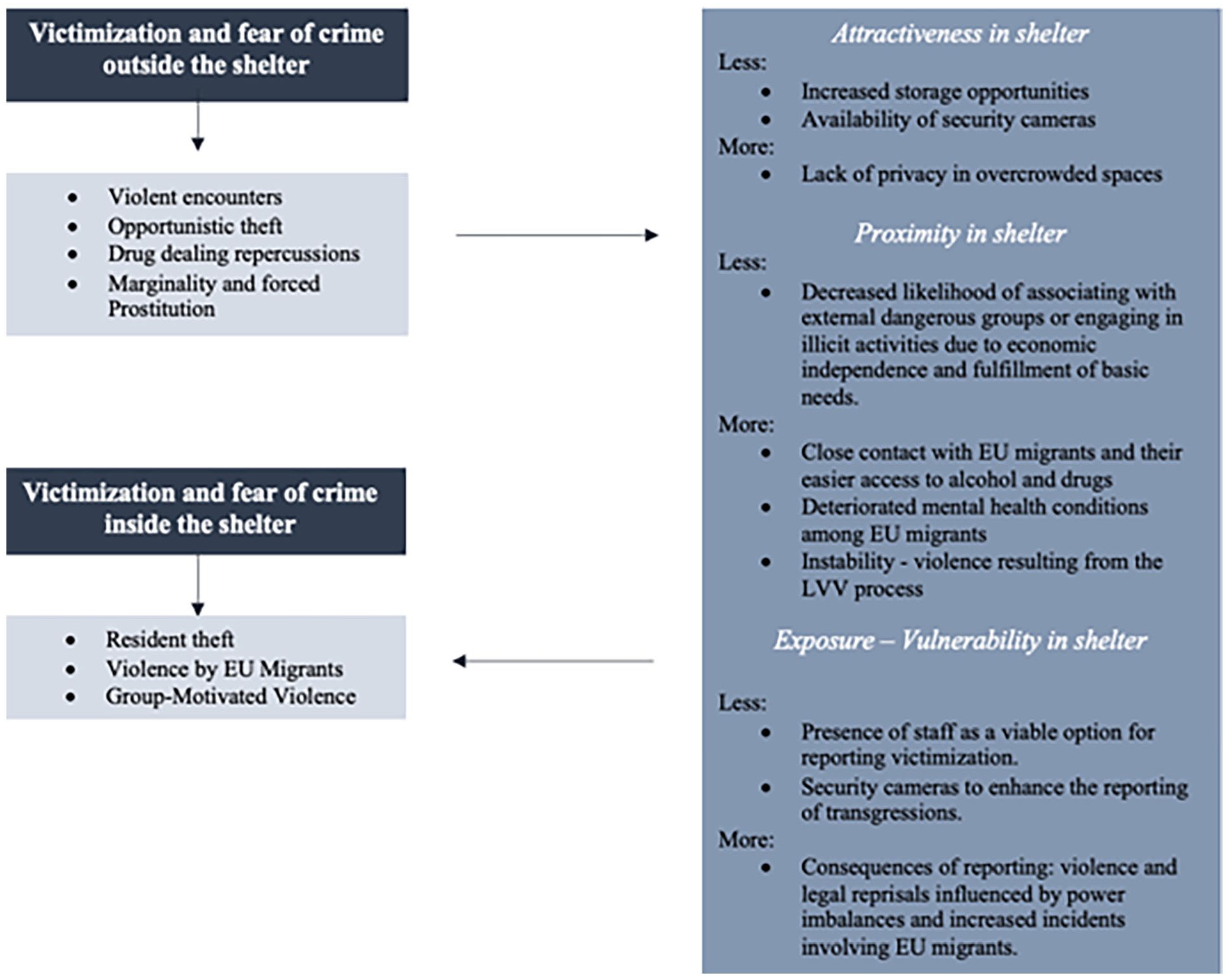
A schematic summary of findings on the influences of shelter on criminal victimization and fear of crime.
Results: tales of victimization and shelter
Experiences outside the shelter
When delving into the challenges confronted by irregular migrants concerning victimization and the fear of crime outside the shelter, a recurring theme surfaced, emphasizing the pervasive state of stress and vigilance that accompanies life on the streets: ‘It was dangerous before coming here’ (Resident). Sporadic and unpredictable encounters with fellow irregular migrants and homeless Dutch citizens frequently culminated in physical and verbal aggression, giving rise to harsh realities: ‘This happens usually by other homeless people. The street is really bad’ (Staff). These encounters not only elicited distress but also compelled the participants to defend themselves, resorting to violence as a response: ‘In the street you have to fight . . . If someone picks your pocket . . . you have to defend yourself. You see the wrong people in the street, especially at night’ (Resident). These participant quotations provide insight into incidents where they themselves fell victim to theft, particularly by other homeless individuals: ‘As they have to spend the night outside, they come here, and they have been robbed, assaulted you know. This happens usually by other homeless people’ (Staff). These incidents contribute to an overarching sense of insecurity, aligning with the notion that involvement in street-level violence, whether directly or indirectly, heightens one’s apprehension of danger (McDonald, 2018). Furthermore, these occurrences and the anxieties expressed outside the shelter were exacerbated by a context in which physical violence occasionally stemmed from the consumption of alcohol and drugs. The participants recounted incidents involving individuals under the influence, leading to an increased risk of physical assault or theft: ‘I go there and also a lot of fighting because there are a little bit of bad people, bad people that make problems, they drink and they smoke weed, they steal’ (Resident). Moreover, participants highlighted that these encounters often involved homeless individuals grappling with deteriorated mental health conditions. This not only contributed to the aforementioned victimization incidents but also constrained their own behaviors due to the perceived risk involved: ‘When you deal with mental people, you can’t do anything’ (Staff).
For these participants, experiences of victimization and the anticipation of theft, violence, and self-defense were at times inevitable, as they lacked secure or confidential places to store their belongings, which proved challenging when living outdoors: ‘I have to go out in the morning that is the problem and it’s difficult for me to take my stuff with me . . . people still fight for that’ (Resident) This aligns with theoretical considerations mentioned earlier, as residing on the streets makes it challenging to find secure or discreet locations for safeguarding possessions, rendering them more enticing to potential thieves by their overt display (Van Dijk and Steinmetz, 1983).
Furthermore, regarding the challenges faced outside, the presented theory illustrates how irregular migrants who are homeless in the Netherlands are compelled to resort to marginal means of subsistence due to their limited access to employment and essential necessities like food, healthcare, and shelter (O’Donnell et al., 2016). This aligns with the accounts provided by the participants, who acknowledged the destitute living conditions they endured while residing outside the shelter: ‘I slept beneath the trains; it was cold, and I used plastic to shield my legs’ (Resident). The participants emphasized how the lack of self-sufficiency, owing to the absence of income-generating opportunities to meet their basic needs, forced some of them into engaging in forms of coerced prostitution as a means of acquiring money: ‘They might face people offering money in exchange for sexual favors, they often say their money is lost’ (Staff). Furthermore, this lack of access to essential income and necessities also compelled certain participants to interact with drug dealers as a means of earning income: Drug dealers, sometimes they say to them you have to sell this so you get money, and they can put pressure on them. A lot of things can happen outside, someone they owe money, they can search for them. (Staff).
Such involvement often resulted in potential violent repercussions and increased stress levels, as migrants, due to their limited social network and language skills, often struggled to meet the required drug sales quotas demanded by the dealers: After people from Morocco help me to escape these men. They were asking before, so when I was sleeping it happened, it was heroin. After this I do not sleep. (Resident)
Experiences inside the shelter
Regarding the challenges of victimization and the fear of crime faced by irregular migrants within the shelter, certain parallels with their experiences outside become evident, albeit with intriguing contextual variations. Specifically, residents in the shelter commonly articulated how the scarcity of privacy, stemming from the necessity of sharing confined spaces with many people, led to heightened stress due to the anticipation of victimization. This concurs with earlier theoretical statements that portrayed shelters as spaces where diverse groups coexist (Goezinnen, 2020) and suggested that such coexistence could potentially foster victimization and create an atmosphere of anticipated victimization (Meier and Miethe, 1993). This lack of privacy not only rendered them susceptible to the loss of personal belongings but also compelled them to remain perpetually vigilant: ‘You can’t hear the noise because the door is already open, not locked, so even you have no idea that someone is going into your room’ (Resident).
Experiences of theft victimization and the accompanying stress were consistently reported by both residents and staff members. The continuous influx of people into shared spaces, coupled with varying routines and absence periods of residents, contributed to the misplacement of personal belongings: ‘If you’re here at 4 o’clock and you’re the first one in the room, you can search through the other beds’ (Resident).
Another prevalent experience in the shelter was the frequent occurrence of not only theft but also recurrent physical and verbal violence, often associated with the consumption of alcohol and drugs. Unlike theft, these types of incidents were more frequent in common areas such as the dining area and lounge, as they were driven by emotional reactions and the presence of security cameras in the shelter could not completely deter them. The primary instigators of these incidents were identified as migrants from the EU residing in the shelter alongside the LVV residents: Dealing with those people is challenging. Sometimes they steal your things, and sometimes they get so drunk that they will do something stupid in the room (Resident).
Participants expressed that the arrival of new admissions and the departure dates of individuals, particularly EU migrants, induced heightened anxiety among LVV residents. They learned to anticipate theft targeting belongings that were not securely stored during these transitions: ‘When migrants stay here for seven days, something goes missing every day. When someone new arrives, the admissions are stressful for them’ (Staff). The fear of crime among residents was further intensified by the close presence of unfamiliar individuals in the shelter, hindering the development of trust among them. This was particularly pronounced with EU migrants, who typically stayed for shorter durations: ‘The more EU people there are, the more stressful it becomes. The unknown is what triggers it’ (Staff). This underscored the lack of trust among the people with whom participants had to coexist, as one participant stated, ‘Not everyone is good. You don’t know anyone, you don’t trust’ (Resident).
In addition, the high levels of alcohol consumption and problematic behavior exhibited by this EU group were cited by participants as highly challenging. These behaviors not only led to direct victimization but also caused stress due to the fear of unpredictable reactions when reporting issues to them or to the staff: They are aggressive they get more because sometimes the staff, I feel they are also scared to say something to them, because he would be very aggressive. (Resident)
These instances of physical and verbal violence perpetrated by EU migrants and other LVV residents were often facilitated by their compromised mental health conditions. Such conditions were perceived as a trigger for engaging in violent behaviors toward other residents and staff members: ‘People are not good mentally, a lot of fights, when I come here’ (Resident). In general, participants commonly observed that new EU admissions often exhibited compromised mental health conditions upon arrival. However, LVV residents were not exempt from occasional violent confrontations among themselves, which participants attributed largely to the overall stress resulting from the temporal challenges and uncertainties associated with the LVV process: In terms of security, most of them have some sort of psychological problem or other issues . . . Overall, everyone is easily provoked. The stress is high and conflicts are common. (Staff)
Finally, participants frequently highlighted another form of victimization prevalent in the shelter—verbal violence, with a specific focus on racist acts that targeted differences in skin color, religion, country of origin, and language: There are numerous languages here, Afrikaans, Asians, and they discriminate against each other because of that, as well as based on color or religion (Staff).
Most often, this form of verbal violence was initiated by European migrants residing in the same facility, usually targeting migrants from non-Western countries. However, it is important to note that, on less frequent occasions, the LVV residents themselves also contributed to this specific type of verbal violence. In both cases, this was attributed to differences in dietary practices and religious observances, such as praying at specific times in communal areas. These practices often disrupted other residents and provoked negative reactions among them.
Sheltering and criminal victimization: attractiveness, proximity, and exposure
Several factors played a significant role in shaping the attractiveness of irregular migrants as crime victims within the shelter. First, despite consistent dissatisfaction and reported theft incidents due to inadequate storage in the shelter, residents still opted to leave their belongings behind when venturing outside. This decision was influenced by the logistical challenges of carrying their possessions and the perceived higher risks of street-based opportunistic theft. Overall, participants acknowledged the limitations of shelter storage but still valued it as a safer and more comfortable option compared to their limited alternatives. Some participants appreciated the efforts of staff to improve safety and satisfaction in this regard by attempting to organize the storage room.
Second, the presence of security cameras in certain areas imposed restrictions and enhanced overall safety and reduced stress in those locations. This was achieved by limiting opportunities for potential offenders. Generally, participants appreciated this measure, as they had encountered similar risks and behaviors outside the shelter. This appreciation from the residents persisted even though the safety ensured by these cameras was perceived as only partial, as they were confined to specific areas, notably excluding bedrooms for privacy reasons. The absence of cameras in the bedrooms was specifically highlighted as a major concern, as it facilitated theft and misconduct in these areas.
Third, as the only aspect perceived by participants as enhancing their attractiveness in the shelter, residents expressed dissatisfaction and heightened anxiety related to the lack of privacy due to shared, overcrowded, and constantly changing living spaces. This contrasted with their experiences outside, where basic conditions may have been worse but offered more space, encounters by chance, and therefore less stress in comparison. The confined spaces and lack of privacy increased the likelihood of being targeted, thereby exacerbating victimization and fear of crime.
Sheltering also appeared to affect criminal victimization in complex ways by altering the proximity of participants to potential offenders. First, participants, especially staff, noted that residents who had previously been victimized were less compelled to resort to extreme survival measures, such as affiliating with hazardous groups or engaging in illicit activities like forced prostitution and drug dealing to acquire money. Staff members played a pivotal role in preventing residents from coming into contact with these groups. This proactive intervention significantly reduced residents’ anxiety levels and minimized instances of victimization. This was made possible by the LVV program, which not only provided security through the presence of staff but also offered essential amenities such as daily meals, beds, healthcare access, and restroom facilities. Residents were granted a daily allowance for expenses and free transportation within the city of Rotterdam. This arrangement not only satisfied their basic needs but also granted them a degree of financial independence compared to their situation when living outside, a factor highly valued by the residents.
Second, the close coexistence of irregular migrants with other homeless groups, including EU migrants, notably led to stress and new forms of victimization for participants. Concerns were raised about the direct impact on their safety due to these living arrangements. The differences between the two groups could explain this. On one hand, EU migrants had access to occasional jobs and received extra money from the shelter, giving them significantly greater opportunities to obtain alcohol and drugs. Coupled with their often poor mental health and shorter stays, this resulted in a diminished sense of camaraderie within the group, thus posing a greater threat of victimization to other residents and staff. In contrast to the participants’ external circumstances, where victimization mainly resulted from alcohol and drug use among Dutch homeless individuals, the risk of living alongside EU migrants and other migrants was perceived as significantly more pronounced. This was due to the considerably higher and harder-to-avoid daily interaction with them compared to the homeless individuals outside.
Third, in addition to high-risk interactions among different groups in the shelter, mental health emerged independently as a prominent concern. The daily dynamics within the shelter unavoidably exposed participants to residents experiencing deteriorated mental health conditions. This was not solely confined to shelters but was also prevalent among irregular migrants living outside. However, the challenging environment faced by these individuals was not only attributed to pre-existing mental health disorders. It was further exacerbated by the difficult conditions endured by irregular migrants and the bureaucratic complexities they encountered in their migration process while in the shelter. Of particular significance was the unpredictability and length of the LVV process, generating chronic stress for the majority of residents. These factors led to heightened levels of anxiety and insecurity, which, coupled with limited social spaces, significantly contributed to verbal and psychological reactive aggressions among the shelter residents.
Shelter also seemed to differentially affect victimization by altering the exposure or vulnerability of participants. The relationship between participants and staff played a significant role in addressing safety concerns while living in the shelter. While some participants felt that staff had limitations in addressing all safety challenges, the presence of workers was generally seen as a reliable option for reporting and avoiding victimization, offering a better alternative than external conditions. The implementation of security cameras was regarded as a beneficial measure in addressing the exposure experienced by participants. While concerns persisted regarding the physical limitations imposed by the cameras, they did provide additional support for participants’ intentions to report transgressions. This contrasted with the outside environment, where they had no other recourse but to rely on their own accounts.
The key factor increasing exposure was the proximity of LVV residents to EU migrants while living in the shelter, unlike incidents involving Dutch homeless individuals outside. EU migrants had greater social rights, creating a distinction between them and the LVV residents. This power imbalance significantly influenced the victim–offender relationship, leaving LVV residents in a more vulnerable position when attempting to defend themselves or report offenses. They had much more at stake, including the lack of rights to alternative accommodations or the ability to move within Europe. As a result, participants were more hesitant to report incidents involving EU migrants or engage in self-defense, primarily due to concerns about potential (violent) retaliation.
Conclusion and discussion
Residing abroad without authorization of the host state carries the risk of societal marginalization, especially when irregular stay is coupled with limited access to life opportunities, and when real or perceived deportation risks restrain access to the police. Marginalization is especially likely to occur when irregular migrants have weak social networks in the destination country and are excluded from make-do local-level welfare initiatives. Such marginalization is not uncommon among irregular migrant men, and the increased availability of shelter for such men in the Netherlands under the LVV program motivated us to analyze the criminal victimization risks and fear of crime among male irregular migrants, and to explore how shelter opportunities influence the men’s real and perceived criminal victimization risks.
Our fieldwork suggests that an irregular immigration status indeed increases various criminal victimization risks: it can become intertwined with the three ideal typical antecedents of criminal victimization, which often overlap in reality. It can make one an attractive target for offenders (e.g. due to carrying cash and valuable belongings), promote proximity to potential offenders (e.g. spending time on the streets and engaging in petty crimes for income or stress relief), and increase exposure (e.g. vulnerabilities that arise because offenders believe that irregular migrants are unlikely to report victimization to the police).
The men’s increased access to shelter was found to modify these risks in complex ways. The shelter, overall, was found to reduce the men’s victimization risks. Various measures to enhance security, such as the presence of security cameras, shelter staff, and secure storage for personal possessions, reduced the men’s attractiveness, and exposure to victimization. Access to shelter also decreased their proximity to potential offenders by reducing time spent on the streets and relieving pressure to engage in criminal activities or associate with offenders. In these ways, the shelter acted as a means of de-marginalization, curbing theft, survival tactics, and various forms of victimization. We did not find clear evidence that sheltering reduced the men’s exposure to victimization by improving their access to safe reporting of crimes to the police. Simultaneously, the shelter introduced new risks, mainly stemming from the need to share living spaces with other marginalized men, some of whom had significant mental health issues, substance abuse problems, and criminal involvement. The men also found such ‘forced’ cohabitation threatening due to power inequalities within the shelter. In this examined case, the men felt particularly threatened by the co-presence of marginalized EU citizens with a more secure immigration status. Thus, the shelter also emerged as a site of re-marginalization that did not fully eliminate the men’s real and perceived risks of victimization.
A theoretical implication of the latter findings is that a fuller understanding of the intersections between immigration status and victimization risks requires us to go beyond Van Dijk’s and Steinmetz’s model, and also pay attention to the social forces that, more in the background, produce social inequalities in attractiveness, proximity, and exposure (also see Leerkes et al., 2018; Lockwood, 1996 on the role of ‘civic stratification’).
Overall, this study confirms that immigration status is a significant driver of outcomes related to crime. It not only co-determines criminal offending but also structures criminal victimization and fear of crime, both directly and indirectly. A more direct influence occurs when irregular migrants become crime victims because they cannot safely access the police. Such risks exist regardless of the precise societal position of the irregular migrant. This study primarily focuses on the more indirect paths by illustrating how immigration status, interacting with other factors such as a weaker social network in the host state, may lead to criminal victimization due to homelessness, poverty, and lack of access to regular welfare. The study also illustrates the interactions between immigration status, gender, and criminal victimization (also see Damsa and Franko, 2023). While irregularly staying women are at risk of ending up in abusive relationships and becoming a victim of (other forms of) human trafficking, irregularly staying men, while not being safeguarded against these risks, are more likely to become homeless and become exposed to street crime. The study also confirms that immigration status should not be essentialized; it should be studied as a social construct with varying meanings in different places and historical moments, influenced by factors like access to sheltering opportunities.
This study can have a significant societal impact by challenging the tendency in receiving societies to stigmatize irregular migrants, especially irregularly staying men, based on their real and alleged involvement in criminal offending. It provides a platform for such men to share their diverse experiences of victimization, urging public policy solutions to address their concerns. Such policy solutions are complex and require a balance of different interests. Irregular migration should generally be prevented, such as by promoting legal migration opportunities and reducing the need for seeking protection abroad. However, irregular migration is likely to persist, which means that preventive measures should be combined with efforts to control excesses among those still staying irregularly. The latter measures should include policies that provide forms of basic sheltering, address basic needs, and ensure the safe reporting of crimes to the police, essentially bypassing institutional barriers in certain respects: in such cases, what is at stake may well outweigh the interest in discouraging irregular migration.
Ultimately, the study thus reminds us of the need to also recognize irregular migrants, including vulnerable unaccompanied men, as human beings, and de facto residents of the European Union, in line with Article 1 of the European Charter on Fundamental Rights: ‘Human dignity is inviolable. It must be respected and protected’.
Footnotes
Appendix
Topic and related semi-structured question(s).
| Topic | Semi-structured question(s) |
|---|---|
| Building rapport. | Inquirer introduction—Study explanation—confidentiality and consent aspects—Interviewee general background information. |
| Perception of shelter and safety. | How do you feel staying here (shelter), (do you feel safe here?) |
| Safety conditions outside—shelter comparison. | Where do you stay when you’re not in the shelter and how do you feel when you are not staying here (shelter)? |
| Confirm comparison and perception of both shelter and street safety. | Have you always felt like this (before this shelter) or has something changed? |
| Broader understanding of potential forms of victimization and fear of crime in the shelter and possible contrast with other forms of home-making. | Do you think shelters have improved your safety? Do you have suggestions about this place? |
| Interview closure. | Questions from the interview. Information about future actions and opportunity to modify responses in case of dissatisfaction. |
Acknowledgements
This research project was a collaborative initiative of the authors as part of the LDE Governance of Migration and Diversity Program. It received ethical approval by the Ethics Review Board of the Department of Public Administration and Sociology (decision ETH2324-0345). During the drafting of the manuscript the second author has been supported by the project Finding Agreement in Return (FAiR), funded by Horizon Europe, Grant Agreement 101094828. The authors are thankful to the participants for sharing their experiences with us and to LOS and the Rotterdam Salvation Army for giving us the opportunity to carry out the research. They thank the two anonymous reviewers for their valuable comments.