




Abstract
This article considers the ways in which we as a society see victims of crime, particularly those who fall into Miers’ category of ‘delinquent victims’. Focusing on homelessness in the United Kingdom, the article is critical of the ‘victim’ label, which is arguably at odds with real crime victims, yet produces the victims we do see as well as those we do not. While those experiencing homelessness suffer from heightened levels of victimisation, they are also less likely to attain victim status. The following discussion seeks to rationalise this paradox by suggesting that being seen as homeless is somehow incompatible with being seen as a victim. Given the importance of the visual, drawing is employed as a research method to understand public perceptions of homelessness and crime. The resulting visual representations are unanticipated, yet significant, and often omit the crime component entirely, instead focusing on stereotypical representations of homelessness. The article concludes by emphasising the importance of seeing and suggests directions for future research.
The way we see things is affected by what we know or what we believe. To perceive or apprehend with the mind; to understand or come to understand (the truth, the answer to a question, the purpose of something, etc.); to recognize or be aware of (a situation, problem, etc.).
Introduction
Studies have routinely found that people experiencing homelessness suffer from disproportionately high levels of victimisation, in the United Kingdom and beyond (Ballintyne, 1999; Ellsworth, 2019; Garland et al., 2010; Heerde and Patton, 2020; Sanders and Albanese, 2017). In their 2016 study of life on the streets, Sanders and Albanese reported that 77% of participants in England and Wales had experienced crime and/ or anti-social behaviour in the last 12 months, with 56% experiencing verbal abuse, 45% threats or harassment, 51% theft, 30% violent assault, and 25% sexual assault. Furthermore, two-thirds of participants believed that life on the street was getting worse.
The figures are particularly stark when compared with the levels of victimisation experienced by the general public. For example, Newburn and Rock (2005) found that those experiencing homelessness in England and Wales were 13 times more likely to suffer violence than the general public. Furthermore, 67% of those experiencing homelessness had suffered theft compared with 1.4% of the general public; 43% had suffered property damage compared with 7% of the public; and 8% had been subject to sexual assault while the British Crime Survey (now the Crime Survey for England and Wales) recorded ‘too few cases to count’ (Newburn and Rock, 2005).
Victimisation can have a damaging and lasting impact on the lives of those experiencing homelessness. In addition to any physical health issues, victimisation can have long-lasting effects on a person’s mental health and can lead to psychological trauma, including post-traumatic stress disorder, feelings of isolation, and in some cases suicidal ideation (Sanders and Albanese, 2016). Ironically, it can also undermine efforts to seek support to exit rough sleeping (Sanders and Albanese, 2016). Given that the perpetrators of these crimes are everywhere – members of the public, others experiencing homelessness, organised crime groups, and even service operators – it is unsurprising that the lives of those experiencing homelessness are fraught with feelings of fear, anxiety, and uncertainty (Borysik, 2019; Kinsella, 2012; Newburn and Rock, 2005).
However, despite suffering from heightened levels of victimisation, and the consequences thereof, the victimisation of those experiencing homelessness often goes unseen. Crimes committed against this population often remain in the ‘dark’ as they are seldom recorded in the official statistics, which rely on crime surveys and police data (Biderman and Reiss, 1967). First, crime surveys are wholly ineffective at capturing this form of victimisation as they only engage ‘householders’ (Van Dijk et al., 2007).
Second, police statistics rely on crimes being reported in the first place, something which those experiencing homelessness are unlikely to do (Wardhaugh, 2000). Newburn and Rock (2005) found that only 22% of their participants had contacted the police following a victimising experience. Furthermore, Borysik (2019) found that most crimes were unlikely to be reported by this population unless they were life-threatening, for example, aggravated assault, sexual assault, and robbery. When moving from the streets and into supported accommodation, the reporting of victimisation may increase slightly but only if the decision is taken out of the participants’ hands (Borysik, 2019). In consequence, many of the crime committed against this population remain unseen, invisible perhaps. Instead of reporting crimes to the police, many choose to handle their victimisation personally, with potentially negative outcomes for the individual. For example, by avoiding people and places, feelings of loneliness and isolation can be exacerbated, equally physical retaliation can put individuals at an increased risk of both repeat victimisation and repeat offending (Borysik, 2019; Sanders and Albanese, 2016).
The consequences of not seeing victimisation are multiple: perpetrators will be free to reoffend, police will not prioritise or routinely protect this population, victims will not be offered the support they require, and their vulnerabilities may be further exacerbated (Skogan, 1977). Why then do many of those experiencing homelessness choose not to report their victimisation to the authorities?
The reasons for non-reporting are multiple and varied and can include: a lack of trust in the police and criminal justice system (‘the CJS’); representations of those experiencing homelessness as risky or threatening; a feeling that nobody would believe them; feeling undeserving of help; shame associated with circumstance; simultaneous involvement in criminal activity; and lack of awareness of legal rights (Borysik, 2019; Kinsella, 2012; Newburn and Rock, 2005, 2006; Sanders and Albanese, 2016; Sanders and Brown, 2015; Scurfield et al., 2009). While these reasons are not exhaustive, a theme running across many of them points to an overarching dilemma: that being seen as homeless is somehow incompatible with being seen as a victim.
This research is therefore interested in how those experiencing homelessness are seen by members of the public. Such perceptions of homelessness are incredibly important as they inevitably influence policy responses to this social issue (Barrett et al., 2010). For example, if the public perceive this group in line with negative stereotypes, then they may be more inclined to support exclusionary policies (Batterham, 2020). In other words, the way we see homelessness affects how we respond to it. As such, this study seeks to understand public perceptions of those experiencing homelessness within a criminal context.
In the following sections, a review of the literature will address each of these points in turn, by asking, first, what do we mean by the term ‘victim?’ And second, why are those experiencing homelessness often unable to attain this status? The methodology will then detail how this study used drawing as a creative research method to understand public perceptions of homelessness and crime. A sociological understanding of ‘perception’ is adopted, which recognises the interpretive dimension of perception as a culturally constructed process (Friedman, 2011; Zerubavel, 1999). The ensuing analysis then uses the visual representations to illustrate and explore common themes running across the dataset. The paper concludes by highlighting the significance of this piece of research, both substantively and methodologically, before proposing future directions for research.
Being seen as a victim
Critical victimologists argue that the term ‘victim’ is problematic. As is suggested in the literature above, a person does not automatically become a ‘victim’ of crime by virtue of their victimisation, rather there are several obstacles which stand between the victimising event and acquisition of the victim label. Before becoming a victim of crime, individuals must first: recognise their victimisation, claim the ‘victim’ label, and be granted this victim status (Spencer and Walklate, 2016). It appears that being victimised is merely a prerequisite to becoming a victim, while the ability to attain this status invariably rests on societal constructions of victimhood (Strobl, 2004). Such processes take place behind our backs, creating the victims that we ‘see’ and those we do not see (Mawby and Walklate, 1994). Critical approaches therefore highlight the historically and culturally specific nature of victimhood; alluding to the idea that the term ‘victim’ is widely contested, pliable, political, and certainly not universal (Dignan, 2005).
In exploring the socially constructed contours of victimhood, Christie (1986) proposed that the ‘ideal victim’ represents ‘a person or a category of individuals who – when hit by crime – most readily are given the complete and legitimate status of being a victim’ (p. 18). While the ideal victim rarely reflects the real victims of crime, Christie uses this concept to explore the importance of societal reaction in shaping victimisation practices and the visibility of victims. The ideality of a victim is characterised by six attributes, for example, victims must be ‘carrying out a respectable project’ and where they ‘could not possibly be blamed for being’ (Christie, 1986: 19). In making this assessment, a person’s character, conduct, and contribution to their own victimisation are all accounted for (Goodey, 2005). This concept is expanded by Carrabine et al. (2004) in their ‘hierarchy of victimisation’: the victims perceived as most deserving sit at the top of the hierarchy, while those perceived as least deserving, in other words groups that the public find ‘troublesome or distasteful’, fall to the bottom (p. 161). By invoking notions of deservingness, blame, and legitimacy, Christie has illustrated how constructions of the ‘victim’ belong to the realm of public perception, as an individual must be perceived as deserving and innocent, pure and unblemished, if they are to achieve ideal victim status (Cross et al., 2019; Fohring, 2018; Spalek, 2017).
The criminal ‘offender’ belongs to this realm too and is often positioned in stark contrast to the victim. Victims and offenders are often seen as dichotomous, ‘good and evil, innocent and guilty, lambs and wolves, predators and prey, Abels and Cains’ (Dignan, 2005; Fattah, 1986: 7). This tendency has been reinforced within several important arenas including media and political discourse (Drake and Henley, 2014; Fattah, 1992; Kinsella, 2012). Even early victimologists invoked the ‘us’ and ‘them’ binary as a starting point, with the ‘them’ often representing an alien other (Rock, 2002).
However, this represents a false dichotomy (Reingle, 2014). Paradoxically, there is a significant body of research which points to the overlap between victimisation and offending, between victims and offenders (Chang et al., 2003; Dobrin, 2001; Fiegelman et al., 2000; Hass and Hannis, 2017; Jennings et al., 2010; Kuhlhom, 1990; Mayhew and Elliott, 1990; Reingle, 2014).
Notions of the ideal victim and hierarchy of victimisation help us to rationalise this gap between the real and ideal victims of crime (Fohring, 2018). They politicise the victimisation process and recognise that victims of crime are constructed via interaction between public and policy domains (Spencer and Walklate, 2016; Walklate, 2007). In doing so, they shed light on society’s unwillingness to discern those described as ‘delinquent victims’, victims who ‘resemble offenders too closely’ and consequently threaten ingrained stereotypes of the deserving, innocent victim (Miers, 2011: 341). Public perceptions, while not necessarily a reflection of reality, can have very real consequences, and may result in support being given more readily to some categories of victim than others (Spencer and Walklate, 2016).
Being seen as homeless
In line with literature on the victim-offender overlap, studies have found that while those experiencing homelessness were more likely to become victims of crime, they were also more likely to become criminal offenders too. Newburn and Rock (2005) found that 48% of participants had been arrested at least once in the last year, compared with just 4% of those from the general population. Furthermore, the Social Exclusion Unit (2002) revealed that 32% of prisoners were homeless upon entry. Several interconnected factors may underlie increased levels of both criminal victimisation and offending for those experiencing homelessness, including their visibility, survival strategies, alternatives to reporting, and drug and alcohol consumption (Garland et al., 2010; Lee and Schreck, 2005).
The criminal offences committed by this population are often petty, such as being drunk and disorderly, begging, or theft (Cooper, 2016; Garland et al., 2010; Snow et al., 1989). Some crimes are carried out to meet individuals’ subsistence needs or to feed their addiction (Borysik, 2019; Garland et al., 2010; Lee and Schreck, 2005). Other crimes are committed in a desperate attempt to secure accommodation, for example, Reeve (2011) found that 30% of participants had shoplifted and 20% had engaged in sex work to raise funds for shelter. Furthermore, 28% had committed a crime with the sole intention of being arrested, to secure a roof for the night (Reeve, 2011). Regardless of the type of crime committed or any underlying motives, this population clearly falls into the category of ‘delinquent victim.’
It has been argued that there is a tendency to focus on the crimes committed by those experiencing homelessness – rather than their experiences of victimisation – resulting in them being cast more readily as perpetrators of crime than victims (Gaetz, 2004). This does not mean that those experiencing homelessness do commit more crimes than others, rather it sheds light on society’s propensity to construct the homeless population in this way. As will be seen, those experiencing homelessness may be constructed as offenders for simply being homeless. This view of the ‘homeless offender’ has been reflected across a range of different contexts, from academic literature to public policy (Cooper, 2016; Scurfield et al., 2009). As such, this article will briefly consider the way in which two prominent and influential power structures have conceived of and addressed homelessness: the CJS and the mass media.
The CJS has a long-standing propensity for criminalising those experiencing homelessness, stemming from the UK’s Vagrancy Act 1824 (‘the 1824 Act’), which prohibited activities commonly associated with homelessness, such as begging, busking, and rough sleeping (Cloke et al., 2010; Kinsella, 2011). Controversially, the 1824 Act is still in force today, and in 2019 there were 1,109 prosecutions made under it (Cromarty et al., 2021). As the primary enforcers of anti-homeless legislation, the police play an essential role in the disproportionate number of people experiencing homelessness who are arrested and consequently incarcerated (Cooper, 2016). In addition to the 1824 Act, the police’s powers to control this population derive from a range of criminal and civil measures, which include Anti-Social Behaviour Orders, Alcohol Control Areas, Public Space Protections Orders, civil injunctions, Criminal Behaviour Orders, Community Protection Notices, and dispersal powers (Cromarty et al., 2021). However, the police’s control over those experiencing homelessness goes beyond their use of such formal measures. For example, Sanders and Albanese (2017) found that 70% of the enforcement measures experienced by those sleeping rough were ‘informal’, and most frequently involved being moved along.
Formal measures have been introduced to clamp down on the activities of those experiencing homelessness, while a combination of formal and informal measures effectively sanitise our streets of this population (Cloke et al., 2010; Garland et al., 2010; Kinsella, 2011; Moore, 2008). Within the context of the CJS, those experiencing homelessness have therefore been constructed as a nuisance or an eyesore at best, and as criminal and dangerous at worst.
The mass media play a central role in communicating information about marginalised groups to the general public (Hodgetts et al., 2011). The way in which those experiencing homelessness are represented in the media will inevitably influence both public perceptions and social policy (Broady, 2020). Studies of British television and newspaper stories have found three key representations of those experiencing homelessness: as criminals or fraudsters, as needy victims, or as a distinct ‘other’ (Hodgetts et al., 2005).
Many news stories reinforce popular stereotypes of those experiencing homelessness as middle-aged men, whose rough sleeping was caused either by addiction or mental health issues (Devereux, 2021; O’Sullivan, 2020). The issue with shop-worn stereotypes is that they are reductive. Not only do they exclude many groups from the discussion, but they imply that homelessness is the result of personal weakness or deviance (Devereux, 2021). In consequence, such stereotypes can further stigmatise an already very marginalised group, while obfuscating the underlying structural causes of homelessness, which, in turn, limits public understanding of the issue (Broady, 2020; O’Neil et al., 2017).
Furthermore, those experiencing homelessness are often positioned within an ‘us’ and ‘them’ binary, enabling the housed to see the homeless as an alien other, whose way of life is inherently different (Broady, 2020). Alexandrescu (2018) exposes this binary within the context of drug use by undertaking a discourse analysis of news reports on new psychoactive substances. He found that reporting was influenced by the ‘who’, ‘what’, and ‘how’ of drug taking, resulting in the construction of ‘clean’ and ‘naïve’ middle-class users, contrasted with ‘contagious’ and ‘threatening’ underclass users, with homeless users portrayed as ‘spice zombies’ (Alexandrescu, 2018: 356). The media is therefore capable of positioning those experiencing homelessness as a threat to the community and to social order, directing societal contempt towards this marginalised population (Alexandrescu, 2018; Kinsella, 2012). As such, it is clear that the homeless label is one which carries a great deal of stigma (Goffman, 1963; Snow and Anderson, 1993; Walter et al., 2015).
Studies suggest that those experiencing homelessness are painfully aware of the stigma attached to the homeless label. Sanders and Brown (2015) found that almost half of their participants had internalised this stigma, in consequence they felt undeserving of help and a reduced sense of self-worth, while experiences of victimisation served to further reinforce the stigma.
Borysik’s (2019) participants believed that the police would not be interested in their victimisation as they were not ‘perfect’ or ‘pure’ victims, owing to petty theft or drug offences, or as one participant put it: ‘It’s all about good character and that and if you’ve got previous convictions, you can’t be a victim of crime’ (p. 11). Therefore, despite facing severe levels of poverty and social exclusion, the vulnerabilities of those experiencing homelessness are often overshadowed by ‘long-standing negative associations of rough sleeping and begging’ (Newburn and Rock, 2005: 9).
By constructing those experiencing homelessness as an alien other, they are portrayed as: a problem, not people with problems; a risk, not at risk; and to be feared, not fearful (Kinsella, 2012; Newburn and Rock, 2005). The distance created between ‘us’ and ‘them’ has resulted in the social invisibility of this population, who are made to feel marginal, different, stigmatised, and like second-class citizens by the general population (Newburn and Rock, 2006; Sanders and Brown, 2015).
Methodology
Given the importance of public perceptions within the realm of policy, this piece of research set out to understand public perceptions of those experiencing homelessness. Would participants’ perceptions align with the fairly black-and-white, good and evil dichotomy of victims and offenders, epitomised by the ‘ideal victim’? Or would they introduce nuance, and complexity, by recognising overlaps in victimisation and offending, and thereby realising the ‘real victims’ of crime? This study is primarily interested in overlaps between homelessness and criminal victimisation/offending.
Drawing was used as a research method to explore this question, as both question and method centred on the visual. Such visual methods have not only provided an innovative and versatile means of exploring a vast array of social issues, but they have disrupted and extended the qualitative paradigm by challenging the dominant way of ‘knowing’ (Pain, 2012; Sharafizad et al., 2023). After all, ‘seeing . . . comes before words and can never be quite covered by them’ (Berger, 2008: 4). Visual methods therefore offer a different way of ‘knowing’ that is performative, hands-on, and capable of a rich exploration of social issues (Donnelly and Hogan, 2013). Drawing has enabled participants to create their own research outputs, resulting in meaningful, and sometimes unexpected, insights into a diverse range of topics, including: Irish politics (Donnelly and Hogan, 2013); homelessness (Dean, 2014); civic engagement (Feeney and Hogan, 2019); democracy (Silveira and Heinrich, 2017); female academics (Sharafizad et al., 2023); the police (Marion and Twede, 2020); and prisons (Natali et al., 2021).
In making a case for visual methods, Weber (2008) provides ‘ten good reasons’ for employing images in research, of which three are particularly pertinent to the present study. First, ‘images can be used to communicate more holistically, incorporating multiple layers, and evoking stories or questions’ (Weber, 2008: 45). A blank canvas invites participants to express themselves in ways which are non-linear and unrestricted by the logical time sequences which text often is (Literat, 2013; Natali et al., 2021; Silveira and Heinrich, 2017). Second, they can ‘capture the ineffable, the hard-to-put-into-words’ (Weber, 2008: 44). Studies have routinely found that drawing enables research participants to open up so that they can express their inner thoughts, feelings, attitudes, perspectives, and emotions, which may otherwise have been difficult to express verbally (Donnelly and Hogan, 2013; Literat, 2013; Marion and Twede, 2020). Third, ‘images can make us pay attention to things in new ways’ (Weber, 2008: 44). When studying perceptions of the police, Marion and Twede (2020) found that drawings produced additional findings which were not capable of being captured by customary questionnaires. As drawing is not restricted by a series of pre-defined questions, it can facilitate more nuanced and subtle understandings and representations of social issues (Mannay, 2015). Furthermore, the messiness and complexity contained within drawings can reflect that of the social issue under study, thereby facilitating a degree of ambiguity, uncertainty, and paradox (Donnelly and Hogan, 2013). As drawing can offer insights into individuals’ ways of seeing, the visual outputs in this study will hereafter be referred to as ‘visual representations.’
Whilst the freedom and scope of this research method are among its key strengths, they also represent one of its key weaknesses. Some consider the interpretation of visual representations to be subjective and ambiguous, as researchers may overrepresent or misrepresent the visual data (Literat, 2013). In consequence, it may be challenging to prove the validity of findings based on visual representations. Nonetheless, Dean (2014) has already proven drawing to be a fruitful means of investigating perceptions of homelessness. Wanting to understand perceptions of homelessness, Dean (2014) asked a group of students to simply draw ‘what homelessness looks like’ (p. 9). By comparing their visual representations – often stereotypical representations of men sleeping rough – to the actualities of homelessness in the UK, he was able to open up several avenues of enquiry, including: the implications of using stereotypical images in charity campaigns; the depoliticisation and individualisation of homelessness; and the lack of critical engagement with this complex social problem. In a similar vein, this exploratory piece of research sought to compare public perceptions of homelessness and crime with its actualities.
Participants
This research was carried out for the purpose of a postgraduate degree, therefore given its time-limited nature, a convenience sample was used. The sample consisted of those who attended undergraduate-level criminology talks at the University of Manchester’s pre-applicant open day. With two large captive audiences, it was possible to enlist a number of prospective students as well as those who accompanied them, such as parents and guardians. While this proved to be an efficient means of accessing large numbers of participants at one time – in total 207 people took part in this study – it is also recognised that this sample is not reflective of the public at large. According to demographic data, the majority of participants were prospective students (50.2%), under the age of 18 (52.1%), female (74.9%), and white (87.9%). In general, convenience samples are subject to multiple limitations, for instance, those relating to hidden biases and the generalisability of findings (Scholtz, 2021). Participants’ views largely represented those of the white middle-class, moreover as prospective criminology students, some may have been too nervous to draw, while others may have already developed academic insights into this field of study. Nonetheless, such limitations are mitigated by the exploratory nature of this study.
Materials and procedure
As an easily implementable and inexpensive means of collecting data, the data collection process relied on no more than a large bunch of pencils and stack of A6 papers (Literat, 2013). On one side of those papers were a series of demographic questions pertaining to gender, age, ethnicity, and occupation, while the other side remained blank. As the attendees entered the lecture hall, they were each handed a piece of paper and pencil and asked to wait for further instructions. Once everybody had arrived, the research project was introduced, and it was explained that participants would shortly be asked to draw something. Participants were informed that the project had received ethical approval from the University of Manchester, while specific ethical issues were addressed, namely, confidentiality, voluntary participation, informed consent by way of completion, and the subsequent use of visual representations.
Participants were reassured that it was the content of their visual representations which was of interest, and not their quality, so that they need not worry about their artistic abilities (Lyon, 2020). Then, as with many of the previous drawing-based studies, the participants were provided with simple instructions and a clear time limit (Dean, 2014; Donnelly and Hogan, 2013; Feeney and Hogan, 2019; Marion and Twede, 2020; Sharafizad et al., 2023). Participants were asked, ‘please can you draw the first thing that comes to your mind when you hear the words homelessness and crime?’ I purposefully chose not to use the words ‘victim’ and/or ‘offender’ and said nothing more about the project itself, just my name and university course, in an attempt to avoid biasing their responses. Before asking my participants to draw, I also touched on the ethics of confidentiality, voluntariness, and consent.
The above phrase was repeated three times before the timer was set for 2 minutes. This ‘draw, quickly, just draw’ approach was employed as a means of getting at the perceptions, attitudes, and emotions of the adults and young adults in attendance (Dean, 2014; Walklate, 2007). Upon completion, the participants were thanked for their time, and the visual representations collected.
Many researchers follow drawing up with interviews or focus groups (Dean, 2014; Mannay, 2015). However, this study wanted to foreground the visual representations as a standalone research method, to ensure that they were not overshadowed by verbal reasoning. Moreover, there are questions as to whether visual creations can ever truly be expressed verbally, as the two represent different ways of knowing (Pain, 2012). An additional benefit of omitting verbal accounts relates to sample size, as without the need to follow up each drawing verbally, the researcher has more opportunity to focus on and collect visual representations. By taking a similar approach, Marion and Twede (2020) were able to collect 443 visual representations.
Analytic technique
A thematic analysis was undertaken to identify and analyse prominent patterns across the dataset (Braun and Clarke, 2006). It was envisioned that this approach would shed light on perceptions commonly held among my participants. The only predefined codes were those of ‘victim’ and ‘offender’, to test the central question above, while the remainder emerged inductively during the process of analysis. Each visual representation was coded in detail during the first round of coding, while subsequent rounds identified, refined, and standardised the most common themes. Interpretational ambiguity was reduced by inputting the data into Microsoft Excel and using a yes/no binary to account for the inclusion or omission of each theme within every visual representation. For example, a visual representation would be given a ‘yes’ for ‘offender’ if it depicted a lone figure committing a criminal act. Crimes of being homeless – such as those stemming from the 1824 Act – were not recorded as instances of offending behaviour. This approach provided a simple overview of my dataset, while making it possible to easily explore the prevalence of each code within it.
In relation to my primary question, this approach enabled me to further probe participants’ portrayals, for example, by specifying the types of crime involved in representations of homeless offenders. Beyond this, it allowed for additional, unanticipated themes to be identified from the data, consequently opening up new avenues for enquiry. For example, ‘sadness’ became its own code, and was represented by a number of unhappy faces (see Figure 10).
Victims, offenders, and others
Of the 207 visual representations of homelessness and crime, 18 depicted those experiencing homelessness solely as victims, 83 solely as offenders, one as both victim and offender, and 105 as neither victims nor offenders. 1
The homeless victim
Of the 207 visual representations, 9% of the sample drew those experiencing homelessness as victims of crime, thereby recognising the victimisation of this population. In all of these visual representations, people experiencing homelessness were depicted as being victims of violent crime, either through physical attacks or verbal threats. Visual representations frequently depicted those experiencing homelessness being kicked while lying on the ground, thereby encompassing potential figurative, as well as literal, connotations, as in Figure 1.
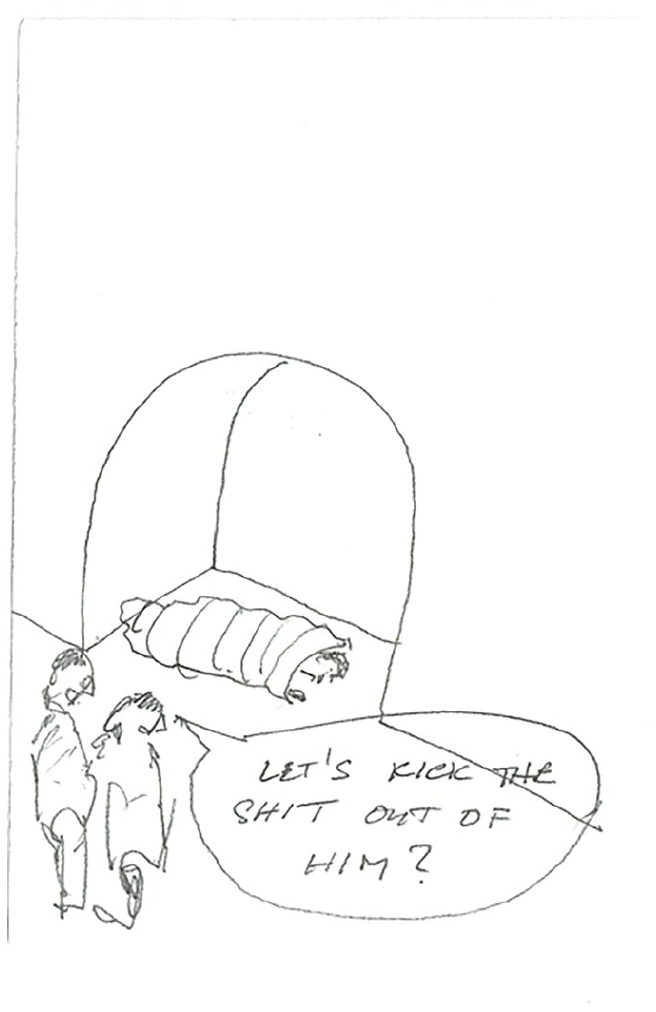
This participant was male, white, 65+, and an acoustic consultant.
This aligns with the body of literature which suggests that those experiencing homelessness suffer from disproportionately high levels of violent or threatening behaviour, particularly when compared with the general public (Ballintyne, 1999; Newburn and Rock, 2005; Sanders and Albanese, 2016). However, it is worth noting that the visual representations fail to capture the full range of crimes experienced by this population, including property offences and sexual offences. In many of the visual representations, victimisation takes place in public spaces, often when sleeping rough, as in Figure 1. Applying Christie’s (1986) criteria, it could be argued that these victims fall short of ideality, as they are not engaged in respectable projects and could be blamed for being there. They are portrayed as delinquent victims, but victims, nonetheless. Such representations are more aligned with the literature on the victim-offender overlap, as they move away from notions of idealised, pure victims, and instead recognise that delinquent groups are more likely to become both victims and offenders. However, such representations are in the minority.
The homeless offender
There was a much greater propensity among participants to portray those experiencing homelessness as offenders, with 41% of the sample centring on such portrayals. Visual representations were over four times more likely to depict a person experiencing homelessness as an offender than as a victim. This suggests that there is a greater propensity among participants to see those experiencing homelessness in light of their offending behaviour than their victimisation. This supports the idea that the offending behaviour of certain groups may overshadow their vulnerabilities and victimisation within the public imagination, pointing to society’s unwillingness to discern delinquent victims (Miers, 2011; Reingle, 2014).
When considering the types of crime engaged in, the majority of visual representations allude to petty offences. For example, of the 84 visual representations containing offenders, theft and similar property offences are depicted in 26%, as in Figure 2. Furthermore, 55% of these visual representations depict drug use or drug paraphernalia, as in Figure 3. This reflects the idea that many of the crimes committed by this population are minor and may serve the purpose of meeting their subsistence needs or feeding their addiction (Garland et al., 2010), crimes which may be committed to survive (Borysik, 2019).
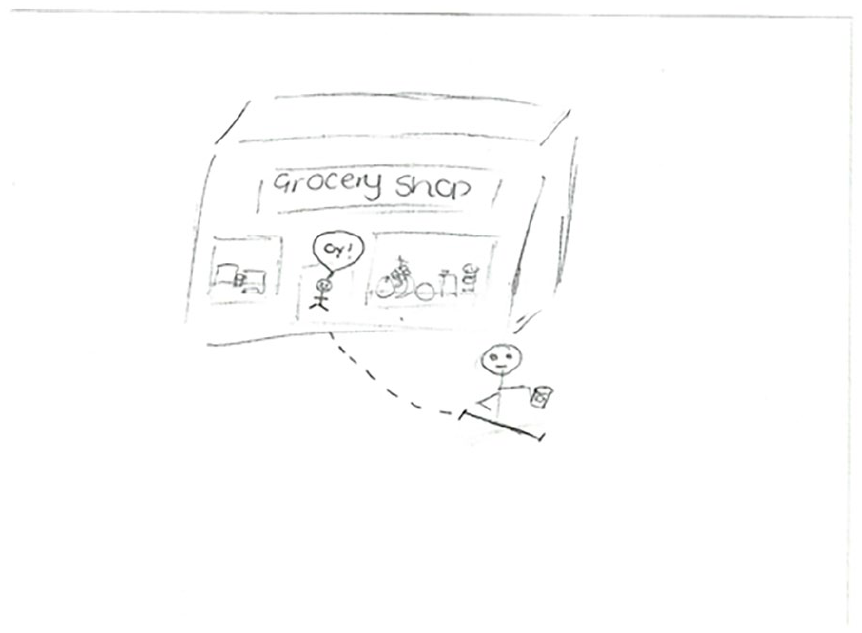
This participant was female, white, under 18, and a prospective student.
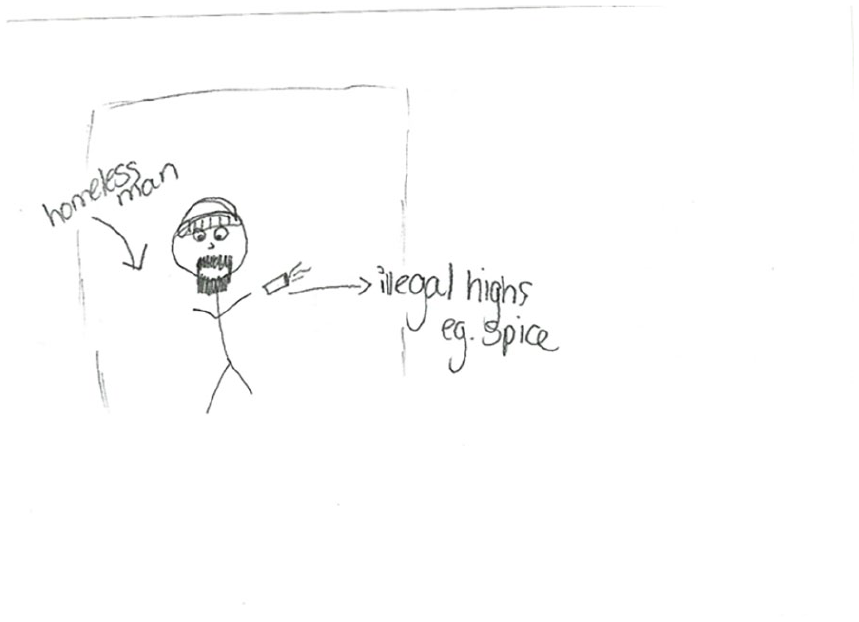
This participant was female, white, under 18, and a prospective student.
While petty offences are in the majority, 27% of visual representations associate those experiencing homelessness with weapons, as in Figure 4. Such representations portray those experiencing homelessness as a dangerous population to be feared, thereby reinforcing the view of a dangerous and alien other (Kinsella, 2012).
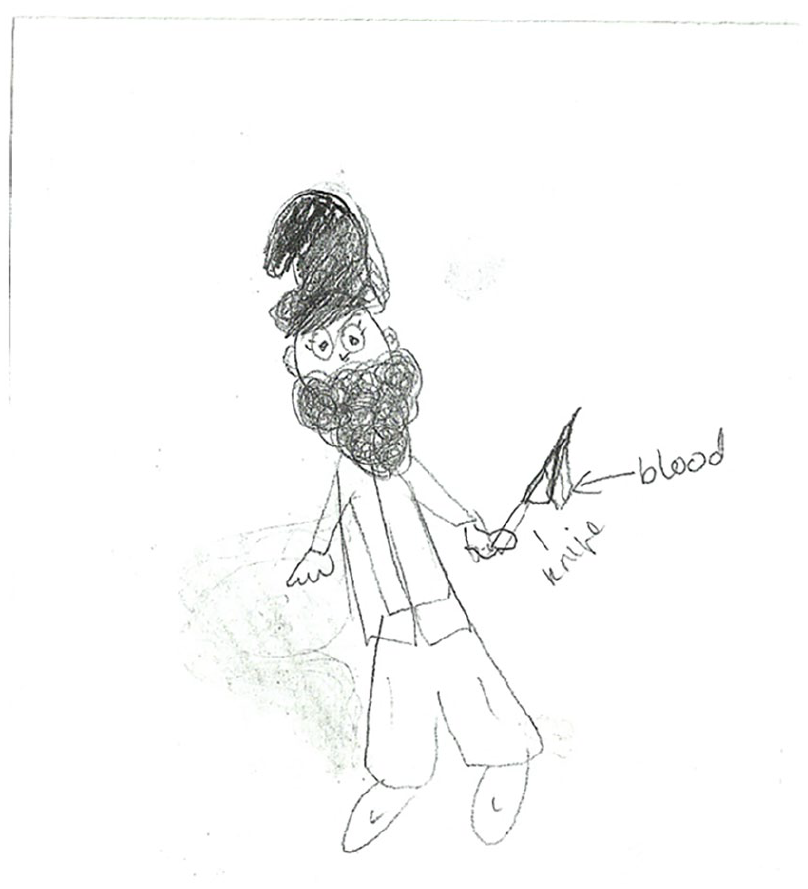
This participant was female, Asian, under 18, and a prospective student.
‘Neither’ a victim nor an offender
Surprisingly, in 51% of visual representations, those experiencing homelessness were not portrayed as being either victims of crime or offenders. This unexpected outcome is a testament to the freedom of drawing as a research method and influenced the direction of this research in a significant way. As the majority of visual representations resisted making any explicit link between homelessness and crime, the data forced factors beyond the victim-offender dichotomy to be considered. This result therefore challenges the body of literature which positions victims and offenders in a rather straightforward, binary format (Dignan, 2005). As a result, the overall picture and research direction became much more nuanced, unanticipated, and holistic.
Although the majority of visual representations make some reference to ‘homelessness’, many omit the ‘crime’ component entirely, as in Figures 5 and 6. Such an omission may be attributable to a number of factors: participants may see no relation between the two concepts; they may view homelessness as a crime in itself; or they may simply have run out of time when drawing. While individual motives may be unclear, they are not essential, as it is instead possible to look at common themes arising from the dataset. By searching for commonalities across these visual representations, it is possible to gain rich insights into public perceptions of homelessness beyond the narrow victim-offender binary.
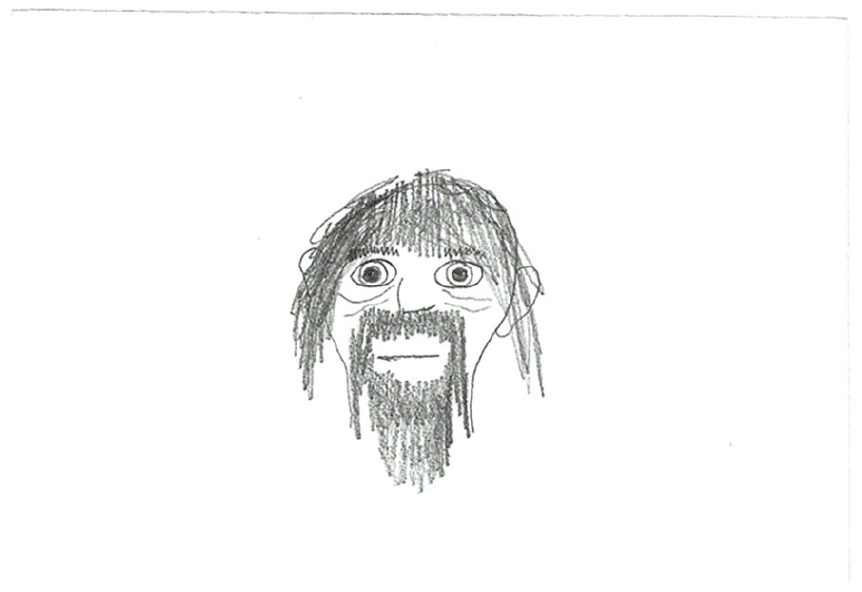
This participant was male, white, under 18, and a prospective student.
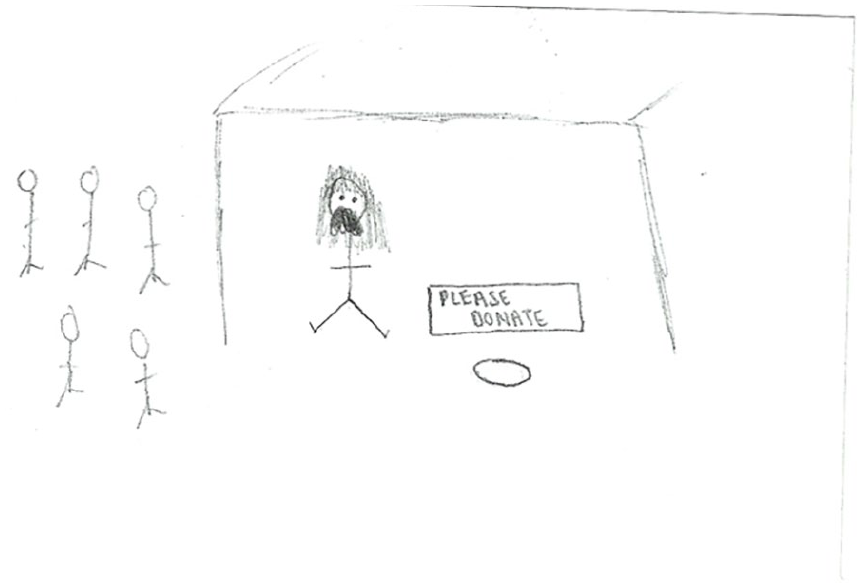
This participant was female, white, under 18, and a prospective student.
Constructing the archetypal homeless person
The most common representation across the entire dataset is that of the archetypal homeless person, commonly thought of as the middle-aged man who is rough sleeping and struggling with addiction and/or mental health issues (O’Neil et al., 2017). Visual representations portrayed this archetype through either one or a combination of the following: appearance, activities being carried out, or material items.
The most prominent code in my dataset was that of ‘person’, as people appeared in 158 of the visual representations (77% of the sample). Of the 158 visual representations depicting a ‘person’, 28% emphasise that person as having a scruffy, unkempt appearance, through tatty clothes, long beards, and scruffy hair, as in Figures 5 and 6, an appearance which aligns with the common image of the archetypal homeless person (Dean, 2014).
Furthermore, many of the visual representations containing a ‘person’ centred on the range of street-based activities stereotypically engaged in by the archetypal homeless person. Rough sleeping is depicted in 53% of the 158 visual representations containing a person, as in Figures 1 and 9. The use of drink or drugs is depicted in 33% of these visual representations, as in Figures 3, 7, and 8. Finally, begging is depicted in 27% of visual representations, as in Figures 6 and 11. In other words, these are the sort of street-based activities which are subject to a range of formal and informal enforcement measures, some stemming from the 1824 Act. While homelessness is not necessarily linked to crime, a link has been made to antisocial behaviour (Newburn and Rock, 2005).
Some of the visual representations include additional objects. The most prominent object is money, which appears in 21% of all visual representations. Money is represented in a number of ways, from swag bags over the shoulders of stick men fleeing shops, to bowls or cups placed in front of those who are begging, as in Figure 6. Dogs appear in 11% of the visual representations and are often standing or lying next to the central figure. Both money and dogs are represented in Figure 9. Rubbish is also evident in 6% of all visual representations and includes things like litter, bins, and bin bags. These objects are consistent with the image of the archetypal homeless person. Dean (2014) found that the inclusion of certain objects assisted in reducing homelessness to common caricature, similarly these objects included alcohol bottles, dogs, and money. The addition of rubbish in a number of visual representations also suggests that homelessness is ‘dirty work’ (Hall, 2016: 210). Visual representations, through appearance, activities, and objects, have constructed those experiencing homelessness as troublesome and distasteful, and perhaps implicitly unworthy of victim status (Carrabine et al., 2004).
These visual representations reflect and reinforce the stereotypical view of homelessness often taken in the mass media (Devereux, 2021). The danger is that such prototypes are inherently exclusionary and reductive. They are exclusionary as they ignore the experiences of certain groups, effectively barring them from the discussion (O’Neil et al., 2017). For example, none of the visual representations coded ‘person’ contains female characters, instead they all centre on male homelessness. This is despite a huge increase in female homelessness, particularly when considering the aptly named ‘hidden’ forms of homelessness, such as the use of temporary accommodation or sofa surfing (Schofield, 2021). Furthermore, the visual representations tend to focus on rough sleeping or rooflessness, as opposed to wider categories of homelessness which are rooted in precarious housing (Dean, 2014).
They are reductive as stereotypical views of homelessness are cognitively linked with models which blame those experiencing homelessness for the situation they are in O’Neil et al. (2017). For instance, the majority of visual representations centre on individuals and their behaviour, alluding to the idea that homelessness (and perhaps crime) is an issue rooted in individual agency as opposed to social structure (Dean, 2014). Individualisation evokes discourses of personal fault and blame, obscuring the view of homelessness and crime as complex social issues (Broady, 2020).
This blaming tendency is most evident in relation to addiction, as many of the visual representations associate homelessness with drinking, drug use, or both, which may imply that homelessness is the fault of individual-level addiction. In other words, people are homeless because they drink or use drugs. For example, Figure 7’s sole focus is on drug use: ‘for consumption’ points to the centrality and culpability of this issue. Figure 8 is a more typical visual representation, being one which captures the archetypal homeless person, with an emphasis on drink and drug use, this overlap reflecting the contagious or threatening underclass users seen in the media (Alexandrescu, 2018). Such representations highlight the delinquency of this group, alluding to a degree of fault and blame, which may be irreconcilable with the victim label (Goodey, 2005).
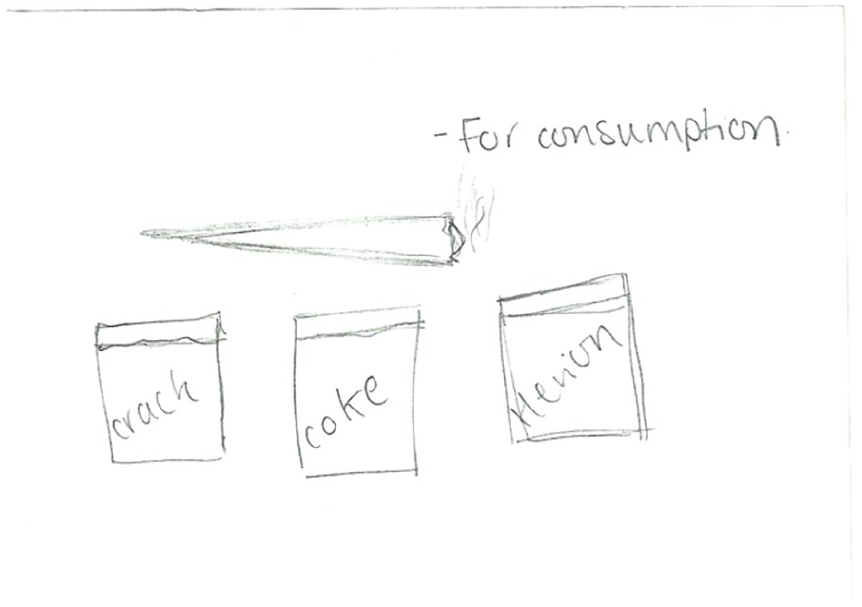
This participant was female, mixed ethnicity, under 18, and a prospective student.
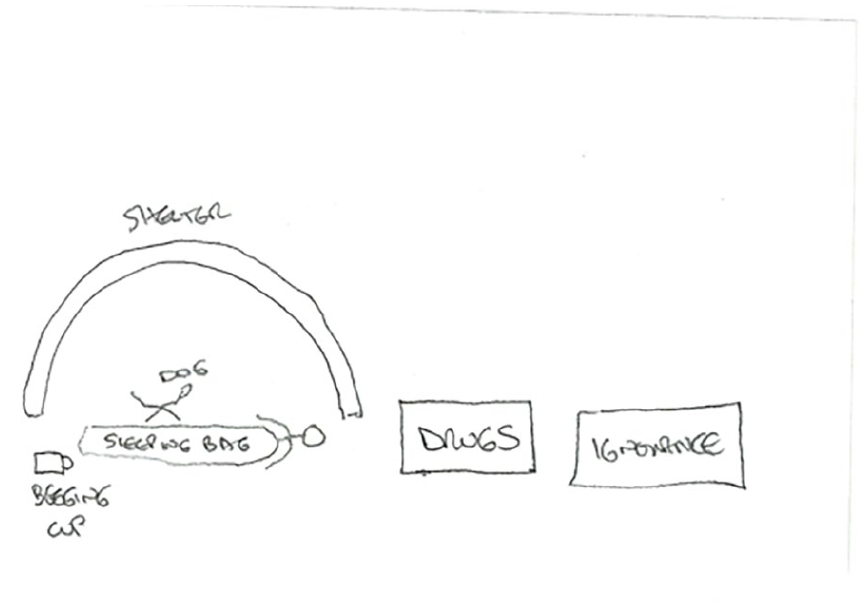
This participant was female, mixed ethnicity, under 18, and a prospective student.
By choosing to focus on people and their addictions, homelessness is framed as an issue rooted in individual agency rather than as a product of wider structural issues. For Dean (2014), this view of homelessness has come about as a result of policymakers and politicians seeking to depoliticise the issue since the 1980s. Depoliticisation has essentially shifted focus and blame from structural issues to the individuals experiencing homelessness themselves. While some of the visual representations hint at wider social issues, they are often fairly abstract, and too subjective to interpret without corroboration, for example, the word ‘ignorance’ in Figure 9. However, even this visual representation situates the abstract idea of ignorance alongside some of the more common representations of homelessness, by linking it to rough sleeping, begging, and drug use.
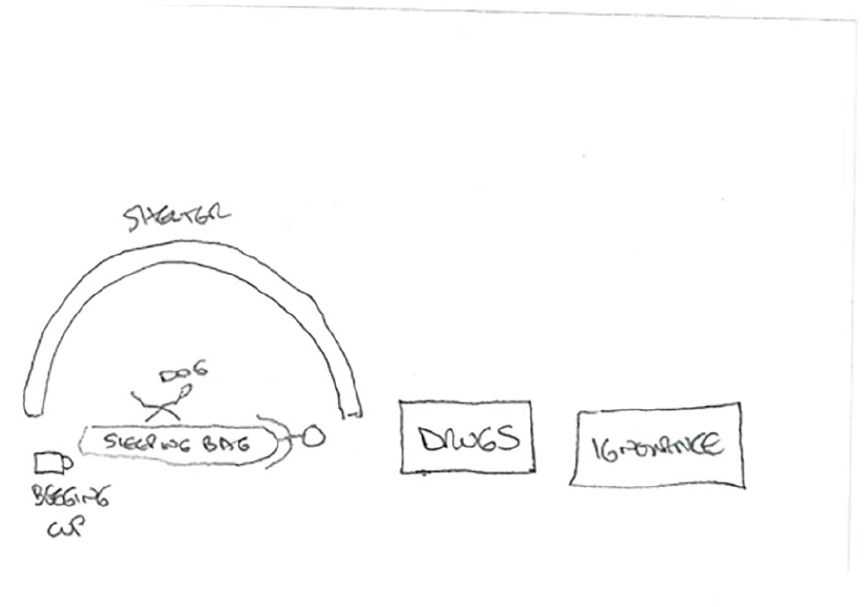
This participant was male, white, 55 – 64, and head of business development.
Spatial and emotional othering
A number of the visual representations contrast those experiencing homelessness with the general public, often othering the former through the use of emotion and space. While othering is apparent in visual representations, it is not possible to say whether the participants are themselves are actively othering those experiencing homelessness, or whether they have witnessed this group being othered. Nonetheless, distance is often emphasised through emotion and space.
Emotion is utilised in 33% of all visual representations to connect those experiencing homelessness with sadness, often through the inclusion of frowns or tear drops. Figure 10 is slightly more abstract than most visual representations, though clearly foregrounds the emotional and affective dimensions of homelessness by including both tears and a frown. This strong association between homelessness and sadness may stem from a tendency to cast those experiencing homelessness as a sad, homogenised population, though it may equally be born out of feelings of discomfort and sympathy felt by the housed towards the unhoused population. In either case, it is argued that the use of emotion in this way creates ‘social distance’ between my participants and those experiencing homelessness (Hodgetts et al., 2011). This social distance is most evident in visual representations which contrast the sadness of those experiencing homelessness with the happiness of the wider population, as can be seen in Figure 11.

This participant was female, white, 45- 54, and a foster carer.
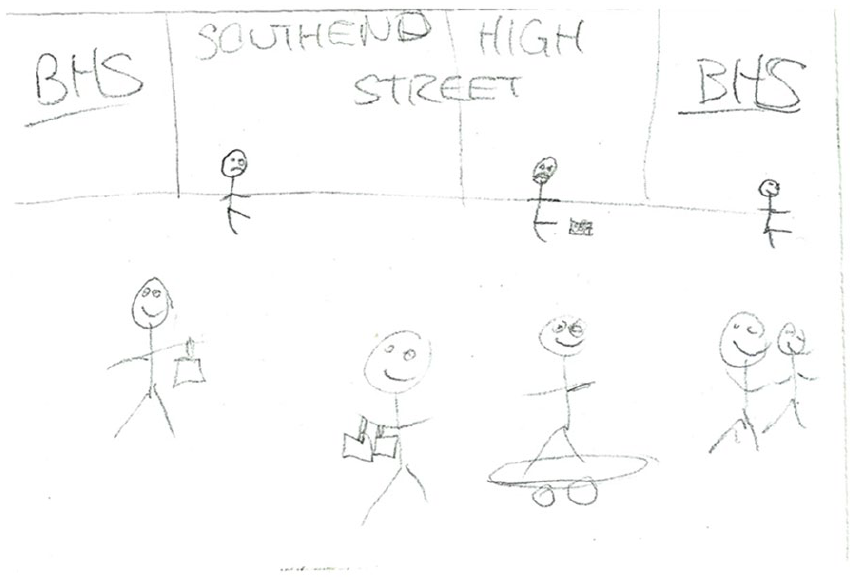
This participant was female, white, under 18, and a prospective student.
Social distance between those experiencing homelessness and the general public is also constructed spatially in a number of visual representations. In many of the representations, the person experiencing homelessness is either depicted as lying or sitting on the ground. This association between homelessness and the ground may be both literal and symbolic, for example, Hall (2016) considers the connotations of being ‘down’ in this way: ‘to be down, not just on the ground but down is to be depleted, depressed, owing or deficient’ (p. 122). The intersection between being physically on the ground and being emotionally depleted is highlighted in the number of visual representations, including Figure 6. Such representations appear to link the individual’s emotional state with their position in society, possibly in recognition of the fear, anxiety, and trauma which characterise the lives of those at the bottom end of the social hierarchy (Borysik, 2019; Carrabine et al., 2004; Newburn and Rock, 2005). Furthermore, the inclusion of rubbish in a number of images strengthens the implications of what it means to be on the ground.
A number of visual representations contrast the spaces inhabited by those experiencing homelessness with the wider public. Figure 6 creates stark contrast between the two groups in multiple ways: the person experiencing homelessness is scruffy, seated, begging, frowning, and alone, while the public are uniform, expressionless, standing, and part of a bigger group. Furthermore, Figure 11 similarly represents those experiencing homelessness as seated, begging, and frowning, however, this time they are also confined to the background. This representation contrasts and foregrounds the public, with their happy faces and bags full of shopping, seemingly oblivious to the despair of those behind them. This dichotomy is reminiscent of those who position good against evil, victims against offenders, and points to a wider tendency to perceive the world according to binaries (Dignan, 2005).
Two distinct groups are created in these images, both spatially and emotionally, and may be categorised varyingly as: the housed and the homeless, the haves and the have nots, the happy and the sad, the ups and the downs. Such visual representations effectively create social distance between those experiencing homelessness and the wider public, by othering the former, and perpetuating an us versus them mentality. In consequence, those experiencing homelessness are represented as being somehow distinct and separate from the rest of society (Dean, 2014). They are often conceived of as an ‘alien other’, as somehow different from the rest of society, and in the most extreme cases are depicted as a ‘dangerous other’, as in Figure 4 (Kinsella, 2012).
Between shop-worn archetypes and othering, many of the participants who refrained from linking homelessness and crime have instead depicted those experiencing homelessness according to caricature. This may in part be due to time pressures or artistic abilities. Nonetheless, while visual representations do highlight some of the disadvantages faced by this group, they tend to frame them as deficient and in many ways lacking: lacking shelter, lacking money, lacking companionship, lacking cleanliness, lacking sobriety, lacking happiness, and perhaps even lacking control (Borysik, 2019). It seems as though the wider vulnerabilities of this group have been overshadowed by the negative connotations of the homeless label, resulting in a kind of ‘social invisibility’ (Newburn and Rock, 2005). Visual representations illustrate how those experiencing homelessness are seen varyingly as weak, needy, criminal, anti-social, dirty, sad, vulnerable, and ultimately different.
Conclusion
Returning then to Berger’s (2008) initial quotation, that – ‘the way we see things is affected by what we know or what we believe’ (p. 4) – this study has essentially become an exercise in seeing. The article started out by describing the heightened levels of victimisation suffered by those experiencing homelessness, together with the mechanisms which prevent us from seeing this suffering. It then considers the socially constructed nature of victimhood, which results in the victims we do see and those we do not see. Concepts of the ideal victim and hierarchy of victimisation suggest that attaining victim status has less to do with the victimising event, and more to do with how specific groups are seen within society. This is why society is reluctant to see delinquent victims. Those experiencing homelessness would fall into this category, as they are more likely to be seen as offenders, or at least ‘other’, within contexts such as the CJS and media. In consequence, they may also see themselves as undeserving victims.
Public perceptions are considered to be important, as the way we perceive social issues influences society’s response to them. The study therefore wanted to find out how members of the public conceived of the link between homelessness and crime, using drawing to tap into the taken-for-granted ways of seeing. The results indicate that while some participants considered those experiencing homelessness as victims, far more considered them to be offenders. However, the most surprising finding was that the majority of participants considered them as neither, thereby introducing nuance into the study. Omitting the crime aspect, these participants represented those experiencing homelessness in line with common stereotypes, suggesting that the vulnerabilities of this group may be hidden behind media-driven caricature. Ironically, while these visual representations resist the victim-offender dichotomy, some invoke alternative dichotomies which distance those experiencing homelessness from the general public, resulting in this population being othered. Figure 11 quite literally depicts the public not seeing, of them looking the other way or turning a blind eye, while homelessness happens behind their backs. Crucially, those experiencing homelessness are part of a larger category of ‘delinquent victims’ whose victimisation we do not see, meaning that these findings may have broader relevance (Mawby and Walklate, 1994).
This creative study has successfully used drawing to understand public perceptions of homelessness, by reaching the taken-for-granted ways in which the public see this issue and by producing more nuanced and unanticipated understandings of it. It is envisaged that future research in this area could take two distinct directions.
First, the literature suggests that internalisation of the ‘homeless’ label, together with its negative connotations, may prevent individuals from seeing themselves as victims of crime (Borysik, 2019). As such, future research could utilise drawing to engage those experiencing homelessness, to test this hypothesis.
Second, the above study could be replicated to interrogate public perceptions of a wide range of ‘delinquent’ victims across the globe, from sexual assault in Canada (Randall, 2011), to human trafficking in China (Re, 2011), to surviving war in Bosnia (Basic, 2015). Future studies may benefit by using drawing as a photo-elicitation device, thereby following up visual representations with more traditional word-based methods. Such an approach would enable researchers to further interrogate representations and further validate findings, such as the meaning of ‘ignorance’ in Figure 9, or the reasons for sadness in Figure 10. Research may also benefit from engaging with a broader range of participants. For real social change to come about, for any group of delinquent victims, it appears that we need to change our taken-for-granted ways of seeing, as it is only once people are seen (perceived) as victims will they be seen (recognised) as victims.