




Abstract
Recent terror incidents in the UK, including the targeting of concert attendees in Manchester, to individuals socialising and working in central London, highlight the public’s vulnerability and that attacks can be indiscriminate, resulting in any individual becoming a victim to this fearful crime. As a consequence of these and other attacks, including those overseas, media reporting within the UK has increasingly focused on the inadequate levels of support offered to survivors from official agencies. However, little evaluation has been conducted regarding the benefits of support networks and online support groups created directly by those individuals affected by terror attacks.
Quantitative research findings obtained through a self-administered online questionnaire, completed by 81 survivors of terrorist attacks who are members of different peer support networks in the UK, endorsed that while victims feel that adequate professional support is lacking, significant positive experiences have been achieved through peer support, particularly through the internet. This first independent academic study found that it was these methods of support that had the most resonance with individuals and offers several recommendations, based on findings, which could enhance and improve support for survivors of terrorism in the future.
Introduction
In recent years, the year 2017 can possibly be regarded as one of the most challenging for the police and security services with regard to the fight against terror in the UK. During this period an unprecedented five terror attacks occurred, resulting in the deaths of 36 individuals, with numerous others experiencing life-changing physical and psychological injuries. In the 12 months between 1 June 2016 and 1 June 2017, 449 arrests were made for terrorist-related offences in the UK, with a further 351 arrests made during the following 12-month period (Home Office, 2018). Such figures endorse how the threat is ever present, and with this comes the likelihood of further terror attacks, impacting both physically and mentally on more individuals.
Although significant progress has been made in the UK to improve experiences for victims of crime (Tapley, 2016), those affected by terrorist attacks continue to feel dissatisfied with levels of support offered by official agencies. Support for terrorist survivors in the UK is frequently subsumed under a more general approach, within services that are intended and designed for victims of any crime. While government funding for counterterrorism has experienced a sharp increase in recent years, this is not necessarily invested in addressing the long-term after-effects of terrorism and the care of victims, with terrorist victims frequently positioned lower in counterterrorism priorities (Bottigliero et al., 2015).
On a global scale, the most significant recognition for victims of terrorism has been made by the United Nations. In 2008 the first international symposium on supporting victims of terrorism was held, which aimed to initiate dialogue between victims globally into how best to support their needs. This was followed in 2011 with the publication of The Criminal Justice Response to Support Victims of Acts of Terrorism, which provided the criminal justice response to the support of victims globally, whilst addressing the differing legislation and practices between countries (United Nations Office on Drugs and Crime, 2011). Developments in this area further led to an online portal (The United Nations Victims of Terrorism Support Portal) being launched in 2014, which continues to provide references to country-specific information and importantly a directory of organisations supporting victims.
Within England and Wales, victim services are commissioned by Police and Crime Commissioners, with the Code of Practice for Victims of Crime stating that any victim of terrorism is entitled to access enhanced support services (Ministry of Justice, 2015). For individuals who were directly affected by a terror incident in the UK, for example, financial assistance is accessible through UK government schemes offered through the Criminal Injuries Compensation Authority, with applications considered against the criteria of the Criminal Injuries Compensation Scheme 2012. For those involved in terror incidents that occurred overseas, post 27 November 2012, a longer-term financial support initiative is available through the Victim of Overseas Terrorism Compensation Scheme, 2012. The rules of the scheme, and value of payments, are set by the UK Parliament with consideration made with regard to claims for mental or physical injury following a designated terrorist act, funeral payments and to loss of earnings where an individual has limited capacity to work that exceeds more than 28 days. Charitable funds have been another financial support option within the UK in recent years, with the London Emergency Trust and the We Love Manchester Support group offering support to those involved in both the London attacks of 2017 and the Manchester Arena attack the same year.
However, official emotional and psychological support for terror victims is largely restricted to support phone lines or private counsellors due to lengthy waits for one-to-one support from state-funded counselling services. Phone line support, delivered by established groups including the Red Cross, Samaritans, Cruse Bereavement Services and Childline, which terrorist victims are often directed to, although offering the services of trained counsellors, will deal with victims from a multitude of crimes and are often unable to offer bespoke support specific to the aftercare required for terrorist survivors and their families. The largest official support group in the UK, Victim Support, has stated that over 1,400 individuals had made contact with them, after the terrorist attacks in 2017, seeking information and specialist support (Fawcett, 2018). However, should a survivor contact Victim Support, the length of time support is offered by the group is frequently limited to just 92 days for those being at the scene of a terror attack, decreasing to 71 days for those present in the wider vicinity of an attack (Barker and Dinisman, 2016: 12). It is inevitable therefore, that when an attack occurs, support phone lines and established organisations are overwhelmed with individuals seeking solace, likely resulting in some not receiving the support they require.
The effectiveness of adequate support being offered to victims of terrorism will undoubtedly have a significant impact on how individuals process the incident and continue their lives. The need for effective and beneficial support mechanisms for survivors is therefore of upmost importance. With cuts to public services, pressure on emergency services and the confusion caused by a perceived lack of joint working between agencies and government, it is no surprise that individuals turn to each other for support.
The growth in peer support groups, for those affected by a disaster, was most notable in the UK during the 1980s, a period often termed as the ‘decade of disasters’ (Eyre and Dix, 2014: 5). Independent support groups, created by those directly affected by UK disasters including the Lockerbie bombing (1988), and a year later the Hillsborough football stadium crush, started to emerge. Such groups were created to provide an avenue for peer support, and were used as a means of information sharing, while allowing members to work together to achieve common goals such as highlighting the importance of recognizing and marking anniversaries of the tragedies (Eyre and Dix, 2014). As this research will highlight, 40 years after the ‘decade of disasters’, peer support groups have become the primary support pillar for victims of terrorism.
Firstly, this paper will explore the definitions of a victim and an act of terror, and will review current literature focusing on the experiences of terrorist survivors. This will be followed by a discussion on the design and rationale for adopting a quantitative research approach in order to elicit the views from survivors on support available, progressing onto an analysis of the data obtained. The research will show the growing reliance on peer and online support for victims of terrorism, and the benefits of these avenues of support by those who have accessed them. It will conclude with several recommendations.
Definition of acts of terror and terrorist victims
There has been much debate in recent years as to what constitutes an act of terror from both academics and government agencies, with definitions differing from country to country. A UK government request in 2005, made to the independent reviewer of terrorist legislation, requested a review to be conducted into the provision of a definition as to what constitutes an act of terrorism. This led to the conclusion that no single definition commands full international approval (Carlile, 2007). It was deemed that the definition provided in the UK Terrorist Act 2000, where a terrorist act is defined as, the use or threat designed to influence the government (or an international governmental organisation) or to intimidate the public or section of the public and where the use or threat is made for the purpose of advancing a political, religious (racial) or ideological cause
The general term ‘victim’ conjures up images of weakness and disempowered individuals. They are often presented as having in some way contributed to their status as a victim of crime. In contrast, victims of terrorism are often portrayed as innocent, they were simply in the wrong place at the wrong time, becoming a ‘victim’ purely by chance. Such individuals are not weak, powerless victims, they are instead individuals who had no way of resisting their attackers (Shichor, 2007).
The 1985 United Nations Declaration defined a victim of crime as ‘persons who individually or collectively have suffered harm, including physical or mental injury, emotional suffering, economic loss or substantial impairment of their fundamental rights, through acts or omissions that are in violation of criminal laws operative within Member States’ (United Nations, 2006: 303). A 2006 recommendation from the Council of Europe’s executive body, the Committee of Minsters, suggested that the term ‘victim’ should additionally encompass both the immediate family and dependents of the direct victim. These classifications have consequently influenced the definition of a terror victim, with two categories, the ‘direct’ and ‘indirect’ victim, which can be further divided into 10 subgroups (Schmid, 2012). These subgroups include not just primary individuals who have been murdered by those intent to cause death through violent criminal acts, but also those who experience income loss or property damage due to an act of terror, to those individuals who are close to the primary/direct victim, including their family, friends and colleagues. Others including Emerson (2012) introduced the concept of four categories of victim (the direct, secondary, indirect and potential), while Gormally (see OSCE, 2007), when exploring the role of a victim of terrorism in respect to the Troubles in Northern Ireland, presented the concept of a hierarchy of victim status, where those deemed ‘innocent’ (children and women) are positioned higher in the hierarchy, with individuals who were members of paramilitary groups lower (OSCE, 2007). The inclusion of individuals working within the emergency services, those who have been subject to a terror attack previously, and the community as a whole, have also been considered as victims of terrorism and should not be overlooked (Hill, 2009).
Prior research on victims of terrorism
Since 2001 the rise in academic research relating to terrorism has increased (Silke, 2003). However, much of this research is in relation to the perpetrators of terrorism and the government initiatives implemented to address this crime. While victims of global terror attacks have, in recent years, been subjected to numerous studies, particularly evident after the 9/11 attacks in America, this research has tended to focus on the manifestation of PTSD and psychiatric disorders, particularly with regard to specific attacks (Fekih-Romdhane et al., 2017; North et al., 2001).
Aside from literature produced by established support groups, such as Victim Support (Barker and Dinisman, 2016), who focused their research on the use of official services, it is widely recognised that there is a lack of independent academic literature focusing on victims of terrorism (Hoffman and Kasupski, 2007; Muro, 2015). One of the earliest academic works focusing on terrorist victims was by Flynn (1989), which provided an analysis of the experiences of terrorist victims in America. More contemporary work is evident through the work of Watkins (2017), who presented findings from a personal perspective into the use of peer support for those involved in cross-border terror attacks. With a significant lack of research therefore in this area, including very few studies concerning children as victims of terror being available (Whalley and Brewin, 2007), very little is known about what victims of terrorism require in terms of support. This is a serious oversight given that effective support mechanisms can potentially assist in recovery time. An independent study of UK survivors, and their relationships with peer support networks, particularly with reference to online support, has therefore not been explored.
Research aims
In the absence of extensive academic research relating to UK-based victims of terrorism, little is known about their experiences of peer support, and particularly their use of the internet as an enabler of support. By exploring how victims perceive and have utilised support in this way, this study aimed to fill a void in the body of knowledge on peer support for victims of terrorism. The study will contribute by providing a terrorist survivor’s perspective of the modes of support they utilised, with the research exploring three main areas. The research findings will highlight how terrorist survivors have used the internet and peers as methods of support, and the value and effectiveness of support, both online and offline. Findings from the research led to several recommendations for how the provision of support for terrorist survivors can be delivered in the future.
Research methodology
Procedure
Using Online Surveys (Bristol, UK), data was collected through a voluntary self-administered online questionnaire that was circulated via gatekeepers between March and June 2018 through three established support groups for terror victims. Groups were identified through open source research and contacted by the researcher to ask whether they would be willing to take part in the study. All three groups have at the heart of their ethos the value of peer support: (i) Foundation for Peace/Survivors Assistance Network, a nonaligned charity established by the parents of a victim from the UK Warrington bomb attack (1993), which assists British-based citizens who are victims of terrorism within the UK or overseas; (ii) Omagh Support Group, a charity providing support to victims and the wider community, which was created by victims of the 1988 Omagh terrorist attack in Northern Ireland; and (iii) Manchester Attack Support, a peer support group for those specifically affected by the 2017 Manchester Arena attack, established and managed by a sociologist with personal experience of the Hillsborough football stadium tragedy.
Distribution of the questionnaire was achieved either via gatekeepers forwarding the link to their group members by email, through the group’s websites and newsletters and through circulation, by a gatekeeper, within a private online Yammer group managed by the Foundation for Peace, and the Metropolitan Police Service (MPS). All methods consequently resulted in a non-probability snowballing technique being employed. These avenues of distribution additionally ensured the survey was only circulated to those confirmed to have been involved in a terror attack, whether in the UK or overseas.
Ethics
The data collection period encompassed the anniversaries of several terrorist attacks including the Manchester Arena terror attack, the Tunisia and London Bridge attacks, and it was for this reason a quantitative data approach was adopted in order to respect confidentiality and the anonymity of participants during a sensitive period. The research had been approved by the Ethics Committee at the University of Portsmouth and all participants had been required to read an information page detailing the purpose of the study and were asked to complete an electronic informed consent page prior to commencing the online survey. Due to the sensitivity of the subject matter and possibility of re-traumatisation occurring through participation, information was provided by the researcher on where participants could obtain support if required.
Participants
For the purpose of this study those who were (i) direct victims of a terror attack, (ii) were a friend or relative of someone involved in an attack or (iii) those who had witnessed an attack (indirect victims) were invited to participate. The term ‘survivor’ was also adopted within the survey, in order to dispel the negativity associated with the word victim. The resulting sample of survivors comprised 79% (n = 64) females and 21% (n = 17) males, all of whom were UK citizens. The age range of participants varied from 18 to 60+: the highest number of individuals was in the 40–50 category (28.4%, n = 23), 19.8% (n = 16) of participants fell into the 60+ category, and 19.8% (n = 16) in the 50–60 category, 18.5% (n = 15) of participants were in the 30–40 category, 7.4% (n = 6) in the 20–30 category and 6.2% (n = 5) were aged under 20. Individuals under the age of 18 were not invited to take part due to the sensitivity of the subject. Participants represented 10 different terrorist attacks that had occurred either in the UK or overseas (Figure 1), with just under half the sample having been involved in the 2017 Manchester Arena attack (n = 40). All participants stated whether they were a direct victim of the attack (n = 55), a witness to the attack (n = 21) or had friends/family involved in the attack (n = 14), (of these figures, nine participants identified in two categories).
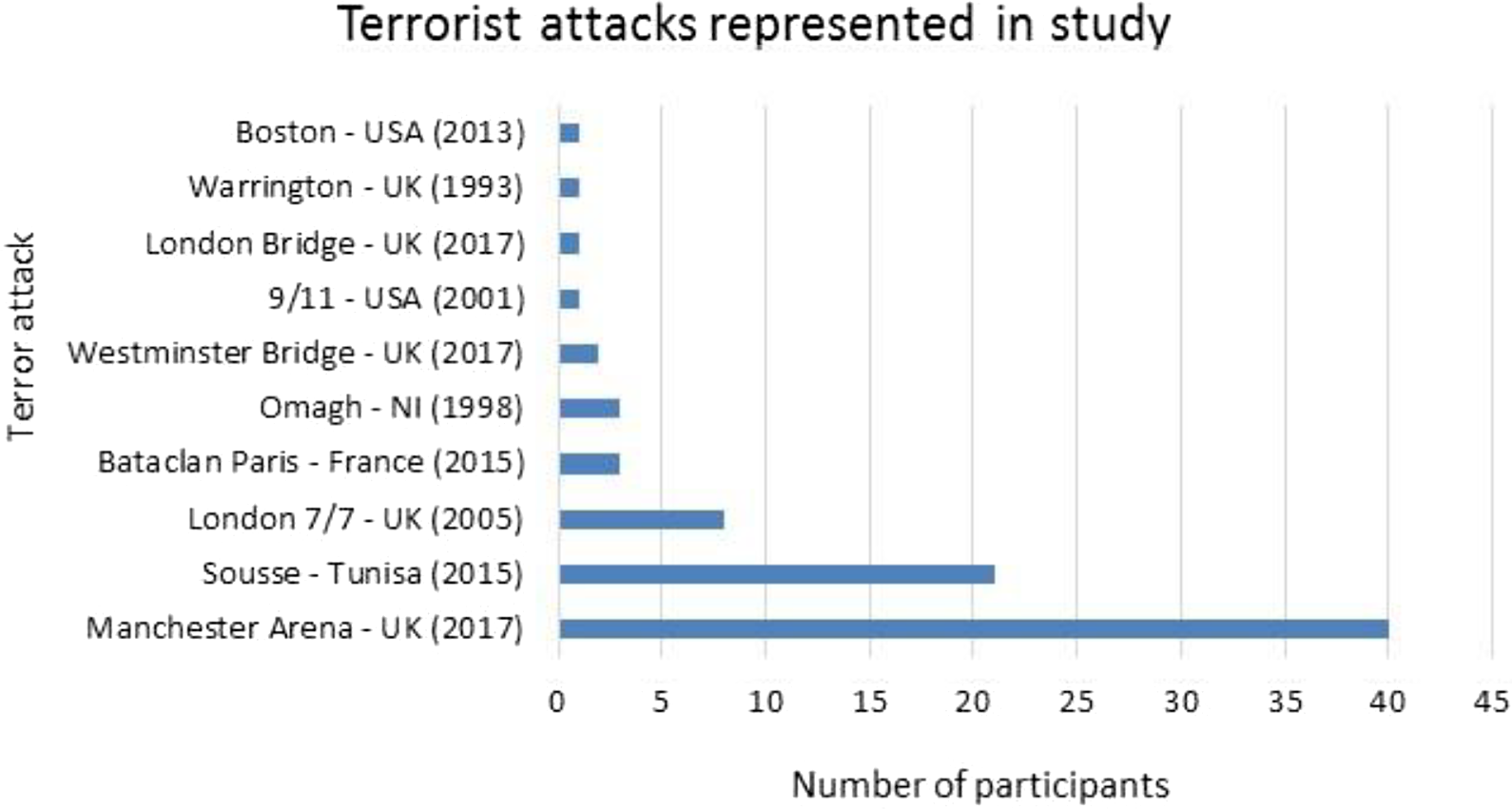
Terror attacks in which participants of current study were involved.
The survey consisted of 23 questions, including Likert-scale type and optional open questions, which allowed for rich perspectives on an individual’s views of peer support to be shared, bringing alive the thoughts, feelings and experiences of terrorist survivors’ views on the current provision of support in the UK.
Data analysis
All data analysis was conducted through the analysis features of the Online Survey system and by raw data being exported into Microsoft Excel for greater manipulation. Where open questions were used, a thematic coding technique following the principles of Braun and Clarke (2006) was employed. Identification of recurrent themes and areas of interest was made through the information supplied by participants, resulting in several areas of interest emerging: the growth and value of online support and the benefits of support from fellow survivors.
Results and discussion
Of the 81 participants in the study, only 11% (n = 9) felt that a good or exceptionally good level of support was currently offered in the UK to survivors of terrorism. When asked to list their top three concerns with regard to support, the lack of funding to terror survivors from official organisations (n = 62, 76.5%), the lack of engagement between victims and official departments (n = 61, 75.3%), and the lack of detail regarding support networks available (n = 54, 66.7%), all scored highly. The results of the survey had highlighted three significant areas in which the participants had spoken favourably, that of (i) the internet and peers as a valuable source of information, (ii) the benefits of online support groups and (iii) the effectiveness of peer support.
Use of the internet/peers to find details of support
Use of the internet has undoubtedly changed over the past decade, with nearly 9 in 10 adults now regularly going online (Ofcom, 2018). With the internet becoming more mobile and easier to access, the reliance on this media source for information in times of crisis is no surprise. Participants in more recent attacks – Manchester (2017), Tunisia (2015) and Paris (2015) – had all used the internet regularly in their recovery, particularly to connect with other victims and to source general information. This is in stark contrast to those involved in earlier attacks, with one respondent from the London 7/7 attacks endorsing how ‘The internet in 2005 had very little information. Data protection prevented multi agency sharing of information, therefore support and information was very difficult to access’.
Three questions had initially been posed to participants with regard to where they had sourced information about (i) support groups, (ii) how to deal with feelings and (iii) practical support. Although 79% (n = 64) of responses had shown that individuals in general had found information regarding support and support networks hard to access, figures revealed that the use of the internet to source information was important and was essential in their recovery.
Thirty seven individuals (45.7%) stated that they had used the internet in general terms to source information regarding the availability of support networks, while 33.3% (n = 27) had targeted specific social media channels such as Facebook, to search for support networks. Likewise, 37% (n = 30) had searched online for details on how to deal with the feelings they were experiencing, while 8.5% (n = 15) had conducted general online searches for details on practical support.
The value of engaging with other victims in order to source information, however, is most apparent in the findings. Over half of those sampled, 58% (n = 47) had contacted other survivors for details on support networks, 50.6% (n = 41) had contacted others for advice on how to deal with feelings, and 39.5% (n = 32) engaged with others on sourcing details of practical support. All three questions resulted in high numbers of respondents listing the internet and peers as their main way of sourcing available support, as opposed to official channels.
The growth and value of online support
Online support groups have been used extensively by those in distress (Barak et al., 2008; Hurley et al., 2007) with figures suggesting that 28% of internet users have visited an online support group at least once (Horrigan et al., 2001). Such groups have been recognized as an effective way to reach those in need as demand on formal services increases (Tarzia et al., 2018), in addition to contributing to community building and providing empowerment for victims (Marres et al., 2012). Although the internet in general and online ‘chat’ groups in particular are often perceived as dangerous, anonymous spheres, attention to the benefits they provide for those in need is rarely discussed. Due to the many associated benefits for those seeking support, including the ease of access, convenience and inexpensiveness of joining online groups, it is evident why this avenue of support is growing and, through these research findings, has been found to be one of the major pillars of support for survivors of terrorism in recent years.
Online support for those affected in terror attacks has several manifestations. The use of the internet and social media as support mechanisms for terrorist victims in the UK saw most growth and impact after the London 7/7 bombings, with a number of online resources implemented to assist those in need (Lynch and Argomoniz, 2017). The now defunct Kings Cross United website, established by victims themselves, assisted in keeping survivors connected and was spoken of favourably in this research by all those affected by this attack. It was seen as both a face-to-face level of support that was intertwined with online contact, which continued years after the event, with one respondent stating how they had been provided with support by members of the group over 5 years on from the attack. Notably, all participants in the research who had been affected by this terror attack and were direct victims (n = 6) had continued with peer support, either online or in person, for over 3 years after the incident. Two individuals who stated they no longer continued with peer support a year on from the 7/7 attack were indirect victims – one a witness, the second a relative of a victim. Further, 79% (n = 64) of direct victims from all terror attacks represented in the study outlined that they continued with peer support for over 3 years.
It was after the London bombings that a secure online Yammer group was created by a victim, which is now co-administered by the Survivors Assistance Network (SAN) and a serving MPS police officer, and shares similarities to a web portal established in response to the Malaysian Airlines disaster. The Yammer site is believed to have linked over 1,000 individuals and their families from various terrorist attacks, with a similar concept now being used in the United States with the intention to provide support to those affected by terrorism and the ever growing number of ‘active shooter’ incidents. This form of support ensures that regardless of the location of an individual, access to information and support is widely available to all who require it.
Respondents in this study spoke positively about the online ‘closed’ Yammer group. A sense of community was imparted according to participants’ perceptions of the group, with the benefits of being able to contact others with the same shared experiences at any time and being able to withdraw from the group, if needed, being highlighted. With survivors of attacks often being geographically positioned across the UK, those who had used the Yammer site had perceived this as a one-stop portal for peer support and information. Participants had reported how through this platform of support they had received details of commemorative events and media/government reports, in addition to being able to stay connected with others. Respondents felt that the success of online support in the form of the Yammer group, was predominately due to the fact that it was not governed by an official government agency. The online group, delivered through a secure portal, offers a safe, secure environment for victims to contact each other and speak freely. Permission to join the group is strictly controlled by SAN and the MPS and it appears that it is this aspect that those using the system appreciate.
Facebook groups created by survivors themselves were also discussed by participants and were most used by those affected by the 2015 Tunisia attack. These groups, however, appeared to have been formed more for information sharing as opposed to long-term peer support, with survivors commenting on the need to join these groups on return to the UK as minimal official support/information had been provided by UK agencies. Similar benefits were spoken of by survivors of the Paris Bataclan attacks who had accessed the online Life for Paris group, allowing contact to be made with other UK individuals affected by the attack. The main disadvantage of this online access appeared to be the intrusion of others not directly connected with an attack, encroaching into the lives of already vulnerable individuals. Some 53% (n = 44) of participants who had used Facebook groups had highlighted how they had been targeted by journalists after having posted on Facebook pages.
There was clear evidence of the concept of the ‘online disinhibition effect’ presented by Suler (2004) through participant responses relating to online groups, particularly the Yammer group, both in a positive and negative light. Suler (2004) highlighted that as individuals share their emotions and details about themselves online, an interpersonal intimacy is created allowing for group bonding to develop. This theory is illustrated in the following responses: I am part of the support network on Yammer. I found it very reassuring to know that there was somewhere I could go to talk to other people who have experienced the same event as me and to whom I could talk openly and candidly about how I felt. Nice to read stories and know I am not alone in how I am feeling or that I am overreacting.
Participants also spoke of the negative side to online groups, particularly when anger, criticism or harsh language was witnessed online resulting in individuals experiencing regret, anxiety and consequent exiting from the group. One respondent commented that at times an online group they were part of could become ‘very dark and controversial’. There were also indications that support via social media may not be suited to all, ‘it is purely the written word which is often misread and/or can inadvertently cause offence’, and that online groups are ‘not everyone’s cup of tea’. The experience of feeling guilt that an individual’s position was not as bad as others, and the consequent conflict that sometimes arose from such a situation, was also imparted: I am hyper aware that we are just psychological ‘victims’ of the attack and there are people in the group who were physically injured or had lost loved ones and that can make me reluctant to post certain things for peer support when there are others that are grieving.
The theory of trust or control (Tarzia et al., 2018) posits that an individual can either opt for support on a ‘trust’ basis through doctors, with support offered that is designed specifically for their needs, or they can opt for ‘control’, using online support whereby they can seek support at their own pace. It appears that this concept, when applied to survivors of terrorism, and supported by findings here, shows a clear preference for ‘control’. Survivors of terrorism wanted to determine themselves how and where they sought support and with whom. Individuals wanted to regain control of their lives in order to help their onward recovery.
Support from fellow survivors
Evidence suggests that contact with fellow survivors of disasters can help reduce feelings of isolation, and can have a preventative effect on the development of further psychological problems (Leon, 2004). While peer support in general is frequently perceived to assist in altering one’s attitudes, coping strategies, and cognitions (Lloyd and Brugha, 1995). This appears to be no different when applied to survivors of terrorist attacks, as noted by one individual who stated that ‘peer support groups are vital and integral in recovery’. Participants all showed preference for face-to-face peer support over official government and clinical support, describing this as ‘impersonal’, ‘pot-luck’ and a ‘postcode lottery’ as to whether they were successful in receiving support.
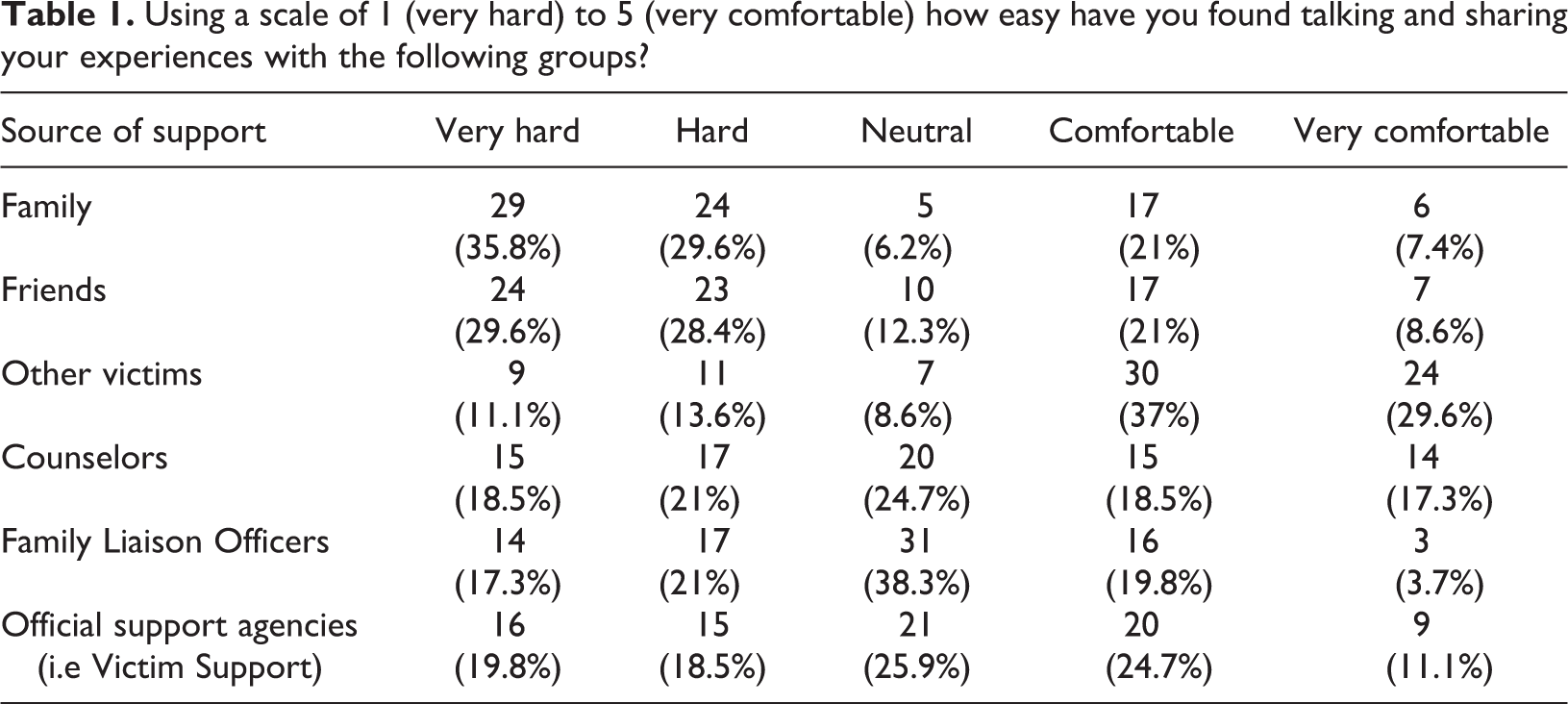
The preference to share experiences with fellow survivors was highlighted when respondents were asked how comfortable they had felt talking and sharing experiences with particular official and non-official groups. Over half (n = 54) of respondents stated that they had felt either ‘very comfortable’ or ‘comfortable’ sharing their experiences with other terrorist survivors as opposed to friends, family or professional agencies. Just 29 (35%) individuals had felt the same when sharing their feelings with counsellors and 19 (23%) with family liaison officers – the avenues of official support in which most funding is invested. Likewise, only 23 (28%) individuals had felt either ‘very comfortable’ or ‘comfortable’ talking to members of their family about the attack (see Table 1). Individuals commented that at times during the aftermath of an attack, they had refrained from speaking to family, friends or even medical professionals for fear of shocking them with the experiences they had witnessed. One participant illustrated how this lack of connection had thus hindered the recovery process when describing an encounter with a trained support worker, ‘My victim support worker gave me the best support she could even though she admitted she didn’t know how much she could help as she had no training in the situation we were in’.
Using a scale of 1 (very hard) to 5 (very comfortable) how easy have you found talking and sharing your experiences with the following groups?
While companionship, mutual understanding and comfort from fellow survivors were achieved through online support groups, in-person meetings had provided individuals with a sense of belonging. The support they had received from other survivors had validated their feelings: they were no longer having to process the situation in isolation for fear that it was only them experiencing certain feelings, including those of numbness, guilt, anger and hypersensitivity. Several participants stated that it had taken weeks, or even several months after the attack until they had started to process what had happened, and it was at this point that they had felt that by associating with fellow survivors face-to-face, their recovery improved: ‘It’s great to know that other people out there are experiencing the same thoughts and feelings as me’.
The value of face-to-face peer support has been most evident in relation to survivors of the Manchester Arena attack in 2017, an attack that involved many children. Support for children of terror attacks and how to deal with the after-effects was, and continues to be, an area previously never explored on a large scale in the UK. While participants described their frustrations with the lack of official support primarily designed to assist children, with 70% (n = 57) either stating that they strongly disagreed or disagreed that there was currently a good level of support for children affected by terrorism, they spoke favourably about the different manifestations of support that had been accessed through fellow survivors.
Several participants had spoken of the ‘family community’ they had found through being part of the Manchester Survivors Choir, a choir established by a group of individuals who in some way had been affected by the attack. One participant described this group as being like a family who ‘understand, love and support each other’, with another speaking of how joining has helped the whole family to be part of something collectively and move on positively. The group did not dwell on the events that had brought them together, rather they appreciated the release that being part of the choir allowed, always knowing, however, that they had pillars of support nearby when needed. Parents detailed how their children had grown in confidence since being part of the choir, and were appreciating all the opportunities the choir was affording them, including singing at major events that previously would have been avoided by the children for fear of a similar attack. A similar example of this community bonding was evidenced in relation to the 415 Strong running group, a group of previously unknown individuals, all of whom had links to the Boston marathon attack, who came together in 2013 and formed a running group. It appears that while the nature of terrorism is often to cause harm to and fragment a community, it is community-based initiatives formed by those affected by attacks that affords long-term, efficient support to survivors.
The inability to access others with similar experiences certainly affected the progress of rehabilitation for terror victims as evidenced through the experiences of survivors from the Westminster and Tunisia terror attacks. One individual from the Westminster attack highlighted how they had experienced a distinct lack of a connection with other survivors from the incident, which they had so craved, both at the time of the event and to the current day. The individual had felt disheartened that there was a lack of fellow survivors to communicate with, both in person and through the online Yammer support group. Although this could be attributed to many affected by this attack being tourists who had returned home, the participant had felt that for this reason a specialist service for victims, which could provide life-long support with others, should be established: ‘There should be more support available to connect victims in order to assist in the healing process…it is something that will live with me forever’.
Similar experiences were also detailed by survivors of the Tunisia attack, who having returned home to the UK had lost contact with fellow survivors and had only been reconnected some time later through online groups.
It is clear that the need for mutual support between terror survivors is essential in their recovery in order to assist in processing the event that they have experienced and for promoting the concept of individual empowerment. Of the 59 participants in this study who had stated they had regularly used peer support, which includes both direct and indirect survivors, 27% (n = 22) had continued meeting with individuals up to a year after the attack they were involved in, while 19% (n = 16) had continued peer support for more than 3 years after an attack. On average, peer support had been continued between 6 and 12 months after an attack (Figure 2). Females preferred to use the peer support mechanism more than males, with just 10 of the 17 male participants in the study stating they had used peer support long term.
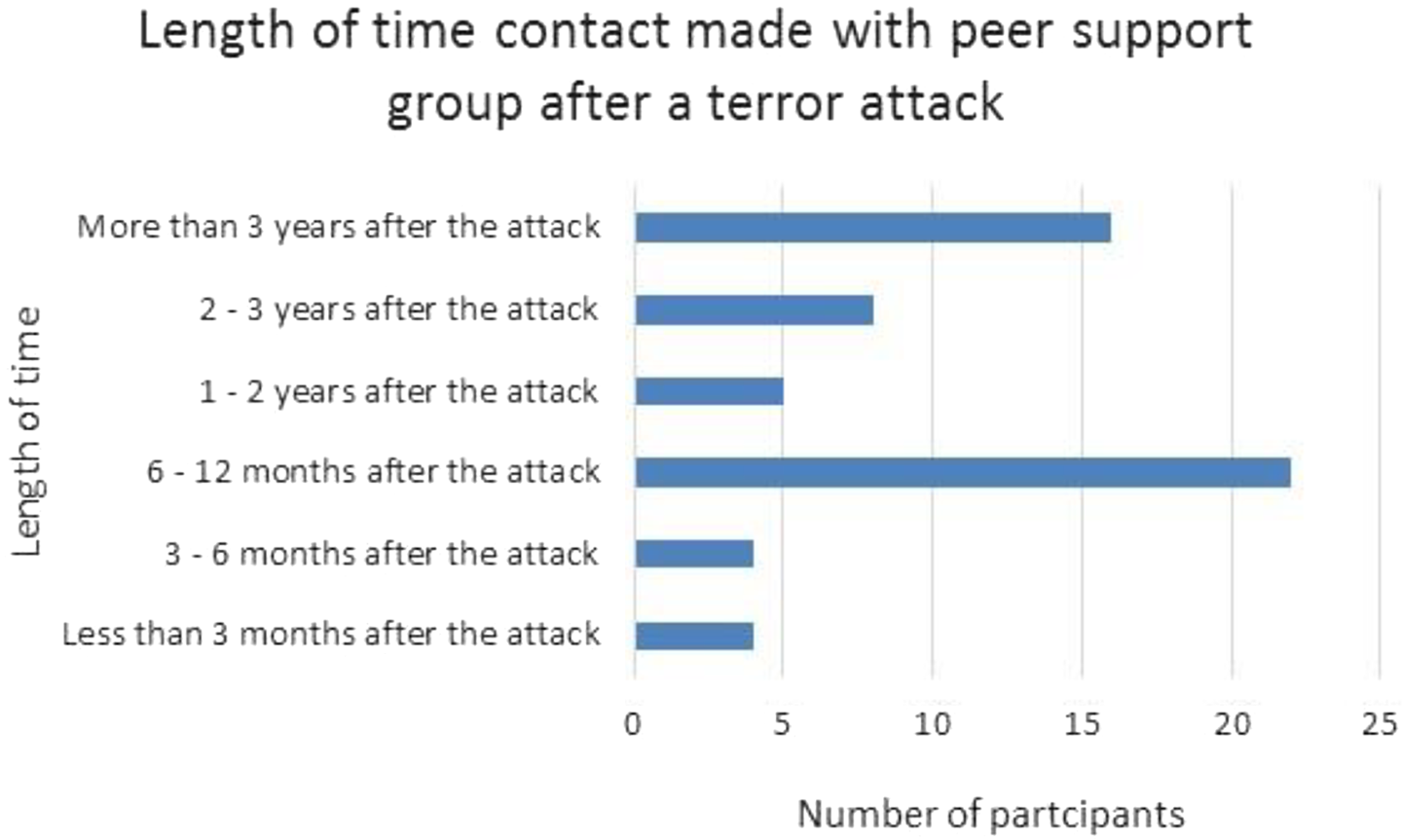
Duration the 59 participants who had regularly used peer support continued contact with a peer-led network.
The effectiveness of peer support groups was most notable in the aftermath of 9/11, where it is thought that the number of groups established surpassed any other terror attack. With the exception of a couple of established formal groups, namely SAN, whom a number of individuals in this research had spoken of favourably, peer support groups in the UK continue to be minimal. Northern Ireland however, witnessed a growth in community-based support groups during the Troubles; the groups exist to this day and are available for individuals to access even if just for a friendly chat. Indeed, all three participants in this research who were linked to the Omagh attack, had listed either the local community or fellow survivors as their main sources of support. The level of effective peer support for terrorist survivors in the UK, as illustrated through this study, appears to be informal gatherings of individuals who have sought each other out due to a lack of official support.
The absence of established peer support groups in the UK could be for a number of reasons. Muro (2015) argued that it could be attributed to the UK still retaining its resilient ‘stiff upper lip’ culture. However, participants in this research overwhelmingly believed it was due to both a lack of funding and resources (97%, n = 79) and a lack of education as to what survivors of terrorism require during the rehabilitation process (55%, n = 45). When asked whether, as a survivor, contact with other survivors was important, 87% (n = 71) of respondents either agreed or strongly agreed with the statement.
Recommendations and conclusions
The results demonstrated an overwhelming preference by those affected by terrorism to seek support through peers who have experienced the same event, as opposed to seeking support through professional, established victim support organisations. In summary, this research found that those survivors of terror attacks who took part in the study generally had negative experiences of official channels of support. One of the main barriers to accessing formal support was not the stigma of seeking help, but the lack of joint working between agencies resulting in delayed treatment times. There was clear evidence that individuals felt that formal support often lacked personalisation in terms of the support offered. They felt that they were just one of many looking for support and that a standard set programme was all that could be offered.
Translating research findings into practical and efficient concepts for action can be challenging, particularly in an area that is underfunded. While there has been a significant push by victims themselves in recent years to ameliorate the levels of support for terrorist survivors globally, it appears that official support will remain limited. From the participants’ experiences of post-attack support, findings suggest that availability of peer support in this area is thus welcomed. To this end, several actions to improve the level of peer and online support offered to terrorist survivors could be made at a UK level.
Continual development of online portals
Web-based services, including those on social media platforms, as illustrated through the Yammer online network for terrorist survivors, have clearly helped individuals seek solace in others, while being an important avenue through which to impart information and help build community networks. Efforts should be made to continue to create appropriate and beneficial support for survivors of terrorism in the UK via secure online portals, following the model of the restricted Yammer site discussed within this research. These would create a safe and confidential environment, thus instilling confidence in users. Such portals should not be limited to being updated immediately, and several months after an attack, but should provide continual support and information. Where possible, online forums should be dedicated to a specific attack in order for contact with other individuals from that attack to be made. Provision of this form of support should continue through collaborative working between police forces, the National Counter Terrorism Policing headquarters (the relevant body for the UK), and with established peer support groups who have a specific interest in terrorist survivors. Researchers should likewise be involved, working closely with the survivors themselves, recognising them as the experts in this area as to what information and support they would like offered through these channels. Work should additionally be executed with other countries to create a unified approach to supporting survivors of terrorism online, for the purposes of those involved in cross-border attacks.
Early intervention with other survivors post-attack
Participants spoke of the need to connect with fellow survivors at an early stage of their recovery and made a compelling case for the need to link with fellow survivors if they were affected by an attack not close to their home, as illustrated by survivors of the Tunisia attack. A mentoring/buddying scheme could be created with fellow survivors, which is overseen by trained professionals. Such a service would allow for the personalised approach requested by survivors, while engendering empowerment for those involved both as mentors and mentees, with individuals matched to those with similar traumas and experiences. Learning could be attained through the work of global organisations such as One World Strong in the United States, to implement a similar programme in the UK. The management and coordination of such a scheme should be conducted by non-profit, charitable organisations, with the assistance of trained trauma professionals.
Greater promotion of available support mechanisms
One of the major setbacks to individuals seeking support was the issue that participants were initially unaware of the groups and services available to them; there was a pressing need for greater publicity of peer support available for terror survivors. Participants additionally spoke of a clear lack of information with specific regard to support available to children both through the UK National Health Service (NHS), educational avenues and online. With the police more likely to have initial contact with survivors, it is important that they are given the knowledge and information of where support is available to prevent individuals experiencing delays in accessing support. The publicising of support groups should be widespread within the NHS/education sectors, while communication regarding newly created informal peer support groups should be channelled through a centralised body that can filter information to police and emergency services.
Study limitations and further research needs
While the study presents perspectives of peer support from the survivors themselves, it is recognised that use of in-depth interviews would have facilitated greater exploration of this area, thus allowing for a more comprehensive, detailed picture to be obtained as to how survivors have used the internet and peer support. There is clearly a need for further research in relation to the benefits of long-term peer support, particularly in relation to the use of internet peer support. Future research focusing on survivors from one UK-based attack (e.g. Manchester Arena) and one overseas attack (e.g. Tunisia), would be valuable and allow for a comparison to be made on how the internet is used to seek information when an attack is on home ground as opposed to overseas, where information may be more limited. Such a study could additionally encompass an exploration into how survivors’ relationships develop between those affected by UK-based attacks and those involved in overseas attacks.
Nevertheless, this research has shown the valuable work organisations and groups, who have limited support themselves, do in times of crisis to assist in connecting individuals. With the increase in terror continuing to be a major threat to society, it is important that effective mechanisms are in place that can offer support to others and improve the future for those affected by this heinous crime.
Footnotes
Acknowledgements
The researcher would like to thank all the individuals who took part in the research from the following support networks: Foundation for Peace/Survivors Assistance Network, Manchester Attack Support and the Omagh Support Group, and to the representatives of these groups for allowing the researcher to access the target audience. Also to the police officer from the Metropolitan Police Service who kindly showed the researcher the Yammer network.