




Abstract
Background:
People with advanced cancer face difficulties with their everyday activities at home that may reduce their health-related quality of life. To address these difficulties, we developed the ‘Cancer Home-Life Intervention’.
Aim:
To evaluate the efficacy of the ‘Cancer Home Life-Intervention’ compared with usual care with regard to patients’ performance of, and participation in, everyday activities, and their health-related quality of life.
Design and intervention:
A randomised controlled trial (ClinicalTrials.gov NCT02356627). The ‘Cancer Home-Life Intervention’ is a brief, tailored, occupational therapy–based and adaptive programme for people with advanced cancer targeting the performance of their prioritised everyday activities.
Setting/participants:
Home-living adults diagnosed with advanced cancer experiencing functional limitations were recruited from two Danish hospitals. They were assessed at baseline, and at 6 and 12 weeks of follow-up. The primary outcome was activities of daily living motor ability. Secondary outcomes were activities of daily living process ability, difficulty performing prioritised everyday activities, participation restrictions and health-related quality of life.
Results:
A total of 242 participants were randomised either to the intervention group (n = 121) or the control group (n = 121). No effect was found on the primary outcome (between-group mean change: −0.04 logits (95% confidence interval: −0.23 to 0.15); p = 0.69). Nor was any effect on the secondary outcomes observed.
Conclusion:
In most cases, the ‘Cancer Home-Life Intervention’ was delivered through only one home visit and one follow-up telephone contact, which not was effective in maintaining or improving participants’ everyday activities and health-related quality of life. Future research should pay even more attention to intervention development and feasibility testing.
Keywords
Many people with advanced cancer want to stay at home for as long as possible.
Research shows that people with advanced cancer have difficulties performing and participating in everyday activities at home, and this may reduce their health-related quality of life (HRQoL).
Only two pilot studies and an underpowered randomised controlled trial (RCT) have so far investigated the efficacy of occupational therapy–based (OT-based) interventions that support people with advanced cancer in performing and participating in everyday activities.
It was feasible to conduct a full-scale RCT for people with advanced cancer.
The majority of the participants wanted and needed OT-based interventions that supported their everyday activities at home.
We found no effect of the ‘Cancer Home-Life Intervention’ on activities of daily living (ADL) performance, difficulty performing prioritised everyday activities, autonomy and participation, or HRQoL.
This is the first full-scale, sufficiently powered RCT to investigate the efficacy of an OT-based intervention in people with advanced cancer.
Future RCTs evaluating efficacy of OT-based interventions in this population require even more attention to intervention development and feasibility testing.
Future studies need to consider if patients selected for their studies should have more severe functional limitations than was the case in our study and if the intervention is relevant to patients.
Introduction
More people live longer with advanced cancer,1,2 and many of them want to stay at home for as long as possible.3,4 Research shows that most people with advanced cancer have difficulties performing and participating in everyday activities,5–10 which can affect their ability to stay at home and in turn reduce their health-related quality of life (HRQoL). 11 Everyday activities refer to everything people do in daily life, like self-care and housework (activities of daily living (ADL)), work and leisure, 12 with ADL being essential for maintaining independent living. 13
Several qualitative studies emphasise that maintaining everyday activities and independence is an important priority for people with advanced cancer.14–18 However, Cheville et al. 5 showed that more than 43% of women with metastatic breast cancer (N = 163) had difficulties performing ADL. Rainbird et al. 10 revealed that 10%–30% of people with advanced cancer (N = 246) needed help with housework and preparing meals, 31% feared losing their independence and 40% were frustrated by being unable to participate in the activities they used to do previously. This resonates with a study by Johnsen et al. 6 where 29% (N = 901) of people with advanced cancer did not receive the help they need concerning ADL. Similarly, Wæhrens et al. 8 found that among people with advanced cancer, 53% (N = 136) had an observed ADL performance level requiring assistance to perform ADL and prioritised everyday activity problems mainly within mobility and domestic life. 9 Thus, to support people with advanced cancer in living their lives as fully as possible, palliative care must also focus on enabling the patients’ everyday activities.
A growing body of rehabilitation research on people with advanced cancer demonstrates effects on function and independence.19–26 These studies are largely exercise-based interventions.22–26 Occupational therapy–based (OT-based) interventions bring a different approach to existing palliative care interventions by intervening more directly on the target population’s everyday activity problems. 27 A key principle underpinning most OT-based interventions is a person-centred approach where the interventions are tailored to patient’s priorities, 27 which is in accordance with palliative care principles. 28 To our knowledge, only two pilot randomised controlled trials (RCT)29,30 and one underpowered full-scale RCT 31 have investigated OT-based interventions in people with advanced cancer. All three studies29–31 included adaptive interventions delivered by OTs, that is, interventions that include intrinsic changes, like change of habits and behaviour, and/or extrinsic changes, for example, provision of assistive technology and home modification. 32 Overall, the studies29–31 showed that delivering an adaptive intervention focused on everyday activities for people with advanced cancer was feasible, although two of the studies had significant problems with recruitment and attrition.30,31 Due to the limited evidence of OT-based interventions in people with advanced cancer, we developed the ‘Cancer Home-Life Intervention’. 12
This study evaluates the efficacy of the ‘Cancer Home-Life Intervention’ and usual care compared with usual care alone in people with advanced cancer living at home in relation to ADL performance, difficulty performing prioritised everyday activities, autonomy and participation, and HRQoL.
Methods
Trial design
This parallel group, superiority RCT with balanced randomisation (1:1) consecutively recruited participants from oncology units at Aarhus University Hospital (AUH), Denmark, and Odense University Hospital (OUH), Denmark, from February 2015 to October 2016. The Ethics Committee decided that no approval was required for this study (S-20122000-96). The study was approved by the Danish Data Protection Agency (FN 215-57-0008) and registered at ClinicalTrials.gov (NCT02356627). A previous article describes the details of the protocol. 12
Participants
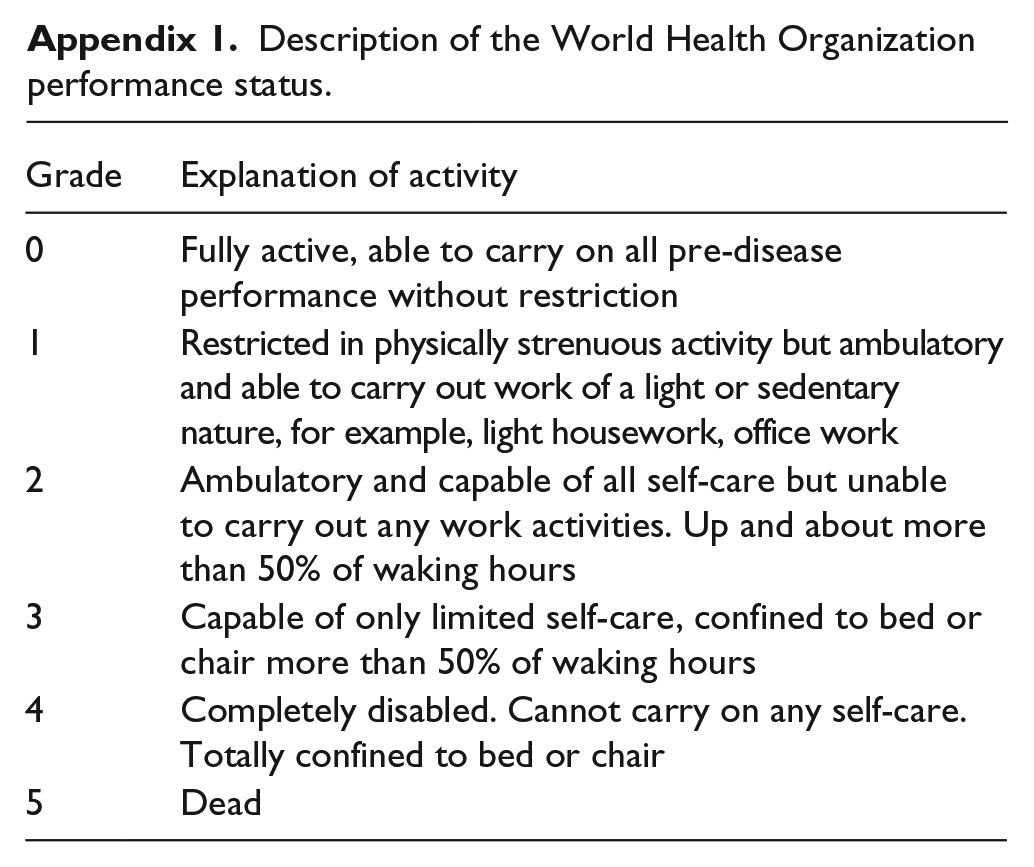
Eligible participants were home-living adults (⩾18 years) diagnosed with advanced cancer by their responsible oncologist, had a World Health Organization (WHO) Performance Status (PS) 1–2 (see Appendix 1) 33 and lived at home or in sheltered living within a maximum radius of 60 km from AUH or on the island of Funen. Ineligible participants were living in a nursing home or hospice, were cognitively impaired or had insufficient Danish language skills. The enrolled participants provided written informed consent.
Intervention and control
The ‘Cancer Home-Life Intervention’ is a tailored, OT-based, adaptive programme for people with advanced cancer delivered by OTs. It aims to enable people to perform and participate in the everyday activities at home that they prioritise but have difficulties performing (e.g. ADL, leisure, social activities) through application of one or more of the six components (Table 1), with component 1 being mandatory. The rationale of the intervention is to compensate for their functional limitations by providing the participant with adaptive strategies that have the potential to give people more energy to perform and participate in the everyday activities they prioritise. The adaptive components include intrinsic and extrinsic changes, like supporting them to prioritise time and to divide activities into smaller parts, teaching them strategies to use their body in a more efficient and safe manner, and providing assistive technology and home modifications. All components are delivered through instruction in and practice of the selected strategies. Each participant is offered 1–3 face-to-face home visits lasting max 120 min and 1–3 telephone contacts after the first intervention visit to reinforce intervention strategy use and resolve any emerging problems. The tailoring (which components and the number of components and home visits) is based on the participant’s type of activity problems. For details, see the protocol and Table 1. 12
Description of the ‘Cancer Home-Life Intervention’.
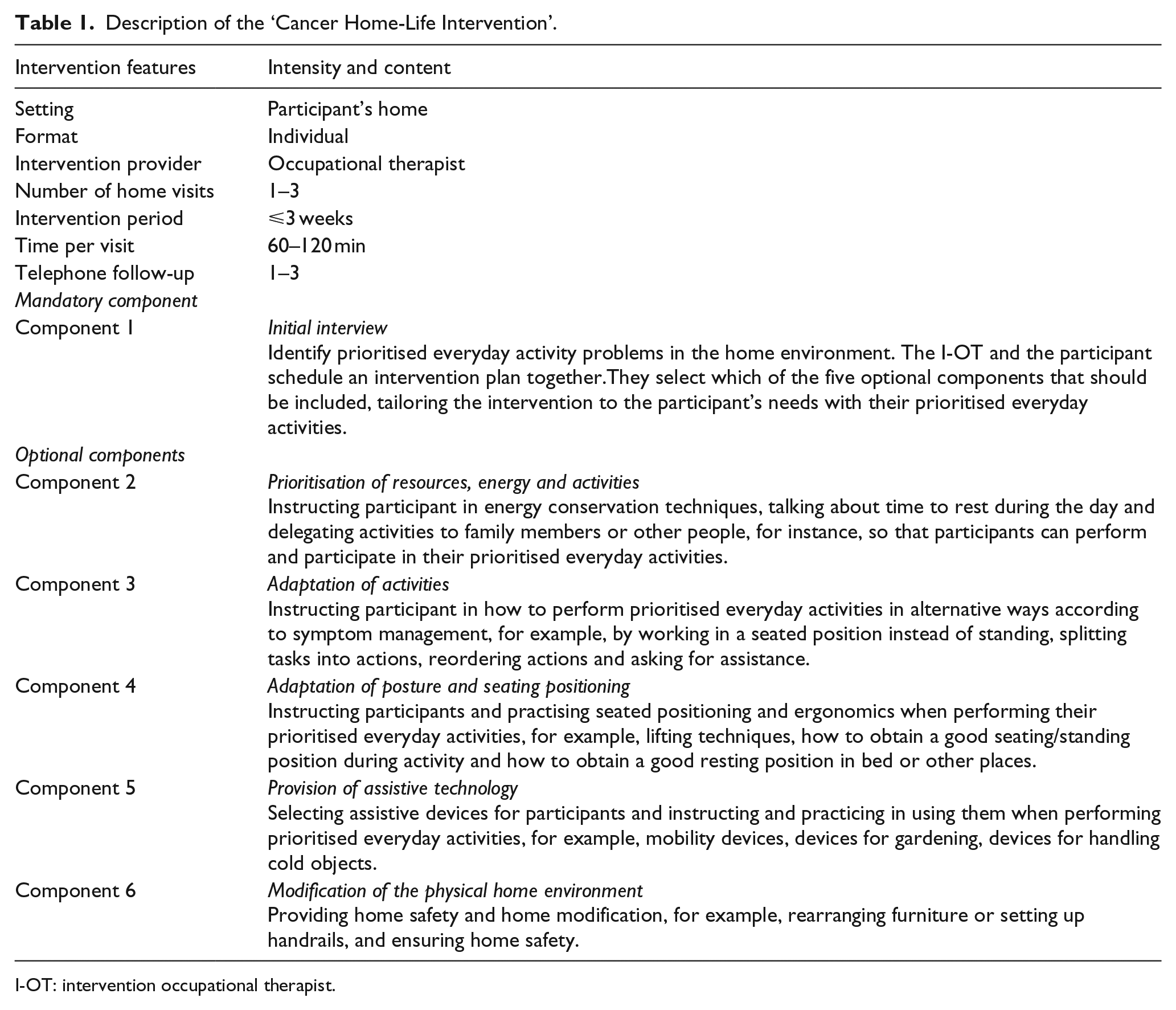
I-OT: intervention occupational therapist.
Usual care comprised home-care, palliative care and/or rehabilitation that sometimes also involved OT as provided by the participants’ home municipality.
Procedures
Six intervention occupational therapists (I-OTs) performed the intervention. The I-OTs participated in a one-day workshop where they trained in performing the intervention with time to discuss the different parts of the intervention with the developers in order to standardise the delivery of the intervention. The I-OTs participated in three meetings during the study period to enhance the fidelity of the intervention. During delivery, the I-OTs monitored their fidelity to the intervention manual by reporting which components they provided to each participant. 12 Eight trained data-collection occupational therapists (D-OTs) collected the data from February 2015 to December 2016. They collected baseline (T1) and 12-week (T3) data in the participants’ homes. Six-week (T2) data were collected using a postal questionnaire and telephone interview.
Outcome measures
ADL performance
The Assessment of Motor and Process Skills (AMPS) is an observation-based instrument measuring the observed quality of ADL task performance. It has two domains: ADL motor ability and ADL process ability. Higher positive measures represent better ADL performance. Measures of ⩾0.3 logits on both indicate a clinically relevant change. ADL motor ability measures above 2.0 logits and ADL process ability measures above 1.0 logits represent competent ADL performance (no physical effort, efficient, safe and independent). The AMPS has demonstrated sound psychometric properties in terms of validity and reliability among people with cancer34,35 and sensitivity to change in other diagnostic groups. 13
Difficulties performing the participants’ prioritised everyday activities
The Individually Prioritised Problem Assessment (IPPA) is a generic, structured interview–based instrument that is used to identify participants’ prioritised everyday activities and the ease/difficulty participants encounter when performing them. 36 The participants prioritise up to seven activity problems and rate the importance and difficulty of these problems. In this study, prioritised activity problems were limited to those in the home environment. IPPA scores range from 1 to 25, with a higher score indicating a greater degree of difficulty performing prioritised everyday activities. The IPPA has been found to be a responsive and valid instrument in elderly people.37,38
Autonomy and participation
The Danish version (IPA-DK) of the Impact on Participation and Autonomy Questionnaire (IPAQ) is a generic questionnaire used to identify person-perceived participation restrictions. It has five domains. 39 We used autonomy indoors, family roles and social relations subscales with scores ranging from 0–4, with 0 being no participation restrictions and 4 being perceived severe participation restrictions. The scores were dichotomised into no perceived restrictions (score 0 and 1) and perceived restrictions (scores 2, 3 and 4). The IPA-DK and IPAQ have demonstrated acceptable psychometric properties regarding validity, reliability and sensitivity.40–43
HRQoL
The European Organisation for Research and Treatment of Cancer Quality-of-Life Questionnaire Core 30 (EORTC QLQ C-30) is a cancer-specific questionnaire assessing HRQoL and consists of 15 scales. 44 We used the global health status/Quality of Life scale as an overall measure of HRQoL, with scores ranging from 0 to 100, where higher scores indicate better HRQoL. 44 The EORTC QLQ C-30 has been found to be a responsive, valid and reliable instrument among people with advanced cancer.45,46
Primary outcome
Change in ADL motor ability from T1–T3 measured with the AMPS. 13
Secondary outcomes
Change in ADL process ability from T1–T3 measured with the AMPS; 13
Change in difficulties performing prioritised everyday activities from T1–T2 and from T1–T3 assessed with the IPPA; 36
Probability of no perceived participation restrictions within the domains autonomy indoors, family role and social relations at T2 and T3 assessed by the IPA-DK; 39
Change in HRQoL from T1–T2 and from T1–T3 assessed by the EORTC QLQ C-30. 44
Sample size
To identify a clinically relevant between-group change of 0.3 logits on the ADL motor ability, we needed to recruit 272 participants with an expected attrition of 32% (N = 184 would provide 80% power). Alpha was 5% and the standard deviation (SD) 0.727. 12
Randomisation and masking
After T1, the D-OTs randomised the participants to one of the two groups using online computer-generated randomisation with a fixed block size prepared by the Odense Patient Data Explorative Network that had no other study involvement.
Analyses were performed masked for the group allocation. The D-OTs were masked when collecting the outcome measures.
Analyses
Descriptive data are presented with mean values and SD, median and interquartile range (IQR), or number and percent. For quantitative outcomes (AMPS, IPPA and EORTC QLQ C-30), change in the intervention group was compared with change in the control group 47 using multiple linear regression analyses. Analyses were adjusted for hospital.
Logistic regression analysis was performed comparing the odds ratio (OR) of not having perceived participation restrictions within the three IPA-DK domains. Between-group change and the OR were presented with 95% confidence intervals (CI).
Primary analyses were performed as complete case analysis, excluding participants with missing outcome measure values and with invalid AMPS data. Data were analysed according to original group allocation; and two sensitivity analyses were conducted to examine the robustness of the primary analyses:
Linear regression analysis adjusted for unbalanced variables at T1 between the groups. 12
Mixed linear models to investigate change over time and between-group differences for quantitative outcomes.
p values ⩽0.05 were considered statistically significant. Analyses were performed using STATA 14.
Results
Participants
Between 16 January 2015 and 28 September 2016, 522 people were invited to participate (Figure 1). Measures were completed at T1 by 242 participants who were randomised to intervention (n = 121) or control (n = 121). No significant differences for age (p = 0.29), gender (p = 0.55), WHO PS (p = 0.65) and primary cancer type (p = 0.24) were found between participants and those who declined participation.
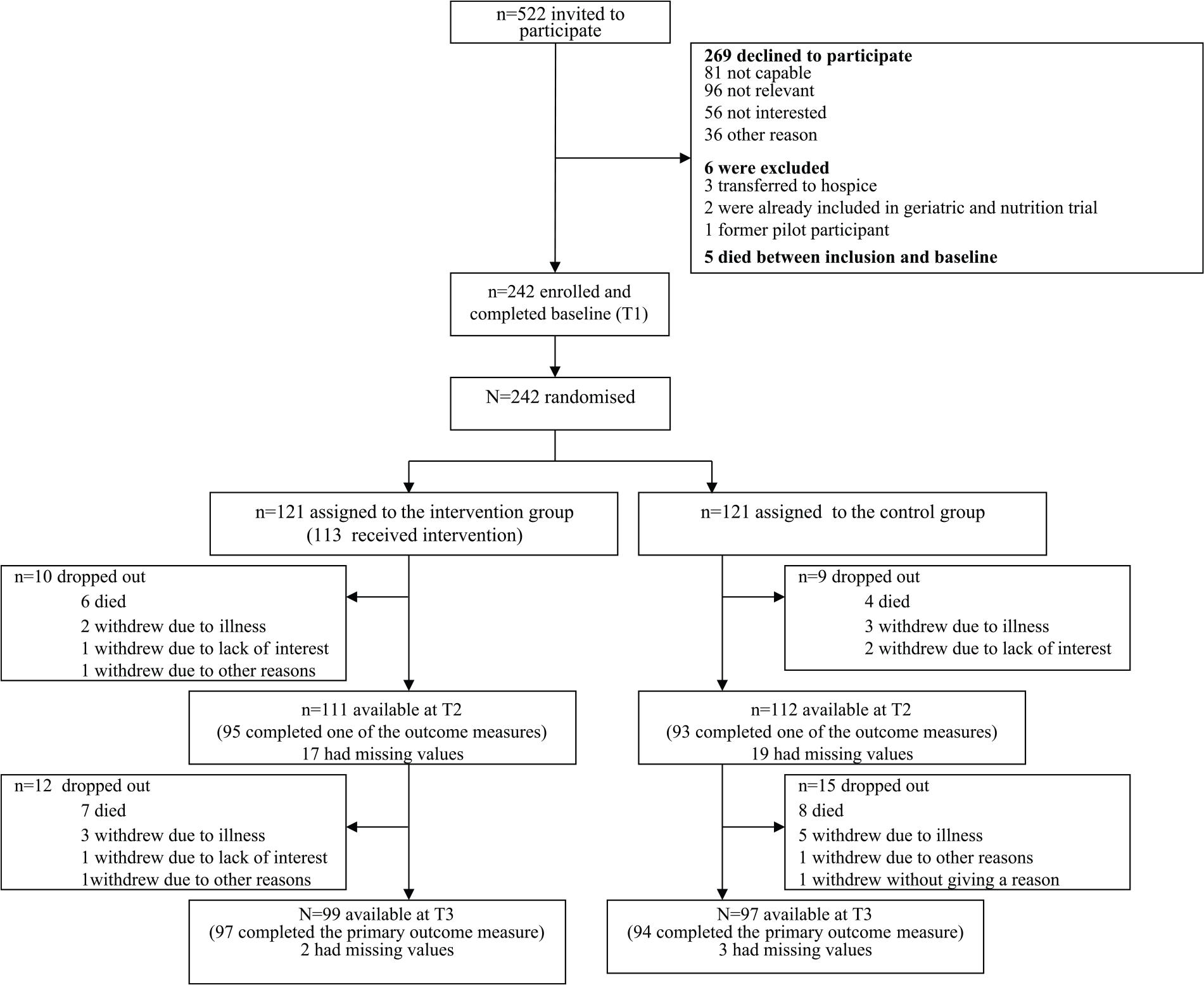
Flow chart
Attrition was almost similar (intervention: 8.3% (T2) and 9.9% (T3)) versus control: 7.4% (T2) and 12.4% (T3)) with death and illness being the main causes. T3 (AMPS: n = 1 invalid) was completed by 191 participants (Figure 1). The number of people included was sufficient to reach the calculated sample size (N = 184).
The mean age for the study population was 67.91, slightly more women than men participated (124 (51.2%)), and the majority of the participants were living with a partner (167 (68.9%)). The most common primary cancer types were gastrointestinal (74 (30.6%)), lung (48 (19.8%)) and breast (37 (15.3%)). The mean ADL motor ability was 1.13 logits, namely, far below the competence cut-off (<2.0 logits), indicating safety risk and/or need for assistance during ADL performance. The mean ADL process ability was 0.84 logits, which is just below the competence cut-off (<1.0 logits). Participants encountered difficulties performing their prioritised everyday activities (mean score 14.26 on 1–25 scale) and had reduced HRQoL (mean score 58.51 on 0–100 scale). They reported almost no perceived participation restrictions within the three subdomains of the IPA-DK (Table 2).
Participants’ baseline characteristics (N = 242).
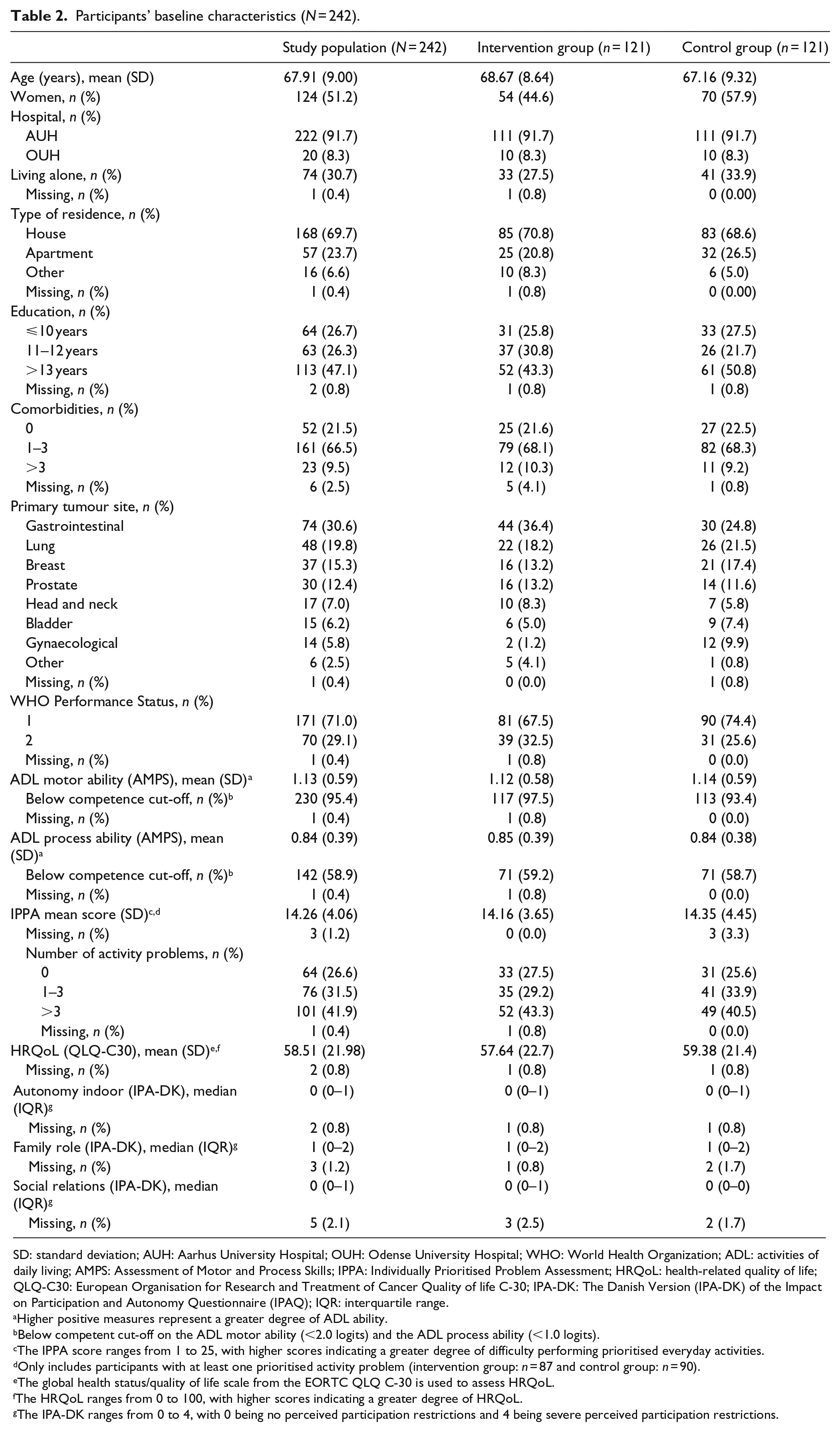
SD: standard deviation; AUH: Aarhus University Hospital; OUH: Odense University Hospital; WHO: World Health Organization; ADL: activities of daily living; AMPS: Assessment of Motor and Process Skills; IPPA: Individually Prioritised Problem Assessment; HRQoL: health-related quality of life; QLQ-C30: European Organisation for Research and Treatment of Cancer Quality of life C-30; IPA-DK: The Danish Version (IPA-DK) of the Impact on Participation and Autonomy Questionnaire (IPAQ); IQR: interquartile range.
Higher positive measures represent a greater degree of ADL ability.
Below competent cut-off on the ADL motor ability (<2.0 logits) and the ADL process ability (<1.0 logits).
The IPPA score ranges from 1 to 25, with higher scores indicating a greater degree of difficulty performing prioritised everyday activities.
Only includes participants with at least one prioritised activity problem (intervention group: n = 87 and control group: n = 90).
The global health status/quality of life scale from the EORTC QLQ C-30 is used to assess HRQoL.
The HRQoL ranges from 0 to 100, with higher scores indicating a greater degree of HRQoL.
The IPA-DK ranges from 0 to 4, with 0 being no perceived participation restrictions and 4 being severe perceived participation restrictions.
We found the two groups comparable at baseline, but did see slightly more women in the control group. We therefore adjusted for gender in the sensitivity analyses.
Delivered interventions
Eight participants declined the intervention (6.61%). The remainder of the intervention group received the mandatory component 1 (113 (93.4%)). The median number of delivered components was three. A total of 36 participants (29.8%) received more than one home visit, and 62 participants (51.2%) received at least one follow-up telephone contact (Table 3). Agreement between the D-OTs’ estimate of group allocation and the actual allocation was 66.2% (k = 0.32 (95% CI: 0.21−0.44)), indicating weak agreement. Five participants (4.1%) in the control group received some element of OT from their local municipality during T1–T2 and two participants (1.7%) from T2–T3.
Components from the ‘Cancer Home-Life Intervention’ delivered to the participants in the intervention group (N = 121) a and total number of home visits, telephone follow-up contacts and time.
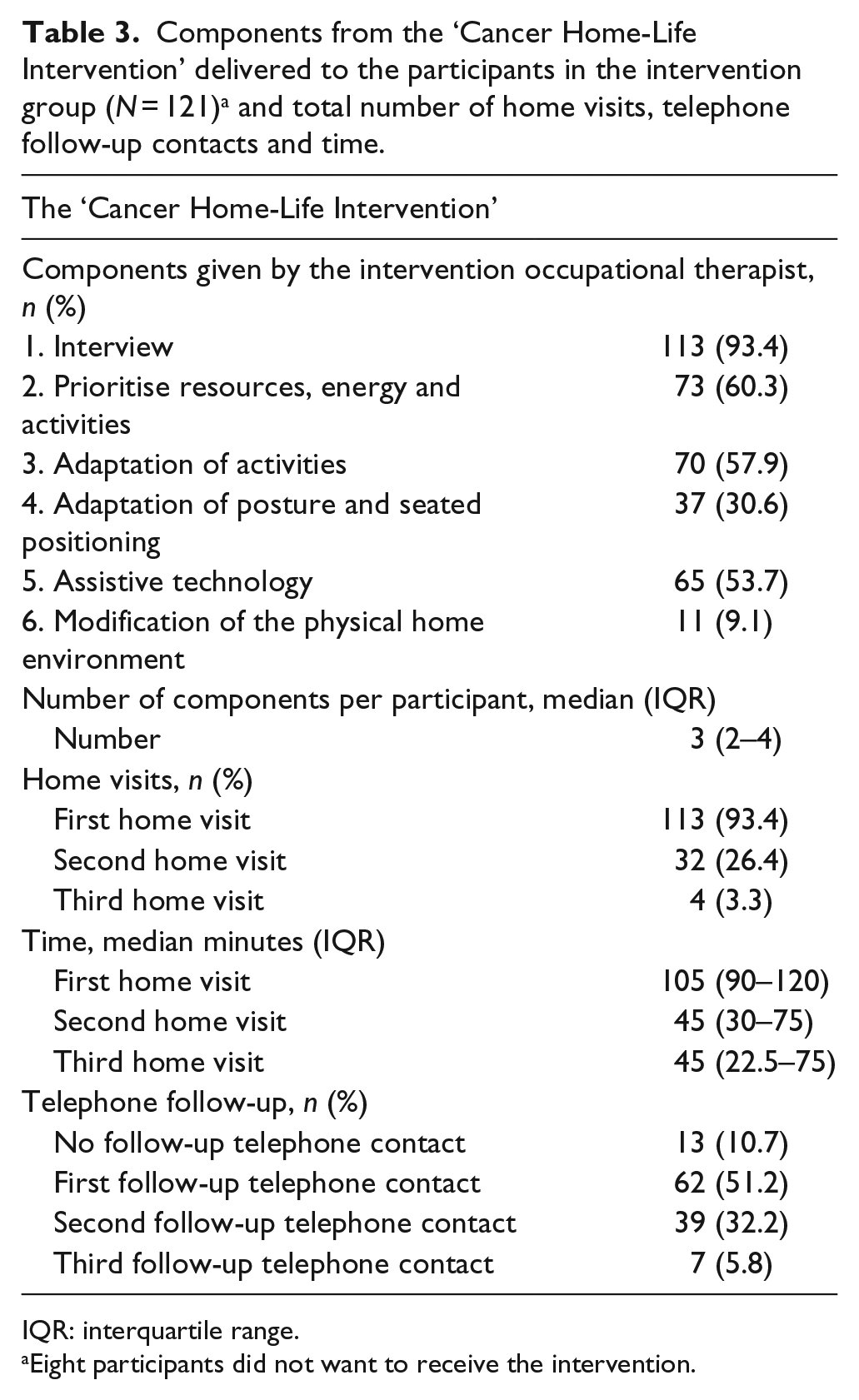
IQR: interquartile range.
Eight participants did not want to receive the intervention.
The primary outcome
ADL motor ability decreased in both groups during T1–T3 (Figure 2(a)). The within-group change was small (intervention group: −0.14 logits (95% CI: −0.27 to 0.00)) (control group: −0.10 logits (95 CI: −0.24 to 0.05); Table 4) with the change in the intervention group being borderline significant. We observed no statistically significant effect of the ‘Cancer Home-Life Intervention’ on the primary outcome from T1–T3 (between-group mean change in ADL motor ability: −0.04 logits (95% CI: −0.23 to 0.15); p = 0.69; Table 4). Sensitivity analyses did not change the results.
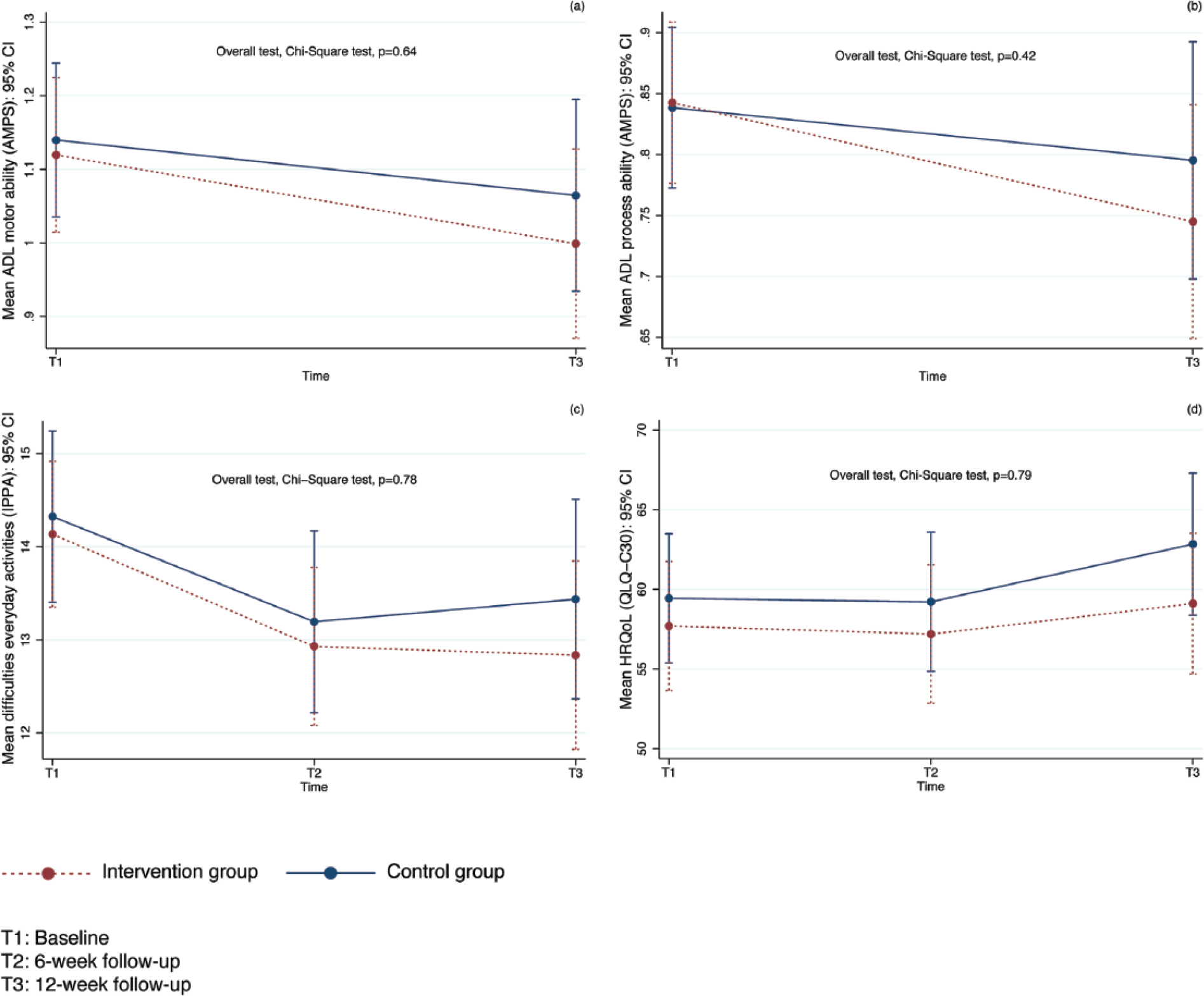
Change over time and between-group differences. ADL=Activities of Daily Living; AMPS=Assessment of Motor and Process Skills; IPPA=Individually Prioritised Problem Assessment; HRQoL=Health-related Quality of Life; QLQ-C30=European Organisation for Research and Treatment of Cancer Quality of Life Questionnaire C-30.
Mean change in primary outcome and secondary outcomes from baseline (T1) to six- (T2) and 12-week follow-up (T3) and odds ratio for no perceived participation restrictions; complete case analysis.
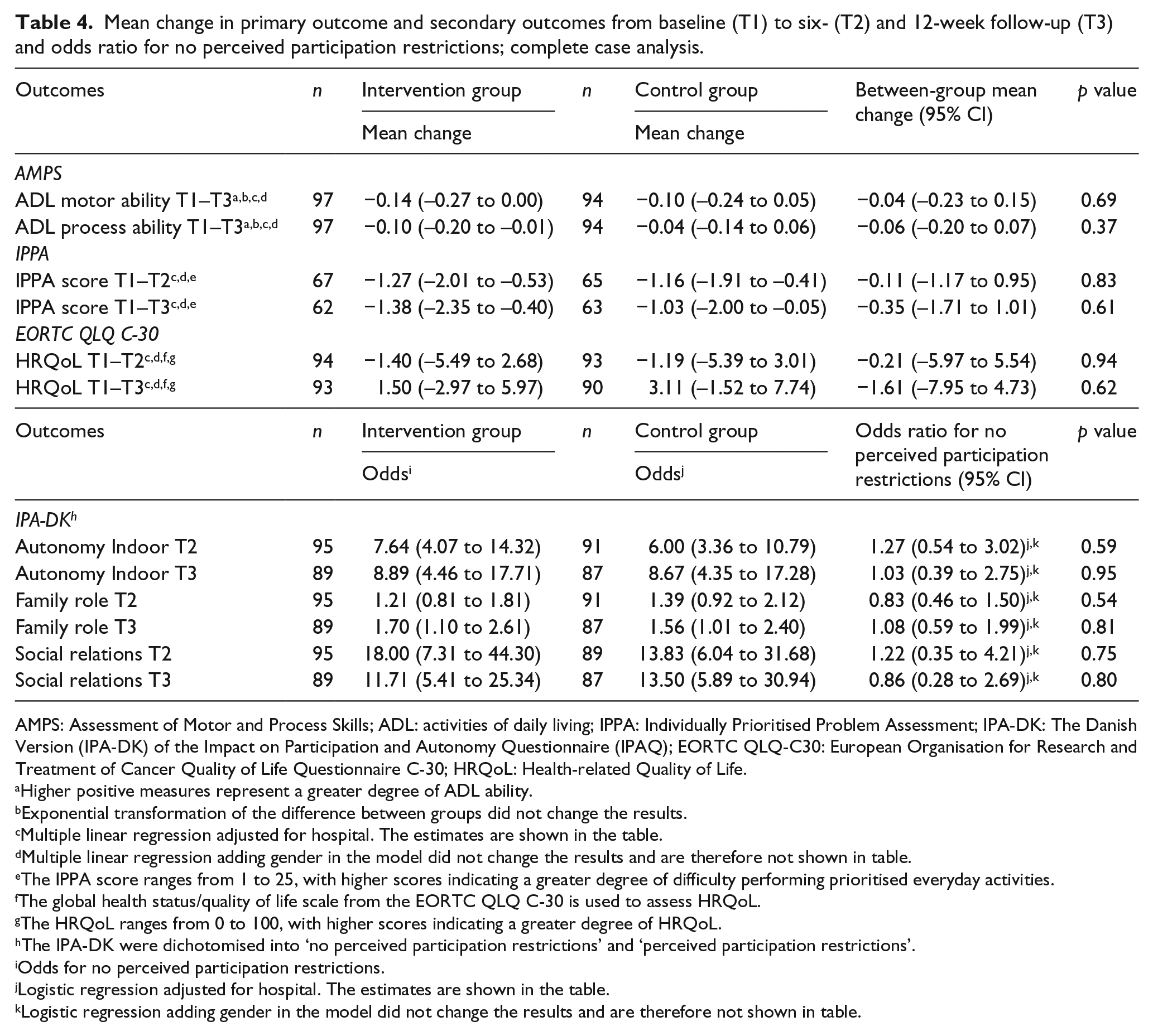
AMPS: Assessment of Motor and Process Skills; ADL: activities of daily living; IPPA: Individually Prioritised Problem Assessment; IPA-DK: The Danish Version (IPA-DK) of the Impact on Participation and Autonomy Questionnaire (IPAQ); EORTC QLQ-C30: European Organisation for Research and Treatment of Cancer Quality of Life Questionnaire C-30; HRQoL: Health-related Quality of Life.
Higher positive measures represent a greater degree of ADL ability.
Exponential transformation of the difference between groups did not change the results.
Multiple linear regression adjusted for hospital. The estimates are shown in the table.
Multiple linear regression adding gender in the model did not change the results and are therefore not shown in table.
The IPPA score ranges from 1 to 25, with higher scores indicating a greater degree of difficulty performing prioritised everyday activities.
The global health status/quality of life scale from the EORTC QLQ C-30 is used to assess HRQoL.
The HRQoL ranges from 0 to 100, with higher scores indicating a greater degree of HRQoL.
The IPA-DK were dichotomised into ‘no perceived participation restrictions’ and ‘perceived participation restrictions’.
Odds for no perceived participation restrictions.
Logistic regression adjusted for hospital. The estimates are shown in the table.
Logistic regression adding gender in the model did not change the results and are therefore not shown in table.
Secondary outcomes
Both groups’ ADL process ability decreased during T1–T3 (Figure 2(b)). The two groups experienced statistically less difficulty performing their prioritised everyday activities over time (Table 4). Small within-group change was found concerning HRQoL, decreasing during T1–T2 and increasing during the last follow-up (Figure 2(d)). The probability of no perceived participation restrictions was high for both groups at both follow-ups. No statistically significant between-group differences were found (Table 4). Sensitivity analyses confirmed the results of no intervention effect.
Discussion
This RCT evaluated the efficacy of the ‘Cancer Home-Life Intervention’ compared with usual care alone in people with advanced cancer living at home. We found no statistically significant effect of the OT-based intervention (Table 4).
Overall, our trial demonstrates high internal validity with limited and equal attrition between the groups, blinded assessors, sufficient statistical power and successfully performed randomisation. Below we discuss several aspects that need to be considered before one hastily concludes that OT-based interventions has no effect in people with advanced cancer.
Intervention intensity
The delivered ‘Cancer Home-Life Intervention’ was tailored and adjusted to the participants. In this study, this resulted in the intervention mainly encompassing three components, most of which were used during one home visit (median minutes = 105) and one telephone contact over a 3-week time span (Table 3). One explanation for why the ‘Cancer Home-Life Intervention’ showed no effect in this study may be that the intensity of the intervention was too low. An important question in this respect is what is a minimum of OT-based intervention required to instil change. To our knowledge, no clear cut-off of the minimum intensity required to instil change exists. 48 A systematic review 49 found short-term effects on ADL and prioritised everyday activities of low intensity OT-based interventions in older people delivered over 2.5–6 months with a mean intensity varying from 0.8 to 3.4 intervention sessions per month. 49 The literature on behavioural change would argue that one home visit and one telephone contact is not enough to change strategies and achieve change, as this requires more therapeutic support over longer periods of time. 50 However, a telephone-delivered problem-solving OT-based intervention by Hegel et al. 29 lasted on average 106 min, and they found effect on function, HRQoL and emotional state. This amount of time almost equals the time used in our intervention. When we designed the trial, we decided that 1–3 visit would be enough – partly based on the trial by Hegel et al. 29 Moreover, we had expected that most participants would receive more than one visit. However, based on our results and the knowledge of behaviour change theory, 50 one may consider if we should have delivered the intervention over a longer period of time and increased the intensity.
Feasibility
We did not conduct a full feasibility study before the trial as advocated by the Medical Research Council, 51 since our cross-sectional study gave us knowledge about relevant outcomes, and we had sufficient information for estimating sample size, recruitment and so on. 12 Furthermore, we had explored the acceptability and usefulness of the intervention in four people with advanced cancer, which showed that they definitely would value such an intervention. 12 Still, a full feasibility study could have given us important information about required intervention intensity and intervention relevance.
Outcomes
Many people with advanced cancer face serious difficulties with ADL,5,6,8,9 which motivated our choice of ADL as the primary trial outcome. 8 However, they also experience difficulties in other areas at home, such as leisure and creative activities, 7 which our intervention was also designed to solve.
Selecting outcome measures that capture the essence of an intervention is challenging, especially in people with advanced cancer with complex and diverse needs. 6 Outcome measures in palliative care need to be psychometrically robust and sensitive to capture change over time. 52 Sensitivity to change is particularly important when evaluating intervention effect. We selected the AMPS as an ADL measure because it is highly sensitive 13 and more sensitive in oncology patients than other tools. 53 However, the ‘Cancer Home-Life Intervention’ targeted participants’ prioritised everyday activity problems which do not always include ADL. This could have affected the causal connection between the ‘Cancer Home-Life Intervention’ and the AMPS, which may have been too narrow in scope.
Recruitment
Recruiting the most relevant study population is another challenge. We may have included individuals without the most urgent need for the intervention since 26.6% of the participants reported no activity problems (Table 2). We cannot rule out that this may have biased the results towards the null value as these people probably received a smaller amount of interventions. Over two-thirds of the participants had a WHO PS1, meaning that we mostly recruited better functioning people with advanced cancer. People with WHO PS1 still have difficulties performing physically strenuous activities but may have less difficulties performing ADL. However, their ADL ability measured with the AMPS clearly indicated need of assistance to live in the community. Nevertheless, this issue raises the question whether we have identified the most appropriate participants for an OT-based intervention since so many had no prioritised activity problem. A solution could have been to use self-reported activity problems as an inclusion criterion.
What this study adds
This study is the first full-scale, adequately powered RCT investigating the efficacy of an OT-based intervention in people with advanced cancer.54,55 Our study demonstrates that it is feasible to conduct a full-scale RCT in this vulnerable group of people and that the majority of them want and need OT-based interventions that support their everyday activities at home. This underlines that even though our RCT produced no evidence supporting the benefits of the present OT-based intervention, research and clinical practice in palliative care still need to focus on how to enable everyday activities in people with advanced cancer, helping them to live their lives as fully as possible.
Conclusion
The ‘Cancer Home-Life Intervention’, delivered mostly through a single home visit and a single follow-up telephone contact, was not effective in maintaining or improving participants’ everyday activities and HRQoL. Future studies should pay even more attention to intervention development, minimal intervention ‘dose’ believed to make a change and feasibility testing.
Footnotes
Appendix
Description of the World Health Organization performance status.
| Grade | Explanation of activity |
|---|---|
| 0 | Fully active, able to carry on all pre-disease performance without restriction |
| 1 | Restricted in physically strenuous activity but ambulatory and able to carry out work of a light or sedentary nature, for example, light housework, office work |
| 2 | Ambulatory and capable of all self-care but unable to carry out any work activities. Up and about more than 50% of waking hours |
| 3 | Capable of only limited self-care, confined to bed or chair more than 50% of waking hours |
| 4 | Completely disabled. Cannot carry on any self-care. Totally confined to bed or chair |
| 5 | Dead |
Acknowledgements
The authors thank the participants, the employees from the hospitals and the OTs. They also thank our advisory board: Professor Malcolm Cutchin, Professor Anders Bonde Jensen, Professor Jens Søndergaard and Associate Professor Eva Ejlersen Wæhrens.
Declaration of conflicting interests
The author(s) declared no potential conflicts of interest with respect to the research, authorship and/or publication of this article.
Funding
The author(s) disclosed receipt of the following financial support for the research, authorship and/or publication of this article: The TrygFonden and the Danish Cancer Society (R53-A2783), the University of Southern Denmark, the Danish Association of Occupational Therapists (FF 2 14 – 3), and the Region of Southern Denmark (15/23775) funded the study.

References
Supplementary Material
Please find the following supplemental material available below.
For Open Access articles published under a Creative Commons License, all supplemental material carries the same license as the article it is associated with.
For non-Open Access articles published, all supplemental material carries a non-exclusive license, and permission requests for re-use of supplemental material or any part of supplemental material shall be sent directly to the copyright owner as specified in the copyright notice associated with the article.
