




Abstract
Objective
No study has examined outcomes derived from blood flow restriction exercise training interventions using regulated compared with unregulated blood flow restriction pressure systems. Therefore, we used a systematic review and meta-analyses to compare the chronic adaptations to blood flow restriction exercise training achieved with regulated and unregulated blood flow restriction pressure systems.
Data sources
The electronic database search included using the tool EBSCOhost and other online database search engines. The search included Medline, SPORTDiscus, CINAHL, Embase and SpringerLink.
Methods
Included studies utilised chronic blood flow restriction exercise training interventions greater than two weeks duration, where blood flow restriction was applied using a regulated or unregulated blood flow restriction pressure system, and where outcome measures such as muscle strength, muscle size or physical function were measured both pre- and post-training. Studies included in the meta-analyses used an equivalent non-blood flow restriction exercise comparison group.
Results
Eighty-one studies were included in the systematic review. Data showed that regulated (n = 47) and unregulated (n = 34) blood flow restriction pressure systems yield similar training adaptations for all outcome measures post-intervention. For muscle strength and muscle size, this was reaffirmed in the included meta-analyses.
Conclusion
This review indicates that practitioners may achieve comparable training adaptations with blood flow restriction exercise training using either regulated or unregulated blood flow restriction pressure systems. Therefore, additional factors such as device quality, participant comfort and safety, cost and convenience are important factors to consider when deciding on appropriate equipment to use when prescribing blood flow restriction exercise training.
Introduction
Interest in the use of blood flow restriction exercise blood flow restriction exercise during training is becoming more widespread among athletes, coaches, exercise practitioners, researchers and the general healthy population.1,2 The two primary features of blood flow restriction exercise are (1) the application of a tourniquet or inflatable cuff to the most proximal part of the exercising limb designed to moderate limb blood flow throughout the contraction cycle of working muscle groups 2 and, (2) an exercising load that is typically of light-intensity (e.g. 20–40% of one repetition maximum for resistance exercise). 2 The primary outcomes from training with these two features are gains in muscle strength and muscle size, as well as improved objective physical function that can approach levels observed with traditional heavy-load resistance training. 3 In addition, there is a growing interest in endurance and aerobic capacity adaptations following blood flow restriction exercise training.4,5
There is, however, variability in the primarily observed adaptations of muscle growth, strength,6–8 and physical function9,10 with blood flow restriction exercise training. This variability has been suggested to be dependent on the cuff type and other characteristics by which the restriction to flow (i.e. pressure) is applied to the active limb.11,12 These include factors such as cuff width, absolute applied pressure, duration of the pressure application and the potential interaction of these factors with participant characteristics such as limb circumference, adiposity, blood pressure and fitness.2,13 In addition, the influence of these factors may vary depending on the nature of the exercise (e.g. aerobic vs resistance, duration and intensity).
Many early studies used relatively thin (<10 cm) cuffs and relatively high pressures 14 that were seemingly arbitrary in their selection, 15 and where a significant restriction to limb blood flow is expected. 9 More recently, studies have adopted the use of relatively wider cuffs (>15 cm) combined with relatively lower pressures that are often determined in relation to an individualised metric such as systolic blood pressure or the measurement of total limb occlusion pressure.16,17 Individualised pressures are proposed to be more beneficial during blood flow restriction exercise by providing the practitioner with a safer, standardised and more justifiable approach to pressure selection.2,13,16,18 However, one apparently significant difference between studies that have examined outcomes from blood flow restriction exercise training is whether the pressure application is achieved with the use of cuff pressure systems that attempt to regulate the applied blood flow restriction pressure (regulated systems) or systems that do not (unregulated systems). An unregulated cuff system applies a set pressure at rest prior to exercise and does not actively or dynamically adjust the set pressure throughout the range of motion of the limb. This results in variable pressure application as the applied pressure is calculated at rest and does not account for muscle contractions under the cuff. As such, this might result in greater peak pressures being applied during contractions than intended. 19 In contrast, a regulated cuff system applies a set pressure at rest prior to exercise, and then continuously and actively adjusts the applied pressure to maintain a constant applied pressure throughout the range of motion of the limb, accounting for muscular contractions under the cuff.19,20
Therefore, the aim of this systematic review and meta-analysis was to examine (compare) the effect of regulated versus unregulated cuff pressure systems on the chronic adaptations to blood flow restriction exercise training interventions, with a specific focus on the gains in muscle strength, size and physical function as the primary outcomes of focus for blood flow restriction exercise training in both research and practice. This review also identifies observed adaptations for less commonly assessed blood flow restriction exercise training adaptations such as endurance and aerobic capacity. This important distinction will support practitioner's decision-making when selecting blood flow restriction systems to suit their needs, alongside other important considerations such as device quality, safety, cost and convenience.2,21
Methods
This systematic review was conducted in accordance with the Preferred Reporting Items for Systematic Reviews and Meta Analyses (PRISMA) guidelines.
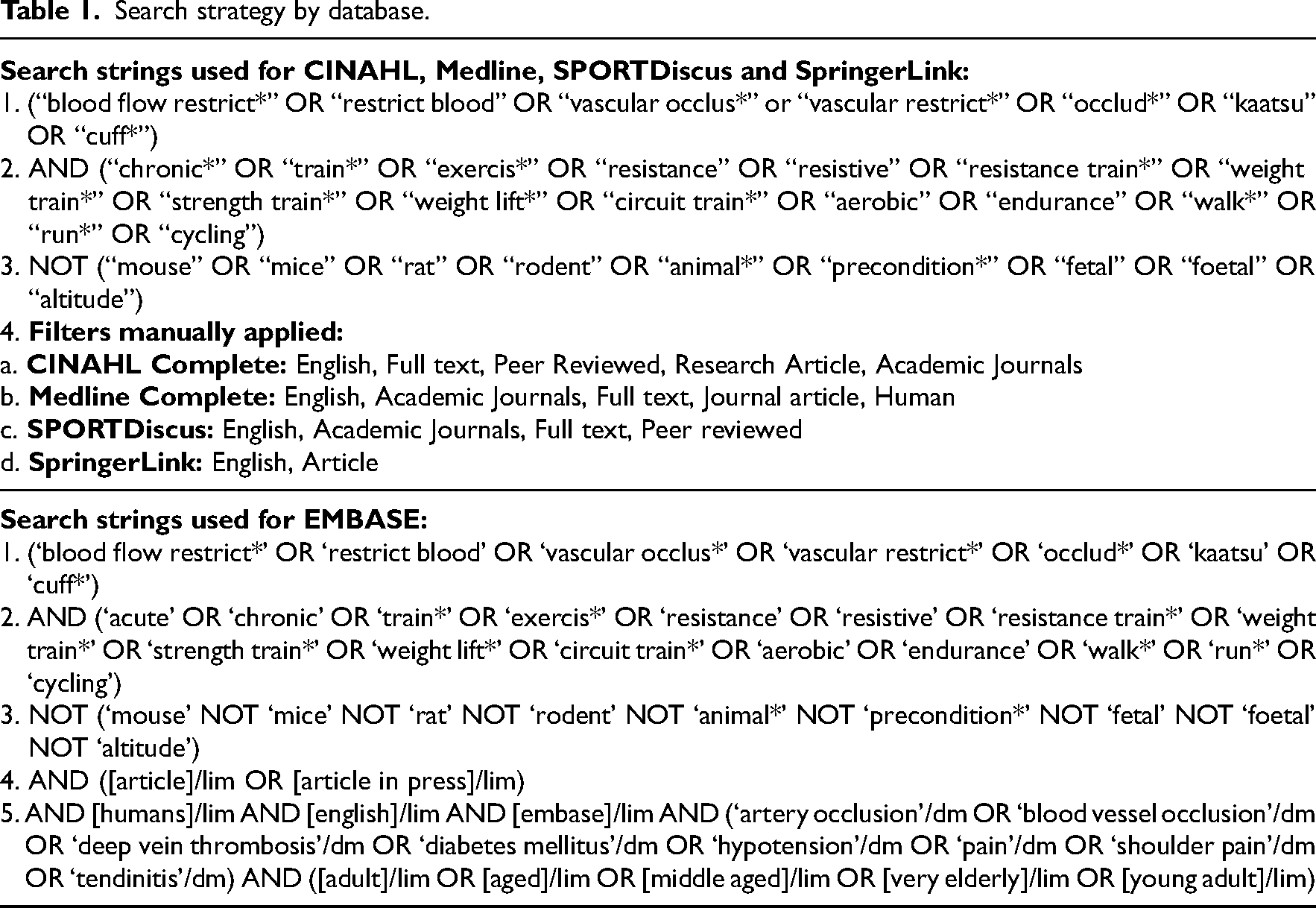
The electronic database search included using the tool EBSCOhost and other online database search engines. The search included Medline, SPORTDiscus, CINAHL, Embase and SpringerLink. Search terms were derived from ‘blood flow restriction’, ‘vascular occlusion’ and ‘chronic exercise’ (Table 1). Search results were filtered within the database where possible for the filters ‘Human’, ‘English’, ‘research article’ and/or ‘full text’. Search results included dates from inception until the date of the search (31 December 2023).
Search strategy by database.
Participants, interventions and comparators
The database results were imported into Endnote X9. Duplicates were removed, and screening was completed by title and abstract and full text. The full text screening consisted of examining the details provided within the studies on the cuff pressure system (including brand), training interventions and population groups. Excluded articles were sorted in accordance with relevant inclusion and exclusion criteria noted in the PRISMA flow chart (Figure 1). This process was completed by two researchers independently (BM, MJC, SAW).
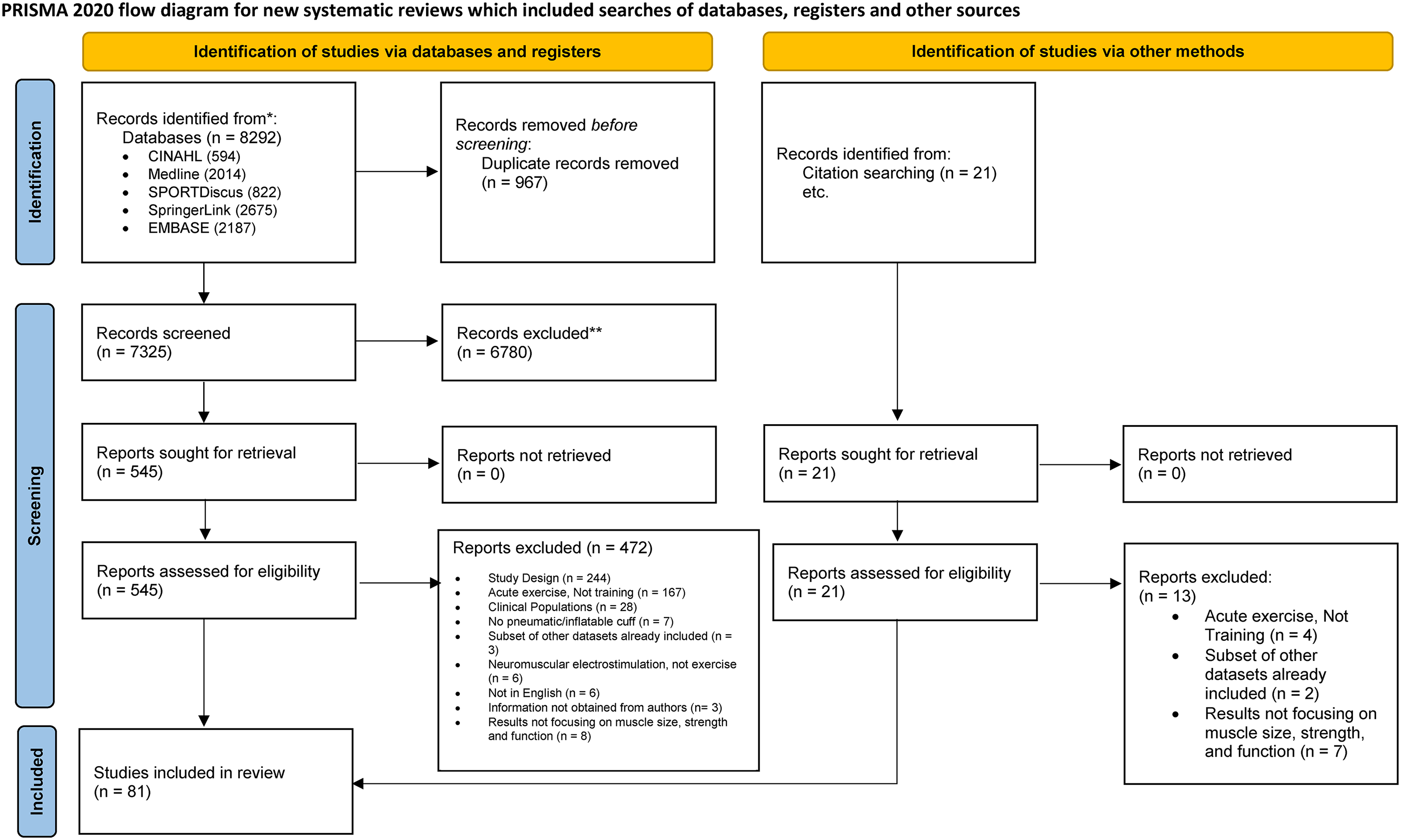
Preferred Reporting Items for Systematic Reviews and Meta-Analyses (PRISMA) flow chart of study selection process.
The relevant inclusion criteria are identified below and reason for exclusion is noted in the PRISMA flow chart (Figure 1):
Language: studies published in English were included in this review. Study Design: studies that were published in a peer-reviewed journal. Systematic reviews, narrative reviews, conference abstracts, editorials, letters or publications not inclusive of original data were excluded. Exercise component: exercise training interventions must have included chronic aerobic, resistance, combined or alternative types of progressive exercise training interventions over multiple weeks (greater than two weeks) in conjunction with blood flow restriction. Age: subjects over the age of 18 years were included in this review. Outcome measures: includes at least one of muscle strength, size and physical function.
The quality and risk of bias of included studies was independently evaluated by two reviewers (BM and MJC). The assessment criteria were determined by using the Cochrane Collaboration Risk of Bias 2.0 tool for individually randomised and parallel group trials.
22
The overall quality assessment of the randomised control trials included analysing the selection bias which examined the method of recruitment for randomisation, concealment of treatment allocation and group baseline characteristics. Detection bias included blinding of participants and assessors for intervention groups. Attrition bias was determined by the level of adherence of participants, limitations and reasons for attrition. Each section of the risk of bias was assigned by rating high, low or unclear risk based on the results or the conclusions of the study.
Following the initial screening, information from the included studies was extracted including study design, study characteristics, participants’ age, sample size, cuff type and details, exercise training interventions, outcome measures and findings and details of the equipment used to apply blood flow restriction and assessments used. This was completed by at least two reviewers to ensure consensus of extracted data (BM, MJC, SAW).
Meta-analyses
Only 35 of the studies included in the broader systematic review were included in the meta-analyses.23–57 Reasons for exclusion included study not having any of the measures examined in the meta-analyses, or studies had either no comparison group or the comparison group not being a non-blood flow restriction equivalent exercise. The measures assessed in the meta-analyses included repetition maximum muscle strength, muscle strength measured via dynamometry, muscle cross-sectional area and muscle anthropometry (thickness, volume, mass, etc.). Studies were included in the meta-analyses if they presented pre- and post-data for these measures for both a blood flow restriction intervention, and a non-blood flow restriction equivalent comparison group. All outcomes were treated as continuous data. The standardised mean differences between the blood flow restriction group and the non-blood flow restriction comparison's change data were calculated for each of the relevant measures. The resulting effect estimate was expressed as Hedge's g with 95% confidence intervals (95% CI). Leave-one-out meta-analyses were performed to investigate the influence of each study on the overall effect size estimate.
The outcomes were first assessed using random-effects meta-analyses. The significance of Cochrane's Q statistic was used to test for significant heterogeneity among treatment effects (P < 0.1). The percentage of heterogeneity across studies was then quantified using the I2 statistic. Analyses with an I2< 30% were considered to have low heterogeneity, I2 between 30% and 60% were considered to have moderate heterogeneity, and I2> 60% were considered to have high heterogeneity. 58 Subgroup analyses were conducted by blood flow restriction pressure system (‘unregulated’ or ‘regulated’) for each outcome measure to compare the outcomes from studies using different blood flow restriction pressure systems. Funnel plots were used to examine potential publication bias of the included studies for each measure via visual inspection in addition to calculating the P-value of Egger's test.
Results
A total of 8292 articles were retrieved from database searches as follows: Medline (2014), SPORTDiscus (822), CINAHL (594), Embase (2187) and SpringerLink (2675). An additional 21 studies that fulfilled the inclusion criteria were identified from the reference lists of prior reviews related to the topic of blood flow restriction exercise. The studies were approved for inclusion among the original search results.
Upon the removal of duplicates 7325 articles were left to be screened by title and abstract. Of these results 6780 were excluded based on the title or abstract and the full text of the remaining 545 articles were evaluated using the inclusion and exclusion criteria. Articles removed are outlined in the PRISMA flow chart (Figure 1). Subsequently, a total of 81 articles were included for this review.
Information extracted from studies included in this review is summarised in the table of included studies (see supplementary data, Table 1). This includes details of the study design, sample size and participants, intervention, main findings and details of the blood flow restriction pressure system used in each study. Of the 81 studies included, 56 were randomised controlled trials,7–9,23–28,31,35,39,40,42–44,47–49,51–57,59–88 while 25 were non-randomised controlled trials.29,30,32–34,36–38,41,45,46,50,89–101 Within individual studies the number of participants ranged from 5 to 60, participants ranged in age from 18 years to 83 years, and participant sex was exclusively male in 33 studies, exclusively female in 12 studies, and a mix of males and females in 36 studies. Intervention duration ranged from 12 days to 12 weeks. The primary intervention was resistance training in 64 studies. Other interventions used were walking training (n = 8 studies), cycling training (n = 2 studies) and individual studies that used different interventions such as training using step-ups, sets of sit-to-stand exercise to failure, vertical jumping, hydrotherapy, Futsal and running.
Thirty-four (n = 34) of the included studies employed an unregulated blood flow restriction system to apply the blood flow restriction pressure throughout the intervention.26–31,35,38,41,47,50,54–57,61,62,64,66,67,70,71,74,76,77,79,85,86,88,90,94–96,100 These studies used cuff widths ranging from 5.5 to 20.5 cm and an applied blood flow restriction pressure between 96 and 350 mmHg. For those studies that measured arterial occlusion pressure, these used individualised blood flow restriction pressures between 30% and 80% arterial occlusion pressure. Two studies26,74 used a blood pressure-based method to apply an individualised blood flow restriction pressure of 70% systolic blood pressure 74 and 110% systolic blood pressure. 26
In contrast, n = 47 of the included studies employed a regulated blood flow restriction pressure system to apply the blood flow restriction pressure during the exercise intervention.7–9,23–25,32–34,36,37,39,40,42–46,48,49,51–53,59,60,63,65,68,69,72,73,75,78,80–84,87,89,91–93,97–99,101 These studies used cuff widths ranging from 2.5 to 18.5 cm and an applied blood flow restriction pressure between 71 and 270 mmHg. For those studies that measured arterial occlusion pressure, these used individualised blood flow restriction pressures between 40% and 90% arterial occlusion pressure. Three studies used a blood pressure-based method to apply an individualised blood flow restriction pressure between 130% and 144% systolic blood pressure.
Risk of bias is detailed for all included studies (Figure 2). When examining the studies overall, there was low risk of bias for random sequence generation for 93% of included studies, allocation concealment for 28% of included studies, 7% of studies for blinding of patients and personnel (an inherent limitation commonly acknowledged in training studies), 11% for blinding of outcome assessment, 70% for incomplete data and 91% for selective outcome reporting, as well as 100% for other sources of bias. Only five studies were rated as low risk in all categories.37,54,62,68,88 The overall results indicated a predominately low-to-moderate risk of bias, that did not prohibit or undermine the discussion points within the present review, it simply highlights the general methodological quality in blood flow restriction exercise studies and some areas where reporting could be clarified.
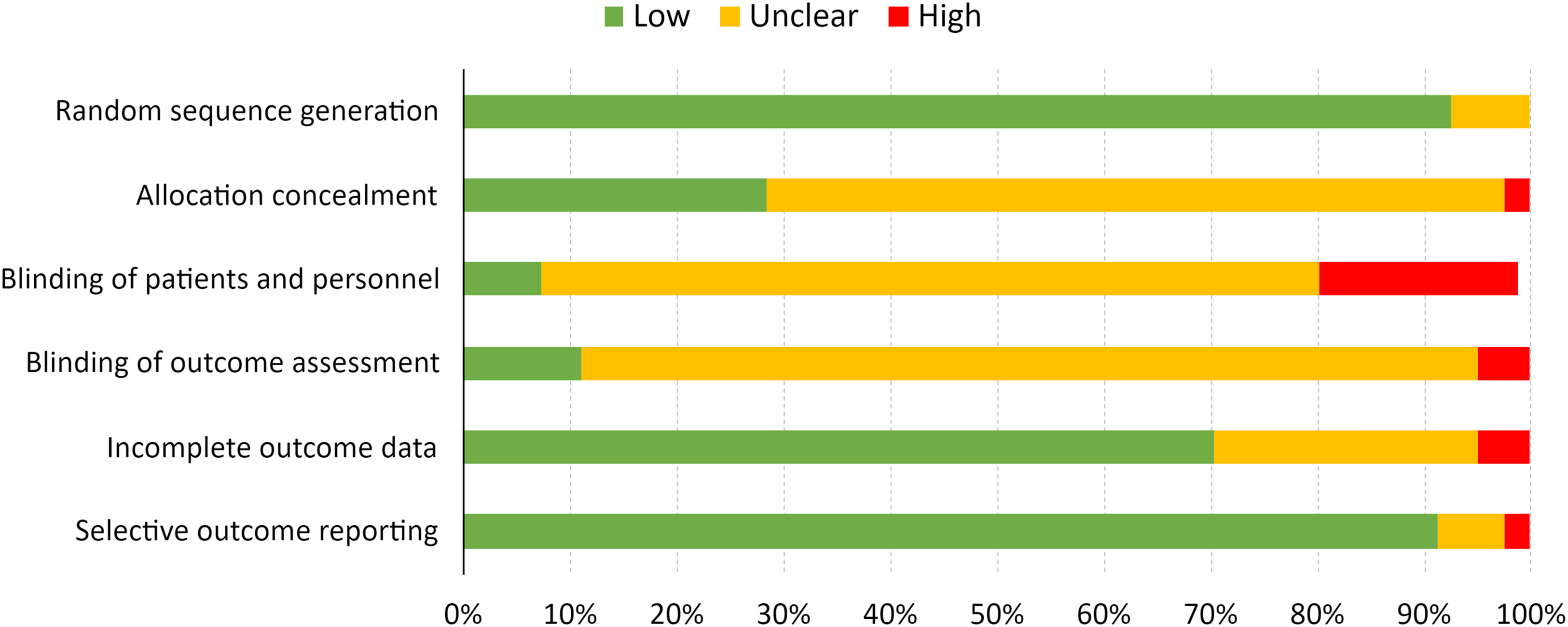
Risk of bias assessment for included studies evaluating training adaptations to blood flow restricted exercise.
Repetition maximum muscle strength was measured in a total of 45 studies. Typically (n = 41), this was via 1-repetition maximum,7–9,23–25,28–30,32,33,36,37,39,40,45–47,50,52,54,55,57,69–76,79,81,82,84,85,89,90,92,94,98 whereas other studies (n = 5) estimated strength using protocols ranging from 3-repetition maximum to 20-repetition maximum.34,54,67,68,97 Blood flow restriction interventions significantly increased repetition maximum muscle strength in 38 studies,8,9,23–25,28–30,32–34,36,39,40,45,46,50,55,57,67–74,76,81,82,84,85,89,90,92,94,97,98 remaining unchanged in three studies,37,47,79 while mixed results were recorded within four studies where some measures of repetition maximum muscle strength increased and others remained unchanged.7,52,54,75 Of those studies that showed significant increases in repetition maximum muscle strength in response to the blood flow restriction intervention (n = 42 in total), regulated blood flow restriction pressure systems (n = 27 studies) showed repetition maximum muscle strength to increase between 3% and 32%,7–9,23–25,32–34,36,39,40,45,46,52,68,69,72,73,75,81,82,84,89,92,97,98 while unregulated blood flow restriction pressure systems (n = 15) showed repetition maximum muscle strength to increase between 6% and 55%.28–30,50,54,55,57,67,70,71,74,76,85,90,94
Muscle strength through dynamometry was measured in a total of 44 studies. The majority (n = 40) used isometric dynamometry,7,8,23,24,30,31,34,37–39,41,42,44–46,49,51,53,56,59,60,62–65,71,72,77,78,84–86,88,91–93,96,97,99 whereas eight studies (n = 9) examined muscle strength using isokinetic dynamometry.35,43,45,46,49,60,68,78,88 One study measured anaerobic muscle performance via a Wingate anaerobic cycling test. 26 Blood flow restriction interventions significantly increased muscle strength in 21 studies,30,31,39,43,49,51,56,60,62,65,68,77,78,83,85,86,92,93,96,97,99 while remaining unchanged in 13 studies,7,8,26,34,37,38,42,44,63,64,71,84,91 with mixed results being recorded in 11 studies where some measures of muscle strength increased and others remained unchanged.23,24,33,35,41,45,46,53,59,72,88 Of those studies that showed significant increases in muscle strength via dynamometry in response to the blood flow restriction intervention (n = 32 in total), regulated blood flow restriction pressure systems (n = 21 studies) showed muscle strength to increase between 4% and 49%,23,24,33,39,43,45,46,49,51,53,59,60,65,68,72,78,83,92,93,97,99 while unregulated blood flow restriction pressure systems (n = 11 studies) showed muscle strength to increase between 7% and 139%.30,31,35,41,56,62,77,85,86,88,96
Muscle cross-sectional area was measured in a total of 34 studies. Training interventions included walking (n = 5),23,42,43,48,60 ergometer cycling (n = 1) 59 and concurrent aerobic and resistance training (n = 1), 70 but the most common intervention was resistance training (n = 27).7,9,25,29,38–40,47,49,51,55,56,63,73,78–80,82,84,90,91,93,94,97–100 Far more studies examined cross-sectional area following interventions using regulated blood flow restriction pressure systems (n = 24)7,9,23,25,39,40,42,43,48,49,51,59,60,63,73,78,80,82,84,91,93,97–99 than unregulated blood flow restriction pressure systems (n = 10).29,38,47,55,56,70,79,90,94,100 blood flow restriction interventions significantly increased muscle cross-sectional area in 29 studies,7,9,25,29,38,40,43,47,49,51,55,56,59,60,63,70,73,78–80,82,84,90,91,93,94,97,98,100 remaining unchanged in three studies,23,42,48 with mixed results being recorded in two studies where some measures of muscle cross-sectional area increased and some remained unchanged.39,99 Of those studies that showed significant increases in muscle cross-sectional area in response to the blood flow restriction intervention (n = 31 in total), regulated blood flow restriction pressure systems (n = 21 studies) showed muscle cross-sectional area to increase between 2% and 24%,7,9,25,39,40,43,49,51,59,60,63,73,78,80,82,84,91,93,97–99 while unregulated blood flow restriction pressure systems (n = 10 studies) showed muscle cross-sectional area to increase between 2% and 23%.29,38,47,55,56,70,79,90,94,100
Muscle anthropometry was measured in a total of 30 studies. The majority (n = 23) measured muscle volume (n = 12)8,23–25,34,36,43,48,59,69,93,99 or muscle thickness (n = 11),31–33,37,64,71,81,89,92,99,101 with others examining measures of muscle mass (n = 4)27,50,60,72 or limb circumference (n = 5).9,35,36,51,86 Far more studies examined muscle anthropometry following interventions using regulated blood flow restriction pressure systems (n = 23)8,9,23–25,32–34,36,37,43,48,51,59,60,69,72,81,89,92,93,99,101 than unregulated blood flow restriction pressure systems (n = 7).27,31,35,50,64,71,86 Blood flow restriction interventions significantly increased muscle anthropometry in 23 studies,8,23–25,31–35,43,50,51,59,60,64,69,71,72,81,89,92,93,99 remaining unchanged in four studies,27,36,37,101 with mixed results being recorded in three studies where some measures of muscle anthropometry increased and some remained unchanged.9,48,86 Of those studies that showed significant increases in muscle anthropometry in response to the blood flow restriction intervention (n = 26 in total), regulated blood flow restriction pressure systems (n = 20 studies) showed muscle anthropometry to increase between 2% and 18%,8,9,23–25,32–34,43,48,51,59,60,69,72,81,89,92,93,99 while unregulated blood flow restriction pressure systems (n = 6 studies) showed muscle anthropometry to increase between 1% and 13%.31,35,50,64,71,86
Endurance outcomes were measured in a total of 13 studies. The majority (n = 10) measured repetitions completed during an exhaustive test,33,37,38,50,53,77,78,83,85,97 while three (n = 3) used a test of time to exhaustion.26,66,95 Eight studies examined endurance following interventions using regulated blood flow restriction pressure systems (n = 6),26,33,37,53,66,78,83,97 while five used unregulated blood flow restriction pressure systems (n = 4).38,50,77,85,95 Blood flow restriction interventions significantly increased endurance in 11 studies33,37,38,50,53,66,77,78,83,85,97 and remained unchanged in two studies.26,95 Of those studies that showed significant increases in endurance in response to the blood flow restriction intervention (n = 11 in total), regulated blood flow restriction pressure systems (n = 7 studies) showed endurance to increase between 19% and 140%,33,37,53,66,78,83,97 while unregulated blood flow restriction pressure systems (n = 4 studies) showed endurance to increase between 28% and 70%.38,50,77,85
Aerobic capacity was measured in a total of eight studies.26,43,44,59–61,70,72 All used measures of peak or maximal oxygen consumption. Five studies examined endurance following interventions using regulated blood flow restriction pressure systems (n = 5),43,44,59,60,72 while three used unregulated blood flow restriction pressure systems (n = 3).26,61,70 Blood flow restriction interventions significantly increased aerobic capacity in three studies,44,59,70 remaining unchanged in five studies.26,43,60,61,72 Of those studies that showed a significant increases in endurance in response to the blood flow restriction intervention (n = 3 in total), regulated blood flow restriction pressure systems (n = 2 studies) showed aerobic capacity to increase between 5% and 12%,44,59 while the one study that used an unregulated blood flow restriction pressure system showed aerobic capacity to increase by 10%. 70
Physical function was measured in a total of 15 studies.7,9,28,35,43,54,57,60,62,67,68,72,74,83,88 These used a quite diverse range of tests and test batteries such as the six-minute walk test, sit-to-stand tests, timed Up-and-Go tests, short physical performance batteries and tests of balance, agility and hop/jump performance. Seven studies examined physical function following interventions using regulated blood flow restriction pressure systems (n = 7),7,9,43,60,68,72,83 while eight used unregulated blood flow restriction pressure systems (n = 8).28,35,54,57,62,67,74,88 Blood flow restriction interventions significantly increased physical function in eight studies,9,54,57,60,62,68,83,88 remaining unchanged in three studies,7,35,74 with mixed results being recorded in four studies where some measures of physical function increased and some remained unchanged.28,43,67,72 Of those studies that showed significant increases in physical function in response to the blood flow restriction intervention (n = 12 in total), regulated blood flow restriction pressure systems (n = 6 studies) showed improvements to physical function between 5% and 24%,9,43,60,68,72,83 while unregulated blood flow restriction pressure systems (n = 6 studies) showed improvements to physical function between 6% and 83%.28,54,57,62,67,88
While beyond the scope of this review, 16 studies measured other adaptations besides muscle strength, muscle size or objective physical function.23,25,26,30,32,42,44–46,51,63,65,72,73,80,81 These examined a quite diverse range of parameters focused on haemodynamics (e.g. blood pressures, vascular compliance, etc) and circulating hormones/metabolites (e.g. testosterone, immunoglobulins, myoglobin, creatine kinase, etc). Most of these studies examined adaptations following interventions using regulated blood flow restriction pressure systems (n = 14),23,25,32,42,44–46,51,63,65,72,73,80,81 while two studies used unregulated blood flow restriction pressure systems.26,30
Meta-analyses
Collectively, all the meta-analyses showed negligible to small effect sizes in favour of blood flow restriction exercise compared to non-blood flow restriction equivalent exercise (Figures 3–6). Small effect sizes (ES) were observed for repetition maximum muscle strength [ES = 0.27, 95% CI (0.13, 0.40)] with high heterogeneity across studies (Q = 38.77, P < 0.01, I2= 63.34%). This was also true for muscle cross-sectional area [ES = 0.27, 95% CI (0.09, 0.45)] with high heterogeneity (Q = 50.21, P < 0.01, I2= 77.86%). The negligible effects were observed for muscle strength via dynamometry [ES = 0.13, 95% CI (0.07, 0.19)] and muscle anthropometry [ES = 0.03, 95% CI (−0.03, 0.10)]. Heterogeneity was low for both muscle strength via dynamometry (Q = 13.34, P = 0.82, I2= 0%) and muscle anthropometry (Q = 6.29, P = 0.97, I2= 0%). The leave-one-out sensitivity analyses showed no studies had an adversely large impact on any of the estimated effect sizes (see supplementary data, Tables 2–5).
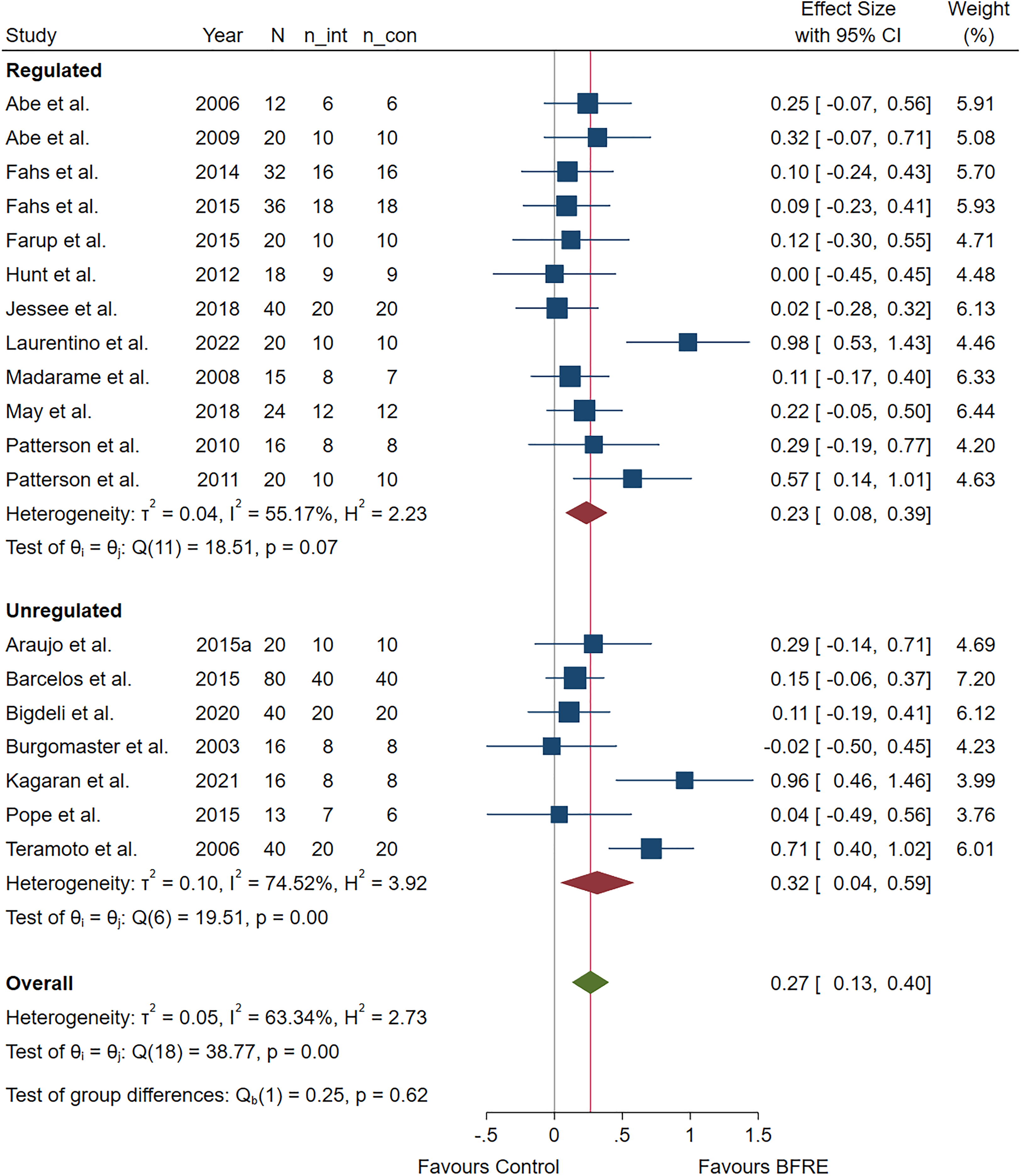
Forest plot of the effect estimates (ES) with 95% confidence intervals (CI) for repetition maximum muscle strength testing following blood flow restricted exercise training compared with non-blood flow restricted equivalent exercise training with subgroup analysis by regulated and unregulated cuff systems.
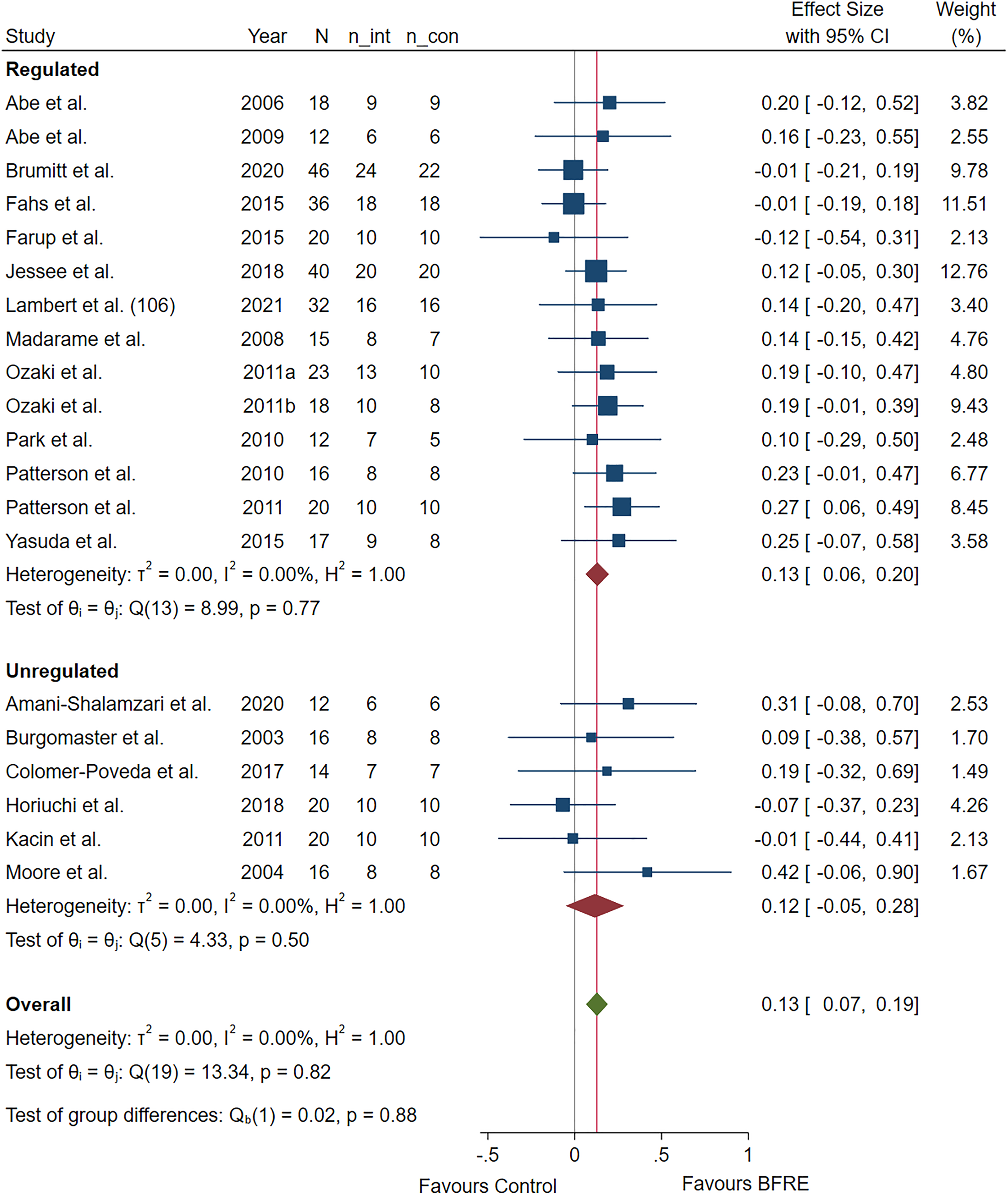
Forest plot of the effect estimates (ES) with 95% confidence intervals (CI) for muscle strength via dynamometry following blood flow restricted exercise training compared with non-blood flow restricted equivalent exercise training with subgroup analysis by regulated and unregulated cuff systems.
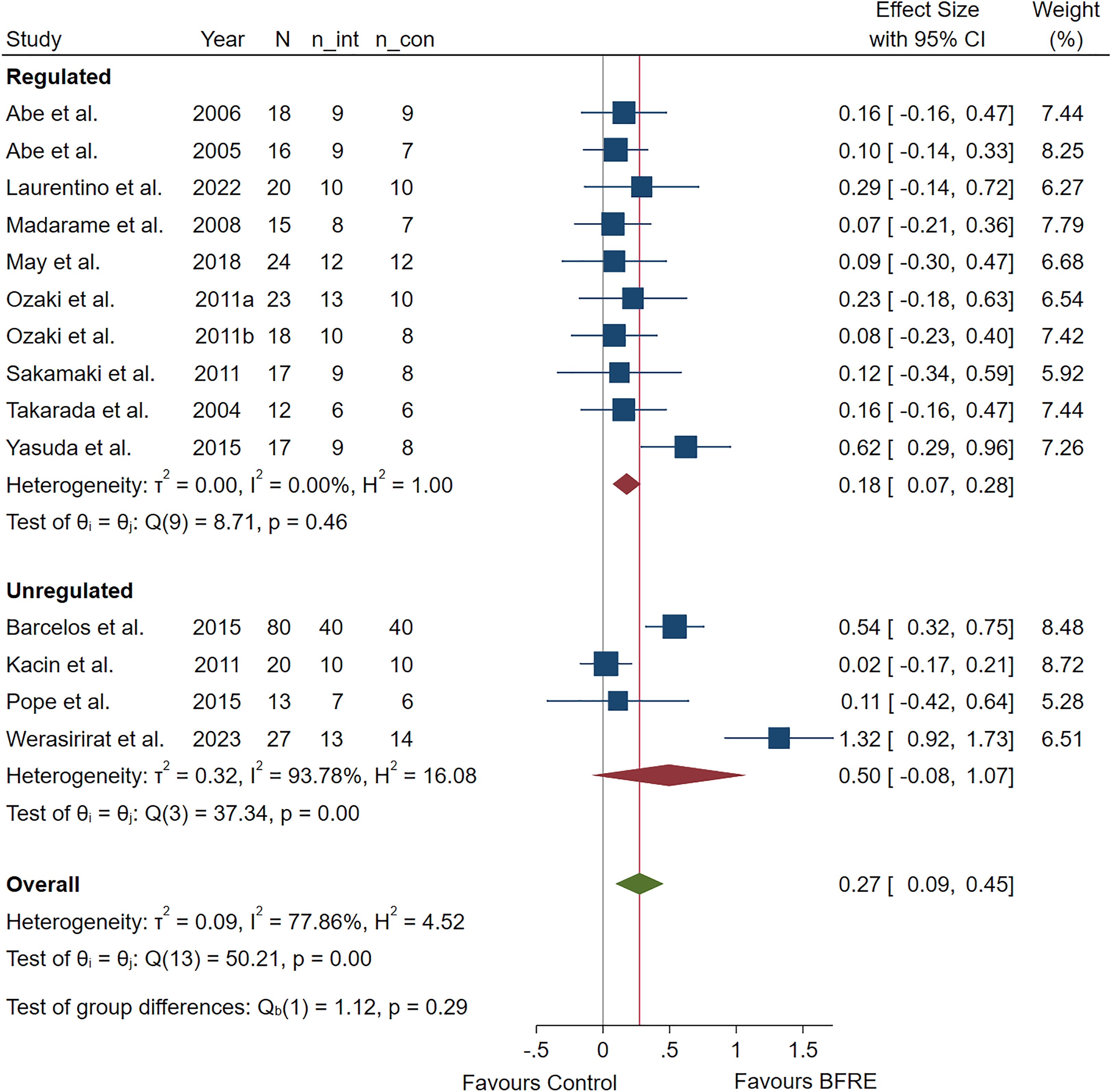
Forest plot of the effect estimates (ES) with 95% confidence intervals (CI) for muscle cross-sectional area following blood flow restricted exercise training compared with non-blood flow restricted equivalent exercise training with subgroup analysis by regulated and unregulated cuff systems.
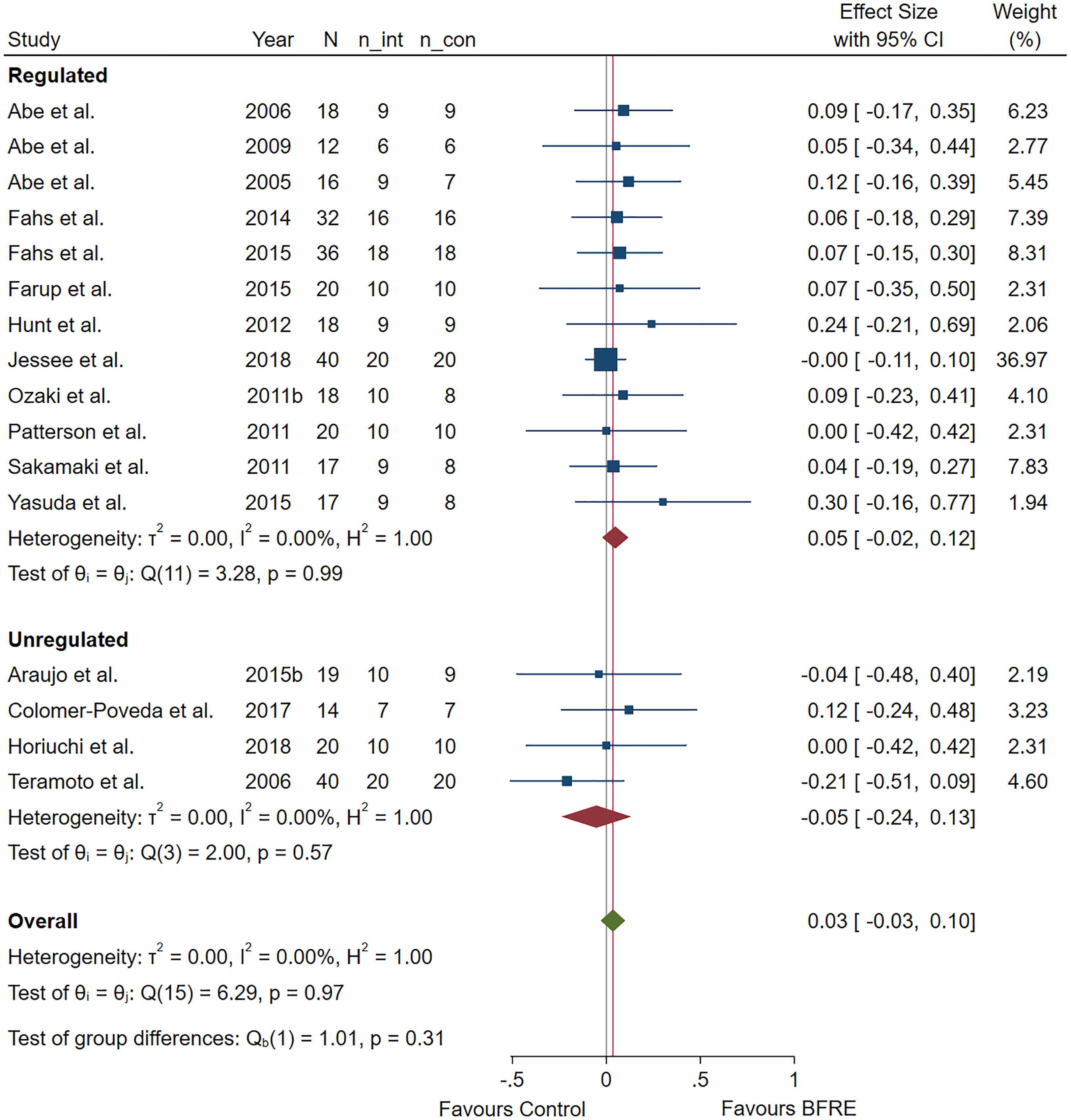
Forest plot of the effect estimates (ES) with 95% confidence intervals (CI) for muscle anthropometry following blood flow restricted exercise training compared with non-blood flow restricted equivalent exercise training with subgroup analysis by regulated and unregulated cuff systems.
When specifically examining the sub-group analyses contrasting unregulated and regulated blood flow restriction pressure systems (Figures 3–6), this remains largely unchanged. For repetition maximum muscle strength, unregulated blood flow restriction pressure systems [ES = 0.32, 95% CI (0.04, 0.59); heterogeneity (Q = 19.51, P < 0.01, I2= 74.52%)] and regulated blood flow restriction pressure systems [ES = 0.23, 95% CI (0.08, 0.39); heterogeneity (Q = 18.51, P = 0.07, I2= 55.17%)] were not significantly different (P = 0.62), with both groups displaying moderate-to-high heterogeneity. For muscle strength via dynamometry, unregulated blood flow restriction pressure systems [ES = 0.12, 95% CI (−0.05, 0.28); heterogeneity (Q = 4.33, P = 0.50, I2= 0%)] and regulated blood flow restriction pressure systems [ES = 0.13, 95% CI (0.06, 0.20); heterogeneity (Q = 8.99, P = 0.77, I2= 0%)] were not significantly different (P = 0.88). For muscle cross-sectional area, unregulated blood flow restriction pressure systems [ES = 0.50, 95% CI (−0.08, 1.07); heterogeneity (Q = 37.34, P < 0.01, I2= 93.78%)] and regulated blood flow restriction pressure systems [ES = 0.18, 95% CI (0.07, 0.28); heterogeneity (Q = 8.71, P = 0.46, I2= 0%)] were not significantly different (P = 0.29), although the unregulated group showed very high heterogeneity. For muscle anthropometry, unregulated blood flow restriction pressure systems [ES = −0.05, 95% CI (−0.24, 0.13); heterogeneity (Q = 2, P = 0.57, I2= 0%)] and regulated blood flow restriction pressure systems [ES = 0.05, 95% CI (−0.02, 0.12); heterogeneity (Q = 3.28, P = 0.99, I2= 0%)] were not significantly different (P = 0.31).
The funnel plots showed minor asymmetries present for all meta-analyses (see supplementary data, Figures 1–4). The standard error of the effect sizes fell outside the pseudo 95% CI for three studies for repetition maximum muscle strength50,54,55 and four studies for muscle cross-sectional area.29,38,51,56 Egger's test showed no evidence for the presence of publication bias for any of the meta-analyses (repetition maximum muscle strength: z = 1.28, P = 0.20; strength dynamometry: z = 0.58, P = 0.56; muscle cross-sectional area: z = 0.52, P = 0.60; muscle volume and thickness: z = 1.49, P = 0.14).
Discussion
Commonly, blood flow restriction exercise training primarily targets gains in muscle strength, muscle size and objective physical function. However, no study has directly compared these outcomes following training with different blood flow restriction cuff pressure systems (i.e. regulated vs unregulated). Therefore, we approached this question using a systematic review and meta-analysis. The main findings show that outcomes from blood flow restriction exercise training are not different between participants training with regulated vs unregulated blood flow restriction cuff pressure systems.
The present systematic review showed blood flow restriction exercise training to significantly improve outcomes related to muscle strength (85% of studies using repetition maximum methods; 71% of studies using dynamometry), muscle size (90% of studies using cross-sectional area or anthropometry) and objective physical function (77% of studies). While significantly fewer studies examined endurance (n = 13) and aerobic capacity (n = 8), blood flow restriction exercise training also significantly improved outcomes related to endurance (92% of studies) and aerobic capacity (38% of studies). Moreover, all these outcomes appeared unaffected by whether the applied restriction to flow during the blood flow restriction exercise undertaken across the training programme was achieved using a regulated or unregulated blood flow restriction cuff pressure system. In addition, the magnitude of change for each outcome measure (e.g. strength, size, physical function, etc) was broadly similar for both regulated and unregulated blood flow restriction cuff pressure systems.
The present meta-analysis more specifically reinforced the outcomes from the systematic review. Blood flow restriction exercise training favoured significant gains in muscle strength and muscle size with effect sizes clustered around the ‘small’ range. Again, these improvements are similar for both regulated and unregulated blood flow restriction cuff pressure systems. Therefore, this systematic review and meta-analysis demonstrate that blood flow restriction exercise training achieves broadly similar outcomes for end-users independent of whether a regulated or unregulated blood flow restriction cuff pressure system is employed. In addition, these outcomes from blood flow restriction exercise training align with other similar recent reviews.102,103 This information should assist practitioners to make informed choices when selecting blood flow restriction cuff pressure systems appropriate to their needs of use (e.g. environment, clientele, cost, etc).
Despite similar outcomes from both regulated and unregulated blood flow restriction cuff pressure systems, there are likely additional considerations for practitioners when making choices about a pressure system that suits their needs and clientele. Given outcomes from blood flow restriction exercise training are likely dependent on the complex interactions between prescription variables (e.g. cuff width, cuff pressure), participant variables (e.g. age, fitness) and exercise characteristics (e.g. mode, intensity, repetition scheme, aerobic vs resistance), the considerations facing practitioners in choosing a suitable device may be broadly categorised across areas of device quality, safety and comfort, cost and convenience.2,21
The quality of different unregulated blood flow restriction cuff pressure systems should be relatively similar. These systems lock the set applied blood flow restriction pressure at rest prior to exercise, without this pressure being dynamically adjusted throughout the exercise bout. It is typical for studies using these systems to simply use a sphygmomanometer or something similar (see supplementary data, Table 1). In contrast, the quality of regulated blood flow restriction cuff pressure systems may be more variable. Indeed, recent evidence suggests that the autoregulation capability of different regulated blood flow restriction cuff pressure systems is variable with respect to the accuracy and speed by which the target pressure (applied blood flow restriction pressure) is maintained throughout the phases of contraction during exercise. 104 In addition, most regulated blood flow restriction cuff pressure systems contain features to determine limb occlusion pressure that allow for prescription of an individualised applied blood flow restriction pressure. However, again the quality of these features vary between systems, with some recent evidence demonstrating one system to reliably assess limb occlusion pressure in the upper limbs, but not lower limbs. 105
It is accepted that blood flow restriction is safe when applied using recommended prescription guidelines, regardless of whether blood flow restriction pressure systems are regulated or unregulated. 2 However, existing guidelines recommend the use of an individualised applied blood flow restriction pressure. 2 In part, the intention is to moderate the magnitude of the applied blood flow restriction pressure, thereby minimising cardiovascular system stress during blood flow restriction exercise to reduce risk and incidence of adverse events. 106 In addition, higher blood flow restriction pressures are more uncomfortable for participants/clients undertaking blood flow restriction exercise.11,107 Therefore, an additional reason to individualise the applied blood flow restriction pressure is to reduce the perceptual difficulty for participants/clients and, therefore, to improve compliance. While the perceptual discomfort for a typical fixed repetition blood flow restriction exercise bout is similar to that for high-load non-blood flow restriction exercise, 107 it is still typically greater than for equivalent intensity non-blood flow restriction exercise. 108 However, over time with chronic blood flow restriction exercise training participant discomfort improves over the initial training weeks, with this effect being observed for both resistance and aerobic focused blood flow restriction exercise training.108,109 While the present review and meta-analyses do not directly recommend a particular blood flow restriction cuff pressure system for the purpose of reducing the applied blood flow restriction pressure, regulated systems appear to reduce the average applied blood flow restriction pressure compared with unregulated systems. 110 This becomes especially relevant when applying blood flow restriction in individuals unaccustomed to blood flow restriction exercise or those with a reduced exercise capacity (e.g. older adults and clinical populations), as they are at greater risk of adverse events and report higher perceptual discomfort with blood flow restriction exercise. 111 Therefore, while it seems logical that comfort is improved with a regulated vs unregulated blood flow restriction cuff pressure system to support greater uptake and use of blood flow restriction exercise by practitioners, the limited available evidence that regulated blood flow restriction cuff pressure systems reduce discomfort is inconclusive.106,112
Naturally, a critical factor for practitioners when considering blood flow restriction cuff pressure systems is cost. Regulated blood flow restriction pressure systems typically include features that measure limb occlusion pressure and, therefore, the ability to apply individualised blood flow restriction pressures, and include medical-grade surgical tourniquets or systems and devices with the same blood flow restriction technology adapted into more compact forms (e.g. Delfi PTS. Vancouver, British Columbia, Canada). These more technologically advanced systems that promote greater precision have previously been prohibitively expensive for most practitioners and end-users. However, with the emergence of more affordable devices it is important to consider their validity against surgical-grade devices given their reliance upon proprietary algorithms to determine limb occlusion pressure, and their capability to set and maintain accurate applied blood flow restriction pressures. 104 In comparison, unregulated blood flow restriction pressure systems include standard clinical sphygmomanometers (and commercialised variants), and less technical options such as elastic and non-elastic bands (sometimes referred to as ‘practical’ options). However, these are less technologically advanced, provide less precision for end-users and lack built-in safety features, with the result being a system that is cheaper to produce and more affordable to end-users. Given the present systematic review and meta-analysis demonstrate similar training outcomes for regulated and unregulated blood flow restriction pressure systems, it might appear attractive for practitioners to seek these more affordable options to implement blood flow restriction exercise. However, greater affordability, accessibility and portability of unregulated blood flow restriction pressure systems should be considered alongside any potential compromise to safety, control of blood flow restriction pressure and lack of individualisation of blood flow restriction pressure application for participants/clients that might contribute to reducing the precision in delivering blood flow restriction exercise. Additional factors for consideration between regulated and unregulated blood flow restriction pressure systems include potentially increased acute haemodynamic responses (especially if exercise is completed to failure) and perceptual responses of end-users which have potential to reduce compliance with blood flow restriction exercise training. 106
Most regulated, but no unregulated, blood flow restriction cuff pressure systems have the ability to assess limb occlusion pressure and subsequently to more precisely maintain application variables 104 which results in blood flow restriction exercise that is potentially safer and more tolerable. However, most regulated blood flow restriction pressure systems are for indoor or laboratory use and require a constant AC power connection (i.e. mains/grid power), making them less suited to all blood flow restriction exercise applications. While some regulated blood flow restriction pressure systems are battery powered and portable, they are often large and heavy. The alternative presented by unregulated blood flow restriction pressure systems are that they are often small, light, portable and either battery powered or manually operated without the need to be tethered to an AC power supply. This makes unregulated pressure systems potentially more versatile and, importantly, more accessible to a range of populations and in different environments (e.g. in the clinic, the home and community). While more innovative commercialised blood flow restriction pressure systems have emerged over the last five years, the efficacy of these systems is limited when compared with the surgical grade regulated blood flow restriction pressure systems. In some cases, limitations to their advertised application have been noted. 11 Further research incorporating these more contemporary devices is needed to determine their suitability for practitioners and whether they are improvements over basic unregulated blood flow restriction pressure systems that improve access to blood flow restriction exercise under a range of circumstances.
This systematic review and meta-analyses have some limitations. Notably, the meta-analyses utilised subgroup analyses to compare study outcomes between regulated and unregulated blood flow restriction pressure systems. Differences between studies make this a less efficacious method than analysing studies that have utilised both regulated and unregulated blood flow restriction pressure systems using the same protocol within a randomised controlled trial design. However, to the best of the authors’ knowledge, no such training studies exist. Given the recommendations for individualised pressures as ‘best practice’, and the variety of current and emerging blood flow restriction cuff pressure systems, it is also unlikely that sufficient training studies comparing exercise training outcomes between regulated and unregulated blood flow restriction cuff pressure systems will be conducted to enable a more precise synthesis of data.
The present review examined the use of regulated and unregulated blood flow restriction pressure systems, and outcomes related to muscle size, strength, physical function, endurance and aerobic capacity. However, this approach was independent of (did not take into account) other blood flow restriction exercise prescription factors known to influence the acute responses to blood flow restriction exercise, the effects of which are less understood for influencing blood flow restriction exercise training outcomes. These include factors such as prescription variables (e.g. intensity, duration, repetition scheme), the applied blood flow restriction pressure, blood flow restriction cuff width, participant age, fitness and training modality.
Finally, while our meta-analytic approach quantified the magnitude of the effect of blood flow restriction exercise training using different blood flow restriction pressure systems on variables of most interest to practitioners such as muscle strength and muscle size, there was insufficient data to use this approach to examine variables related to objective physical function, endurance or aerobic capacity.
In conclusion, despite blood flow restriction exercise being applied diversely in practice through the use of regulated or unregulated blood flow restriction pressure systems, this systematic review and meta-analysis demonstrates that neither of these generic systems is superior in producing improvements to muscle strength, muscle size and physical function following a period of training. While regulated blood flow restriction pressure systems feature more heavily across the blood flow restriction exercise literature and certainly, more recently, for their integrated capability to measure limb occlusion pressure and provide accurate, comfortable and potentially safer delivery of blood flow restriction exercise, unregulated systems provide greater versatility by being small and light, while typically being cheaper. The future emergence of functional, portable and cost effective regulated blood flow restriction pressure systems will likely improve accessibility for both practitioners and clients, and support blood flow restriction exercise implementation across a larger variety of populations and environments to benefit muscle strength, size and physical function and overall population health.
Similar benefits to muscle health from blood flow restriction exercise training occur independent of practitioners using regulated or unregulated blood flow restriction pressure systems. Practitioners should take into account factors such as device quality, perceived safety, comfort, cost and convenience when selecting equipment to deliver blood flow restriction exercise for muscle health.Clinical messages
Supplemental Material
sj-tif-1-cre-10.1177_02692155241271040 - Supplemental material for Comparing adaptations from blood flow restriction exercise training using regulated or unregulated pressure systems: A systematic review and meta-analysis
Supplemental material, sj-tif-1-cre-10.1177_02692155241271040 for Comparing adaptations from blood flow restriction exercise training using regulated or unregulated pressure systems: A systematic review and meta-analysis by Matthew J. Clarkson, Breanna McMahon and Stuart A. Warmington in Clinical Rehabilitation
Supplemental Material
sj-tif-2-cre-10.1177_02692155241271040 - Supplemental material for Comparing adaptations from blood flow restriction exercise training using regulated or unregulated pressure systems: A systematic review and meta-analysis
Supplemental material, sj-tif-2-cre-10.1177_02692155241271040 for Comparing adaptations from blood flow restriction exercise training using regulated or unregulated pressure systems: A systematic review and meta-analysis by Matthew J. Clarkson, Breanna McMahon and Stuart A. Warmington in Clinical Rehabilitation
Supplemental Material
sj-tif-3-cre-10.1177_02692155241271040 - Supplemental material for Comparing adaptations from blood flow restriction exercise training using regulated or unregulated pressure systems: A systematic review and meta-analysis
Supplemental material, sj-tif-3-cre-10.1177_02692155241271040 for Comparing adaptations from blood flow restriction exercise training using regulated or unregulated pressure systems: A systematic review and meta-analysis by Matthew J. Clarkson, Breanna McMahon and Stuart A. Warmington in Clinical Rehabilitation
Supplemental Material
sj-tif-4-cre-10.1177_02692155241271040 - Supplemental material for Comparing adaptations from blood flow restriction exercise training using regulated or unregulated pressure systems: A systematic review and meta-analysis
Supplemental material, sj-tif-4-cre-10.1177_02692155241271040 for Comparing adaptations from blood flow restriction exercise training using regulated or unregulated pressure systems: A systematic review and meta-analysis by Matthew J. Clarkson, Breanna McMahon and Stuart A. Warmington in Clinical Rehabilitation
Supplemental Material
sj-docx-5-cre-10.1177_02692155241271040 - Supplemental material for Comparing adaptations from blood flow restriction exercise training using regulated or unregulated pressure systems: A systematic review and meta-analysis
Supplemental material, sj-docx-5-cre-10.1177_02692155241271040 for Comparing adaptations from blood flow restriction exercise training using regulated or unregulated pressure systems: A systematic review and meta-analysis by Matthew J. Clarkson, Breanna McMahon and Stuart A. Warmington in Clinical Rehabilitation
Supplemental Material
sj-docx-6-cre-10.1177_02692155241271040 - Supplemental material for Comparing adaptations from blood flow restriction exercise training using regulated or unregulated pressure systems: A systematic review and meta-analysis
Supplemental material, sj-docx-6-cre-10.1177_02692155241271040 for Comparing adaptations from blood flow restriction exercise training using regulated or unregulated pressure systems: A systematic review and meta-analysis by Matthew J. Clarkson, Breanna McMahon and Stuart A. Warmington in Clinical Rehabilitation
Supplemental Material
sj-xlsx-7-cre-10.1177_02692155241271040 - Supplemental material for Comparing adaptations from blood flow restriction exercise training using regulated or unregulated pressure systems: A systematic review and meta-analysis
Supplemental material, sj-xlsx-7-cre-10.1177_02692155241271040 for Comparing adaptations from blood flow restriction exercise training using regulated or unregulated pressure systems: A systematic review and meta-analysis by Matthew J. Clarkson, Breanna McMahon and Stuart A. Warmington in Clinical Rehabilitation
Footnotes
Acknowledgements
The authors thank those authors contracted who provided data and/or information about their published work. This research received in-kind support from the School of Exercise and Nutrition Sciences, Deakin University.
Declaration of conflicting interests
The author(s) declared no potential conflicts of interest with respect to the research, authorship, and/or publication of this article.
Funding
The author(s) received no financial support for the research, authorship, and/or publication of this article.

Supplemental material
Supplemental material for this article is available online.
References
Supplementary Material
Please find the following supplemental material available below.
For Open Access articles published under a Creative Commons License, all supplemental material carries the same license as the article it is associated with.
For non-Open Access articles published, all supplemental material carries a non-exclusive license, and permission requests for re-use of supplemental material or any part of supplemental material shall be sent directly to the copyright owner as specified in the copyright notice associated with the article.
