




Abstract
This research examines the impact of Entrepreneurial Orientation (EO) within Polish local governments (LGs) on local entrepreneurship, focusing on the dimensions of innovativeness, risk-taking, and proactiveness. Data for this study were collected through a survey administered to Polish municipalities, supplemented with secondary data from the Local Data Bank. Initially, the Confirmation Factor Analysis (CFA) was conducted to validate the constructs of EO, ensuring robust measurement of these latent variables. Subsequently, Structural Equation Modeling (SEM) was used to explore the effects of these validated EO dimensions on local entrepreneurship activeness. Findings reveal that innovativeness and risk-taking are strongly associated with increases in new business registrations and community entrepreneurial engagement. The research findings underscore the significance of innovativeness as a primary factor influencing local entrepreneurship, while also suggesting that risk-taking and proactiveness, despite their smaller direct effects, can play a crucial role through their indirect effects. Therefore, a holistic approach to supporting entrepreneurship, encompassing all three dimensions of entrepreneurial orientation, is essential for the sustainable development of local communities. The study contributes to the literature on public sector entrepreneurship by demonstrating the practical implications of EO in enhancing local entrepreneurship offering valuable insights for policy-making.
Keywords
Introduction
The concept of entrepreneurial orientation (EO), discussed in this paper, is well-established in the field of entrepreneurship. The EO concept was previously proven in the private sector (Anderson et al., 2009; Lumpkin and Dess, 1996; Rauch et al., 2009; Wales et al., 2020) and discussed enterprises, but rarely touched the public sector (Kim, 2010). Pioneers in the field, Osborne and Gaebler (1993) coined the notion of public sector entrepreneurship (PSE), while other scholars such as Leadbeater and Goss (1998), Moon (1999) and Morris and Jones (199) enriched the discourse on the topic (Leadbeater and Goss, 1998; Moon, 1999; Morris and Jones, 1999). However, public entrepreneurship and the EO of the public sector are still under-researched (Sirola et al., 2022).
This research refers to the EO of the public sector and in the study local governments (LG) are the units of analysis. The study is rooted in the concept of the PSE, which concentrate on optimizing government performance and effectively and successfully meeting public needs (Kim, 2010) but discusses in detail the phenomenon of entrepreneurship in the public sector with a focus on the entrepreneurial orientation (EO) of LG—municipalities in this case.
Continuing, the EO in reference to the public sector is considered as a “key driver of a public sector organisation’s willingness to engage in risk-taking, innovation and proactivity aimed at enhancing organisational routines, decision-making and performance” (Deslatte and Swann, 2020). Utilizing LG as the research framework is justified for multiple reasons. LG, despite operating under diverse constitutional and institutional frameworks worldwide, share a common role in the 21st century. They perform tasks across four fundamental areas: identity, economic development, social welfare, and community governance (Marks-Bielska et al., 2020). Unlike national-level institutions, which establish the framework for regional development, LG are closest to entrepreneurs and have the best understanding of local conditions and needs (Godlewska and Morawska, 2020). As Muñoz et al. (2020) claimed, LG are better prepared to support bottom-up entrepreneurship (Muñoz et al., 2020). Traditionally LG have been perceived as more entrepreneurial and innovative than other governments (Swann, 2017). Throughout this study, the term LG refers to municipalities, denoting local authorities at the forefront. LG studies have historically shifted from institutional analysis to governance and leadership, emphasizing the importance of understanding the agency of LG actors in addressing local issues (Barnett et al., 2020). Keating (1989) claims that LG is inescapably involved in the local economy (Keating, 1989). LG actively involved in supporting entrepreneurship and local development (Olsson et al., 2015) can foster entrepreneurship by pro-entrepreneurial regulations, organizational and institutional solutions, and influencing new business locations.
LG has been recognized as resilient to environmental or economic shocks (Shaw, 2012), but during the time of the pandemic it showed that applying the EO approach to LG enabled them to ensure the stability of the private sector in the future. EO is considered a key driver of a public organization’s willingness to engage in risk-taking, innovative, and proactive actions aimed at enhancing organizational routines, decision-making and performance. Willingness to accept risks, innovation and proactivity could be a potent strategy to reshape the environment where entrepreneurs operate. Investing in entrepreneurship within municipalities is also highlighted as a key factor in strengthening entrepreneurship and achieving local economic development goals (Madzivhandila and Musara, 2020). Additionally, LGs with a stronger EO, which emphasizes innovation, risk-taking and proactiveness, are more likely to engage in integration processes and achieve better results in sustainability initiatives (Swann, 2017). EO of LG can be also crucial in strengthening the local economy in the coming AI era. In a time of rapid technological changes, LG is in a unique position to stimulate economic, social, and cultural development in their areas, especially in e-government sector development.
This research context forms the foundation for examining the issue of the EO of LG, encompassing proactiveness, risk-taking, innovativeness, and connecting it to local entrepreneurship. The research on EO of Polish LG is crucial in the context of the socio-economic transformation the country has undergone since the 1990s. The Polish economy is an example for Central and Eastern European countries which have built a solid foundation for entrepreneurship which appeared in reality since the 1990s. According to the Polish Act of 8 March 1990 on Local Self-Government, LG are responsible for a wide range of public matters of local importance, provided these are not assigned to other entities, LG should ensure effective management by e.g. encouraging entrepreneurial activities of LG (Godlewska and Pilewicz, 2020). Poland’s experience illustrates how LG can drive entrepreneurship, even in the absence of deeply rooted traditions or pre-existing institutional arrangements. This case offers valuable insights for other countries undergoing similar transitions, showing how proactiveness, and locally adapted strategies can contribute to strengthening entrepreneurship and local development.
During the systemic transition, and reforms LGs initially focused on public management and now more and more play a role in creating a favorable environment for entrepreneurial development. Furthermore, understanding the impact of EO on local entrepreneurship enables the development of more effective strategies to support innovation, proactivity, and risk-taking in municipal activities, which is essential for enhancing the economic competitiveness and dynamism of local-level government in Poland.
The study takes place in an under-researched EO and the public sector context and distinguishes itself from prior research. Several existing studies regard entrepreneurship in the public sector (Dhliwayo, 2017; Sirola et al., 2022; Teixeira and Silva, 2012) rather than the EO of LG and local entrepreneurship, and offer only limited insight. The study lays a foundation for further deliberating and researching the sense and methods of strengthening the EO of the public sector. It enriches the academic discourse concerning entrepreneurship in the public sector at local level and fills a research gap concerning the EO of LG (at the local level). The previous research in Poland has examined various aspects of LG e.g. their efficiency (Miszczyński, 2013), stability understood as the ability to institutional efficiency of LG (Marks-Bielska et al., 2020; Marks-Bielska et al., 2020), as well as entrepreneurial activities (Godlewska and Pilewicz, 2020; Mempel-Śnieżyk et al., 2022; Wołowiec and Skica, 2013), Studies have also explored organizational support mechanisms, such as stakeholder engagement in entrepreneurship initiatives, collaboration with non-governmental organizations, and monitoring entrepreneurs’ needs (Skica et al., 2021). Additionally, research has focused on LG instruments for spatial planning, partnerships with entrepreneurs, training and advisory support, financial support instruments, attracting investors, and support for non-governmental organizations (Skica et al., 2024). Building on these contributions, our study extends the discussion by incorporating the EO concept, offering a novel perspective on LG and local entrepreneurship.
The paper provides knowledge about linkages between the EO of LG and local entrepreneurship. The study aimed to determine the relationships between the EO of LG (proactiveness, risk-taking and innovativeness) and local entrepreneurship activeness. To this end, using quantitative methods, the research evaluates key mentioned dimensions of the EO—to measure the level of the EO among particular LG. By exploring the connection between LGs’ EO and local entrepreneurship indicators, the study contributes valuable insights into this relationship. Moreover, the type of institution may also influence LG support of entrepreneurship (Godlewska and Morawska, 2020). Thereby the supplementary objective was to analyze the relationship between the type of municipality (urban, rural or urban-rural) and domains of the EO of LG.
The structure of this research is as follows: first we present the theoretical background on public sector entrepreneurship and LG role in local development. Building on the preliminary issues discussed, the subsequent section of this paper focus on exploring and synthesizing existing research, aimed at enriching our understanding of EO in the public sector, particularly within LGs. Subsequently, we present the methodological parts, and research results. Afterward, we discuss the findings on EO of LG (innovativeness, risk-acceptance, proactiveness) and local entrepreneurship activeness and conclude with the implications of this study and further research directions.
Theoretical background and hypotheses development
Entrepreneurship in local development
The role of entrepreneurship in local development is discussed in both theoretical and empirical research (Dhaliwal 2016; Rahmije 2015; Ranjan 2019; Thurik 2009). The notion of entrepreneurship in the public sector is generally understood as the government’s task, to be managed and stimulated taking into account the macroeconomic perspective (Moore, 1993). Entrepreneurship in the public sector is defined as activities supporting innovative public policy initiatives, generating greater economic prosperity (Leyden, D. P., & Link, 2015). According to the traditional entrepreneurship policy, the level of policy-making is mostly top-down and the implementation of this kind of policy is mostly undertaken at the national level (Manolova et al., 2017). The increasing importance of entrepreneurship stimulation policies drew scholars’ attention to the local and regional causes and consequences of the LG actions. As a result, new approaches have been developed, focusing on more holistic activities through network structures and aiming to build new institutional capabilities and benefits from synergies between different stakeholders (Mason and Brown, 2014; Rodriguez-Pose, 2013). Conversely, local stakeholders’ cooperation and activities are seen as important for developing local entrepreneurship. Local actors, including foundations, associations and organizations, are crucial in shaping the local entrepreneurial environment. They belong to the group of entities known as non-governmental organizations (NGOs). Lewis has written on NGOs and their role in development and focuses on how NGOs can facilitate entrepreneurship and economic development in various contexts and countries (Lewis et al., 2021). NGOs are players in the field of entrepreneurship (Auplat, 2006). These actors are embedded in the local socio-economic context and possess extensive knowledge of unique local socio-economic needs. They are a part of the local socio-economic environment, deeply rooted in it and familiar with local needs. Due to their proximity to the local environment, they can provide social services, react to current needs and threats, and formulate developmental prospects (Mempel-Śnieżyk et al., 2022). They contribute to creating social capital facilitating cooperation and collective action towards common goals. Smalec et al. (2021) emphasizes the significance of effective cooperation between LG authorities and NGOs to achieve mutual goals for all parties involved. Cooperation between local stakeholders facilitates the implementation of designated public tasks and strategic objectives, thereby building the right relationship in both social and economic life (Smalec et al., 2021). These relationships create and support a climate of trust and allow a transfer of cultural values and skills to their successors. This line of reasoning formed the foundation for testing the relationship between the EO dimensions and the NGOs sector represented by foundations, associations and chambers.
The contribution of LG to local development has been discussed by researchers (Bates-Eamer et al., 2012; Benites-Lazaro and Mello-Théry, 2019; Blume, 2017; Collinge 1992; Izquierdo et al., 2008; Motoyama and Wiens, 2015). The researchers emphasize dynamism of LG intervention, importance of locality, (Collinge, 1992), with another focus on LG services and interactions with the private sector as significant for local development (Olsson et al. 2020). Moreover, the role of LG is underlined as crucial in fulfilling the needs of citizens and entrepreneurs (Moschidis and Ismyrlis, 2018 p. 37). Local development refers to the deliberate actions performed by LG that aim at creating new values and rational and effective use of human, natural and cultural resources. LGs play a crucial role in fostering entrepreneurial activities within their jurisdictions, which in turn can contribute to economic growth and prosperity (Naldi et al., 2020). LGs foster local economic development through the establishment of institutional arrangements to boost entrepreneurial activities (Xing et al., 2018; cf. Serarols-Tarres, Urbano and Vaillant, 2007).
Studies have shown that the entrepreneurial stance of LG can lead to the exploration of new ways to encourage economic development and employment growth (Zheng, 2011). LGs take part in the process of encouraging private-sector development to boost the local economy, provide new work opportunities and may affect the local business climate (Godlewska and Pilewicz, 2020). Implementing local development projects requires local-level actions that are tailored to the distinctive characteristics of a specific LG unit. In addition, there is no standardized model for local economic development, and the approaches employed across the globe are informed by the unique needs and circumstances of local communities. However, according to Godlewska & Morawska, not all LGs have self-enforcement mechanisms to support local entrepreneurship, and some LGs support local entrepreneurship by a variety of bottom-up initiatives and some of them do not (Godlewska and Morawska, 2020).
Linkages between the concept of the entrepreneurial orientation of the public sector and local government
Entrepreneurship was predominantly associated with the private sector and focused on entrepreneurial activities in business organizations (Zerbinati and Souitaris, 2005). The public sector has historically been viewed as less entrepreneurial due to its bureaucratic nature and focus on public service delivery rather than profit generation. PSE is defined as the process of implementing new ideas, introducing innovation into the public sector. PSE is also noticed as initiatives supporting innovative public policy in uncertainty that generate greater economic prosperity by transforming the existing economic environment into a more favorable one for creative entrepreneurs (Leyden and Link, 2015). PSE is manifested through changes in laws, regulations, offered services, actions, etc., to boost the private sector, and foster innovation and economic development (Leyden, 2016).
Additionally, public sector organizations operate within a complex regulatory environment, have different goals and objectives compared to private businesses, and face constraints such as limited resources and political considerations. As governments faced increasing pressures to be more innovative, responsive and efficient, there was a growing interest in understanding and promoting entrepreneurship within public sector organizations. This led to more research exploring the potential benefits and challenges of PSE.
Public sector entrepreneurship in theory.
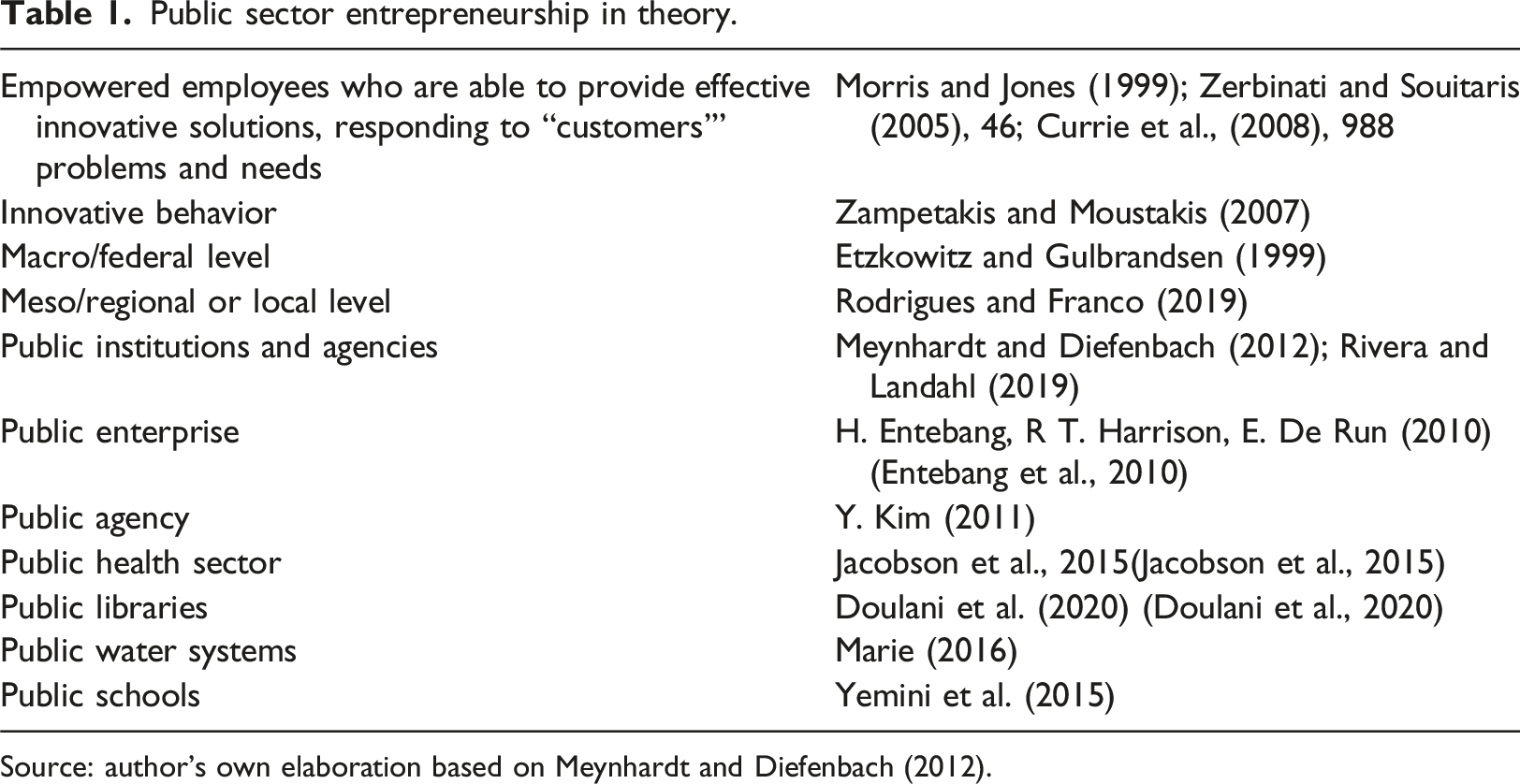
Source: author’s own elaboration based on Meynhardt and Diefenbach (2012).
Traditional hierarchical and bureaucratic systems lacked the flexibility to meet the needs of citizens and local stakeholders. To address these limitations, public administration adopted modern management practices, integrating professional methodologies, organizational strategies, and managerial perspectives. To better understand the entrepreneurial mechanisms in public sector entities it is worth mentioning theories of leadership in the public sector such as new public management (NPM), public governance, or multi-level governance. NPM main goal was to improve the economy, efficiency and effectiveness of the public sector and to increase the quality of services (Stewart and Walsh, 1992). NPM emphasized the adoption of private-sector management practices, including performance measurement, customer orientation, and innovation, which align closely with the dimensions of EO explored in this study (Osborne and Gaebler, 1993). The concept of multi-level governance provides additional insights into how LGs, as the closest entities to local communities, can tailor their strategies to the specific socio-economic characteristics of their regions. By addressing local needs with bottom-up approaches, LG exemplify adaptive leadership, a concept central to public governance theory (Peters and Pierre, 1998). This approach emphasized the moving away from hierarchical structures towards models based on cooperation, flexibility and the ability to adapt to complex and changing conditions.
This theoretical foundation supports the observation that implementing local development projects requires actions aligned with the distinctive characteristics of individual LGs. Behavioral leadership theories further reinforce the importance of managerial roles in shaping innovative practices within LG, emphasizing that effective leaders foster a climate of creativity and responsiveness (Kraus et al., 2019; Morris and Jones, 1999). The growing focus on fostering entrepreneurship in local policies highlights the importance of municipal leaders’ attributes (Pilewicz and Anna, 2021). Municipal leaders act entrepreneurially by leveraging capabilities that shape further initiatives (Klein et al., 2013). The results of quantitative studies and extensive meta-analyses indicate that a leader’s leadership style positively influences greater engagement, effectiveness, and innovation in the workplace (Schermuly et al., 2022) and can improve employee performance (Baig et al., 2021). The leadership behavior of managers that influences public sector entrepreneurship can take various forms, including being task-oriented, relationship-oriented, or change-oriented (Demircioglu and Chowdhury, 2020).
As leaders within their communities, municipal leaders influence the direction of local governance through strategic planning, effective implementation, and team coordination. Their roles are especially critical in addressing emergencies and crafting policies that respond to crises (Henstra, 2010; Mitchell et al., 2018). Furthermore, their orientation towards innovation significantly contributes to adopting new practices and cultivating a culture that encourages creativity and progress (Kim and Yoon, 2015). Municipal leaders dedicated to promoting entrepreneurship at the local level are distinguished by their focus on discovering opportunities to strengthen the competitive position of LG. Their efforts often involve attracting external investments, enhancing workforce skills, and motivating the local community to participate in entrepreneurial activities (Pilewicz and Anna, 2021).
According to Kim (2011), entrepreneurial LGs value innovative, proactive and risk-taking propensities. Kim’s claims refer to the concept of EO, which has been used to refer to the behavior of organizations that engage in entrepreneurial activities and are characterized by innovation, proactiveness and risk-taking (Kim, 2011). As noticed by Wach (2015), researchers offer their own insights into the concept of the EO (Wach, 2015), and there were different propositions of the EO definition and its areas of competencies (Lumpkin and Dess, 1996). However, they have one thing in common: they treat entrepreneurship as a company-level phenomenon (Wach, 2015).
LGs can be seen to differ in their EO on how much entrepreneurial activity they undertake and “how innovative, risky and proactive these activities tend to be” (Morris and Jones, 1999). Kim (2011) is of the same opinion and claims that the magnitude of each of these dimensions differs depending on the type of the public unit and the environmental conditions in which it operates. Moreover, following Kim (2011) institutionalization of the public entrepreneurial approach with the three components should enhance its practical roles in different organizational structures and in the process of local entrepreneurial development perspective (Kim, 2011). In accordance with Klein’s claims, this study attempts to identify the relationships between dimensions of the EO of the public sector and indicators of entrepreneurship of municipalities.
Kim (2011) indicates that the three operational dimensions can indeed be implemented for a better understanding of public entrepreneurship practices. The EO in the public sector consists of three components: innovativeness, proactiveness and risk-taking (Širola, Mihanović & Jankovic, 2022). In this study, three dimensions of the EO of LG were distinguished and to build the survey questionnaire (Appendix 1), three dimensions of the EO were included innovativeness (EOI), proactiveness (EOP), and risk-taking (EOR). This is consistent with previous research that has examined the EO of the public sector (Kim, 2011; Morris and Jones 1999; Naldi et al. 2020; Sirola et al. 2022; Terman 2022; Zerbinati and Souitaris 2005). • The first dimension EOI innovativeness refers to the ability to develop and implement new, creative and effective solutions to public problems and challenges. This may involve the use of technology, new processes or new approaches to service delivery that improve efficiency, effectiveness and responsiveness to citizen needs. Therefore, it requires flexible policies, and a willingness to experiment, take risks and learn, to ensure new solutions: relevant, sustainable, and meet the needs of those they are intended to serve (Lumpkin and Dess, 1996). • EOP proactiveness refers to implementing the entrepreneurial concept into practice (Sirola et al., 2022). The proactive orientation provides a strong leadership role to take the initiative to find and seize openings to create new opportunities instead of testing or imitating competitors (Covin and Slevin, 1991; Lumpkin and Dess, 1996). Proactive organizations are those that act early rather than react to the emerging or established opportunities. Inside the organization, employees’ proactive behavior leads to earlier detection of new opportunities (Kraus et al., 2019). Similarly, Deslatte and Swan define proactiveness as the ability and willingness to anticipate and prevent problems before they occur rather than reacting to problems as they arise (Deslatte and Swann, 2020). • EOR risk-taking involves taking actions in uncertain environments (Rauch et al., 2009), refers to challenging existing norms or reducing bureaucracy. However, the management may not support these actions, thus further increasing the employees’ personal risk. In such a case, trust in colleagues’ and superiors’ responsibilities plays an important role (Kraus et al., 2019).
The study has examined findings from qualitative research, testing the applicability of the existing framework Naldi et al. (2020), Deslatte and Swann (2020), Olsson et al. (2015), (Kim, 2011; Sirola et al., 2022). It was found that the existing frameworks were relevant to the Polish context. The questionnaire for the survey research was built based on the literature on the EO. The studies to date suggest that the existing scales for the private-sector EO measures are inappropriate for the public sector (Covin and Slevin, 1991; Sirola et al., 2022) but show that careful modifications to Covin and Slevin’s scale do not compromise its validity (Meynhardt and Diefenbach, 2012). Therefore, the construct in this study was measured using multiple items on a five-point Likert scale, as adopted from the existing literature where possible (Appendix 1). Since there are few public sectors specific scales available, modifications were made to the existing items.
Sirola et al. (2022) investigated the EO of the public sector and divide their hypothesis into three sub-hypotheses (positive impact of three EO dimensions: innovativeness, proactiveness, and risk-taking on LG unit performance (Sirola et al., 2022). Naldi et al. (Naldi et al., 2020) investigated if the EO—captured by the degree of the innovativeness, proactiveness and risk-taking—is positively related to local entrepreneurship and urban status of the municipalities. In line with the research conducted by Naldi et al., the hypothesis posits a positive influence of the EO on local entrepreneurship and its relationship with the urban status of municipalities. Following previous research and the research question posited in the introduction (concerning the impact of LGs’ EO on local entrepreneurship), the hypothesis was formulated as follows: There is a positive relationship between the entrepreneurial orientation of local government, as measured by the constructs of innovativeness, risk-taking, and proactiveness, and local entrepreneurship reflected by activity indicators.
Materials and methods
The study focuses on the EO of the public sector at the local level, as illustrated by the research framework (Figure 1) The first step of the research refers to the EO of LG (survey research), in the second step statistical analysis was conducted to examine the relationship between the EO of LG and local entrepreneurship and the environment in Polish municipalities. Conceptual research model. Source: own elaboration.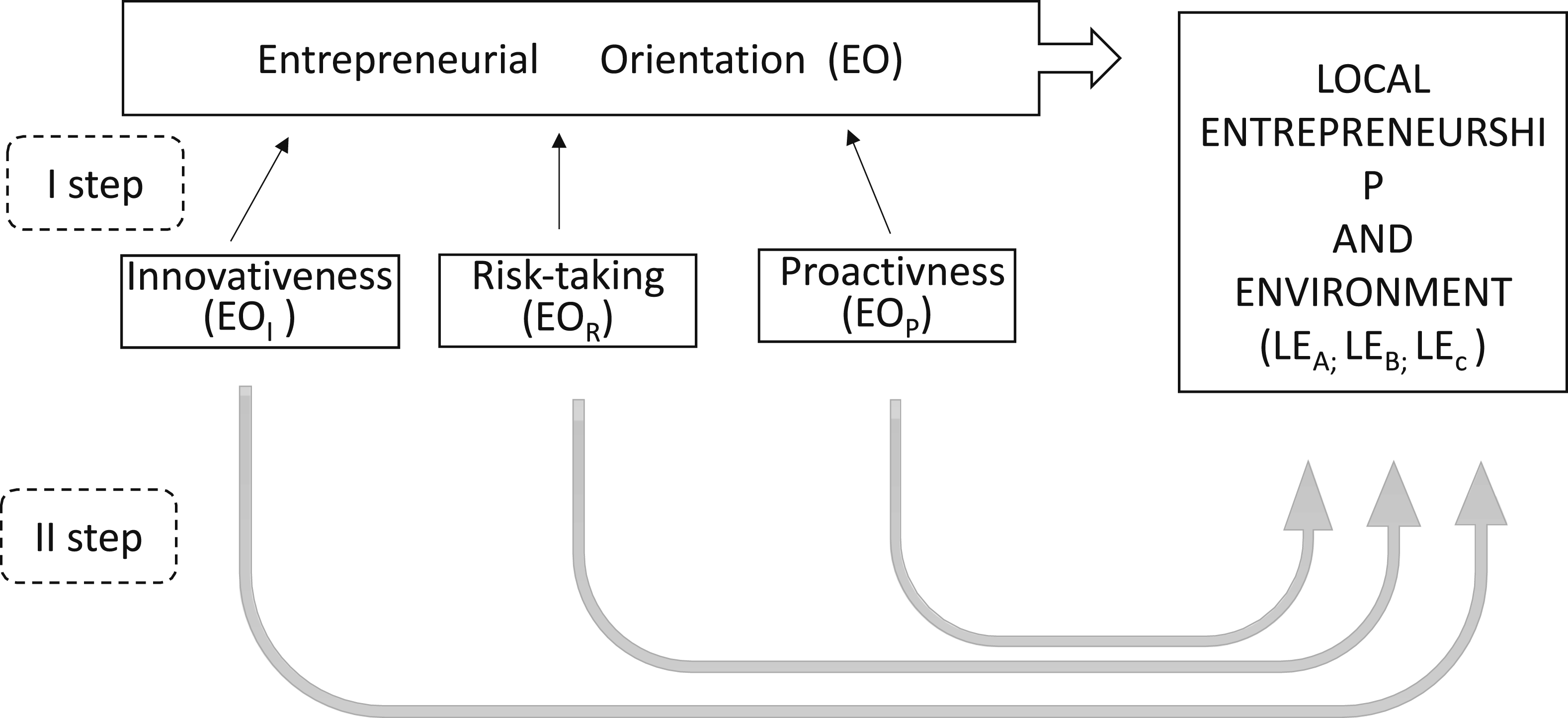
In the study, two types of data were used: primary data and secondary data. To obtain the necessary primary data, a survey technique was implemented, which was supported by the use of the Computer Assisted Web Interview (CAWI) method. The secondary data were obtained from the Local Data Bank by Statistics Poland such as: • LEA - economic activity rate in the working-age population; • LEB - newly registered entities per 10,000 of the productive-age population; • LEC - newly registered foundations, associations, and social organizations per 1000 inhabitants.
The questionnaire, used to perform an electronic survey, was sent to all 2477 Polish municipalities. According to the survey results, rural municipalities dominated the research sample (N = 628, 53.7%). Additionally, urban-rural municipalities consist of 29.3% of the research sample (N = 343) and urban municipalities 6.9% (N = 198). To ensure the high quality of the answers, the economic departments of each municipality were asked to provide the responses in the invitation letters. Respondents were informed about the purpose of the survey and that the findings are reported in a non-attributable basis to protect anonymity. Electronic surveys were carried out between the 1st of April and the 30th of August 2022. The municipalities involved in this research are representative of Polish units. The number of 1169 participants means that it was not difficult to compare responses across different types of municipalities. Final responses to the electronic survey were provided by 1169 municipalities’ participants (one of them was rejected for descriptive statistics and tests due to incorrect data for newly registered associations and foundations).
Prior to the hypothesis verification analyses, the validity and reliability of innovativeness, risk-taking, and proactiveness factors were measured. For this purpose, a confirmation factor analysis (CFA) was calculated. Confirmatory Factor Analysis (CFA) is a statistical technique that enables verification of whether the empirical data confirm the theoretically assumed model of the latent variable structure. Thanks to CFA, researchers can assess the validity and reliability of the measures as well as the relationships between variables, thereby confirming or rejecting the model’s assumptions. The following measures were used as measures of model fit: the value of the χ2/df index (≤3); root mean square error of approximation (RMSEA) (≤1), Jöreskog and Sörbom goodness-of-fit index (GFI) (≥.90), Jöreskog and Sörbom adjusted goodness-of-fit index (AGFI) (≥.90), comparative fitindex (CFI) (≥.90), and Tucker–Lewis index (TLI) (≥.90) (Sivo et al., 2006).
The most commonly used fit indices were applied to assess models’ quality. As the primary measure of fit, the lowest possible value of the index was considered preferable, with a non-significant result being desirable. The report presents the chi-square statistic (χ2) relative to degrees of freedom (χ2/df) as a measure of model fit. Another key value is the Root Mean Square Error of Approximation (RMSEA), which should be as low as possible. A model is considered to have an acceptable fit if the RMSEA value is below 0.100, provided that its confidence intervals also fall within this range. Additionally, the Goodness-of-Fit Index (GFI) and the Adjusted Goodness-of-Fit Index (AGFI), developed by Jöreskog and Sörbom, were calculated to further assess the model’s overall fit. These indices should aim for the highest possible value (closest to 1), with values above 0.800 considered satisfactory due to the fact that they are burdened with sample size error (Sharma et al., 2005). The last two fit indices, the Comparative Fit Index (CFI) and the Tucker–Lewis Index (TLI), were included to complement the model evaluation. While RMSEA is based on the FMIN value and serves as a measure of model misfit, CFI, and TLI are fit indices derived from F0. Therefore, it is recommended to report both types of indices (Konarski, 2010). Moreover, CFI and TLI are less sensitive to sample size variations (Bedyńska and Książek, 2012).
Principal component analysis (PCA) results. Factor loadings after Varimax rotation.
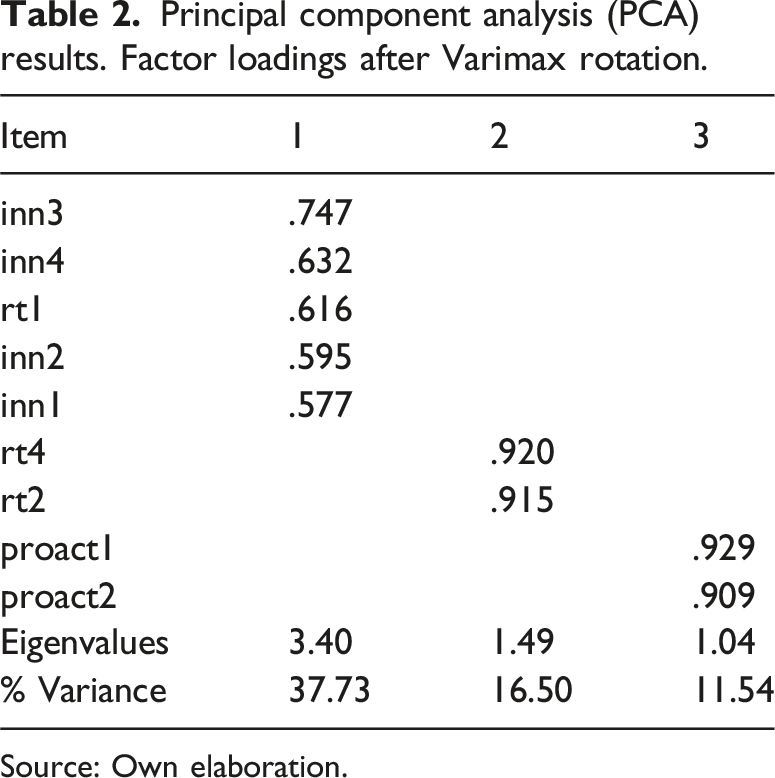
Source: Own elaboration.
After the aforementioned modifications, the model proved to be a good fit: χ2/df = 2.51; RMSEA = .036 (.025–.047); GFI = .989; AGFI = .978; TLI = .955; CFI = .970 (Figure 2). The reliability of the indices was calculated using the Cronbach α coefficient and amounted to proactiveness α = .89; risk-taking α = .95, and innovativeness α = .66. The values of the coefficients indicated an acceptable internal consistency of the indices. Confirmation factor analysis model for EO of LG: innovativeness, proactiveness, risk-taking. Source: own elaboration.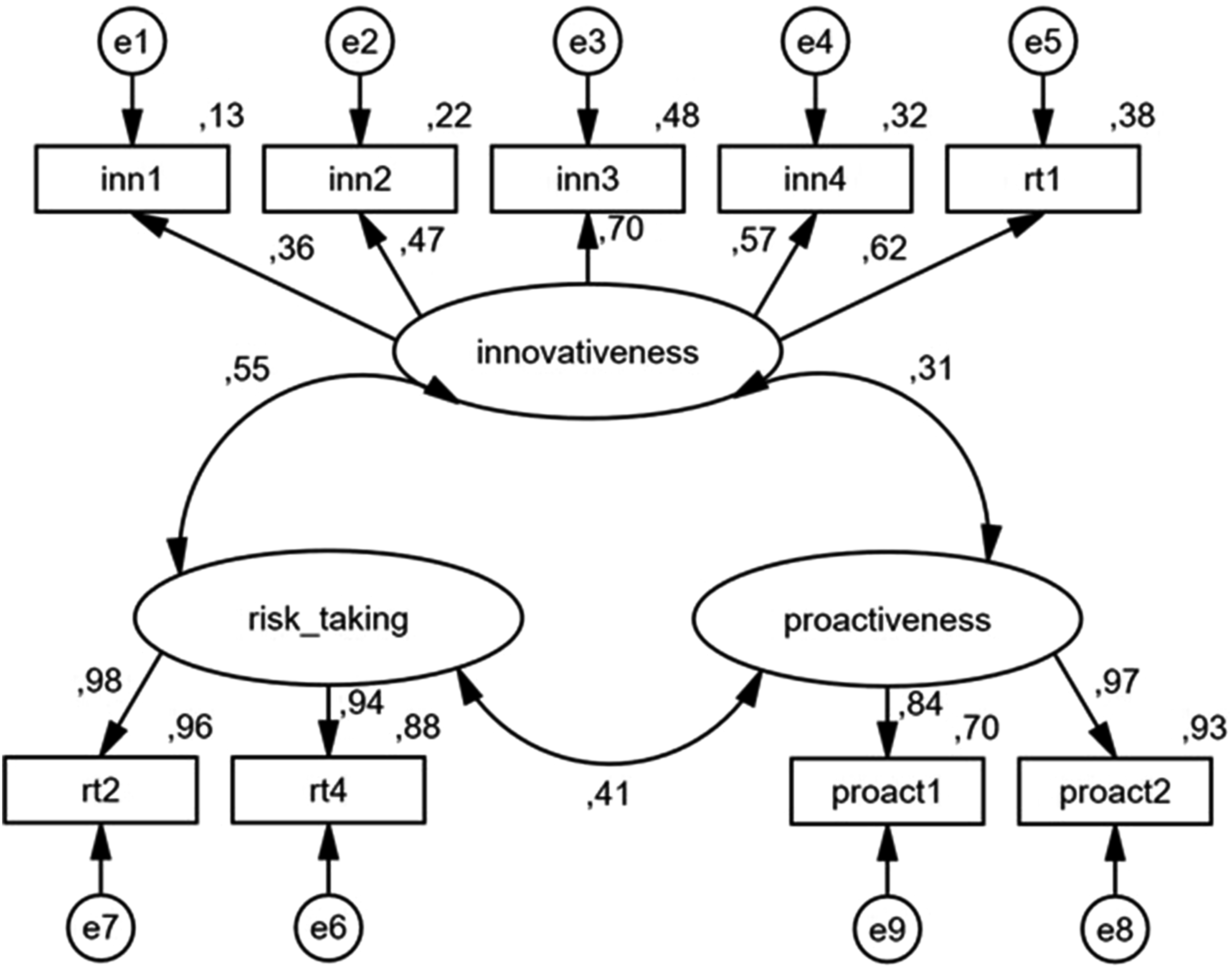
The reliability of the indices was calculated using the Cronbach α coefficient and amounted to: proactiveness α = .89; risk-taking α = .95, and innovativeness α = .66. The values of the coefficients indicated an acceptable internal consistency of the indices (Rak and Wrześniowski, 2023).
Results
Our study analyzed the effects of the EO of LG on local entrepreneurship. We used a structural equation model (SEM) to understand these relationships better. In addition, the relationship model between EO (innovation, risk-taking, proactiveness) and local entrepreneurship was calculated separately for urban, rural, and urban-rural municipalities.
Descriptive statistics and correlation coefficients between Spearman’s rho of the EO of LG and LE (N = 1167).
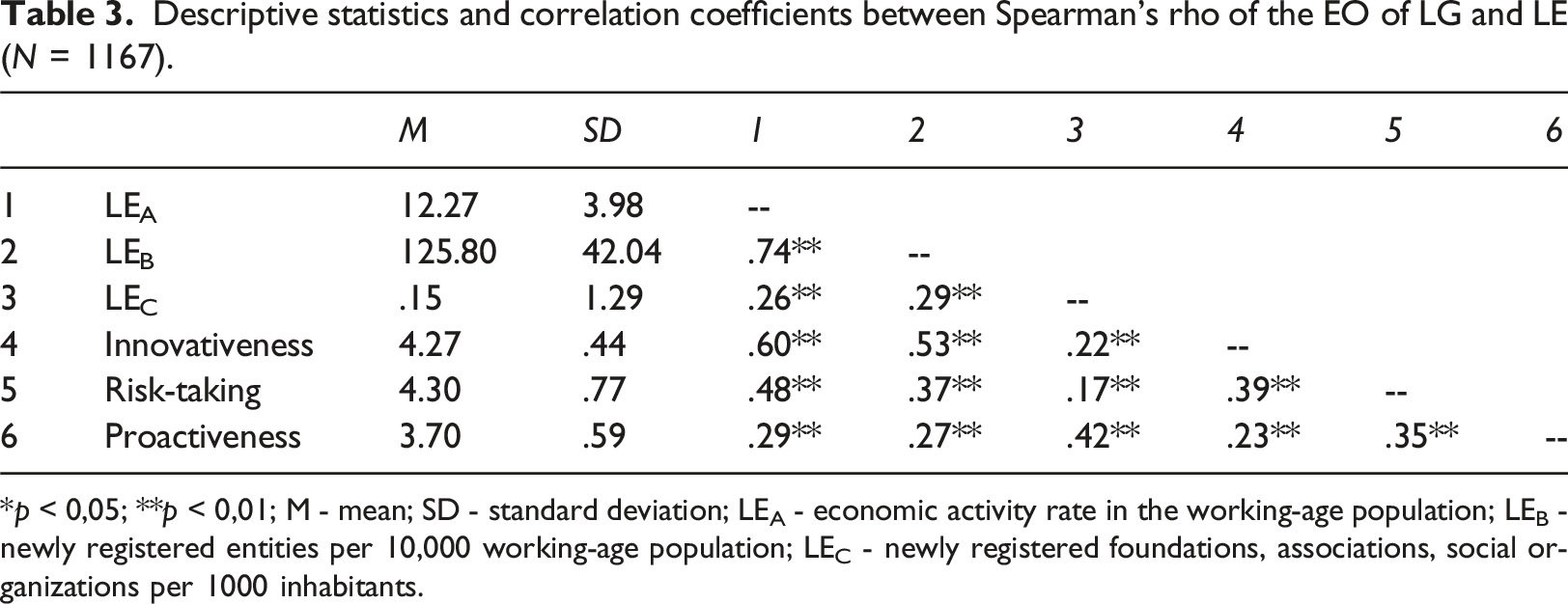
*p < 0,05; **p < 0,01; M - mean; SD - standard deviation; LEA - economic activity rate in the working-age population; LEB - newly registered entities per 10,000 working-age population; LEC - newly registered foundations, associations, social organizations per 1000 inhabitants.
Statistically significant positive relationships were observed between EO (innovativeness, risk-taking, and proactiveness) and local entrepreneurship indicators. Strong correlations between LEA and LEB, as well as between these indicators and innovativeness, risk-taking, and proactiveness suggest that a more entrepreneurial and innovative approach in LG can contribute to economic growth and the activation of entrepreneurship in local communities. The results can be useful in analyzing the impact of LG policies on entrepreneurship development, indicating opportunities for improving effectiveness through promoting innovation and proactive management approaches.
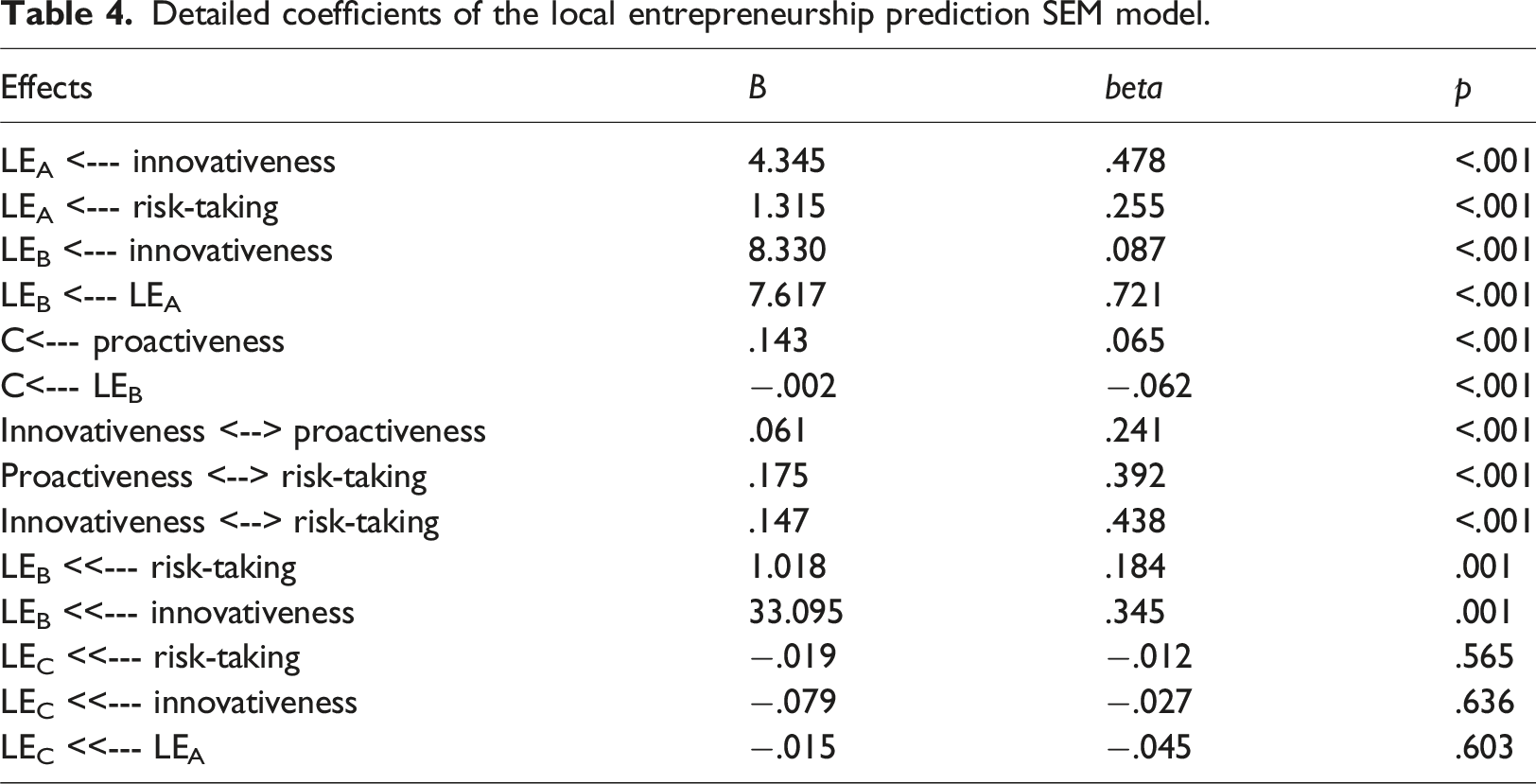
To verify the hypotheses, we used the SEM structural model (Table 4, Appendix 2 and Figure 3) as SEM allows for the examination of both direct and indirect effects within the model. The impact of the EO of LG on local entrepreneurship. Note: LE: (A) number of persons per 100 working-age population engaged in sole entrepreneurship or running their own businesses; (B) newly registered entities per 10,000 working-age inhabitants; (C) newly registered foundations, associations, social organizations per 1000 inhabitants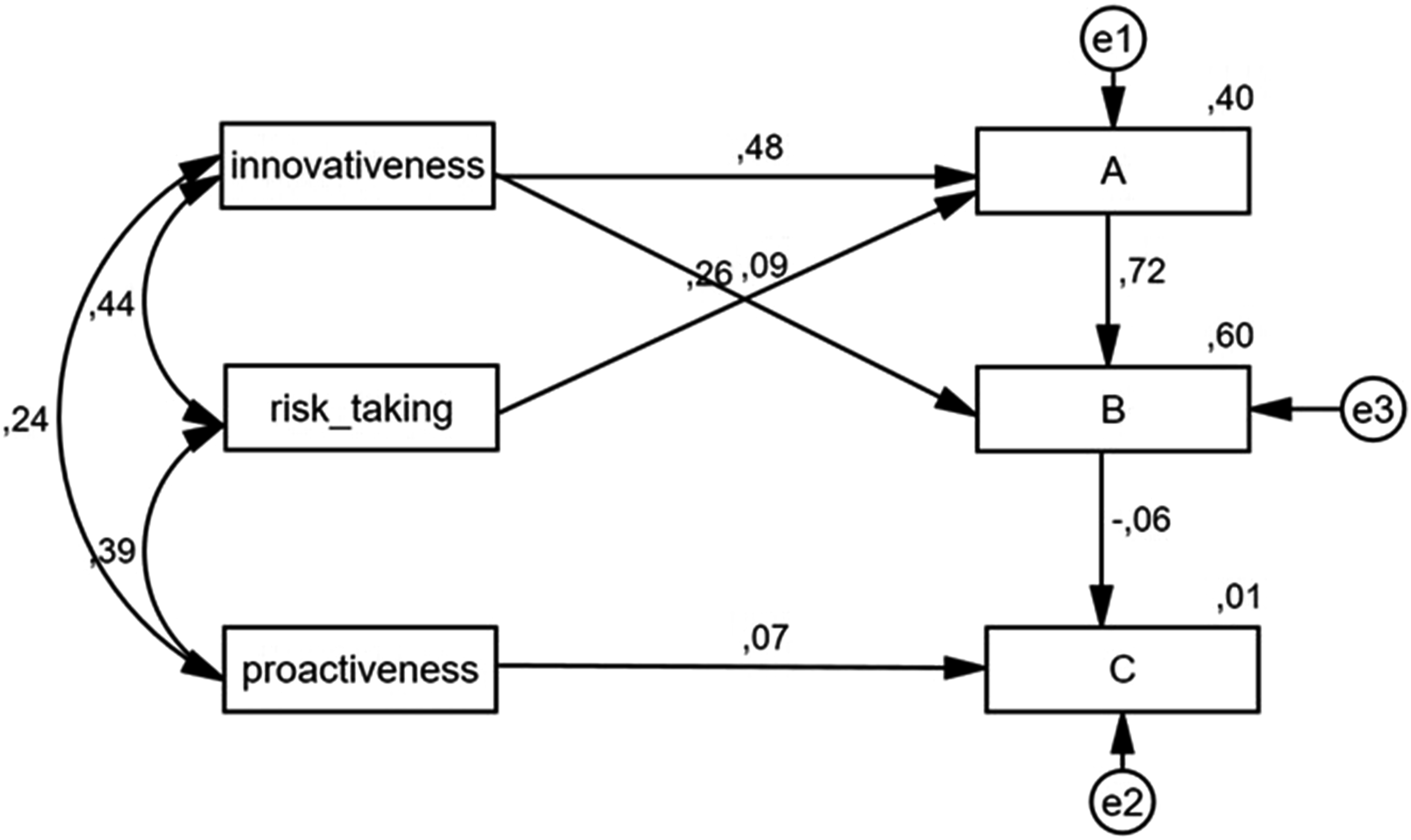
Since the critical statistics of the multivariate normal distribution exceeded the assumed threshold value of 2, we used an algorithm based on the nonparametric method of generalized least squares (GLS) to calculate and estimate coefficients in SPSS AMOS 26.0 (Bedyńska and Ksiazek, 2012). The structural equation model (SEM), which was a well-fitted to the data χ2/df = 3.05; RMSEA = .042 (.021–.065); GFI = .995; AGFI = .982; TLI = .949; CFI = .979, effectively captured the interactions among innovativeness, risk-taking, and proactiveness within the LG context.
Our analysis confirms significant direct and indirect effects of these dimensions on local entrepreneurship and community engagement initiatives. The analysis confirmed a direct positive effect of innovativeness on the number of persons per 100 working-age population engaged in sole entrepreneurship or running their own businesses (LEA), and a clearly weaker but statistically significant positive effect on the number of newly registered entities per 10,000 working-age inhabitants (LEB). This suggests that enhancing innovative capacities in local governance can directly stimulate economic activity and business initiation. Although innovativeness did not show a direct influence on the number of newly registered foundations, associations, and social organizations per 1000 inhabitants (LEC), its role in enhancing other areas of local entrepreneurship is evident.
There was also a direct positive effect of risk-taking on LEA and a statistically significant, though practically negligible, positive effect of proactiveness on the number of LEC. In addition, innovativeness and risk-taking were observed to have a positive effect on LEB through LEA. This suggests that both innovativeness and risk-taking affect the growth of LEA, which in turn leads to and increase the number of LEB. However, the expected positive impact of proactiveness in the relationships was not confirmed.
The hypothesis has been partially confirmed, with results showing a direct positive impact of innovativeness and risk-taking on local entrepreneurship. Moreover, there was a positive effect of innovativeness and risk-taking on LEB through LEA. The hypothesis clearly outlines the relationship, suggesting both direct and indirect impacts of these variables, as SEM allows for the examination of both direct and indirect effects within the model.
The direct impact of innovativeness and risk-taking on increasing entrepreneurial activities suggests that LG could foster a more vibrant local economy by adopting policies that encourage these EO dimensions. Particularly, initiatives that enhance the innovative capacity of LG may be crucial in stimulating new businesses.
The relationship model between EO (innovation, risk-taking, proactiveness) and local entrepreneurship was also calculated separately for different types of municipalities: urban municipalities:
urban [χ2/df = 1,65; RMSEA = 0,058 (0,000-0,119); GFI = 0,983; AGFI = 0,941; TLI = 0,889; CFI = 0,955],
rural [χ2/df = 2,41; RMSEA = 0,048 (0,016-0,079); GFI = 0,992; AGFI = 0,973; TLI = 0,935; CFI = 0,974]
and urban-rural [χ2/df = 1,66; RMSEA = 0,044 (0,000-0,091); GFI = 0,990; AGFI = 0,966; TLI = 0,948; CFI = 0,979].
All three models were well-fitted. In contrast to the general relationships described above, within urban and mixed urban-rural municipalities, an additional direct effect of proactiveness on increasing the indicator of LEC was observed. For urban municipalities, a previously unobserved significant direct positive effect of LEB on LEC was also noted, along with a positive effect of innovativeness on LEC mediated by LEA and LEB, as well as a positive indirect effect of LEA on LEC mediated by LEB (Appendix 3).
Discussion
Numerous studies confirmed the impact of the EO on performance in the private sector and countries (Sirola et al., 2022). Empirical research regarding EO and PSE can also be found, but more often shows EO and public unit performance. Studies by Teixeira & Silva highlight the significance of EO in Portuguese public units, particularly in relation to management challenges and local political entrepreneurship (Teixeira and Silva, 2012). The concept of EO in LG is discussed by Terman (2022) and she tests the effect of EO of LG on their spending specifically in stimulus-oriented granting (Terman, 2022). Swann (2017) found that LG with a stronger EO achieved better program performance in sustainability initiatives (Swann, 2017). Further, Sirola et al. (2022) examined EO in city administration performance (Sirola et al., 2022). Smith (2012) found that external environmental factors and managerial characteristics influenced public entrepreneurship determinants of public entrepreneurship in Swedish LG units (Smith, 2012). A similar study was proposed by Urban and Nkhumishe (2019). Their research aimed at determining the relationship between organizational factors and EO in the South African public sector (Urban and Nkhumishe, 2019), and represents an advancement beyond prior research—investigated the linkages between dimensions of EO and the efficiency of the public sector units. On the other hand, Deslatte and Swann (2020) examine the role an organization’s EO in the links between organizational capacities, strategies and perceived performance. They found that LGs with a higher level of EO tend to have better sustainability performance outcomes, and organizational structure can facilitate the development and implementation of entrepreneurial activities (Deslatte and Swann, 2020). Initiatives that support and enhance local entrepreneurship can lead to the creation of more dynamic and economically sustainable communities. This is essential for the sustainable development of territorial units, their resilience, and the establishment of open and inclusive communities, aligning with the objectives of sustainable cities and communities (SDG 11).
The findings’ contribution is that they shift the attention from LG’s internal management to the broader discourse relating to local entrepreneurship. Placing this research within a wider framework, it aligns with Kelman’s suggestion for public administration to establish a closer connection with the mainstream of the organization theory. This alignment can potentially enhance the author’s comprehension of the public sector challenges under investigation (Meynhardt and Diefenbach, 2012).
Polish LG exhibit considerable diversity due to their socio-economic potential and distinct historical and cultural contexts, which shape their priorities and activities. Previous research has explored various dimensions of their governance models and institutional effectiveness. While other studies (Godlewska and Morawska, 2020; Mempel-Śnieżyk et al., 2022) focused on the role of institutional support or broader economic conditions in shaping local entrepreneurship, this research emphasizes the direct and mediated impact of EO dimensions—innovativeness, risk-taking, and proactiveness—on local entrepreneurship indicators, providing a more nuanced understanding of how these specific behaviors within LG drive economic growth and community activation. The study referring directly to entrepreneurship of Polish LG regarding institutional efficiency (defined as readiness to building socio-economic partnership with both entrepreneurs, and a local community, and ability to provide a quick and competent response to entrepreneurs in a given municipality) (Marks-Bielska et al., 2020). Godlewska and Pilewicz studied differences in the level of potential investment attractiveness associated with the different levels of entrepreneurial activities of LG. In comparison to their study, our results suggest differences in local entrepreneurship activeness associated with the level of EO of LG.
Entrepreneurial activity in municipalities is often measured by the number of individuals running their own businesses. Our findings confirm a strong positive relationship between EO dimensions and key indicators, such as the number of newly registered entities and the economic activity rate among the working-age population. An increase in EO dimensions (EOI, EOR, and EOP) leads to a corresponding increase in the number of individuals running their own businesses. This suggests that a proactive, risk-taking, and innovative approach by LG can foster entrepreneurship within their communities. The findings also demonstrate a positive relationship between the EO of LG and LEB. Higher levels of EO dimensions (EOI, EOR, and EOP) correspond to an increase in the number of newly registered entities. This suggests that LGs with a higher EO tend to attract and support new business ventures, contributing to economic growth. This suggests that LGs with a stronger EO contribute to a more vibrant local economy.
Moreover, the findings confirmed a direct positive effect of innovativeness on the number of individuals running their own businesses, its influence on newly registered business entities was relatively weaker. This suggests that fostering LG’s innovativeness may encourage business activity among individuals but does not necessarily translate into a surge in newly established firms. Contrary to expectations, our study did not confirm a significant positive effect of proactiveness on entrepreneurial activity. This suggests that while proactiveness is often associated with fostering entrepreneurship, its impact may be moderated by other institutional or regulatory constraints in the Polish context. While prior research (e.g., Urban and Nkhumishe, 2019) suggests that proactive LGs tend to foster entrepreneurship, our results indicate that this dimension of EO may play a less direct role in the Polish context. A possible explanation for this discrepancy is that other institutional or regulatory factors may overshadow the impact of proactiveness, limiting its effectiveness in stimulating business formation. This finding raises an important question for future research regarding conditions under which proactiveness translates into measurable entrepreneurial outcomes at the local level.
Detailed coefficients of the local entrepreneurship prediction SEM model.
Additionally, it takes a distinctive path by investigating the impact of the EO of LG on local entrepreneurship (Naldi et al., 2020; Urban and Nkhumishe, 2019). The impact of EO on local development and the creation of new enterprises can lead to the creation of decent and productive employment opportunities and promote economic growth.
The previous study in Polish LG showed that the average stability index differed across various types of municipalities—urban, rural, and urban-rural (Marks-Bielska et al., 2020). Although this study does not examine identical characteristics, it provides relevant insights into related issues. Similarly, in our research, we also confirmed that urban municipalities also demonstrated higher levels of proactiveness, innovativeness, and risk-taking compared to rural and urban-rural municipalities. Moreover, in line with Godlewska and Morawska (2020) research, which confirmed that rural municipalities failed to effectively support entrepreneurship, our findings further reinforce this observation by demonstrating that rural municipalities exhibit lower levels of EO. Our study indicates that rural municipalities lag behind urban and urban-rural municipalities in key EO dimensions, particularly in innovativeness and proactiveness. This may suggests that the weaker EO of rural LGs may contribute to their limited capacity to foster entrepreneurship, aligning with previous findings that emphasize structural and institutional constraints in these units.
The urban municipalities outperform rural ones in EO dimensions, particularly in innovativeness and proactiveness. Increasing evidence suggests that rural and urban environments differ significantly, and their study requires tailored approaches (Fanjul et al., 2023; Muñoz and Kimmitt, 2019). In this context, the conclusions of Rodzinka et al. (2023) are particularly relevant, as they emphasize that there is no single universal activity that guarantees improvements in the level of entrepreneurship within a municipality, irrespective of its type (Rodzinka et al., 2023). This divergence highlights the need for context-specific policies to strengthen EO in rural areas, as universal solutions may be ineffective. This variation in EO across different municipality types highlights the need for further research to identify the specific factors that drive or hinder entrepreneurial activity in rural and urban contexts. Understanding these dynamics will provide valuable insights for the unique challenges and opportunities each type of municipality faces. Further distinctions within each municipality type highlight the complexity of the issue, making it a valuable research challenge, particularly regarding rural municipalities adapting to evolving functions.
Conclusion
The paper offers two main contributions. Firstly, it extends the body of knowledge regarding the implementation of the EO concept within the public sector, providing insights that could inform new public policies to support and advance local entrepreneurship. Furthermore, implementing similar research in other countries could be valuable for both Poland and other countries in new empirical results and further improvements in the research of the EO concept for the development of local entrepreneurship. Additionally, by exploring the impact of EOP of LG on local entrepreneurship, the paper addresses a fundamental question, if LG’s entrepreneurial activities should be implemented to lead policy at the local level. The risk persists that conventional LG operational paradigms may continue. Therefore, further empirical research confirming or checking the impact of the EO of LG on the local environment, local development, or the improvement of the lives of local communities is appropriate.
By highlighting the variations in EO across different types of municipalities, this study underscores the importance of context-sensitive policy interventions. Rather than applying uniform strategies, policymakers should tailor entrepreneurial support mechanisms to address the unique challenges and opportunities each type of municipality faces. This is crucial in the context of rural municipalities, where existing macroeconomic frameworks are insufficient for understanding entrepreneurship in rural settings. Focusing on innovation or high-growth, innovative technology is not suitable for these areas, as it overlooks the fundamental characteristics of local contexts. The development of an entrepreneurial approach and EO in rural municipalities can lead to more tailored initiatives that better address their specific needs (Horlings et al., 2018; Muñoz and Kimmitt, 2019).
The study also offers additional substantiation for extending studies involving the EO concept for the public sector and serves as a potential case study for future research. While the existing literature on the subject provided limited empirical evidence regarding how entrepreneurial activities are reflected in local entrepreneurship, it was posited that proactiveness is reflected in local entrepreneurship. However, it was not possible to identify which activities provide the greatest benefit in improving entrepreneurial local capacities. Future studies could focus on identifying which entrepreneurial activities most significantly enhance local entrepreneurship. Methodological enhancements and cross-national comparisons are also encouraged to broaden the understanding of these relationships.
The article did not reference institutional theory, which could be valuable for further research into the discussed phenomenon. Therefore, future studies could focus on institutional theory, which could be used to better understand how formal and informal rules in LG affect EO. This would involve examining how norms, culture, and regulations shape entrepreneurial and innovative behaviors. Additionally, using resource theory in further research could significantly broaden our understanding of EO of LG. Resource theory focuses on how resources available to LGs (e.g. financial, human, informational, etc.), can be utilized to strengthen EO and could provide insightful findings.
As with any research, there are potential limitations to this study. Limitations, as is typical of qualitative research, include time constraints and the specific conditions under which the research was conducted. The study was conducted within a defined timeframe and set of circumstances, which may have influenced the results and limited the ability to investigate long-term effects. Consequently, the results may only reflect short-term trends and events. Conducting research at various intervals could provide a deeper understanding of the relationship between local entrepreneurship indicators and LGs’ EO, thereby enriching our knowledge of the directions these approaches can take. The study is limited to Polish municipalities, which may have unique socio-economic conditions. Future research should include a broader range of geographical locations to enhance generalizability. Furthermore, it is possible that certain variables influencing the phenomena or outcomes under investigation were not included in the analysis due to time limitations.
Supplemental Material
Supplemental Material - Exploring the Nexus between public sector entrepreneurial orientation and local entrepreneurship: A Polish local government example
Supplemental Material for Exploring the Nexus between public sector entrepreneurial orientation and local entrepreneurship: A Polish local government example by Anna Mempel-Śnieżyk and Szymon Wrześniowski in Local Economy
Footnotes
Declaration of conflicting interests
The author(s) declared no potential conflicts of interest with respect to the research, authorship, and/or publication of this article.
Funding
The author(s) disclosed receipt of the following financial support for the research, authorship, and/or publication of this article: This work was supported by the [Ministry of Science and Higher Education in Poland] under Grant [015/RID/2018/19]. “The project is financed by the under the programme ‘Regional Initiative of Excellence’ 2019–2022 project number 015/RID/2018/19 total funding amount 10 721 040,00 PLN.”

Supplemental Material
Supplemental material for this article is available online.
Appendix
References
Supplementary Material
Please find the following supplemental material available below.
For Open Access articles published under a Creative Commons License, all supplemental material carries the same license as the article it is associated with.
For non-Open Access articles published, all supplemental material carries a non-exclusive license, and permission requests for re-use of supplemental material or any part of supplemental material shall be sent directly to the copyright owner as specified in the copyright notice associated with the article.
