



Abstract
High street vitality and viability has been a long-standing topic in UK research and policy debates. While the presence and role of the independent retailer is discussed in the associated academic literature, specific consideration of independent bookstores has been lacking, given their perceived position as a special type of retailer within the high street ecosystem. There is, to date, very limited knowledge regarding booksellers’ contributions to high street vitality and viability. We explore the role(s) of booksellers by demonstrating how they can help drive the vitality and viability of their high streets in the UK and Ireland – identifying booksellers as social entrepreneurs, value co-creators, multifunctional initiators and speciality anchors. As such, their placemaking activities extend far beyond retailing. We argue that by assuming such innovative roles, placemaking efforts undertaken by booksellers can catalyse town centre transformation and contribute to revitalisation.
Introduction
This paper investigates the contribution of independent booksellers in creating a vital and viable high street environment. Books have long been regarded as a special type of good (see Basbanes, 1995), and independent booksellers have been described as a ‘special breed’ of retailers (see Laing, 2020; Latham, 2020), using innovative capabilities to engage in collaboration internally and externally (Eymas and Bensebaa, 2021) to survive the technological and cultural revolution of accessing books digitally (Kirk et al., 2012), and the high substitutability (Weltevreden, 2007) of physical books. As ‘innovative agents of change’ (Teicher, 2013: 133), independent booksellers have traversed a determinist technological and cultural perception of their futility as a physical presence (Miller, 2011), thereby highlighting their importance as places where social, emotional and therapeutic interactions relating to reading and communing occur (Luyt and Sagun, 2016; Ozuem et al., 2019; Rosenbaum et al., 2020). Through their entrepreneurial attributes, bookstores can, therefore, be an integral part of the local community (Wilson and Hodges, 2022) creating societal, economic and environmental value across several domains and levels in the town centre retail environment (Howard et al., 2022; Wechtler et al., 2024).
Through their innovative roles, independent booksellers, collaboratively build resilience within the broader entrepreneurial ecosystem (Khurana et al., 2022) to tackle ‘shocks’ faced by town centres such as off-centre retail growth (e.g. Astbury and Thurstain-Goodwin, 2014; Guy, 1998), the rise of online shopping (e.g. Singleton et al., 2016; Weltevreden, 2007) and, most recently, the impact of the COVID-19 pandemic (e.g. Carmona, 2022) and cost-of-living crisis (Shahab and Webb, 2023). Carmona (2022) suggests that one way to tackle such ‘shocks’ is by supporting the local shopping ecosystem and maintaining a physical customer-base that facilitates cultural, economic, and communal exchanges amongst businesses, local residents, and employees. Additionally, coupled with being close to their customer base, the entrepreneurial nature and innovative drive of independent bookstores can provide them with the flexibility needed to create new market opportunities in times of crisis (Eggers, 2020).
Here, the role of local SMEs, such as independent retailers, is crucial to enhancing high street diversity and attractiveness, by promoting innovative activity and resilience capability in terms of business strategies and through demonstrating entrepreneurial commitment (Khurana et al., 2022; Paredes and Roese, 2024; Valéau et al., 2024), while also maintaining a sense of belonging within their local communities (see Coca-Stefaniak et al., 2010; Grimmer et al., 2018; McEachern et al., 2021). Assuming a central and collaborative community role, SMEs drive value co-creation on high streets, contributing to an embedded circularity, increased economic value, competitive advantage and improved offer within their entrepreneurial ecosystem (Howard et al., 2022; Shamim et al., 2023). However, notwithstanding their potential as ‘third places’ (Oldenburg and Brissett, 1982) and their potential role in the cultural, social and political learnings and activities of the local community (Laing, 2020; O’Brien, 2017), the specific contribution of independent booksellers to town centre vitality and viability is little examined.
This study examines the role of independent booksellers and their contribution to local high streets. Survey data from 186 independent booksellers across the UK and Ireland were analysed to identify their active contribution across multiple factors identified as ‘priorities’ affecting high street performance (see Ntounis and Parker, 2017; Parker et al., 2017). The paper begins by discussing the unique characteristics of booksellers as SMEs, and their potential role as ‘placemakers’ in the entrepreneurial ecosystem of high streets. It enumerates the extent to which booksellers perceive themselves as contributing to priorities for high street action and then provides a thematic analysis of the symbiotic and entwined role of independent booksellers and high streets, by accentuating their contribution to the creation of a cooperative, multifunctional and community-oriented high street ecosystem. The analysis also highlights a call for booksellers’ involvement in formal place management processes, based on their grassroots placemaking efforts. Finally, the paper concludes that, through assuming an integral role as an SME on the high street, the range of actions undertaken by booksellers are key to revitalising town centres. More broadly, this study contributes to understanding how a specific retail sub-sector with unique cultural and educational value (Centre for Economics and Business Research [CEBR], 2017) is actively engaged in shaping and transforming the future high street landscape in the UK and Ireland and provides evidence for other retail sub-sectors to undertake such a role.
Literature review
Booksellers and their entrepreneurial functions
In the UK, bookselling has long been regarded as a retail sector distinct from others, with its own specific characteristics (see Whyte, 1994, and more recently, CEBR, 2017). In recent years, this formerly quite staid industry has been subject to rapid and significant structural change through consolidation and the rise of internet retailing (Caine, 2021). Factors placing traditional bricks-and-mortar booksellers at a competitive disadvantage include: (1) the ability of internet retailers (through economies of scale and market power) to undercut publisher recommended retail prices and offer delivery convenience; (2) regulatory regimes (e.g. business rates and payment of corporation tax) that disadvantage these retailers face compared to their online counterparts; and (3) ongoing cost pressures from their physical high street presence (CEBR, 2017: 13).
Arguably, these issues are merely contemporary manifestations of the wider structural disadvantages for SMEs on high streets more generally over the last 50 years. Since the turn of the millennium, analysing these perceived disadvantages (and how to overcome them) has been a key research theme (e.g. Clarke and Banga, 2011). Smith and Sparks (2000) summarise these disadvantages in terms of: (1) Inadequacies in the trading environment, (2) Inadequacies in the retail form, and (3) Inadequacies in management. Specifically, SMEs compete with the capacity of larger format retailers (with a more diverse offer) to satisfy changing customer demands, often from poorer locations with lower customer flow and other place-based challenges (see Grimmer et al., 2017). SMEs may also face higher operating costs, and the ability to innovatively experiment with their offer depends on financial resources and precise risk evaluation by managers/entrepreneurs (Eggers, 2020). Additionally, SME managers often lack expertise or knowledge to position themselves to gain competitive advantage (Morgan and Anokhin, 2023). Many of these issues resonate with those identified by CEBR (2017) in relation to booksellers.
Much of the existing commentary has focused on how the decline of the small independent might be arrested, either through policy intervention (Clarke and Banga, 2011; Coca-Stefaniak et al., 2005; Kirby, 1981), or strategic action by retailers themselves (see Megicks, 2001; Megicks and Warnaby, 2008). Thus, the continued existence of small independent retailers may, Smith and Sparks (2000) argue, depend on their ability to perform various roles, including: (1) the supply of goods/services to consumers (especially in isolated areas); (2) Diversity, ‘colour’ and choice (providing an alternative, non-standard format/customer offer to that of multiple retailers); (3) Dynamism and local adaption (through better understanding of local markets and appreciation of customer requirements); (4) Economic linkages with other businesses (through locally-oriented supply chains); and (6) Employment generation and maintenance (especially self-employment, as the small shop may be a seed-bed for entrepreneurship).
A key factor in fulfilling these possible roles is the extent to which these retailers can develop distinctive competences, thereby enabling a degree of competitive advantage, or, during times of mere survival, entrepreneurial persistence (Valéau et al., 2024). For example, a more detailed understanding of the needs of a locally oriented customer base may be a source of competitive advantage (Morgan and Anokhin, 2023). Additionally, Hensel et al. (2021) highlight how independent retailers create competitive efficiencies based on entrepreneurial qualities and skills, such as personal innovation and creativity, analytic business acumen, and inspirational networking. Such strategic imperatives equally apply to bookselling: Buzbee describes the ideal bookstore as being ‘an elegant neighborhood/speciality store’, stating that irrespective of location, ‘I found shops executing a similar plan - a keen speciality mixed with a smaller but inviting selection of titles for the neighborhood reader’ (2006: 224). Similarly, Raffaelli (2020) attributed the rise of independent booksellers in the US to experimentation with new and old business practices, such as convening events for customers and curating personalised collections, and also building a strong network within the independent bookselling industry. Such evidence highlights how bookstores can be part of a more traditional entrepreneurial ecosystem comprising actors (booksellers, suppliers and customers), products (books and other physical products sold) and connections (creating linked product experiences, building a community behind product, industry and locational characteristics) that supports businesses based on products where a strong digital alternative is available (Roundy, 2022).
Social and spatial characteristics of bookstores
This existing literature on small independent retailers highlights the importance of local knowledge and adaptation (Smith and Sparks, 2000), and their ‘social’ role (Calderwood and Davies, 2012; Clarke and Banga, 2011; Smith and Sparks, 2000). This is echoed in Laing’s (2020) analysis of the role of independent bookstores in Scotland, where various positive impacts of ‘indies’ are identified, focusing on their community, thereby both economic and social ‘value’. Thus, booksellers can be regarded as social entrepreneurs who yield a social purpose and social value creation through their retail activities (Palacios-Marqués et al., 2019). The social endeavours of booksellers are emphasised by O’Brien (2017: 581): ‘Bookshops are spaces where we connect with people in ordinary, everyday ways, but also more deeply, by sharing values and exchanging moments of meaning making, participating in community supportive and learning cultural activities, and connecting with one another through the knowledge and ideas that all books seek to communicate’.
Bookstores are also regarded as ‘restorative’ and ‘safe’ spaces (Laing, 2020), and O’Brien suggests that they are prime examples of ‘socially connective retail’, which ‘provides an everyday kind of sociality through a physical presence, and that creates a deeper social connectivity by proffering diverse participatory activities and informed, locally curated selections in unique spaces to communities both geographically local and dispersed’ (2017: 589).
This community role of bookstores can also occur at an aggregate level, best exemplified perhaps in the concept of the ‘booktown’. Johnson (2018: 7) defines booktowns simply as ‘a small town, usually rural and scenic, full of bookstores and book-related industries’, identifying 45 such designated towns worldwide. Driscoll (2018) notes that booktowns offer a more diffuse form of cultural tourism, appealing in particular to those who are generally interested in print books and who enjoy the experience of visiting small villages and particular regions, noting that the increased academic attention on booktowns could be regarded ‘as part of a broader research area that considers relationships between place and culture’ (2018: 401). As bookstores are important reference points in a place’s physical and cultural landscape (Barata-Salgueiro, 2021), becoming a booktown might be an attractive proposition for some, more peripheral, places, and could be regarded as part of a broader place management strategy for their town centre ecosystem.
Place management and the multifunctional role of small businesses
Place management is a practice of strategic significance, enabling the long-term future and sustainability of town centres (Coca-Stefaniak and Bagaeen, 2013). It encompasses the collective responses of private, public and voluntary sector actors to the numerous challenges faced, with emphasis on developing a clear vision, stakeholder cooperation, effective leadership, and continuous adaptation, to ensure the achievement of desired outcomes for a location (Hehir et al., 2023; Mant, 2008; Warnaby et al., 1998). Including place management into the context of broader urban public policy initiatives also accentuates its potential societal, cultural and financial impact as a key process for organising area-based regeneration (Ntounis et al., 2020), which needs to be ‘at the heart of the planning, design and overall placemaking processes’ (Coca-Stefaniak and Bagaeen 2013: 532).
When viewed through a place management lens, booksellers are arguably a prime example of a multifunctional retailer whose everyday practices and activities are place-based and porous to allow input from its local clientele (Millington et al., 2015), thereby contributing to the betterment of the high street by routinely responding to the evolving short- and long-term challenges that businesses and local communities face (Ntounis et al., 2023). Booksellers’ multifunctionality, coupled with both their social and economic value co-creation, can contribute to sustainable entrepreneurship (Chaves-Vargas et al., 2024), which in turn positively influences the vitality and viability of high streets. This study therefore aimed to examine the role of independent booksellers as ‘placemakers’, by answering the underlying research question: In what ways do independent booksellers contribute to the vitality and viability of high streets?
Methodology
To analyse the ways in which booksellers contribute to the vitality and viability of high streets, this study adopted the 25 ‘vital and viable’ priorities
1
outlined by Parker et al. (2017). The framework was designed as a performance audit tool for high street stakeholders to assist in assessing the influence of factors affecting town centre performance, and the control of local stakeholders over each factor. These priorities were synthesised and ranked by retail experts via a Delphi study (for more detail, see Institute of Place Management [IPM], 2020; Ntounis and Parker, 2017). As an established model for surveying high street performance, the 25 priorities acted as a contextual lens for both the design – and analysis – of an online questionnaire distributed electronically through the Booksellers Association of the UK and Ireland
2
membership database. In accordance with Parker et al. (2017), the 25 priorities framework was used in this study to assess how booksellers across the UK and Ireland contribute to: • The look and feel of the high street (Experience, Appearance, Place marketing, Crime and Safety, and Liveability) • How the high street functions (Activity hours, Necessities, Accessibility, Walkability, and Functionality). • What the high street has to offer (Retail offer, Anchors, Non-retail offer, Merchandise, Attractiveness, Markets, and Recreational space). • How the high street needs to change (Diversity, Barriers to entry, Adaptability, Redevelopment plans, and Innovation). • The management of the high street (Vision and strategy, Place management, Networks, and partnership).
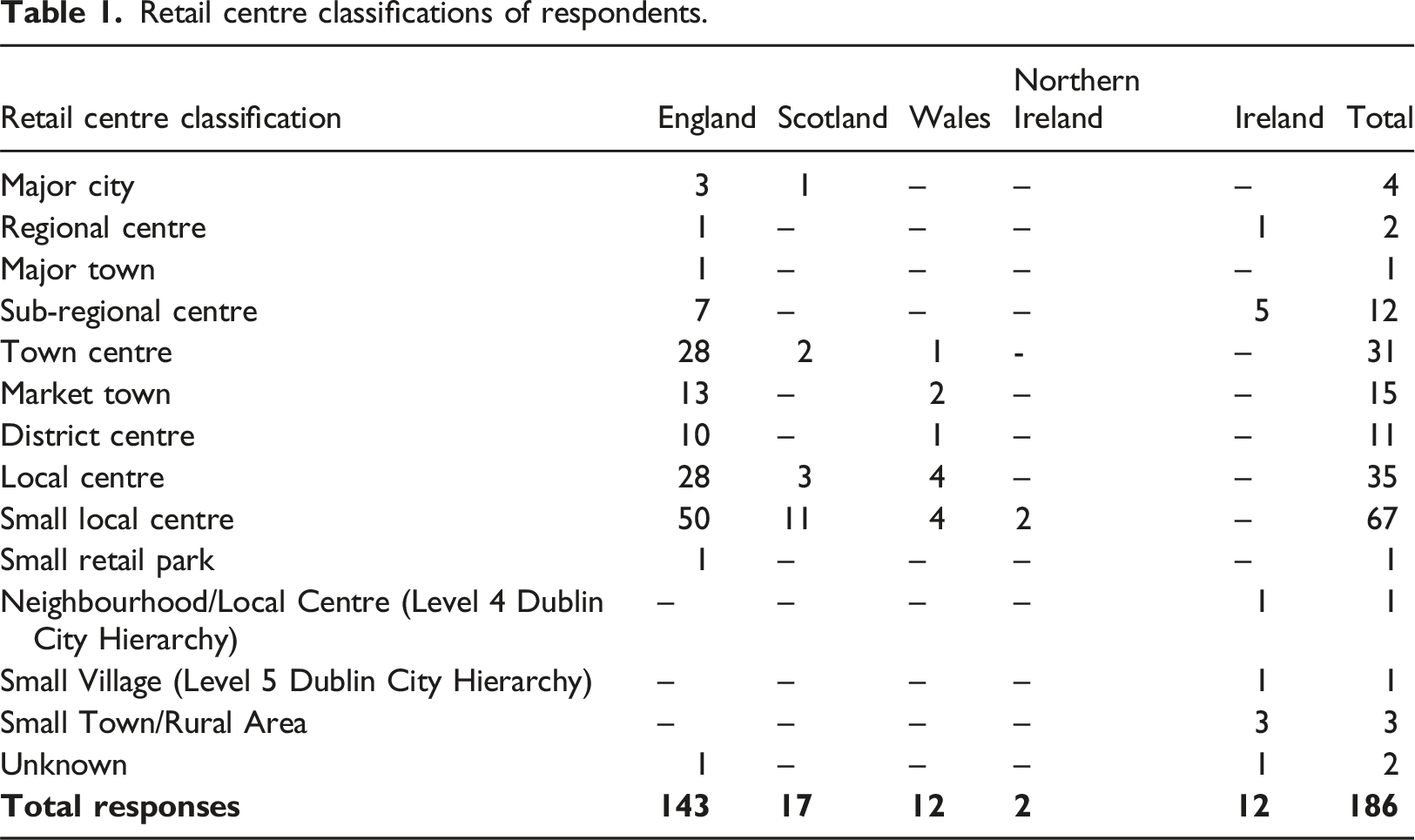
Responses were obtained over a 4-month period between October 2021 and January 2022. Only responses from independent bookstores situated on high streets in the UK or Ireland were included (see Figure 1 for geographical distribution of the bookstores). As seen in Figure 1, the survey responses collected represent broad geographical coverage across the UK. Responses from multiple booksellers were not included in this study as not enough survey responses were obtained from these retailers to provide meaningful comparative insights. In order to provide deeper place perceptions of the high street environment for the responding independent booksellers, Table 1 demonstrates the retail centre classifications of their locations. To classify retail centres in the UK, postcodes obtained in the questionnaire were entered into the Consumer Data Research Centre (CDRC) Mapmaker.
3
The Irish places were classified according to the Irish retail hierarchy set out in the Retail Planning Guidelines for Planning Authorities (DHLGH, 2012). Table 1 shows responses were collected from booksellers located in various types of retail centres, with a majority situated on high streets in small local centres. Geographical distribution of respondents. Retail centre classifications of respondents.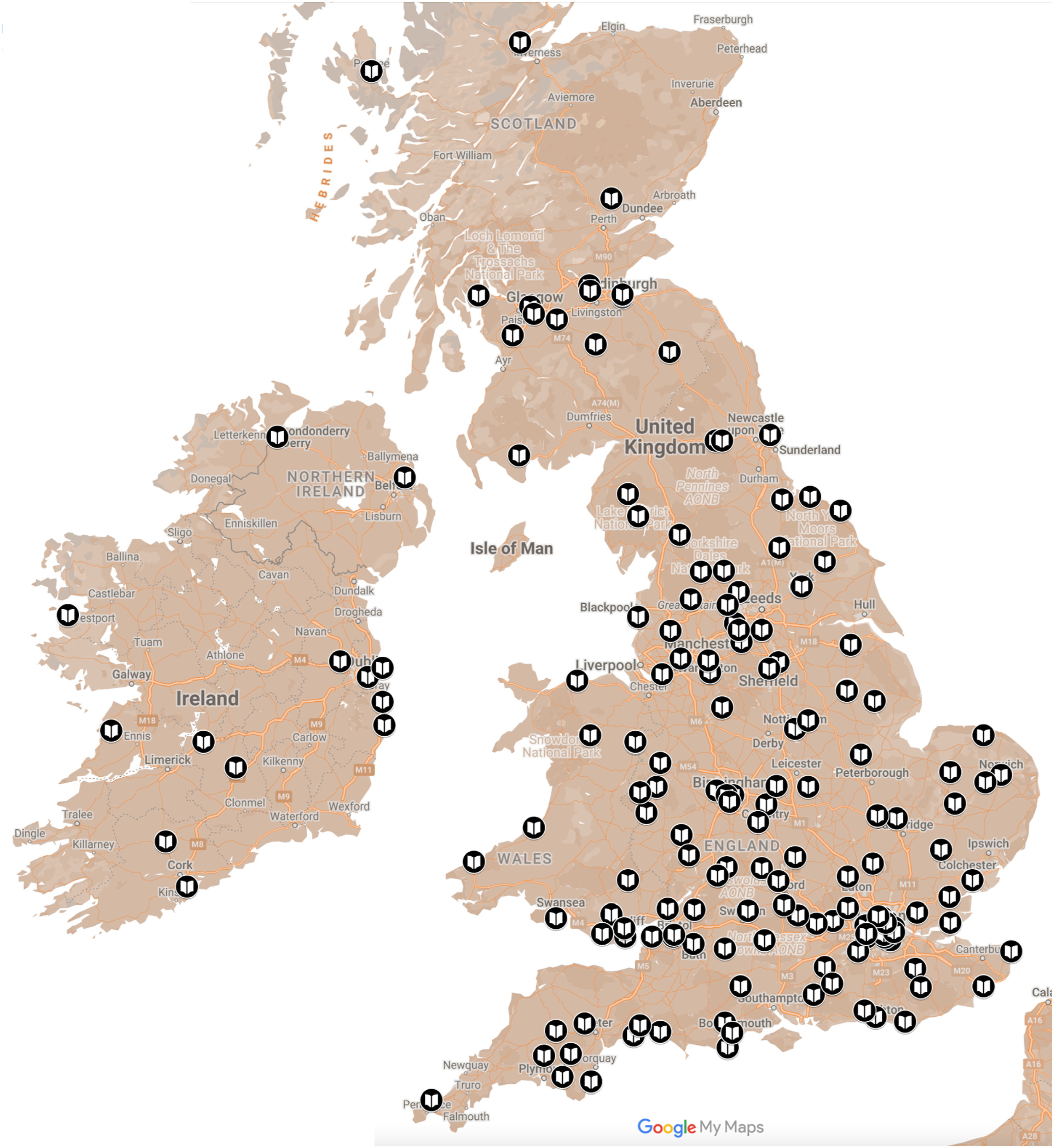
The questionnaire comprised 100 dichotomous questions, constituting four statements assigned to each of the 25 priorities, whereby booksellers answered whether or not they undertook the activity described. A total of 186 responses from independent booksellers situated on UK and Irish high streets were obtained. The statements were labelled 1 for ‘yes’ and 0 for ‘no’, meaning each priority could have a total score of 4 for each respondent which enabled descriptive statistics including average scores and calculating the percentage of booksellers engaging with each priority (i.e. if score above 0). Demographic questions including country and postcode enabled the mapping of the distribution of respondents. For additional detail, Supplemental Appendix 1 of this paper provides: a full list of the statements relating to each priority; number of respondents per statement; mean score for each priority, and ranking of the priorities based on percentage of booksellers engaging with at least one of the related statements, in relation to the 25 ‘Vital and Viable’ priorities ranking IPM (2020) (where the percentage was tied, the mean scores were used to rank the priorities).
The questionnaire also provided for open-ended comments, where booksellers were asked to consider their responses to all the statements related to the 25 priorities, and thus give one or more examples of how they or their staff contributed to the success of the high street. Sixty-nine of the total 186 respondents provided such open-ended qualitative responses, however, six of these were either a comment describing not knowing how to respond or nonsensical remarks irrelevant to the study. These six responses were therefore omitted from the analysis, leaving sixty-three meaningful and usable open-ended qualitative responses which were thematically organised following a template analysis approach (Brooks et al., 2015; King and Brooks, 2017). This way, emerging themes from the data set allowed the formation of meaningful groups that shaped overarching and interrelated themes. Additionally, template analysis permits the use of a priori themes and codes, which allowed for the use of place management and retail concepts associated with high street change to ensure alignment with the research question (Brooks et al., 2015).
Findings
Analysis first enumerated how many booksellers engage with each of the priorities, with the majority engaging with 23 and 22 priorities, respectively (Figure 2). None of the booksellers engaged with fewer than 12 priorities. This suggests booksellers perceive themselves to be significantly contributing to activities driving vitality and viability on their high streets. Indeed, our data indicate a high average contribution rate, of almost 84%, across the top 25 priorities which positively impact on places (as identified by Parker et al., 2017). Number of priorities engaged with by booksellers.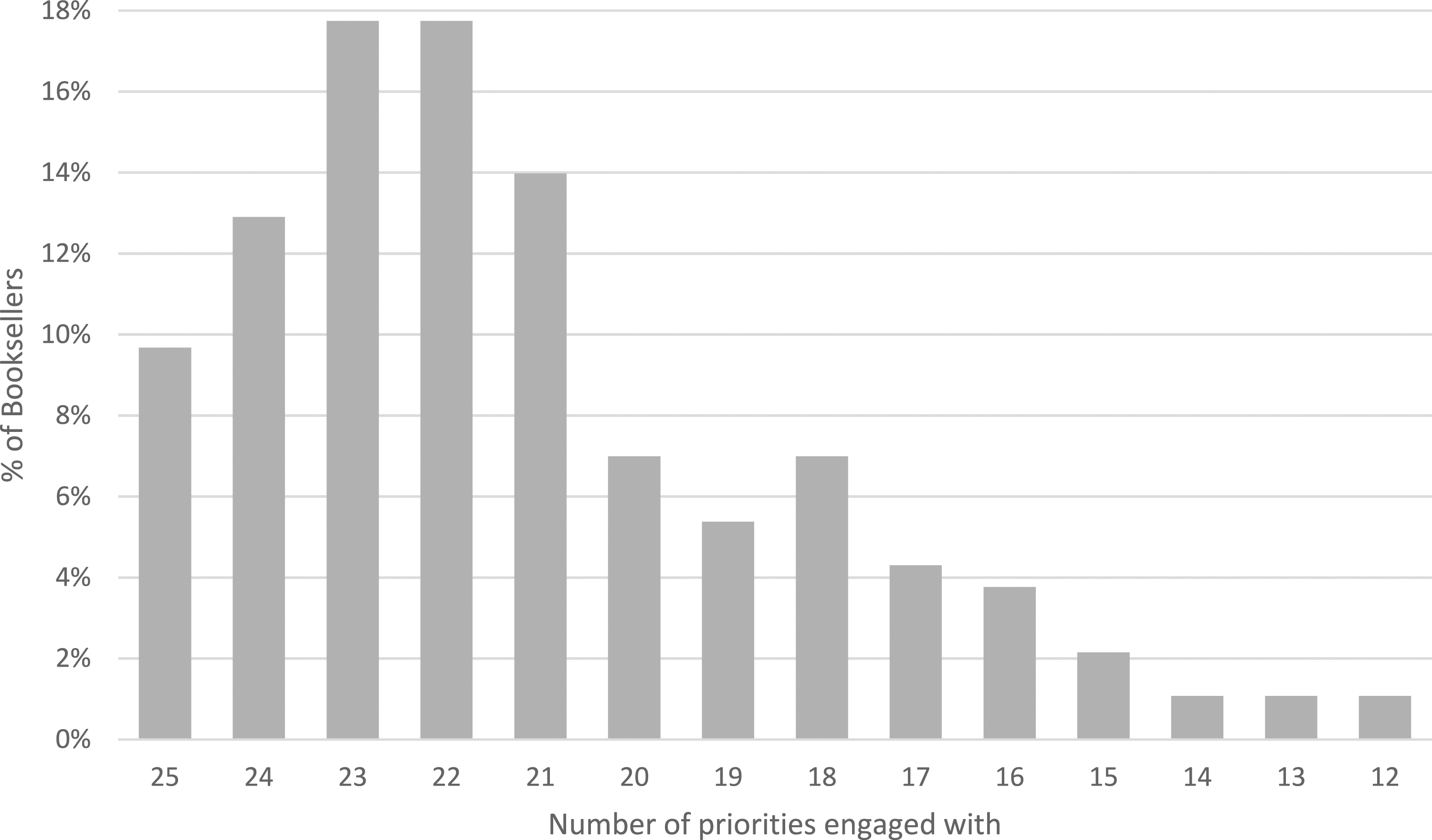
Figure 3 shows the percentage of booksellers engaging in at least one of the activities related to each priority. All booksellers reported contributing to the range/quality/purpose and overall diversity of their high streets, indicating how their offer extends far beyond retail purposes (Laing, 2020; O’Brien, 2017). Conversely, attempts to make high streets more accessible were demonstrated by only 38% of booksellers. However, the relatively low engagement with this priority may arise from the fact that many of the factors and activities associated with accessibility, such as public transport, are out of their control. Thus, booksellers actively contribute to priorities they perceive to have an influence on, aligning with the framework’s original intention (Parker et al., 2017). Percentage of booksellers engaged with each of the top 25 priorities.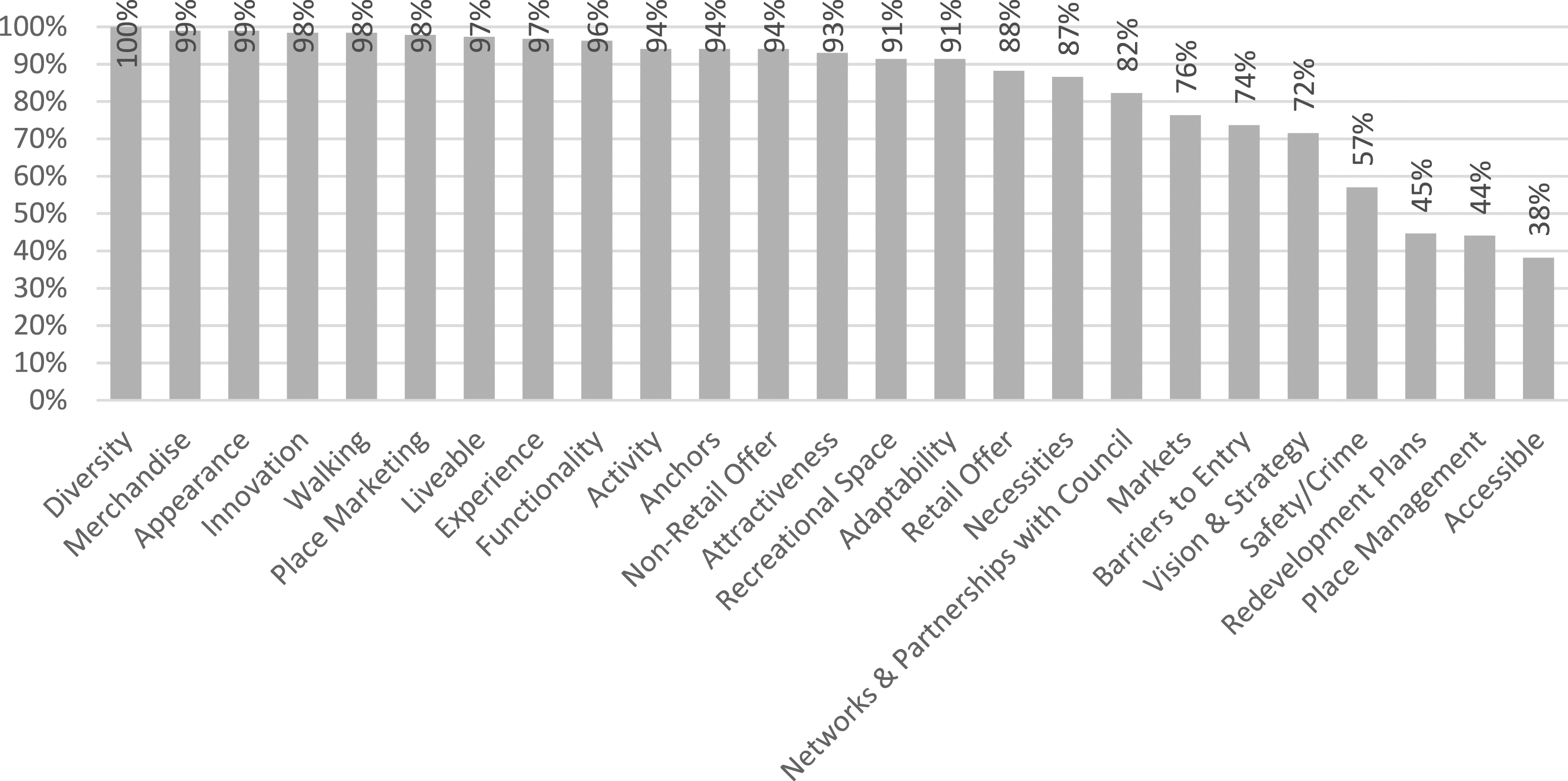
From analysis of the qualitative open-ended responses, four overarching themes emerged that relate to different, yet interrelated, roles that booksellers could perform on their high streets: namely, social entrepreneurs (33 comments); value co-creators (31 comments); initiating multifunctional activities (27 comments); and as speciality anchors (25 of comments).
Moreover, the thematic analysis revealed a call for booksellers to be more included in formal place management structures (12 comments) through increased communication and collaboration with their local councils and public place-based partnerships. The following sections discuss these themes, including the role of booksellers in formal place management structures. The thematic discussion of these qualitative findings is complemented with results from the statistical analysis of the quantitative responses related to the statements related to the top 25 vital and viable priorities.
Bookstores as social entrepreneurs
Resonating with existing literature on the social role of small retailers, it was evident that bookstores not only saw themselves as high street businesses, but as an integrated part of the local community. As one bookseller explained: ‘We would describe ourselves as a social space even before we are a bookshop’ (Bookseller in a small local centre in England).
Over half (n = 33) of the qualitative comments highlighted ways in which the bookstores carried out community-focused activities and 169 respondents answered yes to the statement ‘my store supports local charities, for example, by donating stock or raising money for local causes’. As one bookseller stated: ‘We feel we make an important contribution to the wellbeing of some people by being a place where they feel safe and welcome to come in and converse with a familiar person’ (Bookseller in a small local centre in Wales).
The vast majority of the booksellers (n = 155) also responded yes when asked if they provide schemes/support for local education providers (schools, colleges, libraries, and universities). Collectively, these activities suggest that bookstores act as social entrepreneurs on their high streets. In the UK, one of the main recommendations in the second Grimsey review
4
is the ‘...need for all towns to develop plans that are business-like and focused on transforming the place into a complete community hub’ (Grimsey et al., 2018: 6). Community hubs can also further community interactions, contributing to inclusive development (Bosworth and Salemink, 2021). Our findings corroborate this recommendation, with booksellers’ social entrepreneurship activities providing an array of novel marketplace processes that are tailored to protect or improve customers’ ontological security on an everyday basis (Julkunen et al., 2023), providing safe and supportive social spaces which contribute to place-based resilience (Howard et al., 2022). These novel initiatives were demonstrated in several of the qualitative comments such as, ‘Everyday, we host either pre-school or afterschool classes, theatre, author events or birthday parties’ (Bookseller in a town centre in England, operating as an interactive children’s specialist bookstore and events space) and: ‘We open every day of the year so we’re a reliable public space which, aside from retail space, is there for customers and locals who need to drop by for information, help or just a place to leave keys/collect packages’ (Bookseller in a small local centre in England).
By navigating local needs and changing trends using innovative and adaptable retail practices and strategies (Shahab and Webb, 2023), bookstores are therefore a resource to their high streets, improving the liveability for locals: ‘We now have a regular customer base and parents have told us their children enjoy coming in and feel safe’ (Bookseller in a small local centre in England that opened December 2020).
Bookstores as value co-creators
Around half (n = 31) of the qualitative comments mentioned involvement in town centre/high street partnerships and/or working with other businesses and organisations. Linking to their role as social entrepreneurs, 23 of the open-ended comments highlighted both partnerships and community: for example, ‘We actively use as many local suppliers as we can when sourcing what we need to run our shop’ (Bookseller in a town centre in England). Of those booksellers explaining that they work in partnerships, 17 of them mentioned that they work with schools, churches and libraries which are important institutions for small communities. This corroborates with the 169 booksellers who responded yes to also using local services in the neighbourhood/town/city centre (doctors, school, dentist, library etc.).
Booksellers also reported collaborating with other businesses (e.g. for place marketing purposes), despite sometimes competing for the same customers - thereby establishing bookstores as co-opetitive partners on the high street (which, according to Teller et al., 2016, has been shown to indirectly affect store performance in a positive way). This type of competitive cooperation has a relational orientation in terms of establishing long-term alliances in B2B relationships and creating value through increased interactions, broadening the possibilities of acting as each other’s suppliers (Zakrzewska-Bielawska et al., 2023). Additionally, collaboration with customers and suppliers in close geographical proximity positively contributes to innovation and knowledge about local needs and culture. This positions booksellers as value co-creators as they, through these collaborations, generate positive socio-economic outcomes for the high street ecosystem (Cassidy and Resnick, 2022).
Furthermore, this symbiotic interplay with the local community provides an integrated, sustainable circularity whereby allowing customers to create value and collaborate with booksellers can improve the high street ecosystem’s offer (Re and Magnani, 2022; Shamim et al., 2023). This is also mirrored in the products sold by the bookstores via the enactment of inclusive business models: ‘We buy our stock from the local community, which supports the local circular economy. Our customers are our suppliers too, so we are perhaps even more embedded in the community than a bookstore that sells new products’ (Bookseller in a local centre in England, specialising in second-hand books).
This cooperation contributing to the local circular economy generates both societal and business value, acting as an informal insurance policy (Upson and Green, 2020) for the business community while enhancing place-based resilience (Howard et al., 2022).
It is evident that collaboration underpins many of the activities happening on the high streets in question. In the quantitative responses, 179 of the respondents answered yes when asked if they regularly tell customers about other retailers or attractions they can visit nearby. It was also clear that booksellers strengthened these collaborative practices through specific activities. As one bookseller explained in the open-ended comments: ‘Our different reading groups meet in local pubs/cafes’ (Bookseller in a local centre in England), emphasising Grimsey et al.’s contention that ‘the more mutual connections, the more adaptive the high street network becomes’ (2013: 17). Collaboration can therefore contribute to the attractiveness and capacity of a high street ecosystem, which in turn can boost the performance of the individual stores and, collectively, the vitality and viability of the high street (Parker et al., 2017; Teller et al., 2016). Moreover, this collaboration extended to overcoming barriers to new entrants (Parker et al., 2017), nurturing local adaptability: ‘As a new shop owner in June 2019, I was pleasantly surprised by the welcome and support from my fellow indies’ (Bookseller in a town centre in England).
Given these cooperative actions, bookstores operate as value co-creators by actively engaging with other businesses and organisations on their high streets (Cassidy and Resnick, 2022; Howard et al., 2022), such as schools, libraries, churches, the local council, Business Improvement Districts (BIDs), the Chamber of Commerce, and the Traders Association. Other collaborative actions include directing customers to and recommending other businesses in the centre, as well as supporting community activities, such as selling tickets to local events on behalf of others.
Bookstores as multifunctional initiators
Existing literature stresses the need for a multifunctional oriented high street ‘offer’ (Cassidy and Resnick 2022; Milllington et al., 2015; Mumford et al., 2021). The vast majority of the booksellers surveyed answered yes when asked if they actively participate in local events and festivals (n = 170), or contribute to the artistic and cultural offer of their centres via book-readings or the provision of performance space (n = 159), even during out-of-normal operating hours (n = 155). This in turn activates the high street in a multifunctional manner, thereby boosting vitality (Millington et al., 2015). Moreover, booksellers provide important space for artistic entrepreneurship within the community, therefore contributing to the co-creation of artistic and cultural value (Thompson and Day, 2023). As such, findings indicate that activities undertaken by bookstores contribute to more diverse centres.
Additionally, 23 of the qualitative comments from respondents described how booksellers run, support or participate in local markets/events (particularly festivals), with their physical presence facilitating experiences in-store. Despite literature showing the big ‘winners’ in this retail sector have been the online booksellers (Løyland and Ringstad, 2012), this ability to offer in-store experiences gives the traditional bookstores a competitive edge (Leitão et al., 2018). In the qualitative comments, booksellers also described how they organise storytimes, classes, story competitions, clubs, reading groups, and more. This not only attracts customers, but as Leitão et al. (2018) point out, it enables consumers to browse and discover books in ways not possible online, creating a different engagement with the store and the environment it provides. Comments reflected how the non-retail offer of booksellers also overlaps with their role as collaborative partners, as one respondent stated: ‘We also run a full programme of events throughout the year, many in conjunction with other local organisations’ (Bookseller in a small local centre in Scotland who is part of local partnerships).
This suggests that partnerships between high street retailers build capacity driving multifunctionality, resonating with Millington et al.’s (2015) description of multifunctional centres as a force for transformation and how value co-creation can drive change and investment for the high street (Howard et al., 2022). In turn, this creates a foundation for sustainability, liveability and resilience, all of which are key contributors to high street vitality and viability (Ntounis et al., 2023). Bookstores can therefore be regarded as central actors in this multifunctional transformation of high streets based on the diversity of their offer and the range of their activities, which drive an enriched and dynamic non-retail offer and add to the overall experience of the high street.
Bookstores as speciality anchors
The second Grimsey review (Grimsey et al., 2018) recommends that towns should strategise how to evolve into community hubs (Cassidy and Resnick, 2022), while also establishing a ‘unique selling proposition’ (USP). In the 16 qualitative comments expressing how their bookstore drives footfall (both tourists and locals) to the high street, respondents elucidated their unique offer: ‘...our public events have been incredibly popular and we know we’ve had families fly from Ireland to London to meet authors!’ (Bookseller in a town centre in England). This can be further supported by the 177 booksellers who answered yes when asked if they perceive bookstores as unique to each town. In the open-ended comments, several booksellers also described their bookshop as a ‘place magnet’ drawing people into town, initiating a ‘trickle-down’ effect with people also visiting other businesses in the centre. The role of bookstores as generators of local economic integration and wider positive social effects was also identified in the quantitative part of the survey, as 164 respondents said yes when asked if they felt that their stores are an important part of the local economy. This reflects how booksellers foster resilience for the high street through these dynamics (Howard et al., 2022; Kärrholm et al., 2014).
Thirteen qualitative comments elaborated specifically on how bookstores attract people through the type(s), range, and quality of the books they sell, and many of these comments demonstrated examples of stocking specialty books. These were often described as rare/collectable books, books on specific topics, or exclusive copies from selected authors: ‘We sell books by local writers and specialise in non fiction/fiction on London history’ (Bookseller in a town centre in England). This links to the notion that an advantage SMEs have is the ability to ‘fine tune’ their offer to the requirements of the catchment population due to better knowledge of their characteristics (Megicks and Warnaby, 2008). Despite traditional brick and mortar bookstores facing a range of challenges and competition from online booksellers, specialist stores stocking unique titles and providing personalised services for the local community may not experience these as strongly (Løyland and Ringstad, 2012). Furthermore, almost all booksellers (n = 172) said yes when asked if they stock a range of books by local authors, actively demonstrating their support to local talent. It was evident that product ranges and the provision of non-retail offers were often done in partnership with the community, tying together the three other themes: ‘We are a Christian bookshop so we liaise a great deal with local churches and schools, we actively go out to these venues to set up book stalls either as part of regular activities or for special events’ (Bookseller in a district centre in England).
This positions bookstores as important speciality anchors, functioning as attractions and destination shops for both tourists and locals. Their presence on the high street can nourish the centre’s overall identity and contribute to the augmentation of its place brand via the ability to ‘fine tune’ their offer to the requirements of the catchment population and its embeddedness with local actors (Alexander et al., 2020). This approach is potentially helping the high street ecosystem navigate economically challenging times, adding to place resilience which is a key contributing aspect to high street viability (Ntounis et al., 2023).
Booksellers in place management structures
When describing the diverse ways in which they contribute to high street vitality and viability, booksellers suggested that their placemaking efforts need to be incorporated into more formal place management structures: ‘In terms of the revitalisation of our town centre, I think every independent retailer would want to be involved but it is very difficult on a practical level to know where to start or how to achieve real change/improvements without leadership, initiatives and innovation from local government’ (Bookseller in a sub-regional centre in Ireland).
Despite strong evidence of collaboration with other SMEs and organisations in the ecosystem, the formalisation of this value co-creation was lacking overall. This notion was strengthened by the low number of booksellers answering yes to being involved in a place management partnership (a town team, Business Improvement District (BID), etc.) (n = 43), involved in developing a vision for the neighbourhood/town/city centre (n = 74) and involved in developing a strategy for the neighbourhood/town/city centre (n = 68). Cassidy and Resnick (2022) point out that successful town centre regeneration requires strategic planning with a diverse network of actors within the ecosystem, including Local Authority council leaders. Noting that only one respondent stated they had been invited by the local council to discuss issues in the locality, 12 qualitative responses included calls for improved communication from and with local authorities in order to influence plans and strategies for their high streets. However, comments indicated that booksellers find it difficult to initiate this process, given that additional barriers such as uncommunicative local representatives can be hard to overcome: ‘...I would love to work closely with my local MP [Member of Parliament] or MSP [Member of Scottish Parliament], but I’m afraid they are not exactly communicative. They won't be there forever though, so hopefully the next ones will be more present’ (Bookseller in a small local centre in Scotland).
Some places (because of small size etc.) are not suitable for establishing formal partnerships such as a BID (Grail et al., 2020). However, town centre managers should focus on ways to mobilise SMEs and other actors in the entrepreneurial ecosystem to share resources and knowledge in developing local plans and strategies (Cassidy and Resnick, 2022); for example, through visioning workshops. More communication with and from local councils alongside establishment of formal partnerships can therefore enhance existing capacity to drive place transformation.
The findings in these sections have demonstrated the innovative roles booksellers undertake in contributing to the vitality and viability of their high street. Subsequently, there is an emergent need for their actions to be integrated into formal place management structures when developing visions and strategies for town centres in order to optimise resources and knowledge contributing to the value co-creation within the high street ecosystem.
Conclusions
By utilising an established framework for assessing high street vitality and viability, we posit that booksellers assume innovative roles that make an active contribution to the high street ‘ecosystem’ in multiple ways and shape them into more than simply another shop on the high street. This study reveals four key ways in which they bolster the vitality and viability of their high streets; by acting as social entrepreneurs, engaging with the high street as value co-creators, spearheading a range of positive multifunctional activities and serving as speciality anchors. Adopting these roles that exceed the expectations of the traditional retailer and engaging in activities beyond the transactional is of great importance for the local community. This may not be unique to bookshops, but a trait held by many independent retailers, as existing literature shows ‘indies’ play a variety of roles in the high street ecosystem. As such, it indicates a potential to use the 25 priorities framework to investigate in what ways other types of independent retailers contribute to high street vitality and viability in order to draw wider conclusions about whether the roles assumed by booksellers are unique to them, a commonality within the cultural and creative sector or applicable independent retailers in general.
This study has outlined that, within the recent context of the demise of the traditional high street, books can be considered a very important retail product and one which Kirk et al. (2012) highlighted as having survived the shifts towards an increasingly digital literary infrastructure. The enduring sales of physical books can arguably be at least partly attributed to the notion that booksellers seem to instinctively act as innovative agents of change (Teicher, 2013). Subsequently, this study underlines how booksellers, through providing diversity and tailored choices adapted to the catchment population, and developing dynamic economic relationships with other businesses, play important continuing roles of the independent retailer (see Smith and Sparks, 2000). Furthermore, booksellers are considered to have overcome the futility of the physical presence of bookstores (Miller, 2011) and have, through their social entrepreneurship, curated functions akin to community hubs where social, emotional and therapeutic interactions are supported (Rosenbaum et al., 2020).
Whilst ongoing and increasingly pronounced economic turbulence threaten our towns and cities, bookstores continue to play innovative roles towards the requirement identified by Carmona (2022) to support the local high street ecosystem and sustain a physical customer-base supporting cultural, economic, and communal exchanges. Given that a high proportion of bookstores are SMEs, they also occupy key functions in enhancing high street diversity and attractiveness, promoting innovativeness and resilience in terms of business strategies (Howard et al., 2022), and maintaining an important sense of belonging within their local communities (McEachern et al., 2021). In this sense, the study has found that bookstores can be considered crucial components in the economic recovery of places. These findings are particularly important in the UK context, where high street regeneration and local wealth building is highly reliant on business rates and the perils this system causes in terms of sustaining and investing in a place-based economy (Muldoon-Smith, 2019).
The study findings support the argument that booksellers are generally predisposed to positively contributing to the wider vitality and viability of the place in which they are based, especially through their innovative skills and strong relational interactions which they demonstrate with their customer base (Eymas and Bensebaa, 2021). Findings imply that booksellers are naturally predisposed to making positive contributions to placemaking. When combined with the existing literature suggesting bookstores are an integral part of the local community (see Laing, 2020; O’Brien, 2017; Wilson and Hodges, 2022), booksellers are arguably well placed to become involved in wider place management processes in their respective places. Local councils should therefore strive to ensure that the placemaking activities undertaken by independent booksellers form part of local visions and strategies, perhaps through the role of a town centre manager, in order to drive change. A town centre manager could also help establish formal place partnerships and networks by connecting businesses and community groups on the high street through gatherings, such as co-creation workshops, where challenges and opportunities for the high street as a collective can be discussed.
In conclusion, booksellers seem to fulfil important innovative roles in the fabric of a town or city for a range of reasons, including their seemingly innate ability to foster social and cultural links both within and beyond their stores, which is arguably manifested in a significant willingness and capacity to participate in value co-creation and place management organisations. Given that booksellers can generally be considered to demonstrate a wide range of positive characteristics, they should also arguably be considered as exemplars for behaviours and activities which other retailers might be encouraged to adopt within our towns and cities. In terms of local placemaking governance, booksellers should thereby be included in consultation, decision-making processes and place partnerships where they exist in any given area.
Supplemental Material
Supplemental Material - Booksellers as placemakers: Innovative roles of independent booksellers in high street retailing
Supplemental Material for Booksellers as placemakers: Innovative roles of independent booksellers in high street retailing by Regine Sønderland Saga, Nikos Ntounis, Gary Warnaby, Chris Gregory and Cathy Parker in Local Economy.
Footnotes
Acknowledgments
The authors would like to thank Heartflood Ltd. and The Booksellers Association of the UK and Ireland for making this research possible.
Declaration of conflicting interests
The author(s) declared no potential conflicts of interest with respect to the research, authorship, and/or publication of this article.
Funding
The author(s) disclosed receipt of the following financial support for the research, authorship, and/or publication of this article: This research was commissioned by the Booksellers Association of UK & Ireland to examine the contribution of bookshops to the vitality and viability of UK and Ireland high streets, including a focus on the post-pandemic opportunities that booksellers have to contribute to the recovery and transformation of town and city centres.

Supplemental Material
Supplemental material for this article is available online.
Notes
References
Supplementary Material
Please find the following supplemental material available below.
For Open Access articles published under a Creative Commons License, all supplemental material carries the same license as the article it is associated with.
For non-Open Access articles published, all supplemental material carries a non-exclusive license, and permission requests for re-use of supplemental material or any part of supplemental material shall be sent directly to the copyright owner as specified in the copyright notice associated with the article.
