




Abstract
New professional sports stadia have been widely advanced as flagship developments that can generate jobs and wealth, support place branding and culture-led strategies, and host mega-events. Public funding for new stadia has been secured on these bases but also challenged as stadia costs are under-estimated and the benefits, particularly for lower income communities, exaggerated. Emerging in this context, community stadia are an intriguing phenomenon as they offer the potential for professional sports stadia to deliver on community aims alongside their sporting, commercial and economic development aims. Public funding has followed with a number of community stadia built or planned in the UK, yet with limited critical analysis of the stadium type and its impact. This paper helps to fill the literature gap by learning from two community stadia case studies: The Keepmoat Stadium, Doncaster and The Falkirk Stadium, Falkirk. It finds that community stadia have the potential to deliver across the four aims, with stadia’s association with the world of professional sport facilitating engagement with multiple, diverse and ‘hard to reach’ communities. However, they are also complex phenomena leading the paper to construct a 12-feature conceptualisation of community stadia that can advance practitioner and academic understanding of the phenomenon.
Introduction
Since the 1980s, the UK has experienced an unprecedented era of new or redeveloped professional sports stadia. The modern, large capacity and commercially minded stadia, described as 21st century ‘cathedrals’ (Giulianotti, 2011), now adorning many of the UK’s major cities are very different to the physically dilapidated stadia of the 1980s (Bale, 2000; Paramio et al., 2008; Van Dam, 2000; Williams, 1995). Interest and investment in new stadia has not only been in high profile stadia but also, and the focus of this paper, in lesser scale ‘community stadia’. Conceived as a stadium type in their own right, community stadia can be described as professional sports stadia with additional community-facing aims, facilities and services that reflect the scale of the professional clubs they host and the towns and small cities in which they are situated (City of York Council, 2010; PMP, 2008; Sanders et al., 2014).
In the UK, new professional sports stadia with explicit aims of becoming ‘community stadia’ have been constructed in Brentford, Brighton, Chesterfield, Colchester, Doncaster, Falkirk and Wimbledon, while further examples are planned for Cambridge, Castleford, Grimsby, Truro, and York. It is this increasing number, allied to a sparse community stadia-specific literature that currently spans just three sources (City of York Council, 2010; PMP, 2008; Sanders et al., 2014), which forms the motivation behind this paper. Furthermore, the construction of community stadia in the UK has typically been (part-) funded by public monies and, once constructed, public sector bodies (such as local authorities or arms-length external organisations (ALEOs)) are involved in their ownership and management. The concern is that large sums of public investment are being allocated to new community stadia but with very little critical appraisal or evaluation of the phenomenon’s objectives and impact.
This paper aims to help fill the community stadia literature gap by integrating the existing knowledge with case study research into two community stadia: the Keepmoat Stadium, Doncaster and the Falkirk Stadium, Falkirk. Learning from these two stadia and their respective aims, services and facilities hosted, and communities served, this paper offers a conceptualisation of the community stadia phenomenon. It concludes by considering whether community stadia offer an alternative type of flagship development, one that aligns more closely to the emergent community entrepreneurialism policy discourse (Devaney et al., 2017; Schaller, 2018; Southern and Whittam, 2015) as opposed to dominant urban entrepreneurialism.
Understanding the context for community stadia
The emergence of community stadia in the UK needs to be understood within their political, sporting, social and economic context. Politically, the turning point for UK stadia developments was the 1989 Hillsborough stadium disaster. The resulting Hillsborough Stadium Disaster Inquiry report overseen by Lord Justice Taylor became a watershed and enforced significant investment in British football stadia to improve their safety and security (Giulianotti, 2011). The Taylor Report was therefore the ‘stick’ to enforce change in Britain’s professional stadia but the ‘carrot’ for stadia investments came from the increased professionalisation, media coverage and commodification of sport – all of which contributed to rising matchday attendances (Van Dam, 2000; Walsh and Giulianotti, 2001). Larger, safer and more aesthetically attractive stadia enabled clubs to meet this demand and, in turn, attract the players and investment that could deliver sporting success on the pitch (Kennedy, 2012).
New or redeveloped stadia became a means of fulfilling sporting ambitions but, closely associated with sporting success was the need for stadia to deliver on a commercial front. Whether to fund stadia investments, service stadia finance arrangements, or support the financial sustainability of clubs, all professional sports stadia have had to increasingly enable and accommodate commercial and revenue generation activities (Ginesta, 2017; Paramio et al., 2008; Williams, 1995). No longer the monopurpose sports venues of the 1980s, contemporary stadia are instead buildings that seek to maximise revenue generation opportunities, including through corporate and conference suites, hotels, museums and the selling of stadia naming rights (Ginesta, 2017; Paramio et al., 2008).
The societal tension is that professional clubs and stadia officials have gone too far: favouring the commercial over the sporting fan. Rising ticket prices and the financial importance of attracting wealthier fans is one aspect of this with Giulianotti (2011), Walsh and Giulianotti (2001) and Williams (1995) questioning whether stadia are now becoming exclusive places that price out many young adult and working class ‘traditional’ supporters. Kennedy (2012) then notes the wider trend of stadia becoming increasingly secular, even calculative, with their fundamental focus being on generating revenue and developing the club ‘brand’, rather than expanding corporate social responsibility (CSR) and community actions. In becoming ‘tradiums’ (Bale, 2000), clubs and stadia officials consequently encounter challenge when seeking public support, planning approval and investment for new stadia.
To counter this, clubs and stadia officials have attached additional aims or layers of justification to their stadia proposals, with these evolving over time. From North America, there were wealth and job creation justifications (Baade, 1996; Coates, 2007; Siegfried and Zimbalist, 2006). However, as the direct economic benefits from new stadia failed to materialise, the influence of urban entrepreneurial economic development policy led to more nuanced assertions tied to new stadia’s contribution to competitive place strategies. Stadia have thus been portrayed as symbolic flagship developments, assets in culture-led and place branding strategies, and hosts of sporting mega-events that can attract highly sought after mobile skills, jobs, firms and investment to their cities (Doucet, 2007; Harvey, 1989; OECD, 2007).
Stadia proponents have also advanced the contribution of stadia to social and community aims (Coates, 2007; Eckstein and Delaney, 2002; Slack, 2014). In the UK, the sustainability agenda initiated by the New Labour government led to new stadia developments being couched within community economic development, co-production and sustainable communities theories and concepts – and the emergence of the community stadia phenomenon can be traced back to this period.
In this context, community stadia are an intriguing phenomenon as they offer the potential for professional sports stadia to deliver on sporting, commercial, economic development and community aims – which this paper conceptualises as the ‘quadruple bottom line’. The vision behind community stadia appears to be apposite to the dominant urban economic development policy themes and discourses, with greater emphasis on the stadia’s use by and impact on their local communities rather than their contribution to economic outcomes. A question within the emergent community entrepreneurialism policy discourse (Devaney et al., 2017; Schaller, 2018; Southern and Whittam, 2015), therefore, is whether community stadia can deliver on more inclusive and social aims in such an economically driven climate.
Community stadia in the literature
The only community stadium referred to within the academic literature is Brighton & Hove Albion FC’s Amex Community Stadium. In the Sanders et al. (2014) article, the rationale for Brighton & Hove Albion FC investing in a community stadium as opposed to a conventional football stadium was reported to be twofold. On a sporting front, the stadium enhanced the relationship between the club and its supporter base; on a community front, it provided a permanent home for Albion in the Community (the club’s community outreach/CSR organisation) and a hub for the local, disadvantaged community of Moulsecoomb. With regards to characteristics, Sanders et al. (2014) highlight the stadium’s multifunctional use as a sporting, education, health and cultural centre, and the presence of Albion in the Community. In this respect, Sanders et al. comment that the community stadium ‘appears to represent a distinct form of sporting space – far removed from trends found in the construction of other, larger, new football grounds’ (Sanders et al., 2014: 415) and ‘attempt(s) to concretize the stadium as … a place of the people – as well as being home to the football club itself’ (Sanders et al., 2014: 415).
More descriptive assessments of community stadia are provided by City of York Council (2010) and PMP (2008) reports produced to support the planning submissions for the York and Cambridge community stadia, respectively. In these reports, community stadia are described as multifunctional buildings that house diverse facilities and services beyond their core, professional sports functions – including: Health provision (including Primary Care Trust and health improvement services), leisure provision (community health and fitness facilities or larger scale commercial leisure opportunities), education facilities (e.g. Playing for Success centres, community classrooms and ICT suites), general community provisions (community halls, meeting spaces, libraries etc), sports facilities (indoor sports halls, outdoor pitches, etc.), as well as local retail and other businesses. (PMP, 2008: 2)
The provision of attractive and engaging facilities and services helps enable stadia to become a community hub, noting that this requires stadia officials seeking out, listening and responding to what local communities want. Collectively, these characteristics lead to assertions that community stadia are ‘markedly different from the typical sports stadium’ (PMP, 2008: 2) and ‘embrace the concept of a “living stadium” designed to make a positive contribution to the local environment and community’ (PMP, 2008: 56).
While portrayed as a distinct type of professional sports stadia, one must be cautious in declaring that community stadia are a radical departure from other professional sports stadia. One cannot claim that only community stadia can house wider, accessible facilities and services. Professional sports stadia often house a number of wider facilities and services that the community can access (Brown and McGee, 2012), yet they are not labelled ‘community stadia’. All stadia, for example, offer the opportunity for their facilities to be hired for conferences, meetings and private functions. The staging of high profile pop concerts also appeal to the local community (Chase and Healey, 1995), while some stadia have facilities ‘designed in’ to them, such as a private gym within Huddersfield’s John Smith’s Stadium (Brown and McGee, 2012).
Another interface is professional clubs’ involvement in community outreach/CSR activities, with many professional sports clubs having ‘community trusts’ or ‘community foundations’ delivering against social aims. However, it is important to unpick the relationship between a professional club, the community outreach/CSR trust, and the stadium. In particular, the independence of the community outreach/CSR trust needs to be acknowledged as its profile, reach and achievements could be conflated with a perception of a stadium being a community stadium. Indeed, there are community outreach/CSR trusts that are neither based in stadia nor do they deliver community-facing activities in stadia. For community stadia, therefore, one might contend that community outreach/CSR trusts are genuine stadia partners and actively deliver community-facing services and activities from within the stadia.
Most professional sports stadia therefore house some community-facing activities. Indeed, Jones (2001) finds that the political elite often view the presence of community facilities within new stadia as a given and fail to scrutinise the existence, use and impact of such ‘community’ facilities. Without scrutiny, the term ‘community’ may simply be used as a meaningless public relations prefix to overcome any local opposition to the cost, size or location of stadia (Blackshaw, 2008; Mellor, 2008). This critical mindset underpins this paper’s view that genuine community stadia should have a community purpose, use and impact that exceeds that of other professional sports stadia.
Keepmoat Stadium, Doncaster and Falkirk Stadium, Falkirk
To develop a deeper understanding and conceptualisation of the community stadia phenomenon, two case studies were used: the Keepmoat Stadium, Doncaster and Falkirk Stadium, Falkirk. Both were selected on the grounds that they were ‘extreme’ cases (Flyvbjerg, 2011) following a sequential four-stage selection process that: (i) established an initial stadia sample of the 30 new professional cricket, football, rugby league and rugby union stadia constructed in England, Scotland and Wales between 2000 and 2015; (ii) carried out an initial desk-based analysis of the 30 stadia’s community facilities, size and location, leading to 12 stadia being screened out because of a lack of evident community stadia characteristics; (iii) conducted an e-survey of the 18 remaining stadia to identify potential case studies and (iv) contacted potential ‘extreme’ cases to gain mutual agreement to case study selection.
The fieldwork for the two case studies, in the form of interviews and focus groups with stadia stakeholders and desk-based reviews of stadia documentation, was completed between August 2015 and March 2016. Across the two stadia, a total of 57 stadia stakeholders participated in the research: officials of the professional sports clubs (5 participants); managers of the clubs’ community outreach/CSR trusts (4 participants); tenants of space within the stadia (8 individuals); local authority officials and elected members (9 individuals); managers of local partner organisations (8 individuals); local businesses (3 organisations); and local residents and stadium users (20 individuals). In analysing the qualitative data, particular attention was paid to the differing views and experiences across the research participants as this is consistent with critical realism’s foundations that knowledge is best derived from capturing and analysing multiple viewpoints (Del Casino Jr et al., 2000; Easton, 2010; Sayer, 1992).
The aim of this paper is to provide a conceptualisation of the community stadia phenomenon. To anchor this, the following summaries of the two stadia provide tangible illustrations of what community stadia entail.
The Keepmoat Stadium, completed in 2006, is a modern, enclosed, 15,200 capacity stadium located on the edge of Doncaster and forms a site that is immediately surrounded by a football complex, athletics stadium and car parks. Presented in Figure 1, the stadium also forms part of the major area-based and mixed-use Lakeside regeneration project. Centred around a manmade lake, Lakeside comprises an outlet shopping centre, leisure complex including a cinema, restaurants and hotels, offices (including Keepmoat construction company’s headquarters), an outdoor amphitheatre, the National College for High Speed Rail and 3- and 4-bedroom housing targeted at families. In total, the Keepmoat Stadium costs £30 million and was financed by Doncaster Metropolitan Borough Council, viewing the stadium as one of four flagship developments (alongside Doncaster Sheffield Airport, Doncaster Racecourse, and Doncaster’s central civic realm) designed to act as economic catalysts in the regeneration of Doncaster.
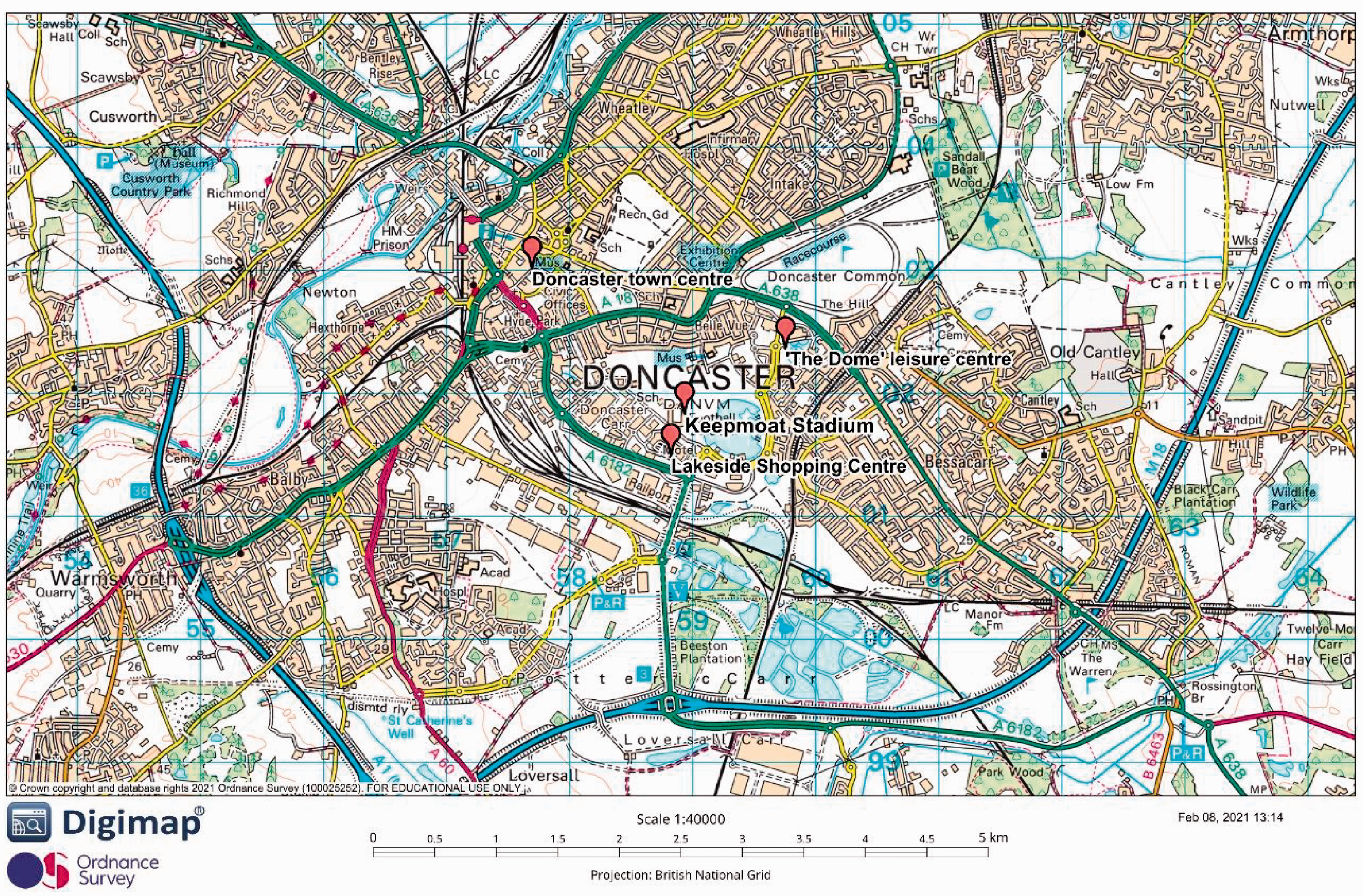
Map of the Keepmoat Stadium, Doncaster, and its hinterland.
The 8750 capacity Falkirk Stadium was completed in 2004 and is a three-sided, edge-of-town stadium that is immediately surrounded by a football complex, car parks and greenfield land. Initially named the Falkirk Community Stadium, its £6 million cost was funded by Falkirk Council using the money generated by the sale of Falkirk FC’s former Brockville stadium. Like the Keepmoat Stadium, it too is a flagship development for the (Falkirk Gateway) regeneration area in which it is situated. While the Falkirk Gateway project is less advanced than Lakeside, the ambitions are similar in seeking to attract new economic and mixed-use functions to the Falkirk to Grangemouth corridor site. The Falkirk Stadium, along with the Helix Park and Kelpies (both major visitor attractions – see Figure 2) are viewed as catalysts in this process (McKean et al., 2017). The extract from a ‘My Future’s in Falkirk’ newsletter, for example, stated that the Falkirk Stadium’s ‘innovative, high quality design and build will make it an icon for the regeneration of the area’.
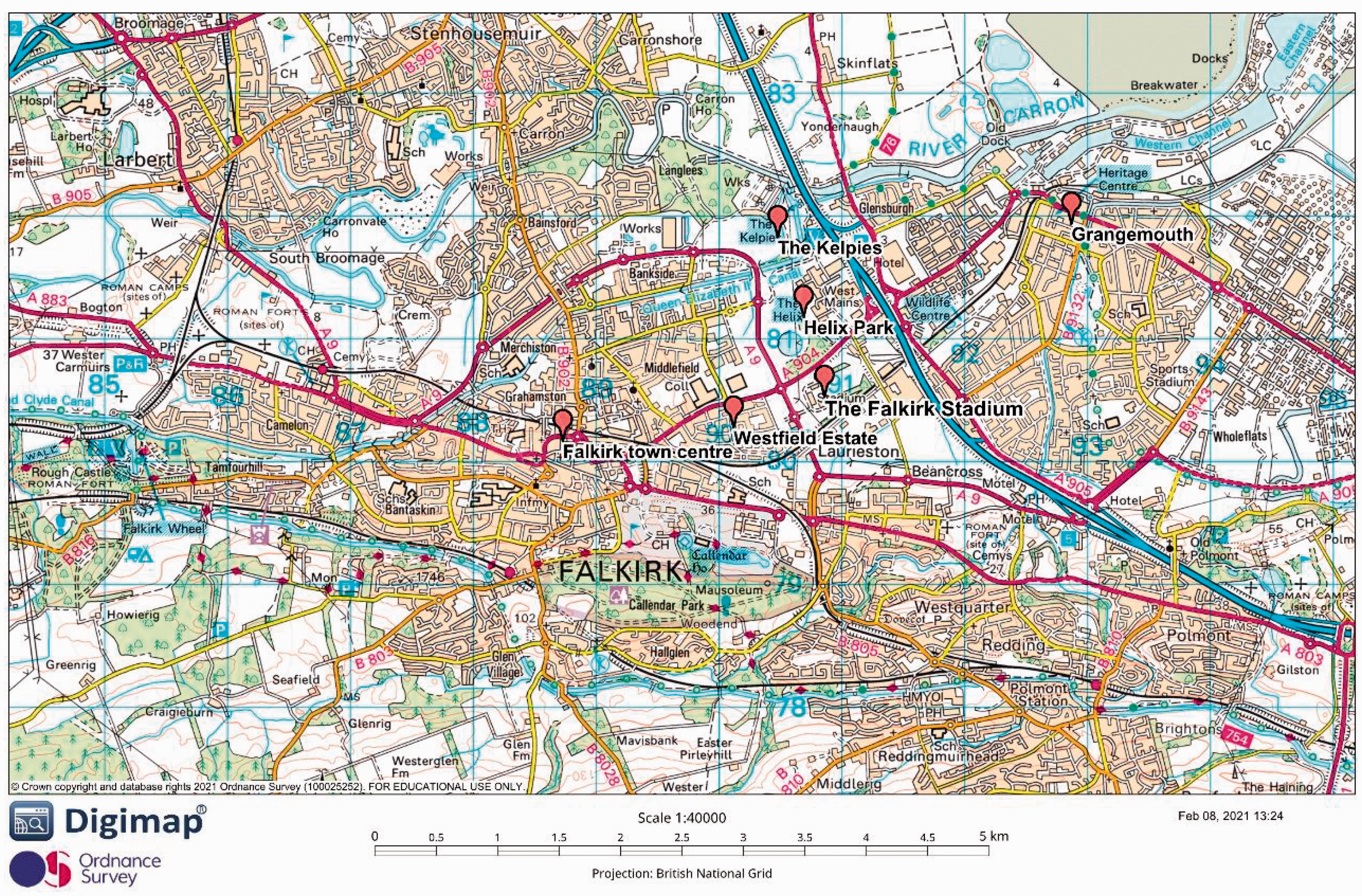
Map of Falkirk Stadium and its hinterland.
The economic regeneration aims attached to both stadia reflect the influence of urban entrepreneurialism (Doucet, 1997; Harvey, 1989; OECD, 2007; Vento, 2017). Indeed, it demonstrates that urban entrepreneurialism encourages not only cities to be ‘competitive’ but also towns. As flagship developments within the strategic Lakeside and Falkirk Gateway economic locations, both stadia were viewed as catalysts that could counter the decline of Doncaster’s and Falkirk’s traditional industries, help address the towns’ socio-economic challenges (see Table 1 for a summary of headline statistics), and regenerate their respective economies and communities.
Headline Doncaster and Falkirk socio-economic statistics.
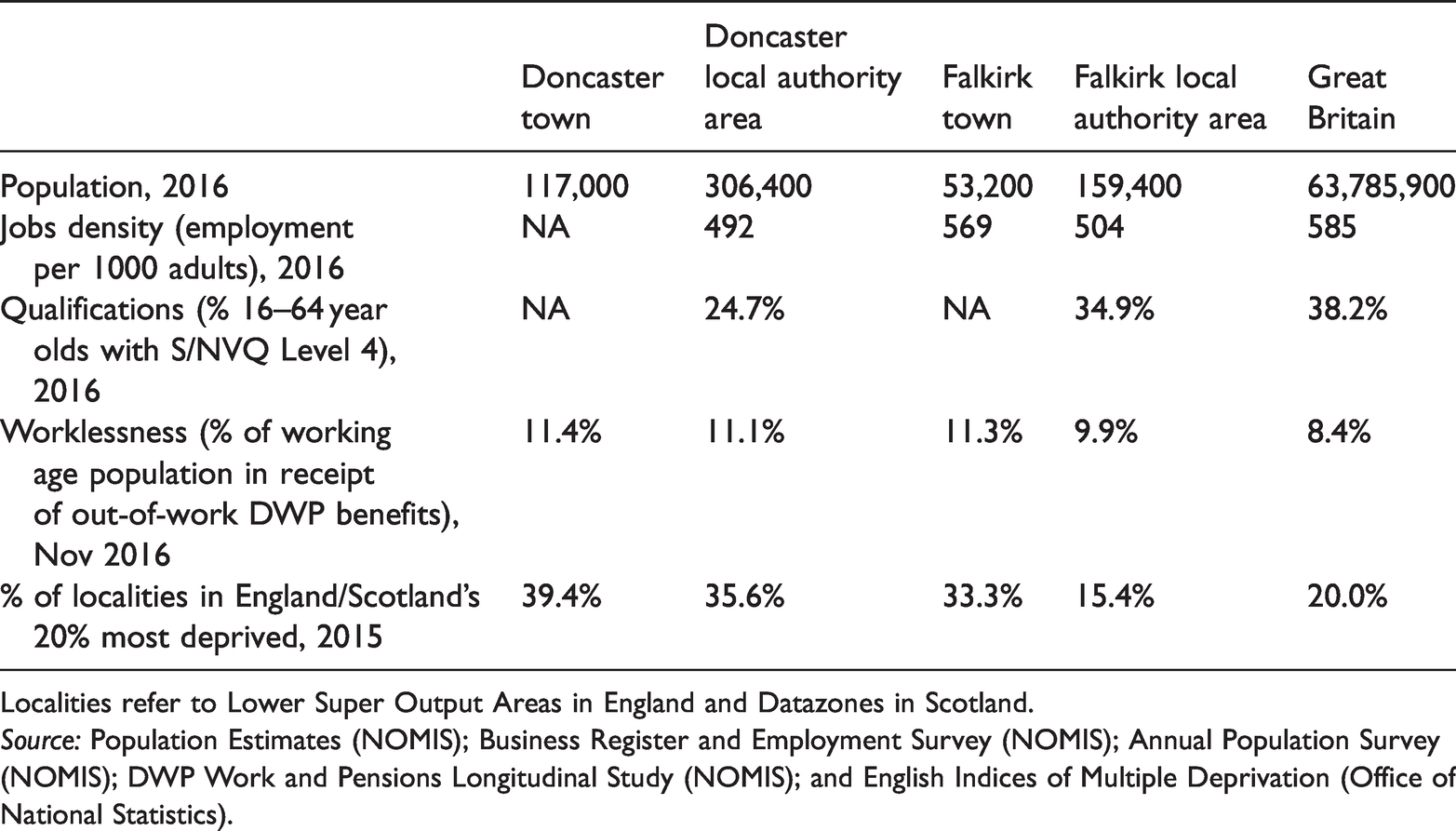
Localities refer to Lower Super Output Areas in England and Datazones in Scotland.
Source: Population Estimates (NOMIS); Business Register and Employment Survey (NOMIS); Annual Population Survey (NOMIS); DWP Work and Pensions Longitudinal Study (NOMIS); and English Indices of Multiple Deprivation (Office of National Statistics).
The similarities between the two stadia continue beyond their economic regeneration aims to align with the other aims advanced in the sporting–commercial–community–economic regeneration quadruple bottom line. On a sporting front, a key driver in the publicly funded constructions of the Keepmoat and Falkirk Stadia was that they enable Doncaster Rovers FC and Falkirk FC to achieve and sustain, respectively, Championship and Scottish Premier League status. Commercially, both stadia had aims related to the development of income streams that build the financial sustainability of their professional clubs and, in the case of the Falkirk Stadium, to pay back the stadium’s £6 m construction costs. On the community front, and reflecting the sustainability agenda of the millennium period when both stadia were planned (Pike et al., 2007; Raco et al., 2008), both were conceived as ‘community stadia’ that offered a range of facilities for the Doncaster and Falkirk communities. Table 2 summarises the range of facilities and services housed in the two stadia.
Facilities and services housed within Keepmoat and Falkirk Stadia.
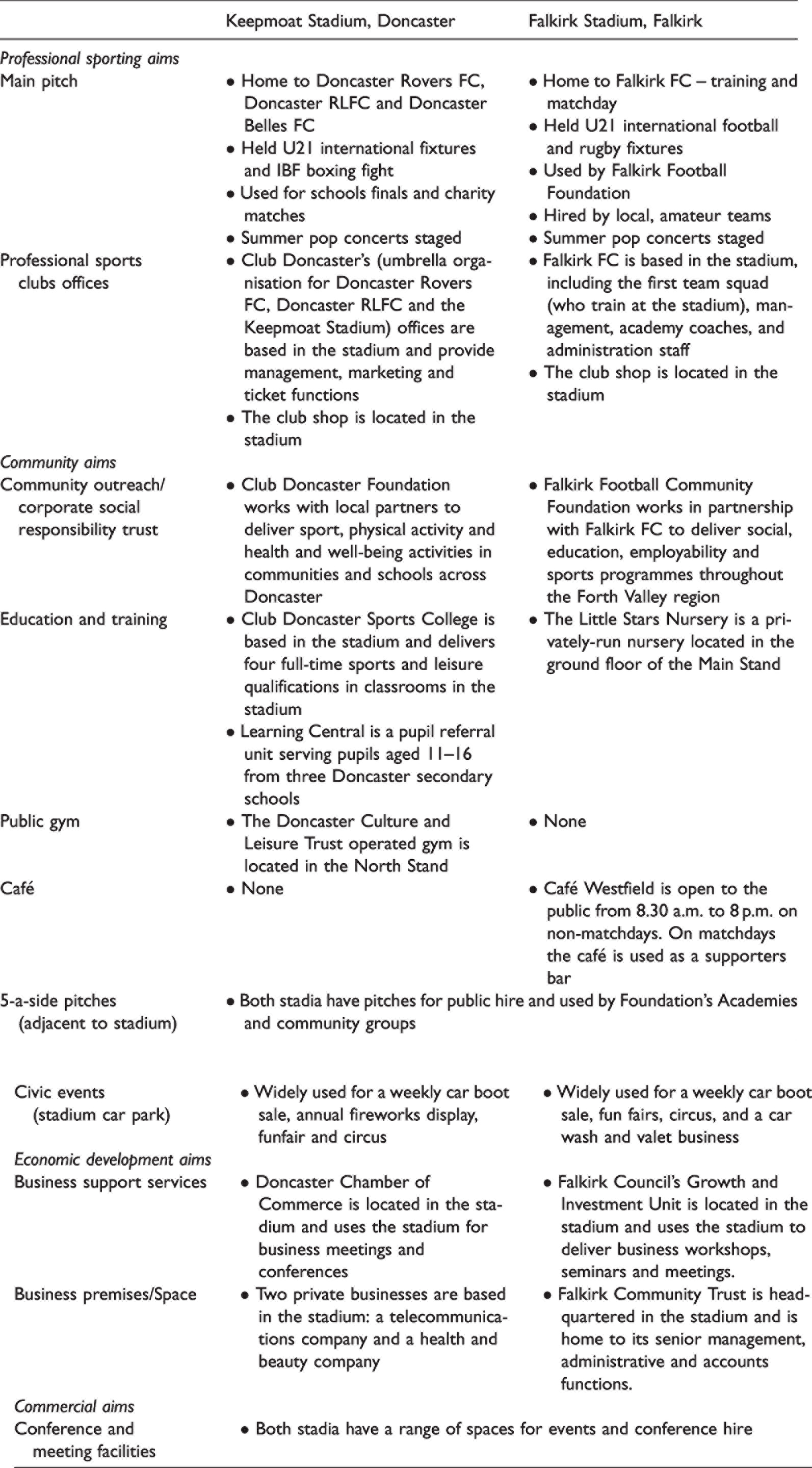
The service mix presented in Table 2 has, in turn, led to both stadia being used by many different users and user types. Focusing on the non-matchday users as these help to differentiate community stadia from typical professional sports stadia, users included: infants, children and young people in education; young people not in employment, education or training; adults with a disability, substance abuse or mental health issues; pensioners; mother and toddler groups; business people; and concert goers. Notably, many of the users come from ‘hard to reach’ communities that agencies often struggle to engage with, so demonstrating the additionality and kudos of professional sports stadia that community stadia and their services and facilities can capitalise on (Sanders et al., 2014; Spaaij et al., 2013). Furthermore, the fact that the stadia were being used by females and disabled groups runs counter to the view that stadia are gendered and exclusionary places on the basis of their masculine, professional sport and commercial associations (Kelly, 2010; Massey, 2005, 2007).
Conceptualising community stadia
The complexity of the community stadia phenomenon with regards its multiple aims, facilities, services and users means that a headline definition alone is insufficient. While one can be offered (see below), a fuller conceptualisation of community stadia that sets out key features and characteristics is more appropriate. Community stadia are accessible, multifunctional buildings that work with their communities to offer a diverse range of non-matchday facilities and services for their communities, alongside meeting the sporting and commercial demands that face all professional sports stadia.
Key features of the community stadia phenomenon.
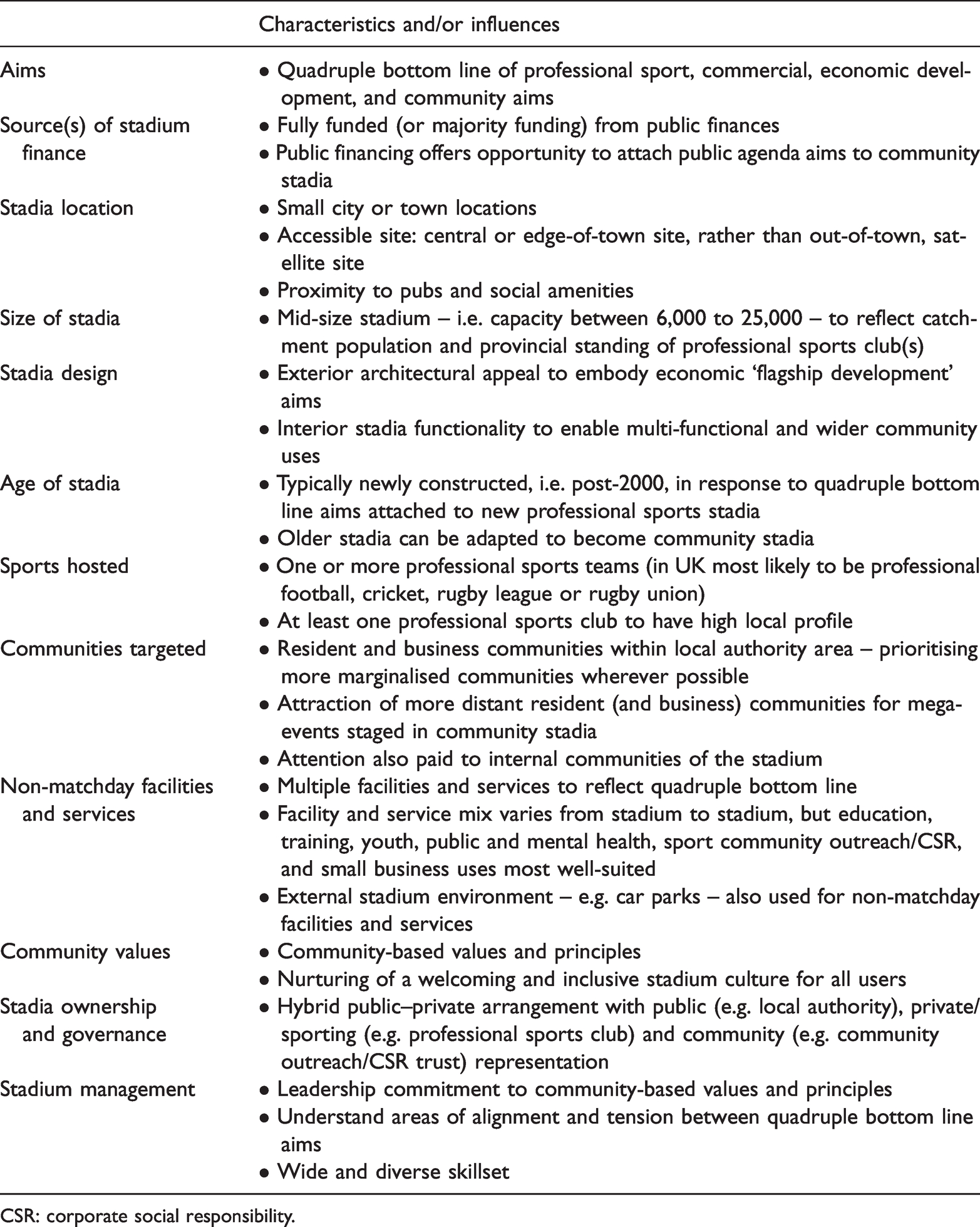
CSR: corporate social responsibility.
Quadruple bottom line: Sporting, commercial, community and economic regeneration aims
A key point of distinction between community stadia and other professional sports stadia is the ‘quadruple bottom line’ of sporting, commercial, community and economic regeneration aims.
Each aim must be delivered in an equitable manner for a genuine community stadium to be achieved. Referring back to the literature, many professional sports stadia do house wider facilities and services that the community can access (Brown and McGee, 2012), but the point of distinction lies in the prominence of a stadium’s community aims. For community stadia, they ought to be core to its design, operation and public understanding of the stadium, as opposed to being subordinate to sporting, commercial and economic regeneration aims.
Delivering all four aims in a balanced, equitable manner is not, however, without challenge. In some scenarios, aims are mutually reinforcing but, for others, there are tensions that stadia officials need to mitigate against. The standout positive area of alignment is the additionality of professional sport and its contribution to commercial, community and economic regeneration aims. Whether this be due to the kudos, prestige or professionalism of the clubs, the players and/or the stadia, the close association of professional sport attracts multiple and heterogeneous communities (Morgan et al., 2017; Parnell et al., 2017; Pringle and Sayers, 2004; Spaaij et al., 2013). This is illustrated by the two stadia being used by young people not in employment, education or training, adults with a disability, substance misuse or mental health issues, and pensioners. This finding in itself justifies the interest in community stadia as there are few other building types that successfully engage such diverse and ‘hard to reach’ communities. Learning also from the ‘Healthy Stadia’ phenomenon (Drygas et al., 2013; Parnell et al., 2017), community stadia offer the opportunity for other service types (e.g. public and mental health, education, youth, and employment and benefits services) to revise their opinions of professional sports stadia and consider co-locating their community-facing services in stadia to benefit from the additionality of professional sport.
While maximising the areas where aims complement one another, stadia officials must also recognise and attend to tensions that can compromise the delivery of community aims. Some tensions stem from the stadia being accessible, multifunctional buildings – for example the safeguarding risks to children and young people from adults using the stadia, business tenants fearing reputational harm from youth misbehaviour, or the perceived inaccessibility of edge-of-town stadia sites – but most relate to the challenge of balancing commercial and community aims. Generating commercial revenue to meet stadia finance and maintenance costs is critical, yet high tenancy or hire charges and the targeting of higher income resident or business communities attract criticism that ‘communities of need’ are not being served, so misappropriating the ‘community’ prefix (Blackshaw, 2008; Mellor, 2008). Some concerns of this nature were raised in the case studies but there was also support for how commercial and community aims could align, particularly if the stadia attract businesses and jobs to the local area or proactively support local businesses, as these contribute to the establishment of sustainable communities (Kearns and Turok, 2003; Rogerson et al., 2011).
Source(s) of stadia finance
Public finance has played a critical role in the construction of community stadia and this has implications for how the stadia are designed, governed and managed. In contrast to stadia that are privately financed, local authorities’ ownership or significant shareholding in the stadia provide them with a strong voice in stadia aims and operation. For example, they can task stadia officials with key public agenda (community development, education, physical and mental health, youth engagement, crime prevention, etc.) and veto ‘undesirable’ or ethically contentious stadia uses, such as for casinos.
Stadia location
Stadia location relates to the stadia’s host town or city, site and accessibility, and connectedness to other local amenities. Local authorities have significant influence here as not only do they (part-) fund the stadia, but they are also responsible for town planning.
Beginning with the towns or cities where ‘community stadia’ have been planned or constructed – Brentford, Brighton, Cambridge, Castleford, Chesterfield, Colchester, Doncaster, Falkirk, Grimsby, Truro, Wimbledon and York – all can be described as small cities or towns, noting that Brentford and Wimbledon are part of the Greater London conurbation but have quite distinct town identities within it. The small city or town location is viewed as a key characteristic of community stadia as it reflects the realities of local public finances. To explain, the capital development spend of local authorities beyond the UK’s core cities is limited, meaning that any significant capital investment by smaller local authorities ought to be maximised with regards its socio-economic impact. If investing public monies in professional sports stadia, then this should be dependent on the stadia also contributing to other public agenda – hence the interest in community stadia. Local authorities may also recognise that their local professional sports clubs do not have the sporting success, profile or supporter base to ensure the financial self-sustainability of the stadia. By opening the stadia up to wider uses, alternative sources of stadia income can be derived.
Following agreement to invest in a community stadium, the site and accessibility of community stadia becomes a critical consideration. Here the literature advances the case for central, urban stadia locations due to concerns stemming from the suburbanisation of stadia to edge-of-town sites (Thornley 2002; Van Dam, 2000). However, this paper’s case study evidence contests this by indicating that an edge-of-town site is compatible with community stadia. Both the Keepmoat and Falkirk Stadia remained accessible insofar that they were 2 km from their town centres, well served by public transport and were perceived as assets within popular, mixed-use regeneration sites. An important distinction is therefore made between accessible edge-of-town sites and disconnected out-of-town, satellite locations, with the latter not deemed compatible with community stadia ambitions.
The third locational factor is the proximity of stadia to pubs and social amenities as these provide valuable opportunities for social interaction and the building of social capital (Roseland, 2012; Volker et al., 2007). For central, working class community-based stadia, such amenities have developed organically over time, but they are less likely to exist for new, edge-of-town stadia. An important point of learning for new, edge-of-town community stadia is to assess the social amenity mix alongside other conventional planning considerations (e.g. land costs, transport connectivity and car parking provision) when appraising different site options. Alternatively, the Keepmoat Stadia case study shows that stadia officials can consider how to develop such social amenities, for example through constructing ‘clubhouses’ close to the stadia.
Size of stadia
Community stadia need to be built to an appropriate size that reflects their sporting, commercial and community ‘markets’. Community stadia have consequently been small to mid-size, ranging from approximately 6,000 to 25,000 seat capacity, to reflect their town or small city catchment population and the standing of the local professional sports club(s). The lower limit of approximately 6000 is important, as stadia below that size neither embody a flagship development that attracts diverse communities nor have the scale to host multiple facilities and services. If greater than 25,000 seat capacity, then meeting sporting and commercial demands may dominate over community aims.
Community stadia are therefore moderate-sized stadia and expectations of what they can deliver need to be adjusted accordingly, particularly as many stadia proponents have over-promised the socio-economic benefits of new stadia (Baade, 1996; Coates, 2007; Siegfried and Zimbalist, 2006). Applying Roberts et al.’s (2016) economic impact analysis of Swansea City FC and the 380,000 spectators attending its Liberty Stadium during the 2011–2012 season to this paper’s two case studies, the gross regional impact (including multiplier effects) of Doncaster Rovers FC and Falkirk FC can be estimated at £2 million and £1.5 million per annum, respectively. By understanding their moderate economic scale and impact, the Keepmoat and Falkirk Stadia were conceived as flagship developments that would contribute to the economic regeneration of their towns, but no extravagant declarations of the number of jobs to be created or investment attracted were made. These expectations have largely played out: the direct impact on jobs and income is estimated at 150–200 full-time equivalent jobs housed in each stadium. More widely, the stadia have contributed to place branding and place making activities by becoming symbolic anchors of their respective Lakeside and Falkirk Gateway regeneration areas, and to culture-led economic development approaches by hosting pop concerts and second-tier international fixtures that would not otherwise come to Doncaster and Falkirk. Overall, the size and scale of community stadia means that they can affect social and economic change at the localised or ‘town’ spatial level that reflects their small city or town environment, but not at the metropolitan or regional scale (Ahlfeldt and Maennig, 2009; Coates, 2007; Van Holm, 2018).
Stadia design
The architectural design of community stadia is another critical planning consideration. For many, the design intent primarily relates to the aesthetic ‘exterior appeal’ of the stadia – i.e. the extent to which it has an innovative, flagship architectural design. On this measure, modern professional sports stadia (like other urban entrepreneurial flagship developments) have often adopted uniform, copycat designs which impact on their (lack of) distinctiveness (Cuthbert, 2011). Duke (2002) notes the increased uniformity by stating that: Travelling to away matches used to involve visiting a unique ground steeped in history, with distinctive stands and strange, quirky corners and historical relics. Many of the new all seated stands at the old grounds are similar, and visiting one new relocated stadium is very much like visiting another. (Duke, 2002: 16)
Age of stadia
An interpretation of this paper’s post-2000 case study selection criteria is that only new stadia can claim to be community stadia. However, this is not necessarily the case as older stadia that meet the factors described in this section can equally be community stadia. The greatest challenge for older stadia may be in redesigning or renovating older stadia to accommodate multi-functional uses but the learning from the Keepmoat and Falkirk Stadia shows that the interior functionality of stadia appears to be a common challenge to all.
Sports hosted
Community stadia, as conceptualised in this paper, play host to professional sport but the specific professional sport or sports will differ from stadia to stadia depending on the local context. The Keepmoat Stadium played host to professional football and semi-professional rugby league and women’s football; while the Falkirk Stadium played host to professional football only. The common theme is that they play host to professional team sports. This is seen to be important in establishing community stadia because there is a greater community attachment to team professional sports than with an individual sport (e.g. athletics and tennis). In the UK, community stadia are therefore most likely to play host to professional football, cricket, rugby league or rugby union but, if extended beyond a UK sporting context, could include American Football, Australian Rules Football, baseball and indoor arena-based sports (such as basketball and ice hockey).
Where there are multiple sports and clubs hosted, there may be challenges in achieving equity of use and influence. One club will likely have primacy on account of their greater profile, supporter base, financial turnover or number of matches per annum. In the Keepmoat Stadium’s example, Doncaster Rovers FC was the primary club and led to some instances where Doncaster RLFC and Doncaster Belles WFC felt their needs and interests were not fully taken into account. Other community users of both stadia experienced similar tensions; referring to occasions where they had been prevented from using the stadia, and re-arranged professional sporting fixtures not being communicated or their impact on other users considered. Addressing this requires respect, understanding and effective communication between all stadium users, with a joint memorandum of understanding a mechanism that could be used to facilitate stadia use across different sporting, community and business partners.
While tensions need to be managed, it is important that at least one of the professional sports clubs have a high profile locally. Its standing provides the sporting additionality that attracts the multiple, diverse communities to the community stadia. Of note, such a profile does not require ‘Premier League’ status. Neither Doncaster Rovers FC nor Falkirk FC were playing in the top domestic tier but both clubs have a strong relationship with and identity among their local communities that contributed positively to how the two stadia were viewed.
Communities targeted
The ‘community’ prefix differentiates community stadia from other professional sports stadia, but what is the ‘community’ being referred to? For professional sports stadia as a whole, the literature makes a distinction between (aspatial) ‘communities of the club’ and (spatial) ‘communities of the stadium’ (Brown et al., 2008; Duke, 2002; Hamil and Morrow, 2011). This distinction holds true for community stadia with the focus of the Keepmoat and Falkirk Stadia similarly on the spatial, local ‘communities of the stadia’. However, neither stadium used rigid geographical boundaries to demarcate the specific spatial communities to be targeted. Instead a fluid and pragmatic approach was taken that enabled both case study stadia to engage with multiple, diverse communities from their towns, while a regional population catchment was then targeted for the pop concerts staged. Furthermore, the ‘communities’ of the two stadia were not only restricted to the resident population but also local businesses and Third Sector organisations, thereby playing out the close relationship between the ‘heroic’ dual domains of business and sport (Williams, 1995).
The discussion above refers to the user or ‘external’ resident and business communities attracted to the stadia. However, community stadia also encourage consideration of the individuals and organisations that work in the stadia or their ‘internal communities’. For those working within the stadia, the stadia become a nexus for different individuals to interact with one another and form community ties, potentially leading to tenant organisations and workers identifying, exploring and capitalising on shared interests and opportunities. For Massey (2005, 2007), these interactions conceptually turn stadia from a physical space into a meaningful ‘place’.
Non-matchday stadia facilities and services
A key determinant of community stadia is that they host non-matchday facilities and services, with non-matchdays potentially numbering 340 days each year. Of the non-matchday service types that work best, education (from early years and childcare through to tertiary education), training, youth, public and mental health, sport community outreach/CSR activities, and small business uses were all found to be particularly well suited to community stadia. Not only do community stadia have the internal physical space to accommodate these different functions, but the stadia also have the accessibility and kudos to attract their different target communities and consumers.
The stadia exterior should also not be forgotten as it too can accommodate diverse community uses. The weekly car boot sales and annual fireworks displays held in the Keepmoat and Falkirk stadia car parks are good examples of this and have enabled the stadia to become ‘humanised’ as important civic settings. The onus therefore is on stadia officials being open, inclusive and adaptable to diverse community uses of the stadia interior and exterior, while wider service types ought to revise and update their opinions of professional sports stadia as places where they could locate their community-facing activities.
Community values
For genuine community stadia to exist, not only should multiple community facilities and services be hosted, but community-based values should also be at the heart of the stadia’s culture and ethos. This means that there is a welcoming and inclusive stadium culture experienced by all, with no visible hierarchy across different stadium users. An excellent example of this was provided by Falkirk FC’s playing staff who were welcoming and respectful of the young participants of the Falkirk Football Foundation. By establishing such an inclusive environment, the interactions and negotiations between the multiple, diverse communities that ultimately contribute to genuine community stadia can thus be supported (Massey, 2005, 2007).
Stadia ownership and governance
A key theme across all the characteristics above is that professional sports stadia do not automatically become community stadia. They need to be designed and managed as such. The ownership and governance of the stadia is crucial to this because these functions set the strategic vision and parameters for the stadia. Focusing on the ownership and governance of the Keepmoat Stadium, the attention to community aims was fundamentally transformed following the transfer of the stadium’s tenancy from its initial Stadium Management Company to a wider Club Doncaster umbrella structure. Under the Stadium Management Company, not only was the stadium running at a financial loss but stakeholders also saw insufficient focus on the stadium’s community aims. In contrast, Club Doncaster has since provided holistic governance of the quadruple bottom line aims.
Established in 2013, Club Doncaster is a limited company that brings together into a single structure Doncaster Rovers FC, Doncaster RLFC, Club Doncaster Foundation (including the Club Doncaster Sports College) and the Keepmoat Stadium. Led by its benefactors (the former owners of Keepmoat construction company who continue to reinforce the importance of community values and achieving a legacy for Doncaster residents), Club Doncaster’s board consists of representatives across sport, commercial business, education, health, police and third sector. Collectively, this means the board and senior management have strategic oversight and control of the stadium’s key sporting, commercial and community assets and partners, so enabling Club Doncaster to directly respond to areas of alignment and tension across the quadruple bottom line.
Hybrid ownership and governance arrangements that span private, public and third sector interests appear critical to delivering the community stadium phenomenon. In contrast to single body ownership and governance (e.g. by a professional sports club or stadium management company), the multiple perspectives and expertise brought through a hybrid arrangement help to balance the quadruple bottom line aims of community stadia. Arrangements are then further enhanced when different disciplines and service backgrounds are included in recognition of the specific demands relating to education, training, youth, public and mental health, sport community outreach/CSR activities, and small business uses of the stadia.
The concern surrounding hybrid ownership and governance arrangements is their transparency. There are parallels here with Vento’s (2017) critique of ALEOs as fulfilling a ‘technocratic and privatized management of the public sphere’, as there are questions over how accountable they are to local communities. Stadia officials therefore need to consider and ensure the transparency and accountability of their hybrid ownership and governance arrangements, for example through clear and open communication of structures, community representation on management boards, and mechanisms or community fora that allow community input into decision making.
Stadia operational management
The final characteristic is the operational management skillset necessary to translate the vision of a community stadium and its quadruple bottom line into a reality. Precisely, articulating the skillset of the Keepmoat and Falkirk Stadia’s key officials is difficult but, building on the community assets literature (see Aiken et al., 2011; Marriott, 1997), the skills include: imagination and determination to deliver on the community stadia vision; understanding of the sporting, commercial, economic regeneration and community development worlds; partnership working skills across public, private and Third Sector organisations; community engagement skills that could develop into co-production skills; financial management and business planning to ensure commercial viability; entrepreneurial and marketing flair to market the stadia and attract users; mediation and negotiation skills to overcome tensions between different aims, partners and users; and performance measurement and management skills. In short, an extensive and diverse skillset is required and the sustainability of the community stadium phenomenon may therefore revolve around the ability to build or attract these skills.
Conclusion
There is still much to understand about community stadia, and it is hoped that this paper’s conceptualisation provides a basis for increased academic interest and research into the phenomenon, particularly with the opportunities to learn from new examples of community stadia being constructed in the UK. More widely, there is also a need to better understand where community stadia sit within broader urban, economic and community development discourses. Indeed, as an alternative to urban entrepreneurialism, it may be more appropriate to situate community stadia within debates around community entrepreneurialism and its focus on ‘community’, ‘citizen-driven’ and ‘inclusive growth’ urban revitalisation that meets the needs of all neighbourhoods and localities (Devaney et al., 2017; Schaller, 2018; Southern and Whittam, 2015).
In contrast to neoliberal urban economic development policy focused on city centres, flagship developments and the interests of the urban elite, community entrepreneurialism is characterised by deeper engagement with citizens and businesses in deprived communities, building their social and economic capacities, and enabling them to influence and shape policy and decision-making (Devaney et al., 2017). Within this, there is more explicit support for micro-, small and community enterprises in recognition of their roles as neighbourhood-level community anchors and providers of local jobs and services. ‘Economic role models’ or ‘economic activists’ within deprived neighbourhoods are also supported as they can catalyse local entrepreneurship, share learning with other communities, and act as a powerful voice back to policymakers (Devaney et al., 2017).
Community stadia could become key contributors within a community entrepreneurialism approach. As edge-of-town, multi-functional buildings, they can provide a hub for local residents and businesses that builds the social and economic capital of the local area. Then, through their understanding of their local resident and business communities and by building on their experience of developing sustainable community stadia, stadia officials can become ‘economic role models’ or ‘economic activists’ (Devaney et al., 2017). This means they can challenge city centric urban entrepreneurial planning decisions, advance the needs of more disadvantaged communities, and support ‘community hub or building’ developments in other parts of their towns or cities. Community stadia could therefore play an important role in facilitating an alternative, equitable model of urban development, one where the quadruple bottom line is more apparent across all public developments and investments.
Footnotes
Declaration of Conflicting Interests
The author(s) declared no potential conflicts of interest with respect to the research, authorship, and/or publication of this article.
Funding
The author(s) received no financial support for the research, authorship, and/or publication of this article.
