




Abstract
Delayed parenthood characterizes family formation in developed countries and is also emerging in developing countries. In Latin America, fertility trends have been historically characterized by early family formation and adolescent childbearing. Recent studies indicate emerging trends of late fertility, but there is conflicting empirical evidence on whether and why parenthood is being postponed. This mixed-methods study examines the trends and determinants of late fertility in Chile, focusing on whether and why women are delaying first childbearing. Quantitative findings indicate an increase in the age at first birth driven by a rise of the proportion of women becoming mothers after 30 years and a decrease of adolescent childbearing. Estimations show differences in the timing of first childbearing according to education, employment, and marital status. Qualitative findings suggest that delaying first childbearing is driven by aspirations of self-realization, emerging gender norms, intensification of mothering, partnership insecurity, and precarious social conditions for having children.
Introduction
Delayed parenthood is one of the main transformations of family and reproduction in developed countries (Lesthaeghe, 2010). The sustained increase in the average age at first childbearing started in Western and Northern Europe in the early 1970s and has, since then, expanded to countries in Southern, Central, and Eastern Europe, East Asia, and North America (Beaujouan and Sobotka, 2017; Nathan and Pardo, 2019). Recent but scarce evidence suggests that behaviours of late fertility are emerging in developing countries in Asia, North and South Africa, and Latin America, including Argentina, Brazil, and Chile (Beaujouan and Sobotka, 2017; Beets et al., 2011). Still, there is limited empirical evidence documenting and interpreting the trends of late fertility beyond European and developed countries.
The few recent studies addressing the timing of childbearing in Latin America provide conflicting evidence regarding trends of late fertility. While some studies indicate the persistence of early motherhood and lack of substantive changes in reproductive timing (Batyra, 2016; Bongaarts et al., 2017; Esteve et al., 2022), others indicate an incipient delay of first childbearing (Nathan et al., 2016; Rosero-Bixby et al., 2009; Yopo Díaz, 2023). Drawing on a mixed-methods study, this article aims to advance knowledge on the trends and determinants of late fertility in Latin America by analysing whether and why women are delaying first childbearing in Chile.
Background
Determinants of late fertility
One of the most comprehensive frameworks to account for fertility postponement is the Second Demographic Transition (Lesthaeghe, 2010, 2020). Demographic transformations such as delayed parenthood and the shifting of fertility to older ages would be the consequence of cultural and ideational changes associated with the prevalence of values such as individualism, self-realization, autonomy, and equality. Fertility postponement would be driven by increasing female emancipation and women’s educational and occupational advancement, particularly in urban settings. Although structural and ideational factors are intertwined and difficult to separate, within this framework the rise of post-materialist values has a predominant place in explanations of late fertility (Lesthaeghe, 2010).
The factors that explain fertility trends and the postponement of parenthood are often grouped into micro, meso, and macro-level determinants (Balbo et al., 2013; Lesthaeghe, 2001; Sobotka, 2004). Micro-level determinants refer to the individual and/or couple and include fertility intentions and preferences, education, employment, and economic conditions, family of origin, partnership dynamics, and gender division of labour. Meso-level determinants refer to social relationships and networks and include personal bonds with family and others, social capital, informal networks of childcare support, and place of residence. Macro-level determinants refer to cultural and institutional settings and include values and attitudes, economic trends like gross domestic product and unemployment rates, welfare regimes, social policies related to labour, family, and housing, and contraceptive and reproductive technologies.
Quantitative studies addressing trends of late fertility indicate that partnership status and dynamics are an important determinant of delayed first childbearing. Some of the trends that have been documented in Western societies associated with this determinant include the delay in union formation, the rise in unmarried cohabitation, long-term cohabitation replacing marriage, the retreat of marriage, and higher levels of separation and divorce (Lesthaeghe, 2014; Mills et al., 2011). However, there is mixed evidence about the association between partnership dynamics and the postponement of fertility. Some studies find a negative relationship between low quality/instability of partnership and having children, and others argue that union instability leads to earlier childbearing because children are seen as a source of uncertainty reduction that enhances marital solidarity (Balbo et al., 2013). In addition, recent studies find that gender (in)equalities in the division of family and household work play an important role in couple’s childbearing intentions and practices (Riederer et al., 2019; Zhang et al., 2023).
Education and labour market trajectories have also been explored as socioeconomic determinants of fertility timing considering that the opportunity costs of childbearing increase with human capital, therefore highly educated women are more likely to postpone marriage and births (Miller, 2010). Some studies suggest that higher educated women have their first child 4–5 years later than lower educated women and that expectations of economic autonomy lead many women to find a secure position in the labour market before engaging in childbearing (Beets, 2008). Consistent with the above, studies also find heterogeneities in the timing of childbearing according to socioeconomic status (SES), where patterns of late fertility are expected to be more prevalent among women with higher income and from higher SES (Neels et al., 2017; Rendall et al., 2010).
Still, more recent literature suggests that even though early high-income countries’ fertility patterns were very well explained by these models, it is not clear that these theories and associations explain actual patterns of fertility elsewhere. For example, the relationship between women’s labour force participation and fertility across countries has reversed (Lesthaeghe, 2020) and even within countries, the relationship between women’s education and their fertility is no longer always decreasing (Doepke et al., 2022).
Qualitative studies addressing changes in fertility patterns also outline how different micro, meso, and macro-level determinants are intertwined with women’s experiences delaying first childbearing. Some studies stress that postponing the transition to motherhood would be a consequence of women’s greater reproductive autonomy regarding whether, when, and how to have children enabled by the increasing legitimacy and access to contraceptive methods (Bozzaro, 2018) and assisted reproductive technologies (Martin, 2010).
Some qualitative studies also suggest that partnership, educational, and occupational statuses are relevant to make sense of late fertility because of social norms and expectations indicating that women should have a stable partner, a professional degree, and economic autonomy before having children (Cooke et al., 2010; Martin, 2017, 2020); These normative standards would be the consequence not only of the prevalence of a middle-class cultural script shaping the transition to motherhood (Martin, 2020; Perrier, 2013), but also of multiple difficulties in reconciling the competing roles of student, worker, and mother (Mills et al., 2011).
Qualitative studies aiming to understand motherhood postponement have also stressed that the social conditions for having and raising children play an important role in shaping women’s childbearing intentions and practices. These studies outline that the prevalence of gender inequalities in reproductive labour, the intensification of normative demands involved in childrearing, increasing indebtedness, and rising costs of basic services associated to food, education, health, and housing, and the unavailability of quality and affordable childcare services, would push women into delaying childbearing and becoming mothers later in life (Alvarez and Marré, 2022; Martin, 2017, 2020; Yopo Díaz, 2021).
Late fertility in Latin America
Historically, fertility trends in Latin America have been characterized by early family formation and high rates of adolescent childbearing (Rosero-Bixby et al., 2009). Important changes in partnership dynamics like increasing unmarried cohabitation and changes in women’s educational and occupational status did not lead to a consistent postponement of parenthood (Esteve et al., 2013; Lesthaeghe, 2020). These trends of fertility transition in Latin America differ from those in the European transition in important ways (Bongaarts and Hodgson, 2022). First, the fertility transition in Latin America happened at an accelerated pace. Second, there is important heterogeneity between countries. This has been explained considering the different history, culture, economic, and social characteristics of each country, which have led to rapid structural transformations in terms of urbanization, migration, woman’s participation in the labour market, educational expansion, and the spread of modern contraceptives. Transformations in social and economic structures contributed to changing values among couples and women, all of which changed fertility intentions within and between countries (Cavenaghi and Alves, 2009).
A few recent studies suggest partial and emerging trends of childbearing delay in Latin America. Lima et al. (2018) detected a bimodal behaviour at the first birth age-specific fertility rates (ASFR), in four countries: Brazil, Chile, Costa Rica, and Uruguay, showing a combination of continuing high rates of childbearing among adolescent women, with a parallel increase in first birth rates at later reproductive ages. In a cross-country comparison study, Nathan and Pardo (2019), show marked differences among regions and countries, with a widespread pattern of increasing heterogeneity in age at first birth after the onset of the postponement transition. They show that the greatest heterogeneity was found in countries such as Chile and Uruguay, where the timing of family formation varies greatly among women with different SES. Also, Batyra (2016) pointed to evidence of postponement in some groups of women in Colombia and Rios-Neto et al. (2018) point to a postponement transition among highly educated women in Brazil.
According to these studies, some Latin American countries, including Chile, are currently characterized by a bimodal age-specific fertility distribution and a growing polarization of reproductive timing between highly educated women, who increasingly delay childbearing and lower-educated women, who show no signs of family formation postponement (Esteve et al., 2022; Lesthaeghe, 2020). Early signs of postponement are incipient and emerge only among selected groups characterized by urban residence, high educational and occupational status, and stable unions often formalized in marriage. The overall stability in women’s mean age at first birth is closely linked to early entry into the first union despite educational expansion (Esteve et al., 2013; Fussell and Palloni, 2004). This research points out to important heterogeneities between and within countries, suggesting that more country-specific evidence is needed to understand the trends and determinants of late fertility in the region.
Family formation and fertility in Chile
Although motherhood continues to be an important social expectation in Chile and most women have children during their lives (Montecino, 2018; Yopo Díaz, 2022), there have been substantive changes in fertility patterns in recent decades. According to the National Institute of Statistics (Instituto Nacional de Estadísticas, 2018a, 2021), the Total Fertility Rate (TFR) in Chile has decreased steeply from 5.4 in 1960 to 1.4 in 2019. The rate of decline was fastest between the 1960s and the 1990s, as a series of social, economic, and healthcare reforms contributed to fertility control through contraception and boosting women’s participation in education and the labour market (Stefanelli et al., 2016). The ASFR also presents important changes during this period. The fertility contribution of women aged 15–19 and 20–24 years has decreased, respectively, from 12.3% to 6.7% and from 28.8% to 19.7%, while the fertility contribution of women aged 30–34 and 35–39 years has increased, respectively, from 18% to 26.2% and from 10.2% to 17.2% (INE, 2018a, 2021). In recent years, there has also been a rise in childlessness characterized by the 35% increase of women of childbearing age with no children in the last two decades (INE, 2018b) as well as a sharp drop in marital fertility from 66% of all births in 1990 to 27% in 2016 (Torche and Abufhele, 2021).
The few recent studies addressing late fertility in Chile suggest that these trends are associated with sociodemographic determinants such as educational, occupational, and marital status, and that the delay of first childbearing would be prevalent among women with post-secondary education that are active in the labour market, have a higher income, and are married (Aninat et al., 2018; Fuentes et al., 2010; Yopo Díaz, 2018). Although most of the available studies have interpreted changes in fertility patterns as a consequence of cultural and ideational changes related to the subversion of traditional gender roles and increasing aspirations related to consumption, educational attainment, professional development, and self-realization (Aninat et al., 2018; Montilva, 2008), others have stressed that the high economic costs of health, education, and housing as well as the precarious social conditions for having and raising children are important factors in explaining fertility postponement (Cerda, 2010; Yopo Díaz, 2021).
These studies suggest that the social conditions for childrearing are important to understand late fertility in the Chilean context. Despite the expansion of social protection and family policies in recent years (Gómez Urrutia and Jiménez-Figueroa, 2019), public support for childrearing remains precarious and the costs of housing, health, and education are high. For example, Cerda (2010) estimates that education expenses sum up to approximately 1 month of income of an average household. Given the persistent feminization of care (Gómez Urrutia et al., 2017), the rise of female-headed households (Arriagada, 2014), and the large percentage of fathers that do not pay alimony (Vargas Pavez and Pérez Ahumada, 2021), the costs and responsibilities of childrearing fall largely on women.
Data and methods
This study uses a mixed-methods approach to gain new insights into whether and why women are delaying first childbearing in Chile. Despite its widely acknowledged advantages, there are few studies addressing fertility through a mixed-methods approach. Studies using this approach highlight its unique potential to enrich explanations on changing childbearing patterns by providing complementary empirical evidence and exploring the intersections between population trends and individual experiences (Bernardi et al., 2007; Sporton, 1999). In this study, quantitative analyses allow for the description of the variations of the age at which mothers are having their first birth over time and its association with sociodemographic determinants at a population level. Qualitative analyses allow insight into the mechanisms of motherhood postponement by outlining the factors underlying the trends and associations established in the quantitative analyses.
Data
The quantitative data come from the birth registry database available through the Chilean Ministry of Health. The data contain all registered births in Chile from 1980 to 2018. INE, the Civil Registry and Identification Service (SRCeI) and the Ministry of Health (MINSAL) are in charge of producing the vital statistics each year. The information comes from continuous and mandatory records registered by the SRCeI and the statistical processing is carried out by INE and MINSAL following the methodology recommended by the United Nations. The database contains information about the parents, such as age, education, marital status, and the municipality of residence, and about the infant, including sex, birth weight, birth length, and weeks of gestation. Administrative records provide population-level information on births occurring in the country with no selectivity and offer data free from recall bias and measurement error.
Using these data, several measures were built to characterize the period in terms of fertility in Chile. The variable of age at first birth was considered including the first live birth of mothers below the age of 60 years for each calendar year. It is important to clarify that this is not the standard measure used by demographers – mean age at birth at parity one – because we are using administrative data from birth records, so we are considering only mothers and not all women in fertility ages (population at risk). Nonetheless, the average age at first birth of mothers is a valuable measure to understand trends and determinants of late fertility for each period and over time.
As explanatory variables we use maternal education, labour force participation, and marital status. Maternal education was categorized into three categories: primary, secondary, and post-secondary. It is important to mention that given we have the information at the moment of birth, we are not capturing the complete educational attainment for mothers that had their first child before the age of 25 years and that continue their education. To measure labour force participation, we built a dummy variable which takes value 1 if the mother declares she was working at the moment of birth and 0 if not. The marital status of the mother at the time of birth was also included, distinguishing between married and unmarried mothers. We also include as a covariate an urban/rural variable, which is only available since 2006. According to the official information, urban is defined as a set of concentrated dwellings with more than 2000 inhabitants, or between 1001 and 2000 inhabitants, with 50% or more of its economically active population dedicated to secondary and/or tertiary activities.
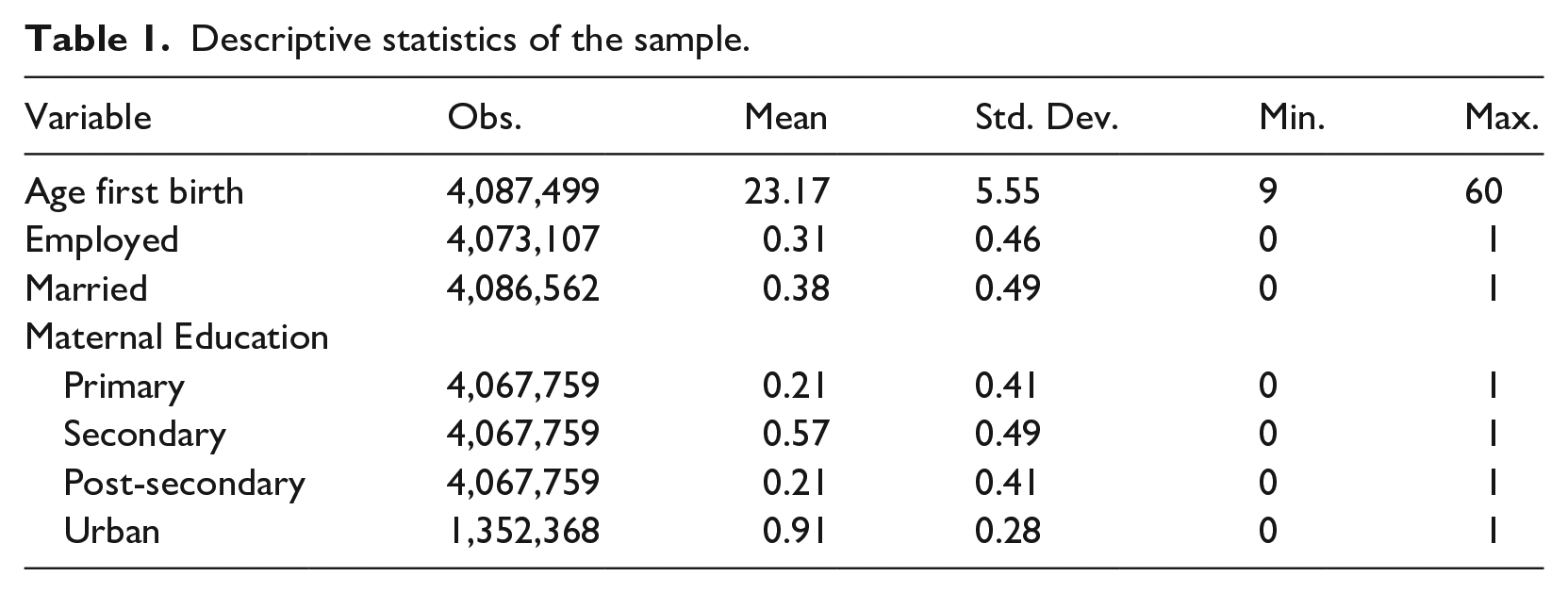
The analytical sample includes all mothers that had their first birth between 1980 and 2018 and before the age of 60 years. Mothers between 50 and 60 years old are less than 1%, but were added in the sample for completeness. Singletons and multiple births were included. Table 1 shows descriptive statistics of the analytical sample. The mean age at first birth for mothers for the whole period was 23.17. The proportion of mothers having their first child with primary education was 21%, with secondary education was 57%, and with more than secondary education was 21%. Mothers having their first child while employed were 31% and the unemployed were 69%. The proportion of mothers having their first child married was 38% compared with the 62% that had their first child out of wedlock. Mothers living in urban areas at first childbearing were 91%, compared with the 9% in rural zones. We do not use imputation techniques in the case of missing data because it was less than 1%. The Supplemental Appendix includes the disaggregated information of Supplemental Table A1 for each year.
Descriptive statistics of the sample.
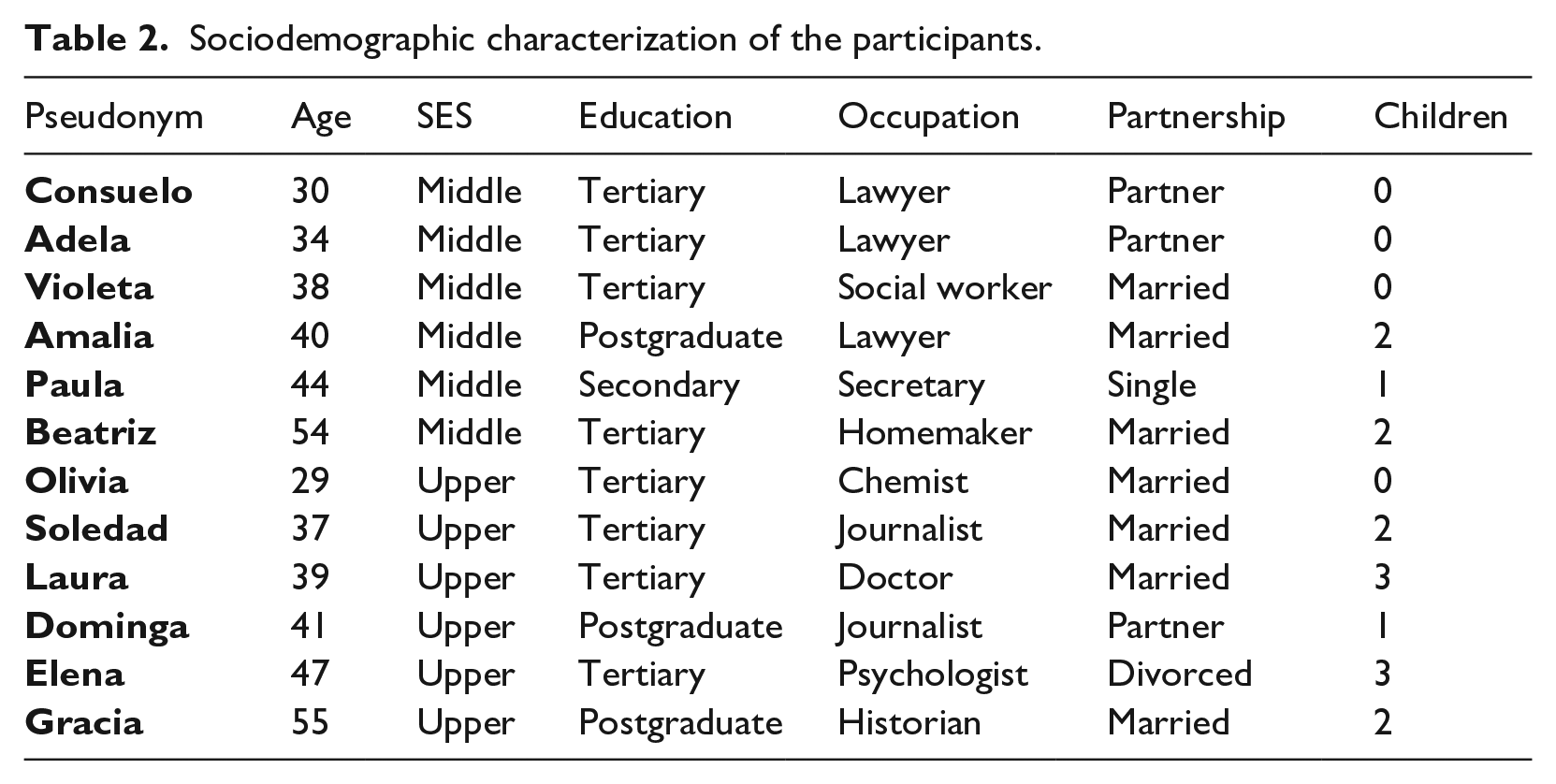
The qualitative data come from life story interviews conducted as part of a study on the transition to motherhood in Chile. The present study draws on a subsample of women that either became mothers at advanced ages or did not have children at the time of the interview but declared wanting to become mothers (n = 12). All the women that intended or enacted late fertility were included in the subsample. Although the sample is constrained by the size and composition of the original sample, its size is acceptable according to the parameters of saturation in qualitative research (Hennink and Kaiser, 2022) and the depth of the empirical material is sufficient to address narratives and experiences of delayed first childbearing in Chile, particularly given the homogeneity of the studied group. Consistent with the quantitative sample, all the participants who were mothers had their first birth between 1980 and 2018. The participants whose fertility experiences were analysed for this study are from middle (n = 6) and upper (n = 6) SES, which is consistent with the sociodemographic profile of women who delay first childbearing (Beets, 2008; Miller, 2010). SES was determined according to educational attainment, occupation, income, and housing conditions. All the participants had post-secondary education, except one who had secondary education. Table 2 shows a detailed sociodemographic characterization of the participants. Participants were contacted through key informants using a snowball sampling method (Flick, 2009).
Sociodemographic characterization of the participants.
Two semi-structured interviews were conducted with each of the participants in Spanish. The first interview addressed the women’s identities and biographies more broadly and the second interview addressed their intentions and experiences of transition to motherhood, focusing on the timing of childbearing and late fertility. Participants who were mothers were asked at what age they had their first child and were encouraged to narrate the story of their first pregnancy and birth. Participants who were not mothers were asked at what age they wanted to have their first child and were encouraged to reflect upon which conditions were important to fulfil before transitioning to motherhood. All the women were also asked about prevalent norms of first childbearing, the ideal age to have children, the advantages and disadvantages of late fertility, and why women are delaying childbearing. The interviews were recorded using digital audio recorders. All the participants signed informed consent forms and their names have been replaced by pseudonyms for anonymity.
Methods
The first analytical approach describes changes in the average age at first birth for mothers in each year graphically using the whole period (1980–2018), considering different subsamples: more and less educated mothers, employed and unemployed mothers, and married and not married mothers. The aim of this analysis is to understand how the average age at which mothers have their first child has changed over time in each of this group. Second, a series of linear regression models predicting the age at first birth for mothers each year were estimated for the latest period (2008–2018). The aim of this analysis is to examine the association between age of the mothers at the moment of the birth of their first child and their sociodemographic characteristics, as well as how these associations have changed over time. One regression for each year was run following this specification:

where
For the qualitative method, a thematic analysis was used (Ayres, 2008). First, the interviews were transcribed using a standardized format and a flexible verbatim method aiming to accurately represent the views and experiences of the participants. Second, the interviews were coded through a flexible version of open, axial, and selective coding (Strauss and Corbin, 1998) using ATLAS.ti 8. Codes stemmed from the literature, the interview guide, and the empirical material. Sampling decisions of quotes aimed at selecting relevant data to illustrate experiences of late fertility among the participants.
Results
Trends and determinants of late fertility
Figure 1 shows the mean age at first birth for all mothers between 1980 and 2018. We observe that the mean age at first birth for mothers who had their first child in 1980, averaged at 22 years old. Subsequently, from 1980 to 2008, this age remained relatively stable, fluctuating between 22 and 23 years. However, since then, a significant rise in the age at first birth has been evident. By 2018, the average age had reached 26 years old, marking a notable increase of 4 years compared with 1980. Notably, the most substantial rise occurred within the last decade, indicating a clear trend of fertility delay among Chilean mothers. The data suggest a rapid upwards trajectory in the average of mother’s age at first birth after 2008, and this trend is expected to continue in the foreseeable future. This marks a noteworthy shift, representing the first evidence of fertility delay among Chilean mothers.
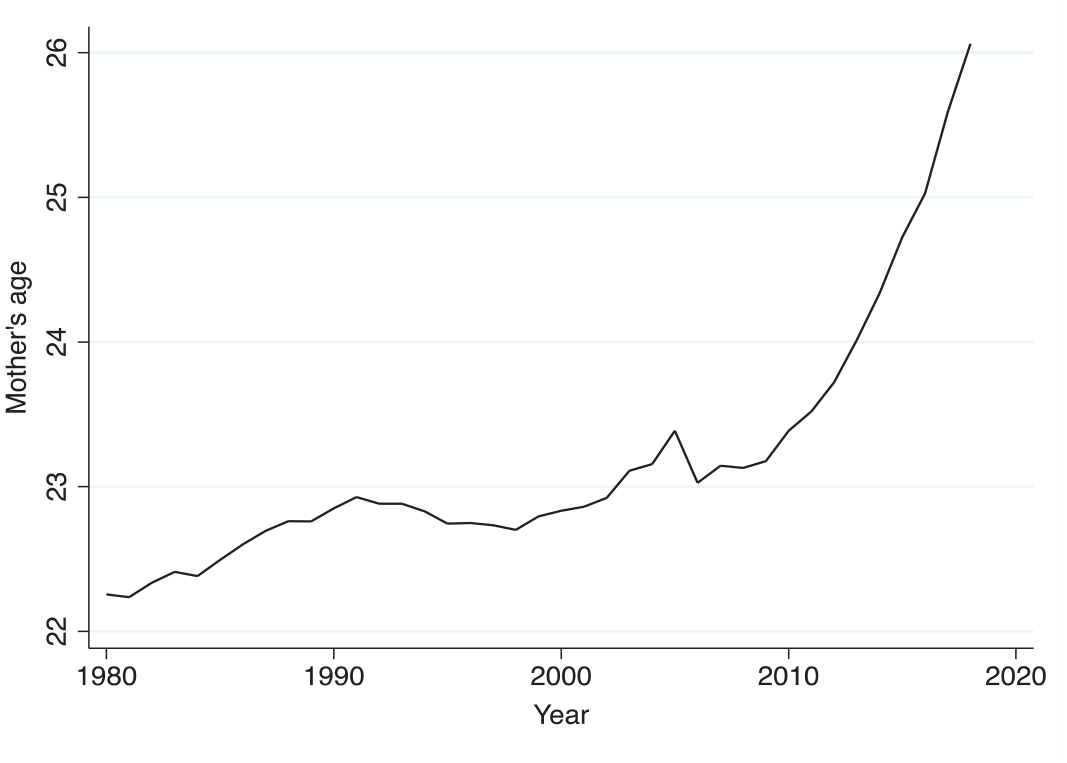
Mean age at first birth for all mothers 1980–2018.
Figure 2 shows the proportion of first births to mothers categorized into three age groups – less than 20 years, between 20 and 29 years, and 30 years or more – for the full period. In the first two decades, the trends in age at first birth are fairly stable. The proportion of first births to women with teen fertility is stable at around 30%, while the group of mothers having their first birth between 20 and 29 years shows a decreasing trend, going from 60% to 52% in these two decades. The group of mothers having their first birth with more than 30 years old increased slightly during the period from 8% to 13%. The decades after 2000 show clear changes in these trends. Teen fertility clearly decreases; the proportion of first births to teen mothers goes from 34% in 2000 to 14% in 2018. The increase in the older age group (30 +) reaches almost 30%. And the middle age group slightly increases since 2000, ending the period with 57%. These data outline a second important result. Previous literature shows that teenage fertility in Latin American has remained relatively high, however this figure shows that first birth of mothers at teen ages in Chile is decreasing rapidly since 2008.
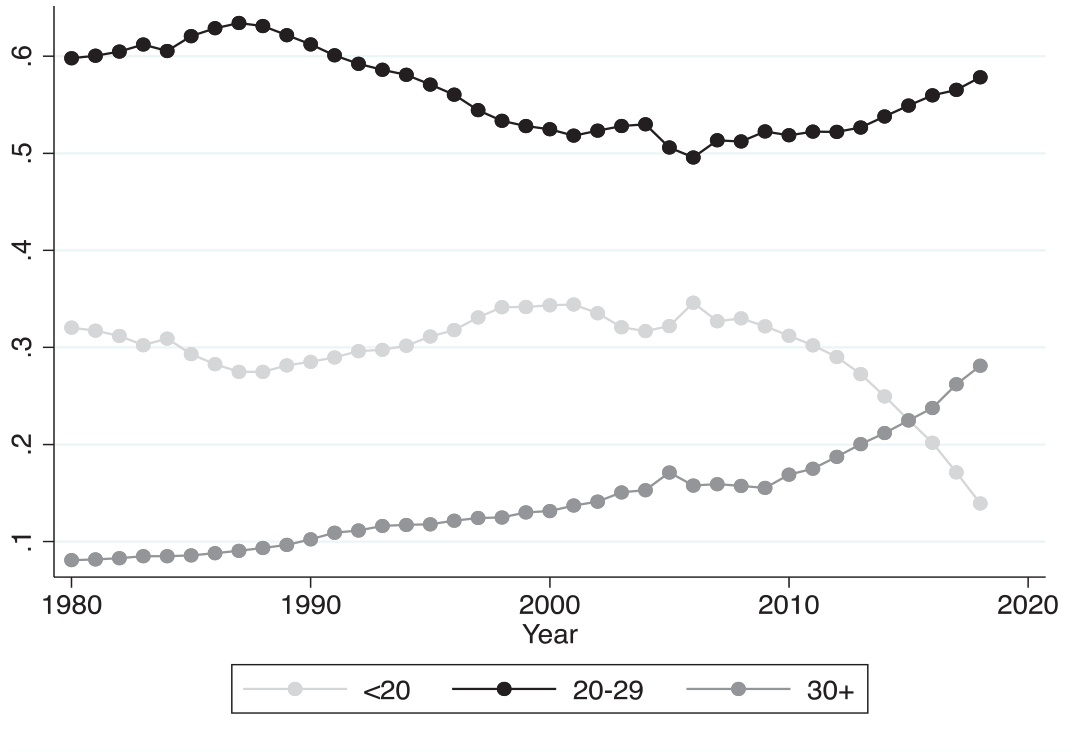
Proportion of mothers by age at first birth 1980–2018.
Figure 3 shows the average age at first birth by education, employment, and marital status. These combined graphs show that there are significant differences in the average age at first birth of mothers between socioeconomic groups for the whole period. However, during the last 10 years, these trends have changed. In terms of education, in 1980, the first births for mothers with less than secondary education was at 22 years on average, while mothers with post-secondary education had their first birth on average at 26 years. By 2018, the first group increased the average age at first birth by 1.6 years, while the more educated group increased by more than 2 years on average, thus increasing the gap between groups. In terms of employment status, the trend shows similar results. At the beginning of the period, the mothers that participated in the labour market delayed their first birth by 4 years on average compared with those that did not participate. By the end of the period this gap increased by 2 years. Finally, the married/not married gap shows different patterns. By 1980 married mothers did not show an important difference in the average age at first birth compared with not-married mothers, however by 2018 this difference increased by 4 years. For unmarried mothers the average age at first birth increased to 25.2 and for married mothers it almost reached 30.
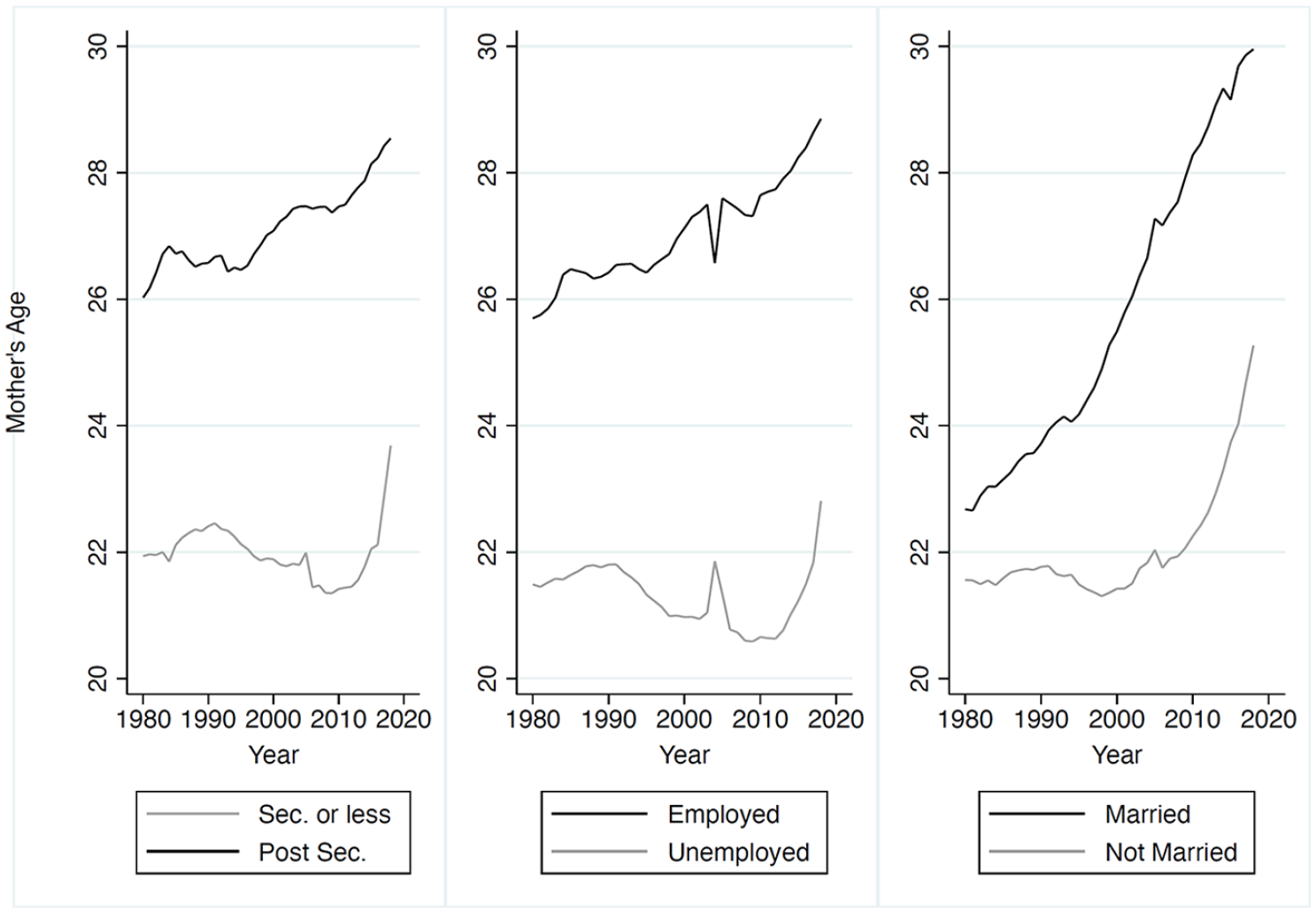
Average age at firth birth for mothers by education, occupation, and marital status 1980–2018.
The evidence shows that regardless of the factor, the average age at first births for mothers has increased over time and there is an important difference in average age at first birth between groups, for all groups. This increase started only recently among the less educated, unemployed, and unmarried mothers. The next set of results explores the question of the association from each of these factors, namely education, employment, and marital status, with age at first birth across time when all of them are considered together.
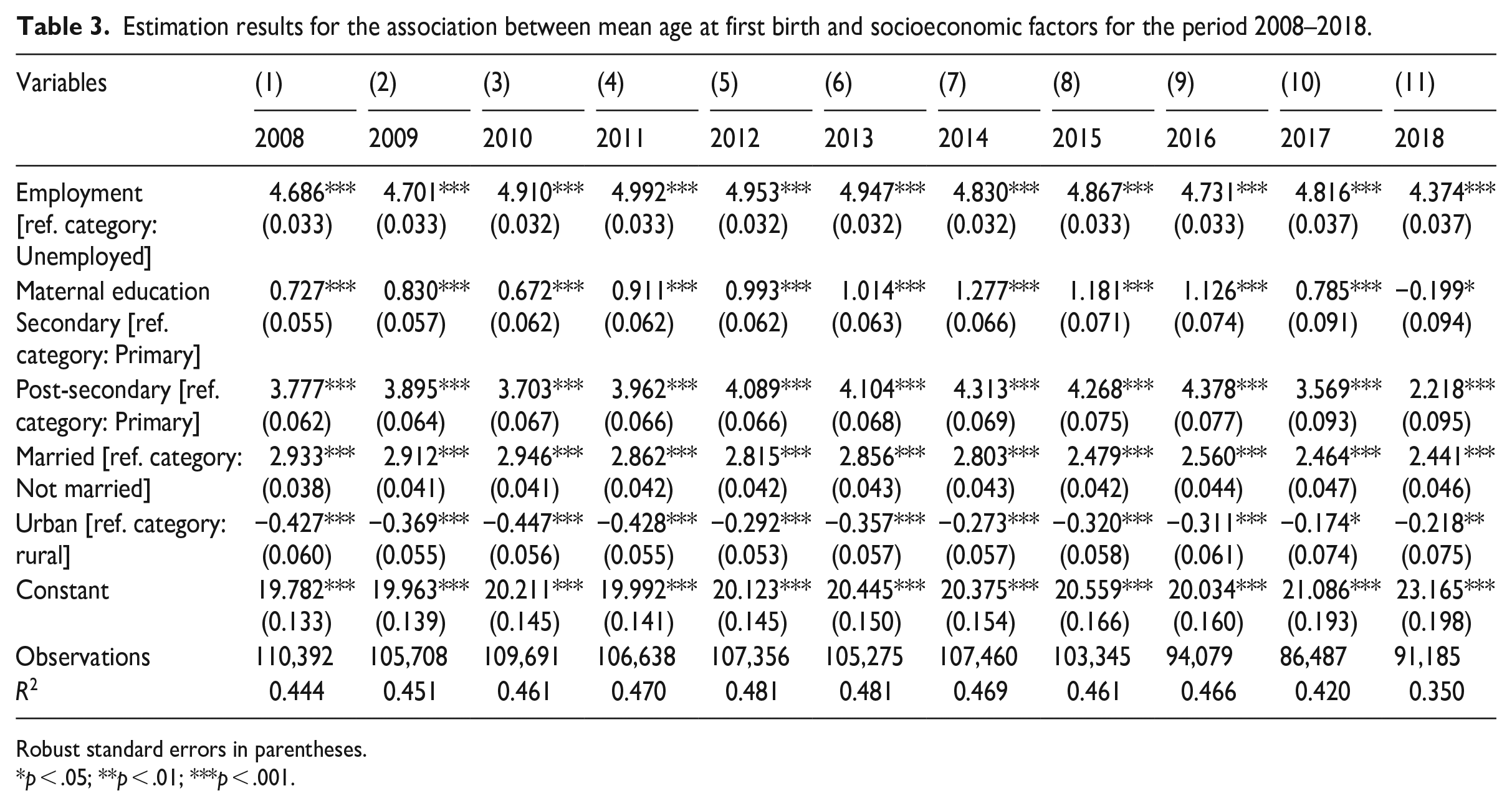
Table 3 shows the association of sociodemographic characteristics at the time of birth – education, being employed, being married, and living in an urban zone – with the age of the mother at the first birth, for each year between 2008 and 2018. Compared with those having primary education, women with secondary education show a higher age at first birth but the coefficients are small. The difference is bigger when looking at mothers with post-secondary education. Compared with primary education, women with post-secondary education delay fertility 4 years on average, but it seems that by the end of the period this gap is decreasing. All these estimates are controlling for other socioeconomic factors such as employment status, marital status, rurality, and municipality of residence.
Estimation results for the association between mean age at first birth and socioeconomic factors for the period 2008–2018.
Robust standard errors in parentheses.
p < .05; **p < .01; ***p < .001.
Net of other socioeconomic factors, women who had a first birth being married had it on average 3 years later than those who had it out of wedlock. This estimate is quite stable over the 10 years period, however, in the end, there is a slight decrease in the gap. The employed – unemployed difference is the one that shows the greatest disparity. Mothers that had their first child being employed had it on average 4 years later, compared with not employed mothers, and this estimate is fairly stable over the period.
So far, the findings show that the age at which Chilean mothers are having their first child has increased over time. At the same time, there are important variations in the timing of first childbearing according to education, employment status, and marital status. The qualitative analysis allows insight into the relationship and underlying mechanisms that link post-secondary education, work, and marriage to late fertility.
Narratives and experiences of late fertility
Complementing the quantitative findings, the interviews shed light on the relationship between late fertility and its determinants by showing that women delay first childbearing until after achieving important educational, professional, and partnership milestones. Discussing the ideal timing of first childbearing, respondents who did not have children emphasized wanting to become mothers at 30 years or later to achieve economic and material security before having children. As Consuelo (30), a lawyer with no children, mentioned: ‘if you ask me, it’s at 30, because it coincides with the fact that you have finished your career, you are already working, you have economic stability’. Accordingly, she aimed to have a stable and secure job before having children: ‘I have to change jobs, because currently I have a fee-based unstable contract, and under a fee-based contract I can’t start having children’.
Making sense of the timing of their first childbearing, respondents who had children stressed the importance of sequencing the transition to motherhood after achieving important personal, educational, professional, and financial milestones. Experiences of late fertility of the respondents were shaped by decisions and practices oriented towards delaying first childbearing until after meeting the conditions to become mothers. This was central in how Amalia (40), a lawyer and mother of two, decided when to have children: It also had to do with this absolute certainty that my life was somehow ready to receive children (. . .). I had a partner, I had a job, I had a place to live, and I had the conditions to receive children. I think it was about that, having a house, a partner. I don’t know what would have happened if I didn’t have some of those things. But when I felt that everything was in place, my need to have children was evident.
Together with education and work, expectations of finding a suitable partner are also perceived as an important milestone for the transition to motherhood. This is why some of the respondents delayed first childbearing until after securing stable relationships as a reproductive strategy to secure the infrastructure to nurture and care for their children. As Elena (47), a psychologist and mother of three, mentioned: I didn’t want to have a child alone because I knew that economically that’s very difficult, and the infrastructure is a lot more difficult. If you have a child with someone who signed a paper and is committed to be with you at least for the next five years, it will be more sustainable. And it’s not just the partner, it’s the grandparents, the uncles, there is a whole network to support nurturing. So, it’s easier with a stable partner.
Women’s experiences of late fertility are closely intertwined with expectations of delaying first childbearing until after achieving important milestones in education, work, and partnership. Having a post-secondary education degree, securing stable employment, and finding a suitable partner are perceived and enacted as important condition for childbearing, which, in turn, leads to women becoming mothers later in life. But the question remains as to why women aspire to become mothers only after achieving these milestones. Five mechanisms underlying women’s decisions and practices of late fertility are identified: (1) self-realization, (2) gender norms, (3) intensive mothering, (4) partnership insecurity, and (5) social and economic precarity.
Self-realization
For some of the participants, experiences of late fertility were driven to an important extent by aspirations of personal fulfilment. Beyond achieving milestones related to education and work, many of the women aimed at travelling, spending time with friends, and pursuing hobbies, before experiencing the transition to motherhood. As Consuelo (30), the lawyer with no children, argued: Deep down there is a phenomenon of postponing it for self-realization. At least that’s what happens to me. I don’t want to become a mother yet because first I want to be a fulfilled woman, before being a fulfilled mother.
Aspirations of self-realization beyond motherhood were also part of the reasons why Olivia (29), a chemist with no children, decided to delay first childbearing and become a mother after 30 years. Recalling a conversation with her husband, she remembered telling him ‘don’t talk to me about having children before I turn 30’. Making sense of that statement, she added: I felt that I had already studied all those years in university and now I was finally going to be able to have my own money to do what I like the most, which is traveling, knowing other places, studying, doing other things. So that was not my number one project because first I wanted some time to enjoy the present.
In the experiences of the participants, late fertility often emerged as a consequence of postponing first childbearing until after ticking all the boxes of roles they wanted to perform and activities they wanted to do before becoming mothers. This is how Dominga (41), a journalist, and mother of one, made sense of having her child after 40 years: I think it has to do with age, with saying ‘well, I’m 40, I already did everything I wanted to do’. That’s also a difference with other women. It’s like now I’m a mother having ticked all the boxes. I wanted to study, I wanted to get a postgraduate degree, I got two. I wanted to study abroad, live abroad, work abroad, and I also did that. I wanted to travel; I travelled a lot. (. . .). I feel that I entered motherhood, that it caught me with many ticked boxes, and that I have already done many things, and now I want to do different things.
Gender norms
Late fertility involves not only a temporal displacement of first childbearing but also a displacement of motherhood as the primary identity and role for women. To an important extent, these displacements are associated with emerging gender norms according to which women are expected to acquire new roles and responsibilities in society, the labour market, and the household. Echoing these experiences, all the respondents hinted that being a woman nowadays was very difficult and demanding. As Laura (39), the doctor and mother of three, noted: ‘I think that it’s a society that is very demanding with women, compared to before. Sure, probably women were more bored at home, but they didn’t have half of the demands that we have today’.
The participants often make sense of these emerging gender norms in ambivalent terms; they expand the horizon for personal and professional development but also entail greater pressure and burden. In this scenario, late fertility emerges as a consequence of the difficulties involved in dealing with multiple and competing demands in everyday life. As Amalia (40), the lawyer and mother of two, reflected: ‘I think it’s logic that women postpone motherhood if so much value is assigned to a professional career. And if it’s expected that women work and are successful, that is incompatible with having children at a young age’.
For Olivia (29), the chemist with no children, the difficulty of fulfilling the expectations of womanhood is one of the reasons why she struggled to become a mother: As women we have to do everything. Do everything or have time for everyone. I mean, care for yourself, care for your partner, care for your children, care for your friends, care for your family, care for your parents, care for your house, care for being pretty. I mean, it’s expected of you to be pretty, exercise, work, manage the household, have children. Like a thousand roles that I feel is impossible to fulfil (. . .). It’s not possible. I feel that it’s not possible. I feel that as I add some things, I would have to drop other things. I think that it’s very incompatible to work in what I work and be a mother.
Intensive mothering
When asked about their decisions and practices of late fertility, all the respondents stressed that becoming a mother was difficult. One of these difficulties had to do with the increasing demands associated with having and raising children. They said that, unlike before, raising children nowadays involved great amounts of time, money, and effort. Reflecting upon the current demands of childrearing, Amalia (40), the lawyer and mother of two, mentioned: You have to have time to raise your children. I mean, they have to be dedicated mothers. (. . .). It’s like concerns for adequate nutrition, adequate education. There is a whole way of doing things that requires a lot of effort. A lot of economic effort, a lot of mental effort on how to raise your children (. . .). You started from something very basic and simple like taking care of the children, feeding them, and giving them love, to a world that is a lot more competitive and where children need to have other skills, where they have to have other type of things. And where the workload is a lot more.
The respondents also highlighted the financial dimension of childrearing as one of the constraints to become a mother. Paying for basic services such as health and education, but also complying with the consumption requirements of an optimal upbringing, was mentioned as part of the current demands of being a mother. For the respondents who did not have children, the elevated financial costs of childrearing were highlighted as one of the main obstacles for the transition to motherhood. As Consuelo (30), the lawyer with no children, argued: ‘the price of everything has increased, everything is more expensive. That is what concerns me the most, to be honest, what food will I be able to buy for them, if I will have enough to pay for education’.
Similarly, Adela (34), a lawyer with no children, also stressed the costs of childrearing as one of the main reasons why she has delayed first childbearing: It’s very difficult to raise children in Chile, it’s very expensive (. . .). Education is very expensive, it’s crazy how expensive it is. I mean, there are people that spend almost all their salary to pay for a relatively good education for their children. A lot of people. And it’s even worse if you have a health problem. I mean, you can be bankrupt after having a severe health problem. If your child becomes seriously ill, you are screwed.
Partnership insecurity
The interviews suggest that becoming a mother has become increasingly difficult and demanding, but the support for childrearing has remained limited, insufficient, and unreliable. One of the aspects that was often highlighted by the respondents was the absence of co-responsibility in childrearing. Even though many of the participants were married or declared that having a partner was very important for the transition to motherhood, all the women voiced concerns about the fathers’ provision of long-term financial, emotional and care support. Violeta (38), a social worker with no children, mentioned the persistent childcare asymmetries between men and women as a factor shaping her fertility: ‘there’s still no awareness of co-responsibility in childcare. So, for women, there are no conditions. Nor working conditions nor the political conditions in the country so that the women can fulfil this role in equal conditions’.
Awareness of the possible lack of care and financial support led some of the respondents to delay first childbearing until after achieving economic autonomy and securing their ability to provide for themselves and their children in the future. This was one of the reasons that pushed Elena (47), the psychologist and mother of three, to delay first childbearing until having earned her university degree: ‘I had the idea that if anything happened, I needed to be able to fend for myself. And being a woman without a career, without a profession, no, it makes you too vulnerable’.
Laura (39), a doctor and mother of three, voiced similar concerns when arguing why she believes that economic autonomy is a prerequisite for the transition to motherhood: I work and that gives me economic independence. It’s also important to me for that reason. You must have economic independence because you never know what might happen. (. . .). If one day this marriage doesn’t work, if my husband finds someone else, I have my own resources to fend for myself, provide for my children, and pay for their school.
Social and economic precarity
The lack of social and economic conditions for having and raising children is another of the mechanisms through which the respondents make sense of their decisions and practices of delaying first childbearing. As Violeta (38), the social worker with no children asserted: ‘here there are no conditions for having children’. The precarity of social protection, the lack of public support for childrearing, and the privatization and financial costs of health, education, and housing, are often voiced by the respondents as important factors deterring them from having children earlier in life. For Amalia (40), the lawyer and mother of two, the difficulties of becoming a mother are related to the insufficient policies for reconciling work and family life: Being a mother in Chile is very difficult. Because mothers now go out to the labour market, but without the sufficient institutional frameworks to accompany you in this process. So, mothers are turned into a sort of octopus trying to deal with everything. (. . .). It’s difficult to think of motherhood when there is nothing that enables you to work and have a family.
The lack of social conditions for mothering is also how Adela (34), the lawyer with no children, made sense of her decisions and practices of delaying first childbearing: ‘there are no conditions. That’s why I think that many women are postponing motherhood, because you must be very secure in your job, with the money that you earn, in the place where you live, to make that decision’.
Further reflecting upon why women like her are delaying first childbearing, she stressed: I believe that we are indeed all delaying the age to become mothers, [but] it’s not just a personal and intimate decision, like ‘oh, I want to be more mature to become a mother’, no. It’s because it’s very hard, because in the society in which we are living it’s hard to become mothers, there are no conditions. The economic conditions, the lack of social protection in health, education. And that’s why I believe that a lot of people are delaying motherhood.
Discussion
Fertility trends in Latin America have been historically characterized by early family formation and high rates of adolescent childbearing. Some studies suggest emerging trends of delayed first childbearing, but there is conflicting empirical evidence on whether and why women are becoming mothers later in life. This mixed-methods study used quantitative and qualitative data to characterize the trends and determinants of late fertility in Chile. The findings show a consistent trend of fertility delay. In 1980 the age at first birth for mothers was 22 on average and by 2018 it increased to 26 years old. This increase has been particularly sharp in the last decade, increasing from 23 to 26 years between 2008 and 2018. Analysing heterogeneity by age-groups, the findings show that the proportion of women becoming mothers at teen ages is decreasing rapidly since 2008, and the proportion of women becoming a mother for the first time after 30 is increasing rapidly during last decade. This study provides novel empirical evidence demonstrating a recent simultaneous decrease in early fertility and increase in late fertility for first births in Chile.
As previous studies suggest (Balbo et al., 2013; Beets, 2008; Lesthaeghe, 2001; Miller, 2010; Sobotka, 2004), education, employment status, and marital status, are important sociodemographic determinants of late fertility. In Chile, women who become mothers at advanced ages have post-secondary education, are employed, and are married. However, the estimation result shows that during the last decade, the differences in the delay of first birth by educational groups have reduced considerably, and the main difference remains only when considering women with post-secondary education. Women who had a first birth being married had it on average 3 years later than those who had it out of wedlock. This estimate is quite stable over the 10 years period, however, in the end, there is a slight decrease in the difference between groups. The employed – unemployed difference is the one that shows the greatest disparity. Mothers that had their first child being employed had it on average 4 years later, compared with unemployed mothers, and this estimate is fairly stable over the period. These findings confirm that education, employment, and partnership are decisive for the postponement of parenthood, and, at the same time, reveal that the impact of the determinants of late fertility is not fixed but rather dynamic and subject to change over time (Balbo et al., 2013).
The findings also advance current knowledge on the determinants of late fertility by shedding light on the mechanisms through which post-secondary education, labour market participation, and marriage affect the timing of childbearing. Interview data show that women delay first childbearing not only because of cultural and ideational changes leading to greater female autonomy and pluralization of biographical aspirations, but mainly because of increasing demands on being a woman and a mother in a context characterized by the lack of social and economic conditions for having children and reconciling competing roles in everyday life.
The findings suggest that, under these circumstances, women often delay first childbearing not only to achieve self-realization beyond traditional gender roles, but mainly to secure professional, financial and material security before having children. These findings indicate that late fertility involves not just a decentring of the role of motherhood but also a displacement of first childbearing as a strategy to enable the transition to motherhood. This strategy seems to be particularly relevant in social contexts, like that of Chile, characterized by precarious public support for childrearing, high costs of housing, health and education, and stark gender inequalities in reproductive labour. Furthermore, this strategy could also contribute to explain the strong increase in age at firth birth among low educated women during the last decade as shown by our quantitative findings.
Overall, these findings make an important contribution to recent literature aiming to understand trends and determinants of late fertility. First, these findings suggest that interpretations of parenthood postponement from the Second Demographic Transition (Lesthaeghe, 2020) are important but not sufficient to account for why women are becoming mothers later in life. Cultural and ideational changes associated with aspirations of self-realization beyond motherhood are meaningful in reshaping childbearing intentions and practices but not as much as structural factors such as economic precarity, meagre social security, gender inequality and the costs of childrearing.
Second, cultural and ideational changes affecting fertility timing involve not only the prevalence of values such as self-realization, but also emerging social norms and expectations. Echoing recent qualitative studies (Martin, 2020; Perrier, 2013; Yopo Díaz, 2021), the findings suggest that shifting norms and expectations regarding motherhood, and the increasing demands and responsibilities attached to them, add complexity to the process of having children and are thus relevant to understand rising trends of late fertility. In addition, the findings provide further nuance and complexity to the relationship between gender and fertility by suggesting that the increasing difficulties of being a woman are also important to account for why women are delaying first childbearing and by stressing the ambivalent nature of changing gender roles and its social and subjective consequences for women in life domains including childbearing.
And third, these findings show the intertwined and complex character of the micro, meso, and macro determinants of late fertility (Balbo et al., 2013), by outlining, for example, how emerging gendered norms of economic autonomy and how the instability of partnership influences women’s education and employment status and, consequently, the timing of childbearing. Furthermore, these findings enable unravelling the particular ways in which micro, meso, and macro determinants interact in experiences of late fertility by revealing, for example, how social expectations of financial independence and the foreseen instability of partnership make women engage in activities that allow them to secure and income of their own and raise children regardless of their partners.
This study provides novel and robust evidence to demonstrate an emerging trend of fertility delay in Chile, but its findings cannot be easily extrapolated to elsewhere in the region. However, as previous studies have found important similarities in fertility trends between Chile and other Latin American countries (Lima et al., 2018; Nathan and Pardo, 2019), futures studies in this field should use updated statistical evidence to explore emerging trends of late fertility expressed both in the increase of average age at first birth at a population level and for age-specific groups and compare them with those found in Chile. Studies addressing trends and determinants of late fertility in Latin America and beyond should further explore if and to what extent the ideational and structural factors outlined in this study are reshaping women’s childbearing practices and leading to motherhood postponement elsewhere.
Supplemental Material
sj-docx-1-iss-10.1177_02685809231195956 – Supplemental material for Beyond early motherhood: Trends and determinants of late fertility in Chile
Supplemental material, sj-docx-1-iss-10.1177_02685809231195956 for Beyond early motherhood: Trends and determinants of late fertility in Chile by Martina Yopo Díaz and Alejandra Abufhele in International Sociology
Footnotes
Acknowledgements
Abufhele acknowledges financial support from Agencia Nacional de Investigación y Desarrollo (ANID) Millenium Nucleus MIGRA: Perceptions and Consequences of Immigration [NCS2022051] and the Millennium Nucleus on Intergenerational Mobility: From Modelling to Policy [NCS2021072].
Declaration of conflicting interests
The authors declared no potential conflicts of interest with respect to the research, authorship and/or publication of this article.
Funding
The authors disclosed receipt of the following financial support for the research, authorship and/or publication of this article: Yopo Díaz acknowledges financial support from Agencia Nacional de Investigación y Desarrollo [PAI77200004].

Supplemental material
Supplemental material for this article is available online.
Author biographies
References
Supplementary Material
Please find the following supplemental material available below.
For Open Access articles published under a Creative Commons License, all supplemental material carries the same license as the article it is associated with.
For non-Open Access articles published, all supplemental material carries a non-exclusive license, and permission requests for re-use of supplemental material or any part of supplemental material shall be sent directly to the copyright owner as specified in the copyright notice associated with the article.
