




Abstract
Previous studies on the impact of Internet-powered media on health promotion have often neglected the relationship between message recall and health behaviour. Such neglect makes it look as though exposure to media messages automatically leads to recall. Also, other studies appear to have paid less attention to understanding if the perception of the existence or otherwise of a public health issue actually influences the effectiveness of health intervention. In the current study, the authors suggest a model that takes into consideration these existing gaps. They examined 470 social media users who were exposed to YouTube animated cartoons on COVID-19 using an example from a developing country. The authors found, among others, that perception concerning the realness of COVID-19 was the greatest contributing factor in predicting the effectiveness of YouTube animated cartoons on health behaviour. The scholarly theoretical and practical contributions of the findings are explored.
Introduction
In this study, we developed a model that predicts the effectiveness of COVID-19 YouTube animated cartoons on the health behaviour of social media users with particular attention to Nigeria. This was regarded essential because of the dangers that COVID-19 poses to human beings globally. Such information is required to assist in the campaign against COVID-19. The year 2020 will be remembered as the time in human history when humanity was humbled, by an invisible enemy. It will also be remembered as a time when all human beings were terrorized and levelled. That invisible enemy is coronavirus disease which the World Health Organization designates as COVID-19. This invisible enemy has brought the global economy to a standstill. Many countries across the world have closed down their economies, international flights have been suspended, cities and towns have placed serious restriction on movement. As Nadeem (2020) corroborates, human history is going through a very challenging era trying to combat this enemy called COVID-19 which we can hardly see. Ezeah et al. (2020) say that COVID-19 is an indication that the health system of the entire world requires a complete reorganization so as to better respond to public health emergencies. According to Wu et al. (2020), COVID-19 first broke out in Wuhan, Republic of China, in late December 2019. From China, the virus began to spread like wildfire. From country to country, COVID-19 started to capture the world (Ale, 2020; Odii, et al., 2020; Melugbo, et al., 2020).
The rate at which confirmed cases were emerging was amazing. The World Health Organization (2020a) reported a total of 5,267,419 confirmed cases of COVID-19 as of 25 May 2020. It added that a total of 341,155 have died of the virus. Currently, there is no known cure for COVID-19. This lack of a definite cure makes the virus a very serious challenge to humanity. Scientists are currently making efforts to develop a vaccine that will prevent the contraction of of the virus. According to Rothan and Byrareddy (2020), SARS-COV2 is the main cause of COVID-19. They add that the virus is deadly with no specific cure. Researchers like Bogoch et al. (2020) and Lu et al. (2020) explain the severe effects of COVID-19 on the respiratory system of the human body. Considering the lack of cure, prevention has been identified as the only sufficient strategy, and in which appropriate health behaviour is needed from the populace.
Health behaviours are those actions that people engage in that have implications on their health. Usually, such actions can either support their health or make them vulnerable to diseases and viruses. The World Health Organization (2020b) notes that health behaviour is an important way through which the virus can be defeated. It adds that the virus itself does not travel; rather, people carry the virus from one place to another. Therefore, the recommended behaviours that WHO has suggested include: frequent hand washing under running water, use of hand sanitizers, use of protective materials like masks, staying at home, physical distancing and maintaining personal hygiene. These recommended behaviours have been promoted on different social media platforms. However, in the case of YouTube, being a video platform, it is possible for social media users to see actual demonstrations of the health behaviours recommended. Therefore, animated cartoons have been used via YouTube to highlight and educate social media users on COVID-19 and further influence their behaviour.
Statement of the problem
Despite the utilization of animated cartoons through YouTube to inform and educate the general public, there is a lack of empirical evidence regarding how such visual messages influence the health behaviour of social media users. Although it may be tempting to conclude that YouTube animated cartoons will influence health behaviour, such an assumption would be hasty and lacking in scientific procedure. Also problematic is the fact that previous studies (Asogwa, 2017; Asogwa and Ojih, 2013; Hudron, 2019, Onayinka et al., 2019; Oniwon and Salami, 2019) on the influence of social media assume that social media users who are exposed to messages recall them. Further, there is lack of evidence on models that predict the effectiveness of YouTube animated cartoons. These are issues that are worthy of study.
Objective of the study
The objective of this study was to determine the association between exposure to COVID-19 animated cartoons and the health behaviour of social media users in Nigeria. In doing so, the researchers paid attention to issues like exposure, recall as well as belief regarding the existence or otherwise of COVID-19.
Literature review
YouTube animated cartoons
Cartoons are essential components of communication. As part of visual communication, cartoons have been found to be useful and integral parts of media content. Both print and electronic media make use of cartoons. Cartoons feature on the pages of newspapers and on the television. Social media platforms like YouTube have also embraced cartoons as part of visual communication. Onakpa (2014) notes the cartoons are typically dependent on how familiar the audience are with the subject being communicated. Cartoon is the application of caricature or amusement to express meaning. It can appear in various forms: editorial, the comic strip and animated cartoons. In this study, the researchers focused attention on animated cartoons.
Animated cartoons are moveable images that attempt to convey information about an issue or a story. Animated cartoons are produced through a sequence of drawings that are slightly different and shot in rapid succession so that they seem to move and change when the sequence is shown (Oyero and Oyesomi, 2014: 94). Okoro and Onakpa (2016) hold the view that animated cartoons for the purposes of information can be effective for changing behaviour. According to Michelsen (2009), animated cartoons are typically associated with lively and often hilarious images. Animated cartoons have changed significantly. Before the emergence of social media, animated cartoons were mostly featured on TV, but with social media platforms, animated cartoons are now used there too. One such platform that has been used to feature animated cartoons is YouTube.
It is perhaps in consideration of the role that animated cartoons play in educating social media users and influencing their behaviour, that they have been used as part of measures to combat the current challenge which COVID-19 poses. There are different animated cartoons that have been posted on YouTube addressing different aspects of health behaviour promoted by WHO. Specifically, these cartoons focus on aspects like regular hand washing, staying at home, use of facemasks, social distancing, among others. The cartoons come in different languages for the Nigerian audience, like English, Hausa, Igbo and Yoruba. The key point is to remove any barrier to understanding as much as possible. Figures 1–5 show screenshots from some of the animated cartoons on COVID.
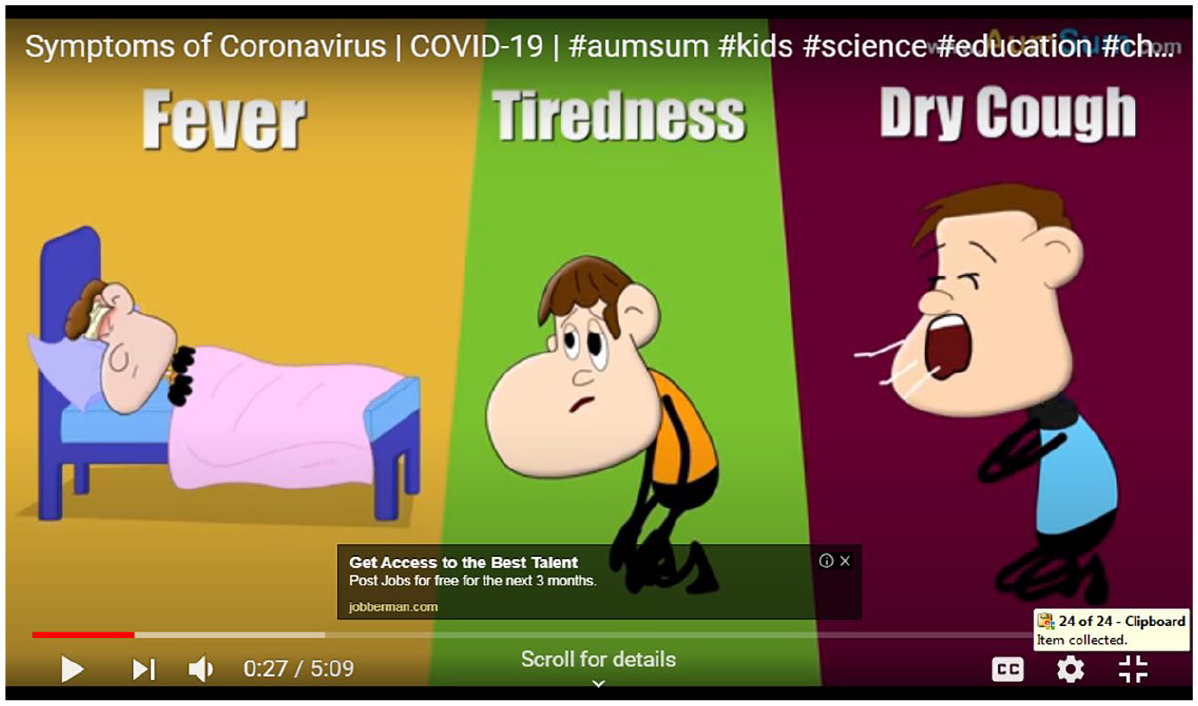
Screenshot of YouTube animation showing symptoms of COVID-19.
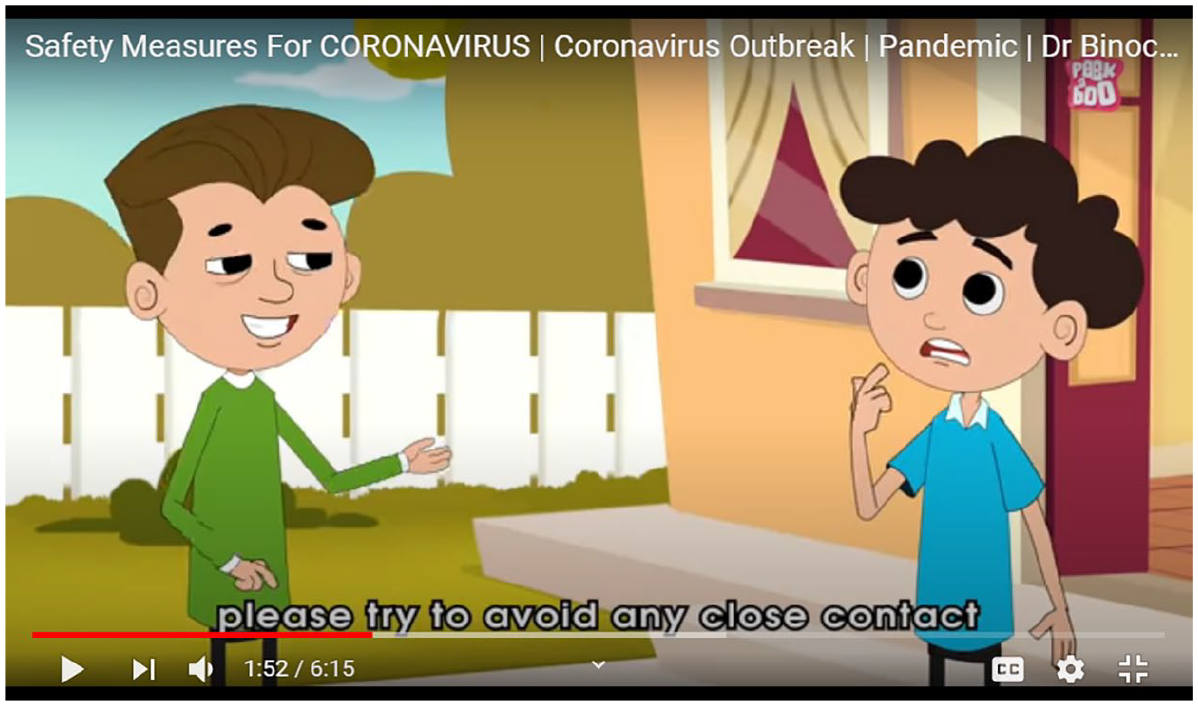
Screenshot from animation promoting physical distancing.
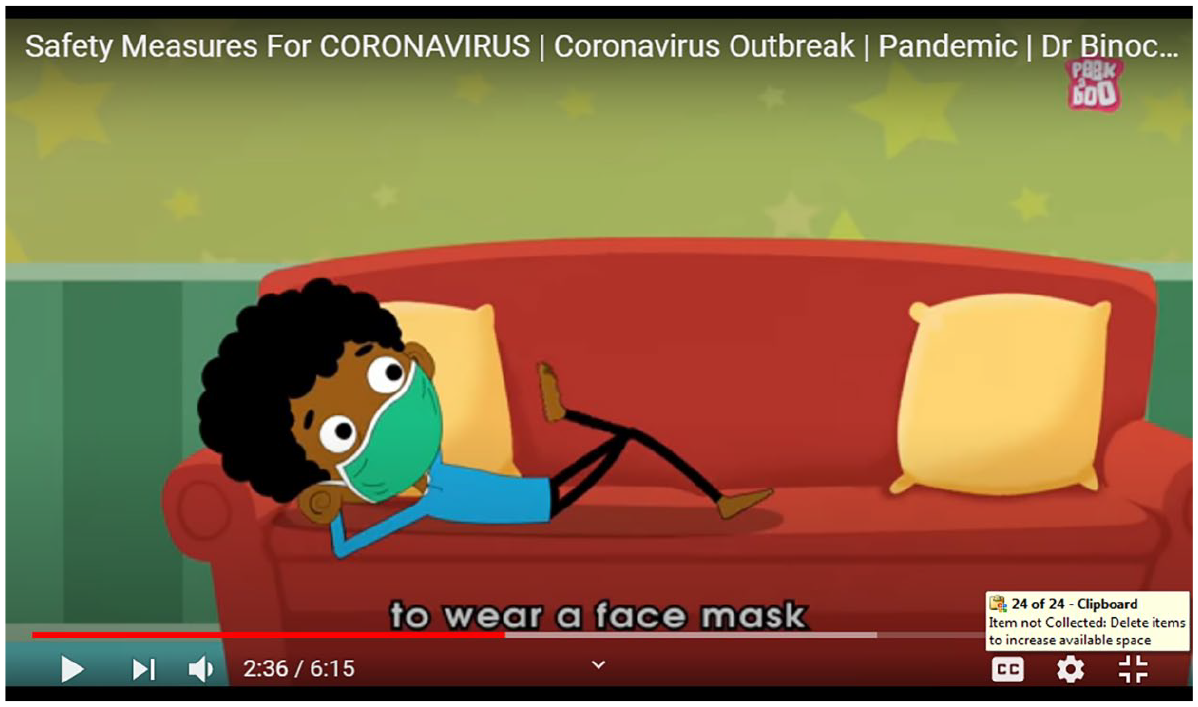
Screenshot from animation promoting the use of facemask.
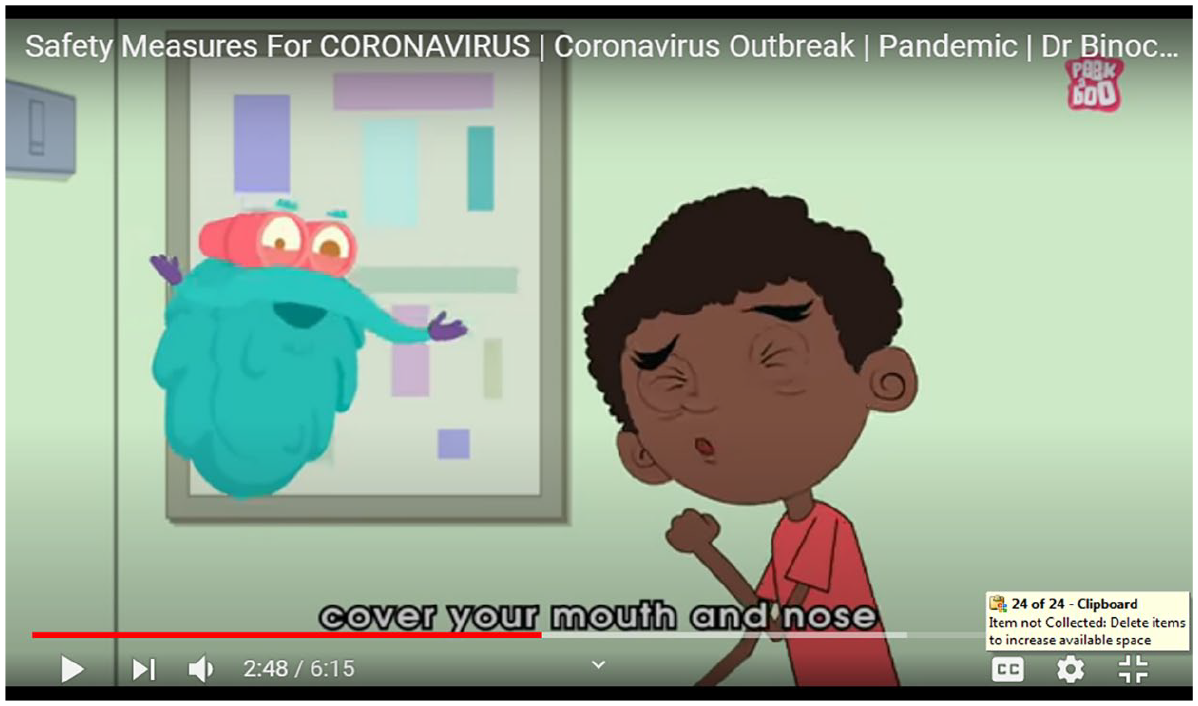
Screenshot from animation promoting the covering of mouth when coughing.
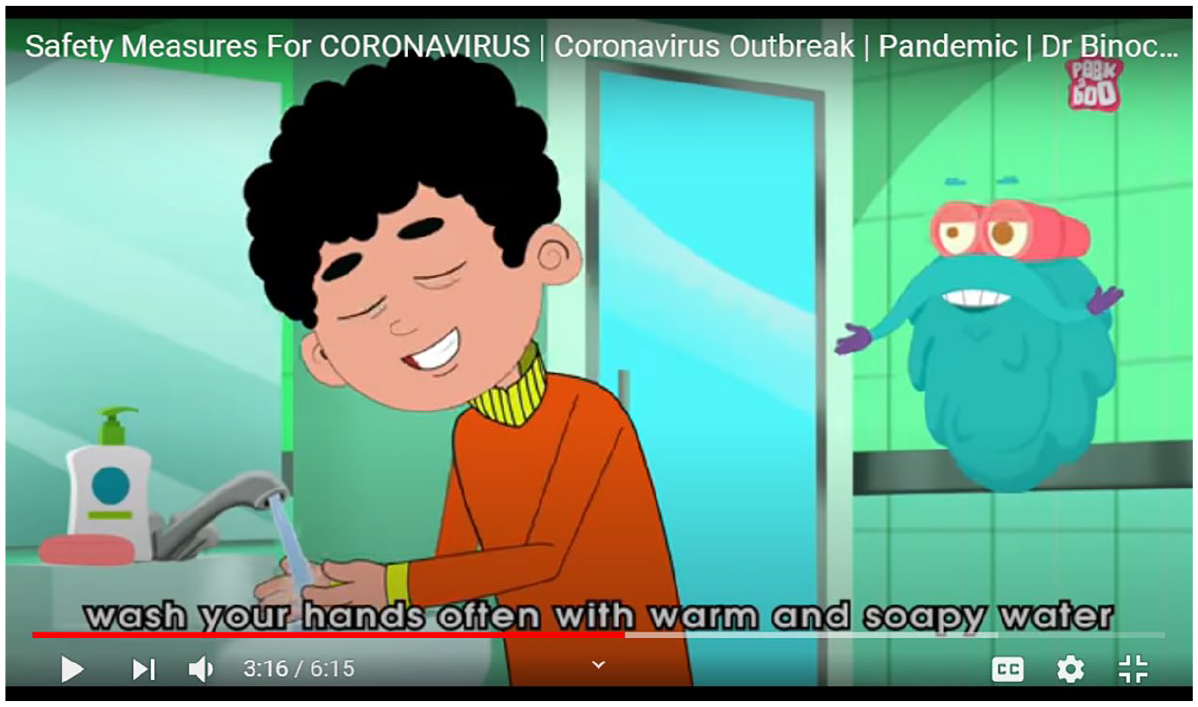
Screenshot from animation promoting hand washing.
Effect of cartoons
In this section, we examine the existing literature related to the effect of cartoons on viewers. James et al. (2012) conducted a quasi-experimental study to determine the effectiveness of animated cartoons on children between the ages of 3 and 6 years who were going through venipuncture, to see how well animated cartoons can act as a distraction strategy to reduce the perception of pain. The sample was made up of 50 respondents who were sampled through purposive sampling approach. The researcher found that animated cartoons were effective as a distraction strategy to relieve children from pain.
Maranzana (2014) carried out a study to ascertain the effectiveness of utilizing animated cartoons to improve the language learning skills of students. The researchers carried out the study in Italy and exposed learners to an episode of an animated cartoon in the classroom by first excluding captions and subsequently including the captions. Maranzana then requested the study participants to note the words which they did not know and to attempt to assume their meaning from the context. Maranzana then asked the participants to provide information concerning their experiences. The results of the study revealed that animated cartoons were effective in enhancing learning. Rai et al. (2016) made use of an observational method to determine the impact of animated cartoons on children aged 5–15 and reported that 33% of children who watch cartoons showed an increase in their violent behaviour. They also reported that cartoons were effective in attracting and sustaining the attention of the sample studied. Other studies (Ergün, 2012; Ghilzai et al., 2017; Iamurai, 2009) that have examined the effects of cartoons on children also reported that they are effective in behaviour change. The effect of cartoons has also been examined in adults. For example, Okoro and Onakpa (2016) reported that people of voting age are highly exposed to animated cartoons. Boyagoda (2017) examined the impact of cartoons on voters and reported that despite high exposure to cartoons among people of voting age, the impact on voting was generally low. Leiner et al. (2004) argue that animated cartoons are essential for health communication because they lead to higher message recall. The researchers wanted to know how effective animated cartoons can be in health communication. They compared animated cartoons with text versions of the same message. Their results showed that animated cartoons were more effective in communicating health messages when compared to the textual versions of the same message. Kennedy et al. (2014) developed animated cartoons for chronic kidney disease (CKD) and further trial-tested the CKD animated cartoons on 27 respondents and found that they were capable of recognition and reflection. Delp and Jones (1996) in an earlier study also reported that cartoons are effective in enhancing comprehension of health messages among patients. That is, patients who are exposed to cartoons reported higher comprehension of health messages than those not exposed.
Social media and health behaviour
Communication is regarded as essential in health promotion. No matter how interesting, comprehensive, educating and useful health messages may be, if they are not communicated effectively to the general public or even the target receivers, it may be difficult, if not impossible, for such messages to make an impact. Ratna (2019) confirms that effective communication is fundamental when delivering healthcare services. Ratna adds that without effective communication, efforts at delivering healthcare services to the populace will not achieve their goal. Before the emergence of social media platforms, healthcare information was largely communicated to the populace through face-to-face communication or traditional media like radio, TV, newspapers and magazines. However, in contemporary society, social media platforms now play an essential role in healthcare information communication. Uittenhout (2012) carried out a study to determine the effectiveness of social media in communicating health information about head lice and concluded that social media platforms were not effective in circulating information to parents about head lice with the goal to change behaviour aimed at preventing lice. The researcher, however, noted that social media platforms may be used for health communication together with other media options. Hunter et al. (2019) reported a contrary result. They found that social media platforms are essential for influencing health behaviour in both the short term of less than six months and the long term, of over six months. Fletcher et al. (2011), Macdonald-Wallis et al. (2011), Sawka et al. (2013) and Latkin and Knowlton (2015) are in agreement that exposure to social media content from people that are close to the user (such as friends, family members, neighbours, as well as colleagues) significantly impacts on the health behaviour of social media users. Jattamart and Leelasantitham (2019) carried out a study to examine the intentions of patients who have severe depressive disorders and family caregivers to alter their health behaviour and lifestyle through social media influences and reported that there is a significant association between social lifestyle interventions and change in health behaviour for both patients and caregivers. Earlier studies by Young et al. (2015) and Maher et al. (2015) also reported that social media interventions are effective in influencing health behaviour.
Theoretical framework
The researchers applied the Health Belief Model (HBM) to articulate the study. The model proposes that health messages will be more effective in changing behaviour if they are able to show the benefits of taking such actions. The model adds that if messages are able to show that the health issues are severe, and that the target audiences are vulnerable, such messages are likely to be effective. Glanz and Bishop (2010) note that the HBM is one of the most well established theories in the study of health behaviour. Although the model was originally developed to understand health behaviour in the USA, it has been adapted and successfully applied in different geographical and cultural contexts (Griffin, 2012; Scarinci et al., 2012). Jones et al. (2015) report that the HBM is ideal for communication-related studies, but, unfortunately, only few communication scholars apply the framework in their studies. Jones et al. further tested the model with particular attention to a vaccine campaign and found that vaccination behaviour was positively and significantly related to exposure to the campaign. Their results confirmed the theory as a valid framework for communication studies.
The fundamental elements of the model include: perceived susceptibility, perceived seriousness, perceived benefits of taking action, barriers to action, self-efficacy and cues to action (Champion and Skinner, 2008). Perceived susceptibility is the degree to which a person believes that a particular health issue can affect him or her. In other words, if the person is vulnerable to the health issue or not. Perceived seriousness describes the extent to which a person regards the health issue as having serious consequences like death or harmful effects on human health. Perceived benefits of taking action describe the extent to which a person feels that there are advantages in engaging in a particular health behaviour. The question here, in relation to COVID-19, would be, ‘what do I stand to gain by washing my hands?’ Barriers to actions describe what might limit a person from taking recommended actions related to the health issue. For example, in the particular case of the virus, ‘I cannot stay at home because I am hungry’. On the other hand, self-efficacy describes the capacity that a person possesses to engage in the health behaviour despite the limitations faced in carrying out the actions (Rosenstock et al., 1988): ‘For example, I will wash my hands despite challenges in getting water.’ One thing that is critical about the HBM is people must be exposed to cognitions to enable them form an opinion. When they are exposed to such cognitions, recall also plays an essential role so that their health behaviour will be properly guided. Based on the HBM model, the following hypotheses are proposed:
It is important to clarify here that the researchers decided to include a variable regarding perception of whether COVID-19 is real because there are people who are still in doubt as to whether COVID-19 actually exists in Nigeria or not. There are some Nigerians who think that the Nigerian government is using the pandemic to siphon off public funds. Figure 6 gives a graphic illustration of the proposed model.
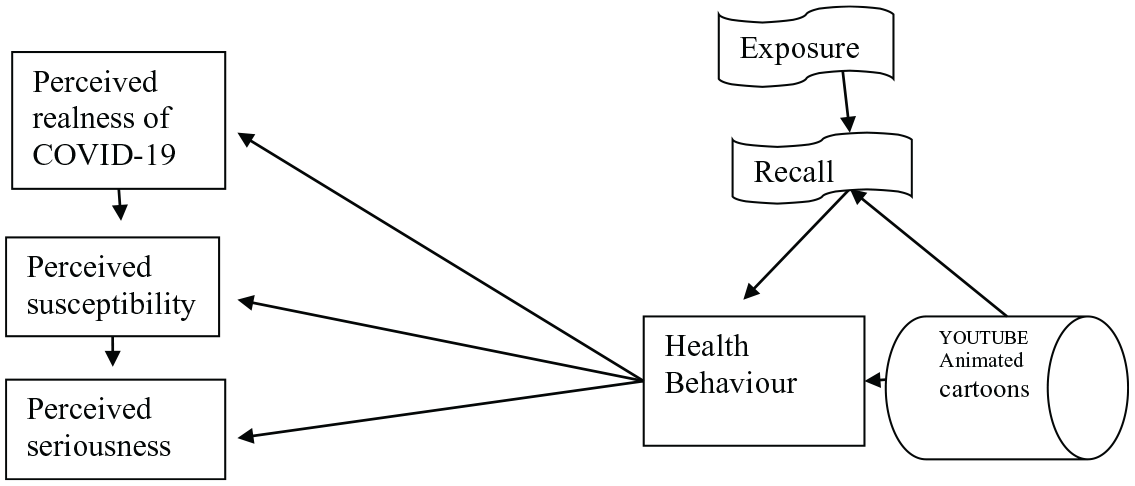
A model for predicting the effect of YouTube animated cartoons on health behaviour.
Using this model, the researchers examined how YouTube animated cartoons and internal state of mind predict health behaviour of social media users who are exposed to YouTube animated cartoons on COVID-19. The media related variables that are examined in this study include exposure to YouTube animated cartoons and recall of such messages. Again, we made use of variables from the HBM to see if they predicted health behaviour. We regarded these variables as within-person factors. We added an item on the perception regarding the realness or otherwise of COVID-19. In doing this, we took into account the prevailing situation within our study area: namely that there were some persons in Nigeria who do not believe that COVID-19 is real. For example, The Nation newspaper carried a story on 26 March with the headline ‘Doubters of COVID-19 are true Nigerians’, wherein it narrated how government handling of the virus has raised suspicion among the populace regarding its actual presence in Nigeria. Part of the story reads: These doubting Thomases may be convinced that COVID-19 is real abroad, but not in Nigeria. They view the Coronavirus pandemic as nothing, but another scamdemic the Nigerian political class are using to enrich themselves. They wonder how it is easier to locate the poorest of the poor who typically are without addresses for palliatives, but can’t contact trace travelers with official passports and contacts to be tested. (Okunfolami, 2020)
The assertion in this article provides insights into the current level of doubt among some persons in Nigeria, who hold the view that COVID-19 does not exist in the country. This doubt has continued to exist among some Nigerians despite the fact that the late Chief of Staff to President Muhammadu Buhari, Abba Kyari, is among those who have so far died of the virus. Therefore, it is essential to consider this issue of doubt in examining the effect of animated cartoons on health behaviour.
Methodology
We made use of survey research design to conduct this study. We decided that survey was most suitable for the study because it best assisted us to assess the impact of YouTube animated cartoons on social media users. The population of the study was all social media users in Nigeria. There are currently a total of 24 million social media users in Nigeria (Pulse, 2019). We conducted a priori power analysis to ascertain the adequacy of our sample size. We made use of the G*power programme (Faul et al., 2007). We then checked the parameters with power (1 − β) at .90, .30 effect size f and α = .05. Our outcome suggests that a total sample size of 470 participants was needed to detect statistical differences at the .05 level. Therefore, our sample size was 470 social media users. It should be noted that a priori power analysis is normally needed to minimize errors and increase the accuracy of the sample size to ensure that the conclusions drawn are valid. To recruit respondents for the study, we made use of respondent-driven sampling (RDS) chain referrals (see Heckathorn, 2002; Johnston et al., 2008). Typically, RDS starts by recruiting initial respondents who are called ‘seeds’. These ‘seeds’ must have attributes of interest. In this case, the ‘seeds’ were social media users. The initial seeds subsequently recruit persons from their existing network for research involvement. Progressively, successive sets of participants then recruit persons from their social network for participation. Sadasivama et al. (2013) tested the efficacy of this sampling procedure to recruit students online and reported that it is an effective way of recruiting study participants. Therefore, in this study, we first identified who were social media users and requested them to forward the survey link to others in their network. This process continued until the required sample size was achieved. We made use of a questionnaire as the instrument for data collection. The questionnaire had an introductory question which sought to determine if respondents were exposed to YouTube animated cartoons on COVID-19 or not. Respondents who clicked the ‘no’ option received an automatic reply – ‘thank you for your time’. But those who clicked ‘yes’ were able to respond to the survey. The format comprised multiple answer options to items like ‘what is your level of exposure to YouTube animated cartoons?’ Options to such a question included: (a) irregular, (b) 1–3 times a week and (c) daily. Overall, the questionnaire had 20 items. Data were collected over a period of two weeks. Three experts validated the questionnaire. They commented on the relevance and adequacy of the items. The reliability of the instrument was conducted using a test-retest approach with a two-week interval. The correlation coefficient was .87, meaning that the instrument was reliable. To analyse the data for the study, we made use of multiple regression and multiple hierarchical regression. The analyses were done with SPSS version 22. The results are presented in Tables 1–3.
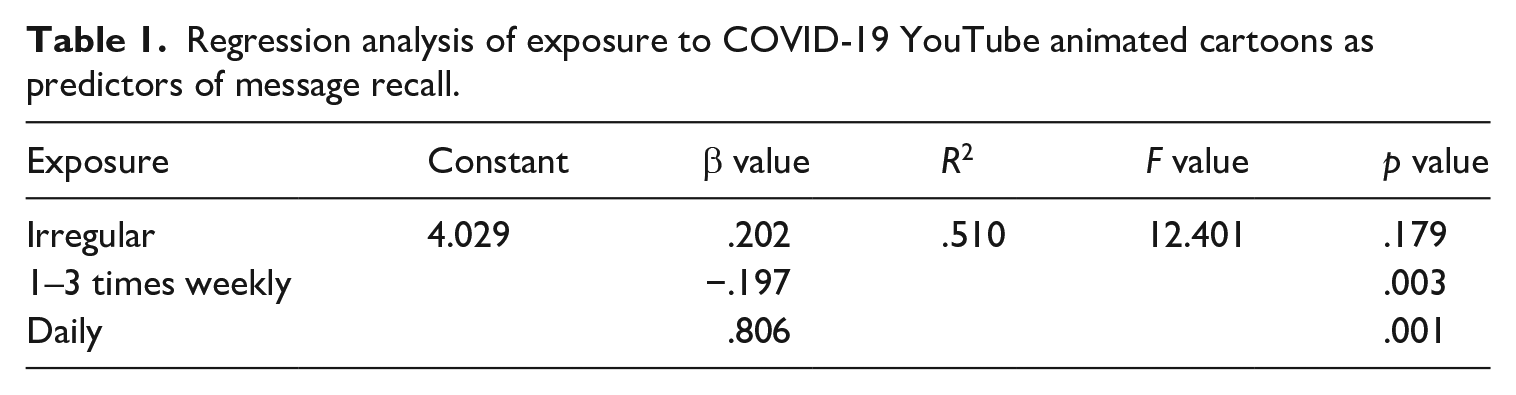
Regression analysis of exposure to COVID-19 YouTube animated cartoons as predictors of message recall.
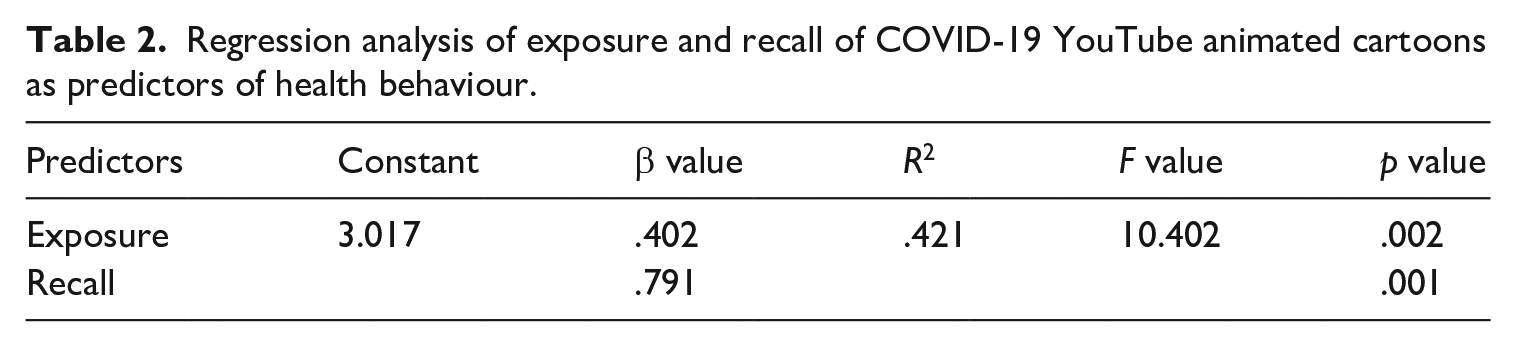
Regression analysis of exposure and recall of COVID-19 YouTube animated cartoons as predictors of health behaviour.
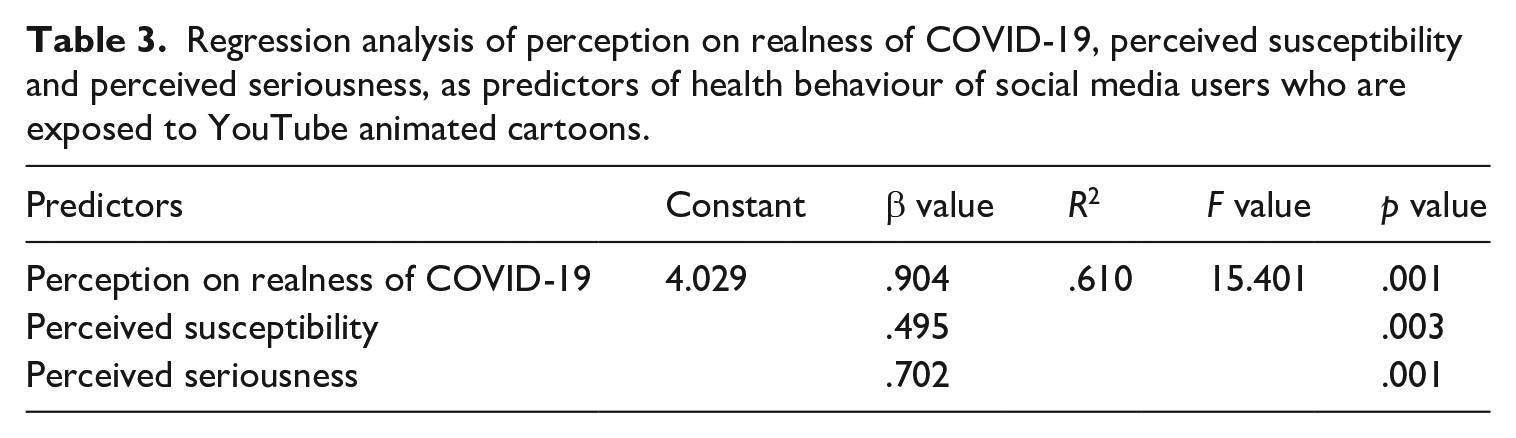
Regression analysis of perception on realness of COVID-19, perceived susceptibility and perceived seriousness, as predictors of health behaviour of social media users who are exposed to YouTube animated cartoons.
Results
We were able to get the required sample size of 470 social media users who also reported that they had been exposed COVID-19 YouTube animated cartoons. The sample did not significantly differ in terms of age (p > .05), education (p > .05) and gender (p > .05) as well as years of experience (p > .05) with social media.
To test Hypothesis 1, we conducted a multiple regression analysis to determine if exposure dimensions predict recall of COVID-19 YouTube animated cartoons. The results showed an overall p value of .001 with R2 value of .510 (Table 1). This means that our model explains 51.0% of the variance in recall of YouTube animated cartoons on COVID-19. We further found that irregular exposure did not contribute to recall. Respondents who are exposed to YouTube animated cartoons daily are more likely to report recall than those with irregular exposure and those with exposure of one to three times a week put together. This is because the beta value (β = .806) of those who reported daily exposure was twice that of those who reported irregular exposure and those whose exposure is between one and three times a week put together. Therefore, our first assumption was supported and we conclude with 95% confidence that exposure to YouTube animated cartoons on COVID-19 is significantly linked to recall.
The objective of Hypothesis 2 was to ascertain the exposure to YouTube animated cartoons on COVID-19 and recall as predictors of health behaviour among the sample examined. It was found that both variables significantly predict health behaviour of social media users vis-a-vis COVID-19 (Table 2). The results showed an R2 value of .421. This implies that our model explains 42.1% of the variance on the health of social media users. The results further showed that recall had a higher beta value (β = .791). This means that recall contributes more in predicting health behaviour. Therefore, our second hypothesis was supported.
The results in Table 3 determine the predictors of health behaviour from the perspective of internal factors. We made use of two variables from the HBM (perceived susceptibility and perceived seriousness) and added one more variable (perceived realness) based on the prevailing health circumstances and the population. Our results showed that all three variables significantly predict health behaviour. Surprisingly, perceived realness of COVID-19 had the highest beta value (β = .904). Overall, our results support Hypothesis 3.
Discussion of findings
In this study, we proposed a model for assessing the effectiveness of YouTube animated cartoons on health behaviour in relation to COVID-19 among social media users in Nigeria. Our model took into account two dimensions. The first was the media-related dimension. Within this dimension, we looked at exposure and recall of health information. We hypothesized that the dimension of exposure will predict recall of YouTube animated cartoons on COVID-19. We found that recall was largely predicted by exposure. That is, respondents with irregular exposure are less likely to recall YouTube animated cartoons on COVID-19 than their counterparts whose exposure was between one and three times in a week. Comparatively, social media users who reported daily exposure are more likely to recall YouTube animated cartoons on COVID-19 than the other two categories of exposure put together. This result extends the studies by Fletcher et al. (2011), Macdonald-Wallis et al. (2011), Sawka et al. (2013) and Latkin and Knowlton (2015), who examined the impact of social media content without looking at the role of recall from the perspective of YouTube animated cartoons in relation to public health emergencies. What this means is that exposure is an important prerequisite for social media users to recall health information communicated to them using animated cartoons.
Furthermore, still as part of the media-related dimension, we combined both exposure and recall to see if they predict health behaviour among social media users. We found that both variables significantly predict health behaviour. On a comparative note, recall predicted health behaviour more than exposure. Our results extend those of Uittenhout (2012) and Jattamart and Leelasantitham (2019), who examined the impact of social media on health behaviour without looking at the role of exposure and recall together. Therefore, in the current study, we have shown that exposure and recall are essential predictors of the effectiveness of YouTube animated cartoons on COVID-19 and on health behaviour. In addition, we have added to earlier studies (Boyagoda, 2017; Ergün, 2012; Ghilzai et al., 2017; Iamurai, 2009; Leiner et al., 2004; Maher et al., 2015) on the effect of cartoons to include animated cartoons as well as how cartoons can be effective tools for health promotion. In the second dimension of our model, we looked at how internal factors predict the effectiveness of COVID-19 YouTube animated cartoons on the health behaviour of social media users. Our results showed that perception of the realness of COVID-19, perceived susceptibility and perceived seriousness significantly predict the effectiveness of COVID-19 YouTube animated cartoons on the health behaviour of social media users. Our results revealed that perception of the realness of COVID-19 in Nigeria ranked higher in determining the effectiveness of COVID-19 YouTube animated cartoons on health behaviour. This aspect of our finding extends earlier studies (Champion and Skinner, 2008; Griffin, 2012; Jones et al., 2015; Scarinci et al., 2012) that adopted the HBM model to assess the effectiveness of health campaigns. In the current study, we added perceived realness as one of the important predictors of the effectiveness of health campaigns. Based on our model, we argued that people need first to believe that a particular health issue actually exists before they can even think about susceptibility and the seriousness of the health issue. Within the context of COVID-19, there are people in Nigeria who hold the view that the virus is not present in Nigeria. Rather, the government is only using it as a pretext to siphon off public funds and attract international donations. It will be difficult for people who hold the view that COVID-19 does not exist to even think about susceptibility.
Conclusion/recommendations
It is the conclusion of this study that the effectiveness of YouTube animated cartoons on COVID-19 be explained in a two-dimension model. The model takes into account variables that are related to media such as exposure to animated COVID-19 cartoons through YouTube, and recall of the message contents of such animated cartoons related to health information on COVID-19. It is also the conclusion of the current study that internal factors play critical roles in determining the effectiveness of YouTube animated cartoons on COVID-19. The highest predictor factor is belief about the realness of COVID-19. This makes a strong case for the need to take steps to convince the target receivers of health information that the public health issue being handled actually exists. This study makes three contributions. In the first place, the study has expanded existing literature by showing the association between exposure and recall and how both exposure and recall predict health behaviour on public health issues. Theoretically, the current study has tested two variables from the HBM as well as added a new variable to the model. It is hoped that the addition will be useful to other researchers. Finally, the results have implications on health practice by making a strong case for the need to ensure that the general public is convinced about the existence of health issues before designing interventions. It is recommended that further studies should develop models that will explain how to handle public health emergencies in ways that do not raise doubts among the general public concerning its existence or not. In addition, it is recommended that other studies should examine other factors that influence the health behaviour of social media users.
Footnotes
Funding
The authors received no financial support for the research, authorship, and/or publication of this article.
