




Abstract
The concept of the user has persisted in information systems research and practice since the field’s inception in the 1950s. However, the roles that people play and the activities they perform have changed considerably over time. People now engage with digital technologies for all kinds of activities and in all kinds of ways, including for both personal and professional purposes. Hence, the purpose of this paper is to reconceptualize the term “user.” We discuss the various activities that people engage in with digital technologies, the myriad roles they play, and an essential shift in what the term “user” means. Users might be active in shaping how a particular information system is used, they might be partners with an information system, they might be used by an information system, and they may spend sizable parts of their lives living essentially within information systems. We conclude by discussing the implications for the IS discipline of reconceptualizing the term “user.”
Introduction
The concept of the user predates the information systems field, emerging from the dawn of electronic computing. The Oxford English Dictionary (Oxford English Dictionary, 2022) quotes a 1950 paper about US federal computing machines in Science, “All these machines, and others too numerous to mention, are proving their usefulness, and are enthusiastically supported by their users.” (Rees, 1950, p. 732). In those days, and in this early paper, a user was typically a company or other organization. The term has persisted in information systems research and practice, but now typically refers to people rather than organizations. The current conceptualization implies a clear distinction between two kinds of people involved with an information system—those who control the information technology (IT) artifact (the owners, creators and developers) on the one hand, and those who simply use it (the users). Whereas the owners and developers are seen as being directly involved with the development of an IT artifact, establishing its functions, features and policies, users are usually considered as not having much control over it. Some users might be invited to provide feedback about the IT artifact and some users might enrich a development team with user involvement. Other users may be able to extend system functionality with end-user developments and some might be granted the status of being a superuser. Ultimately, however, the owners and developers are seen as retaining power and control.
However, since the term user was coined some 70 years ago, people have changed, information systems have changed, and the ways in which people interact with information technology has changed. Information systems were originally conceived as internally focused computer-based organizational information systems which provided “information support for management activities and functions” (Ives et al., 1980). Hence, information systems were intended for managers only. It was only somewhat later that information systems were thought of as being relevant for “users” in organizations (Culnan & Swanson, 1986). Today, however, hand-held computers (mobile phones) are in the hands of billions of people all around the world. Not only have information systems phenomena spread from business organizations to people everywhere, digitalization embraces both our personal and professional lives. Digitalization refers to the increasing presence of digital technologies as part of our everyday experience (Baskerville et al., 2020; Yoo, 2010). The scope of information systems phenomena has expanded both in terms of quantity and extent: the numbers of people engaging with information systems has grown, and people are engaging with digital technologies within multiple digital ecosystems (Baskerville et al., 2020). Information systems are now of interest not only to business and government, but to consumers, citizens, and the public. These days people do not so much as become users of an information system; rather, they become part of it. Subscribers to Facebook become Facebookers, motorists who follow GPS instructions from Waze become Wazers, subscribers to Netflix become Netflixers. Instagramers become “part of an international and multicultural community that is really into sharing.” 1 It is particularly revealing that the same term is used to describe both customers and employees. We suggest this change in the relationship between people and information technology requires a reconceptualization of the term “user.” We need to think about the relationship between people and IT differently.
Hence, the purpose of this paper is to reconceptualize the term “user.” The object of our study is the relationship between people and information systems. We want to consider the roles and activities of people in relation to digital technologies. Our argument is that, despite decades of research advancing new ideas about usage and the user, an obsolete conceptualization of the term still lingers. A few information systems scholars have suggested alternative concepts over the years, such as actor (Lamb & Kling, 2003), or reference actor (Pollock & Hyysalo, 2014), but none has replaced user as the dominant concept within information systems research or practice. The term appears to be so ingrained into our lexicon that it continues to be used by organizations today. It seems that the word is itself too sticky to change. As Henfridsson and Lindgren (2010) note, theoretical progress with respect to work on user involvement appears to have stalled. Hence, we suggest information systems scholars and practitioners, instead of trying to introduce a new term, should instead think of users differently. Whereas the original concept implied that people have a role external to the information system, this is no longer the case. Today, people participate within information systems in all kinds of roles; in fact, they are participants in multiple information systems within many digital ecosystems, often at the same time. People do not so much as use information systems as they inhabit them. Seeing people as part of an information system treats them as being an integral part of the system, as actively involved within a system, and as enacting various roles in a multiplicity of information systems.
We believe our paper is relevant to all information systems scholars for a few reasons. First, it offers a reconceptualization of the term “user” that is consistent with the contemporary nature of humans’ involvement with information technology. Our reconceptualization shifts people from the periphery of information systems into the center of the arena. This insight is consistent with calls to remedy the decline in the longstanding distinction between information systems and computer systems by restoring sociotechnical systems as an axis of cohesion: “… we appear to be losing the grounding that the sociotechnical perspective has traditionally provided for our research and teaching, leaving the discipline exposed to potential dangers with respect to its long-term vitality” (Sarker et al., 2019, p. 696).
Second, reconceptualizing such a basic term in the IS field requires not just a change of meaning in the terminology, but a rethink of the myriad roles of people and relation to technology. The relationship between people and technology has changed considerably over the past 70 years.
Third, in redefining the relationship between people and technology, we reveal a vastly broader view of the scope of the information systems discipline. This broad view includes the whole of society, and not just business and organizations. By referring to people’s roles and activities when we use the term “user,” we encounter the view that the information systems discipline can be seen as central to the study of information and communications technology (ICT) amongst people, organizations, and society. Such a view is consistent with recent changes to the mission statement of many information systems journals.
This paper is organized as follows. First, we review the most common ways in which people have been conceptualized in relation to information systems in the information systems research literature. Second, we provide two examples illustrating the need to reconceptualize the concept of user. Third, we discuss the theoretical implications of reconceptualizing the user. Fourth, we discuss the practical implications of reconceptualizing the user. The final section is the conclusion.
People and information systems
Conceptualizations of humans in information systems research.
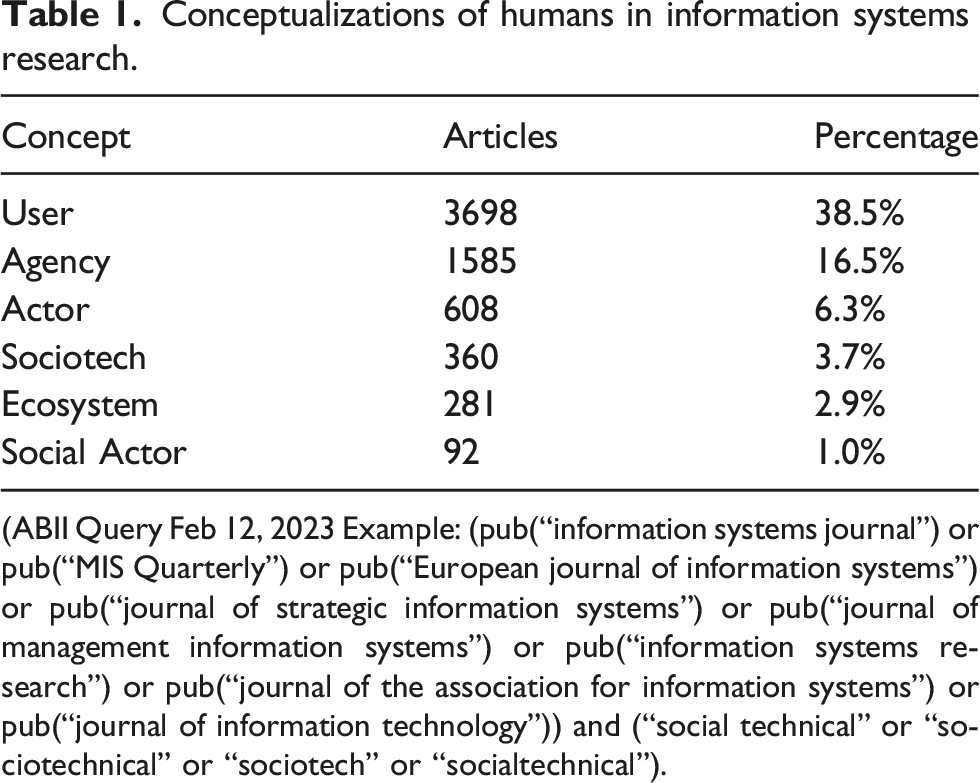
(ABII Query Feb 12, 2023 Example: (pub(“information systems journal”) or pub(“MIS Quarterly”) or pub(“European journal of information systems”) or pub(“journal of strategic information systems”) or pub(“journal of management information systems”) or pub(“information systems research”) or pub(“journal of the association for information systems”) or pub(“journal of information technology”)) and (“social technical” or “sociotechnical” or “sociotech” or “socialtechnical”).
As can be seen from Table 1, the most prevalent designation by far is user. Indeed, nearly half of all 9610 articles indexed in ABI/Inform mention the term “user” (more often than all the other concepts combined). Other conceptualizations mention the term actor, along with indirect conceptualizations implied by prominent theoretical frameworks such as agency theory, sociotechnical systems, actor-network theory, amongst others. About a third of all articles (31.1%) do not mention any of these designations at all.
User
The most common term used to describe people in relation to information systems is that of a user. According to the OED, a user is a person who regularly makes use of a thing (Oxford English Dictionary, 2023b). The concept tends to assume people are external to a thing (in our case, the IT artifact). Although introductory information systems textbooks have taught for many years that people are one of the components of an information system, we suggest the traditional concept of a user is inconsistent with this premise. A person who makes use of a thing, such as a hammer or a toaster, is not a part of it.
An assumption that the user is not part of the system underlies theories of the user that originated early in computer science and research into the human computer interface (HCI). Such theories were concerned with the psychology and behavior of users, together with ideal designs of a system’s user interface. The design of such user interfaces needed to consider the dimensions of user behavior: evaluating, predicting and controlling their behavior. System designers needed to consider users’ knowledge and processing limits, including quality, speed, and ethics (Moran, 1981). These concerns were consistent with a conceptualization of the user who is external to the system, while recognizing that people’s psychology and behavior must be accommodated.
Earlier conceptualization of the user in information systems research were similar. Lamb and Kling (2003) say that “The most common conception of the user in information systems research is of an atomic individual with well-articulated preferences and the ability to exercise discretion in ICT choice and use, within certain cognitive limits” (Lamb & Kling, 2003, p.198). If atomic individuals have a choice about whether to use a particular technology, they are not a part of it; by definition, they are external to it. It seems we have kept using the term in this way, even though information systems scholars’ conceptions of the relationship between people and technology have long since moved on. Although much information systems research in the past focused on user involvement (Ives & Olson, 1984) and user participation (Barki & Hartwick, 1994) in information systems development, Lamb and Kling (2003) argued that the concept of user is “socially thin” and people who interact with ICT on a daily basis cannot be characterized as users.
Usage
If we shift the focus away from the user and over to usage, the interaction between people and information systems becomes key. Studies of usage, rather than users per se, helped clarify how people and technology were each being affected by the other. These included studies of shifts in individuals’ identities through technology usage (e.g., Devaraj & Kohli, 2003) and studies of shifts in the identities of both individuals and information technologies (e.g., Carter & Grover, 2015).
Carter and Grover (2015) are representative of usage research that was discovering how newer information systems were growing socially broader in scope. New platforms were mediating social interactions, such as social networking, that are beyond organizations.
Nevertheless, the usage concept still conceptually separates the user from the system. They are distinct entities interacting with each other, and each being affected by the other. But the person is still using the system, not a part of it.
Actor
As a reconceptualization of the term user, Lamb and Kling (2003) offer the term social actor. As in sociotechnical systems, a social actor is seen as situated within an institutionalized organizational context. They are “social actors who interact with variously constituted others to form the basis of social institutions and identities” (Lamb & Kling, 2003, p. 201). They are organizational members who have affiliations that link organizations and individuals within and across industries, creating organizational action, using organizational resources, and characterized by an identity ascribed to their role in the firm. Lamb and Kling (2003) say the term actor more accurately portrays the complex and multiple roles people fulfill while adopting, adapting, and using information systems.
Following Lamb and Kling’s (2003) lead, Pollock and Hyysalo (2014) propose the term reference actor as a replacement for user. They define reference actors as “a network of users within and across an organization that form part of a wider packaged enterprise system community” (Pollock & Hyysalo, 2014, p.474). They say reference actors form part of the politics of packaged enterprise system development and acquisition.
As can be seen, both Lamb and Kling (2003) and more recently Pollock and Hyysalo (2014) use some variant of the term actor to describe people in organizational contexts. In some ways this term is much richer than the term user. However, by focusing solely on the organizational use of IT, the use of information systems in non-organizational contexts for personal use is completely ignored. Digital technologies are not just used in organizational and business contexts, as they were in the past, but are now used for everyday activities (Yoo, 2010). These technologies are used for both personal and professional purposes in both organizational and non-organizational contexts. For example, most of us use the same mobile device for both personal and work-related purposes. As digital technologies have become a part and parcel of our personal and professional lives (Baskerville et al., 2020), people now seamlessly move between their engagement with IT in personal, organizational and societal contexts. To illustrate, one minute we might be using WhatsApp on our mobile to chat with a PhD student, the next minute we might be using the same mobile and the same app to chat with a family member.
Alter suggests that people are integral members of work systems in his Work Systems Theory (Alter, 2013). Instead of using the term user, Alter suggests the terms customer and participant. He says that work systems exist to produce products/services for customers (who are external to the systems), and participants (who are within the system) perform various roles within it. While Work Systems Theory is relevant for organizational systems and business professionals, like Lamb and Kling (2003) and Pollock and Hyysalo (2014), Alter ignores the personal and non-organizational use of IT.
As well as the terms user, actor, customer and participant, various theories have been used in information systems research to characterize people in relation to information systems. For example, in agency theory, people enact roles as agents of organizations (Bahli & Rivard, 2003; Eisenhardt, 1989); in sociotechnical systems, people comprise the social subsystem within the organization’s information system (Pasmore et al., 1982); in an ecosystem, people are seen as part of a digital ecosystem (Vial, 2019); in actor-network theory, people are one kind of actor in the organizational networks that produce actions (Braa & Vidgen, 1999; Walsham, 1997). As used in information systems research, however, these theories have almost always been used to describe people within organizational contexts.
Two examples
In this section we provide two examples illustrating how people participate within multiple information systems, and how people now move seamlessly between organizational and non-organizational contexts.
1. Lime
Lime (https://li.me) is an American business that was formed in 2017. Starting as a bike-sharing venture, the company introduced e-scooter sharing in 2018. Just one year later Lime was operating in more than 120 cities across more than 30 countries. By September 2019 Lime’s scooters had provided over 100 million rides (Mhatre, 2019) and was valued at $2.4 billion (Wiggers, 2019). In 2020, however, Lime had to suspend service in nearly two dozen countries due to the COVID-19 pandemic. This was because of lockdowns in many countries and people thinking they may become infected if they touched a scooter than had not been sanitized. The company’s ridership dropped 95 percent as a result of the pandemic. However, it seems that the company and its investors are feeling more optimistic in a post-pandemic world (Hawkins, 2021).
The way people use the e-scooters is described on Wikipedia as follows:
The user installs the Lime app on a device (typically a smartphone), on which are displayed all the vehicles available (tracked by GPS) nearby. Before starting a trip, the user supplies payment information. The user then scans the QR code on the vehicle, beginning the trip. To end the trip, the user parks the vehicle then ends the ride through the app. The price of the trip is immediately withdrawn from the user's credit card. Lime requires every user to take a picture of the parked vehicle and its surroundings, to review whether the vehicle was parked improperly. If any problems were encountered with the trip (like a malfunctioning vehicle) the user can report it through the app (Wikipedia, 2019).
As can be seen, Wikipedia describes Lime’s customers as users, like the Lime company itself. Lime technology involves, amongst other things, the use of an app, mobile phone, e-scooters, internet connectivity, GPS (for location tracking of the person as well as the scooter), a credit card billing service, and electronic locks (enabling the scooters to be picked up and parked anywhere). The business process involves registering a new user, obtaining credit card authorization from a financial services organization, and maintaining the Lime scooter fleet. This process also involves “juicers” (mostly part-time Lime contractors) finding Lime scooters at the end of the day and re-charging them. Based on historical usage data, the scooters are then placed in the most popular locations for pickup by riders the following day.
Although the uptake of e-scooters has been rapid, Lime has faced a backlash in many cities (Mhatre, 2019). Following complaints from members of the public, cities have sometimes placed restrictions on their use, or banned them altogether. For example, in Auckland, New Zealand, the Auckland City Council forced Lime, along with other ride share e-scooter companies, to restrict the speed of the scooters within the central business district to 15 kilometers per hour. The new speed limit was enforced via a software update enforcing geo-fencing (i.e., the creation of a virtual geographic boundary, forcing the scooter to slow down when it enters a particular area). The council updated its Code of Practice for e-scooters, with more stringent requirements on safety and risk management, including reporting accidents, regular maintenance requirements, and slow speed zones in certain areas (Stuff, 2019).
Lime co-founder Toby Sun said that the days of dumping scooters in cities are over. "I think working with the city is very important," Sun said. "We're in markets for the long run, right? So, I think building that trust and collaborative approach will get us a lot longer serving the cities and users (Mhatre, 2019)."
The rapid uptake of Lime e-scooters in many cities around the world illustrates how people become participants of the Lime ecosystem. This can be seen in the following.
First, anyone who wants to use a Lime e-scooter must have a smart phone, download the app, sign up by agreeing to Lime’s terms and conditions, and connect the smart phone with the app to the Lime information system. A person thus becomes a participant in the Lime community (and the Lime information system) from the start. As a member of this community, they need to authorize certain features in the app such as location services and credit card billing. A Lime user also has to provide certain system functions, for example, parking the e-scooter in a safe location, taking a photo after each ride to prove safe parking, and so on. The rider can report certain issues back to the Lime company via the app. The rider, the rider’s smart phone, and the phone’s app, all become essential parts of the Lime information system.
Second, the Lime scooter app and the e-scooters are operated by members of the public. The app and the Lime scooter are not restricted to employees or managers. Anyone with a mobile phone and a valid credit card can operate the scooter, providing they have sufficient skills.
Third, issues related to governance, safety, and public policy have taken precedence over all other issues. Members of the public have lobbied their local politicians about how the Lime technology is used. And as soon as the local regulators have issued a new code of practice or bylaw, the Lime company has been required to enforce this. Lime enacts many of these new laws almost immediately via a software update.
Fourth, as a member of the Lime community, a person’s usage of Lime is tracked by the company. This means that a person’s location data along with other data is shared with other apps/companies for advertising or other purposes. Hence, a person becomes used, but this data enables Lime to provide a better service (e.g., by figuring out where best to place scooters at the beginning of each day). Longer term, issues such as privacy and surveillance might become important concerns (Zuboff, 2019).
2. Key by Amazon app
Key by Amazon (https://www.amazon.com/) is an extension of Amazon delivery services that enables people to remotely control access to their homes. It can operate through an Internet enabled door lock or garage door opener. Security cameras can record events. Remote control is via a mobile phone app. Key by Amazon illustrates how users become participants in the Amazon ecosystem.
First, anyone who wants to use this service needs to create an account, agree to Amazon’s terms and conditions, download the smart phone app, and authorize payment. This new participant must provide Internet accessible electronic locks and connect these to Amazon’s information systems via the app. In this way, the participant creates a new endpoint to Amazon’s systems through his/her own devices and software.
Second, Amazon Key enables customers to grant access to their home to delivery drivers. Amazon says all delivery drivers are screened before their first delivery and monitored on an ongoing basis. Hence, both the drivers and the customers are participants in Amazon’s digital ecosystem.
Third, the customer plays an active part in the business process. The customer receives notification of a delivery and authorizes access. Once authorized the delivery person can open the door via an app on their handheld scanner. The customer can watch the delivery in real time on a cloud cam. Once delivery is completed, the driver closes and relocks the door. Amazon Key also enables the delivery of inside-the-home services such as housekeeping or dog walking.
Fourth, Amazon Key is only possible where the customer sufficiently trusts Amazon to allow its systems to control home access. Amazon offers the Key by Amazon Happiness Guarantee. This guarantee provides assurances of delivery driver trustworthiness, and compensation for damages. But Amazon also builds this trust through live video and real-time status notifications (door is unlocked, door is locked,). The customer can watch the door being opened and the packages (or services) being delivered. In neighborhoods where package theft is an issue, the system can be an important convenience that enables home delivery while increasing security by enabling customers to control who has access to the home in their absence. On its website, Amazon says that “Protecting your privacy and security is our top priority (Amazon Key In-Garage Delivery, 2022).”
Theoretical Implications of Reconceptualizing the User
We suggest a reconceptualization of the term “user” that assumes people are not necessarily external to it; rather they inhabit a reality that is (at least partly) digital. Users do not exist only in a world outside of digital systems; rather, they live part of their lives within a digital world.
Actors performing in digital first world
In order to consider in more depth the various roles that people play in relation to information systems, we draw on the concept of digital first and the ontological reversal. Baskerville et al. (2020) suggest that, in a digital first world, information systems do not simply represent and reflect the world; rather these systems are now creating and shaping physical reality. The ontological reversal is where the digital version is created first, and the physical version second (if needed). In this digital first world, computed human experiences are embedded with multiple platforms and multiple institutional logics, all of which are constantly evolving (see Figure 1). Figure 1 shows there are four dimensions of computed human experiences: time, place, artifacts, and actors. Computed Human Experiences in a Digital First World (adapted from Baskerville et al., 2020, p. 515).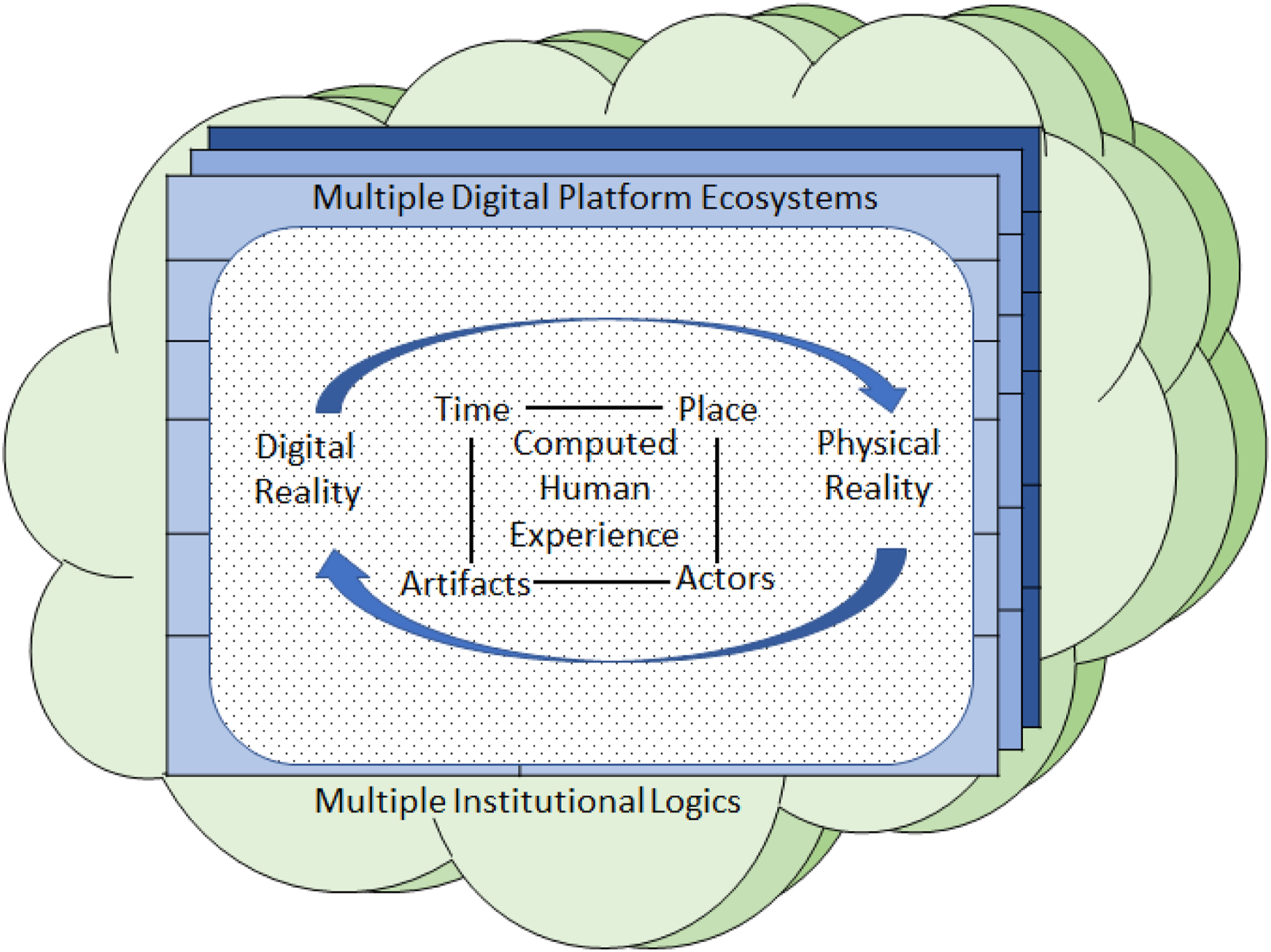
If we focus on just one of these dimensions—the actors—then we suggest Erving Goffman’s dramaturgical model of social interaction might be relevant for understanding the various roles these actors play. These actors can be people or IT artifacts interacting with other IT artifacts. In this paper, however, we focus on people only. Hence, we will now briefly explain Goffman’s theory, before discussing the various roles that people play in a digital first world.
Goffman’s theory uses the metaphor of the theater to explore social life (Goffman, 1959, 1961). Social life is seen as a drama where actors (individuals and groups) use a script (norms, rituals, expectations of how one should behave) to perform on a stage (a variety of settings and social situations). Goffman says an actor’s role involves the enactment of rights and duties attached to a given status (Goffman, 1959). An actor’s performance in a social situation encompasses many of the activities of daily life.
If we apply this theory to people in a digital world, we can say that actors (people) perform many roles and engage in many activities in their daily life. The sociomaterial view of information systems sees people as increasingly entangled with digital technologies (Cecez-Kecmanovic et al., 2014; Scott & Orlikowski, 2014). People have multiple roles and often move seamlessly between them. For example, if you are traveling, you might be a passenger and a family member at the same time, meaning that you will probably move seamlessly between your favorite travel app and your favorite messaging app. These roles have related activities that people might be performing at any given time. These activities are discussed next.
The expanding scope of information systems
Until now, information systems scholars have tended to study information systems in organizational contexts and especially in business organizations. The focus on business is probably because most of the early applications of information systems were in business organizations, and most information systems scholars ended up being in business schools. While some information systems scholars today might study e-government and information systems in the public sector, the focus has tended to be on the organizational or business aspects of these systems. Hirschheim notes traditional information systems topics have tended to dominate the field, to the exclusion of topics that might have wider scope and impact (Hirschheim, 2019).
However, while we purport to focus on the organization, many organizations have been extending their information systems beyond the boundaries of the organization. They have extended their systems further and further out into their ecosystems and into the public domain. The trend of information systems extending beyond the organization began with applications such as electronic business-to-business (B2B) data exchange systems, protocols such as electronic funds transfer (EFT) between financial institutions, and electronic data interchange (EDI) among supply chain business partners. These electronic data exchange systems replaced paper documents such as bank cheques. These trends have gradually extended to business-to-consumer (B2C) systems such as online banking, online shopping, and online travel reservations. Web 2.0 introduced consumer-to-consumer (C2C) systems such as Zelle (for transferring money between individuals), eBay (exchanging goods between individuals), and Uber (ride sharing among individuals).
With EFT, banking and other financial organizations began extending electronic access to their information systems to other financial organizations. With EDI, manufacturing, wholesale, and retail businesses began extending electronic access to their information systems to other, similar, businesses. This trend continued when businesses adopted enterprise resource planning (ERP) systems that provided even tighter inter-organizational data exchange. These extensions of the information system not only created electronic networks of organizational business partners, but also provided a varying degree of integration among the various information systems. In other words, the network information system, by spanning multiple businesses, led to an entire digital ecosystem being created, much larger than just the organization itself.
The myriad new online services further extended information exchanges with consumers. Banks and other financial institutions extended their information systems to permit customers to access accounts and services via the web or a mobile app. Retailers similarly extended their information systems to permit customers to order, return, and pay by directly accessing the retailer’s information system. Travel agencies, airlines and hotels extended their information system to permit travelers to make reservations, buy tickets, and pay by directly accessing the provider’s information system. Businesses were not only extending their information systems into other businesses but were extending their information systems to the public. These information systems became part of one or more digital ecosystems.
These trends grew during the COVID-19 pandemic, as people became used to the online exchange of information, money, goods and services. These trends inspired many businesses to exist mostly, if not entirely, online. Businesses grounded on social networking and information provisioning (such as news and entertainment media) now rely on collecting information from their consumers (often called subscribers in the media industry) and the public and develop their revenue by formatting and supplying the collected information back to the public and their subscribers. Such businesses primarily exist by extending their information systems out to the public. Many news companies both collect and provide information (news) to the public for free, while providing additional information (often called a premium news service) for paid subscribers. In their role as contributors, such subscribers are no longer peripheral users, but participants in the workings of the information system itself.
If we continue to see users as outside the system, we fail to see how they might serve different roles within multiple interconnected systems. In the preceding paragraph we find people are purchasers, payers, travelers, creditors, buyers, and sellers. More critically, each person can be an inherent link pin between systems by simultaneously belonging to or being participants in multiple, myriad information systems. Figure 2 depicts how a person (say, someone named Jack Hubb) is linking together eight information systems, not as an external user but as an essential participant of each system. When Jack joins a new company, in his role as an employee he links the company’s system to the tax system in his role as a taxpayer; he links the employer system to the bank system in his role as bank customer; he might also link additional systems such as his personal or professional social media profiles. While we tend to think of the systems themselves being linked via application programming interfaces (APIs), these systems cannot operate effectively unless the participants in the system are also participants in myriad other systems. For example, tax systems cannot operate effectively unless its participants are also participants in employer systems, bank systems, etc. Online shopping cannot operate effectively unless people provide their bank account or credit card details. People need to have joined up and subscribed as a participant in these systems (e.g., signed up as a bank customer) for each of these systems to work effectively. Jack Hubb as the link pin between 8 diverse systems.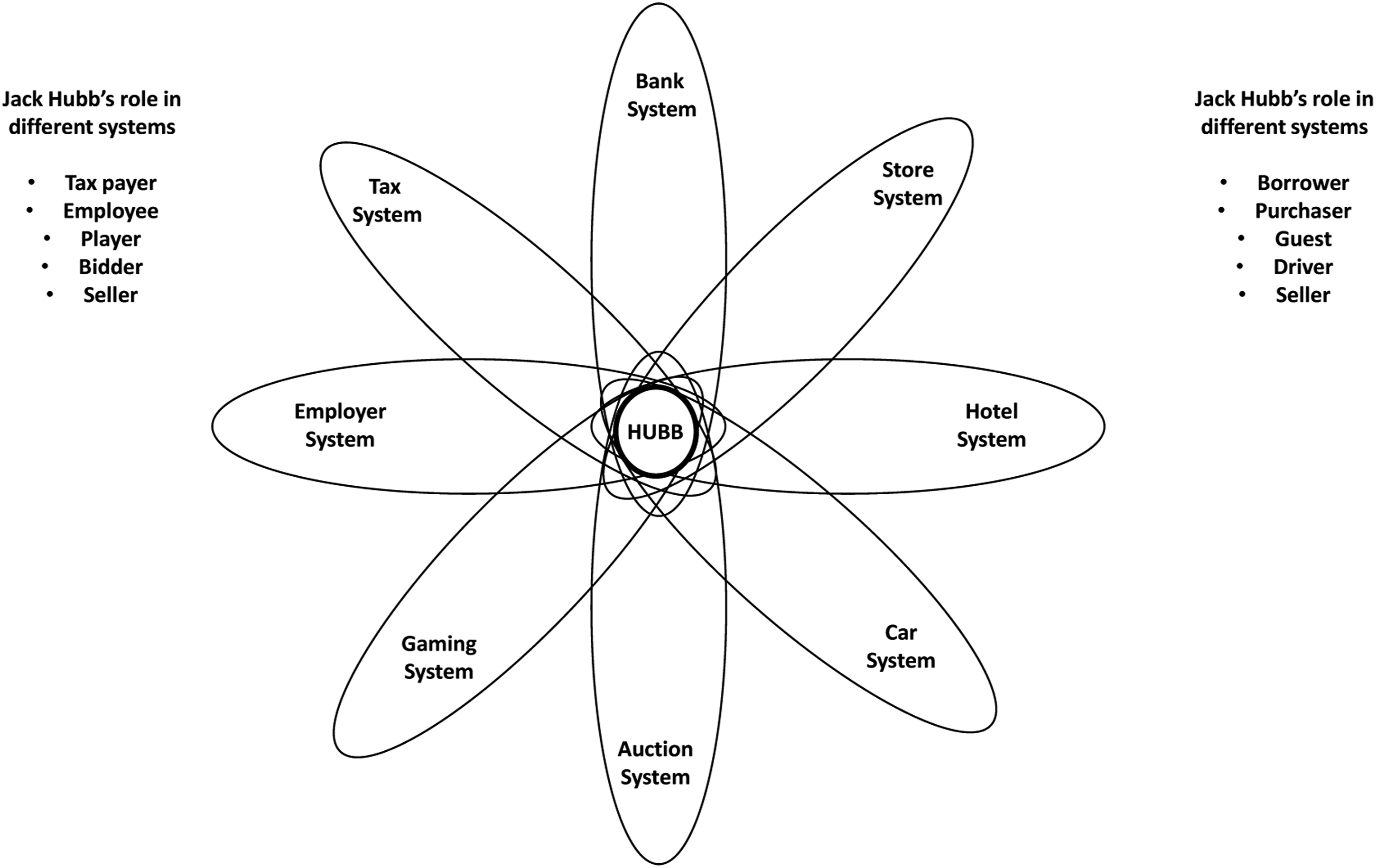
We propose a reconceptualization of the user that moves beyond the early computing assumptions based on behavioral psychology and expands to incorporate assumptions based on constructivist sociology. These expanded assumptions encompass social ideas underlying the concept of actors. Using assumptions that emerge from Goffman’s theory of social life (Goffman, 1959), in which actors (people) perform various roles and conduct many activities in their daily life, we can explain the relationship between people and technology in our digital world more completely. As almost every role that we play, and every activity we perform, is digitally mediated nowadays, the old meaning of the term “user” grows evermore incomplete. If the role and the activity that a person wants to perform is important, then a richer view of the user is needed.
In the two examples provided earlier, we find an important shift in the way people interact with information systems. The scooter rider or the homeowner are not simply outside the system. Rather, they are active participants in the system—they are an essential part of it and entangled with it. They provide computational devices and connect them into Lime’s or Amazon’s information systems. They decide where to take the scooter and where to park it safely, and they watch over deliveries being made to their homes. They are part of a digital ecosystem that requires both technology and people to function seamlessly. The door lock, the camera, the scooter, the smart phone, the homeowner, and the rider are all essential parts of the system.
More importantly, these people are not necessarily employees or contractors for Lime or Amazon. They are riders or delivery-receivers while at the same time being members of the public; they are part of the society in which Lime and Amazon operate. This shift is a dramatic change for information systems. Information systems through technologies such as the Internet of Things, the cloud and mobile apps extend the reach of information systems throughout society.
There are many implications for the information systems discipline if we treat users as having various roles in relation to information systems. Topics once considered peripheral to information systems become central, and some of those that were considered central might become peripheral. For example, the implications of a new app for public policy might become a central concern if the public and lawmakers become involved in shaping its future use and impact. The willingness of people to trust a particular technology, while an important topic already, becomes even more important in a digital first world.
The impact of the extension of information systems beyond the business heralds a fundamental shift in the academic discipline of information systems. Once an insular field focused on the innards of business processes, the discipline is finding that the business world has itself pushed large parts of the body of the information systems phenomena well beyond the business. Information and communications technology is emerging as a society-wide topic of which the business is but a part.
Evidence of this emergence is most evident in research related to ICT being conducted in disciplines outside of the business school. Formerly business research topics such as big data, data analytics, software development, digital innovation, commercial graphics, entrepreneurship, and technology diffusion are becoming common among the humanities, the sciences, medical schools and law schools.
The rapid uptake of new technologies implies that we need to become more agile in our research. The Lime company introduced e-scooter sharing in 2018, yet by 2019, Lime was operating in more than 30 countries. The COVID-19 pandemic in 2020 meant that many “at-home” technologies expanded explosively: including online meetings (e.g., WebEx and Zoom), online shopping (such as Amazon and eBay), and online food delivery (e.g., DoorDash and Uber Eats).
Some of the most important issues today are related to the interrelationship between public policy, ethics and technology: for example, privacy (anonymity of the people in the system) versus safety (catching criminals requires knowing their identity); freedom of expression (a democratic right), versus censorship (stopping the spread of fake news and extremist content), etc. Whereas the former is more democratic, the latter is more restrictive and authoritarian. What is the right balance between these? Because information systems include the public as participants, design considerations now include these broader considerations. How people respond to these considerations depends on human values. How developers build their systems depends on their underlying values as well as those of their employer and/or government.
The current wealth of data opens up the study of information systems, not only to large scale statistical analysis, but also to big data analytics techniques. It also makes large blocks of anonymized data available from businesses, for example, credit card transaction data. With a new focus on the public, qualitative research probably needs to become more sociological. The focus shifts from studying individual organizations to communities, social networks, ecosystems, and the social and cultural issues in the wider society.
These changes also open a new audience for many ideas that are well-known in information systems, but unfamiliar to our new audience. Information systems concepts that may be new to scholars outside of our traditional business disciplines might include sociotechnical systems, technology intermediation, technology acceptance, systems success models, and so forth. These well-studied information systems concepts and theories may gain a new life with a new audience.
Practical Implications of Reconceptualizing the User
The activities of people in a digital world
International classification of activities.
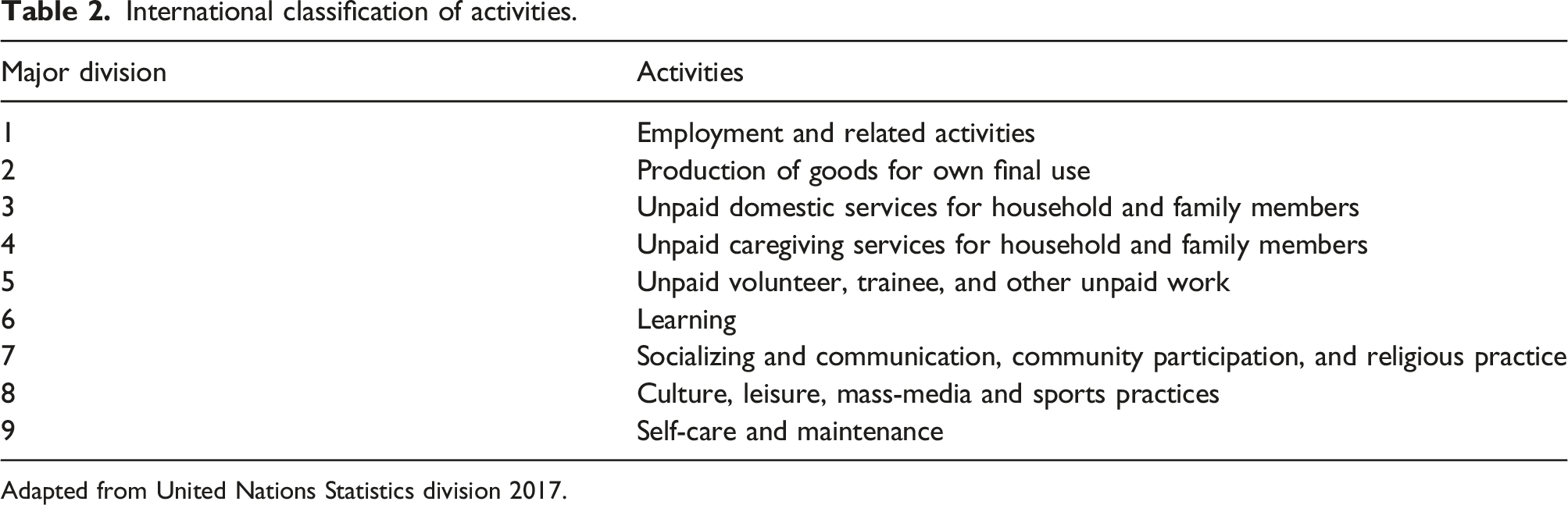
Adapted from United Nations Statistics division 2017.
What is striking about this list is that almost every single activity that people perform nowadays involves digital technologies. For example, employment almost always involves using the information systems in an organization (division 1); production of goods for own final use might include the use of social media or YouTube for obtaining gardening advice (division 2); unpaid domestic services might involve using an app for cooking recipes (division 3); unpaid caregiving might involve reading a book to a child using an iPad (division 4); unpaid volunteer work might involve using online shopping to purchase an item for household maintenance (division 5); learning at school might involve reading online resources using a laptop (division 6); socializing with one’s friends and family might involve using WhatsApp or WeChat (division 7); leisure activities might involve online gaming or streaming a movie (division 8); and self-care might involve making a booking online to see your doctor (division 9).
Another striking feature of this list is that just one of the nine activities is related to work in an organization (division 1), and yet this is what we as information systems scholars have mostly focused on in our research.
The roles of people in a digital world
Activities and roles.
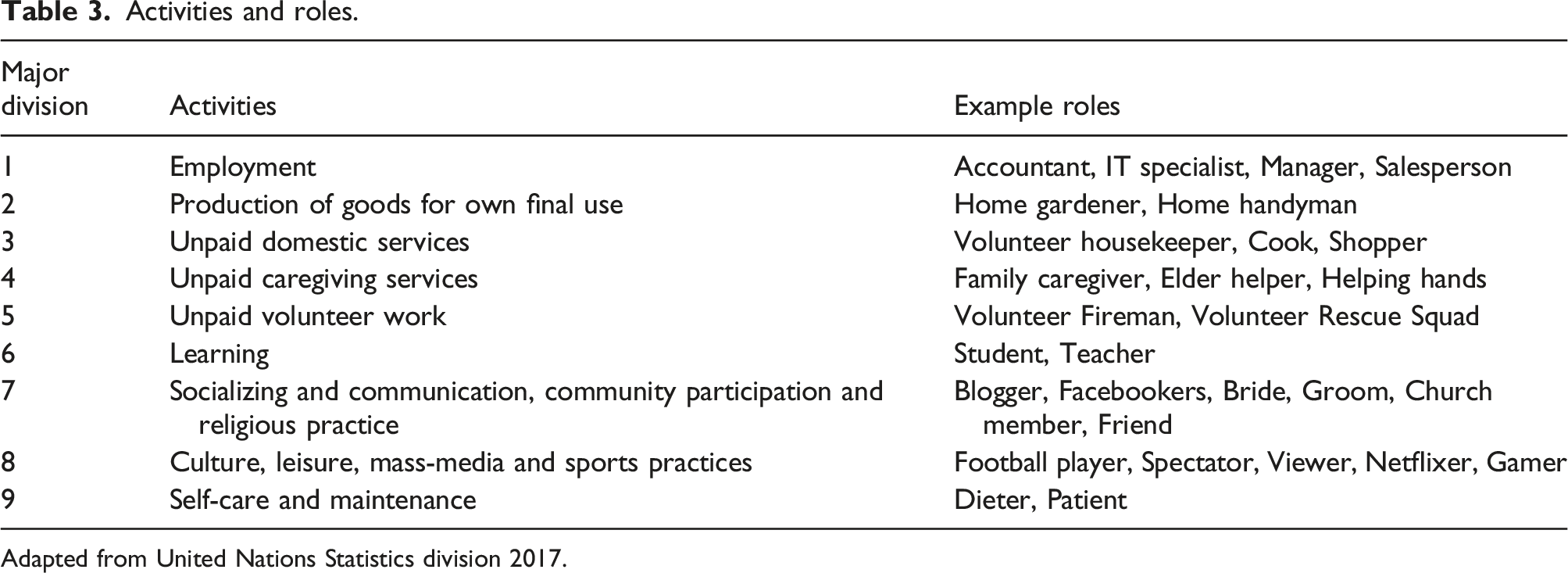
Adapted from United Nations Statistics division 2017.
As the fields of computing and information systems have emerged, we have seen two (and now perhaps three) progressively different kinds of theories of the user. The first is the theory of the subject user, an outsider who must be accommodated by the system designer (e.g., Moran, 1981). The second is the theory of the development user who participates in the design and development of information systems such as participative design and end-user development (e.g., Henfridsson & Lindgren, 2010). The third, proposed here, is the theory of the digital citizen user, who participates and lives in multiple information systems. Here, we adopt the meaning of citizen as “A person who regards himself or herself as an inhabitant of the [digital] world as a whole or as a member of the [digital] worldwide community.” (Oxford English Dictionary, 2023a). Our reconceptualization of the user builds on this third kind of theory, where users are people who inhabit a digital reality.
If we consider people as integral participants of many digital ecosystems, multiple activities and roles come to mind. For example, in Figure 3, Kristian engages in Waze in his work as a taxi driver. Under the UN activity divisions, Kristian’s activity is employment. Once he is on the road with a passenger, many roles in many systems may be engaged. He is engaged in the bank system as a client paying for fuel, union dues, license fees, etc. He is also engaged in the Chauffeur Union’s member system, the Auto Association member system. He is a driver. He is engaged in the Town Taxi’s driver system. In Kristian’s case, he is also a Wazer. Like Jack Hubb, he brings with him into the Waze system potential connections to a bank, a union, a state chauffeur licensing bureau, an automobile association, a taxi company, and probably more. There is a list of missed opportunities if Waze considered Kristian to be a user of their system only. Kristian is not external to Waze, he is an active participant in their entire digital ecosystem. People, activities, and roles in the case of a taxi driver engaging in Waze.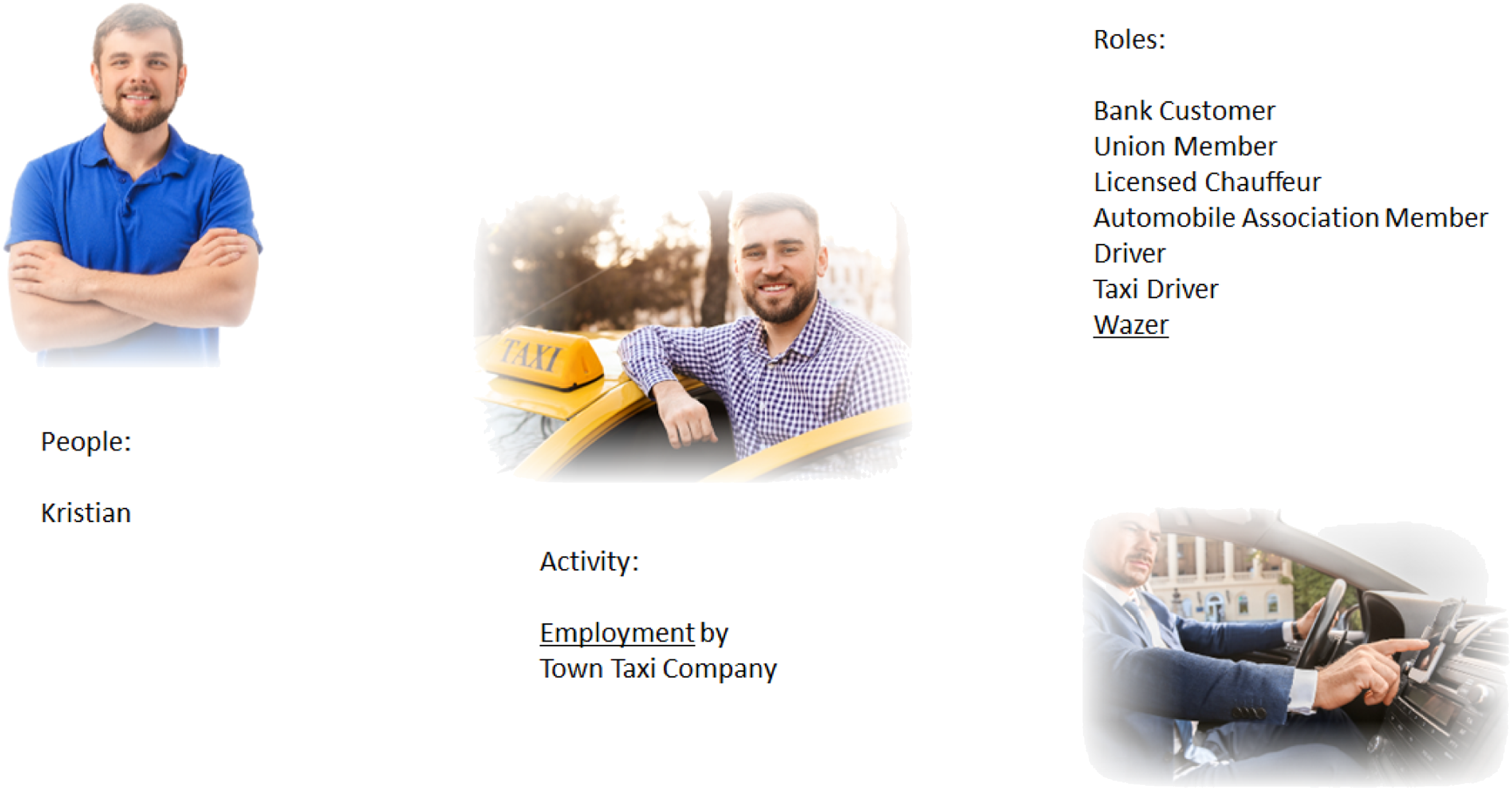
Looking at it another way, we recognize four ways in which people undertake essential roles within information systems.
First, people are active in controlling the behavior of the information system. The control that a person has over an IT artifact will vary, of course, depending on the structure of the relationship between a person and the IT artifact, and the permissions associated with it. For example, in Open Source Software development, there is an expanded role for users and a more cooperative developer-user relationship (Fitzgerald, 2006). As another example, whereas Web 1.0 was seen as consisting mostly of static web pages, Web 2.0 enabled people to create and upload content to social media, blogs, etc. Potentially, Web 3.0 (Web3) enables people to have much more control. “Web3 refers to a decentralized online ecosystem based on the blockchain. Platforms and apps built on Web3 won’t be owned by a central gatekeeper, but rather by users, who will earn their ownership stake by helping to develop and maintain those services” (Edelman, 2021). We acknowledge, however, there is considerable debate as to whether Web3 as currently described will eventuate. Nevertheless, as everyone is to some extent a member of the public, they can vote, express their opinions on social media, websites, news media sites, etc., and lobby politicians. People are not powerless users, but potentially politically active citizens. They might encourage or force lawmakers to enact regulations that have a significant impact on the use and value of a particular system. No longer are they simply users who have no say. Instead, they may become involved in requiring that a service or product be adjusted to fit their expectations and demands.
Second, people are partners in producing information in the information system. Because they are participants in a system, people are participants in a group who collectively produce valuable information. Examples of such productions include product and service reviews and evaluations. In Kristian’s case, he might post a warning on Waze about an accident on the freeway.
Third, people may choose to provide their own extensions to information systems. When they attach their devices to the Internet of Things (IoT), they add new endpoints to organizational information systems. For example, when a person brings up Google’s Waze navigation system app, they not only get location specific advertising, but also notifications of approaching road conditions, accidents, traffic jams, hazards, and law enforcement operations. This information is crowd-sourced to participants in the Waze community. People may choose to attach devices such as motor vehicles, home heating air-conditioning plants, major appliances, not-to-mention computers and smart phones, to manufacturer’s systems in order to receive updates and provide information about operating conditions and comparative performance. Connecting an automobile to an insurance provider makes the participant’s safe driving performance and vehicle operating history visible to the insurance provider’s information system.
Moreover, people can innovate, finding new ways to generate benefits from within an information system. Such innovations can effectively add functionality to a system. For example, parents weary of ferrying their children around for after-school activities soon recognized they could use ride-sharing services instead. Parents could order the car, specify pickup and drop-off locations, identify drivers, track routes, etc. The built-in accountability provides a degree of safety. When debates arose over the practice for responsible parents, new systems were born, for example, HopSkipDrive.
Fourth, people are sometimes used by (as well as being users of) the information system. Just as a member of our body, such as a limb, might be used by us, so an individual person might be used by an information system. People’s activities become a source of information. Nowadays people willingly trade access to their personal data about their activities in exchange for access to an information service. Zuboff (2019) describes the results of this exchange as “surveillance capitalism.” Furthermore, with big data and the datafication of personal information, businesses and government agencies are able to “apply predictive analysis to generate new information and knowledge about customers and citizens” (Mai, 2016, p. 192). Individual persons (consumers, citizens and the public) are a source of data in these systems. More specifically, individuals become data objects (data encapsulated in a business process). Hence, people have become data; they have become the used.
We suggest these ways in which people participate in information systems provide a richer and more comprehensive picture of the engagement of people with information technology today. People are an integral part of the system, and not external to it. People’s engagement in the system is required for the system to be effective and to provide value to others. Also, because people are members of a system, a company can provide an information service in return for data surveillance. The more data that can be collected from people, the more valuable the information provided by the system potentially becomes. For example, Netflix relies on recommender systems software to suggest movies to subscribers. These recommendations rely on gathering huge amounts of data regarding the viewing habits of other similar subscribers. The more fine-grained data that can be gathered, the more “accurate” the recommendations become.
To some extent, we can appreciate Zuboff’s perspective which implies people are used and are powerless in this new age of surveillance capitalism (Zuboff, 2019). But this is just one of the ways in which people might be participants in information systems. People can participate in other ways, with people being able to provide feedback to the company that owns the system, and members of the public having the potential to determine the use and impact of a particular technology.
For information systems developers, the traditional concept of user does have the advantage of simplifying design requirements. The concept fits well when people are atomic individuals who are mainly a source of data and a delivery point for information. The “user” interface might be based on a more-or-less generic person who is a source of keypresses, mouse clicks, and touch screen gestures and interacts to complete a transaction.
However, the traditional concept of user does not fit well in a digital first world, where almost every activity and every role that people perform is digitally mediated. For example, if Kristian, the taxi driver, contacts the help desk for the Automobile Association (AAA) because there seems to be a problem with the system when renewing his annual subscription, how should the AAA think of him? We think it makes more sense for the AAA to consider him as a driver who is having difficulties with payment. Of course, he is a user of their digital payment service, but he is only using it because of the value he obtains from the AAA as a taxi driver. His relationship to the AAA is defined by his role as driver and a member of the AAA, not by the fact he happens to use their system.
If we reconceptualize the user concept, and think of people’s activities and roles, it might become easier to invite people to participate in systems design. For example, the Waze app not only enables people to warn each other about driving hazards ahead, but also to interact with each other in social ways such as placing their level or mood icons in the Waze map, earning points by contributing reports, etc. As with Web 2.0, Waze developers have enabled community-building features that let Wazers know when other Wazers are nearby. The Waze app is not so much a “user” interface as it is a portal into the “Wazer Community.” Members of this community may also be automobile club members, professional transport drivers, emergency vehicle drivers, law enforcement officers, etc. Designing for “Wazers” (a role) whose driving activity is integral to the Waze information system is a qualitatively different goal than designing for “users.” We believe that by reconceptualizing the user concept, information systems developers might gain greater clarity of purpose with respect to the breadth of functions that the system needs to deliver. For example, designing a system for a traveler on an airline enables a much richer concept of the user. Seeing someone as a traveler implies that the person might want to need other things besides a seat on a plane (e.g., a rental car and a hotel room).
Conclusion
While earlier conceptualizations of the user as outside the system were relevant for information systems scholars and IT professionals some years ago, we suggest that a reconceptualization is now needed. When almost everything we do is mediated by digital technology, we need to focus on the roles that people are performing and the activities they are engaged in. We think people are better seen as being engaged in activities associated with their various roles within multiple information systems, rather than as outside users of them. Seeing people as participants in an information system treats them as being an integral part of the system, as being actively involved, as partners of the system, and as being used by the system.
One implication of this reconceptualization of users in relation to IT is the information systems field becomes enmeshed with public policy because of the presence of the public within the system. Ethics and values become central. These are concerns we inherit from sociotechnical systems, a recognized basis for coherence in our discipline (Sarker et al., 2019).
The question then becomes: do we as information systems scholars have anything to contribute to this debate? If we continue to restrict ourselves to the business implications of information systems phenomena, then the answer is probably no. However, if we can engage with these debates, then we are potentially extremely relevant. Can we contribute to the domain defined by the development, use and application of information systems by individuals, organizations and society as a whole (Baskerville & Myers, 2002)? Can we contribute specifically with reference to the implications of information systems phenomena for the public and society?
The answer will depend upon what we consider our expertise to be. What do information systems scholars have to offer? If we take our mission to include studying the societal implications of IT, then these wider issues are within our purview. We hope this paper contributes in some small way to a reassessment of our mission by offering a reconceptualization of the nature of humans’ involvement with information technology.
Footnotes
Acknowledgments
We would like to thank Senior Editor Nik Hassan and the reviewers for their insightful comments and helpful suggestions for improving this paper. The authors are listed alphabetically to reflect the equal contributions.
Declaration of conflicting interests
The author(s) declared no potential conflicts of interest with respect to the research, authorship, and/or publication of this article.
Funding
The author(s) received no financial support for the research, authorship, and/or publication of this article.
