




Abstract
With the increasing demand for digitalization, organizations look to emerging technologies such as Robotic Process Automation (RPA) to increase their business performance. This makes it essential to identify and select the most suitable processes to maximize the benefits for organizations. However, despite the increasing interest of academics and professionals in RPA, the literature lacks a study on the main criteria organizations should consider to decide which processes to automate. Therefore, this research lists the main criteria for process automation based on scientific and professional know-how. A systematic literature review was performed, followed by a Delphi study with RPA professionals, to tune the former insights collected from the scientific literature. Our findings point to 32 criteria that organizations and decision-makers should consider before choosing which processes to automate. Feasibility, process description, and input and output data are the most voted. The criteria are evaluated with 18 processes in six organizations with positive results. While professionals may find valuable information in this document to help them decide which processes must be automated first, academics are now aware of which areas deserve further investigation.
Keywords
Introduction
Robotic Process Automation (RPA) is a topic that has been getting more and more attention in the past few years, both academically and in organizations (Ratia et al., 2018). Despite the absence of a consensual definition of RPA, there is a common idea that most researchers share, which characterizes RPA as a technology allowing human users to be entirely or partially disengaged from business processes that are performed by software robots. These software robots mimic the actions the same way a human user would but faster (Santos et al., 2019) and avoid human error (Riedl and Beetz, 2019).
Currently, increasingly more attention is devoted to the digitization of operations and business processes. The concept of digitization covers service enterprises, including industries such as finance, banking, insurance, marketing, accounting, public administration, logistics, and others (Ratia et al., 2018; Willcocks et al., 2017). Therefore, the RPA industry is proliferating, driven by digital business demands
However, the amount of processes that can be automated is still limited due to the lack of cognitive ability that RPAs still have (Lacity et al., 2015). But, in the future, with the help of Artificial Intelligence (AI) and Machine Learning (ML), RPAs are expected to be more intelligent (Santos et al., 2019).
As with any emerging new technology, there will be many benefits that organizations would like to take advantage of. RPA is not an exception. However, adverse effects are also significant when bad decisions are taken (Madakam et al., 2019). Therefore, selecting the most suitable processes to automate is vital to bring more value and maximize the benefits. Consequently, it is essential to know which criteria organizations should consider automating, given their context and strategy.
As far as the authors could reach, there is no literature proposing a list of criteria organizations could use to assist decision-makers. Therefore, this research aims to identify the criteria for selecting the best-suited processes to automate. Since academics' and professionals’ opinions are relevant, the adopted methodology integrates a systematic literature review (SLR), then adjusted through a Fuzzy Delphi with 34 experts to produce the final list of criteria, which may then be evaluated with real-world cases.
Robotic Process Automation
What is Robotic Process Automation
The objective of RPA is to disengage human intervention from repetitive processes and replace them with software robots. Robots will take care of more administrative tasks while the employees can focus on demanding cognitive tasks (Nawaz, 2019). Furthermore, software robots use the same interfaces that a human does while executing the business process (Riedl and Beetz, 2019). This implies that the flow performed by a software robot is the same that a human would use (Riedl and Beetz, 2019).
Software robots can be split into two categories: unattended and attended. Unattended software robots are categorized as running 24 hours, seven days a week, without stopping (Hofmann et al., 2020).
Typically, these software robots do not have any human intervention except punctual exceptions, which the software robot cannot solve by himself. They also require inputs with a suitable data structure to properly manage the data and carry with the standard workflow of the everyday business process transactions, which helps reduce exceptions while performing the tasks (Santos et al., 2019).
On the other hand, unattended projects typically take more time and expertise to develop and bigger development teams due to the hidden complexity that a business process could have, even if the business process seems very simple on the surface (Hofmann et al., 2020). The other type of software robot is attended software robots. These software robots can do the same processes as the unattended ones but work alongside humans.
Therefore, they do not run constantly, and they only are used when a human decides that there are transactions that the software robot can perform. As a result, attended robots are faster to develop, and unlike unattended robots, they are cheaper to produce (Hofmann et al., 2020).
Organizations can target one type or combine both types depending on the objectives. For example, unattended robots are used for high amounts of transaction processes that have not changed in the last 12 months. On the other hand, attended robots might offer more protection to the organization because a human user will always oversee what the robot is doing (Hofmann et al., 2020).
In summary, RPA is a new technical approach to process automation that can enable a technology-induced digital transformation (Lacity et al., 2015; Willcocks et al., 2017).
Robotic Process Automation in Practice
With the constant digitalization in organizations, there will be a value creation increase due to the utilization and deployment of RPA tools. In addition, RPA appears to help organizations automate their processes in a way that is faster and reduces their employees' workload on unnecessary time-consuming tasks (Nawaz, 2019).
Robots can work without stopping, while humans need a work schedule and breaks, therefore not producing the same as a robot (Ansari et al., 2019), reducing the employees' manual work. This way, employees can focus on tasks that a robot cannot do or even spend time learning new competencies (Madakam et al., 2019).
Reviewing business processes to automate and automating those processes will help the organization standardize its ways of working, resulting in a better data management procedure between processes and making them more efficient.
Robots will perform the same rules for a business process that removes human error from the transaction flow, which a human cannot consistently achieve (Itpa, 2013).
Software robots are much faster to develop than other IT tools and do not require a big team of specialists to build them.
RPA can help create new jobs, such as robot management. However, even though the robots can work by themselves and handle a few exceptions, it will always be necessary to have a support team to take care of these tools despite being attended to or unattended (Santos et al., 2019).
In any technology, there are many advantages and disadvantages. Even though the RPA advantages are much more significant and can overshadow the weaknesses, knowing them is still very important when deciding if RPA is the best approach for a case.
The most significant disadvantage of an RPA adoption is job loss, a valid fear that any organization should consider. However, the job loss that RPA represents can be transformed in new hires because RPA solutions will need constant support from human workers. For example, a human worker will do that task if the robot cannot handle an exception.
RPA solutions are still short and medium-term solutions. These tools are not yet prepared to work on a business process for the long term, discouraging its development and encouraging management to look for other solutions (Nawaz, 2019).
Research methodology
The authors perform an SLR to unveil and synthesize the criteria reported by other researchers into a list of criteria. Then, this list is used as the input for a Delphi study and tuned by RPA experts. Figure 1 presents the research methodology followed in this investigation. Research Methodology Steps.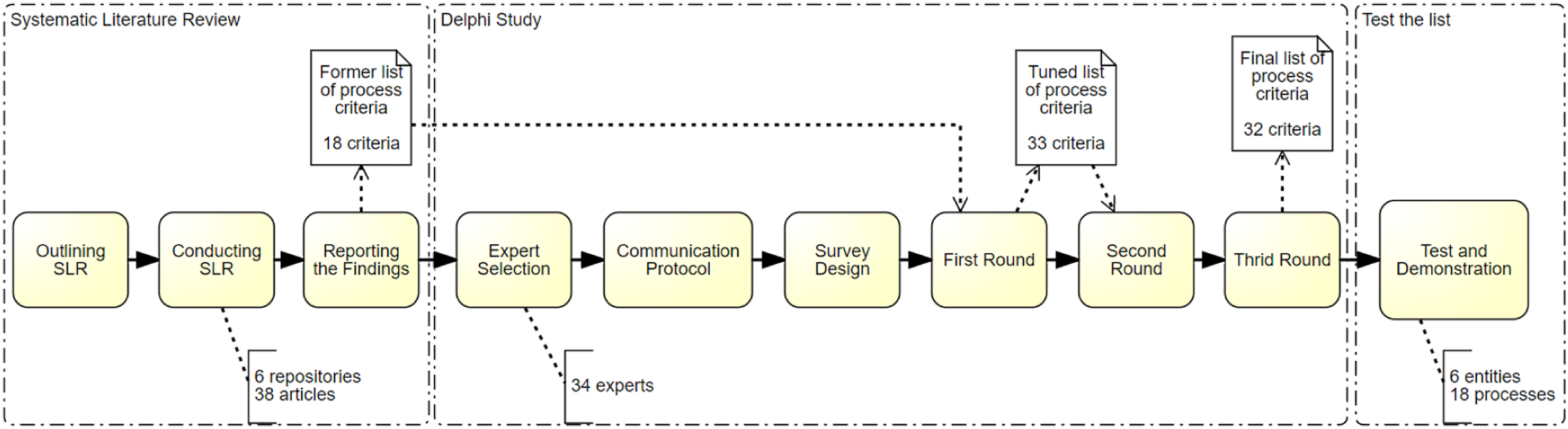
Systematic literature review
The structure used to conduct the SLR (Figure 2) follows the guidelines proposed by Kitchenham (2004) and Okoli (2015), which keeps this review scientifically rigorous and transparent, which ultimately improves the literature review (Okoli, 2015). This approach is composed of three phases that should be done sequentially, and each stage has its steps to ensure the results will have the required quality. Systematic Literature Review Steps.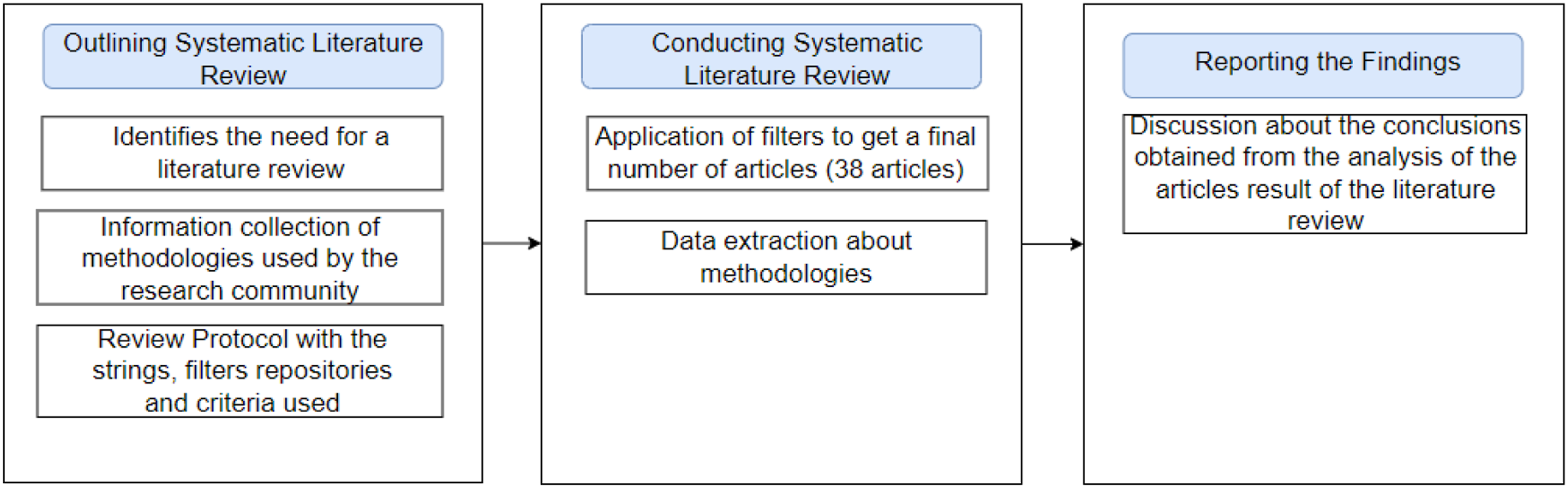
Outlining systematic literature review
Since this research focuses on identifying the criteria to select the most suitable business processes to automate, this SLR aims to analyze RPA implementation studies with information regarding the process selection and the criteria used. Then, six electronic repositories were used: IEEE, ACM, SCHOLAR, SpringerLink, Web of Science, and Scopus. The following search string was used in each repository: (“Robotic Process Automation” OR “RPA”) “AND” (“selection” or “criteria”). Only English publications were considered.
Conducting a systematic literature review
Amount Articles resulting from the filtering process.
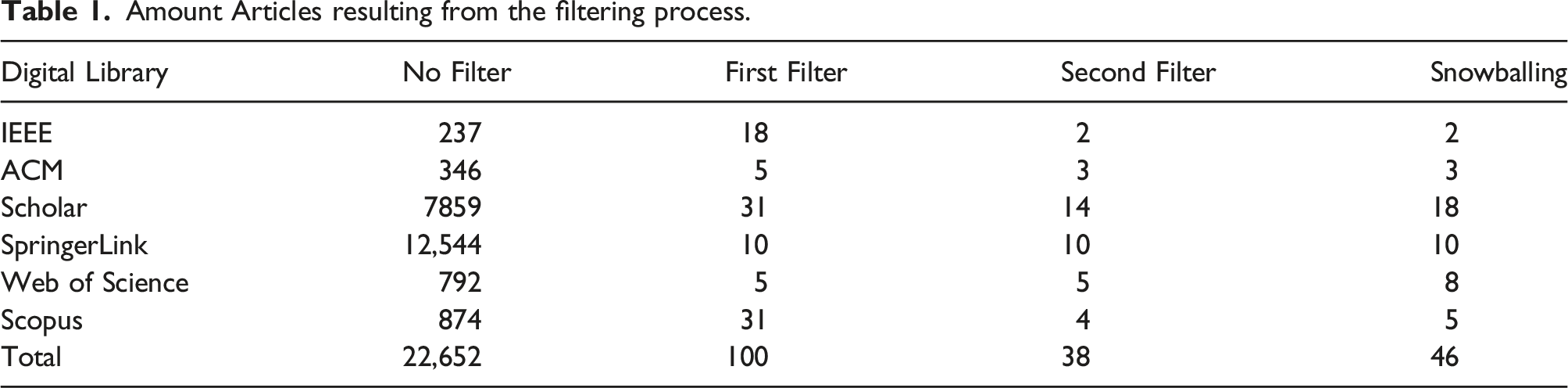
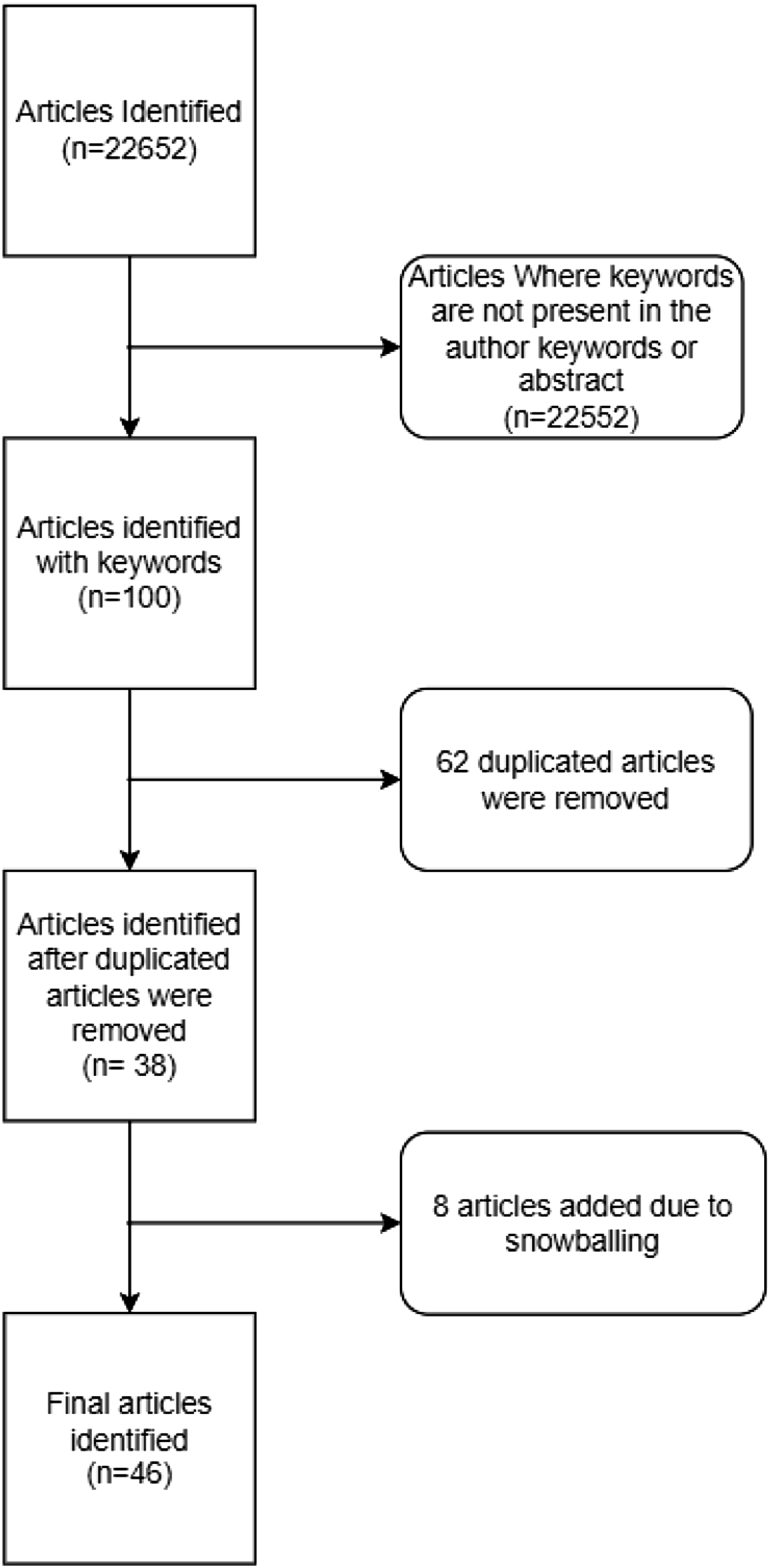
Filtration Flow.
After the conclusion of the filtration process, an analysis of the resulting articles is conducted. The published year, business sector, model type or process criteria, geographical location, and other characteristics are extracted for each article.
Most of the articles collected were published in journals between 2019 and 2021. This reinforces the relevance of the topic.
Extracted articles analysis vectors.
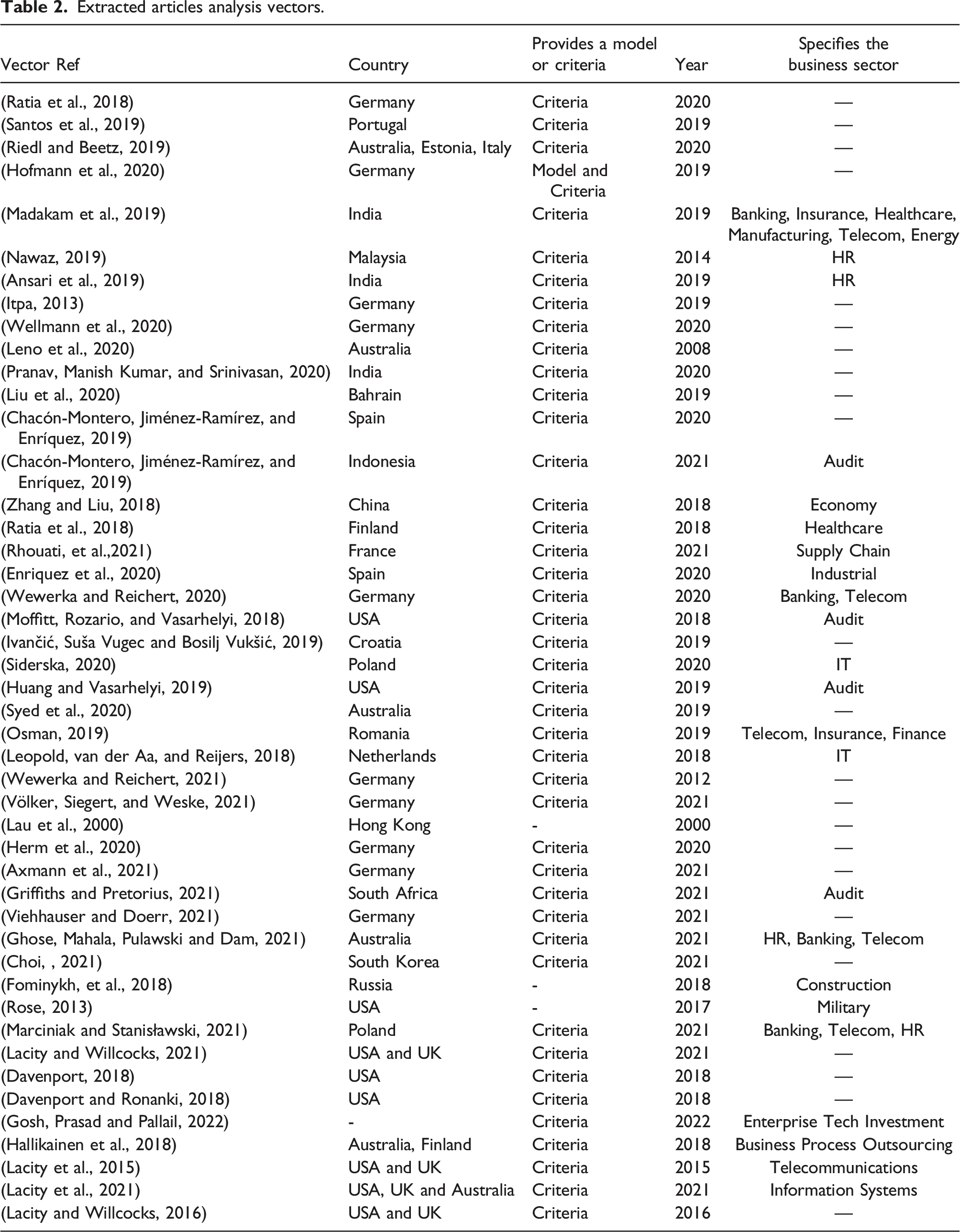
The analysis of each article is presented in Table 2, following the concept theory (Kent and Saffer, 2014). In addition, some vectors were used to help our classification: country and year of the study, if the article provides a model or criteria, and if it specifies any business sector where the criteria mentioned should be used.
Reporting the findings
Business and Technical Criteria for business process selection.
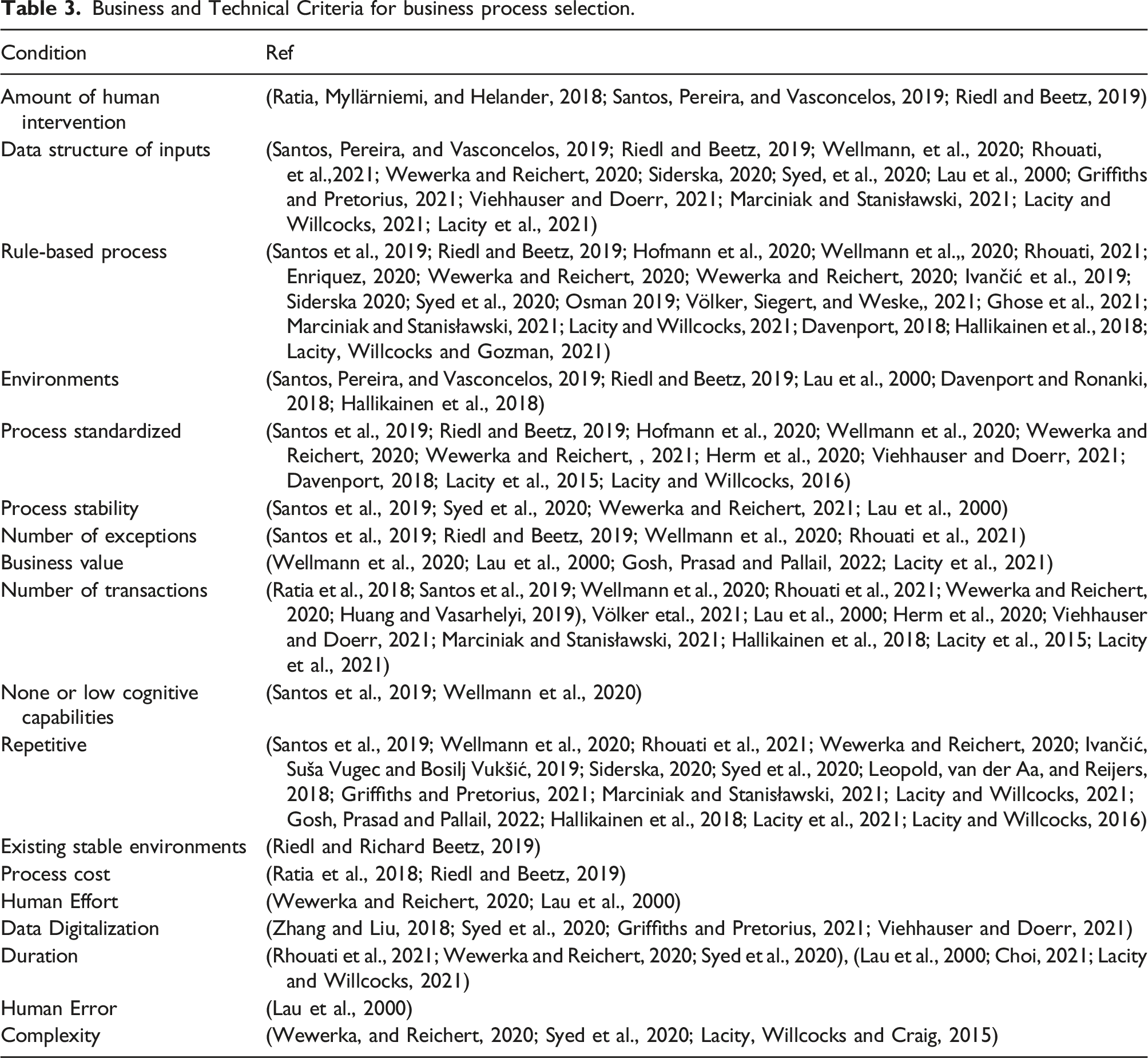
With the list of the most relevant criteria present in the scientific literature for process automation identified, it is now time to tune it with inputs from practitioners.
The Delphi methodology
The Delphi method is characterized as a way of structuring group communication and is essential to gather the feedback of each contributor, assess the group opinion, and have anonymity for the participants' responses. Thus, questionnaires are used with controlled feedback, avoiding confrontation among the participants (Okoli and Pawlowski, 2004) so that every participant can fully express their ideas. It is essential to be a group of experts on the research matter (Okoli and Pawlowski, 2004) to provide credibility to the artifact.
However, the consensus calculation in the Delphi method can be extensive, especially if there is a big group of experts. Moreover, this calculation happens every round since the opinions of each expert on each item can be different, which results in many rounds, and therefore increase the drop rate of the questionnaires, finally making the result of the Delphi less substantial for the subject matter study (Kuo, 1998). Consequently, it is required to use a method that allows an easier way to handle the consensus between each item and convert the subjective evaluation to a quantitative measure. The Fuzzy Delphi method, a subset of the Delphi method, was used based on the requirements already mentioned (Rejab et al., 2019).
There is a significant advantage with the Fuzzy Delphi method when evaluating an extensive set of items. Each item can be evaluated by itself to obtain consensus. Such evaluation can help the researcher discard the item in question to get the consensus as intended (Rigby et al., 2012).
The Delphi is developed based on the list of criteria mentioned earlier as input and follows the flow of the Delphi method (Figure 4). By using the Delphi methodology, the authors aim to tune the former list of criteria using RPA experts and reach a suitable list of criteria to assess processes to be automated. Delphi Methodology.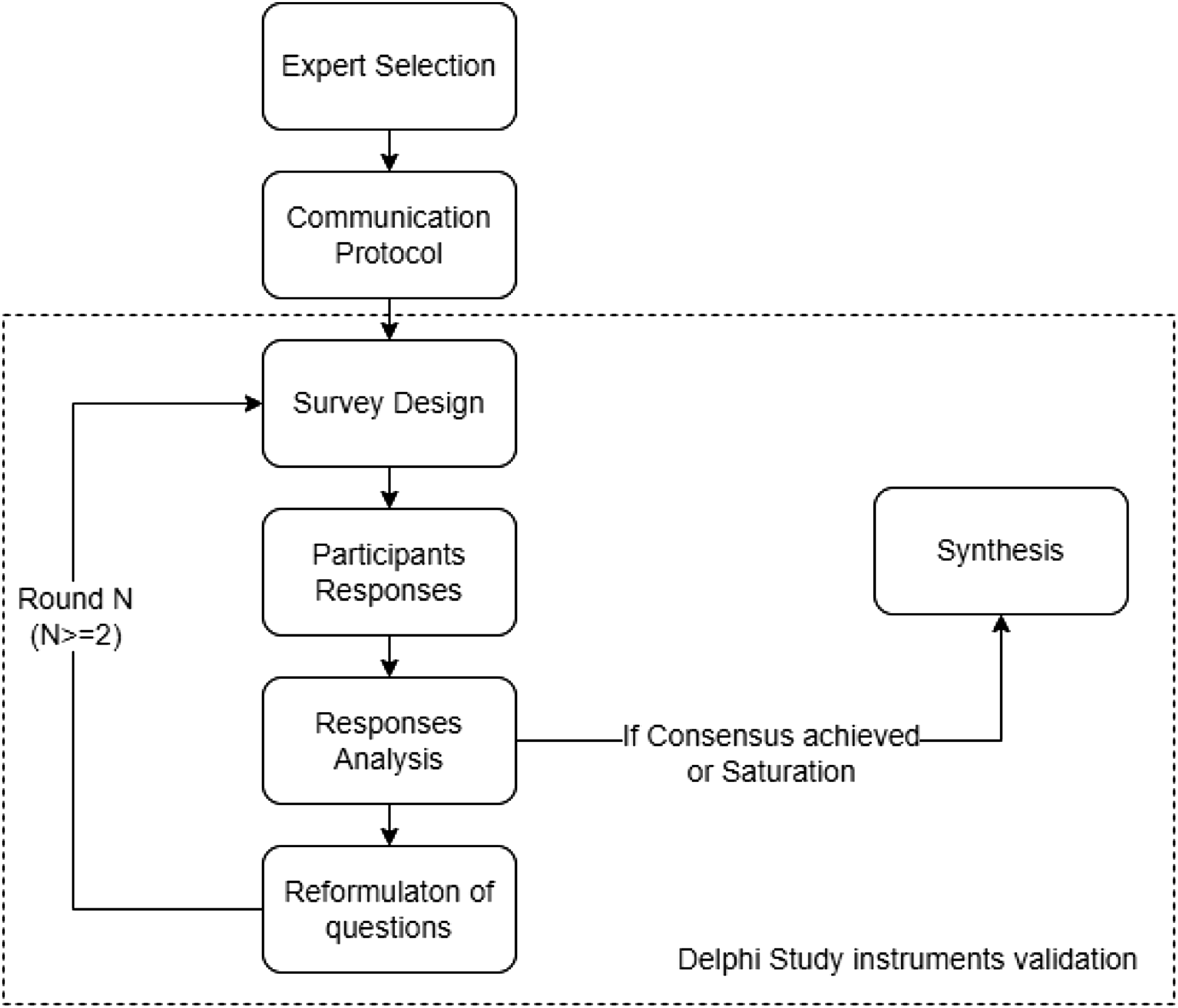
Expert selection
Okoli and Pawlowski (2004) discussed how experts should be selected to increase rigor in the study, where the focus is to identify the kind of expertise required by the participant initiating the study.
In this research, 55 potential participants were identified. These participants were selected based on their expertise regarding RPAs; 34 participants accepted to continue the study, of which 17 were RPA developers, and 17 were RPA analysts.
Communication protocol
The Delphi study requires communication with these experts to be maintained anonymously. The invitations were sent via electronic email with an overview of the Delphi study and the start date of the first round
Survey design
This Delphi study aims to get the expert panel’s consensus on the criteria that should be used to evaluate business processes to automate.
In this Delphi study, the surveys can be divided into two types. The first one used in the first round of the survey was compounded by open questions to retrieve order criteria not present on the initial criteria list obtained from the SLR in Section 2.
Delphi study instruments validation
An essential process in a Delphi study is the development of instruments, and these instruments can be questionnaires used to collect data on a particular subject matter being investigated. The questionnaires can have one or two questions, so it is possible to understand the general opinion of the participants in the study or multiple questions that the participants need to respond to based on their expertise.
The responses from the participants are analyzed at the end of each round. Typically, the first questionnaire is designed with a few questions to give an objective perspective to the researchers for the subsequent questionnaires. The objective is to attain the group's consensus from the second questionnaire. The steps for this calculation are demonstrated in Figure 5 (Nurul et al., 2019). Consensus calculation steps for Fuzzy Delphi.
After analyzing the round results, it is necessary to evaluate the next step. If a consensus is not obtained, it must send another questionnaire to verify the participants' opinions. Although this process can result in multiple rounds, which can cause the drop rate per round to increase, the Delphi study can stop if the consensus is achieved or if the study is at a point of saturation of results.
The first round of the Delphi study aimed to collect a set of criteria in the form of open questions such as: “Which is the most important criterion to consider when evaluating business processes for automation, please provide as many criteria as you can.”
For the first questionnaire, 34 experts answered, which resulted in a drop rate for that round of 0%. Of the 34 experts, 17 had a management-type role, and the other 17 had a developer role regarding RPA. Figure 6 summarizes the experience of the experts in the field. Distribution of How Many Years the Experts Have Been Working in the RPA Field.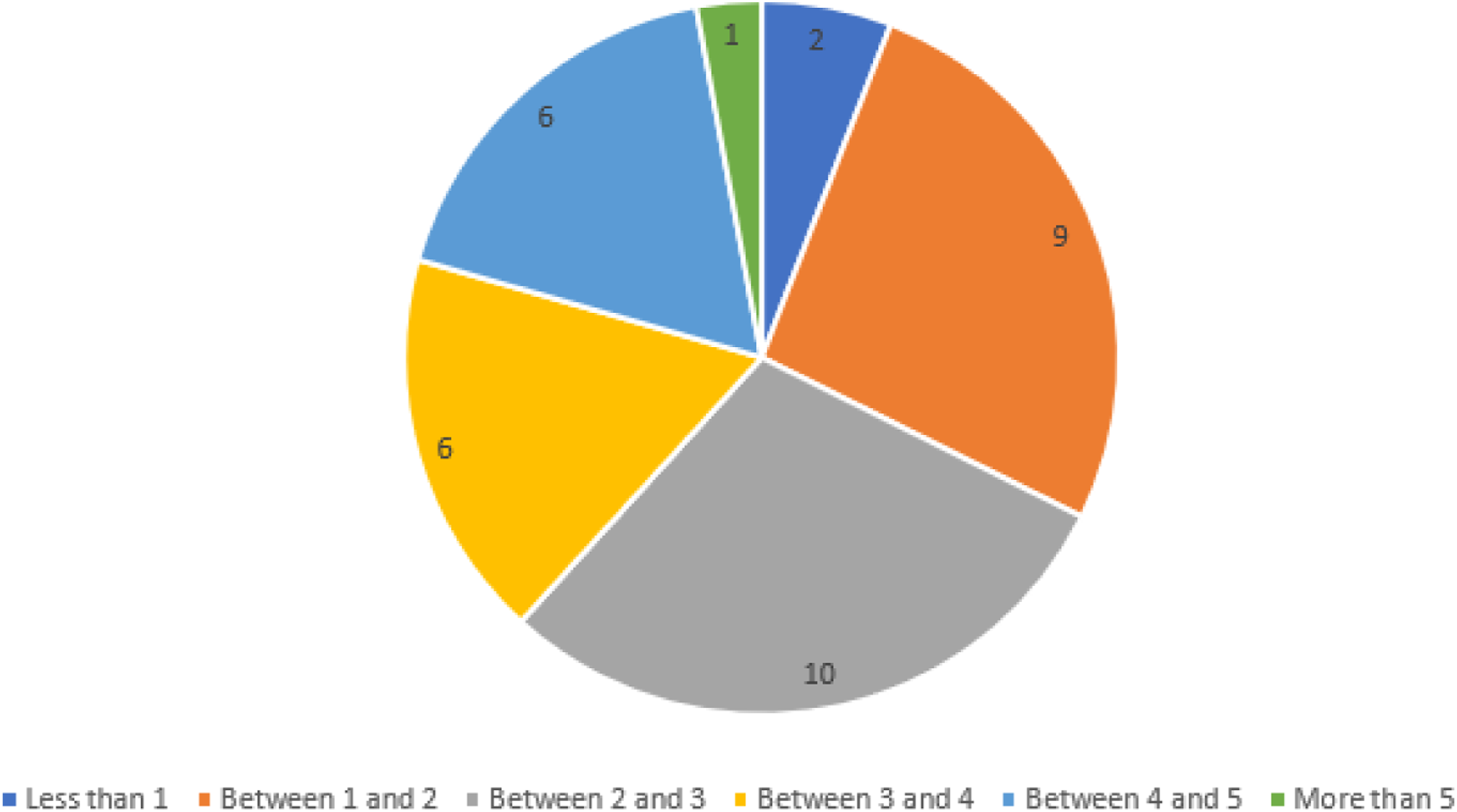
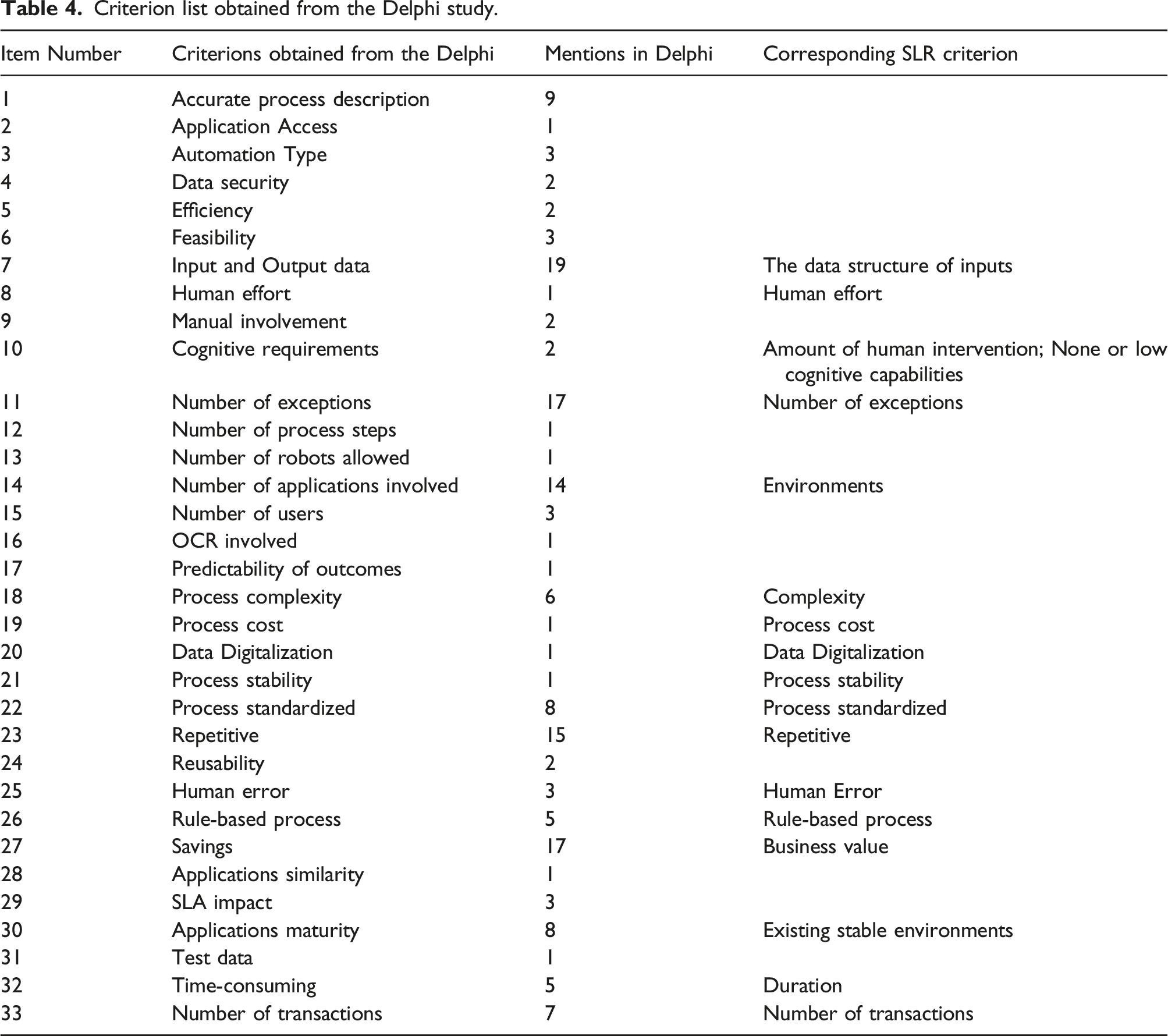
Criterion list obtained from the Delphi study.
Fuzzy Delphi second round
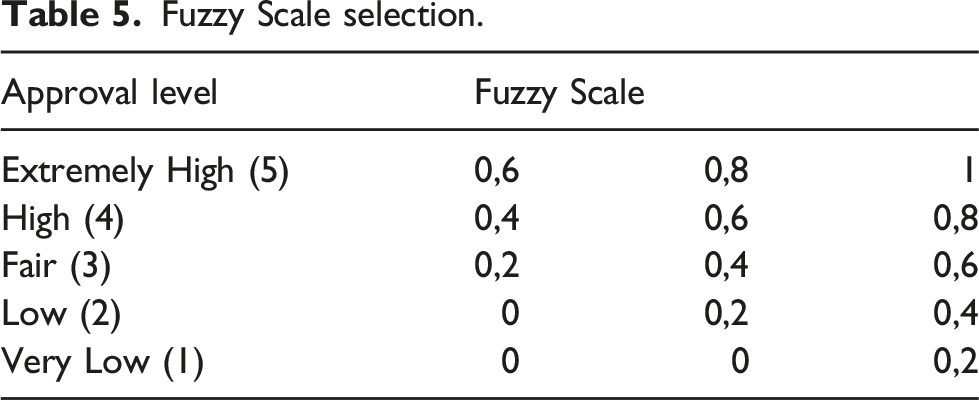
From the second round onwards, the objective was to achieve the consensus of the group study. Therefore, a questionnaire was created where the experts evaluated each criterion detailed in Table 4 by a Likert scale with values between 1 and 5. As a result, of the 34 participants in the second round, 31 answered with a drop rate of 8.82%, which respects the 30% drop rate per round stated in the literature (Rigby et al., 2012).
Fuzzy Scale selection.

Criterion consensus calculation for rounds 2 and 3.
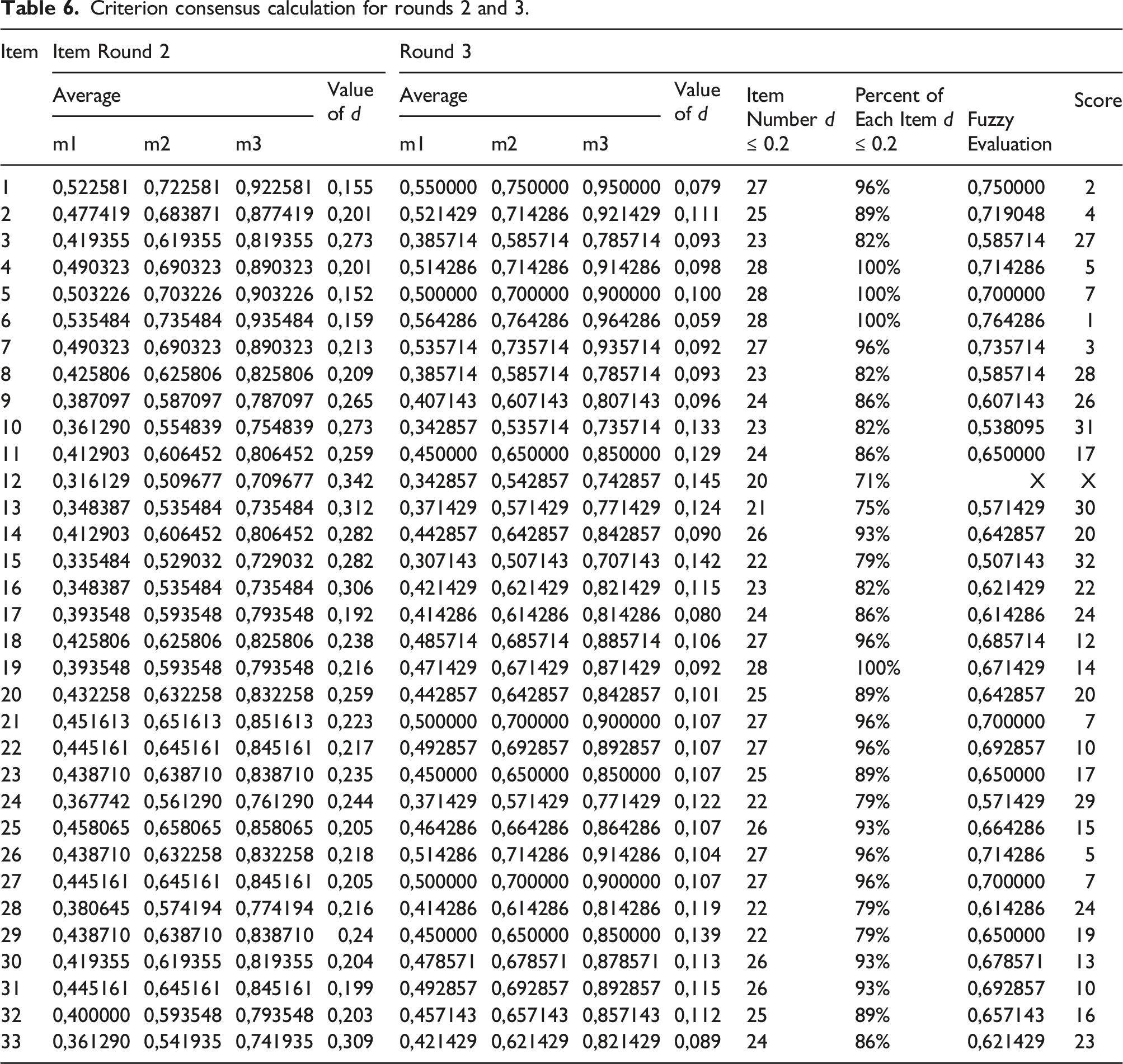
The values of m1, m2, and m3 were calculated in the previous step for each item. Thus, the values c1, c2, and c3 are translated for the Fuzzy scale values per item from the Likert scale. For this step, the values of d per item can be seen in Table 6.
The value of d per item and overall acceptance must be ≤ 0.2 in Table 6. Only five items respect this threshold: 1, 5, 6, 17, and 31.
Value d is the average of the values of d per item that is ≤0.2, representing a value of d=0,171 overall.
Since only five items have values lower than 0.2, the researchers opted to perform another round to reach more consensus.
Fuzzy Delphi third round
In the third and final round, the same second-round questionnaire was used to re-evaluate the same criteria to achieve better results than in the second round. Of the 34 participants, only 28 responded to the questionnaire, resulting in a drop rate of 17.65%, which is still lower than the threshold of 30% per round that should be upheld.
This round focused on re-evaluating the criteria in round 2, aiming to improve the results of the values for the variable d per item. As well as manage it to calculate the consensus for all criteria, create a new set of criteria ranked by the experts’ opinions, and discard any item that does not respect the thresholds set in the Fuzzy Delphi method.
The same equation to calculate the value of d per item was used in round 2, resulting in the average values of d per item presented in Table 6.
The average values of d in round 3 all respected the threshold ≤ 0.2; therefore, all of them were used to calculate the overall value of d, which is equal to 0,107.
In calculating the percentage per item, the number of times the value d per item is ≤ 0.2 will be divided by the number of participants in each round to get the percentage (Table 6).
An item needs to have a percentage ≥ 75% to be accepted. Otherwise, that item is discarded from the set of items. For example, according to Table 6, from the 33 item percentages calculated, only item 12 (Number of process steps) did not respect the threshold required. This way, this item was discarded from the criteria pool.
Equation (3.2) calculates the overall acceptance percentage. All the percentages of the items that respected the threshold of 75% are added and divided by the total number of items minus the discarded items.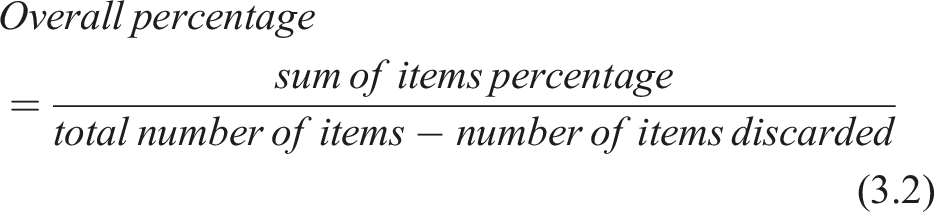
The minimum threshold value for the overall percentage is 90%, which was the resulting value from the calculation of the overall percentage from the 32 accepted items.
The process of Defuzzification will determine the position/scoring of each item, which results in calculating the average of the m1, m2, and m3 values. Then, the m1, m2, and m3 values will be used in equation (3.3) to calculate the Fuzzy evaluation:
According to the values calculated from the equation of the Fuzzy evaluation per item, the higher the value, the better position the item will have in Table 6 - indicating that the item had a high level of consensus among the participants. Consequently, it is an important criterion to be included in the criteria to analyze possible business processes for automation.
List of criteria ranked based on experts’ opinion.
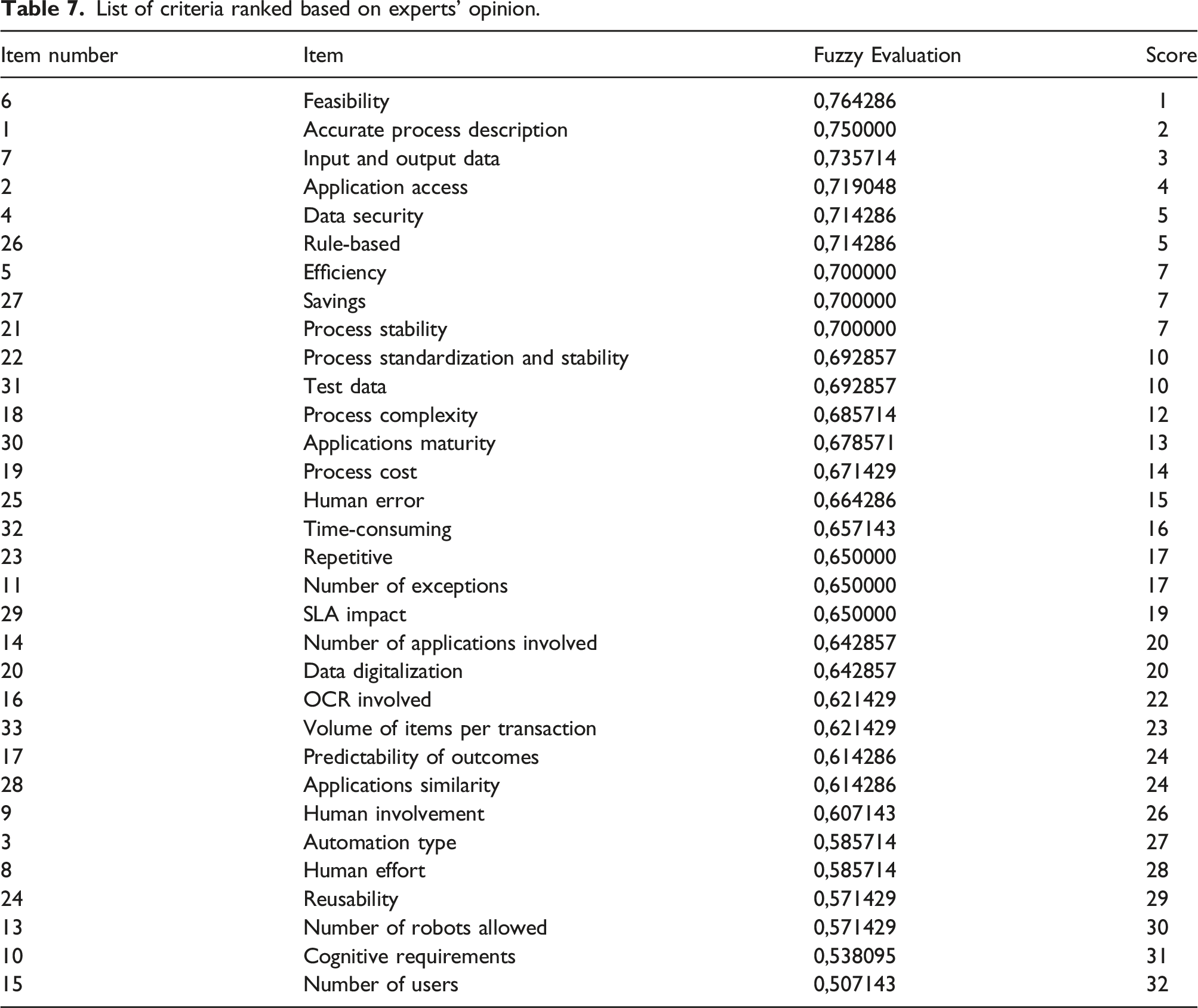
Based on the results of the Delphi method, it was possible to create a new set of criteria (Table 7) where the different criteria are ranked based on their scoring value.
Demonstration and evaluation
This section presents the results of the evaluations performed on business processes from different organizations with the criteria list achieved in Section 4.
Factor values per item.
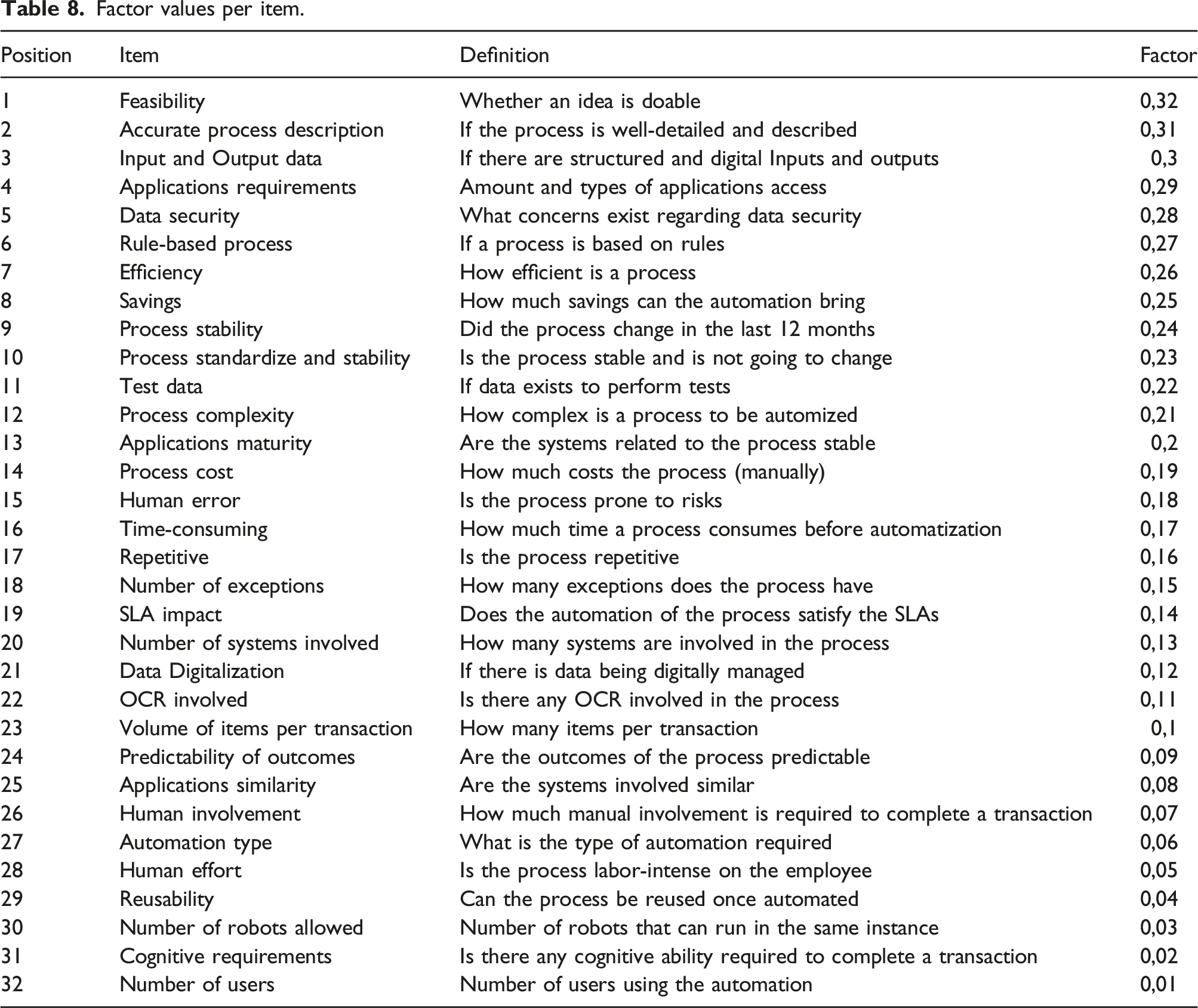
The organizations selected three business processes in each test that could be already automated, in development, or should be automated. In the initial test phase, the interviewee would give his opinion on which order they would automate the business processes based on their ranking system. Later the experts were asked to evaluate the business processes with values between 1 and 5 based on each criterion listed in Table 7. The experts did not know each criterion's factor values, presented in Table 8, so the evaluation can be unbiased.
As seen in Table 8, the items evaluated as the most important to classify business processes have higher Factor numbers. This gives these criteria higher importance in the Score per item equation (4.1), which calculates the weight of each criterion.

Equation (4.2) shows how the factor for each item in Table 8 was calculated. The interview values were between 1 and 5. The highest this value meant that the criterion for that business process was very relevant, which would increase the final score for that business process.
Test results based on the criteria list.
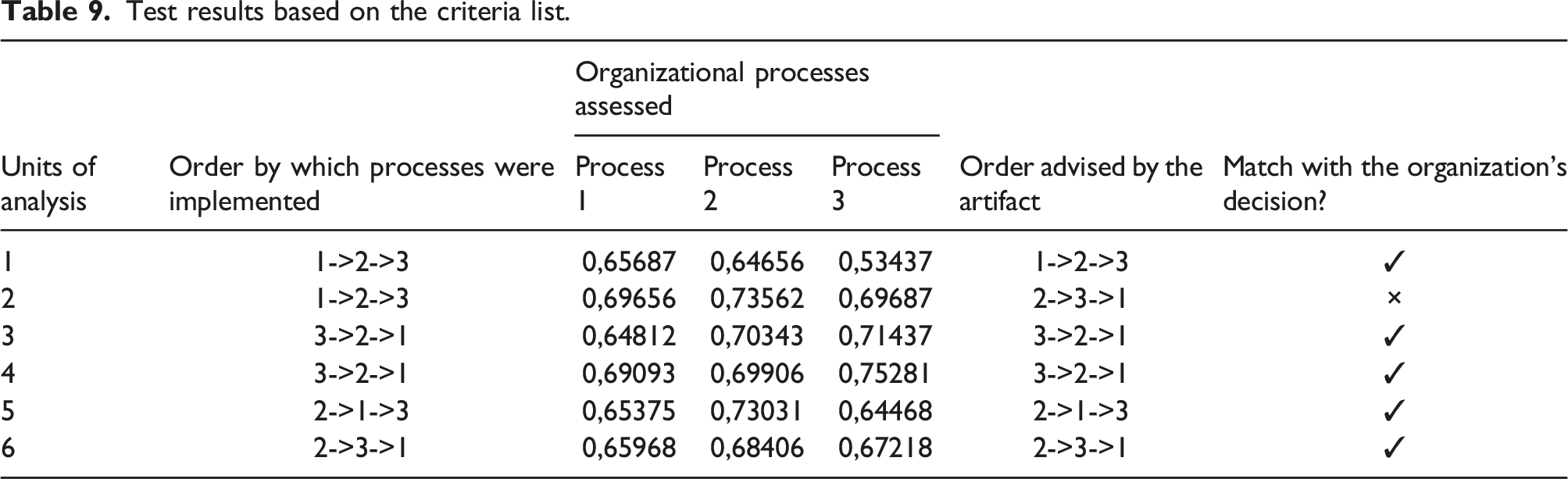
As shown in Table 9, from the six tests performed, in 5 out of 6 tests, the result order based on the list of criteria matches the same order as the expert would choose to automate the business processes.
Only in the second test did the result between the expert order and the list of criteria not match, resulting in an inconclusive test. In this case, the expert would typically use a small and fixed list of criteria. Only those criteria would matter for their evaluation. From this test, it was even possible to retrieve some feedback from the expert.
This feedback included some key points such as knowing who will receive the output of the business process, the urgency of the automation, situations where the automation could potentially replace or extinct departments, and a more significant focus on calculating the savings.
Discussion and analysis
Categories and criteria description.
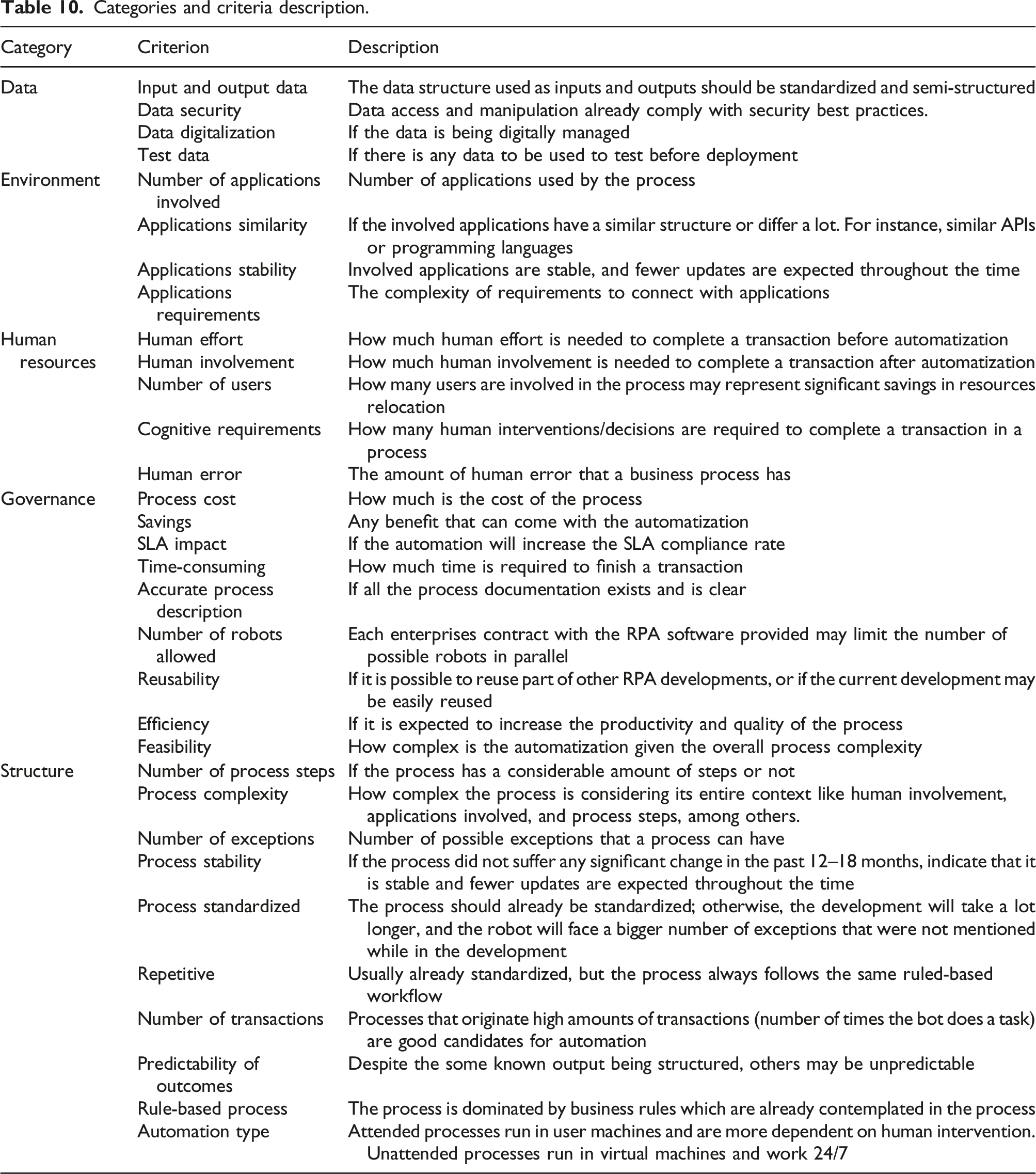
Having the final list of criteria, the authors have then developed a framework to assist scientists and practitioners in the future. This must be seen as a pioneer artefact that must be further evolved and updated in future investigations. The framework can be seen in Figure 7. Please note that the no of robots allowed does not have classification since it depends on the process intended to automate. For instance, a process with several instances running in parallel may require more robots; otherwise, a few robots are enough. Framework for Process Selection for Automation.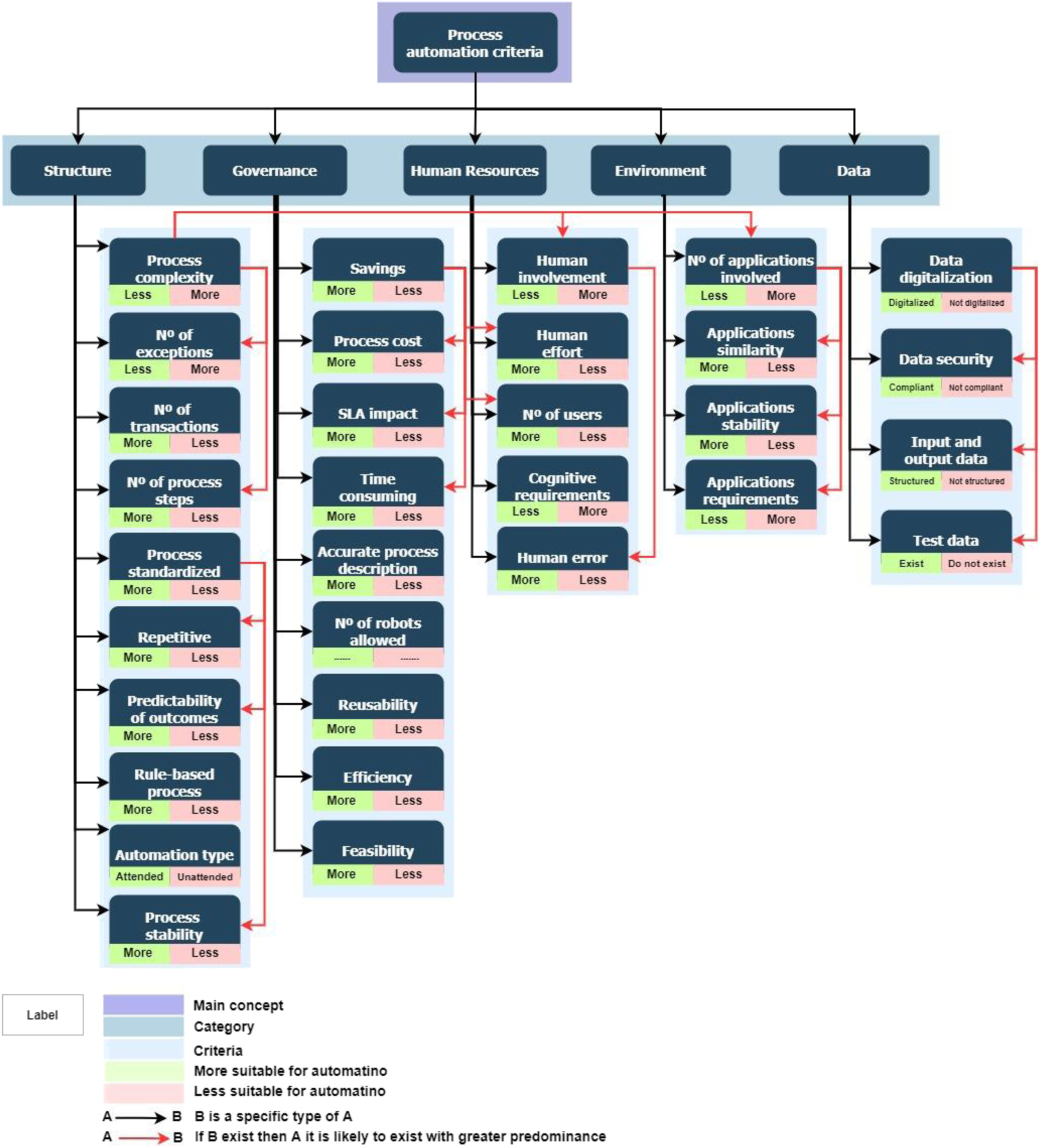
The data suggest that the decision process is not simple, so different questions must be answered before moving on with automation. Deciding on the correct process may be the difference between success and failure. The elicited criteria touch several process domains. Some of the most known and used are, for example, labor intensity, the volume of transactions, process cost, or a repetitive process. However, some less explored criteria were also revealed. For instance: data security or human error, process complexity, systems maturity or even if the possible input data is identified and output data is predictable.
The results indicate that the problem might be more complex to solve than one may have thought. With requirements from strategic to operational level and involving all the process environment increases the decision-making complexity. The framework proposed in the study was successfully demonstrated in practice and is the first step in a domain that deserves further investigation.
Conclusion
This study aimed to elicit criteria to assist decision-makers in evaluating which business processes are suitable for automation. The objective was successfully achieved. This research has two main contributions: • Synthesize the knowledge about process automation criteria that already exist in the literature. This contribution was achieved by performing an SLR, resulting in a list of criteria that served as a basis for the Delphi study. • Create a list of process automation criteria tuned by RPA experts. This contribution was achieved by performing a Delphi study, resulting in a set of tuned criteria. The proposed criteria were then used to assess a set of processes from real organizations to understand if the proposal is aligned with workers’ decisions.
While professionals may find valuable information in this document to help them decide which processes must be automated first, academics are now aware of which areas deserve further investigation. Each criterion points to a different area, most of which is in an early stage of development. For instance, how to increase process standardization, turn data testable, or even human error, to name a few.
This investigation also has some limitations that are worth to be mentioned. First, an SLR was performed, but some relevant studies may have been left out despite a rigorous methodology. Second, since RPA is a relatively recent technology, it cannot yet be considered a mature topic in literature. Therefore the authors have worked with what was available so far. Finally, it was challenging to identify people with a high level of expertise on the subject matter.
Considering the limitations, some future work paths are advised. First, the authors are already evolving this investigation by developing a multi-criteria decision model. Second, with RPA being increasingly adopted by organizations, it is expected to raise some risks that may impact business continuity. Third, the possible integration of RPA with other technologies is yet to be explored. So far, the most referred to in literature are AI and ML to enhance the level of cognitive abilities not currently present in RPA. The inclusion of AI and ML in process automation is referred to in the literature as intelligent process automation. Finally, it should be analyzed how process mining can accelerate the implementation of RPA and guide RPA initiatives, helping in that way to define the most eligible processes for automation. There are already a few studies in this area, such as the one carried out by Geyer-Klingeberg et al. (2018), but it is still a topic that requires further research.
Footnotes
Declaration of conflicting interests
The author(s) declared no potential conflicts of interest with respect to the research, authorship, and/or publication of this article.
Funding
The author(s) received no financial support for the research, authorship, and/or publication of this article.
