




Abstract
The article examines how the structural conditions (ownership, management, financing, and accountability) of public service media (PSM) functioning established by public policy decisions align with citizens’ attitudes. The empirical research employs the case of Lithuanian PSM because of relatively favorable conditions created for developing the PSM as a project of democracy and civil society. A document analysis was performed, and a representative survey of the Lithuanian population was conducted in response to the research questions. The analysis concludes that the intentions of public policy and civil society are quite different concerning the operating conditions of PSM. The citizens would like to have more say in the management of the PSM and to see the PSM much more accountable to society.
Introduction
Organizations of public broadcasters (public service media (PSM)) in democratic countries are established as public or private legal entities, the sole owner of which is usually the state. In such a case, the society does not participate directly in establishing the public broadcaster. It is done for it by the elected politicians who pass the laws. Among European democracies, the citizens’ voice in establishing a public broadcaster is meaningful in Switzerland. Each Swiss citizen may become a member of the association, a parent organization of the public broadcasting company (SRG). Switzerland's division into linguistic regions also plays a role in shaping the SRG's structure, as the association comprises four regional associations (SRG SSR 2022; Puppis and Künzler 2011). The Netherlands can also see certain connections of citizens with the design of the umbrella public broadcaster organization through membership in broadcaster associations (NPO 2022).
PSM is a project of liberal democracy and civil society (Donders 2021), and the incorporation of citizens in PSM gives meaning to the social legitimacy of this organization (Lowe 2010). In addition, PSM must recognize the role of society as an active partner (Jakubowicz 2007). Therefore, in some countries, it is allowed to delegate representatives of public organizations to PSM councils or boards that elect PSM managers. For example, in Austria, out of 35 members of the ORF Foundation Council, five are delegated by the Audience Council, composed of representatives of various social groups (Wagner and Weinand 2018). However, in Western, Central, and Eastern European countries, the majority in such a management structure usually consists of representatives delegated by politicians (parliament, government, president, etc.), but not representatives of society or public organizations.
PSM's financial ties to societies are generally closer than ownership or management ties. EBU (2019) data shows that in all EU (and EBU) countries (except Poland and Malta), the primary source of PSM funding is public money. However, direct financing of citizens through license fees is decreasing in EBU countries as more countries introduce PSM fees, or license fees are replaced by subsidies from the state budget (EBU 2020). In this way, the direct financial connection of citizens with PSM is weakened, and in the case of subsidization from the budget, it remains symbolic because, in this case, there are no links with the income of specific citizens. When assessing the strength of the connection between society and PSM, it is also essential to determine whether PSM is accountable only to the political authority or to society as well, because traditionally, public service broadcasting (PSB) “held accountable by politics” (Just et al. 2017). However, there was a subsequent shift in PSM accountability towards the market and consumers, but not towards citizens (Van den Bulck 2015). Accountability to political authority is usually legally binding, but accountability to citizens can also be developed voluntarily, using various forms and communication channels.
Thus, in many cases, the role of citizens is often lacking in PSM ownership structure, management, and accountability development. The role of citizens is more tangible in PSM funding models. Such a spectrum of citizens’ roles may be different from the citizens’ preferences regarding the activities of public broadcasters. Furthermore, according to Hartmann (2010), members of society are not only PSM owners and service payers but also service value experts. However, when examining the links between society and citizens with PSM, it is usually assessed what role political authority has assigned to citizens in the structural operating conditions of PSM. However, the citizens’ attitudes regarding the respective role assigned to them by political authority are barely discussed. Therefore, to supplement this research gap, the article examines the conformity of PSM's ownership and management structure, financing model, and accountability mechanism with citizens’ attitudes toward these structural conditions of PSM activities.
When examining the activities and regulation of public broadcasters in the post-communist countries of Central and Eastern Europe, pressure from political authority on public broadcasters and the ignoring of public opinion are observed more often than in Western countries (Sükösd and Bajomi-Lázár 2003; Brikše 2010; Pečiulis 2015). Therefore, it is chosen to examine one of the post-communist countries—the case of Lithuanian PSM, which can be helpful as a specific addition to the theoretical dispositions about the creation of structural conditions for PSM and the role of society in this process. First of all, because in the typology of state/public media presented by Dragomir and Söderström (2021), the Lithuanian PSM organization (Lithuanian National Radio and Television—LRT) is qualified as an independent PSM. The LRT is among the 11 European PSM companies with the best conditions for editorial independence. In addition, Lithuania, like the other six CEE countries (Estonia, Latvia, Poland, the Czech Republic, Slovakia, and Slovenia), is included in the group of countries with the highest sustainability index of civil society organizations (USAID 2021) and is recognized as a country of consolidated democracy (Freedom House 2022). This indicates that relatively favorable conditions should be created to develop the democracy and civil society project (PSM) in Lithuania.
In this way, the main goal of this analysis is to reveal how the structural conditions of PSM functioning established by public policy decisions align with the citizens’ attitudes. This will be achieved by answering the following research questions: (a) what role did Lithuanian policy decision-makers assign to society regarding the establishment, management, financing, and accountability of the LRT? and (b) to what extent is Lithuanian society ready to participate in creating suitable structural conditions for LRT activities?
In response to the first research question, document analysis was performed. A common approach for selecting which documents to examine in an analysis involves limiting the study to key events or a specific time frame (Karppinen and Moe 2019). Therefore, the laws regulating the structural conditions of the LRT and accompanying documents (explanatory notes, working group protocols, etc.) from the beginning of the establishment of the LRT in 1990 to 2021 were analyzed. In response to the second research question, a representative survey of the Lithuanian population was conducted. The public opinion and market research center Vilmorus surveyed in March 2019 based on the study's author's questions; 1002 Lithuanian residents aged 18 and older participated in the survey. Respondents were interviewed face-to-face.
The role of society in PSM activities
When examining the activities and needs of PSB or PSM in the media systems of democratic countries, the theoretical discussion is usually based on two perspectives: market and public sphere models. In a market model dominated by private media organizations whose primary goal is to generate profits for owners and audiences are treated as consumers (Croteau and Hoynes 2006), PSB may be left with a marginal role. In such a case, the need for PSB is motivated by the possible failure of the market to inform specific audiences, usually niche audiences, for whom it is not commercially profitable to create content: cultural communities, national minorities, local communities, etc.
According to the public sphere model, media are conceptualized as public resources serving society, audiences are treated as citizens, the primary purpose of media is to promote citizenship through information, education, and social integration, and operational success is measured by serving the public interest (Croteau and Hoynes 2006). An important role in such a media model should go to PSB (PSM), whose main motive of activity is not profit-seeking but serving the public interest. According to McQuail (2010), public broadcasting theory takes the view that an effective public broadcasting system serving the public interest must operate under certain structural conditions: have a founding document, appropriate public funding, be independent from the government, and be accountable to the public (audience).
Citizens’ participation in PSM activities legitimizes PSM, and certain institutional relations with society are a fulcrum, ultimately balancing everything in PSM activities (Lowe 2010). It is an ambiguous question, who and how should connect society with the public broadcaster. Ideally, such a need should come from society itself. Furthermore, the organization of the public broadcaster itself should not be an outside actor in this process. Barnett (2002: 44), criticizing the theoretical approach of market failure and assessing the situation of the BBC in the United Kingdom market, argued that society makes a collective decision about the public broadcaster, whose benefits the quality of citizens’ “cultural and democratic life outweigh any loss to the private sector”. The objective of PSM is to enhance the collective welfare of society and its citizens by providing information, education, and entertainment. Additionally, the foundation of PSM as an idea stems from the principles of liberal democracy, which is regarded as the most effective way to structure a society (Donders 2021).
Developing democratic theory, Carpentier (2011) emphasizes the intensity of citizens’ participation in decision-making, which can vary between minimal and maximal dimensions. Minimalist citizens’ participation in democracy means that the society gives all representative powers to the government after the election. Maximalist democratic participation seeks a multidirectional participatory process without privileging institutionalized politics. Carpentier (2011) associates citizens’ participation in media activities with content creation and organizational decision-making (structural participation). In his opinion, the structural participation of the societal members is limited because the mainstream media rarely allows them to participate in decision-making, which can be more associated with the community media. However, PSM, as a citizenship and democracy-centric project, is “enabled by the executive, legislative and judiciary powers in society” (Donders (2021: 95). PSM public value tests in some European countries (when public consultations are organized with all stakeholders) are serious steps towards greater citizens’ participation in decision-making regarding new PSM services. Although the conducted studies show that citizens are only sometimes sufficiently active during public consultations, this field of policy-making is often dominated by the opinions of competing private media organizations (Rodriguez-Castro and Campos-Freire 2023).
On the other hand, the public in a democracy can participate maximally in deciding the fate of PSM. An exceptional case was the referendum organized in Switzerland in 2018, which took place because of political populism to cancel the license fee; 71.6% of the Swiss citizens who participated in it did not support the abolition of the license fee that finances the public broadcaster (Marchand 2018). Such a result is quite natural in a society where every citizen could become a founder of a public broadcaster and the tradition of citizens’ participation in political decision-making is fostered. Namely, the citizen ownership factor guarantees a stronger connection between PSM and society. When there is no such basic connection, the society can be involved in the PSM governance process through greater participation of its representatives in PSM management and advisory bodies, and “this would offer the public a sense of shared ownership,” as shown by the UK and Ireland's public broadcaster audience councils (Glowacki 2014: 191). Some citizens’ representation in PSM management structures is also found in Germany and Austria (Trappel 2010).
However, when schematizing PSM's relations with politics, economy, and society, it is the society component that is treated as insufficiently institutionalized (Ploch 2017). The reasons for this may be the weak efforts of civil society groups to become PSM participants or the reluctance of decision-makers (political authority) to give more leverage to citizens, sometimes simply not being able to identify suitable institutions that can represent public interests in PSM. Therefore, Hartley (2002: 189) even argued that society is an abstract term and functions mainly as a “virtualized” and “imagined community.” However, involving the public in PSM is the surest way to ensure that PSM is developing the appropriate content and services, and making wise decisions (Lowe 2010). Nevertheless, according to Trappel (2010), apart from formalized ways of involving citizens in the PSM institution, overall, there is relatively little experience of citizen input in PSM. Traditionally, public service broadcasters are large, centralized organizations with few direct links to civil society. The audience is usually referred to in PSM reach figures or market shares, that is, as users of PSM content but not necessarily as citizens influencing PSM activities.
When discussing PSM funding as a necessary structural condition, it is first emphasized that it must be adequate or at a sufficient level (Kleinsteuber 2010; McQuail 2010; Donders 2021). The nature of PSM funding has a decisive influence on what content, what audiences are prioritized, and what values are emphasized more (Lowe 2009; in Norbäck 2010). PSMs that receive more public funding reach larger audience shares become more important as sources of information and gain greater audience trust (Saurwein et al. 2019). PSM's direct funding from the budget or revenue from license fees allows focusing more on the quality of programs rather than maximizing audience and revenue by selling audience attention to advertisers (Brown and Goodwin 2010). Mixed funding (public and commercial) creates more significant commercial pressures for PSM organizations (D‘Arma et al. 2010). To legitimize the public financing of PSM companies, a balance must be found between the offered various quality content and the reach of a suitable audience (Leurdijk and Leendertse 2010) because without reaching a sufficient audience, it would be difficult to make sense of the mission of PSM.
Norbäck (2010) distinguishes a way of financing PSM, where certain shows are co-financed with other organizations and independent producers. Private sponsors, including corporations, can also finance PSM production. These are common in the US and account for a significant portion of PSB funding. The listeners and viewers who donate money become kind of “members” of the community of local broadcasters (Stavitsky and Huntsberger 2010: 261), who may be even more closely connected to their local public broadcaster than Europeans who pay a license fee through an intermediary payment institution. In addition, López-Golán and Campos-Freire (2017) suggest using crowdfunding as an additional funding model for European public broadcasters. Moreover, the research of Bonini and Pais (2017) shows that the majority of Italian citizens would agree to pay a higher license fee if they could decide what part of this funding would be used for. This demonstrates the motivation of citizens not to be just passive taxpayers and part of the audience but to actively participate in the PSM decision-making process. And it is consistent with Donders (2021) statement that involving the public in managing public broadcasters can strengthen the public information service.
However, even in Western democracies that nurture citizenship traditions, citizens’ participation in making decisions about the financing model of public broadcasters and the size of the tax can be minimized in the political context. Herzog and Karppinen (2014), examining Germany and Finland's transition from the traditional license fee (linked to television-set ownership) to a mandatory excise duty for citizens and business entities, argued that in Germany, the society remains essentially on the sidelines of media policy. Even online signatures of German citizens before the introduction of the excise duty had no direct effect on policy-making. In Finland, civil society representatives were not included in the working group when considering the introduction of the excise duty. In German and Finnish cases, civil society campaigns on the PSM tax played no role in the politicians’ decisions. Thus, the role of citizens in the PSM often depends on the political will favoring civic initiatives.
Accountability is one of the cornerstones of PSM governance, which gives meaning to the legitimacy of PSM in society (Campos-Freire et al. 2018). As media consumption habits change and criticism mounts, PSM focuses more on the public as the target of accountability (Just et al. 2017). In some democracies, PSM accountability is adequately embodied by supervisory bodies (at “arm's length” or fully independent), audience councils, and regular surveys (Benson et al. 2017) that can provide reliable information on citizens’ perceptions of PSM content, PSM's service to the public interest and democracy. Accountability is also organized in the framework of competition when the market can guarantee diverse and high-quality content, when government intervention should decrease so as not to distort the market, and when the role of PSM should be more transparently defined and monitored (Van den Bulck and Raats 2022). For example, when investigating the accountability communication of PSM organizations in five European countries (BBC, RTE, ARD, France TV, and RTVE), it became clear that these organizations are interested in the transparency of their activities, but not all show good availability and updating of information about themselves (Lopez-Golan et al. 2018).
Since civil society is a critical factor on which PSM independence and survival depend, it is crucial that PSM is accountable to citizens and that citizens perceive this accountability (Nissen 2016; Just et al. 2017). EBU, which unites PSM companies, emphasizes accountability to supervisory bodies and to the public at large as one of the four PSM management principles (Wagner and Berg 2015). First, this requires representatives delegated by society (through relevant public organized structures) to PSM supervisory and advisory bodies. Secondly, sufficient transparency of PSM in informing the society about its financial, organizational, and creative activities is necessary. Finally, maintaining a high-quality PSM dialogue with the audience (citizens) using modern communication tools effectively is very important.
In this way, the problematic question naturally arises about how mature the society is and how interested it is in contributing to this democratic project—the development of the PSM. That is, what citizens’ attitudes prevail regarding the minimalist or maximalist participation described by Carpentier (2011) in decision-making related to PSM ownership, management, financing, and accountability and how much space is formally given to the society in this project by the political authority, which legitimizes all the structural conditions of the existence of the PSM? Next, the article examines the case of the formation of the structural conditions of PSM in the post-communist country of Lithuania and citizens’ attitudes concerning these conditions, answering the research questions raised in the introduction. Lithuanian media policymakers did not follow the recommendations of the European Commission (2009) regarding PSM services to hold public consultations with all stakeholders, and public consultations on the regulation of PSM activities were never organized. Since the Lithuanian society is not included in the decision-making process regarding PSM through public consultations, the ascertainment of citizens’ attitudes regarding PSM is of research (and social) relevance.
The case of Lithuanian PSM relations with society
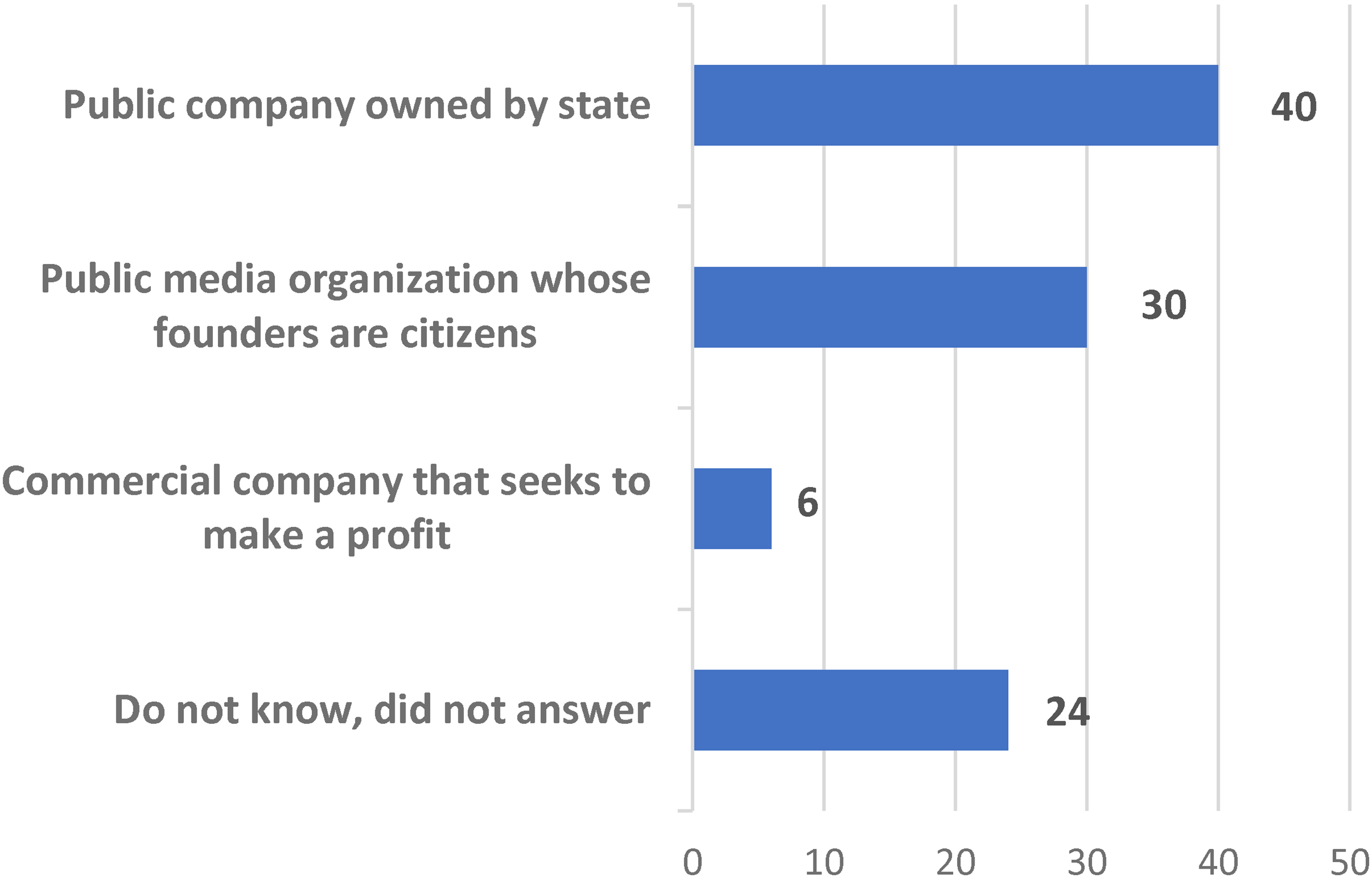
In the survey of Lithuanian residents, the question was asked: what should be the status of the LRT? Respondents had the opportunity to choose from three options: (a) a public company owned by the state (40% chose); (b) public media organization whose founders are citizens (30%); and (c) a commercial company that seeks to make a profit (6%) (21% did not know, 3% did not answer) (Figure 1).
What should be the status of the LRT? %. Source: survey data.
Such a distribution of opinions shows that there is no clear prevailing understanding among Lithuanian residents about the LRT status. Those who did not answer or do not know the answer are percentages higher among younger residents (under 30 y. o.), have lower education, and have lower income. It is an audience segment whose representatives use the PSM less, and at the same time, are less interested in the possibility of being the LRT stakeholders.
After establishing the model of the LRT council made up of representatives of public organizations, the LRT did not become an effectively functioning organization. This was largely influenced by the low funding allocated to the LRT from the state budget, as well as the delay in introducing the license fee, which was supposed to be the main source of funding for the LRT (Jastramskis 2019). In this way, the good intention of separating the LRT council from political power and giving more managerial leverage to the society was partially discredited. So, a few years later, in 2000, the law was changed again, and political authority regained their influence in forming the LRT council. It was decided to delegate to it four representatives of the President, four representatives of the Parliament (two each from the ruling coalition and the opposition), and one representative each from the Lithuanian Science Council, the Lithuanian Education Council, the Lithuanian Bishops’ Conference, and the Association of Art Creators (Republic of Lithuania Law on the Provision of Information to the Public, 2000). A balance of political actors delegating members to the LRT council with several representatives of public organizations was found.
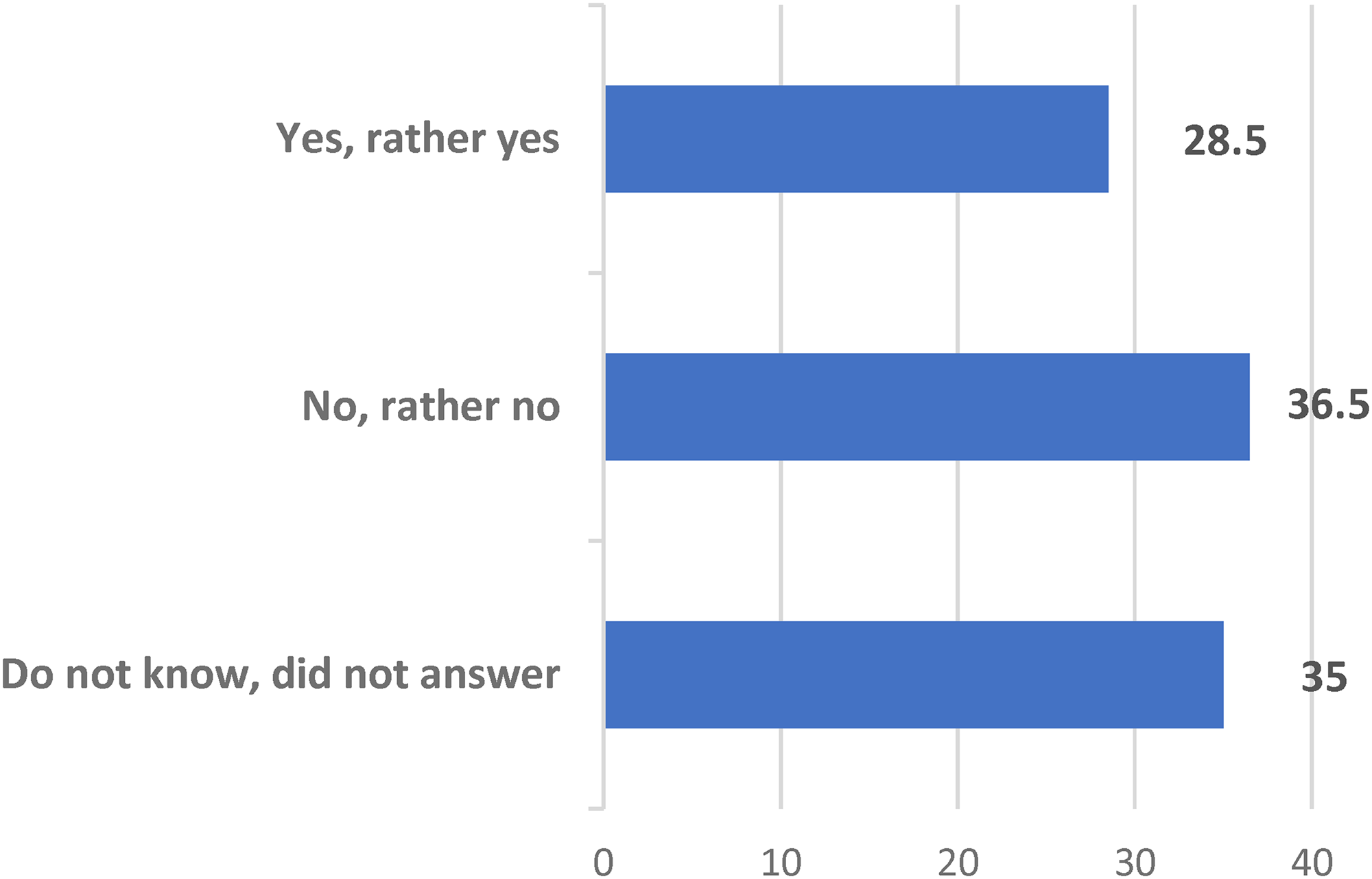
When investigating the citizens’ attitudes towards the structure of the LRT council, the respondents were asked two questions. (a) Should state institutions (president and parliament) delegate their representatives to the LRT Council, which appoints the LRT General Director? (yes/rather yes answered 28.5%, no/rather not—36.5%, did not know 32%, did not answer 3%) (Figure 2). (b) How many representatives of state institutions (president and parliament) should work in the LRT council? Only those respondents who agreed that state institutions should delegate their representatives to the LRT Council (N = 286) answered this question. These survey participants chose from five options: all councilors (12%), two-thirds of councilors (11%), half of councilors (19%), one-third of councilors (19%), and less than one-third of councilors (21%); 17% did not know, and 1% of respondents did not answer. The answer options were proposed considering the current, former, or previously proposed proportions of the delegation of political authorities in the LRT Council (Jastramskis 2019).
Should state institutions delegate their representatives to the LRT council, which appoints the LRT general director? %. Source: survey data.
What should be the main method of LRT financing? %. Source: survey data.
The survey results show that the current situation (where 2/3 of the LRT council consists of representatives delegated by political authority) is supported by a tiny part of the society—only 7% of all respondents. Another 21% of the people would agree that the LRT council should have no more than half of the members delegated by politicians. This means that the LRT management structure formed by political authority does not correspond to the citizens’ opinion.
In Lithuania, the citizens’ direct involvement in LRT financing was only equivalent to a legal declaration. After adopting of the Law on the Provision of Information to the Public in 1996, it was planned to finance the LRT not only from the state budget and commercial income but also from the license fee. However, the provision of the law regarding the introduction of the license fee was not implemented, and in 2005 it was completely removed from the law. The decision not to introduce a license fee was determined by the reasoning that in an economically weak state, another tax would be too much of a burden for people. However, the political reality showed that it was more acceptable for the governing coalitions of the Parliament (and governments) to maintain financial influence on the LRT, reserving the right to annually determine the allocated financing of the LRT from the state budget without clear criteria (Jastramskis 2019).
Since 2015, the LRT financing has been linked to the amounts of income and excise taxes collected in the state and municipal budgets. At the same time, the LRT was eliminated from the advertising market, leaving the possibility to announce sponsorship messages for cultural and sports events (Republic of Lithuania Law on the Lithuanian National Radio and Television, 2020). Such a financing model guaranteed the growth of the LRT's income (EBU 2019) and more opportunities to create the content needed by the public without experiencing pressure from commercial interests to participate in the advertising market. However, Lithuanian society remained among the minority societies of EU (and EBU) countries whose citizens were not given the opportunity to finance PSM directly from their income and, at the same time, bring its real status closer to that of a public broadcaster.
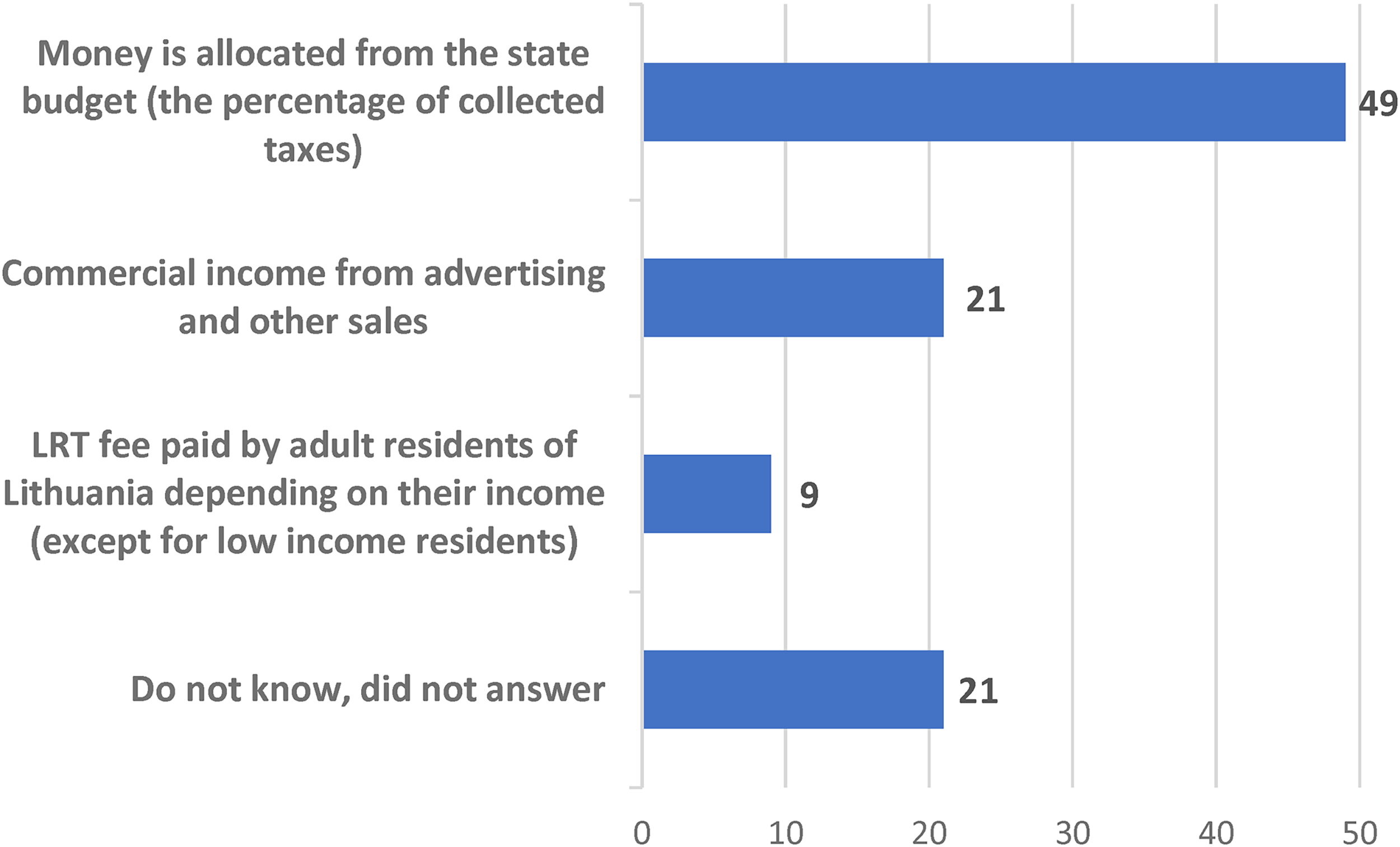
The survey data (Figure 3) shows that almost every second Lithuanian resident (49%) agrees with the statement that the main way of financing the LRT should be money allocated from the state budget, calculated as a percentage of collected taxes. 21% of respondents believe that the LRT's main funding source should be commercial income from advertising and other sales. Only 9% of Lithuanian residents would agree to give part of their income to the LRT budget when the main way of financing the LRT should be the LRT tax, which is paid by adult Lithuanian residents, depending on their income (except residents with low incomes). Another fifth (20%) did not know at all how the LRT should be financed. Thus, Lithuanian society's intentions to support the LRT's financial viability and provide this institution with more direct public support are minimal. In this case, the political decision to finance the LRT from the state and municipal budgets partially meet the public's expectations.
However, 4 years later, the exact provision regarding the accountability of the LRT to the society was eliminated from the law, and the wording was left that the LRT council publishes an annual activity report in the press every year. The obligation of the LRT to report to the parliament has also been restored: once a year, the chairman of the LRT council reports on the activities of LRT at the plenary session of the parliament (Republic of Lithuania Law on the Lithuanian National Radio and Television, 2000). The law additionally specified the time of publication and submission of the annual report of the LRT council to the parliament (by 1 July every year) and the obligation to submit more detailed financial (income and expenditure) data (Republic of Lithuania Law on the Lithuanian National Radio and Television, 2005, 2020). Although the current legal acts do not directly specify the LRT's accountability to the society when the LRT publishes its activity and financial reports annually, it reports to the society in the following way: it provides detailed information about the programs being developed, audience reach indicators and public survey data about the content of the LRT channels and the organization's activities (LRT 2022). The laws provide the LRT's responsibility for published content and legitimize four controlling officials and institutions: (a) LRT ethics controller, (b) Journalists’ ethics inspector, (c) Public Information Ethics Commission, and (d) Lithuanian National Radio and Television Commission (Republic of Lithuania Law on the Lithuanian National Radio and Television, 2020; Republic of Lithuania Law on the Provision of Information to the Public, 2022). Interested persons can submit complaints to these regulators regarding the content published by the LRT. On its initiative, the LRT has established another, the LRT Ethics Commission, which acts as an advisory body to the LRT Ethics Controller. In this way, the LRT is accountable to the audience for the content it publishes, directly and indirectly, through external regulators (who also oversee private media).
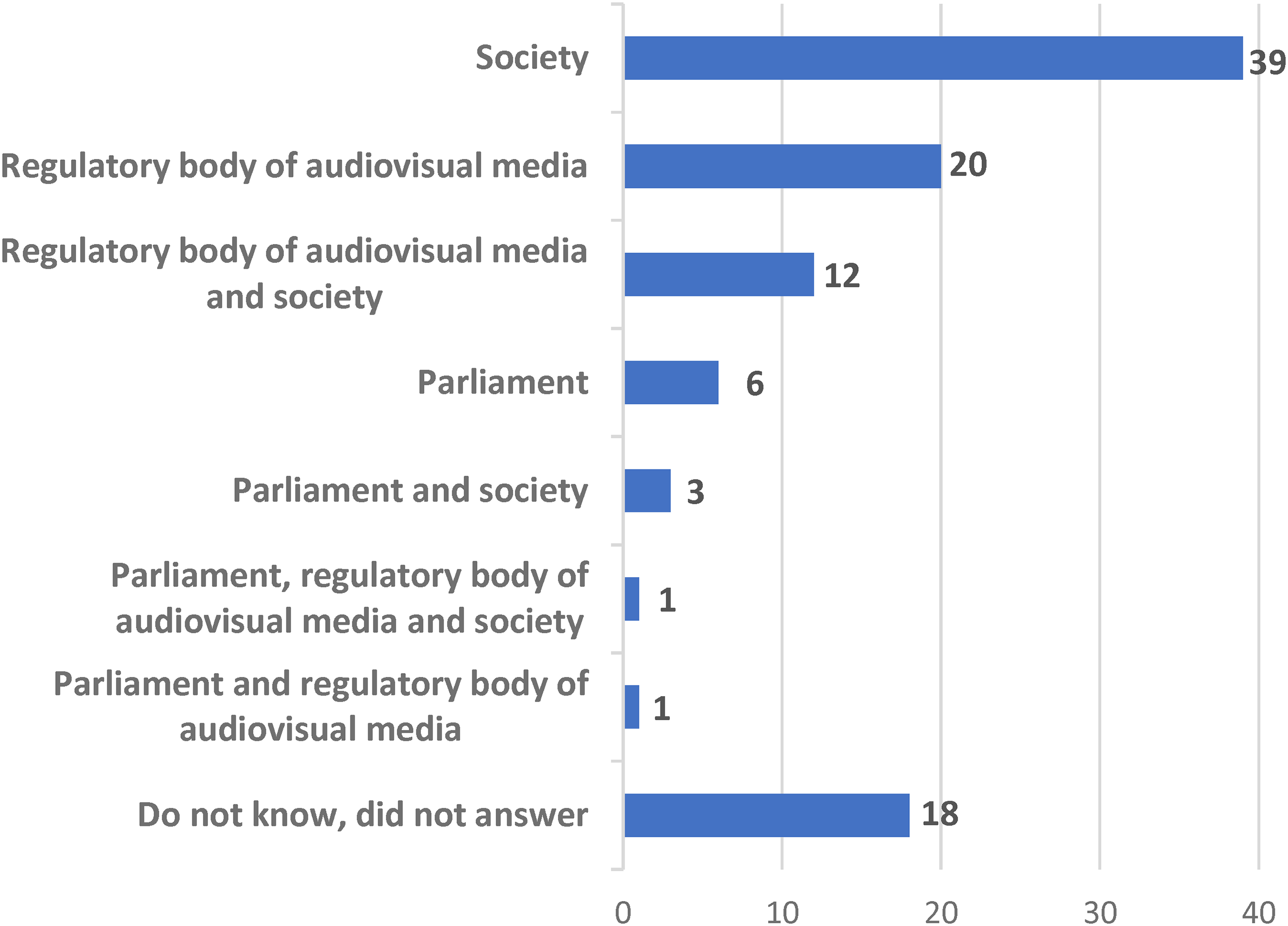
The survey results show that most respondents agree that the LRT should be accountable to the society (39%); 20% agreed that LRT should be accountable to the institution that supervises the audiovisual media, and 6%—to the parliament. Aggregated data, obtained by calculating the percentages that support the accountability of the LRT to the two or three mentioned entities, show that 55% support the accountability of the LRT to the society, 34% to the audiovisual media regulator, and 11% to the parliament (Figure 4). This means that a more significant part of society prioritizes itself regarding LRT accountability. Only a tiny amount of the public supports what is most clearly stated in the law—that the LRT is accountable to the parliament.
To whom should the LRT be accountable? %. Source: survey data.
Since the concept of accountability is complex and society representatives can treat it differently, the results of our quantitative survey have certain limitations. Therefore, when continuing research in this area in the future, it is recommended to use qualitative research methods as well.
Discussion and conclusions
The study results show that Lithuanian citizens have different attitudes towards regulating PSM's operating conditions (Table 1). It is also important to mention that a considerable part of the Lithuanian society (from 18 to 35%) needs to become more familiar with the essential elements of the conditions of PSM activity and does not have its own opinion about them. This segment of society (younger, less educated, and less paid) is, on average, less interested in PSM's content, and this correlates with less interest in PSM's interaction with society. In addition, since the survey data show that 60% of the population considers the LRT channels as important sources of information, the Lithuanian PSM still has considerable reserves to expand its audience and involve citizens in its field of interest. Moreover, the share of residents who did not have an opinion on the structural conditions of PSM provides implications for future research, raising more detailed questions about their motives, possibly related to the complexity of the questions presented or their intentions to delegate solutions to elected politicians, experts, or non-governmental organizations.
LRT operating conditions and public assessments.
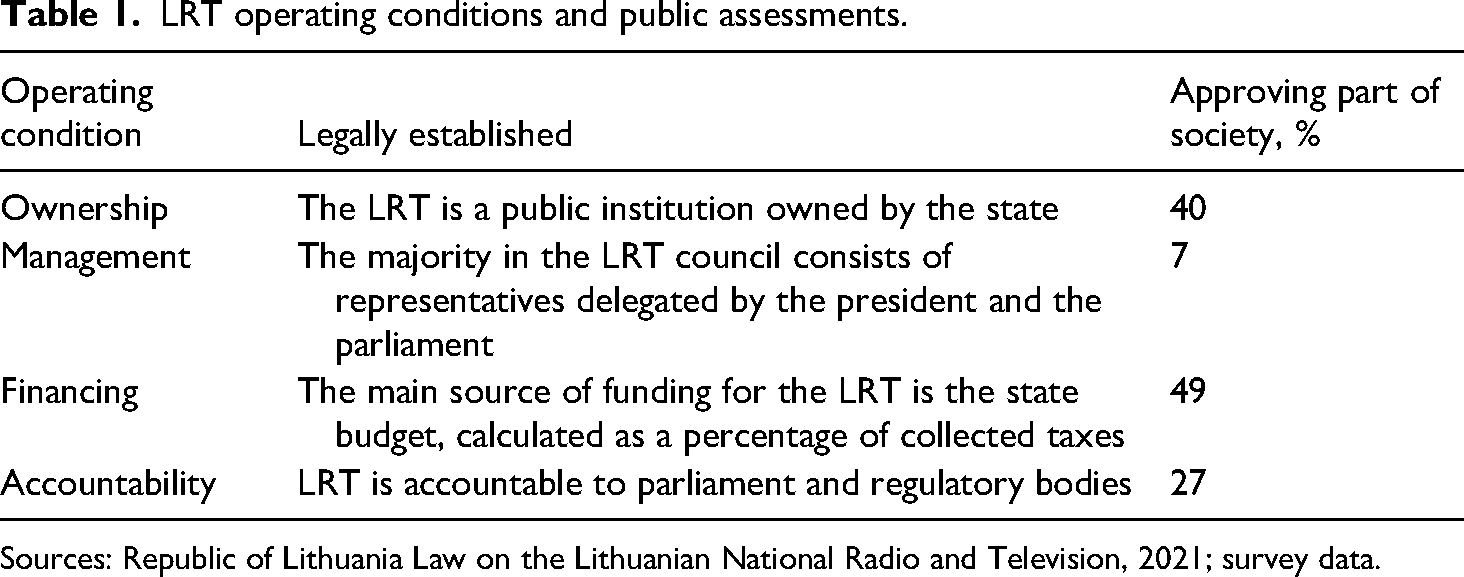
Sources: Republic of Lithuania Law on the Lithuanian National Radio and Television, 2021; survey data.
Only one operational condition (the LRT funding from the state budget) was approved by almost half of the Lithuanian population. At the same time, it shows that most citizens do not feel obligated to finance the LRT from their income directly. This corresponds to the political decision not to introduce a license fee.
On the other hand, according to Bonini and Pais (2017), a considerable number of citizens would agree to pay a higher license fee if they could decide how it would be used. Therefore, there is a need to foster a connection between PSM and citizens to motivate them to finance their own PSM. Especially since the LRT, as a non-profit public institution, can collect support from the audience in addition to the funding from taxes collected into the state budget. In this case, there would be no need for any political decisions. As shown by the examples of Germany and Finland changing the PSM funding model (Herzog and Karppinen 2014), civil society has no influence. And if the PSM (the LRT) is a democratic project and civil society wants to support it financially, it can be done independently, without the blessing of political authority. However, the PSM, in this case, must develop a clear strategic initiative motivating citizens to provide financial support directly, the use of which coincides with the targeted will of citizens to receive the content of appropriate quality from the PSM.
Although a more significant part of Lithuanian society would not pretend to be the founders of LRT, almost a third of those who think that citizens should establish public media themselves and be its shareholders show a certain critical mass. Especially knowing that in Switzerland, where every citizen has the right to become a founder of a public media association, only about 0.25% of citizens exercise this right (SRG SSR 2022; Swiss Confederation Federal Statistical Office 2021). The conjunction “citizen and PSM shareholder” quite accurately represents the PSM as a civil society project discussed by Donders (2021) and Lowe's (2010) legitimization of PSM in society. It is also vital to determine what functions should be performed by citizen shareholders in the PSM structure. The organizational reform of the Swiss public broadcaster SRG SSR showed that it is more appropriate to give citizens an additional voice when discussing programs than to delegate the appointments of regional company managers (Puppis and Künzler 2011).
Although in the typology of Dragomir and Söderström (2021), the LRT management (and council delegation principles) is evaluated as ensuring the editorial autonomy of the LRT, most of Lithuanian society does not agree that the majority of the LRT council should consist of representatives delegated by political authority. Since 2000 1/3 of the members of the LRT council represent the communities of education, science, Catholics, and artists. These are not abstract communities as described by Hartley (2002) or insufficiently institutionalized (Ploch 2017), as clearly structured public organizations delegate councilors. Therefore, expanding the representation of other structured groups of society, by reducing the number of representatives delegated by politicians in the LRT council, would help to meet not only the expectations of the public to further separate the management of the LRT from political entities, but also, according to Lowe (2010), would help to give more meaning to the social legitimacy of the PSM organization.
The results of this study show that most Lithuanian citizens are aware of the importance of the LRT's accountability to society, which is emphasized by Nissen (2016) and Just et al. (2017), but political authority avoid making accountability to society more clearly defined in legal acts. The principle of accountability to the society as a provision of the law was only valid for a few years, leaving only the requirement to make the LRT report public. The greater focus of the PSM accountability on parliamentary and regulatory control is also somewhat at odds with the EBU's declared provisions on accountability to the general public. On the other hand, the existing legal norms regulating PSM accountability do not prevent the PSM (the LRT) itself from developing accountability or even creating additional informal public accountability mechanism. This way, achieving a balance of PSM accountability between accountability to political and supervisory authorities and accountability to civil society would be possible.
Based on Carpentier's (2011) intensity continuum of citizens’ participation in decision-making, the intentions of Lithuanian citizens’ participation in decision-making regarding PSM are neither minimalist nor maximalist, rather moderate. The society would like to have more say in the management of the PSM and to see the PSM much more accountable to the society. Changing the PSM management structure would inevitably require public policy decisions. However, for the development of accountability to society, the PSM's initiatives that are compatible with the PSM as a project of liberal democracy and civil society would be sufficient.
The attitudes of citizens regarding the structural conditions of PSM partly overlap with the adopted public policy decisions. It means that partly matters, especially in the PSM funding model, where society does not need to support the public media directly. Nevertheless, considering the citizens’ attitudes, public policy decisions would have the potential to change—mostly in terms of governance and accountability. However, surveys’ results and citizens’ attitudes are only relevant for policies based on data and evidence. Moreover, when there is no political tradition to arrange public consultations on the issues regarding the PSM, citizens’ attitudes about PSM could not be an essential criterion for the political agenda that holds the key to empowering members of society to participate in the decision-making process.
