



Abstract
To what extent was Greta Thunberg a ‘polarizing figure’ on Facebook, in the period when she received the most extensive media attention? The paper analyses seven months of discussion concerning Thunberg and her message of intergenerational climate justice, using all relevant posts on public Facebook pages in Germany, Sweden, and the UK. We find that there are many similarities in the attitudes expressed and topics discussed on Facebook in the three countries; however, there are also some striking differences in the levels of polarisation. This comparative study provides evidence that the level of polarisation around these topics on Facebook is very low in Sweden and the UK, but high in Germany. In Germany, a group of political actors stand out as particularly polarising, and, in contrast to the other two countries, the topic of intergeneration justice, the core of Thunberg’s message, is almost absent from the German Facebook discourse. The study shows that Thunberg was not in general a polarising figure in the three European countries and that neither the affordances offered by the platform nor features of her person, message, or activism explain the observed polarisation around Thunberg on Facebook.
Introduction
In 2019, Greta Thunberg was covered extensively by the media. She was an inspiration for the global youth movement #FridaysForFuture, and she received the attention of many political actors. She was invited to speak at many high-profile political events, including the World Economic Forum and at the UN. One could say that these different actors used Thunberg for their own discursive purposes: that is, the politicians used her to show that they are really concerned about climate change and the media used the fascination with her unusual style of engagement as a point in their stories. Moreover, civil society actors used her as a source of inspiration and recruitment to activism. But not everyone was positive towards Thunberg and her message, and she received several very harsh remarks both related to her person and her message on climate change. For example, a Fox News commentator called her a ‘mentally ill Swedish child’ (Gabbatt, 2019), and personal attacks were frequent on social media (Park, Liu, and Kaye 2021). Such personal attacks were, in turn, criticised by different actors (Author, 2021). This suggests that, perhaps, Greta Thunberg was given the role of a ‘polarizing figure’, a personality around which public debates polarise (Slater and Arugay 2018).
Facebook is an important platform for discourse on political issues, including climate change, and in this study, we explore how Thunberg and her message on climate change were represented and discussed on public Facebook pages during the seven months she received the most media attention in 2019. More specifically, we compare how media, political actors, and civic actors in three European countries – Sweden, Germany, and the UK – relate to Greta Thunberg’s activities and messages in their postings to public Facebook pages from March through September 2019. The aim of the study is to explore how debates about Greta Thunberg in the three countries differ and the extent to which the debates are polarised. As most studies of polarisation on social media have used data from Twitter (Kubin and von Sikorski, 2021), our study contributes to the literature on polarisation on social media by studying discourses on Facebook.
The basis for Thunberg’s fame was, of course, her strong engagement in preventing harmful climate change. Presenting herself as a representative of future generations, she frames climate protection as an issue of intergenerational justice (see Howart, 2011). Thunberg’s message in her speeches (Thunberg, 2019) is that 1) we are facing climate change that will have catastrophic consequences for future generations; 2) future generations are entitled to a future without these harms; and 3) the generations now in charge have an obligation to secure these rights. The slogans in the school strikes echo this message. We will investigate the extent to which this topic is present in the posts about Thunberg to find out whether the debate is about her message or other aspects such as those concerning her person.
Overarching question
Although disagreement is recognised as an important feature of democratic processes, a high degree of polarisation is generally seen as harmful to democracy. In the case of discourses around Greta Thunberg on Facebook: is it a case of disagreement about an issue or an indication of polarisation online?
Conceptualising discursive polarisation on Facebook
Although polarisation is a buzzword in public and academic debates, the concept is often not clearly defined, nor do researchers always agree on a definition. However, two forms of political polarisation are clearly identified in the literature (Kubin and Sikorski, 2021): ideological polarisation, that is, increased divergence of political attitudes and beliefs in the population (Dalton, 1987), and affective polarisation, which refers to an increased dislike for the other side (Iyengar, Sood, and Lelkes, 2012). Both ideological polarisation and affective polarisation are phenomena that manifest themselves in public discourses on political issues, and in this paper, we study the extent to which discourses on Facebook show evidence of ideological and affective polarisation. In line with this, we adopt as our working characterisation of polarisation:
A central question in the literature on political polarisation on social media is what polarising effects social media platforms have on political discourses: are social media platforms polarising and, if so, what are the mechanisms that drive the polarisation of political discourses on these platforms? The jury is still out on this question, and there are different suggestions of mechanisms in the literature (Barberá 2020).
About ideological polarisation, Sunstein (2017) argued that polarisation happens through echo-chambers where people get their opinions reinforced, making them less tolerant of other points of view. Based on research in social psychology that explains polarisation as the result of radicalisation of opinions through discussions with people one agrees with, Sunstein looked for ways in which online technologies bring like-minded people together to explain observed polarisation on social media, hence his focus on ‘echo chambers’. However, while not falsifying the idea that many tend to interact more with like-minded people, research (Flaxman et al. 2016, Bakshy et al. 2015) has questioned on empirical grounds the assumption that filter bubbles and echo chambers dominate people’s information environments to the extent that Sunstein and others assumed.
Moreover, experimental research (Lodge and Taber, 2013, Karlsen et al. 2017) has shown that people become more ideologically polarised when confronted with political views they disagree with. This polarising consequence of interaction with adversaries is also found in studies of social media (Bail et al. 2018). Brüggemann et al. (2020) have coined this process ‘mutual group polarization’ in their exploration of debates about climate change in the English-speaking blogosphere. Fairly, extreme opinions and statements are visible online and can lead to extreme reactions. Hence, social media not only plays a potentially polarising role by providing echo chambers, as Sunstein and others suggest, but it also makes it easy to interact with people of opposing political views. Furthermore, polarisation through ‘trench warfare’ (Karlsen et al. 2017) is not a consistent effect of social media, as studies have also found that interacting on social media with people with different opinions can in some cases be de-polarising (Kim 2015). Yarchi et al. (2020) compared the level of ideological and affective polarisation in debates on one specific issue across different platforms (public Facebook pages, Twitter, WhatsApp) and found that discussion of the issue on Facebook was less polarised than parallel debates on the other platforms.
Prior research on polarisation in social media around climate change and studies of social media debates on Greta Thunberg
Most studies of polarisation in social media debates on climate change focus on the conflict between those that accept and those that deny anthropogenic climate change (Tandoc and Eng, 2017). Studies have shown that the blogosphere is an arena for a highly polarised discussion on this issue (Author, 2015; Brüggemann et al. 2020; van Eck 2021). Twitter networks related to climate change are also found to be characterised by homophily; yet there are also mixed-attitude communities that tend to host fewer extreme views (Williams et al. 2015; Tyagi et al. 2020). An exception is a recent study by Sanford et al. (2021), which shows that going beyond the debates between deniers and science, polarised climate-related debates on Twitter may be shifting towards fighting over certain types of climate-friendly behaviour, such as plant-based nutrition (Sanford et al. 2021).
We can expect this debate to be polarised by drawing on a few studies that have already explored discussions around Greta Thunberg on other media platforms. A recent study on the reception of Thunberg in British and U.S. media has found that her age, gender, and diagnosis have been described as sources of strength in the portrayal of her as the icon for the climate change movement (Ryals and Mazzarella 2021); however, it also shows that the coverage of Thunberg and the climate movement in some German mainstream media is characterised by derogatory ageist language that is in some cases linked to sceptical views on climate change (Bergmann and Ossewarde 2020). Studies of YouTube comments on footage with Thunberg find that almost half of the comments contain uncivil language, including many derogatory comments on her age, gender, or autism (Park, Liu, and Kaye 2021). Jung et al. (2020) found through sentiment analysis of 1.7 million tweets, including posts by political leaders that she was the subject of both positive and negative comments on this platform, but they also see evidence of political polarisation in tweets about Thunberg. In an in-depth analysis of 993 tweets related to the school strikes, Boulianne, Lalanchette, and Ilkiw (2020) found tweets that expressed support for the school strikes as well as tweets that were critical of the young activist’s personal features.
Research questions
To explore the debate about Greta Thunberg on Facebook and identify its degree of polarisation, we explore three research questions. RQ1
RQ2. To what extent does contestation focus on Greta Thunberg’s message on intergenerational justice?
RQ3
Hypotheses
Based on the research reviewed above, we expect to find both ideological and affective polarisation in the Facebook discourses around Greta Thunberg. We therefore hypothesise: H1. A high percentage of the posts about Greta Thunberg on Facebook are critical of her personal features
H2. Posts by political actors and civil society actors are predominantly either critical or supportive, with few neutral posts
H3. Posts on Facebook that relate to Thunberg’s message on climate change are predominantly either critical or supportive, with few neutral posts.
H4. Critical posts and supportive posts attract more user engagement (likes, shares and comments) than do neutral posts
Data and methods
The data made available by Facebook are the texts of the posts, together with meta-data about each post, including information about the accounts, and the number of likes, shares, and comments on each post Due to Facebook privacy policies, the contents of the comments to posts are not made available to researchers.
We have collected all posts on public Facebook pages that mention ‘Greta Thunberg’, published by media, political and civic actors, in Germany, the UK, and Sweden, from March through to September 2019. From these posts, we have drawn representative samples and manually coded what aspects related to Greta Thunberg the posts focus on (her message, her personal features, her role as an activist, her supporters, her media representation, or her critics), and what attitudes to Thunberg the posts express (supportive, neutral, or critical). Using the corpus of all posts, we also chart the overall distributions of posts by the different actors in the three countries and the level of attention these posts receive from other Facebook users.
Data collection and sampling:
We downloaded all posts mentioning ‘Greta Thunberg’ in German, Swedish and English from March through September 2019 via the API of the data provider Twingly twingly.se)
Posts written in German marked with the nationality ‘Germany’ were selected, thus excluding posts from, e.g., Austria. Posts written in English marked with the nationality ‘United Kingdom’ were selected, thus excluding posts from, e.g., the US and Australia. Information about nationality was present in about 90% of the posts.
From these three sets of posts, we selected those posted by media actors, political actors, and civil society actors. The numbers of posts harvested, and of coded posts appear in the Appendix. Our classification of the actors was based on the self-labelling found on the Facebook account. When manually coding a sample of the posts we found that, in almost all cases, the labelling agreed with our intuitions.
We then sampled posts from the three countries for manual coding. The sampling was done among posts that had at least 5 engagements in the form of reactions, shares, or comments. We sampled randomly from posts by each actor within each of the 7 months in the period we studied. Correlation analysis of the numbers of posts per month, in the full corpus and the sample, showed that the samples covered the population well with respect to the temporal dimension.
We found that, comparing the complete national corpuses, the number of posts by political actors in the UK was relatively low, while the number of posts by German political actors was relatively high compared to the other countries. Also, we found that, among the 1437 unique German accounts, 102 belonged to some chapter of the right-wing party Alternative für Deutschland (AfD). This is reflected in our sample, where 170 (of 286, 60%) of the posts by German political actors were posted by accounts describing themselves as belonging to AfD or owned by a spokesperson for the AfD.
We found that, with one exception, all top 5 accounts in each country were represented in the sample. The exception was one civil society actor in Sweden with 127 climate sceptical and critical posts of Thunberg. This omission raises the question of the representativity of the sample. One way to test this is to compare the properties of the sample with the properties of the whole corpus. We checked the prevalence of the terms, ‘justice’, ‘future’ and ‘generation’, and their German and Swedish equivalents in the sampled (coded) posts and in all posts in the corpus (see Table 2). When comparing the frequency of occurrences in the sample and the whole set of posts we received the results shown in Table 1 below.
Percentages of posts with at least one occurrence of the three terms ‘justice’, ‘future’, or ‘generation’ (or German or Swedish equivalents) in all posts and coded posts, organised by actor type.
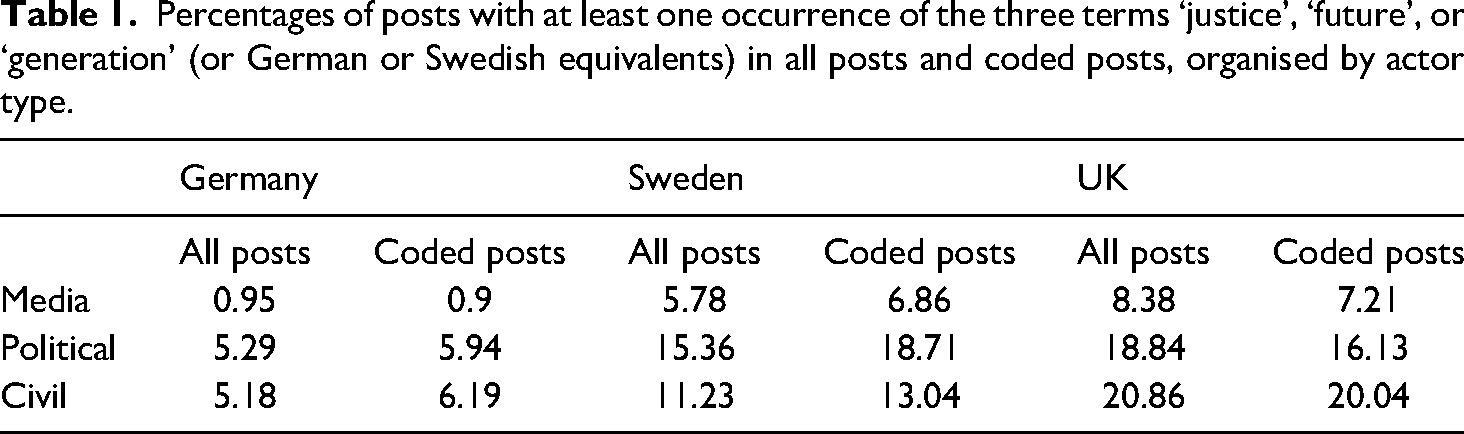
Terms used to measure the extent to which the topic of intergenerational justice was discussed in the Facebook posts by the different actors in Germany, Sweden, and the UK.

There is a good match between the distributions of the terms in the three data sets, and the test provides evidence in favour of the claim that the samples are representative.
The coding. The sampled posts were then coded manually along two dimensions.
Based on our knowledge of the discussion on Thunberg in both mainstream and social media we decided to include in our coding scheme six ‘aspects’ of the discourse on Greta Thunberg that we identified as prevalent in an exploratory initial analysis of a subsample:
Thunberg’s message on climate change in her own words (e.g. quoting her speeches) aspects of her person or her personal life (e.g. her age or her diagnosis) her role as an activist (e.g. as an inspiration for demonstrations) how she is portrayed by the media her followers and supporters (e.g. her family, school strikers) her critics (e.g. their agenda). Some short posts could not be coded for any aspect. We also coded each post as expressing one of three attitudes: 1) neutral, 2) supportive, 3) critical. For a few very short posts, it was not possible to determine the attitude.
The coding was done by two coders based on a coding scheme developed in three rounds of discussion with the coders and the authors (Kopiez, 2021). The intercoder reliability test was done by coding a selection of 100 English posts, since neither coder was fluent in German or Swedish. The inter-coder reliability was improved through three rounds of discussion and identification of discrepancies. The main challenge was the classification of posts that mentioned Thunberg’s followers’ admiration for her character as either being about ‘Thunberg as a person’ or ‘Thunberg’s followers’. There was very little disagreement on the coding of attitudes. The inter-coder agreement in the third round was 0.75 (Cohen’s kappa) and a percentage mean of agreement of 77. This is considered an acceptable level of agreement (Wirtz and Caspar, 2002).
We used the chi-square test of association between two categorical variables to establish the significance of associations between attitudes and aspects, between actors and attitudes, and between actors and aspects.
Results
Using data about all the posts in our Thunberg-corpus, we first chart the distribution of posts over the period, in Figure 1, below. Looking at the distribution over time, we again see that there are significant differences between the countries regarding the level of activity on posting about ‘Greta Thunberg’. This activity was much higher on Facebook in Germany than in Sweden or the UK, and in the UK a smaller proportion of the Facebook population posted about Thunberg than in the other two countries. The patterns of peaks in activity are, however, quite similar: in April, when Thunberg was the leading figure in the second wave of international school strikes, and in September, when she sailed to New York and spoke at the UN.
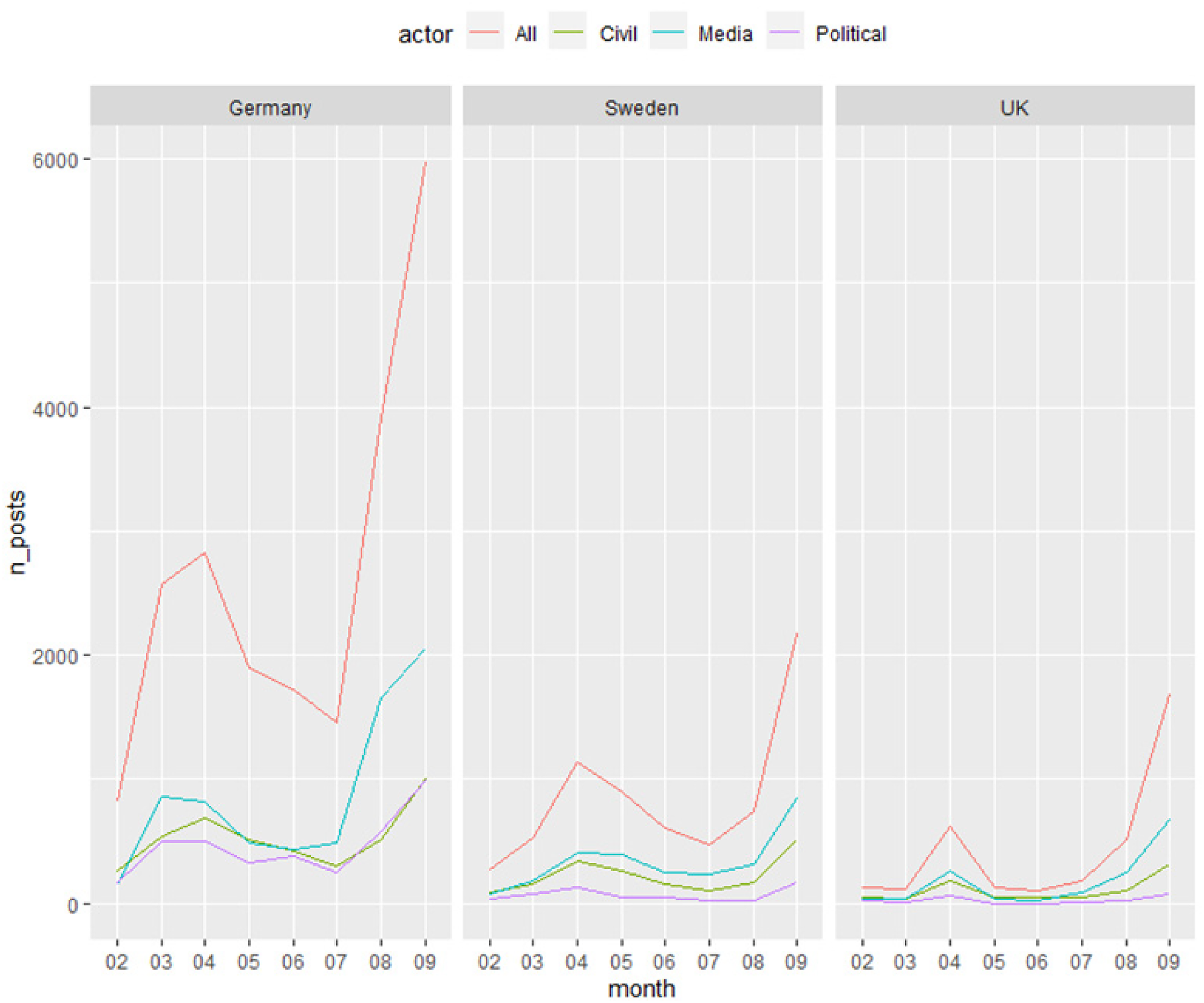
The numbers of public Facebook posts mentioning ‘Greta Thunberg’ published by all accounts, media actors, political actors, and civil society actors, in Germany, Sweden, and the UK.
Next, in Figure 2 below, we chart how much attention over time the posts received from other Facebook users. We see that in contrast to the high level of publishing activity among German actors that we saw in Figure 1, the average level of attention the posts receive is modest. In particular, the average number of reactions to German media posts is low, compared to the other two countries. Second, in contrast to the other countries, the attention to the Swedish media posts was higher in the first part of the period, perhaps reflecting the fact that Thunberg was a national celebrity in Sweden before she became equally famous internationally. Third, the peak in reactions to posts in the UK in March stands out. Manual inspection of the posts showed that the attention was mainly related to posts about the nomination of Thunberg to the Nobel Peace Prize, and posts about her role as inspiration for the school strikes.
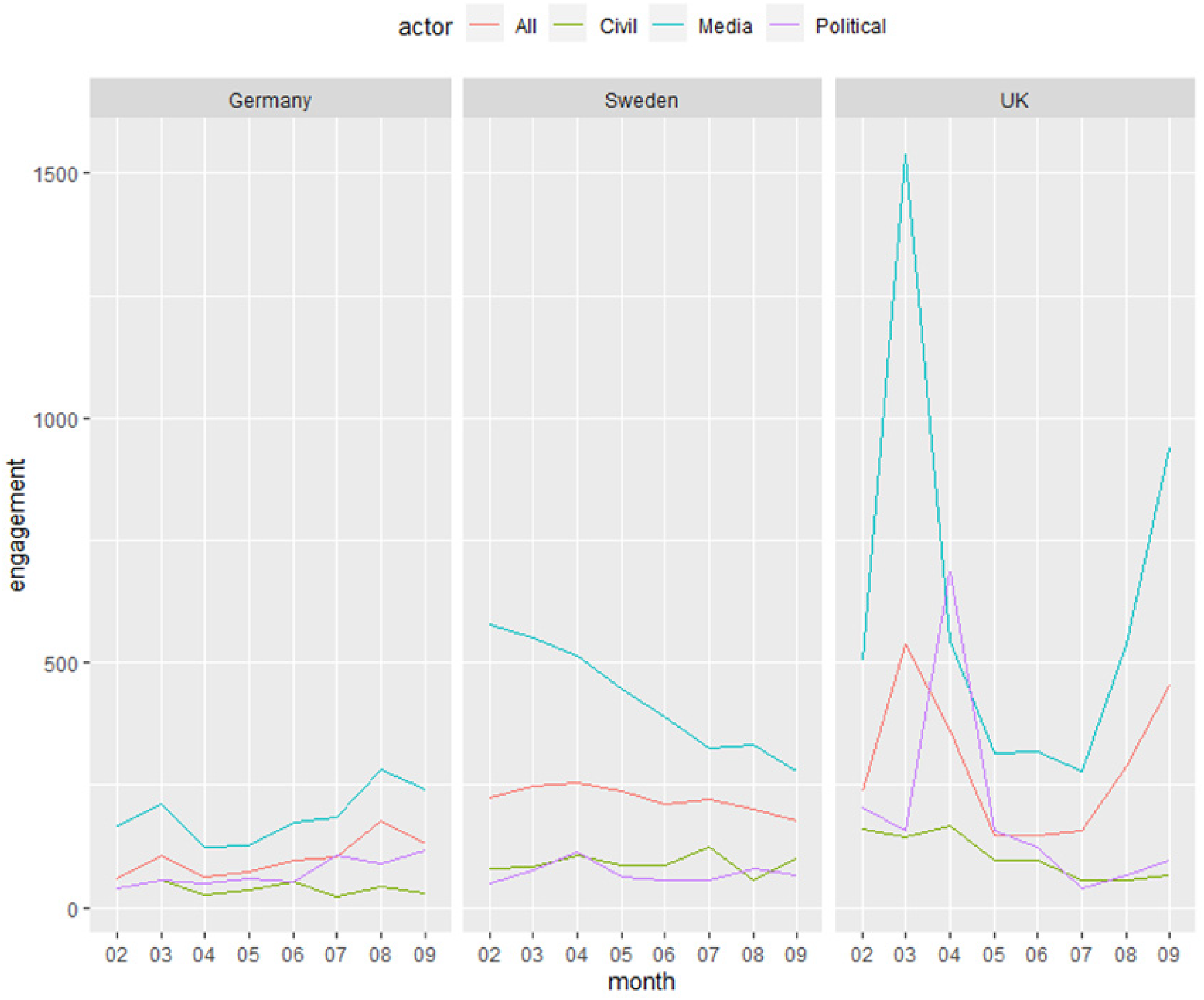
The average number of actions of attention (reactions, shares, comments) received by posts on all pages, that is, the pages of civil society actors, media actors, and political actors in Germany, Sweden, and the UK.
Results from the manual coding
We now turn to the results of the coding of the sampled posts. As mentioned above, we manually coded each post according to what aspect of Greta Thunberg’s role the post focused on.
Topics of attention
Our first hypothesis was that a large proportion of the posts that were critical of Thunberg would be concerned with her personal features. In Figure 3 below, we depict the distribution of attitudes over aspects in the three countries.
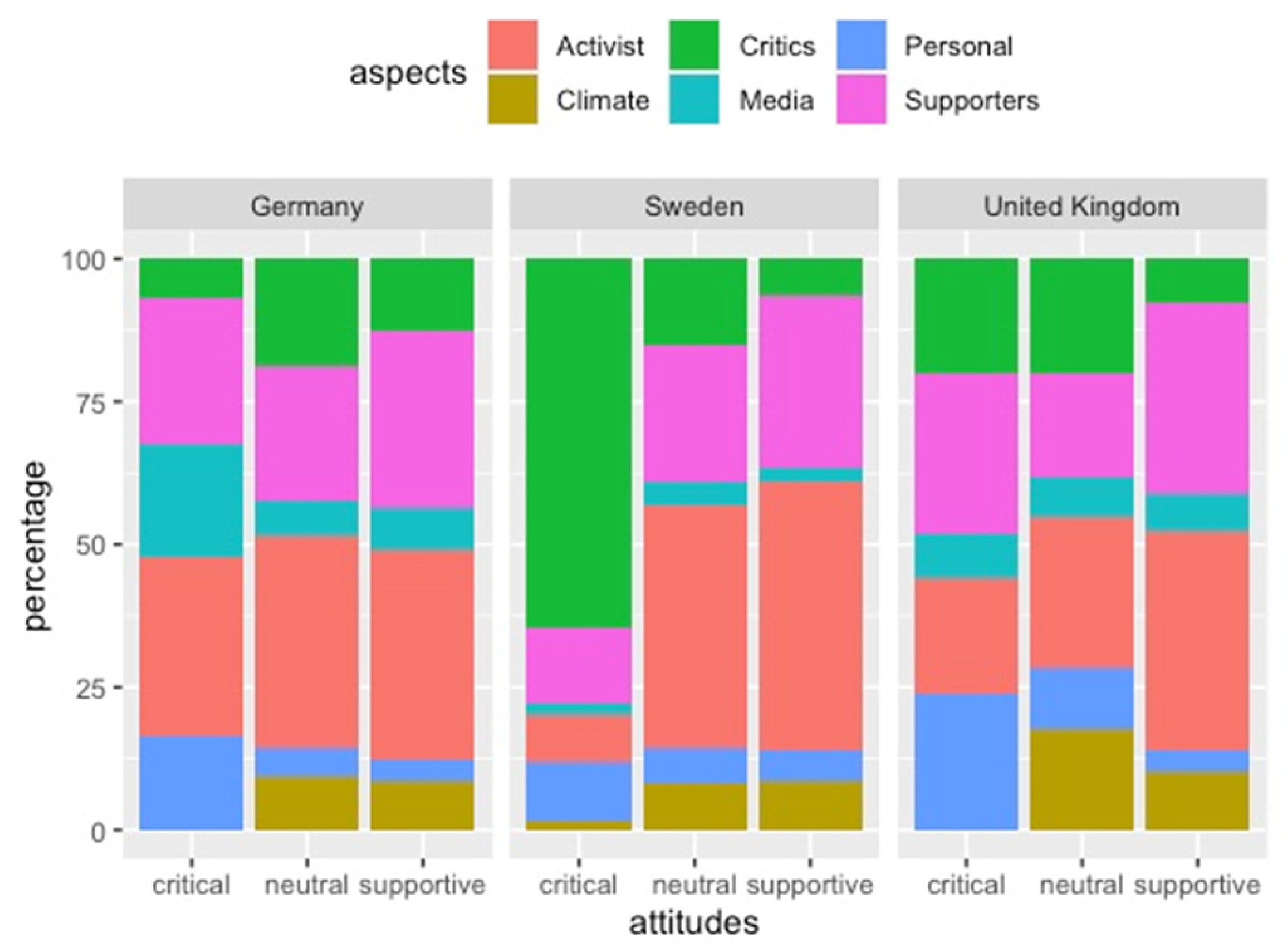
The distribution of attitudes over aspects across countries and actors. Chi-square tests showed that there is a significant relation between actors and aspects in all countries.
Figure 3 shows the percentages of, respectively, critical, neutral, and supportive posts that are discussing each of the six aspects we have coded for. We see that, in Germany, 16% of the critical posts were concerned with Thunberg’s personal features. However, this amounts to only 3.8% of all German posts. The corresponding numbers for Sweden are that 10.7% (of critical posts) and 1% (of all posts) commented on her personal features. For the UK the numbers are 24% (of critical posts) and 0.6% (of all posts). While there are more critical posts of this kind in Germany, we conclude that, overall, only a small proportion of posts about Thunberg express criticism of her personal features, contradicting our first hypothesis. Also, only in Sweden did we find a few posts that critically comment on a quote from Thunberg about the climate crisis. We discuss the role the topic of climate change play in the posts below.
Attitudes and actor types
Our second hypothesis was that posts by political actors and civil society actors are predominantly either critical or supportive, with few neutral posts. To evaluate this hypothesis, we chart (in Figure 4 below) the distribution of critical, neutral, and supportive attitudes over the three actor types.
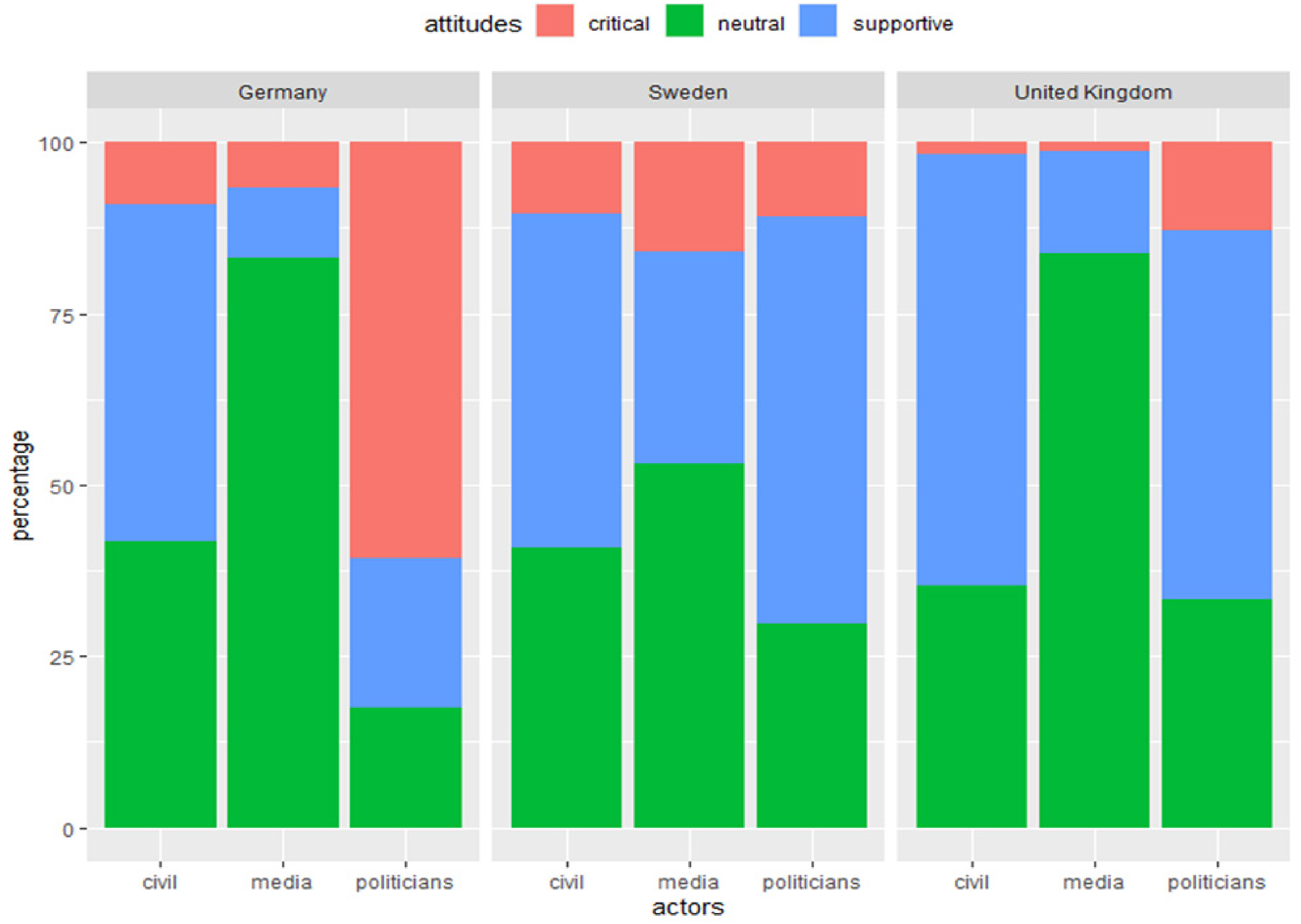
Percentages of neutral, supportive, and critical attitudes expressed in coded posts published by media actors, political actors, and civil society actors in Germany, Sweden, and the UK. Chi-square tests showed that there is a significant relation between actors and attitudes in all countries.
With the political and civil society actors in the UK, the hypothesis is clearly not supported: there are large percentages of neutral posts, and there are very few critical posts. The picture is similar with the Swedish actors, as the proportions of neutral posts are substantial for both actors and the percentages of critical posts are low. We note that the Swedish media are less neutral than the media in the other countries, probably reflecting Thunberg’s special status in her home country. The attitudes among civil society actors in Germany show distributions similar to those of civil society actors in Sweden and the UK. The distribution of attitudes over posts by German political actors shows however clear signs of ideological polarisation, with more than 80% of the posts either critical or supportive. Also, comparing the attitude profiles of German political and German civil society actors suggest a polarised situation. Hence, hypothesis H2 finds support with respect to the German Facebook discourse.
Analysing the language used in the critical and supportive posts by political actors in Germany, we also found evidence of affective polarisation. Based on an automated analysis1 of the most salient (key) terms used in the critical posts by German political actors, we found that 7 out of the 30 combinations of adjectives and nouns with the highest key-ness score were strongly dismissive. Among the 30 most salient expressions, we found:
‘hysterishes kind’ (hysterical child) ‘religiöser fahrwasser’ (religious waters) ‘völliger unsinn’ (complete nonsense) ‘globale Medienspektakel’ (global media show) ‘politisches Kindesmissbrauch’ (political child abuse) ‘rein speculation’ (pure speculation) ‘kindisch modell’ (childish model)
By manually inspecting the 250 most frequently used adjectives in these critical, political posts we identified 25 words that we considered to be used dismissively.2 It turned out that only 33 critical political posts (out of 170) contained at least one of these adjectives. Hence, not all posts showed clear signs of being affectively polarised.
A similar exercise with the supportive, political posts in Germany did not provide evidence of a polarised language. In fact, we found only 8 German, political posts that were at the same time supportive of Thunberg and critical of her critics (i.e. engaging critically with the aspect ‘Her critics’). In one of these posts the critics are called ‘pöbel’ (mob), while the other posts contain critical but not clearly dismissive language. There is thus evidence of affective polarisation in the posting of German political actors, but scant evidence of this in the supportive, political posts.
The role of the topic of climate change
Assuming polarisation, our third hypothesis was: H3. Posts on Facebook that relate to Thunberg’s message on climate change are predominantly either critical or supportive, with few neutral posts.
We saw in Figure 3 above that, in general, Thunberg’s own statements about the climate crisis were cited quite rarely in supportive posts and almost never in critical posts in any of the countries. In Figure 5 below, we chart which aspect of the Thunberg discourse each of the actors engaged with in their posts.
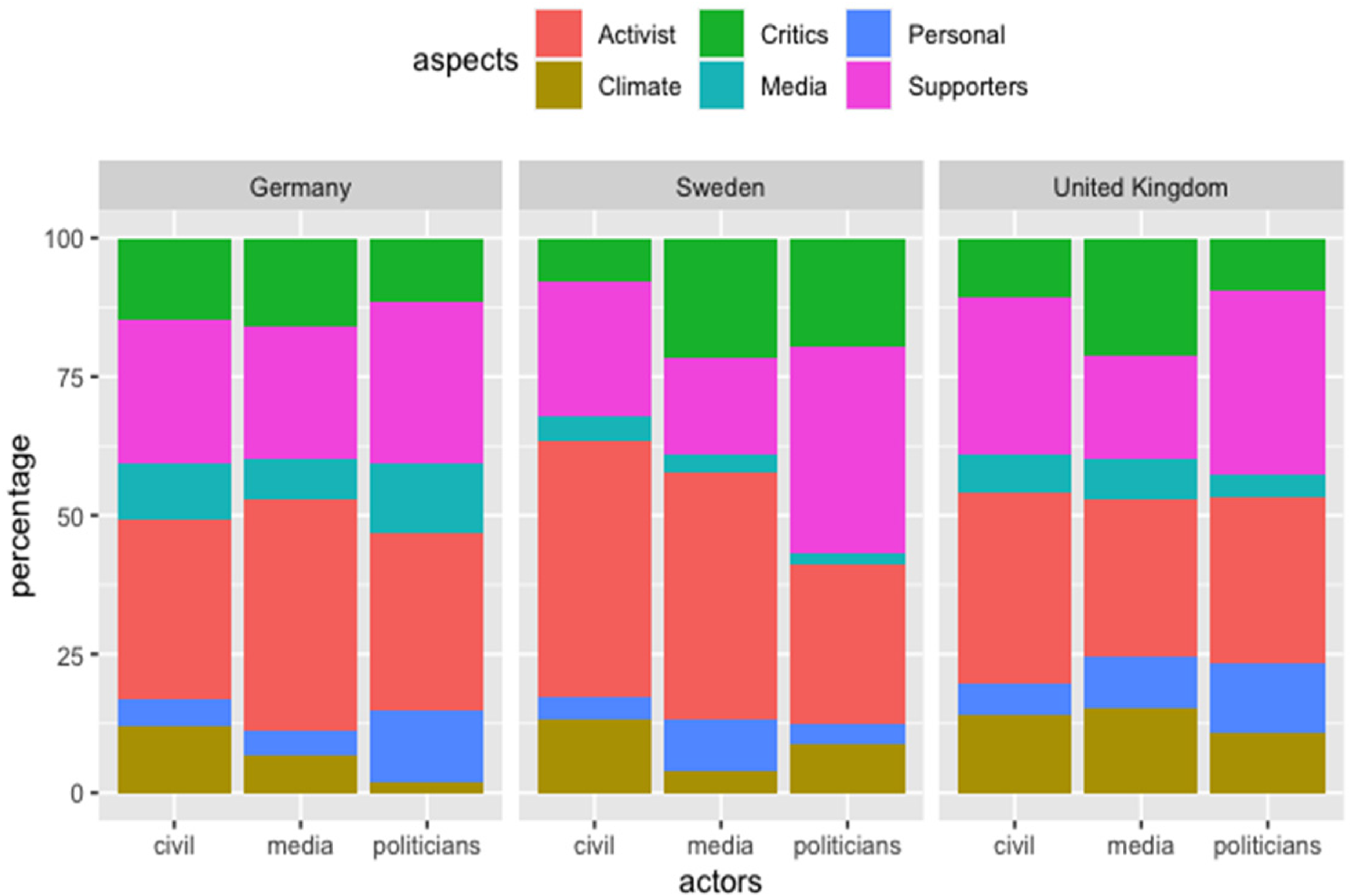
The percentages of posts about different topics by the actors in the three countries. Chi-square tests showed that there is a significant relation between actors and aspects in all countries.
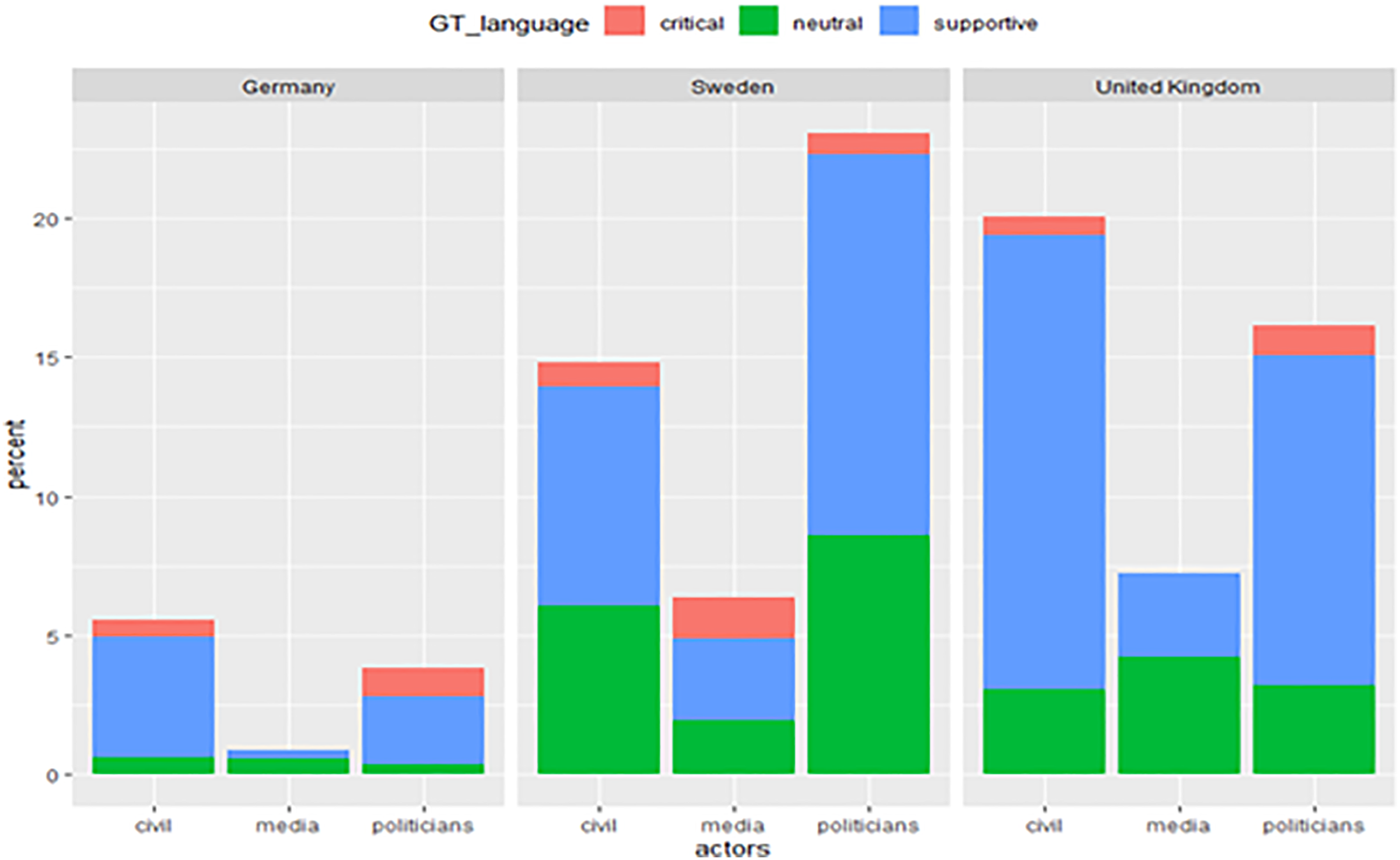
The percentages of posts that mention at least one of the words ‘justice’, ‘future’, or ‘generation’, and their attitudes, by actor types, for each country.
Figure 5 shows that, in Germany, the civil society actors more frequently cite Thunberg’s message than the posts by political actors do, while in the other two countries there are less differences between the actors in this regard. Given that there are few posts that relate to Thunberg’s words at all, and almost none that criticise her statement, we find little by way of polarisation around her message.
However, if we go beyond posts that relate to her statements and look at posts that mention the word ‘climate’ (or ‘klima’, ‘klimat’), we find that this term occurs in 12% of the German posts, 55% in the Swedish posts, and 58% of the posts in the UK. This suggests that the climate issue is more prominent in the posts in the UK and in Sweden, and less so in the German discourse.
To further explore the role of Thunberg’s message in the posts by different actors in the three countries, we charted the presence of the discourse on intergenerational justice, arguably the most important moral message in Thunberg’s speeches.3 For this, we searched for the bigrams ‘climate justice’ and ‘future generations’ in the posts, translated as shown in Table 2 above.
We believe these terms preserve their distinctiveness as signals of the discourse on intergenerational justice, including when translated into German and Swedish. This is, admittedly, a rough measure, but still good enough for the purpose of comparing the national discourses.
The impact scores by actor-attitude groups.
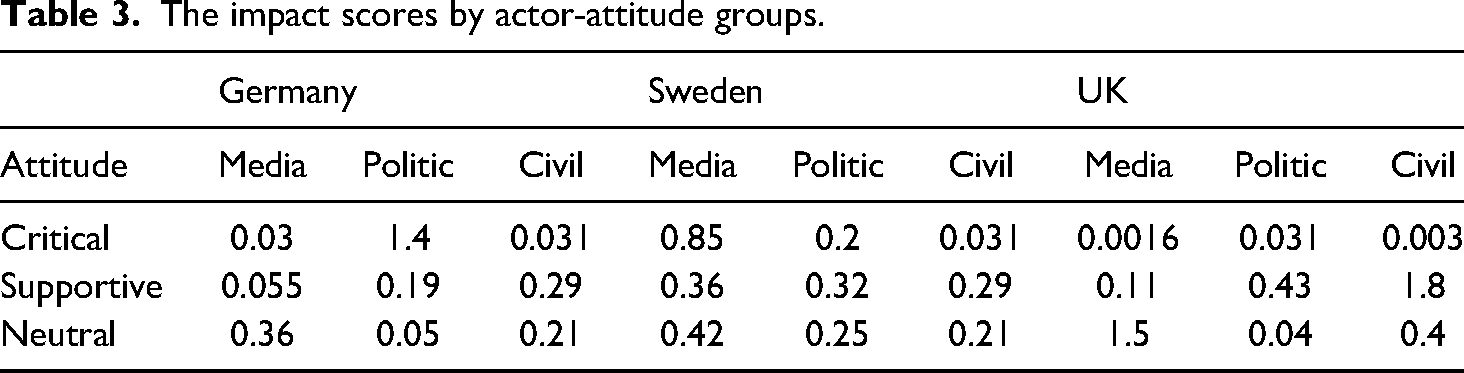
Figure 6 below shows the percentages of posts by the different actors in the three countries that contain at least one occurrence of the three terms listed in Table 2.
We see that the concepts appear in a substantial portion of the posts in Sweden and the UK but in only 2%–6% of the German posts. Most striking is that, on this measure, the level of engagement with this issue is relatively low for all German actors, compared to the other two countries. Hence, the Facebook discourse on Thunberg in Germany seems to be quite different from the discourses in both the UK and in Sweden. We also see that terms related the topic of intergenerational justice are used much more frequently in posts that are supportive of Thunberg than critical of her. Also, the media actors are much less engaged with this topic than are the other actors, and only in Sweden do we find some critical posts by media actors that relate to this issue. We also see that the Swedish politicians more frequently use these terms than do civil society actors, while the opposite is true of the UK and Germany. In conclusion, we find very little evidence of polarisation around the issue of intergenerational justice in the posts.
Impact
Our fourth hypothesis was that critical posts and supportive posts will attract more user engagement than neutral posts, that is, that opinionated posts will have more impact with other Facebook users. In calculating the impact of posts, we must consider that posts on highly visible pages, like the sites of newspapers, will get more attention just in virtue of being more visible. We thus define impact in this way:
We see that only the impact of the critical political posts in Germany shows the pattern indicated by the hypothesis. The impact of critical posts by Swedish media actors stands out as relatively high, but the neutral posts by this group have a higher impact than the supportive posts, contradicting the hypothesis. The supportive posts of civil society actors in the UK also have a comparatively high impact, but the impact of the critical posts in this group is significantly lower than that of the neutral posts.
Discussion and conclusions
Our first research question was ‘what opinions do different types of actors (political, civil society and media) in Germany, Sweden and the United Kingdom express about Greta Thunberg?’ Greta Thunberg, in her roles as an activist, leader of a youth movement, charismatic teenager, media personality, and subject of critical attention, is a global media phenomenon. The comparative approach we have pursued here has brought out both similarities and differences in how Facebook users in the three European countries have engaged with these different roles. Looking at the distribution of attention over these different aspects (Figure 5), we saw similar patterns across both countries and actors within countries. In all countries, her role as an activist got the most attention in the posts, followed by posts commenting on her relation to her supporters. Surprisingly, in all three countries, only a few posts commented on her personal features. The number of posts mentioning statements by her on climate change was also lower than one would expect in the countries.
But the distribution of attitudes over actors reveals some clear differences (Figure 4). Most striking is the large percentage of critical posts by political actors in Germany, many of them issued by the AfD. These critical posts also had a high impact score and received a lot of user engagement. The Swedish Facebook discourse differed from the discourses in the other two countries by the fact that two-thirds of the critical posts in Sweden were comments on posts that criticise Thunberg, that is, posts that agree with her critics. At the same time, the Swedish media posts are more often supportive of Thunberg than the media posts in the UK or Germany. These differences point to unique features of the Swedish Facebook-discourse on Thunberg.
Our second research question was ‘to what extent does contestation focus on Greta Thunberg’s message on intergenerational justice?’ The most striking finding was that none of the German actors commented much on this issue, compared to the actors in the other countries. This suggests that, in the German discourse, Thunberg’s name was associated relatively more with many other political issues, and less with arguments about the problem of climate change per se. Perhaps, in the German context, expressing either support for Thunberg or criticism of her became a signal of the position one has on different political issues. If this is the case that would indicate that Thunberg had been given the role of a polarising figure in the German discourse.
The third research question was ‘to what extent are opinions of Greta Thunberg, her followers, and her critics in the Facebook discourses polarised in the three countries?’ Our results reveal patterns indicating polarisation in the posts issued by German political actors. First, more than 60% of the posts issued by these actors were critical of Thunberg or her supporters and the percentage of neutral posts was low. Most of the civil society actors, in contrast, were supportive or neutral. However, only very few of these supportive posts did criticise her critics. This suggests that, in Germany, it was the critical, political actors that were polarising this debate. Secondly, while only very few posts by German political actors discussed the topic of intergenerational justice, these posts were predominantly critical or supportive, with very few neutral posts. This pattern was not found with political actors in Sweden or the UK. And analysing the characteristics of language used in these German posts, we saw also evidence of affective polarisation. The third piece of evidence of polarisation in the posts by German political actors was the high impact these posts had on their Facebook audience (Table 4), compared to the impact of supportive and neutral posts.
Here, it is important to see that the rhetorical character of statements that are supportive of Thunberg is different from that of critical statements. We found that most of the posts that express support for Thunberg did not also criticise those that are criticising her. Criticisms of Thunberg’s person, her message, or her followers, on the other hand, are best understood as reactions to the massive media attention and high profiled support Thunberg received and such posts also directly or indirectly criticise those that support her. Facebook is an integral part of the wider public sphere and the debates going on there will reflect the character of the debates going on in society at large.
It has been suggested that there are features of social media platforms that make polarisation more likely. For example, Sunstein (2017) argues that the affordances of social media make polarising echo chambers more likely. Other research suggests that the confrontation with different opinions is polarising and that social media facilitates such encounters (Karlsen et al. 2919). Interestingly, Yarchi et al. (2020) find relatively less polarisation on Facebook in comparison with discussions of the same issue on other platforms (Twitter and WhatsApp). In the present study, we found tendencies both to polarisation and the opposite on the same platform. Hence, an important part of the explanation for polarisation on Facebook must be sought in how it is used by actors in their national and political contexts. Neither the affordances of the platform nor features of Thunberg’s person, her message or her followers can explain the differences in the levels of polarisation that we have observed. Rather polarisation was the result of polarizing discursive practices of supporters and leaders of the exterme right-wing party AfD.
Our final remark is related to the concern, often repeated in the literature, that polarisation is potentially harmful to democracy. From this perspective, the results of our study are encouraging, as we find that polarisation is generally low. Moreover, there can be little doubt that, by lifting the generational perspective higher on the political agenda, and by inspiring young people all over the world to engage with the challenges of dangerous climate change, Greta Thunberg’s effect on democracy has been overwhelmingly positive. The affordances of social media platforms like Facebook helped to bring about this “connective action” (Bennett and Segerberg, 2012).
Limitations
The answers to the research questions are limited by the lack of access, due to Facebook policies, to the comments on the posts on public Facebook pages. And, obviously, we have not attempted to explain why the political right in Germany, to a much larger extent than in Sweden and the UK, chose to use Facebook as their platform to polarise the debate around Greta Thunberg.
Footnotes
Funding
The author(s) received no financial support for the research, authorship, and/or publication of this article.

Notes
The numbers of posts harvested, and the numbers of posts coded.
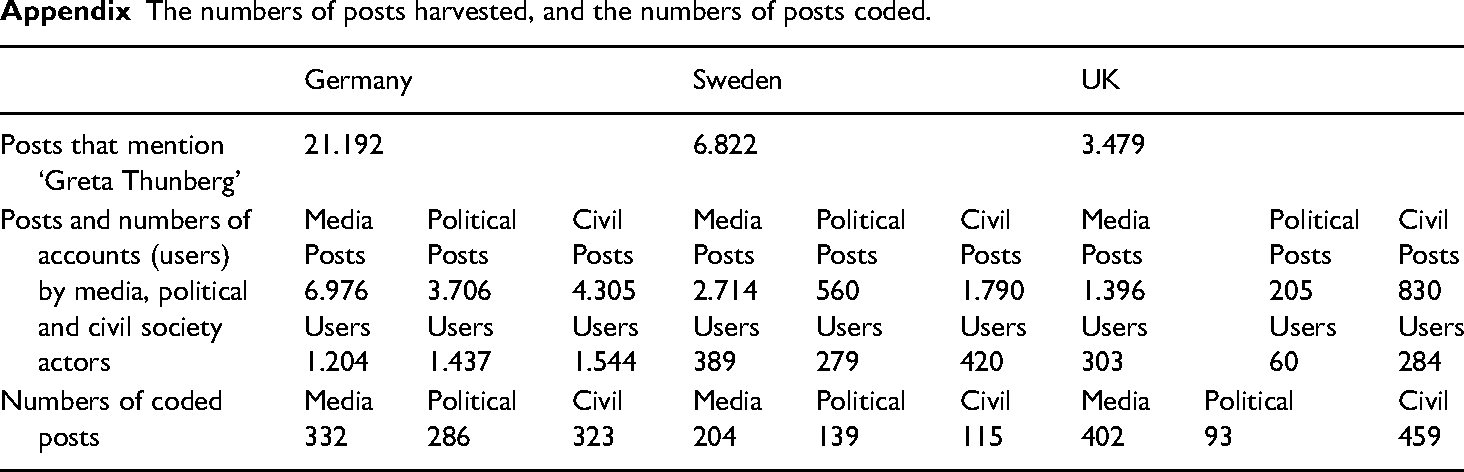
| Germany | Sweden | UK | ||||||||
|---|---|---|---|---|---|---|---|---|---|---|
| Posts that mention ‘Greta Thunberg’ | 21.192 | 6.822 | 3.479 | |||||||
| Posts and numbers of accounts (users) by media, political and civil society actors | Media Posts 6.976 Users 1.204 |
Political Posts 3.706 Users 1.437 |
Civil Posts 4.305 Users 1.544 |
Media Posts 2.714 Users 389 |
Political Posts 560 Users 279 |
Civil Posts 1.790 Users 420 |
Media Posts 1.396 Users 303 |
Political Posts 205 Users 60 |
Civil Posts 830 Users 284 |
|
| Numbers of coded posts | Media 332 |
Political 286 |
Civil 323 |
Media 204 |
Political 139 |
Civil 115 |
Media 402 |
Political 93 |
Civil 459 |
|