




Abstract

The water-repellence or superhydrophobicity of lotus leaves has intrigued both philosophers and scientists. Philosophically, it has inspired detachment in living. In materials engineering, it has become a muse for creating waterproof surfaces. Indeed, hydrophobicity likely evolved 450 million years ago as life made the transition to land and began respiratory processes via gas exchange, with ∼24,000 different species of plants and animals, many of which exhibit hydrophobicity at various levels.
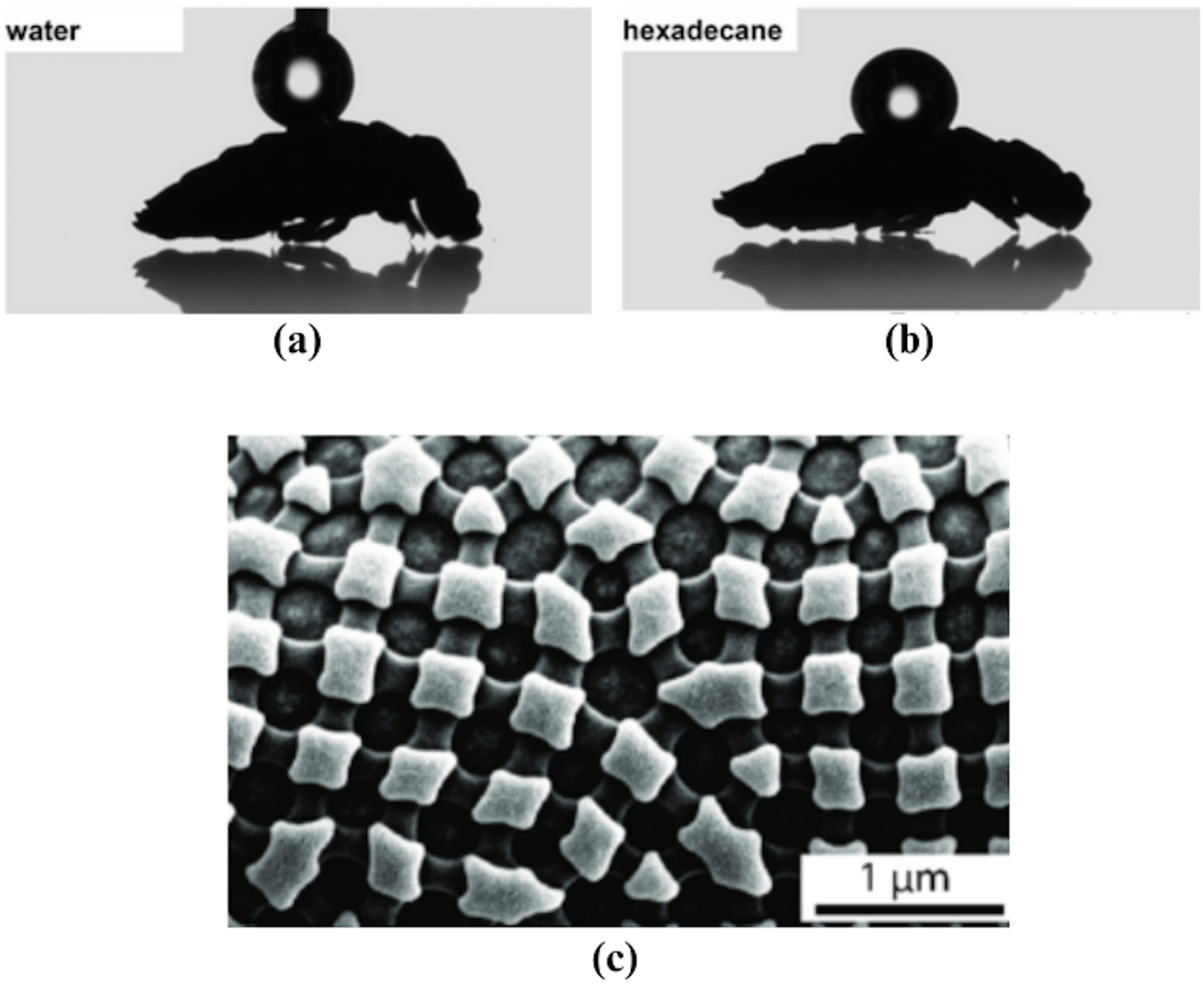
Oleophobicity – oil repellence – is less prevalent in nature, but by no means absent. Oleophobicity is found in organisms such as the springtail, a small wingless soil-dwelling insect (Figure 1(a) and (b)). Springtails breathe through their skin, and any accumulation of oil, dirt, or water would hamper gas exchange and must be prevented. To confer omniphobicity (both water and oil repellence), the springtail surface features intricately arranged rhombic or hexagonal honeycomb-like patterns across hierarchical layers, forming nanocavities (0.3–1 μm) with characteristic mushroom-shaped overhangs in cross-section (Figure 1(c)). This unique structure traps nanosized air bubbles, preventing the wetting of the surface, by both polar and non-polar liquids.
There has been increasing interest in the development of superoleophobic coatings for various applications. There has been a growing understanding of the mechanism by which surfaces exhibit oil repellence. While surface energy and roughness have been primarily responsible for hydrophobicity, it is believed that re-entrant surface curvature (also known as mushroom or serif T structure) where a concave topographic curvature exists from the top to the bottom of the structure is necessary for oleophobicity. This curvature forces the surface into a Cassie state, causing a substantial reduction in the contact area between the solid and liquid. The re-entrant structures induce oleophobicity by creating a higher breakthrough pressure, making it more difficult for the lower surface-tension oil to penetrate the surface. The stable air-trapping effect and the geometrical edge effect collectively contribute to oleo- and indeed omniphobicity (Figure 2). 3
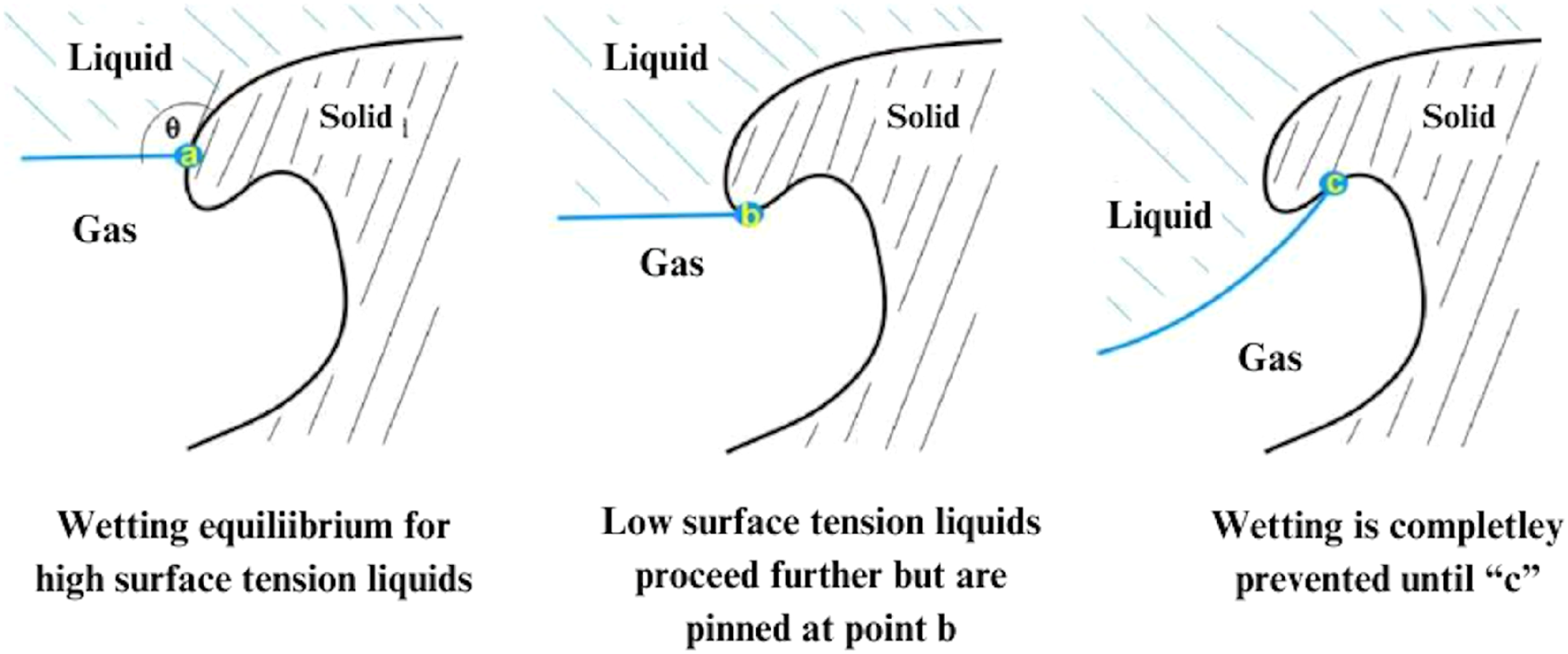
Re-entrant surface curvature for oleophobicity. Image adapted from Helbig et al. 3
Researchers are exploring various types of re-entrant structures for creating oleophobic surfaces (Figure 3). Achieving oleophobicity depends on various characteristics such as hierarchical organisation, spacing, and height. These features play a crucial role in enhancing the stability of the composite interface.
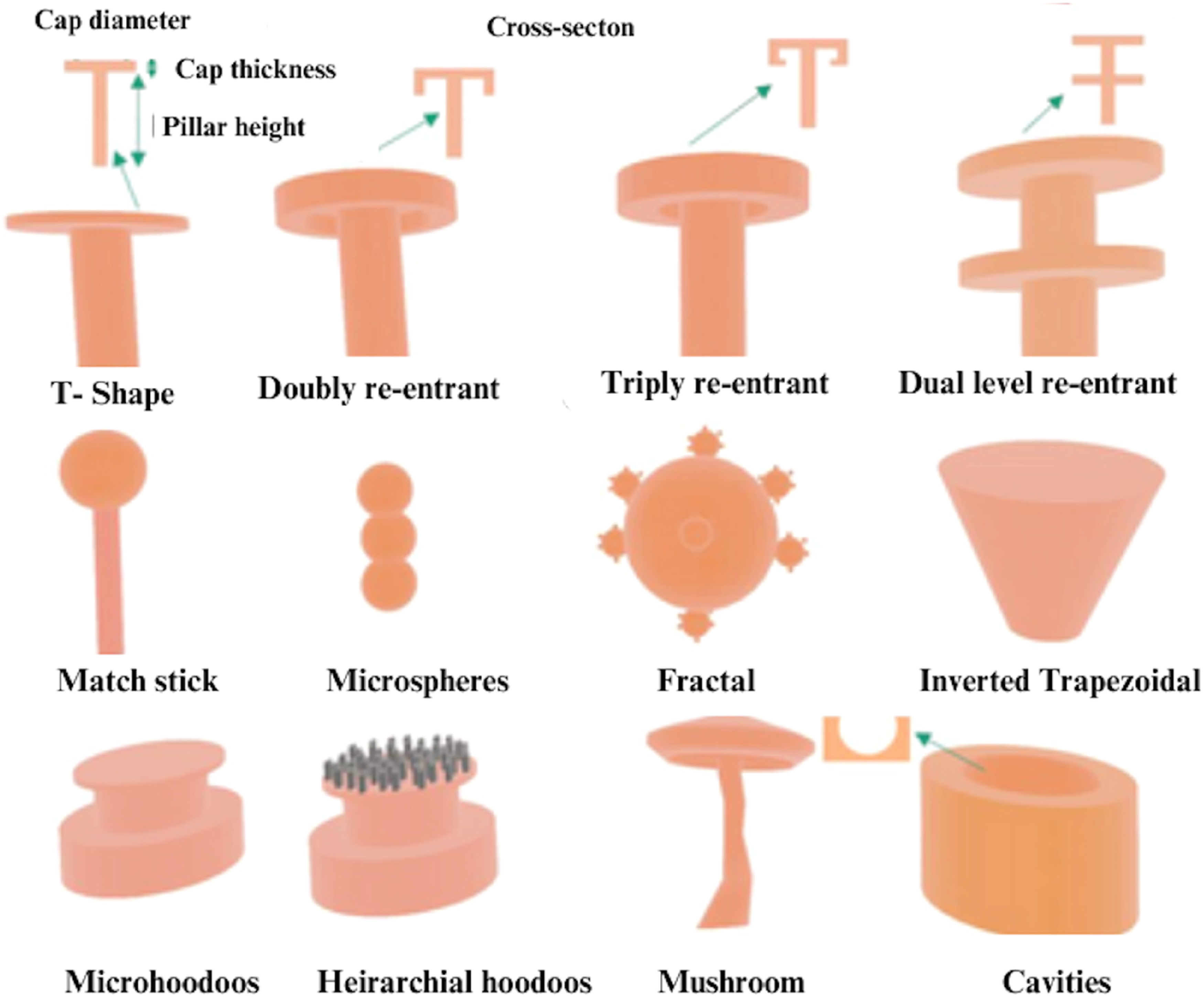
Various types of surface morphologies that are being studied for omni/oleophobicity. Image adapted from Vu et al. 4
Fabricating these kinds of substructures in the micro and nano dimensions is challenging. In general, two approaches are employed in the creation of oleophobic surfaces. The first is the ‘bottom-up’ strategy, involving the physical deposition of nanoporous structures through methods such as spray deposition or dip-coating. More recently some efforts are being looked at through additive manufacturing approaches. The second is the ‘top-down’ strategy which uses techniques such as chemical/electrical etching and lithographic methods.
Spray, spin, or dip-coating are simple methods to produce particle-based superoleophobic coatings. However, studies have shown that in such bottom-up processes, only coatings containing nanoporous structures derived from ultrafine nanoparticles (10–15 nm) have oleophobic properties. 5 This is because ultrafine nanoparticles readily form beaded structures that trap air pockets, resulting in re-entrant morphologies. It has been challenging to produce spray-coated and dip-coated superoleophobic coatings using larger particles. Spray-coated micron-sized hollow particles have shown oleophobicity. This has been attributed to the presence of air pockets confined within the hollow structures. 6 The nanospheres surrounding these hollow structures act as re-entrant structures, effectively impeding the penetration of organic liquids characterised by low surface energies.
Research has shown a consistent flaw in superoleophobic coatings exclusively formed by micro/nanoparticles, namely, their limited mechanical strength. Nanocomposite coatings are therefore being developed, wherein the nano or micro dimensional particles are held in a polymer substrate that serves as an adhesive and film-forming agent. The polymer substrate has typically involved fluorocarbon polymers such as polytetrafluoroethylene and perfluoro silanes.
The incorporation of particles for surface roughness comes with its disadvantages. For example, when coated on fabric, the nano-level roughness can affect fabric handling and wear comfort. Particle-free coating treatments typically contain fluorinated polymers such as poly(vinylidene fluoride-co-hexafluoropropylene), fluoroalkyl silane, etc. Most commercial oleophobic and omniphobic coatings available today have some form of fluorinated polymer in them.
These kinds of polymer-only coatings are typically produced by lithographic techniques. However, creating an overhang structure necessary for the re-entrant design is difficult using traditional lithography methods. Techniques such as reverse imprint lithography, combined with reactive ion etching, have been reported to achieve diverse superoleophobic surfaces with fluorinated polymer coatings (Figure 4). 7
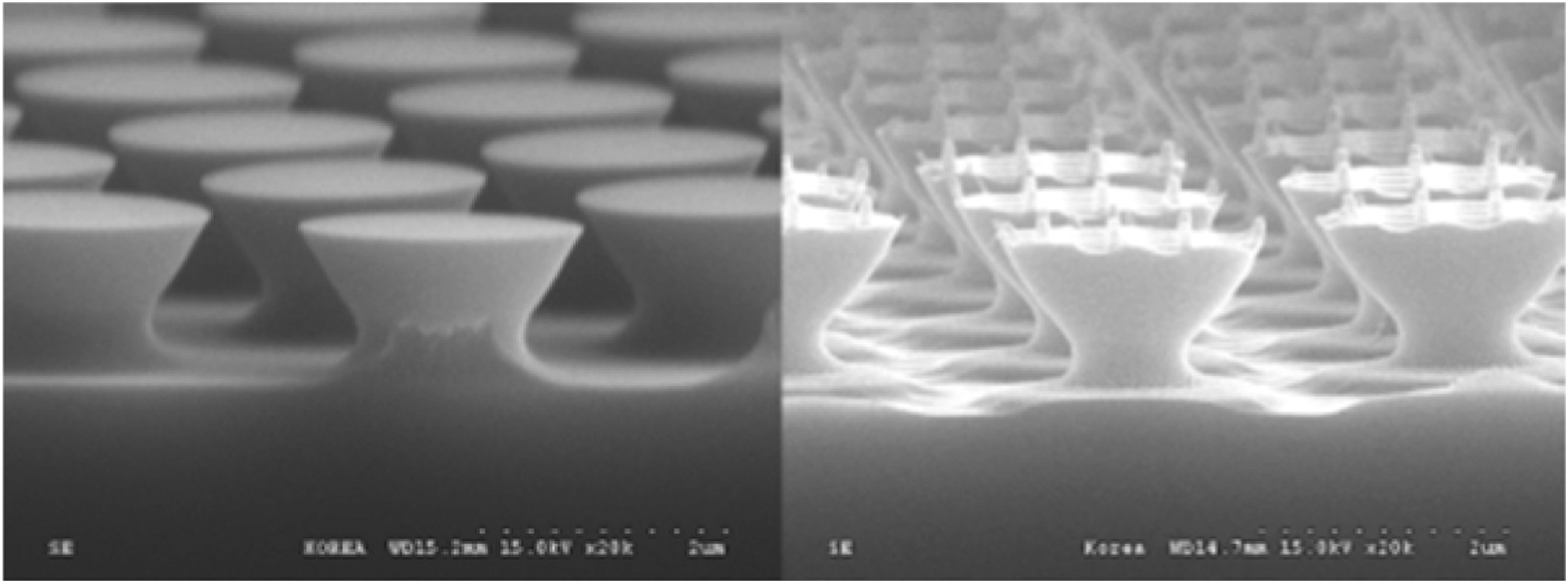
PDMS surface structure with fluoroalkylsilane-based self-assembled monolayer (SAM) for superoleophobic coatings by reverse imprint lithography. Image reproduced without modification from Choi et al. 7
With the increasing need to eliminate fluorinated polymers due to their adverse environmental and health effects, there have been attempts to produce fluorine-free silane-based oleophobic coatings, with and without particulate inclusions. A recent report shows that brush-like polydimethylsiloxane (PDMS) coating (grafted-Polydimethylsiloxane (g-PDMS)) is comparable to 4-Carbon containing Per/polyfluoroalkyl substances (C4-PFAS) (Grade 5 rating) when coated on fabric (Figure 5).
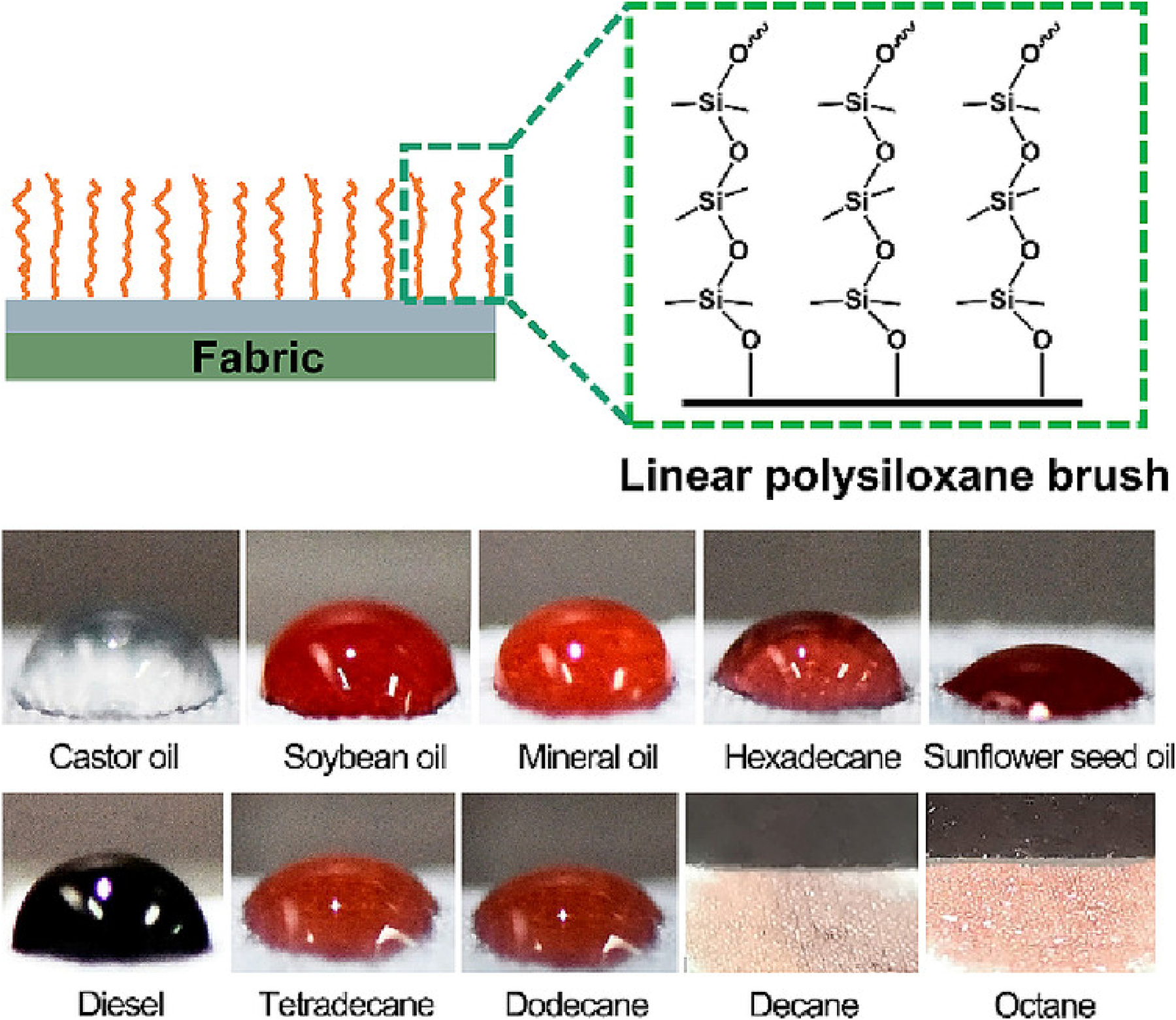
Non-fluorinated polymer coating for grade 5 oil repellence. Image reproduced without modification from Cheng et al. 8
As early as 2013, scientists from the Chinese Academy of Sciences successfully developed siloxane-based superoleophobic surfaces by leveraging fish scales as a template. The skin of the filefish displays exceptional oleophobic properties, repelling oil directionally from the head to the tail. This anisotropic wettability not only aids the fish in navigating oil spills but also serves as a promising model for designing self-cleaning surfaces. Employing soft lithography, the researchers utilised the fish's skin as a template to create PDMS surfaces with remarkable superoleophobic characteristics. 9
Oleophobic, superoleophobic, and omni/amphiphobic coatings play a vital role in diverse applications such as anti-oil coatings, self-cleaning surfaces, oil/water separation media, chemical shields, anti-blocking agents, bioadhesive surfaces, and more.
Among these, a widely recognised practical application is smudge-proof and anti-fingerprint surfaces. 10 A fingerprint consists of a combination of oil-based (sebum) and water-based (sweat) contaminants that stick to a surface after being touched by a finger. Anti-fingerprint and smudge-proofing treatments must make the surface resistant to both water and oil transfer. Current anti-fingerprint treatments involve chemical or physical modifications to the glass surface to reduce its wettability by both oil and water, effectively imparting omniphobic properties (hydro- and oleophobicity) to the glass.
Oleophobic coatings are also important in medical devices. 11 They are commonly applied to coat medical tubing, endoscope lenses, surgical visors, and shields. In devices such as catheters or medical tubing, oleophobic coatings can minimise the adherence of bodily fluids, reducing the likelihood of infections and promoting overall patient safety. In medical devices such as endoscopes or surgical visors, optical clarity is crucial for accurate diagnostics and surgical procedures. Oleophobic coatings prevent the build-up of oils and contaminants on optical surfaces, maintaining clear visibility during medical examinations and surgeries.
The search for oleophobic and omniphobic materials continues at a brisk pace. A preliminary search of SCOPUS shows that there has been an almost exponential increase in the number of research publications related to oleophobic coatings this century (Figure 6). As our understanding of the mechanisms of oleophobicity evolves, there will emerge more environmentally friendly omniphobic coatings with advanced functionality and enduring surface protection.
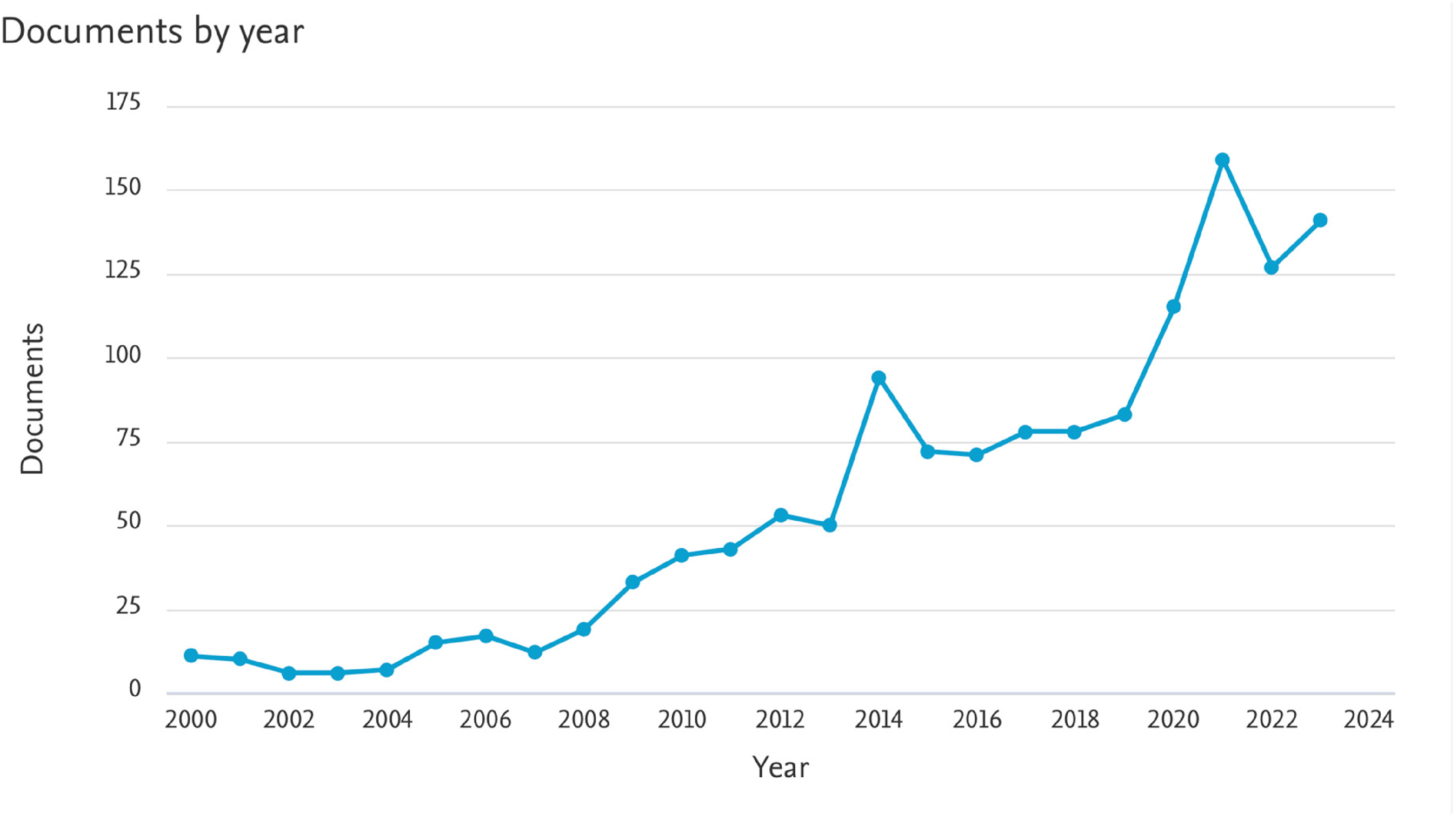
Number of research articles with the keyword ‘oleophobic coatings’ in SCOPUS.
Footnotes
Declaration of conflicting interests
The authors declared no potential conflicts of interest with respect to the research, authorship, and/or publication of this article.
Funding
The authors received no financial support for the research, authorship, and/or publication of this article.