



Abstract
Most African countries’ research data management (RDM) practices are still in the incubation stage, though the incubation rate among these countries, including Tanzania, is different. This study aimed to assess the RDM maturity in Tanzania by briefing policy development and practices using the Fuzzy Delphi Method. Specifically, the study aimed to identify indicators for the RDM practices in Tanzania and examine the maturity level of the RDM practices in Tanzania. Data Maturity Models were used to guide this study. Fuzzy Delphi techniques were employed to collect data from seventeen (17) RDM experts. The fuzzy logic validated the indicators that were used in this study. The final results after the iterative data collection using the Fuzzy Delphi Method have shown that the RDM practices in Tanzania have different levels of maturity across RDM dimensions, with infrastructural ecosystems being more mature as compared to other dimensions such as collaboration, legal and regulatory framework, and human competencies. Moreover, the study has noted collaboration and partnership as the RDM dimension that needed more attention. The study recommends establishing enabling environments, including instituting legal and regulatory frameworks that facilitate the maturation of other RDM dimensions.
Keywords
Introduction
Research data management (RDM) refers to how data are collected, organised, documented, stored, used, preserved and shared to support research activities (Amanullah and Abrizah, 2023). This process ensures that research data are accessible, secured and reusable (Onyancha, 2016). It is a broader term encompassing data stewardship, governance, curation and archiving (Wyk, 2018). Data governance provides a framework for archiving, curation, and stewardship (Wyk, 2018), while data stewardship implements the standards, frameworks and guidelines set by data governance. The latter ensures that the RDM practices conform to governing frameworks (Borgman, 2018). Effective research data archiving depends on the quality of data governance, stewardship and curation processes (Mclure et al., 2014; Yoon and Schultz, 2017). According to Davidson et al (2014) and Wyk, (2018), data curation ensures that the archived data are clean, reliable, complete, valid and meet the standards set by data governance. In a broad sense, data governance establishes RDM frameworks, standards and guidelines; data stewardship ensures these legal, policies, standards and procedures are accurately implemented; data archiving safeguards the future use of research data; and data curation guarantees that research data remains available, usable and accessible (Borgman, 2018; Wyk, 2018; Yoon and Schultz, 2017). These RDM dimensions are crucial components of the RDM ecosystems where RDM ecosystems refer to the comprehensive environments and frameworks that support research data management throughout their lifecycle (Andrason & van Schalkwyk, 2017). RDM ecosystem comprises not only the RDM key dimensions mentioned earlier but also infrastructural ecosystems, legal and regulatory frameworks, collaboration and partnership, and human competencies (Andrason & van Schalkwyk, 2017; Lyon, Ball, Duke, & Day, 2012).
Data stewardship, governance, curation and archiving are also termed as the practices of research data management (Wyk, 2018). They are referred to as the operational or implementation aspects of the RDM. In RDM implementation, stewards oversee the practices of research data, data curation makes research data accessible, governance establishes structures and standards for managing data, and data archiving facilitates data preservation and storage (Borgman, 2018; Wyk, 2018). However, for these elements to work effectively, they need other strategic and foundational elements, namely infrastructural ecosystems, legal and regulatory frameworks, collaboration and partnership, and human competencies (Buhomoli and Muneja, 2023a; Lyon et al., 2012; Wyk, 2018). These foundational elements provide effective data stewardship, governance, curation and archiving. In other words, without these elements, the RDM practices would lack expertise, structure and resources as they form an enabling framework for the RDM practices. In contrast, stewardship, governance, curation and archiving form the applied framework for RDM practices (Borgman, 2018; Wyk, 2018). Given the newness of the RDM practices and insufficient research on RDM maturity in most developing countries, including Tanzania, the current study focused on the foundational components of the RDM ecosystem and left other RDM components. These foundational components are critical elements for initiating the RDM practices. The components include; infrastructural ecosystems, legal and regulatory frameworks, collaboration and partnership, and human competencies (Andrason and van Schalkwyk, 2017; Borgman, 2018). These RDM ecosystem components must first be in place before progressing to more RDM components, such as stewardship and data curation (Borgman, 2018; Buhomoli and Muneja, 2023a). The more advanced these components of RDM ecosystems are, the higher level of maturity they signify, while the less advanced these components of RDM ecosystems portray the poor maturity of the RDM practices (Andrason and van Schalkwyk, 2017; Gierend et al., 2023; Lyon et al., 2012).
The maturity levels of RDM ecosystems vary from country to country, being more advanced in developed countries and less advanced in developing countries (Borgman, 2018; Buhomoli and Muneja, 2023b; Wulandari, 2020). The US and UK are taking the lead worldwide, whereas South Africa is championing the practices in Africa. In these countries, RDM infrastructures, human competencies, RDM collaboration, and legal and regulatory frameworks support the RDM practices (Boyd, 2021; Khan et al., 2023). In Tanzania, the RDM maturity level is characterised by the country's progression in RDM practices. At the foundation level, the country has made significant efforts in adopting and incubating the RDM practices (Shao, 2023). Various research organisations, academic institutions and government bodies have established RDM frameworks and repositories to manage research data (Mosha and Ngulube, 2023a; Msoffe and Buhomoli, 2023). National frameworks like the national framework for research data sharing and the draft open data policy reflect the need for structured RDM practices (The United Republic of Tanzania, 2016, 2024). Also, there have been several improvements in the RDM landscape in Tanzania. These improvements include the establishment of network infrastructures, related policies and regulatory frameworks, and training on RDM practices (Elia and Buhomoli, 2020; Kakai et al., 2018). While the government of Tanzania has made efforts to advance the RDM practices, there is insufficient evidence of a structured assessment of the country's RDM maturity. The maturity level of the RDM practices in Tanzania is not well articulated. This situation has challenged the ability of the RDM stakeholders, including researchers, policymakers, businesspeople and citizens, to identify gaps, develop strategies, and measure progress leading to unsatisfactory efforts to be directed in this area (Baolong et al., 2018; Buhomoli and Muneja, 2023a; Mosha and Ngulube, 2023b).
Moreover, other studies (Baolong et al., 2018; Cech et al., 2018; Gökalp et al., 2022; Mulongo et al., 2022; Thomas et al., 2019) related to the investigation of the RDM maturity that was conducted in other countries, used the traditional approach in assessing the maturity level. To bridge this methodological gap, the current study applied Fuzzy Delphi Method by combing the RDM expert opinions and fuzzy logic in evaluating the RDM maturity in Tanzania. The use of the Fuzzy Delphi Method in investigating RDM maturity has not been fully explored, leading to the compelling need for this method to be utilised. On the same note, the fuzzy Delphi method combines experts’ knowledge and a systematic computational approach to assess RDM maturity. Along with that, many studies that were conducted on RDM in Tanzania focused on other dimensions of RDM such as practices (Buhomoli and Muneja, 2023b; Mwinami et al., 2022; Mwinami, Dulle, et al., 2023); awareness (Buhomoli and Muneja, 2020); RDM factors (Buhomoli and Muneja, 2023a), data sharing (Buhomoli and Muneja, 2023b; Katabalwa et al., 2021; Mushi et al., 2020; Mwinami, Dulle, et al., 2023; Mwinami, Dulle, et al., 2023); and RDM literacy (Mosha and Ngulube, 2023a). There were no sufficient evidence on the presence of the studies that were conducted in Tanzania to assess the maturity level of the RDM practices. Therefore, this study evaluated the RDM maturity level in Tanzania by considering the RDM ecosystems and data maturity proponents within the Fuzzy Delphi Method.
Purpose of the study
This study aimed to assess the maturity of RDM in Tanzania by briefing policy development and practices using the Fuzzy Delphi Method.
Objectives of the study
The following objectives guided the study;
To identify indicators for the RDM practices in Tanzania To examine the maturity level of the RDM practices in Tanzania
Related studies
This section presents related studies. It first presents an overview of the RDM maturity model and RDM ecosystems, then provides related studies on indicators for RDM maturity as well as RDM maturity.
Overview of the RDM maturity model and RDM ecosystems components
To investigate the maturity level of RDM practices, most of the studies (Baolong et al., 2018; Cech et al., 2018; Gökalp et al., 2022; Mulongo et al., 2022; Thomas et al., 2019) have applied the data maturity model (DMM). The model comprises data management strategy, quality, operations, platform and architecture, and governance (CCMI Institute, 2019). Each of the DMM components is closely related to the RDM ecosystem components. Data management strategy is linked with data governance as it ensures clear legal and regulatory frameworks govern the RDM practices (Borgman, 2018; CCMI Institute, 2019). It also ensures that all RDM activities comply with the organisational standards and meet the organisational goals. Data quality, another component of DMM, is linked with data stewardship and curation as they focus on upholding quality in RDM practices (Borgman, 2018; CCMI Institute, 2019). Data operation connects to data stewardship as it relates to day-to-day RDM practices. Platform and architecture are other components of DMM, and they are linked to infrastructure and data archiving in the RDM ecosystems (CCMI Institute, 2019; Mnzava and Chirwa, 2018). However, as explained earlier, this study addresses the maturity of the only core components needed to incubate the RDM practices, namely infrastructural ecosystems, legal and regulatory frameworks, collaboration and partnership, and human competencies.
Indicators for the RDM maturity
Scholars (Al-Sai et al., 2023; Asih et al., 2019; Bahim et al., 2020; Baolong et al., 2018; Belghith et al., 2021; Borghi and Van Gulick, 2019; Chu et al., 2024; Cox et al., 2017; Konkiel, 2020; Mulongo et al., 2022) have indicated that the RDM is determined by the range of indicators which may not be uniform across the countries. For instance, Bahim et al. (2020) and Cox et al. (2017) have shown that the extent to which the FAIR principles are incubated in RDM practices may ascertain the RDM maturity of an organisation or country. But Asih et al. (2019) and Gierend et al. (2023) showed that the way data quality is ensured could indicate the maturity of the RDM practices. The study done by Mulongo, Wambiri, Gwademba, and Sanya (2022) on the maturity of RDM services in developed countries’ libraries has found that the indicators for the maturity of the RDM services included data storage facilities, training on RDM, RDM plan documents and the presence of data curation services. On the other hand, Assen et al. (2022) and Peng et al. (2019) showed that the key indicators are the level and extent of data governance, standards, policies, and data stewardship. The study done by Cox, Kennan, Lyon, and Pinfield (2017) on understanding the RDM service maturity that was conducted in Canada, Germany, Australia, the Netherlands, New Zealand and the UK asserted that there were higher levels of maturity, which were expressed through RDM leadership and advocacy, RDM competencies and data archiving. Moreover, studies by Baolong et al. (2018), Chu et al. (2024), and Mulongo et al. (2022) that were conducted on maturity and indicators of research data management have elucidated the common indicators that show the practices of research data management within an organisation or a country. As per these studies, the common indicators included; platform and RDM tools, data strategies, training and support, data quality control and data governance. However, these studies also showed indicators which were not common, such as data curation, ethical and legal compliances and data lifecycle management (Baolong et al., 2018; Chu et al., 2024; Mulongo et al., 2022). Other scholars (Al-Sai et al., 2023; Asih et al., 2019; Baolong et al., 2018; Belghith et al., 2021; Chu et al., 2024; Gökalp et al., 2022; Peng et al., 2019; Wulandari, 2020) had a different way of perceiving the maturity of the RDM practices. This variability in indicators suggests the complexity of RDM practices while acknowledging that the RDM practices are dynamic.
RDM maturity
The maturity of RDM shows the advancements in RDM practices from the lower level to the higher ones. A study by Amanullah and Abrizah (2023) conducted in Malaysia on the maturity level of the research data services found the level of maturity in RDM practices to be low. Despite the presence of low maturity, the study reports the cognisance in rectifying the issues that made the practices to be low. The study by Thomas, Cipolla, Lambert and Carter (2019) found inconsistency levels in the maturity of RDM within the organisation. The findings imply that the organisation was operating its RDM activities in silos leading to different levels of maturity across the organisational units and thus need more strong linked coordination. Balaban, Redjep and Čalopa (2018), who conducted a study on the analysis of digital maturity in Croatia, found that Croatia was in the initial stage towards digital maturity. This is contrary to the study investigated RDM service maturity level for developed countries conducted by Masinde, Wambiri, Gwademba and Sanya (2022), which found a higher maturity level of the RDM services provided in developed countries. Moreover, the studies conducted by Amanullah and Abrizah (2023) and Gökalp et al. (2022) indicated that many countries and organisations used to remain in the lower stage of RDM maturity because of lacking the key enablers for RDM practices, such as human expertise, fund, infrastructures and legal frameworks. Wulandari (2020) added that institutions in the country with explicit legal and regulatory frameworks are more likely to reach higher RDM maturity levels, and vice versa is also true. Moreover, a country whose institutions have robust, interoperable RDM infrastructures may also achieve higher RDM maturity. Belghith et al. (2021) supported by adding the presence of human competence who are collaborating on RDM issues as another aspects for attaining the RDM maturity.
The literature has shown various levels of RDM across the world, with the developed countries being more mature in terms of RDM practices compared to the developing countries. Studies such as Masinde et al. (2022) noted a higher level of RDM maturity, while those of Balaban et al. (2018) and Amanullah and Abrizah (2023) indicated a low level of maturity. Moreover, studies done by Thomas et al. (2019) and Neunaber and Meister (2023) stated that maturity inconsistencies exist in the same organisation. Despite this, literature on RDM practices maturity (Baolong et al., 2018; Chu et al., 2024; Mulongo et al., 2022). Other scholars (Al-Sai et al., 2023; Asih et al., 2019; Baolong et al., 2018; Belghith et al., 2021; Chu et al., 2024; Gökalp et al., 2022; Peng et al., 2019; Wulandari, 2020) provide detailed approaches for assessing maturity of the RDM practices. Many literature (Gierend et al., 2023; Gökalp et al., 2022; Ryu et al., 2006; Saxena, 2017) offers a way of evaluating the RDM maturity based on structured models such as data maturity models. The literature (Bahim et al., 2020; Borghi and Van Gulick, 2019; Konkiel, 2020; Mulongo et al., 2022) has also presented some consensus on indicators such as infrastructural ecosystems, policy and regulatory frameworks, and human capacity, but they have also presented some divergences in indicators that are not commonly to other scholars. Despite the indication for some indicators, it is difficult to ascertain specific components for each indicator. Moreover, many studies on RDM maturity appeared to concentrate more on developed countries as compared to developing countries. In addition to this, regardless of the substantial RDM maturity aspects shown in the literature, there is no evidence of the presence of studies that used the Fuzzy Delphi Method in evaluating the maturity of the RDM practices. This has limited the accommodation of the experts’ opinions and the way to account for the ambiguities and variability in expert opinions, which is crucial in decision-making. Using fuzzy logic or any other data-driven thresholds would resolve the existing gaps in evaluating the RDM maturity level. Thus, this study was conducted to add to the existing methodological gap.
Theoretical framework for the study
In investigating the maturity of RDM practices in Tanzania, the study applied a CCMI Institute data maturity model (DMM) as indicated in Figure 1. DMM is the RDM framework organisations use to evaluate the maturity of their RDM practices (CCMI Institute, 2019). It provides the approach to assess how an institution manages research data and shows the areas for more improvements (Mulongo et al., 2022). The DMM includes five levels of maturity (level 1 to level 5), from the basic level to the optimised RDM capabilities. The model comprises five aspects: data quality, data management strategy, platform and architecture, data operation, and data governance (CCMI Institute, 2019; Mulongo et al., 2022). In this study, five DMM aspects were integrated with the foundation elements, and the maturity assessment of the RDM ecosystem was carried around this integration for the reasons stated earlier. DMM assesses the general maturity of an institution's RDM practices. It evaluates the overall institutional perspectives of the RDM practices and then looks at how research data is managed and used across different institutional units (CCMI Institute, 2019; Mulongo et al., 2022). As per the DMM, the levels of maturity are ad-hoc (level 1), abbreviated (level 2), organised (level 3), managed (level 4), and optimised (level 5) (Al-Dossari and Ali Sumaili, 2021; Belghith et al., 2021; CCMI Institute, 2019; Gökalp et al., 2022; Mulongo et al., 2022; Wulandari, 2020).
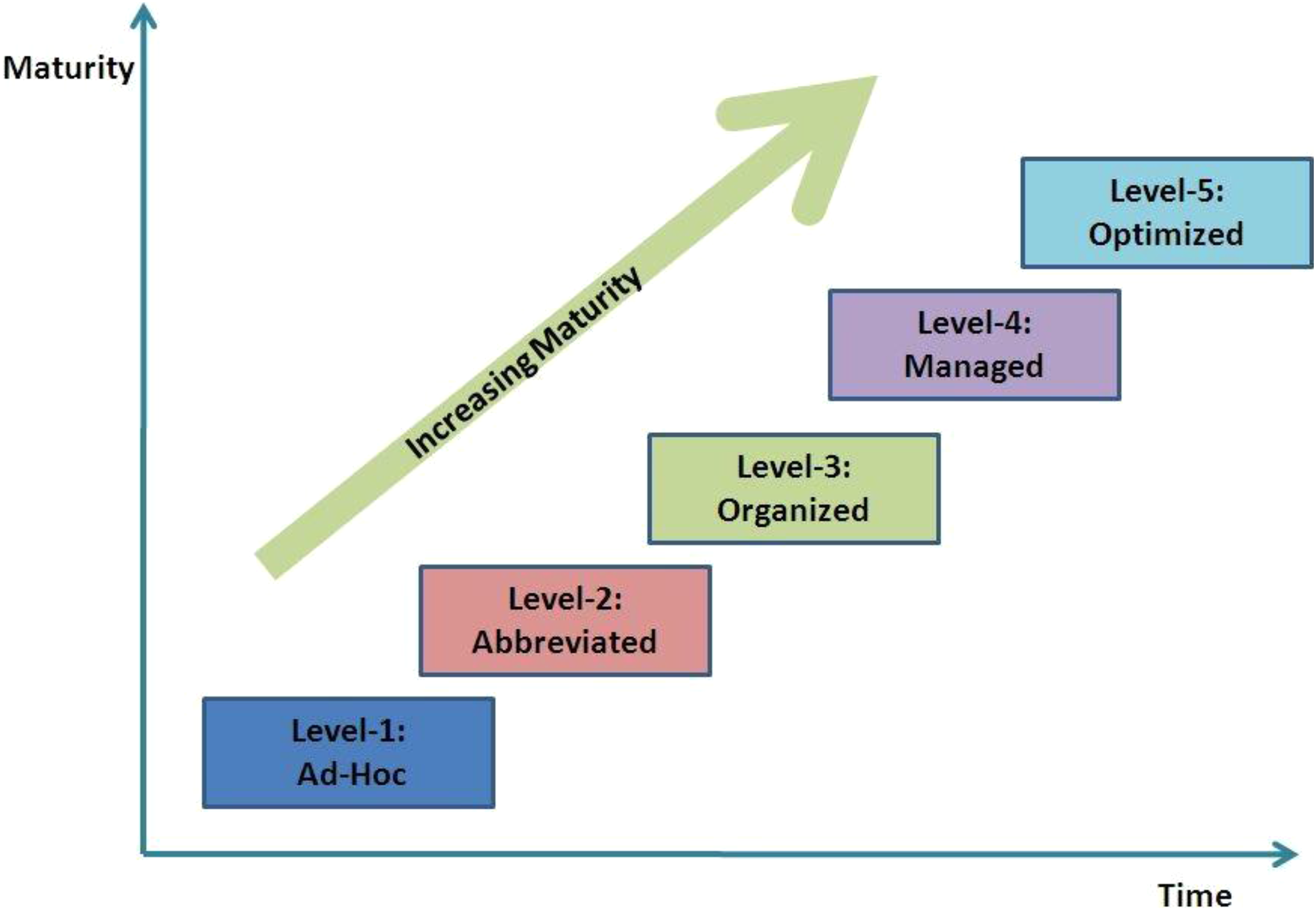
Data maturity model.
Methodology
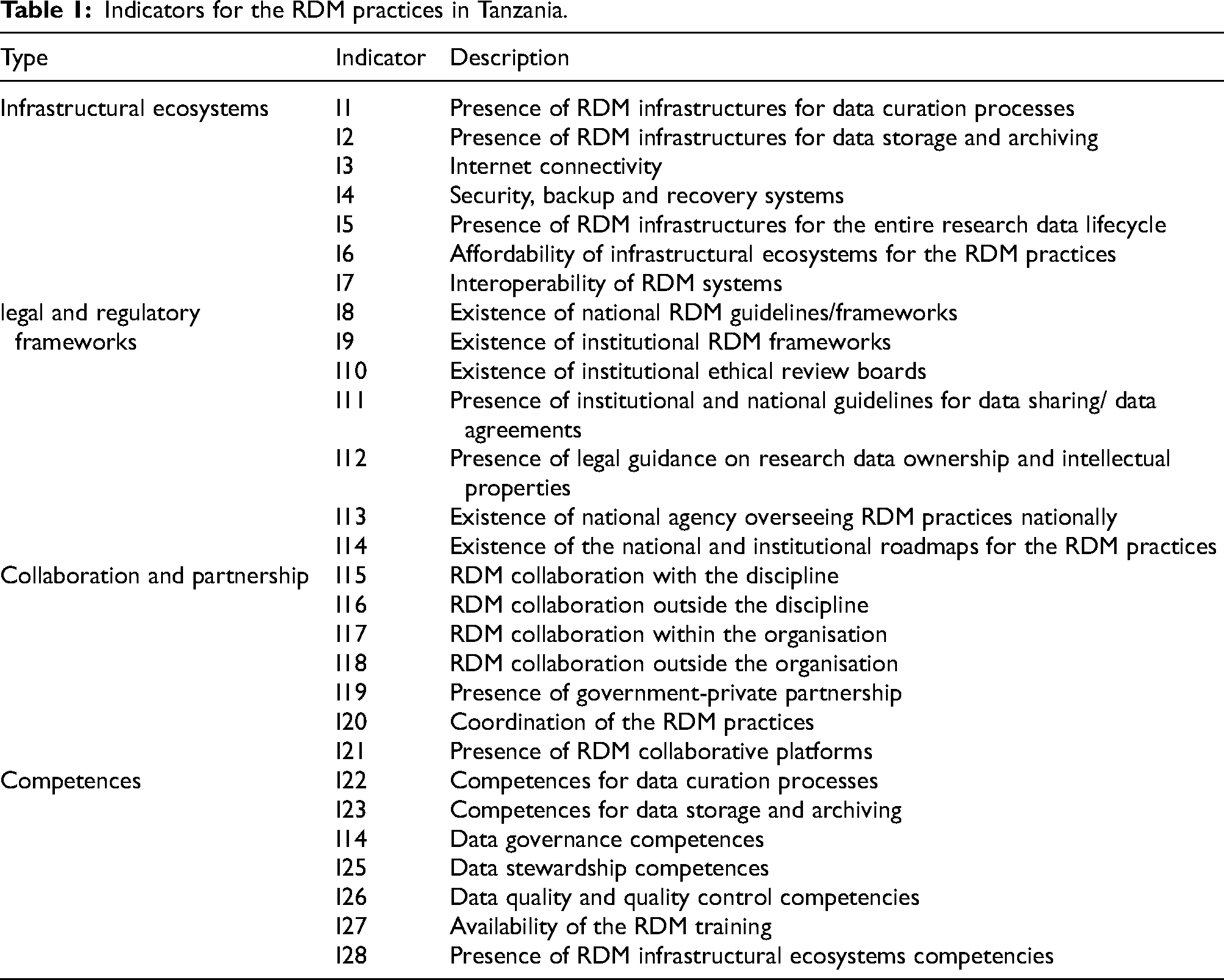
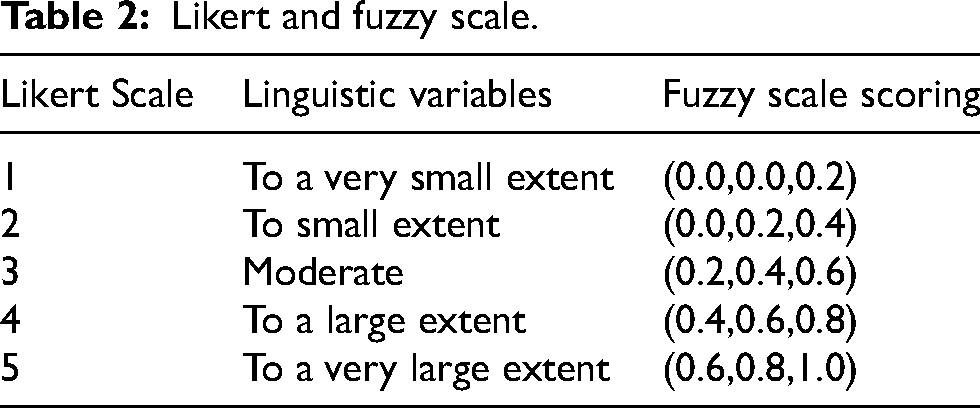
This study applied the Fuzzy Delphi Method, which combines fuzzy logic and Delphi techniques. This method was selected following the study's objectives, which were to identify the indicators and examine the maturity of the RDM ecosystems in Tanzania. Data were collected from the RDM experts, and the data maturity model was used to assess the maturity of RDM practices in Tanzania. The Fuzzy Delphi Method was used in this study to overcome the vagueness of reaching a consensus concerning the indicators and maturity of the RDM practices in Tanzania. The fuzzy Delphi Method was used because it is one of the prominent methods for collecting expert opinions by ranking the factors or measuring index elements. The Fuzzy Delphi method addresses qualitative problems through multiple rounds of surveys that help a researcher formulate additional rounds that create consensus among experts. The Delphi method aims to achieve agreements among the groups of experts. Seventeen (17) RDM experts were involved in this study. In this study, individuals who had published at least two research publications on research data management or individuals who were employed at the data innovation hub known as Data Lab (D-Lab) and have been directly involved in the research data management processes, with an experience of three years or more were regarded as the RDM experts. The list of individuals with two or more publications on RDM practices was extracted from Scopus. Using the search query TITLE-ABS-KEY (“Research Data Management” OR “Data Management” OR “Research Data” OR RDM OR “Research Management” OR “Open Data” OR “data curation” OR “Data Sharing” OR “Data Archiving” OR “Data Governance” OR “Data Stewardship” OR “Data Governance” OR “data reutilization” OR “data reus*” OR “data Re*usage”) AND AFFILCOUNTRY (Tanzania). Nine (9) experts who published at least two research articles on RDM practices were identified. Eight participants from these identified experts participated in the study. On the same note, 11 experts were identified from the data innovation hubs; out of these experts, nine agreed and participated in the study, making a total of 17 RDM experts. The selection process was based on the earlier stipulated criteria, that is, individuals who had published at least two research publications on research data management or individuals who were employed at the data innovation hub known as Data Lab (D-Lab) and have been directly involved in the research data management processes, with an experience of three years or more. The experts who were not included in the study either did not respond to the invitation or chose not to participate. The number of RDM experts involved in this study is incongruent with those of Bui et al. (2020), who showed that for the survey done using the Fuzzy Delphi Method to be valid, the number of experts has to range between five and twenty. Data were collected from the RDM experts in two rounds until a consensus on the maturity of the RDM practices in Tanzania was reached. Initially, the responses on RDM maturity in Tanzania from the RDM experts were obtained and transformed into triangular Fuzzy Numbers (TFNs). Data were collected using five-point Likert scale questionnaires that were designed to represent the RDM experts’ opinions on the indicators (shown in Table 1) and the maturity of RDM practices in Tanzania. Each score obtained from the Likert scale was converted into a triangular fuzzy number composed of three fuzzy values, as shown in Table 2.
Indicators for the RDM practices in Tanzania.
This study employed data-driven threshold values. Therefore, the threshold value was calculated based on the standard deviation and mean of the fuzzy score as indicated below. d is the threshold value μ is the mean of fuzzy score across all the RDM indicators, and is obtained through the formula below; Xi shows the fuzzy score for each RDM indicator, n shows the total number of RDM indicators Xi shows the fuzzy score for each RDM indicator n shows the total number of RDM indicators μ is the mean of the fuzzy score across all the RDM indicators

σ is the standard deviation of fuzzy scores, and is obtained through the formula below;
The data-driven threshold value approach was opted to ensure relevance and methodological rigour, unlike some studies (Alghawli et al., 2022; Marlina et al., 2022; Yusoff et al., 2021) that used a fixed threshold value of ≤ 0.2. This approach of threshold calculation ensured that it is adapted to reflect specific data gathered from experts, including the variability and distribution of fuzzy scores. This mode of calculation is rooted in the precept that thresholds should conform with the attributes of the datasets in order to avoid eliminating valid indicators. Some of the related studies that used a data-driven threshold value approach are Mei, Zhao, and Gu (2024), Mei, Zhao, and Liu (2022), Qi, Liu, Wang, and Sun (2023), and Yuan, Xu, He, and Zhang (2024). The ranking processes of the fuzzy scores that were obtained were then done through the defuzzification process. The fuzzy scores were calculated as the mean values of the triangular fuzzy numbers (m1, m2, m3). If the fuzzy score appeared to be lower than the data-driven threshold value, the RDM indicators were with-holded for further analysis. All these steps were done using MS Excel.
Apart from considering data-driven thresholds when making decisions, this study also took note of expert consensus. The study set an expert consensus of 75% as the cut-off for deciding the inclusion of the RDM indicators. The choice of expert consensus of 75% was provided by best practices on Fuzzy Delphi Methods from similar studies such as Giannarou and Zervas (2014), Marlina et al. (2022), Niederberger and Köberich (2021), and Yusoff et al. (2021). The indicator was regarded to pass the expert consensus if not less than 75% of the RDM experts agreed on the indicators. Then, the final decision on the indicators was made based on the results obtained from the data-driven threshold and expert consensus. This means that if the fuzzy score appeared to be higher than the data-driven threshold value and had an expert consensus of 75% or higher, the indicator was considered to pass the overall decision. Otherwise, it was rejected.
Findings
The following sub-section shows the demographic features of the RDM experts who responded to this study.
Demographic features of the RDM experts
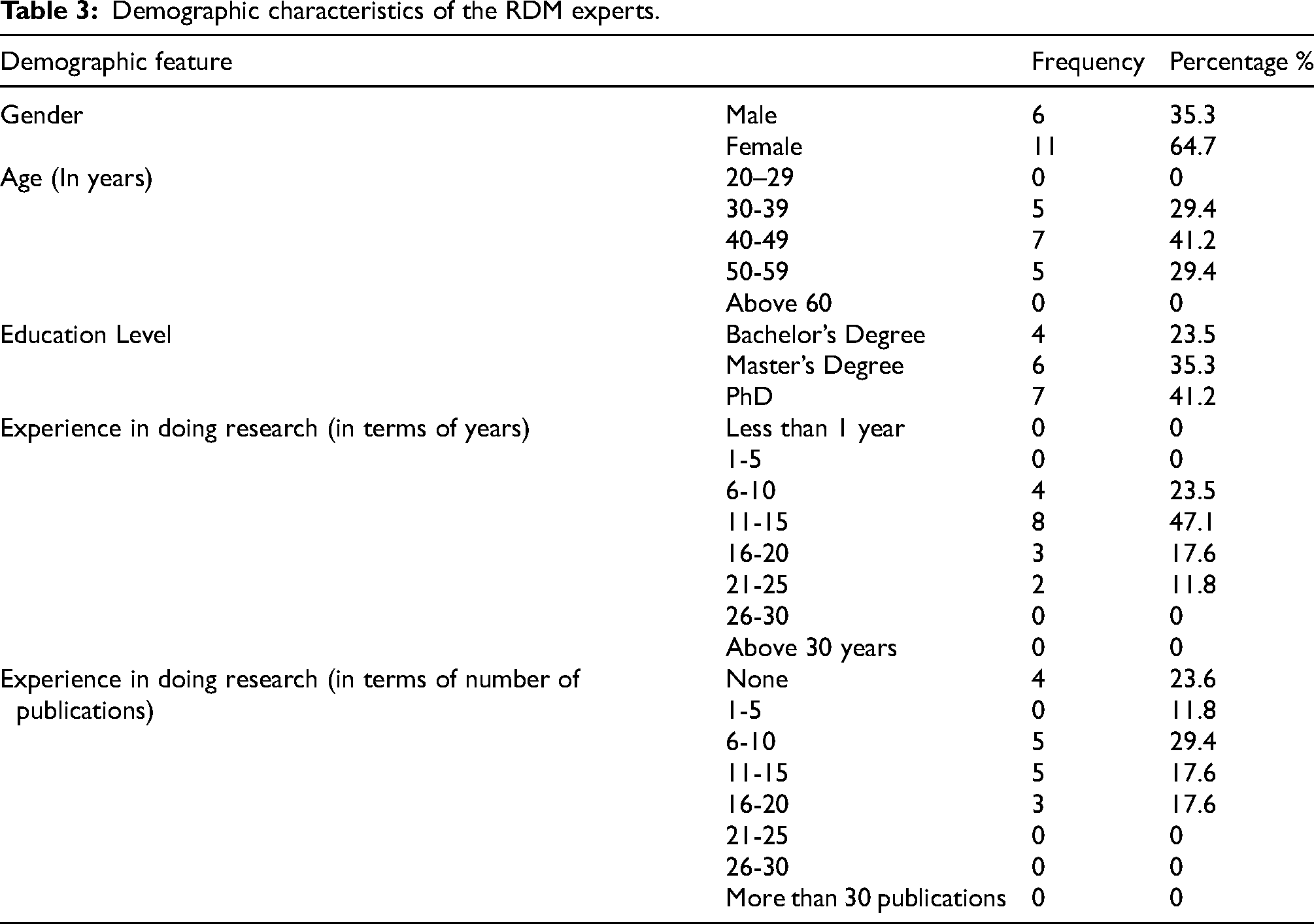
The majority of the RDM experts had the education level of a PhD. Most of them possessed working experience of more than ten years. Other results are shown in Table 3.
Likert and fuzzy scale.
Demographic characteristics of the RDM experts.
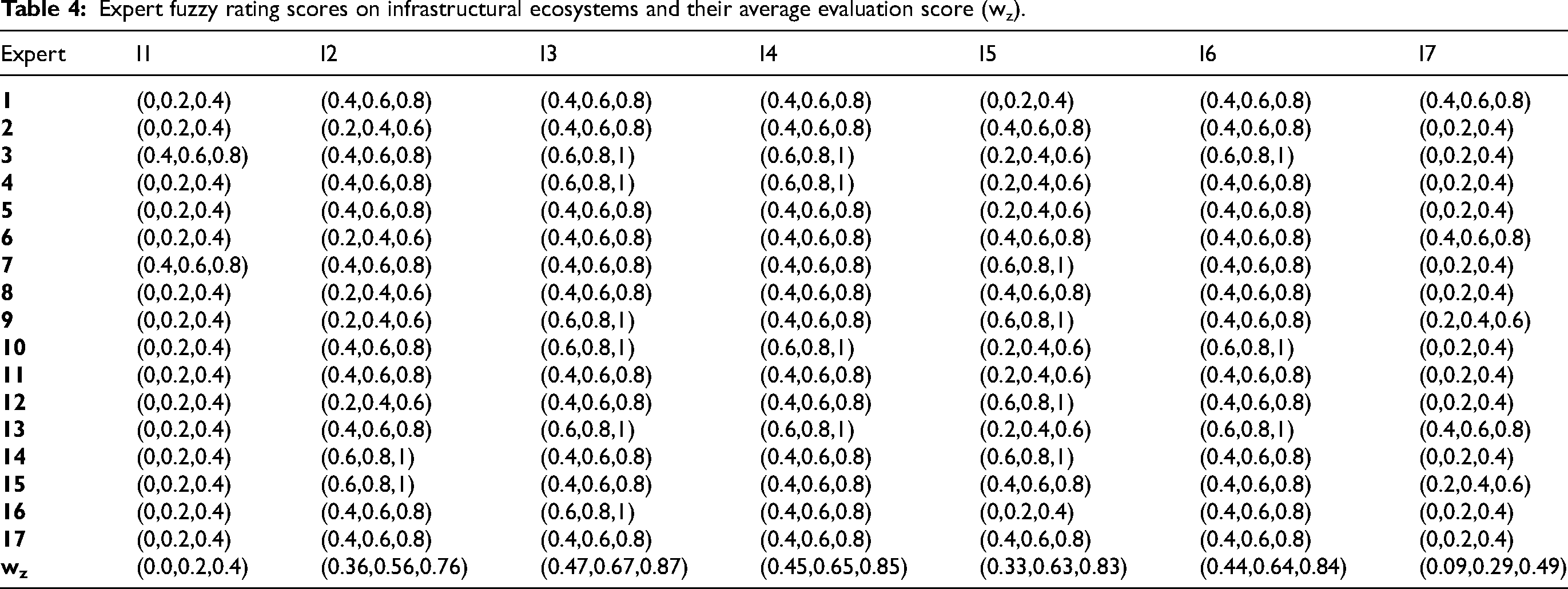
Expert fuzzy rating scores on infrastructural ecosystems and their average evaluation score (wz).
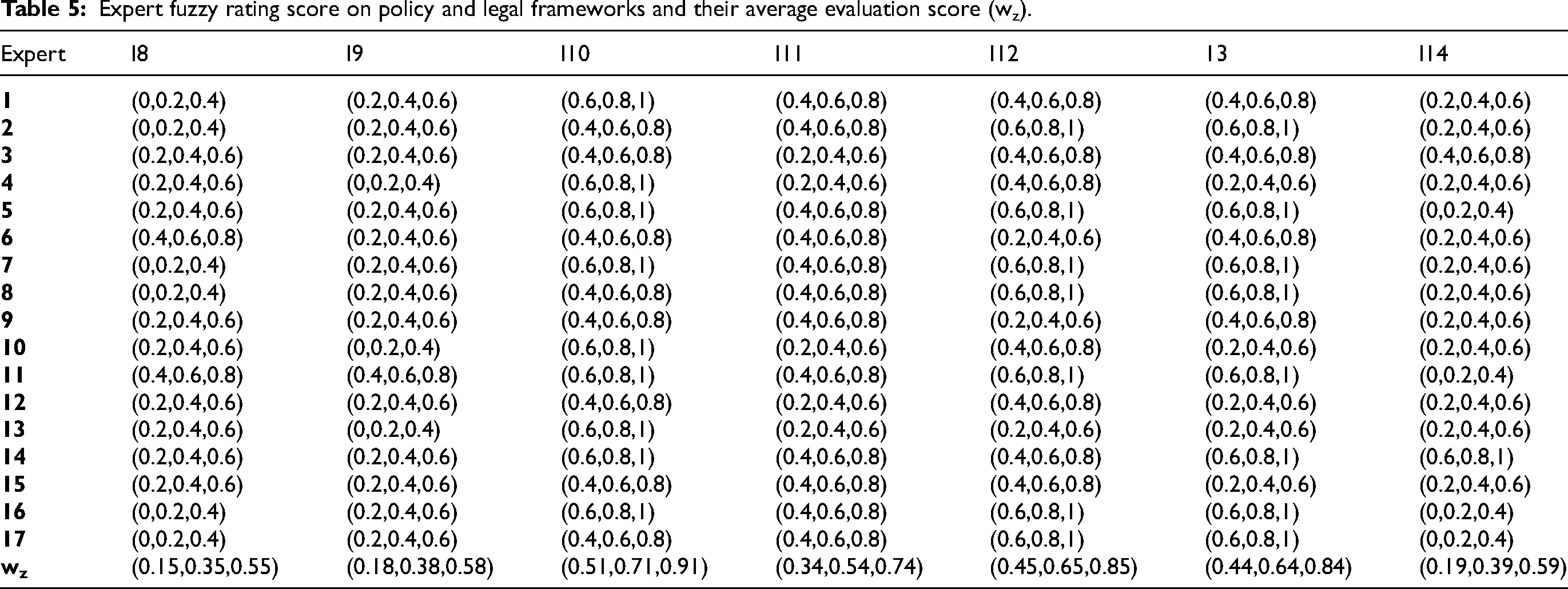
Expert fuzzy rating score on policy and legal frameworks and their average evaluation score (wz).
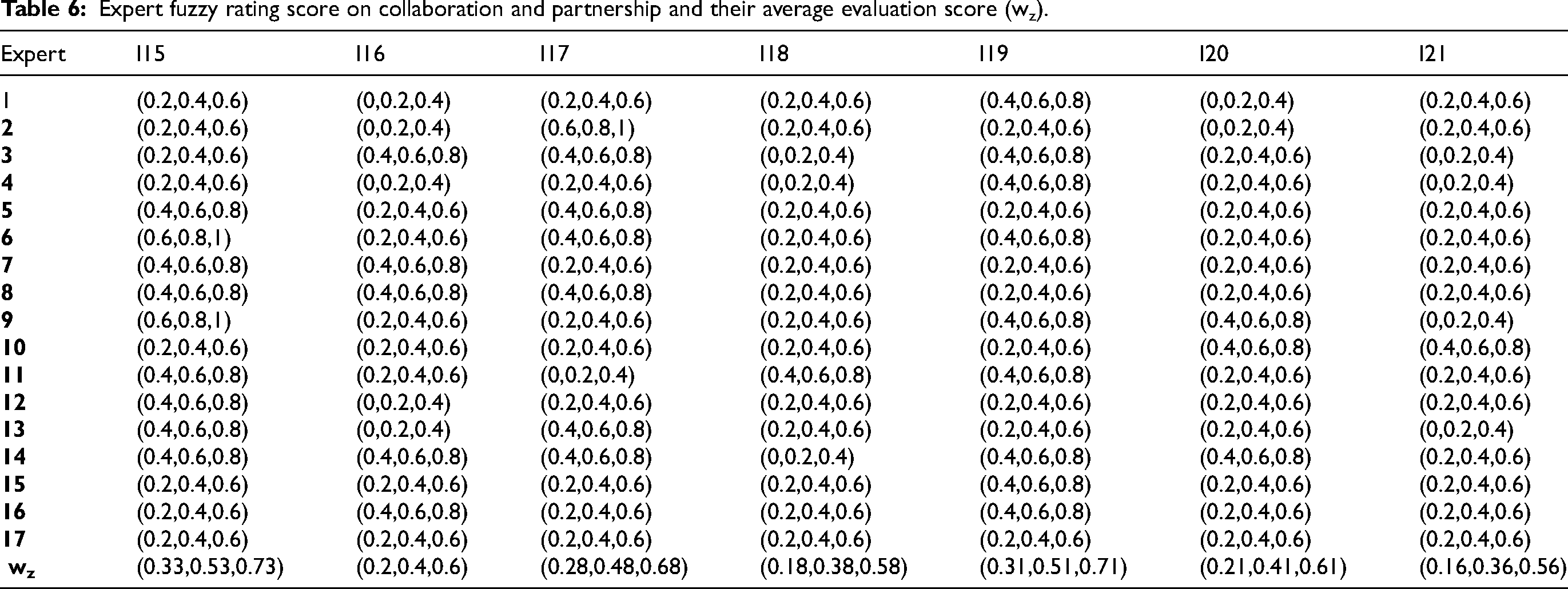
Expert fuzzy rating score on collaboration and partnership and their average evaluation score (wz).
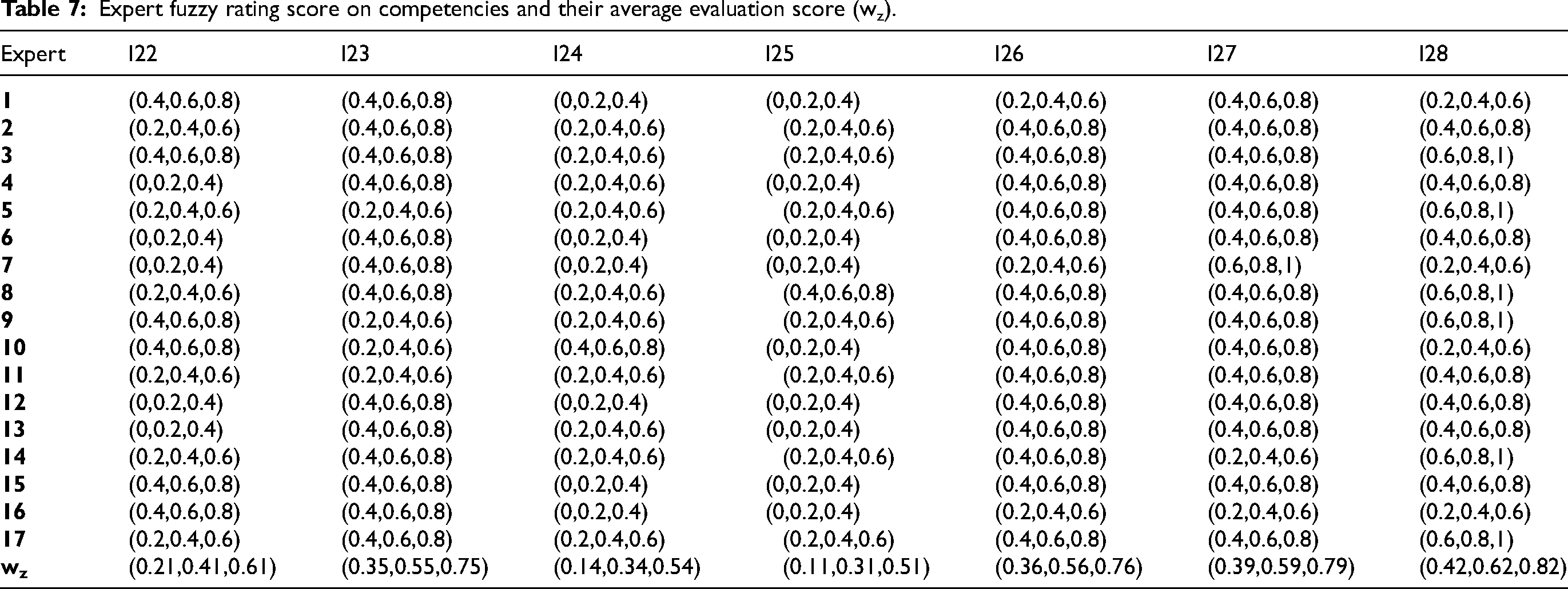
Expert fuzzy rating score on competencies and their average evaluation score (wz).
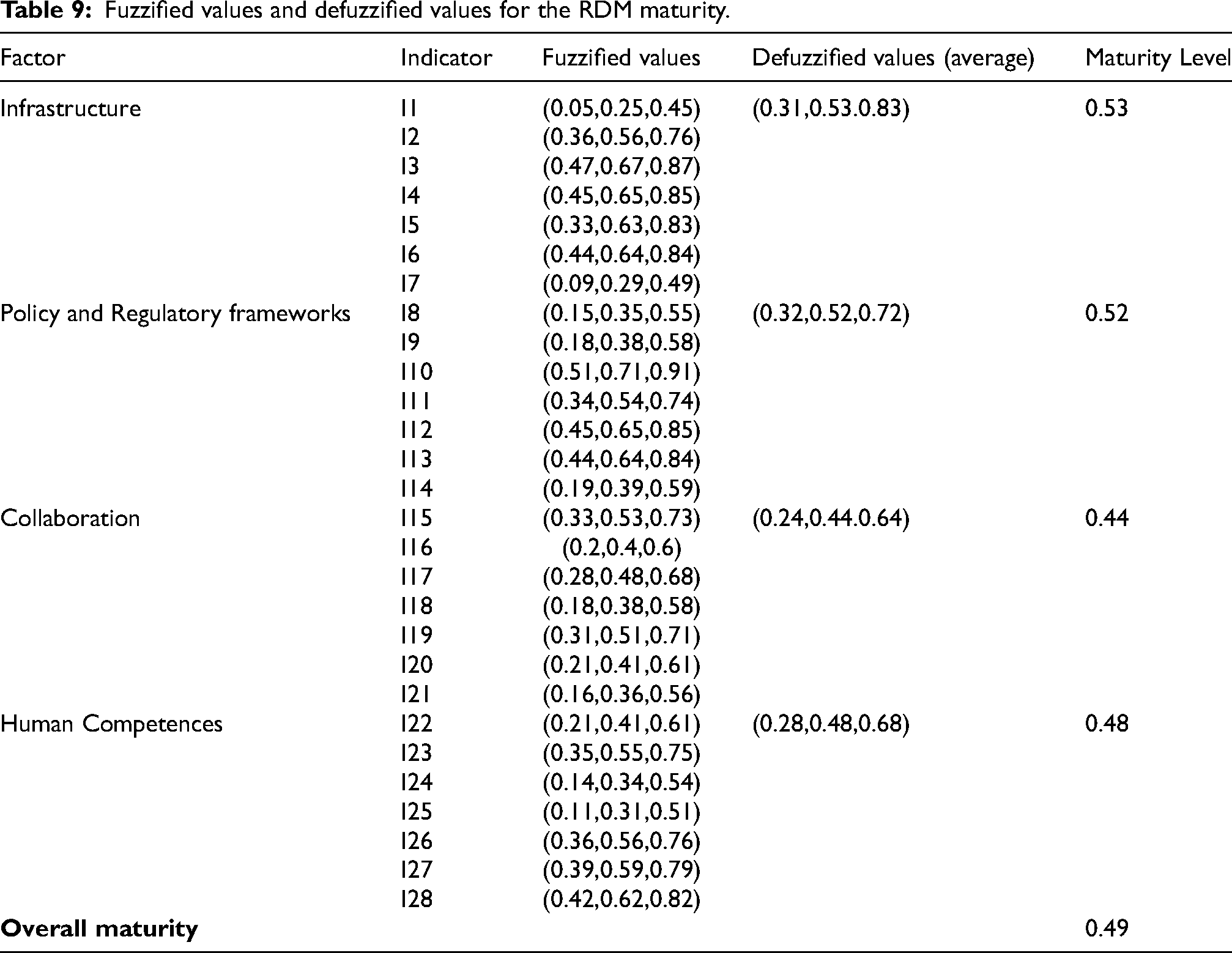
Fuzzy score decision.
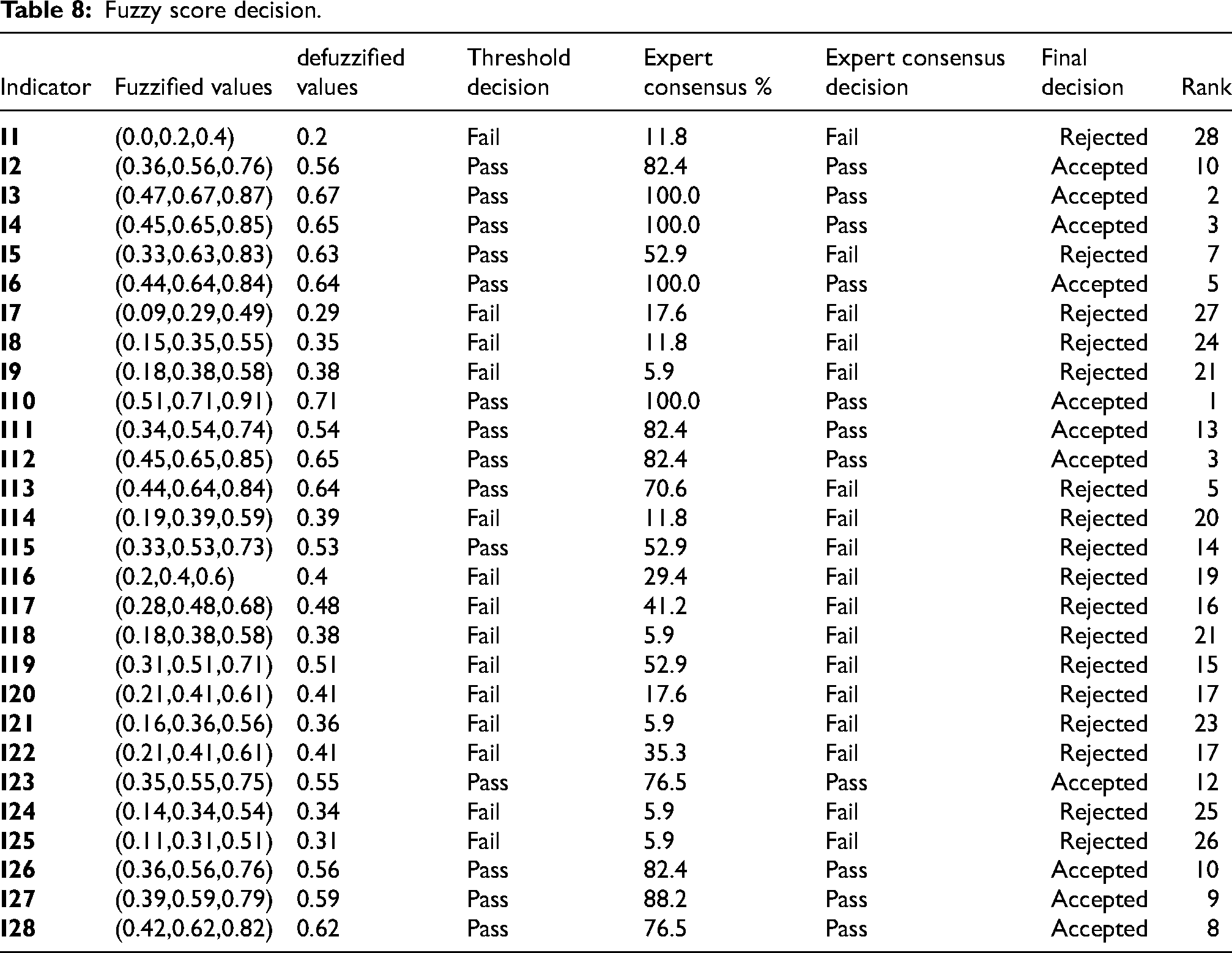
Fuzzified values and defuzzified values for the RDM maturity.
Indicators for the RDM practices
The study presented the expert fuzzy score for each RDM ecosystem to obtain the average fuzzy score (wz). Tables 4, 5, 6, and 7 show the detailed score for each foundational RDM ecosystem, its associated indicators, expert rating, and the average score for each indicator.
The fuzzy average score (wz) for each indicator, calculated in Tables 4, 5, 6 and 7, are now used as the fuzzified values for Table 8, which also helps to derive the average defuzzified values of the indicators. Moreover, the fuzzy average score (wz) was used to calculate the total mean (μ) and the standard deviation (σ), which then calculated the data-driven threshold (d) as shown in equations (i) to (iii). From these equations, the estimated total mean and standard deviation were 0.4454 and 0.0372, respectively, which led to the data-driven threshold of 0.4824. The indicators’ average defuzzified values (wz) were then compared against the data-driven threshold value. Results for the threshold decision, expert consensus, final decision and other detailed analysis are shown in Table 8.
Results displayed in Table 8 show that the RDM experts accepted eleven (11) out of twenty-eight indicators for the RDM practices in Tanzania. Out of these eleven indicators, four (4) indicators were related to infrastructures, three (3) were associated with legal and regulatory frameworks, and the other three (3) were linked with human competencies. Infrastructural indicators that passed both data driven threshold value (0.52) and expert consensus (75%) were; presence of RDM infrastructures for data storage and archiving (I2), internet connectivity (I3), security, backup and recovery systems (I4), and affordability of infrastructural ecosystems for the RDM practices (I6). Legal and regulatory framework indicators that passed the threshold values were the existence of institutional ethical review boards (I10), the presence of institutional and national guidelines for data sharing/ data agreements (I11) and the presence of legal guidance on research data ownership and intellectual properties (I12). For the case of competencies, indicators that passed both data-driven threshold values and expert consensus were; the presence of data quality and quality control competencies (I26), the availability of the RDM training (I27), and the presence of RDM infrastructural ecosystems competencies (I28). Moreover, the study noted that there were no indicators from collaboration and partnership that passed both data-driven threshold values and expert consensus. Furthermore, the findings (Table 8) show that three (3) indicators passed data-driven threshold value but did not pass the expert consensus. These indicators were; the presence of RDM infrastructures for the entire research data lifecycle (I5), the existence of a national agency overseeing RDM practices nationally (I13), and the presence of RDM collaborations within the discipline (I15). Other fifteen (15) indicators did not pass both data-driven threshold values and expert consensus. Out of twenty-eight indicators (28), infrastructural ecosystems appeared to have more indicators passed both data-driven threshold values and expert consensus. In contrast, collaboration and partnership did not have any indicators that were accepted at the final decision as the indicators for the RDM practices in Tanzania. Moreover, the existence of institutional ethical review boards (I10) was the higher-ranked indicator, followed by internet connectivity (I3) and Security, backup and recovery systems (I4). At the same time, the presence of RDM infrastructures for data curation processes (I1) was the least ranked indicator. More details are shown in Table 8.
Maturity of the RDM practices in Tanzania
Results shown in Table 9 indicated the maturity of different RDM ecosystem dimensions, namely, infrastructure, policy and regulatory frameworks, collaboration and human competencies with their respective indicators. Over these four dimensions, infrastructure appeared to be ranked higher with the defuzzified value of 0.53, followed by policy and Regulatory frameworks with a defuzzified value of 0.52, then human competencies, with a defuzzified value of 0.48 and the last dimension was found to be collaboration with the defuzzified value of 0.52. Regarding the DMM, these fuzzy numbers fall within the defined zone, maturity level 3 (i.e. 0.4 to 0.6; please see Table 9 for more reference). Overall, the maturity for all four dimensions was found to be 0.49, which also falls under the defined zone, maturity level 3 of DMM.
Discussion
The study identified eleven (11) indicators which show the presence of RDM practices in Tanzania, as agreed by experts. On the aspect of infrastructures, experts agreed that the indicators for the RDM practices include the presence of RDM infrastructures for data storage and archiving, internet connectivity, security, backup and recovery systems, and affordability of infrastructural ecosystems for the RDM practices. The presence of the infrastructures for data storage and archiving as one of the identified indicators for RDM ecosystems tallies with the findings of Ribeiro (2021), which was conducted in European Union member states, who also found it as one of the indicators for the RDM practices. However, in this article by Ribeiro (2021), other indicators were interoperability, infrastructure for data access and discoverability, and scalability of infrastructures. In contrast, the findings differ from those of Karagiannis et al. (2013), who focused on the United States and found the presence of infrastructures for the virtual research environments, scalability of infrastructures, and the presence of platforms for research data sharing as the indicators for the RDM practices. The differences in these findings could be attributed to the context in which these studies were conducted, as the indicators may vary with the regional priorities, technological levels and the level of the RDM maturity attained by that specific region (Bahim et al., 2020; Karagiannis et al., 2013; Marlina et al., 2022; Ribeiro, 2021). The findings of this study signify that infrastructures are the cornerstone behind the RDM practices. However, the diversity in indicators signals the multifaceted nature of the practices and differences in maturity across regions.
Moreover, institutional ethical review boards, institutional and national guidelines for data sharing/ data agreements, and legal guidance on research data ownership and intellectual properties were the only policy and regulatory framework indicators that passed the data-driven threshold score and expert consensus. These are among the critical components of RDM practices (Gökalp et al., 2022; Lyon et al., 2014). They address ethical issues around RDM practices and data ownership, which are silent features of RDM practices (Cech et al., 2018). The existence of institutional ethical review boards addresses compliances with ethical concerns and privacy laws, safeguarding sensitive data and adherence to international standards on ethical concerns such as the Health Insurance Portability and Accountability Act (HIPAA) and General Data Protection Regulation (GDPR) (Borgman, 2018; White et al., 2022). This indicator (existence of institutional ethical review boards) is congruent with another indicator, which is the presence of institutional and national guidelines for data sharing/agreements. Thus, they provide RDM support by offering data-sharing frameworks, which offer trust among the key RDM actors. Legal guidance on research data ownership and intellectual property is another indicator guiding RDM ownership in disputes and mandates (Ng’eno and Mutula, 2018). Generally, institutional ethical review boards provide moral responsibilities in managing data beyond legal requirements. This indicator also indirectly supports two other indicators (guidelines for data sharing/ data agreements and the presence of legal guidance on research data ownership and intellectual properties). It is thus an essential indicator for making public trust in the RDM practices. These indicators do not only facilitate the RDM practices, but they also inform on the stages of the RDM maturity as they signify that the country is now trying to move from basic RDM compliances to the enforcement and integration stage which supports advanced stage of policy and regulatory frameworks in RDM practices (Borgman, 2018; Masinde et al., 2022; White et al., 2022).
The study also noted the presence of data quality and quality control competencies, availability of RDM training, and the presence of RDM infrastructural ecosystems competencies as indicators for the RDM practices that fall under the competence dimension. Data quality and quality control competencies are central to RDM practices as they serve as the link between other competencies in RDM practices (Anunobi and Udem, 2015; Buhomoli and Muneja, 2023a; Cech et al., 2018). Scholars (Baas et al., 2020; Masinde et al., 2021; Peng et al., 2019) have indicated that institutions with a well-designed framework for data quality and quality control have a higher chance of excelling in RDM practices. The presence of RDM infrastructural ecosystem competencies as one indicator for the RDM practices in Tanzania entails its usefulness in enhancing the RDM practices. This speaks on the needed expertise for the scalability, security, data-sharing platforms and other infrastructures required for the RDM practices (Karagiannis et al., 2013; Marlina et al., 2022; Ribeiro, 2021). This finding is incongruent with the earlier findings that most of the indicators for the RDM practices were related to infrastructural ecosystems. Moreover, most of these indicators are operational as they are needed in the daily management of research data (Al-Sai et al., 2023; Saxena, 2017). Institutions in the country that aim to have sustainable RDM practices must invest in other higher specialised competencies like data governance and data stewardship competencies, which were not found by this study to be among the indicators for the RDM practices in Tanzania. The presence of these indicators is directly linked to the maturity of RDM practices.
The study also provides some insights into the RDM maturity in Tanzania as adopted by DMM, classified from level (low maturity) 1 to level 5 (higher maturity). Despite the infrastructural dimension appearing to have a higher number of fuzzy scores, which indicates higher maturity compared to other dimensions, its maturity was intermediate (0.53), suggesting moderate progress of established RDM infrastructural ecosystems. This cements the earlier findings on indicators, that the country has basic infrastructures for the RDM practices to be incubated but may need more advanced tools for the RDM practices to advance. For example, most of the RDM infrastructure indicators were fundamental for initiating the practices, such as affordability of infrastructures, internet connectivity, security systems, and infrastructures for data storage. However, the more advanced indicators, such as the presence of the data curation infrastructures and systems interoperability, were not found as indicators under the infrastructures dimension, contributing to its maturity. The presence of intermediate levels of infrastructural ecosystem maturity is cemented by Belghith et al. (2021) and Cech et al. (2018), who showed that most institutions at this level try to balance between the RDM infrastructures and the availability of resources. However, this maturity level, especially for developing countries, is enough and mirrors the country's commitment to RDM practices, even in settings with limited resources. However, the findings suggest the improvements of infrastructures as the current infrastructures may have some challenges on RDM practices, especially in multi-institutional or interdisciplinary projects (Karagiannis et al., 2013; Palsdottir, 2021). Similarly, several studies consistently see infrastructure as the most advanced RDM dimension (Cox et al., 2017; Tenopir et al., 2017).
Legal and regulatory frameworks were ranked second in the maturity dimension, with an average fuzzy score of 0.52. Legal and regulatory frameworks are essential in RDM practices as they provide direction and structures for the RDM practices. Scholars (Cech et al., 2018; Lyon et al., 2014; Ng’eno and Mutula, 2018; White et al., 2022) urge that legal frameworks provided at this level are basic frameworks for protecting research data. Typically, legal frameworks at this stage are formulated to address the basic RDM practices and their intermediate needs, which lack enforcement mechanisms and scalability. However, basic RDM legal frameworks provide an avenue at which complex RDM systems may be built, which will allow more advanced legal frameworks to be established. On the same note, if not careful, there is the possibility of having fragmented regulatory frameworks when most of the institutions in the country are in this stage of maturity, leading to the RDM operating in silos. Therefore, strengthening legal and regulatory frameworks is essential for attaining higher RDM maturity. Also, RDM policies should align with international standards in order to address all the vital aspects of RDM practices.
The findings have also indicated significant progress in human competencies. Cox et al. (2017) urge that the RDM competencies should be accompanied by the relevant infrastructures and legal and regulatory frameworks to realise their full potential. The assertion aligns with the findings found in this study, as there are slight differences in maturity between infrastructures and legal and regulatory frameworks. Moreover, the low maturity in collaboration and partnership signifies the low engagement between stakeholders in the RDM ecosystems. Collaboration, another foundation in RDM practices, facilitates sharing other RDM dimensions such as infrastructures, research data, expertise, and others. These findings are in harmony with those of Cox et al. (2017) and Konkiel (2020), who found a lack of formalised partnerships, an absence of shared RDM platforms and the operation of RDM practices in silos. Benefitting from RDM best practices established in other environments is difficult without collaborations. Tenopir et al. (2020) suggest that RDM partnerships through international initiatives or national consortia may enhance the maturity in this area.
Recommendation and areas for further studies
This study recommends that policy-makers and other decision-makers should prioritise collaboration and partnership, infrastructural developments, and human competencies while considering the RDM policies and regulatory frameworks that facilitate other dimensions to mature. The study was limited to the expert opinions that were analysed through Fuzzy Delphi methods; taking different approaches may yield different results. The study was also limited to the foundational RDM ecosystems, other RDM dimensions may produce different results. Further research on RDM maturity using other dimensions is recommended as the area for further study. In addition, a comparison of the cross-country RDM indicators and maturity across different countries is also recommended for further studies.
Conclusion
The study concludes that the indicators for the RDM practices are unevenly distributed across the dimensions, with the infrastructures dimension being more protruding with more indicators that have met data-driven threshold value and expert consensus. While there is some progress in RDM infrastructures, the study has found collaboration and partnership as the RDM dimension that needs more attention. Moreover, the study noted the need for a balanced approach to aligning infrastructural ecosystems, policy and legal frameworks, collaboration and partnership, and human competencies with RDM practices.
Footnotes
About the authors
