



Abstract
The systematic review analyzed 27 works of literature related to the skills and competencies needed by academic librarians to use information technology (IT) tools effectively in the digital age. The review is carried out following the recommended Preferred Reporting Items for Systematic Review and Meta-Analysis (PRISMA) guidelines. Relevant literature was extracted from eight major academic databases, including EBSCOhost, Emerald Insight, Scopus, Sage Journal, Web of Science, Taylor and Francis, ScienceDirect, and Google Scholar. The retrieved articles were exported to RefWorks to identify duplicates and screen articles meeting the inclusion criteria. Only articles that are empirical in nature, published in a peer-reviewed journal, written in English, published between 2020 and 2024 with affiliation from five countries (Nigeria, South Africa, Pakistan, India and the USA) and addressing either one or all the objectives of this study were used. The study determined various IT tools used in academic libraries to improve service delivery in terms of efficiency, accessibility, and quality. This trend requires librarians to develop advanced digital skills and competencies to cope with the digital world. The study also identified challenges encountered by academic libraries regarding the implemented IT tools. The recommendations based on the findings were outlined.
Keywords
Introduction
Rapid technological evolution in the digital era has fundamentally reshaped the landscape of academic libraries. With advancements such as Artificial Intelligence (AI), cloud computing, big data, and the Internet of Things (IoT), libraries are increasingly required to adapt and innovate to maintain relevance and effectiveness (Bharti & Verma, 2021). These technologies enable academic libraries to surpass conventional service restrictions and impose new librarian skills and competencies requirements. Akwang (2021) highlights the increasing demand for librarians to handle and use Web 2.0 technology and other digital tools effectively to improve service provision and engage users.
Academic librarians are highly motivated to develop advanced IT skills, aligning with the overall educational and professional trends in library and information science (LIS). This highlights the importance of ongoing learning and the ability to adapt to technological advancements (Ferguson & Harrington, 2020; Raju, 2020). This systematic literature review (SLR) focuses on analyzing the fundamental skills and abilities that librarians need in today's technology-driven workplace. This text examines how these skills are cultivated within existing educational systems and highlights librarians’ difficulties when obtaining and enhancing these abilities.
This study adheres to the Preferred Reporting Items for Systematic Reviews and Meta-Analyses (PRISMA) methodology, which guarantees a systematic and comprehensive literature analysis (Page et al., 2021). Contemporary research highlights the crucial significance of technology in restructuring library services and operations. Research conducted by Ashiq et al. (2022, 2021) highlights the significant changes brought about by digital technologies, especially during the COVID-19 pandemic. This crisis was expedited using digital tools and required quick adaptations in LIS management approaches (Chisita et al., 2022).
The review seeks to offer complete insights into the changing function of librarians in a digitally enhanced environment by integrating research findings from other studies. The article explores the incorporation of new technologies into library functions, the enhancement of librarian skills in managing these technologies, and the educational and systemic difficulties encountered by the profession in this setting. This analysis provides valuable insights into the present condition of IT competencies among librarians and guides the establishment of future strategies for professional growth and improvement of LIS.
Research objectives and questions
The following are the objectives that guided this study:
To determine the IT tools used in academic libraries. To determine the IT skills and competencies of academic librarians. To identify the challenges encountered by academic libraries regarding the implemented IT tools. Which IT tools could be used to provide services to users in academic libraries? What are the skills and competencies required to capacitate academic librarians to better serve their users? What could obstruct the usage of IT tools in academic libraries?
Linked to the objectives, the following research questions of this study:
Method
This study used PRISMA as a research methodology. The PRISMA 2020 checklist developed by (Page et al., 2021) was used to structure the title of this article, research objectives, research methods, search strategies, results, and criteria. Although PRISMA has been developed for use in healthcare, it has been proven equally relevant to other fields (Ashiq et al., 2022). PRISMA is used to systematically review and evaluate published work on the skills and competencies of academic librarians, IT tools used to provide quality LIS in academic libraries, and challenges encountered with IT tools. PRISMA comprises four elements: identification, screening, eligibility, and inclusion. These four elements are presented in a diagram to demonstrate the Systematic Literature Review (SLR). The diagram presents the systematic review process adopted for this study.
The SLR was based on the objectives of this study. As a result, the literature search process was based on these objectives to thoroughly examine the relevant content of published peer-reviewed journal articles. The relevant literature is selected based on eligibility and is analyzed through a thematic approach.
Search strategy and screening process
Various techniques to search the identified databases were applied to ensure that relevant articles were retrieved. The search phrases used are as follows:
(“Information technologies tools academic libraries” AND “Information technology skills and competencies of librarians” AND “Skills competencies academic librarians” AND “Challenges librarians information technology tools”)
AND
(“Information technologies in academic libraries” OR “Benefits of using Information Technology Tools in academic libraries” OR “Skills for academic librarians” OR “Competencies for academic librarians” OR “Challenges with information technologies in academic libraries” OR “Challenges for librarians in using information technology tools”)
Applied search strategies and filters
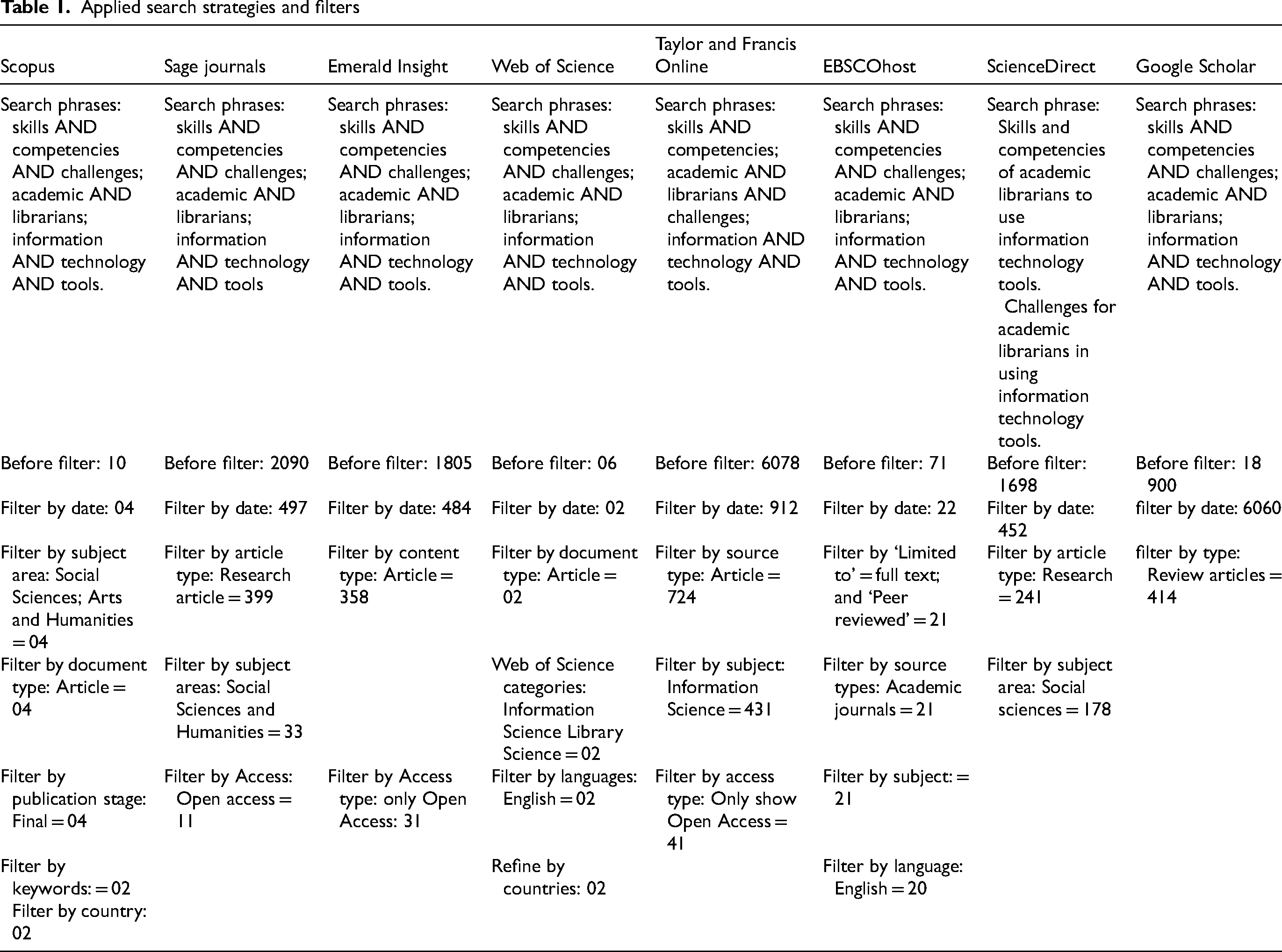
There were various databases that could have been used to search for relevant articles for this study. However, only eight databases were selected to find full-text journal articles that could address the objectives of this study. These databases are Emerald Insight, EBSCOhost (Searches all text fields), ScienceDirect, Google Scholar (Searches all text fields), Taylor & Francis, Scopus (Search within article title, abstract, keywords), Sage Journals, and Web of Science. The selected databases focused primarily on the subjects related to Library and Information Services. The inclusion criteria were considered when searching for relevant articles by applying filters. Only articles published between the years 2020 and 2024, and the authors should be affiliated with the selected five countries: Nigeria, South Africa, Pakistan, India, and the United States of America (USA). The rationale for the selected countries was to address diversity and to determine the authors’ discoveries or findings on the usage of information technology tools, the skills and competencies that academic librarians should acquire, and the challenges encountered with the adoption and usage of information technology tools. The articles must be peer-reviewed, empirical and/or conceptual in nature, and must be published in peer-reviewed journals. The articles that did not meet the inclusion criteria were removed. Table 2 indicates the inclusion and exclusion criteria applied in this study.
Inclusion and exclusion criteria
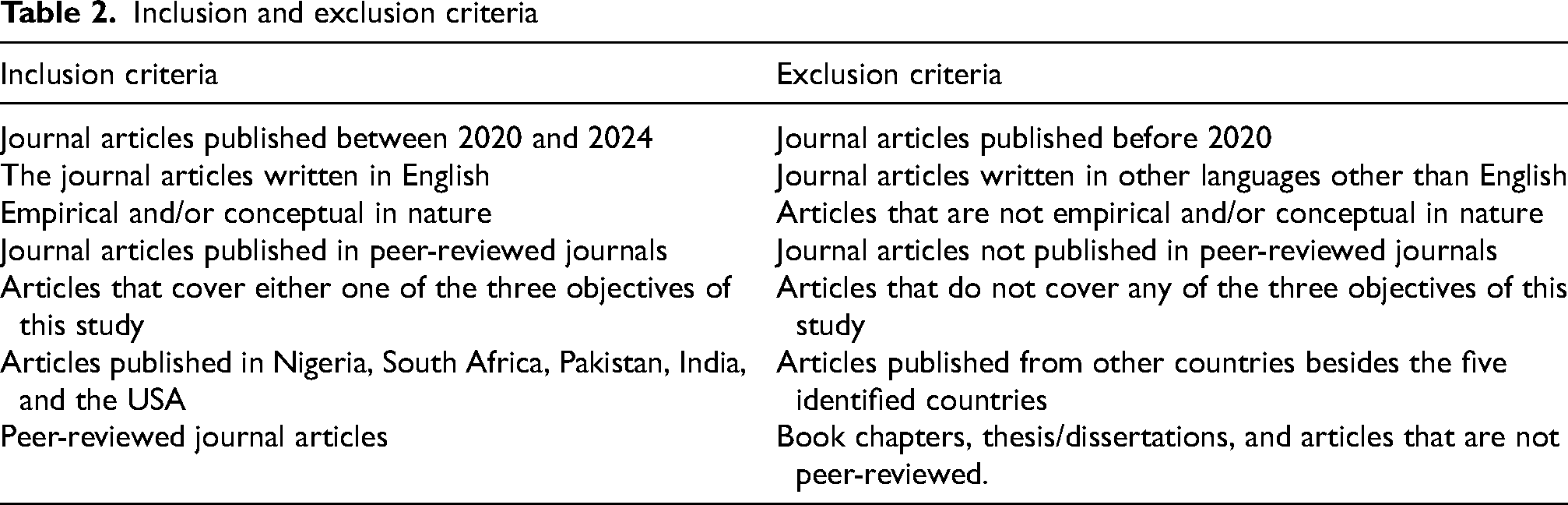
This comprehensive approach covers relevant topics and ensures the study's validity through a stringent review of article quality and relevance, explicit inclusion and exclusion criteria, and the removal of duplicates and non-compliant entries. Emphasizing high-quality, pertinent literature supports the study's objectives and increases its reliability. Quality assurance was done to determine the risk of bias, and the relevancy of the selected articles was determined by Author 1, Author 2, and Author 3, where the agreement was made on the articles to exclude and include for writing this paper.
Results
The researchers conducted a comprehensive search for journal articles in eight identified databases and reviewed titles, keywords, abstracts, and introductions of studies focusing on IT tools used in academic libraries, IT skills and competencies for academic librarians, and the challenges encountered by academic libraries regarding the implemented IT tools to ensure alignment with the research objectives. The relevance of the articles was determined by their adherence to predefined inclusion criteria, with the most recent article selected in cases of duplicates.
The total number (n = 699) of records were retrieved from databases: Scopus, Sage Journals, Emerald Insight, Web of Science, Taylor & Francis, EBSCOhost, ScienceDirect, and Google Scholar. Scopus database recalled 10, and 2 articles were recorded. Sage Journals database recalled 2090, and 11 articles were recorded. Emerald Insight database recalled 1805, and 31 articles were recorded. Web of Science database recalled 6, and 2 were recorded. Taylor & Francis database recalled 6078, and 41 were recorded. EBSCOhost database recalled 71, and 20 articles were recorded. ScienceDirect database recalled 1898, and 178 were recorded. Google Scholar recalled 18,900, and 414 were recorded. The PRISMA checklist was used to determine whether all aspects of a systematic review are covered. Furthermore, the titles and abstracts were scrutinized based on the research objectives to determine the relevance of the content of the articles.
Figure 1 presents a graphical overview of the four-phase PRISMA flow diagram used in this study.
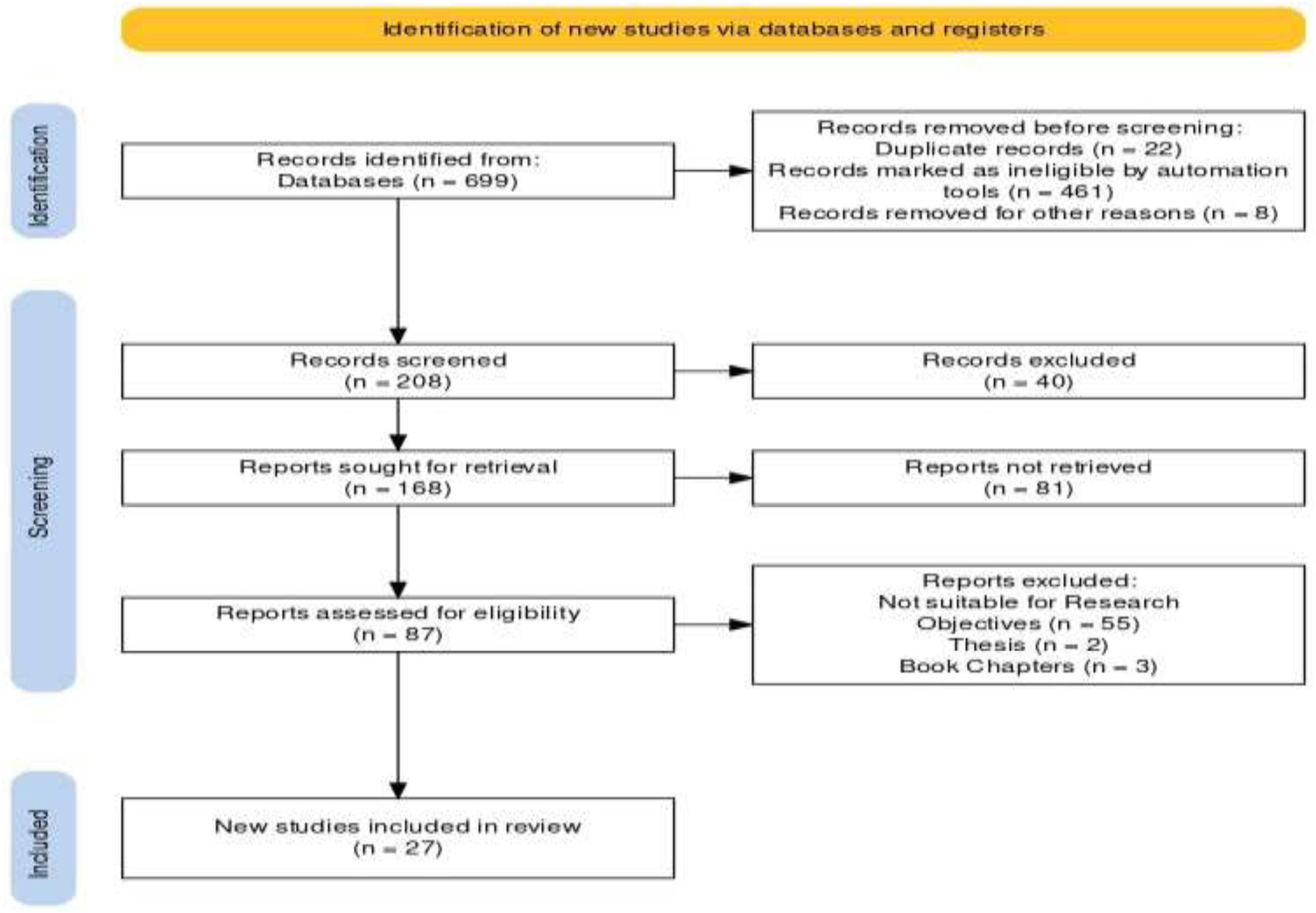
Four-phase PRISMA flow diagram (Page et al., 2021).
All the bibliographic information retrieved (n = 699) was exported into the RefWorks software to identify duplicates, ineligible sources, and other sources that do not meet the inclusion criteria. Through the use of Refworks, the duplicates (n = 22), ineligible records (n = 641), and records not written in English (n = 8) were discarded following the PRISMA guidelines. The potential legible records (n = 208) were selected based on the interpretation/analyzing titles, abstracts and introduction, but (n = 40) records were excluded because they were not full-text articles. The remaining (n = 168) were considered for in-depth analysis, whereby (n = 81) records were excluded. The remaining (n = 82) were considered legible and had the potential to meet the objectives of this study. However, the researchers had to screen these records further based on countries falling within the inclusion criteria. As a result, (n = 55) records were excluded, and (n = 27) records were legible and met the study's inclusion criteria.
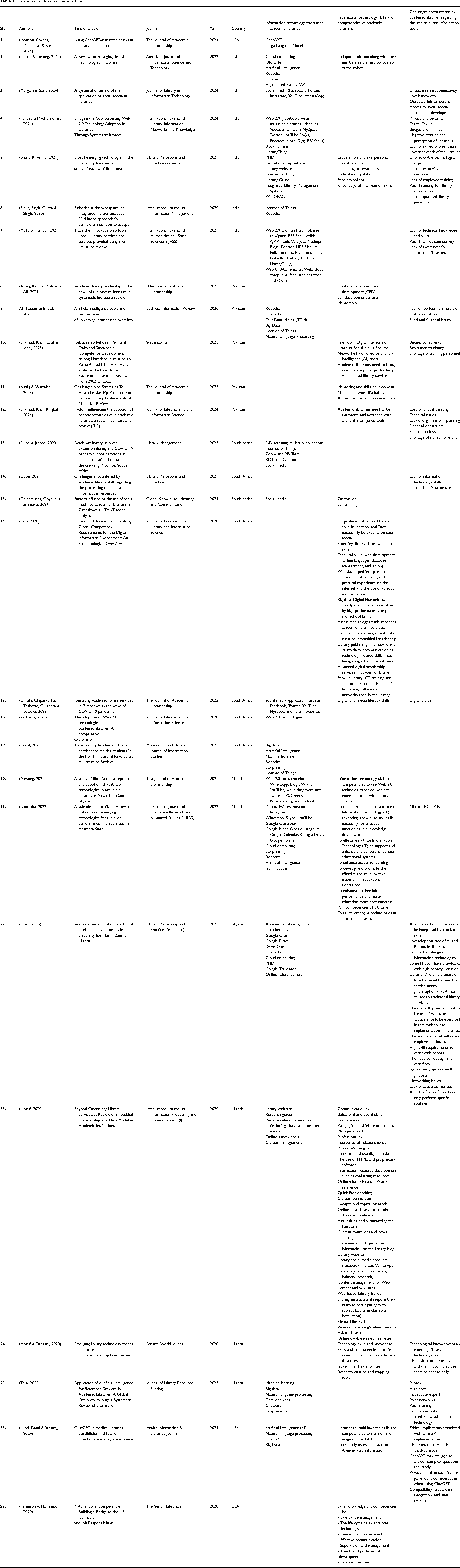
Table 3 below presents a summary of the extracted datasets and indicates the authors, title of the articles, name of the journal, date of publication, countries, and the three variables anchoring this study: IT tools used in academic libraries, IT skills and competencies of academic librarians, and challenges encountered by academic libraries regarding the implemented information tools.
Data extracted from 27 journal articles
Information technology tools used in academic libraries
This systematic review determined and stipulated comprehension of the IT tools used in academic libraries as per the first objective of this study. These IT tools have been reported in 19 research studies out of the 27 selected (see Table 3). A brief overview of each is described as follows:
Web 2.0 technologies
Academic libraries use these IT tools to be on par with the IT advancement, thus meeting the information needs of library clients. Based on the studies conducted by (Akwang, 2021; Chiparausha et al., 2024; Chisita, Chiparausha, Tsabetse, Olugbara & Letseka, 2022; Dube & Jacobs, 2023; Margam & Soni, 2024; Mulla & Kumbar, 2021; Pandey & Madhusudhan, 2024; Ukamaka, 2022; Williams, 2020). Web 2.0 technologies that embrace social media platforms such as Facebook, Twitter, Instagram, WhatsApp, LinkedIn, YouTube, Skype, Wikis, multimedia sharing, Mashups, Vodcasts, MySpace, FAQ, Podcasts, blogs, Digg, RSS Feeds, Bookmarking, and LibraryThing. These Web 2.0 tools are primarily used, indispensable, and incorporated into academic libraries for effective and efficient library services. It has been signified that Web 2.0 technologies are gaining momentum and play a significant role in the digital library, ranging from promoting library services and information resources to being accessible via IT channels, and are used to reach a large audience because of the popularity amongst the target group. Web 2.0 technologies have the potential to invade and reshape the paradigm and quality of academic library services by revolutionizing the roles and functions of academic libraries. These are Web 2.0 technologies that academic libraries should adopt, as most library users are tech-savvy.
Chat generative pre-trained transformer (ChatGPT) and BOTsa
Studies conducted by Emiri (2023); Johnson et al. (2024); Lund et al. (2024); and Tella (2023) pointed out that Chat Generative Pre-Trained Transformer (ChatGPT) is an AI tool employed by academic libraries to manage enquiries from library clients. It is fashioned by OpenAI and adopted by academic libraries to create human-like text responses for enquiries from library users. It can also write emails and make cold calls to library users about the library services. Other libraries use it as a marketing tool that automatically calls students and academics regarding the library services. Another type of Chatbot is BOTsa (a Chatbot) (Dube & Jacobs, 2023), a technological tool adopted by academic libraries to handle general enquiries from a designated email address. This Chatbot escalates complex enquiries to the academic librarians for further handling.
Big data
Big data refers to a substantial amount of structured, unstructured and semi-structured data, commonly known as datasets, generated by humans and machines and continue to grow over time (Ali, Naeem & Bhatti, 2020; Lawal, 2021; Lund et al., 2024; Tella, 2023). The datasets are complex to manage as they cannot be processed, stored and analyzed because of their volume, variety and velocity. Big data is considered a significant IT tool for academic libraries in this digital era, as it can create new opportunities and roles for librarians. Furthermore, academic libraries can use big data to manage, evaluate and analyze their data holdings. In addition, big data can be used by academic libraries to identify ways in which library operations and services can be improved. This can be done by analyzing big data using academic library information resources and identifying solvable problems to enhance service delivery in this digital era.
Cloud computing
Cloud computing, as designated by (Emiri, 2023; Mulla & Kumbar, 2021; Nepali & Tamang, 2022; Ukamaka, 2022), is a model for facilitating and supporting universal, convenient, and on-demand network access to information through a shared pool of configurable computing resources—for example, services, servers, networks, storage, and applications. This definition demonstrates the significance of cloud computing for academic libraries as it has many benefits, such as providing high-speed internet connection to access information resources anytime without geographical barriers, low administrative burden, building a network amongst librarians, librarians can be able to access the saved or stored documents on the cloud when they connect to any gadgets, effective for data management because of its safety measures regarding the data loss, high storage capacity, and its capability to share folders irrespective of size.
Artificial intelligence
Artificial Intelligence (Lawal, 2021; Lund et al., 2024; Nepali & Tamang, 2022; Ukamaka, 2022) brought possibilities of integrating the physical library with electronic resources as it assists academic libraries in increasing their operations through automated services, thus reducing operational costs. AI can also analyze various datasets and effectively search information resources in databases and library catalogues. Furthermore, AI encourages academic librarians to curate relevant collections. Another important aspect of AI is the development of virtual assistance for academic libraries whereby digital aid, supported by Machine Learning and Natural Language Processing, can assist library clients in navigating the library catalogue, answering or responding to general library enquiries, and providing Real-time language translation services.
Robotics
Robotics in academic libraries is described as motion planning and control, which includes kinematics and dynamics, mathematics, motion planning, hardware abstraction visualization, and collision detection (Emiri, 2023; Lawal, 2021; Nepali & Tamang, 2022; Sinha, Singh, Gupta & Singh, 2020; Tella, 2023; Ukamaka, 2022). Robotics has positively impacted academic libraries with various library operations such as searching information resources, security, automated storage, and self-service kiosks. Robots can provide human-like assistance to academic librarians and provide library services to library clients. They can also do shelf reading, RFID scanning, inventory management, shelving, and retrieving and locating library materials. Academic libraries opt for robots as they have significant benefits such as minimizing repetitive tasks, increasing processes and reducing error. With the advancement of information technology, robots can perform tasks that humans can do, saving costs and increasing productivity.
Google apps
Google Apps such as Google Classroom, Google Chat, Google Meet, Google Hangouts, Google Calendar, Google Drive, Google Translator, Google Forms, and Drive One are used in academic libraries to provide a safe platform for data while enhancing data security and reliability (Emiri, 2023; Ukamaka, 2022). The use of Google Apps in academic libraries has transcended the usual usage of Google for quick information searches. The various Google App features have opened a world of possibilities for academic librarians to expand on incorporating information and digital literacy to capacitate their clients better.
Internet of things (IoT)
The integration of the Internet of Things (IoT) has the potential to advance academic library services by automating operations such as self-check-in and check-out, stock monitoring user activities by providing usage data of various services and resources, then analyze this data to assist library management in decision making (Bharti & Verma, 2021; Dube & Jacobs, 2023; Lawal, 2021; Sinha et al., 2020). The application of IoT by academic libraries has benefits as is a current trend whereby the library clients can use and access library resources and services through smart gadgets, assists in reducing costs, improving library operations, remote management and monitoring of resource usage, automated statistics for decision making, and offers 24 h access and usage of online information with no geographical barriers.
Library website
The library website for academic libraries serves as a portal of information and knowledge that supports the clientele in teaching, learning, and research (Bharti & Verma, 2021). It represents the face of the library and displays its collection of print and electronic resources, promoting library services and resources to the clients. The library website also contains vital information such as LibGuides, subject databases, research tools for academics and researchers, institutional repositories, and the library catalogue. It is a platform library clients prefer for primary sources of information and services provided, announcements, and searching the library catalogue.
Library things
Library Things is a library catalogue system designed to make the catalogue more attractive, informative and engaging (Mulla & Kumbar, 2021; Pandey & Madhusudhan, 2024). This technology supplements the online library catalogue with features and data that attract library clients to browse, search and interact with the library catalogue. Cataloguing and accessing information materials has become easy with the introduction of Library Things, which can be accessed on the Web and mobile phones.
Machine learning
Machine Learning is used interchangeably with AI to support indexing and abstracting, reference services, cataloguing and classification, and collection development (Lawal, 2021; Tella, 2023). This technology provides a structure of tools to assist academic libraries in generating metadata for online resources. Using machine learning in academic libraries could revolutionize how library usage data is tracked and fast-track the accessibility of library resources by library clients.
Mashups
A mashup is a distinctive piece of content created by merging various content from various sources, such as images, data, music, text or video, to create hybrid library services (Mulla & Kumbar, 2021; Pandey & Madhusudhan, 2024). Academic libraries can use Mashups to enhance their websites and provide and showcase new library services. Mashups promote the combination of data with technologies and library services to develop new hybrid services. Academic libraries could use information mashups such as alert services to make users aware of the services available in the library.
Radio frequency identification (RFID)
Radio Frequency Identification, known as RFID, is a technology that employs electromagnetic fields to track and identify objects such as books, CDs, DVDs and other resources (Bharti & Verma, 2021; Emiri, 2023). The RFID tags attached to these resources store information (author, title, barcode and circulation status) of library resources. This system permits library books to be tracked and communicated automatically through radio waves to identify books with RFID tags. RFID is also helpful in monitoring misplaced books, providing security alerts for books that are not properly checked out, self-check-in and check-out of library books, and sorting books according to their shelving areas. At the same time, RFID poses challenges related to privacy concerns, high costs, and compatibility issues.
RSS feed
RSS Feed is a technology used to update library clients to remain updated on the library websites without visiting them (Akwang, 2021; Mulla & Kumbar, 2021; Pandey & Madhusudhan, 2024). This simply implies that library clients are up-to-dated with the latest developments in the library when new content is posted. The library clients receive a notification whenever the library posts something on library guides. To benefit more from RSS Feed, academic libraries must update their content regularly to receive frequent updates on the latest developments.
Web OPAC
Web OPAC is an online system adopted by academic libraries to assist clients in easily locating resources housed in the library (Mulla & Kumbar, 2021). It is designed for library clients to access and search the library catalogue remotely by title, subject, author, or keywords in a portal. This is done to locate information resources and learn about the availability or status of information resources without visiting the physical library. The library catalogue depicts databases of books, journal articles, eBooks, E-reserves, newspapers, and other online information resources.
Large language model (LLM)
Large Language Model (LLM) is a technological tool used to minimize the time spent on language editing and proofreading in academia (Johnson, Owens, Menendez & Kim, 2024).These authors also indicated that the Large Language Model (LLM) provided a specialized type of Artificial Intelligence (AI) that is considered an algorithm that can be used to generate answers to the questions posed based on the amount of data on which the machine is programmed. This technological tool is mainly valuable for researchers and academics engaging in research projects as it can improve the readability of drafts to speed up the submissions and publishing process.
3D printing
3D Printing provides access to information resources that are costly, unavailable or difficult to find (Lawal, 2021; Ukamaka, 2022). 3D printing technology encourages innovation in academic libraries as users can use it to create tangible models that can be touched and examined, therefore encouraging learning and creativity.
AI-based facial recognition technology
AI-Based Facial Recognition technology is used by academic libraries to track and monitor users, particularly in service areas (Emiri, 2023). This is one of the fast-growing artificial intelligence technologies in academic libraries, which extends beyond security features and assists libraries in gathering management data on users. It is an artificial intelligence that is programmed to recognize data on human facial features. Academic libraries adopted this technology to simplify and control access to the library. Instead of allowing library clients to use cards, they can gain access to the library facility through AI-based facial recognition technology.
Augmented reality
Augmented Reality is a technology that magnifies print materials by combining content using a mobile device to produce 3D objects, texts, and sound elements in a real-world environment (Nepali & Tamang, 2022). This technology can assist academic libraries in enhancing their services and resources through interactive displays that provide additional information and multimedia content aligned to the library collections and advance the reading experience.
Citation management
Citation management assists researchers in keeping track of books and articles as they are found by tagging and annotating them to create bibliographies and citations in Google Docs easily and Microsoft Word (Moruf, 2020). Citations are collected from various sources of information and then organized and compiled by creating a list bibliography. RefWorks Citation Management, Mendeley Cite, EndNote Keenious Research Explorer, Pro Word Cloud, Quillbot, Ref-n-Write Addin, Smartcite, The Writer's Diet and Writefull are reference management tools used during research to organize, compile and save the cited works. Academic librarians train researchers on how to use reference management tools for research projects.
Data analytics
Data Analytics is frequently used to analyze the usage of library collection and services, such as tracking gate counts and circulation statistics (Tella, 2023). Data analytics provides just-in-time management data of user profiles that could be linked to the types of services and products required in academic libraries. The data can be used for statistics and decision-making when determining the information resources that are primarily used. Using this data can also assist in streamlining the library operation, and device means to ensure that all the information resources have the same value.
Drones
Nepali and Tamang (2022) describe drones as one of the Emerging technological tools used by academic libraries mainly for document delivery. Researchers also use drones as data collection tools by sending them to areas where humans cannot reach. For example, observing dangerous animals’ behaviour means the drone is flown to the nature reserve where the animals are kept.
Natural language processing (NLP)
Natural Language Processing (NLP) is used primarily for chat reference services to analyze and process library data (Lund, Daud & Yuvaraj, 2024; Sinha, Singh, Gupta & Singh, 2020; Tella, 2023). By adopting the Natural Language Processing technique, academic libraries can categorize chats that need referrals and those that do not need referrals. Those that need a referral are sent to the relevant librarians for further handling. NLP is also used to handle big data and provide efficient methods for researchers as it is designed to inspect and visualize NLP by identifying frequently used keywords and subject headings.
Federated searches
Federated Searches is an information technology tool that searches multiple sites, catalogues and databases (Mulla & Kumbar, 2021). Users can retrieve results from various websites, repositories, intranets and network drives with a single search. The results are aggregated when presented to the user.
Folksonomies
Folksonomies are described as a classification system whereby users apply public tags to online items to make it easier to find later when needed (Mulla & Kumbar, 2021). They are commonly known as social classification, collaborative, social tagging, and social indexing, which require a group of users to collectively create and manage tags assigned to a particular content for easy categorization and organization. They also assist in organizing space to store or save personal information while enhancing the existing controlled vocabularies and creating an informal online community of interest.
Institutional repositories
Institutional Repositories is a database managed by academic libraries to preserve the indigenous content of the university community (Bharti & Verma, 2021). Academic libraries use institutional repositories to manage, distribute and showcase research outputs (dissertations, theses, journal articles, and datasets) published by researchers and academics within the institution. Institutional repositories are significant because academic libraries use them to increase the institutions’ visibility of research outputs. The research outputs are curated and preserved for a more extended period for other researchers and academics to use for teaching, learning and research purposes.
Integrated library management System
Integrated Library Management System is a system used to manage library resources by tracking overdue library items, acquiring library resources, and creating a database of clients who loaned library items (Bharti & Verma, 2021). The system is used to manage the digitization of library resources. Library resources are processed before they are made available on the shelves and online platforms for clients to access.
Library guide
Library Guide, commonly known as LibGuide, is a platform librarians use to curate knowledge and share information about the library services provided, organize and conduct trainings and are made available to read by interested parties (Bharti & Verma, 2021). Library clients navigate the vast amount of information about new library services, types of training conducted, and upcoming training to be conducted in various fields of study.
Online survey tools
Online Survey Tools are used to analyze statistical data for research purposes. The most common online survey tools are Statistical Package for the Social Sciences (SPSS), SurveySparrow, SurveyMonkey, SurveyLegendZoho Survey, SoGoSurvey, Qualtrics, and QuestionPro (Moruf, 2020). Academic libraries are responsible for training researchers and students conducting research projects on how to use these tools to analyze numerical data.
Remote reference services
Remote Reference Services is one of the services provided by academic libraries to permit library clients to ask reference questions, and the librarians respond via digital platforms, such as chat, email or video conferencing (Moruf, 2020). Academic libraries provide remote reference services to showcase their collection to clients, protect them, and keep track of various types of resources.
Semantic web
Semantic Web is an information technology tool that uses the Hypertext Transfer Protocol (HTTP) to recognize non-information and the correlation between resources and non-resources (Mulla & Kumbar, 2021). Academic libraries employ the semantic Web to facilitate browsing and searching for information resources.
Telepresence
Telepresence is a robot plugged into a fixed space in the library, such as a kiosk and desk, to permit the library clients to remotely interact with the librarian's virtual meetings and virtual reference assistance (Tella, 2023). Remote clients can interact with librarians requesting services such as research, searching subject databases, and other library-related enquiries. These robots are designed with the capability to move around the library and interact with library clients. They are also signed to assist library clients with disabilities through the mobility impairments that help them navigate the library's space and shelves to access information resources.
Text data mining (TDM)
Text Data Mining (TDM) is a process for extracting hidden knowledge from large volumes of raw data to be used for decision-making in the library (Sinha, Singh, Gupta & Singh, 2020). The procedure includes identifying data to be mined, extracting structured data, then applying text mining algorithms for text sourcing, constructing concepts and category models, and analyzing structured data. Textual materials are analyzed to capture key themes and concepts to reveal and discover unidentified relationships and trends regardless of knowing the precise procedures authors used to identify the terms. The extracted data is cleaned and analyzed, and the findings are drawn and used to solve problems at the library.
Information technology skills and competencies of academic librarians
As per the second objective of this study, the information technology skills and competencies academic librarians should possess in this digital era have been reported in 15 research studies out of 27 selected (see Table 3). A brief overview is described as follows:
Ability to input book data
Studies conducted by Nepali and Tamang (2022) revealed that academic librarians should have the skills and competencies to input book data aligned to their numbers in the robot's microprocessor. The workflow consists of loading the robot with book data, detecting books through RFID technology, activating the shelf to release the books, and ultimately delivering them to the collection centre for user retrieval.
Troubleshooting skills
Through their exposure to being involved in offering various training interventions to library clients, academic librarians are expected to possess pedagogical knowledge to troubleshoot minor malfunctioning of the library systems that do not require experts (Ferguson & Harrington, 2020; Raju, 2020). The advantage of possessing basic troubleshooting skills is that it reduces the waiting period for the service to be rendered.
Scholarly communication
The changing landscape of scholarly communication requires that academic librarians understand the changing needs of users who are functioning in a digital environment. This evolution of users necessitates academic librarians to be skilled in library publishing, scholarly communication, internet practical capabilities, and innovative gadgets and devices (Ferguson & Harrington, 2020; Raju, 2020).
Digital literacy
Through their exposure to offering various training interventions to library clients, academic librarians are expected to possess pedagogical knowledge (Ferguson & Harrington, 2020; Raju, 2020) and the knowledge to intervene and troubleshoot minor malfunctioning in the library systems that do not require experts. The advantage of possessing basic troubleshooting skills is that it reduces the waiting period for a service to be rendered. In the digital arena that new users are actively participating in, academic librarians must be on par with possessing digital and media literacy (Chisita et al., 2022; Shahzad et al., 2023). A digitally literate workforce will be equipped to participate in a digital world created and presented by technology.
Mentorship and Teamwork
Academic librarians should be encouraged to develop their skills and competencies related to information technologies applicable to academic libraries using self-development to advance current trends within the field of academic librarianship. This could be done by continuous professional development (CPD), self-development efforts, mentorship, work-life balance maintenance, and active participation in research and scholarship (Ashiq et al., 2021; Chiparausha et al., 2024; Ferguson & Harrington, 2020; Lund et al., 2024; Margam & Soni, 2024; Moruf, 2020).
Work-life Balance and Continuous Professional Development
Self-training is a skill that academic librarians should have to remain relevant and to ensure that they are up to date with the evolution and advancement of information technologies (Chiparausha et al., 2024). These studies show that academic librarians typically develop digital skills through foundational training in library schools, continuous professional development, or self-directed learning efforts. To enhance and rectify any prevailing shortcomings, it is recommended that librarians frequently undertake tasks involving social media. Additionally, conducting skills gap analyses through the research department can help identify specific areas needing improvement and guide the selection of targeted training programs.
Technological awareness and emerging IT knowledge
Academic librarians should be able to use social media forums and network worlds led by AI tools (Akwang, 2021; Chiparausha et al., 2024; Raju et al., 2020; Shahzad et al., 2023). In this digital era, social media has gained momentum in all spectrums and is regarded as a tool that reaches a larger audience. Furthermore, librarians should be able to analyze and assess AI-generated information from ChatGPT, Machine learning, Natural language processing, Data Analytics, Chatbots, and Telepresence (Lund et al., 2024). AI-generated information, such as Chatbot, is convenient for academic libraries as it assists remote clients in enquiring about library services. However, complex enquiries are escalated to the academic librarian for further handling. As a result, chatbots ease academic librarians with the volume of general enquiries that can be time-consuming to respond to. Such new knowledge and skills, among others, assess technology trends impacting academic library services and advise relevant library and related stakeholders accordingly. Services resulting from the rapid progression of technology, such as advances in GIS software and mobile technologies that make possible the availability of geospatial data for use in commerce, government, and academia, have increased the need for evaluation of systems and assessment of learning outcomes skills for application by librarians to units, staff, and users.
Technological awareness, innovative skills, and knowledge of library systems are also critical to ensure holistic capacity development of academic librarians (Ashiq, 2022; Ashiq et al., 2021; Ashiq & Warraich, 2023; Bharti & Verma, 2021; Chiparausha et al., 2024; Chisita et al., 2022; Moruf, 2020; Shahzad et al., 2023).
Technology-focused skills
Critical technology-focused skills such as practical experience on the internet, using various mobile devices, and advanced digital scholarship services in academic libraries (Raju, 2020) are sought by employers in Library and Information Science (LIS). Therefore, information resource development encompasses resource evaluation, skills, knowledge, and competencies in e-resource management, maintenance, licensing, and assessment, along with expertise in the lifecycle of e-resources (Ferguson & Harrington, 2020).
Access and practical usage of information technologies to enhance service delivery to support teaching, learning and research, literature evaluation, synthesis, and summarisation, current awareness and news alerting, specialized information dissemination via the library website and social media platforms, web-based library bulletins, shared instructional responsibilities with subject faculty, virtual library tours, video conferencing/webinar services, Ask-a-Librarian services, online database searches, competitive intelligence, data analysis including trends, industry, and research (Moruf, 2020) must be requisite skills and competencies for academic libraries.
Combining these skills and competencies demonstrates a constantly changing field of librarianship, where traditional capabilities interact with rising technology and leadership qualities. Proficiency in IT management is essential, but it is also important to develop interpersonal skills, engage in constant learning, and have strategic foresight. Librarians are responsible for acquiring a wide range of skills and promoting a culture of creativity and flexibility within their institutions as they navigate through this complexity. In the end, combining these skills and capabilities allows librarians to serve as custodians of knowledge in a constantly changing information ecosystem.
Using and managing big data
Academic librarians should have skills and competencies in managing and using big data, electronic data management, data curation, embedded relationships, digital humanities and scholarly communication motivated by high-performance computing and the ISchool brand and geographic information systems (GIS) (Lawal, 2021; Lund et al. 2024; Raju, 2020; Tella, 2023). The use of big data in libraries is critical as it provides concrete evidence to help libraries improve their services and products. Academic librarians’ roles and skill sets have changed and expanded over the years to accommodate activities such as electronic data management, data curation, embedded relationships, digital and humanities and scholarly communication as they are critical for research support.
Designing value-added library services
Academic librarians should be able to identify and implement revolutionary changes to design value-added library services (Shahzad et al., 2023), create and use digital guides, HTML and propriety software (Moruf, 2020). In the networked world led by artificial intelligence (AI) tools, academic librarians must bring revolutionary changes to design value-added library services (Ali et al., 2020). Therefore, innovation and advancement of artificial intelligence tools are recognized as factors influencing the adoption of information technology tools in academic libraries.
Content and digital resource management
Technical skills and competencies in emerging information technologies in academic libraries relate to web development, coding languages, and database management (Raju, 2020). These include technological awareness and understanding skills, digital, information and media literacy skills, technical skills such as web development, coding languages, database management, content management for web, intranet and wiki sites, web-based library bulletin, online database search services, creating and using digital guides, library website, data analysis tools, skills in using online research tools such as scholarly databases, government e-resources, research citation and mapping tools (Akwang, 2021; Ashiq & Warraich, 2023; Chisita et al., 2022; Lawal, 2021; Lund et al., 2024; Pandey & Madhusudhan 2024; Raju, 2020; Ukamaka, 2022). These authors acknowledge the significant role of IT in advancing skills and capabilities required for effective functioning in a knowledge-driven world. They propose that the government should provide infrastructure and develop the capacity to effectively use IT to support and enhance the delivery of various educational systems. This could improve access to learning, foster the use of innovative educational resources, optimize teacher performance, and increase the cost-effectiveness of education. Librarians use of ICTs for LIS products and services is limited. There is, therefore, a correlation between librarians’ ICT skills and capabilities and the use of new technologies in academic libraries.
Communication skills
Academic librarians are social beings operating within social environments; they are, therefore, expected to communicate and interact with library clients using various popular technological tools. Softer skills are critical in exposing academic librarians’ social abilities (Ferguson & Harrington, 2020; Moruf, 2020). Using technological tools to communicate with clients also aligns with the digital and information age, which ICT influences.
Challenges encountered by academic libraries regarding the implemented information technology tools
The third objective of this study is related to determining the challenges encountered by academic libraries regarding the implementation of information technology tools. These challenges have been reported in 14 research studies out of the 27 selected (see Table 3). A brief overview of the identified challenges is described as follows:
Poor infrastructure
Erratic internet connectivity, low bandwidth, outdated infrastructure, lack of access to social media, and lack of staff development negatively impact librarians’ morale when adopting information technology tools, including social media, for effective service delivery (Margam & Soni, 2024; Pandey & Madhusudhan, 2024). The evolution and rapid advancements in information technology present opportunities and challenges that academic librarians have to handle. The implementation of information technology tools at times presents some hurdles for academic librarians.
Privacy and security
Regarding the challenge with privacy and security, the main concern is the security of institutional and client data uploaded to web tools and saved in a cloud server. This includes challenges of breaching clients’ data, cyber-attacks, hacking of library websites for unauthorized access to information resources and services, and other digital threats that can compromise confidential or personal information. If the institution or the library adopts information and technology tools, it should be specific and confident to guarantee and keep such data safe from misuse and hackers (Margam & Soni, 2024); Pandey & Madhusudhan, 2024).
Digital divide
Chisita, Chiparausha, Tsabetse, Olugbara and Letseka (2022) and Pandey & Madhusudhan (2024) alluded that the digital divide is a serious concern for developing countries because the librarians’ digital literacy is minimal. Since academic libraries strive to advance information technology, librarians should be trained to be on par with the current trends of information technologies associated with academic libraries.
Budget and finance
Funds and financial issues are also a challenge for academic libraries to effectively meet the standard of implementing information technology tools to better serve library clients (Ali, Naeem & Bhatti, 2020). Shahzad, Khan, Latif and Iqbal (2023) also highlighted the finance/budget constraints challenges. Additionally, academic librarians are restricted from attending workshops, webinars, and conferences (Dube, 2021). These networking opportunities could expose librarians to information technology tools used by other academic libraries and how they will benefit the students to access information resources and services remotely. Their roles will be aligned with the current trends related to information technology used in academic libraries. In cases where academic librarians do not have sufficient skills and competencies, especially the usage of Web 2.0 technologies, the library cannot progress in planning and implementing the information technology tools used by other advanced academic libraries.
The study by Bharti and Verma (2021) specified unpredictable technological changes, lack of creativity and innovation, lack of employee training, poor finance for library automation, and lack of qualified library personnel. Library automation needs to be financed to maintain databases, websites, and other information technology tools applicable in academic libraries that are used to meet the information and service needs of the clients. However, the library should balance maintaining information technology tools and equipping the librarians with the skills and competencies to use them.
Negative attitudes and perceptions
Even though academic librarians must be skilled and competent with advanced information technologies, negative attitudes and perceptions towards information technologies are a significant concern (Emiri, 2023; Pandey & Madhusudhan, 2024; Shahzad, Khan, Latif & Iqbal, 2023). Some people find accepting change in their working environment challenging and are unwilling to try or take risks to adopt new technologies. As a result, academic libraries should devise means to encourage academic librarians to be tech-savvy in this digital era.
Lack of information technology skills and competencies
Academic libraries with librarians lacking the skills and competencies to use information technologies to meet clients’ information needs do not fit in the digital environment
Low internet bandwidth
Academic libraries should address the issue of low internet bandwidth to keep librarians’ morale and avoid frustrations when using information technology tools (Pandey & Madhusudhan, 2024).
Lack of technical knowledge and skills
With the advancement of information technology and visions and missions for academic libraries to depend solely on information technologies to render their digitized resources and services to their client, it will become obligatory for academic librarians to have the technical know-how to ensure that the IT tools are up to standard (Mulla & Kumbar, 2021). The challenges related to academic librarians’ lack of information technology skills and IT infrastructure can derail the efficient provision of information resources and services (Dube, 2021; Ukamaka, 2022).
Poor internet connection
The challenge related to a poor internet connection can disrupt the provision of online information resources and services (Dube, 2021; Mulla & Kumbar, 2021; Ukamaka, 2022). This could adversely affect the services provided to library clients.
Fear of job loss
The adoption of AI by academic libraries may cause employment losses as working with robots requires high skills that academic librarians might not possess. This forces academic libraries to redesign their workflow when implementing information technology tools. The major challenge is that academic librarians are not adequately trained to work with robots and other technological tools. Digitizing information resources and services is not an option as it is costly, and AI cannot be adopted for all library services because AI, in the form of robots, is programmed to perform only specific tasks. In addition, Moruf and Dangani (2020) emphasized that the technological know-how of emerging library technology trends can be a challenge when these technologies are upgraded to include new features (Moruf & Dangani, 2020).
Fear of job loss due to AI applications became a challenge for academic librarians as AI is proven to reduce costs and speed up service delivery. Academic librarians are concerned as routine tasks are digitized, and AI replaces their skills and competencies in assisting clients.
Shortage of skilled librarians
The challenge affecting most academic libraries is resistance to change and learning new methods of providing information resources and interacting with library clients. This is associated with a lack of personal interest. When librarians encounter these challenges, they will lack critical thinking, technical issues, organizational planning, financial constraints, and fear of job loss (Shahzad, Khan & Iqbal, 2024).
Poor AI and robots adoption
Emiri (2023) alluded that AI and robots in academic libraries may be disrupted by a lack of skills and competencies and a low adoption rate of AI and robots in academic libraries. Some of the challenges are that some IT tools have drawbacks with high privacy invasion and academic librarians’ low awareness of how to use AI to meet their service needs, which could exacerbate the high disruption caused by AI to traditional library services. The use of AI poses threats to librarians’ work, and caution should be exercised before academic libraries’ extensive implementation and adoption of AI cause employment losses. Working with robots requires high skill requirements, and academic libraries might need to redesign their workflow to consider implementing information technology tools. Academic librarians are not adequately trained to work with robots and other technological tools, and digitizing information resources and services is costly. AI cannot be adopted for all library services because AI in the form of robots is programmed only to perform specific tasks. In addition, Moruf and Dangani (2020) emphasized that the technological know-how of emerging library technology trends can be a challenge when these technologies are upgraded to include new features (Moruf & Dangani, 2020).
Ethical implication with information technology tools
Tella (2023) alluded that academic libraries are mostly faced with the problems of privacy, bias, and cost. Other protruding challenges are violating research and innovation policies, inadequate experts, poor networks, poor training, lack of innovation, and limited technology knowledge. While Lund, Daud and Yuvaraj (2024) mentioned that ethical implications associated with ChatGPT implementation are challenging. The transparency of the chatbot model and the ethical implications of accessing clients’ information should be addressed. It is fundamental to distinguish that ChatGPT may be unable to accurately respond to complex library-related questions. Privacy and data security are compromised when using ChatGPT.
Conclusion and recommendations
This systematic literature review emphasized the significant impact of advanced information technology tools on transforming academic libraries. These information technology tools considerably affect the provision of information resources in this digital era. As a result, academic librarians need to acquire skills and competencies to be on par with the advancement of information technology.
This study identified various information technology tools that academic libraries use to advance their library services provision as the findings for the first objective of this study. These identified information technology tools are Web 2.0 technologies, ChatGPT and BOTsa, big data, cloud computing, AI, robotics, Google Apps (Google Classroom, Google Chat, Google Meet, Google Hangouts, Google Calendar, Google Drive, Google Translator, Google Forms, and Drive One), IoT, Library websites, Library Thing, Machine Learning, Mashups, RFID, RSS Feed, Web OPAC, Large Language Model (LLM), 3D Printing, AI-based facial recognition technology, Augmented Reality, citation management, data analytics, drones, natural language procession (NLP), federated searches, folksonomies, institutional repositories, Integrated Library Management System, Library Guide, online survey tools, remote reference services, semantic Web, telepresence, and Text Data Mining (TDM). Various academic libraries use these information technology tools to ease the duplication of efforts and for academic libraries.
Adopting the above-mentioned information technology tools not only enhances library capabilities but also requires a high level of competency from librarians. Effective management of these tools requires librarians to develop sophisticated skills, highlighting the need for comprehensive training and professional development. As part of the second objective, this study determined the IT skills and competencies that academic librarians should possess to cope in the digital world and use the information mentioned above technology tools. The IT skills and competencies discovered include that academic librarians should have the ability to input book data, troubleshooting skills, scholarly communication, digital literacy, mentorship and teamwork, work-life balance and continuous professional development, technological awareness and emerging IT knowledge, technology-focused skills, using and managing big data, designing value-added library services, content and digital resource management, and communication skills. The systematic literature review further revealed the crucial role of educational frameworks in preparing librarians to navigate this evolving digital landscape.
Training programmes and curricula are conducted in academic libraries as technology changes rapidly to equip librarians with the required skills; however, these are not without challenges. The study identified various challenges as guided by the third objective of this study. Table 3 shows all the challenges identified through the systematic literature review, which were compressed based on their relatedness. The challenges are poor infrastructure, privacy and security, digital divide, budget and finance, negative attitudes and perceptions, lack of information technology skills and competencies, low internet bandwidth, lack of technical knowledge and skills, poor internet connection, fear of job loss, shortage of skilled librarians, poor AI and robot adoption, and ethical implications with information technology tools.
While technological integration offers significant benefits, it also presents substantial obstacles that libraries must address. Academic libraries are at a pivotal point where effective use and management of emerging technologies are crucial. The insights from this review call for strategic educational initiatives that focus on improving librarian competencies in technology management. As libraries progress, their success in integrating technology will largely depend on their ability to continuously develop librarians’ skills, ensuring their role as essential centres of learning and information in the digital age.
The following recommendations are based on the findings of this study for the determination of skills and competencies of academic librarians to use information technology tools in the digital era:
Academic libraries should develop strategies to expose librarians to new technological know-how and abilities, which are designed with the mission and vision of the institution and aligned with continuous professional development (CPD). Academic libraries should strive to invest in implementing these information technologies and motivate librarians to use critical thinking skills alongside the usage of robotics. This implies that academic librarians should actively address robotics-related challenges in the library for specialized and complex enquiries. Academic librarians are expected to have a holistic perspective when it comes to service delivery; it is therefore recommended that softer skills be inculcated in their professional development. This will assist in developing rounded academic librarians equipped with technical and social skills. Due to the advent of artificial intelligence, academic librarians should be ahead of their clients and conversant when using artificial intelligence software. They need to be trained in that front to be able to impart knowledge to their clients. Since research is a significant component of the institutions of higher learning, academic librarians should be actively involved in research and knowledge of citation management, online survey tools, remote reference services, and text data mining. Ongoing training sessions related to the evolving information technology tools should be conducted to equip academic librarians to navigate information technologies and preserve the ideal library operation of robots in the library. The librarians’ fear of job loss should be taken into higher consideration and should be addressed by assuring them that robots are there to assist them in excelling in the provision of information resources and that robots are programmed and cannot function without human involvement. Robots can sometimes malfunction and require regular updates. Academic libraries should document or review policies to guide the usage of information technology tools and how the issues of data security, privacy, leaking of personal information, hacking of library systems, and other ethical concerns regarding the use of information technology tools. Web 2.0 technologies in the form of social media platforms should be a prerequisite for academic librarians, and it has gained momentum and has become the means of connecting people and acquiring updates on the latest developments. Academic libraries should budget and finance the development of their staff to equip them with skills and competencies to cope in a digital world.
Footnotes
Declaration of conflicting interests
The authors declared no potential conflicts of interest with respect to the research, authorship, and/or publication of this article.
Funding
The authors received no financial support for the research, authorship, and/or publication of this article.
