



Abstract
This study delves into the connection between the distinct phases of the record life cycle and anti-corruption investigations. Its primary objective is to identify how the activities involved in each stage of the record life cycle impact anti-corruption investigative work. A qualitative, exploratory case study methodology involved interviews with 15 anti-corruption investigators in Nigeria in 2020. The collected data were analysed using thematic analysis. The study explicates how various phases of evidence development can assist in anti-corruption efforts while also revealing the potential dangers that could unintentionally facilitate the misconduct they seek to prevent. In Nigeria, the Independent Corrupt Practices and Other Related Offences Commission (ICPC) relies entirely on records generated and maintained by Ministries, Departments, and Agencies (MDAs) to execute its responsibilities. These records can serve as evidence at any point in their existence. As a result, the recordkeeping procedures of MDAs are crucial for generating records that satisfy the accountability criteria for anti-corruption investigations. Since corruption frequently involves tampering with records, and an unsatisfactory recordkeeping environment can foster corrupt behaviours in MDAs, a deeper understanding of the record life cycle is necessary for investigators to pinpoint the specific stage where misconduct arises and take corrective action. This anti-corruption investigation strategy that employs the record life cycle introduces a novel preventive approach that enables accountability forums to scrutinize MDAs’ recordkeeping procedures and identify and close loopholes that promote corruption.
Keywords
Introduction
Corruption is a significant concern that threatens human rights and impedes progress worldwide (Gray and Kaufmann, 1998; Hough, 2013; Peters, 2018; Rose-Ackerman, 2004; World Bank Group, 2000). Falsifying accurate records is a common method used in corrupt practices that can take various forms and hinder global development (Gray and Kaufmann, 1998; Okello-Obura, 2013). Anti-corruption watchdogs prevent and expose such practices and bring offenders to justice. However, the effectiveness of these accountability forums in combating corruption largely depends on their ability to use valid evidence obtained from proper record management throughout the record life cycle. This introduction highlights the need to combat corruption and the importance of maintaining accurate records to achieve this goal.
Investigation record sources.
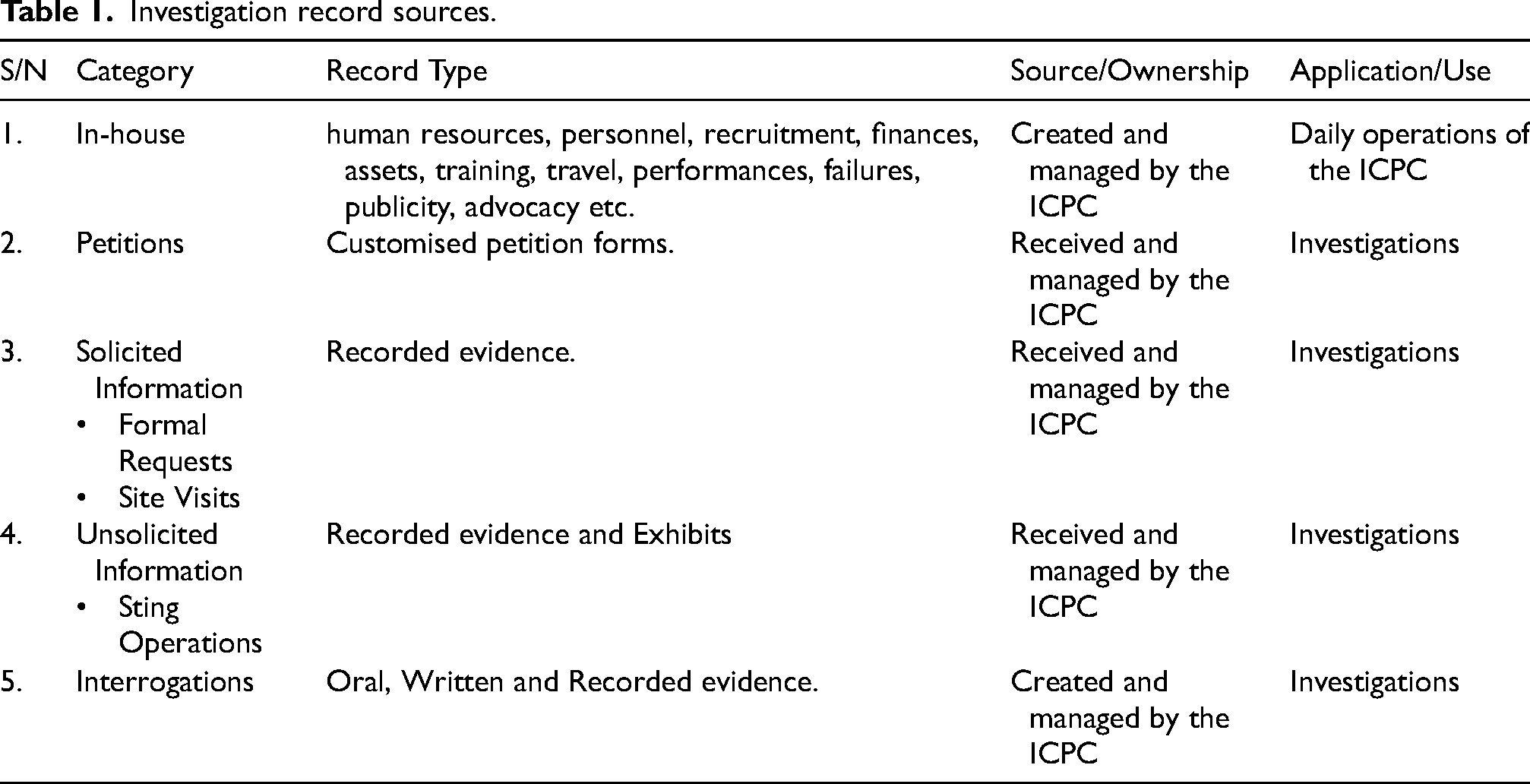
The fight against corruption and the need to maintain accurate records are closely intertwined as corruption hinders global development and recorded evidence is critical in promoting accountability. Shepherd (2006) argues that any form of recorded evidence, regardless of physical characteristics, age, or content, represents an action taken by an individual or group that results in a measurable outcome. To be of value, records must possess the attributes of trustworthiness, completeness, and accuracy (Al-Sharieh and Bonnici, 2019; Gilliland et al., 2016; Lemieux, 2016; Reed, 1990). Recorded evidence is critical in the private and public sectors for promoting accountability. Record management is essential for planning, creating, distributing, maintaining, using, and assessing records appropriately (Penn and Pennix, 2017). This process involves controlling an organisation's records throughout its life cycle to meet operational, legal, financial, and community expectations (Harries, 2009). Complete and accurate records are indispensable for efficient anti-corruption investigations, providing prompt access to information and promoting accountability.
Ensuring the accuracy of records is crucial for combating corruption, which can harm global development. Documented evidence is essential for fostering accountability and transparency. Therefore, the primary objective of this study is to examine how the different stages of the record life cycle affect anti-corruption investigations, focusing on understanding each stage's impact on the value and usefulness of recorded evidence. Although records evolve through multiple phases, each stage of the record life cycle is crucial for generating evidence for accountability forums. Unfortunately, however, owing to a lack of expertise or outright negligence, many individuals involved in the record management process fail to grasp the implications of these stages on the overall worth of their output.
Investigating corruption-related crimes requires thorough and meticulous methods and protocols, and the success of an investigation depends on timely access to relevant and reliable information. Reconstructing previous transactions is a crucial aspect of an investigation and reliable record management is an essential source of evidence. Each step in the lifecycle of a record is vital for creating information assets. The potency of anti-corruption investigation hinges on the authenticity and verifiability of evidence. However, the significance of each stage in the record life cycle on anti-corruption investigations remains unexplored. Recognising the consequences of these stages in generating dependable accountability tools for accountability forums will reinforce the worldwide battle against corruption.
Literature review
In 1992, the National Archives Act was enacted in Nigeria, following a protracted campaign for a comprehensive legal framework to govern archival administration and records management in the country. This legislation, which emerged from the National Archives Decree No. 30 and was subsequently enacted by the National Assembly, encompasses the preservation and management of diverse record categories, including public, private, individual, and business. Key provisions include the designation of departmental record management officers, a 25-year access rule for public archives, strict regulations on private archives, and the establishment of the National Archives Advisory Council. The National Archives of Nigeria, as the central authority in this domain, coordinates technical guidance, training programs, and oversight of record-keeping practices across public offices to ensure compliance and effective record management throughout the country's record lifecycle (Abioye, 2007; ‘National Archives of Nigeria’, n.d.).
In the 1930s, the National Archives of the United States of America developed the Records Life Cycle concept, which remains the most suitable framework for managing records throughout their lifespan, particularly in their active and semi-active stages (Penn, 1983; Yusof and Chell, 2000). The concept comprises five phases: Creation, Use & Dissemination, Maintenance & Protection, Appraisal & Disposition, and Archival Preservation & Access, highlighting the critical record management aspects relevant to this research. The life cycle concept is at the core of most record management programmes. The activities of these programmes are developed based on this concept, which has several phases that explain the stages or status of records: from creation through use and maintenance to ultimate disposal. However, it has been argued that the life cycle concept fits well with paper-based record management (Yusof and Chell, 2000). Despite the limitations of the life cycle concept in managing electronic records, as noted by Matlala and Maphoto (2020), it remains an effective tool for identifying records based on the date of birth, purpose, and disposition. Furthermore, this concept is widely used and easily understood by professionals in various fields, making it invaluable for managing manual records, which are the focus of this research (Figure 1).
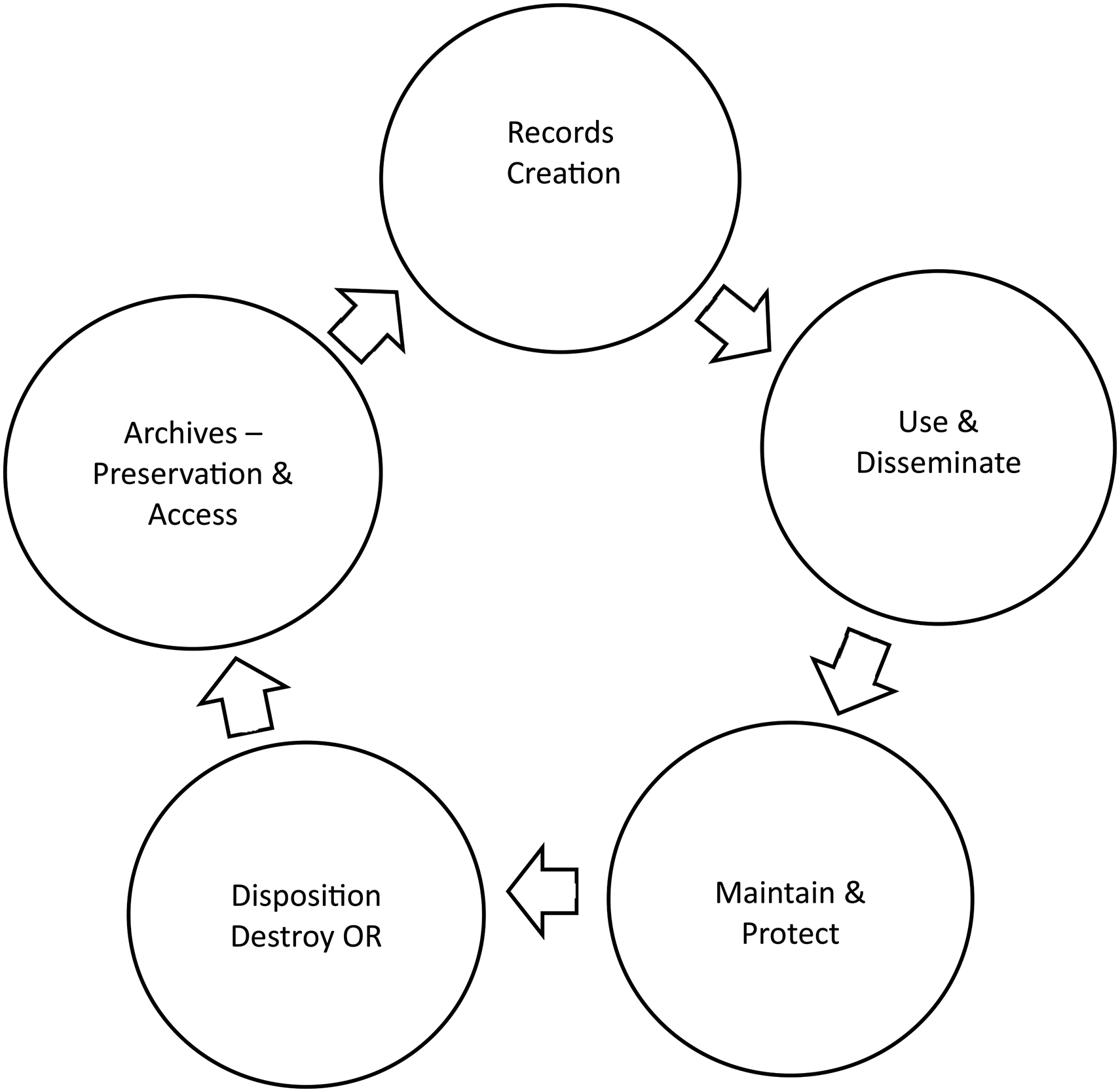
The concept of the record life cycle provides a comprehensive framework for managing records throughout their life span, covering various stages, such as creation, use, maintenance, disposition, preservation, and access. Creation involves physical or digital record creation with the metadata's collection. The use stage involves accessing, updating, and sharing records as required. Maintenance necessitates the ongoing management of records to ensure accuracy, completeness, and accessibility and includes organising, indexing, and storing records correctly. Disposition involves the final disposal of records either through destruction or preservation. Preservation necessitates the long-term retention of records of historical or archival significance, which involves digitisation, conservation, and storage in suitable archival repositories. Lastly, the access stage entails providing authorised users with appropriate access to records, including establishing policies and procedures for access and retrieval and ensuring adequate security and privacy measures (Malatji and Marutha, 2023; Penn, 1983).
Implementing a comprehensive record life cycle management programme can assist organisations in ensuring effective and efficient record management and compliance with legal and regulatory requirements (Johnston and Bowen, 2005). As such, the Records Life Cycle concept continues to be a vital professional tool in managing records and facilitating their preservation and access for future generations.
Regardless of their physical medium, age, or content, records constitute tangible evidence of the action taken by an individual or group within an organisational context, resulting in a measurable outcome (Shepherd, 2006; Shepherd and Yeo, 2003). To serve their purpose effectively, records must possess the qualities of accuracy, completeness, and trustworthiness (Al-Sharieh and Bonnici, 2019; Gilliland et al., 2016; Lemieux, 2016; Reed, 1990). Private and public sector accountability mechanisms rely heavily on recorded evidence. Record management, as a discipline, provides a structured approach to the planning, creation, distribution, maintenance, use, and evaluation of records that align with operational business needs, statutory requirements, fiscal obligations, and community expectations (Penn and Pennix, 2017). The timely and accessible availability of complete and accurate records is a critical tool for efficient anti-corruption investigations, enabling accountability and transparency across enterprises.
As a fundamental aspect of democratic societies, records ensure accountability, transparency, and citizens’ access to information, among other critical functions (Chen and Neshkova, 2020). However, these goals can only be met if records are effectively managed. Proper record management is crucial for records to attain their full potential. In contrast, poor management renders them inadequate to meet their informational needs, leading to difficulties in accessing, losing, prematurely destroying, or retaining them unnecessarily (Barigye et al., 2022; Touray, 2021). Moreover, failure to create records exposes organisations to litigation, limiting their ability to defend themselves, prove their rights, or protect their assets. This situation directly affects the broader community's rights, emphasising the importance of adequately creating and managing records (Shepherd, 2006).
However, poor record management also erodes confidence in records, thereby impacting their evidential value. Across literate civilisations, reliable and authentic documents are assumed to be genuine, and the authority and trustworthiness of records as evidence are crucial determinants of their reliability. Thus, the trustworthiness of records is central to their value as evidence, with legal reliability and authenticity according to their evidential value (MacNeil, 2013). The confidence in records brought about by their ability to attest and truly represent what they claim to offer significant value to evidence highlights the importance of adequate record management (Duranti, 1995).
Corruption is a pervasive issue affecting societies worldwide, and combatting it requires effective anti-corruption investigations. As Dávid-Barrett and Fazekas (2020) and Kobets et al. (2021) have noted, the significance of such investigations cannot be overstated. For anti-corruption agencies, access to authentic records is essential for reconstructing the actions and decisions of government organizations ‘and officials.’ The professional perspective of records and their management underscores the potential dangers of their mishandling or absence, particularly in the context of accountability forums. Such concerns are heightened in anti-corruption organisations, which rely heavily on reliable evidence for their existence. Records function as the nerve centre of accountability forums, including anti-corruption agencies. Without them, these entities cannot perform the critical tasks. Therefore, it is essential to understand how each stage of the record life cycle affects anti-corruption investigations by examining the experiences of anti-corruption investigators.
This review highlights the significance of implementing an effective record life cycle management programme to efficiently manage records throughout their lifespan. Such a programme should cover all stages of record management, including creation, use, maintenance, disposition, preservation, and access. Effective record management is crucial for maintaining accountability, transparency, and compliance with legal and regulatory requirements. Conversely, poor record management can have severe consequences, including legal penalties and reduced trust in the evidential value of records. This study also underscores the importance of record management in anti-corruption investigations. Authentic and reliable records are essential for reconstructing government officials’ actions and decisions, making record management a critical aspect of anti-corruption efforts. As such, organisations should prioritise implementing a comprehensive record life cycle management programme to ensure effective and efficient record management and achieve their goals.
Methodology
This study answers the question: How do activities in the stages of the record life cycle impact the practice of anti-corruption investigations? This research employs qualitative methods to delve deeply into social phenomena, requiring a comprehensive and meticulous examination. As Taylor et al. (2015) suggest, a case study should maintain its completeness and consistency. However, establishing a well-defined research problem directed toward a specific aspect is crucial for achieving a clear focus (Silverman, 2010). This method is particularly suitable for examining cases as it allows the researcher to delineate the phenomenon under the study elements and effects (Creswell, 2018; Taylor et al., 2015; Yin, 2009).
Despite being Africa's largest economy and most populous country, Nigeria has been unable to fully realise its potential due to the pervasive threat of corruption, which continues to hinder its progress and development (Osoba, 1996; Page, 2018). This study explicitly delves into record management in the context of anti-corruption investigations in Nigeria. Given the high number of corruption cases in the country and the significant attention paid to this issue nationally and internationally, the Independent Corrupt Practices and other related offences Commission (ICPC), Nigeria's first anti-corruption agency, was chosen as the case study organisation because of its extensive experience in combating corruption at the local level. The ICPC's operations department heavily relies on recorded evidence for investigations, making it an ideal candidate for this study. In addition to tackling financial crimes and corrupt practices in government Ministries, Departments, and Agencies (MDAs), the ICPC assesses public bodies’ systems and procedures to identify corruption vulnerabilities and oversees their reviews. The ICPC is dedicated to fostering transparency and accountability to facilitate effective nationwide governance.
Utilising an accountability forum that relies heavily on records as a source of information calls for unpacking the record life cycle concept. This approach is particularly well-suited for system vulnerability testing during investigations. The four stages of the record life cycle–creation, distribution, maintenance and use, and appraisal and disposition–align with the critical constructs in this research field (Shepherd and Yeo, 2003). This model can simplify the diagnosis and the troubleshooting process, help identify record management-related leakages and pinpoint the exact trail requiring urgent attention for prompt treatment. Additionally, the record life cycle continues to be a practical and helpful way to examine record management and make it understandable for professionals in other fields (Hoke, 2011). The record life cycle model is the foundation for developing research questions and interview guidelines for this study.
In 2020, research data were gathered through recorded interviews using a semi-structured interview guide. The open-ended questions revealed how activities in the stages of the record life cycle impact anti-corruption investigations. Participants were asked about their experience working with poorly managed record systems and how they affected their work. The study's analysis was based on the records life cycle model, emphasising the purposeful creation and maintenance of records for appropriate use.
The Director of Operations (DG OPS) formally informed the investigation-related units about research data collection. Snowball sampling was used to select 15 participants from the six teams of the Operations Department of the ICPC. The first principal investigator was introduced as a potential interviewee and saturation was observed during the 15th interview (Baker et al., 2012). The research participants were Investigation Officers from senior, mid-level and junior ranks who relied on records as their exclusive accountability tool during the investigation and prosecution process. In addition, two to three staff members from each investigation unit participated in the study, performing different tasks but united using records to fulfil their assigned duties.
To ensure ethical standards and protect participants’ privacy, the researcher explained the study's aim to obtain permission for data collection. The interviews were conducted centrally at the commission headquarters in the offices of individual participants, with each session lasting between 30 min and an hour, depending on the length of personal responses. Despite minor interruptions from visitors and colleagues, all interviewees answered these questions without reservation.
The interview data were transcribed and analysed using thematic analysis, with the research questions derived from the identified research gap. The questions were designed to elicit responses related to the importance, value, advantages, and role of the records and record management being examined. The initial codes for this study emerged from the patterns and meanings identified during the interviews. The analysis involved comparing similarities and differences in interviewees’ responses, leading to the emergence of additional themes, such as the role of investigators in record management, the prospects of record management, and transparency in recordkeeping practices.
Research setting
Anti-corruption investigations typically involve the construction of case files and the reconstruction of events. The effectiveness of these efforts is contingent upon the availability and quality of records. The Independent Corrupt Practices and other related offences Commission (ICPC) relies on various categories/sources of information, including in-house records, petitions, and solicited and unsolicited recorded information from Ministries, Departments and Agencies (MDAs), to support its efforts to combat corruption. The investigators primarily accessed these records through petition folders within the ICPC. They also gained insight into the record management practices of the investigated entities through their interactions with these subjects during interrogations, sting operations, site visits, and formal record requests. The research interview questions aimed to identify any weaknesses in the records management practices of the MDAs while interfacing with the ICPC during the investigations. By pinpointing any loopholes in the records life cycle that could hinder investigations, the ICPC can take measures to prevent corrupt practices from thriving within MDAs.
The investigators primarily interacted with the records of petition folders within the ICPC. Nevertheless, sting operations, site visits, formal record requests, and interrogations exposed them to the record management practices of the subjects under investigation. Moreover, these activities enable them to exercise their power to block the loopholes that breed corrupt practices in MDAs.
Results
The findings of this investigation are centred on the link between the record life cycle concept and the practice of conducting effective anti-corruption inquiries. The record life cycle concept is particularly relevant to physical records that traverse distinct developmental stages. By acknowledging the value of each phase of the record life cycle, professional record management can be implemented to support anti-corruption investigations. This recognition may expedite the retrieval of pertinent and reliable evidence, which is vital considering the expeditious nature of these inquiries. Moreover, investigators must be mindful of the fundamental categories of records employed in anti-corruption investigations.
Record creation
To manage any manner of record, it is incumbent upon the individual or entity to first engage in its creation. Indeed, this genesis marks the start of a document imbued with the requisite transactional details for subsequent consultations. Moreover, it behoves those responsible for this process to furnish the record with the necessary metadata, encompassing its temporal origins, purpose, genre, content, and contextual implications, thus facilitating its effective retrieval and deployment. Nevertheless, inquiries with certain interviewees engaged in investigatory pursuits show that there are occasions when this fundamental concept needs to be upheld in MDAs since certain records to which they sought access were never brought into being in the first instance. “Yes, we have had instances like that where the records are not there at all.” “I’ll just give an example: In an instance where someone claims he purchased 10 bags of cement. Give me evidence that you purchased these 10 bags of cement, no voucher, no receipt, no proforma invoice, nothing!… So, it wasn't even created.”
Record use and dissemination
When records are not readily available, they will inevitably be poorly used. Even if the records are present, their usefulness is compromised when accessing necessary information is difficult. Research participants expressed their concerns about Ministries, Departments, and Agencies (MDAs) facing such a predicament. “Sometimes it takes them time to bring the documents, and sometimes when they bring the document, they are not the ones we wanted.” “Sure, we have experienced that in some circumstances whereby you obtain the documents from a particular Ministry or Department and is irrelevant. they will tell you that that is the document they have, and you'll collect it, and you know we work with lawyers you collect the document thinking that is of evidential value, but by the time the lawyers see they'll tell you that this document cannot be tendered in court because it's not relevant.”
Record maintenance and protection
The fundamental purpose of recordkeeping is to ensure that records are appropriately maintained, preserving them as a vital component of corporate memory that offers insights for planning and decision-making while concurrently providing an audit trail in the event of an investigation aimed at ascertaining accountability. However, poor record management may lead to unreliable records or records in such a deplorable state that they cannot be considered credible evidence. Consider, for instance, a scenario in which an individual is asked whether they have ever been confronted with a record of such poor quality that it cannot be admitted as credible evidence. The participants’ responses were positive. “Yes, in fact, it is one of the major challenges we face.” “When you demand the document, some because they didn't keep it well, some are torn, and this is due to, bad… they didn't keep it very well and in the long run, we need to strain our eyes to see it and had to ask for the original somewhere, so that we will certify it as being a copy of the original.”
Record disposition or destruction/archive
The policies governing record retention provide an invaluable direction for managing records throughout their life cycle, encompassing the handling, utilization, lifespan determination, expiry, and appraisal stages to determine which records warrant preservation. By meticulously adhering to these policies, one can reap the maximum benefits of creating, maintaining, and safeguarding records. Nevertheless, suppose a record has already been destroyed, in such a case, the responsible party must evaluate whether the retention policies were executed correctly and consider alternative means of accessing pertinent information. The participant provided the following response when asked if they had encountered a situation where the relevant record had already been destroyed. “Yes, we have had cases whereby records were destroyed, and the intention is clear. The intention is to evade justice.” “They will not tell it has been destroyed. They will tell you that it is just a system crash. For instance, we recovered the system just last week. The agency said their system crashed and we said give us the crashed system. Some will only tell you that the documents are missing and not available, you know, and so on and so forth. And if you investigate thoroughly, you will still find out that. It is a lie.”
Discussion
The concept of the record life cycle provides a framework for understanding the evolution of valid evidence and the requirements for producing properly recorded evidence, as evidenced by the work of Malatji and Marutha (2023). Although there are limitations in applying this concept to electronic record management, it remains an effective tool for identifying records based on the date of creation, purpose, and disposition. Furthermore, the widespread use and easy understanding of this concept by professionals in various fields further support its utility, as demonstrated by Malatji and Marutha (2023), Matlala and Maphoto (2020), and Yusof and Chell (2000).
Our research suggests that the ICPC, the anti-corruption agency in Nigeria, relies on deficient external record sources for investigation. This underscores the importance of understanding the various stages of the record life cycle to facilitate effective anti-corruption investigations and evidence accountability forums. Without proper recordkeeping systems, an environment conducive to corruption is created, leading to a legal action, difficulties in holding culprits accountable, and the loss of information. As such, implementing a comprehensive record life cycle management programme can assist organisations in ensuring effective and efficient records management and compliance with legal and regulatory requirements, which is essential in strengthening the fight against corruption and achieving the Sustainable Development Goals to support good governance and human rights to make the world a better place for all.
Prompt access to reliable information is essential to achieve efficiency in anti-corruption investigations, as highlighted by the works of Dávid-Barrett and Fazekas (2020) and Kobets et al. (2021). Proper record management is vital for ensuring accountability, maintaining transparent democracies, providing citizens access to information, and formulating and executing policies, as demonstrated by Duranti (1995), MacNeil (2013), and Penn and Pennix (2017). However, records can only achieve these goals if adequately managed, organised, and accessible, as argued by Al-Sharieh and Bonnici (2019), Gilliland et al. (2016), Lemieux (2016), Reed (1990), Shepherd (2006), and Shepherd and Yeo (2003). Delays in accessing records can render a collection unusable and unsuitable for investigation. Therefore, it is crucial to maintain records correctly to avoid difficulties caused by unusable or damaged records. The absence of a record retention policy can create an opening for corrupt practices to thrive, allowing individuals to engage in wrongdoing for personal benefit.
The ICPC's ability to combat corruption and hold wrongdoers accountable can be strengthened by promoting the implementation of a robust recordkeeping system that ensures the proper maintenance, organization, accessibility, and retention of records. By advocating and implementing such a system in MDAs, the ICPC can enhance its capacity to combat corruption effectively, hold culprits accountable, and provide evidence for legal proceedings and accountability forums. A thorough understanding of the record lifecycle is necessary for investigators to address record management issues in corrupt MDAs, and failure to implement best practices in this regard can hinder ICPC's regulatory responsibilities in preventing corruption.
Conclusion
This research clarifies how different stages in the development of evidence can support attempts to combat corruption while revealing potential risks that may unintentionally aid the misconduct these efforts seek to prevent. For example, it was established that the Independent Corrupt Practices and other Related Offences Commission (ICPC), Nigeria's premier anti-corruption agency, relies on deficient external manual record sources. Such practices have posed significant challenges to an agency's ability to conduct efficient investigations and hold corrupt individuals accountable for their actions. In addition, the lack of proper recordkeeping procedures that follow the life cycle concept creates an environment ripe for corruption. This, in turn, can result in unwarranted legal actions, difficulties in holding offenders accountable, and the loss of vital information.
To remedy this situation, it is crucial to recognise the record life cycle and adopt a robust records management system that ensures proper maintenance, organisation, accessibility, and retention of records. Implementing and promoting such a system can significantly bolster the ICPC's capacity to combat corruption. Furthermore, it can increase the production of valuable evidence to support legal proceedings and accountability forums, thus reinforcing Nigeria's anti-corruption efforts.
Therefore, it is essential to emphasize the importance of maintaining accurate recordkeeping, developing a record retention policy, and ensuring easy access to prevent problems caused by unusable or damaged records. Consequently, further studies should investigate the processes and procedures necessary to strengthen the record life cycle phases to produce high-quality records that support the global fight against corruption.
