



Abstract
The purpose of this study is to examine how emerging musicians use social media to achieve exposure of their music and entertainment events. The Parasocial Engagement Model and the multiple case research design guided the study. A sample of 20 emerging musicians was selected from Ibadan and Lagos in Nigeria through snowballing. An initial questionnaire schedule was used to collect data about the respondents’ backgrounds while an interview guide was used to collect data about the role and use of social media. Contact between the researcher and the musicians was created using video call approaches. The musicians are motivated to use social media to express themselves, connect with other musicians, and expand their audiences. Social media platforms allow audiences to be more expressive because they do not involve face-to-face interactions, but rather the disclosure and organization of information. Viral social media challenges, remaking of popular and trending songs, and other video contents related to various fields of interest are ways emerging musicians use social media to form impressions and reduce ambiguity about their personalities. Collaboration with social media influencer accounts and social media magazines has also been identified as a social media usage strategy.
Introduction
Over the years, scholars have engaged the popular saying that music is a universal language (Campbell, 1997; Cochrane, 2015). This engagement has moved from music being a universal language to the view of the distinctive traits of music, and then to its universal commonalities. Recent research has shown that music carries a set of unique codes and patterns which are universally understood, irrespective of the language of the music, culture, or context in which it is used (Baez et al., 2018). The commonalities manifest in the observation that music consists of similar processes and structures, and similar meanings across cultures, but they can be readily understood by novices, cultural outsiders, and first-time listeners. In a 2013 study, a relationship was established between music and fashion to the extent that consumers who share similar music tastes also have similar aesthetic views and emotions (Na and Agnhage, 2013). In another recent research, Mehr et al. (2019) showed that music appears in similar social contexts and the identifiable features can predict associated behaviors which form the basis of human behaviors, especially the ways we interact with others.
One aspect of our modern life where the universality of music manifests is the deployment of social media. Modern musicians are making the best use of social media at every stage of their creative process. The average musician uses social media platforms such as Facebook, Twitter, Instagram, Snapchat, and YouTube, as well as social media sites tailored to their goals and priorities, and their use of social media can have a direct impact on the stages involved in creating their arts (Haynes and Marshall, 2018). With social media providing a platform for people to freely express their views and opinions on various subjects, emerging musicians using social media have access to a massive amount of user-generated content, particularly from target audiences, which can be used to create a song, among other benefits.
Emerging musicians are small-scale musicians who are endeavoring to make their marks in the industry, and they are actively trying to be recognized. These musicians are typically in the early stages of their careers and have yet to establish a solid reputation as musicians. With the audience reach that social media provides, emerging musicians can decide their fate by directly reaching out to their target audience, bypassing major music labels and middlemen (Cole, 2019). Also, emerging musicians with social media presence can utilize user-generated content to gain better insights for marketing purposes (Servantes, 2018). The data gathered typically has significant impact on music creation strategies and influencing the output of the music creation process. Furthermore, it affects developing the strategies for releasing the created music, as well as strategies for post-music release, which may include organizing small-scale entertainment events (SSEEs), among other things.
Nigeria's population is estimated to be about 217, 000,000, with youth accounting for 70 percent of that figure; also, approximately 42 percent of the 70 percent are youth under the age of 15 (Eromosele, 2022). A major characteristic of this demography is the embrace of music. Onanuga and Akingbe (2020:1) have observed that “… music on the African continent often constitutes a site for competing anxieties, just as its varied rhythms compellingly appeal to the sensibilities of its diverse audience.” This observation is glaring in the various sub-genre of music, and Nigerian music enjoys significant patronage globally. Onanuga and Akingbe (2020) observed further that, in the recent years, music production and diffusion in Nigeria have been aided by the availability of technological tools, to continually stimulate the interest of its listeners.
Statement of research problem
Many studies have been conducted to demonstrate the increasing role and influence of social media in a variety of contexts. Wert (2021) noted that several studies exist on social media's role in influencing audience-musician relationships, but the musicians’ perspective and how they navigate this connectivity are missing from recent research. From the perspective of musicians, this is a significant gap in research and a loss in terms of knowledge to be gained. Also, according to Boyd and Ellison (2007), fewer academic studies have looked at the intersection of social media and the entertainment industry, and Yardımcı (2007) emphasized this further by stating that research on social media usage strategies was focused on large-scale entertainment events from the perspective of event organizer's due to their international appeal to foreign tourists and high economic capitals, as opposed to SSEEs.
Despite the embrace of social media by emerging musicians in Nigeria, there has been no study examining how emerging musicians use social media to build their careers and grow in the entertainment industry. This study adds to the body of knowledge and research on emerging musicians by examining the impact of social media usage strategies on their careers in the Nigerian entertainment industry. The stages of parasocial relationships (PSRs) in the parasocial engagement model guided this study, which used a qualitative approach to investigate emerging musicians’ social media usage strategies in selected cities in the Nigerian states of Oyo and Lagos, in interacting and engaging with social media users and their social media audiences. This aided in investigating the impact of social media on the development of their musical careers and entertainment events.
Objectives of the study
The purpose of this study was to determine how social media usage impacts the visibility and exposure of emerging musicians and entertainment events. The following are the study's objectives:
To identify the social media platforms used by emerging musicians in selected cities in Nigeria's Oyo and Lagos States, To determine the reasons for the emerging musicians’ use of social media platforms, To investigate social media usage strategies that increase the visibility and exposure of emerging musicians in the selected cities, To identify the social media strategies used by the emerging musicians to form impressions on social media users and reduce ambiguity and uncertainty, To investigate the social media strategies used by emerging musicians to mimic real-life interactions and strengthen their PSRs with their captured social media audiences, and, To identify the challenges that emerging musicians in the selected cities face in course of meeting the needs of their audiences.
Literature review
Music, musicians, social media, and parasocial interactions
Music has always been a universal means of expression and communication that transcends all ages and spans different cultures and human societies (Mehr et al., 2019). Music influences enjoyable activities and behaviors in the majority of human lives that go beyond mere entertainment, ranging from its creation, playing instruments, and learning music, to simply listening to music (Welch et al., 2020). The music industry consists of three major sectors: recorded music, music licensing, and live music (Wikström, 2014). Live music, according to Mulligan (2020), provides a sense of the stage of development of a musician, with most established musicians beginning with small live music events before progressing to larger live music events such as concerts and festivals. Mulligan (2020) further added that small live music events are as important to emerging musicians as training sessions are to athletes, making live music events typically regarded as a testing ground for emerging musicians.
Technavio (2021) has estimated that, globally, the live music market will grow at a compound annual growth rate of more than 9 percent from 2020 to 2024, with variations across communities. Therefore, emerging musicians have the opportunity to balance their artistic strategies with their commercial appeal and with social media; they have a chance to sustain their craft with exposure to newer audiences, and in developing alternative business models such as live entertainment event touring, particularly in developing countries (Klein et al., 2017).
Music is a key driver of interactions on social media, with 9 out of 10 frequent social media users engaging in some music-related activity on prominent social media platforms (Crupnick, 2018). This is evident today, with musicians dominating the top user accounts on major social media platforms, such as Twitter, where musicians own six of the top ten most-followed accounts (Boyd, 2020). One reason for this, according to Verboord and Noord (2016) is that social media has made a musician's location less important, leveling the playing field for musicians because music can easily be distributed and promoted across borders. In terms of musicians and their audiences, social media has lowered the barriers to entry into the music industry, by increasing the musician's reach and engagements while also allowing the audience to interact and connect directly with the musicians (Haynes and Marshall, 2018). The appeal of social media stems from the interactivity it allows, as information is not simply transmitted between users, but rather mediated environments are created and then experienced by social media users (Steuer, 1992).
Although social media increases social media audiences’ interactions with musicians, two-way communication is still generally rare due to the volume of fans online, so relationships between musicians and their fans are classified as parasocial rather than intimate connections (Ledbetter and Redd, 2016). Horton and Wohl (2016) proposed the concept of parasocial interaction, defining it as an individual's illusion of a face-to-face relationship with a media personality and also as a one-sided relationship formed by media users or audiences with media figures. Individuals engaged in parasocial interaction contribute to the illusion by believing in it and rewarding the media persona's sincerity with their loyalty, and their behaviors may be influenced as a result (Horton and Wohl, 2016). This kind of relationship presents opportunities that are only possible because of the strategies, mechanisms, and economies that form the heart of the dynamics of social media platforms (Van Dijck and Poell, 2013).
Social media platforms and adoption by emerging musicians
Social media is a broad term that encompasses a variety of related platforms, each with its own set of features that provide a plethora of options for musicians (Haynes and Marshall, 2018), such as Instagram, Twitter, Reddit, and Facebook for social networking and conversations; YouTube, TikTok for user-generated contents; and AudioMack, Apple Music, Spotify, and Soundcloud for music-specific or audio streaming services that also contain social media components. Advances in social media technologies and analytics have resulted in the rapid expansion of audio streaming platforms such as Spotify, Apple Music, and YouTube Music (Cole, 2019). Since distinct features and characteristics give rise to different social media platforms, the choice of social media to be adopted is usually based on users’ personal choice, personality, and social influence (Wang and Sun, 2016).
To determine which platform is best for an emerging musician, it is critical to first understand what each major social media platform has to offer. Kemp (2020) emphasized the need to be clear on the potential benefits of social media platforms to use, with a special focus on the potential to reach a target audience. Salo et al. (2013) emphasized the importance of selecting appropriate social media platforms that cater to target audiences, as well as understanding the logic and dynamics of these platforms, recognizing their needs, and attempting to meet them. Thomas et al. (2020) illustrated the need to understand a social media platform and the behavior of users on that social media platform before drawing up strategies in line with the design and technological features of the platform.
Digitalization (social media and newer technologies) has aided in the influx of new and emerging musicians, providing access to more opportunities than previously available, resulting in the oversaturation of digital music as well as increased competition, among musicians as they compete for opportunities, revenue, and audience attention (Klein et al., 2017). This resulted in a variety of social media usage patterns, requiring musicians to reconsider their strategies for reaching out to target audiences, as well as marketing their brands and live entertainment events.
For emerging musicians to stand out, the focus should be on creating, maintaining, and solidifying an online identity (Choi, 2016); which could be in the form of simple choices like what social media users to follow, or more complex and substantial decisions like the type of content to create, what social media platform to be more active on (Aral et al., 2013). The complex decisions may prompt the musician to acquire appropriate skills and knowledge tailored to what type of unique content to create that will appeal to their target audience. Marwick and Boyd (2011) noted social media users usually post different content to appeal to multiple audiences, so rather than creating different accounts for multiple audiences, emerging musicians can address their audiences through a single account while remaining mindful of meeting the needs of multiple audiences. Furthermore, using action images or visuals with a directive intent in conjunction with texts or captions, as well as positively framed question-like content, will facilitate online social interactions, increased information sharing, and audience engagements (Ordenes et al., 2019).
Because most interactions on social media are public, the speed and quality of responses to audience engagements can have a positive impact on potential target audiences as well as in managing audience sentiments and expectations (Mousavi et al., 2020). Schau et al. (2009) pointed out the need to enhance audience expectations by involving the audience in the development or implementation of new brand ideas and products. This, in turn, can result in audience actions such as word-of-mouth information spread and the audience sharing the content with their online networks, which is required to increase brand values (Colicev et al., 2016; Schau et al., 2009). Toker-Yildiz (2017) found that while online social interactions are important in encouraging repeat use behavior in social media audiences, monetary incentives can also play an important role, and with a greater impact when combined with online social interactions, and that when they coexist, emerging musicians have enough to maintain audience relationship.
Theoretical framework of the study
Parasocial engagement model
Donald Horton and Richard Wohl coined the term parasocial relationships (PSRs) in 1956 to describe humans’ current way of living and communicating with one another via social platforms (Horton and Wohl, 2016). Parasocial relationships (PSRs) are defined as one-sided relationships that consumers create with media characters, which include social media personas (Derrick et al., 2008; Horton and Wohl, 2016). Bethany Cook, a clinical psychologist emphasized that through parasocial relationships, a musician can receive support and intimacy from a media audience without having to reciprocate. She went on to say that media audiences usually form parasocial relationships because they don't have to worry about rejection (Caccamise, 2021). Giles (2003) has addressed multiple aspects of the nature of PSRs, revealing that with PSRs, a media user may anticipate an opportunity for interpersonal contact, which could be in the form of attending live entertainment events hosted or attended by the media persona.
Tukachinsky and Stever (2019) proposed a PSR-based parasocial engagement model and defined parasocial engagements as an umbrella term for parasocial interactions (PSIs), parasocial attachments (PSAs), and parasocial relationships (PSRs). Parasocial interactions are a phenomenon that describes one-sided interactions that occur when media users are exposed to a media persona in a non-reciprocated manner (Horton and Wohl, 2016). PSIs were further defined by Hartmann and Goldhoorn (2011) as a sense of mutual awareness, attention, and adjustment experienced by media users as a form of reciprocity with a media persona. Parasocial relationships can thus be defined as imagined social relationships that develop as a result of continuous PSIs or as a result of continued exposure to the media persona. Interestingly, PSRs are linked to PSAs, which describe the evolution of a parasocial relationship to the point where members of an audience derive a sense of security from the media persona. (Stever, 2017). Therefore, Tukachinsky and Stever (2019) were able to emphasize the relationships between PSRs, PSIs, and PSAs and conceptualize the stages of PSRs in their proposed parasocial engagement model which serves as the theoretical framework for this study.
The model establishes PSRs in four stages, with each stage consisting of the variables and predictors that characterize it: (i) Initiation: the formation of the media persona's first impressions, and (ii) Experimentation: guided by media users’ desire to learn more about the media persona and analyze the extent to which they share commonalities with the media persona. Others are (iii) Intensification: where media users engage in meaningful disclosure and devote themselves to the media persona while imitating real-life interactions; and (iv) Integration, where the media users’ sense of self intertwines with the media persona.
Methodology
Location of the study, research approach, design, and sampling
This research was carried out in selected cities in Ibadan and Lagos in Nigeria. The study was based on a multiple case study design, with the cases chosen based on their likelihood of producing similar or contrasting findings regarding the research objectives and being consistent with the study's theoretical framework. A sample of cases of emerging musicians to be studied was defined and chosen based on the following criteria: they must be residents, working, or schooling in Lagos or Oyo States of Nigeria; they must also be regular in posting social media content and have active followership on social media, as measured by audience engagements on the emerging musician's post Finally, they must have distributed some secular music or musical projects, as well as attended or hosted one or two small-scale live music and entertainment events, and they must be actively seeking to advance their career.
In respect of research methods, the study was guided by a qualitative approach that focused on the use of social media. Using purposive sampling technique, we identified a significant and emerging musician in each city. Using this identified musician, a snowball sampling approach was used to identify subsequent emerging musicians in the city. Thirty-two musicians were eventually identified, but only twenty took part in the study. The remaining cases were either unable to participate in the study due to their hectic schedules or were not residents, attend school, or work in the study's locations at the time of the study.
Data collection instrument
Data was gathered using two data collection instrumentation that consists quantitative section and a qualitative section that allowed the participants to fully express their perspectives on the phenomenon under investigation (Turner, 2010). Section 1 of the instrument guided the data collection on demographic information, adequately describing each participant. The brief questionnaire contained seven closed-ended and open-ended questions. The questions included gender, age, educational status, and length of time in the music profession. Section 2 has three parts. Part A focused on participants’ motivations and influences for using social media, the most commonly used social media platforms, and the reasons for choosing these platforms. Part B included questions about the parasocial engagement model's initiation stage of PSR to elicit participants’ strategies for creating first impressions and capturing potential audiences. Part C corresponds to the final stage of PSR - integration - and includes questions about dealing with negative engagements from captured audiences, networking with other creatives, and social media strategies used in organizing captured audiences for entertainment events.
Data collection method
Data was collected via video-call interviews. Each interview took place at an agreed-upon time for each respondent, after a self-introduction of the researcher, and an explanation of the objectives and motivation of the research. The respondents were informed beforehand that the interviews would be recorded for easy transcription, to ensure the accuracy of their statements, and to include quotes in the reporting. We pragmatized our language during the interviews among English, Nigerian Pidgin, and Yoruba, whichever the situation permitted. At the end of each interview, the researcher ensured that an agreement was reached between the researcher and the participant concerning the content of the interview.
Data analysis
The interview data were transcribed into Microsoft Word before being coded and analyzed in ATLAS.ti. The transcripts were uploaded into the data analysis column, and each transcript was manually coded in the software. An open coding process was used, and within each case, an analysis was performed to code and interpret the ideas found in the data, yielding a detailed description of each case, and the themes discovered (Creswell and Poth, 2018). The codes and segments were reviewed again for analysis within and across cases, using constant comparative techniques. This procedure assisted the researcher to stay consistent in emphasizing key points.
A thematic analysis was then conducted to analyze and interpret the meaning of each code and coded segment, and each codified response from the twenty cases was categorized into themes using constant comparative techniques (Creswell and Poth 2018). The researcher then went over the developed codes and renamed them with better descriptions, as well as reorganizing them into groups. After the coding process, thirty-two codes were defined. The information gleaned from data analysis at each stage was used to enrich and validate the study through comparison and inference. Figure 1 illustrates this process.
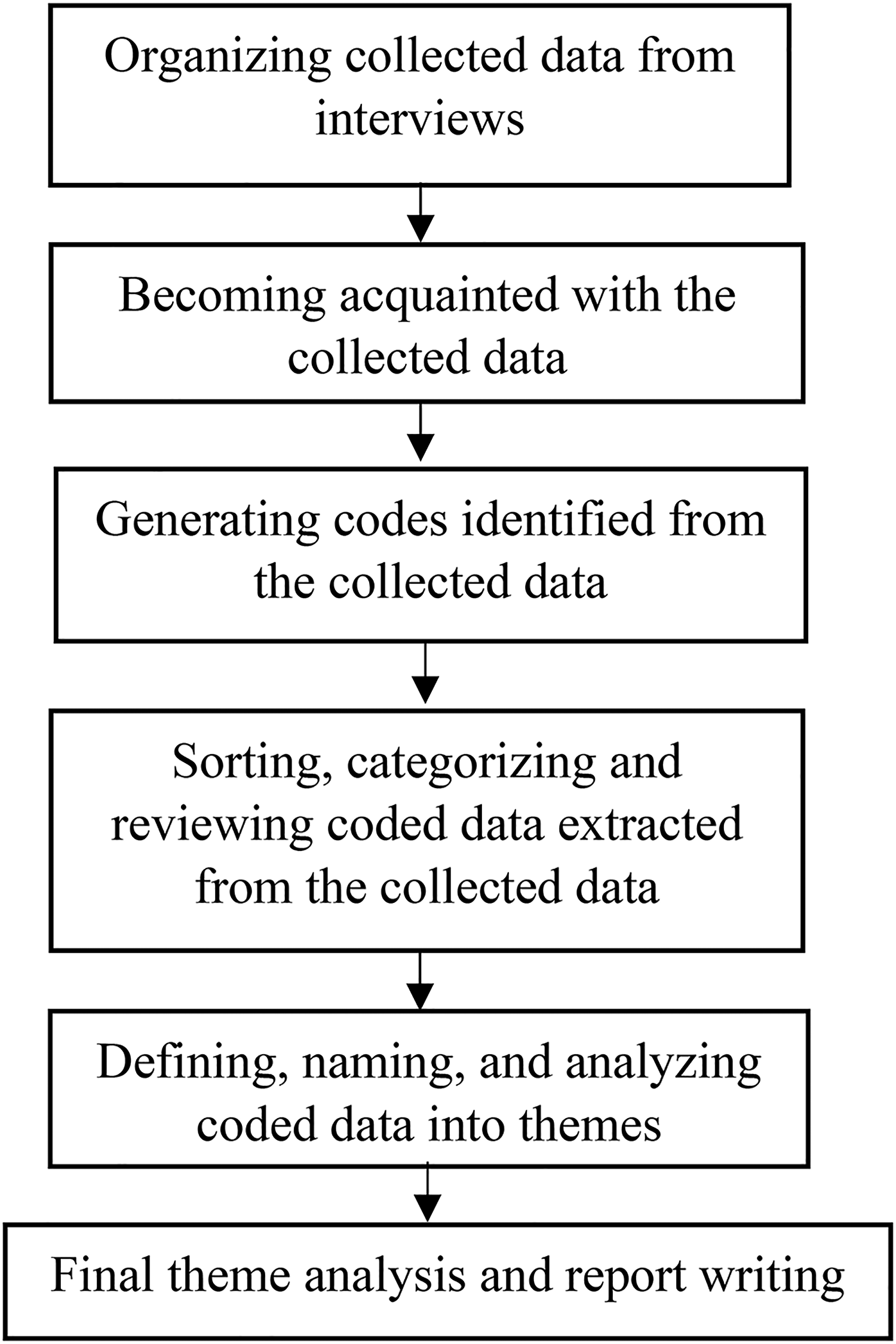
Data analysis process for this research.
The theoretical framework and the objectives served as a guide for coding the data and organizing the coded data into major themes. The major themes were arranged, extended, and made more concise until only seven code groups remained that captured all of the different points of view and all of the relevant information required to answer the research questions. The themes are as follows: social media usage, music and music career, tech tools, initiation stage, experimentation stage, intensification stage, and integration stage.
For a better understanding of the research subjects, the researcher created a visual and structural representation of the key terms (please see Figure 2). Figure 2 shows the complexity of the connections with music, social media, and people on the one hand, and several technologies and social concepts on the other.
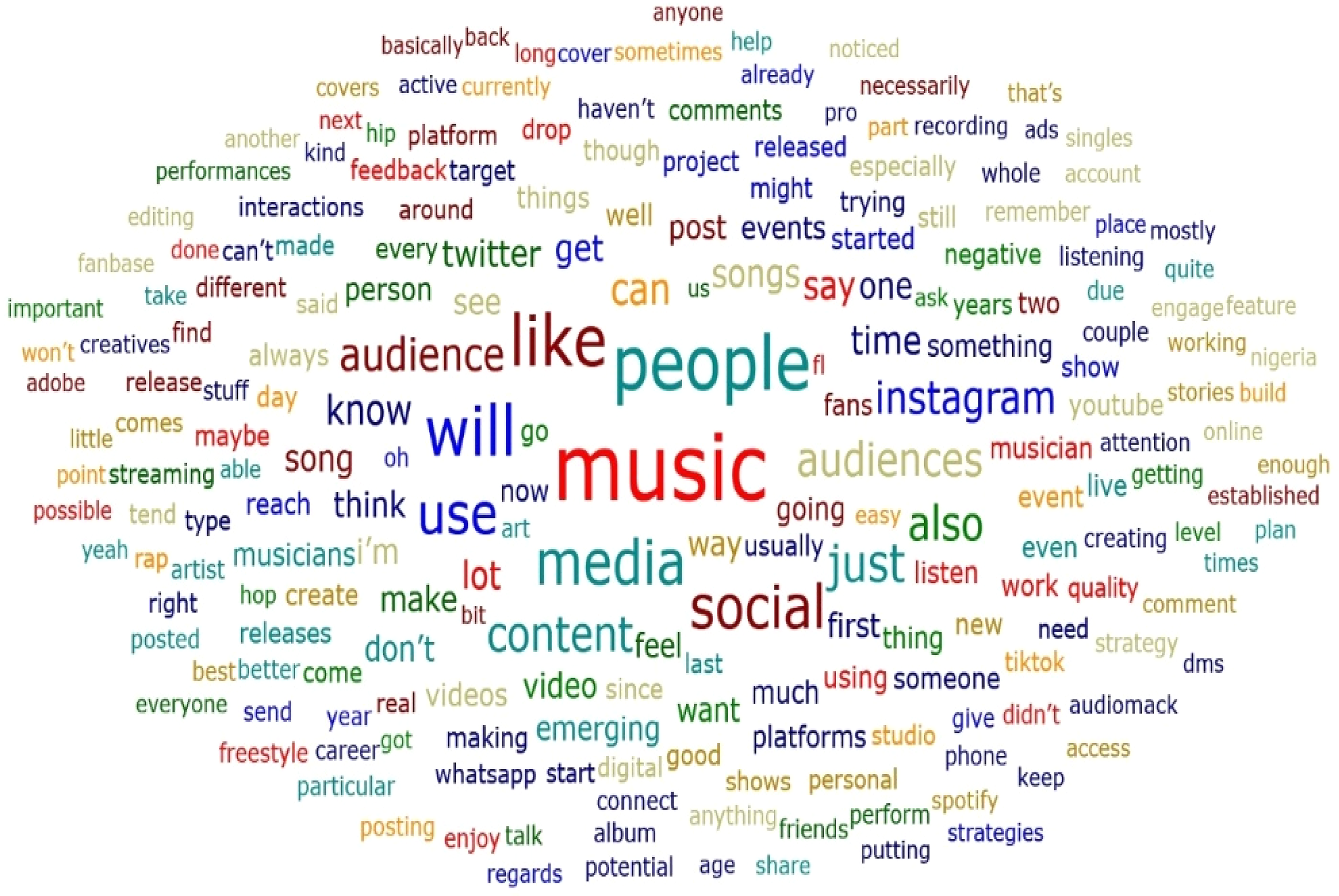
A word cloud image of the key terms.
Presentation of findings
Background information about the participants
Table 1 shows that, with the exception of two (IO and AN), all participants have bachelor's degrees (the participants are identified here with acronyms), while YO has a master's degree.
Background information about the participants (based on the questionnaire).
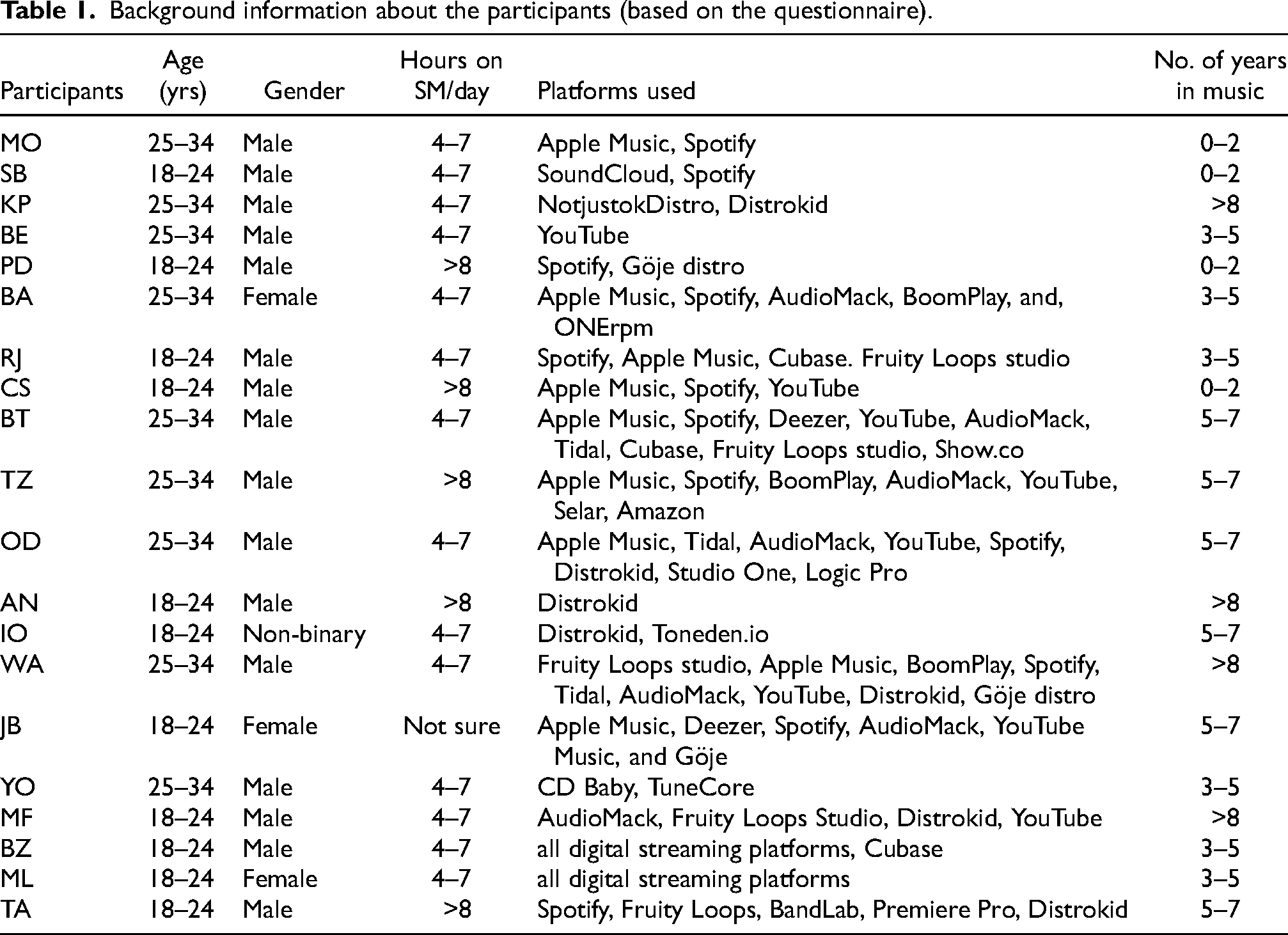
The oldest participants were about 34 years old while the youngest were around 18. Three of the participants were females, one identified as non-binary while the rest were males. TA, AN, TZ, and PD spend as high as eight hours per day on social media, while the rest spend 4–7 h. Four of the participants have been in the business for more than eight years while four have been for 0–2 years. The following sections organize the findings according to the objectives of the study.
Reasons for using social Media
A common response from participants when asked why they use social media was the need to reach out and connect to a wide range of target/potential audiences and music fans, among other benefits that social media provides. Some participants revealed specific reasons for reaching out to the audience with their music. For instance: Social media is that one tool that connects you with your fans, connects you with investors, and connects you with everyone. Especially in a country like Nigeria with little structure and many gatekeepers in the music industry, social media just makes it easy for an emerging musician looking for access (PD, January 13, 2022).
Influence social Media usage
Participants were asked about their influences and motivations for using social media in addition to their reasons for using it. Some of the study participants said they've always been social media savvy, while others couldn't remember how they were influenced or inspired to use social media as emerging musicians. BT was aware of social media before he started making music, as he revealed that he was using social media before he started making music, and it just felt natural for him to broadcast his music on it. He started using social media from Facebook, trying to keep up with his fellow students (BT, January 20, 2022).
RJ claimed that it was Wale Turner, a Nigerian rapper and songwriter, that influenced him. He noticed how he was using social media and how he was able to use social media to get a co-sign from Olamide (an established musician in Nigeria) (RJ, January 11, 2022). WA also revealed that as an emerging musician, he was influenced to use social media by watching established international musicians use it. This is consistent with Kelman's (1958) identification mechanism of the social influence model of media use, which depicts influence as being derived from the respect and likeness of another person. WA revealed this when he said: I wouldn’t say I was influenced by anyone in particular to use social media that way; over time I absorbed lots of information from established international musicians, especially on how they used social media, so I will say I was inspired rather than influenced by them. (WA, January 13, 2022). It is funny how my first-ever release project is related to that (social media influence) because the internet as a whole has been a driving force for my music successes; right from my first released single to connecting with OAPs, and that served as a means of encouragement to keep putting my music out there (TZ, January 13, 2022).
JB, on the other hand, provided another motivation for using social media. She admitted she wasn’t influenced to use it, but since social media is the future and everyone is on it, I didn’t want to be left out basically (JB, January 12, 2022). While JB's reaction is unsurprising given how social media has become an integral part of modern life, the importance of social media in the acceptance of emerging musicians cannot be overstated. The connections between social media usage influences, reasons for frequently used social media platforms, social media usage, and target-potential audiences are depicted in Figure 3.
Figure 3 relates to how social media influences social media usage, and the factors that help the musicians in describing and defining their target-potential audiences on social media.
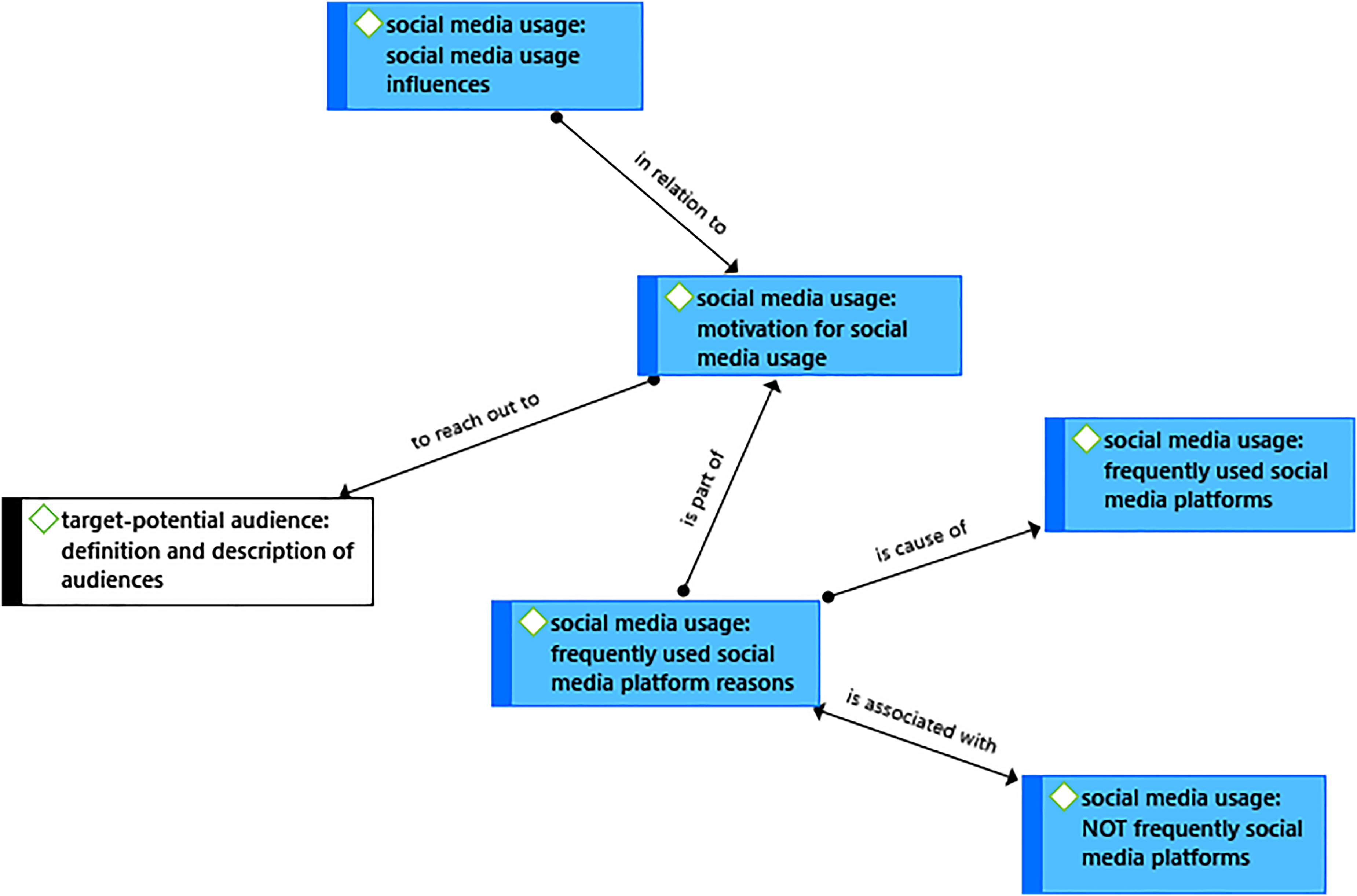
Reasons for using social media, influences, and the audience.
Target and potential audiences
Given that one of the most common reasons for using social media is to connect with target and potential audiences, participants were asked to define or share who their target and potential audiences are. The majority of participants used psychographic elements to describe their target and potential audiences, as evidenced by some of the responses below. ML (January 21, 2022) reported that his target audiences are the rebels in the society, the non-conformist, the ‘woke’ and aware that are music lovers; working-class people, university students, and everyday hustlers that just want to ease their minds, etc. For OD: My potential audiences are music fans that love nostalgic sounds, as my music is modern but with a folksy twist, and currently, it is a little bit traditional and Yoruba. So, my potential audiences are more likely Yoruba people, music fans that grew up listening to Lagbaja, people that still believe in culture, and both the older and younger music fans because my music is a perfect blend of modern elements with the traditional and folksy feel. (OD, January 15, 2022).
Previous research discovered that target imagined audiences on social media are more specific and directed than abstract imagined audiences because they are made up of people who share similar interests or have personal, professional, and communal ties (Cook and Teasley, 2011; Litt and Hargittai, 2016). This is consistent with current research findings, with target and potential audiences defined and described based on their values, desires, goals, interests, lifestyle choices, culture, social status, certain levels of exposure, enlightenment, and certain interests as emerging musicians, and so on (Litt and Hargittai, 2016). Furthermore, to define the target and potential audiences, demographic descriptions based primarily on age and gender were used. TA revealed that his target audiences are young adults (20–27 years old) who are experiencing similar emotions as he is; they are people seeking balance in their lives (TA, January 23, 2022). JB informed that her main audience is the male gender, from late teens to like 30 years old (JB, January 12, 2022).
Regardless of the demographic and psychographic descriptions of the target and potential audiences revealed above, two research participants provided an interesting perspective, describing their target/potential audiences as being in the same age group as them, having similar experiences, and revealing that the type of music they create at a given time often determines their type of audiences. Based on the type of music I do, music from my life experiences; and these experiences are common with my age range/group; and often when I write a song, I’m always thinking about the type of audience that would listen to it. So, it is safe to say the type of music I am making at any moment, determines who my target/potential audiences are (WA, January 13, 2022).
In previous research, Levina and Arriaga (2014) developed a framework for understanding users on social media platforms that revealed the implications of social media platform designs and goals, while Kasperiuniene and Zydziunaite (2019) discovered that users use different social media platforms for a variety of reasons, contexts, roles, and user needs. From the present research, having a good understanding of the type of social media audiences that the emerging musician wishes to reach out to with his music is critical in deciding and selecting the social media platforms where these types of audiences can be found. Also, when running ads on social media content to reach a larger audience, the definition of a target and potential audience is critical.
Social media impact on their music career
When asked about the potential impact social media will have on their music careers, PD revealed that social media is arguably the second biggest promotional tool after mass media such as radio (PD, January 13, 2022). More information about how they use social media to market and promote their crafts were shared, including how they use social media ads on some of their social media content. IO, for example, acknowledged the impact and reach of social media, particularly through social media ads, despite focusing on the organic growth of his music career and the growth of his social media audience. IO said that he was yet to run a single social media ad for his music, but that he has amassed a little over 100 thousand digital streams organically. He said he realizes the reach one could get from social media and understand that social media ads will greatly help him maximize profits (IO, January 11, 2022). In addition, when discussing the impact social media will have on his music career, TA stated that: Social media will give me a yardstick for measuring my journey with other musicians on my level, with other musicians, especially in identifying with a community. It also allows learning from established musicians, to see what they are doing right or wrong. Also, it will give me access to the database of my audiences, to enable me to set up marketing strategies and make better-informed decisions with lesser resources, in terms of attracting and capturing the attention of target/potential audiences (TA, January 23, 2022). I feel like before I can do this, I would have amassed a large following in my local environment, and that means I will have to do a lot of work before I get to that point. With that in mind, I will do a lot of marketing on social media about the events and also a lot of physical promos. And I also do this same thing with my new music releases as well (AN, January 18, 2022).
Figure 4 illustrates the impact of social media. Social media helps emerging musicians define, select and describe their audience; manage music releases, develop music release plans and expand their number of events.
Social media platforms and content format
Shahbaznezhad et al. (2021) in their research on the role of social media platforms and content in social media user's engagement behavior were able to demonstrate the success of certain types of content (emotional, rational, negative, and so on) and content formats that are unique to specific social media platforms. While being curious about how emerging musicians use social media to reach out to their target audiences, the answer lies in the format in which the aspiring musician disseminates his or her content. Each social media platform has its posting format; for example, Twitter, as a microblogging platform, is better suited for text-based content than Instagram, which is better suited for visual/video content.
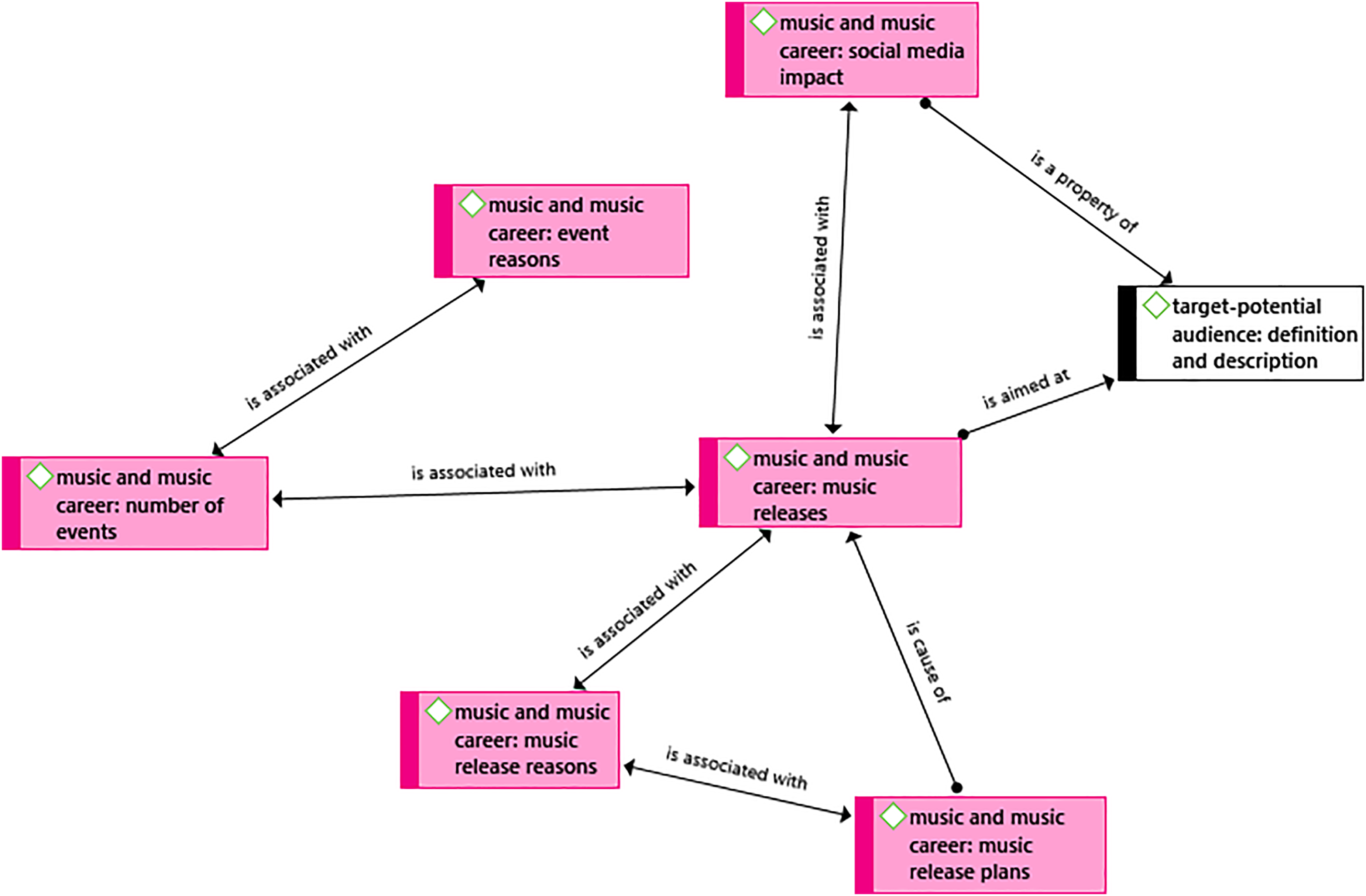
Impact of social Media on emerging musician's career.
According to the interviews gathered, the emerging musician's choice of social media platform is related to the type/format of content the emerging musician is comfortable with, as well as the creative ideas surrounding the social media content and the tools used to develop them in order to reach their target audiences. MO confirmed this observation when he revealed which social media platforms, he uses the most Majorly, I use Twitter and Instagram because those are the most popular (for emerging musicians) … you will have to create content on those platforms and then drop a proper schedule for posting or draw out a particular program for creating content to post You know, all those different sites (social media platforms) have different ways to engage fans, and different ways to approach creating content (MO, August 22, 2021).
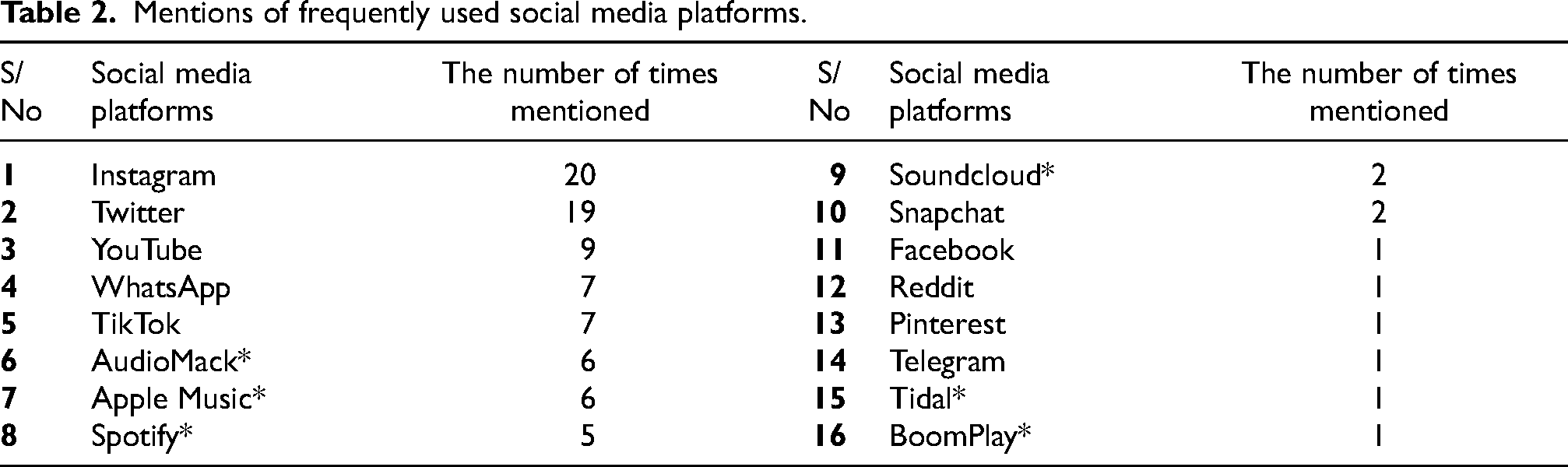
When asked about their most frequently used social media platforms, research participants’ responses range from some popular social media platforms to some music streaming platforms. Instagram, Twitter, YouTube, WhatsApp, and TikTok are the most frequently mentioned social media platforms, with a greater number of participants admitting they have only recently begun using TikTok. Table 2 provides a quick summary of the social media platforms mentioned by the research participants.
Mentions of frequently used social media platforms.
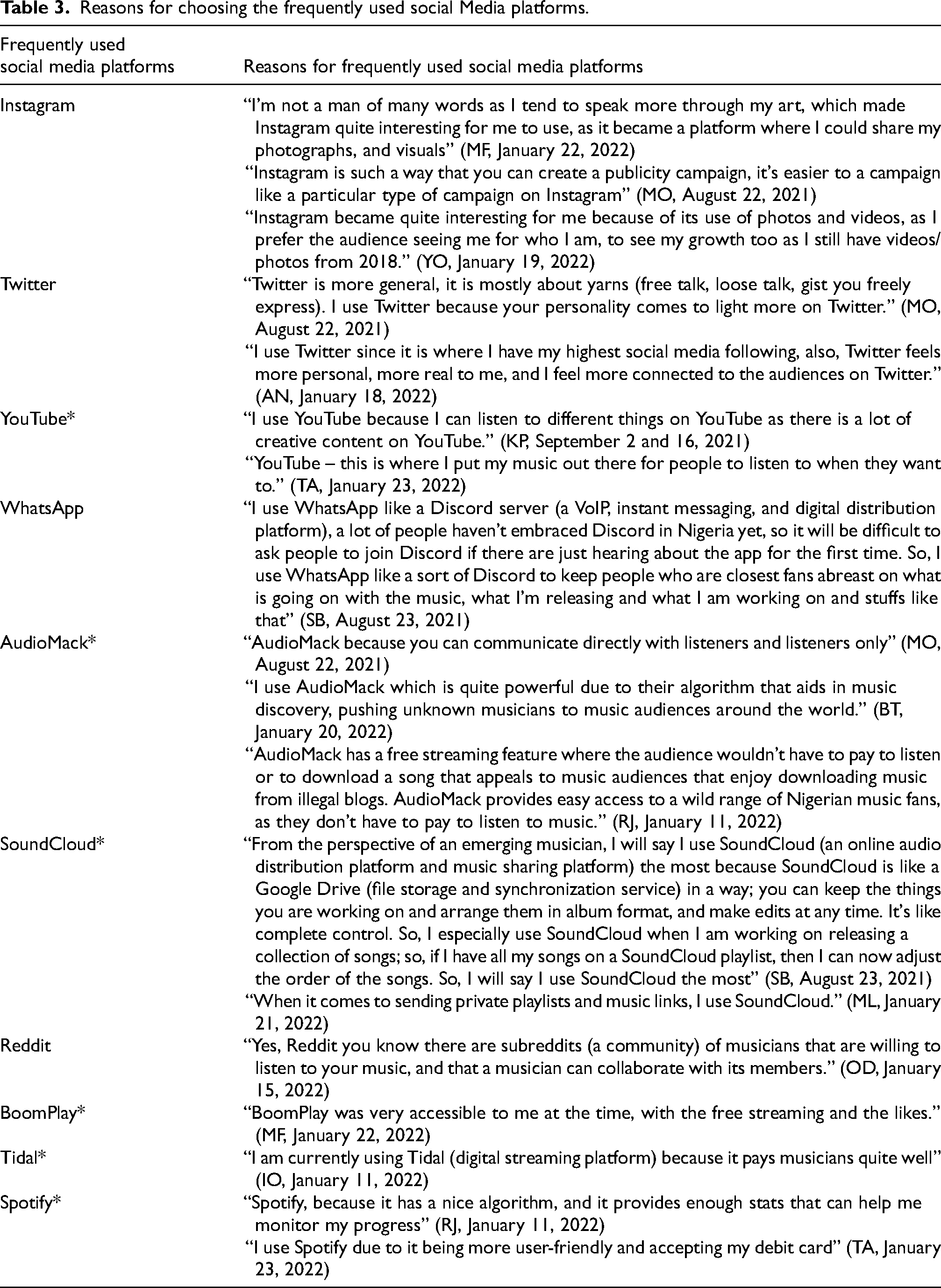
While some research participants admitted to not using some of the above-mentioned platforms, such as TikTok, YouTube, and Spotify; a greater number of respondents provided reasons for using the social media platforms mentioned. The majority of the reasons given are ‘personal’ rather than ‘generally accepted’. It is interesting to note the extent of awareness about a wide array of musical social media tools that exist, and are used by the participants for various purposes. Table 3 reveals some of the reasons given by research participants for using some of the platforms mentioned.
Reasons for choosing the frequently used social Media platforms.
Regardless of the reasons and options for using social media platforms outlined in Table 2, and because the emerging musician may be unaware of which digital streaming platforms the audience prefers, BZ provided some guidance when he stated that, as an emerging musician, one should put one's songs on every digital streaming platform possible (BZ, January 27, 2022). Fortunately, with music distribution platforms like Distrokid, emerging musicians can have their music available on a wide range of digital streaming services.
Figure 5 depicts the relationship between motivation/reasons to use music-related and content-related technology tools and skill-level in using technology tools to create content for defined and described target-potential audiences.
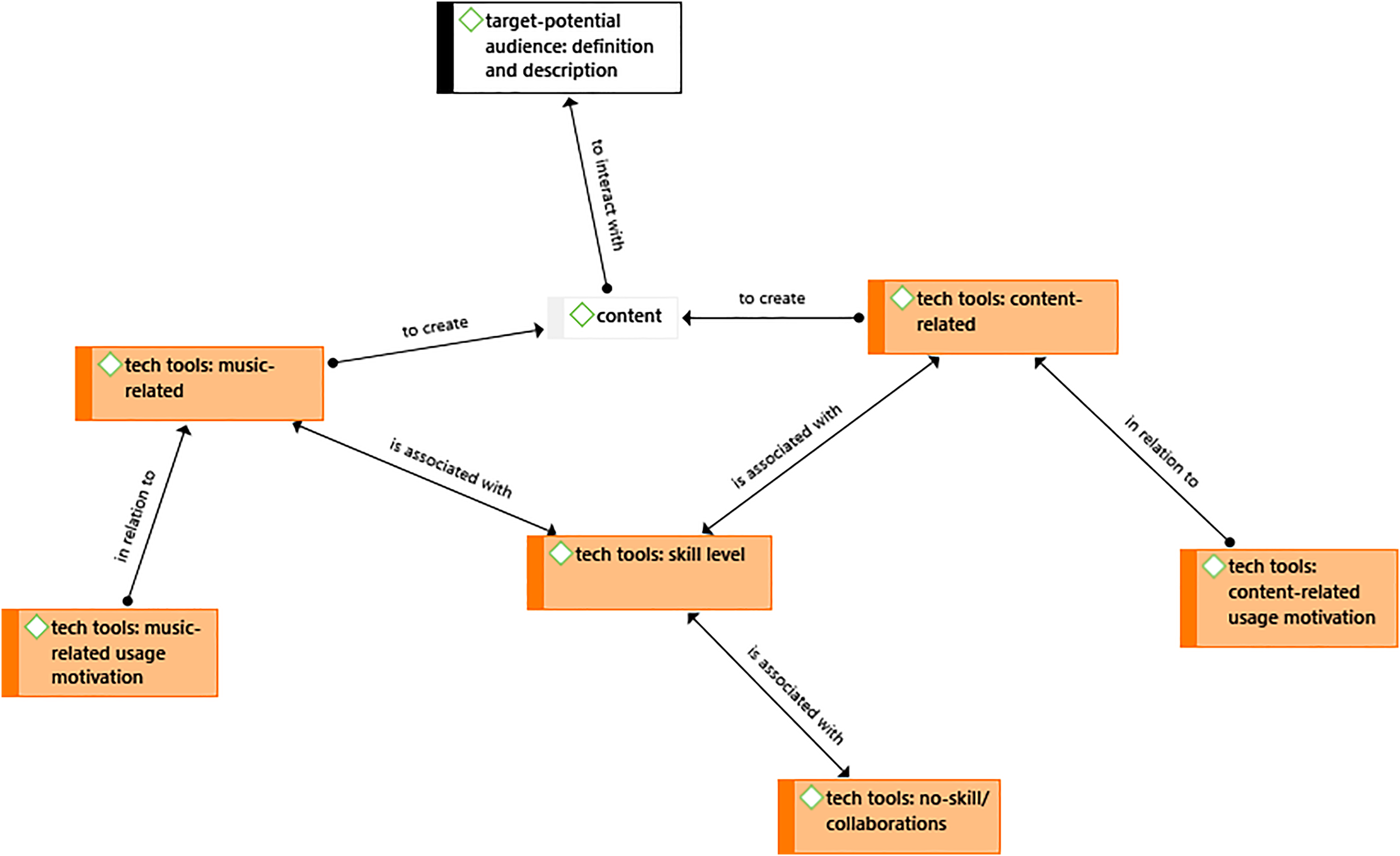
Technology tools, as they relate to content and the audience.
Social media content and music creation tools
Because the format of social media content is determined by the platforms, creating such content may be difficult; however, creating such content has become easier thanks to newer technological tools. When asked what technology tools they use to create social media content, the research participants’ responses fell into two categories: content-related technological tools and music-related technological tools. Participants in the research were also asked about their motivations for using these tools and their level of competency with them. The majority of research participants have an intermediate level of competency with these technology tools, with the minority having a professional level of competence rather than a beginner level of competence. Despite some proficiency with some of these tools, some research participants revealed that they prefer to collaborate with other emerging creatives, which is also true when they have little or no proficiency with these technology tools. When OD revealed: I do know how to use some of these tools and have some photo/video editing skills but I am fortunate to have a friend that is very visually inclined, with more experience and execution of the technicalities of video/photo editing. (OD, January 15, 2022)
Social media content and music creation tools mentioned by the research participants.
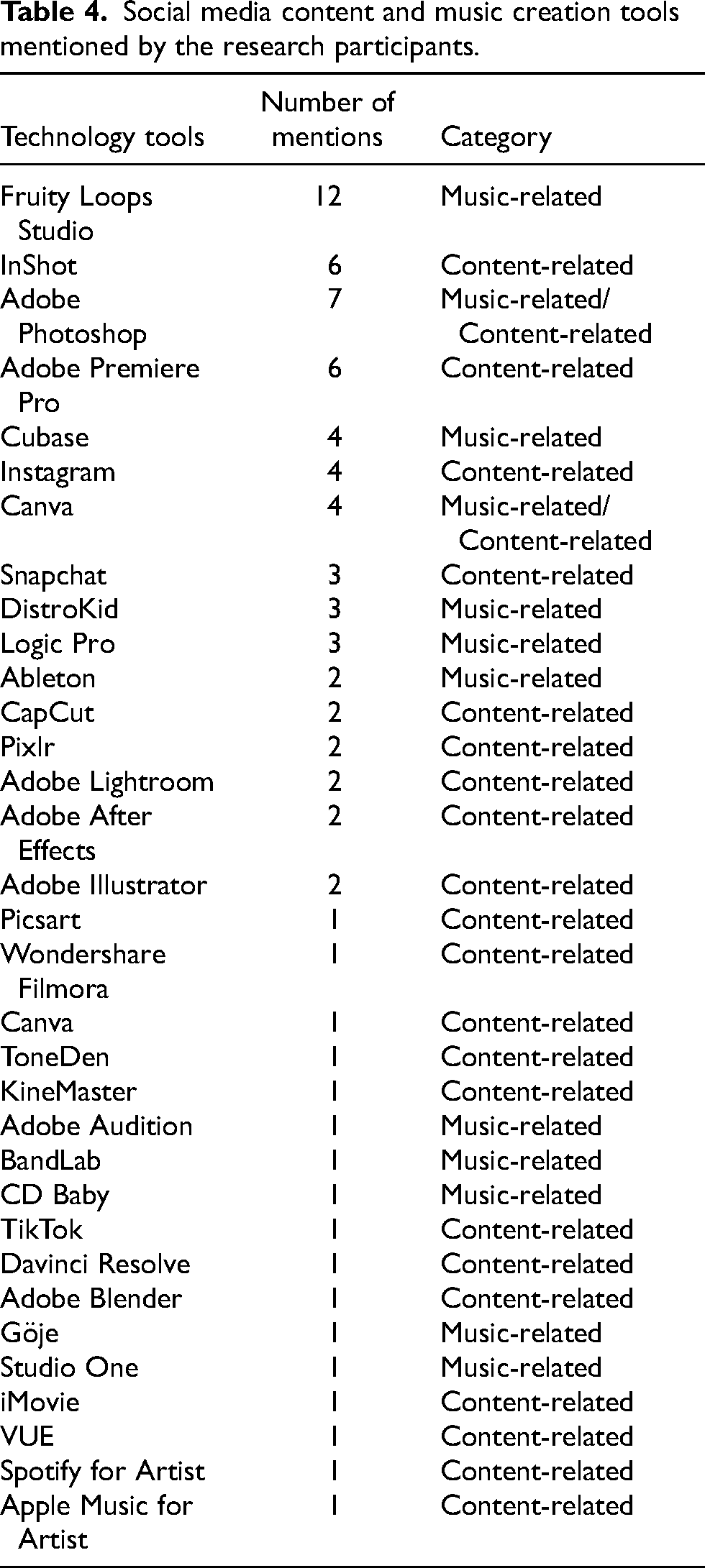
Some of the tools mentioned above were introduced to the researcher for the first time during the interview process; tools such as VUE, BandLab, ToneDen, Spotify for Artist, and Apple Music for Artist As stated by some of the research participants in the quotes below, these tools stood out because of their intended uses. I also use BandLab, which is an interesting app and practically a studio in your hands. I use BandLab to record and write a song, and then I send it to my producer to make it a complete work. BandLab also has social media elements where you can record and share your songs with users of the platform (TA, January 23, 2022).
Despite the technology tools revealed and their varying levels of competence in their use, SB made an important point about creativity vs. technological competency. Some of these social media platforms have simple tools that prioritize creativity over technological know-how. SB revealed this when he said that Instagram supports creativity over technological proficiency and that it was necessary to be aiming at using the biggest and best video creation software (SB, August 23, 2021). SB's point of view was supported by IO, who stated that he used the everyday tools people use to create content, like Instagram, and Snapchat especially with these platforms having archives feature where every post or content made can be automatically archived for future purposes (IO, January 11, 2022).
Figure 6 shows how the emerging musicians integrate their social media usage with their music and their music career as well as the content they deliver. Figure 6 further depicts social media usage, social media content and music creation tools, and the influence of social media on music releases and entertainment events, all of which are centered on defined and described target-potential audiences.
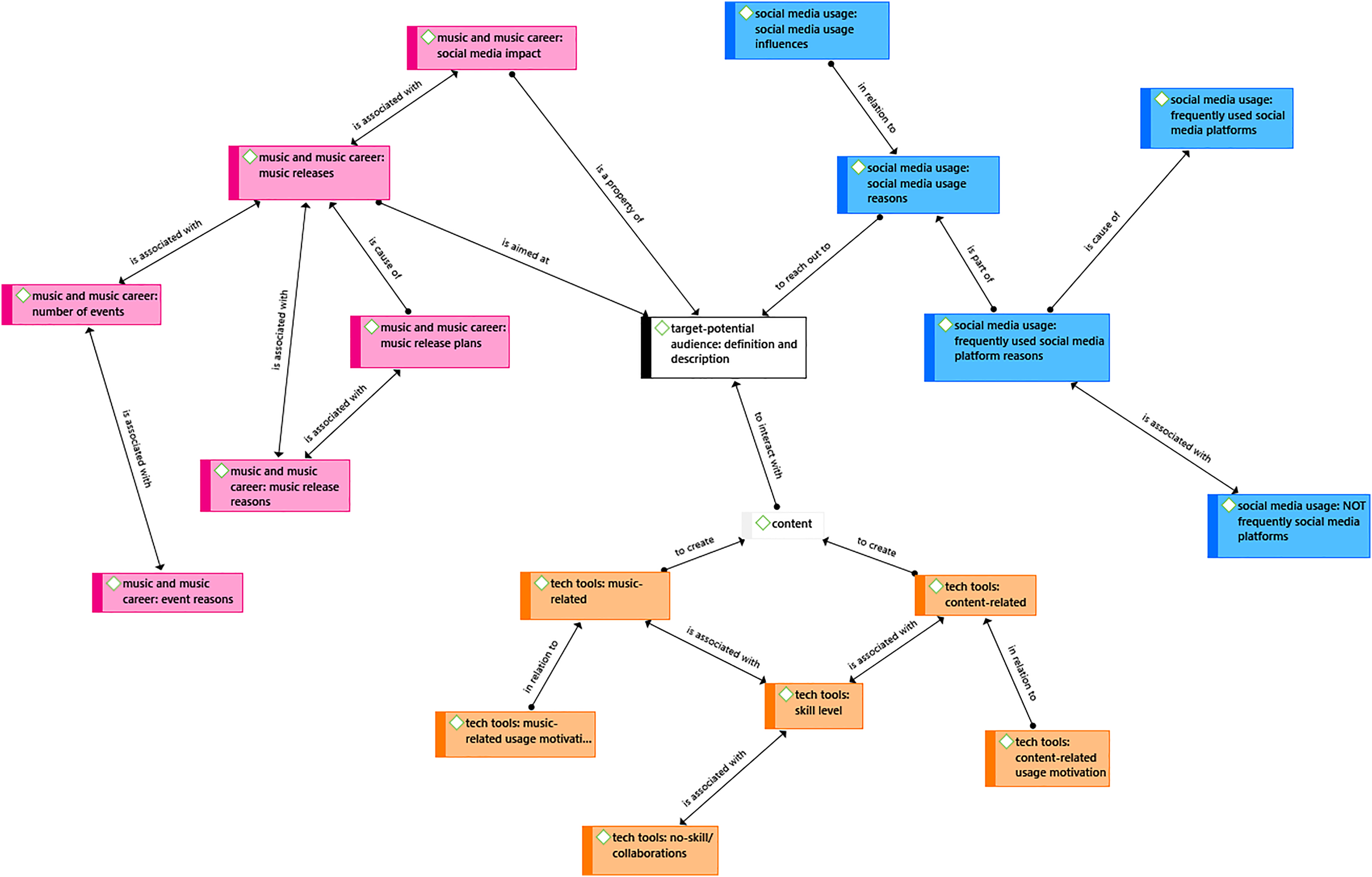
Technology tool, music and music career, social media usage as they relate to content and audience.
Social media usage strategies and the stages of parasocial relationships
Research participants were able to reveal strategies used to attract and capture the attention of their target and potential audiences, strategies used to satisfy their curiosity and thus start a relationship with the audiences, strategies used to strengthen this newly formed relationship, and strategies for influencing and organizing audiences for entertainment events, as well as strategies for networking with other emerging musicians and creatives, strategies used to handle negative feedback, all guided by Tukachinsky and Stever (2019), four stages of the parasocial relationship in parasocial engagement model. It's worth noting that the strategies employed in each stage of a parasocial relationship in the parasocial engagement model are specific to the stage's objectives.
Furthermore, audiences can reveal different characteristics common to a specific stage at any stage of the parasocial relationship; this means that an audience can be in the initiation stage and easily transition to exhibiting characteristics common to the integration stage, or can start with exhibiting characteristics common to the integration stage and transition to exhibiting traits common to audiences in the intensification stage, which is often based on how well the audience can relate to the content from the emerging musician.
Strategies for the initiation stage
Audiences form first impressions during the initiation stage, which is marked by high uncertainty as they attempt to make social comparisons between themselves and the emerging musician. A high level of interest from the social media audience based on the emerging musician's initial impressions is another distinguishing feature of this stage. Some of the research participants shared strategies and pointers for the initiation stage.
When asked about the strategies they use to attract and capture audiences’ attention, as well as to create first impressions, the research participants revealed a few strategies, including posting audio files in video formats, posting clips of their live entertainment event performances, posting visual content as a form of promotion for their soon-to-be-released music, running ads on posted content, and consistently posting potential viral video content that appeals to a diverse target audience. One of the musicians using unethical approaches said that he grew his Twitter following through ‘spamming’ and that his first account was blocked because he was always posting his video content under popular musicians’ tweets (BT, January 20, 2022). To attract potential/target audience, it might have to do with going on a campaign on older works you might have released, and if you are trying to get people on to new materials, it is usually easier by doing something broad first that can be studied, like run ads to check what demographics engage with it. Another thing of note is to use the exciting parts of the content to run the ads. (MF, January 22, 2022).
In addition to the strategies mentioned above, BZ stated that an emerging musician's branding or image can influence how potential/target audiences’ attention is captured. This was revealed when he said that branding and the image being portrayed have a way of attracting potential audiences (BZ, January 27, 2022). IO supported this view when he claimed that he likes to reach people on certain levels, appearing unassuming, not mysterious but down-to-earth, being plain and simple, and just being a regular, welcoming guy. He said he never tried to present himself as a superstar and that he thinks that this mindset has helped him in a lot of ways, like inspiring people and drawing them closer to him (IO, January 11, 2022). Some research participants also admitted to using certain features on their preferred social media platforms, such as Instagram's Reels feature, which is designed to reach a global audience. BZ stated that he often uses the Instagram Reels feature to reveal different sides of himself (BZ, January 27, 2022). JB mentioned that he also does Instagram Reels, which got him more exposure to more audiences that would not have had a chance to know about him (JB, January 12, 2022).
In contrast to the strategies revealed, one of the research participants, CS, does not believe in strategies, or in being intentional. CS believes that being intentional with social media usage is only possible with sufficient resources and that only larger and more established musicians can afford it (CS, January 13, 2022). Interestingly, a common issue raised by research participants was a lack of funding to implement these strategies and consistently create high-quality social media content, which is related to some other strategy-related issues like the inability to attract audience engagement on posted content, issues with social media platform algorithms, audiences misinterpreting and getting the wrong impressions from posted content, selection bias in choosing content to run as ads, and so on. To conclude, because of the high level of attraction and uncertainty common at the initiation stage of a parasocial relationship in the parasocial engagement model, social media audiences have a strong desire to clear up ambiguity, which leads to learning more about the emerging musician and paving the way for potential relationships that can be made possible by the strategies used in the next stage – the experimentation stage.
Strategies for the experimentation stage
Following the attraction and capture of the audience's attention and interests, the social media audience will be curious to learn more about the emerging musician. At this point, the emerging musician must pique the interest of their audience by revealing various aspects of themselves, so that the audience can gain enough information to form potential relationships, reduce ambiguity, or form emotional bonds. To satisfy their audience's curiosity and reduce ambiguity, emerging musicians will need to experiment with different content and strategies to reveal different sides of themselves.
When asked about the strategies used to create emotional bonds with audiences or reduce ambiguity, TZ stated that emerging musicians should always experiment within the context of their known interests and subjects, or within the themes and subjects for which they make music. This can be accomplished by simply creating content and employing strategies that make it easy for your audience to listen to your music, or, better yet, by appealing to various aspects of their personalities as an emerging musicians. TZ revealed this when he said that, musicians should be experimenting with content far away from what they are known for (TZ, January 13, 2022). In response to the same question, WA had this to say to complement TZ's point of view: And before all these, an emerging musician must have been known for his music so he doesn’t confuse his audiences. He/She will have to be known to be serious with their music, to avoid their audiences wondering if he/she is a skit maker, teacher, or musician (WA, January 13, 2022). The audience needs to have an emotional stake in an emerging musician's career; and one way to do that is by having a newsletter where your audience learns more about you, giving the opportunity for rewarding the audience, doing interviews to reveal different sides of oneself, and also sharing some of their experiences online in form of selfies, short videos, etc while also responding to the audience that engages such content (OD, January 15, 2022).
The participants in the research also revealed some features of their preferred social media platforms that have aided them in experimenting with social media content and usage strategies to reduce ambiguity and build stronger relationships with their audiences. As previously stated, each social media platform chosen for use has its own set of features that an emerging musician can use; for example, on Instagram, such features include Stories, Reels, Story Highlights, and Instagram Live. RJ (January 11, 2022) has applied strategies in the past to strengthen established bonds with his audience. He used the Instagram Story feature quite a lot and even went ‘live’ a couple of times, he allowed his audiences to ask him questions, and even rhymed and freestyled in response to words thrown at him. According to him, this inspires him and keeps him busy.
Regardless, and despite the above-mentioned intentional views and strategies, AN does not see the need to expend so much effort in attempting to reduce ambiguity or in creating emotional bonds with audiences. On this, AN said that he is intentionally not particular about acceptance, and that means he does not filter himself as he does not have an image yet. He sadi: I am almost like a primal animal. I am the whatever-you-see-is-who-I-am person (AN, January 18, 2022). AN believes that doing so will imply ‘putting up an image’ that is not original, but what is more original than posting content or developing social media usage strategies that align with your unique personality and qualities as an emerging musician?
Furthermore, actions elicit reactions, and in accordance with the strategies revealed, as an emerging musician experimenting with strategies and content that appeal to interests and personal motivations, this could serve as a method of separating the ‘fake’ audience from the real ones. This is what IO had to say about it: I see situations where I post things that might be deep or hard to share and then I see my followers count drop slightly, and at the same time, I see new people follow me too. So I try to show the real side of myself, try to keep it real and I noticed the effect that has, more like it weed out those that are not invested and bring in the people I am looking for. I do Yoga as well, to show that side of myself (IO, January 11, 2022).
Strategies for the intensification stage
At this stage of parasocial relationships, attracted and captured social media audiences are satisfied with their curiosity as they grow more comfortable with the emerging musician and tend to mimic real-life interactions with the emerging musician to feel a sense of closeness while looking to strengthen their parasocial relationship with the emerging musician. As their relationship develops, audiences begin to think more about the emerging musician. When asked if they had seen instances where audiences imitated real-life interactions, whether, with emerging musicians or other audiences, the research participants positively responded. BT informed that he screenshotted and posted interactions occurring on one of his platforms in order to dowse a certain discussion that was ongoing on his comment session regarding who his biggest fans were. According to him, this screenshot spurred further engagements from his the other audiences. For TZ: What I do is use the Instagram story feature to ask questions, and create a poll, before I tinted my hair I create a poll to decide if I am to tint my hair or not. Another way can be when dropping songs, I send private links or newsletters to anyone of the audience that is interested and then they pick the next single for you. And yes, I have witnessed a couple of real-life interactions among my audiences (TZ, January 13, 2022).
Furthermore, when asked about strategies for strengthening established bonds and maintaining audience relationships, BA stated that he believes audiences do a lot for him as an emerging musician and that it would be nice to repay them in some way. According to him, interacting with them on their own social media pages, and engaging with their content as well, has been very helpful (BA, January 24, 2022). BE stated that maintaining audience relationships requires him to continually engage the audiences on social media. He looks out for an audience's posts that relate to his post and then tries as much as possible to engage with the post just so that the audience will not feel neglected (BE, August 26, 2021).
IO's response stood out among the others, demonstrating how far he goes to maintain and strengthen audience relationships. IO (January 11, 2022) claimed he has a private Instagram account, where he stays in touch with his very first set of fanbases. So, to his credit, this has given him a chance to know his fans, and to know them on a personal level and they get to know him on a personal level, away from his status as a musician. IO expressed happiness with the community he is building. He emphasizes that the community is deeply connected to him as a person, and it is easy for them to connect because they share common interests (IO, January 11, 2022).
Another social media usage strategy to maintain audience relationships can be found in managing audience sentiments and in responding to audience engagements on social media platforms Mousavi et al. (2020). Since most interactions on social media are public, the quickness and quality of responses to audience engagements can have a positive impact on potential target audiences and on maintaining audience relationships. These strategies demonstrate the importance of the emerging musician in maintaining audience engagement and ensuring that audiences are deeply connected. Though the strategies revealed thus far are specific to the goals of each stage of a parasocial relationship, it should be noted that these strategies can elicit a wide range of reactions from the audience, reactions that may resemble certain attributes common to certain stages of the parasocial relationship in parasocial engagement model.
Strategies for the integration stage
The integration stage is the ultimate stage, with the audience seeking validation of their relationship status with the emerging musician (Creswell and Miller, 2010). This stage is distinguished by a greater level of intimacy, resulting in an intense parasocial relationship. At this point, the identities of the social media audiences are intertwined, and they have meaningful interactions with the emerging musician, who influences their sense of self, identity, and mood. The amount of time the audience devotes to parasocial relationship-related activities is another distinguishing feature at this stage. The researcher discovered that a smaller proportion of the research participants had observed these characteristics in their audience, albeit not on a consistent level as an established musician (Tukachinsky and Stever 2019).
When the identities of social media audiences are intertwined and they deeply interact with emerging musicians, the audience can go so far as to fight the emerging musicians’ battle when it comes to dealing with negative feedback. It was also discovered that an emerging musicians’ confidence in their abilities and work can influence how they handle negative feedback as the audience interacts with them more closely. Participants in the research were asked questions about negative feedback, networking, and using social media to organize audiences for entertainment events and newer releases. Many of the research participants stated that they ignore and block out negative feedback, while others stated that they are unconcerned about it and welcome it all depending on the situation in dealing with negative comments. SB believes that if an emerging musician trusts his or her judgment, he or she will be able to handle negative feedback and comments. I saw this post where someone said in anything you are doing you have to trust your taste, because you are the person who is creating it, and therefore you feel it is best and the people who engage like it because it is something you did. So, if you did something that someone didn’t like, you still have to trust it to a sense that ok this is something that I wanted to do and I’m not sorry for doing that and at the same time you have to be considerate and think about it in the person's view (SB, August 23, 2021).
I have learnt that criticism is not all about you but about the audience in how they perceive whatever you created. And that has helped especially in how I exploit it, and now I see criticism as some kind of cheat code, more like criticism gets me better. These days if I do not get criticism, I feel bad about it and I feel getting criticism is better than not getting any feedback whatsoever, although sometimes the audience might be reluctant to give feedback (TA, January 23, 2022).
In light of this, IO revealed that his social media audience/fanbase has evolved into a cult-like following, with his fans defending him against any negative responses, while also emphasizing the importance of continuing to invest in his fanbase.
I also have got an almost cult-like following of fanbase, and my fans are the kind of people that are very vocal about anything against liberation and emancipation and they don’t let such stand. They are the kind of people that comes to the aid of people that experience cyber-bullying, so when it comes to me, they don’t play or joke with me. (IO, January 11, 2022).
It is common knowledge that social media (and the Internet) has improved social relations and interactions, particularly with the ease with which communication can take place, allowing social media users to cultivate many relationships. When asked about strategies for networking with other emerging musicians/creatives and audiences, it was revealed by CS that networking with other creatives can be tedious; as emerging musicians are generally self-aware (CS, January 13, 2022). Social media has simplified networking by making communication as simple as seeing someone you like and then sending a message without the inhibitions that would arise if such communication occurred in person. BZ backed up this point of view by saying that if he sees someone making music that he enjoys, he would follow the person and send a DM with a compliment and a request to collaborate in the nearest future (BZ, January 27, 2022).
Similarly, BA revealed a strategy after stating: whenever he attends events or collaborates with other artists at an event, he would always try to follow them on Instagram and engage with their content and art, and he feels like this would be of help in the long run. (BA, January 24, 2022). In this regard, emerging musicians can easily reach out to other emerging musicians and creatives for any type of collaboration, and more collaborations mean more exposure to social media audiences. BE affirmed this by saying that he uses social media to reach out for collaborations; just like the musical project he just produced with Teck-Zilla. He reported that one day, he sent a direct message to Teck-Zilla on social media and told him that he would like to collaborate with him on a musical project (BE, August 26, 2021).
Furthermore, YO revealed that he does not do much about networking, but rather gets other creatives to reach out to him. For example, he informed that his current photo man reached out to him in early 2020 and that they connected and began working together (YO, January 19, 2022). ML further revealed another strategy namely that she tags established musicians/creatives on her social media posts; sometimes she does a cover of their songs and urges the audience to tag the established creatives/musicians. According to her, this sometimes gets their attention to further network and collaborate (ML, January 21, 2022). PD affirmed this and added that normally people find him from tags on his account in different contents posted by different people on Instagram. Also, he tends to do more networking in real life such as at music camp, a listening session, or some other places, and this relationship sometimes transits to the social media world where they exchange social media handles and follow one another (PD, January 13, 2022).
According to (Mulligan, 2020), live music provides a sense of where a musician is in their career, with most established musicians beginning with small live music events before progressing to larger live music events such as concerts, festivals, and stadiums. Mulligan (2020) further added that small live music events are as important to emerging musicians as training sessions are to athletes, making live music events typically regarded as a testing ground for emerging musicians, which aids their development through live music performances. It is important to note that entertainment events are important to emerging musicians’ music careers, with entertainment events providing an opportunity for emerging musicians to physically connect with their social media audience.
The interview sessions concluded with a question about the strategies used to influence and organize their social media audience for small-scale entertainment events and music releases. BT revealed that his latest show was planned for seven days before the event and that he and his colleagues posted the event on social media platforms. He said that he has an e-mailing list where he sends out a couple of emails about the event, and has had an audience of over 200 who attended the event (BT, January 20, 2022). IO further revealed a strategy he uses to influence his audiences for music releases when he said: I go on Instagram live and sing for people. I perform new songs at live events, create new social media content with these live performances and eventually people start asking for these songs, like ‘when will you drop this song’; and this kind of creates a thirst, hunger, desire for an unreleased product. So yes, it is like a pre-marketing thing, so I try to apply these in every aspect; for like shows I drop little appetizers, whetted the audience's appetite and when it is time for the real thing, the audience will pay for this (IO, January 11, 2022).
Despite the benefits of live entertainment events, the quote below from TA provides a detailed summary of strategies for music releases as they relate to some of the benefits associated with entertainment events. I have grown to know that in influencing and organizing your audience for an event or your new releases, one should start from the moment you pick up your pen to write the first line of lyrics for your song, one also has to think of how to perform the song. Then you get the audience aware of what is coming, that is your release date, and then you create buzz and attention for that release date (TA, January 23, 2022). To buttress this (social media usage strategies) I think this has to be considered even while making the music, not just after making the music; knowing what you want to do with a particular song right from the onset, knowing who you are writing for, how they are going to take the song, how I am going to reach out to them, how they will consume the content I will be creating for the songs (TZ, January 13, 2022).
Figure 7 illustrates the elements involved in and the interrelationship among the strategies and the stages of parasocial relationships. The emerging musician initiates interaction with audiences with nearly no strategy but grows over time to start addressing and developing strategies. Figure 7 shows further that a major strategy during the experimentation stage is the development and understanding of social media features that relate to audience characteristics, needs, and choices. Mimicking real-life interaction scenes constitutes one of the major components at the intensification stage while handling negative feedback, organizing audiences towards new music releases, and organizing audiences for new events and networking constitute the major issues in the integration stage.
Discussion of results
The purpose of this research was to examine how emerging musicians and entertainment events in Ibadan and Lagos use social media, and how this affects their visibility and exposure to their audiences. Fruity Loops studio, InShot, and Instagram are examples of social media tools used by the emerging musicians to create social media content. Others are Adobe Premiere Pro, Cubase, Adobe Photoshop, Canva, Snapchat, DistroKid, Spotify for Artists, Apple Music for Artists, Tonden, Distrokid, and smartphone apps like VUE, and BandLab. Some of the tools mentioned were introduced to the researcher for the first time during the interview process. Some of the motivations revealed by research participants to use these technology tools include the ease of use of some of these tools, as well as the fact that they can be used on mobile phones, easing the process of taking visuals, editing them and then posting on social media platforms. These tools were divided into music-related and content-related tools.
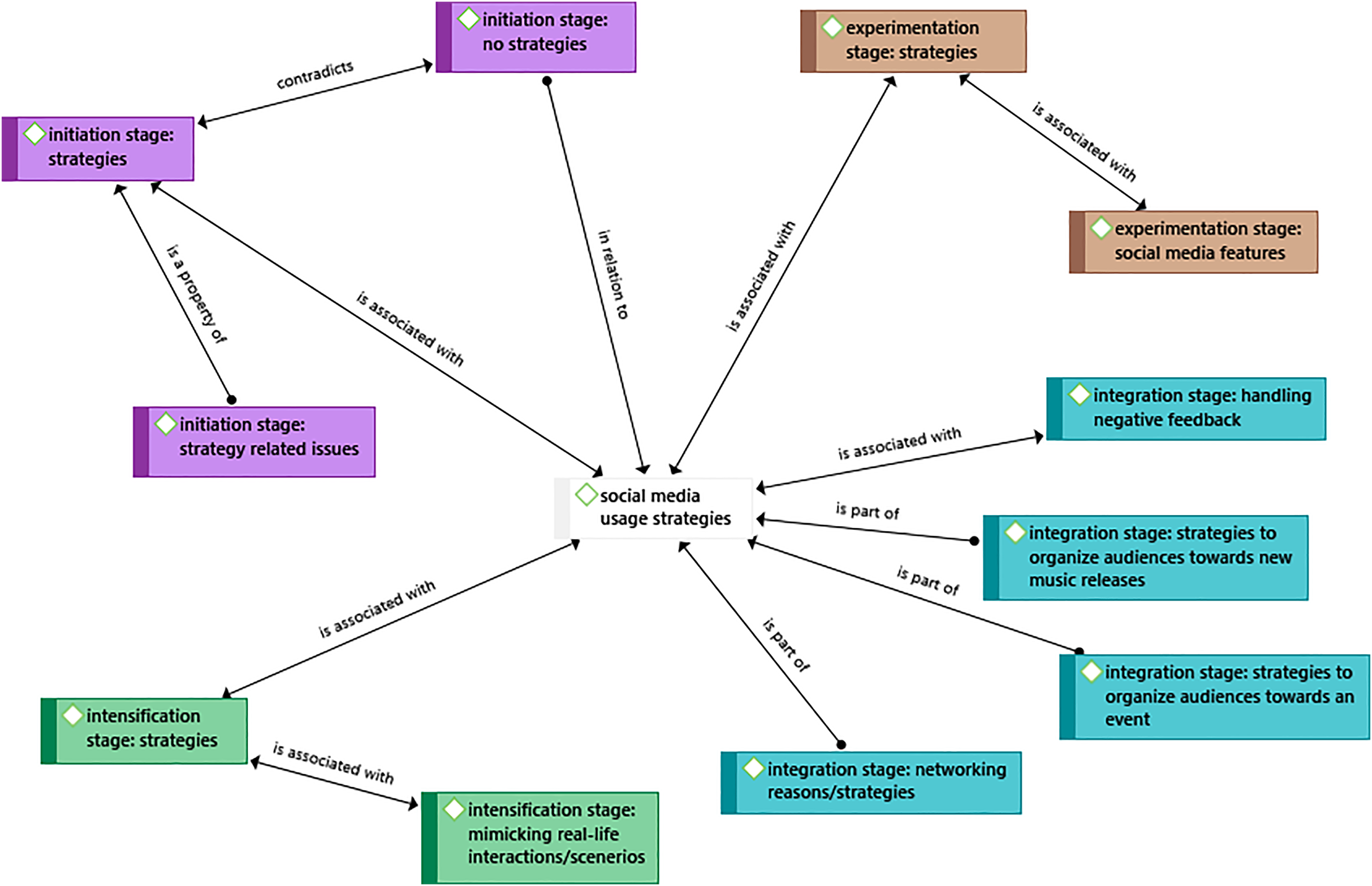
Strategies and the stages of parasocial relationships.
The majority of social media users are motivated by the desire to express themselves and connect with others in line with Choi (2016). Because they do not involve face-to-face interactions, but rather the disclosure and organization of information, these platforms allow audiences to be more expressive (Tucker and Goodings, 2014). Given the diversity of music fans and audiences, limited resources, and the fact that connecting with target and potential audiences is a common reason for using social media, emerging musicians must be able to identify who their target and potential audiences are. If the emerging musician is unable to describe who their target and potential audience is, they can release a music single or EP to see what type of audience latches on to the music; this will give the emerging musician an idea of what type of audience their music attracts. Other reasons for emerging musicians’ use social media include the need to share music faster and the fear of missing out on the many benefits provided by social media.
WhatsApp, Instagram, Twitter, Telegram, SoundCloud, AudioMack, Apple Music, YouTube, and Spotify are some of the social media platforms used by emerging musicians in Oyo and Lagos, Nigeria. The researcher also noticed that a trendy social media platform - TikTok - was not mentioned as a social media platform they actively use, citing reasons such as lack of time to learn its features, techniques for using it, and lack of time to develop strategies to maximize its benefits. Though social media and new technologies have increased their opportunities, they have also increased competition, with new, emerging, and established musicians vying for opportunities, income, and audience attention. This is the same observation in the study of Klein et al. (2017). With this in mind, an emerging musician will be engaged on continuous learning to master how to use new social media platforms that emerge all the time. He or she also need a strong artistic appeal as well as clear social media usage strategies to increase his or her reach and awareness, as well as to facilitate engagements in order to attract attention.
It is worth noting that each platform demands both similar and distinct strategies and techniques to reach out to target and potential audiences. Each of the social media platforms mentioned has both similar and distinct features that can be used to boost the reach and exposure of social media content created by emerging musicians. According to research participants, visual content, particularly videos, is the preferred type of content for forming first impressions on social media audiences. It was also discovered that viral social media challenges, remakes of popular and trending songs, posting clips of their live entertainment event performances, posting visual content as a form of promotion for their soon-to-be-released music, running ads on posted content and other video content related to various fields of interest can assist emerging musicians in forming impressions and reducing ambiguity about their personalities, and has been identified as strategies to increase reach and exposure in order to capture the attention of the target and potential audiences. To stand out among millions of other pieces of content, it is also critical to create high-quality, one-of-a-kind content.
Following the attraction and capture of audiences, emerging musicians must develop social media usage strategies to maintain audience attention, strengthen audience relationships, and foster an online community of social media audiences to organize entertainment events. Strategies such as posting video interviews, documentaries, and vlogs help to reveal the personal interests and motivations of the emerging musician, organizing small-scale entertainment events that allow for intimacy and deeper connections with the audience, rewarding the audience through monetary or gift giveaways, and so on. This will indirectly encourage interaction and engagement among social media users and audiences, increasing the likelihood of reach and exposure. Another strategy for reach and exposure is to start conversations days or weeks before, during, and after major music releases and entertainment events. Organizing discussions around such events or music releases will help educate audiences on what to expect and what to minimize.
The interview data uncovered additional strategies for audience retention and maintaining and strengthening audience relationships, one of which is responding to every comment, engagement, or interaction from social media audiences. Responding to every audience interaction on posted content can be used to start conversations that mimic in-person interactions with the audience, increasing engagement with that content. This will also aid in managing audience sentiments, makes audiences feel honored and gives the musician a lot of respect and acceptance. Another important strategy identified is the use of incentives or giveaways. This strategy multiplies the impact because it rewards audiences for their time and attention, serves as a form of acknowledgment and gratitude for engaging with the emerging musician's content, and strengthens the already established bond between the emerging musician and his/her audiences. Collaboration with social media influencer accounts and social media magazines has also been identified as a social media usage strategy. Another well-known strategy is the creation of conversations focused on a specific topic of interest or a popular trending news item. These strategies are necessary in light of the audience's short attention spans because they create a memory and a moment, and also appeal to the audience's emotional side. It is important to note that the timing of the implementation of these strategies is critical to their success.
Furthermore, the majority of the emerging musicians did not regard negative feedback or negative reviews as a negative thing, but rather as an opportunity to improve. It was also noted that when the audience provides negative feedback, it shows that the audience cared enough to listen to the music, music project, or view the content to express their thoughts. Participants in the study identified the time it takes to implement social media usage strategies as a challenge in implementing these strategies. High-quality and unique content can be created, but due to implementation time constraints, it falls short of meeting set objectives. Another issue raised is a lack of resources or funding to implement creative ideas for creating content for social media audiences.
Other strategy-related issues include the inability to attract audience engagements on posted content, issues with social media platform algorithms, audiences misinterpreting and receiving incorrect impressions from posted content, selection bias in selecting content to run as ads, and so on. Keeping up with newer technological advancements, social media usage techniques, and technological tools is a similar challenge. As one of the research participants suggested, it is better to focus on one technological tool and master it rather than learning every single technique of each technological tool. More research is required to better understand the impact of social media strategies on social media audiences, especially as it relates to the development of emerging musicians and the Nigerian music industry.
Theoretical and practical implications
The current research was designed to address how social media facilitates parasocial relationships between artists and their fans online using data obtained in two states in Nigeria. While it contributes to knowledge on the subject matter through the alignment between the result and conclusions in other studies (Wert 2021), a better picture of the situation in Nigeria would be better obtained if the study covers a wider area. It will be also very revealing to understand how the result obtained in this study stand with respect to the experiences of more distinguished musicians, with larger fan bases across various genres and demographics. Also, the exchanges on the social media platforms between the fans and the musicians, the fans, and among musicians constitute a large volume of data that could be decomposed using content analysis to further patterns of communication between fans and musicians. It can assist us to understand better what artists post on their platforms and how these posts foster fan-artist engagement and relationships.
An inclusive element of the use of social media to connect with fans is that musicians engage in a sort of self-disclosure, thus segmenting their audience. It is important to know what attracts each musician to a particular platform, and how this choice accentuates audience formation. This audience formation, and eventual segmentation relates to how the upcoming musicians know and understand what the fans want and based on this, understand the motivations to build connection and loyalty on the platforms.
The use of multiple social media platforms has implications for the need to link demographic and psychographic information about audiences, as well as other musician preferences, to the use of specific social media platforms. Social media can be used to amass target/potential local audiences while using entertainment events as a way to physically relate to the amassed local audiences. This relates to the observation of the possibility of different affordances and expectations that might be associated with using each platform. Some of the platforms involve some cost, some are more complex to use and others might have some flexibility.
This study has the potential to inform artists and music marketers about the best practices for using social media to engage with fans and build parasocial relationships in order to help the growth of their music, craft, entertainment events, Afrobeats and the Nigerian music industry. Some research participants stated that they prefer to work with other emerging creatives. It also has implications about how interaction among fans can help upcoming musicians build and brand their music. During the interview, some of the research participants claimed that the session was educational, as they discovered that most of the concepts they used were not defined or labeled. Most thanked the researcher for introducing them to new perspectives, sources of inspiration, and motivation. This researcher hopes that this contribution to knowledge will provide diverse perspectives applicable to emerging musicians and creatives in developed and developing communities.
