



Abstract
Information and Communication Technology (ICT) supports the sharing of information to improve the Quality of Governance (QoG). Many studies found a relationship between ICT diffusion and globalization and between ICT diffusion and the Quality of Governance. This study investigates the influence of both ICT diffusion and globalization in explaining the country level QoG while incorporating gross domestic product (GDP) per capita, human capital, and government expenditure in the context of the ASEAN (Association of Southeast Asian Nation) region. To this end, we used Panel Autoregressive Distributed Lags (ARDL) to analyze panel data from 1984 to 2017. In contrast to research conducted in other countries, our research shows that the impact of ICT diffusion on QoG is not significant in the ASEAN region. The findings can be explained by a lack of coherent ICT-strategy among the countries and a lack of institutional mechanisms to ensure ICT efforts’ effectiveness. However, the relationship between globalization and QoG is positive and significant.
Introduction
Literature suggests that ICT usage can enhance the Quality of Governance (QoG) of the country by sharing information with the public (Bertot et al., 2010a; Zuiderwijk and Janssen, 2014; Sassi and Ali, 2017). ICT facilitating information sharing can result in better accountability, transparency, and governance (Chun et al., 2012). Studies conducted in Africa and Southeast Asia concluded that ICT alone could not improve country governance (Theworldbank, 2006; Gant, 2008; Prattipati, 2003). Effective ICT diffusion and development must also include ICT skills to enable ICT usage (Kassen, 2014; Ali et al., 2020; Twinomurinzi et al., 2012) and institutional arrangements (Sousa, 2016). ICT diffusion can improve the financial accounting system, planning, building, surveillance systems, examination and inspection (Bertot et al., 2010b). ICT enables the sharing of information with the public. Such information is crucial for public policy development and service delivery, including the opening of the budgetary plan, rules, regulations, traffic, and so on (Janssen et al., 2012). Opening information to the public enables the people of the society to observe the government activities and realize the improvement of overall governance (Bonina and Eaton, 2020; Janssen et al., 2020). In this way, ICT diffusion is expected to influence the QoG. Under the auspicious of the World Bank, Kaufmann et al. (2011) define QoG as “the tradition and institutions by which authority in a country is exercised. More specifically, it includes “the process by which governments are selected, monitored and replaced; the capacity of the government to effectively formulate and implement sound policies and the respect of citizens and the state of the institutions that govern economic and social interactions among them” (p.3).
At the same time, globalization is expected to affect QoG. Through the free movement of goods, services, and investment across countries, benefits like improved resource allocation performance, economic development, stability, better distribution of income, and poverty reduction can be achieved (Darku and Yeboah, 2018; Ramzan et al., 2019). Prior studies argue that countries of the Association of Southeast Asian (ASEAN) countries have a globalization opportunity with other economies facilitated by ICTs (Kim and Park, 2020; Danupon et al., 2009). While regional participation may include liberalization of trade and investment and all other economic cooperation forms, Free Trade Agreements (FTAs) can positively influence the QoG. After the ASEAN adopted the FTA (Free Trade Region, or AFTA) among its members in 2003, several individual members worked to negotiate additional bilateral trade agreements with countries outside ASEAN. These bilateral trade agreements between ASEAN and non-Member States become agreements between the ASEAN region as a whole. Various agreements are in place, under negotiation or negotiation level of proposals, particularly between ASEAN and other Asian states, Australia and New Zealand. Thus, the ASEAN community can gain the benefits from globalization to improve the QoG. South-East Asia provides a heterogeneous regional climate consisting of many countries of varying sizes, development levels, and governance systems (Gonzalez and Mendoza, 2002). Southeast Asia 5 — the Philippines, Malaysia, Indonesia, Thailand and Singapore, have management and processes beyond the liberalization path. In contrast, Vietnam, Laos, and Cambodia’s transition economies and Myanmar have a lot to learn concerning public administration and are back on track to transparent and competitor societies. Another common challenge faced by most ASEAN countries is having to grapple with poverty reduction issues. While a developed member nation such as Singapore boasts a high Gross Domestic Product (GDP) per capita income of $51,000, a much “poorer” member like Cambodia is only tagging a low per capita income of $900. Due to its diverse culture, tradition, and religion, the successful integration of governance will likely take a longer time than expected.
This study examines how ICT diffusion and globalization stimulate QoG using the macroeconomic indicator focusing on 8 ASEAN countries over the span of 1984 to 2017. This paper is divided into six sections. Section 2 presents the related literature background and hypothesis development. Section 3 discusses the research method, whereas Section 4 describes the descriptive statistics. Section 5 presents the findings and discussions of the hypotheses. Finally, in section 6 conclusions are drawn and future work suggestions presented.
Literature background and hypotheses development
Prior literature argues QoG is a critical determinant for a country’s economic and social development (Kraay and Tawara, 2010; Busse and Gröning, 2009). Cule and Fulton (2013) argued that high QoG significantly promotes the business environment by ensuring compliance and efficiency of QoG. ICT facilitates information sharing with the public, enabling them to understand the government’s functioning better, resulting in better accountability, transparency, and governance (Chun et al., 2012).
Several studies suggest that ICT diffusion can enhance a country’s QoG (Singh and Sahu, 2008; Lee and Lio, 2016; Saxena, 2018; Dasuki et al., 2014). In a survey by Popelyshyn et al. (2019) in Ukraine, it was found that when the government moved towards the open data system, the level of transparency was significantly increased, and the perceived government performance improved. Another study in Africa concluded that ICT diffusion alone could not improve country governance (Sassi and Ali, 2017). Effective ICT usage development must also include ICT skill competency to enable ICT usage of the hardware (Kirlidog et al., 2018; Chang et al., 2016).
QoG facilitates the development of a well-functioning property right and perfection of the market that enhances the best potential outcome from economic development factors. Other relevant studies also support this notion of a strong linkage between various country-level governance and economic performance (Mauro, 1995; Acemoglu, 2012; Dollar and Kraay, 2004; Heilmann and Kahn, 2019; Rodrik, 2000). Therefore, from this, theoretical and anecdotal evidence endorses the importance of the QoG for economic development and a high standard of living.
Besides ICT, globalization can be viewed as playing an essential role in explaining the QoG. Globalization can improve trade, capital, information flows, and society’s movement across borders (Lalountas et al., 2011). According to World Economic Forum (2016), ASEAN communities are among the prosperous modern economic regions. For example, in 2014, AEC was collectively the third-largest economy in Asia with a combined GDP of US$2.6 trillion (higher than India) and the seventh most extensive in the world. Its unique characteristics of diverse culture, rich natural resources, a high percentage of young population, enormous market for direct investment, and high Information and Communication Technology (ICT) growth have transformed ASEAN into a leading economic region. The establishment of AEC is not the end of the process, but it is the beginning of another dynamic process. ASEAN community has to push intra-regional trade to decrease the weakness of external shocks. The problems to be solved to achieve AEC’s goal include removing the infrastructure gap and simplifying the administration policies and rules and regulations. 50% of the ASEAN businesses have used tariff reductions in free trade agreements (FTA) in the ASEAN region. Although tariffs are reduced, non-tariff procedures such as safety regulation, health, quotas, and licenses are on the rise.
The purpose of globalization is to make homogenization, prices, products, wages, wealth, and rates of interest and profit similar all over the world (Waltz, 1999). Prior research discusses the link between globalization and quality governance. According to the World Bank (2016), there is a positive correlation between globalization and QoG in middle and high-income countries. Also, in terms of governance, interdependence will promote peace and limit the use of power. Simple interdependence will become complex interdependence and bind the countries’ economic and political interests (Keohane and Nye, 1977). Prior research on globalization tends to focus on globalization as instrumental in enhancing QoG (Glynn et al., 1997; Torgler and Piatti; Lalountas et al., 2011; Asongu, 2014; Asongu, 2017). However, whether globalization improves the QoG in ASEAN is unknown yet. This led to the following hypothesis:
Research approach
This study collected data from 8 ASEAN countries, including Brunei Darussalam, Indonesia, Malaysia, Myanmar, Philippines, Singapore, Thailand, and Vietnam. This research aims to understand the relationship between ICT and globalization in terms of QoG. We will do this by using panel data for the ASEAN region. This data enables us to compare countries with each other. In measuring ICT diffusion access and use, the Swiss Economic Institute (KOF) 1 develops an index ranging between 0 percent (lowest) to 100 percent (highest).
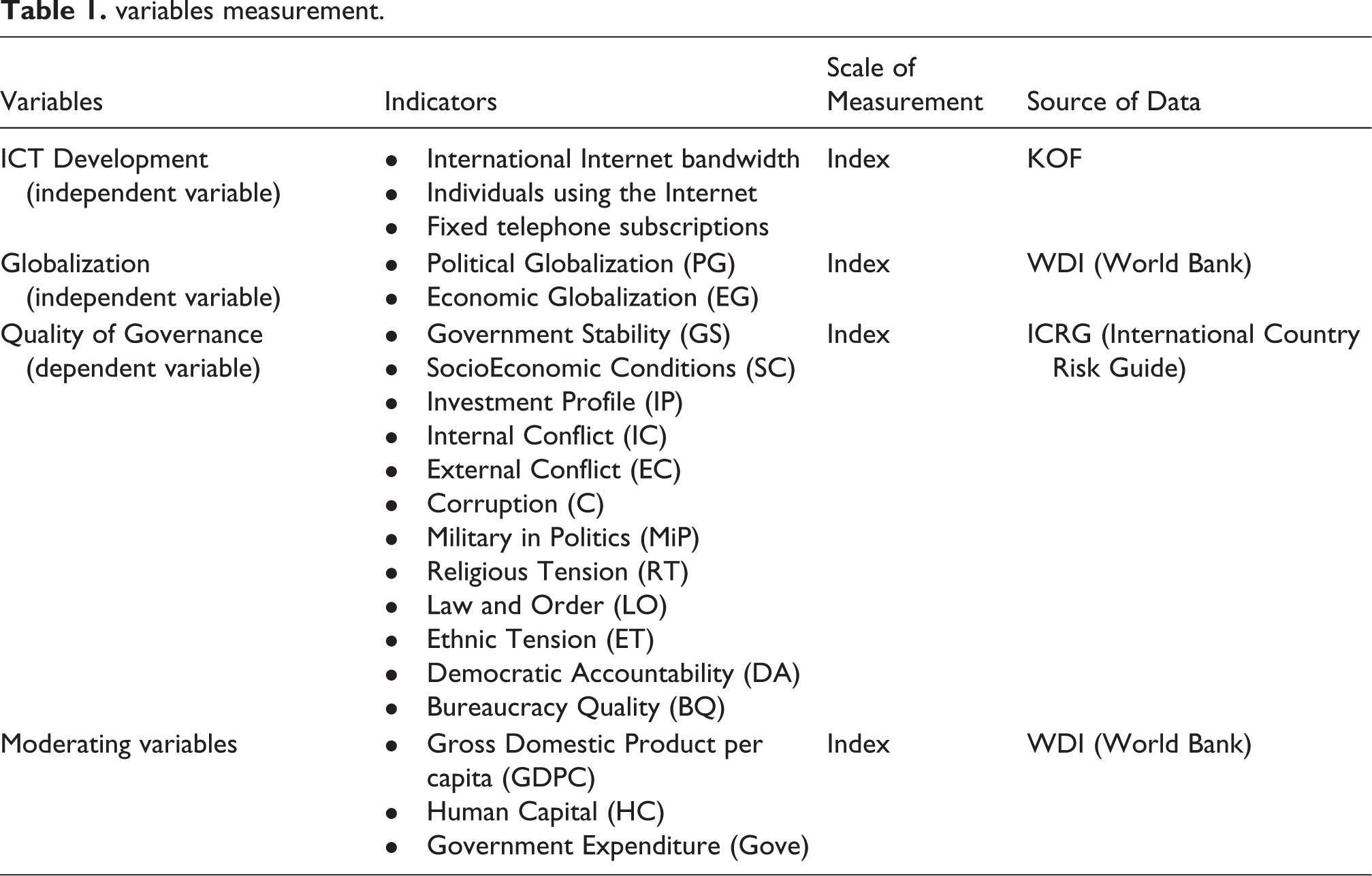
This study uses the QoG as the dependent variable and ICT and globalization as an independent variable. This study used panel data from two primary sources to estimate the influence of ICT diffusion and globalization on the QoG. Panel data related to ICT diffusion and globalization were sourced from the KOF. Data on QoG was obtained from the Quality of Government Institute 2 , Gothenburg University, Sweden. Although the World Bank provides data on ICT diffusion within its World Development Indicators (WDI) framework, these data were incomplete in country coverage or time duration. Since the indicators (proxies) used by both KOF and WDI to measure ICT diffusion are relatively similar, the former was used in this study due to its completeness. The WDI measures ICT diffusion and development through indicators, including fixed telephone subscriptions, the percentage of households with computers, and the percentage of individuals using the Internet, as shown in Table 1. Both WDI and KOF measure ICT diffusion by examining the level of accessibility and usage of information and communication technology. Several data provided by WDI are not complete and since KOF’s data covers all eight ASEAN countries from 1984 to 2017, KOF’s data was used for this research. As indicated earlier, the focus of ICT diffusion in this study is the accessibility and usage of ICT in the ASEAN region.
The moderating variables used in this study are Gross Domestic Product per Capita (GDPC), Government Expenditure, and Human Capital. Prior studies confirm that the three control variables significantly influence QoG. For instance, GDPC, as a measure for economic growth, impacts the QoG (Khan, 2007; Nabli, 2008; Huynh and Jacho-Chávez, 2009; Kraay and Kaufmann, 2002; Drury et al., 2006; Mo, 2001). Also, government expenditure (Gove) impacts the QoG (Dzhumashev, 2014; Gupta et al., 2001; Rajkumar and Swaroop, 2008). Moreover, human capital influences QoG (Arthurs et al., 2009; Nawaz, 2019; Lajili, 2015; Ahrend, 2002). These three moderating variables are different for the ASEAN countries and are expected to explain the differences in the influence among the countries between ICT development and globalization on the one hand and QoG on the other hand.
variables measurement.
Measuring the relationship is challenging (Marcovecchio et al., 2019). This study employs the Autoregressive distributed lag (ARDL) technique developed by Pesaran et al., (2001) to assess the long-run relationship and the key variables’ changes. The ARDL method is suitable for long panel time-series data and mixed order of integration of either I(1) or I(0). There are three types of panel ARDL models: the mean group (MG), the pooled mean group (PMG), and the dynamic fixed effect (DFE). All types of ARDL run under maximum likelihood estimations (MLE).
To measure the dynamic impact of ICT and globalization on QoG, we apply the panel Autoregressive Distributed Lags (ARDL) approach under maximum likelihood estimation (MLE) developed by Pesaran et al. (1999). Panel ARDL version has three estimators: Pooled Mean Group (PMG), Mean Group (MG), and Dynamic Fixed Effect (DFE) (Pesaran et al., 1999). The PMG estimator incorporates dynamic heterogeneous panel regression into the error-correction model as follows:

Where, i = 1, 2,…., N represents cross-sectional unit t = 1, 2, 3,……T represents time (annual), j is the number of time lag, p is the lag of the dependent variable, and q is the lag of the independent variables. X′it is the vector of independent variables. Equation (1) can be written through re-parameterization, as follows

Now by grouping the variables in levels further, Eq. (3) is rewritten as an error correction equation:
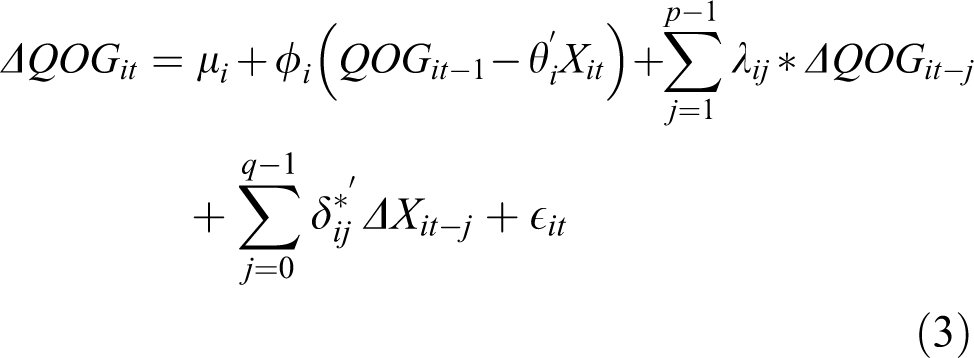
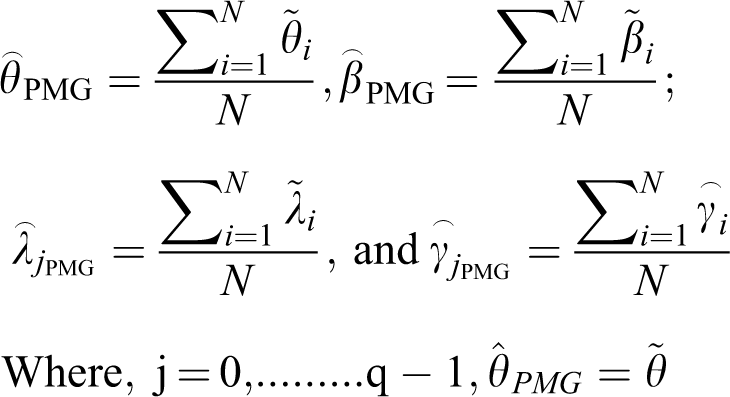
Where θi=
The MG method is carried out by estimating separate regression for each cross-section. This method provides long-run and short-run parameters by taking an average of individual parameters from each country-specific regression. Therefore, the MG method allows the coefficient to be heterogeneous in the short-run and long-run. The validity of MG estimators largely depends on the large time-series dimension of the data. Finally, the DFE method is carried out based on a few assumptions, like 1) country-specific intercept 2) it restricts the speed of adjustment coefficient and the short-run and long-run coefficient to be identical for all cross-sections. Finally, the Hausman test is applied to identify the efficiency and consistency of each estimator over others.
Descriptive statistics
Table 2 presents the descriptive statistic of the variables included in the model. Descriptive statistics provide the initial picture of data; for instance, they give minimum, middle, or mean value and maximum value for each data indicator. This also provides the value of standard deviation that shows the spread of data. The descriptive statics are of QoG, ICT diffusion, Globalization, GDPC, Government Expenditure, and Human Capital Index quality of 8 ASEAN countries for 1984 – 2017.
Descriptive statistic of the variables.
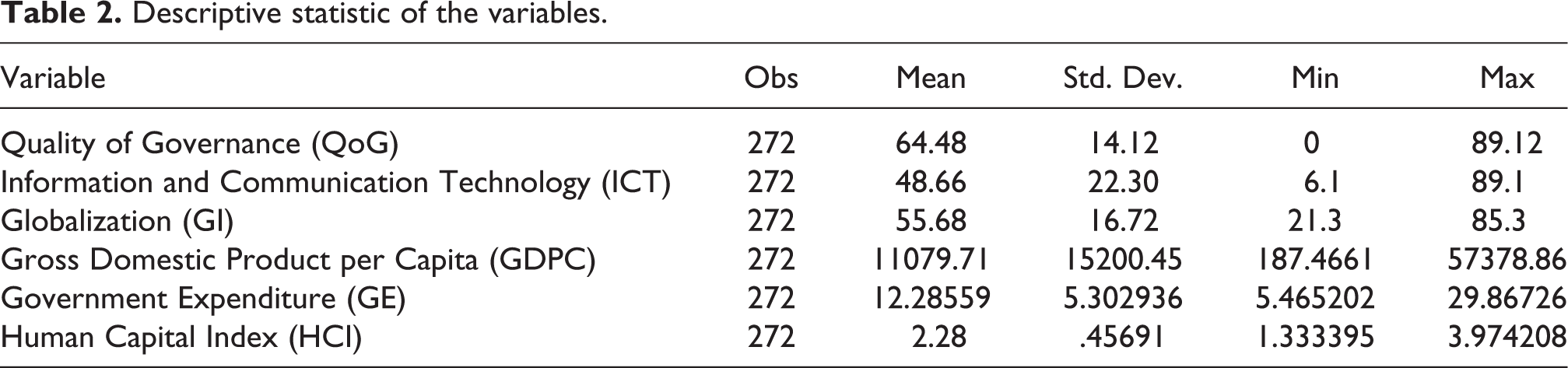
The magnitude of the QoG index in this study has ranged from 0 to 100. The maximum value is 100, indicating a high level of QoG of the country. The minimum amount is 0, meaning a very poor QoG of the country. This study found that the mean score (mean=64.48) for QoG in eight ASEAN countries is above mid-point (mid-point=50 out of 100). This implies that on average, ASEAN countries have a stable government, good socio-economic condition, adequate level of investment profile, not many internal and external conflicts, corruption, military in politics, religious tension, low and order, ethnic tension, democratic accountability, and bureaucracy quality. Figure 1 shows the QoG changes in time. Based on the finding, the quality of governance index from 8 ASEAN countries can be divide into three categories based on the mean value. There are three categories of QoG: a high level of governance, middle class of governance, and low governance quality. A high level of governance in Singapore has 82.70, Brunei with a score of 78.80, and Malaysia 71.47. The middle class of governance quality is the Philippines and Thailand with a score of 61.97, Vietnam, with a score of 59.87, and Indonesia, with a score of 53.62. The low level of quality of governance in Myanmar was 45.43.
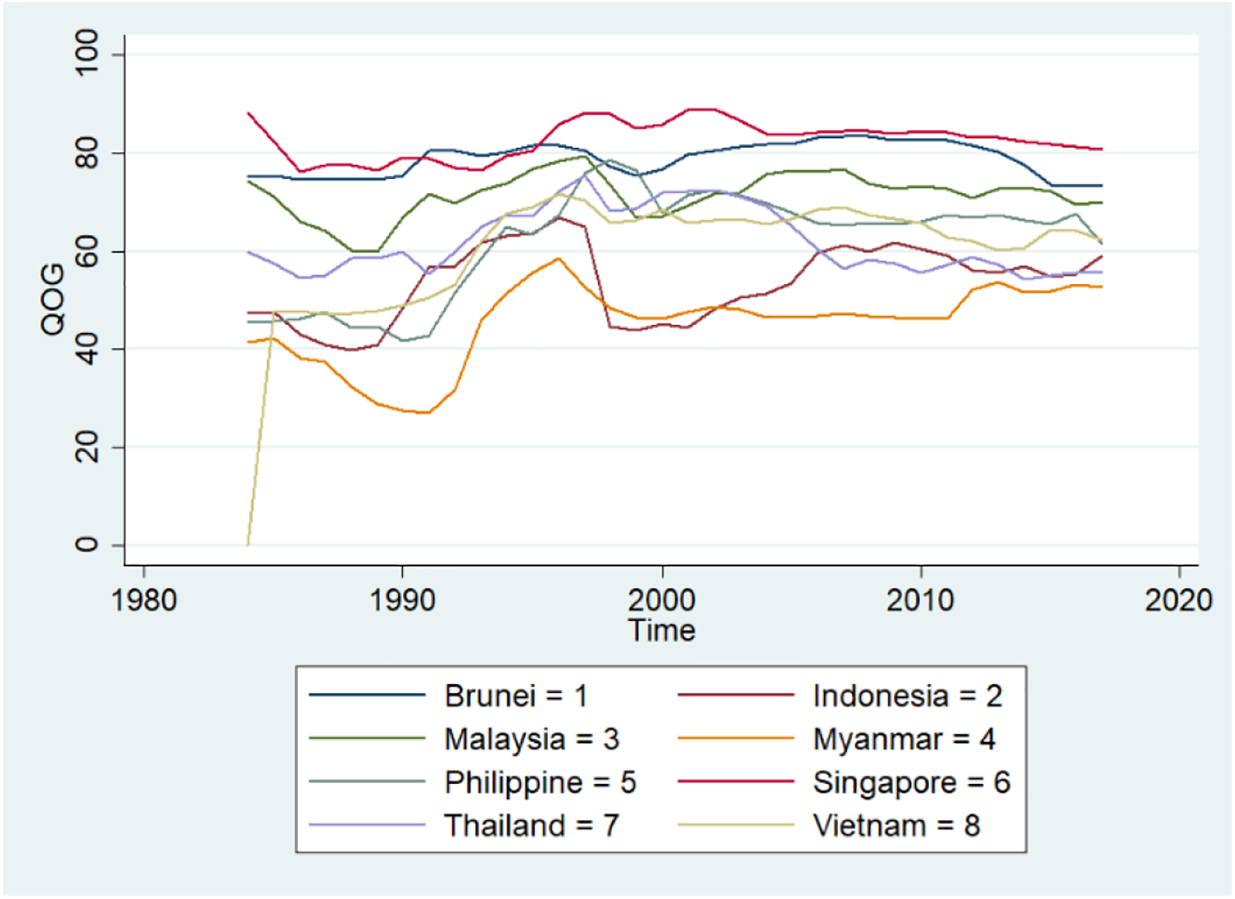
QoG of the ASEAN Countries.
The magnitude of the globalization index in this study has ranged from 0 to 100. The maximum value is 100, indicating a very globalized country. The minimum amount is 0 (Vietnam in 1984, the data is not available), meaning a country is not connecting with other countries. The mean score for globalization is = 59.47, indicating that ASEAN countries do not seem to be actively involved in globalization (Figure 2). Based on the mean value, most of the ASEAN countries are moderate in economic and political globalization. They need to participate and grab opportunities to concern themselves with globalization further to improve the QoG in the ASEAN region.
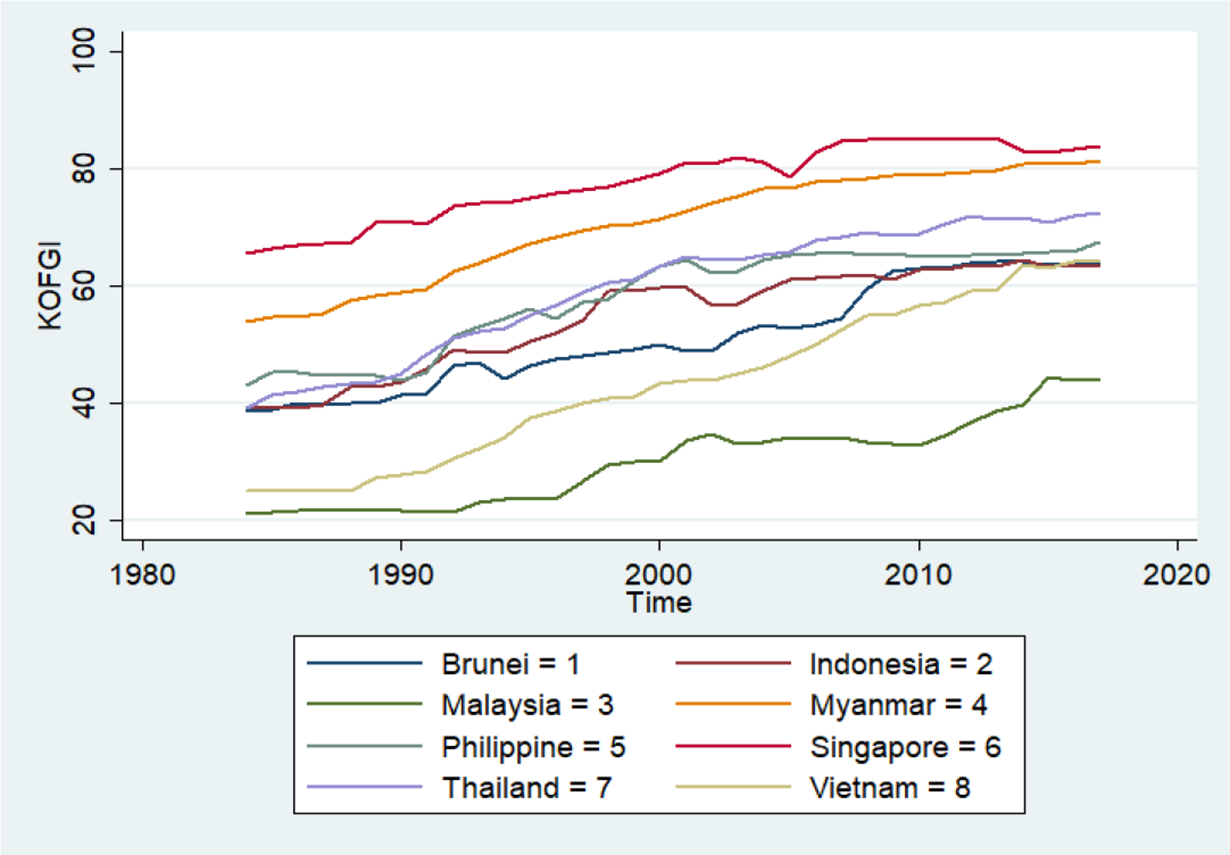
Globalization of the ASEAN Countries.
Figure 3 shows the ICT diffusion per country. The ICT diffusion scores range between 6.1 and 89.1. Singapore’s score is 89.1. ICT diffusion in Singapore is well-developed. The weakest ICT diffusion in the ASEAN region is in Myanmar, having a score of 38.5.
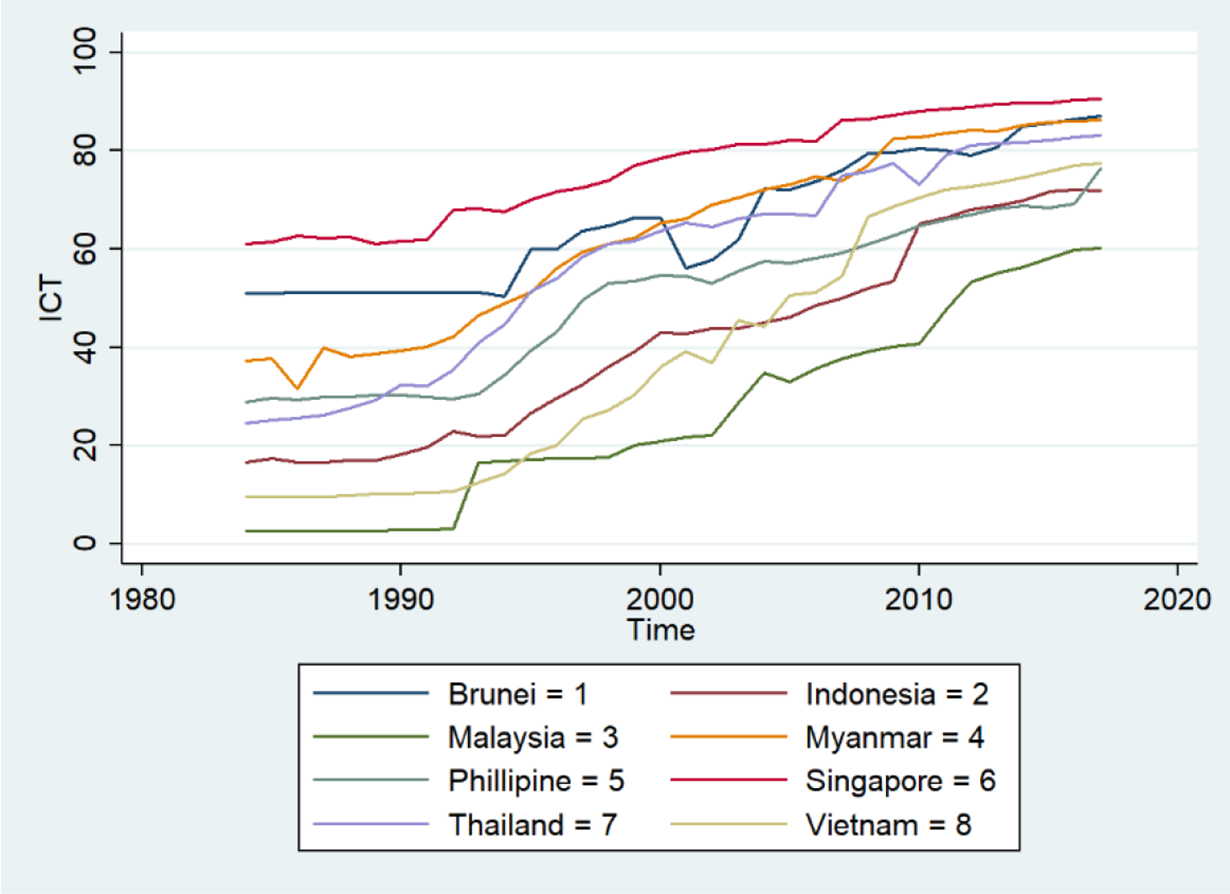
ICT Development of the ASEAN Countries.
Furthermore, GDPC is considered a significant indicator of a country’s economic strength, and a positive change is an indicator of economic growth. The magnitude of GDPC in this study ranged from $187.46 to $57,378.86. In 2016, GDP per capita in Singapore amounted to around 57,378.86 US dollars. The lowest GDP per capita in Myanmar amounted to around 187.46 US dollars. Government expenditure in ASEAN countries ranges from 5.4% to 29.86%. Human Capital includes the skill, education, attributes, and capacity of employment that influence the earning potential and productive capacity. A country with a higher level of human capital is Singapore, with a score of 3.9. A country with a lower level of human capital is Myanmar, with a score of 1.3.
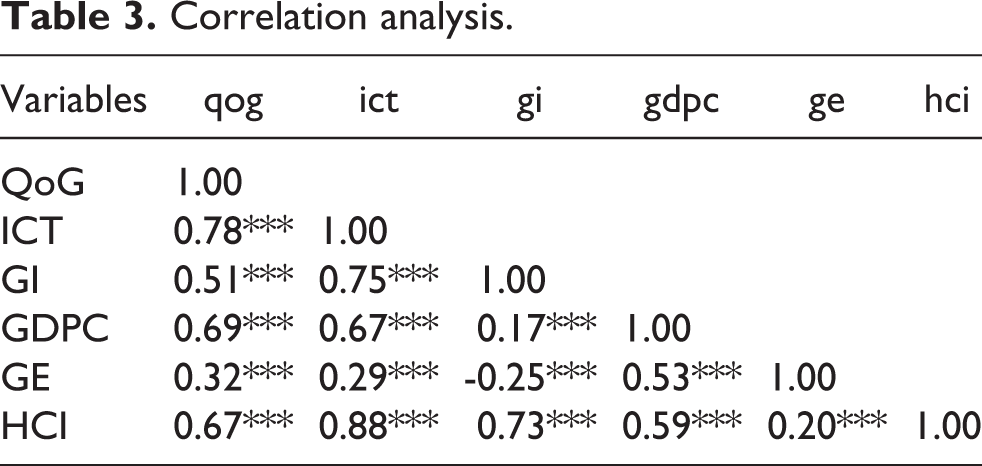
Table 3 shows the correlation analysis and the level of significance (p-values) of all variables. This table shows a strong and significant positive relationship between all variables with QoG. The sign of all variables included in the model is according to our expectations. However, this matrix only provides the initial indication of independent variables’ possible effect on the dependent variable.
Correlation analysis.
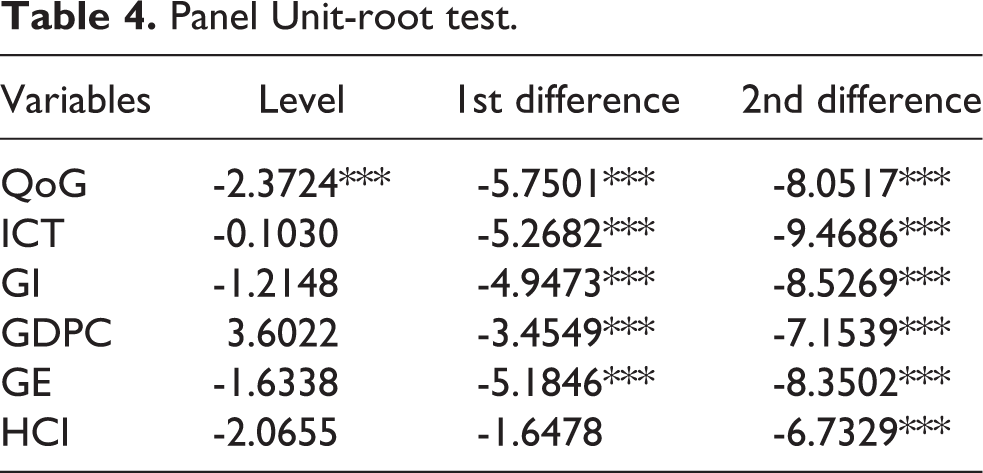
We executed the panel unit root test to examine a series of interests to conclude the respective order of integration. It is also necessary to note no variable over integration order I(1) to avoid false results (Pesaran and Pesaran, 1997). Furthermore, it is essential to check the order of integrating the variables to choose the suitable econometric model. The results of panel unit-root tests are presented in Table 4. Im et al. (2003) show that the test accepts the null hypothesis of unit-root presence on the respective variables. As a result, all variables are stationary at the second difference level, which authenticates the appropriateness of the ARD approach to be applied for analyzing data. For this study, the IPS unit root test checks the order of integrating variables in the model. We find mixed order of integration for all variables. Some variables are stationary at the level, some are stationary at the first difference, and one is stationary at the second level. Table 4 portrays QoG at a level while ICT, GI, GDPC, GE are stationary at the first and second difference, and HCI is stationary at the second difference.
Panel Unit-root test.
Findings and discussion
This research used an iterative approach involving a literature review, content analysis, and analysis of websites for discussing the hypotheses of this study. There are two hypotheses in this study. The first hypothesis is that there is a positive relationship between ICT diffusion and QoG. The second hypothesis is there is a positive relationship between globalization and QoG.
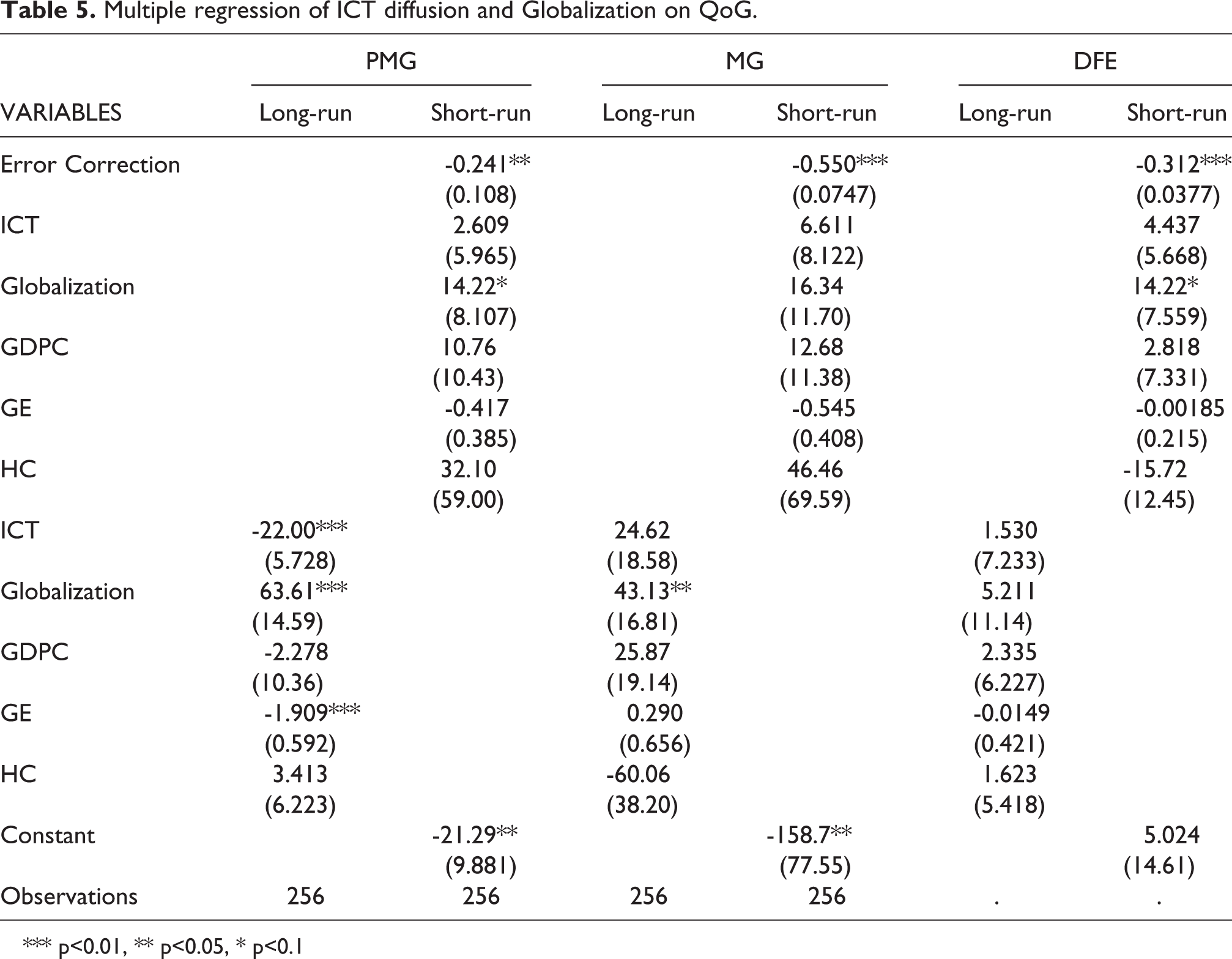
Hypothesis 1 posits that there is a relationship between ICT diffusion and QoG. Table 5 shows the multiple regression of ICT diffusion and globalization on QoG. Surprisingly, hypothesis 1 was rejected because the multiple regression using the ARDL method shows the p-value is negative and significant *** p<0.01 (coefficient score -22.00***). This can be explained by looking at ICT diffusion in the ASEAN countries. The ASEAN economy is weak in ICT services and implementation (Vu, 2017). Secondly, ASEAN nations do not have a clear digital strategy (Chia, 2014). Furthermore, there is a lack of government skills to implement ICT diffusion (Prattipati, 2003; Gant, 2008). Some ASEAN countries lack a reliable infrastructure, inadequate human resources, and coordination between public organizations (Indonesia, 2014), policy issues and economic structure. Furthermore, another factor is the unique characteristics of QoG in ASEAN. For example, Indonesia is criticized for offering low institutional quality, low transparency, low accountability, poor regulatory quality, and insufficient anti-corruption (Dawes, 2008; Coe et al., 2001; Tripathi and Parihar, 2011). Training and nstitutional arrangements are found to be conditions for improving the QoG using ICT in prior research (Sousa, 2016; Kassen, 2014; Ali et al., 2020).
Multiple regression of ICT diffusion and Globalization on QoG.
*** p<0.01, ** p<0.05, * p<0.1
In line with the World Bank (2016), ASEAN nations will not gain the full benefit of ICT diffusion if they do not have an effective digital strategy. The digital strategy focuses on utilizing technology to enhance business performance (Yeow et al., 2018). For example, in ASEAN communities, the critical problem is utilizing ICT in governance because of a lack of awareness of the factor that will help societies adopt and use ICT services. Another problem is the government’s lack of capacity (skill) to implement ICT to match web visitors and communities (Prattipati, 2003; Gant, 2008). A prior research by Irawan (2014) argues that more developed countries (examined through income per capita) do not always benefit more than developing countries from ICT diffusion. For instance, the impact of ICT diffusion on ASEAN countries’ economic growth does not positively influence the region. Singapore is one of the developed countries in ASEAN that has a high GDP per capita income. However, it has a lower output in ICT diffusion multiplier than three other countries (Malaysia, Indonesia, and Thailand). Meanwhile, Indonesia, which had the lowest GDP per capita income, had a higher output multiplier than three other countries. Hence, the level of ICT diffusion is not the primary factor in enhancing the QoG in developed countries, especially on economic performance. Further research into the complexity of these relationships is needed.
The second hypothesis, that there is a positive relationship between globalization and QoG, is confirmed by the analyses. Table 5 shows at multiple regression using the ARDL method is positive and significant *** p<0.01 (coefficient score 63.61***). Globalization can enhance the QoG in the ASEAN region in several ways. Regional integration promotes foreign direct investment (Lamy and Phua, 2012), influencing economic growth, poverty reduction, income distribution (Chaipan et al., 2006; Nwagwu, 2006), and improving human capital in the ASEAN region (Do et al., 2019). Prior studies argue that ASEAN has a significant integration opportunity with other economies due to its excellent economic performance since the 1997 financial crisis (Kim and Park, 2020; Danupon et al., 2009). After ASEAN adopted FTA (Free Trade Region, or AFTA) among its members in 2003, several individual members worked to negotiate additional bilateral trade agreements with countries outside ASEAN. The bilateral trade agreements between ASEAN and non-member states appear to become agreements between the ASEAN region as a whole and other trade partners. The bilateral trade agreements between ASEAN and non-member states tend to become agreements between the ASEAN region as a whole and other trade partners. Various agreements are in place, under negotiation or at the level of proposals, particularly between ASEAN and other Asian states, Australia and New Zealand. In this way, the ASEAN community can gain the benefits from globalization to improve the QoG in some sectors. For instance, through the free movement of goods, services, and investment across countries. Regional integration would also yield benefits in improved resource allocation performance, economic development, stability, better distribution of income, and poverty reduction.
Over the past decade, numerous studies have verified that regional integration promotes foreign investment growth and flows and, in turn, contributes to changes in health for each country participating in the integration process (Lamy and Phua, 2012). However, the size and distribution of such impacts can vary depending on many factors, such as how integration occurs (Chaipan et al., 2006; Prakas Pal et al., 2007; Sudsawasd and Mongsawad, 2007; Kassen, 2014) and trading Partner Size (Chaipan et al., 2006; Park, 2007; Plummer, 2007). For instance, in Thailand, globalization helps this country improve economic growth, poverty reduction, and income distribution (Chaipan et al., 2006). Thailand made severe efforts to develop Economic Partnership Agreements, including the Free Trade Agreement (FTAs), with various countries, including China, India, Australia, New Zealand, Japan, and the United States, alongside regional structures. Chaipan et al. (2006) stated that the effect of the FTAs on economic growth in Thailand is positive. These FTAs not only provide increased production and welfare but also promote foreign investment flows to Thailand. However, the economic integration results vary widely from the simulation scenarios concerning income distribution, reflecting the different sector impact caused by the other FTAs. Generally, the FTAs with ASEAN and China enable more capital-intensive manufacturing sectors, producing greater earnings for urban and rich families. The well-being of rural and poor households is also affected negatively by the decrease in agricultural production under the FTA with the US and Oceania countries. In the case of the FTA with the United States, the study also shows that the degree of liberalization in the US agricultural sector is a significant factor deciding the effect of income distribution in Thailand.
Conclusion and future work
This paper examined the relationship between ICT diffusion and globalization and QoG in the ASEAN region using three-panel ARDL frameworks. The PMG method’s findings show that globalization positively and significantly impacts the QoG in the long-run. In contrast, the relationship between ICT diffusion and QoG is not found to be significant. The results suggest that globalization has helped ASEAN countries enhance the QoG through human capital, attract FDI, improve GDP per capita, reduce poverty, and influence income distribution. In contrast, ICT diffusion in ASEAN is not helping to improve the QoG at this stage. An explanation can be found in the limited focus of the ASEAN economy on ICT services and implementation, a lack of digital strategy, and a lack of institutional mechanisms to complement ICT efforts. This suggests that there are ample opportunities to improve the QoG by strengthening the ICT strategy. More research is needed to understand the interplay between these variables.
The authors recognize the limitations of the present study and suggest that these limitations can be viewed as opportunities for future work and reflections. First, this research only measures the ASEAN region and limited independent variables. Future studies should attempt to replicate this research in different settings and areas. Furthermore, the role of skills, digital strategy, and institutional mechanisms should be further investigated.
Footnotes
Acknowledgements
We are indebted to the Mora Scholarship 5000 Doktor Ministry of Religious Affairs of Indonesia, State Islamic University of Raden Fatah Palembang, Indonesia, Accounting Research Institute (ARI, UiTM) Malaysia in giving us the support needed for this project. We appreciate the reviews and comments made by academicians on earlier drafts of this paper. Many thanks to government agencies, organizations that participated in the project.
