



Abstract
National research and education networks (NRENs) play a critical role in the development of communication network infrastructure and networked services for researchers and educators. They help close ‘digital divides’ between and within countries and are an essential factor for national and international development. In collaboration with the West and Central African Research and Education Network (WACREN), the TANDEM project has developed a roadmap for the development of NRENs in the region. This was based on the results of a survey that was conducted to investigate user requirements of networked services. The analysis of the 561 responses to a three-part questionnaire divided into 11 education, 22 research and 2 technical management questions identified key educational and research service needs. This article reports on the results of the survey with respect to research services. Highlights include respondents wanting regular access to online conference and academic articles (89%), a range of research services including online library resources, video conferencing, collaboration tools, online data access and storage, online library resources and inter-university login (>87%), access to remote computing facilities (80%) and high performance computing facilities (77%). A desire to share data with others online (74%) was also identified. Respondents also indicated that they would like to access research services through a range of device types–Laptops (96%), Fixed PC (86%) and Mobile Devices (81%). Poor network connectivity was consistently identified as being a major barrier to research in the region.
Introduction
The growth of virtual research communities and large-scale international research projects has resulted in revolutionary changes to the ways scientific research is undertaken (Maciel et al., 2015; Schroeder et al., 2007). The term ‘virtual research community’ refers to a distributed group of researchers and associated scientific tools working together in a shared virtual platform using dedicated ICT infrastructures or e-Infrastructures (Andronico et al., 2011). Such an interoperable and networked structure is alternatively referred to as an ‘information infrastructure’ (Edwards at al., 2009; Hanseth and Lyytinen, 2004, 2010; Ribes and Finholt, 2009).
A critical element of an information infrastructure in this context is a national dedicated Internet infrastructure and service provider that supports the needs of research and education users. Arguably, modern network-enabled collaborative scientific research or education cannot be pursued without having access to such an infrastructure provided by these National Research and Education Networks (NRENs) (Foley, 2016). The lack of network infrastructure and NRENs in developing countries is therefore a potential barrier to participation in international research and education. The challenge here is how developing countries can build sufficient technological capacity in order to meaningfully engage with research and innovation in existing and new collaborative research communities both within and external to their own contexts.
European Commission-led investments in e-infrastructures have gone well beyond European borders and have been used to either build e-infrastructures in various regions of the world or to extend them further in Africa, Asia and Latin America (Barjak et al., 2010; Catlett, 2003). Prior to 2010, with few exceptions, African universities and research centres lacked access to dedicated global research and education resources because they were not connected to the global e-Infrastructure via high-performance national and regional networks (Andronico et al., 2011; Spyridonis et al., 2015). As a result, research centres and higher education institutions in Africa requiring such access for direct peering with external networks were not well represented in global research communities. One way of addressing this issue is through creating dedicated NRENs connecting research institutions in each African country to a Regional Research and Education Network (RREN) linked to the peer infrastructures on other continents. Since 2011, as part of this effort, the purpose of the AfricaConnect projects has been to create international high-capacity networks for research and education in Africa and to support the emergence of NRENs throughout Africa. AfricaConnect ran between 2011 and 2014 and was instrumental in establishing UbuntuNet, a high-capacity data-communications network for research and education communities in Eastern and Southern Africa. UbuntuNet is overseen by the UbuntuNet Alliance, a RREN for that region. AfricaConnect2 continues the work with RREN regional clusters that also include the West and Central African Research and Education Network (WACREN) 1 .
WACREN was originally conceived at the African Network Operators Group meeting on network technologies in 2006 (AfNOG 2006) held in Nairobi, Kenya and at the Regional Workshop on Research and Education Networks organized by the Association of African Universities (AAU) in Accra, Ghana in November 2006. Both meetings identified that there was a need to build organizational and technical capacity for NRENs as a requirement for a viable continent-wide network. In a regional consultative meeting that followed in November 2009 as a pre-event to the Open Access Conference 2009, the AAU was given the mandate to identify a team to coordinate activities of working groups to produce documents for the establishment of WACREN. The WACREN board of directors was then constituted. According to its website, WACREN’s mission is to build and operate a world class network infrastructure, develop state of the art services, promote collaboration among national, regional, international research and education communities and build the capacity of the research and education community. It consists of eleven NREN members with one associate NREN member and three NREN members in development 2 .
To assist in the development of WACREN and its NRENs, the TransAfrican Network Development project (TANDEM 3 ) produced a NREN service roadmap based on the results of a survey that aimed to identify what NREN services are needed in West and Central Africa. This article reports on the survey and focuses on the research section of the questionnaire and research-related networked services. The paper is organized as follows. The following section presents a literature review focusing on NRENs and the advanced research services, or e-infrastructures, they enable. The research methodology of the survey is then described. The paper then presents the results of the survey. The final section concludes the paper and presents a discussion of limitations, highlights and future work.
Objectives of the study
The objectives of the survey were: explore end users’ needs in terms of education and research services, explore issues in network service provision, provide insights into the details of end users’ service requirements, and support the development of a regional NREN service roadmap.
The term ‘end user’ here refers to researchers and academic users of potential networked services.
Literature review
The literature review was conducted by using Google Scholar and SCOPUS as the primary data sources for identifying relevant articles. The references cited in these articles were used to identify further sources. NREN service-related reports from the European Commission, the US Office of Advanced Cyberinfrastructure, the National Science Foundation (NSF) and Research Councils UK were also consulted as were sources from RRENs GÉANT (Europe), RedClara (Latin America), ASREN (North Africa), WACREN (West and Central Africa) and the Ubuntunet Alliance (South and East Africa), the European Grid Initiative (EGI.eu) and other recent e-Infrastructure projects. The purpose of this review is to provide further context to our study.
A NREN is a dedicated Internet infrastructure and service provider supporting the research and educational communities within a country (Dyer, 2009). NRENs provide connectivity and services to higher education establishments (typically universities) and research institutes, national and international communities of practice and virtual research communities. Some NRENs also support schools, further education colleges, libraries and other public sector institutions (e.g. government and healthcare).
Typically there is a single NREN in each country, although some countries may have specific networks for different research and educational sectors. The organizational and ownership (governance) model for NRENs varies. For example, NRENs can be separately incorporated entities, government departments, or an organization operated by third parties (often university departments) under contract. Importantly, NRENs can provide network access and provision at a national level rather than at an individual institute level, as well as a common approach to solving national connectivity and service requirements. The Compendium of NRENs in Europe (and across the world) contains details of NRENs worldwide, their maturity and their service provision (Allred and Pinxteren, 2015). There are many organizations and initiatives worldwide that support the global realization of NRENs and the services that their end users request. The RREN GÉANT coordinates these activities in Europe. It is owned by its core membership of 36 NREN organizations and one Representative Member (NORDUnet) which participates on behalf of five Nordic NRENs. In Latin America, RedCLARA supports NRENs and network infrastructure across the continent. In Africa, the Ubuntunet Alliance, WACREN and ASREN are leading networking infrastructure and African NREN development across their respective regions (East/South, West/Central, North respectively). These supporting organizations are important to the strategic development of NRENs across a region and can provide information, advice and leadership across a wide range of services as well as helping to strengthen scientific and academic community collaboration and dissemination. These organizations can also play a significant role in liaising between their regions and the wider networking communities.
NRENs are a vital component in national e-Learning, e-Science and e-Research strategies as they bring a common approach to the coordination and deployment of national and international communication networks and services (Osazuwa (2016)). NRENs can provide a wide range of services including, for example, networks and connectivity, middleware (security, authentication and mobility, cross-institute federated support for national and international education and research), networked collaboration services, and general support services including training, dissemination and international project development. Apart from reliable networking and connectivity, one of the most well-known NREN services is eduroam 4 , a secure world-wide roaming service that allows users to obtain Internet access at participating institutions rather than having to go through lengthy administrative procedures.
Building on the solid networking foundation provided by NRENs, the increasing use of computing and network resources is changing the way scientific research is carried out. Nentwich (2006, 2008) has defined this as all scientific research activities in the virtual space produced by networked computers and advanced ICT tools and services (Hine, 2006; Nentwich, 2006, 2008b). It represents the next generation of scientific problems (that necessitate the efforts of distributed, collaborative, and often multidisciplinary teams – virtual research communities) and the collaborative tools and services that will be required to solve them (Olson et al., 2008). An example of this is global climate change prediction modelling. Climate research on this scale contains huge datasets from numerous sources and running multiple scenarios on supercomputers or ‘gridded’ machines (networks of computers working together in a computational grid) across the world (Whitmire, 2013). These large-scale revolutionary digital platforms underpin many of today’s scientific advances from the initial concept to the production of scientific outputs (Andronico et al., 2011; David et al., 2006; Karasti et al., 2010; Monteiro et al., 2013; Schroeder, 2007) and have been promoted under different labels in different contexts. For instance, in the United States (US) such research infrastructures are referred to as ‘cyberinfrastructures’, in the United Kingdom (UK) ‘e-Science’ infrastructures and in Europe ‘e-infrastructures’ (Schroeder et al., 2007). However, a further distinction may be drawn as e-Science is sometimes also known as ‘enriched science’; e-Science is about global collaboration in key areas of science, empowered with an integrated digital infrastructure and availability of data and information anytime and anywhere for scientific publication, collaboration, and information exchange (Hey and Trefethen, 2003). e-Infrastructures and cyberinfrastructures are more strongly associated with Foster’s conceptualization of ‘The Grid’ (Foster et al., 2001) and may be thought of as networked research services conceptualized as a research infrastructure for e-Science. Another associated term, e-Research, is sometimes used as a more generic term than e-Science, and has similar goals of using leading edge computing tools to promote collaboration and achieve scalable and sustainable solutions (David et al., 2006; Karasti et al., 2010; Schroeder, 2007).
In this context, e-infrastructures can be conceptualized as information infrastructures and play an increasing role in the advancement of knowledge and technology and their utilization by allowing interoperability in networked IT-service delivery (David et al., 2006; Eriksson and Goldkuhl, 2013; Luo and Olson, 2008; Spyridonis et al., 2015). Hanseth and Lyytinen (2010, p.4) define the notion of e-Infrastructure as follows: ‘a shared, open (and unbounded), heterogeneous and evolving socio-technical system consisting of a set of IT capabilities and their users, operations and design communities’. Abstractly, the building blocks of an e-infrastructures are as follows: (1) the bottom layer includes network services, scientific tools and datasets; (2) the middle layer is the Grid layer containing networked data processing centres and middleware software as the ‘glue’ of resources; and finally (3) the upper and highest level includes researchers and scientists that perform their everyday activities, work together and share and access data and services, possibly through a science gateway, irrespective of their geographical location. On the top of the e-Infrastructure we then have virtual research communities or communities of practice and scientific collaboration among these communities that work together on unique, multifaceted and multi-disciplinary problems whose solutions are highly beneficial for society (Andronico et al., 2011). As noted above, NRENs play a major role in the deployment of e-Infrastructure services.
While the term ‘e-Infrastructure’ in a European context evokes images of high-speed networks linking high performance computers, in the context of developing countries it is seen as one of the most significant forces and challenges of modernization. For instance, participation of developing countries in high performance computing or Grid initiatives is still the exception rather than the norm (Schroeder et al., 2007). Although Schroeder et al.’s observations were published in 2007, this still holds true. Many institutions in the developing world have only recently benefited from improved bandwidth via interconnection with well-known European or North American networks, these being either GEANT and ABILENE, respectively. These improved international links, through programmes such as AfricaConnect, are raising the potential of NRENs in Africa and realized through emerging NREN networks (Lobelle et al., 2015; Mulhanga and Lima, 2015). Some evidence of emerging e-infrastructures in Africa exists (Spyridonis et al., 2015). The development of NREN-based e-Infrastructure services in Africa would enable African researchers to directly participate in international research programmes directly affecting Africa including, for example, rural development, agriculture, climate change, and infection as disease research (HIV/AIDS, malaria, etc.)
Despite the technological advances that characterise and reinforce e-Research, a critical principle of e-Infrastructure development is that there needs to be complete collaboration between user communities and cyberinfrastructure technologists (Olson et al., 2008). This aspect of human/social dimensions, which has been echoed in a number of prior studies (see Jirotka et al., 2005; Lawrence, 2006; Lee et al., 2006), indicates that in the process of adoption of an innovation, the institutional, social and cultural environment within which research is conducted should be taken into account (Andronico et al., 2011). As particularly stated in the report of the National Science Foundation Blue Ribbon Advisory Panel Report on Cyberinfrastructure, there must be a trade-off between the concerns of technology developers and the concerns of user communities (e.g., reliability and usability), which is best achieved through ‘user-centred design’ (Atkins et al., 2003).
Research methodology
Survey
To assist WACREN in the development of regional NRENs and their services, we conducted a survey of user requirements of networked services. Since the study was exploratory in nature and a large number of respondents from across the region had to be recruited, a questionnaire survey was chosen to be the best method for data collection (Creswell, 2013). To reflect different stakeholder areas (teaching, research, technical management) the questionnaire was divided into three main parts: NREN Services for Education, NREN Services for Research, Networking Technology and Application Management. Respondents were able to fill in all sections if they wished. Based on a review of NREN services, a report was initially produced that described the range of services offered by NRENs across the world (Taylor and Abbott, 2015). This was the basis for the selection of NREN services included in the survey. The survey was released in September 2015 in English and French and a census taken on 31st January 2016. Each part consisted of a number of questions (11 education, 22 research and 2 technical management). The survey was comprehensive in its aim attempting to address current and future needs and covering all possible aspects of the three NREN areas. Several iterations of the questionnaire were made to reflect and fine tune the overall survey. This paper focuses on the results of the NREN Services for Research part of the survey.
Data collection
Participants were identified on an on-going and iterative search of potential key contacts provided by TANDEM project members including RRENs (WACREN, Ubuntunet Alliance, GÉANT and RedClara), specialist research institutes with links across the WACREN region (IRD and CIRAD), specialist African NREN/e-Infrastructure development researchers (Brunel) and African NREN/e-Infrastructure dissemination specialists (SIGMA). The population size of this study was unrestricted, targeting scientists, scholars, researchers, administrators and higher education students from the West and Central Africa. Participants from other continents were considered on the condition that they had some direct involvement in teaching and/or research and or network administration activities. This on-going recruitment phase produced a sample of more than 2,000 potential participants identified from multiple channels including African Universities and Research Centers, Academic Search Engines, CIRAD and IRD Mailing Lists, the WACREN Community List, ICT4D and Sig Glob Dev Mailing Lists. Participant recruitment and engagement was done through national Focal Points in the region (FPs) as well as activities including related workshops and events (e.g. a FP meeting in Ivory Coast and the TANDEM Ghana workshops), dissemination materials (e.g. posters and flyers) and social media advertisement (e.g. the TANDEM project website, the WACREN website and Twitter). Participants were also asked to distribute the survey widely to others participating in NREN-related activities. An email invitation to the survey was either sent to the participant’s direct email address, where possible, or to the participant’s organization email address specifically addressing the identified person.
Data analysis
Data was taken from LimeSurvey and cleansed to verify duplicate, incomplete, incorrect and inaccurate information to ensure quality data and reliable results. Free-text fields were checked for inaccurate/incorrect data. Data was then analysed on a per-question basis and findings were written up as a report. French responses were translated into English (by a French speaking translator) and then analysed. Additionally, data findings from each question were combined and cross-referenced where appropriate. The results were reviewed by the TANDEM project team. Queries arising from the review were followed up and a new report was written. This cycle was repeated several times and resulted in a final report on which this article is based.
General information about the respondents
This section presents the results of the analysis of the survey responses. 1446 responses (707 complete; 739 incomplete; 49% response rate) were received during the course of 5 months from 1 September 2015 until 31 January 2016. Concerning the completed responses, 687 were received through the online survey platform while 20 survey forms were received by email. Out of these 707 full answers, 561 responses were deemed as usable and were consequently considered in the analysis. Of the 561 usable answers (79% of total), the section/answer breakdown is as follows: 40 answered all three sections, 189 education and research, 14 education and technical, 7 research and technical, 34 education only, 46 research only and 231 technical only. The survey yielded responses from African countries (n=14), as well as from other world regions, including Europe (n=1) and North America (n=2) that were involved in African-related activities in the domain of e-infrastructures/NRENs.
The following presents the research-related results.
Results
Distribution of research topics
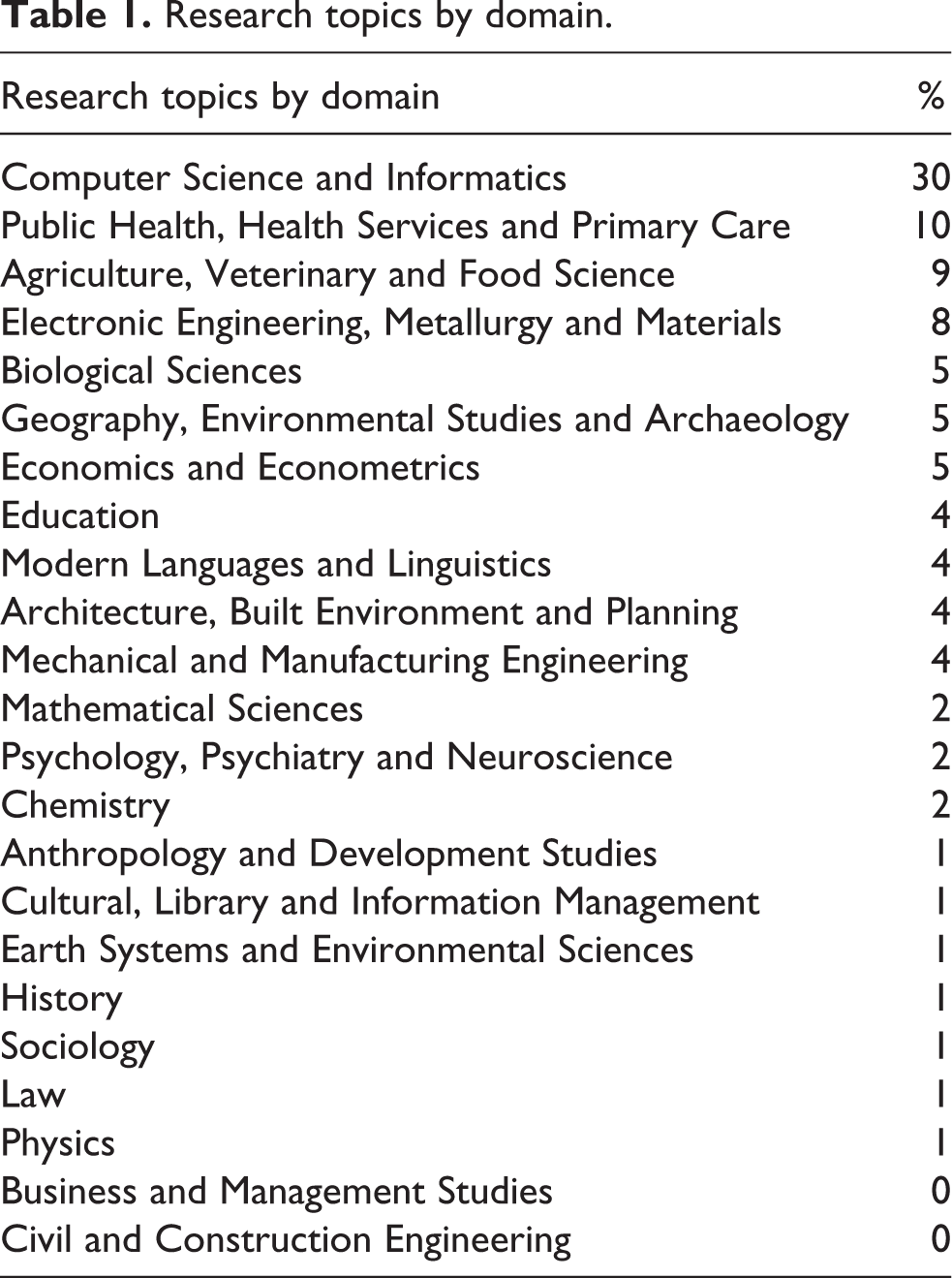
Classification of subjects was made according to the unit of assessment provided in the UK Research Excellence Framework 5 (which is based on international subject benchmarks). The findings of the study revealed that almost a third of the indicated topics/subjects were from Computer Science and Informatics at 30%, followed by Public Health, Health Services and Primary Care at 10% and Agriculture, Veterinary and Food Science at 9%. This might reflect a general interest in networking and computing services by Computer Scientists that made them more likely to participate in the survey. Other research topics by domain are shown in Table 1.
Research topics by domain.
Frequency of research collaboration
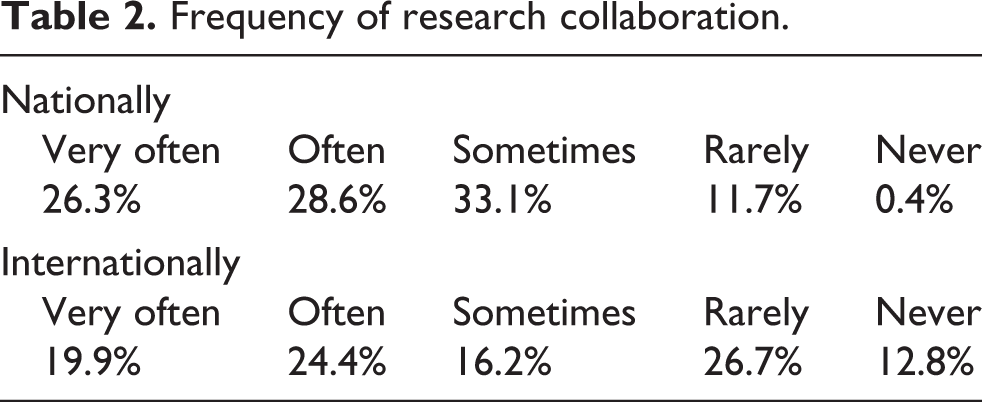
We asked respondents about the frequency of their collaboration with other scholars nationally and internationally. Fifty-five percent collaborate very often/often nationwide whereas 45% collaborate very often/often internationally. 45% and 42% of researchers collaborate (sometimes/rarely) nationally or internationally respectively. All respondents collaborate nationally at some time; 12.8% of researchers indicated that they never collaborate internationally. Overall, this indicates a balance of national and international research collaboration and the potential for collaboration in international networks (Table 2). Given that only 0.4% of respondents indicated that they never collaborate nationally, it might be assumed that the researchers who do not collaborate internationally do collaborate nationally and would still benefit from a NREN.
Frequency of research collaboration.
International research collaboration by location
When then asked about the countries they usually collaborate with (Table 3), the top five indicated by respondents were France (16%), USA (13%), UK (9%), Canada (6%) and South Africa (5%). About the reliability of the network for international collaboration, a significant proportion of respondents (70%) considered their network unreliable when they collaborate with other scholars by disagreeing with this statement: ‘My network never causes me any problems when I want to work with other researchers internationally.’
List of international collaboration countries (>1.77%).
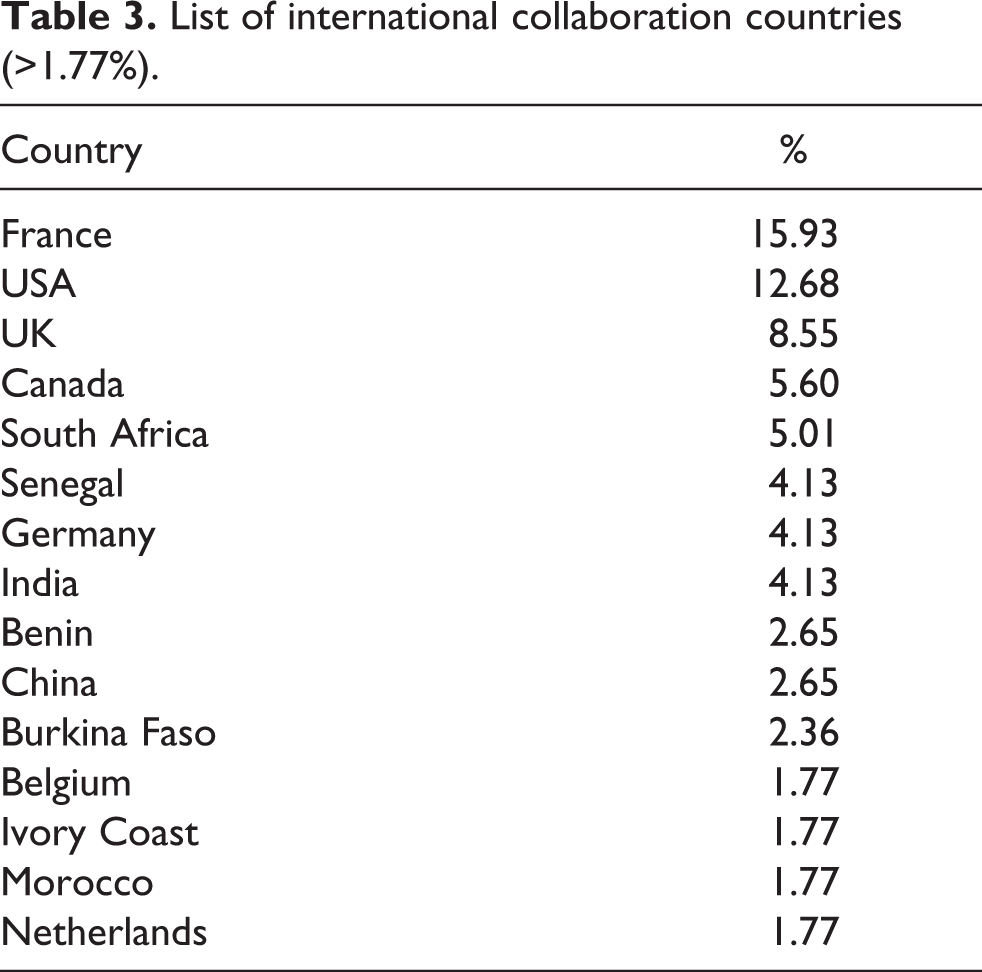
As seen in Table 3, France is a key contributor to scientific and technological achievements in West and Central Africa. The WACREN region consists of Anglophone (English speaking) and Francophone (French speaking) countries in a certain percentage and hence this could be the possible reason why France features so prominently. Indeed it has been noted that 54.7% of the French-speaking world is in Africa (Wolff, 2014), particularly in this region. This highlights the importance of ensuring network service documentation needs be in both French and English. Other major indicated non-African collaborator countries included Europe, North America, India and China.
Commonly used search engines
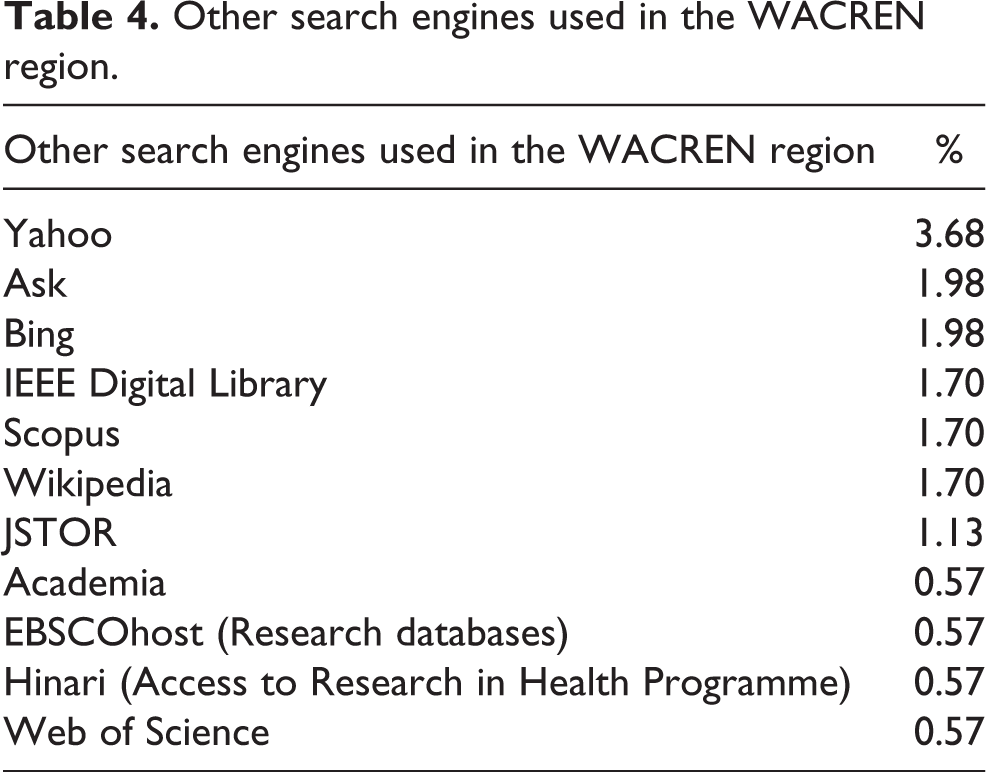
We asked respondents about their commonly used search engines. Google and Google Scholar were by far the most popular search engines among researchers, accounting for about 44% and 20% of responses respectively. ResearchGate (5.95%), ScienceDirect (5.67%) and PubMed (4.53%) were the last three of the top five most frequent answers. The list of other search engines used by WACREN researchers are shown in Table 4. This also indicates the range (and possible confusion) of what respondents consider to be a ‘search engine’. For example, ResearchGate and Academia are academic social networks, ScienceDirect, PubMed, JSTOR, EBSCOhost (Research databases), Web of Science, and IEEE Digital Library are full-text Databases, Wikipedia is a free encyclopaedia on the web and HINARI (Access to Research in Health Programme) is an organization that promotes free or very low cost online access to the major journals in biomedical and related social sciences to local, not-for-profit institutions in developing countries. Reinterpreting this question, this gives more insight into the wide range of tools that researchers use in their research. It is understandable that Google/Google Scholar are the most used by researchers as they are free-to- use search tools. Although not search engines, some researchers might use the search tools within ResearchGate, ScienceDirect and PubMed to search the full-text databases that they represent. If this is the case, then the question remains as to how researchers can access these facilities in a reasonable time via a good communication network.
Other search engines used in the WACREN region.
Journal articles and datasets access
As expected, while a significant proportion of respondents (89%) regularly access online conference and academic articles, the majority of them (75%) indicated that their network causes access problems by disagreeing with the following statement: ‘My network never causes me any problems when I access online conference and journal articles’. Similarly, data showed that while almost three-quarters of respondents (71%) regularly access online datasets, around 69% of them believe that the network is unreliable for such activity. We also asked respondents to name typical datasets that they usually access. A range of datasets was identified. Examples of such datasets from the survey include: Education and training statistics Food and agriculture data from FAOSTAT GenBank from NCBI (National Center for Biotechnology Information) Satellite-derived meteorology and solar energy parameters from NASA-SSE (Surface meteorology and Solar Energy) Key economic indicators Social attitudes and values Social issues Health statistics from WHO (World Health Organization).
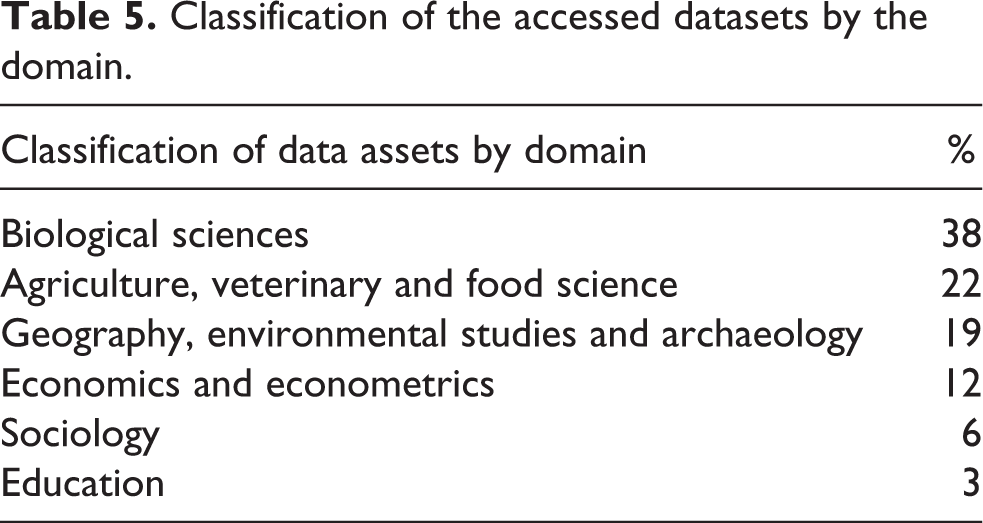
As seen in Table 5, datasets related to biological sciences were the most accessed archives representing the importance of topics such as molecular biology, biochemistry, and genetics to the West and Central African researchers and medical communities. Agriculture and food science datasets were the second most accessed category which indicates the potential interests of the scientific community in tackling issues such as food insecurity and malnutrition and in utilising genetic resources for the benefit of present and future generations. The third most popular datasets were related to climate change and energy security. ‘Social issues’ was possibly incorrectly identified as a dataset and possibly indicates that some end users have a different interpretation of “dataset” to others. Rather than ignoring this need, it indicates that for some end users further discussion is needed to understand their data needs. Both this and the previous search results indicate researchers are active users of ‘common’ network services. These questions were asked to establish a ‘baseline’ of internet usage.
Classification of the accessed datasets by the domain.
Publishing open access research
Respondents were then asked about the frequency of publishing Open Access Research, to which 51% of the respondents (15% very often, 36% often) publish their research with open access, 28% of researchers sometimes do this and 21% hardly ever do this (14% rarely, 7% never); 62% of them believed the network was not reliable. As approximately half the respondents use open access publishing there therefore appears to be a need for open access services such as open access data repositories.
Remote sensors access
Researchers in the survey that never access remote sensors online accounted for about 90% of responses, and consequently the reliability of the network in this regard was not an issue. A small percentage (5% very often, 5% often) of the surveyed researchers indicated that they frequently access sensors. This might reflect the relatively small number of projects being pursued by researchers using sensor-based technologies. In this light the 10% might represent a significant community of sensor-users that require NREN service support. Further analysis revealed that the majority of those who responded very often/often were from three disciplines: agriculture, geography and environmental studies, and computer science. Examples of the sensors include: Atmospheric sensors (wind-, wave-, air pollution-, and rain and precipitation sensors) Failure detection in wireless sensor networks.
Publishing software online
Another section of the survey asked respondents whether they published software online. Researchers were not interested in creating and publishing their own software and therefore reliability of their network was not an issue to them in this regard. This might be an expected result as most researchers might be considered as being users of software, rather than creators. It is, however, worth noting that a minority of them (5%) did publish software either very often (2%) or often (3%). Worldwide there is a considerable amount of open source software that is freely available under sharing licences through facilities such as GitHub. Arguably a very small percentage of researchers actually develop and publish software. However, these researchers can make a large-scale impact as they facilitate research in their communities via their software (e.g. new forms of simulation, new analytics tools, etc.) NREN services to support the open sharing of software might therefore have an impact on the research across the region and beyond.
Software application requirements
In order to identify the types of software applications that might increase user productivity, we asked researchers about software they needed to use in their research. Table 6 shows the most needed software by respondents (above 1% popularity) to use in their research. It is evident that West and Central African researchers need to frequently access a wide variety of software ranging from licensed to open source. ‘SPSS’ (16%) and ‘MATLAB’ (14%) were by far the most popular and desired applications. This represents the tendency of the surveyed researchers towards statistical analysis, forecasting and modelling tools.
Most needed software by researchers.
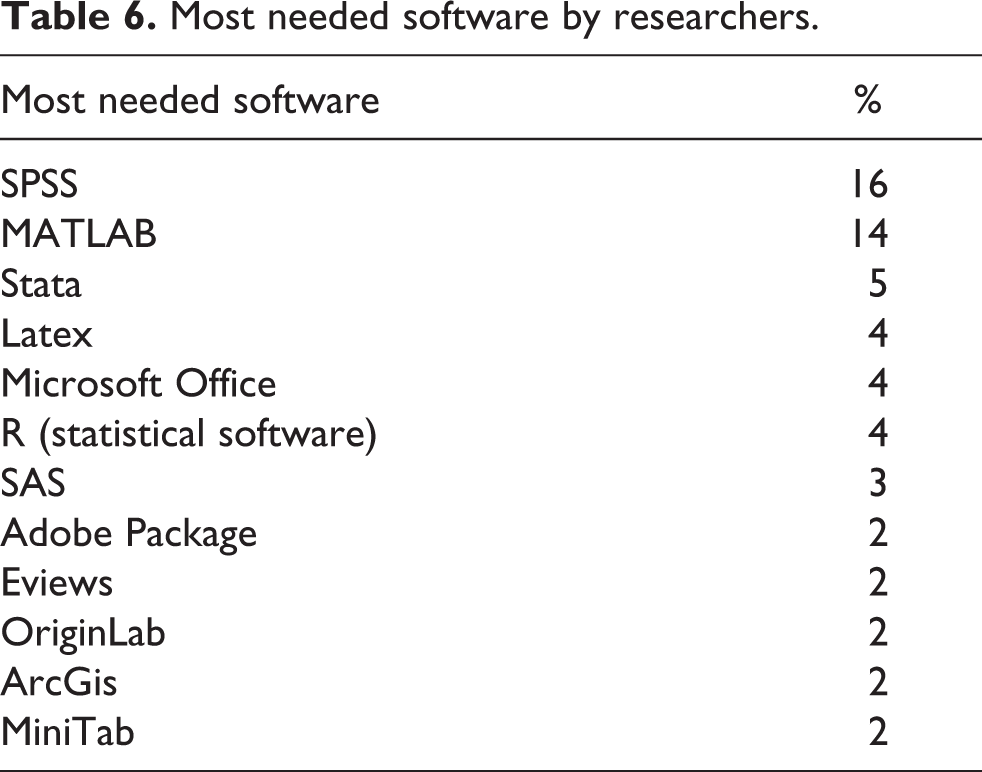
The challenge, however, in this regard is that the procurement, upgrades or changes to such software are expensive and often beyond the reach of common investors. For example, SPSS is an expensive analytical tool costing up to £1,000 for an individual license and £10,000 for multi-use license (AFCAP, 2012). This is of fundamental importance to service provision to ensure that the above required applications could be delivered to scholars flawlessly, for example via service providers operating within the ‘Cloud’, similar to a library of applications from which the user chooses appropriate applications, or managed by a third party (via regional license provisioning) to reduce the overall cost of software. This therefore highlights the necessity for national negotiation and procurement of software licenses for use in educational and research institutions in WACREN region.
Network-related requirements
In this section of the survey, we provided respondents with a typical five-level Likert scale and a set of predefined statements for different response categories directed towards both the existing conditions and the desired ones. For example, concerning ‘data storage facility’ we provided respondents with two statements; one was ‘I have access to enough data storage for my research’ representing end users’ existing conditions, and ‘Access to more data storage would enable me to carry out research activities that are currently impossible’ demonstrating the demand for the service. The aim was to capture respondents’ views on general network-related issues for research by measuring levels of agreement/disagreement (Table 7).
Network-related requirements.
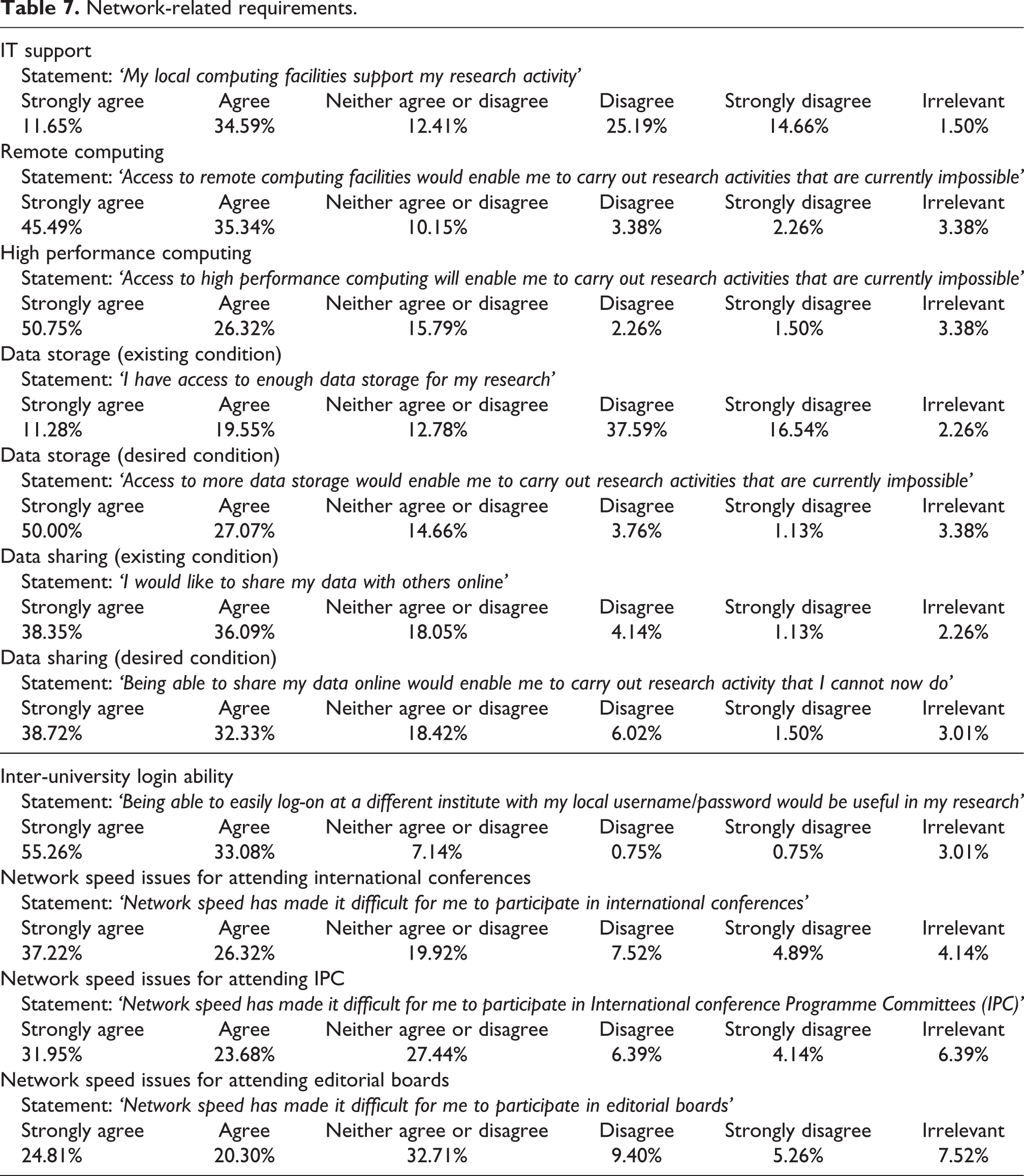
Consequently, in terms of computing support for research, 47% agreed that there was enough local support while 40% indicated that this support was inadequate. Lack of access to remote computing facilities (80%) and high performance computing facilities (77%) were both identified as major barriers to research. Inadequate data storage capacity was also identified as a major issue. While some researchers indicated that they have adequate data storage (31%), more than half of the respondents (55%) disagreed with the statement that was: ‘I have access to enough data storage for my research’. Concerning the ability to share data, 74% would like to share data with others online and 70% agreed that being able to share their data online would enable them to carry out research activity that they cannot do now; 88% also agreed that being able to easily log-in at a different institute with their local credentials would be useful in their research. Poor network speed has made it difficult for them to participate in international conferences (63% agreed, 20% neutral) and International Conference Programme Committees (IPC) (66%, 27% neutral). Network speed was also an issue in scientific editorial board participation (45% agree – more disagreed with this statement and this may be due to fewer opportunities for scientists to be directly involved in editorial boards than a conferences).
Use of networked available and desired services
For several research-related networked technologies, respondents were asked to identify their use of a service and how useful that service would be in their research, subject to its availability. In so doing, we provided survey respondents with three statements: ‘I use this service’ and ‘I do not use this service’ represents the percentage of users who either use or do not use a service (Table 8). ‘Service is unavailable’ is the percentage of users who would like to use a currently unavailable service (e.g. ‘desired but unavailable’ as indicated below). Accordingly, the most used available services were ‘Online Library Resources’ (65%), ‘Collaboration Tools/Document Repositories’ (39%) and ‘Web-based Portals for Online Data’ (28%). The most desired but currently unavailable services were ‘Inter-University Login’ (53%), ‘Data Centre access’ (48%) and ‘Video-/Web-based Conferencing Services’ (43%). Combining both the above together indicates services that might be used the most (currently used and currently wanted but unavailable).
Available and desired networked services.
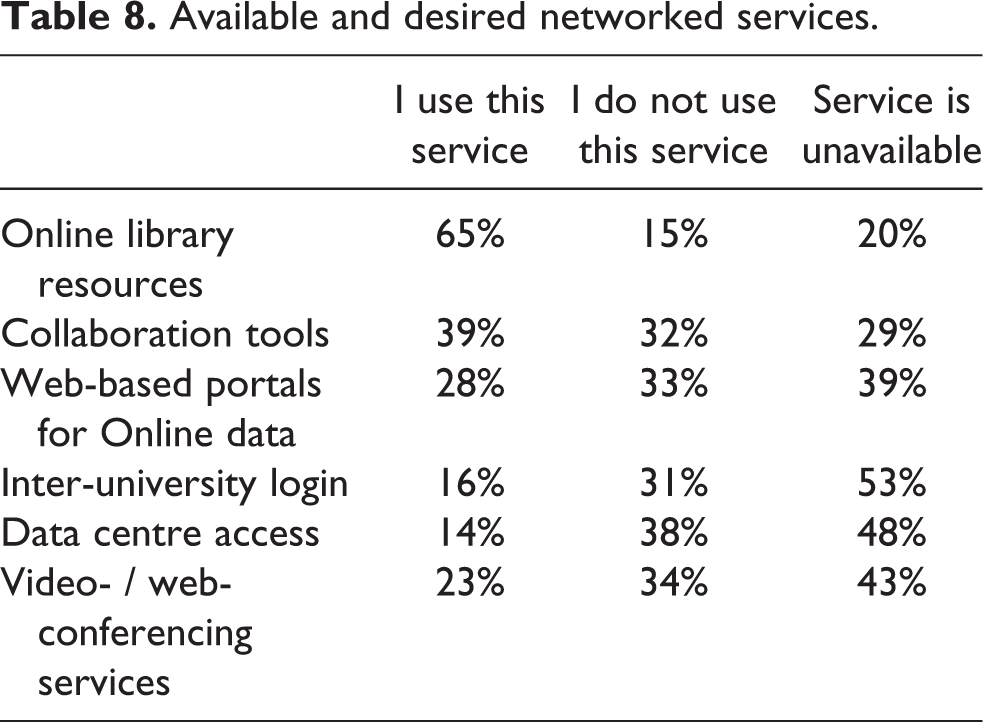
As seen in Table 8, it was evident that all research services were either in use or desired, with ‘Online Library Resources’ scoring highest (85%) and all other services scoring in the 60s. Perhaps surprisingly, with the exception of ‘Online Library Resources’, all services had approximately a third of them indicating that they would not use the service for research.
Usefulness and suitability of networked services
Concerning the perceived usefulness of the shortlisted services, we used the Likert scale response categories (range, strongly disagree - strongly agree) to comment on the statement ‘The service would be useful in my research’. Usefulness of services provided a slightly contradictory picture, as combining ‘agree’ and ‘strongly agree’ responses showed that all of the same services were identified as being highly useful (minimum score 87%). ‘Online Library Resources’ is absolutely used (or needed) and useful to researchers. The respondents clearly indicate that all services are useful for research (Table 9).
Usefulness of networked services.
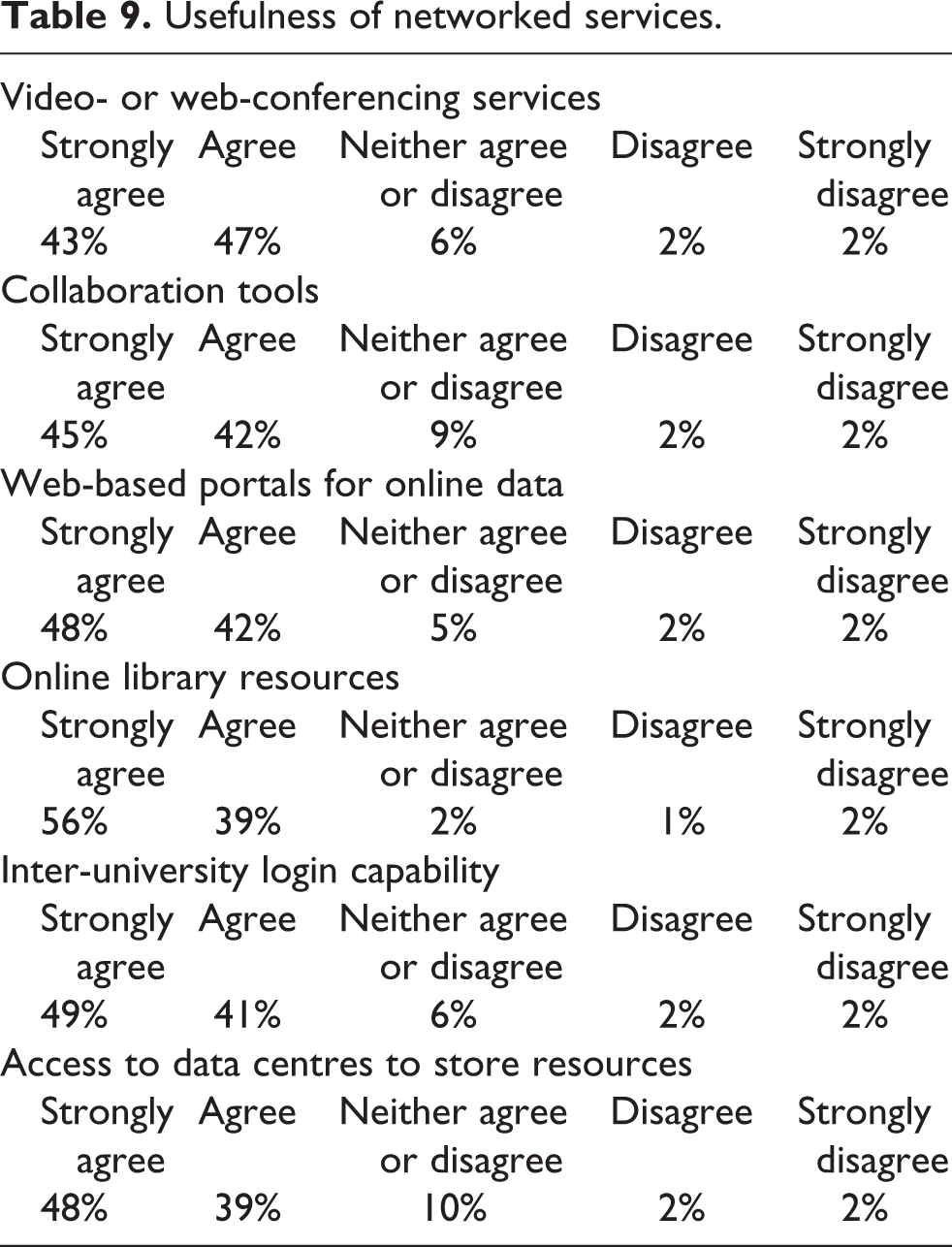
In terms of actual/potential use of a service, opinions differ. In this cohort it appears that around a third have no need for networked research services. However, especially when combining current use and potential use of these services, there appears to be evidence of a wide ranging need for networked research services. This might reflect ‘research’ in its different forms – some research is collaborative in nature and some research can be conducted by the single lone researcher. On balance, within this cohort, the majority need a range of networked research services.
Use and usefulness of social media services
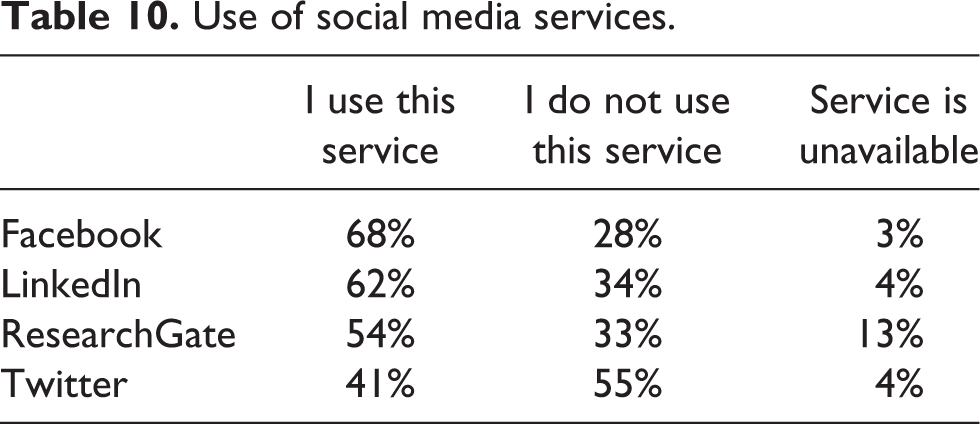
Opinions on usefulness of social media were more widespread, possibly in terms of a current substitute for a lack of networked research services. In terms of use, very few respondents indicated plans to use an unavailable service and far more indicated opinions on use/non-use in research – this reflects the wide availability of social media in the region. Facebook and LinkedIn were the highest used in research (68% and 62% respectively) with Twitter being used by some (41%); 54% indicated that they use ResearchGate in research with 13% reporting desired (but unavailable) use (Table 10).
Use of social media services.
In terms of usefulness, most agreed that these social media services would be valuable and helpful in research (Facebook 52%, Twitter 50% and LinkedIn 64%). However, there was a higher degree of neutral responses for each of them (Facebook 27%, Twitter, 29% and LinkedIn 23%). ResearchGate, an example of research-focused social media, was considered to be most useful with 84% agreeing to the statement (Table 11).
Usefulness of social media services.
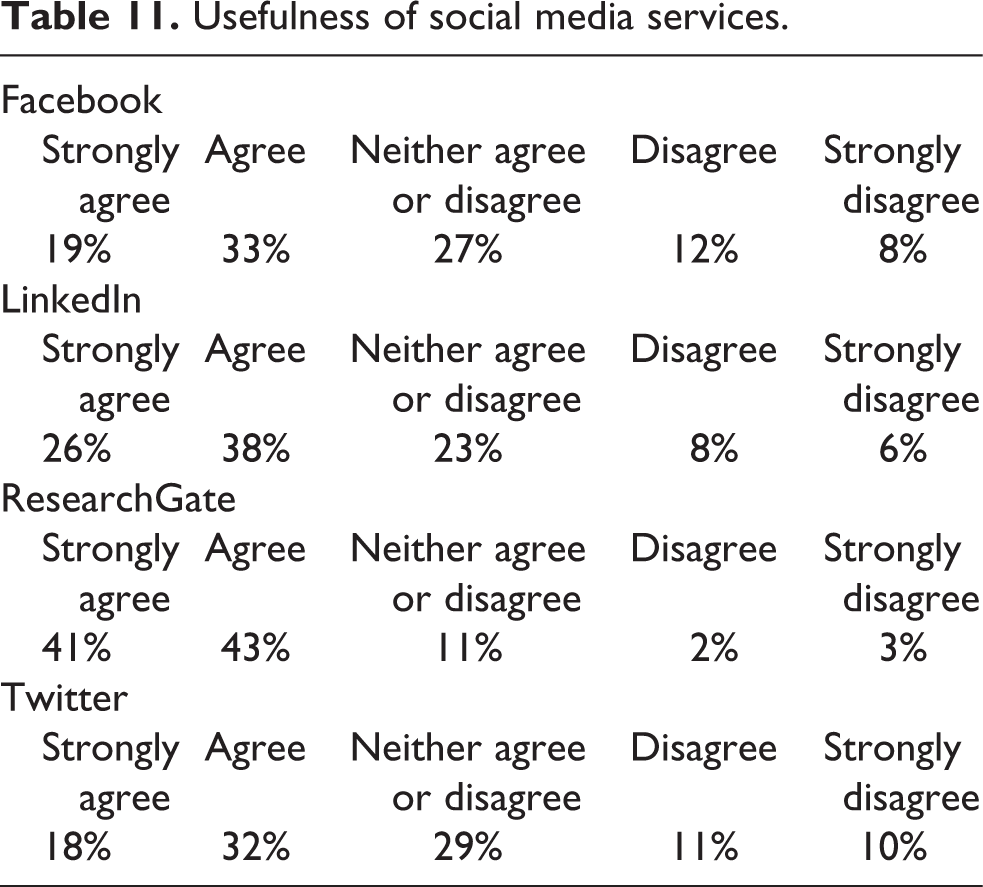
As seen above, ResearchGate is indicated as the most useful social networking site as it allows scientists and researchers to share papers, ask and answer questions and find collaborators. Nevertheless, while LinkedIn and Facebook were lower by 20% and 32% respectively in terms of usefulness, they are the most available and required services.
Usefulness and suitability of electronic devices
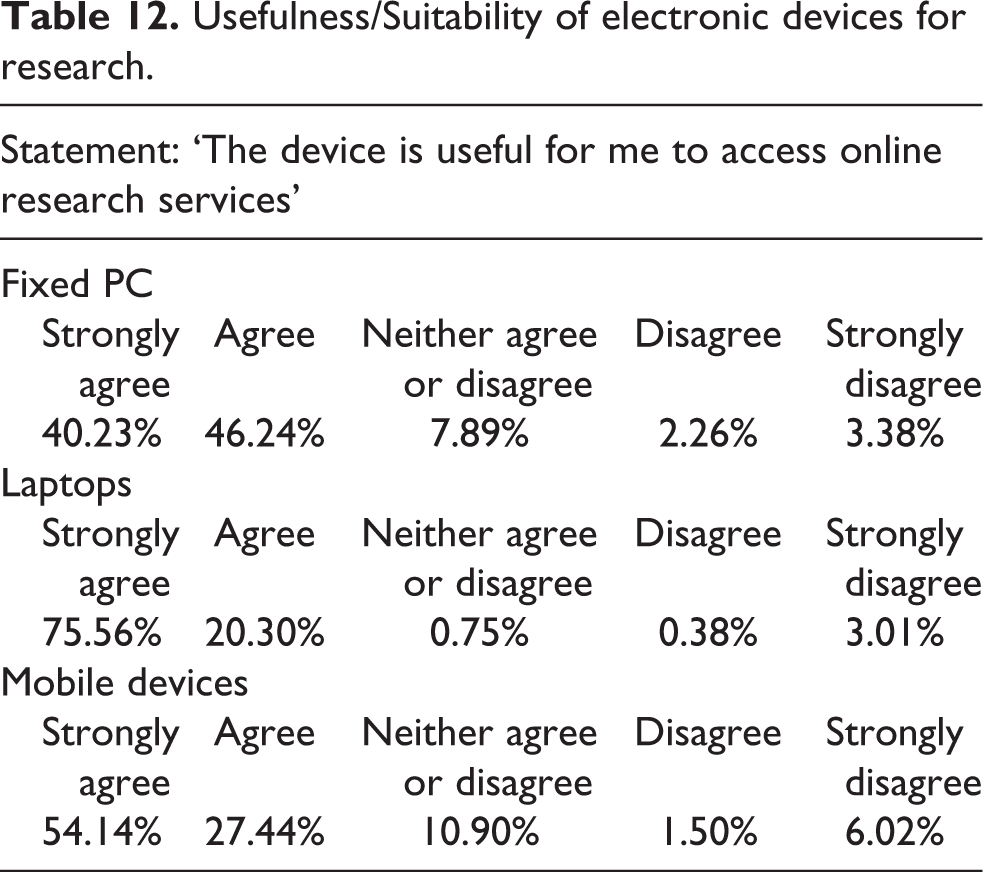
Concerning the usefulness and suitability of three types of devices (Table 12), expectedly ‘Laptops’ (96%) was by far the most cited device among West and Central African researchers, followed by ‘Fixed PC’ (86%) and ‘Mobile Devices’ (82%). When asked about other types of devices that they might use to access research services, the majority of those who responded felt that ‘Tablets’ would be an alternative choice as supported by this comment: ‘Tablets are very useful since they need less energy, its battery lasts longer and they are easy to carry and move…’ There are an estimated 420 million unique mobile subscribers in Sub-Saharan Africa (43% penetration) with two of the four most populated markets being in West and Central Africa (Democratic Republic of Congo and Nigeria) and significant regional penetration being reported in Cabo Verde, Gambia, Ghana and Cote d’Ivoire (GSM Association 2017). Network connectivity issues and the widespread penetration of mobile devices in the region might suggest that research services should be developed with these (and tablets) in mind, especially with around a quarter of overall mobile phone connections being made via smartphones. Preferences for laptops and mobile devices to access online research services also emphasises the need for an ‘inter-university login service’ which would allow West and Central African researchers to visit different institutions and to login with trusted access without lengthy administrative procedures.
Usefulness/Suitability of electronic devices for research.
Current problems with the network
Respondents’ views on five problems with respect to the network they use for research were also sought (Table 13). The top statements that respondents agree with were ‘I cannot connect easily to the network’ (72% agreed, 14% neutral), ‘The network is unreliable’ (71% agreed, 14% neutral) and ‘The cost of the network is too high’ (67% agreed, 15% neutral). Security and privacy were perceived to be important but less so in comparison (‘I cannot guarantee data privacy’ (62% agreed, 23% neutral); ‘The network is not secure’ (52% agreed, 32% neutral).
Current difficulties with the network.
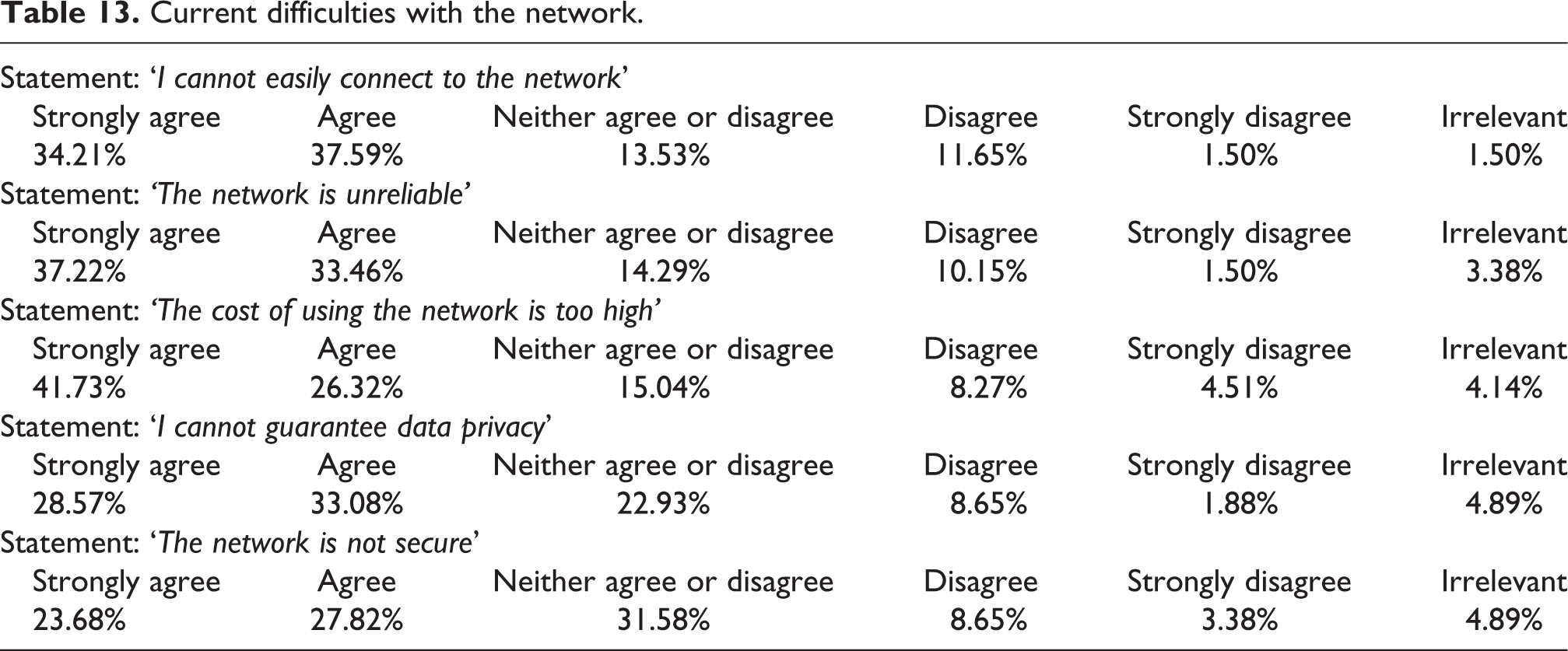
Coupled with further comments on other network related issues such as low/insufficient Internet bandwidth and power supply issues, these sets of questions revealed that respondents’ primary concerns at the moment are related to the physical infrastructures’ technical and functional service quality at a reasonable cost.
Conclusions
NREN and e-Infrastructure networked services are vital platforms for the development of e-Science and enablers of progress in many areas of the world affected by the ‘digital divide’ (Bornman, 2016). We have conducted a survey to attempt to discover what NREN services are wanted by end users in West and Central Africa with respect to developing an NREN services roadmap in the region. The majority of responses came from end users working in academic institutions and public organizations (see Table 14, Appendix A). In terms of limitations, are the number of responses enough to base the development of a NREN Services Roadmap? The results of the survey formed the basis for discussion in three major workshops in the region with representatives of the African and European NREN communities. Members of the TANDEM project produced an initial service list that was derived from these discussions. This was further discussed in the African NREN community and the results from these discussions formed the basis of the NREN Service Roadmap that has now been adopted by WACREN for the NRENs in its region. These steps were taken to ensure that the survey results were repeatedly discussed and validated. The resulting roadmap balanced end user requirements with the practical necessities of regional network development. This is a significant step forward as this will assist WACREN in negotiating with regional economic communities, telecommunications regulators, national policy and decision-making institutions in West and Central Africa, as well as future EC-led AfricaConnect projects, in developing reliable, high performance communication networks in the region.
It is also hoped that this paper will introduce researchers to the concepts of NRENs, RRENs and information infrastructures and their role in sustainable international development, especially with respect to the strategic coordination of networked research service growth across a region and potential partnerships in international research initiatives. Not all NRENs are at the same level of maturity in Africa. Future studies could compare end user expectations in East and Southern Africa, especially Kenya, Uganda, Zambia and South Africa, where some NRENs have more experience in providing network connectivity and services. Other studies could investigate how end users are innovating through the use of these services. For example, a recent Euro-African e-Infrastructure project supported the development of a wide range of networked research services in healthcare and life sciences 6 . Studies could also determine the extent to which these services could be used to make African research outputs more visible worldwide via Open Science approaches (Taylor, et al. 2016).
The complete results of the survey are available from the TANDEM website (http://www.tandem-wacren.eu). Our survey is also available from the TANDEM website in both French and English, or on request from the authors under a Creative Commons licence.
Footnotes
Acknowledgements
This work was partly supported by the H2020 TransAfrican Network Development (TANDEM) and the H2020 Energising Scientific Endeavour Through Science Gateways and e-infrastructures in Africa (Sci-GaIA) projects. We also would like to thank the anonymous reviewers for their suggestions to improve the quality of the paper.
Funding details and acknowledgements
This work was partially supported by the European Union’s Horizon 2020 project TransAfrican Network Development (TANDEM) (#654206). We gratefully acknowledge the contributions of consortium members.
Notes
Appendix A: African Institution Participation
Participating Institutions in the WACREN Region
In terms of which African university or research centres participated, the Appendix indicates the percentage split participating institution types for the survey (we are unable to identify specific institutions due to data protection). According to the responses three main categories were identified. The ‘academic institutions’ refer to universities, colleges and other institutions of higher and further education. The ‘non-academic institution’ category refers to participants from private research centres and private companies. Finally, the ‘public organization’ refers to governmental organizations such as ministerial departments. It is clear from the list that for every country in the WACREN region, both the academic institutions and public organizations account for the majority of responses. Burkina Faso with 12% and Ivory Coast with 2% of the responses were the only countries with respondents from non-academic institutions.