



Abstract
Entrepreneur well-being has attracted increasing attention among academics and practitioners as scholars have called for broadening the entrepreneurship outcomes beyond financial considerations, and practitioners have had to cope with increased stressors and challenges amid global economic and social uncertainty. However, little is known about differences in well-being drivers for different groups of entrepreneurs. Drawing on self-determination theory, we use data from the Canadian Index of Well-being (N = 655) and compare how competence and relatedness affect the well-being of immigrant versus native-born entrepreneurs. The evidence demonstrates the differential ways in which these dimensions affect well-being with competence being critical for native-born entrepreneurs, while relatedness is more important to immigrant entrepreneurs. The findings illustrate the need for considering the contextual embeddedness of entrepreneurial activities for a better understanding of the factors that drive well-being for diverse groups of entrepreneurs.
Introduction
The well-being of entrepreneurs has attracted increasing attention as scholars and practitioners recognise the need to attend to outcomes broader than traditional financial performance (Kautonen et al., 2025; Love et al., 2023; Pak, 2026; Shir et al., 2025). The well-being implications of life as an entrepreneur, which can include both subjective well-being such as life satisfaction, and eudaimonic well-being such as purposeful striving and realisation of one’s potential, have emerged as a critical issue amid global uncertainties and disruptions. This has led to a burgeoning body of research aimed at understanding the drivers of well-being for entrepreneurs (Chatterjee et al., 2022; Nikolaev et al., 2022; Nikolova et al., 2023; Stephan et al., 2023); collectively, this body of literature has emphasised that entrepreneurs enjoy higher autonomy compared to waged employees as they have decisional control over daily tasks. Building broadly on the tenets of self-determination theory (Ryan and Deci, 2000), the literature has established that the fulfilment of the basic psychological needs of autonomy, competence and relatedness serves as pathways to well-being for entrepreneurs (Nikolaev et al., 2020; Nikolova et al., 2023; Stephan et al., 2020). While this literature has advanced our knowledge on the determinants of well-being, particularly regarding differences between entrepreneurs and waged employees, scholars have recognised the need to move beyond the general descriptor of ‘entrepreneur’ and to investigate what factors might affect well-being differentially among different groups of entrepreneurs (Shir and Ryff, 2022). Critically, our understanding of the factors affecting immigrant entrepreneur well-being is limited (Dabic et al., 2020). Immigrant entrepreneurship is generally understood to refer to the business development or self-employment activities of migrants in their host countries (Grifin-EL and Olabisi, 2018; Ram et al., 2017). Immigrant entrepreneurs as a group, present an important setting to study well-being for several reasons. Immigrants are considered to be a source of competitive advantage for host countries, as they bring diverse skills and knowledge, and can leverage their international networks and promote trade between their home and host countries (Ng and Metz, 2015; Raimi and Mahmoud, 2025). Importantly, immigrants are overrepresented and are known to have higher rates of self-employment than others in their respective host societies (Desiderio and Salt, 2010; Levie, 2007; Nafari and Ruebottom, 2025). However, scholars have posited that barriers such as a lack of relevant experience in the host country and difficulties in recognising foreign credentials (markers of competence in their field), as well as a lack of social relatedness to the new local community can thwart business start-ups developed by immigrants (David et al., 2025; Millar and Choi, 2008; Wang and Altinay, 2012; Wang and Warn, 2018). Yet, it is well-recognised that competence and relatedness are key pillars of well-being, along with autonomy, as espoused by self-determination theory (Ryan and Deci, 2000; Ryff, 2019); the entrepreneurship literature has established them as critical for the well-being of entrepreneurs (Nikolaev et al., 2022; Stephan et al., 2020). While research has indicated the autonomy of immigrant entrepreneurs to have decisional control and exert agency despite the challenges they face (David and Terstriep, 2025; Suseno et al., 2026), we know less about how competence and relatedness might differentially influence the well-being of immigrant entrepreneurs. This issue is especially pertinent given that immigrant entrepreneurs frequently face challenges related to these two dimensions (Dabic et al., 2020). Correspondingly, in this article, we ask: how do competence and relatedness impact the well-being of immigrant vs native-born entrepreneurs?
To address this research question, we build a conceptual model which combines existing immigrant entrepreneurship literature with self-determination theory (Nikolaev et al., 2020; Ryan and Deci, 2000), which helps to explain how the fulfilment of basic psychological needs such as competence and relatedness can lead to well-being. The novelty of our model and hypotheses is in testing the differential effect of competence and relatedness on well-being for immigrant entrepreneurs; thus, building on calls for comparative studies which analyse the outcomes of immigrant entrepreneurs with locally born business owners to understand the differential outcomes and context-specific issues. Empirically, we test our model with data from the Canadian Index of Well-being (CIW), specifically focusing on a sample of respondents who identify as self-employed. 1
We offer the following contributions to the literature. First, we advance the immigrant entrepreneurship literature by focusing on an under-explored entrepreneurial outcome – well-being, and we offer a theoretically informed model of psychological and relational drivers of immigrant entrepreneur well-being. Our results illustrate the need to carefully consider the structural limits to the ability of immigrants to use their skills in their work, with resulting implications for their well-being. Second, we contribute to the emerging literature on entrepreneur well-being by offering a nuanced understanding of how some variables that boost well-being for native-born entrepreneurs such as competence, do not produce the same effect for immigrant entrepreneurs. Specifically, by complementing the classic tenets of self-determination theory with recent advances in the psychology literature which build on and expand self-determination theory (Glendinning et al., 2021; Vansteenkiste et al., 2020), we challenge the assumption that all entrepreneurs will benefit equally from the fulfilment of the basic needs, such as competence and relatedness, and we demonstrate how the basic needs might differentially affect the well-being of immigrant and native-born entrepreneurs. Third, we demonstrate the importance of the contextual embeddedness for understanding the well-being or immigrant entrepreneurs and more broadly, for further theorising upon entrepreneur well-being.
The remainder of this article proceeds as follows. In the next section, we present an overview presenting how well-being has been approached in the entrepreneurship literature, followed by the literature on immigrant entrepreneurs and well-being. Next, we introduce self-determination theory and its application in the field of entrepreneur well-being. This is followed by hypotheses and the conceptual model of analysis. Next, we present the method and data, followed by our results. The discussion of theoretical and practical implications follows. We conclude with limitations and future research directions.
Conceptual model and hypotheses
Well-being and entrepreneurship
In the entrepreneurship literature, researchers have predominantly viewed well-being by defining it as subjective well-being or a state of happiness, also referred to in the literature as hedonic well-being (Diener, 2000; Wiklund et al., 2019). Within psychology, subjective well-being is understood as an individual’s evaluative judgement of their live, encompassing both affective components, such as mood and emotional states, and cognitive assessments of life satisfaction (Diener et al., 1999). Empirical evidence indicates that the transition into self-employment yields subjective well-being benefits for both necessity and opportunity-driven entrepreneurs, with stronger effects observed among the latter (Binder and Coad, 2013; Dijkhuizen et al., 2018; Larsson and Thulin, 2019). A complementary but alternative view of well-being, the eudaimonic view, emphasises the realisation of an individual’s potential. This is particularly relevant because entrepreneurship can be viewed as the means through which one may fulfil core values and aspirations that contribute to well-being (Pak, 2026; Ryff, 2019). This approach offers a framework to understand how entrepreneurs achieve self-fulfilment and optimal psychological functioning through their work. In recognition of the importance of eudaimonic aspects of well-being, recent studies have focused on comparing self-employed to waged employees and have established that the self-employed enjoy higher eudaimonic well-being (Nikolaev et al., 2022; Stephan et al., 2020). Consequently, entrepreneurial activities contribute both to hedonic (life satisfaction) and eudaimonic aspects of well-being. Correspondingly, recent literature on entrepreneur well-being encompasses both hedonic and eudaimonic aspects in the measurement and operationalisation of the construct (Hanard et al., 2026, Stephan et al., 2023), illustrating the intertwined nature of those elements (Shir et al., 2025).
Empirical studies on the well-being of entrepreneurs have advanced important initial findings in the field. For instance, Shir et al. (2019) found that engagement in entrepreneurship is associated with higher levels of well-being compared to engagement in regular employment. Similarly, Nikolaev et al. (2020) determined that entrepreneurs enjoy higher levels of psychological functioning, including both personal functioning measures such as purpose and competence, and social functioning measures such as sense of belonging, social contacts, etc., as well as subjective well-being. Furthermore, Stephan et al. (2020) argued that because self-employment is a volitional career choice that brings greater work independence and meaningfulness, compared to waged employment, it leads to higher levels of well-being. While those studies have provided a solid basis for understanding the well-being of the self-employed vis-a-vis waged employees, especially from the perspective of self-determination theory, they have not ventured into examining differences across groups of entrepreneurs. We advance this research stream by proposing that competence and relatedness may have differential impact for different groups of entrepreneurs (in our case, immigrant vs native-born) because of contextual specificities that may strengthen or weaken the relative importance of the basic psychological needs as specified in self-determination theory. The context is important to understanding both entrepreneurial activities (Welter, 2011), and entrepreneurial outcomes such as entrepreneur well-being (Shir and Ryff, 2021). We understand context not only as a geographical demarcation of where the entrepreneurship takes place but also as a contextual embeddedness within the broader social and historical power structures that may limit the expression of individual potential for certain groups of entrepreneurs (Welter and Baker, 2021) with consequences for their well-being.
Immigrant entrepreneurs and well-being outcomes
The immigrant entrepreneurship literature has examined several outcome variables, with particular emphasis on internationalisation, financial performance and survival of immigrant-owned businesses (Morgan et al., 2021; Neville et al., 2014; Wang and Liu, 2015). In general, the literature has established that native-born self-employed have better economic outcomes than immigrant self-employed along several economic dimensions (Alden et al., 2022); while immigrants tend to have an advantage in internationalisation outcomes such as export intensity (Morgan et al., 2018). However, well-being as an outcome variable is an underexplored topic. As such, the well-being consequences of being an immigrant entrepreneur are not sufficiently understood. This is a significant gap as immigrants frequently face significant barriers to integration into their new country; navigating those barriers could have a potentially negative influence on their well-being. For immigrant entrepreneurs in particular, the typical barriers of language and lack of local knowledge and networks can have an exacerbated effect as they may face additional barriers of securing financing and other resources for their venture’s growth (Cooney and Flynn, 2008; Wang and Altinay, 2012). Equally important, the extant literature lacks an in-depth understanding about what factors enhance the well-being of immigrant entrepreneurs. Given the contribution of immigrant entrepreneurs to their host communities, and their potential to further contribute to place development in their new countries by bringing diverse perspectives, global networks and community development (Munkejord, 2017; Wang and Warn, 2018), it is important to investigate how the well-being of immigrant entrepreneurs can be enhanced.
The limited research on the well-being consequences of life as an immigrant entrepreneur has provided initial insights into both enhancing and limiting factors that affect this group. Some studies suggest that immigrants are better able to function in an uncertain environment and risk situations, presumably because they have to adapt to new circumstances, and as such, being an entrepreneur might not be as stressful to them; consequently, this may promote their well-being compared to native-born peers (Zbierowski et al., 2019). Other factors that can positively influence the well-being of immigrant entrepreneurs include financial and economic stability, which is associated with increased life satisfaction (Johansson Sevä et al., 2016) and improved overall health (Hessels et al., 2020). At the other end of the spectrum, higher levels of unemployment, and also discrimination, experienced by some immigrants (Irastorza and Peña, 2014) can lead to a higher proportion of necessity-based entrepreneurship, which in turn is likely to negatively affect levels of subjective well-being (Pergelova et al., 2023). It is widely recognised that necessity self-employment is associated with lower levels of overall life satisfaction (Binder and Coad, 2013) compared to opportunity-based entrepreneurship. To the extent that immigrant entrepreneurs are more likely to be ‘forced’ into entrepreneurship by a relative lack of labour market opportunities thererfore, their well-being may suffer compared to native-born counterparts. Furthermore, potentially limited language skills, lack of relevant local experience and limited knowledge of local laws and practices can present additional challenges (Carter et al., 2015; Dabic et al., 2020), further reducing perceived well-being. While extant research has provided some preliminary insights into drivers and inhibitors of well-being for immigrant entrepreneurs, there is limited understanding of how theoretical mechanisms such as competence and relatedness might differentially influence the well-being of immigrant entrepreneurs versus their native-born counterparts. Thus, in the next section, we build on the self-determination theory to provide a robust basis for our conceptual model and hypotheses.
Self-determination theory
Self-determination theory is considered to be a broad humanistic approach focusing on motivation, personality development and well-being (Deci and Ryan, 2000; Ryan, 1995; Ryan and Deci, 2000), which has its roots in the early work of developmental, clinical and humanistic psychologists. Self-determination theory is premised on the main feature that human nature exhibits persistent positive features, and that people, in this case, entrepreneurs, repeatedly show effort, agency and self-determination. These positive attributes are considered to lead to ‘inherent growth tendencies’ (Ryan and Deci, 2000). Within the framework of self-determination theory, well-being is conceptualised as a state of thriving or optimal functioning, extending beyond happiness or evaluative forms of subjective well-being (Ryan and Deci, 2017). Accordingly, for entrepreneurs, well-being encompasses not only feelings of happiness and life satisfaction but also the possession of psychological energy that enables engagement in activities aligned with their intrinsic motivations (ibid). This is well-aligned with entrepreneurial pursuits and as such self-determination theory offers a useful framework to explore the well-being of entrepreneurs.
Self-determination theory requires the satisfaction of the basic psychological needs for autonomy, competence and relatedness, which provide ‘psychological nutriments’ (Ryan, 1995) considered to lead to well-being (Ryan and Deci, 2001). Autonomy refers to experiences of volition and decisional control and an individual’s need to feel their actions are self-directed. Competence refers to experiences of effectiveness and mastery, engaging in activities that use and extend one’s skills and expertise. Relatedness reflects the need to feel securely connected to (connectedness) and understood by others (belonging) (Ryan and Deci, 2001). While in the entrepreneurship literature several studies have examined the drivers proposed by self-determination theory (Nikolaev et al., 2020; Shir et al., 2019; Stephan et al., 2020), there is little evidence about the differences in factors leading to well-being for different groups of entrepreneurs (Nikolaev et al., 2022; Pergelova et al., 2026). Specifically, for immigrant entrepreneurs, although it is recognised that self-employment brings autonomy (David and Terstriep, 2025), we know less about how the other two aspects espoused by self-determination theory – competence and relatedness – affect their well-being.
To address this issue, we extend current research on the well-being of entrepreneurs by integrating the original tenets of self-determination theory with recent advances in the psychology literature that illustrate how the relative strength of basic needs (competence, relatedness) might differentially affect the link between need satisfaction and well-being (Glendinning et al., 2021). More specifically, initially, self-determination theory assumed that the satisfaction of the basic needs will be equally and universally beneficial to everyone, but recent research has expanded self-determination theory and suggested that when individuals attach more importance to a specific need, they will reap greater psychological benefit from the satisfaction of that need (Glendinning et al., 2021; Schüler et al., 2013). For example, experimental research has revealed a moderating influence of the need for competence on the relationship between competence satisfaction and well-being (Neubauer et al., 2018); that is, for individuals who have a higher need for competence, the strength of the relationship between satisfying that need and well-being is greater. In addition, individuals with stronger motives for group affiliation gained greater well-being benefits from the satisfaction of the relatedness need (Schüler and Brandstätter, 2013). Collectively, this body of research confirms that for different groups, the satisfaction of basic needs might have a differential effect on well-being depending on the relative importance or strength of that need.
Hypotheses
Competence and well-being
From a self-determination perspective, the competence dimension, that is, the ability to engage in activities that use and enhance the skills and expertise of the individual (Ryan and Deci, 2000) is a key driver of well-being. Given entrepreneurship is a self-directed endeavour, characterised by a sense of purpose and a desire to express one’s creative potential and skills, research has suggested and found that self-employment, compared to waged employment, can lead to a better sense of work meaningfulness, which positively influences well-being (Nikolova et al., 2023; Stephan et al., 2020). Considering one’s activity interesting, and in congruence with one’s skills, plays a key role in sustaining a stronger positive association to well-being for the self-employed (Bujacz et al., 2020). However, what is less well understood and underexplored in the extant literature are the implications of feelings of competence, that is, using and enhancing one’s skills through one’s work for the well-being of different groups of entrepreneurs. We propose that immigrant entrepreneurs, who are frequently driven into entrepreneurship by limited employment opportunities or structural barriers such as language proficiency and access to resources, may engage with the competence aspect of entrepreneurial activity differently to that of native-born entrepreneurs. In effect, they are likely to derive fewer well-being benefits from the fulfilment of the need for competence.
Our arguments are grounded in the literature on job fit and competence (Chouchane and St-Jean, 2025; Sirén et al., 2021), in conjunction with the self-determination theory literature on intrinsic versus extrinsic motivation’s role for well-being (Deci and Ryan, 2000). Job fit denotes the extent to which there is a match between an individual’s abilities and competences and the requirements of their occupational role (Caldwell and O’Reilly, 1990). In entrepreneurship, job fit is particularly salient as entrepreneurial success often depends on leveraging domain-specific competencies and prior experience (Unger et al., 2011). However, immigrant entrepreneurs frequently establish ventures in sectors associated with their ethnic networks rather than those aligned with their formal qualifications or prior occupational expertise (Jones et al., 2014). Evidence has confirmed that mismatches between qualifications and occupation are frequent for immigrants (Schimmele and Hou, 2024). This tendency reflects structural and institutional constraints, including limited access to mainstream markets, credential recognition issues and reliance on co-ethnic social capital (Dabic et al., 2020). Immigrant entrepreneurs, therefore, may be motivated to become entrepreneurs driven mainly by extrinsic motives, such as financial rewards, status in their new country and less by intrinsic motives such as personally rewarding and interesting activities. Specifically, we build on Deci and Ryan (2000: 244) who postulate that ‘pursuit and attainment of intrinsic aspirations would be more strongly associated with well-being than would pursuit and attainment of extrinsic aspirations’.
Consequently, we expect that even though entrepreneurship provides meaningful opportunities for new experiences and personal growth for immigrants and thus, enhances their feelings of competence (Richey et al., 2022), the relationship between competence need fulfilment and well-being will be less evident for immigrant entrepreneurs. While native-born entrepreneurs may be expected to have high need for job fit, indeed, they often enter into self-employment in the search for fulfilling meaningful opportunities related to their skills (Jennings et al., 2016), immigrant entrepreneurs may not attach the same level of importance to this aspect. Rather, they may consider entering into self-employment as the best option available under the circumstances (Chrysostome, 2010; Dabic et al., 2020). To be sure, entrepreneurship might provide opportunities for social status and increased feelings of competence through self-enhancement and social legitimacy (Schwartz and Sortheix, 2018). However, the entrepreneurial ventures created by immigrant entrepreneurs may be more an expression of extrinsic motivation than an intrinsic motivation such as self-actualisation (Schwartz, 2012), consequently, undermining the well-being benefits usually derived from competence fulfilment from entrepreneurship. Conversely, native-born entrepreneurs are likely to encounter fewer structural barriers and are more likely to apply their skills and talents in an industry consistent with their education and qualifications, aligned with intrinsic motivations of actualising their potential and talents through entrepreneurship. Therefore, they are likely to reap greater benefits, that is, well-being from the fulfilment of the competence need. Such theorising is aligned with self-determination theory where intrinsic motivation is a key element in the pursuit of well-being (Ryan and Deci, 2017). Extant research exploring entrepreneur well-being has also confirmed that, indeed, extrinsic motivation does not enhance well-being (Yu et al., 2025) and can even diminish it (Hanard et al., 2026). Thus, considering that immigrants – relative to native-born individuals – are more likely to be pushed into entrepreneurship because of extrinsic motives, we expect that the relationship between competence and well-being will be weaker for them. Formally, we hypothesise:
Relatedness and well-being
Relatedness, as used in the context of self-determination theory, reflects the need for connectedness and belonging as a basic need which contributes to one’s well-being (Richey et al., 2022; Ryan and Deci, 2001). This has been addressed in prior studies as attributable to a ‘sense of community’ which helps to garner a better connection to well-being (Kautonen et al., 2025; Smith, 2018). Similarly, we approach relatedness from the perspective of a sense of community. We draw on literature from two disciplines – psychology and entrepreneurship – to emphasise the importance of this variable. Positive relations are considered to be the most universally accepted aspect of what it means to be well (Ryff, 2019). In the psychology literature, there has been a growing appreciation of the critical importance of supportive interpersonal relationships for well-being, and studies suggest that, of all the factors that influence well-being, positive relations are at or very near the top of the list (Ryan and Deci, 2001). In the entrepreneurship literature on well-being, relatedness has been approached and measured as a basic psychological need for self-employed people that relates to their broader community and environment, such as being able to maintain relationships and get along with others in your surrounding community (Nikolaev et al., 2022; Shir et al., 2019). This includes the entrepreneur’s social support and local community, as they can affect a range of variables, from access to resources, to feelings of belonging and well-being (Binder and Blankenberg, 2021). Close social ties in one’s community are known to be important to entrepreneurs and their well-being, as those ties help to cope with stressors (Williamson et al., 2024). Conversely, research suggests that a lack of social support and social ties are linked with depression and anxiety for entrepreneurs and thus, associated with ill-being (Ariza-Montes et al., 2017).
Belonging to a community has been considered as a sense of community, place identity or simply the sense of place (Kautonen et al., 2025; Smith, 2018). Work by Lumpkin et al. (2018) suggests that community can be conceptualised around geographical demarcations, identity affiliations, shared interests, or common intentions, that is, where the entrepreneurs are located. Affiliations, interests and intentions pertain to relational dynamics that emphasise the nature and quality of connections within a specific context or location (Heilbrunn et al., 2010). Kautonen et al. (2025) have demonstrated that a sense of place, that is, a psychological bond with the local setting of the entrepreneurial activity, can positively influence several aspects of well-being for entrepreneurs. Spatial approaches to investigating entrepreneurship and community development have increasingly built on theories of social capital (Murphy et al., 2016; Westlund and Bolton, 2003). Social capital is concerned with the significance and fundamentals of social relations developed through personal contacts, networks and norms of behaviour (Welter et al., 2008; Williams et al., 2020). Social capital is crucial in supporting entrepreneurs both emotionally and practically (Katila and Wahlbeck, 2012; Williamson et al., 2021), enabling them to build high levels of well-being. We expect, therefore, that relatedness will be positively associated with well-being for the self-employed.
This relational dimension becomes even more salient for immigrant entrepreneurs, who face specific challenges and barriers in unfamiliar institutional and cultural contexts (Heilbrunn et al., 2010). Community networks serve as vital platforms for learning about the host country and building social ties that facilitate adaptation (Wang and Altinay, 2012). For instance, recent research highlights the pivotal role of local mentors in fostering an immigrant entrepreneur’s integration in their new community (Stoyanova and Stoyanov, 2025). The concept of embeddedness (Granovetter, 1985) further reinforces this argument, suggesting that economic behaviour is deeply influenced by social networks and cultural norms. Migrant entrepreneurs often retain their home-country values while adapting to host-country practices, creating multifocal embeddedness that shapes resource mobilisation, strategic choices and network development (David et al., 2025). Importantly, the ‘melding together of the migrant entrepreneur’s economic and social relationships’ is considered the sine qua non of immigrant entrepreneurship (Ram et al., 2017), illustrating that relational ties are not peripheral but foundational to their entrepreneurial endeavours and well-being. Furthermore, the social ties immigrant entrepreneurs establish within their community networks are especially critical for overcoming entry barriers and achieving integration (Kloosterman, 2010; Suseno et al., 2025).
This dual embeddedness amplifies the importance of relatedness as a mechanism for entrepreneurial success and well-being for immigrant entrepreneurs (Jones et al., 2019; Solano et al., 2022). As such, reliance on community-based resources and institutional linkages illustrates the heightened need for relatedness by immigrant entrepreneurs compared to native-born entrepreneurs and so, we expect that immigrant entrepreneurs will place particularly high importance on a sense of community. On the contrary, native-born entrepreneurs are likely to face fewer barriers and have less need to develop belonging to a community as they are already embedded in such communities. Given the relative importance of belonging to the community for immigrant entrepreneurs, we expect that there is a stronger positive effect of relatedness on their well-being.
This prediction is aligned with recent developments in self-determination theory. For example, Vansteenkiste et al. (2020) explain that within self-determination theory there are variations in the functional significance (Deci and Ryan, 1985: 19) or ‘meaning that individuals attribute to a need-relevant practice, a meaning that can vary as a function of cultural, socio-demographic, or personality differences’. Vansteenkiste et al. (2020) describe this as ‘universality without uniformity’, that is, while relatedness is important for all human beings, it may be more important for certain groups in certain situations. Research applying self-determination theory in a variety of settings has confirmed that the satisfaction of the need for relatedness brings greater outcomes for groups such as immigrants and refugees when compared to locally born individuals (Li and Kung, 2024). For example, Alivernini et al. (2023) hypothesised that because of the critical role of social relationships for the adaptation of immigrants, the satisfaction of the need for relatedness would predict more positive outcomes among immigrants compared to their non-immigrant peers. Their empirical results confirmed that indeed, participants with immigrant backgrounds derived greater benefits from the satisfaction of the need for relatedness. Consequently, based on our preceding discussion about immigrant entrepreneurs, we expect that self-employed immigrants will derive greater well-being from the satisfaction of the relatedness need and hypothesise:
H2a: Relatedness is positively associated with the well-being of the self-employed.
H2b: The effect of relatedness on well-being is stronger for immigrant self-employed compared to their native-born counterparts.
Figure 1 presents the conceptual model of the study.

Model of analysis.
Method
We adopt a deductive, quantitative research design grounded in secondary data analysis. The inherent complexity of assessing well-being among immigrant entrepreneurs necessitates the application of an integrated theoretical framework to capture its multidimensional nature (Dabic et al., 2020; Morgan et al., 2021). Accordingly, this design constitutes a rigorous and systematic strategy for testing the hypotheses embedded within the proposed model, as depicted in Figure 1. The CIW is used for the sample data, and various analytical methods are used for the data analyses as explained in subsequent sections.
Study context
The empirical setting for this study is Canada, a country which depends heavily on immigration to fuel its population growth (Immigration, Refugees and Citizenship Canada, 2022a). In Canada, nearly 22% of the population is foreign-born, increasing to nearly 50% in its largest city, Toronto (Statistics Canada, 2016). Roughly 75% of Canada’s population growth comes from immigration (Immigration, Refugees and Citizenship Canada, 2023). Other statistics attesting to the importance of immigration for Canada are derived from the 2021 Census, which reports that nearly a quarter of the population were landed immigrants and permanently resident in Canada, the highest proportion among G7 countries (Immigration, Refugees and Citizenship Canada, 2023). Immigrants also account for 33% of business owners with employees. Immigration is considered vital to the Canadian economy and to the Canadian national identity as a country (Immigration, Refugees and Citizenship Canada, 2022b). The Canadian approach to immigration is based on multiculturalism, a political philosophy which does not require assimilation but instead encourages immigrants to retain their linguistic and cultural heritage (Ng and Metz, 2015). Notwithstanding the importance of immigrants to the Canadian economy, the national statistics follow a similar pattern as the ones reported in the literature regarding the challenges faced by immigrant entrepreneurs. For instance, immigrants are more likely to report that they entered self-employment because of a lack of job opportunities in the waged labour market (Hou and Wang, 2011). Similarly, a higher proportion of native-born self-employed with university degrees worked in professional occupations, compared to immigrants; while immigrants are more likely to work in sales, services, trades and transportation industries (Hou and Wang, 2011).
Data
We used data from the CIW, specifically a representative sample of the population of the province of Nova Scotia (N = 12,826). The CIW partners with local and regional governments and other interested stakeholders to systematically collect data and to report on the quality of life of Canadians, while advocating for social change and policy that places well-being as a priority. The Nova Scotia Quality of Life survey (2019), which we use in this study, included a personalised letter to approximately 80,000 randomly selected households. The random selection of households was proportionally stratified from across the 10 regions in the province and included an oversampling of the more rural regions of the province to ensure adequate representation of residents living in smaller communities and outlying areas.
For purposes of our research, we focused on those survey participants who identified themselves as self-employed as their main occupational activity. There were 655 participants who identified as self-employed and had complete responses to the questions in the survey of interest to this research. Of these, 76 were immigrant entrepreneurs with the rest identifying as native-born Canadian entrepreneurs. 2 Self-employment status is commonly used in entrepreneurship research on well-being that uses representative survey data (Nikolova et al., 2023; Stephan et al., 2020); therefore, our focus on self-employed in this study is consistent with extant research.
Operationalisation of variables
To operationalise our dependent variable – well-being, we relied on recent research on entrepreneur well-being that draws on both hedonic and eudaimonic traditions (Hanard et al., 2026; Stephan et al., 2023). Thus, well-being was measured with two items, exhibiting high reliability (construct reliability =0.886): (1) ‘How satisfied are you with your life in general?’, a common measure in the entrepreneurship literature used as an indicator of hedonic well-being, measured on a scale of 1 = very dissatisfied to 10 = very satisfied; and (2) ‘Overall, to what extent do you feel things you do in your life are worthwhile?’ (OECD’s 2013 measure of eudaimonic well-being, or psychological functioning), measured on a scale of 1 = Not at all to 10 = Completely.
As a proxy for competence, we used the job fit scale with the following items ‘My current occupational position adequately reflects my education and training’, and ‘Considering all my efforts and achievements, my opportunities at work are adequate’, measured on a scale of 1 = very strongly disagree to 7 = very strongly agree, based on Siegrist (1996). Construct reliability was 0.731.
To measure relatedness, we focused on sense of community following Prezza et al. (2009) with items including ‘This community provides opportunities for me to do a lot of different things’, ‘If I need help, this community has many excellent services to meet my needs’, and ‘People in this community are available to give help if somebody needs it’, measured on a scale of 1 = very strongly disagree to 7 = very strongly agree. Construct reliability was 0.787.
Our moderator variable is immigrant entrepreneur, measured as a binary variable – whether or not the entrepreneur was born in Canada. We used the following control variables commonly used in entrepreneurship studies: age (respondent’s age in years), education (respondent’s highest level of education completed ranging from 1 = elementary school to 6 = graduate degree), income (measured on a scale of 1 to 10, where 1 = under $10,000 and 10 = $150,000 and over) and gender, measured as sex at birth (0 = female; 1 = male).
Sample description
Table 1 presents the descriptive statistics for the whole sample, and decomposed by group – immigrant and native-born self-employed. As can be observed in the table, self-employed immigrants tend to be older and more educated than their native-born counterparts. The two groups did not differ significantly on levels of income or gender representation. Likewise, there were no statistically significant differences between the two groups in their levels of competence, relatedness and well-being.
Descriptive statistics by immigrant status.
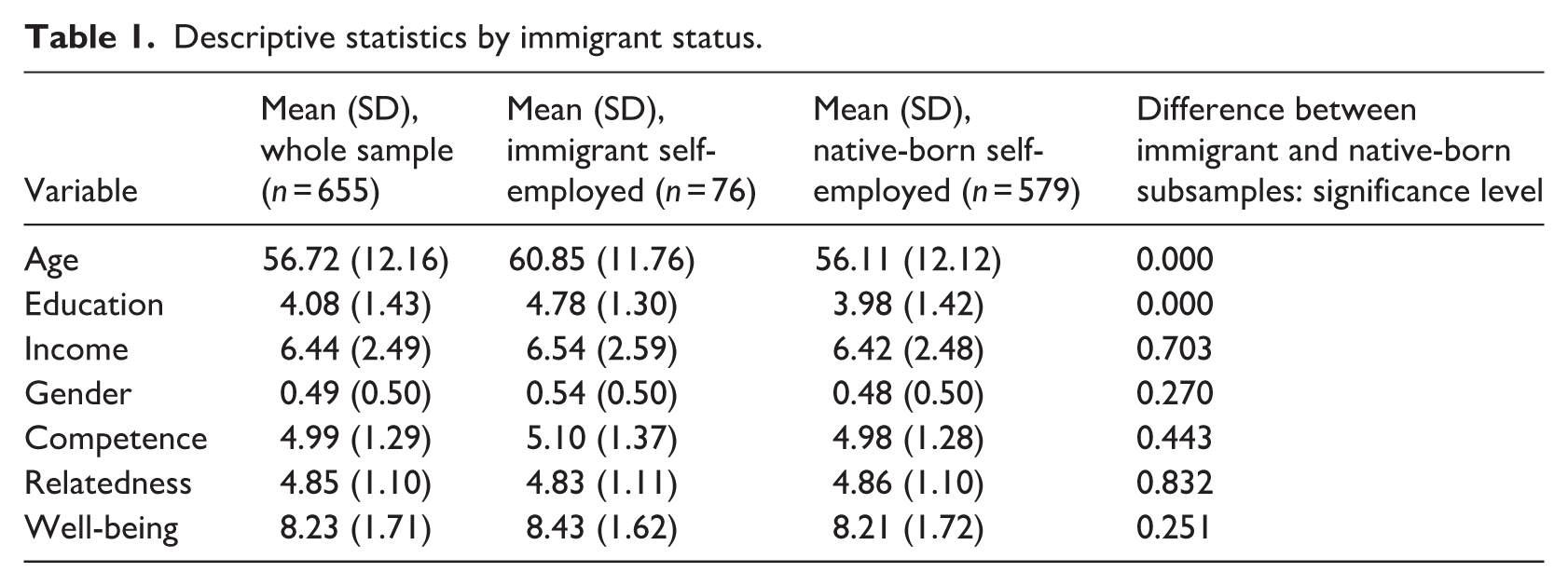
Table 2 presents the Pearson correlations for the two groups. For the self-employed immigrants group, well-being is significantly and positively correlated with relatedness, age and income. For the self-employed native-born group, well-being has a significant positive correlation with competence, relatedness, age, education and income. Thus, a broader range of variables seem to be connected with well-being for native-born self-employed. Furthermore, competence is positively correlated with education for this group, while there is no significant correlation between competence and education for immigrant self-employed.
Pearson correlations by immigrant status (p-values in parentheses).

Note. Correlations for the immigrant subgroup are presented below the diagonal, while the native-born subgroup correlations are above the diagonal.
Results
Data analysis was performed in Stata 17. We conducted confirmatory factor analysis (CFA) for the whole sample, which indicated good model fit (Root Mean Square Error of Approximation [RMSEA] = 0.018; Comparative Fit Index [CFI] = 0.999; Tucker-Lewis Index [TLI] = 0.997). 3 Factor loadings, construct reliability and average variance extracted (AVE) are presented in Table 3. As can be seen in the table, all of them are within the norm. All factor loadings were above 0.6, construct reliability estimates were above 0.7 (Nunnally and Bernstein, 1994), and AVE estimates were above 0.5 (Fornell and Larcker, 1981). Thus, the convergent validity of the model is established. The AVE estimates of the constructs are greater than the corresponding interconstruct-squared correlation estimates, noted in Table 4, thus, establishing discriminant validity.
Factor loadings, AVE and construct reliability.
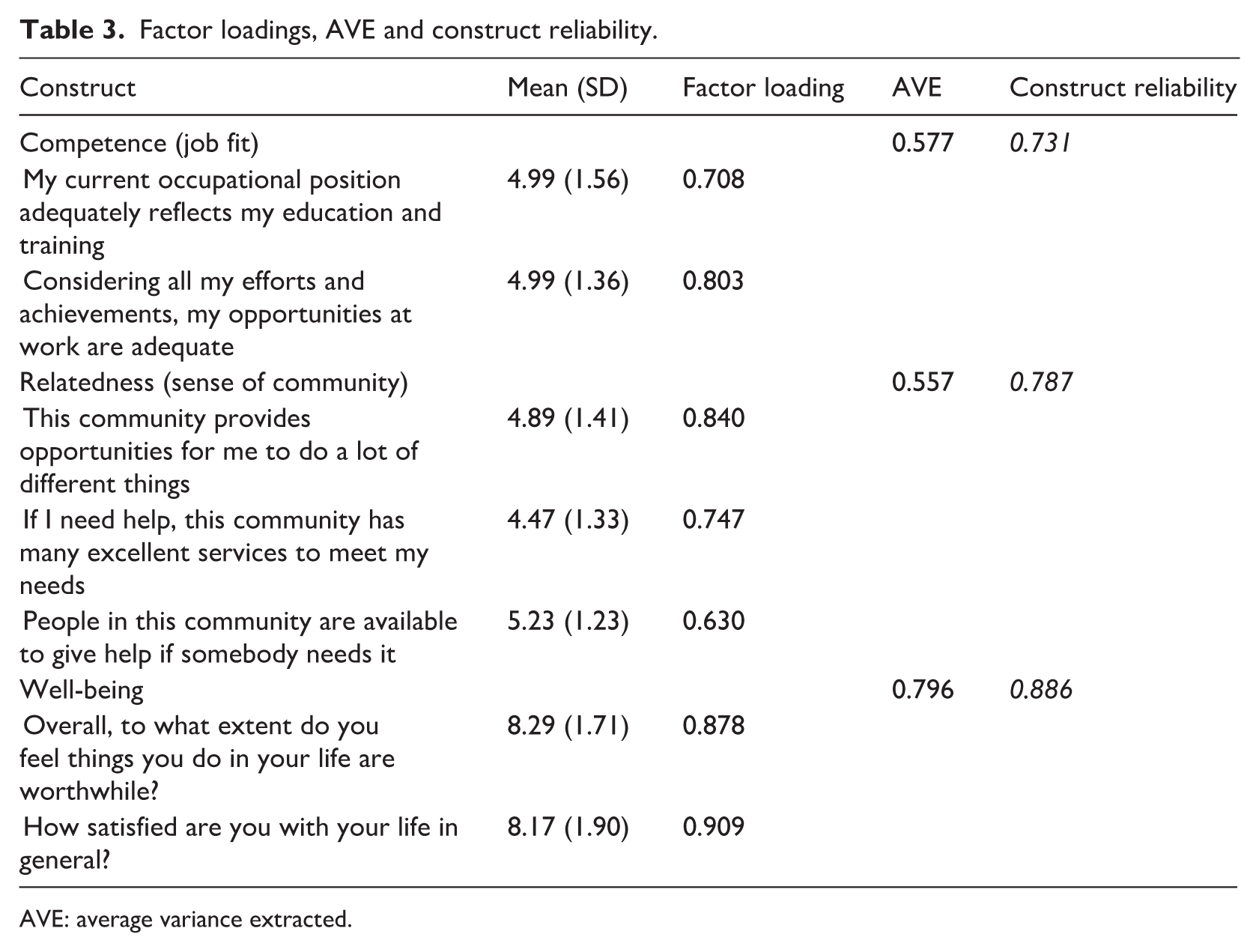
AVE: average variance extracted.
Correlations among constructs and discriminant validity.
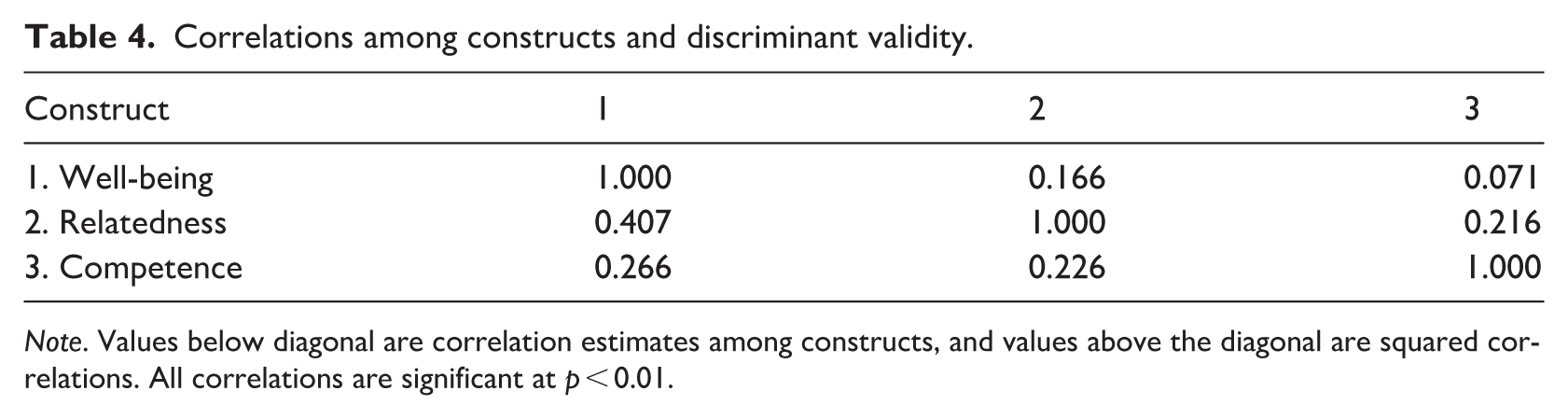
Note. Values below diagonal are correlation estimates among constructs, and values above the diagonal are squared correlations. All correlations are significant at p < 0.01.
To ensure comparability of latent constructs across groups, we conducted a multi-group CFA for native-born and immigrant self-employed individuals and applied a series of post-estimation tests to establish measurement invariance (Putnick and Bornstein, 2016; Van de Schoot et al., 2012). Following the steps described in Ender (2013), we first established configural invariance to ensure the factor structure did not differ between the groups in an unconstrained model. We then established metric invariance by constraining factor loadings to be equal across the two groups; next, we imposed additional constraints on item intercepts to evaluate scalar invariance and then, added error variances to test strict invariance. Subsequent chi-squared tests comparing the models indicated no significant deterioration in fit; thus, we concluded that we can meaningfully compare the two groups. Appendix A presents a summary of the measurement invariance tests that were conducted.
Having established comparability between our two groups, we used structural equation modelling (SEM) to test our hypotheses. We applied the bootstrap option with 5000 replications to ensure robust estimates. 4 Table 5 presents the results of the hypothesis testing for the study, starting with the base model (all self-employed), and then presenting a comparison between immigrant and native-born self-employed, using the multi-group comparison function for SEM. Both the base model and the multigroup comparison model exhibited good fit. The base model had CFI = 0.945, and TLI = 0.925. The multigroup model had CFI = 0.931, and TLI = 0.916. The reported results in Table 5 are standardised estimates.
Effect of competence (job fit) and relatedness (sense of community) on the well-being of immigrant and native-born entrepreneurs – bootstrapped estimates.
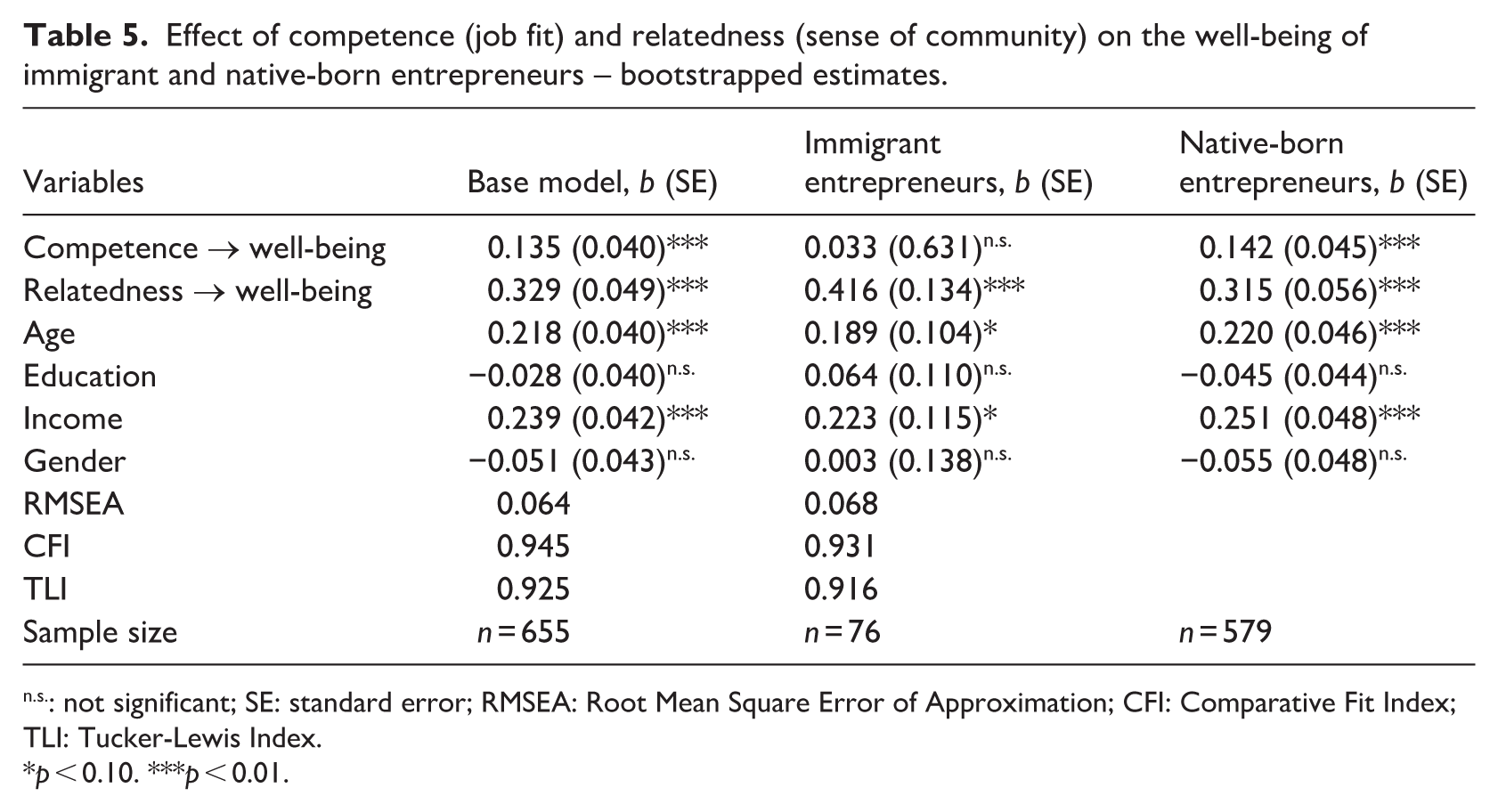
: not significant; SE: standard error; RMSEA: Root Mean Square Error of Approximation; CFI: Comparative Fit Index; TLI: Tucker-Lewis Index.
p < 0.10. ***p < 0.01.
In the base model, competence has a positive association with well-being as H1a predicts, but the results for the two groups indicate that this positive association is only significant for the native-born entrepreneurs. For immigrant entrepreneurs, competence has a positive but not statistically significant effect on their well-being (β = 0.033; p = 0.957). By contrast, competence is positively and significantly associated with well-being for their native-born counterparts (H1b) (β = 0.142; p < 0.01). Thus, the results support H1b, which predicted a stronger effect of competence for native-born entrepreneurs. Relatedness is a significant predictor of well-being for all self-employed (β = 0.329; p < 0.01), in support of H2a. This association is particularly strong for immigrant entrepreneurs (β = 0.416; p < 0.01). For the native-born self-employed group, relatedness also has a positive, but smaller association with well-being (β = 0.315; p < 0.01), thus providing support for H2b. From the control variables, only age and income had a significant positive association with well-being both in the general model and in the multi-group estimates for both of the subgroups.
Robustness tests
In order to test the robustness of our results, we analysed the multi-group model with a range of additional control variables. First, we included total number of jobs as a control variable to account for the fact that many of the self-employed – especially immigrants – have their own business while still working as a waged employee (Green et al., 2016) – something that could potentially affect their well-being as dividing time and attention between a new venture and paid employment could have an impact upon well-being. Next, we controlled for the number of working hours per week, as exhaustion and burnout can result from high workload, which could negatively impact well-being (Wei et al., 2015; Williamson et al., 2021). Furthermore, we added the number of years living in the community, as having more established long-term connections in the community might result in higher levels of well-being (Kautonen et al., 2025). Finally, we controlled for perceived discrimination (‘How often do you feel discriminated against in our community because of your ethnicity, culture, race, or skin colour?’) measured on a scale from 1 = never to 7 = all of the time, to account for the possibility that being subject to discrimination would negatively impact upon well-being, especially for those from different cultural and ethnic backgrounds (Ram et al., 2017).
None of those additional controls had a significant effect in our model for the two groups, native-born and immigrant self-employed. Furthermore, adding those controls did not change the main findings of our model. As such, the results from those additional analyses provide further support that our findings are robust to the inclusion of different potential drivers of well-being. All additional analyses are available upon request.
Discussion
Entrepreneur well-being has attracted increasing attention in the literature as scholars recognise the importance of analysing outcome variables other than traditional financial performance (Chatterjee et al., 2022; Nikolova et al., 2023; Stephan et al., 2023). While recent research in this field has confirmed that the self-employed enjoy higher well-being compared to waged employees, little is known about differences in well-being for distinct groups of entrepreneurs. Our research centres on immigrant entrepreneurs, a group frequently subjected to marginalisation, and investigates how key well-being drivers, such as competence and relatedness, shape their well-being. Furthermore, we provide comparison with native-born entrepreneurs to identify similarities and differences across these dimensions. Based on previous calls for understanding the well-being performance outcome across different entrepreneurial groups (Shir and Ryff, 2021), we demonstrate that the paths to well-being vary for native born and immigrant entrepreneurs. Our results provide a more nuanced view about the immigrant status – well-being relationship, suggesting key differences in the effect of competence on the well-being of native-born and immigrant entrepreneurs. Our study also reveals that a sense of community has a critically important role in enhancing the well-being of immigrant entrepreneurs, illustrating its significance as a key determinant of the success of their entrepreneurial endeavours. Those findings provide theoretical and practical implications to the entrepreneurship literature that we discuss in detail below.
Theoretical implications
Our conceptual model and empirical results offer three major theoretical contributions. First, we offer theoretical contributions to the broader immigrant entrepreneurship literature. In their review of the literature on immigrant entrepreneurship, Dabic et al. (2020) found limited use of psychological theories to debate immigrant entrepreneurship. We have contributed to the immigrant entrepreneurship literature by using psychological constructs, namely self-determination theory (Ryan and Deci, 2001; Richey et al., 2022). We have sought to show the factors which contribute the well-being of immigrant and native-born entrepreneurs and in so doing, contextualise how competence (job fit) and relatedness (sense of community) may have differential importance for the two groups and addressing calls in the extant immigrant entrepreneurship literature to provide multi-theoretical approaches (Dabic, et al., 2020; David et al., 2025; Ram et al., 2017). Furthermore, we show new paths for research on immigrant entrepreneurship focusing on an under-explored dependent variable, namely well-being. Current research in immigrant entrepreneurship has predominantly focused on outcomes such as financial performance, export propensity, growth, and survival (Morgan et al., 2021; Neville et al., 2014; Wang and Liu, 2015). However, an in-depth understanding of entrepreneurial drivers and outcomes should also pay attention to the entrepreneur’s interactions with their surroundings and how those interactions affect not only firm survival, growth, and performance, but also the entrepreneurs themselves, including their ability to grow and fulfil their innate potential and by implication, their well-being.
Evidence from the immigrant entrepreneurship literature has emphasised the importance of understanding how psychological and relational aspects affect immigrant entrepreneurs (Elo et al., 2024; Essers et al., 2021; Nafari and Ruebottom, 2025; Vershinina and Rodgers, 2023). For instance, Bolzani et al. (2025) point to the fact that much of the immigrant entrepreneurship discourse overlooks the emotional burdens immigrant entrepreneurs navigate; while Suseno et al. (2025) describe the relational marginalisation immigrants are subjected to. Importantly, Nafari and Ruebottom (2025) make the case for a trauma-informed approach especially for refugee entrepreneurs, who deal with profound psychological challenges. Collectively, this stream of literature emphasises the need to incorporate psychological aspects and theorising to better understand the experiences of immigrant entrepreneurs. We advance this literature by offering a theoretically informed model based on psychological needs and demonstrating empirically how the structural vulnerabilities immigrants are exposed to lead to diminished opportunities to enhance their well-being.
Second, we shed light on the relative importance of competence (job fit) and relatedness (sense of community) for well-being among immigrant and native-born entrepreneurs. The critical differences of how competence and relatedness affect the well-being of different groups of entrepreneurs contribute new insights to the well-being literature and join calls for examining diverse groups of entrepreneurs and contextual specificities (Shir and Ryff, 2021). For immigrant entrepreneurs, competence was not a significant predictor of their well-being. As immigrant entrepreneurs are frequently pushed into entrepreneurship due to a lack of employment opportunities, or other barriers (Carter et al., 2015; Dana, 1997; Heilbrunn et al., 2010), they do not experience the importance of competence in entrepreneurial activities similar to their native-born counterparts and so, do not reap the well-being benefits of meaningful work aligned with one’s skills and expertise. We advance this body of research by specifying conditions under which the competence aspect of entrepreneurship may have a differential impact on well-being. Our findings are in line with recent developments in the psychology literature, which postulate that the relative strength of the importance of basic needs would determine the link between need satisfaction and well-being (Glendinning et al., 2021) and that extrinsic versus intrinsic motivation can lead to diminished versus enhanced well-being (Ryan and Deci, 2017; Yu et al., 2025).
Drawing from self-determination theory, we theorised that because of the complexities of the labour market conditions for immigrants, they may not necessarily be engaged in entrepreneurial opportunities in sectors that fulfil their self-realisation and personal interests and instead, are driven mainly by extrinsic motivations such as financial stability and establishing a social status. Qualitative studies in the immigrant entrepreneurship literature provide support for this view. For instance, Suseno et al. (2025) describe the importance for immigrant entrepreneurs to mobilise and signal an entrepreneurial identity as a way to counteract marginalisation. An entrepreneurial identity in such cases can become a ‘status symbol’ which improves an immigrant’s socio-economic standing compared to a stigmatised migrant identity (Adeeko and Treanor, 2022). Vershinina and Rodgers (2020) describe how women immigrants leverage their status as entrepreneurs to gain legitimacy among friends and family in their home countries. Thus, entrepreneurship becomes an important vehicle for gaining status (extrinsic motivation) both in the new country and in the home country. This extrinsic aspect is further shaped by existing support services, which are typically focused on economic outcomes instead of emotional and social well-being (Nafari and Ruebottom, 2025) and are ‘insensitive to the structural barriers’ (Bolzani et al., 2025: 991) faced by immigrant entrepreneurs. While the social status and economic advancement conferred to immigrants by becoming entrepreneurs has undoubtedly many benefits in their integration and professional development, our results caution that if entrepreneurs are mainly driven by external social legitimations, rather than intrinsic personal fulfilment, the competence achieved by becoming a business owner may not lead to higher well-being.
Our findings provide further evidence in support of emerging research in psychology and self-determination theory (Glendinning et al., 2021) and calls for further research on unpacking how the fulfilment of basic needs might differentially affect well-being for various groups of entrepreneurs, especially in circumstances where they may be marginalised. While in the immigrant entrepreneurship literature it is well-documented that misalignments between educational qualifications and subsequent entrepreneurial activities by immigrants are common (Barrios et al., 2025; Dabic et al., 2020; Schimmele and Hou, 2024), research to date has not examined how such misalignments affect their well-being. Our research provides alarming findings, as the lack of a significant relationship between competence (job fit) and well-being is an indication of a broken link towards psychological fulfilment for immigrant entrepreneurs.
We also found that relatedness (sense of community) is positively associated with well-being for immigrant entrepreneurs more so than for native-born entrepreneurs. We expected that the sense of community would be more important for immigrants, given that research in this domain has focused on the idea of embeddedness in a local community (Dana, 1997; David et al., 2025) and the importance of the quality of relationships within a specific location (Nafari and Ruebottom, 2025). This is important in the context of entrepreneurship given that the new country has many challenges and barriers to entry for immigrants (Heilbrunn et al., 2010). Entrepreneurs have been characterised as agents of economic and social change that contribute to the development of communities, often enacting a collective identity that creates local development (Williams et al., 2020). The extant literature validates that there is a positive relationship between social trust amongst members of the community and economic activities (Wang and Warn, 2018; Williams et al., 2020). We add to this literature by showing the critical role of a sense of community for the personal well-being of immigrant entrepreneurs. Previous research has discussed how the separation from home-related social networks can bring anxiety and depression for migrants (Barrios et al., 2025). We theorised and provided empirical evidence about the critical role of establishing a sense of community in their new country as a driver for the well-being of immigrant entrepreneurs.
Third, we emphasise the importance of context to understand how different dimensions affect well-being for different groups of entrepreneurs. Our study advances a context-sensitive understanding of well-being, by focusing on how aspects of self-determination theory differentially affect the well-being of immigrant and native-born entrepreneurs. Evidence has noted the importance of understanding contextual specificities (Shir and Ryff, 2021) to appreciate how entrepreneurs achieve well-being and also related comparisons between entrepreneurs and waged employees (Shir et al., 2019; Stephan et al., 2020). However, there is a paucity of research explaining different experiences of well-being for immigrant entrepreneurs within the context in which they are embedded. Our results suggest that the contextual environment in which entrepreneurs are embedded – their immigrant status – significantly affects the extent to which key aspects of self-determination theory can work as conduits for well-being (Richey et al., 2022).
As such, the contextual embeddedness of the entrepreneur needs to be considered further when analysing entrepreneur well-being. Indeed, entrepreneurship cannot be disentangled from the context and social systems in which it occurs (Bruton et al., 2023; Welter, 2011); and therefore, attention to ‘place’ and local embeddedness should inform future research. From this perspective, we concur with Welter and Baker (2021: 1156) who call for context and place to be understood ‘not so much as a static indicator of geographic . . . boundaries, but more as the locus of historical and ongoing processes of power and contestation. . .’. Indeed, the context of immigrant entrepreneurship provides a fertile ground for understanding power and contestation within geographical places, and the impact of such processes on entrepreneur well-being. Recent research has called for exploring how the sense of place affects well-being for immigrant entrepreneurs (Kautonen et al., 2025). Our results provide initial understanding of the role of a sense of community and the local embeddedness for the well-being of immigrants. The differential impact of the two self-determination theory pillars we focused upon – competence and relatedness – speak to the importance of examining how the social embeddedness of immigrant entrepreneurs shape their ability to achieve well-being through the fulfilment of the basic psychological needs.
Practical and policy implications
Our results showing that competence does not significantly affect the immigrant entrepreneur’s well-being prompts key implications for policy given that their self-employment may not be connected to prior work experience and so, merely considered to be a means to an end (Wang and Warn, 2018). From a practical perspective, the employment opportunities available to immigrant entrepreneurs with limited experience will shape their ability to integrate and potentially, lead to reduced well-being. Local governments and policy makers need to consider how to create work that is applicable and meaningful to immigrant entrepreneurs when they are considering local enterprise programmes. Extant research has established high levels of misalignments between qualifications and occupation, as well as structural barriers that push immigrants into entrepreneurship. Our findings further suggest that such ‘competence misalignment’ creates a broken link between competence and well-being. As such, policymakers need to address this issue by designing entrepreneurship programmes that align with immigrant skill sets and accumulated knowledge. The inability to get foreign credentials recognised is a particularly salient obstacle for immigrants and a push factor for entrepreneurship in Canada (Diversity Institute, 2017). Thus, the need to create connections to enhance the job fit – well-being link calls for a thoughtful design of entrepreneurship support programmes going beyond the generic business skills and including aspects related to the multitude of skills and experiences that immigrants bring into their entrepreneurial ventures.
The sense of community is a key aspect of integration for immigrant entrepreneurs. To this end, it is important that their transition into the new country allows them to connect with the local community (Lumpkin et al., 2018) who provide a vital resource supplying information to facilitate integration. Thus, policymakers need to create opportunities and supportive social activities to help immigrant entrepreneurs understand their new roles and how to become embedded in the new community. For instance, recent research has pointed to the important role of mentors for integration into the local community and related business success (Stoyanova and Stoyanov, 2025). Considering the key role of relatedness for immigrant’s well-being, mentorship programmes can leverage well-established local entrepreneurs to help build stronger connections to their new community. This is especially important as ‘outsidership’ in networks creates challenges to an actor’s market integration and legitimacy with local stakeholders (Stoyanov, 2018). While research has established the importance of creating strong local networks for business success (David et al., 2025), our findings point to the critical role of also building those connections for immigrant entrepreneur’s well-being. By strengthening the immigrant entrepreneur’s sense of place (Kautonen et al., 2025) and acceptance into their new community, such mentoring arrangements and local networks will contribute positively to well-being. Policy makers should be aware of the heightened importance of relatedness, and especially sense of community, for immigrant entrepreneurs, and ensure that any support programmes for immigrants encompass this critical aspect.
Limitations and future research opportunities
Whilst we have been able to demonstrate the relationships between competence and relatedness, and well-being for immigrant versus native-born entrepreneurs, we were limited by the sample dataset. One limitation of this study is the inability to disaggregate businesses by type or industry, which restricts our capacity to provide a more granular understanding of well-being outcomes among immigrant entrepreneurs operating in different industries. The industry context is widely recognised as a critical determinant of entrepreneurial experiences and outcomes, influencing resource availability, competitive pressures, and institutional constraints (Patriotta and Siegel, 2019). Prior research suggests that sectoral differences shape entrepreneurial stressors and coping mechanisms, as well as access to social and financial capital, all of which have implications for entrepreneur well-being (Stephan, 2018; Wiklund et al., 2019). For immigrant entrepreneurs, industry choice is often affected by structural barriers such as credential recognition and discrimination, leading to concentration in low-entry-barrier sectors that may offer limited opportunities for skill utilisation and growth (Dabic et al., 2020; Jones et al., 2014). Furthermore, according to Peprah et al. (2025), migrant ventures in both developing and developed countries have a propensity to work in the informal sector (Muñoz-Mora et al., 2022), which may also affect their access to resources. Consequently, the absence of industry-level segmentation in our analysis limits the ability to examine whether well-being drivers, such as competence and relatedness, operate differently across sectors characterised by varying levels of complexity, regulation, and social legitimacy. Future research should incorporate industry-specific analyses to capture these contextual variations and provide a more comprehensive understanding of the interplay between entrepreneurial context and well-being.
Future research would also benefit from a longitudinal analysis or panel-level analysis to understand and explain the dynamic changes over time for cohorts of immigrants and native-born entrepreneurs and their well-being. The cross-sectional nature of our data did not allow us to venture into this kind of analysis. Nevertheless, it is important to understand how the relationship between competence, or relatedness, and well-being might change over time as immigrant entrepreneurs settle into their new role and country and community, and potentially start prioritising different needs. Relatedly, research could examine the impact of the self-determination drivers on different well-being measures, for instance hedonic and eudaimonic well-being. Ryff (2019) discusses six different eudaimonic aspects of well-being, and it is possible that those various eudaimonic elements may be differently affected by the fulfilment of the needs for competence and relatedness. Furthermore, it is important to note that – following the common approach in entrepreneurship studies and the limitations of working with a secondary dataset – we operationalised entrepreneur well-being as a global measure rather than focusing specifically on entrepreneurial well-being. Recent research has pointed to the importance of developing specific measures and has proposed a hedonic well-being measure focused on satisfaction with one’s life as an entrepreneur (Shir et al., 2025). Future research should expand those efforts to develop eudaimonic entrepreneurial well-being measures as well.
We also need to acknowledge that limitations of our dataset did not allow us to analyse intersectional perspectives on immigrant entrepreneur well-being. It has been well documented, for instance, that there are interdependent systems of privilege and oppression based on race, gender, etc. that shape how immigrant entrepreneurs navigate market opportunities (Adeeko and Treanor, 2022; Elo et al., 2024), and therefore, affect well-being. Although our data come from a representative sample, and proportionately the self-employed in the dataset resemble the population, the absolute number of observations for immigrant self-employed in the sample is relatively small and would not allow for a meaningful statistical analysis if separated into further categories, such as gender. We encourage future research to build on our findings and examine how the expression of basic psychological needs impacts well-being for entrepreneurs across different racial backgrounds and genders, as the literature has noted the challenges faced by immigrant women entrepreneurs (Adeeko and Treanor, 2022; Chitac et al., 2025) and entrepreneurs from different racial groups (Mercado, 2025).
It is also important to acknowledge that our sample is from Canada, a country which has embraced multiculturalism as a policy, and has welcomed and continues to welcome immigrants as part of its population growth strategy. The Canadian multiculturalism policy is focused on preserving the multicultural heritage of Canadians by encouraging immigrants to retain their home country cultural characteristics rather than assimilate (Immigration, Refugees and Citizenship Canada, 2023). However, other countries follow different policies; for instance, the assimilation approach in the United States encourages immigrants to adopt the culture of the host country and give up their home country cultural identities hence, the ‘melting pot’ metaphor. Research has suggested that those contrasting approaches towards immigration can result in different socio-economic outcomes for immigrants (Ng and Metz, 2015). Therefore, future research can examine how drivers of well-being might differ for immigrant entrepreneurs depending on the host country’s policy towards immigration and the specific circumstances of the immigration. This is especially relevant considering that many migrants are pushed to move to a new country oftentimes because of wars or other critical conditions that exacerbate precarity and inequality (Bolzani et al., 2025). Importantly, the host country may not have built the necessary institutional framework to support immigrant entrepreneurs due to institutional voids or unpreparedness for migratory waves, as seen for example in Barrios et al.’s (2025) research on Venezuelan immigrant entrepreneurs in Colombia, and Peprah et al.’s (2025) study on immigrant entrepreneurs in Ghana. Immigrant entrepreneur well-being may thus, be differently affected because of the added complexities of the institutional environment of the host country.
Finally, our theorising relied on the self-determination theory concepts of internal versus external motivation and need strength of the basic psychological needs for immigrant versus native-born entrepreneurs. However, we were unable to directly test the strength of the different psychological needs for the two groups studied, nor their specific motivation, as our dataset does not provide this information. Future research can further inquire into this aspect and directly measure the need strength and internal versus external motivation for different groups of entrepreneurs to ascertain their impact on well-being.
Conclusion
In this article, we focused upon immigrant entrepreneurs and asked the question: how do well-being drivers, such as competence and relatedness affect immigrant versus native-born entrepreneurs? We tested a model using data from the CIW. We have demonstrated the importance of contextual embeddedness and offered a nuanced understanding of how some variables that boost well-being for native-born entrepreneurs that is, competence, are not a predictor of well-being for immigrant entrepreneurs. This study adds to the literature by proposing that competence and relatedness have a differential impact for different groups of entrepreneurs, in our case – immigrant versus native-born, because of contextual specificities that may strengthen or weaken the importance of the basic psychological needs and so, lead to differences in well-being.
Footnotes
Appendix A
Measurement invariance results.
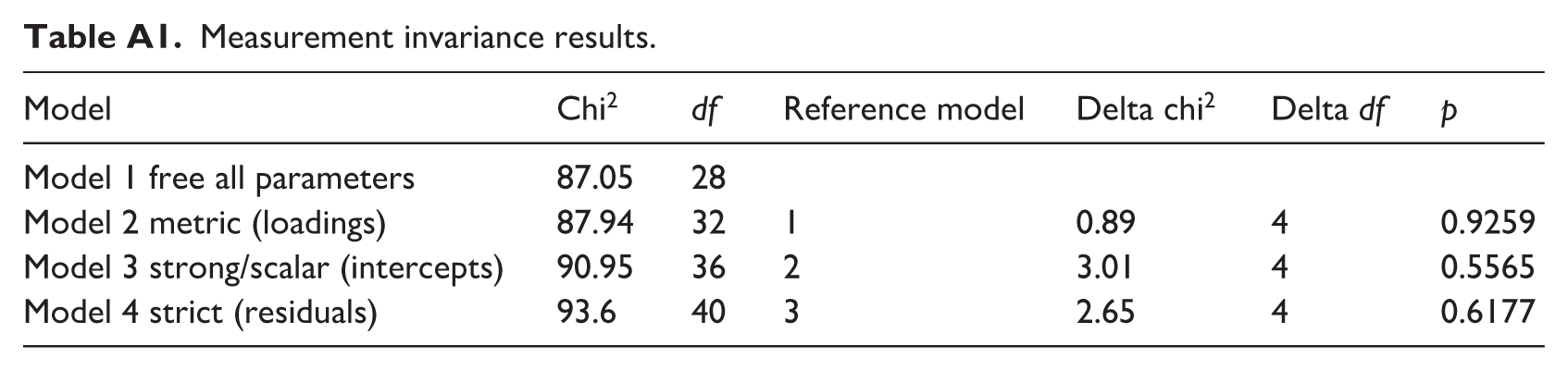
| Model | Chi2 | df | Reference model | Delta chi2 | Delta df | p |
|---|---|---|---|---|---|---|
| Model 1 free all parameters | 87.05 | 28 | ||||
| Model 2 metric (loadings) | 87.94 | 32 | 1 | 0.89 | 4 | 0.9259 |
| Model 3 strong/scalar (intercepts) | 90.95 | 36 | 2 | 3.01 | 4 | 0.5565 |
| Model 4 strict (residuals) | 93.6 | 40 | 3 | 2.65 | 4 | 0.6177 |
Author contributions
AP: data analysis, conceptualisation, writing; JZ: conceptualisation, writing; BS: methodology, data collection.
Funding
The authors received no financial support for the research, authorship, and/or publication of this article.
Ethical considerations
All research ethics guidelines at University of Waterloo were followed.
Consent to participate
All participants provided informed consent prior to enrolment in the study.

Data availability statement
Data relevant to the study in this paper are available upon reasonable request.