




Abstract
Digital transformation (DT) fundamentally disrupts enterprise operations presenting both unprecedented opportunities and complex challenges for organisational leadership. Drawing upon dynamic capability theory, we develop a model exploring the dynamics of digital transformational leadership (DTL) and its effects on DT within small- and medium-sized enterprises (SMEs). Specifically, we investigate the mediating roles of digital capabilities and digital strategies. Data from 256 SMEs in Ghana were analysed using structural equation modelling techniques to test hypotheses. The findings reveal a positive relationship between DTL and DT, demonstrating that the former positively influences digital IT capabilities (ITDC), employee digital capabilities, and digital strategies. ITDC and employee digital capabilities partially mediate the relationship between leadership and DT, while digital strategy shows a weaker mediating effect. The findings enhance understanding of how transformational leadership influences DT in SMEs, emphasising the role of digital capabilities and the nuanced impact of digital strategies.
Keywords
Introduction
Small- and medium-sized enterprises (SMEs) play a vital role in the economies of developing nations and contribute to their overall development. In Ghana, SMEs are pivotal to economic growth by providing employment opportunities and reducing regional economic disparities while promoting sustainable development across rural and underdeveloped areas of the country (Egala et al., 2024). The recent evolution of the business landscape and the increasing prevalence of digital technology due to COVID-19 have led to many SMEs embracing digital transformation (DT) (Egala et al., 2024). DT refers to the adoption of digital technologies to introduce new business models and digital-transformative strategies that provide distinct customer value and meaningful engagement (Bresciani et al., 2021; Parida and Örtqvist, 2015). Through DT, firms can obtain a competitive edge by utilising digital technology for process, product, and service optimisation and innovation (Malodia et al., 2023). Therefore, many SMEs are incorporating non-proprietary and open-source digital technologies that improve organisational agility and meet customer demands (AlNuaimi et al., 2021; Troise et al., 2022). Despite these efforts, many SMEs are still lagging in the DT journey which could stunt their growth and productivity. Given the significant role of such firms in driving economic growth, it is crucial to comprehend the factors that motivate their adoption of DT.
Research indicates that effective DT is an intricate and multifaceted strategic management procedure encompassing all aspects of the organisation (Lokuge et al., 2019; Porfírio et al., 2021). Therefore, it is evident that DT must address both technical challenges, such as reconfiguring business and operational procedures (Lokuge et al., 2019), and also, strategic management issues, such as investing in human resources and organisational capabilities, formulating an effective strategy, and promoting organisational change and adaptability (DeLone et al., 2018). According to Porfírio et al. (2021), the success of DT is closely tied to the capabilities of leaders. Given the disruptive nature of DT, management experts are expressing widespread concern about the capacity of their business leaders to effectively guide their organisations in the contemporary digital era (Sawy et al., 2016). Previous studies acknowledged the influential role of leaders in effectively managing the process of digitalisation (AlNuaimi et al., 2022; Malodia et al., 2023). Despite the importance of leadership in DT, research examining it within the context of SMEs predominantly focuses upon effects on innovation, performance and internationalisation (Goldman et al., 2021; Troise et al., 2022), and the conceptualisation of digital technologies (Morgan-Thomas, 2016), neglecting the critical role of leadership. Nevertheless, the increasing adoption of digital technologies necessitates the implementation of effective leadership styles capable of directing SME resources, including human resources, towards DT (Porfírio et al., 2021). Decision-making in most SMEs is leader-centric; hence, successful DT is heavily dependent on the capabilities and skills of the leader. Therefore, evidence analysing the role of leadership, and its traits on DT within the context of SMEs, are necessary. The literature provides little clarity as to what constitutes effective leadership for DT in the context of SMEs (Malodia et al., 2023). Whilst there is evidence regarding the crucial role of leadership in DT within the context of high-tech firms, industry 4.0 and the public sector (AlNuaimi et al., 2021, 2022; Li et al., 2018; Sawy et al., 2016); there is limited empirical research focused upon DT in SMEs. To address this gap, we focus on digital transformational leadership (DTL), recognised as crucial for navigating DT in today’s digital environment (AlNuaimi et al., 2022). As noted by Sawy et al. (2016), DTL facilitates strategic digitalisation decisions for businesses and their ecosystems. Uncovering the role of DTL in DT, and understanding the mechanisms through which it operates, provide insights to businesses in leveraging digital opportunities within the context of SMEs.
There is also a dearth of research on the role internal capabilities play in influencing the relationship between DTL and DT. Evidence suggests that leaders can enhance organisational competencies to more effectively identify and exploit market possibilities; hence, facilitating strategic changes such as implementation of the enterprise’s DT (Helfat and Martin, 2015; Li et al., 2018). These studies elucidate the role of leadership characteristics in the strategic process aimed at improving DT. However, they overlook how leaders influence an organisation’s digital capabilities to achieve a successful DT. We argue that SME leaders can facilitate a successful DT by enhancing the organisation’s internal capabilities, specifically by strengthening employee digital capabilities (EMDC) and digital IT capabilities (ITDC). The development of ITDC such as digital technology, the internet and social media can play a crucial role in assisting managers to lead and implement digital technologies (Bresciani et al., 2021). Alongside the importance of ITDC, the significance of EMDC in firm digitalisation has been noted (Parida and Örtqvist, 2015; Prokesch, 2017). Evidence also notes the importance of performance aspects of SMEs concerning DT and DTL, emphasising operational competencies (DeLone et al., 2018). Understanding DTL’s effect on DT also requires the consideration of a digital strategy (DS). DS plays a key role in the successful DT of an organisation (Proksch et al., 2024; Sebastian et al., 2017). Leaders can achieve a degree of digitalisation and better manage their scarce resources and current developments by incorporating an effective DS (Sebastian et al., 2017). Corporate literature suggests that the implementation of a DS yields advantages in terms of advancing digital products, services and processes (Sebastian et al., 2017). While studies on firm strategy have recently gained some attention with regard to SMEs (Bamiatzi and Kirchmaier, 2012; Bi et al., 2019; Goldman et al., 2021; Proksch et al., 2024), there is a notable absence of empirical evidence regarding how DS influences leader impact on the success of DT.
Overall, in this study, we aim to combine leadership qualities and several internal organisational capabilities to understand their interaction and contribution to successful DT in SMEs. Specifically, we address the following research questions: (1) How does DTL influence SME digital transformation and digital capabilities; (2) What role do organisational digital capabilities play in the relationship between DTL and DT; and (3) How does DS influence the relationship between DTL and DT. We provide a comprehensive framework for DTL, DT, employee digital capabilities, ITDC and DS based on dynamic capability theory. This theoretical framework is particularly pertinent in contexts characterised by rapid change (Teece, 2014b); dynamic capabilities serve as catalysts for enabling ‘management to develop conjectures about the evolution of consumer preferences, business problems, and technology; validate and fine-tune them, and then act on them’ (Teece, 2014b: 332). However, much of the existing research on capabilities and dynamic capabilities has predominantly emphasised those that enhance firm performance; in contrast, we specifically examine the development of digital capabilities oriented towards achieving successful DT.
The article is organised as follows. Section ‘Theory and hypotheses development’, provides the theoretical background, covering the construct of digitalisation in SMEs. It then introduces dynamic capability theory and outlines the research hypotheses. Section ‘Methodology’, details the research methodology and sample characteristics. Section ‘Results’, presents the results of hypothesis testing. The remaining sections discuss the findings and their implications for both literature and management practices. Finally, the article acknowledges limitations of the study and suggests directions for future research before concluding.
Theory and hypotheses development
We employ dynamic capability theory to develop a conceptual framework to investigate the relationship between DTL and DT. The existing literature utilises this theory to explore different facets of DT (see Ellström et al., 2022; Ghosh et al., 2022; Li et al., 2018; Sousa-Zomer et al., 2020). However, a limited literature exists regarding the application of this theory to examine how transformational leaders inspire the creation of digital capabilities and a strategy to drive DT. This gap is particularly evident in the context of SMEs in developing countries. Hence, we seek to address this theoretical gap.
Dynamic capability theory
Dynamic capability theory provides a useful lens through which we can understand DT in SMEs. Teece et al. (1997) conceptualise dynamic capabilities as ‘the firm’s ability to integrate, build, and reconfigure internal and external competencies to address rapidly changing environments’ (p. 516). While the literature on DT is still emerging in its exploration of the mechanisms that allow firms to leverage digital technologies for strategic renewal (Vial, 2019), evidence highlights the critical role of three key dynamic capabilities (sense, seize and reconfiguration) in facilitating a firm’s DT (Warner and Wäger, 2019). Thus, for firms to drive DT and become competitive in the digital era, they must possess robust dynamic capabilities including the ability to sense and shape, seize, and reconfigure/transform opportunities, alongside a well-defined strategy (Teece, 2014a). Sensing and shaping new opportunities encompasses activities such as scanning, creating, learning and interpreting (Teece, 2014a). This process involves the ‘identification, development, co-development, and assessment of technological opportunities in relation to customer needs’ (Teece, 2014b: 332). Firms must develop strong sensing capabilities to anticipate emerging trends in digitalisation within dynamic and fast-evolving environments (Warner and Wäger, 2019), essential for the ongoing refinement of their DT strategies. Seizing capability entails making high-quality investment decisions on the sensed opportunities identified and can be addressed either through new products, processes, services, or a mix of these options (Ghosh et al., 2022; Teece et al., 2016). A firm’s capacity to seize allows it to realise the value of potential business opportunities and to determine what specific changes are necessary across the organisation to capitalise on these new opportunities (Ghosh et al., 2022). Finally, the transforming capability relates to firms reconfiguring their resources to continually adapt and align with their DS. Ultimately, to successfully implement a DS, organisations need a digital transforming capacity (Warner and Wäger, 2019). The strategic renewal inherent in a DT necessitates the capacity to adapt and reconfigure the organisation’s resource base effectively (Agarwal and Helfat, 2009).
According to Arndt and Bach (2015), the processes of sensing, seizing and reconfiguring require senior management teams to demonstrate entrepreneurial competencies to effectively adapt to and shape rapidly changing environments. Dynamic capabilities are often associated with gaining a competitive edge (Efrat et al., 2018; Farzaneh et al., 2022). However, Woldesenbet et al. (2012) assert that the mere presence of these capabilities does not inherently ensure an organisation’s success or long-term sustainability. Instead, organisations must enable conditions essential for transformation. While prior research has examined transformation processes (Ghosh et al., 2022; Sawy et al., 2016; Teece, 2014a), we extend the investigation to DT within SMEs, acknowledging the specific characteristics of firms. Hence, employing dynamic capability theory to investigate the relationship between leadership and DT is particularly relevant to this study as it is essentially the entrepreneurs and managers who drive the success of their organisation’s DT. This capability further provides insights into the broad spectrum of complexities associated with DT (Warner and Wäger, 2019); thus, examining this dimension yields valuable information on the factors that underpin a successful DT in SMEs. Accordingly, we capitalise on dynamic capability theory to demonstrate how transformational leaders drive the internal capabilities of firms (ITDC, EMDC and strategy) to achieve DT goals.
Digital transformation in SMEs
DT refers to utilising cutting-edge digital technology to restructure business models around new technologies and implement processes that can create value for stakeholders, such as customers, employees and suppliers (Bresciani et al., 2021). According to Jedynak et al. (2021), firm-level DT encompasses the integration of mobile technologies, cloud computing, data analytics, artificial intelligence and social media into business operations and customer service delivery. In this sense, DT results in a radical change in organisational culture, operations and procedures aimed at creating value for clients and other stakeholders (Nasiri et al., 2020).Thus, DT necessitates organisations to redefine organisational boundaries, restructure products, services and organisational identity, and provide community feedback (Jedynak et al., 2021).This radical change and restructuring could lead to disruptions that pose a risk of rendering the existing skills and resources outdated, necessitating a shift towards an emphasis on capability (Ellström et al., 2022). This concept reflects dynamic capability theory centred on the strategies employed by firms to modify their resources in order to consistently adjust to, and enhance, competitive advantage in a changing environment (Teece et al., 1997). As DT implies changes to, for example, value creation processes and organisational tasks to attain competitive advantage, it can be argued that dynamic capabilities are necessary to successfully implement these changes.
DT has been described in the literature as the use of digital technologies such as big data, artificial intelligence, cloud computing, internet 4.0, augmented reality and the Internet of Things, among others (Jedynak et al., 2021). However, this description is more applicable to firms with multiple resources – such as those in the resource-intensive manufacturing sector – and it often involves substantial investment that SMEs, particularly those in developing countries, lack (Malodia et al., 2023). Due to the complex nature of DT, SMEs with limited resources will struggle to manage this degree of complexity, particularly regarding open innovation projects (Malodia et al., 2023). Thus, it is crucial to determine the key aspects of DT of most value to SMEs; according to Ulas (2019), these include integrating e-commerce platforms, implementing digital marketing strategies and utilising big data analytics. For the purposes of this study, DT is defined as capitalisation on the growth in digital technology to create value for customers and other stakeholders through effectively implementing e-commerce platforms, embracing digital marketing and networking techniques to reach customers in a cost-efficient and scalable manner whilst collecting and using big data in critical decision-making.
Digital transformational leadership and digital transformation
Individual expertise and knowledge have been widely acknowledged in studying the microfoundations underlying organisational capabilities (Felin et al., 2012). Research consistently highlights that leadership skills and abilities significantly influence organisation-wide outcomes, highlighting the importance of these personal competencies at a foundational level (Felin et al., 2012). Teece (2012) emphasises that dynamic capabilities are inherently rooted in executive expertise, positing that top management’s entrepreneurial and leadership abilities are essential for both developing and maintaining these capabilities. Bendig et al. (2018) also support this assertion noting that senior leadership exerts a distinct influence on the development of dynamic capabilities. Within the DT sphere, studies have also recognised the impact of top management’s skills and experience on successfully initiating and guiding DT efforts (Ghosh et al., 2022; Kane et al., 2019; Sawy et al., 2016). What often distinguishes effective digital leaders is a clear directive and readiness to champion transformational change (Kane et al., 2019). According to Singh and Hess (2017), digital leaders must possess critical skills such as digital proficiency, change management capabilities and the ability to inspire. Mihardjo et al. (2019) added that leaders can help their organisations thrive in the digital era by tracking new technology trends, spearheading the adoption of DT and strategic initiatives and directing their teams through a smooth transition to embrace such changes. Thus, in this digital era, leaders with a digital or technology-oriented mindset can build digital capabilities within their firm and foster cooperative networks (Bresciani et al., 2021). Warner and Wäger (2019) further contend that enhancing an organisation’s digital maturity, a core component of DT capability, relies on transformational leadership to direct resources effectively towards successful digital initiatives.
Transformational leaders focus on objectives that extend beyond the immediate needs of the workgroup to build trust, strive to create leadership in others, demonstrate self-sacrifice and act as moral agents (Krishnan, 2001). Notwithstanding, transformational leaders create vision and guide change through influence and inspiration and execute change in tandem with committed members of a group (Afshari, 2022; Krishnan, 2001). Hence, SME leaders must show their commitment to DT by providing resources and fostering positive relationships. They should also guide leader-member social exchange, boost self-esteem and positive behaviours related to DT and communicate the importance of innovation practices focusing on achieving specific goals (Sainger, 2018). The literature widely identifies this leadership style as incorporating transformational leadership characteristics (AlNuaimi et al., 2022; Krishnan, 2001; Mihardjo et al., 2019). Therefore, digital leadership results from effectively combining a digital mindset with transformational leadership qualities (Mihardjo et al., 2019).
The extant literature suggests that DTL influences organisational outcomes including performance and innovation capability (Alos-Simo et al., 2017; Malodia et al., 2023; Ramadan et al., 2023). For example, Alos-Simo et al. (2017) found transformational leadership positively influences e-business adoption; similarly, Malodia et al. (2023) found a positive relationship between DTL and business model innovation by SMEs. Therefore, based on the preceding discussions, we propose:
H1: Digital transformational leadership is positively associated with digital transformation.
Digital transformational leadership, digital capabilities and digital transformation
Digital capabilities encompass individual and organisational knowledge, expertise and potential to efficiently utilise digital technologies (Proksch et al., 2024). Reflecting dynamic capability theory, organisations must possess a considerable level of capacity mobilised within the firm to make significant progress towards a new transformation. Organisational capacity, in this context, pertains to the digital capabilities of the firm (Teece et al., 2016). To undergo DT with minimal disruption, firms must ensure they have the necessary organisational readiness, including digital talents, IT readiness and innovation orientation (Lokuge et al., 2019). Hence, digital capabilities play a vital role in improving a firm’s DT through the leader’s ability to alter organisational resources. Nevertheless, the current body of literature lacks evidence on the mechanisms through which this link occurs, as well as the extent of interaction between these variables. For the purposes of our arguments, we divide digital capabilities into ITDC and EMDC based on the study of Proksch et al. (2024). Subsequently, we discuss their influence on the relationship between DTL and DT.
ITDC is the ability of an organisation to effectively utilise its IT resources (both software and hardware) and competencies in combination with other firm capabilities to quickly adapt to changing business conditions and generate value for customers, suppliers and the organisation (DeLone et al., 2018; Mikalef et al., 2019). In SMEs, a high level of leadership commitment is required to mobilise such resources to embrace this transformational change (Sawy et al., 2016). Digitised infrastructures exhibit significant interconnections and interdependencies among social-technical elements having a propensity to change and develop over time, resulting in a heightened level of complexity inside the system (Lokuge et al., 2019). Consequently, the integration of IT infrastructure, IT-driven business processes and data will necessitate the presence of leaders who possess DTL attributes, such as forward-thinking, digital skills and flexibility, to guarantee the availability of appropriate institutional resources (Krishnan, 2001). Thus, we hypothesise that
H2a: Digital transformational leadership positively influences the digital IT capabilities of SMEs.
According to Aral and Weill (2007), firms that effectively utilise their IT resources are more innovative, efficient and adaptable to industry and market changes than their competitors. ITDC empowers leaders to obtain customer input via digital platforms to actively incorporate client feedback into digitalisation, facilitating rapid digital innovation (DeLone et al., 2018). Thus, ITDC supports DTL in the DT process since SMEs require appropriate IT resources to automate their operations (Malodia et al., 2023). Malodia et al. (2023) assert that ITDC facilitates the integration of IT systems with digital services including digital payment, supply chain and stakeholder management systems. This integration allows for more adaptable digital connections between a firm’s internal and external resources and operations. Seelos and Mair (2007) found that a firm’s technologies and adaptable internal developmental capacities are the foundation for creating novel business models. Proksch et al. (2024) also establish that IT capabilities influence product and service innovations and processes of new ventures. Given the positive impact of IT capabilities, we hypothesise that ITDC mediates the relationship between DTL and DT.
H2b: Digital IT capabilities mediate the relationship between digital transformational leadership and digital transformation.
In addition to ITDC, researchers emphasise the significance of EMDC for SME DT (Prokesch, 2017). EMDC is the level of competence team members possess in utilising digital technology gained from their digital experience and technical knowledge (Proksch et al., 2024; Bassellier et al., 2001). According to Teece (2012) leadership skills are required to develop and sustain dynamic capabilities; digital transformational leaders shape follower attitudes, values and competencies to achieve desired outcomes (Krishnan, 2001). These leaders have the ability to enhance employee IT capabilities by motivating them to think beyond their immediate needs and excel in complex and demanding situations (Bassellier et al., 2001). Thus, DTL fosters a culture that promotes constant learning, experimentation and risk-taking. This atmosphere motivates employees to seek opportunities to utilise technology and adapt to evolving market conditions. DTL empowers employees to take calculated risks and explore new opportunities without fear of failure (Prokesch, 2017). This empowerment promotes innovation, resilience and adaptation necessary for DT. Therefore, we propose that
H3a: Digital transformational leadership positively influences employee digital capabilities.
EMDC can reinforce the effect of DTL on DT in SMEs. The digital capabilities of employees encompass their ability to actively exchange information through online platforms and to integrate digital communication processes through digital channels such as mobile and social media (Fischer and Reuber, 2014). Proksch et al.(2024) found that the digital competencies of employees influenced product and service innovation as well as process digitalisation. Therefore, the impact of DTL in terms of DT in SMEs may be strengthened by EMDC. For instance, to utilise big data analytics effectively for purposes such as simulating scenarios, creating networks, or constructing causal explanations, team members need to have a good understanding of applications that enable them to store, analyse and utilise a substantial amount of data (Proksch et al., 2024). DTL can capitalise on such opportunities to improve or create DT (Bassellier et al., 2001). Babnik et al. (2014) found that transformational leadership has the ability to affect DT by establishing a cultural framework that incorporates the organisation’s mission statement and directs employee behaviour towards acquiring the necessary skills. Thus, we anticipate a mediating effect of EMDC between DTL and DT.
H3b: Employee digital capabilities mediate the relationship between digital transformational leadership and digital transformation.
Digital transformational leadership, DS and digital transformation
A firm’s strategy refers to the comprehensive direction or vision established by the management to guide future performance ( Proksch et al., 2024). Schuler and Jackson (1987) identified three distinct strategy types: innovation, cost and quality. Our primary emphasis is on the strategic orientation of innovation, specifically targeting DT. A DS is defined as an organisational plan that leverages digital resources to provide integrated business capabilities, enabling the firm to respond to constantly changing market conditions and create unique value (Bharadwaj et al., 2013). Digitalisation necessitates an adaptive and strategic approach to guarantee the effective integration of new technologies, reconfiguration of business operations and improvement in competitive advantage (Ghosh et al., 2022). Dynamic capability theory provides a foundational framework for understanding how organisations can continuously build, integrate and reconfigure both internal and external capabilities to thrive in rapidly evolving environments (Teece, 2014a). In the context of DT, DTL serves as a vital dynamic capability aligning DS with broader organisational objectives and guiding the firm through the complexities of a digital landscape (Kohli and Melville, 2019). Leaders who demonstrate transformational qualities can be instrumental in strengthening a firm’s dynamic capabilities by fostering a culture of innovation, articulating a unified vision and enabling employees to engage meaningfully in strategic, digital-driven initiatives (Helfat and Martin, 2015). Dynamic capability theory, therefore, argues that maintaining a competitive advantage requires organisations to consistently adapt their resources to align with market demands (Teece, 2014a). In SMEs, digital transformational leaders play a critical role in fostering adaptability, motivating employees to embrace technological advancements and nurturing a culture that aligns closely with the organisation’s digital objectives. Such individuals are pivotal in shaping digital strategies by leading teams in the adoption of advanced technologies and ensuring that digital initiatives are well-integrated with the organisation’s long-term vision (Eisenhardt and Martin, 2000). Supporting this perspective, Kohli and Melville (2019) highlight that digital leadership enhances an organisation’s capacity to adjust its DS in response to market dynamics, thereby fostering greater flexibility and resilience in the strategic approach.
Leaders with the ability to effectively convey and integrate digital strategies into institutional values are more likely to attain favourable outcomes in the process of DT. According to AlNuaimi et al. (2022), transformational leaders foster an environment receptive to new ideas and changes by using inspiring and visionary leadership styles. As a result, employees are more inclined to support the adoption and execution of digital strategies. Additionally, Kohli and Melville (2019) emphasise the role of leadership in navigating DT, specifically highlighting that transformational leaders play a pivotal role in developing digital strategies by encouraging an agile mindset. Thus, without the proficient execution of a DS, senior managers and employees are unlikely to fully realise the potential benefits of DT. Accordingly, we propose that
H4a: Digital transformational leadership is positively associated with digital strategy.
According to AlNuaimi et al. (2022), DT necessitates strategic reorganisation of organisations and has implications for performance evaluation metrics. The development of strong DS can help organisations drive DT and enhance the decision-making processes of top executives (Mikalef et al., 2019). According to Teece et al. (2016), a leader’s ability to manage risk and uncertainty, as well as the flexibility/efficiency trade-off, are meaningless if these tasks are not embedded in a sound strategy. In the corporate literature, there is evidence that implementing a DS can lead to effective digitalisation of products/services and processes (Bharadwaj et al., 2013; Proksch et al., 2024; Sebastian et al., 2017). We believe that incorporating DS into SMEs is particularly relevant for developing their DT. Bharadwaj et al. (2013) assert that it is almost impossible to disentangle the digitalisation of processes from the overarching strategy of the firm in contemporary entrepreneurial business models. Thus, we argue that incorporating a DS should aid SME leaders in achieving a successful DT (Figure 1). We, therefore, hypothesise that
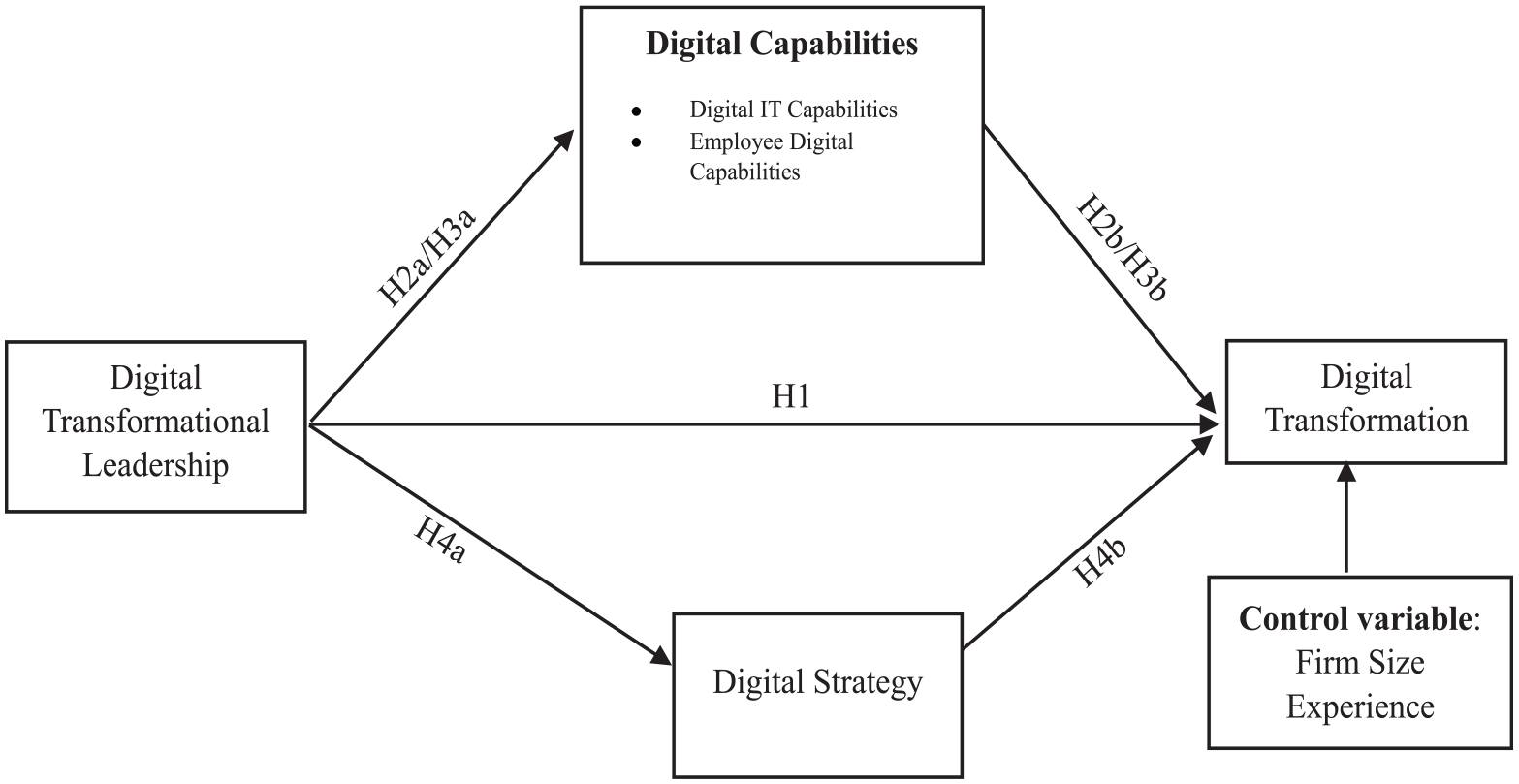
Conceptual framework.
H4b: The relationship between Digital Transformational Leadership and Digital Transformation is mediated by the Digital Strategy.
Methodology
We employed a quantitative, cross-sectional approach utilising a survey questionnaire to investigate the relationship between DTL, ITDC, EMDC, DS and DT.
Research setting and data collection
This study focuses upon SMEs in developing countries, specifically Ghana. Prior studies on DT have focused on public and large firms in advanced and emerging markets (AlNuaimi et al., 2022; Ly, 2023). Our study, however, deviates from these studies by focusing on SMEs in a developing country. Despite the adverse effects of COVID-19, Ghana’s economy saw a 5.4% expansion in 2021, primarily driven by the SME sector (Egala et al., 2024). Therefore, the Ghanaian government has made consistent efforts to eliminate poverty and unemployment by accelerating economic growth through empowering entrepreneurs and encouraging small business innovation. There are an estimated 1.5 million SMEs in the Ghanaian economy, accounting for about 80% of the private sector and employing about 70% of the Ghanaian populace (Ghana Commercial Bank, 2023). Recently, the majority of Ghanaian SMEs have started embracing digital technologies becoming more agile and profitable, creating employment and contributing over 60% of GDP (Egala et al., 2024). Ghana therefore, provides a suitable context for studying DT among SMEs in a developing economy.
Consistent with prior studies, we focused on registered SMEs listed in the National Board for Small Scale Industries, 2020 report, employing between 10 and 100 individuals (Ghana Commercial Bank, 2023). Data were collected from different industrial sectors across seven major cities, including Accra, Kumasi, Cape Coast, Koforidua, Sunyani, Tamale and Takoradi, to ensure a representative sample using both face-to-face and online channels. The team personally visited the site of selected SMEs in Accra, the capital of Ghana, to administer the questionnaire. For SMEs in other geographical regions, we sent an electronic questionnaire after receiving appropriate approval and consent. We directed the survey at CEOs or senior managers to attain relevant responses; respondents were guaranteed anonymity with the objective of the research clearly explained in the introduction of the questionnaire. Before administering the questionnaire, the authors refined the construct items identified in the literature. At that point, we engaged four researchers in the field who were not part of the author team to assess the survey questions. We then adjusted the survey according to their feedback, with a particular focus on enhancing the coherence of the questions. Finally, we undertook a pilot study with 10 respondents which led to further minor revisions to the final survey. This aided the team in improving the clarity of the constructs and questions so, improving the accuracy of the information given. Items from the different constructs were presented randomly in the questionnaire; this was to alleviate common method biases (Podsakoff et al., 2003) and retrieval bias (Kline et al., 2000).
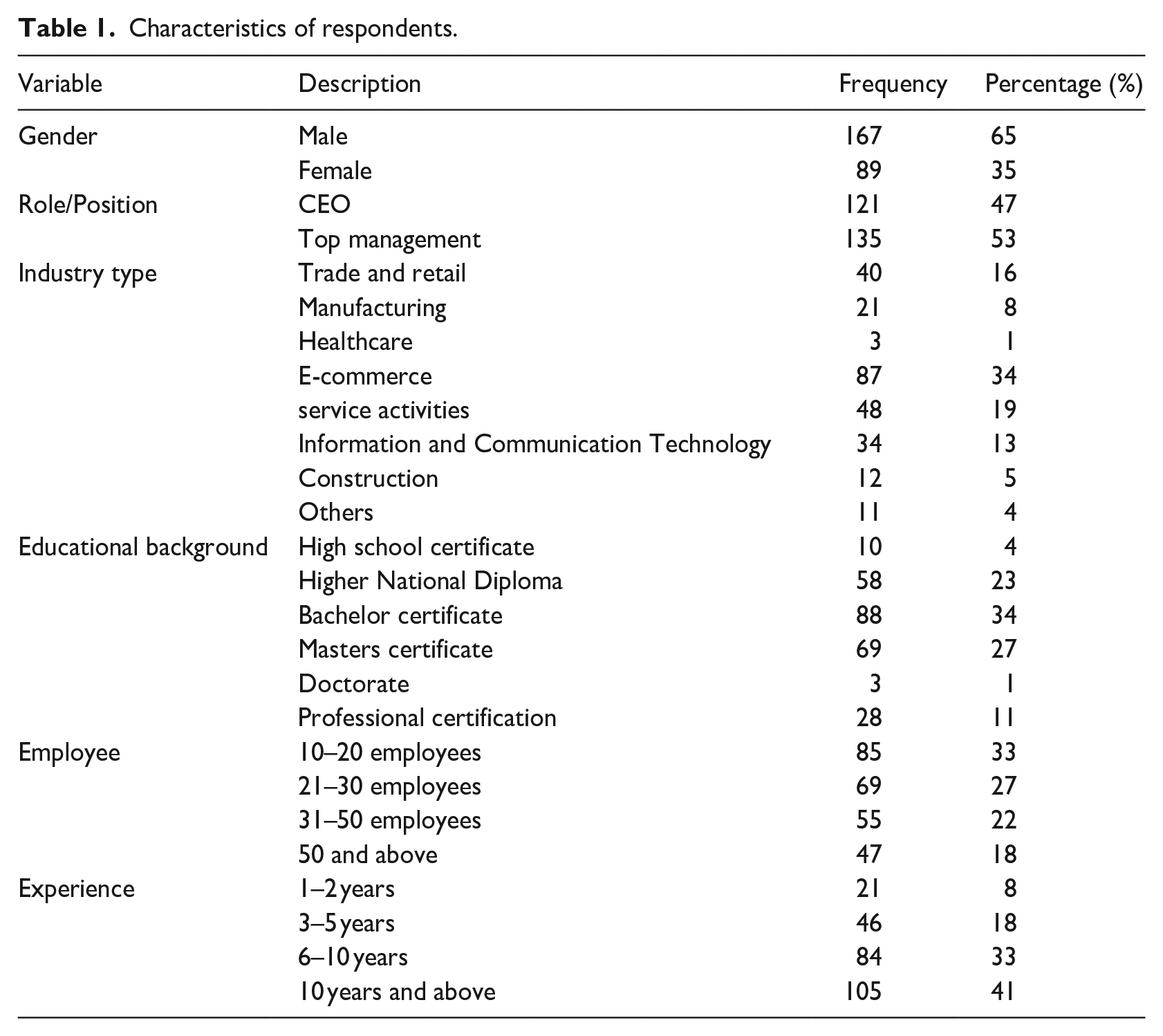
In total, we received 533 responses; these were filtered to exclude incomplete returns, those from individuals without managerial roles and missing responses. After eliminating 277 responses, we had a usable sample of 256 for our regression analysis. Table 1 shows the characteristics of the final sample.
Characteristics of respondents.
Measurement variables
The construct of the study consisted of multi-item measurements adapted from the existing literature. We used a five-point Likert scale ranging from one (strongly agree) to five (strongly disagree), to measure the variables.
DT involves integrating digital technologies into all aspects of a business, fundamentally reshaping its operations and enhancing the value delivered to customers (Bresciani et al., 2021). This process changes how firms interact with customers, streamlines processes and adapts to market demands ensuring competitiveness and innovation in a digitally driven world. To measure DT, we used five modified indicators adapted from the study of AlNuaimi et al. (2022) and Nasiri et al. (2020). An example item being: ‘In my organisation, we embrace e-commerce and digitalise everything that can be digitalised’.
DTL is conceptualised as a leadership approach that guides organisations through the complexities of DT by leveraging technology to innovate, improve processes and enhance business outcomes while fostering a culture of adaptability, innovation and continuous learning among employees (Kane et al., 2019). This construct was measured with six items using a scale developed by Alos-Simo et al. (2017) and AlNuaimi et al (2022). An example item being: ‘Leaders inspire all members with the DT plans for our organisation’.
ITDC refers to an organisation’s ability to deploy, manage and leverage IT resources (both software and hardware) to support DT. It encompasses the skills, technologies, processes and infrastructure required to adapt and respond to digital opportunities effectively (Mikalef et al., 2019). It was also measured with five items reflecting previous work by Proksch et al. (2024) and Parida and Örtqvist (2015). A sample item being, ‘Our technological infrastructure allows us to implement new digital products and services on a regular basis’.
EMDC is defined as the level of competence team members possess to utilise digital technology gained from their prior digital and technical knowledge (Proksch et al., 2024; Bassellier et al., 2001). Measurement of EMDC constituted four items adapted from the scale developed by Ritter and Gemünden (2004) and also, Proksch et al. (2024). An example item being: ‘Our team has the necessary skills to further digitalise our company’.
DS is conceptualised as a comprehensive organisational plan that strategically utilises digital resources to deliver integrated business capabilities, allowing the firm to adapt to changing market conditions and generate distinctive value (Bharadwaj et al., 2013). It outlines the strategic path an organisation pursues to build new competitive advantages through technology and details the action plans it will employ. We measured DS with six items adapted from the scale used by AlNuaimi et al. (2022), Kim et al. (2013), and Proksch et al. (2024). A sample item being: ‘In my organisation, we create a shared vision of the role of digital technology in business strategy’.
Firm size and work experience of owners/managers were used as the control variables. Firm size was measured with the number of employees and work experience measured using dummy variables where 1 = 1–2 years, 2 = 3–5 years, 3 = 5–10 years and 4 = 10 years and above (Malodia et al., 2023).
Data analysis
We employed a covariance-based structural equation modelling (SEM) for the data analysis, considering the data size and adherence to the assumptions necessary for multivariate analysis. The final sample of 256 observations was examined to ensure it met the assumptions necessary for conducting multivariate analysis. First, data normality was assessed, with kurtosis values falling within the acceptable range of ±2 (refer to Appendix B, Table B1 for detailed presentation of the descriptive statistics). Second, residuals were plotted to evaluate homoscedasticity. Following an assessment of data normality, a measurement model was constructed using confirmatory factor analysis (CFA) to evaluate the reliability and validity of the constructs. Subsequently, the hypothesised path relationships in the proposed research model were examined using SEM with maximum likelihood estimation, conducted through AMOS 29.
Results
Measurement model
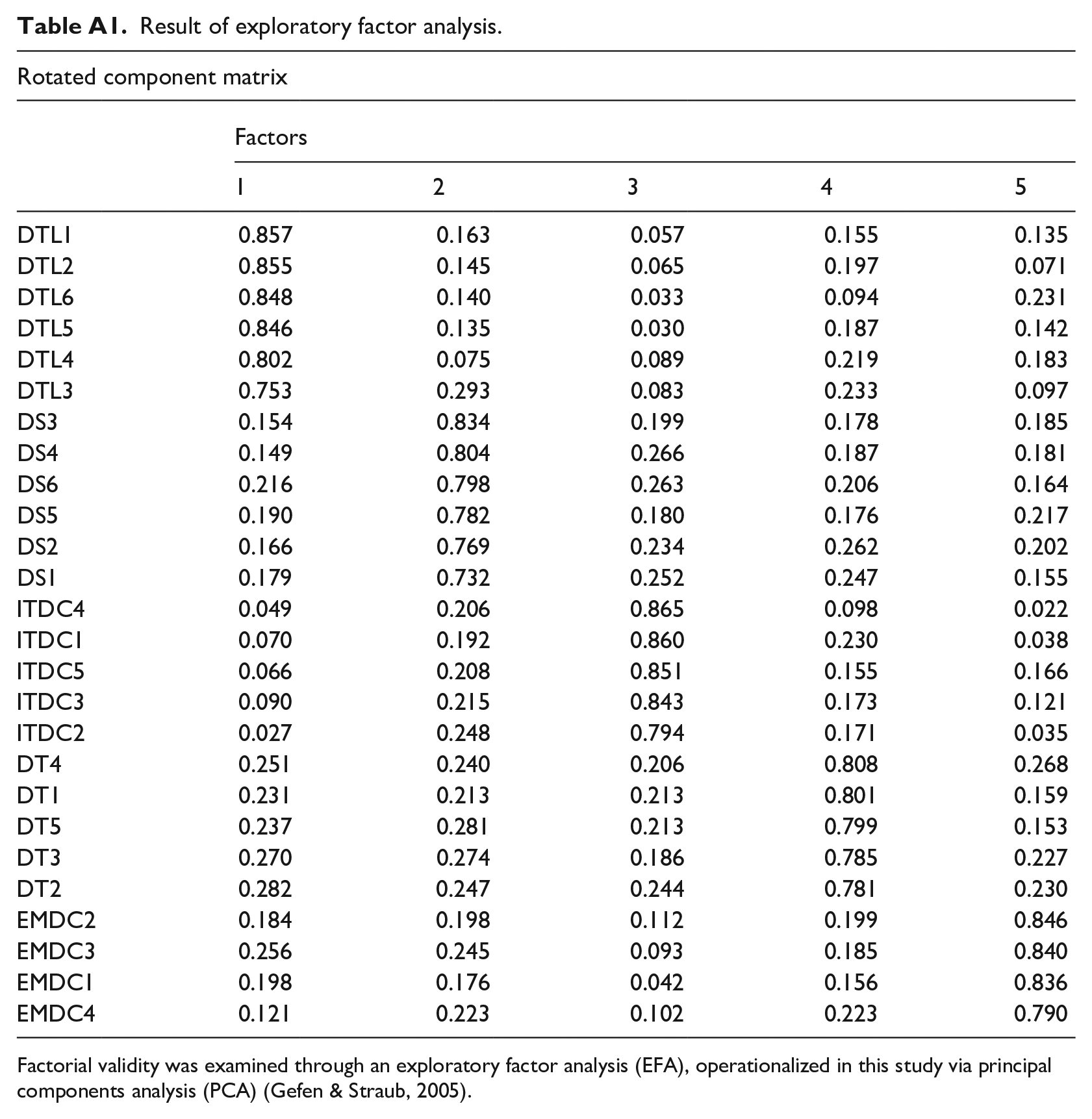
We employed CFA to establish the reliability, validity and goodness of fit for the proposed model. The Cronbach’s Alpha, Kaiser–Meyer–Olkin (KMO) and composite reliability were all within an acceptable range; thus, greater than 0.7 (Hair et al., 2019), confirming the survey’s validity and suitability for factor analysis. The average variance expected (AVE) for each construct was greater than 0.5; therefore, passing the convergent validity test (Hair et al., 2019). Indicator reliability was achieved as the outer loadings were all greater than 0.60 (Hair et al., 2006). Table 2 presents the summary results on convergent validity and internal consistency reliability (also, refer to Appendix A for a detailed assessment of the factorial validity of the constructs). All constructs and indicators meet the relevant measurement standards indicating that the model has a good convergent validity and internal consistency.
Reliability and validity analysis.
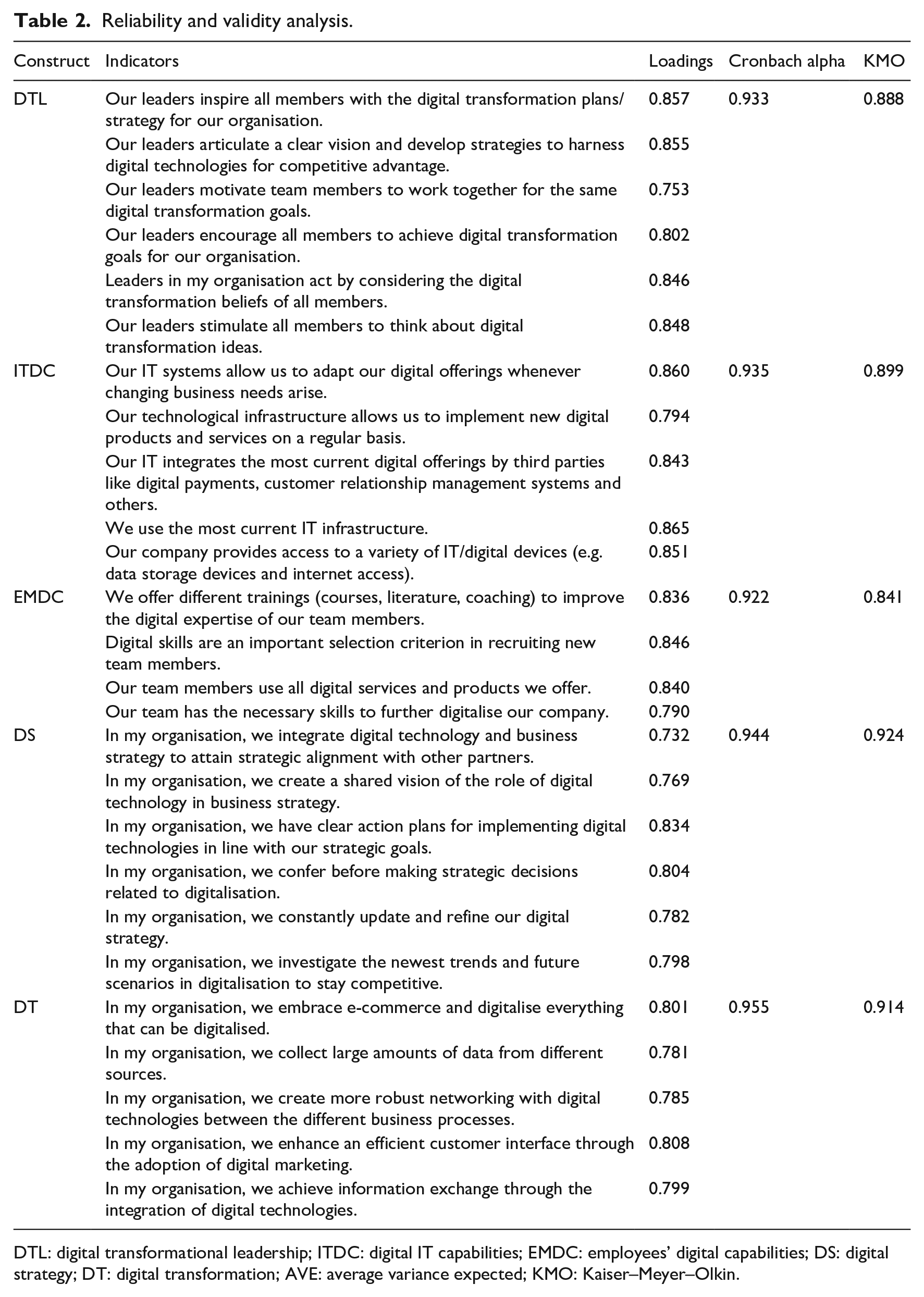
DTL: digital transformational leadership; ITDC: digital IT capabilities; EMDC: employees’ digital capabilities; DS: digital strategy; DT: digital transformation; AVE: average variance expected; KMO: Kaiser–Meyer–Olkin.
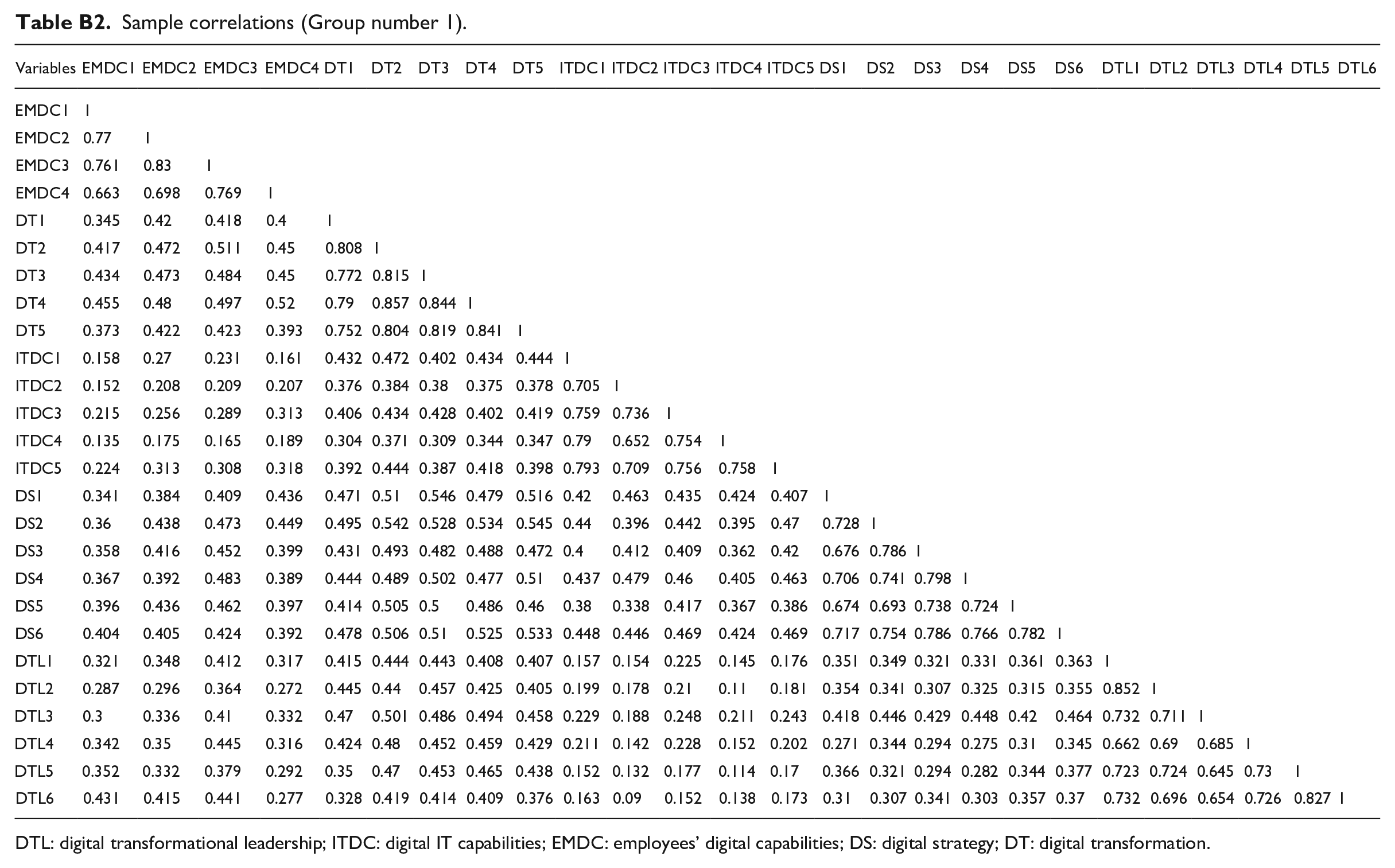
To assess the discriminant validity of the construct (how constructs differ), we first examined whether the square root of the AVE for each construct had greater statistical significance than its connection with other components. According to Table 3, each construct is distinct from its counterpart as the square root of the AVE for each was more significant than the correlation between any pair of components (Fornell and Larcker, 1981). In addition, Table 3 indicates a discernible correlation between the variables, with all correlation coefficients remaining below 0.7 (Voorhees et al. 2016), thereby satisfying the statistical requirements of multicollinearity (Appendix B, Table B2, provides a detailed correlation among the sample). Moreover, the MSV values were consistently lower than the AVE values, and the MaxR(H) values exceeded the composite reliability (CR) values thus, confirming the discriminant validity of the model (Almén et al., 2018).
Mean, standard deviation, inter-correlations.
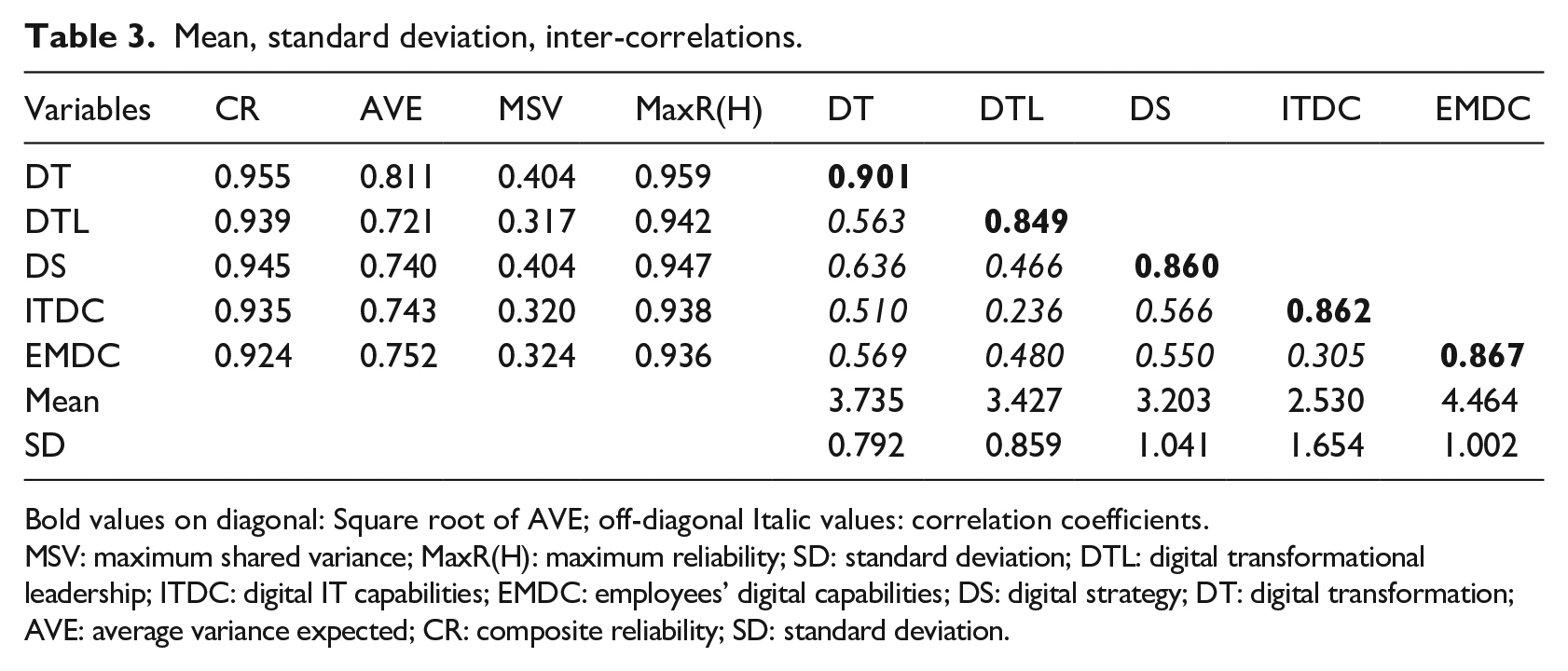
Bold values on diagonal: Square root of AVE; off-diagonal Italic values: correlation coefficients.
MSV: maximum shared variance; MaxR(H): maximum reliability; SD: standard deviation; DTL: digital transformational leadership; ITDC: digital IT capabilities; EMDC: employees’ digital capabilities; DS: digital strategy; DT: digital transformation; AVE: average variance expected; CR: composite reliability; SD: standard deviation.
The structural model
The study used a multi-faceted strategy to test for common method bias (Chang et al., 2010). First, we conducted a pilot test to make sure the respondents understood the questionnaire, and we randomised the measurement items to ensure the survey instrument was clear. The second step was to ensure participant anonymity while briefing them on the study’s objectives. We also informed the participants that there was no ideal or correct answer and that our main goal was to measure how they perceived the phenomenon of DT. Third, we ran a post hoc Harman’s single-factor test and found that the first component, unrotated, explained 16.795% of the total variation, which is significantly lower than the 50% recommended cut off point (Harman, 1967). Finally, we checked the structural model for collinearity before proceeding with testing. The variance inflation factor (VIF) is a measure of collinearity; values near 3 or below indicate optimal collinearity (Hair et al., 2019). The findings indicate that there is no collinearity among the constructs, as all VIF values are below this threshold. Therefore, it is confirmed that the common method bias did not affect our data.
We also examined the model’s predictive value by computing the adjusted R2. The adjusted R2 value shows the amount of variance in the endogenous variable that the exogenous variables can explain. The result shows that all constructs combined accounted for 53.0% of the variation in DT, as shown by the modified R2 value of 0.530. The model fit indices shown in Table 4 indicate a strong fit with the data, as all recommended goodness-of-fit criteria across multiple parameters are met. The χ2/df = 1.970, which was significant, normed fit index = 0.917, root mean square error of approximation = 0.062, standardised root mean squared residual = 0.038, the comparative fit index = 0.957, Tucker–Lewis index = 0.952, and incremental fit index = 0.957; all satisfied the recommended criteria (Hair et al., 2006; Lohmöller, 1989).
Model fit indices.
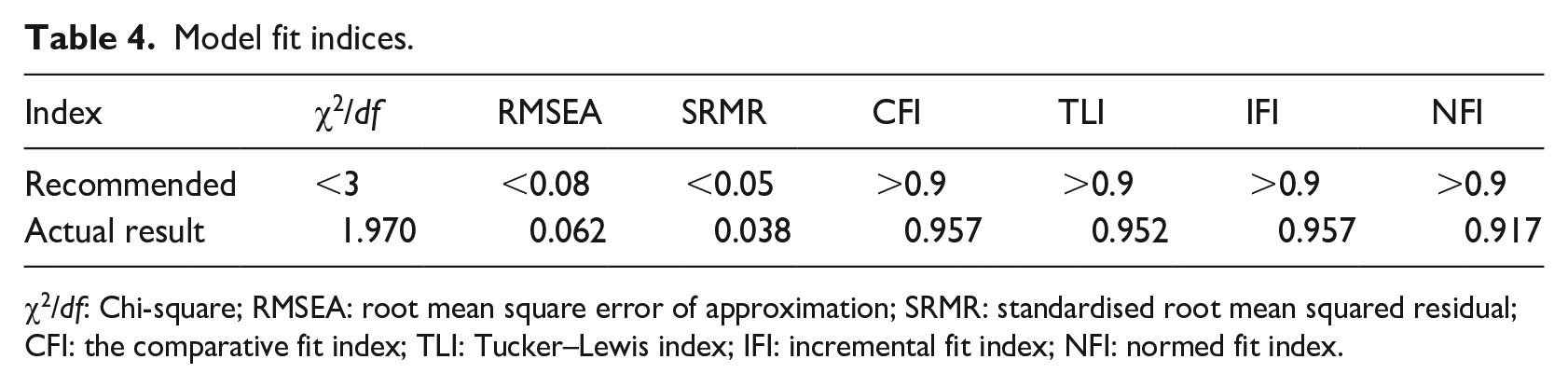
χ2/df: Chi-square; RMSEA: root mean square error of approximation; SRMR: standardised root mean squared residual; CFI: the comparative fit index; TLI: Tucker–Lewis index; IFI: incremental fit index; NFI: normed fit index.
Hypothesis testing
The result of our hypothesis test is shown in Figure 2, Table 4 and Table 5. The result supports H1 (β = 0.312, p < 0.001) indicating that DTL significantly affects DT. Similarly, the result also supports H2a and H3a by providing evidence that a significant positive relationship exists between DTL and ITDC (β = 0.286, p < 0.001) and DTL and EMDC (β = 0.517, p < 0.001). Further, we tested whether DTL influences the implementation of a DS. The effect of DTL on DS is strong and significant (β = 0.514, p < 0.001) therefore, supporting H4a.
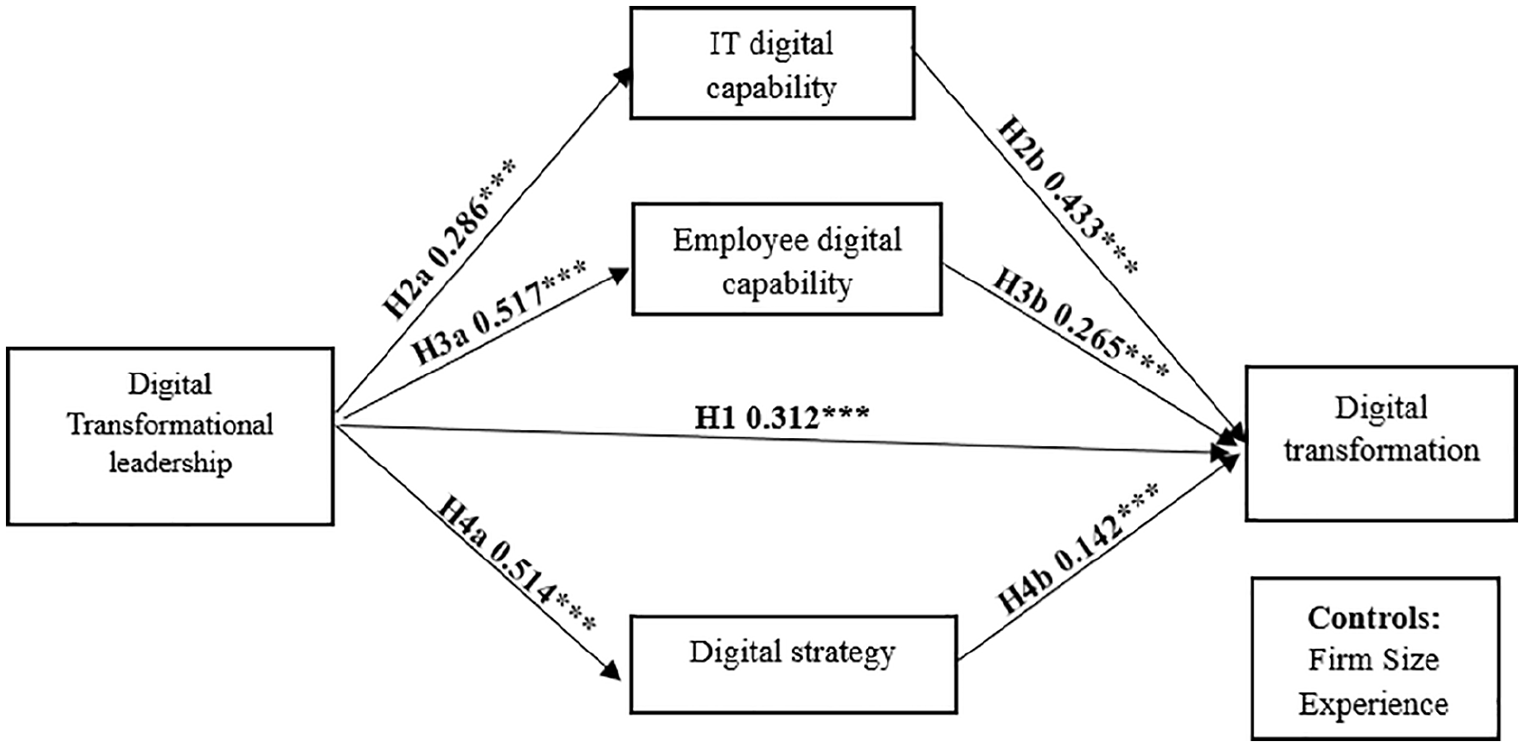
Results of path analysis.
Hypothesis testing.
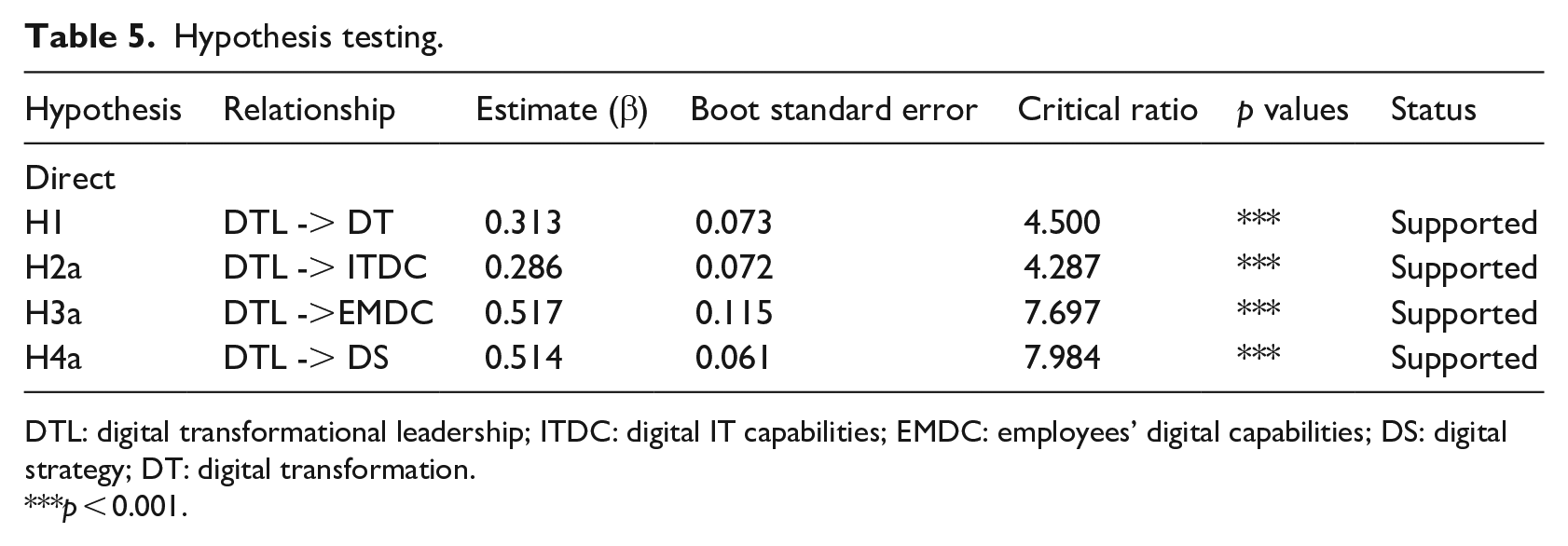
DTL: digital transformational leadership; ITDC: digital IT capabilities; EMDC: employees’ digital capabilities; DS: digital strategy; DT: digital transformation.
p < 0.001.
The results of the mediation effect are presented in Table 6. As multiple mediators were involved in the indirect effect (i.e. ITDC, EMDC and DS), we performed multiple mediation analyses (using 5000 bootstrapping in AMOS 29) to test the effect of each mediator. The results indicate that ITDC mediates the relationship between DTL and DT (β = 0.124, p < 0.01). Similarly, EMDC was found to mediate the relationship between DTL and DT (β = 0.137, p < 0.01). DS was also found to mediate the relationship between DTL and DT, but a much weaker one (β = 0.073, p < 0.05). This result thus confirms that digital capabilities (ITDC and EMDC) and strategy mediate the relationship between DTL and DT. Thus, the model confirms our hypotheses and shows mediation.
Result of indirect relationships.
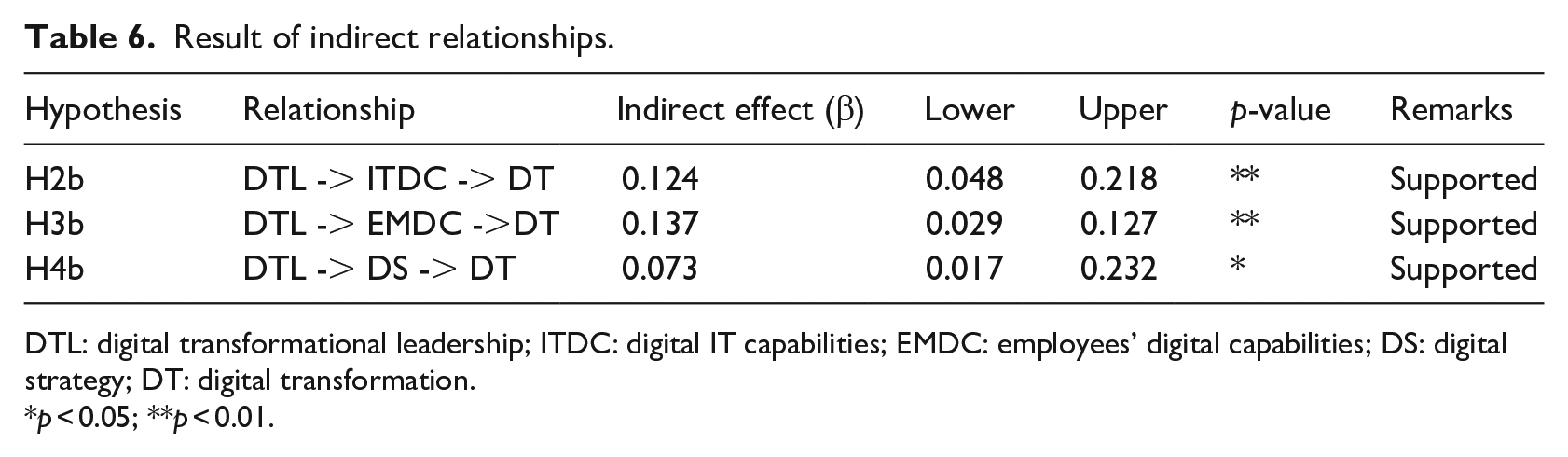
DTL: digital transformational leadership; ITDC: digital IT capabilities; EMDC: employees’ digital capabilities; DS: digital strategy; DT: digital transformation.
p < 0.05; **p < 0.01.
The analysis accounted for the potentially confounding influence of firm size and work experience of leaders on DT. Nevertheless, these control variables did not have any significant influence on our dependent variable.
Discussion
First, the findings revealed that DTL significantly and positively influenced DT in SMEs, supporting H1. This shows that a transformational leader has the ability to adopt digital values and modify organisational capabilities to navigate change, including DT. This finding aligns with dynamic capability theory suggesting that the abilities of transformational leaders are crucial for driving change within institutions (Sainger, 2018). This result also corresponds with the study by Malodia et al. (2023) who found a positive relationship between DTL and SME business model innovation. Thus, SMEs with transformational leaders actively encourage change and ensure that their organisations are adequately equipped to respond to change, especially in a digital environment.
Second, our results indicate that DTL influences the digital capabilities of SMEs; it positively affects ITDC and EMDC, supporting H2a and H3a. This result indicates that transformational leaders in SMEs profoundly influence digital capabilities as they enable the firm to evolve rapidly to meet DT demands (Malodia et al.,2023). Consistent with previous research, these findings show that transformational leaders influence digital capabilities in SMEs by enhancing ITDC and EMDC. These leaders encourage employees to adopt innovative thinking when navigating challenges and seize opportunities within the digital landscape (Porfírio et al., 2021), potentially strengthening the firm’s DT outcomes. Although our evidence deviates from the study by Montasser et al. (2023), they align with those of Aral and Weill (2007), who discovered that transformational leaders effectively utilise and empower their assets, resources and ITDC to enhance innovation, efficiency and adaptability to industry and marketplace change offering them an advantage over competitors. Hence, SMEs that seek to leverage from their DT will perform better with founders and senior managers who possess transformational leadership qualities.
Third, we examined the mediation effect of digital capabilities (i.e. ITDC and EMDC) in the relationship between DTL and DT. Our findings support our assumption that digital capabilities mediate the relationship between DTL and DT in SMEs. Embedded in dynamic capability theory, organisations possessing digital capabilities can successfully undertake DT as these capabilities enable the optimisation and integration of technological resources throughout the DT process (Li et al., 2018). Reflecting Ramadan et al. (2023), we argue that SMEs potentially attain better DT through digital capabilities. Specifically, we identified ITDC as a significant mediator between DTL and DT supporting H2b. This corroborates work by Proksch et al. (2024), demonstrating the impact of IT capabilities on the digitalisation of new ventures. Hence, to achieve a successful DT, SME leaders would benefit from utilising digital technology to enhance value and adaptability in response to a dynamic competitive environment. In addition, EMDC, serves as a crucial mediator in our model, supporting H3b. Although this finding is consistent with the corporate literature that emphasises the importance of enhancing the digital capabilities of employees for successful digitalisation (Neus et al., 2017), it significantly diverges from Proksch et al.’s (2024) conclusion on digitalisation in new ventures. SME leaders seeking to achieve a successful DT need to encourage and train their staff to adopt creative techniques and digital skills.
The final set of hypotheses examined how SME leaders influence DS and investigated the mediating effect of DS in the relationship between DTL and DT. The results show that DTL influences the implementation of DS. Hence, H4a was supported. This research aligns with the study by Bi et al. (2019), which demonstrated the essential role of top management in integrating digital business strategy within SMEs. The findings suggest that transformational leadership embodies a dynamic capability that enables the organisation to develop and implement a robust DS, which in turn facilitates comprehensive DT. Thus, if transformational leaders create a successful plan that enables management to reassess their business model and evaluate their current processes and resources, this will enable them to efficiently formulate effective business strategies and sustain a proactive approach (Correani et al., 2020). Regarding the mediation effect of DS, the result also shows that DS mediates the relationship between DTL and DT, although with a notably weaker effect, thus supporting H4b. Our findings demonstrate that a DS facilitates the translation of leadership directives into structured actions that guide the organisation through digital change (Garzoni et al., 2020). This is consistent with evidence from Proksch et al. (2024), noting a positive impact of DS on the digitalisation of new ventures. However, the weak relationship contradicts the study by (Kim et al., 2017) and Malodia et al. (2023) indicating that in SMEs managerial strategy holds greater significance than IT capabilities in facilitating digitalisation adaptation. One possible explanation for this departure is that, unlike large organisations, SMEs in developing nations are currently in the process of exploring and experimenting with digital technologies. Given that digital technologies are still emerging, the leaders and employees are still in a learning phase that limits the ability to fully realise the benefits of a DS.
Limitations and suggestions for future research
While this article has generated several promising findings, it is important to acknowledge its limitations. First, the study was conducted on a small sample within the context of Ghanaian SMEs. The generalisability of the results to other countries, particularly those with significantly higher or lower digitalisation indices, remains uncertain. Future work could involve accessing a larger sample exclusively from other SMEs in developing countries. Second, the findings are constrained by additional factors that could influence digitalisation in SMEs. Exploring additional variables such as digital culture (Proksch et al., 2024), innovation (Malodia et al., 2023), agility (AlNuaimi et al., 2022) and knowledge management (Egala et al., 2024), would be a valuable endeavour. Industry types may also influence the relationship between DTL and DT in nuanced ways that we have not fully captured. Future research could address this limitation by conducting comparative studies across multiple industries into the DTL–DT relationship. Future research could also benefit from examining leadership styles that focus more on resource provision, such as transactional leadership (Afshari and Gibson, 2016), to understand their role in supporting DT. Additionally, exploring leadership styles aimed at mitigating potential risks of DT on employee outcomes, such as responsible and authentic leadership (Afshari et al., 2024; Hadian Nasab and Afshari, 2019), could offer valuable insights into balancing innovation with employee well-being. Third, this study employed a self-assessment tool for managers and CEOs to describe DT within SMEs. While this method may introduce bias due to a tendency for respondents to present organisational DT efforts in a positive light, precautions were taken to address this. Participants were assured of anonymity beforehand to decrease the connection between digital enablers and digitalisation, thus minimising potential response bias. Fourth, future research could focus on the role of digital investment and resources in enhancing DTs in SMEs, particularly examining how resource allocation affects transformational leadership’s impact on innovation. Additionally, we employed a cross-sectional research methodology at a time when SMEs swiftly adopted digital technologies in response to the COVID-19 crisis. It is probable that the participants did not fully experience the advantages of complete DT. Hence, it would be advantageous to employ a case study or a longitudinal study to evaluate the degree of maturity in the execution of DT and highlight the insights acquired over time or in diverse circumstances. Finally, for future research, we propose adopting a mixed-method approach to enhance the depth and breadth of our findings. By integrating qualitative data, such as in-depth interviews with leaders and analyses of firm performance reports, alongside quantitative survey data, we can gain richer insights into the dynamics of leadership and employee outcomes.
Conclusion and contributions
This article offers several contributions when providing valuable insights into the literature on DT within the context of SMEs in developing countries. Extensive study has been conducted on DT, specifically focusing on large organisations and technology-based start-ups in both advanced and emerging economies (AlNuaimi et al., 2022; Bresciani et al., 2021); however, limited studies focused on DT in the context of SMEs in developing economies (Egala et al., 2024). This study is rare in proposing a novel framework explaining how DTL leverages internal organisational capabilities to drive DT in SMEs within the context of developing countries. By examining the dynamic relationship between the variables, we provide an in-depth and comprehensive understanding of the factors that affect the success of DT in SMEs in developing countries.
Our study addresses calls for further research by Goldman et al. (2021) and García-Cabrera et al. (2019) to examine the role of DS within entrepreneurial settings, as well as calls by Malodia et al. (2023) and Steininger (2019) to advance scholarship at the intersection of leadership, digital technology and entrepreneurship. We contribute to the dynamic capabilities literature by elucidating the influence of both individual and organisational factors on the development of dynamic capabilities towards radical organisational change. We demonstrate that, in the SME context, the competencies of DTL are instrumental in directing an organisation’s strategic orientation and driving DT through the cultivation of essential organisational capabilities, such as ITDC and EMDC. Consequently, our study contributes to the literature by emphasising the relevance of dynamic capability theory for addressing management, strategic and digital capabilities in entrepreneurial contexts.
The investigation into how DTL may enhance digital capabilities and DT in SMEs is limited, despite the fact that decision-making in SMEs is often centralised and the leader’s individual skills and capabilities significantly influence the DT journey of SMEs (Bresciani et al., 2021). Consequently, both the conceptualisation of DTL and our findings, provide empirical evidence that leadership is crucial to the adoption of DT demonstrating the significance of leadership style and the firm’s distinctive characteristics.
Finally, the study extends research on the role of organisational internal capabilities in influencing DT by conceptualising digital capabilities and strategy as a mediator between DTL and DT. We offer innovative perspectives using dynamic capability as a theoretical framework, emphasising that DS alone is insufficient to bring about DT in SMEs, regardless of the leader’s level of competence. In this context, we further demonstrate how internal firm digital capabilities can lead to DT outcomes. We emphasise that ITDC, as well as EMDC, affect digitalisation in SMEs.
Practical implications
While this study was conducted within the context of Ghanaian SMEs, its findings and implications can provide valuable insights for practices in numerous other SMEs across developing countries. The findings of our work have several practical implications. The findings indicate that DT represents a transformative change that disrupts existing organisational value creation and business models through the introduction of new digital infrastructure and skill sets. This transition places significant pressure on both employees and the organisation as a whole, hindering the adoption of new technology and the advancement of DS. Therefore, SMEs should adopt appropriate leadership skills and attributes to successfully navigate such changes. Our research suggests that, beyond technical expertise in digital technologies, transformational leadership qualities, such as inspiring employees, fostering team development, and leading by example, are crucial for facilitating DT in SMEs.
Moreover, the study provides an insight into the relationship between DTL and digital capabilities and their impact on the overall process of DT. With this knowledge, SME leaders can better allocate resources, make strategic decisions and design organisational structures to encourage collaboration between IT and leadership to move DT efforts towards fruition. Further, SME leaders should adjust their strategies to allocate more resources towards ITDC and EMDC. This is because having a significant level of such capabilities within the firm can enhance effective DT within SMEs. Finally, as it is acknowledged that decision-making in SMEs is centralised at the top level (Malodia et al., 2023), we recommend that SME managers who want to succeed in their DT journey focus on implementing a digital strategy.
Footnotes
Appendix A: Convergent and discriminant validity
Result of exploratory factor analysis.
| Rotated component matrix | |||||
|---|---|---|---|---|---|
| Factors | |||||
| 1 | 2 | 3 | 4 | 5 | |
| DTL1 | 0.857 | 0.163 | 0.057 | 0.155 | 0.135 |
| DTL2 | 0.855 | 0.145 | 0.065 | 0.197 | 0.071 |
| DTL6 | 0.848 | 0.140 | 0.033 | 0.094 | 0.231 |
| DTL5 | 0.846 | 0.135 | 0.030 | 0.187 | 0.142 |
| DTL4 | 0.802 | 0.075 | 0.089 | 0.219 | 0.183 |
| DTL3 | 0.753 | 0.293 | 0.083 | 0.233 | 0.097 |
| DS3 | 0.154 | 0.834 | 0.199 | 0.178 | 0.185 |
| DS4 | 0.149 | 0.804 | 0.266 | 0.187 | 0.181 |
| DS6 | 0.216 | 0.798 | 0.263 | 0.206 | 0.164 |
| DS5 | 0.190 | 0.782 | 0.180 | 0.176 | 0.217 |
| DS2 | 0.166 | 0.769 | 0.234 | 0.262 | 0.202 |
| DS1 | 0.179 | 0.732 | 0.252 | 0.247 | 0.155 |
| ITDC4 | 0.049 | 0.206 | 0.865 | 0.098 | 0.022 |
| ITDC1 | 0.070 | 0.192 | 0.860 | 0.230 | 0.038 |
| ITDC5 | 0.066 | 0.208 | 0.851 | 0.155 | 0.166 |
| ITDC3 | 0.090 | 0.215 | 0.843 | 0.173 | 0.121 |
| ITDC2 | 0.027 | 0.248 | 0.794 | 0.171 | 0.035 |
| DT4 | 0.251 | 0.240 | 0.206 | 0.808 | 0.268 |
| DT1 | 0.231 | 0.213 | 0.213 | 0.801 | 0.159 |
| DT5 | 0.237 | 0.281 | 0.213 | 0.799 | 0.153 |
| DT3 | 0.270 | 0.274 | 0.186 | 0.785 | 0.227 |
| DT2 | 0.282 | 0.247 | 0.244 | 0.781 | 0.230 |
| EMDC2 | 0.184 | 0.198 | 0.112 | 0.199 | 0.846 |
| EMDC3 | 0.256 | 0.245 | 0.093 | 0.185 | 0.840 |
| EMDC1 | 0.198 | 0.176 | 0.042 | 0.156 | 0.836 |
| EMDC4 | 0.121 | 0.223 | 0.102 | 0.223 | 0.790 |
Factorial validity was examined through an exploratory factor analysis (EFA), operationalized in this study via principal components analysis (PCA) (Gefen & Straub, 2005).
Appendix B: Descriptive statistics and correlations
Sample correlations (Group number 1).
| Variables | EMDC1 | EMDC2 | EMDC3 | EMDC4 | DT1 | DT2 | DT3 | DT4 | DT5 | ITDC1 | ITDC2 | ITDC3 | ITDC4 | ITDC5 | DS1 | DS2 | DS3 | DS4 | DS5 | DS6 | DTL1 | DTL2 | DTL3 | DTL4 | DTL5 | DTL6 |
|---|---|---|---|---|---|---|---|---|---|---|---|---|---|---|---|---|---|---|---|---|---|---|---|---|---|---|
| EMDC1 | 1 | |||||||||||||||||||||||||
| EMDC2 | 0.77 | 1 | ||||||||||||||||||||||||
| EMDC3 | 0.761 | 0.83 | 1 | |||||||||||||||||||||||
| EMDC4 | 0.663 | 0.698 | 0.769 | 1 | ||||||||||||||||||||||
| DT1 | 0.345 | 0.42 | 0.418 | 0.4 | 1 | |||||||||||||||||||||
| DT2 | 0.417 | 0.472 | 0.511 | 0.45 | 0.808 | 1 | ||||||||||||||||||||
| DT3 | 0.434 | 0.473 | 0.484 | 0.45 | 0.772 | 0.815 | 1 | |||||||||||||||||||
| DT4 | 0.455 | 0.48 | 0.497 | 0.52 | 0.79 | 0.857 | 0.844 | 1 | ||||||||||||||||||
| DT5 | 0.373 | 0.422 | 0.423 | 0.393 | 0.752 | 0.804 | 0.819 | 0.841 | 1 | |||||||||||||||||
| ITDC1 | 0.158 | 0.27 | 0.231 | 0.161 | 0.432 | 0.472 | 0.402 | 0.434 | 0.444 | 1 | ||||||||||||||||
| ITDC2 | 0.152 | 0.208 | 0.209 | 0.207 | 0.376 | 0.384 | 0.38 | 0.375 | 0.378 | 0.705 | 1 | |||||||||||||||
| ITDC3 | 0.215 | 0.256 | 0.289 | 0.313 | 0.406 | 0.434 | 0.428 | 0.402 | 0.419 | 0.759 | 0.736 | 1 | ||||||||||||||
| ITDC4 | 0.135 | 0.175 | 0.165 | 0.189 | 0.304 | 0.371 | 0.309 | 0.344 | 0.347 | 0.79 | 0.652 | 0.754 | 1 | |||||||||||||
| ITDC5 | 0.224 | 0.313 | 0.308 | 0.318 | 0.392 | 0.444 | 0.387 | 0.418 | 0.398 | 0.793 | 0.709 | 0.756 | 0.758 | 1 | ||||||||||||
| DS1 | 0.341 | 0.384 | 0.409 | 0.436 | 0.471 | 0.51 | 0.546 | 0.479 | 0.516 | 0.42 | 0.463 | 0.435 | 0.424 | 0.407 | 1 | |||||||||||
| DS2 | 0.36 | 0.438 | 0.473 | 0.449 | 0.495 | 0.542 | 0.528 | 0.534 | 0.545 | 0.44 | 0.396 | 0.442 | 0.395 | 0.47 | 0.728 | 1 | ||||||||||
| DS3 | 0.358 | 0.416 | 0.452 | 0.399 | 0.431 | 0.493 | 0.482 | 0.488 | 0.472 | 0.4 | 0.412 | 0.409 | 0.362 | 0.42 | 0.676 | 0.786 | 1 | |||||||||
| DS4 | 0.367 | 0.392 | 0.483 | 0.389 | 0.444 | 0.489 | 0.502 | 0.477 | 0.51 | 0.437 | 0.479 | 0.46 | 0.405 | 0.463 | 0.706 | 0.741 | 0.798 | 1 | ||||||||
| DS5 | 0.396 | 0.436 | 0.462 | 0.397 | 0.414 | 0.505 | 0.5 | 0.486 | 0.46 | 0.38 | 0.338 | 0.417 | 0.367 | 0.386 | 0.674 | 0.693 | 0.738 | 0.724 | 1 | |||||||
| DS6 | 0.404 | 0.405 | 0.424 | 0.392 | 0.478 | 0.506 | 0.51 | 0.525 | 0.533 | 0.448 | 0.446 | 0.469 | 0.424 | 0.469 | 0.717 | 0.754 | 0.786 | 0.766 | 0.782 | 1 | ||||||
| DTL1 | 0.321 | 0.348 | 0.412 | 0.317 | 0.415 | 0.444 | 0.443 | 0.408 | 0.407 | 0.157 | 0.154 | 0.225 | 0.145 | 0.176 | 0.351 | 0.349 | 0.321 | 0.331 | 0.361 | 0.363 | 1 | |||||
| DTL2 | 0.287 | 0.296 | 0.364 | 0.272 | 0.445 | 0.44 | 0.457 | 0.425 | 0.405 | 0.199 | 0.178 | 0.21 | 0.11 | 0.181 | 0.354 | 0.341 | 0.307 | 0.325 | 0.315 | 0.355 | 0.852 | 1 | ||||
| DTL3 | 0.3 | 0.336 | 0.41 | 0.332 | 0.47 | 0.501 | 0.486 | 0.494 | 0.458 | 0.229 | 0.188 | 0.248 | 0.211 | 0.243 | 0.418 | 0.446 | 0.429 | 0.448 | 0.42 | 0.464 | 0.732 | 0.711 | 1 | |||
| DTL4 | 0.342 | 0.35 | 0.445 | 0.316 | 0.424 | 0.48 | 0.452 | 0.459 | 0.429 | 0.211 | 0.142 | 0.228 | 0.152 | 0.202 | 0.271 | 0.344 | 0.294 | 0.275 | 0.31 | 0.345 | 0.662 | 0.69 | 0.685 | 1 | ||
| DTL5 | 0.352 | 0.332 | 0.379 | 0.292 | 0.35 | 0.47 | 0.453 | 0.465 | 0.438 | 0.152 | 0.132 | 0.177 | 0.114 | 0.17 | 0.366 | 0.321 | 0.294 | 0.282 | 0.344 | 0.377 | 0.723 | 0.724 | 0.645 | 0.73 | 1 | |
| DTL6 | 0.431 | 0.415 | 0.441 | 0.277 | 0.328 | 0.419 | 0.414 | 0.409 | 0.376 | 0.163 | 0.09 | 0.152 | 0.138 | 0.173 | 0.31 | 0.307 | 0.341 | 0.303 | 0.357 | 0.37 | 0.732 | 0.696 | 0.654 | 0.726 | 0.827 | 1 |
DTL: digital transformational leadership; ITDC: digital IT capabilities; EMDC: employees’ digital capabilities; DS: digital strategy; DT: digital transformation.
Funding
The author(s) received no financial support for the research, authorship and/or publication of this article.
