



Abstract
Women are more likely to exit from entrepreneurship for personal reasons; such exits are deemed uneventful and voluntary. We critically evaluate such assumptions by adopting a gendered critique to unpack the nature of such personal reasons arguing that they largely relate to the stress of accommodating incompatible caring/domestic and entrepreneurial labour demands. This, we argue, leads to forced voluntarism which, for many women, instigates conflicting notions of regret, relief and resentment. To explore these arguments, we draw upon in-depth interviews with 16 United Kingdom women entrepreneurs who had voluntarily exited from their ventures citing personal reasons. The evidence describes how women made sense of the decision-making process to exit from entrepreneurship questioning the voluntary nature of the exit decision. We conclude by noting how once again, gendered assumptions conceal the contradictory demands women encounter when trying to reconcile the needs of the household and of their ventures analysing the implications this has for how exit decisions are categorised and the false picture this presents of alleged voluntarism.
Introduction
Analyses of how and why entrepreneurs exit from their ventures, and related issues regarding firm failure and closure, are established as a distinctive domain of entrepreneurship research 1 (DeTienne and Wennberg, 2016). It is acknowledged that a complex range of issues contribute to the exit decision (Beynon, et al., 2021; Muñoz et al., 2020); in this article, we focus upon one specific issue, that of gender. There is a very well-established body of literature upon how gender influences women’s entrepreneurial activities (Jennings and Brush, 2013; McAdam, 2022) with an emerging debate upon gender, women and exit (Elam et al., 2019; Marlow and Swail, 2015). The limited evidence regarding the rationale for the exit decision suggests that women have a higher propensity to voluntarily exit from entrepreneurship for ‘personal reasons’ (Jayawarna et al., 2021; Justo et al., 2015; Winter et al., 2004). However, this is a broad category – the diversity of which has received limited attention (Hsu et al., 2016). Within this article, we argue that critically analysing the complex nature of this generic term, and how it is mapped onto the notion of voluntary exit, is essential to advance current understanding of women’s gendered experiences of entrepreneurship. Gender adds a critical dimension to analysing women’s exit decision; given that many undertake the greater share of household domestic and caring labour, combining such demands with those of entrepreneurship generates challenges to time management (Jayawarna et al., 2021). Thus, the apparently voluntary exit from a venture may, in fact, be necessitated by the impossibility of satisfying the competing time demands of the household and the business. As such, more women entrepreneurs are likely to experience exit as an ‘unwilling choice’, but the repercussions of this are camouflaged by the voluntary label and the fact that the venture itself was not a distress exit.
We are also interested in another repercussion of such unwilling choices – the emotional distress this creates for the entrepreneur – which, not surprisingly, is usually associated with distress exit arising from financial failure (Byrne and Shepherd, 2015; Cope, 2011). It is suggested, however, that unlike the visible impact of forced exit and related failures, unwilling voluntary exits also prompt negative emotions for those trying to reconcile a seemingly agentic decision with a lack of choice and feelings of responsibility and regret (Marks, 2021). Accordingly, we explore how gender influences women’s ostensibly voluntary decisions to exit from entrepreneurship due to personal reasons, and the related emotional repercussions of such decisions. We capture these objectives within the research question: How do gendered personal reasons inform the voluntary exit decisions of women entrepreneurs, and what are the effects of subsequent emotions and sensemaking?
Most of the extant research on exit and failure is founded on analyses of large-scale data and broad trends (Aldrich, 2015; Crane et al., 2022). To balance this trend, we adopt an interpretative approach drawing upon 16 semi-structured interviews with women entrepreneurs in the United Kingdom (UK). All of the respondents had cited personal reasons for exit due to the irreconcilable demands of household and business responsibilities. Empirically, we delve into the meanings attributed to voluntary closures revealing related feelings of regret and personal responsibility for not adequately managing such conflicting demands. In so doing, we contribute to a growing body of research (Hsu et al., 2016; Justo et al., 2015; Marlow and Swail, 2015), moving away from the normative and overly simplistic economic analyses that favour rational explanations for exit. Rather, the importance of socially embedded contexts that influence entrepreneurial decision-making and subsequent sensemaking is explored. To investigate our arguments, we continue by outlining the theoretical framework informing our arguments that underpin the research question, and then describe the methodology and methods. We then present and discuss the findings before offering conclusions.
Entrepreneurial exit
Analyses of entrepreneurial exit have been operationalised from several perspectives; broadly, exit can be defined as an individual’s decision to leave self-employment (Van Praag, 2003; Walsh and Cunningham, 2024) with voluntary or involuntary antecedents. Broadly, an involuntary exit arises when for some reason, usually financial viability, the entrepreneur exits and closes the venture as it is not viable. Voluntary exit, however, is assumed to be an agentic act prompted by a range of motives – the entrepreneur may wish to return to employment, may be retiring, making a harvest sale or an initial public offering (DeTienne, 2010). This relatively crude dichotomy between voluntary and involuntary exit is useful for categorising and counting exits and, where relevant, firm closures, but has been critiqued. Categorisation is challenging as it depends on self-reported data influenced by cognitive biases (Coad, 2014), while Cefis et al. (2021) argue that the differentiation between voluntary and involuntary exits requires greater scrutiny for as such, there is a continuum rather than a dichotomy. Coad (2014) has argued that analysing the emotional consequences associated with exiting entrepreneurship could be a useful distinction between voluntary and involuntary exits. Some attention has been afforded to this issue but has largely concentrated on the negative emotional reactions to involuntary exit, such as grief associated with business failure (Byrne and Shepherd, 2015; Shepherd et al., 2009). More recently, the psychological antecedents of exit intentions have been examined using pre-exit measures of emotional exhaustion (Sardeshmukh et al., 2021; Shahid and Kundi, 2021) and entrepreneurial regret (Hsu et al., 2019).
Evaluating the contemporary literature on the emotional and psychological effects of exiting from entrepreneurship, there is a notable trend to map such effects onto the ubiquitous notion of ‘personal issues’, which appears to be a generic category subject to little scrutiny (Hsu et al., 2016). The assumption being that when entrepreneurs cite personal reasons for exit, it is considered an agentic, independent decision. That is, it is not a choice made under duress arising from financial distress or performance inadequacy. Yet, many personal reasons do arise from issues of duress and prompt seemingly voluntary activity where the entrepreneur basically ‘jumps before they are pushed’. So, for example, a seemingly voluntary closure may arise where an entrepreneur recognises that over the longer term, income levels from self-employment will be inadequate for household needs, so exits before financial short falls become critical forcing an involuntary exit (Hanage et al., 2021; Marks, 2021). We add greater nuance to this debate regarding the complexity of the notion of voluntary exit by turning to the issue of gender. Looking specifically at how gendered ascriptions position women in this debate, it is argued that for many, the unequal burden of household labour combined with the demands of entrepreneurship will leave many to make what appears to be a voluntary exit from entrepreneurship. This nefarious situation will elicit a range of emotions difficult to reconcile given the context under which the exit decision was reached.
Gender and exit
Gender is an ascribed identity which, despite its ubiquitous contemporary use, was brought to popular and scholarly attention in the early 1970s (Oakley, 1972). Gender acts as a valorisation device which maps the biological categories of male and female onto the social characteristics of masculinity and femininity whereby the former is afforded greater power and privilege (Dowd, 2019). As the gender debate has grown in sophistication and reach, it has been applied to critically evaluate and analyse the power and social relations between men and women across all aspects of human behaviour and upon a global basis (Launius and Hassel, 2022). Within entrepreneurship, acknowledgement of and reflection upon how gendered assumptions are embedded in the foundations of theory and practice were not acknowledged until the late 1990s (Marlow, 2002) being afforded greater attention since the 2000s (Ahl, 2006: Jennings and Brush, 2013; McAdam, 2022). This debate has illustrated that entrepreneurship is embedded in a masculinised discourse where the characteristics of the ideal entrepreneur reflect those of stereotypical masculinity positioning women as ‘other’ (Marlow, 2013). This acknowledgement, that entrepreneurship is fundamentally a gendered construct, has prompted growing debate and informed a mature body of evidence to this effect (Jennings and Brush, 2013). This body of work has, over recent years, become more complex and nuanced reaching into specific areas of entrepreneurial activity including, to a limited extent, that of business failure and exit although the nature of this debate still reflects gendered overtones regarding the reasons why women exit their ventures.
In exploring the limited evidence regarding the influence of gender upon exit, we find that women are more likely to exit from entrepreneurship than men (Cabrera and Mauricio, 2017; Elam et al., 2019). Moreover, women are more likely to exit voluntarily and specifically for personal reasons related to family care demands (Justo et al., 2015). Jayawarna et al. (2021) explore this issue focusing upon how gendered household relations in terms of responsibilities allocated to men as breadwinners and women as carers influenced the exit decision. Their analysis demonstrated that women business owners with caring responsibilities for young children (preschool) were more likely to exit than women business owners with older, or no children and significantly more likely to exit than male owners. This was attributed to the difficulties of time allocation between the household and the business (Jayawarna et al., 2021). As such, when the domains of business and family conflict, women are more likely to scale down their business activities and eventually exit for family or personal reasons (Danes et al., 2009; Hsu et al., 2016; Justo et al., 2015; Marlow and Swail, 2015). However, certain critical topics remain underexplored, such as the extent to which exiting to reconcile incompatible demands upon time and effort constitutes a voluntary act. Moreover, making sense of a seemingly voluntary act prompted by the need to accommodate incompatible demands leads to conflicting emotions. This would be exacerbated for women initially drawn to entrepreneurship by claims of greater flexibility and choice regarding how, when and where to work. Indeed, the flexibility narrative has partially supported the rise in women’s entrepreneurship captured in such designations as the ‘mumpreneur’, which positions the maternal identity alongside that of the entrepreneur complementing motherhood using business concepts and ideas often entrenched in the domestic sphere (Ahl and Marlow, 2021; Lewis et al., 2022). For many women who start businesses, the reality of managing two time-consuming entities – business and household – often results in suboptimal outcomes in both spheres especially when the entrepreneurial income is a necessary financial contribution to the overall household income (Marks, 2021; Marks et al., 2022). Evidence suggests that the reality of managing a business and undertaking caring responsibilities, contrary to expectations of flexibility and choice, are, for many, incommensurate (Duberley and Carrigan, 2013). Yet, there is limited analysis of how women make sense of unwilling voluntary exits ascribed to personal reasons, nor does the literature closely examine the discourse of choice in voluntary exit. As Coad (2014: 729) notes: ‘if entrepreneurs emerging from self-assessed ‘voluntary’ exits experience negative shocks to their happiness scores, then this would cast doubt on the voluntary nature of their exit decision’. This issue is explored more deeply with a particular focus upon how women make sense of the allegedly voluntary nature of their exit decision.
Making sense of the exit decision: Influence of emotions and gender
Sensemaking is defined as ‘the process through which people work to understand issues or events that are novel, ambiguous, confusing, or in some other way violate expectations’ (Maitlis and Christianson, 2014: 57). It is a critical topic in the study of organisations, especially regarding decision-making and subsequent actions. As a dynamic process (Cornelissen, 2012), sensemaking has been conceptualised as a cognitive construct and as a product of social interactions between people and the concomitant consequences of adopted actions (Maitlis, 2005; Weick et al., 2005). Therefore, sensemaking unfolds as a sequence (Weick et al., 2005) which both informs decision-making, and occurs in the aftermath of decision-making, that then stimulates a range of emotions (Maitlis et al., 2013; Niemi et al., 2022).
The sensemaking literature has evolved to incorporate analyses that focus on the role that emotion plays in triggering, shaping and concluding sensemaking (Cristofaro, 2022). For example, the emotional reaction to a triggering event provides individuals with the energy to engage in sensemaking, and negative and moderately intense emotions are more likely to provide this energy (Byrne and Shepherd, 2015; Maitlis et al., 2013). The entrepreneurial context has provided fruitful avenues for sensemaking to extend beyond traditional organisational structures into the highly ambiguous situations in which entrepreneurs operate (Cardon et al., 2011). In the entrepreneurial process, the decision to exit a business often involves a high degree of ambiguity and uncertainty, given that individuals must develop plausible accounts that rationalise what has occurred and instil order into disorder (Weick et al., 2005). Thus, emotion plays a critical role in enabling plausible accounts that enable sensemaking (Maitlis et al., 2013). Accordingly, emotions are a critical element in the sensemaking process; relatedly, it is argued that making sense of the exit decision will be critically influenced by a range of conflicting emotions arising from the experience and process of exit (Walsh and Bartunek, 2011). Emotions can offer more nuanced insights that extend beyond categorising exit as a specific type or one-off event; rather it is recognised as an iterative process that unfolds over time with changing and conflicting dimensions. Although emotions are considered a key factor that influences learning and sensemaking processes that occur after business failures (Byrne and Shepherd, 2015), deemed as involuntary exits, little is known about the role that emotions have in making sense of the voluntary decision to exit for personal reasons. Additionally, understanding how gender influences sensemaking in the exit context and shapes the nature of emotions is critical as women are subject to the emotional pressures of being good mothers/wives/carers; such expectations critically influence the exit decision. As an explanatory construct, we draw upon the concept of ‘gender-centric sensemaking’ (Hennekam and Shymko, 2020: 794) to illustrate how women entrepreneurs render their exit decision ‘sensible’. However, we also accounted for the ‘non-sensical’ by including the role of emotions in our analytical inquiry.
Regretful thinking (Hsu et al., 2019) and emotional exhaustion (Sardeshmukh et al., 2021) were found to increase the exit intentions of women entrepreneurs, especially when they had increased household responsibilities arising from child or elder-care duties. Yet, we still know little about how such gendered emotions influence the sensemaking process relating to business exit. This is problematic if, as researchers, we avoid ‘messy’ and emotional topics as they do not facilitate rational sensemaking; so doing ensures a lack of evidence regarding the experiences of those who face uncertainty and ambiguity as they try to make sense of their changing circumstances. It is argued that gender-centric sensemaking, and the role of emotions, provides an opportunity to critically analyse how gender shapes the decision to, and experience of, exit for women entrepreneurs influencing their post-exit reflections that inform the sensemaking process.
Methodology
The research question informing this study seeks to explore how women make sense of their decision to exit their ventures, the meaning and rationale informing such decisions and the emotional and practical implications during and after the exit. As such, an interpretative ontology was utilised to uncover such meanings and emotions. As Packard (2017) explained, ‘Entrepreneurship is a choice that certain individuals make toward their own subjective well-being . . . Interpretivism seeks to understand that choice and, thus, the action that it instigates’ (p. 538). Therefore, in a similar argument, exiting from entrepreneurship is also a choice, and an interpretivist approach will help discern the voluntary or involuntary nature of that choice.
Qualitative interviews with 16 women entrepreneurs who had experienced an entrepreneurial exit at least once in their careers were undertaken. In terms of exit type, the study included women who had closed and/or sold their businesses, as well as women who simply exited from their business, such as a partnership, while the business continued operating. All the participants had, however, made ostensibly voluntary exits from entrepreneurship. Further details of the sample are presented in Table 1, including the type of business, primary reason for exit, and post-exit employment or self-employment status. To protect the anonymity of the interviewees, pseudonyms have been employed throughout the data analysis (Table 1).
Characteristics of participants and details of their most recent business exit.
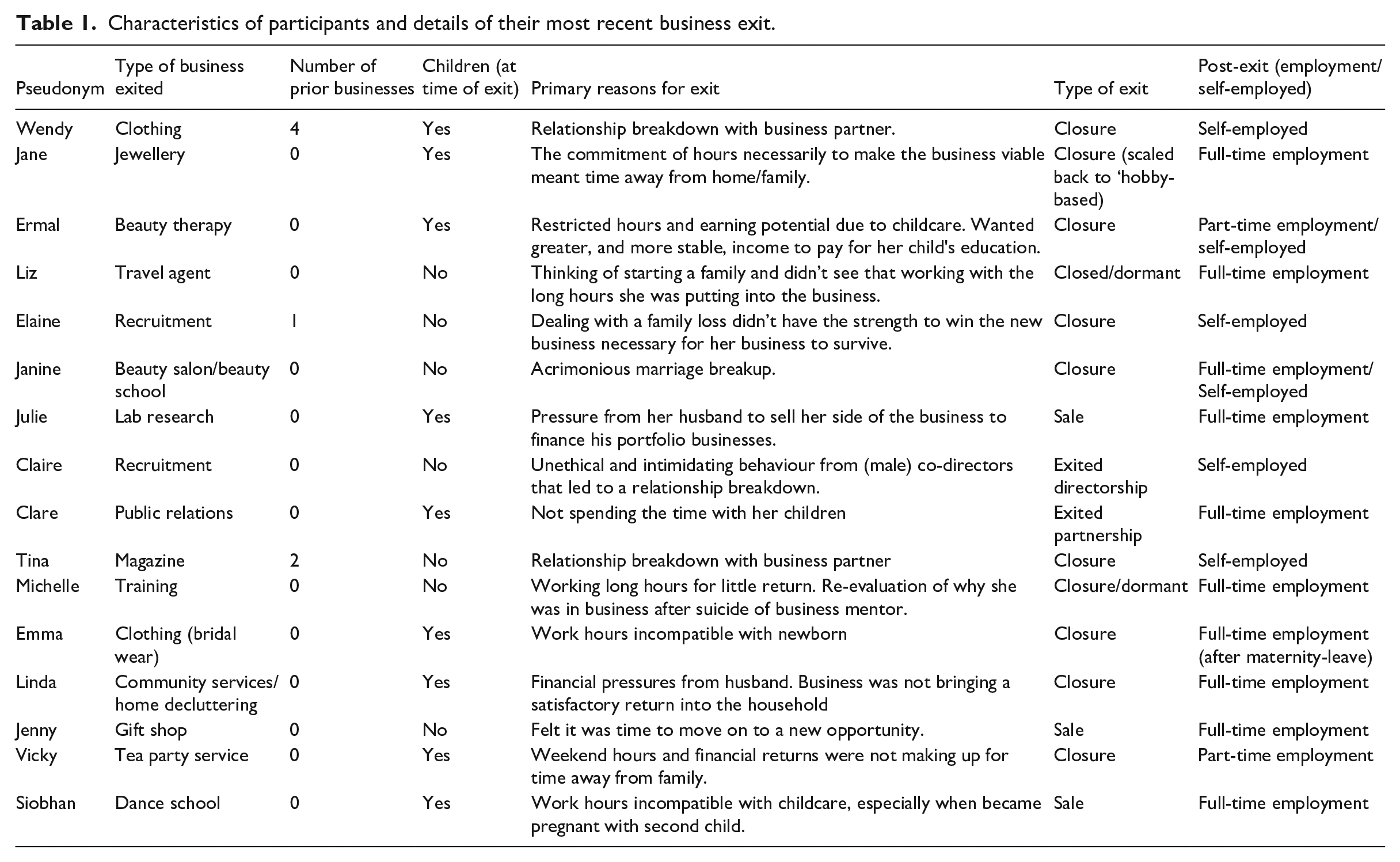
The participants were identified using a purposeful sampling strategy and professional networks, which included a women entrepreneur support and mentoring organisation and a UK university entrepreneurship centre. Potential participants were contacted to confirm that they had exited a business and then invited to participate in the study. In total, 28 women were contacted, of whom 16 agreed to participate. The interviews were conducted in six UK cities, lasted approximately between 90 and 120 min, were digitally recorded with the interviewee’s consent and transcribed using a professional transcription service. The interviewer took personal notes before, during and after the interviews, which included informal observations and discussions that were not recorded as part of the formal interviews. For example, crying or becoming tearful was documented during five interviews; Gherardi et al. (2013) notes that such emotional displays generate meaning for participants that activates emotions such as grief, disappointment and loss.
Data analysis
Due to the complex nature of the phenomenon under study, data analysis required an abductive approach; thus, travelling back and forth between data and theory. To conduct thorough and accurate analysis, we followed a data analysis process adapted from Marlow and McAdam (2015) whose study explored a similar phenomenon of gendered identity work in established technology businesses. Stages 1 and 2 of the data analysis process involved initial familiarisation of content and full immersion to begin to comprehend and manage the data. Each author scrutinised the interview transcripts and identified and compared initial concepts then grouped them into provisional categories (Stage 3) (Strauss and Corbin, 1998, cited in Marlow and McAdam (2015)). Once provisional categories were identified, Stage 4 explored how these were related to the key themes within our framing analysis (gender and exit; emotions and sensemaking) (Locke, 1996; cited in Marlow and McAdam (2015)). This procedure involved integrating related data drawn from different transcripts by taking one element and comparing it with others of similarity or difference to develop conceptualisations of possible relations. This resulted in the following research findings relating to the key themes within the literature; they are a culmination of the individual strands which emerged from the data and are articulated within the following Findings section (Stage 5). To present a coherent analysis of the findings, each theme is explored in detail employing relevant quotes and excerpts from the data sources (Stage 5). The final stage of the data analysis process which involved explanation and abstraction to contribute to theory development is presented in our discussions and conclusions sections (Stage 6).
Findings
Gendered personal reasons and the decision to exit
Consistent with existing research on why women voluntarily exit self-employment (Jayawarna et al., 2021; Justo et al., 2015), all participants attributed their business exits to personal reasons rather than financial or performance issues. Further, these personal reasons were related to gendered care giving responsibilities for children or elderly parents. Additionally, those who had children, or were planning to have children, reported this as their primary reason for exit (10 of 16 participants). For example, although Bronwyn initially cited health issues as her reason for exit, when probed further she revealed that she had undergone numerous rounds of in vitro fertilisation which severely impacted her mental health and ability to keep running her business. Similarly, Donna was an egg donor to her sister, who sadly lost her twins at 25 weeks old. With tearful emotions, Donna described how supporting her sister through such grief led to the decline of her business: She [Donna’s sister] was 24 weeks pregnant; she went into labour and had them [the twins], and they did not make it. One baby passed away the same day, but the second one lasted for a month. So, we had a month where, well it hit me. But what it meant was that we were in and out, the baby was in intensive care, and two or three visits a day. Psychologically, it knocked me; but physically, I was out of the business an awful lot . . . Of course, the amount of income coming into the business just dropped and dropped and what it would have taken was for me to pick myself up and go to the local business community full strength to go whip up as much new business as I could. I did not have it in me to do that. It was like somebody had taken my batteries out; I just did not work anymore. God, I just could not do it, no.
For Karen, the long hours of her entrepreneurial activities challenged the viability of her starting a family: There were lots of factors at play, but the overriding thing really was that the business was having a detrimental effect on my personal relationships with my friends and family, and on having a baby. I didn’t feel I had the capacity to keep running the business and have a family, and I wanted to have a family.
Despite these women not having children, the personal reasons that they experienced were explicitly linked to their gendered and maternal roles.
The reality of concurrently operating a business and household also posed significant challenges for participants who were mothers, especially those with young children (Duberley and Carrigan, 2013; Jayawarna et al., 2021; Lewis et al., 2022). They reported a conflict between the need to fulfil ascribed gender roles with regard to care-giving and domestic duties which meant they struggled to invest time in the business. Rachel, who operated a large dance school in seven cities, described how the work hours and travel demands meant she had limited time to spend with her son; nursery hours were limited so, she worked in the evenings and at weekends and anticipated this pressure would increase after her son started school. The catalyst for her exit emerged when she became pregnant with her second son: Having one [child], I can travel around the world with him. I used to bring him in his little baby bucket to the dance studio and keep him with me some days. I hated doing that because I felt it was very unprofessional. But sometimes, you’ve just got to do it, right? But with two [children], it was like, okay, this is not feasible anymore. When I got pregnant with Brendon [second child], I was starting to consider what was my next step.
Rachel eventually sold her business shortly after her second son was born to accommodate her work/family balance. The participants often reflected on future scenarios of both family and business growth, and they struggled to envisage compatibility. For example, Izzy decided to scale back her jewellery design business after observing a colleague and the sacrifices she made for her business: I met someone who actually was earning an income and keeping herself. She’d just gone through a divorce, so it was only her. She showed me her schedule of shows for the year, and it was back-to-back shows and travelling constantly; that was another turning point for me. I thought, ‘I can’t do this. I have to be at home. I don’t want to do this. I’m needed at home’.
Dipali described how her career had taken a lower priority because her husband’s career was so demanding. As she was primarily responsible for child care she closed her beauty therapy business as she could only operate within school hours. She explained: ‘if we had both tried to focus on careers, we would have clashed, and the children and family life would have suffered’. Conversely, Violet reflected on her first business closure and maintained that ‘had I been a man, and not had the children, I would have been the first Subway’. 2
In addition to maternal caring responsibility being a key driver in exit decisions, other women also reflected on the tension that arose regarding the trade-off between hours invested in the business and those in the household; when this balance tipped to favour the latter, this affected income. Faced with such financial implications, the participants noted the penalties attached to using entrepreneurship as a route to flexible working and work-life balance (Bari et al., 2021; Jayawarna et al., 2021; Marks et al., 2022). Dipali, Izzy, Kasia, and others established their businesses to gain flexibility to care for young children. However, they all reported that such flexibility had a notable impact on income; to address such shortfalls meant forfeiting family time. This created considerable stress trying to accommodate such competing demands where in most cases, neither was satisfied; as Kasia commented: I wasn’t bringing in anywhere near what I used to bring in, and so I guess that’s where the cracks started to show at home. I wasn’t getting the acknowledgement [from husband]
Similarly, Uma stated: Basically, I wanted to do something that was flexible. I was told that [business ownership] would be flexible. I wanted something where I wouldn’t have to work full time, but I was completely wrong about that – especially with setting up your own business. It takes over your life and just becomes another baby, I suppose.
Kasia closed her business because of a lack of flexibility and became employed full-time in a university professional leadership role. She described how: I’d been here [university] about a year and I thought, ‘Goodness . . . I’ve finally found that thing called work–life balance that some people talk about . . .and an income. I’ve actually finally found it!’
Emotions and sensemaking of the exit decision
Decisions are informed by a sensemaking process whereby individuals assess a range of potential outcomes which, in turn, are moderated by and generate specific emotions (Maitlis et al., 2013; Niemi et al., 2022). When analysing how the participants made sense of the decision to exit entrepreneurship, although they all described it as voluntary, they noted a range of negative emotions associated with the decision. It might be expected that a voluntary act would elicit a sense of autonomy and control; however, the evidence presents a picture of the participants being ‘pushed’ into an exit rather than being ‘pulled’ toward individual choice and agency. Bella described feeling like ‘rubbish’ and ‘really, really bad’, adding that: ‘You feel like you’ve failed, . . . I cried a lot. It was really stressful. Really, really stressful’.
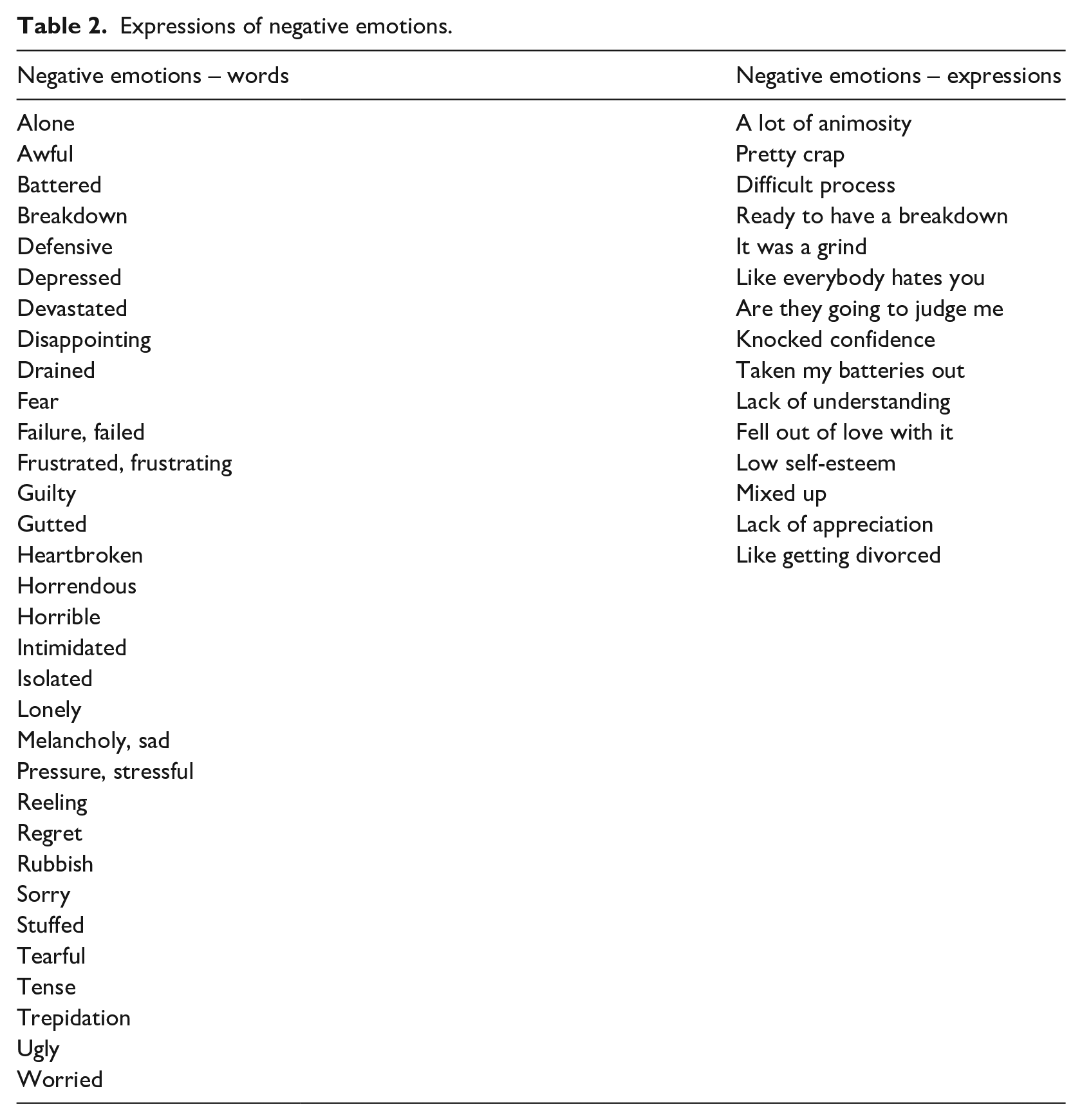
Iona co-owned a medical testing business with her husband but felt pressured into selling it when her husband wished to prioritise his other businesses, and used the sale profits to reinvest in his various business interests. She described feeling ‘heartbroken because I thought, ‘Well, what am I going to do now?’ Because that business sort of defined me, and I felt lost without it’. Rachel, who sold her growing dance school business, described feeling ‘mixed up’ and ‘devastated’ by the loss of friends who had worked in the business and whom she had known for many years. Louise explained how she felt ‘drained’ and ‘stuffed’ before closing her business because she was working long hours in addition to a full-time job. She decided to exit after a business mentor and colleague committed suicide; she felt compelled to re-evaluate why she was in business and decided that it was not worth the ‘fear’ and ‘loneliness’ that she experienced. Table 2 lists collective expressions of negative emotions in relation to exit decision.
Expressions of negative emotions.
Uma experienced a sense of lost potential and the frustration that this caused when she closed her tea party business because of the failed promise of flexibility: I knew that I couldn’t grow the business and give the time to my family. There was so much more I could have done, and I wasn’t able to do it. It was quite frustrating because I knew that there was potential. I knew where the market was. I had networked so much. I knew so many people, and I really could have sold it over and over again in different ways, not just as a vintage tea party. But I didn’t have the time to develop it.
This involuntary nature was also expressed as a feeling of failure. Sandra closed her magazine business given the demands of caring for her elderly parents; she said she ‘didn’t want to be seen as a failure’. This was echoed by Karen, who also described feeling like a failure for prioritising caring for her child rather than prioritising her business:
When I'm in the local business community now, I don’t want to be viewed as one of those women who’ve gone off to have a baby, which is what I’ve done . . . It does feel like you’re a bit of a failure [participant becomes tearful, and the interview is paused].
Gender-centric sensemaking post-exit
Consistently with Maitlis et al.’s (2013) assertion that sensemaking is an iterative process that both shapes and concludes the sensemaking process, we observed a subtle transition from the negative emotions associated with exit decisions to more positive emotions associated with the post-exit situation (Table 3).
Expressions of positive emotions after the exit.
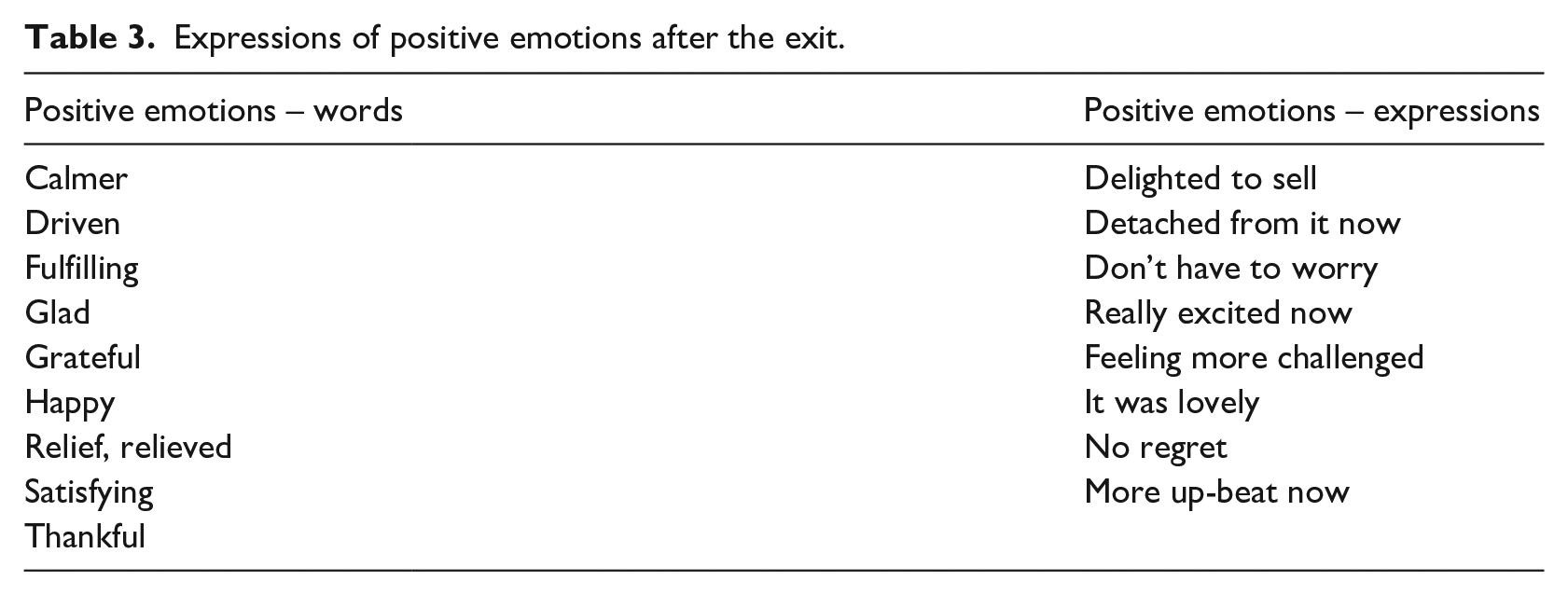
These positive emotions were closely linked to the participant’s ability to reconcile their expectations of being a working woman with their gendered expectations of care and domestic responsibilities. Most were related to relief in terms of being freed from the demands of the business; they were not expressions related to their achievements as entrepreneurs or the success of the business. We found that, except for one participant, those who had children all entered employment after exit. The benefits of employment were noted in terms of predictable hours, built in flexibility and a stable income. Karen, who at the time of the interview had a 10-month-old baby, described how employment offered a much better fit with motherhood: There’s obviously the salary, but the second thing is the set hours. The fact that I can finish, you know. I do half-eight until half-four, Monday to Friday, and I have my evenings and weekends to myself. That is a huge difference. I think Zoe’s [daughter] upbringing would maybe suffer if I had kept going. . . . You could just keep working on it [the business] and there was no end, and that’s the really big thing.
Marie, who was child-less when starting her business, closed her beauty salon and described how, after having children, she would not entertain the idea of self-employment because ‘you never knew when you were going to get paid . . . I’ve got a house, a mortgage and children now’.
However, when the exit decision was not fully reconciled through sensemaking, negative emotions still surfaced and participants expressed regret and sometimes became tearful. For example, Louise, who closed her business because of the excessive time demands, commented: It’s weird because I feel a bit tearful at the minute, and I think it’s probably because I’ve just kept on going and going and going and going, and I didn’t have time to process it.
It emerged that while there certainly were positive emotions associated with the voluntary exit, these related more to the relief of having escaped from the stresses of entrepreneurship in terms of incompatible time demands, income penalties and a sense of personal failure. These positive aspects do not map well onto a notion of a productive, positive voluntary decision.
Discussion
This study contributes to analyses of gender, entrepreneurial exit, emotions and subsequent sensemaking. The concept of voluntary exit is critiqued by exploring the gendered personal reasons that underpin such decisions and in addition, the emotions that arise from, and persist after, the exit decision, which inform sensemaking efforts. In so doing, three theoretical contributions are advanced informed by a gender lens and critique which, in turn, have critical implications for practice and policy.
First, the usefulness of the voluntary–involuntary dichotomy as a meaningful categorisation for entrepreneurial exit is questioned. The limitations of this division are illustrated by evaluating the underpinning assumptions informing the diverse nature of personal reasons using a gendered lens. By adopting this stance, we reveal the tensions and struggles the women entrepreneurs in our sample encountered as they grappled with the decision to exit and the need to make sense of their decision thereafter. For many, especially those who were, or aspired to be mothers, the decision to start a business was embedded in the narrative of flexibility and ‘having it all’ (Lewis et al., 2022), a narrative embedded in the discourse encouraging women to pursue entrepreneurship deemed a career choice that delivered flexibility and autonomy (Nadin et al., 2020). Therefore, it is unsurprising that many women, including those in this study, are attracted by such discourses of empowerment and success. Such discourses are firmly embedded in contemporary postfeminist debates that suggest modern women now have the freedom and opportunity to pursue their careers while still complying with gendered expectations of femininity in terms of prioritising maternal care and household responsibilities (Lewis et al., 2022). Yet, as Treanor et al. (2021) note, the contradiction that occurs when the discourse of autonomy abuts the reality of gendered constraints creates the paradox of postfeminism which fuels dissonance as women try to make sense of a discourse of opportunity in a reality of constraint. The only sensemaking option available is to assume personal blame for failing to exploit the opportunities offered as, in effect, structured gendered barriers are camouflaged by the promise of the postfeminist discourse. This is illustrated in this study which exposed the myth of the flexibility narrative by revealing that the greatest personal reason for closure was the tension between business demands and family responsibilities that, in turn, informed an allegedly voluntary exit decision. This was then credited to personal shortcomings by the respondents.
Ultimately, the findings suggest a strong incompatibility discourse that must be acknowledged in gender and business exit research. This is suggested to ensure that more robust empirical studies are conducted with the aim of better understanding the personal reasons for exit, as well as the aim of providing more nuanced analyses of the exit decision-making process. This study found that when women realised that business ownership was not compatible with other responsibilities in their domestic sphere, they were forced to question the feasibility of their current business proposition or model; notably, this realisation did not force them to question how they might restructure the responsibilities in their households to continue with the business instead. When deciding to exit, these women often felt pressured to be present at home and to fulfil the ‘good mother’ role, which involved accepting that they could not allocate the required time to progress their businesses (Duberley and Carrigan, 2013; Marks, 2021). Essentially, these women did not have the agency to establish the balance between time invested in the firm and in the home because gendered roles and societal expectations prioritise mothering over entrepreneurship (Ahl and Marlow, 2021; Bari et al., 2021; Ekinsmyth, 2013). As such, the outcomes of entrepreneurship cannot be understood separately from the demands imposed by families, household dynamics and wider spatial and institutional contexts (Baker and Welter, 2017; Powell and Greenhaus, 2010).
This study illustrates how incompatibility at the business–household interface is often the catalyst for the exit decisions. Consequently, although entrepreneurship in Western neoliberal societies offers women choices in how they invest their time regarding inputs into the firm and household, these choices are framed by gendered expectations. Household demands overflow into the time allocated for business and vice versa (Jayawarna et al., 2021). If this balance becomes untenable, then it might appear that women decide to voluntarily close the firm to address irreconcilable tensions. However, the notion of a voluntary decision is somewhat of a chimera; for many women, it is their only option if they want to preserve a viable home life. We argue that the assumption of ‘voluntary’ in this context has prompted empirical neglect regarding the gendered experience of the entrepreneurial process. Currently, entrepreneurial exit for personal reasons is considered voluntary and thus, unproblematic, warranting little need for further academic attention. Additionally, an almost unequivocal acceptance is observed regarding how women-owned businesses have higher closure rates than those owned by their male counterparts. However, few studies have advanced critical analyses that do not simply explain such statistics but further advance discussions of how structural disadvantage and gendered mechanisms force women entrepreneurs to consider closure or exit as their only option. It is acknowledged that not all women entrepreneurs frame the exit decision negatively. Indeed, some women in our sample indicated a desire to transition to a status in which they were ‘needed’, which was ‘at home’. Moreover, many of the participants referred to feeling relieved, happier, less stressed after exiting. However, the positive and negative here are clearly symbiotic – they are outcomes of each other further illustrating the complexity of this debate.
The second contribution from the study advances arguments for acknowledging the role of emotions in business exits to gain a better understanding of the sensemaking process during this critical stage of the entrepreneurial process. The in-depth interviews revealed the intensity of the emotions women experienced at the time of the exit and later, when they had the opportunity to make sense of their experiences. Initially, the decision to exit and subsequent actions stimulated numerous, mostly negative emotions. Existing studies have examined the exit intentions of entrepreneurs and their associated psychological antecedents (Hsu et al., 2019; Sardeshmukh et al., 2021); we advance this understanding regarding exit decisions through our examination of the primary catalysts for exiting and the emotions experienced before, during and after the exit event. Our analysis revealed how different emotions emerge at different stages, and how they ultimately influence the sensemaking process by informing a difficult exit decision.
The analysis further revealed how these emotions emerged mostly because of a failure to balance or integrate care-giving and domestic responsibilities. Accordingly, we argue that the negative emotions uncovered at this stage are explicitly linked to participant realisations that such a balance or integration is unachievable, which thus illustrates a first step in sensemaking. Thereafter, the participants reconciled the decision to exit by justifying their prioritisation of their primary role in the household, which then permitted them to exit. For the majority, this resulted in a subdued exit from the business with an uneventful closure or modest sale at most. We argue that the mundane nature of such exits (Aldrich and Ruef, 2018) combined with the gendered expectation that women will be content to leave entrepreneurship to preserve a home life removes the responsibility of researchers and other stakeholders to acknowledge the negative and potentially damaging effects that these factors have on women’s well-being (Hsu et al., 2016), entrepreneurial self-efficacy and the broader reconstruction of their career and work identities (Kelly and McAdam, 2022).
It is argued that just as grief has been conceptualised in the failure literature (Byrne and Shepherd, 2015; Cope, 2003), attention should also be afforded to understanding grief and other emotions in seemingly mundane business exits. Byrne and Shepherd (2015) reported how immediate and highly negative emotions and entailing highly positive emotions prompted a cognitive process that facilitated sensemaking for failed entrepreneurs; we found a similar pattern. The participants experienced relief after exiting in terms of being able to discard their entrepreneurial responsibilities; they also obtained reflective insights from their experiences that they could transfer to any future entrepreneurial endeavours – that is, sensemaking facilitated their learning (Cope and Watts, 2000). Further, Hsu et al. (2019) found that married women entrepreneurs expressed stronger levels of regretful thinking than single entrepreneurs, which subsequently increased their exit intentions. However, Hsu et al. (2019) reported simply on exit intentionality rather than on actual exit. Consequently, we extend this notion of regret and argue that regretful thinking diminishes after the exit, when sensemaking has concluded and individuals have processed their experiences and considered future endeavours.
Finally, when facing the difficult decision to exit, many participants felt that gender-centric social expectations provided a sense of orientation and informed much of their sensemaking after their exit. That is, gender-centric sensemaking allowed them to prioritise other roles, such as mother and wife, which subsequently justified their decision to exit. It is argued that gender-centric sensemaking in entrepreneurial contexts can reveal alternative narratives of what it means to be an entrepreneur. For example, to make sense of their exit decision and post-exit phase – and to process the initial negative emotions of loss, grief and some regret – many women transitioned to employment that allowed them to better accommodate their gendered responsibilities. Indeed, Ahl and Marlow (2021) argued that given the prevailing gendered and socioeconomic constraints, entrepreneurship is a poor career choice for many women – especially at certain life stages, such as when raising a young family.
This study raises a number of practical implications. It is essential that support organisations and government policy initiatives refrain from simplistically presenting self-employment as a cost free option to combine flexible working and income generation for women. The trade-off between time invested and returns realised must be acknowledged and discussed particularly, in terms of the impact upon enterprise viability over time. Consequently, we have to revisit the claims that entrepreneurship can be easily adapted to the rhythms of women’s lives; this has to be balanced with the reality of the potential consequences of using this strategy. Equally, governments have a responsibility not to uncritically reproduce the neoliberal arguments that entrepreneurship is beneficial for all – it is time to question the promotion of activities to women which, for those at certain points in the life course where caring responsibilities dominate, have the potential to be financially and psychologically damaging. There is also now a plethora of networking sites for women entrepreneurs which, justifiably, exist to share best practice, successful role models, support structures etc. Such sites should also offer a channel for women to share more negative experiences in terms of exiting from entrepreneurship and the impact this has upon them. This would promote the idea that exit – for whatever reason – is not a unique and personal shortcoming while sharing experiences can be cathartic for those involved while offering learning opportunities for peers.
Limitations and future research
It is acknowledged that the study has several limitations that offer scope for future research. First, the qualitative study centred on women of a certain socioeconomic status from the UK; future research in other contexts with an intersectional analysis is desirable. Second, we collected the data during only one retrospective interview to capture the entrepreneur’s narrative and identify emotions and sensemaking. A longitudinal study would be desirable to capture how sensemaking occurs over time, and also, acknowledges the intrusion of events such as child-birth, elder-care, etc., upon life decisions. Third, our sample consisted largely of women with responsibility for caring – whether child or elder care – who experienced related stressors regarding time management in terms of the business/household interface. Studying those women who did not have such impositions on their time but still chose to exit from their ventures would be revealing regarding other aspects of self-employment such as poor incomes, isolation and lack of career progression.
Conclusion
The analysis and illustrative evidence informing this article has exposed the superficiality of dichotomous classifications of entrepreneur exit by critically analysing the notion of voluntary exits from a gendered perspective. Such arguments are supported by evidence drawn from 16 women entrepreneurs in the UK. We illustrate the tensions these women encountered during the decision-making process to exit from entrepreneurship and the subsequent vortex of emotions they experienced. Notably, this tension and related emotions were largely fuelled by gendered responsibilities that negatively affected the entrepreneurial experience. These emotions could be difficult to accommodate and rationalise when the decision to exit was related to a participant’s inability to fulfil household and caring responsibilities while managing a viable firm. That is, despite deciding to prioritise family and household over business, thereby fulfilling gendered expectations, these women entrepreneurs were left with numerous emotions ranging from regret, sadness and grief tinged with relief. The gendered assumptions underlying voluntary exit for personal reasons were questioned and illustrated the incompatibility at the business–family interface that often forms the catalyst for the exit decision. This incompatibility discourse exposed tensions and emotions that prompted somewhat negative entrepreneurial experiences – rarely considered in entrepreneurial exit literature. When applying a gender-centric focus to this process, women prioritise other identity roles such as mother and wife, which subsequently justified their decision to exit and situate their business ownership and exit experiences within the longevity of their broader careers and life course. Moreover, it is proposed that gender-centric entrepreneurial sensemaking could offer alternative explanations and realities of what it means to be an entrepreneur beyond the context of exit. Researchers shifting away from the heroic narratives of entrepreneurial selves and engaging with more honest accounts of the everyday nature of entrepreneurial activity (Rehn et al., 2013) would more effectively serve aspiring entrepreneurs and generate possibilities for new theories and debates.
Footnotes
Funding
The author(s) disclosed receipt of the following financial support for the research, authorship, and/or publication of this article: The author(s) received internal Faculty research funding (£3,868) from Nottingham University Business School to cover mainly travel and interview transcription costs.
