



Abstract
International new ventures (INVs) and born globals (BGs) play a significant role in the global economy. These firms have rapidly expanded into foreign markets offering unique products and services. Despite the role such ventures play in the global economy, we know relatively little about the role of corporate governance (CG) in INVs and BGs and the challenges these firms face in foreign markets. This introductory article and the papers included in this Special Issue provide important insights into the role of corporate governance and the rapid rise of INVs and BGs and their evolutionary process, and highlight the topics where more research is needed. We also contribute to the current literature by examining corporate governance in early internationalising firms and discussing what sets them apart from well-established multinational enterprises.
Introduction
In an increasingly complex, technology-driven and networked global economy, corporate governance (CG) has become an important factor in managing and leading organisations. With its theoretical roots traversing the various disciplines of economics, finance, accounting, law, sociology and management (Durisin and Puzone, 2009; Zattoni and Van Ees, 2012), corporate governance looks at how firms are governed so that they operate effectively and efficiently (Strange et al., 2009). More specifically, corporate governance can be considered as a set of processes, rules and structures for controlling and leading organisations. Such corporate mechanisms encapsulate how relationships between firm management, company shareholders and stakeholders are governed (Ching et al., 2006).
In the area of international business (IB), many studies have examined corporate governance, primarily in the context of multinational enterprises (MNEs) (Aguilera et al., 2019; Bhaumik et al., 2019) and internationally mature small- and medium-sized enterprises (SMEs) (Jones et al., 2011; Kuivalainen et al., 2012; Li et al., 2020). Research has extensively supported the relationship between corporate governance mechanisms and firm performance across a variety of institutional contexts (Bhaumik et al., 2019; Strange et al., 2009). Although IB scholars have recognised the importance of corporate governance and executive leadership decision-making in MNE management, studies with a specific focus on young, rapidly internationalising firms, such as international new ventures (INVs) and born global (BG) firms, are surprisingly few (Coviello et al., 2017; Gerschewski et al., 2018; Romanello and Chiarvesio, 2019). In addition, we tend to have more of an understanding of how INVs and BGs compete rather than how they are actually governed (Zahra, 2014). Consequently, new studies on corporate governance in the context of INVs and BGs have the potential to provide valuable insights into existing research predominately based on advanced economies (Aguilera et al., 2019; Puthusserry et al., 2021).
There are some fundamental differences, which set INVs and BGs apart from well-established MNEs in the context of corporate governance processes and functions (Gan and Erikson, 2022; Garg, 2020; Puthusserry et al., 2021). For example, the traits and characteristics of entrepreneurs – who are entrepreneurs and why people become entrepreneurs affect governance – for example, they may want to be their own ‘boss’ and/or desire to grow and run an IB. Such motivations are undoubtedly important, and we know from existing literature that motivation in its various guises plays a key role in early firm internationalisation and international entrepreneurship (IE) (Autio et al., 2000). As INVs and BGs often naturally aim for rapid and early international firm growth, they often need (or even exist because of) external capital funding. Further, an entrepreneur’s desire to be their own boss may lead to conflicts with their own board of directors (BoDs) and other influential stakeholders.
Ownership characteristics, especially from the family firm perspective, have also been studied in relation to ownership concentration and stewardship attitudes (Kontinen and Ojala, 2012). However, given the critical roles of corporate governance structures in both large MNEs and SMEs in a globalised world economy (Aguilera et al., 2019; Bhaumik et al., 2019), a deeper understanding of the roles of board effectiveness (including, e.g., returnee BoDs, Lin et al., 2018), individual executives (CEOs and Managing Directors) and top management teams (TMTs) present increasingly important avenues for research in the context of INVs and BGs.
Consequently, there could be many avenues to explore when considering governance in early internationalising firms. When we set up the call for this Special Issue, we had four key aims: (1) to understand what makes BoDs, executive leadership groups, and TMTs effective in INVs and BGs; (2) to examine the relationships between BoDs, TMTs, structures, processes and effectiveness; (3) to build an intellectual framework for discussion related to various dimensions of upper echelons at micro- and macro-levels of corporate governance in INVs and BGs; and (4) to advance multi-disciplinary studies by integrating the literature strands of IE, IB, organisational behavior (OB), finance, sociology, law and human resources (HR).
However, this call proved to be rather ambitious such that we have left some of these topics for further research particularly given a dearth of multi-disciplinary papers. What we do have, however, is an interesting collection of articles, which study the phenomenon of corporate governance in INVs and BGs in different country settings by adopting different theoretical approaches and investigating the phenomenon from different perspectives. Governance can, for example, be studied from macro-economic, institutional (focusing on connections with external stakeholders), board level and decision-makers (focusing on TMT, entrepreneurs and microfoundations) perspectives, which leads us to the purpose of this introductory article to this Special Issue. The objective of this article is to provide an overview of the three papers included in this Special Issue and to provide a research agenda highlighting potential further research avenues.
Brief background literature
A generic definition of BGs is: ‘business organisations that, from or near founding, seek superior IB performance from the application of knowledge-based resources to the sale of outputs in multiple countries’ (Knight and Cavusgil, 2004: 124). This definition reflects the INV definition provided by Oviatt and McDougall (1994), ‘a business organisation that, from inception, seeks to derive significant competitive advantage from. . .the sale of outputs in multiple countries’. As a result, INVs and BGs, by definition, commence their international operations early. The timeframe for commencement of international operations in the empirical literature has normally been between 2 and 8 years after their foundation (note that there are differences in the cut-off points in empirical studies, see Kuivalainen et al., 2012). INVs and BGs are often described in relation to their youth (Zahra et al., 2000), (possible) lack of experience and (possible) paucity of resources (Cavusgil and Knight, 2015; Knight and Cavusgil, 2004).
Further, extant research on INVs and BGs has naturally considered the unique characteristics of early and rapidly internationalising SMEs – and to a certain extent, their managers and/or entrepreneurs (Puthusserry et al., 2020). Several factors that enable early and rapid internationalisation, such as entrepreneurial and managerial knowledge, international knowledge, flexibility and ability to learn new things, effectiveness in building global networks of collaborators, and superior innovation and knowledge creation processes, have been elaborated in the literature (Autio et al., 2000; Cavusgil and Knight, 2015; Coviello, 2015; Knight and Cavusgil, 2004; Puthusserry et al., 2020; Zahoor et al., 2020). In some studies, strategic choice, proactiveness, knowledge and learning on an individual level are highlighted (Andersson, 2000; Oviatt and McDougall, 1994). These attributes may lead to ‘less-rational’ or non-systematic decision-making about the dispersion and structure of an organisation. As smaller and younger entrepreneurial firms, INVs or BGs may not always have a clear strategy, or their strategy may be rapidly evolving in response to the environment and opportunities (Evers and Andersson, 2021; Evers and O’Gorman, 2011; Vanninen et al., 2022; Zander et al., 2015).
Corporate governance can be considered as a set of processes, rules and structures for controlling and leading organisations. Such corporate mechanisms encapsulate how relationships between firm management, company shareholders and stakeholders are governed (Ching et al., 2006). Research suggests that well-governed companies experience long-term financial performance and sustainable growth (Singh and Pillai, 2021). Similarly, for BGs and INVs, good corporate governance practises can elicit better monitoring and control of operations and processes across foreign markets, leading to greater international market growth and performance for the firm (Singh and Pillai, 2021). In the context of IE, the governance aspect has been surprisingly little studied (Gerschewski et al., 2018; Zahra, 2014). This means that there tends to be less evidence on how the attributes linked with INVs and BGs affect, for example, decision-making on the market selection, entry mode choice and configuration of operations (Child and Hsieh, 2014; Laufs and Schwens, 2014). While some studies have focused solely on initial internationalisation, others have taken a broader perspective by examining the process, including post-entry activities and their subsequent performance consequences (Gerschewski et al., 2018; Hagen and Zucchella, 2014; Khan and Lew, 2018).
The age of the INV and BG firms can be linked to their internal development as well, and this is where organisational life-cycle models might be able to contribute. A few life-cycle models have been suggested in the extant literature to describe the evolution of INVs or BGs (e.g., Gabrielsson et al., 2008; Hagen and Zucchella, 2014). These models, consisting of several phases or stages, have focused on triggers, motivations and eventual changes within the organisation. For example, there is a ‘time before the initial internationalisation’, ‘the actual start phase’, followed by ‘international growth’ sometimes reaching also ‘consolidation’; this could relate to the phase when an INV or BG firm has become ‘mature’. This may mean that internationalisation has become ‘business as usual’ for a firm or, that there have been some major changes such as mergers or acquisitions making creating a large firm or even one that could be deemed multinational (Agustí et al., 2023). The evolution of INVs and BGs could have significant implications for corporate governance regimes, and it is not well known how corporate governance supports the evolutionary trajectory (lifespan) of early internationalising firms as they move through various stages of development and growth. Thus, there is a need for future studies to examine the role of entrepreneurs in the initial stage to the role of professional managers, TMTs and formal and informal boards as INVs and BGs become mature with independent subsidiaries operating in multiple markets. Along with the evolution of firms, the role of younger, middle and mature entrepreneurs and their interactions with BoDs in supporting INVs and BG evolution (initial entry, post-entry survival, growth and exit) across different markets could offer important insights on an early internationalising firm’s performance and opportunity recognition and exploitation.
For this article, we conducted an extensive literature search to consolidate our knowledge about corporate governance in INVs and BGs. Based on Dzikowski (2017), we used the Web of Science database (https://www.webofscience.com/wos/woscc/summary/4b0b78a5-9b77-49c7-a356-0a6c4857eeb7-82b48a1b/relevance/1) and searched for the following terms:
born global born globals international new venture international new ventures rapid internationalisation new global business new global businesses fast internationalisers early internationalisers
This yielded 849 results for the period 01-01-2000 to 31-12-2023.
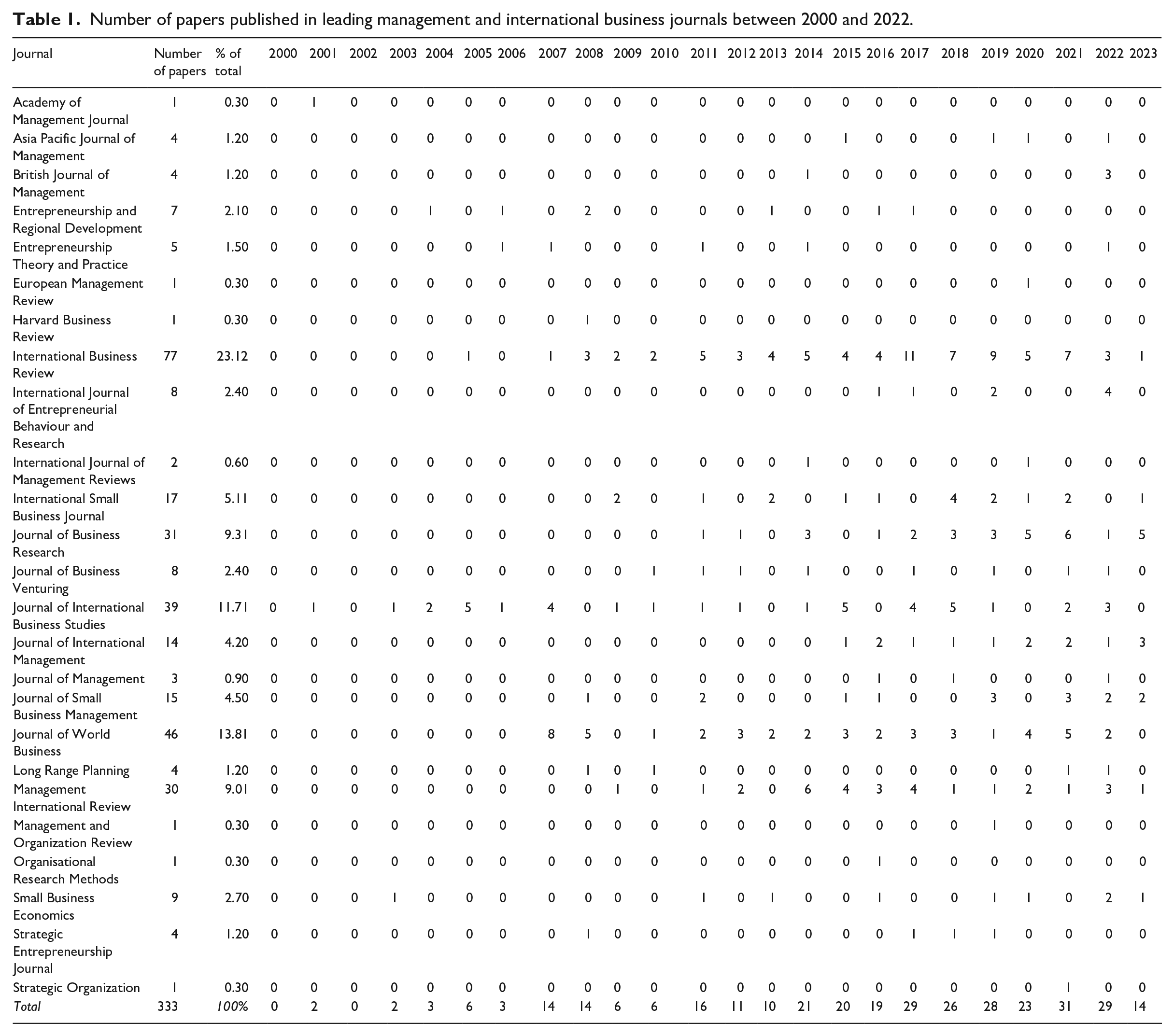
Building on this search, Table 1 further shows the total number of publications in relevant journals ranked as 3* or higher in the Chartered Association of Business Schools (CABS) list compared to All other (relevant) journals. Then, we created variables from the underlying data consisting of the full sample of 849 journal publications; this was used to produce the figures below using the statistical software programme Stata, StataCorp. In each figure, the corporate governance terms relate to papers that mention any of the below list of corporate governance terms in either the ‘author keywords’, ‘keywords’, or the ‘abstract’.
Number of papers published in leading management and international business journals between 2000 and 2022.
These CG terms were as follows:
corporate governance corporate board corporate boards boards advisory board director directors manager managers executive executives
Based on this rigorous methodology and analysis, we compiled the following figures related to corporate governance in the literature (where the sample includes all relevant publications): As can be seen from Figure 1, the number of times corporate governance terms appear over time in the literature shows a steady increase from 2000 until 2023. Notably, from 2015 onwards, there seems to be an increased interest in the literature regarding corporate governance, as evidenced by the increased mentions. Figure 2 below details the number of published papers with and without CG terms. Similar to Figure 1, we can see an increase in the number of papers published from 2000 until 2023. Figure 3 highlights the total citations per year for papers with CG terms and without CG terms. As can be seen from Figure 3, it is noticeable that there was a large total citation count in 2007, which can be probably attributed to the Global Financial Crisis in 2007/2008 and the resulting corporate governance implications for firms and organisations.
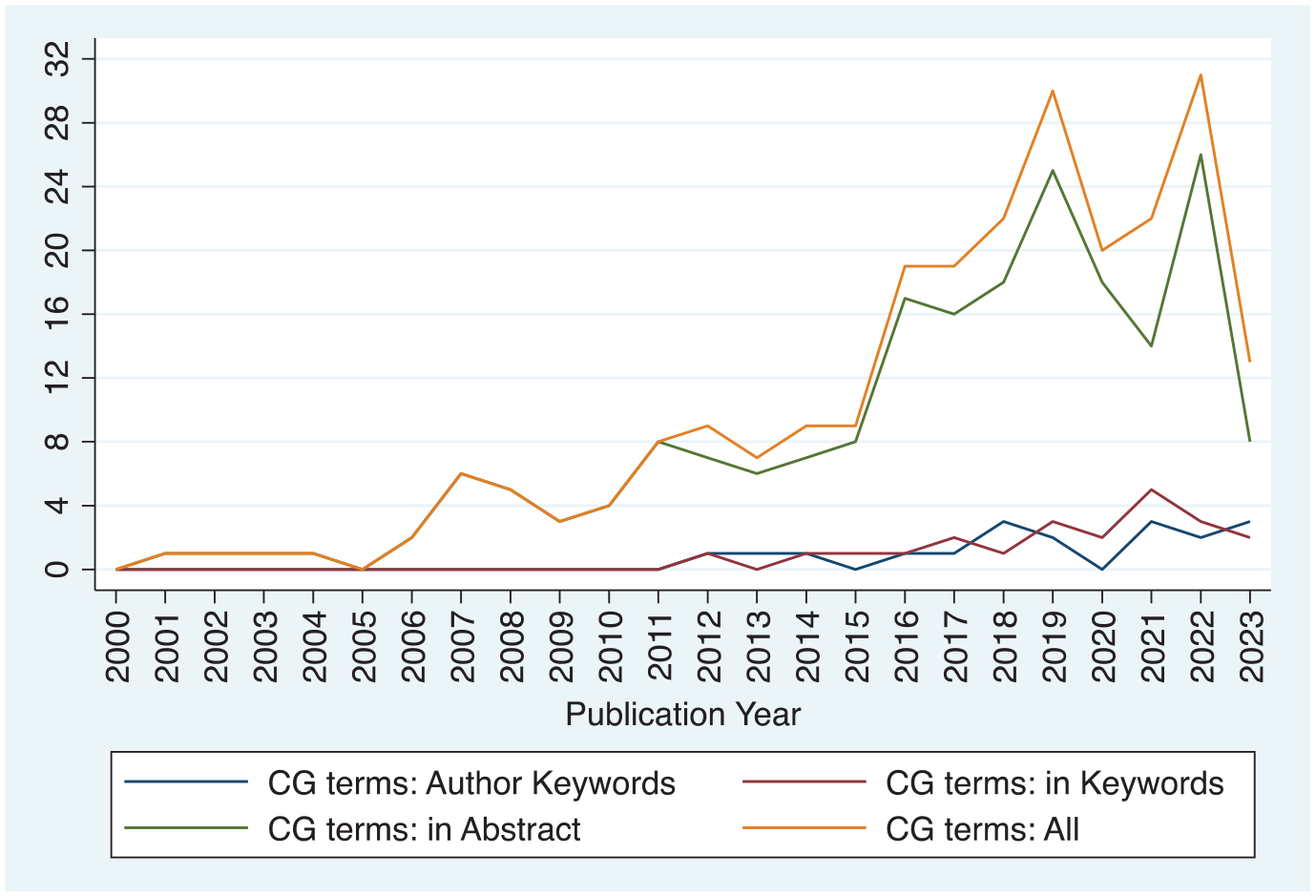
Number of times corporate governance terms appear over time.
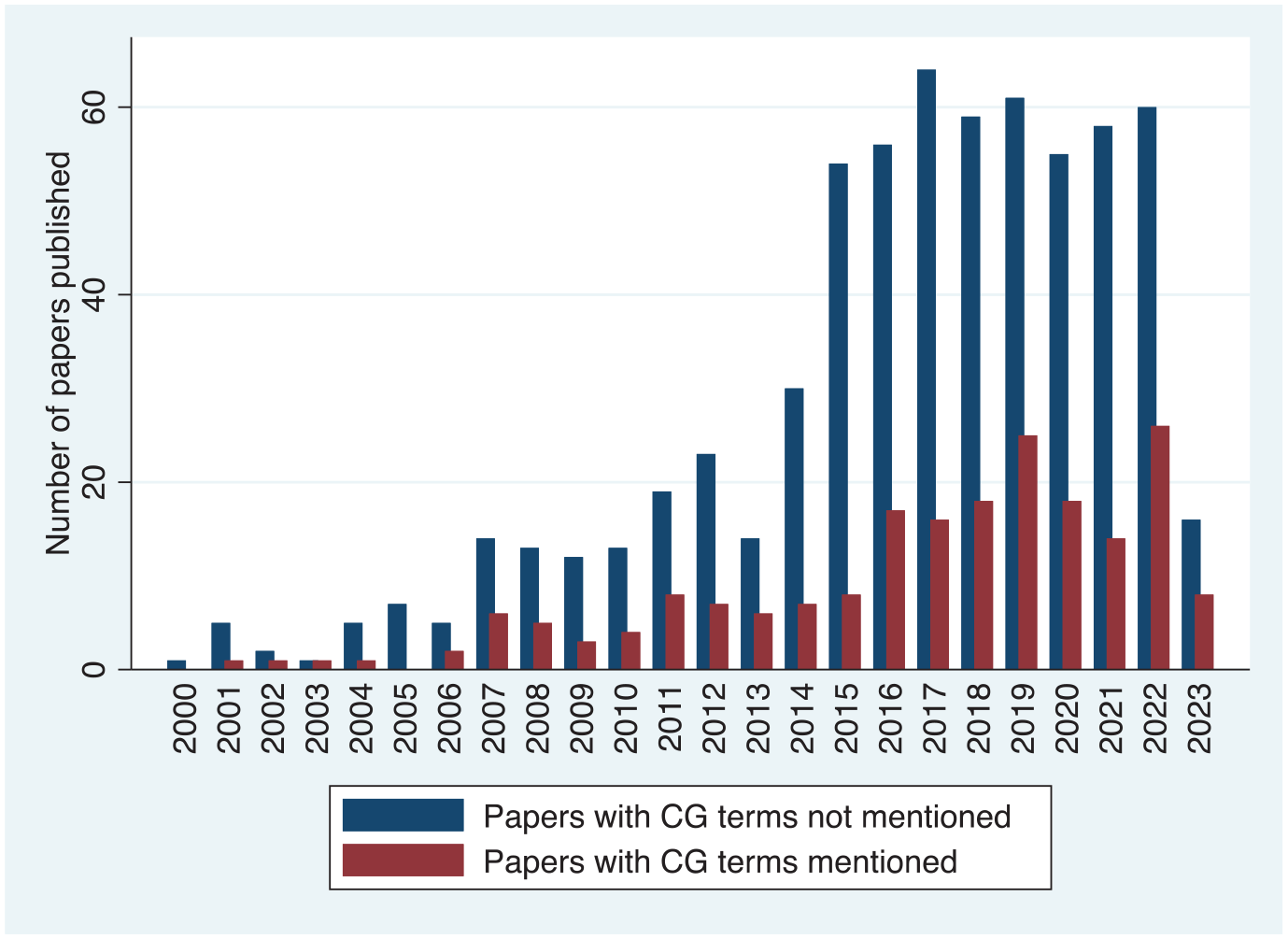
Number of papers published with and without corporate governance terms.
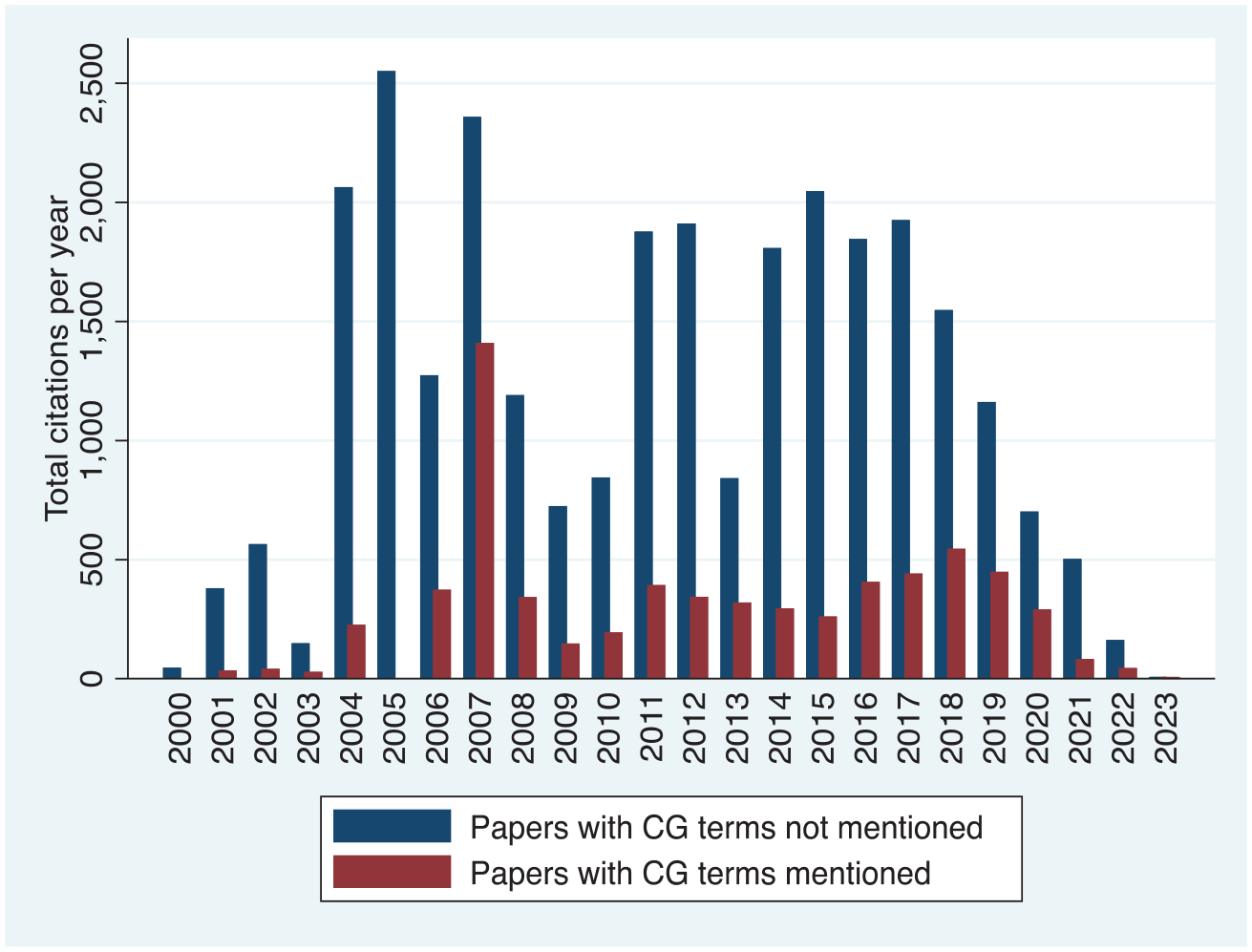
Total citations per year for corporate governance (CG) papers and non-CG papers.
The key theoretical perspectives for understanding corporate governance in INVs/BGs
What are the theories that could be used to explain how corporate governance is being organised in INVs and BGs, and, more generally, in internationally operating entrepreneurial firms? In this section, we discuss three key theories that are pertinent to investigating issues related to this topic. More specifically, we cover the theories of agency, resource dependence and upper echelon. While agency theory was generally the dominant focus in early corporate governance research, subsequent work has expanded to include other theories, such as resource dependence and upper echelons, either in combination with or as a reaction to agency theory (Aguilera et al., 2019).
Agency theory
Corporate governance has been initially examined from the perspective of agency theory, which suggests that the fundamental aim of corporate governance is to mitigate agency costs and conflicts of interest between financial capital providers (principals) and users (agents) (Filatotchev and Wright, 2011). The concept of agency costs encompasses the expenses associated with monitoring and efforts required to align the interests of principals and agents, as well as to mitigate information asymmetry, adverse selection, moral hazard and shirking behaviours (Shleifer and Vishny, 1997).
According to agency theorists (Jensen and Meckling, 1976), ownership is a key factor in creating incentives for making risky decisions. Insider directors have valuable insights into the company’s projects and can contribute to board discussions (Baysinger and Hoskisson, 1990), but they may lack objectivity because they rely on managers (Chen, 2011; Ruigrok et al., 2006). Conversely, independent external directors play a crucial role in controlling agency costs, monitoring and providing resources (Hillman and Dalziel, 2003) and aligning the interests of shareholders and managers (Jensen and Meckling, 1976; Tihanyi et al., 2003). By aligning the goals of agents (such as top management teams and CEOs) with principals, opportunistic behaviour can be mitigated (Eisenhardt, 1989). It is also worth noting that agents may become risk-averse if their personal wealth is tied to firm performance. Therefore, improving board effectiveness may be achieved by appointing more independent external directors (Chen, 2011).
In INVs and BGs, TMTs are often both founders and owners, which can help to mitigate principal–agent problems but may not address principal–principal issues (Dharwadkar et al., 2000). Although TMTs hold a significant ownership stake, they may not always act in the best interest of other owners. For example, internationalisation may benefit all shareholders, but TMTs and internal directors may avoid pursuing it due to the potential negative impact on their wealth (George et al., 2005). According to Jensen and Meckling (1976), the perception of risks associated with internationalisation may vary based on the ownership stakes of TMT members, with external owners having a distinct viewpoint from internal owners. Sanders and Carpenter (1998) suggest that as owners, CEOs and TMTs have a vested interest in assuming potential risks linked to international expansion.
Resource dependence theory
The Resource Dependence Theory (RDT), developed by Pfeffer and Salancik (1978), highlights the importance of influential individuals within a company, such as the BoDs or TMTs. These individuals play a crucial role in providing strategic resources to the company, which may include information, legitimacy, communication channels with external organisations and access to additional resources, according to Aguilera et al. (2019). This is particularly relevant for INVs and BGs as they face complex and uncertain situations due to resource constraints, legitimacy issues and unfamiliar host environments (Puthusserry et al., 2014; Zona et al., 2018). In order to overcome resource constraints, gain legitimacy and obtain critical advice, these firms establish linkages with external actors through board capital and interlocks (González, 2019; Mizruchi, 1996).
Transnational interlocks and international networks (social capital) of the Board or TMTs can enable INVs to establish connections with suppliers, distributors, customers and regulatory agencies in host countries (Gerschewski et al., 2018; Puthusserry et al., 2021). Directors or TMTs with significant international experience and exposure to foreign markets (human capital) can also act as boundary spanners by developing awareness of host-country environments, regulations, institutions, business norms, markets and competitors, through building bridging ties (Roberts and Beamish, 2017). Establishing relationships with reputable companies and institutions can enhance the legitimacy and visibility of INVs and BGs in new markets (Gulati and Higgins, 2003; Ryan et al., 2019). Therefore, we argue that the RDT framework is a valuable tool for investigating the role of the board, TMTs and interlocking directors in mitigating the challenges that INVs and BGs face during both pre- and post-internationalisation phases, as well as the power dynamics of boards and owner/manager of INVs/BGs. By leveraging external connections and acquiring strategic resources, firms can strengthen their competitive edge and overcome obstacles that impede their expansion into foreign markets.
Upper Echelon theory
Upper Echelon Theory (UET) highlights the significance of TMT characteristics in established organisations (Hambrick, 2007; Hambrick and Mason, 1984). The theory is based on the notion of bounded rationality, which suggests that complex and uncertain situations cannot be objectively known but only interpreted (Cyert and March, 1963). The UET posits that the experiences, values and personalities of executives significantly influence their interpretation of situations and decision-making, which affects their strategic decisions and behaviour (Jin et al., 2017; Neely et al., 2020). Consequently, organisations tend to mirror the characteristics of their TMT (Hambrick and Mason, 1984). The UET is based on the concepts of individual and group cognition and explains that cognitive models influence how individuals process information, which, in turn, affects the decisions and actions of executives (Finkelstein et al., 2009). Generally, the cognitive processes of TMTs are evaluated based on their demographic characteristics (Hambrick, 2007: 335).
Studies that adopt UET suggest that the composition of TMTs, including their personality and human capital diversity, can promote innovative thinking and improve organisational adaptability in dynamic environments (Bengtsson et al., 2020; Carpenter et al., 2004; Puthusserry et al., 2022). The heterogeneity of team characteristics provides a wider range of knowledge and expertise, allowing for strategic decision-making with fewer constraints and more accurate predictions of changes in the external environment (Jin et al., 2017; Koryak et al., 2018). However, diverse TMTs can also lead to conflict and decision delays, but these challenges can stimulate constructive debates among team members and ultimately improve decision quality (Hambrick and Mason, 1984).
While UET has been applied in IB studies on MNEs and corporate governance to understand how top TMT composition influences international strategies and performance (Aguilera et al., 2019; Carpenter and Sanders, 2004), there has been a limited focus on applying UET in the context of INVs and BGs (Jin et al., 2017; Popli et al., 2022). As previous studies suggest, INVs and BGs are subject to bounded rationality, which limits their ability to process information and make informed decisions (Andersson, 2000; Oviatt and McDougall, 1994). Therefore, drawing upon insights from the UET perspective is valuable in understanding how entrepreneurs or entrepreneurial teams in these firms overcome these challenges during both pre- and post-internationalisation phases.
The articles in this Special Issue
The aim of this Special Issue was to examine the antecedents, determinants, and processes of corporate governance of INVs and BGs (and other types of early and rapidly internationalising firms), and their respective consequences. Corporate governance in IB has been studied from a number of perspectives, including transaction cost economics, resource-based view (RBV), agency theory, resource dependence theory, upper echelons theory and institutional theory (Aguilera et al., 2019). We encouraged contributions from a variety of theoretical lenses, research methods and studies analysing corporate governance in diverse types of entrepreneurial firms and institutional contexts across different countries and contexts. To this end, and in order to solicit submissions, we developed the following topics listed below:
What is the role of the board of directors (BoDs) for INVs and BGs?
How do BoDs affect the post-entry performance of INVs and BGs?
What are the unique features and characteristics in the corporate governance of INVs and BGs as compared to ‘traditional’ firms and large, multinational corporations?
To what extent do BoDs help in overcoming the liabilities of smallness and foreignness and help in establishing legitimacy in host markets?
What is the role of BoDs in different foreign market entry modes of INVs and BGs?
What is the relationship between the strategic orientations of INVs and BGs and corporate governance?
How do dynamic managerial capabilities enable INVs and BGs to address corporate control and resource allocation issues?
What are the impacts of (foreign) ownership structure and corporate governance on the strategy and management of INVs and BGs?
What is the relationship between institutional contexts and BoDs? How do BoDs help in overcoming psychic distance for INVs?
Which theoretical approaches can help explain the corporate governance of INVs and BGs?
What is the role of BoDs, venture capitalists, and angel investors in the early development phases of INVs and BGs?
What is the role of returnee board of directors in INVs and BGs?
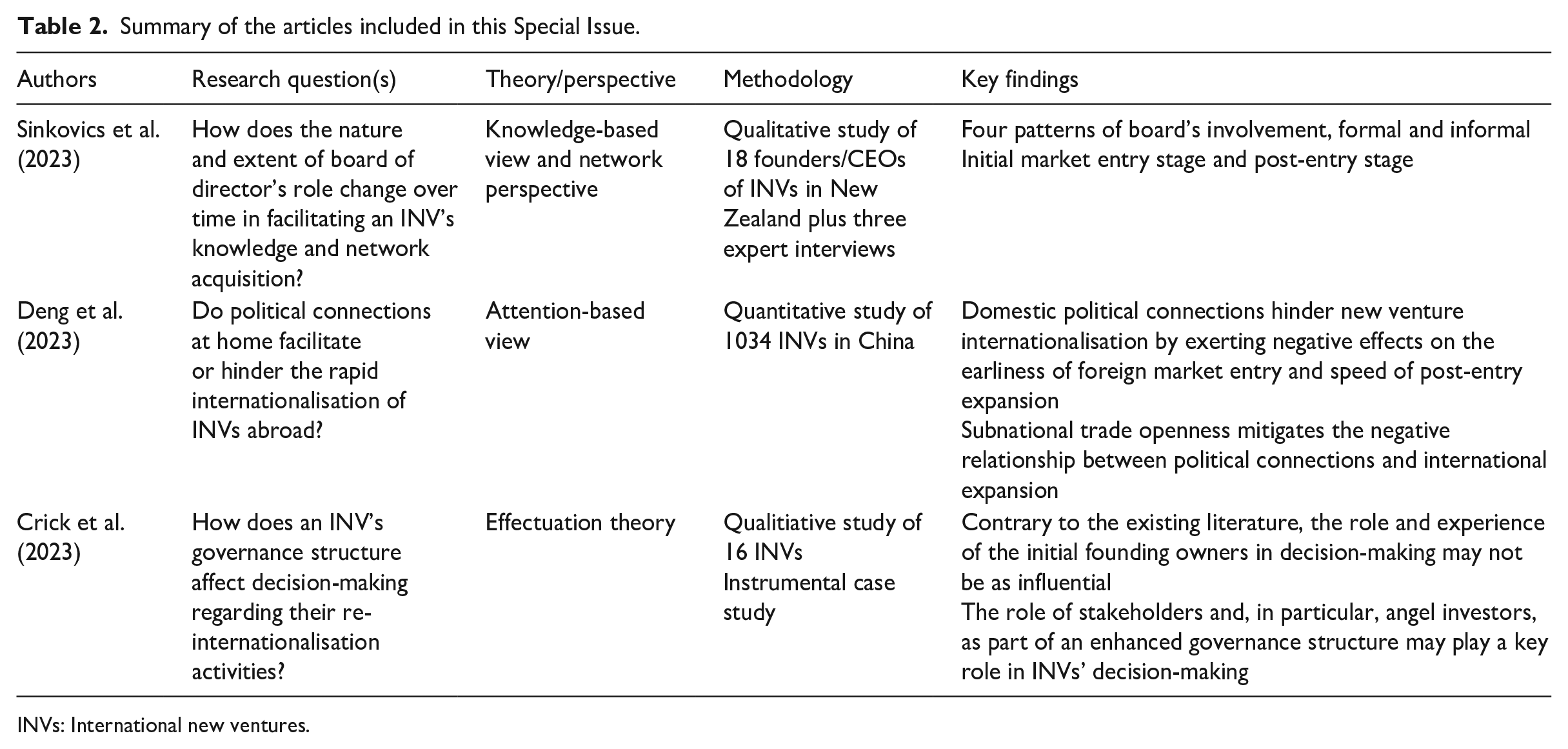
In terms of the selection process, our call for papers elicited a strong response, whereby we received 13 submissions covering a wide variety of topics related to corporate governance in INVs and BG firms. After a rigorous review process, three articles were selected for inclusion in this Special Issue. These are summarised in Table 2.
Summary of the articles included in this Special Issue.
INVs: International new ventures.
In the first article of this Special Issue, the paper by Sinkovics, Fielder, Fath and Sinkovics examines how the nature and extent of board of director’s role change over time in facilitating an INV’s knowledge and network acquisition. Based on the knowledge-based view (KBV) and network perspective, and adopting a qualitative study of 18 founders/CEOs of New Zealand-based INVs plus three expert interviews, Sinkovics et al. find four patterns of board’s involvement, formal and informal. In addition, they find key distinctions between the initial market entry and post-entry stages. The study contributes to the literature by examining the mechanisms by which formal and informal boards of directors may act as an accelerator (on ramp) or decelerator (speed bump) during the different phases of INV internationalisation (e.g., initial foreign market entry, post-entry growth expansion). Building onto the work of Sinkovics et al., future studies could examine the resource provision, strategic, and monitoring role played by boards as well as the composition of the boards during the lifespan of INVs and BGs across different institutional settings. Such studies could draw insights from the agency and comparative institutional perspectives and investigate the changing nature and dynamics of corporate governance as INVs and BGs mature (cf. Aguilera and Jackson, 2010; Filatotchev et al., 2006; Hall and Soskice, 2001; Pye and Pettigrew, 2005).
The second article by Deng et al. (2023) examines the intriguing research question of whether domestic political connections facilitate or hinder the rapid internationalisation process of INVs. Adopting an attention-based view, the authors conduct a quantitative study based on secondary data of 1034 INVs based in China. The results indicate that domestic political connections hinder new venture internationalisation by exerting negative effects on the earliness of foreign market entry and the speed of international market expansion. In addition, the authors find that subnational trade openness mitigates the negative relationship between political connections and international market expansion. The key contribution of the study relates to examining the previously underresearched role of political connections on INV internationalisation. In addition, the authors contribute to the literature by incorporating the previously neglected mechanism of attention distribution of decision-makers in INVs. Going forward, scholarship could investigate the political connections of boards along with the political ties of the entrepreneurs in home market as INVs and BGs expand into foreign markets, and whether such home market-based political connections enable INVs and BGs originating from emerging markets to establish legitimacy in host markets. As governments of emerging markets tend to increasingly liberalise their economies and INVs and BGs expand into foreign markets with different governance regimes in place, it would be interesting to study the evolution of boards during the different life stages of INVs and BGs.
The third and final article of the Special Issue by Crick, Crick and Chaudhry investigates how an INV’s governance structure may affect the decision-making regarding their re-internationalisation activities. Drawing upon the effectuation perspective, the authors conduct an instrumental case study using semi-structured interviews with 16 INVs. They find that contrary to the existing literature, the role and experience of the initial founding owners in decision-making may not be as influential as previously suggested. Instead, they find that the role of stakeholders, and, in particular, angel investors, as part of an enhanced INV governance structure, may be instrumental in decision-making. The study contributes to the literature by providing new insights on the importance of decision-makers validating internationalised business models and exhibiting an ability to pivot product-market strategies. Building onto the work of Crick et al. future scholarly work could examine the role of both internal and external governance systems (e.g., the role of angel investors, venture capitalists and private equity and founding entrepreneur) in the initial entry, divestment and re-entry-related decisions undertaken by INVs and BGs in different markets (cf. Collewaert et al., 2021). Such studies could also explore the impact of external governance systems on the business model scaling up by INVs and BGs across different foreign markets.
Future research trajectories of corporate governance in INVs and born global firms
The key aim of this Special Issue was to understand the role of corporate governance in INVs and BGs, given the significant role such firms play in the global economy. The three papers included in this Special Issue cover a wide range of issues concerning corporate governance in INVs and BGs. These encompass the role of the board’s changing involvement at different internationalisation stages (Sinkovics et al., 2023), external issues, such as the role of political connections in new venture internationalisation (Deng et al., 2023), and microfoundations elements, such as the role of the individual founder in the decision-making process versus the role of external stakeholders, including angel investors (Crick et al., 2023). In addition, the three papers in the Special Issue adopt different theoretical perspectives, such as KBV, attention-based view and effectuation theory, along with different institutional contexts, ranging from small and open economies (e.g., New Zealand), and countries with stronger government interference in business, such as China. However, there are still several potential areas for future research on the topic of corporate governance in INVs and BGs, which we identify below.
Evolutionary process of INVs/BGs and corporate governance
INVs/BGs go through various stages of development (Gabrielsson et al., 2008; Hagen and Zucchella, 2014), and they face different sets of challenges during their lifespan (e.g., initial stage, growth, mature and decline stage, etc.). Thus, it would be interesting for future studies to track the challenges associated with each of the life cycle of INVs/BGs, as well as the corresponding challenges faced by the entrepreneurs/managers and boards. Such studies could provide important insights into the organisational dynamics and the role of boards during the life cycle of INVs/BGs (Bonn and Pettigrew, 2009). Future studies adopting the life-cycle approaches and longitudinal research design could offer valuable insights about the role of corporate governance in enhancing the competitive advantage and sustainable businesses of INVs/BGs across different institutional settings. In addition, along with the evolution of INVs/BGs, the role of younger, middle and mature entrepreneurs and their interactions with the boards in supporting the evolution of these entrepreneurial firms (e.g., initial entry, post-entry survival, growth and exit) across different markets could provide insights on the performance of early internationalising firms and opportunity recognition and exploitation in different markets.
For illustrative purposes, Figure 4 presents an example of the evolution of the governance during the internationalisation in both INVs/BGs and firms which follow the incremental internationalisation path. The change in the stages of internationalisation may be caused by critical incidents (Bell et al., 2001) that also have consequences from the governance perspective. For example, as the firm enters the growth stages of its life cycle, financial, regulatory or market-related factors may require changes both in the management (e.g., entrepreneur steps down) and in boards (e.g., someone having experience from new target countries or from the target industry would be recruited).
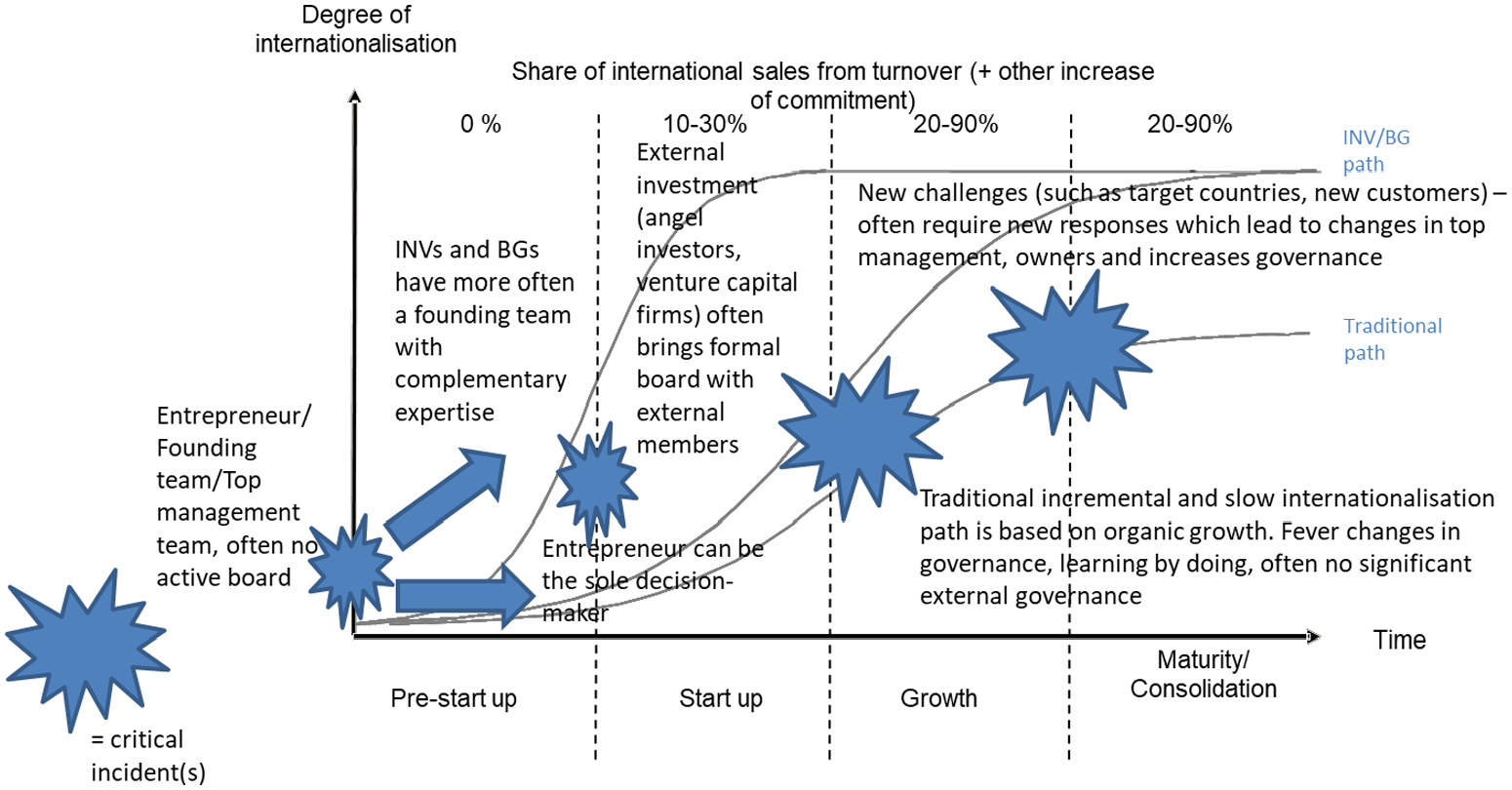
Internationalisation and governance changes.
There would also be a difference between INVs/BGs and traditionally internationalising firm governance. First, there is evidence that many internationally growth-oriented firms have a founding team instead of sole entrepreneur (Hashai and Zahra, 2022). Second, external investment often brings ‘smart money’ and therefore, the influence of external board members can occur from start-up phase if such funding becomes essential for INVs and BGs to internationalise (Andersson et al., 2013; Moen et al., 2008).
Microfoundations of corporate governance in BGs and INVs
An interesting area of future research for IE scholars is to examine corporate governance and board decision-making. In particular, investigating the relationships between composition of the board of directors, decision-making and its impact on international performance would likely advance our knowledge at micro-foundational level. Microfoundation decision-making in INVs and BGs can be examined from many angles. For example, gender diversity on boards has captured only recent attention in IE. Wang et al. (2022) investigated the relationship between gender diversity in boards of directors and firms’ IE, assessing how state ownership and ownership concentration moderate this relationship. Future studies could examine the number of women on the board as well as the optimal degree of gender diversity and the ways in which it enhances INVs/BGs performance and survival in host markets. A further branch of this topic would be to examine the influence of family involvement on boards and IE in family firms (Casillas and Moreno- Menéndez, 2017). Research is emerging into the impact of experience and reputational value of external actors on boards, such as venture capitalists, on the internationalisation of new ventures (Park and LiPuma, 2020). Also, future studies could investigate the role of board decision-making in addressing the grand challenges of sustainability, corporate social responsibility/political strategies of INVs/BGs in different host markets.
The role of context in developing economies
When compared with internationalising SMEs from developed economies, good corporate governance practises can become a greater challenge for internationalising SMEs from developing economies. Such challenges can arise from weaker institutional, legal and regulatory mechanisms (Wen et al., 2023). Going forward, the influence of national and institutional context is important in understanding corporate governance and its impact on INVs and BGs. A further avenue of research could therefore, be to examine corporate governance practices and the internationalisation of SMEs in developing market contexts.
Adoption of multi-disciplinary approaches with multiple theories
Another interesting potential area for future research relates to adopting multi- and inter-disciplinary approaches to studying the phenomenon of corporate governance in INVs and BGs. For example, the finance literature and Organisational Behaviour/Management literature may provide further insights when studied in the context of IB and IE. As mentioned earlier, the three papers in this Special Issue are mainly grounded in the IB and IE literature. Future research may adopt a multi- and/or interdisciplinary approach with multiple theories to advance our knowledge in this area (e.g., agency theory, resource-dependence theory, etc.) (Aguilera et al., 2019; Filatotchev and Wright, 2011).
Funding issues (internal vs external)
The role of the boards in INVs and BGs in terms of funding and role of external financiers is another pertinent issue for further exploration (see also Figure 4). More specifically, it would be interesting to examine the differences between external funding from external stakeholders, such as angel investors, venture capital and internal financing/funding (Chemmanur et al., 2016; Humphery-Jenner and Suchard, 2013). The finance literature could provide valuable insights in this respect.
Adoption of diverse methodologies
There is also a need to examine the role of corporate governance in INVs/BGs from diverse methodological approaches. Majority of the extant studies on corporate governance are quantitative in nature; thus, future studies could adopt diverse approaches such as experimental research design, longitudinal process studies, ethnographic and multiple qualitative case studies from different contexts in order to fully capture the role of boards in creating or destroying value for INVs/BGs. The dark side role of boards can potentially provide novel insights about the negative impact of boards in value creation and capture by INVs/BGs across different markets.
Unit of analysis (individual vs firm vs network)
The unit of analysis is another potential future research area in that it is critical that studies should clearly define their unit of analysis (e.g., individual vs firm vs network). Traditionally, the entrepreneurship literature tends to focus on the individual (e.g., manager, entrepreneur), while the IB literature often adopts the firm or network as the unit of analysis (Gerschewski et al., 2016). Future research may embrace multi-level studies investigating the complexities of corporate governance structures and practices from multiple angles and perspectives, thus providing an integrated view of these phenomena in INVs and BGs.
In conclusion, we believe that this introductory article and the three papers in this Special Issue have advanced our knowledge of corporate governance in INVs and BGs. Going forward, we hope that this will spark the interest of scholars and practitioners in this key area of organisational structure and strategy.
Footnotes
Acknowledgements
The authors are listed alphabetically, and all authors contributed equally to this article and the editing of the Special Issue. We are thankful to Professor Susan Marlow for her valuable editorial guidance, and to Valerie Thorne for her assistance. We also want to express our gratitude to all the authors and reviewers whose important contributions made this Special Issue possible.
Funding
The author(s) received no financial support for the research, authorship, and/or publication of this article.
