



Abstract
This article examines whether an enterprise education competition is gendered and so, may have unintended gendered outcomes for male and female Science, Technology, Engineering and Mathematics (STEM) early-career researcher participants. Sex-based differences in entrepreneurial intentions (EI) and entrepreneurial self-efficacy (ESE) are examined and, drawing on Social Cognitive Career Theory, we explore perceived gender-barriers to entrepreneurship and their influence upon ESE and EI. Employing pre- and post-survey data from 120 STEM early-career researchers participating in the competition, we undertook t-tests, difference-in-differences and hierarchical-regression analyses. We found no significant sex-based differences in EI and ESE. Participation in the competition had a significant impact upon perceived gender-barriers for both sexes; perceptions of stereotype threat and childcare-work conflict barriers were reduced for women post-participation, while their perceived lack of role models increased. Gender-barriers were found to have a significant negative influence on ESE and EI. We contribute to developing intention-based analysis beyond traditional gender-blind measures through incorporating gendered structural barriers which demonstrably influence EI.
Introduction
Feminist scholars point towards the need to investigate embedded social cognitive associations that frame entrepreneurship as a masculine concept (Marlow and Martinez-Dy, 2018) and to explore how such constructions affect the entrepreneurial intentions (EI) of women in Science, Technology, Engineering and Mathematics (STEM; Treanor, 2022; Wheadon and Duval-Couetil, 2018). As entrepreneurial education (EE) fosters entrepreneurial competences and intentions, equipping individuals to generate and realise ideas (Lackéus, 2020; Pocek et al., 2022), it has the potential to contribute to increasing rates of entrepreneurial activity among STEM women (Neumeyer, 2020). However, the effectiveness of entrepreneurship courses for women is questioned given their relatively lower levels of entrepreneurial self-efficacy (ESE) and entrepreneurial intentions post-participation (Westhead and Solesvik, 2016), with women considering entrepreneurship a less attractive career option (Nowiński et al., 2019).
Enterprise education competitions (EECs) enjoy increasing popularity given their recognition as a good practice vehicle of EE (QAA, 2018), enhancing enterprise skills and competencies among individuals (Pocek et al., 2022; Watson et al., 2018). Such EECs are defined as experience-based learning activities requiring individuals or teams to develop proposals for products or services (Brentnall et al., 2018a), which are then adjudged by industrial and investment experts on their commercial merits (Watson et al., 2018). Within higher education (HE), such EECs and/or business plan competitions are employed as a pedagogical tool to enhance rates of student entrepreneurial activity (Wegner et al., 2019). However, they are not without their critics (Watson and McGowan, 2019; Wegner et al., 2019) given suggestions they reproduce the typical ‘middle-class’ entrepreneurial norm (Brentnall et al., 2018b). With this in mind, if the masculine entrepreneurial norm is also reproduced within EECs, as it reportedly is within conventional EE interventions (Jones, 2014), this could reduce the EI of women; however, this has yet to be explored. Thus, to contribute to this debate, we adopt a gender-aware approach to explore potential gendered outcomes of an EEC programme upon female STEM early-career researchers (ECRs).
Drawing upon the concept of ‘perceived gender-barriers’ from the career literature (Lent et al., 2018, 2000), we highlight the significant impact of the EEC upon perceived gender-barriers to entrepreneurship and, particularly, their influence upon the ESE and EI of female participants. Our study informs feminist critiques of entrepreneurship literature that challenge the notion of women as deficient (Marlow, 2020) by highlighting the influential effects of gender-related structural issues (Kuschel et al., 2020), and assumptions (Laguía et al., 2022) upon women’s entrepreneurial learning and intentions. We offer a novel theoretical model of EEC impact upon EI by drawing upon Social Cognitive Career Theory (SCCT; Lent et al., 2000) to incorporate established career barriers into this study. Thus, we contribute to theory development relating to EI by expanding the scope of intention-based analysis beyond traditional gender-neutral measures by adopting a gender-aware approach incorporating perceived structural barriers that may influence EI (Laguía et al., 2022).
To examine whether this EEC, tailored for STEM ECRs, is gendered or may have unintended gendered outcomes we undertook quantitative analyses, comprising t-tests, difference-in-differences, and regression analysis, of 120 pre- and post-competition surveys. Our research objectives were:
(1) To establish if there are sex-based differentials among participants in ESE, EI, and three perceived gender-barriers to entrepreneurship: (a) stereotype threat, (b) childcare-work conflict and (c) lack of role models;
(2) To examine the degree to which these perceived gender-barriers influence the ESE and EI of participants.
The Young Entrepreneur Scheme (YES) 2019, the focal EEC of this study, is a three-day national event specifically designed to enhance the commercialisation knowledge and communication skill set among UK STEM ECRs comprising doctoral students and post-doctoral researchers (Treanor et al., 2021). We focus on this sample due to the emerging, but overlooked, phenomenon of entrepreneurial activity among STEM ECRs (Feola et al., 2019). This annual EEC, open only to STEM ECRs at UK Universities and Research Institutes, has been organised by a leading Russell group university in partnership with the Biotechnology and Biological Sciences Research Council (BBSRC) since 1990, with support from industry sponsors.
To explore these issues, the article is structured as follows. We outline the theoretical framework informing the research hypotheses and the proposed model of relationships among the constructs under investigation before discussing the research methodology. Having presented and discussed the results in relation to the extant literature, the paper concludes with consideration of the limitations, contributions, and implications of the research findings.
Theoretical framework and hypotheses development
EI and its determinants
EI are “states of mind that direct attention, experience, and action toward a business concept” (Bird, 1988, p.442). EI is among the most widely employed constructs used to measure an individual’s tendency to commit to entrepreneurial behaviour (Belchior and Lyons, 2022; Santos et al., 2021) and so, is the most prominent impact measure of entrepreneurship courses (Piva and Rovelli, 2021; Wegner et al., 2019). To examine EI, scholars employ several intention-based models with Ajzen’s Theory of Planned Behaviour (TPB) and Shapiro’s Entrepreneurial Event Model (SEE) the most widely adopted (Shinnar et al., 2018). However, these models overlook the complexities of social reality, particularly the impact of contextual factors on EI (Liguori et al., 2018) such as industrial and financial support (Feola et al., 2019). Additionally, the linear nature and emphasis on individual-level analysis of TPB and SEE can cause inconclusive results and inconsistent EI patterns (Liguori et al., 2018). For example, some studies found no sex-based difference in EI between male and female students (Díaz-García and Jiménez-Moreno, 2010; Santos et al., 2016) while others assert women report lower EI than men (Elam et al., 2019) This has led to calls for alternative theoretical models incorporating critical and more complex analyses of factors influencing EI (Liguori et al., 2018). In response, we employ SCCT to examine the interest of individuals in an entrepreneurial career. SCCT is a suitable theoretical framework for this study given its recognition of the complexity of social reality and the influence of context upon individual’s career intentions (Belchior and Lyons, 2022); factors particularly relevant to a gender-aware exploration of the impact of EEC participation upon the EI of STEM women (Cadaret et al., 2017).
Entrepreneurial self-efficacy (ESE), an individual’s perception of their possession of the skills and abilities required to successfully start a business (Bandura, 1986), is a significant antecedent of EI (Wilson et al., 2007). ESE is found to have a stronger influence upon women’s EI than that of their male counterparts (Shinnar et al., 2014), with the effect stronger in developed countries such as the UK (Renko et al., 2021). Potentially due to internalised gender stereotypes, women tend to perceive they have less ability in finance, decision making and risk-taking than male counterparts (Pfeifer et al., 2016) and so, consider they are less able to pursue careers within male-dominated arenas such as STEM disciplines or entrepreneurship (Wheadon and Duval-Couetil, 2018).
An individual’s attraction or motivation to start a business is also said to influence their EI (Vamvaka et al., 2020). While women are often regarded as pursuing business start-up for autonomy and the flexibility to balance family and work demands, men are assumed to pursue entrepreneurship for wealth-creation and personal challenge (Maes et al., 2014). These findings and constructions may reflect the influence of socially constructed gender stereotypes relating to ‘fit work’ for men and women, and the influence of the stereotypical masculinity associated with STEM entrepreneurship upon STEM women’s careers (Treanor et al., 2021a). Thus, we need to adopt a gender-aware perspective to identify the influence of sexism/gender-barriers on the ESE and EI of STEM women (Laguía et al., 2022) and explain how structural barriers perpetuate gender inequalities within STEM entrepreneurship (Wheadon and Duval-Couetil, 2018).
Gender stereotypes and assumptions within STEM academic entrepreneurship
Within this study, the term ‘sex’ refers to biological sex (male, female); ‘gender’ is understood as a social construction wherein power is differentially distributed across social networks, elevating the male and masculine and subordinating the female and feminine (Treanor and Marlow, 2021). Thus, women tend to be regarded as weak, passive, caring and better suited to domestic roles and responsibilities; whereas men are regarded as strategic, assertive, agentic and persistent; qualities and characteristics associated with entrepreneurs (Ahl, 2006; Treanor and Marlow, 2021). The stereotypical entrepreneur is portrayed as a heroic, maverick, self-made man (Raible and Williams-Middleton, 2021); this image is particularly salient to define growth-oriented innovative entrepreneurs who create STEM ventures (Kuschel et al., 2020). Consequently, the masculine constructions and cultures of STEM actors, sectors and environments can deter women’s entry into such fields (Marlow and McAdam, 2015). Women who do possess STEM entrepreneurial ambitions face challenges due to perceived lack of fit with the construction of the ‘typical’ STEM entrepreneur (Treanor, 2022), which contributes to the gender gap in STEM entrepreneurship and constrains their research commercialisation activity (Kuschel et al., 2020). Indeed, this is illustrated by lower rates of spin-out activity among women STEM academics, given institutions tend to support more senior faculty such as professors wishing to engage in commercialisation (Griffiths et al., 2020). Women also face discrimination (Bolzani et al., 2021); stereotypes portraying them as lacking commercialisation skills (Malmström et al., 2017) inform their greater difficulties accessing finance (Kuschel et al., 2017) and constrained career progression (Kuschel et al., 2020). Although the proportion of women applying for patents and owning spin-out companies has increased, the gender gap within STEM academic entrepreneurship persists (Abreu and Grinevich, 2017).
Such under-representation has been simplistically attributed to lower rates of ESE and EI but such claims do not acknowledge gendered assumptions and barriers (Laguía et al., 2022). Hence, it is suggested that entrepreneurship courses may benefit STEM women more than their male peers and so, enhance rates of women’s STEM entrepreneurial activity (Nowiński et al., 2019). Reviewing the influence of gender and related structural barriers on women’s STEM careers and entrepreneurial activities, therefore, offers critical insights into the contested and confounding findings relating to the influence of entrepreneurship courses upon women’s ESE and EI.
EECs: Overview and critiques
Espoused by the European Commission as a good practice vehicle of entrepreneurial education (QAA, 2018), EECs have been variously termed business plan competitions (Watson et al., 2018), entrepreneurship competitions (Wegner et al., 2019), entrepreneurship education competitions (Treanor et al., 2021b), competition-based entrepreneurship education (Watson and McGowan, 2019) and start-up competitions (Passaro et al., 2017). These terms, often used interchangeably, lack defined boundaries. However, business plan competitions typically focus on the development of a traditional type of business plan (Watson and McGowan, 2019). Given that enterprise education aims to support participants, “to generate ideas, the behaviours, attributes, and competences to make them happen” (QAA, 2018, p. 9), the term EEC is more accurate. ‘EEC’ befits the pedagogical design of YES which is extra-curricular, occurs in industry-settings and develops entrepreneurial competencies among participants (Treanor et al., 2021b).
EECs are said to have become an important part of extra-curricular activities offered by universities due to their enhancement of enterprise-related knowledge and skills (Pocek et al., 2022; Watson et al., 2018) and the subsequent entrepreneurial activity of participants (Mann et al., 2017). However, there is some evidence for inconclusive results or limited effects. Wegner et al. (2019) found that EEC programmes, delivered as part of a university’s push strategies to enhance student entrepreneurial activity, do not significantly affect their EI. Within secondary education, EECs have been critiqued for reproducing the typical ‘middle-class’ entrepreneurial norm, demotivating disadvantaged students who do not perceive they possess the communication skills and confidence sought by competition judges (Brentnall et al., 2018b). It is acknowledged that the impact of EECs upon school-students and ECRs may differ. Nevertheless, as competitiveness is deemed a masculine trait (Ahl, 2006), EECs may unintentionally reproduce a masculine norm with similar demotivating effects for participating women in HE.
Despite the scarcity of studies examining the impact of EECs upon men and women, EE in general is critiqued for having limited benefits for women with evidence indicating that such programmes only increase ESE and EI of male students (Shinnar et al., 2014). Conversely, it has been suggested that women may experience higher change differentials in perceived ESE and EI as they commence from much lower baselines than male counterparts; however, they still appear to have lower rates of ESE and EI post-participation (Nowiński et al., 2019; Westhead and Solesvik, 2016).
Given entrepreneurship is generically treated as gender-neutral, EE programmes are typically delivered using a gender-blind approach (Jones, 2014). Consequently, they are likely to unconsciously reproduce masculine norms and role-models for participants, given competition formats deploy the greatest intensity of masculine language (Jones and Warhuus, 2018). Extrapolating from these findings, EECs may lead to women participants facing negative self-perceptions around their ‘fit’ or suitability for entrepreneurial activity which, in turn, negatively influence their self-efficacy and EI (Jones and Warhuus, 2018). Accordingly, our first hypotheses posits:
Gender-barriers to STEM entrepreneurship
Gender-barriers are described as assumptions and influences that negatively affect career progression (Lent et al., 2000). Lent et al. (2018) posit that perceived barriers also constrain women’s self-efficacy thereby, indirectly influencing their career choices and goals such that perceived barriers hinder STEM women’s self-efficacy and decisions to pursue STEM careers. Gender-barriers to entrepreneurship are those related to women’s pursuit of entrepreneurship as a career-choice based upon their sex (Wheadon and Duval-Couetil, 2018). We incorporate those barriers identified as having a negative contextual influence on the careers of women entrepreneurs into our study, namely: stereotype threat, childcare-work conflict, and a lack of role models.
Stereotype threat
Although the influence of stereotype threat on engineering women’s career interests and choices has been extensively examined, little is known regarding the impact of entrepreneurship courses on negative gender stereotypes towards women’s entrepreneurship among female students (Laguía et al., 2022; Wheadon and Duval-Couetil, 2018). Stereotype threat occurs “when one is in a situation or doing something for which a negative stereotype about one’s group applies” (Steele, 1997, p.614). It acts as a barrier to women entering careers incongruent with their biological sex (Türko, 2016). Thus, STEM women and women entrepreneurs may perceive gender-incongruent domains as threatening (Cadaret et al., 2017). Negative social stereotypes reduce STEM women’s self-efficacy and task performance due to pressure and anxiety that poor performance would confirm the negative stereotypes held towards them with the result that they are distracted and perform to that stereotype (Cadaret et al., 2017). An entrepreneurship programme, specifically designed to counter negative gender stereotypes, was shown to be effective in reducing perceived negative stereotypes held by both male and female students towards women’s entrepreneurship (Türko, 2016). Such considerations are not typical of EE intervention design meaning an EEC programme may unintentionally reinforce gender stereotypes and stereotype threat for women participants.
Childcare-work conflict
Childcare responsibilities are a key structural barrier for the female workforce (Marlow and McAdam, 2012; Treanor and Marlow, 2021), with employers and business partners discriminating against STEM women due to potential future maternity (Bolzani et al., 2021). Consequently, STEM women have a binary choice: (a) being a sole caretaker of the family and compromising their careers, or (b) outsourcing the caretaking role to their partners or child-minders and foregoing the childcare opportunity (Marlow and McAdam, 2012). Treanor (2019) found that young STEM academic researchers deemed ‘maternity threat’ as a potential barrier to academic career progression, with some participating in EE to explore STEM entrepreneurship and alternative career-options.
Lack of role models
A lack of female role models is a commonly identified problem for STEM women entrepreneurs (Kuschel et al., 2017; Neumeyer, 2020). Role models symbolise that entrepreneurial success is possible and can motivate young people to engage in entrepreneurship (Byrne et al., 2019). Female role models help women confront stereotypes influencing personal attitudes, self-efficacy, perceived social support and career intentions and thus, inform women’s decisions to pursue non-traditional careers (Austin and Nauta, 2015). Although role models influence ESE and, in turn, the EI of men and women (Nowiński and Haddoud, 2019), their impact is stronger for women (BarNir et al., 2011). However, female role models may also increase awareness among women students of their underrepresentation and highlight discrimination (Breda et al., 2018). Some entrepreneurial women role models may also have a negative motivational effect if they portray themselves as heroic superwomen, deny the existence of gender-barriers and portray entrepreneurship as easily facilitating working-mothers to balance childcare and work responsibilities (Byrne et al., 2019). Hence, it is expected that women participants will perceive higher gender-barriers concerning stereotype threat, childcare-work conflict and lack of role models, than their male counterparts, both before and after EEC participation. Thus, we posit:
Gender-barriers, ESE and EI
Gendered ascriptions within STEM entrepreneurship influence interactions between women and various stakeholders, limiting women’s access to resources or support (Kuschel et al., 2020; Wieland et al., 2019). Research suggests that STEM women perceive themselves and their business environment less favourably than male counterparts (Marlow and McAdam, 2015). These gender stereotypes that distance women from high-growth, advanced-technology and STEM entrepreneurship (Wieland et al., 2019) deleteriously affects their ESE and EI such that, women possess relatively lower self-efficacy and have less desire to start a business in domains perceived incongruent with their biological sex (Laguía et al., 2022). As such, women who perceive stronger gender-barriers possess less self-efficacy and less interest in STEM careers (Lent et al., 2018; Wieland et al., 2019) and STEM entrepreneurial activity (Laguía et al., 2022). Stereotype threat affects STEM women’s confidence in their ability to successfully pursue STEM careers and negatively influences the desirability of STEM career domains, perceived incongruent with their biological sex (Cadaret et al., 2017). Childcare-work conflict influences some STEM women to investigate entrepreneurship as an alternative career (Marlow and McAdam, 2012; Treanor, 2019); however, its influence upon perceived self-efficacy remains unknown. Role models were also found to strongly influence women’s ESE and EI (BarNir et al., 2011; Byrne et al., 2019).
We examine the relationship between these constructs through the following hypotheses:
The summary of the relationship between the theoretical concepts and hypotheses presented above is shown in Figure 1.
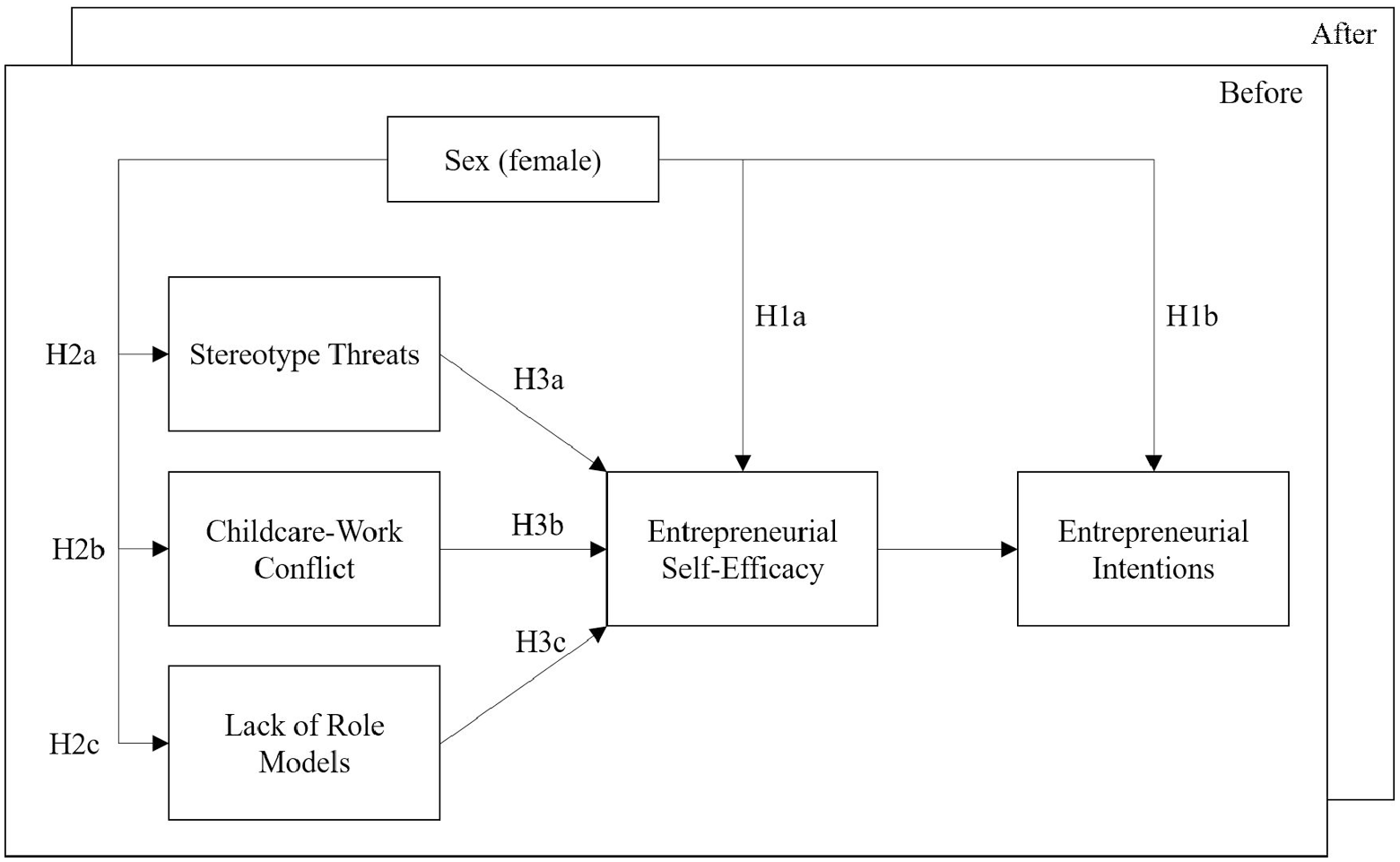
Proposed model of relationships among key constructs of study.
The EEC programme background
YES2019, delivered by a leading Russell Group UK university, is the focal EEC for this study. It is one of the first university-based, short-term, non-compulsory EEC programmes aimed at developing the commercialisation awareness and communication skill set of STEM ECRs across UK Universities (Mosey et al., 2012). To date, over 6300 ECRs have participated. The pedagogical design of the YES programme 1 aligns with teaching ‘through’ entrepreneurship, encompassing experiential learning. YES2019 was delivered as a series of three-day workshops for cohorts under three themes: (a) biotechnology, (b) engineering and (c) environment. The competition format is summarised in Figure 2.
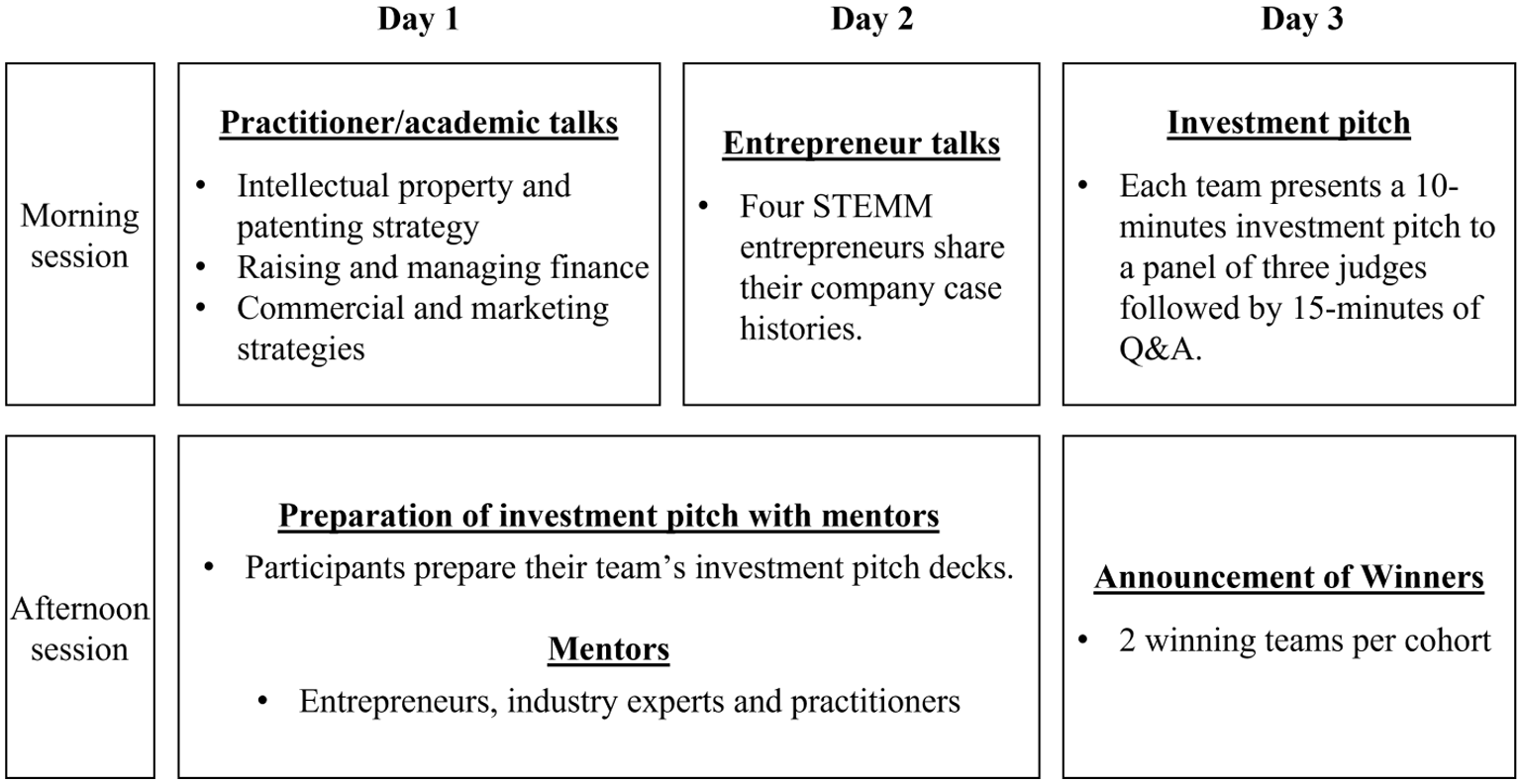
Structure of the YES programme.
The initial period of the competition consists of talks from STEM-entrepreneurs, academics and practitioners regarding commercialisation strategies and STEM-company case studies. Participating STEM ECRs then collaborate within their self-selected teams of four to five members to prepare an investment pitch, availing of mentoring sessions with business advisors, Intellectual Property (IP) lawyers and investors. On the final day, participants present their 10-minute investment pitch for their hypothetical-but-plausible business to a panel of three judges, followed by a 15-minute question-and-answer session. At the end of each competition round, two winning teams per cohort are selected to advance to the national final. Winning teams receive non-financial awards including a company visit, BioIndustry Association gala dinner tickets and online training worth £800 per person.
Methodological approach
To test the hypotheses, we employ a quantitative approach utilising pre- and post-competition surveys. Studies examining the impact of entrepreneurship courses on ESE and EI typically adopt a quantitative approach (Piva and Rovelli, 2021; Shahab et al., 2019), with measures providing quantitative descriptions of the characteristics, behaviours and attitudes towards entrepreneurial activity of EE participants before and after course participation, facilitating the generalisation of EE research findings to a wider context (Bae et al., 2014). Quantitative analyses of levels of ESE and EI among participants pre- and post-participation is appropriate to determine any gender differential in impact of an EEC format.
Sample
The sample consists of STEM female and male ECRs who participated in YES2019 across all cohorts. Researchers examining the impact of entrepreneurship courses typically do not employ a sampling strategy, preferring to include as many programme participants as possible to maximise sample size (Fayolle and Gailly, 2015). We also adopt this non-probability sampling method and, therefore, the results of this study cannot be viewed as representative of the UK population. This study compares male and female participants who self-selected into the YES2019 programme. Male participants acted as the control group for female participants, with inferences drawn relating to the impact of the EEC upon female participants, similar to the approach adopted in the extant literature (Fayolle and Gailly, 2015; Nowiński et al., 2019).
Data collection and respondents
Before data collection, seven male and female STEM PhD students were asked to complete pilot surveys to test for clarity; minor amendments were made based on feedback. Ethical approval was obtained before the fieldwork commenced. The final surveys were electronically distributed, using Qualtrics™, to the YES2019 participant database by the YES Coordinator, pursuant to General Data Protection Regulation (GDPR) guidelines. Pre-surveys were distributed seven days before each competition round, followed by a reminder email four days later. On the first morning of each competition round, participants who had not completed the online pre-competition surveys were provided with printed surveys for completion; these were then coded into Qualtrics™. Post-surveys were distributed immediately after each competition with up to three follow-up emails issued, where necessary, to boost response rates.
Of the 139 YES2019 participants, 120 completed surveys were returned (69 female and 51 male STEM ECRs) across the 19 UK Universities represented, equating to a response rate of 86%. There was a slightly higher proportion of British (55.8%) than international (44.2%) respondents, reflective of the cohort composition. Respondents derived from biosciences (41.7%), life science (23.3%) engineering (20%), chemistry (4.2%), physics and math (2.5%) and other STEM disciplines (8.3%) – such as medicine, dentistry, pharmacy, material science and geology.
Measures
Entrepreneurial intentions
EI were measured by asking participants their likelihood of becoming a business owner on a 5-point Likert scale (1 = extremely unlikely, 5 = extremely likely), as per Mosey et al. (2012).
Entrepreneurial self-efficacy
ESE was measured by seven items (see appendix) relating to participant confidence in commercialisation skills (Lucas et al., 2009; Piperopoulos and Dimov, 2015). Respondents rated their self-efficacy on a 5-point Likert scale (1 = not confident at all, 5 = completely confident). Internal reliability (Cronbach α) was 0.860 (pre-competition) and 0.786 (post-competition) indicating a high consistency among responses within each measure (Cronbach α > 0.7) (Hair et al., 2014). Self-ratings of all items were summed without additional weighting, and the overall means were used to create a composite ESE pre-competition (t1) and post-competition (t2) for the analyses.
Gender-barriers to entrepreneurship
Participants were asked to what extent they agreed with a series of statements regarding potential barriers they may encounter to entrepreneurship; those barriers were stereotype threat (Spencer, 1993), childcare-work conflict (Swanson and Tokar, 1991) and a lack of role models (Swanson and Tokar, 1991). The measures employed for each barrier were selected based upon their subsequent empirical testing and confirmation within the career literature (see appendix). Stereotype threat was assessed by six items (Spencer, 1993). Internal reliability was 0.743 (pre-competition) and 0.797 (post-competition). Childcare-work conflict (Swanson and Tokar, 1991) was assessed by seven items. Internal reliability was 0.605 (pre-competition) and 0.912 (post-competition). Lack of role models was assessed by one item (Swanson and Tokar, 1991). Respondents rated their perceived barriers on a 5-point Likert scale (1 = strongly disagree, 5 = strongly agree). Self-ratings of each barrier were summed without additional weighting and their overall means were used to create three composite gender-barriers to entrepreneurship.
Data analysis
To test hypotheses 1a, 1b and 2a–2c, we employed the approach of Oosterbeek et al. (2010). Independent paired-sample t-tests and difference-in-differences analyses were undertaken to test for sex-based differences in ESE, EI and perceived gender-barriers. The independent variable of these hypotheses is sex; the dependent variables for each being ESE (H1a), EI (H1b), stereotype threat (H2a), childcare-work conflict (H2b) and lack of role models (H3c). To test hypotheses H3a–H3c, we employ a hierarchical OLS regression following Baron and Kenny’s (1986) guidelines (cited in Lee et al., 2011), to test the mediation effect. If the following four conditions are true, the mediation effect is confirmed: (1) the independent variables (perceived gender-barriers) must significantly influence the mediator (ESE), (2) the independent variables (perceived gender-barriers) must significantly influence the dependent variable (EI), (3) the mediator (ESE) must significantly influence the dependent variable (EI) and (4) if the full regression of the independent variables (perceived gender-barriers) and the mediator (ESE) is run on the dependent variable (EI), the independent variables (perceived gender-barriers) must not significantly influence EI.
Traditional control variables adopted in studies evaluating the impact of EE upon EI include age, income and education, with age typically used to proxy experience. Given that most EEC participants in this study are PhD (95%) and Postdoc (5%) students, there is little variation in age and, as PhDs had no prior work experience, we did not include age as a control. There is insufficient variation in these variables. In cross-sectional estimates pre- and post-EEC, they are captured in the constant term. In addition, such fixed effects are removed when difference-in-difference estimation is employed.
Descriptive statistics
The means, standard deviations, and zero-order correlations for the constructs before (t1) and after (t2) the competition are reported in Tables 1 and 2.
Descriptive statistics of constructs pre-competition (t1).
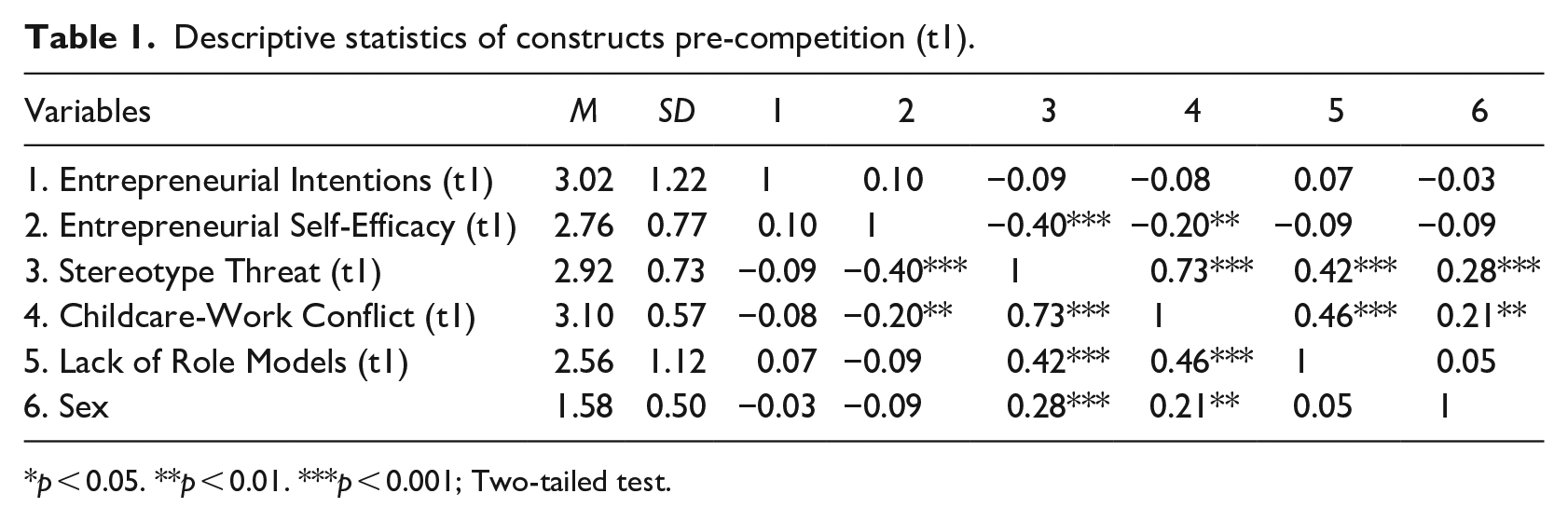
p < 0.05. **p < 0.01. ***p < 0.001; Two-tailed test.
Descriptive statistics of constructs post-competition (t2).
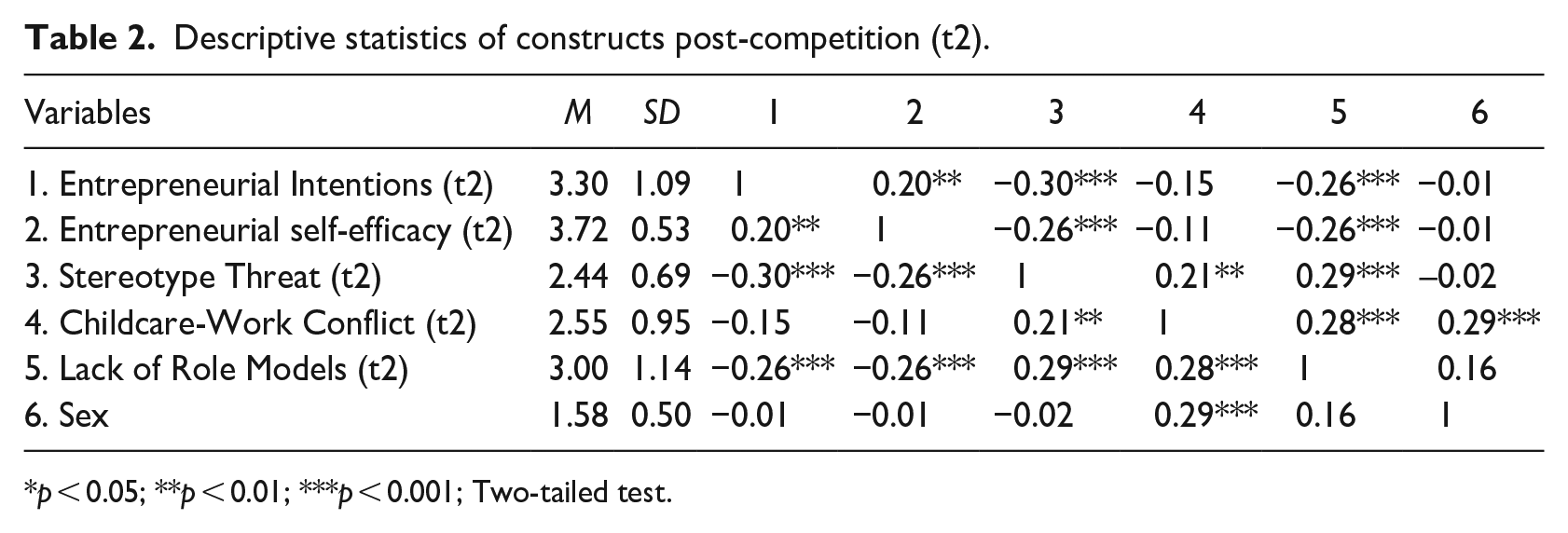
p < 0.05; **p < 0.01; ***p < 0.001; Two-tailed test.
Results
A summary of the main results is presented in Figure 3.
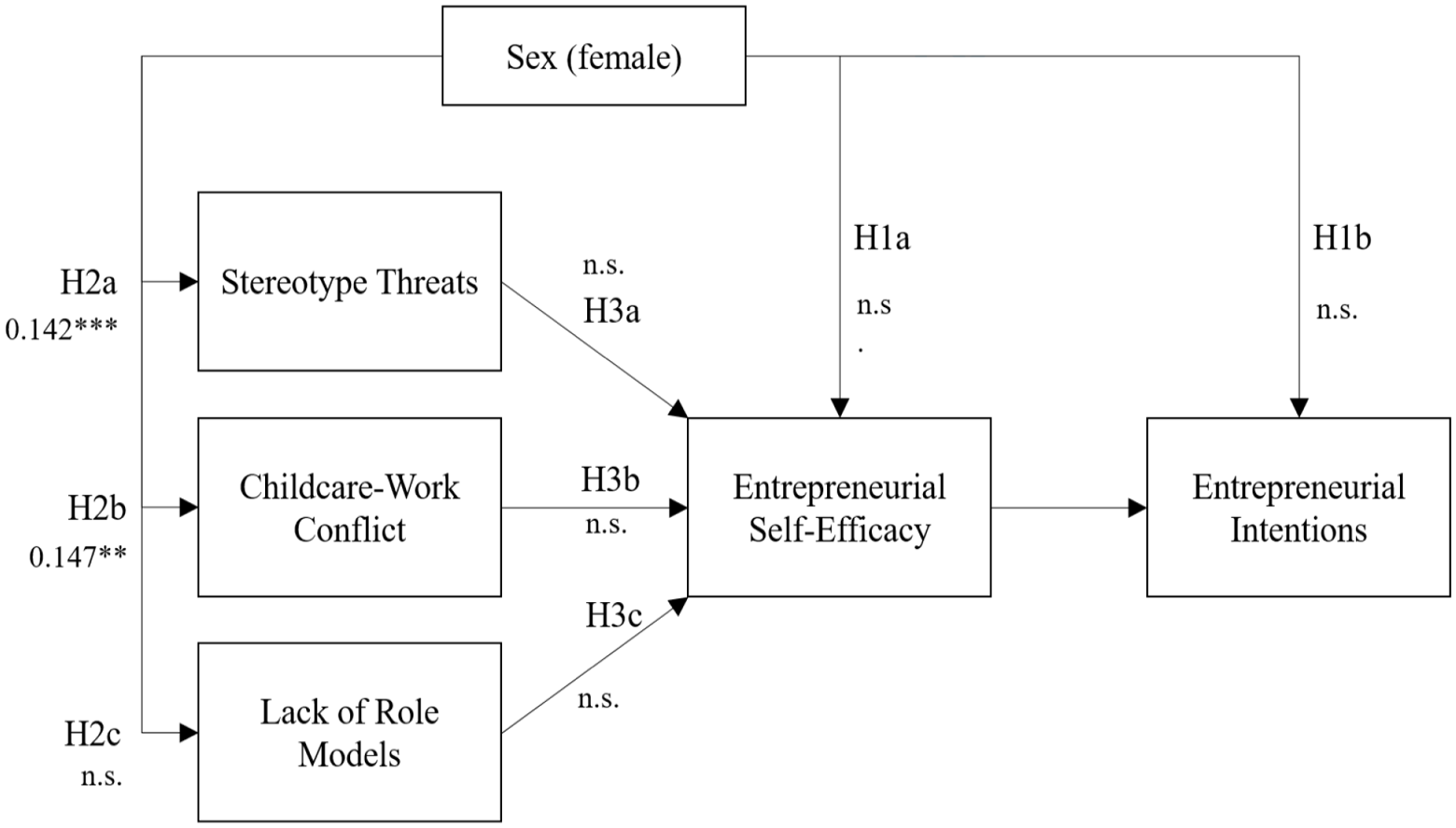
Summary of main results.
Hypotheses 1a and 1b
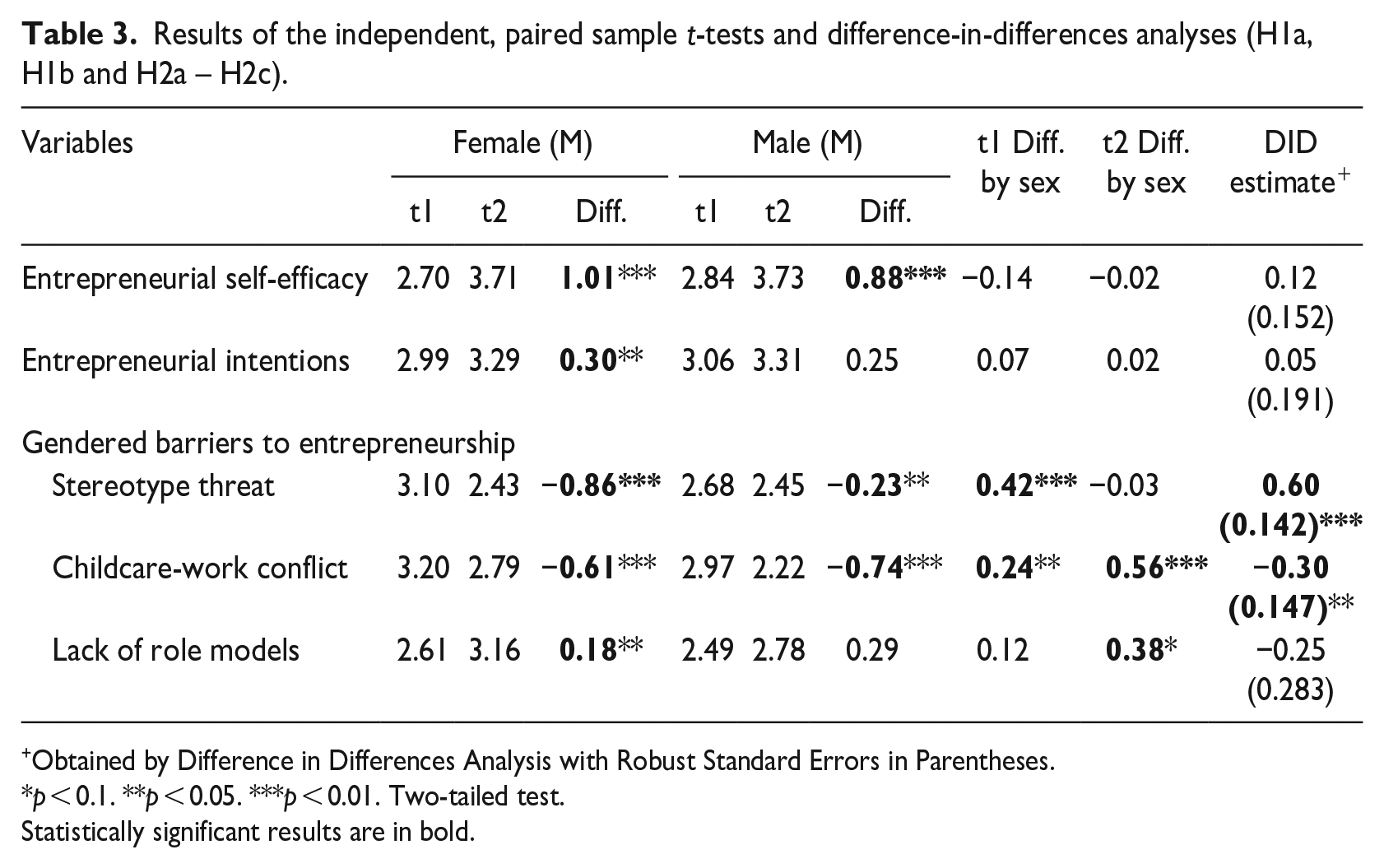
According to H1a and H1b, female participants were predicted to possess lower ESE (H1a) and EI (H1b) than male counterparts before and after attending the EEC programme. The results (Table 3) revealed no significant difference between the sexes in ESE pre- and post-competition. However, both male (mean diff. = 0.88, p < 0.01) and female (mean diff. = 1.01, p < 0.01) participants demonstrated significantly higher ESE post-competition.
Results of the independent, paired sample t-tests and difference-in-differences analyses (H1a, H1b and H2a – H2c).
Obtained by Difference in Differences Analysis with Robust Standard Errors in Parentheses.
p < 0.1. **p < 0.05. ***p < 0.01. Two-tailed test.
Statistically significant results are in bold.
There was no significant difference between the sexes in relation to EI post-competition (mean diff. = 0.30, p < 0.05). Thus, the competition had a positive impact on participant ESE and EI without being influenced by sex.
Hypotheses 2a, 2b and 2c
It was predicted female participants would perceive higher gender-barriers to entrepreneurship than their male counterparts before and after EEC-participation. These barriers included stereotype threat (H2a), childcare-work conflict (H2b) and lack of role models (H2c).
Hypothesis 2a: Stereotype threat
When compared to their male counterparts, female participants perceived significantly higher stereotype threat than male participants before attending the competition (mean diff. = 0.42, p < 0.01). This stereotype threat was significantly reduced post-competition (mean diff. = −0.86, p < 0.01), such that, the competition eliminated sex-based differences in perceived stereotype threat among participants. The significance of the impact difference between male and female participants is confirmed by difference-in-differences analysis (t = 0.142, p < 0.01).
Hypothesis 2b: Childcare-work conflict
Female participants perceived childcare-work conflict as a significantly greater barrier than their male counterparts both before (mean diff. = 0.24, p < 0.05) and after (mean diff. = 0.56, p < 0.01) EEC-participation; this difference was greater post-competition. The significance of the difference in impact of EEC participation upon the childcare-work conflict barrier between male and female participants is confirmed by difference-in-differences analysis (t = .147, p < 0.05).
Hypothesis 2c: Lack of role models
The difference-in-differences analysis showed no significant difference between the perceived lack of role models between male and female participants before and after the competition. However, female participants were more aware of the lack of role models post-competition, reflected in their significantly higher score for the perceived lack of role models barrier post-participation (mean diff. = 0.18, p < 0.05).
Hypotheses H3a, H3b and H3c
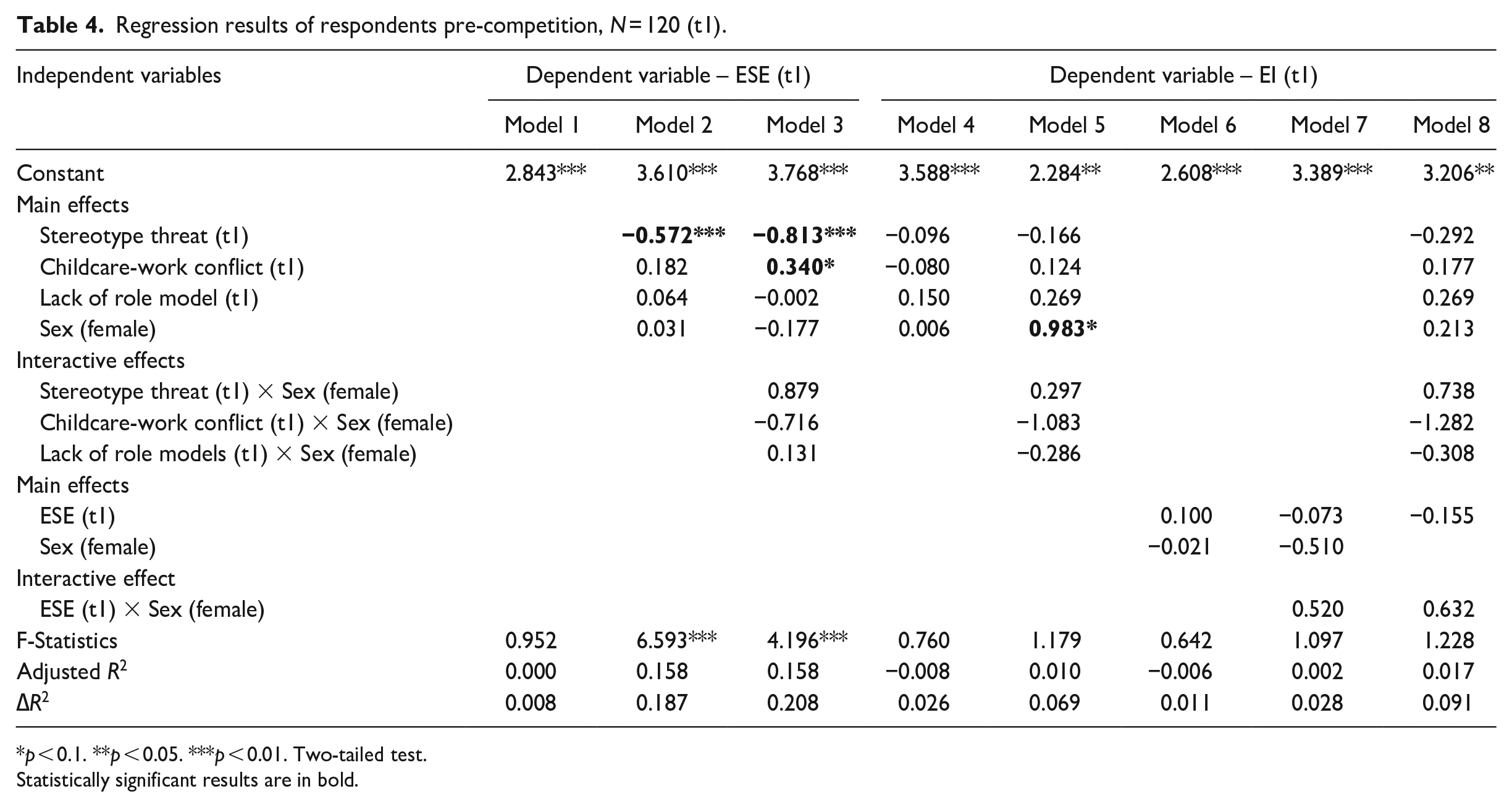
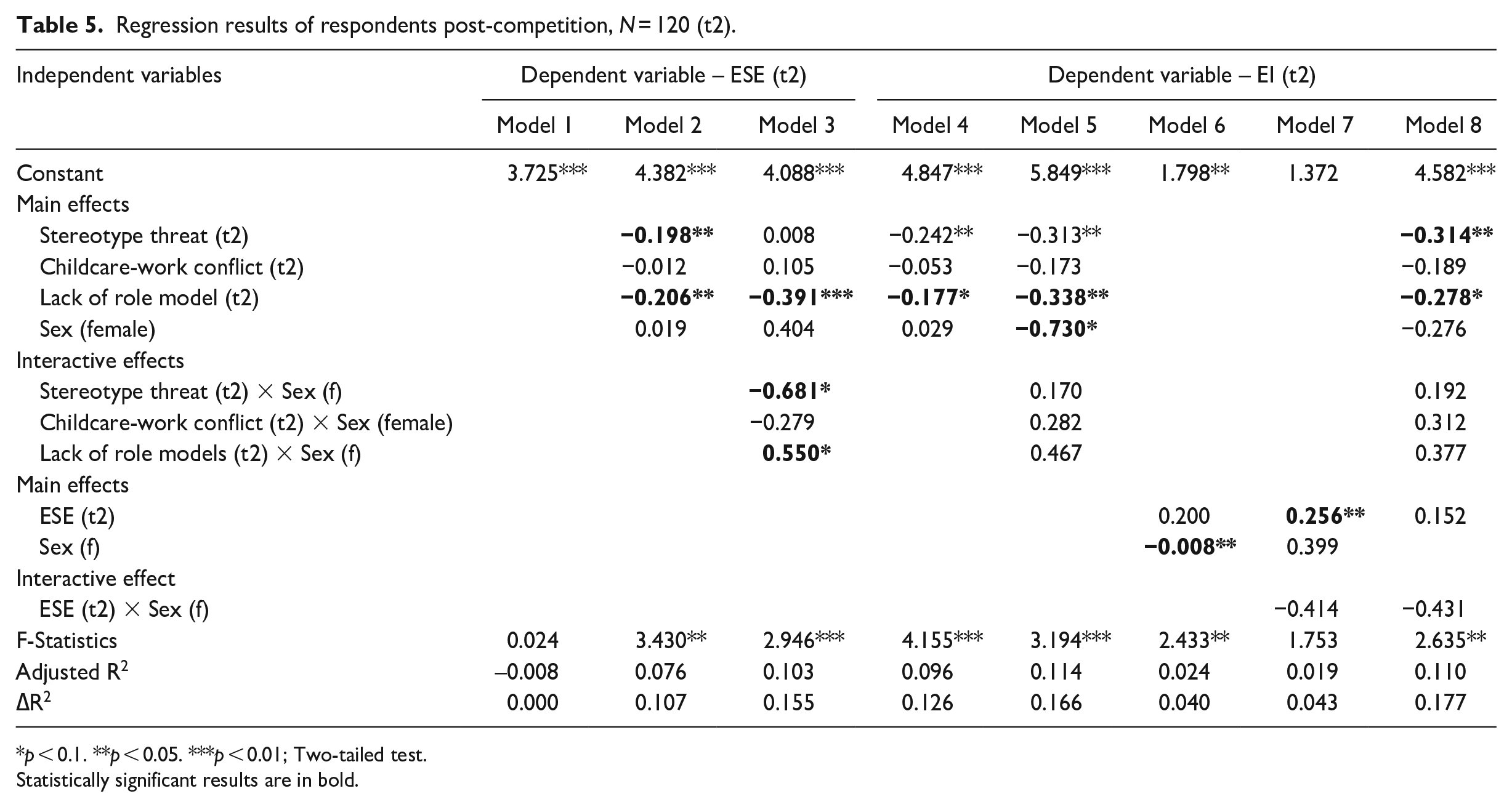
ESE was predicted to mediate the relationship between the perceived gender-barriers (stereotype threat (H3a), childcare-work conflict (H3b) and (H3c) lack of role models) to entrepreneurship and EI of male and female participants. The regression results are summarised in Tables 4 and 5 with Table 4 presenting regression results pre-competition (t1) and Table V presenting regression results of the data collected post-competition (t2).
Regression results of respondents pre-competition, N = 120 (t1).
p < 0.1. **p < 0.05. ***p < 0.01. Two-tailed test.
Statistically significant results are in bold.
Regression results of respondents post-competition, N = 120 (t2).
p < 0.1. **p < 0.05. ***p < 0.01; Two-tailed test.
Statistically significant results are in bold.
Results from Tables 4 and 5 confirm that there were no mediation effects of ESE between the relationships of gender barriers and EI pre- and post-competition. However, the full regression results in Table 5 (Model 3 and 8) show a significant negative influence of stereotype threat and lack of role models upon ESE and EI post-competition (Stereotype threat on ESE at t = −0.198, p < 0.05 and on EI at t = −0.314, p < 0.05) in addition to a significant negative influence of lack of role models upon ESE (at t = −.391, p < 0.01 and on EI at t = −.278, p < 0.01). There was a positive influence of perceived childcare-work conflict on the ESE of participants pre-competition (t = .340, p < 0.1) suggesting participants who perceived high childcare-work conflict would also possess high ESE. However, this relationship was not significant post-competition, indicating that participants no longer perceived childcare-work conflict as a barrier to entrepreneurship post-competition.
Discussion
The persistent gender gap within STEM entrepreneurial activities has led to feminist critiques of unacknowledged structural issues constraining women’s entrepreneurship (Kuschel et al., 2020) and the potentially gendered effects of entrepreneurship education (Jones and Warhuus, 2018). This article examines whether an EEC tailored for STEM ECRs is gendered, or may have unintended gendered outcomes, by testing for differential EEC impacts upon participants in relation to their perceived ESE, EI and gender-barriers to entrepreneurship. Additionally, we explore the degree to which perceived gender-barriers influenced ESE and EI.
Surprisingly, the findings indicate no significant difference between perceived ESE and EI between the sexes pre- or post-competition, suggesting that this competition did not produce gendered effects. This result contrasts with prior research reporting lower ESE and EI among women compared to men before and after undertaking entrepreneurship education (Nowiński et al., 2019; Westhead and Solesvik, 2016). It is plausible that STEM women ECRs, possessing high motivation and self-confidence to create a venture, are more likely to self-select into the EEC programme (Bae et al., 2014; Liñán et al., 2018) which would explain this finding. While one cannot discount the possibility that statistically significant differentials in ESE may no longer be an issue for this generation, this is unlikely given the evidence base. It is possible, given this sample comprised of early-career participants, that a lack of workplace experience and experience of gendered structural barriers and/or sexism by participating women, coupled with greater role-model visibility may underpin these findings at this stage in their life course and STEM career.
We suggest that the high female participation rate (58%) may be a key contributor to the non-significant sex-based difference between perceived ESE and EI post-competition as perceptions of a threatening environment were reduced and so, stereotype threat may have been less likely to be triggered (Neumeyer, 2020). The women participants reported perceived stereotype threat to be a greater barrier before they participated in the EEC; our analysis shows this barrier diminished post-participation such that there were no significant differences in perceived stereotype threat among male and female participants after the competition. This may also suggest that this EEC eliminated the gender differential in stereotype threat because of the high female participation rate, the avoidance of stereotype threat then informing the similar impacts in relation to ESE and EI post-competition. All the participants reported significantly higher ESE post-competition, in contrast to Shinnar et al. (2014) who argued that an EE programme would only increase the ESE and EI of male students. Given that ESE within this study consists of entrepreneurship-related knowledge and skills, our evidence supports previous studies indicating that EEC-participation enhances entrepreneurial knowledge and skills (Pocek et al., 2022) contributing to entrepreneurial competence development for all participants (Treanor et al., 2021b).
Jones and Warhuus (2018) contend that women may be deleteriously affected by gender-barriers; the expected outcome from this study may have been that female participants would not derive a similar increase in EI as their male counterparts (Elam et al., 2019). However, these findings indicate that, contrary to expectations, EEC participation significantly improved the women’s EI to a greater extent than that of male participants. The difference-in-differences in EI between the sexes pre- and post-participation was not statistically significant, however. This finding, therefore, supports previous EI studies asserting no sex-based difference in EI (Díaz-García and Jiménez-Moreno, 2010; Santos et al., 2016).
Our evidence reveals the notable impact of the EEC programme upon perceived gender-barriers. As mentioned, the competition significantly reduced perceived stereotype threat for both sexes but particularly, for participating women such that there was no difference in perceived stereotype threat between male and female participants post-competition. The competition also significantly reduced perceived childcare-work conflict for both sexes; however, female participants still perceived significantly higher childcare-work conflict than male participants post-competition. This indicates that exposure to STEM entrepreneurial-parent role-models of both sexes within the EEC may reduce the perceived barrier in childcare-work conflict; however, childcare responsibility still acts as a key barrier for STEM women in relation to both STEM careers and entrepreneurship (Bolzani et al., 2021).
Notably, the EEC significantly heightened the perceived lack of role models barrier for female participants; male participants demonstrated no significant change. This may not be surprising given the general under-representation of women as STEM entrepreneurs to act as role models (Kuschel et al., 2017; Treanor 2022). Despite the organiser’s attempts to ensure women’s representation, the ratio of male to female speakers (2:1), advisors and judges potentially highlighted this under-representation to some of the women participants (Breda et al., 2018) while providing an inspirational role model to others (Byrne et al., 2019). Understandably, STEM women entrepreneurs are few in number and, due to their role model potential they may receive more invitations than their business demands enable them to fulfil.
Finally, it was found that post-competition, female participants who perceived high stereotype threat and a lack of role models, had lower ESE and EI scores. Their awareness of these perceived barriers negatively influenced both their evaluation of their capability and their intention to engage in entrepreneurial activity. This supports arguments that perceived negative stereotypes and limited access to role models influence women’s perception of their abilities and their interest in entrepreneurship within masculine-dominated industries such as STEM (Laguía et al., 2022).
Limitations and future research
It may be considered a limitation that a counterfactual group of non-participating female and male STEM ECRs was not constructed. While such control groups are sometimes used by entrepreneurship scholars (Rauch and Hulsink, 2015) more commonly, due to the practical impossibility of obtaining a suitable control group (Shahab et al., 2019; Wegner et al., 2019), as was the case here, this is not possible. Participants self-select into the YES programme and are not randomly selected from the population (Bae et al., 2014) rendering a counterfactual problematic; moreover, factors influencing self-selection are known to include pre-education EI, prior entrepreneurial exposure, and entrepreneurial motivation (Fayolle and Gailly, 2015; Liñán et al., 2018) which further compounds the difficulty of constructing a suitable counterfactual.
These findings suggest that EECs can, not only enhance entrepreneurial competencies and intentions (Treanor et al., 2021b) but also, influence perceived structural barriers pertaining to gender and entrepreneurship (Türko, 2016). Future research could use quantitative data to measure differences across EE programmes and identify specific features which increase their gender neutrality, while qualitative data could inform greater understanding of how such specific features influence participant perceptions. In particular, exploring the factors that reduced stereotype threat within this focal EEC and generating greater insight into how higher levels of female representation may influence perception of stereotype threat and inform ESE and EI would be informative.
Conclusion
This article critically analyses whether an EEC tailored for STEM ECRs is gendered or may have unintended gendered outcomes. The results do not show gendered differentials in the ESE or EI of participants post-competition, unlike previous research reporting women’s lower levels of ESE and EI following entrepreneurship courses (Nowiński et al., 2019). These contradictory findings may result from self-selection bias of female participants into this EEC (Bae et al., 2014; Liñán et al., 2018) and/or the high female participation rate within the EEC not triggering stereotype threat (Neumeyer, 2020).
The EEC yielded a largely positive impact upon perceived gender-barriers for all participants, but the effect is most evident for women. Consequently, the competition eliminated the pre-participation sex-based difference in perceived stereotype threat. Despite EEC participation reducing perceived childcare-work conflict among women, the childcare-work conflict was still deemed to be a greater barrier than for their male counterparts. Finally, the competition had a negative influence on the perceived lack of role models among female participants; that is, women were more aware of the lack of women STEM-entrepreneur role models post-participation. Overall, these findings suggest this EEC played an important role in reducing the perceived gender-barriers of female participants which, in turn, could enhance their entrepreneurial self-efficacy and intentions, potentially increasing rates of women’s STEM venture-creation. Consequently, this EEC may offer transferable good practices that can inform other similar interventions such as the consideration of at least equal representation of female and male participants and guest speakers (Laguía et al., 2022; Neumeyer, 2020).
We make several contributions to the current debate. First, we inform feminist analyses of the impact of EE upon women’s ESE and EI by drawing upon perceived gender-barriers from the career literature to examine potentially gendered outcomes (Spencer, 1993; Swanson and Tokar, 1991). Specifically, we reveal the negative influence of perceived stereotype threats and a lack of role models on the ESE and EI of female participants post-competition. This supports the contention that structural issues, rather than essentialist deficiencies, underpin differential participation rates in STEM innovation within academic and industry employment environments, with consequential effects on women’s STEM entrepreneurship (Kuschel et al., 2020).
Second, we develop a novel theoretical model of the EEC impact upon EI, informed by SCCT which captures the socio-economic aspect of perceived gender-barriers. Despite growing concern regarding gendered learning experiences (Kubberød et al., 2021), the mainstream literature still largely measures and discusses EE impact on EI based upon gender-neutral assumptions and measures. Thus, our study advances debate by incorporating gender-related structural barriers from the career literature within the theoretical framing, to examine their influence upon ESE and EI (Kuschel et al., 2020) describing valuable findings regarding the EEC impact on three perceived gender-barriers. This contributes to the theoretical development of EI by expanding the scope of intention-based analysis beyond traditional gender-neutral measures towards an inclusive measure, through analysis revealing perceived structural barriers as critical factors influencing EI (Laguía et al., 2022).
Our evidence highlights the necessity for looking beyond the dominant measures for EI and ESE (Jones and Warhuus, 2018; Laguía et al., 2022). In the context of this study, when focussing on ESE and EI, there were no differential outcomes between the sexes from EEC participation (Wegner et al., 2019). However, we reveal a significant EEC impact upon all gender-barriers among female participants. In particular, those women who reported stereotype threat as a greater barrier also recorded lower ESE and EI following the competition (Laguía et al., 2022). Accordingly, to effectively enhance STEM women’s entrepreneurship through EEC interventions, entrepreneurship educators are encouraged to consider gender-related issues and representation when designing EEC interventions (Türko, 2016). These findings indicate that while this EEC did not have gendered outcomes, this may relate to the composition of the cohort in combination with factors such as the demeanour of guest speakers. Therefore, further qualitative or mixed-methods research could provide greater understanding of these processes and assist in identifying transferable good practice.
It is noteworthy that the EEC affected both male and female participants. The competition reduced perceived barriers of stereotype threat and childcare-work conflict for all the STEM ECRs even though this differential was greater for the women. This suggests that gender influences family considerations among STEM men in relation to their career decisions which is underexplored and merits further research. This is consistent with contemporary critiques that the dominant focus of gender and entrepreneurship research upon women hinders understanding of the influence of masculinities upon entrepreneurship (Marlow, 2020). Overall, this study suggests that gender and related structural barriers may influence the impact and outcomes of EE for participating STEM women and men, not their sex, suggesting a gender-aware approach to entrepreneurial education would benefit all participants.
Footnotes
Appendix – Measures
Funding
The author(s) received no financial support for the research, authorship, and/or publication of this article.
