



Abstract
The resource-based view of entrepreneurial networking demonstrates how relationships are formed instrumentally through the goal-driven decision-making of causation. At the same time, evidence shows that under conditions of uncertainty, entrepreneur networking follows the non-predictive decision-making of effectuation. However, little is known about how entrepreneurs combine these two logics, that is, causation and effectuation, for opportunity development. This study identifies four hybrid combinations of causal and effectual networking behaviour. The outcome of this hybrid networking is a synergistic effect on opportunity development. This article contributes to the entrepreneurial effectuation research, analyses of entrepreneurial networking and the literature on entrepreneurial opportunity.
Introduction
Entrepreneurial networking is recognised as a powerful behavioural mechanism for opportunity development (Ardichvili et al., 2003; Jack et al., 2010; Zheng et al., 2020). Research in this area has been significantly influenced by the resource-based view (Hoang and Antoncic, 2003; Slotte-Kock and Coviello, 2010), according to which involvement in various relationship structures gives entrepreneurs access to a variety of tangible and intangible resources that positively affect new venture performance and growth (Neergaard, 2005; Semrau and Werner, 2014; Sullivan and Ford, 2014). Thus, relationship formation is defined by certain venture resource needs, and follows goal-oriented causal decision-making. From this perspective, entrepreneurs establish connections in a deterministic, instrumental and deliberate way because they are driven by their venture’s strategic goals 1 (Stuart and Sorenson, 2007). This makes entrepreneurial networking appear selective, and directed towards the exploitation of known opportunities (see Hallen and Eisenhardt, 2012; Stuart and Sörenson 2007; Vissa, 2012).
However, there is growing evidence that under conditions of high uncertainty, and unspecified goals, which characterise the venturing process, desired connections and networking outcomes cannot be identified in advance. Entrepreneurial networking is therefore, largely non-predictive and enacted through effectual logic as opposed to causal decision-making (Engel et al., 2017; Kerr and Coviello, 2019a; Kerr and Coviello, 2019b; Sarasvathy, 2001). Under these conditions, network opportunities are vague as there are no clear goals in terms of accessing and acquiring certain resources from relationships (Sarasvathy and Dew, 2003; Sarasvathy and Dew, 2005; Sawyerr et al., 2003). Hence, (potential) entrepreneurs engage in experimentation, and the exploration of opportunities that emerge unpredictably from these networking interactions. Overall, even though the literature suggests that causation and effectuation are constantly intertwined in entrepreneurial activities (Sarasvathy, 2001; Smolka et al., 2018), we still know little about how entrepreneurs can simultaneously adopt these essentially different behaviours. This is an omission, as both goal-driven and non-goal-driven decision-making are essential to establishing entrepreneurial relations (Prashantham et al., 2018). Hence, we need to know more about how entrepreneurs simultaneously reconcile networking consistency, routines and plans, while maintaining the ability to continue and re-route networking activities, if needed. Without this understanding of how entrepreneurs combine a linear and instrumental approach to forming partnerships with a more experimental and effectual approach, our knowledge on entrepreneurial networking will be incomplete.
Given this research gap, this article addresses the following question: How do entrepreneurs simultaneously use causal and effectual decision-making in their networking behaviour to develop opportunities? We conduct a qualitative study of Finnish start-up entrepreneurs and unveil hybrid networking activities that combine characteristics of both logics. In so doing, this study makes a three-fold contribution. First, reacting to Alsos et al. (2019), we advance effectuation research by explaining the nature of the relationship between causation and effectuation (Andries et al., 2013; Smolka et al., 2018), examining their simultaneity in entrepreneurial networking, and how they are mixed in one hybrid behaviour at a time. Simultaneity here means ‘the fact of something happening or being done at the same time as something else’ (Oxford Learner Dictionary, 2021). Further, it goes beyond a simple parallel co-existence of causation and effectuation, where they can still be separated in time through iterative switching from one logic to another with observable turning points (Nummela et al., 2014; Reymen et al., 2015), in relation to different tasks (Reymen et al., 2016; Yang and Gabrielsson, 2017), and/or organisational space/managerial levels (Galkina and Lundgren-Henriksson, 2017). Here, we emphasise the hybridity of causation and effectuation, which implies their ‘effecausal’ interaction and inseparability in time and in relation to a single activity. We argue it is this hybridity that enables us to unveil the interaction and interconnectedness between the two logics, which the existing literature has yet to grasp in full. Hence, this study serves as a response to calls ‘to spell out in more detail [...] useful ways to mix and match predictive and nonpredictive strategies [...]’ (Read et al., 2016: 531), and understand ‘how entrepreneurs resolve the hybridity of these two objectives’ (Reuber et al., 2016: 538).
Second, this article contributes to the entrepreneurial network research (Hoang and Antoncic, 2003; Slotte-Kock and Coviello, 2010; Vissa, 2011; Vissa, 2012). In particular, the effectuation lens enables explanations of entrepreneurial networking through associated behaviours. This behavioural perspective allows for highly nuanced explanations of specific partnering activities and mechanisms at the micro-level of the individual entrepreneur (Chell and Baines, 2010; Kaandorp et al., 2020; Zheng et al., 2020). Additionally, we add to studies on how entrepreneurs enrol stakeholders and network under uncertainty through effectuation (Burns et al., 2015; Galkina and Atkova, 2019; Kerr and Coviello, 2019a; Kerr and Coviello, 2019b). We show how this effectual networking is intertwined with a more instrumental and calculative logic of partnering with targeted actors. It is essential to understand this combination since networking environments often bring together elements of the known and unknowable (Engel et al., 2017) and thus demand hybrid decision-making and behaviours (Smolka et al., 2018).
Third, our study has implications for research on entrepreneurial opportunity development, which emphasises social interactions and tie formation as its essential enabling mechanism (Ardichvili et al., 2003; Camelo-Ordaz et al., 2020; Clausen, 2020; Wood and McKinley, 2010). Given that causation logic dominates exploitation, and effectuation corresponds with exploration (Sarasvathy, 2001: 254), our findings demonstrate how opportunities emerge as a result of combining exploitative and exploratory behaviours in networking.
Theoretical background
Entrepreneurial networking as an opportunity development behaviour
While the notion of entrepreneurial networks emphasises their ‘patterned, predictable exchange structures’ (Larson, 1991: 173), entrepreneurial networking is of a different nature, and relates to activities and associated behaviours that result in forming entrepreneurial networks (Jack, 2010; O’Donnell et al., 2001; Shaw, 2006). It refers to the dynamics of ‘creating and shaping network ties and may therefore include tie formation and maintenance behaviours as well as any assemblage of such behaviours into unique networking styles, strategies or processes’ (Engel et al., 2017: 37). Thus, in this article, we follow research emphasising behavioural attributes of entrepreneurial networking as activities and abilities to form ties (Jack et al., 2008; Johannisson and Mønsted, 1997; Neergaard, 2005).
The existing research on entrepreneurial networking has been largely influenced by a resource-based perspective (Starr and Macmillan, 1990; Hansen, 1995; Anderson and Jack, 2002). This suggests entrepreneurs form relations instrumentally to access resources such as financial capital, human capital, knowledge, new customers, outlets and internationalisation (Coviello and Cox, 2006; Keating et al., 2014; Neergaard, 2005). This view links entrepreneurial networking to strategy, known opportunities and goal-driven decision-making as it is essential for entrepreneurs to have a developed business idea before the relevant relations can be established (Audretsch et al., 2011). As such, goal-oriented partnerships are evident in studies stating that a new venture’s opportunity recognition and growth depend on an entrepreneur’s ability to establish and coordinate various relations according to venture goals (Ardichvili et al., 2003; Hansen, 1995: 17; Larson, 1991: 174). For instance, Larson and Starr (1993) suggested that throughout the entire process of venture formation, entrepreneurs establish relations according to the emerging firm’s resource needs. This idea implies that entrepreneurs exploit a predefined opportunity and can estimate what relations and resources will be essential to their venture (Arenius and De Clerq, 2005; Brand et al., 2018). The roots of this goal-oriented thinking in the entrepreneurial networking literature arise from the traditional theories of entrepreneurial action, which view entrepreneurs as ‘heroic architects who strategically search, plan, and pursue their pre-defined goals’ (Engel et al., 2017: 36).
Given the idea of fit, entrepreneurs need to decide in which ‘forest’ they will find the useful ‘trees’, or where and from which existing network structures (industries or markets) they want to select new contacts. Predictive decision-making suggests the pre-existence of these network structures and resulting opportunities, and penetrating them requires first identifying their boundaries and dependences. Axelsson and Johanson (1992) called this process orientating, and argued that ‘in a network, actors have fairly clear views of their own relations with, and dependences on, other actors and of some relations of these actors to third actors’ (p. 231). Similarly, Hallen and Eisenhardt (2012) described a process of systematically scanning the environment, and argued that is how entrepreneurs find information about potential partners, allowing them to reduce the risks of unsuccessful networking.
When entrepreneurs have decided in which network arena to act, they identify core partners. According to Casciaro et al. (2014), choosing the right partners starts with an in-depth search, where entrepreneurs explore the real track record of potential partners, resources and skills, determine their number and combination and identify what role each potential partner might play in relation to desired benefits. This partner selection also assumes that entrepreneurs assess opportunities that might result from a partnership. In this process, the predefined venture goal and known opportunity determine the networking goal, and guide the choice of selecting some contacts, but not others (Hallen and Eisenhardt, 2012). Likewise, Larson and Starr (1993) suggested that diverse potential connections are opportunistically evaluated and culled, with only essential ties exploited to implement the concrete plan underpinning the business concept. In addition, before the entrepreneur starts building strategic networks, they need to evaluate whether trust can be created among the actors, which requires an understanding of partner rationales and organisational culture (Koon and Low, 1997). Jarillo (1988) expressed a similar idea that careful partner selection implies an awareness of their values in order to assess whether they match your own.
Once the core partners have been selected, the networking continues with an investment of various resources in those relations (Johanson and Matsson, 1992). Axelsson and Johanson (1992) termed this process ‘positioning’, and argued that it relates to the development of a firm’s identity with regard to the strength and content of relationships with other actors. Theoretically, each actor occupies a position within a network. However, strategically significant positions are not just given, but require time and resources. Consequently, a network position can be obtained through strategic actions, for instance, building alliances, buying another firm, entering or exiting established networks and changing or defending an extant position (Johanson and Matsson, 1992). Various exchange relations can be layered according to operating functions (finance, marketing, production, etc.) (Larson and Starr, 1993). Such an advantageous strategic position allows a firm access to valuable resources, to exploit given opportunities and share possible risks (Gulati et al., 2000; Jarillo, 1988; Jarillo, 1995).
Overall, this debate reflects the ideas of Kerr and Coviello (2019a: 372), who pinpointed recent studies on entrepreneurial networking ‘adopt causal language wherein entrepreneurs strategically pursue network connections (ties) to secure the resources required to achieve predefined goals’. However, under conditions of uncertainty, when ‘desired ties cannot be identified in advance, networking outcomes cannot be predicted, and ongoing social interactions fuel the emergence of new objectives’ (Engel et al., 2017: 35) and goals and hierarchies are unspecified, networking entrepreneurs follow a different decision-making logic, namely, effectuation (Kerr and Coviello, 2019a; Sarasvathy, 2001).
Entrepreneurial networking and opportunity development under effectuation
Even though effectuation has been subject to criticism (Arend et al., 2015; Kitching and Rouse, 2020), it is still deemed a useful theory to examine entrepreneurial decision-making. According to Sarasvathy (2008), effectuation differs from predictive, goal-driven rationality or causation. While ‘causation processes take a particular effect as given and focus on selecting between means to create that effect’, under conditions of uncertainty, goal ambiguity and information isotropy, ‘effectuation processes take a set of means as given and focus on selecting between possible effects that can be created with that set of means’ (Sarasvathy, 2001: 245). Effectual entrepreneurs are the explorers of unchartered waters; instead of working from a recipe, they start by discovering the ingredients and utensils and then consider what ‘dish’ they can make using them (Sarasvathy, 2008: 74).
In a similar vein, networking under effectual decision-making implies establishing relations under uncertainty, and unspecified goals in a non-instrumental and non-predictive manner (Kerr and Coviello, 2019a; Read et al, 2009a; Sarasvathy and Dew, 2005). Effectual networking starts by scanning for available means: entrepreneurial identity, knowledge and existing relations (Engel et al., 2017). The entrepreneur’s network identity relates to the perceived attractiveness of an actor in exchange relations, depending on their connections with other actors (Anderson et al., 1994; Partanen et al., 2018). In addition, the ‘What I know’ aspect of networking means can include network competence, which refers to a person’s skills in maintaining and exploiting existing relations (Chiu, 2009; Ritter and Gemünden, 2003; Ritter and Gemünden, 2004). Assuming that effectuation is a cognition theory (Fischer and Reuber, 2011; Sarasvathy, 2001), it is worth noting that effectual means can create a variety of effects. The fact that entrepreneurs may choose to start from means (pre-existing networks) does not necessarily make their networking effectual; it is also about the further activation and emergence of relationships, and seeking pre-commitments in order to reduce uncertainty, create opportunities and for experimentation and flexibility (Kerr and Coviello, 2019b).
Furthermore, instead of establishing relations with some actors but not others, networking entrepreneurs following effectual decision-making start to experiment with, and explore opportunities through, interacting with all interested stakeholders (Read et al., 2009a; Sarasvathy and Dew, 2005; Sarasvathy, 2001; Sarasvathy, 2008; Wiltbank et al., 2009: 117). In effect, they increase their chances of developing novel combinations (Dew et al., 2009; Read et al., 2009a) and validating their ideas (Clausen, 2020). In line with this, various studies demonstrate that network size and diversity of contacts positively correlate with developing opportunities and new venture growth (Camelo-Ordaz et al., 2020; Greve and Salaff, 2003; Hansen, 1995). Hence, networking with a certain goal in mind would imply a pre-conceived structure of a future network, which, in turn, would restrict entrepreneurial experimentation, flexibility and available alternatives (Dew et al., 2009; Read et al., 2009b). If entrepreneurs do not immediately know the purpose of establishing a certain relation, it can be reserved in the ‘inventory’ of means and activated when needed; hence, entrepreneurs iteratively re-evaluate their networking means. Irrespective of how entrepreneurs get involved in relations (random chance, path-dependency or activation of existing relations), they cannot predict the motives of other actors (Sarasvathy and Dew, 2005). Therefore, the nature of opportunities, goals and product markets may change depending on which stakeholders and network actors participate in the venturing process (Dew et al., 2009: 293; Read et al., 2009a: 3, 14; Sarasvathy and Dew, 2008: 729).
Subsequently, the interactions and continuous effort to find common ground, lead to concrete commitments to co-create opportunities; these commitments are the ‘atomic elements’ of effectual networks (Sarasvathy, 2008: 105). Actors who commit cannot be sure about their potential role in the relationship or its outcome. As such, their decision is not about the result but participation in the process of opportunity exploration and creation, even in something that neither party can imagine at the point of commitment (Sarasvathy, 2008: 104). Further, these commitments are negotiated and renegotiated, and some may be rejected (Read et al., 2009a: 14; Wiltbank et al., 2009). This formulation and re-formulation, and choosing from alternatives, forms the basis of the self-selection mechanism. It is different from the causal process of partner selection; ‘in effectuation, clear goals do not drive the stakeholder selection process—i.e., the goals of the new venture or the predicted features of the opportunity do not drive who comes on board. Instead, who comes on board drives what the goals of the enterprise will be...’ (Sarasvathy and Dew, 2008: 729). Actors self-select into the chain of effectual commitments and the entrepreneurial process by staking something they can afford to lose (Dew and Sarasvathy, 2007: 275). Since no one can predict the opportunity outcome, venture success or return on investment in such relations, intelligent altruism becomes a rational criterion for self-selection (Sarasvathy and Dew, 2005: 556; Wiltbank et al., 2009: 117, 120). Effectual networking with different actors can occur at different stages; some negotiations may result in commitments, others not. Consequently, entrepreneurs loop back and forth between networking with existing committed stakeholders and networking with all and any new stakeholder (Sarasvathy and Dew, 2003).
After accumulating a critical stock of effectual commitments, effectual decision-making becomes inherent not only in the active creation of contacts by entrepreneurs, but also in the emerging networks. Numerous stakeholders begin co-creating and designing the network through new relationships and resource combinations to leverage the elements within their control (Read et al., 2016). Hence, this co-creation increases the social and reputational value of the resulting relations (Read et al., 2009a: 14). Later, these relations may become the available means for the next cycle of the effectual process (Sarasvathy, 2008). They may also become the basis for more goal-oriented networking (Sarasvathy and Dew, 2005: 548).
Our theoretical discussion illustrates how entrepreneurial networking can embrace two different decision-making logics. However, given that causal and effectual decision-making ‘can occur simultaneously, overlapping and intertwining over different contexts of decisions and actions’ (Sarasvathy, 2001: 245), it remains unclear how entrepreneurs employ them as ‘a duality rather than a dichotomy’ (Reuber et al., 2016: 537), and simultaneously.
Methodology
Methodological choice
A qualitative methodology is appropriate for this study. First, it fits research of an inductive and exploratory nature (Gummesson, 2000; Smith et al., 2013) that aims to answer ‘how and why’ type questions (Denzin and Lincoln, 2000; Pratt, 2009). Second, it works well when studying dynamic phenomena (Cassell and Symon, 1994; Patton, 2002), such as entrepreneurial networking behaviour and decision-making. Third, the choice was supported by the network perspective in this study, which suggests that actors are not autonomous units but involved in composite interdependent relations (Halinen and Törnroos, 2005; Scott, 1991; Wasserman and Faust, 1994). A qualitative approach allows actors to be seen in the particular real-world context of venture creation, and gives a certain meaning and purpose to the object under study (Patton, 2002; Sayer, 1984: 117).
Sampling
We followed purposeful sampling (Gartner and Birley, 2002) in selecting cases. As this study focuses on entrepreneurial networking, we applied the criterion of age (Cassar, 2004; Vaznyte and Andries, 2019), and selected start-ups that were no more than 3 years old at the time of data collection. This approach also helped us ensure that we would find both non–goal-driven and goal-driven networking behaviours, as according to Sarasvathy and Dew (2005), early start-ups are likely to display effectual decision-making. We did not consider there to be risk of observing predominantly effectuation, since both causation and effectuation are present in entrepreneurial actions (Reymen et al., 2015; Smolka et al., 2018). We did not use the criterion of entrepreneurial expertise, as novice entrepreneurs can also adhere to effectual reasoning (Laskovaia et al, 2017).
To ensure data access (Marshall and Rossman, 1999), we attended two entrepreneurial events deemed realistic settings for the current research: Slush (www.slush.org), and seminars organised by Helsinki-based entrepreneurship-supporting organisation Arctic Start Up (www.arcticstartup.com). The sample of entrepreneurs found through these events fitted the purpose of our study since the events were purposefully arranged for business founders whose ventures were at the very early and uncertain stage of development and who were actively networking. During these events, 42 start-up entrepreneurs were approached and invited for interview. After exchanging business cards and sending e-mails with a more specific description of the research project, 10 entrepreneurs expressed their willingness to participate in the study and confirmed interview meetings. The other co-founders were identified through these initial contacts; thus, during the interview meetings, we sought respondent permission to interview other members of their founding teams for verification purposes, in order to give a more profound picture of their networking activities and enhance the richness of data.
Data collection.
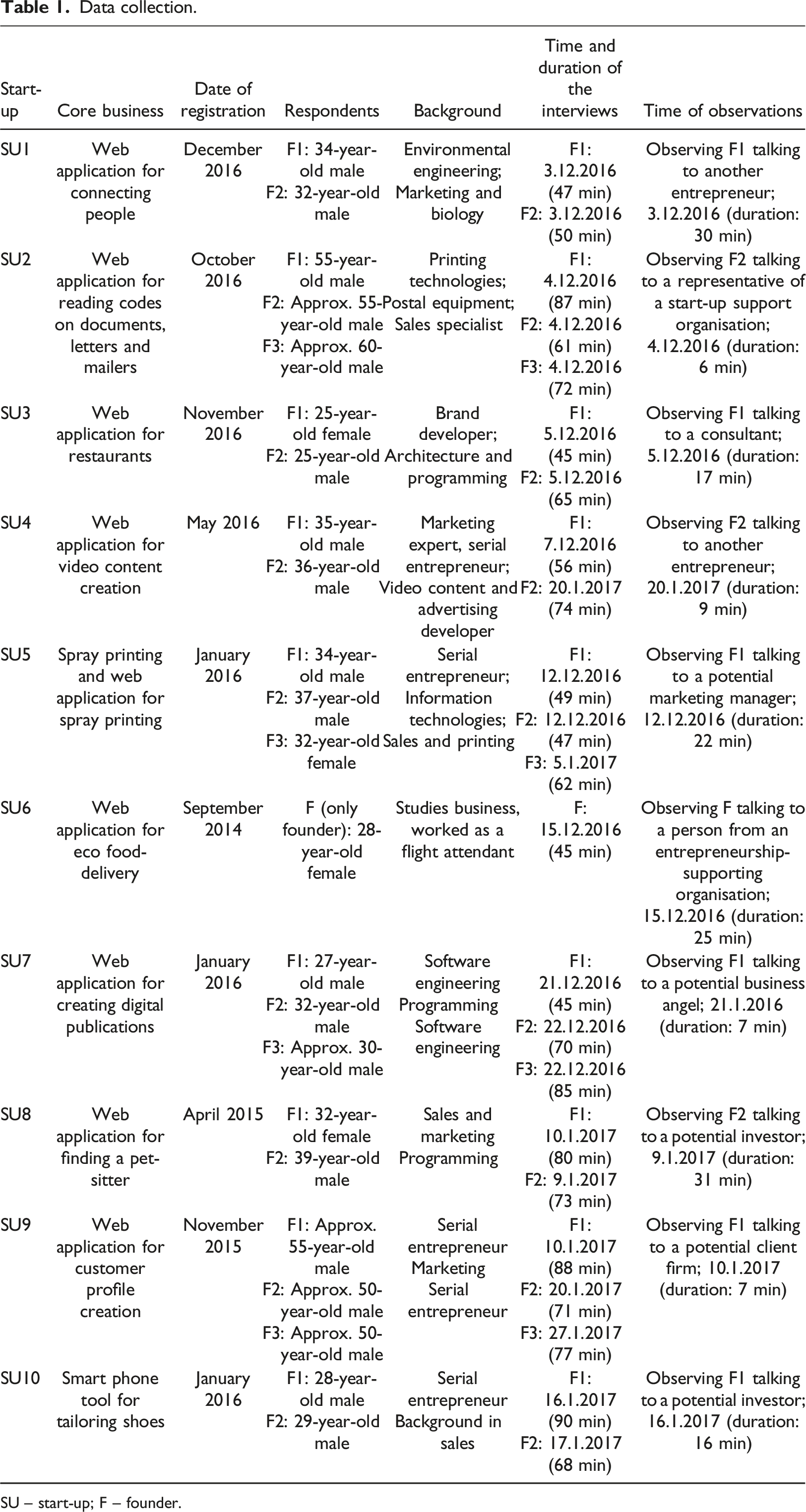
SU – start-up; F – founder.
Data collection
In approaching the complexity of entrepreneurial networking, our main tools for data collection were interviewing the selected respondents, non-participant observations and secondary document data (Galloway et al., 2015; Steyaert, 1997). The combination of these techniques allowed us to develop thick descriptions of how a given person, in a given context, makes sense of a given phenomenon, namely, entrepreneurial networking. Each technique is covered in more detail below.
Interviews
A short description of the research project was sent to each respondent via an email that also requested an interview. They did not, however, receive the interview guide in advance. The interviews were to be semi-structured, that is, loosely structured questions intended to reveal situational context and the respondent’s subjective opinion on the phenomenon (Gummesson, 2000: 127; King, 1994; Mann, 1985: 117; Marshall and Rossman, 1999: 108), in our case entrepreneurial networking. This method enabled us to generate additional emerging insights during the conversations (Patton, 2002). The study draws on a total of 23 personal interviews with the founders of the selected start-ups. Each interview was recorded, to which all of the informants consented, and subsequently transcribed.
During the interviews, some respondents wanted to draw a picture of their network relations to make the information more visually illustrative. These drawings were used as a visual support tool for the interviews, and hence assisted the course of the conversations vis-à-vis interview guides. We returned to these notes when we transcribed our interviews in order to recall the precise nuances of interviewee responses. However, we did not use them as data for analysis because not all informants presented them and, in many cases, they were highly unstructured and messy in terms of content. To validate the accuracy of the data generated, the transcripts from the interviews were sent back to the interviewees for an additional check (see Table 1).
Observations
To bridge the gap between claimed and actual networking behaviour (Mintzberg, 1970), we asked for permission to shadow their networking through structured non-participant observations at several events. As recommended by Bryman and Bell (2015), we developed an observation schedule that specified the following networking behaviours to be observed in the entrepreneurs: contact initiation, checking the background of a contact, establishing common ground, agreeing on next meetings and more. The observations were recorded in the form of field notes and later used in the data analysis.
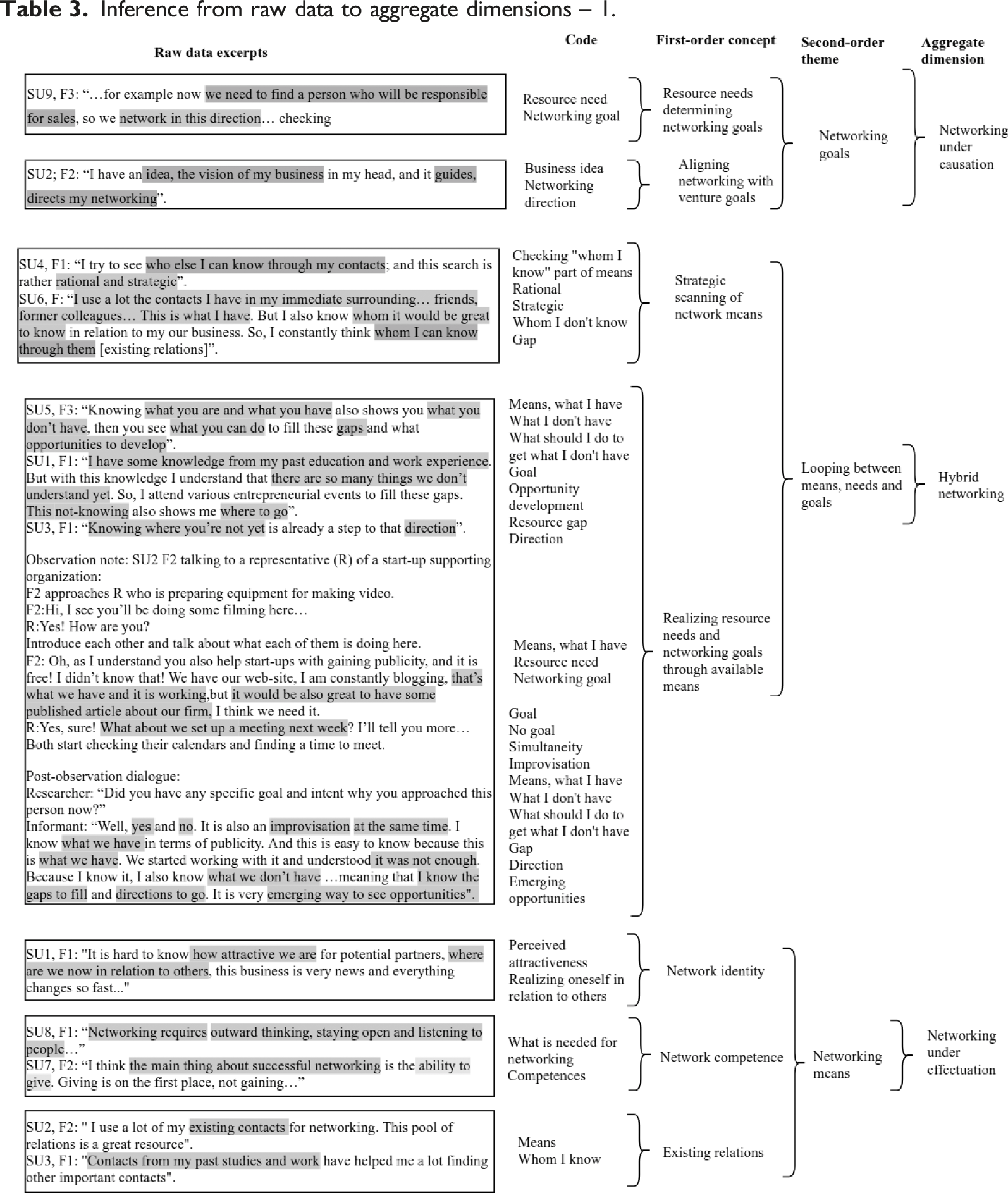
Also, we asked our informants in short informal conversations to reflect upon the observed networking episodes straight after they occurred, in order to ensure that our interpretations were correct, to understand the decision-making logic of networking during these episodes. Accordingly, specifications, explanatory amendments and corrections were made in the respective notes, augmenting our interpretations in three of the 10 observation notes (see Table 3, about F2, SU2 and Table 6 about SU8, F2). Initially, these notes were assigned open codes related to causal networking. However, founder post-observation comments added further information that contained codes related to effectual networking. This correction added new nuances to our analysis, and allowed for an emerging theme of hybrid networking.
Document analysis
The reliability of the accounts from the interviews and observations was checked using techniques proposed by Huber and Power (1985). Besides the primary data sources, the study also incorporated document analysis (Glenn, 2009) of information from websites, blogs and press releases about the interviewees, the history of their company, core businesses and products and the key clients and suppliers. This information was used to prepare for interview meetings and validate information obtained during and after interviews (Cassel and Symon, 1994). Together with purposeful sampling, combining data from interviews, observations and documents served as a technique for data triangulation (Campbell, 2005), which cross-validated the data and allowed for nuanced descriptions. For example, when respondents mentioned some connections during the interviews, the exact content of these relations was double checked through social network websites such as LinkedIn and Facebook. Also, interviewees gave numerous examples of how they got to know some of their partners; similar stories were sometimes available in their blogs. Hence, we had the opportunity to obtain more details about the same stories. While this combination of techniques permitted data triangulation and verification, it also allowed us to derive detailed understandings of networking undertaken by the entrepreneurs.
Data analysis
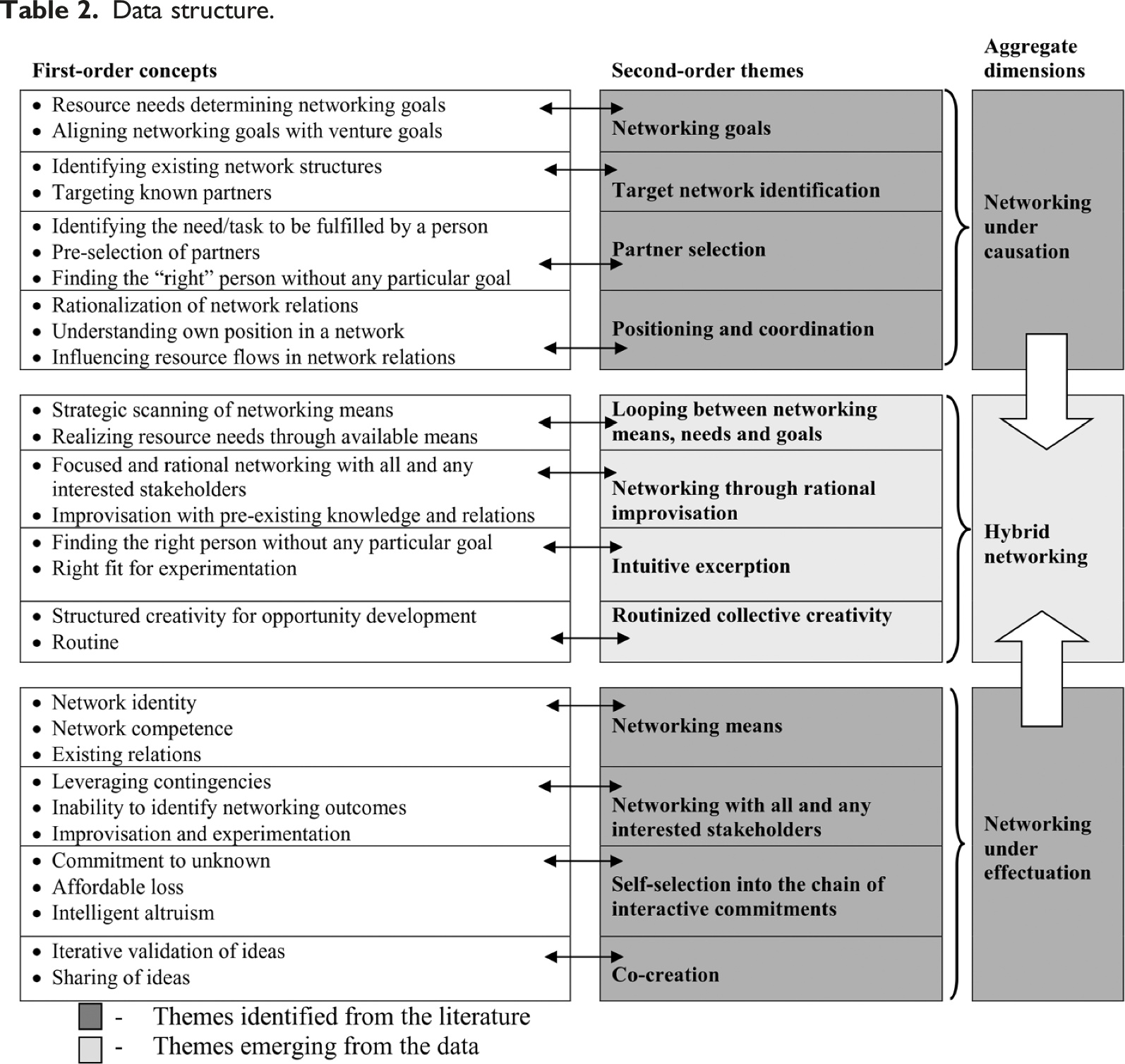
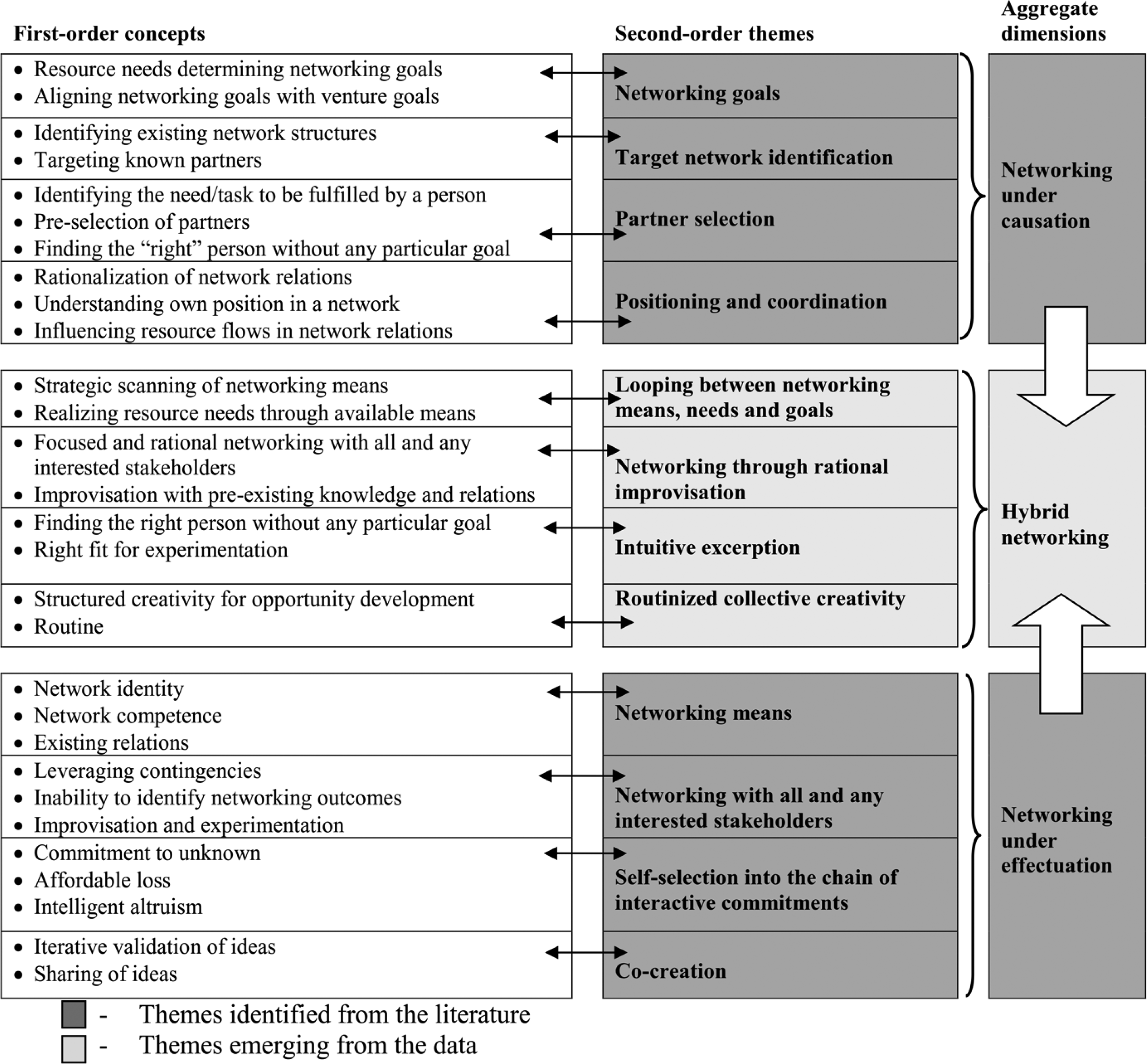
Data structure.
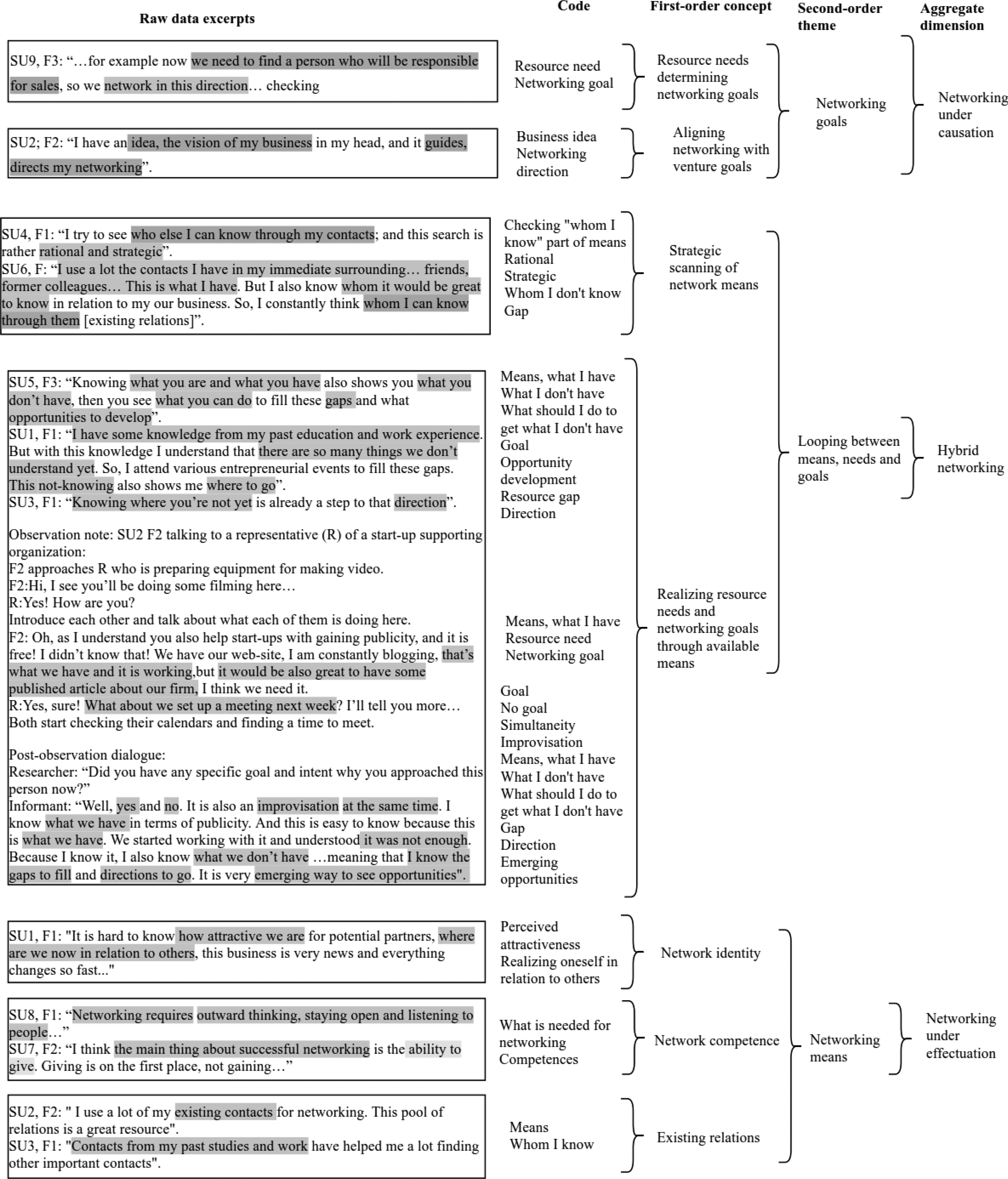
Inference from raw data to aggregate dimensions – 1.
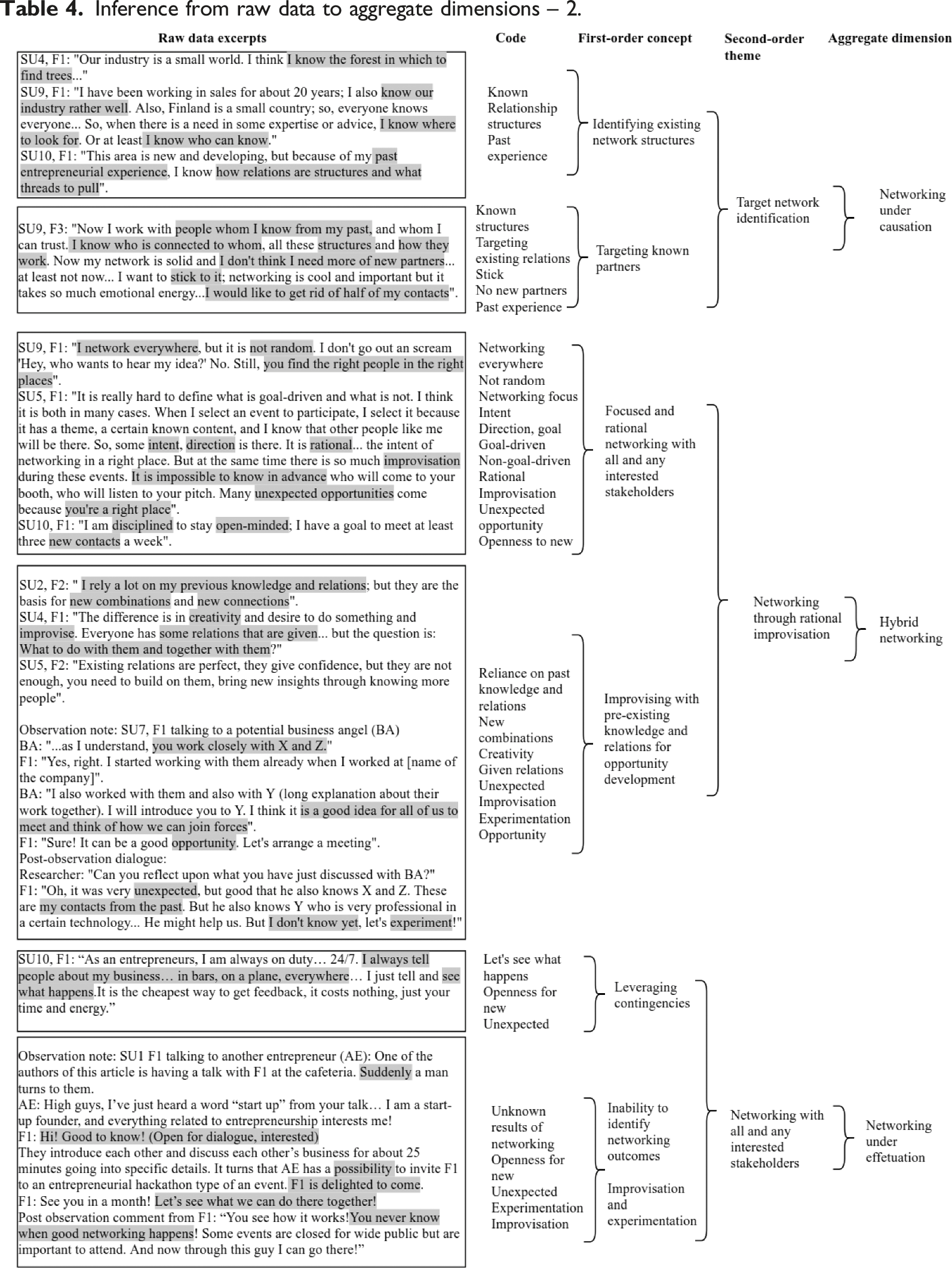
Inference from raw data to aggregate dimensions – 2.
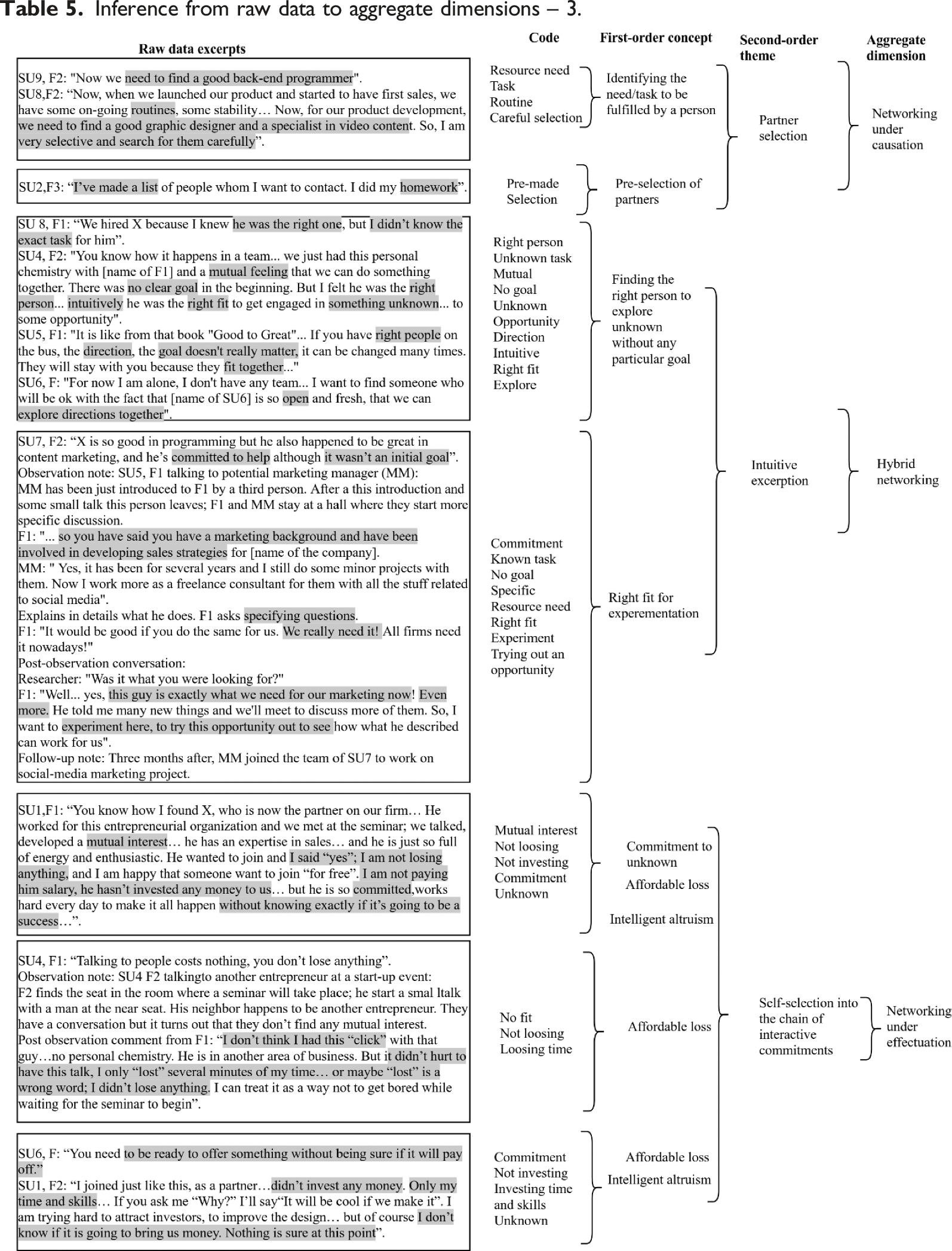
Inference from raw data to aggregate dimensions – 3.
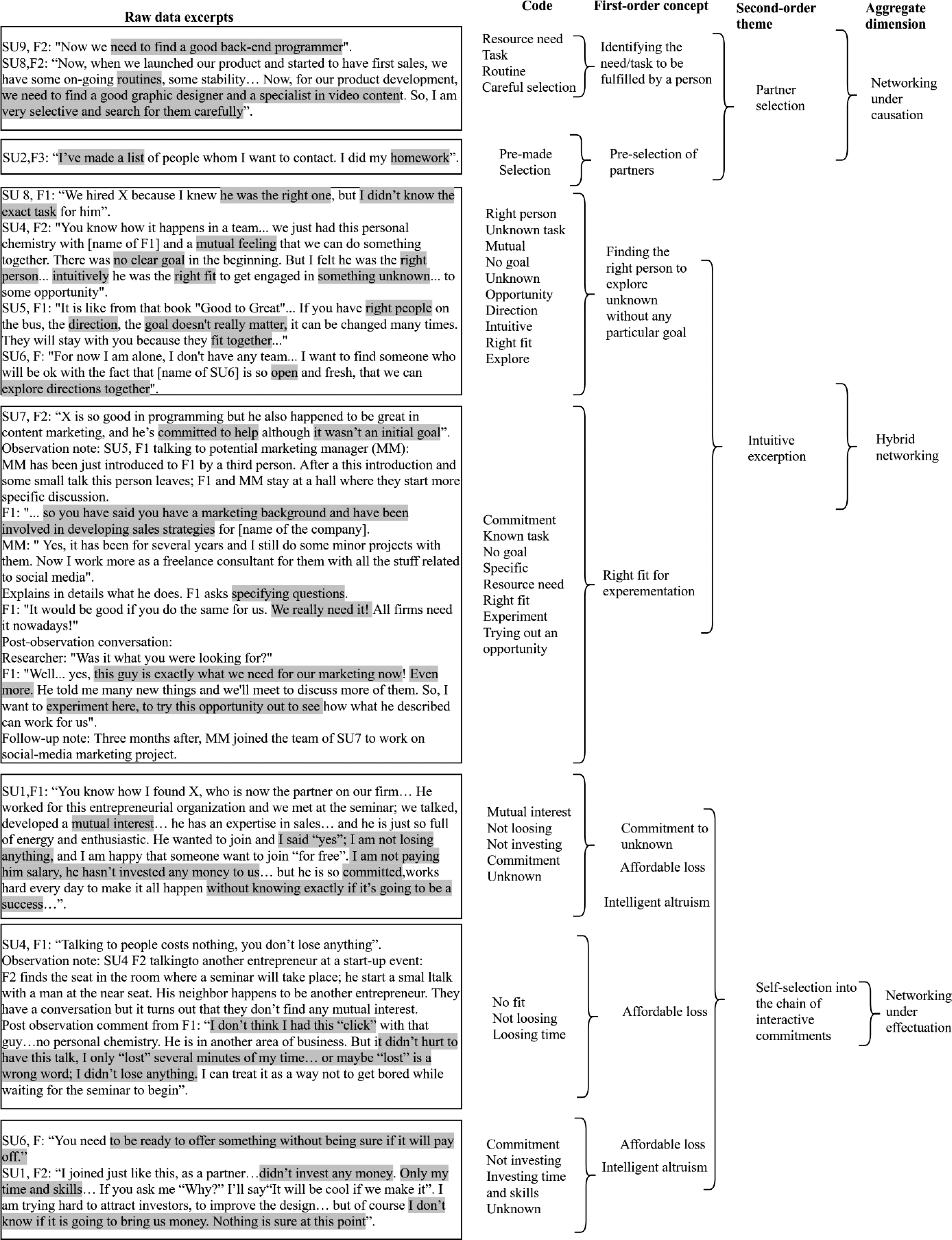
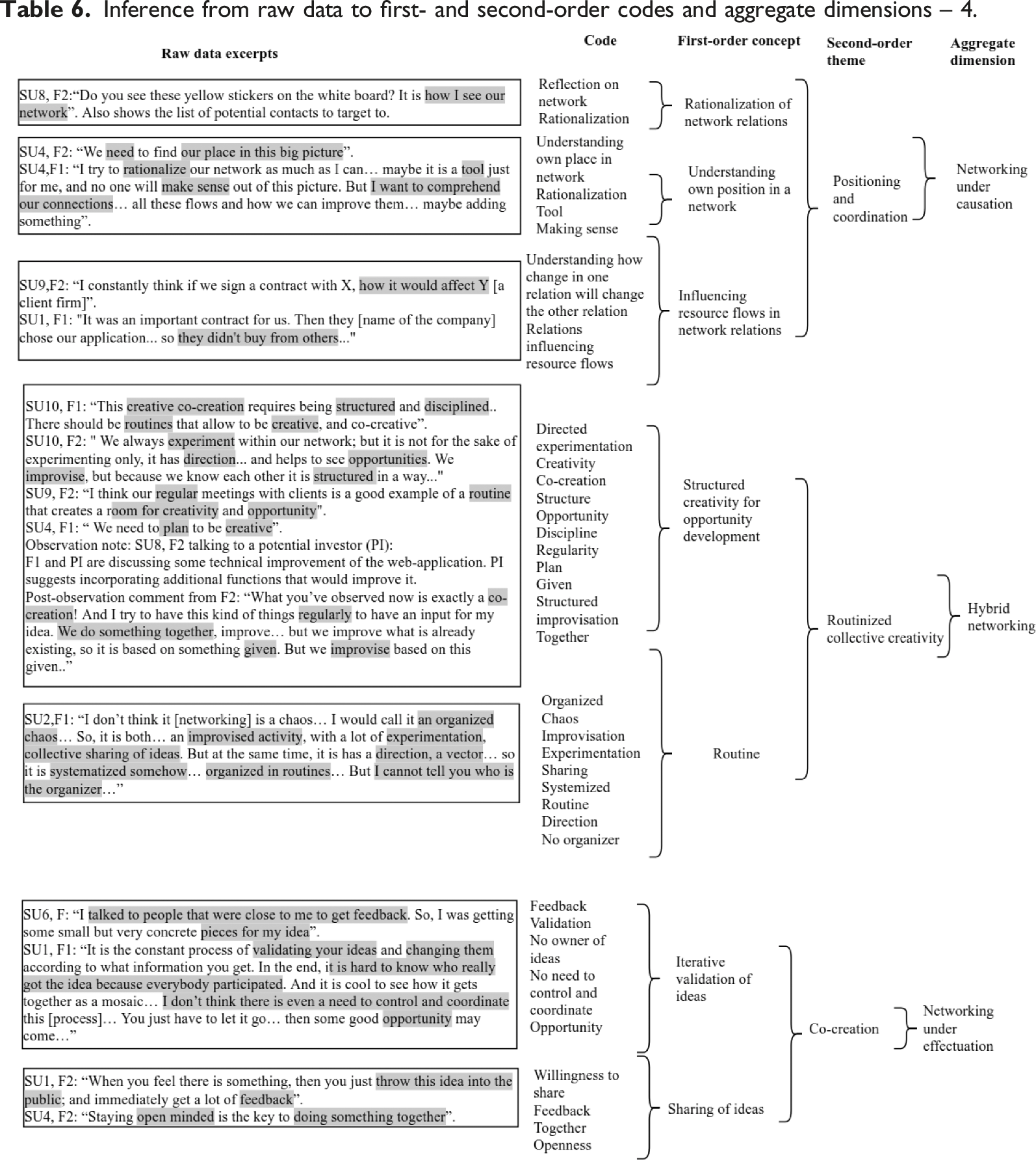
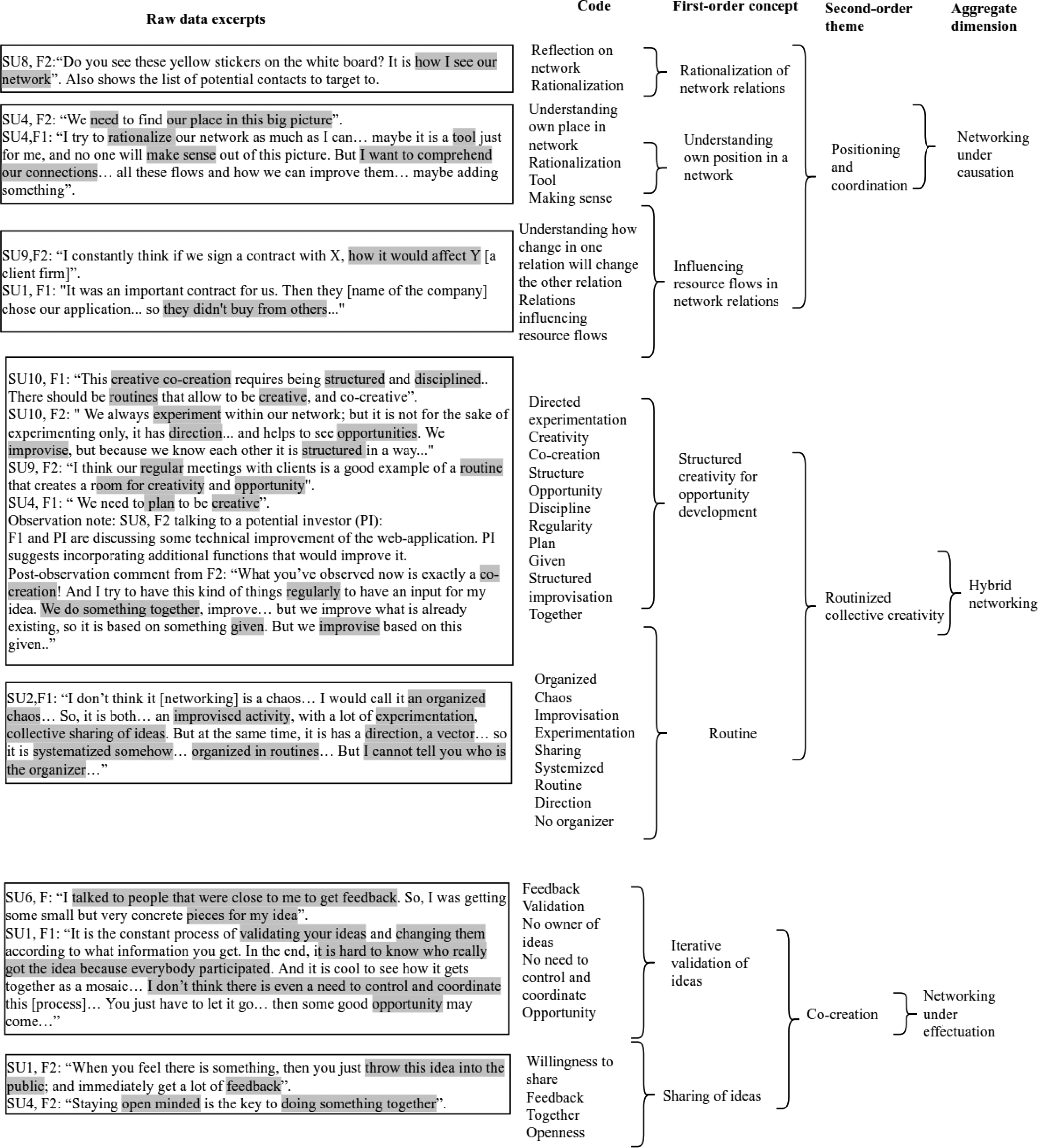
Inference from raw data to first- and second-order codes and aggregate dimensions – 4.
Findings
Our findings 2 show that respondent networking activities unfolded through causal and effectual decision-making. In addition, we identified another mixed behaviour, where networking comprised the aspects of both causation and effectuation simultaneously. Following our data, we have labelled them to reflect their paradoxical and hybrid nature. Our main focus lies on these hybrid networking behaviours, which we outline below and discuss in more depth in the discussion and contributions section.
Looping between networking means, needs and goals
Our data show (see also Table 3) that in less uncertain situations which allowed planning, where predicting the future was less challenging, and where the attributes of opportunity could be specified ex ante, respondents followed causal decision-making. They aligned networking goals with the identified goals of their ventures: SU1, F2: “It’s easy to approach people, they see the fit for a particular person when you already know what’s potentially needed from them. And this you can know when you know where your business is going, when the strategy’s clear. Then networking complies with this direction.”
However, when the venture goals were hard to specify and put into hierarchies due to a changing business environment or internal uncertainties, and when an opportunity was vague or did not yet exist, they were more effectual and started with their networking means: network identity, network competence and existing relations: SU 7, F3: “When we started, everything was so open… in the making, we just talked to everybody. Our network was what we already had, the existing relations… further networking developed from there. It also required staying alert and open to new connections, and their establishment required good networking skills.”
In addition, we identified hybrid networking where the elements of both decision-making logics were present. First, respondents scanned their networking means carefully; they described this activity as strategic and rational. Second, identifying what they had to hand also allowed them to recognise gaps. Networking at different entrepreneurial events and benchmarking with potential partners helped in realising these resource gaps. Thus, they not only asked ‘What do I have?’ but also ‘What don’t I have?’ and ‘What don’t I know and want to know?’ and ‘Who don’t I know and want to know?’ These ‘asks’ allowed them to see gaps in identifying an opportunity, and subsequently, their networking needs which became evident in relation to known means. Further, these identified needs became the basis for informing directions to proceed, and the actions that had to be undertaken in order to meet these needs, or, in other words, to understand what to do to get what they did not have. These were manifested as causal goals of their networking activity. Hence, this convergence of means, needs and goals was an iterative and self-reinforcing activity of both resource seeking and mobilisation, where each of the components cannot be understood separately: SU10, F1: “It’s very important to realize what connections you have in your network, how they can be used. It’s like mapping your own network. It’s a good exercise to see also the missing components. So, starting with what you have allows you to see what you don’t have. This basis allows you to see what’s missing, so to say, where you need to network more, where to concentrate your efforts. When you know it, it guides your further networking.”
Networking through rational improvisation
The data show (see also Table 4) that at times, respondents were focussed on targeting network structures to find and exploit desired connections; this happened in situations where these structures were identifiable. Often, this knowledge of where to network came from experience and utilising predefined knowledge. For example: SU4, F1: “When you work in a certain business for a while, you get to know the central actors and the people who you need to be connected to. Then, you just try to get to know them. So, it’s rather direct and clear.”
However, in some cases, the respondents developed relations with all who expressed some interest in their firm, and explored opportunities emerging from these relations. Despite high uncertainty, they did not associate this effectual networking with risk-taking behaviour because it was impossible to estimate any kind of monetary loss. Instead, their entrepreneurial mindset allowed them to see more opportunities than risks in effectual decision-making on networking: SU10, F1: “Networking is the cheapest way to get to develop your business. It costs nothing, you lose nothing, you don’t risk anything. You just need to be active and send the message to as many people as possible, talk to whoever is interested to listen to you because you never know who can be an important connection in future, what opportunity can emerge.”
We also found networking practices that originated from the hybrid mixture of causal and effectual logics, and had features of both. While selectively and purposefully choosing events and places for networking, our respondents at the same time improvised on how they approached people and established connections when there. Thus, they simultaneously exploited the pre-existing knowledge and relied on experience about where to network, and were able to come up with new creative combinations, explore and improvise. This combined behaviour allowed for new opportunities to emerge. Given this was neither a purely non–goal-driven discovery, nor a calculative and instrumental activity, we cannot interpret this form of networking as purely causal or effectual. It unfolded as a mixture of both through a hybrid combination, which we describe as rational improvisation, because it combined both goal-driven and non–goal-driven decision-making: SU1, F2: “We carefully select different events… like industry exhibitions, conferences… you need to be selective because there are so many of them, and not all are good. But once you get there the magic starts. You just meet new people, try to make new connections and deals, it’s very unpredictable. You can’t know where an opportunity may come from. But it definitely comes because you’re there [at the event].”
Intuitive excerption
The data indicate (see also Table 5) that in some cases, respondents behaved causally, selectively choosing the most suitable and favourable partners for exploiting a known opportunity. Partner selection was driven by the predefined and specified venture goal, hence reducing uncertainty; the findings suggest that some already had a list of partners to contact: SU2, F3: “After we decide on some networking event, we try to investigate who else will be there. So, we make a list of those people and try to estimate whether they’d be useful. If so, we set the goal to meet them at the event.”
However, the interviews also indicated that respondents did not always evaluate the potential benefits of a relationship, and selected their partners following predictive causal decision-making. Often, they were committed to certain relations because of their future potential, non-redundancy and the emerging opportunities they may bring. The self-selection mechanism unfolded through non-monetary ‘investments’ in the form of time spent, emotional involvement in the relationship and/or information shared to build mutual interest; for instance: SU1; F2: “I don’t know how it happens… you just meet the person, try to establish some common ground and see what happens. You can’t know in advance what this relation can bring, you just sense the potential.” SU6, F: “Networking requires a lot of emotional involvement, but besides that and time you don’t lose anything.”
We also identified a hybrid networking activity made manifest as a mixture of the two decision-making logics. For instance, respondents could intuitively sense the fit of a certain person for their start-up team, without having a particular task or role in mind, which may relate to the under-specification of goals and/or their hierarchies. Selecting this person for a team was based on the potential partner’s known personal characteristics and/or prior experience and expertise. So it was still based on some pre-existing knowledge about them. However, it was a non–goal-driven choice, which may seem paradoxical but reflects the ‘effecausal’ nature of networking. Therefore, on the one hand, the respondents carefully picked partners based on personality-related criteria, but on the other, this selection was intuitive not to fulfil the known need or task but precisely for their potential to enact the unknown possibilities and design the task together. For example: SU5, F2: “I met Sami, we just talked and discussed our ideas, I knew his background… and then it was that special fit, intuitive…and in the next couple of days both of us decided to quit our consulting jobs and start business together. We couldn’t know and guarantee that things would work. We only had a very preliminary idea of what we wanted to do together, but what we knew for sure was that we wanted to do it together because we felt a great opportunity from our partnership. This selection is very careful but not strategic. It’s a drive and commitment to something that is only in the form of an idea.”
We see both an intended and intuitive approach in this form of partner selection, combining causation and effectuation enabling opportunity development. We term this hybrid logic of partner selection an intuitive excerption.
Routinised collective creativity
Our findings show that the respondents looked to instrumentally manage and coordinate their networking activities, and develop the most favourable network position for their firm to exploit for their preferred goals. This was seen in the visual maps respondents drew, where they identified their own position in the network. Thus, some tried to rationalise their networks causally, and comprehend their own place in these networks (see also Table 6). In the case of SU8, the interviewee F2 had a picture of the company’s networks on the office white-board; it looked like a web of different relations drawn with different colours, and with numerous sticky notes attached. Apparently, this picture helped them to see their place in relation to other actors, to systemise and classify different connections; this was useful when they were able to estimate rational self-interest, as well as the fore-known benefits to be obtained from others: SU4, F2: “I always have the picture of our network in my head; it’s like a constellation of all the partners we’re connected to… I think I know where we are in that picture even though it’s always changing.”
We also saw that the respondents re-shaped and reformulated their networks and networking goals together with others. This behaviour resembles effectual co-creation of opportunities, and reflects the opposite of the coordination and control of existing relations according to some predefined goal. Some felt that this co-creation was an important mechanism in validating business ideas and exploring new opportunities; it was noted that some relations could not be managed and indeed, there was no need to manage them: SU9, F2: “What’s fascinating is that in the end you can’t know where the final shape of the idea came from. Is it yours? It’s constant iteration, validation and co-creation. And you can’t control this process. You shouldn’t!”
We also detected a combination of coordinated routines, a disciplined approach to networking, and the collective, creative activities of respondents and their partners. This hybridity points to the dynamic interdependency of causal and effectual decision-making illustrating how one logic intensifies the other by developing opportunities through networking. Respondents described these activities in almost self-excluding terms of ‘organised chaos’, ‘directed experimentation’, ‘systemised improvisation’ and a ‘need to plan to be creative’ as one respondent noted: SU6, F: “I have a rule to catch up with people from my network on a regular basis. For example, I meet Outi every two months for lunch. It’s our routine. But through these discussions we create a space for creativity and opportunity to emerge. Creativity sessions that are systemised and even routinised… paradoxically… This way, we welcome the unknown and are ready to react. Often, to be creative and even spontaneous you need to be prepared, to plan for it.”
Discussion and contributions
We commenced this study with the important, but under-examined question, of how entrepreneurs combine goal-driven causal decision-making with non–goal-driven effectual decision-making in their networking behaviours to develop opportunities. Our study shows that entrepreneurs can employ both of these very different decision-making logics in their networking, not only separately but also simultaneously in different hybrid combinations. Hence, entrepreneurial networking behaviours can have features of both logics simultaneously in one behavioural episode. It is important that we understand this hybridity; earlier research has acknowledged the need for both types of networking in venture creation and opportunity development (Prashantham et al., 2018), but not depicted how they are combined. This study reveals the interactive mechanisms for combining instrumental and experimental networking, and how both synergistically contribute to entrepreneurial opportunity development.
Even though all four hybrid behaviours deal with entrepreneurial networking, each represents a different mechanism for opportunity development. As such, ‘looping between networking means, needs and goals’ depicts resource leveraging through networking. It is an organic activity, whereby entrepreneurs simultaneously scan what network means they have; these include their network identity, network competence and existing contacts (elements of effectuation). At the same time, they start to realise what means they do not have but need, through a series of questions such as ‘What am I not but need to become?’ and ‘What don’t I know but need to know?’ and ‘Who don’t I know but need to know?’ Through this juxtaposition, they recognise their goals for what they need to do to acquire missing elements and resources (elements of causation) (Read et al., 2009a), which can trigger further networking and bring new means. Indeed, understanding this gap and the actions required to address it may increase the specificity of goals and actions (Kerr and Coviello, 2009a). This mechanism allows some to creatively link available and exploitable means with exploratory actions and emerging goals; this reflects the literature on opportunity development (Ardichvili et al., 2003) and enables entrepreneurs to gain flexibility for opportunity development.
Our second hybrid networking behaviour, ‘rational improvisation’, delivers a different opportunity development mechanism. On one hand, the respondents were highly selective in choosing appropriate networking events (elements of causation). On the other, that purposeful selection gave them exposure to the contexts necessary to leverage contingencies more effectively and let the unexpected happen (elements of effectuation). Thereby, they combined deliberateness and randomness in their networking, where both are recognised as important components (Slotte-Kock and Covello, 2010). This hybrid networking behaviour represents a distinctive attitudinal mechanism for increasing alertness and responsiveness to opportunities, and creating conditions for them to emerge. Consistent with the opportunity development research (Camelo-Ordaz et al., 2020; Clausen, 2020), this simultaneous exploitation of known circumstances and exploration of unknown results was a conscious and deliberate practice to create the essential conditions for experimentation, attracting opportunities and being prepared to react to the unexpected. In this synergistic hybridity, goal-oriented reasoning paradoxically reinforces non–goal-oriented reasoning and they are inseparable (Smolka et al., 2018).
Third, the hybrid behaviour of ‘intuitive exception’ represents the opportunity development mechanism of involving new partners in a network. It is based on the careful selection of partners, which points to goal-driven networking (elements of causation) (Hallen and Eisenhardt, 2012; Larson and Starr, 1993). Yet, partners were also intuitively selected based not on their known fit, but potential to co-create an as yet unspecified venture opportunity (elements of effectuation) (Sarasvathy, 2008). Thus, respondents simultaneously exercised exploitation of pre-existing expertise and explorative ideation, envisaging future paths for their venture, in accordance with the exploitation–exploration discussion in the literature (Ardichvili et al., 2003; Wood and McKinley, 2010). It presents a natural and synergistic way of being adaptive to external changes and proactively seizing emerging opportunities, which cannot be achieved by employing either of the decision-making logics separately.
Finally, ‘routinised collective creativity’ is the opportunity development mechanism that deals with governance and coordination for networking. This paradoxical and mixed activity allowed the respondents to deliberately create and exploit the necessary conditions for the collective exploration of new ideas when there were diverse opinions. This behaviour manifested itself through the combination of repetitive and coordinated routines (the element of causation) and unconventional experimentation and improvisation with creative ideas (the element of effectuation). This was attained, for example, through scheduled brainstorming sessions or planned ideation meetings with partners suggesting a mixture of both logics (Smolka et al., 2018). This combination, in turn, ensured open-mindedness in terms of exploring new opportunities. Hence, this hybrid practice allows for the simultaneous and synergistic exploitation and exploration of opportunities (Clausen, 2020).
Differences between four hybrid entrepreneurial networking behaviours.
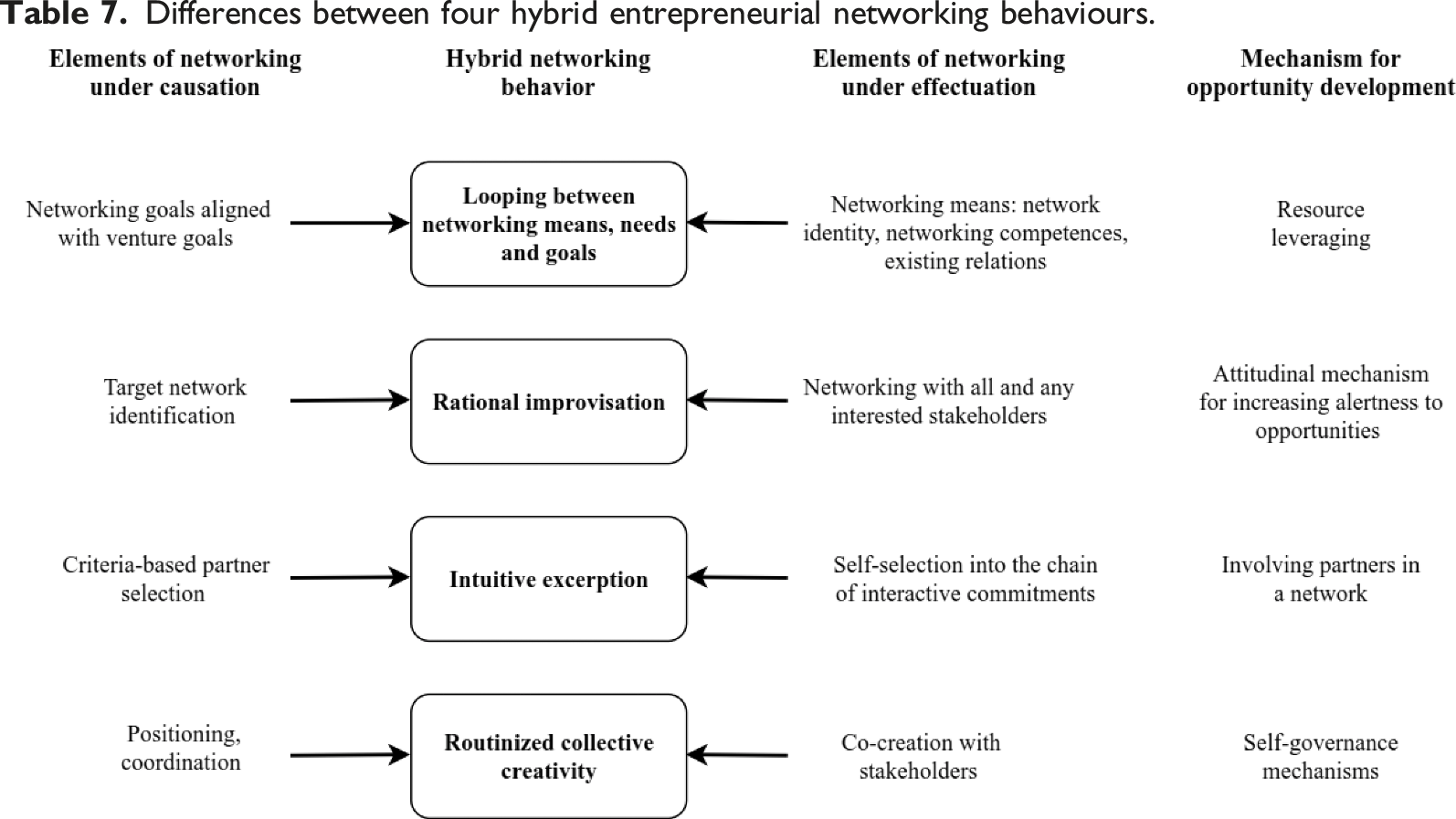
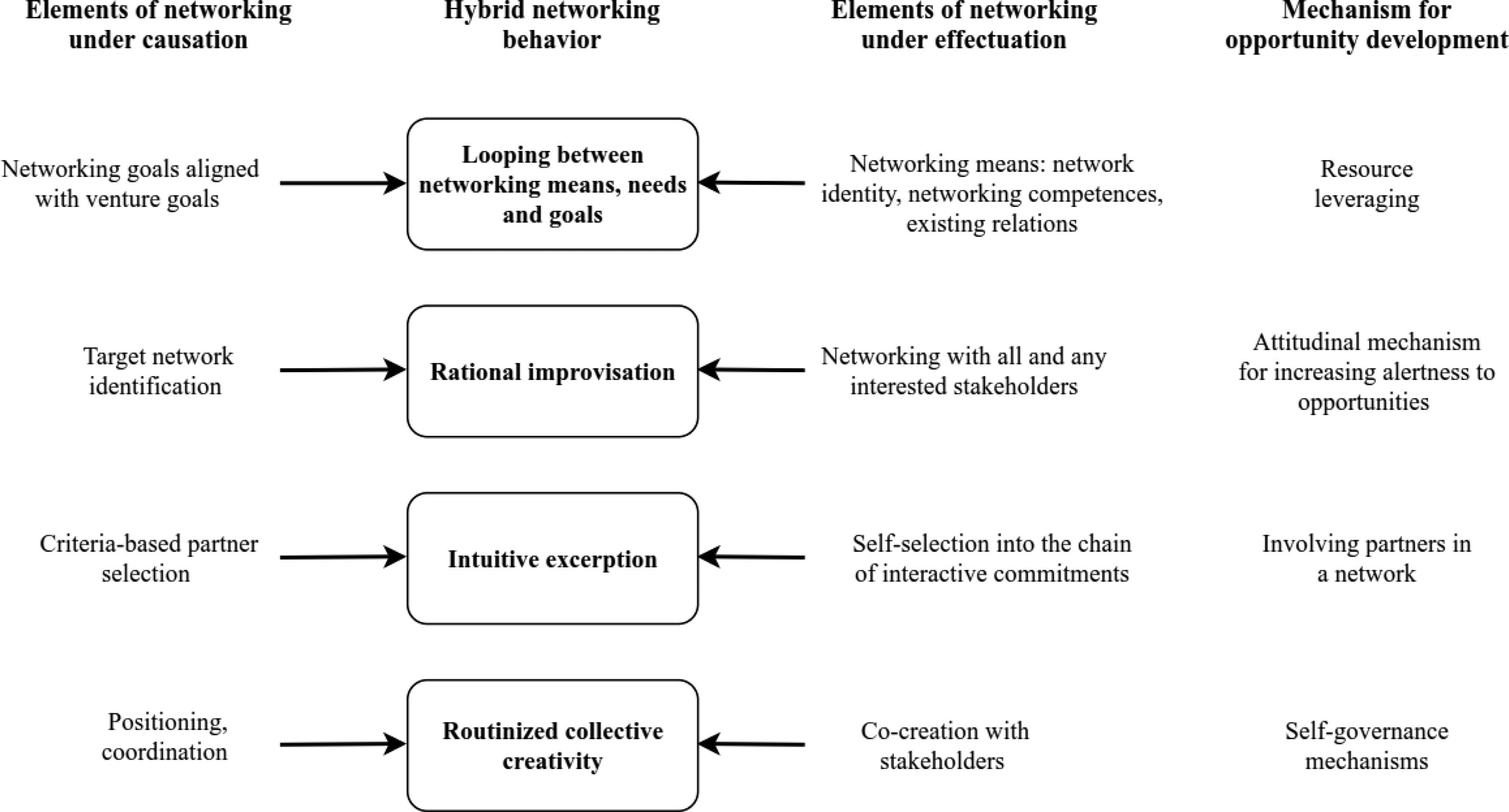
This article offers several important contributions. First, we contribute to the effectuation research, and more precisely to understanding the interplay of causation and effectuation. We show that each of the four hybrid combinations of these decision-making logics in networking are more than just their sum; they are blended in a self-reinforcing interplay. Because the four hybrid behaviours have elements of both causation and effectuation, they represent the true interaction between the two decision-making logics. This is an important step forward in understanding the causation–effectuation synergy discussed by Smolka et al. (2018). While the study by Smoka et al. (2018) examined this synergy, their point of departure was to view causation and effectuation as separated in time and relating to different tasks and functions (p. 8). Our findings, in turn, present causal and effectual decision-making logics as inseparable ‘effecausal’ mixtures unfolding at the same time and in a single networking episode. Thus, we unpack the inherent mechanism of interaction and synergy between causation and effectuation. Also, while Smolka et al. (2018) quantitatively examined the joint effect of the two logics on performance, we depict this synergy through detailed qualitative descriptions of four hybrid networking behaviours. Hence, we show specific and nuanced micro mechanisms of how this synergistic interaction takes place. We also extend understanding of the temporal aspect of causal–effectual interplay in entrepreneurial networks (McKelvie et al., 2019). While this has been viewed as a process of re-occurring iterative shifts (Nummela et al., 2014), we emphasise the simultaneous presence of both logics. We believe this distinction is important, as it is exactly the inseparable nature of these logics which unveils the true hybridity of causation and effectuation that enables opportunity development.
Second, this study has implications for entrepreneurial network research (Hoang and Antoncic, 2003). Understanding entrepreneurial networking as a behaviour and through the lens of decision-making, which can be causal, effectual and hybrid, has allowed us to grasp the micro-level nuances involved. This perspective is important (Kaandorp et al., 2020; Zheng et al., 2020), and has been marginalised in the entrepreneurship literature in favour of structural attributes of entrepreneurial networks (Slotte-Kock and Coviello, 2010). The behavioural perspective allows us to show in detail the specific actions, efforts and practices of simultaneously adopting goal-oriented causal and non–goal-oriented effectual partnering. The four hybrid networking behaviours respond to recent calls to add deeper understanding on how, and with what reasoning, entrepreneurs establish relations (Jack, 2010; Hoang and Yi, 2015). Further, we add to the network-based approach to entrepreneurial opportunity (Arenius and De Clercq, 2005; Zheng et al., 2020), showing how combining goal-oriented and non–goal-oriented networking behaviours serves as an effective opportunity development mechanism. Our hybrid perspective also advances the literature on effectual networks and networking (Engel et al., 2017; Kerr and Coviello, 2019a; Kerr and Coviello, 2019b; Galkina and Atkova, 2019). We demonstrate how entrepreneurs establish connections effectually under conditions of uncertainty and how this is combined with more goal-directed causal networking.
Third, by showing four hybrid networking behaviours as distinct mechanisms for opportunity development, we reveal how exploitation and exploration are blended, mutually reinforcing each other (Klonek et al., 2020; Volery et al., 2013). At first glance, the activities involved in the hybrid networking behaviours may seem somewhat controversial; indeed, we emphasise their paradoxical nature in how we name them. However, the simultaneity of causation and effectuation in entrepreneurial networking allows for the blending of exploitation and exploration. This, in turn, creates an opportunity development effect. Hence, we see opportunity exploitation and exploration as a combined organic activity rather than a trade-off, which adds to the existing dialogue on the exploitation–exploration amalgam (Sirén et al, 2012; Venkataraman et al., 2012).
Conclusions and implications for future research
This study has identified four hybrid combinations of causal and effectual decision-making logics in entrepreneurial networking behaviour, each representing a different synergistic mechanism of opportunity development. These findings offer directions for further studies. Since we follow a qualitative research strategy in a specific context, the robustness of our findings could be tested through a quantitative survey-based study in different national and cultural contexts, to ensure the statistical generalisability of our results. Further, we examine the entrepreneurial networking of individual entrepreneurs at the micro-level; future research could investigate how these four hybrid networking behaviours influence network composition. Also, it is important to examine how opportunity development through hybrid networking translates into firm-level actions and entrepreneurial firm performance (Clausen, 2020). Whereas this article provides explanations on how entrepreneurs network, why they network in their preferred manner is an interesting avenue for future work. Consequently, research could examine the antecedents and initiation of this hybridity in terms of: networking competencies needed to combine causal and effectual decision-making logics, organisational situations (change, crisis, merger and divestment) and/or institutional norms.
We have unveiled the positive synergy between two paradoxical networking behaviours. Assuming that causation and effectuation require different types of decision-making, we encourage scholars to explore whether the mixture of goal-driven and non–goal-driven networking may lead to inconsistencies, tensions and dissonant decisions inside start-ups and/or in relation to other stakeholders. This perspective of paradoxical tensions is important in understanding how entrepreneurs develop their capability to be simultaneously consistent, focussed on profit and process alignment, while remaining flexible, agile and focussed on process adaptability.
Our findings also extend understanding on entrepreneur resource environments and how they transform the means at hand into resources (Read et al., 2016) plus, bricolage (Nelson and Baker, 2005). This transformation of inputs/means into resources is closely related to the change of one logic into the other. Realising the inputs/means at hand is associated with bricolage and effectuation, while understanding how available means can be combined and recombined for use as a resource implies the need for more strategic and causal thinking. On this point, our discussion on hybrid looping between means, needs and goals provides novel insights. That is, asking ‘What do I have?’ helps understand ‘What don’t I have’, and supports entrepreneurs in outlining the actions they need to take to acquire the missing components. We see this as a self-reinforced mechanism of linking means and needs, where effectual means may become causal resources to fulfil those needs. It would be important in future studies to conduct an in-depth exploration of the mechanisms to activate those means. For instance, if some of them remain latent and unused in an ‘inventory’ of reserved means (Galkina and Atkova, 2019), how do entrepreneurs determine which to use? What is the relationship between ‘I have it but don’t need it/cannot use it’ and ‘I don’t have it and I need it’? Addressing these aspects would help understand the complexity of means-driven reasoning.
Also, our hybrid practice of routinised collective creativity provides interesting insights on the duality of creative and habitual routinised responses that occur in entrepreneurial behaviour (Reuber et al., 2016). We show that mindful and mechanical activities can be integrated organically in start-ups. This finding can serve as a stepping stone for further research exploring how entrepreneurs can learn to be creative through routines and disciplines enacted on a regular basis, for example, through scheduled brainstorming sessions and/or rituals (Tharp, 2003).
Footnotes
Declaration of conflicting interests
The author(s) declared no potential conflicts of interest with respect to the research, authorship, and/or publication of this article.
Funding
The author(s) received no financial support for the research, authorship, and/or publication of this article.
