




Abstract
Calls in the entrepreneurship literature have advocated theory development and empirical studies exploring fear of failure. Often viewed as an inhibitory factor towards entrepreneurial activity, contemporary research has suggested that fear of failure can also motivate entrepreneurial activity. To explore this issue, we draw on Protection Motivation Theory to conceptualise and operationalise fear of failure. We find support for the notion that fear of failure prompts the adoption of entrepreneurial strategies, provided the entrepreneur believes they have the ability to act entrepreneurially, and that by so doing, their financial situation will improve. Our approach extends the literature on fear of failure in an entrepreneurship context by disentangling cognitive and behavioural aspects focusing not only on threat appraisals, but also on how entrepreneurs cope with them.
Introduction
Contemporary literature has advocated that studies on fear of failure should move away from a dominant conceptualisation of it as a dispositional trait, with a negative impact on entrepreneurial intentions, to understanding it as a situational-based response to threats experienced while engaging in entrepreneurship (Cacciotti et al., 2016; Cacciotti and Hayton, 2015). Fear of failure does not only manifest in response to starting a business, preventing some individuals from acting on their entrepreneurial intentions, but can also be felt during the entrepreneurship process in response to challenges suggesting the viability of the venture is under threat (Cacciotti et al., 2016; Kollmann et al., 2017; Morgan and Sisak, 2016). Once an entrepreneur is actively running a business, fear of failure shifts from being in the abstract to a potential outcome (Jenkins et al., 2014; Shepherd, 2003). However, the extent to which fear of failure emerges once the business is in operation and how entrepreneurs cope with this remains underexplored (Cacciotti et al., 2016; Cacciotti and Hayton, 2015). Unlike a nascent context, where it motivates entrepreneurial avoidance, fear of failure may be a source of entrepreneurial motivation to overcome the threat of failure when actually running a business (Morgan and Sisak, 2016). We explore this under-investigated aspect of fear of failure by focusing on how it influences the intention to adopt entrepreneurial strategies by active entrepreneurs.
We draw on Roger’s (1975) Protection Motivation Theory (PMT) which examines fear of failure through a focus on the appraisal of threats which could induce fear, the responses to these threats in the form of coping efficacy and the behavioural intentions for responding to the threat of failure. As PMT is designed to explicitly understand how individuals appraise and adaptively cope with threats which elicit fear, we chose this framework over other generic cognitive appraisal processes such as that by Folkman and Lazarus (1984). Empirically we test our hypotheses on a random sample of 159 Swedish dairy farmers. This is an appropriate sample given a decline in this sector making the threat of failure a contemporary challenge with entrepreneurial action advocated by industry bodies as a strategy to address such threat.
This paper makes two contributions to the literature. First, by drawing on PMT we offer a new way of conceptualising and operationalising fear of failure which uncouples its cognitive and behavioural aspects. This approach builds upon and extends recent work which has advocated the importance of shifting from trait-based conceptualisations which conflate the cognitive and behavioural aspects of fear of failure, to untangling cognitive and behavioural aspects enabling a more nuanced understanding of how it affects entrepreneurs (Cacciotti et al., 2016). It also complements recent work on scale development for fear of failure which has focused on identifying specific threat appraisals which induce fear (Cacciotti et al., 2020). This has incorporated coping responses and enabling fear appraisals to be contextualised to the challenges entrepreneurs encounter, for example, pitching, losing an important customer or limited work–life balance (Cacciotti et al., 2016, 2020; Kollmann et al., 2017; Stroe et al., 2020) to understand how it affects them within specific contexts. Second, we focus on the importance of an entrepreneur’s coping response to fear of failure. This has been overlooked in the literature which has taken a situational-based approach with a focus upon threat appraisals and fear (Cacciotti et al., 2016, 2020) rather than how entrepreneurs cope with threat appraisals. We demonstrate that when entrepreneurs believe they have the skills and ability to respond to fear appraisals, fear of failure can be motivating. This creates opportunities to shift the emphasis in the literature, from the demotivating impact of fear of failure, to understanding when and how it can be motivating.
Theoretical framework
Conceptualising fear of failure – a review of the literature
Conceptualising fear of failure in an entrepreneurial context is challenging because of the multi-faceted nature of the phenomenon coupled with diversity and ambiguity in how it has been conceptualised (Cacciotti and Hayton, 2015). For example, it has been conceptualised as a dispositional trait capturing a risk aversion (Arenius and Minniti, 2005), a dispositional trait capturing loss aversion (Morgan and Sisak, 2016), a latent disposition representing a ‘capacity for experiencing shame or humiliation as a consequence of failure’ (Atkinson, 1966: 13) triggered by fear-eliciting events (Mitchell and Shepherd, 2010; Ng and Jenkins, 2018; Stroe et al., 2020) or as a state-based socially situated cognition (Cacciotti et al., 2016, 2020), activated in response to obstacles or challenges (Engel et al., 2019; Kollmann et al., 2017). Adding to the complexity of conceptualising fear of failure is that it encompasses cognitive, emotional and behavioural responses and can occur throughout the entrepreneurship process influencing not only an entrepreneur’s decision to start a venture, but also its future management (Cacciotti and Hayton, 2015).
While studies initially investigating fear of failure took a trait-based approach, conceptualising it as risk aversion to understand why some individuals are less likely to create a business (Arenius and Minniti, 2005), contemporary work investigates it in response to triggers or obstacles encountered during the entrepreneurship process (Kollmann et al., 2017; Stroe et al., 2020). Given the multiple conceptualisations of fear of failure, we review and organise the literature into a typology based on how it has been conceptualised and its shifting motivational influence upon the entrepreneurial process (see Figure 1). This is then used to support our novel approach to studying fear of failure, contributing to broader debate.
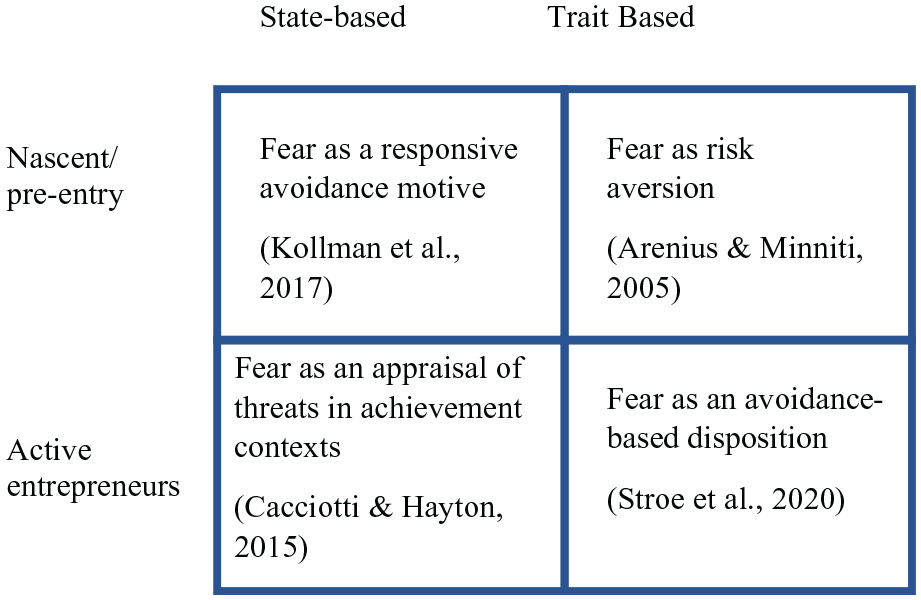
Conceptualising fear of failure.
Fear of failure as a dispositional trait
Initial fear of failure studies were conceptualised as a form of risk aversion to understand its influence on entrepreneurial intentions (Hessels et al., 2011; Tsai et al., 2016; Vaillant and Lafuente, 2007). Drawing heavily on Global Entrepreneurship Monitor (GEM) data, where it was operationalised as a single dichotomous item, individuals were asked whether ‘Fear of failure would prevent me from starting a business’ (Reynolds et al., 2005). Unsurprisingly, it was found that it had a negative influence on entrepreneurial intentions. While this substantial data set has spawned a number of studies, as Cacciotti and Hayton note (2015: 170), a significant limitation is that it cannot be determined whether ‘individuals indicating disagreement do not perceive fear of failure, or perceive it, but continue to engage in entrepreneurial action’.
To overcome the limitations of a single-item measure and incorporate aspects of failure that an individual may fear, research has drawn on the Performance Failure Appraisal Inventory (PFAI) developed by Conroy and colleagues (Conroy and Elliot, 2004; Conroy et al., 2002). This measure, which has predominately been used in sports and education settings, conceptualises the impact of failure into five domains: (1) experiencing shame and embarrassment, (2) devaluing one’s self-estimate, (3) having an uncertain future, (4) important others losing interest, and (5) upsetting important others. This approach brings to the conceptualisation of fear of failure the consequences of failure, by asking individuals to respond to statements such as ‘When I am failing, I worry about what others think about me’ enabling a richer understanding of what individual’s fear and the implications of these fears on behavioural outcomes. It has been employed, for example, by Mitchell and Shepherd (2010) to understand how fear of failure influences the nature of opportunities preferred by entrepreneurs. They found that when the value of the opportunity is low, they prefer to conserve resources, but when the value is high, they are more likely to pursue it.
Moving beyond the dominant conceptualisation that fear of failure has a negative influence on entrepreneurial action, Morgan and Sisak (2016) explored its positive influence. Rather than conceptualising it as risk aversion, they conceptualise it as a form of loss aversion, where the degree of fear of failure is the difference in the pain suffered from falling short of goals versus the pleasure gained from exceeding them by the same amount. Modelling fear of failure based on loss aversion, they argue that once initial fears of failure that reduce the likelihood of entry are overcome, post entry, fear of failure can become the fuel which drives success. This is particularly so for entrepreneurs with high aspiration levels motivating them to make additional sacrifices to achieve success and avoid potential losses. Offering yet another perspective on how fear of failure manifests in the entrepreneurship process, Stroe et al.’s (2020) study effects upon experiences of negative emotions during pitching – an evaluative situation experienced by many early-stage entrepreneurs. Rather than focus on fear of failure in response to an evaluative situation, they focus on its role in triggering negative emotions during an evaluative situation, decoupling the cognitive and emotional aspects. They found that dispositional fear of failure is an antecedent to negative emotions experienced while pitching.
State-based situational conceptualisations of fear of failure
In contrast to dispositional conceptualisations of fear of failure, which investigate how differences result in different responses to a fear triggering event, state-based conceptualisations focus on a potential fear triggering event such as loss of funding. They investigate the extent to which these events are deemed to induce fear of failure and the potential emotional and behavioural responses to these appraisals. Taking a state-based approach, Kollmann et al. (2017) conceptualise fear of failure as a responsive avoidance motive triggered by encountering obstacles. Using an experimental design, they investigate how such fear is activated by encountering obstacles such as loss of funding. The influence this has on the feasibility and desirability of the opportunity, and ultimately, whether the entrepreneur commits resources to pursing the opportunity or withdraws from the nascent process are analysed. They find that fear of failure is activated by encountering obstacles; this discourages the nascent entrepreneur from pursuing the opportunity.
Cacciotti and Hayton (2015) also conceptualise fear of failure as a state-based socially situated emotion developing a scale to operationalise it as an emotion (Cacciotti et al., 2020). Specifically, they define it as temporary cognitive and emotional reaction towards environmental stimuli that are apprehended as threats in achievement contexts (Cacciotti and Hayton, 2015: 181). In their empirical work, they focus on it as a combination of cognition, affect and action that entrepreneurs experience in response to the challenges and uncertainty they face as they pursue a venture (Cacciotti et al., 2016). Their approach acknowledges that fear of failure is a subjective experience with a temporal dimension; in effect what an entrepreneur fears may change as they progress through different stages of the entrepreneurial process and encounter difficult challenges or obstacles. From this perspective, they found that fear of failure can be triggered by a range of different triggers encountered throughout the entrepreneurial process, such as a lack of ability to execute entrepreneurial tasks and challenges in maintaining work–life balance. While fear of failure inhibited nascent entrepreneurs from enacting their entrepreneurial aspirations, for active entrepreneurs, it motivated them to push through challenges and obstacles.
Building on situation-based experiences of fear of failure (Cacciotti et al., 2016; Kollmann et al., 2017), Engel et al. (2019) focus on the role of meditation in helping entrepreneurs cope with fear-inducing obstacles that signal venture-related goals are under threat. Relying on an experimental manipulation, where fear was induced among active entrepreneurs, they found that mediation through its influence on self-compassion reduced the fear-inducing nature of obstacles. This study is one of the few to shift the emphasis to study how entrepreneurs cope with fear of failure.
An organising framework
Based on our review on fear of failure, we now organise on the basis of how it has been conceptualised – either as a dispositional trait activated by fear-inducing obstacles or as the appraisal of socially situated obstacles and experiences. In addition, we consider the stage of the entrepreneurship process under investigation – nascent/pre-entry or during the ongoing running of a business. What becomes apparent is that in the early nascent phase and pre-entry, fear of failure has a demotivating influence on entrepreneurial behaviour. Obstacles are appraised as threatening resulting in detriment to entrepreneurial aspirations with this being the case in both trait and state-based conceptualisations. This reflects the literature that suggests the impact of the fear of failure is uniformly negative (Stroe et al., 2020). However, as the focus shifts to entrepreneurs in the midst of running an ongoing entity, fear of failure can have a motivating influence prompting greater effort and focus on achieving entrepreneurial aspirations. Failure after creating a business shifts the impact of failure from something which is abstract, preventing action to something which has a financial and emotional impact (Jenkins et al., 2014; Singh et al., 2007).
There is a lack of empirical evidence regarding the motivating role of fear of failure on entrepreneurial behaviour (Cacciotti et al., 2016; Engel et al., 2019; Morgan and Sisak, 2016). We, therefore, align with Cacciotti and Hayton (2015) who advocate a situational-based approach that includes cognitive and affective processes to understand the construct. When taking this approach, fear of failure is conceptualised as involving cognitive, affective and behavioural responses to cues that signal potential entrepreneurial failure (Cacciotti et al., 2016). Although entrepreneurial failure has been conceptualised in several ways, we focus on the threat of financial failure given this is critical to firm exit from the market (Jenkins and McKelvie, 2016).
PMT
As noted above, PMT focuses on how individuals appraise and adaptively cope with threats that elicit fear. It takes into account the perceived threat vulnerability including beliefs about the likelihood of threat exposure, perceived threat severity and beliefs about the seriousness of the threat to personal well-being. It also encompasses the availability and effectiveness of a coping response that can reduce or eliminate the fear-eliciting event (Rogers, 1975; Witte, 1994). With firm failure having a detrimental impact on an entrepreneur’s self-worth and financial situation (Jenkins et al., 2014), threat severity and threat vulnerability are highly relevant for conceptualising the experience of fear of failure while belief in ones capability as an entrepreneur provides insights into the ability to cope with these threats (Mitchell and Shepherd, 2010).
Coping effectiveness is dependent on whether an individual has strategies at their disposal for effectively removing the threat (response efficacy) and ability to execute the strategies (self-efficacy) and whether the benefits of responding outweigh the costs associated with implementing the strategy (response cost). This reflects Wood and Bandura’s (1989) social cognitive approach to decision-making where an individual considers not only whether they possess the necessary skills, but also have the self-belief in those skills. When considering how they will respond to a potential fear-eliciting event, individuals consider the negative impact the fear-eliciting event. This includes impacts upon well-being (threat severity), the probability of the event will take place if no adaptive behaviour is performed (threat vulnerability) and the availability and effectiveness of a coping response that would reduce or eliminate the threat (Rogers, 1975). Individuals engage in protection motivation as an outcome of a cognitive appraisal process when they anticipate the event will have a negative impact but their coping response will prevent or reduce its impact. If it is believed that the event as unlikely to occur, or have a negative impact, or entrepreneurs do not have appropriate resources to deal with the threat then protection motivation is not aroused and behavioural intentions remain unchanged.
As coping is a response to anticipation of a fear eliciting threat, protection motivation is conceptualised as a mediation process when an individual first appraises the severity and vulnerability of a threat. If this is deemed to be high, it then triggers consideration of the ability to cope with the threat and adjust behavioural intentions to effectively respond (Rogers, 1975). With this conceptualisation of fear of failure, it is not the emotional state of fear as suggested by Cacciotti et al. (2016) which is driving behavioural intentions, but rather the cognitive appraisal of the threat and the ability to do something about it (Rogers, 1975). As emphasised by Rogers, ‘protection motivation theory makes it clear that one is coping with and avoiding a noxious event rather than escaping from an unpleasant emotional state of fear’ (p. 101). Contextualising PMT with the fear of failure active entrepreneurs might experience, we focus on common threats to the survivability of a business and the risks associated with financial failure (Gaskill et al., 1993). In addition, we consider the extent to which entrepreneurs feel vulnerable to it and the severity it would have upon well-being (Jenkins et al., 2014). Combined, vulnerability for, and the severity of, failure represents fear of failure as a threat appraisal (Rogers, 1975).
To cope with a threat of failure, entrepreneurs can develop entrepreneurial strategies to proactively change the course of their business (Cacciotti et al., 2016). Successful entrepreneurs are concerned with failure yet, also find it motivating (Morgan and Sisak, 2016) prompting action to mitigate such threats. This might include increasing investment by developing new products and services, seeking out new opportunities and implementing strategies to strengthen survivability. In essence, proactively responding to the threat of failure. This leads to our first hypothesis.
Hypothesis 1 (H1): The greater the perceived threat of failure, the more likely an entrepreneur is to respond to the threat by increasing their intentions to adopt entrepreneurial strategies.
However, what is critical for addressing fear of failure is the ability to draw on abilities to meet the fear-eliciting challenges experienced (Mitchell and Shepherd, 2010). Thus, an entrepreneur’s ability to develop appropriate strategies is related to a belief in their entrepreneurial ability to reduce the threat of failure. We conceptualise this as their coping efficacy as it captures the ability to respond to the threat of failure and the efficacy of this response. PMT suggests coping efficacy mediates the relationship between threat appraisals and the intention to adopt entrepreneurial strategies. This leads to our second hypothesis:
Hypothesis 2 (H2): Coping efficacy mediates the relationship between the threat of failure and intentions to adopt entrepreneurial strategies such that entrepreneurs who have a high coping efficacy in response to the threat of failure are more likely to have intentions to adopt entrepreneurial strategies.
However, as adopting entrepreneurial strategies requires time and effort by the entrepreneur, they need to consider whether the benefits of responding to the threats outweigh the costs associated with implementing the strategy (Rogers, 1975). High costs of adopting entrepreneurial strategies reduce the effectiveness of coping efficacy, reducing the likelihood of adopting entrepreneurial strategies (Figure 2). This leads to our third hypothesis:
Hypothesis 3 (H3): Response costs reduce the positive relationship between coping efficacy and intentions to adopt entrepreneurial strategies.
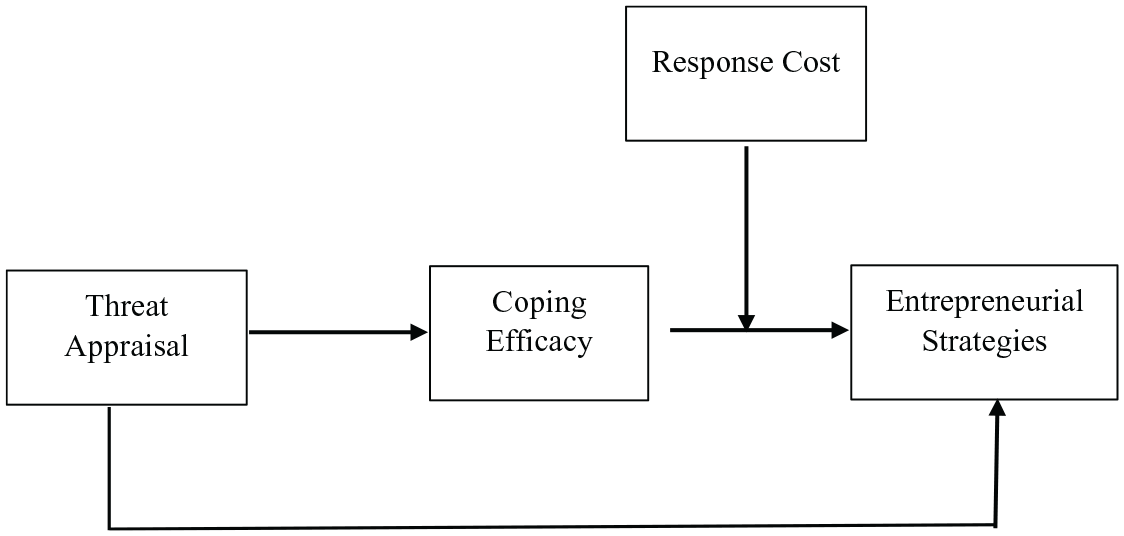
Research model.
Method
Research context
Swedish dairy farmers are an appropriate sample for investigating our research question. First, the sector has been damaged by international competition, rationalisation and exit with many facing financial failure. Since 1976, 93% or at least 52, 7531 dairy farms in Sweden have disappeared; their demise is often attributed to low prices set in international markets and relatively high production costs, high taxes, labour laws and stringent environmental and animal welfare regulations. To remain competitive, the 3739 dairy farms (as of 2016) remaining have become larger and more efficient on average; yet, tight margins and high levels of exit persist; between 2012 and 2016, the yearly rate of decline was 7%. 1 Consequently, there is a realistic threat of financial failure in the sector.
Second, there appears to be a growing acceptance that the remaining dairy farmers must change to survive. The Swedish Board of Agriculture, The Federation of Swedish Farmers (LRF) and other important stakeholders, encourage entrepreneurial behaviour by promoting strategies that move away from cost leadership (LRF, 2011, 2014). This includes, adding value to existing products, developing new products and services, and developing innovative marketing channels.
Sample and procedure
The official database at Statistics Sweden 2 lists a total of 3279 farms with milk cows as their main activity. The survey was sent to a random sample of 650 of these farms with a pre-paid return envelope. Respondents had 25 days to complete and return the survey; no financial incentives were given. Despite peak harvest season, 159 surveys or 25% were returned and 121 provided complete answers. The sample was checked for non-response bias in two ways. First, observed values in our sample were compared with known values from the population on age and gender (using the official company register provided by Statistics Sweden). Second, an extrapolation method based on the assumption that respondents who respond late behave more like non-respondents than respondents who answer early was used (Armstrong and Overton, 1977). According to Statistics Sweden, the average age of Dairy farmers in Sweden is 54.7 compared with 54 in this survey. A total of 91% of survey respondents were men compared with Statistics Sweden’s company registrar of 86% owned by men. The difference is likely attributed to how respondents were solicited. Survey recipients were instructed that the survey should be filled in by the person in the household ‘most responsible person for running the company’. Consequently, while there appears to be a difference in observed sample and overall population in terms of gender and gender ownership, the difference may reflect a situation where relatively more men are running farms, even if they are not registered as the owner. Previous research suggests just this. A report commissioned the year before the database used in the sample showed that while 68% of women in agriculture worked more than 40 hours per week, 88% percent of men worked more than 40 hours per week (LRF, 2016)
We also compared the first quarter of returned survey responses with the last quarter using a one-way analysis of variance (ANOVA) on all available demographic data. Based on early and late responders, no significant differences for age, gender, number of children, ownership structure, number of hectares farmed, number of cows, marital status, debt, education or number of employees were found. However, there was a significant difference for revenue; late responders tended to report greater revenue than early responders (F(1, 70) = 4.46, p = .04). The effect size (eta square = .06) was medium according to Cohen’s d. Based on this, the sample data closely mirror that of the overall population in terms of demographics with the exception of revenue. Assuming those with higher revenue are less likely to fail, the sample may include firms at greater risk for failure increasing the relevance of the study to this cohort.
Drawing on the dominant approach when testing insights from PMT, we primed the respondents by reminding them of current threats (Pechmann et al., 2003; Rippetoe and Rogers, 1987). The survey included an ominous picture of an abandoned farm and broken-down tractor featured on the cover page to symbolise the hardships milk farmers have faced and remind them of the ongoing threat of failure. This was followed by a one-paragraph message that prompted farmers to think about the current competitive situation of high costs, low margins, rationalisation and many farms operating at a loss. In addition, examples of (coping) responses to the competitive situation were included such as focusing on customer value, finding alternative marketing channels, and services such as tourism, and eco-tourism. The examples given were taken from industry reports and mirrored the general Swedish narrative on threats to farm survival and advocated coping solutions (LRF, 2011, 2014). This was immediately followed by survey questions and measures.
Variables
Independent variables
Threat appraisal
In line with Barnett et al. (2009), a formative index for threat appraisal was created. This was based on the entrepreneur’s appraisal of vulnerability to financial failure and severity of the consequences of financial failure (Rogers, 1975). Vulnerability was operationalised to understand the extent to which the entrepreneur was currently vulnerable to experiencing failure by asking as the stem: If you continue to operate your farm in the same way as you do today, the financial situation in three years will be: followed by seven statements (see Table 1 for all items) inspired by Jenkins et al. (2014). Examples of the items are as follows: It will not be as profitable as I would like and I will be forced to sell important assets. Responses were measured on a 7-point Likert-type scale (very unlikely–very likely).
Model constructs.
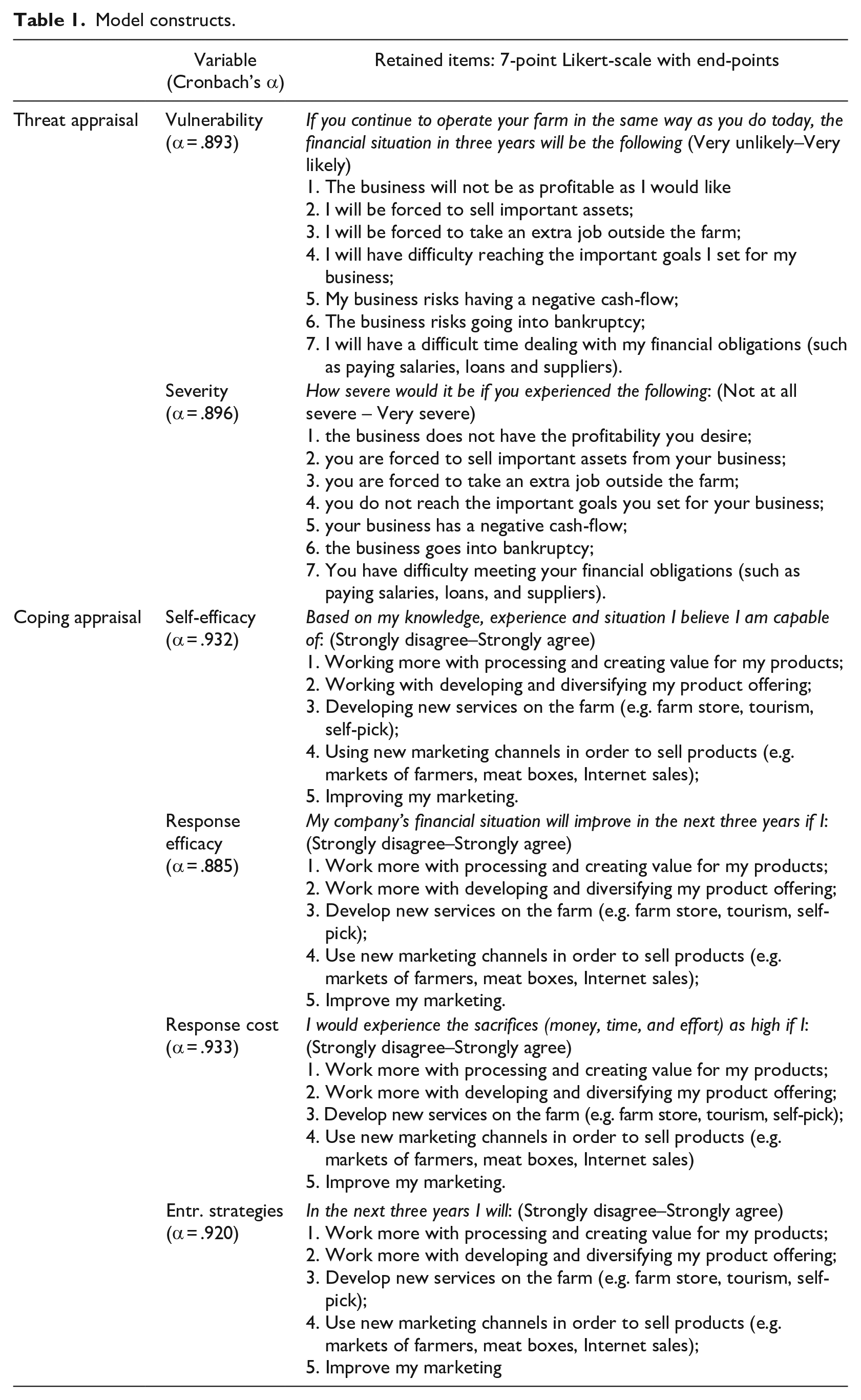
Severity was operationalised to understand how the entrepreneur would be impacted by failure by asking as the stem: How severe would it be if you experienced the following: followed by seven statements (see Table 1 for all items) to capture the potential impact of failure. Examples of items are as follows: ‘You are forced to take an extra job outside the farm’ and ‘You have difficulty meeting your financial obligations (such as paying salaries, loans, and suppliers)’. Responses were measured on a 7-point Likert-type scale (Not at all severe–Very severe).
Coping efficacy
To operationalise coping efficacy, in line with Barnett et al. (2009), we created a formative index based on the entrepreneur’s response efficacy, the extent an entrepreneur has strategies available which could address the threat and their self-efficacy, their belief that they are capable of implementing strategies to address the threat (Rogers, 1975). The stem for response efficacy was: My company’s financial situation will improve in the next three years if I: followed by five response statements (see Table 1 for all items). Examples included the following: work more with processing and creating value for my products and work more with developing and diversifying my product offering. The stem for self-efficacy was: Based on my knowledge, experience and situation I believe I am capable of: followed by five response statements (see Table 1 for all items). Examples include the following: developing new services on the farm (e.g. farm store, tourism, self-pick); using new marketing channels in order to sell products (e.g. markets of farmers, meat boxes, Internet sales). The 7-point Likert-type scales, endpoints Strongly disagree–Strongly agree, were then used to measure agreement towards these statements.
Response cost
Response cost measured costs in terms of time, money and effort. The stem of the question was as follows: I would experience the costs (money, time and effort) as high if I: followed by five response statements. Examples include the following: work more with processing and creating value for my products. The 7-point Likert-type scales, endpoints Strongly disagree–Strongly agree, were then used to measure agreement towards these statements. All item statements are shown in Table 1.
Dependent variable
Intention to adopt entrepreneurial strategies was conceptualised as behaviours that are commonly associated with developing innovative, new or novel approaches or products (Gao et al., 2018). The stem for the questions was: In the next three years I will: followed by six response statements. Examples include the following: work more with processing and creating value for my products, and work more with developing and diversifying my product offering. The choice of the six statements or behaviours was also based on typical recommendations proposed by The Federation of Swedish Farmers (LRF, 2011, 2014) to improve competitiveness. In this sense, they also fit in the typical Swedish farming context and are known to farmers.
Control variables
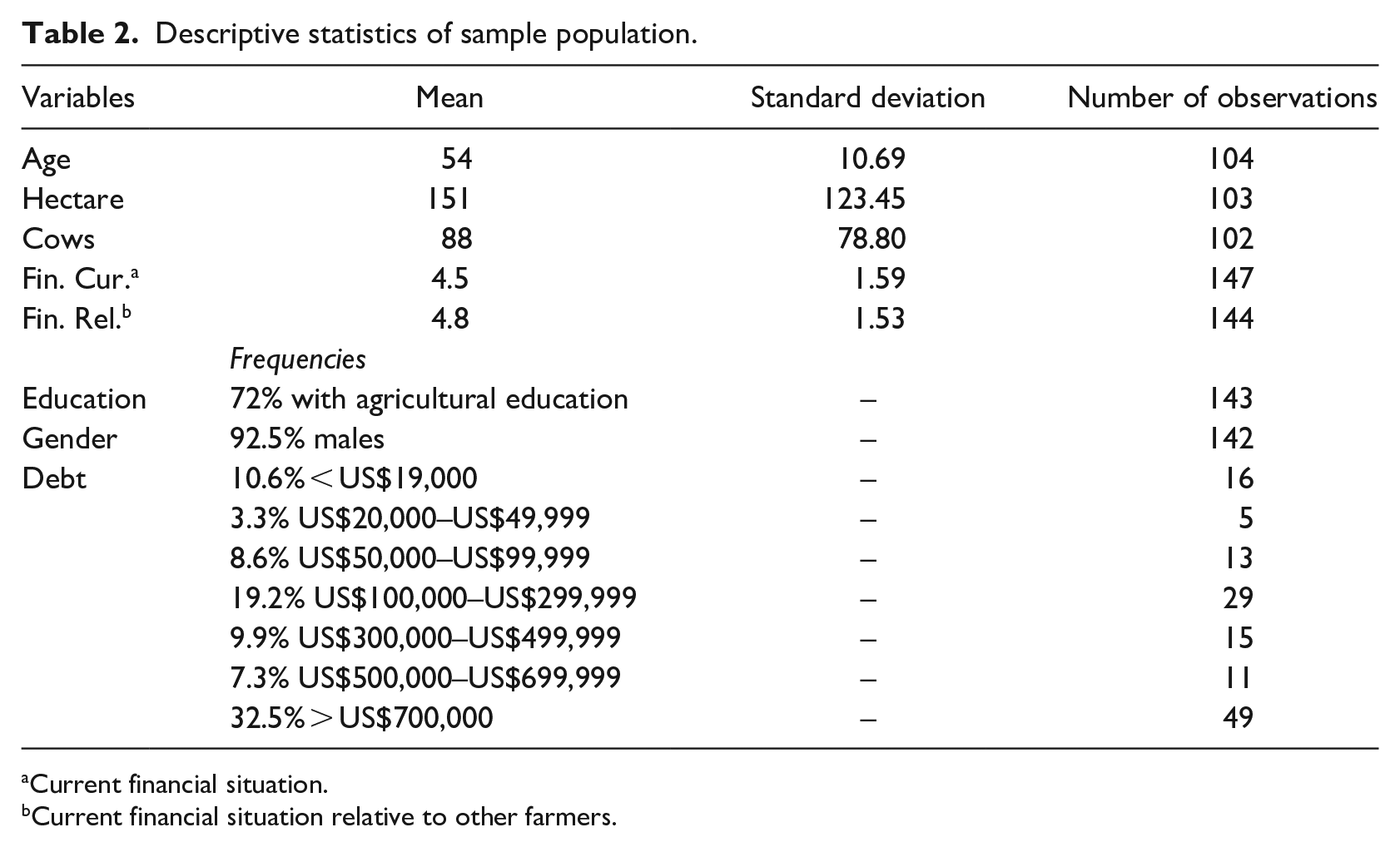
We included a number of control variables. Demographic data were collected on age and sex. Farm-specific data were collected including land holding in hectares, number of cows and number of employees to provide industry relevant measures of firm size. As we are focusing on the threat of financial failure, we also controlled for farmer’s current financial situation by measuring level of debt (using ordered categories), the current financial situation of the farm (measured using a 7-point semantic differential scale with end-points bad and good) and their current financial situation relative to other dairy farmers (measured using a 7-point semantic differential scale with end-points bad and good). Descriptive statistics for the sample are provided in Table 2.
Descriptive statistics of sample population.
Current financial situation.
Current financial situation relative to other farmers.
Analysis techniques
Before testing our hypotheses, a principal component analysis (PCA) and reliability analysis were conducted for each construct in the model. PCA with varimax rotation was run using all items representing vulnerability, severity, self-efficacy, response efficacy and response cost. All items, with the exception of focus on developing my understanding for customer needs (which represented but was subsequently dropped from response efficacy and further analysis), loaded on their expected construct with only a few side loadings above .30, the highest being .395 for an item representing response efficacy – develop new services on the farm (e.g. farm store, tourism, self-pick) loading on self-efficacy (see Table 2). The same procedure was used to explore items intended to capture the dependent variable (DV) intention to adopt entrepreneurial strategies.
Reliability analysis was then used to investigate the suitability of creating scales for each of the independent variables (IVs) and DV based on the PCA output. The results demonstrate that the items for each proposed scale were highly reliable (α ranged from .885 to .933). Based on this, the statistical mean was calculated and used to create scales for the IVs and DV (see Table 2). Following recommendations from Diamantopoulos and Winklhofer (2001), the formative indices were first checked for indicator collinearity. The indicators for threat appraisal and coping efficacy had variance inflation indices of 1 and 1.9, respectively, suggesting multicollinearity was not a problem. Moreover, they were constructed using the entire scope and content outlined by PMT and on that basis possessed appropriate content and indicator specifications. To test the mediation hypothesis, the SPSS Process Macro developed by Hayes (2015) was used. This macro enables the simultaneous test of the direct and indirect pathways and because of this, it is superior to the Sobel test as it overcomes the latter’s high rate of Type I error (Shrout and Bolger, 2002). To test for moderated mediation, we used the index of moderation test developed by Hayes (2015).
Results
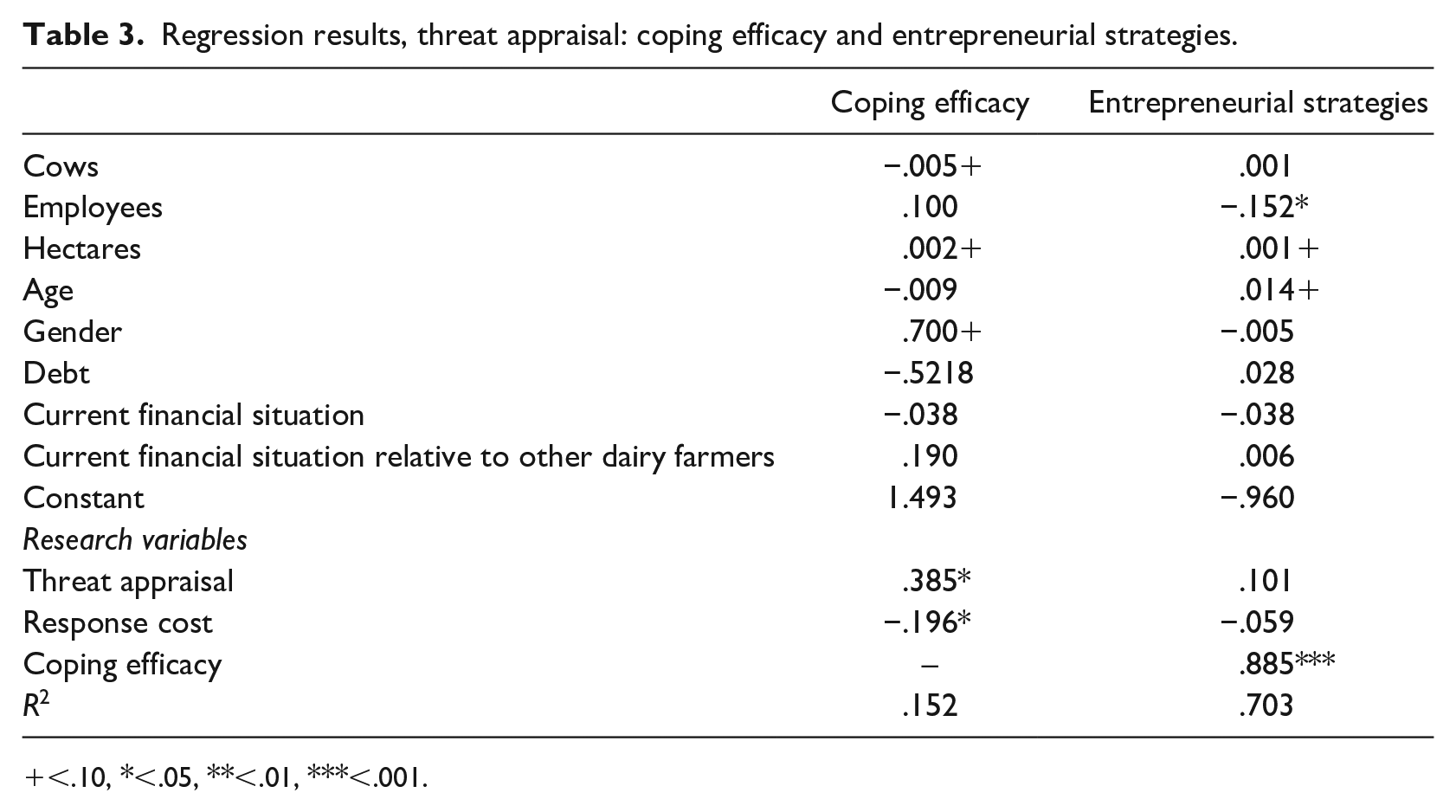
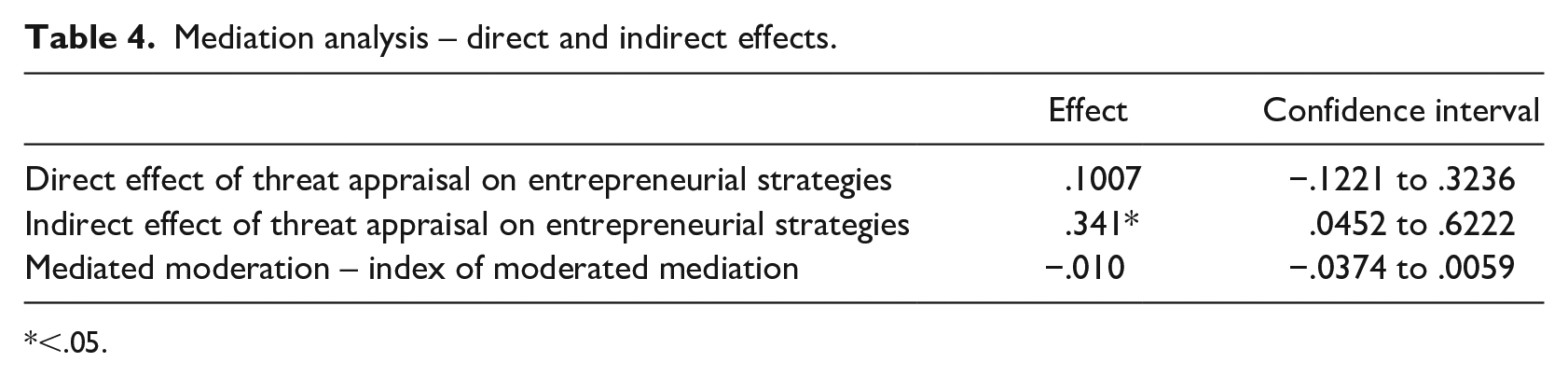
Tables 3 and 4 show the result of the regression analysis and results of the mediation analysis, respectively. We start out by testing Hypothesis 1: threat appraisals are positively related to the intention to adopt entrepreneurial strategies. We did not find support for this hypothesis in our regression results, β = .101 (p > .10). Next, we test Hypothesis 2: the mediating role coping efficacy has between threat appraisals and the intention to adopt entrepreneurial strategies. We find support for the direct effect of threat appraisal on coping efficacy, β = .385 (p < .05), the direct effect of coping efficacy on the intention to adopt entrepreneurial strategies, β = .885 (p < .001), and a positive indirect effect of threat appraisals on intentions to adopt entrepreneurial strategies, β = .341 (CI: .0452–.6222). We therefore find support for Hypothesis 2.
Regression results, threat appraisal: coping efficacy and entrepreneurial strategies.
<.10, *<.05, **<.01, ***<.001.
Mediation analysis – direct and indirect effects.
<.05.
Finally, we tested the moderating role of response cost on the relationship between coping efficacy and intention to adopt entrepreneurial strategies. We did not find support for this relationship. The index of moderated mediation was not significant, β = −.010 (CI: −.0374 to .0059), shown in Table 4. We did, however, find that response cost had a significant influence on coping efficacy (β = −.196, p < .05). We discuss the implications of our findings in the next section.
Discussion
Main findings and contributions
Within the current literature, there are increasing calls for further theoretical and empirical analyses of the fear of failure (Cacciotti et al., 2016; Cacciotti and Hayton, 2015). We seek to respond to this call in two ways. First, we contribute to the conceptualisation and operationalise of fear of failure by uncoupling cognitive and behavioural aspects to enable greater insights into how entrepreneurs respond to it. Second, we shift focus from the demotivating influence of fear of failure for nascent entrepreneurs to studying the motivating influence it has on active entrepreneurs.
Our approach complements the current trend in adopting a situational-based approach to understanding fear of failure which focuses on disentangling its different facets (Cacciotti et al., 2016, 2020). Previous operationalisations have conflated an appraisal of potential fear with its outcome, creating an implicit assumption in the conceptualisation and operationalisation of fear of failure that it is uniformly demotivating. For example, studies relying on GEM data operationalise the construct by asking whether ‘Fear of failure would prevent me from starting a business’ (Reynolds et al., 2005). Although Conroy’s measure offers greater nuance, it still focuses upon what is feared, rather than allowing a situational approach to fear of failure to be captured. It also assumes that fear of failure is demotivating, or has a negative outcome for the individual. To illustrate, items from Conroy’s scale include ‘When I am failing, I worry about what others think about me’ and ‘When I am failing, it is often because I am not smart enough’ (Conroy et al., 2002).
To challenge the assumption that fear of failure is demotivating, and investigate the potentially motivating influence upon entrepreneurs, we drew on PMT which decouples the appraisal of fear-inducing threats with the individual’s coping response and behavioural change. By incorporating an entrepreneur’s coping response to a threat appraisal, we are able to uncover the motivating role fear of failure can have for intentions to adopt entrepreneurial strategies. The inclusion of a coping response is critical for understanding how fear of failure can be motivating; it suggests that the potential threat of failure can motivate entrepreneurs, provided they believe they have the skills and ability to respond to fear appraisals. This argument has important implications for studying fear of failure in entrepreneurship, as it provides novel empirical support for it having a motivating influence on intentions to act entrepreneurially (see also Cacciotti et al., 2016, for a recent study). This provides a foundation for further investigation of incorporating coping responses to understand how fear of failure can be motivating.
PMT also provides an alternative approach to operationalising fear of failure which uncouples important elements that have previously been coupled limiting how it has been studied. Our focus on disentangling the threat appraisals and coping response complements the approach taken by Cacciotti et al. (2020) who focus on disentangling cognitive appraisals and the emotion of fear. While we focused on fear of financial failure – a clear outright threat to the survivability of the business (Jenkins and McKelvie, 2016) – PMT can be used to study other fear-inducing threats. This could be related to raising capital, losing an important customer or poor work–life balance (Cacciotti et al., 2016, 2020; Kollmann et al., 2017). PMT provides the researcher with a framework for investigating fear of failure without assuming a priori what is being feared, enabling contextualisation to the specific situation under study. For example, the motivation behind necessity entrepreneurship in impoverished areas may have more to do with the threat of starvation than concerns of shame and embarrassment (Fatoki, 2014); thus, changing the failure threat may also change the motivation for, and likelihood of, pursuing entrepreneurship.
We did not find that response cost reduced the impact of coping efficacy on intention to adopt entrepreneurial strategies. However, we did find that high response costs reduced an entrepreneurs coping efficacy suggesting that coping is not just based on an ability to act but also having the resources to act. Often the cost of taking action is overlooked but adopting and investing in entrepreneurial strategies has a real and tangible cost to entrepreneurs in terms of not only financial investment but also time and energy limiting the potential uptake of this coping strategy. This suggests that when considering how entrepreneurs respond to fear of failure, the risks and challenges of acting entrepreneurially should also be considered.
Future research and limitations
To our knowledge, this is one of the first research papers that has used PMT to model fear of failure in the context of entrepreneurship. We argue that this enables more advanced modelling of cognitive processes in the context of fear of failure and entrepreneurship. We focused on the motivating influence fear of failure can have on intentions to adopt entrepreneurial strategies. However, it can also trigger maladaptive responses, such as engaging in activities to distract from the potential failure (Lazarus and Folkman, 1984). For example, when the cost of adopting entrepreneurial strategies is prohibitively high, entrepreneurs may either engage in maladaptive coping strategies or take steps to shut down. Future research could therefore focus on the conditions under which entrepreneurs respond adaptively to fear of failure. The Extended Parallel Processing Model developed by Witte (1992) or Lazarus and Folkman (1984) appraisal theory could be used to study both adaptive and maladaptive responses to threats of failure. Our focus was on the appraisal of threats and coping responses; future research could investigate the antecedents to threat appraisals to understand why some entrepreneurs may appraise their situation as more severe and be more vulnerable to failure. For example, some entrepreneurs may have already taken action to reduce the threat of failure.
We relied on a cross-sectional design. A stronger test of our theorising would be a longitudinal design where entrepreneurial behaviour is captured, rather than an intention to adopt entrepreneurial strategies. Furthermore, our approach does not capture entrepreneurs who have already reduced their fear of failure by acting entrepreneurially. Alternative methods such as narrative case studies could illuminate how entrepreneurs have previously dealt with fear of failure. While we focused on the relationship between threat appraisals, focusing on the respondent’s business operations and their coping efficacy, we did not consider their awareness of the challenges facing the dairy industry more generally. Their intention to engage entrepreneurially and their threat appraisal may have been driven by this knowledge rather than the actual performance of their farm. Future research could include additional control variables which capture the entrepreneur’s perception of the risks to their industry more broadly and how these influence both their fear of failure and their response to this fear.
Overall, we believe our sample of dairy farmers in Sweden is a good context to study how entrepreneurs respond to fear of failure given that the threat of failure is very real in this industry and acting entrepreneurially has been advocated as a way to avoid failure. Studying how entrepreneurs respond to fear of failure in other contexts such as start-ups where entrepreneurs frequently face the threat of failure as they strive for legitimacy could provide additional insights into how entrepreneurs appraise threats and respond to them.
Conclusions
Fear of failure is an emerging concept in the entrepreneurship field. To extend this concept and offer an alternative approach to its study, we draw on PMT to understand the relationships among fear-inducing threat appraisals, coping efficacy, the cost of responding to fear threats and intentions to adopt entrepreneurial strategies. We find support for fear-inducing threat appraisals to trigger intentions to adopt entrepreneurial strategies, provided entrepreneurs have the ability to respond to the threat, and believe that by adopting such strategies the threat of failure is reduced.
Footnotes
Acknowledgements
We warmly thank the Kamprad Family Foundation for Entrepreneurship, Research & Clarity for funding this research.
Funding
The author(s) disclosed receipt of the following financial support for the research, authorship, and/or publication of this article: Funding for this research was provided by the Kamprad Family Foundation for Entrepreneurship, Research & Clarity.
