




Abstract
Through a survey-based study of 761 franchisees from four countries, the United States, the United Kingdom, France and Spain – this research examines how a franchisee’s entrepreneurial personality traits affects the financial and relational performance of franchise units. While there is consensus that franchisee characteristics are important for successful franchise networks, there is a long-standing debate within the franchise literature as to the status, and indeed desirability, of franchisees as entrepreneurs. First, we consider how the personality traits of proactivity, innovativeness and locus of control influence the manifestation of entrepreneurial behaviours within the franchise unit, and both the direct and indirect relationships with unit performance. Second, we explore these relationships in two contexts, one associated with high entrepreneurial values (the United States and the United Kingdom) and another with low entrepreneurial values (France and Spain) to determine if the results are consistent across cultures which value entrepreneurship differently. The results suggest that franchisee performance, in terms of both financial performance and relationship quality, are indirectly enhanced by a proactive disposition, mediated by entrepreneurial behaviours. A direct positive relationship was found between locus of control and performance outcomes, but interestingly, franchisees with more innovative personalities performed less well financially. The relationships between franchisee personality, entrepreneurial orientation (EO) and performance were found to be largely consistent across the two cultural groups.
Keywords
Introduction
The importance of screening and recruiting franchisees has been acknowledged as critical to the success of the franchise system (Jambulingam and Nevin, 1999), but little attention has been devoted to identifying how franchisee personality impacts their behaviour and performance. Indeed, while several studies have considered system-level performance (El Akremi et al., 2015; Gorovaia and Windsperger, 2013; Lanchimba et al., 2018; Perdreau et al., 2015), studies on franchisee performance (i.e. at unit level) are limited (Barthélemy, 2008). Franchisees are often portrayed as unitary actors who ‘follow predictable courses of action solely based on the logic of anticipatory consequences’ (Dant et al., 2013: 280), in response to stimuli. But of course, franchisees, as individuals with differing personalities and capabilities, may not all respond in the same way to the demands of their network, or perform equally. This article addresses this gap in the literature, by examining how franchisee entrepreneurial personality influences their behaviours and performance. We focus on entrepreneurial personality, given the long-running debate within the franchise literature as to the extent to which franchisees are or should be entrepreneurial (Ketchen et al., 2011; Watson and Dada, 2017).
Entrepreneurial franchisees may benefit the system as their proximity to customers may enable them to identify new market opportunities and engage in local market innovations. However, such innovations could threaten brand uniformity and thus, may meet with opposition from the franchisor. These tensions mean that the extent to which franchisees with an entrepreneurial proclivity will be permitted to engage in entrepreneurial activities, and its impact on performance, are unclear. By gaining a better understanding of these relationships, we provide helpful insights to franchisors.
In considering the effect of entrepreneurial personality traits on performance, we focus on three key traits: proactivity, innovativeness and locus of control. Given that franchisors may restrict entrepreneurial behaviours, the extent to which entrepreneurial personality traits influence performance may be dependent upon the extent to which entrepreneurial behaviours are made manifest. We therefore, consider the mediating effect of entrepreneurial orientation (EO). Specifically, we investigate how franchisee personality traits of proactivity, innovativeness and locus of control influence the entrepreneurial posture (or orientation) of the unit(s) that s/he operates, and in turn, how this shapes the performance of the franchise unit. Furthermore, given there is evidence to suggest that some cultures value entrepreneurial behaviours more than others (Hayton et al., 2002), we explore these relationships in four country contexts, two of which are associated with high entrepreneurial values, and two with low.
Through a specific data set of 761 franchisees, collected for the purpose of this empirical study via a survey-based questionnaire in four countries, the United States, the United Kingdom, France and Spain, we offer a number of contributions. First, the article fills a relative void in the franchise literature, as highlighted by Dant et al. (2013), by incorporating individual specific variables with performance outcomes. The literature which has explored franchisee performance is sparse (Chaudey and Fadairo, 2017). In this respect, we contribute to theory by investigating the impact of the entrepreneurial proclivity of franchisees on their performance. While the wider entrepreneurship literature has considered how entrepreneurial personality traits affect performance (Baum and Locke, 2004; Lee and Tsang, 2001; Miao et al., 2017), this is essentially absent in the franchise literature. This is perhaps surprising, given the debate within the literature as to whether entrepreneurial franchisees are desirable (Ketchen et al., 2011; Watson and Dada, 2017). Along these lines, we also seek to contribute to the entrepreneurship literature, where the role of differing personality traits of entrepreneurial agents, such as franchisees or middle managers in a corporate setting, is sparse. It has been argued that middle managers are important for successful corporate entrepreneurship (Kuratko et al., 2005) but the focus of the extant literature has been on organisational factors, rather than individual traits which might impact entrepreneurial behaviours and outcomes. However, as Wu et al. (2018) suggest, it is probable that the entrepreneurial nature (personality) of managers will influence their entrepreneurial behaviours. Thus, we believe our findings here could have implications for other corporate entrepreneurship settings.
Second, to our knowledge, our study is one of the few to explore unit-level EO, addressing the call by Wales et al. (2011) and Wales (2016) to develop the level of analysis from the firm to downstream levels. While there have been several contemporary studies exploring system-level EO (Dada and Watson, 2013a, 2013b; Watson et al., 2016; Zachary et al., 2011), the EO at unit level has not been examined. Although EO is essentially an organisational-level construct (Covin and Lumpkin, 2011), the extent to which EO is manifest in individual units will be a function, not just of the degree of autonomy granted to franchisees, but of the franchisee’s own entrepreneurial disposition. In this sense, we employ concept travelling defined as increasing the extension of a concept (e.g. extending the concept of EO from organisational level to unit level) while decreasing its intension (e.g. focusing on franchise organizations) (George and Marino, 2011) to develop a secondary, unidimensional, category of franchise EO, namely franchise unit EO. Drawing on Covin and Lumpkin (2011), we define franchise unit EO as the extent to which risk-taking, innovativeness and proactiveness are concurrently manifested by the franchise unit. This study is rare in considering how franchisee characteristics influence the entrepreneurial aspects of decision-making styles, methods and practices, that is, the EO (Wiklund and Shepherd, 2005), of the franchise unit.
Our final contribution relates to our use of primary data gathered from a multi-country sample. It has been suggested that entrepreneurial actions may be valued and rewarded differently between cultures (Hayton and Cacciotti, 2013), and that some national cultures are more closely aligned with an EO than others (Engelen, 2010; Mueller and Thomas, 2001). Studies such as those of Audretsch et al. (2017) and Röhl (2019), suggest that entrepreneurial activities and outcomes will be influenced by both the cultural context as well as innate individual characteristics. While findings by Engelen (2010) suggest that national culture influences the strength of some relationships of antecedents to EO, there is limited empirical research exploring if national culture influences the manifestation of EO or orients entrepreneurial attitudes within a firm (Covin and Miller, 2014). It is therefore, important to determine if the relationship between entrepreneurial personality, behaviours and performance outcomes are consistent across different cultural settings, especially given the increasing prevalence of international franchise chains (Dant and Grünhagen, 2014). As a robustness check of our findings, we draw on data gathered from franchisees based in two countries which are associated with entrepreneurial cultures (the United Kingdom and the United States), and two additional countries which provide examples of less entrepreneurial cultures (France and Spain).
We begin with an explanation and justification of our conceptualisation by drawing on the personality and EO literatures. The methodology adopted for the empirical study is then detailed, and the results from the data analyses presented. Finally, the contributions of the research are considered and suggestions for future research are offered.
Franchisee entrepreneurial personality traits and franchisee performance
Franchising is ‘a strategy for cloning a business through the replication of proven business and management systems’ (Hoy et al., 2017: 1). Franchisees, in return for royalty contributions and/or other fee payments, are granted the right to operate the business in a prescribed manner, within a specified geographic area (Weaven et al., 2009). Although franchisees are independent owners, and not employees, with their own entrepreneurial ambitions (Davies et al., 2011), they are bound to respect the business template provided by the franchisor, and therefore, their ability to engage in entrepreneurial behaviours is debatable (Watson and Dada, 2017). In this regard, franchising provides an interesting context to explore the impact of entrepreneurial personality traits on entrepreneurial outcomes. While, as Watson and Dada (2017) note, there is some evidence to suggest that franchisees do possess entrepreneurial personality traits, if/how these traits manifest themselves within the constraints of a standardised franchise system, and the impact on performance, is less well understood. However, as Zhao et al. (2010) comment, it is important to consider how firm type might affect the relationship between personality and performance. Unlike the wider entrepreneurship literature (Baum et al., 2001; Khedhaouria et al., 2015; Poon et al., 2006), there is a dearth of literature within franchising regarding the impact of business owners’ (franchisees’) personality on performance. As Dant et al. (2013) comment, this is ‘particularly curious as many franchisors routinely use personality measures as a key input control strategy in their recruitment efforts’ (p. 282).
It is notable, however, that within the wider entrepreneurship literature, both academics and practitioners suggest the success of a venture is largely dependent on the individual entrepreneur (Dada et al., 2015; Lee and Tsang, 2001). Personality traits that have been associated with entrepreneurs are need for achievement (Koh, 1996; McClelland, 1961), need for autonomy (Rauch and Frese, 2007), internal locus of control (Gürol and Atsan, 2006; Shane et al., 2003), calculated risk-taking (Gürol and Atsan, 2006), creative tendency (or innovativeness) (Heunks, 1998; Stewart et al., 1998), self-efficacy (Khedhaouria et al., 2015; Poon et al., 2006) and proactivity (Crant, 1996; Frese and Fay, 2001). In their meta-analysis of the literature, Rauch and Frese (2007) found that of these, generalised self-efficacy, proactive personality, innovativeness and achievement motives, were the factors most strongly related to entrepreneurial behaviours. Furthermore, a number of studies have linked entrepreneurial personality traits with small firm performance (Blackburn et al., 2013; Khedhaouria et al., 2015; Palmer et al., 2019; Poon et al., 2006). Although there is evidence to suggest that franchisees do possess entrepreneurial traits (Dada et al., 2015) and that franchisors actively recruit those personalities (Boulay and Stan, 2013; Dada et al., 2015; Zachary et al., 2011), little is understood as to the impact of franchisee entrepreneurial dispositions on their performance. The significance and the direction of the impact of personality upon performance are not straightforward. While franchisees may seek to engage in adaptations to the franchise template to better meet the needs of their local market conditions (i.e. to improve performance), such changes may meet with resistance from the franchisor who is concerned with ensuring a uniform brand image (Kaufman and Eroglu, 1999). Furthermore, given the franchise business template represents a set of ‘interlocking activities’, changes to one element may have unforeseen results (Winter et al., 2012).
There are some early studies which have explored the entrepreneurial disposition of franchisees in relation to franchisee satisfaction. Hing’s (1995) study found that need for achievement was significantly (and positively) associated with post-purchase satisfaction of the franchisee, but not locus of control or ambiguity tolerance. Jambulingam and Nevin’s (1999) study is one of the only empirical papers found to assess the influence of entrepreneurial characteristics on franchisee performance outcomes, namely franchisee opportunism, cooperation and satisfaction. Franchisees who were more innovative were more cooperative with their franchisor and had greater satisfaction with their decision to join and remain within the network. While innovativeness was negatively related to opportunism, the entrepreneurial trait of risk-taking was positively associated.
These early studies provide some initial evidence to suggest that franchisees who possess entrepreneurial personality traits may perform differently. This article, therefore, builds upon these studies to explore the effect on both financial performance and relationship quality outcomes. We use two performance criteria as our sample comprises both masculine and feminine cultures. Masculine cultures tend to place an emphasis on financial results (such as rewards and recognition, that are merit-based), whereas feminine cultures emphasise the quality of interpersonal relationships (Newman and Nollen, 1996), and thus, both criteria seem appropriate. Moreover, as Chaudey and Fadairo (2017) report in their literature review regarding performance in franchising, while financial performance measures are more common, non-financial performance outcomes, such as franchisee satisfaction (Chiou et al., 2004; Hing, 1995; Mellewigt et al., 2011; Morrison, 1996) are also relevant. In addition, Geyskens et al. (1999) showed, in the broader context of marketing channel relationships, that economic satisfaction and non-economic satisfaction may be different constructs.
We focus specifically on three key entrepreneurial personality traits, namely proactivity, innovativeness (or creative tendency) and locus of control. We focus on these three traits as they capture personality characteristics associated with self-efficacy and adaptive behaviours. These are of particular interest in the context of franchising given the complexity of balancing local adaptations within the confines of system uniformity demanded by the franchisor. Proactivity and innovativeness are instrumental traits because they represent tendencies to engage in activities aimed at impacting the surrounding environment, whereas locus of control is a trait with a strong cognitive focus (Crant, 1996) possessed by confident individuals who believe they can control their external environments (Ng and Feldman, 2011), a prerequisite for action (Mueller and Thomas, 2001).
As noted by Seibert et al. (2001), a ‘[p]roactive personality is a stable disposition to take personal initiative in a broad range of activities and situations’ (p. 847). Individuals with a proactive disposition are ‘relatively unconstrained by situational forces’ (Bateman and Crant, 1993: 105) and want to influence their environment (Crant, 1996). Their desire to ‘scan for opportunities, show initiative, take action, and persevere until they reach closure by bringing about change’ (Bateman and Crant, 1993: 105) should mean they achieve superior performance (Becherer and Maurer, 1999). Indeed, Rauch and Frese’s (2007) meta-analysis found a significant, positive association between proactivity and business success. Proactivity merits particular attention in the franchise context because it might motivate franchisees to take charge in order to drive changes in the midst of the rigidities of the franchise system, thereby making it an important personality construct for understanding franchisee entrepreneurial behaviours. We therefore propose that franchisees with more proactive personalities will experience superior financial performance compared with those who do not. Hence, we hypothesise that
H1a. Franchisee proactivity tendency is positively associated with franchise unit financial performance.
In addition, we argue that proactivity may influence the franchisor–franchisee relationship quality. Although proactivity has not been explored, other entrepreneurial characteristics have been found to influence relational performance (Hing, 1995; Jambulingam and Nevin, 1999). A feature of individuals with proactive personalities is that such individuals are likely to set themselves challenging goals, and strive hard to achieve these (Crossley et al., 2013). The consistent achievement of goals is likely to foster a cooperative and trusting relationship between the franchisor and the franchisee (Dant et al., 2013). Therefore, we expect that
H2a. Franchisee proactivity tendency is positively associated with franchisor–franchisee relationship quality.
Locus of control refers to the extent to which individuals perceive that they are able to influence events encountered in their lives (Lee and Tsang, 2001; Shane et al., 2003). Individuals with high locus of control, or ‘internals’, believe that their own traits (e.g. ability or skills) or behaviours (e.g. effort) determine outcomes in life (Rotter, 1966). In contrast, individuals with low locus of control, or ‘externals’, believe that outcomes are determined by external factors, such as fate, luck or chance (Poon et al., 2006; Rotter, 1966). Locus of control has been associated with entrepreneurial success, as it is argued that individuals with high locus of control will exert more effort and perseverance because they feel able to control outcomes (Poon et al., 2006). Indeed, a number of studies have found a positive relationship between locus of control and venture performance (Lee and Tsang, 2001; Poon et al., 2006). We therefore hypothesise that
H1b. Franchisee locus of control is positively associated with franchise unit financial performance.
Given franchisees with high locus of control are less likely to blame external circumstances on their own performance, we suggest this should lead to a more positive relationship with their franchisors. That is to say, they will take ownership for their own performance. Conversely, franchisees who have an external (low) locus of control, may be tempted to seek to blame their franchisors if they are not performing as well as they anticipated, so are likely to experience a less favourable relationship. Therefore, we expect that
H2b. Franchisee locus of control is positively associated with franchisor–franchisee relationship quality.
Innovativeness describes a person’s willingness and interest to look for novel ways of action (Patchen, 1965). Tajeddini and Mueller (2009) highlight that innovativeness is considered to be one of the essential enduring characteristics of entrepreneurs. In their meta-analysis, Rauch and Frese (2007) find that the entrepreneurial innovativeness personality trait is positively related to business success. However, the desirability of innovative proclivities or creative tendencies in franchisees has been much debated within the franchise literature. Winter et al. (2012) argue that it is important that franchisees adhere to the franchisor’s business processes, as attempts by franchisees to adapt may damage performance. The potential need for local adaptation may mean though that franchisees with innovative dispositions are better able to meet the needs of their local markets. Presumably, given franchisees are not permitted to adapt without permission of the franchisor (Mallapragada and Srinivasan, 2017), franchisees will only be allowed to engage in innovations which are beneficial. Accordingly, we propose that an innovative disposition will be positively related to financial performance
H1c. Franchisee innovativeness tendency is positively associated with franchise unit financial performance.
While we argue that franchisees with innovative proclivities may perform better than their less creative counterparts, the restrictions to innovative behaviours that franchisees face may mean that franchisees with an innovative disposition will find themselves frustrated. So, we propose a negative relationship between the franchisee’s innovativeness tendency and franchisor–franchisee relationship quality
H2c. Franchisee innovativeness tendency is negatively associated with franchisor–franchisee relationship quality.
EO
EO describes how a firm operates (Lumpkin and Dess, 1996), capturing ‘specific entrepreneurial aspects of decision-making styles, methods, and practices’ (Wiklund and Shepherd, 2005: 74) and has been found to have a direct impact on firm performance (Sapienza and Grimm, 1997). EO has two key conceptualisations; the first, adopted here, views EO as a unidimensional construct. Under this conceptualisation, ‘. . . the latent construct is understood to exist only to the extent that risk-taking, innovativeness, and proactiveness are concurrently manifested by the firm’ (Covin and Lumpkin, 2011: 862). 1 The second conceptualisation views EO as a multidimensional construct (Lumpkin and Dess, 1996), where the latent construct exists as a set of independent dimensions, namely risk-taking, innovativeness, proactiveness, competitive aggressiveness and autonomy (Covin and Lumpkin, 2011: 863). 2 While neither conceptualisation of EO is inherently superior (Covin and Lumpkin, 2011), it is important that the conceptualisation be explicit (George and Marino, 2011), and that the measurement models employed are consistent with the conceptualisation (Covin and Wales, 2012). We adopt the unidimensional conceptualisation, given this approach has dominated the, albeit nascent, studies of EO within franchise contexts (Dada and Watson, 2013a, 2013b), and also is the conceptualisation most adopted within the wider EO literature (Covin and Wales, 2012).
There are substantial empirical data to suggest that EO has a positive effect on firm performance (Keh et al., 2007; Poon et al., 2006; Wiklund and Shepherd, 2005), but its impact in franchise organisations has been a matter of some debate given the requirement for standardisation within franchise systems (Kaufman and Eroglu, 1999; Watson and Dada, 2017). However, there is some evidence to suggest that franchisor EO does positively affect franchise network performance (Dada and Watson, 2013a, 2013b). While these findings may suggest a positive relationship between EO and unit-level performance, the impact on unit-level performance cannot necessarily be inferred, given that franchise systems may comprise a mix of both company and franchisee-owned units. Furthermore, it cannot be assumed that system-level EO will necessarily translate into unit-level EO, because franchisees within the same network may not have the same propensity to drive forward the intended degree of EO in the system. Thus, rather than exploring franchisor EO, we consider EO at the unit level. The EO literature has largely coalesced upon EO as a firm-level phenomenon (Covin and Lumpkin, 2011), and has essentially ‘been agnostic towards the possible effects of differences in the manifestation of EO across firm levels, business units and over time’ (Wales et al., 2013a: 368). However, as EO is a complex organisational-level process, with a strong connection to individual behaviours (Khedhaouria et al., 2015), it seems probable that EO may manifest itself differently in different franchise units. As such, we suggest, in an approach in keeping with Poon et al. (2006) and Rauch et al. (2009), that franchisees, with their differing personalities and entrepreneurial proclivities, will have a major role in how EO manifests within their own units.
A number of manager characteristics have been suggested to influence EO, namely, manager conformity, locus of control (Lumpkin and Erdogan, 1999), self-efficacy (Lumpkin and Erdogan, 1999; Palmer et al., 2019), risk-taking propensity, need for achievement and tolerance for ambiguity (Lumpkin and Erdogan, 1999), narcissism (Wales et al., 2013b) and assertiveness (Palmer et al., 2019). Yet, the relationship between personality dimensions and EO has not been considered within a franchising context, where franchisees entrepreneurial behaviours may be restricted by the franchisor.
It should be noted that while EO includes proactive and innovative behaviours, it is conceptually distinct from proactive and innovative dispositions. Possession of a disposition will not necessarily manifest into entrepreneurial risk-taking, proactive and innovative behaviours. EO requires (under the unidimensional conceptualisation) that proactive, innovative and risk-taking behaviours are simultaneously present. Within the context of franchising, where the franchisor may limit the franchisee’s ability to engage in innovation, it cannot be assumed that proactivity (as a personality characteristic), or an innovative disposition, will necessarily result into actions that are entrepreneurial, or more specifically will involve proactiveness, innovativeness and risk-taking. Indeed, how personality traits manifest themselves in terms of entrepreneurial behaviours will be linked to the situational context (Becherer and Maurer, 1999).
Therefore, we cannot assume that proactivity, or an innovative personality disposition will necessarily result in franchise unit EO (that is proactive, risk-taking and innovative behaviours). However, we argue that franchisees with more proactive dispositions are more likely to take initiatives, seek to persuade their franchisors of the need for innovation within their units and assume the associated risks. Furthermore, as Poon et al. (2006: 66) note, individuals with an internal locus of control believe that they are able to exercise control over their environment, and will be more likely to ‘. . . try new approaches, pursue new opportunities, initiate change instead of reacting to events, and take risks’, that is, they will engage in behaviours that are consistent with the innovative, proactive and risk-taking characteristics of EO. We therefore, propose that the personality traits of locus of control, proactivity and innovativeness will be positively related to the EO manifested in the franchise unit. Thus,
H3. Franchisee entrepreneurial personality traits – notably (a) proactivity tendency, (b) locus of control, (c) innovativeness tendency – are positively associated with franchise unit EO.
While little consideration has been given to the association among entrepreneurial traits, EO and small firm performance (Khedhaouria et al., 2015), there is some evidence to suggest that EO may mediate the relationship between entrepreneurial personality traits and business performance. For example, Khedhaouria et al. (2015) found the personality trait of creativity to be mediated by EO, and Poon et al. (2006) found that the relationship between self-efficacy and performance is mediated by EO. We argue that franchisees who are more proactive, have an innovativeness tendency, and an internal locus of control, are more likely to engage in entrepreneurial behaviours that will enable them to grasp market opportunities that they have identified, enabling them to improve their unit’s financial performance. Furthermore, franchisees whose entrepreneurial endeavours are not thwarted by the franchisor are likely to experience better franchisor–franchisee relationships. Thus,
H4. Franchise unit EO mediates the relationship between franchisee entrepreneurial personality – notably (a) proactivity tendency, (b) locus of control, (c) innovativeness tendency – and franchise unit financial performance.
H5. Franchise unit EO mediates the relationship between franchisee entrepreneurial personality – notably (a) proactivity tendency, (b) locus of control, (c) innovativeness tendency – and franchisor–franchisee relationship quality.
Figure 1 presents the conceptual model, 3 with the supported hypotheses indicated in bold.
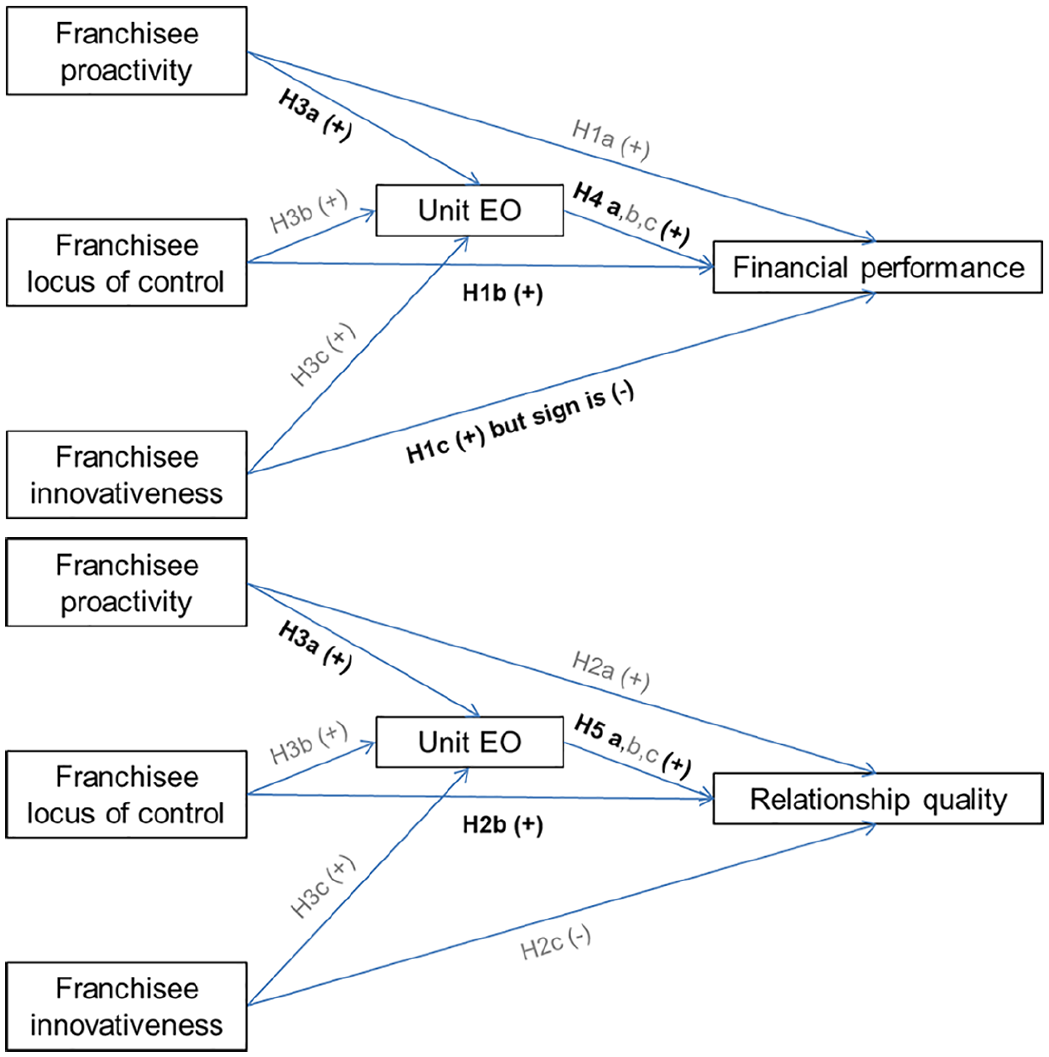
Conceptual framework.
Methods
Sample and description
To test the hypotheses, an online survey method was used to collect data from franchisees in four countries: the United States, the United Kingdom, France and Spain. These countries were selected as being representative of high entrepreneurial cultures (the United Kingdom and the United States) and low entrepreneurial cultures (France and Spain), enabling robustness checks of our findings across cultures associated with different entrepreneurial values. Both the United Kingdom and the United States are characterised by low uncertainty avoidance and masculinity (Hofstede et al., 2010), two cultural values associated with entrepreneurial outcomes (Hayton et al., 2002; Nguyen et al., 2009; Watson et al., 2019). 4 France and Spain, as more feminine and uncertainty avoiding cultures (Hofstede et al., 2010), provide examples of less entrepreneurial cultures. Indeed, World Bank statistics (2007–2017) show that both pairs of countries are, respectively, over and under the mean of the Cultural and Social Norms Index. 5 Further evidence supporting this grouping of the four countries is provided by the Global Entrepreneurship Monitor data, which find that the entrepreneurial employee activity rate (which we would suggest is particularly relevant in this context, as it measures the rate of involvement of employees in entrepreneurial activities such as developing or launching new goods or services) places the United Kingdom and the United States above the global average, and France and Spain, below (www.gemconsortium.org/economy-profiles). By including two countries representing the respective entrepreneurial culture in each group, we seek to control for other country differences, such as institutional and economic factors, while enabling us to determine if our results are consistent across countries which exhibit different entrepreneurial values.
The electronic survey was undertaken using Qualtrics software for the United States, the United Kingdom and Spain, and QuestionPro for France. An invitation, containing the link to the electronic survey, was sent to a sample of approximately 44,125 franchisees (United States: 30,000, United Kingdom: 1145; France: 9525; Spain: 3455). The sample for the United States was obtained using a FRANdata contact list, and for the United Kingdom, France and Spain, through franchisors and franchise organisation webpages. There were two rounds of reminders.
Similar to Barthélemy (2008, 2011), a survey questionnaire was developed through a four-stage process. First, we designed a preliminary version of the questionnaire. Wherever possible, we used reliable and valid measurement items from previous studies (Atuahene-Gima and Ko, 2001), by adapting them to the franchising context. Second, we obtained comments on this earlier version of the questionnaire from professors in the field that we used to improve the questionnaire. Third, the revised version of the questionnaire was pre-tested with franchisees. Fourth, the final version of the questionnaire was created by drawing on the feedback from the prior stage. Overall, the questionnaire development process generated revisions in the measurement items, ensuring the face and content validity of the survey (Hughes and Morgan, 2007).
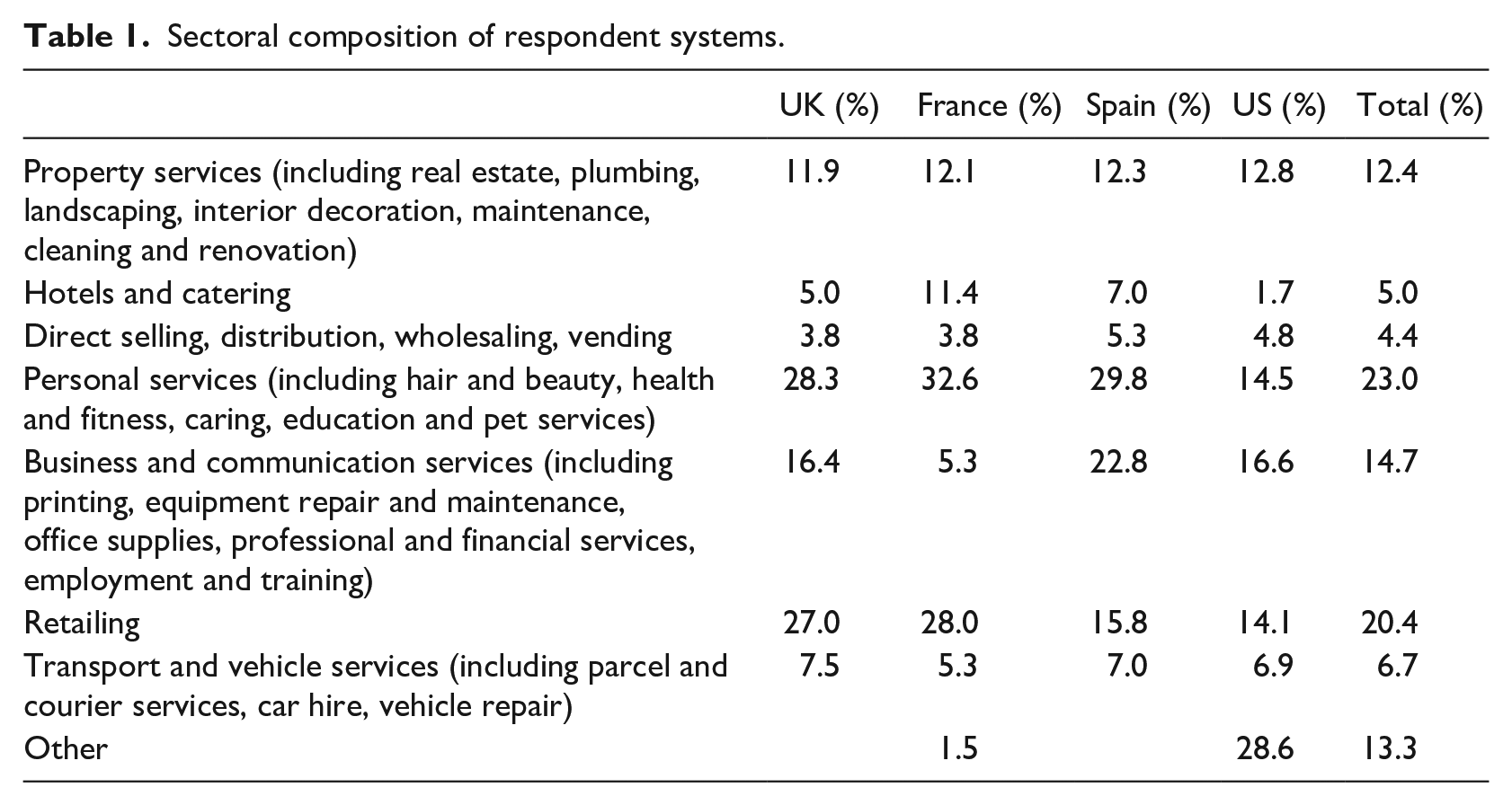
The final sample comprised a total of 761 franchisees, of which 348 were from the United States, 159 from the United Kingdom, 197 from France and 57 from Spain. It was impossible to ascertain the representativeness of the sample due to the use of multiple sources in deriving the research participants. Although subsamples are uneven, they roughly reflect the importance of franchising in the retail business in each of the countries under investigation – 50% United States, 30% United Kingdom (Lindblom and Tikkanen, 2010), 30% France 6 and 10% in Spain (Calderón-Monge and Huerta-Zavala, 2015). A number of different sectors were represented, with retailing and personal services (including education and health and homecare services) being the most represented. Table 1 shows the sectoral composition of respondent systems.
Sectoral composition of respondent systems.
The median size of the systems represented in the sample was 197 franchise units. The French and Spanish systems were of similar sizes, while the UK systems were smaller and the US ones larger (US: 330; UK: 55; France: 145; Spain: 145). The US systems had been in operation with a median of 27 years, compared with the United Kingdom: 13 years; France: 18 years; and Spain: 20 years. Accordingly, the UK chains were marginally younger than the others.
The sample included both well-established and young franchise units, in terms of years of operation as a franchisee within their current franchise systems; 75.60% of respondents had been operating their unit for up to 10 years, and 24.4% had been operating for more than 10 years. Although we do not claim to have a random sample, the broad representation of types and sizes of businesses suggests that our findings should have a high degree of generality (Miller and Friesen, 1982). Mann–Whitney tests were conducted on responses of early and late respondents on several key constructs (proactivity tendency, innovativeness tendency, locus of control, unit EO, unit financial performance and relationship quality). No statistically significant differences were found.
To address common method bias, we used various procedural remedies (MacKenzie and Podsakoff, 2012), including pretesting questions, guaranteeing response anonymity and using measures from previously established instruments. We also applied the Harman one-factor test. As described in Podsakoff et al. (2003), all items from the constructs in our study were included in a factor analysis. The results yielded seven factors which accounted for 66.85% of the total variance, with the first factor accounting for 22.22% of the variance. Therefore, no single factor emerged from the factor analysis and no one factor accounted for the majority of the variance (Rhee et al., 2010). These results demonstrate that common method variance is unlikely to be a major problem in this study’s data and provide support for the validity of the measures (Rhee et al., 2010; Stam and Elfring, 2008).
Measures
We used Principal Component Analysis (PCA) to examine the factor structure of the variables’ measurement scales (Weaven et al., 2009). The factor loadings of all the items were greater than the common acceptance threshold of 0.40 (Kaya, 2006). For all scales, Cronbach’s alphas were above 0.60, the recommended minimum acceptable standard (Baker et al., 2002). Confirmatory Factor Analysis (CFA) was employed to ensure the validity of the constructs. The results of the CFA for the measurement models for each construct indicate that the fit indices were appropriate: incremental fit index (IFI), normed fit index (NFI) and comparative fit index (CFI) were all greater than the recommended guideline of 0.90.
Franchise unit EO
These items were adapted from Lumpkin and Dess (2001). EO was computed as the average of all the scales for items relating to innovativeness, proactiveness and risk-taking (Walter et al., 2006). Respondents were asked to indicate the extent to which each of the following items applies to their own franchise unit on a scale of 1 = strongly disagree to 5 = strongly agree: (1) In dealing with competitors, my franchise unit typically initiates actions which competitors then respond to; (2) In dealing with competitors, my franchise unit is very often the first business to introduce new products/services, administrative techniques, operating technologies and so on; (3) In general, my franchise unit has a strong tendency to be ahead of others in introducing novel ideas or products; (4) Many new lines of products/services have been introduced in the past five years; (5) The changes in product or service lines introduced have usually been quite dramatic; (6) When confronted with decisions involving uncertainty, my franchise unit typically adopts a bold posture in order to maximise the probability of exploiting opportunities. The scale exhibited high reliability with Cronbach’s alpha value = 0.876, Composite Reliability (CR) = 0.875 and Average Variance Extracted (AVE) = 0.788. These results, and those from the PCA and CFA, support the unidimensional measure of EO adopted here. Although the studies by Lumpkin and Dess (2001) and Lumpkin et al. (2009) provide implications that support a multidimensional view of the EO construct, their measures of the individual EO dimensions incorporate items from the unidimensional measure of strategic posture from Covin and Slevin’s (1989) study.
Franchisee proactivity tendency
These items were adapted from Bateman and Crant (1993). 7 Respondents were asked to indicate the extent of agreement with the following statements on a scale of 1 = strongly disagree to 5 = strongly agree: (1) If I believe in an idea, no obstacle will prevent me from making it happen; (2) I am always looking for better ways to do things; (3) Nothing is more exciting than seeing my ideas turn into reality; (4) If I see something I do not like, I fix it; (5) I can spot a good opportunity long before others can. The scale exhibited high reliability with Cronbach’s alpha = 0.746, CR = 0.764 and AVE = 0.713.
Franchisee innovativeness tendency and locus of control. 8
The items for both innovativeness and locus of control were adapted from Mueller and Thomas (2001). In terms of franchisee innovativeness tendency, respondents were asked to indicate the extent of agreement with the following statements, on a scale of 1 = strongly disagree to 5 = strongly agree: (1) I obtain more satisfaction from mastering a skill than coming up with a new idea (reverse coded); (2) I usually continue doing a new job in exactly the way it was taught to me (reverse coded); (3) I like a job which demands skill and practice rather than inventiveness (reverse coded). In terms of franchisee locus of control, respondents were asked to indicate the extent of agreement with the following statements, on a scale of 1 = strongly disagree to 5 = strongly agree: (1) I will not be satisfied unless I have achieved the desired level of results; (2) I look upon my work as simply a way to achieve my goals; (3) My life is determined by my own actions; (4) When I get what I want, it is usually because I worked hard for it; (5) Whether or not I am successful in life depends mostly on my ability. For franchisee innovativeness tendency, the scale exhibited good reliability with Cronbach’s alpha = 0.660, CR = 0.673 and AVE = 0.773. For franchisee locus of control, the scale also exhibited good reliability with Cronbach’s alpha = 0.654, CR = 0.837 and AVE = 0.666.
Franchise unit financial performance
These items were adapted from Dada and Watson (2013a) and Keh et al. (2007). Respondents were asked to rate the financial performance of their franchise unit in the last three years, on a 5-point Likert-type scale that ranged from 1 = much weaker to 5 = much stronger: (1) My unit’s profitability relative to competitors; (2) My unit’s sales growth relative to competitors; (3) My unit’s market share relative to competitors; (4) My unit’s overall financial performance relative to competitors. The scale exhibited high reliability with Cronbach’s alpha = 0.934, CR = 0.934 and AVE = 0.914.
Franchisor–franchisee relationship quality
These items were adapted from Dada and Watson (2013a) and Weaven et al. (2014). Respondents were asked to indicate the extent of agreement with the following statements in the last three years on a scale of 1 = strongly disagree to 5 = strongly agree: (1) I frequently disagree with my franchisor (reverse coded); (2) The disagreements I have with my franchisor are usually quite intense (reverse coded); (3) My franchisor and I constantly argue over important issues (reverse coded); (4) My franchisor and I co-operate well. The scale exhibited high reliability with Cronbach’s alpha = 0.909, CR = 0.911 and AVE = 0.787.
Control variables
We also included several control variables. The first two of these, pertained to the franchisee’s experience. Business experience was coded 1 when the franchisee had prior experience in a related business, and 0 otherwise. Experience within the system was the number of years the franchisee had been operating his or her unit within the current franchise system. In addition, system-level controls were also included: the number of years the business had been franchised (franchise system age) and a categorical variable for the sector (1 for services and 0 for retailing).
Analyses and results
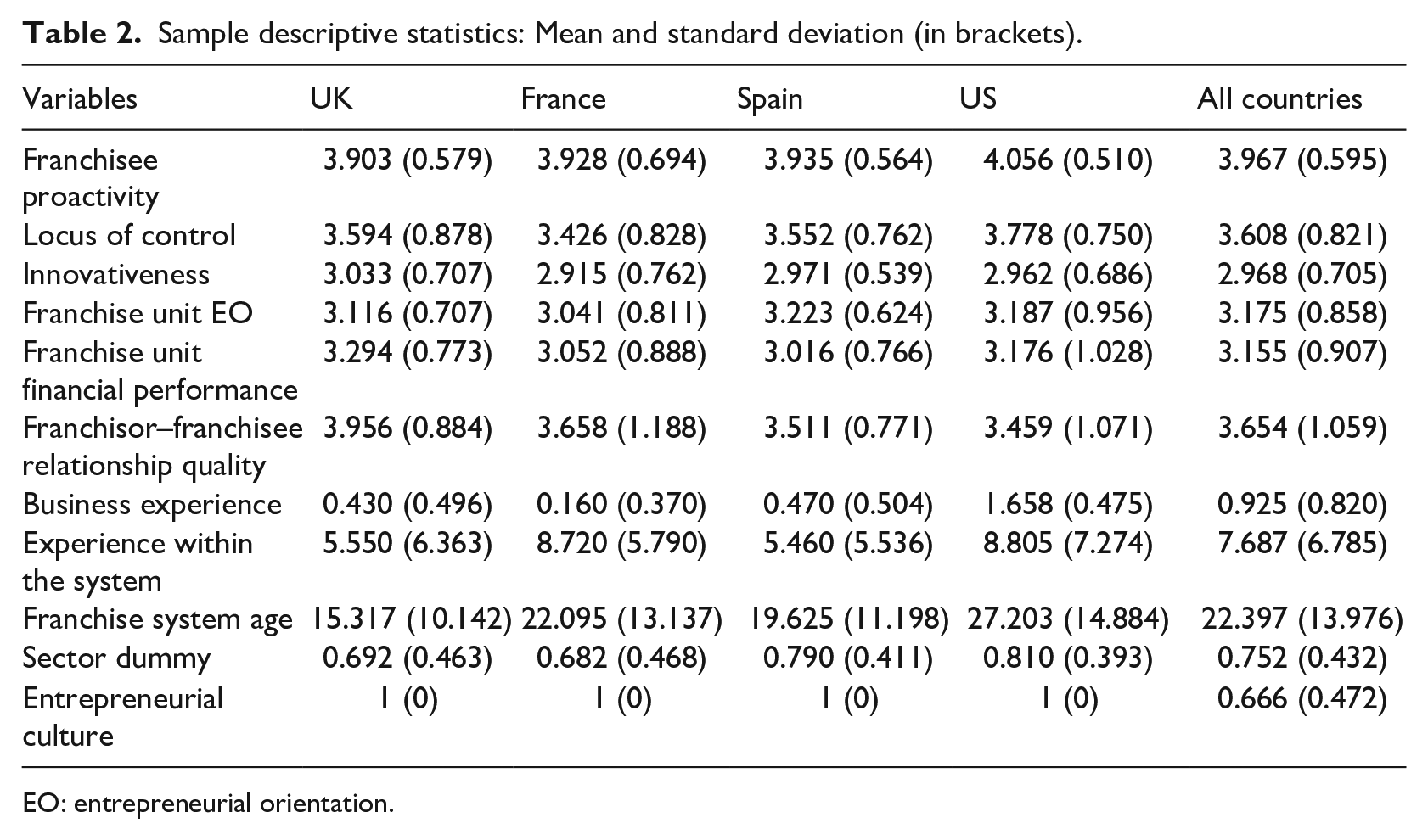
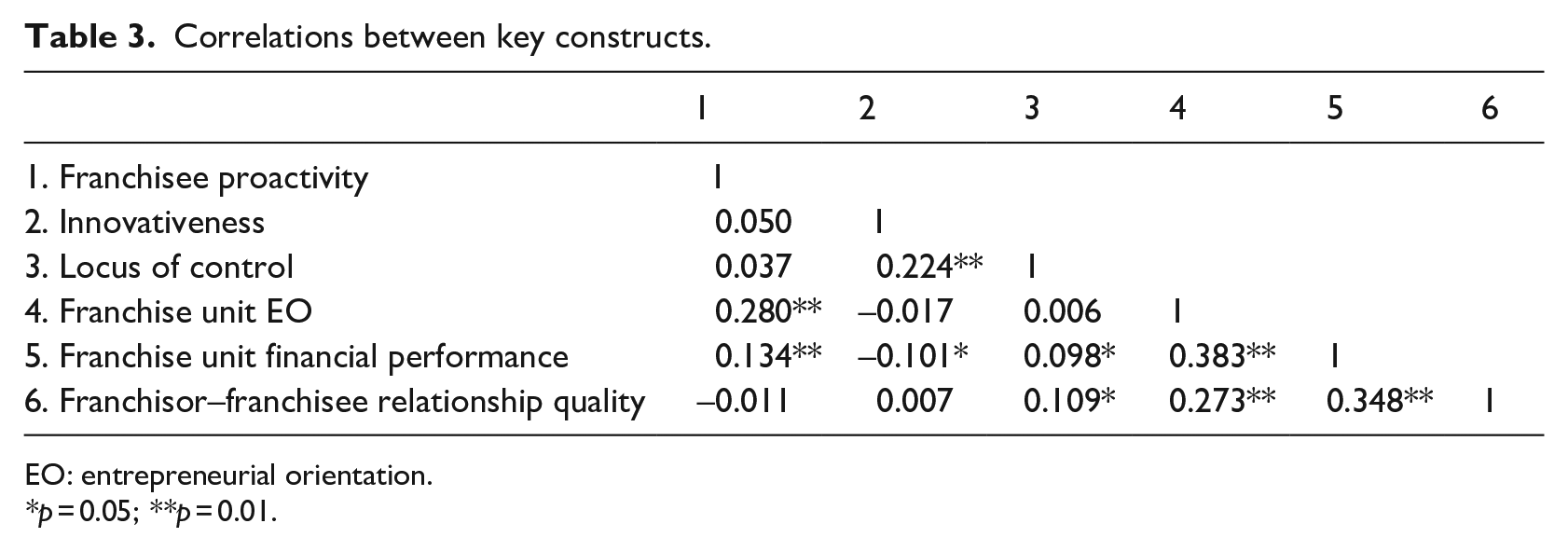
Table 2 shows the means, standard deviations, by country, and for the total sample, and the correlations are in Table 3.
Sample descriptive statistics: Mean and standard deviation (in brackets).
EO: entrepreneurial orientation.
Correlations between key constructs.
EO: entrepreneurial orientation.
p = 0.05; **p = 0.01.
Mediation analyses
We hypothesise that franchisee proactivity tendency, locus of control and innovativeness tendency affect financial performance and relationship quality of franchise units (H1 and H2) mediated by unit EO (H4 and H5), and that these three personality traits are positively associated with franchise unit EO (H3). To test the significance of indirect effects, we applied the PROCESS macro (Hayes, 2018) using 10,000 bootstrap samples. This approach has the advantage over alternative methods, such as those proposed by Baron and Kenny (1986), as it does not require that the indirect effect is normally distributed. To test effects, PROCESS estimates the parameters of the two equations necessary to test the mediation by ordinary least squared regressions and uses those parameter estimates to calculate indexes of direct and indirect effects. Both regressions are calculated separately and the estimation of the parameters in one equation has no effect on the estimation of the parameters in the other equation of the model. In addition, bootstrapping creates confidence intervals (CIs) that should not cross zero if the effect is significant.
Following Hayes’ (2018) notation, the conceptual model is presented as


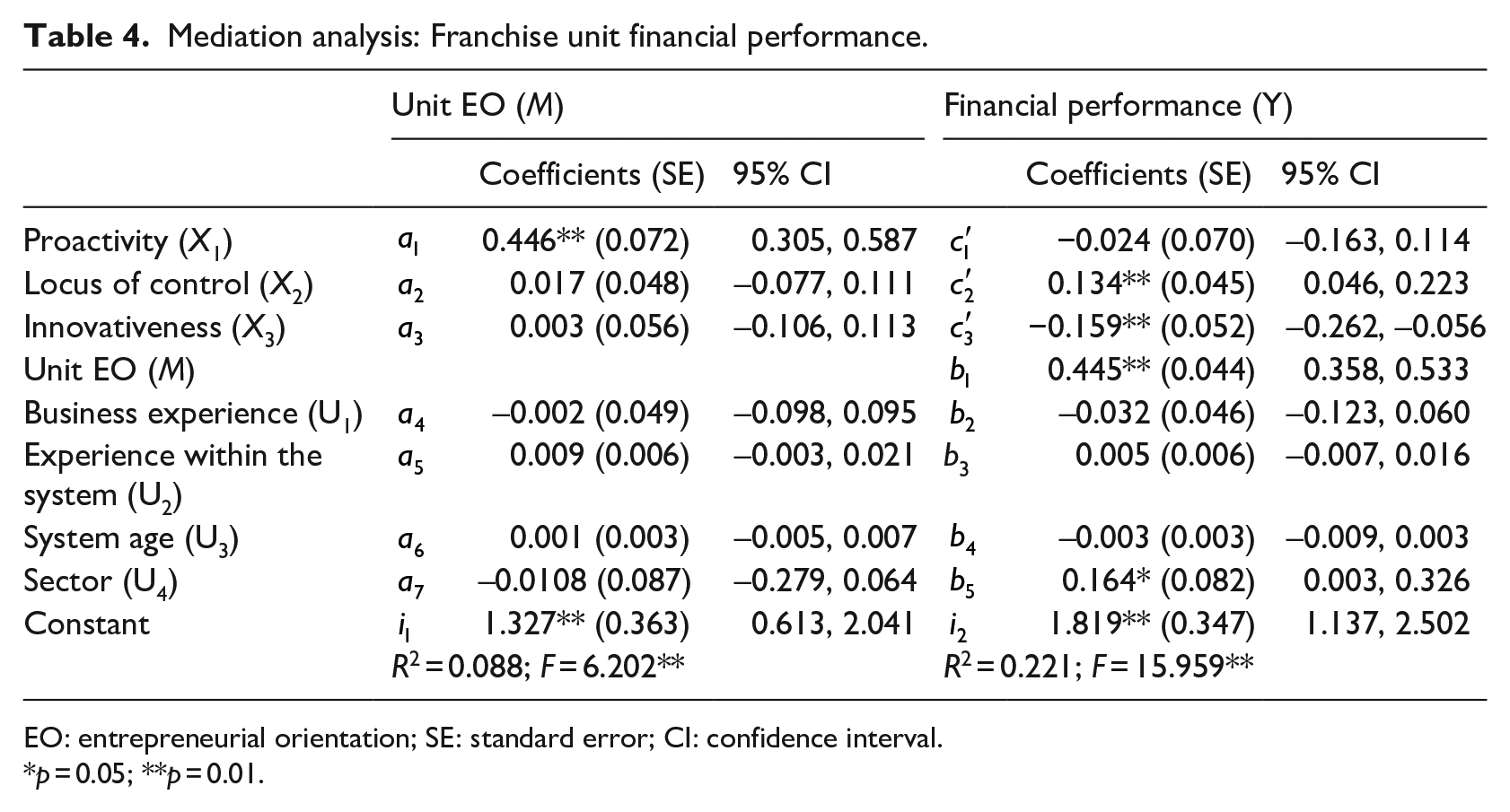
The results from the analysis (Table 4) show that in keeping with H3a, franchisee proactivity tendency (X) is positively associated with franchise unit EO, (M) (p = 0.000). However, franchisee innovativeness tendency and locus of control are not significantly associated with unit EO, not supporting H3b and H3c.
Mediation analysis: Franchise unit financial performance.
EO: entrepreneurial orientation; SE: standard error; CI: confidence interval.
p = 0.05; **p = 0.01.
Tests for the direct relationship between franchisee proactivity tendency and franchise unit financial performance do not indicate a significant association (
Locus of control shows a significant and positive direct effect on financial performance (
Innovativeness tendency shows a significant and negative direct effect on financial performance (
It is interesting to note that service sector exerts a positive and significant influence on financial performance.
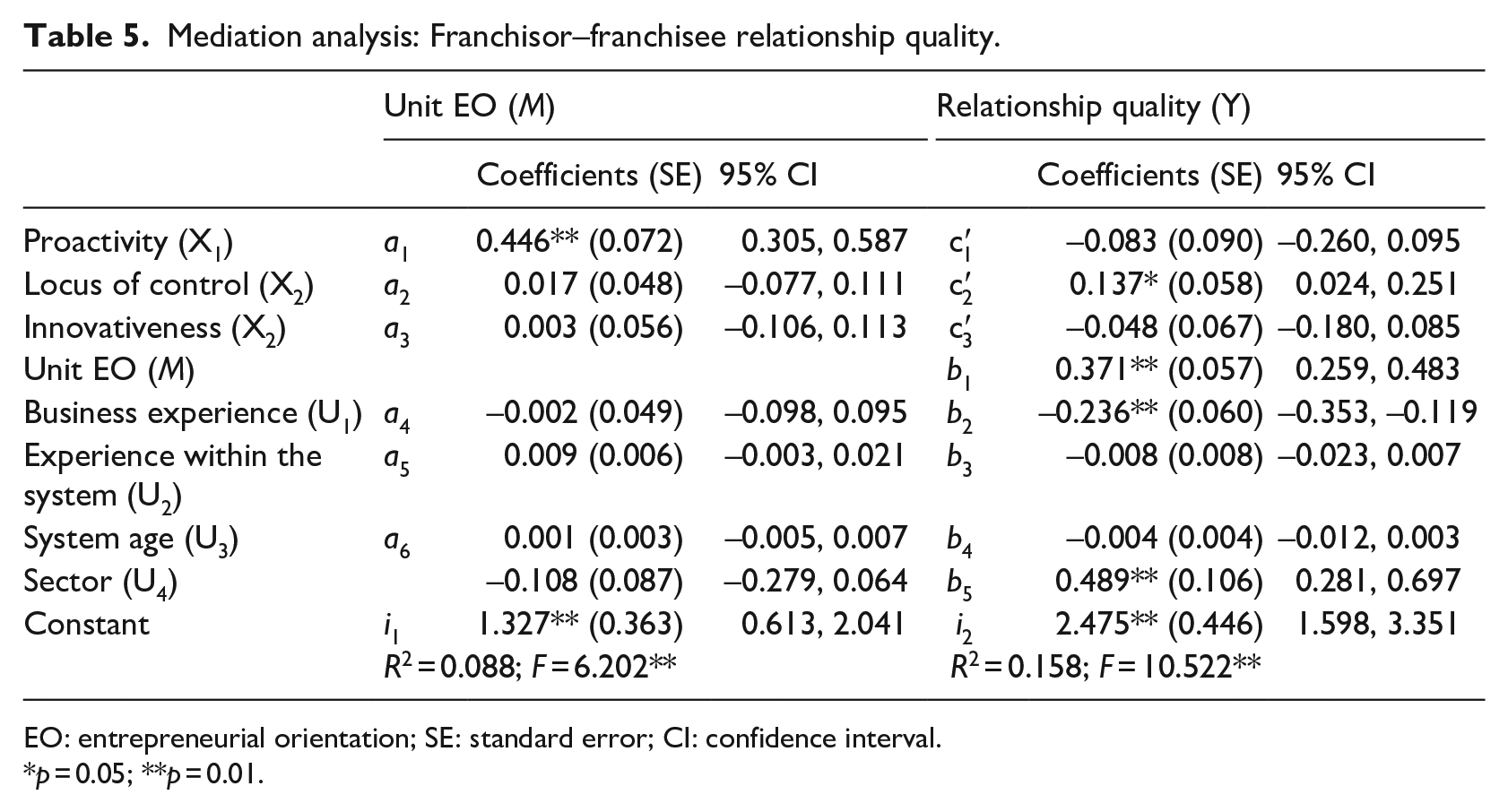
Table 5 shows the results of the mediation analysis for relationship quality. The results show, contrary to H2a, that there is no significant direct relationship between franchisee proactivity tendency and relationship quality. However, the indirect path of proactivity (
Mediation analysis: Franchisor–franchisee relationship quality.
EO: entrepreneurial orientation; SE: standard error; CI: confidence interval.
p = 0.05; **p = 0.01.
The effects of locus of control on relationship quality are akin to those on financial performance. Consistent with H2b, locus of control shows a direct and positive effect (
Similar to financial performance, franchisees operating a service-based franchise unit, experienced better relationships with their franchisors than those in the retail sector. However, unlike the financial performance outcome, those franchisees who had previous experience in a similar business had significantly worse relationships with their franchisors than their counterparts without any prior experience in a related business, perhaps suggesting that prior experience in a similar business makes it harder to unlearn old ways and accept new business standards (Jambulingam and Nevin, 1999).
Robustness checks
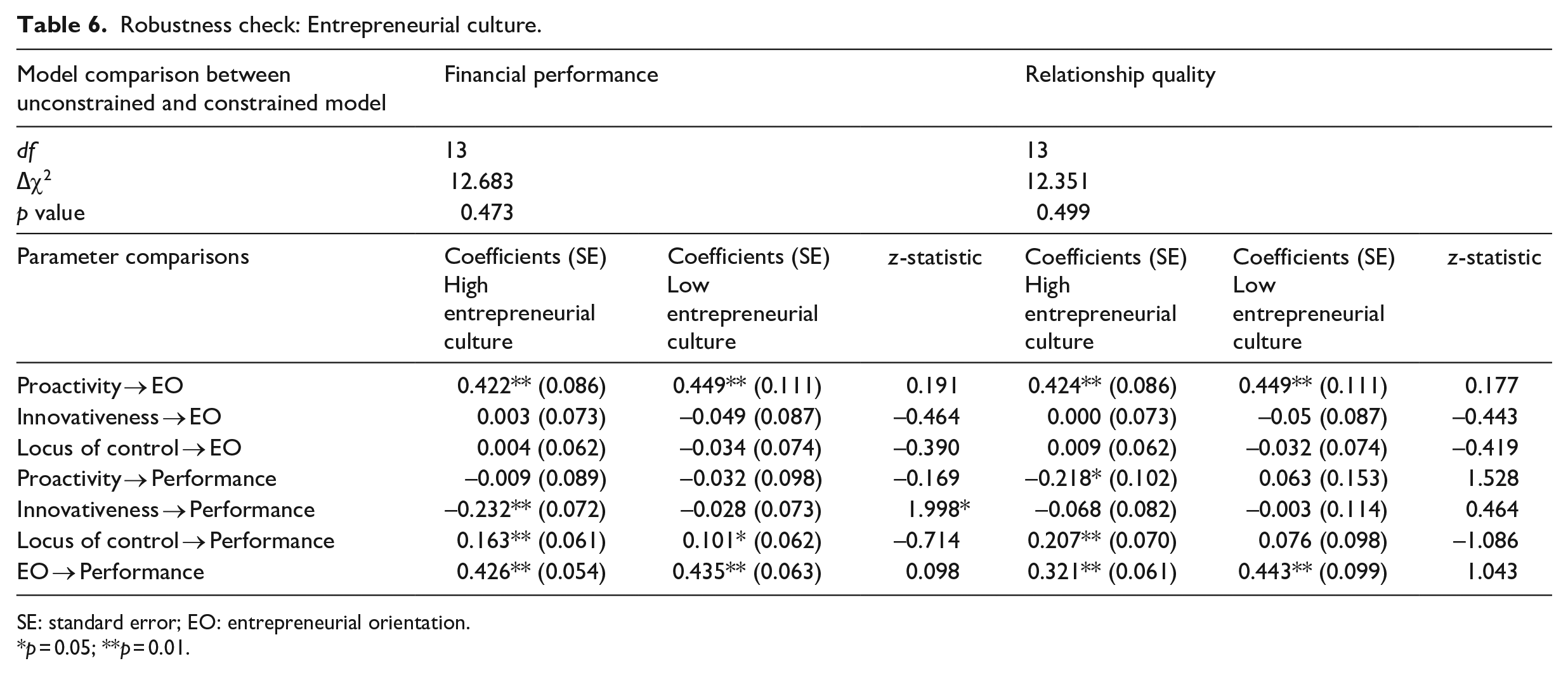
As an additional check of the consistency of our findings across countries characterised by different entrepreneurial values, we undertook a multiple group analysis using structural equation modelling (SEM), where differences between constrained models (no differences in parameter estimates) could be compared with unconstrained models (where parameters are calculated for each group – in this case, for ‘high entrepreneurial culture’ and ‘low entrepreneurial culture’). For financial performance, the constraint of structural parameters led to no significant difference in the fit of the model, that is, the models for the two cultures did not significantly differ. To further analyse whether there were differences in any individual paths, the critical ratios for differences in parameters were compared (see Table 6). The only significantly different pathway (i.e. where z
Robustness check: Entrepreneurial culture.
SE: standard error; EO: entrepreneurial orientation.
p = 0.05; **p = 0.01.
For relationship quality, no significant differences were found between the unconstrained and constrained models, nor was any individual path significantly different between the two groups. Thus, our findings appear to be broadly consistent across the different countries.
Discussion and conclusion
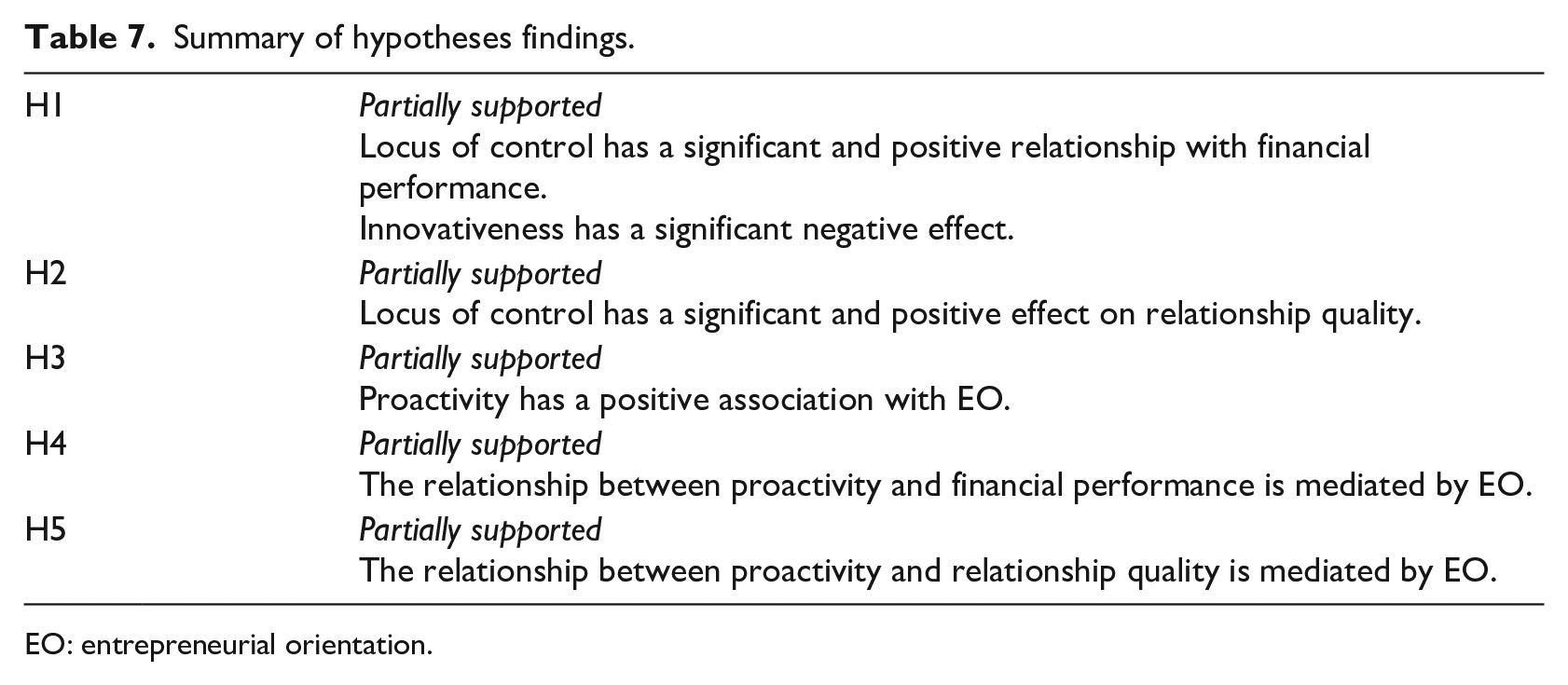
The results of the analysis suggest that franchisee performance, in terms of both financial and relational performance, is enhanced by recruiting proactive franchisees and enabling them to engage in entrepreneurial behaviours (see Table 7). While no direct effect between proactivity and financial performance or relationship quality was found, there was evidence of an indirect relationship through franchise unit EO. Thus, having proactive franchisees helps enhance franchise unit EO and this, in turn, leads to higher financial performance and improved franchise relationships. The direct relationship found between locus of control and financial performance suggests that franchisors would also benefit from recruiting franchisees with a high locus of control. Interestingly, no relationship was found between locus of control and franchise unit EO. Perhaps this is because franchisees with high locus of control focus their efforts on operating their units according to the processes established by their franchisors as they recognise the value of the superior template of the franchisor. Indeed, Knott (2003) suggests that the ‘. . . franchisor solves both the incompetence and overconfidence problems by imbedding best practice in a routine and by enforcing that routine’ (p. 942). This implies that locus of control in itself does not lead to entrepreneurial behaviours within the context of franchising.
Summary of hypotheses findings.
EO: entrepreneurial orientation.
While franchisees with proactive tendencies and high locus of control would seem to enhance franchise unit’s performance outcomes, franchisees with innovativeness tendencies perform less well. This was more pronounced in entrepreneurial cultures, where franchisees may believe that entrepreneurial actions which do not threaten brand image will be welcomed. Winter et al. (2012) have highlighted the potential dangers of franchisees making adaptations to the established business processes of the franchise system, given that it represents a set of interlocking activities, where modifications to any element may produce unanticipated (negative) effects. It is interesting to note that no relationship was found between innovativeness, as a personality trait, and EO. However, the questions pertaining to innovation as part of the unit EO construct, adapted from Lumpkin and Dess (2001), focus on product and service innovations. It may be that franchisees engage in process-based innovations, not captured here, given the restrictions placed upon them by the franchise contract. This type of innovation may also entail less risk-taking, which must also be present for EO to be evident. Certainly, research by Watson et al. (2018) suggests that franchisee innovation is often process-based. In any case, the results suggest that franchisors should be cautious in recruiting franchisees with innovativeness tendencies. Recent research outside of the franchising context shows that successful innovativeness is connected to purposeful analysis of past failures (Danneels and Vestal, 2020). However, within the context of franchising, the franchisor cannot assume this enquiry if innovativeness is left to the discretion of the franchisee.
The positive association found between franchise unit EO and performance is in keeping with studies which have explored the impact of franchise system-level EO and performance. For example, in their study of UK franchisors, Dada and Watson (2013a, 2013b) found a positive relationship between franchise system EO and system performance (in both financial and non-financial terms). Taken together with our results, these suggest that franchise systems with high EO can leverage the entrepreneurial capabilities of their franchisees to improve performance. In other words, entrepreneurial behaviour does not need to be the sole domain of the franchisor, although it must be carefully monitored to ensure entrepreneurial activities are not damaging to the brand.
The analysis highlights the importance of exploring how individual franchisee traits might influence their unit performance. Although franchising is a context for promoting uniformity, our results show that there is heterogeneity among franchisees, but yet, as Dant et al. (2013) have commented, there has been a tendency within the franchise literature to treat them as homogeneous. Future research may explore differences in other franchisee characteristics within the franchise chain and the consequences on management and performance. Furthermore, it has been highlighted, both with respect to EO (Rauch et al., 2009) and franchising (Dant et al., 2011), that the literature has been dominated by a North American context, and that it is important, therefore, to clarify the extent to which the relationships found replicate across different cultural contexts. As such, we believe that this study contributes significantly to both literatures by investigating if the extent to which franchisees engage in entrepreneurial behaviours and the effect on performance are consistent across countries with different entrepreneurial values. While the overall model estimations did not significantly differ across the two cultural groups, the impact of innovativeness on financial performance was more pronounced in entrepreneurial cultures. Tentatively, we suggest this is because franchisees in entrepreneurial cultures may be more inclined to engage in process innovations that may be deleterious if not analysed (Danneels and Vestal, 2020) by franchisors.
It has been suggested by Wales et al. (2011) that the EO literature has given little consideration to the pervasiveness of EO across the entirety of a firm. Yet, it seems probable that the manifestation of EO is unlikely to be homogeneous across the whole organisation and may be affected by its organisational members (Wales, 2016). Our findings suggest, at least within the context of franchising as an organisational form, that this is indeed the case. We find that the personality of the franchisee affects the manifestation of EO within their individual units, whereby units operated by franchisees with greater proactivity, exhibit greater levels of EO. So, in accordance with Wales (2016), we believe that analysing EO across different organisational areas and units are fruitful avenues for future research within other corporate entrepreneurship contexts. While franchisee personality traits of innovativeness and locus of control did not impact franchise unit EO, future research could explore how different personality combinations influence the manifestation of EO. For example, while proactivity seems to exert an influence on EO, innovativeness in combination with high levels of risk-taking and locus of control might have a differential effect compared with high innovativeness alone. Again, we highlight this as a potential avenue for future research.
Of course, our study is not without limitations. We cannot be certain that our sample is representative of franchisees within the United States, the United Kingdom, France and Spain. Furthermore, the unit financial performance measures are subjective in nature. We specifically chose to use subjective financial performance measures because of the widely acknowledged difficulty associated with obtaining objective financial performance data (Dada and Watson, 2013a). While prior research does suggest that subjective performance measures can accurately reflect objective measures (Lumpkin and Dess, 2001), future research could incorporate objective data to triangulate subjective measures. In considering relationship quality, we focused on conflict and cooperation. Future research could explore other relational dimensions, such as trust and information sharing. In this study, we have restricted our analysis to three personality traits associated with an entrepreneurial personality, but future studies could explore how other franchisee traits influence their performance. Future research could also include other countries with contrasting cultures across different cultural dimensions. These limitations withstanding, by providing evidence of the affect of individual franchisee personality traits on both the manifestation of EO within franchise units, and performance outcomes, this article provides novel knowledge on the relationships between franchisee entrepreneurial personality, franchise unit EO and franchise unit performance. We also believe that the article has wider implications for other corporate entrepreneurship contexts.
Footnotes
Funding
The author(s) disclosed receipt of the following financial support for the research, authorship, and/or publication of this article: This research was partially supported by the Spanish Ministry of Economy and Competitiveness (ECO2017-85704-R).
