




Abstract
High-quality professional development can lead to increased and sustained implementation of evidence-based practices. This study examined the effects of practice-based coaching (PBC) paired with scripted supports on teachers’ use of shared book reading strategies. The primary dependent variable was percentage of strategies correctly implemented; the secondary dependent variable was expressive and receptive vocabulary knowledge of three preschool children with a language delay. The study aimed to address the following research questions: (1) What are the effects of PBC and scripted supports on preschool teachers’ implementation of shared book reading strategies? (2) Does preschool teacher's implementation of shared book reading strategies influence the expressive and receptive language of preschool age children (i.e., between 36–60 months) with language delays? Employing a single-case multiple baseline across participants design, three teachers were trained on three strategies (i.e., question/evaluate, expansions, and repeat) embedded within the context of shared book reading. Visual analysis is the gold standard for evaluating results in SCRD and include evaluating the level, trend, and variability of data, as well as analyzing the immediacy of effect, overlap of data in adjacent phases, and the consistency of data patterns in other conditions. Results were variable for one participant. Corresponding child-level data for all three participants was also positive. Implications for future research are discussed. Teachers and therapists can benefit from the PBC model when working with preschool children who have language delays. A limitation of the study is a lack of a functional relationship between the independent and dependent variable due to time constraints with data collection.
Introduction
The National Professional Development Center on Inclusion (NPDCI) through the University of North Carolina Frank Porter Graham Child Development Institute defines professional development (PD) as “facilitated teaching and learning experiences that are transactional and designed to support the acquisition of professional knowledge, skills, and dispositions as well as the application of this knowledge in practice” (2008, p. 3). Additionally, international organizations such as the United Nations Children's Fund (UNICEF) support government efforts to foster and monitor inclusive education systems, for example, in the area of capacity building by training teachers, administrators, and communities (Hayes and Bulat, 2017).
PD is receiving significant attention in both research and policy given its important role in preparing and supporting a knowledgeable and skilled early childhood workforce (Winton et al., 2015; Zaslow et al., 2010). Workshops followed by implementation support using strategies such as coaching, are increasingly prevalent in early childhood and early childhood special education research, where enhanced knowledge and application of practices in the classroom are the desired outcomes (Artman-Meeker et al., 2015; Kranski and Steed, 2022; Snyder et al., 2012).
Practice-based coaching
Practice-based coaching (PBC) is distinguished from other early childhood coaching models by its explicit focus on supporting teachers’ implementation of evidence-based (EB) teaching practices (Snyder et al., 2015). The three components of PBC are shared goals and action planning, focused observation, and reflection and feedback and are implemented in the context of a collaborative partnership between a coach and coachee (Snyder et al., 2015). Shared goal setting is based on information gathered during a needs assessment (i.e., data regarding current practices and determining priorities for enhancement; Snyder and Wolfe, 2008) and outlined in an action plan, or “roadmap” for how goals will be accomplished (Snyder et al., 2015). Focused observation involves gathering information regarding fidelity of implementation specific to the goals and action steps outlined, typically collected live or through video recording. The final component is reflection and feedback whereby the coach and coachee engage in reflective discussion to identify successes and challenges. Supportive and constructive performance feedback specific to that individual about his or her behavior, is also provided (Snyder et al., 2015). While a number of coaching formats can be found in the early childhood literature, PBC coaching was selected because of its structure, format, and focus on establishing a collaborative relationship between the coach and coachee.
Practice-based coaching has been explored empirically in various formats (e.g., expert face-to-face coaching, expert web-mediated distance coaching, self-coaching with web-mediated support, peer coaching, or group coaching followed by self-coaching). Effects on teachers’ fidelity of implementation of targeted teaching practices (e.g., social-emotional practices, positive behavior supports, and literacy) were found, and in some studies, noteworthy effects on children's behavioral/language outcomes (Conroy et al., 2014a; Conroy et al., 2014b; Fox et al., 2011; Hemmeter et al., 2016; Snyder et al., 2018). Additional research is needed to explore the effects of implementation of the PBC model to support teachers’ use of practices specific to other child level outcomes, specifically, literal and inferential language.
Language facilitation
Several studies have utilized practice-based coaching within the context of shared book reading (see Dennis et al., 2023; Author, in press). Shared book reading provides children with the opportunity to actively engage with a text through the implementation of interactive techniques by an adult (What Works Clearinghouse, 2010; Zucker et al., 2012). Through this interactive approach during a commonly occurring routine in early childhood classrooms (Pentimonti et al., 2011), the book serves as a stimulus for meaningful conversations, specifically, teacher and child talk that goes beyond reading of the book itself. Additionally, findings from numerous studies have demonstrated the utility of teaching explicit definitions to children in preschool (e.g., Hadley et al., 2016; Wasik et al., 2016), and are well suited for use during book readings when teachers can use planned definitions with prompts (Dickinson et al., 2019). Studies have demonstrated the impact of shared book reading on the expressive and receptive vocabulary development of young children (Coetzee et al., 2021; Han and Neuharth-Pritchett, 2015; Mol et al., 2009; Wasik and Bond, 2001; Zucker et al., 2012).
Research suggests children with language and/or other developmental delays are able to increase vocabulary knowledge during SBR (Storkel et al., 2017). For example, Voelmle and Storkel (2015) found that children with a specific language impairment demonstrated positive impacts on vocabulary development after participating in shared book reading. Dialogic reading, a particular style of shared book reading, has been found to have positive effects on oral language development, of which vocabulary is a component, for typically developing preschool students (What Works Clearinghouse, 2007), and it also has “potentially positive effects” on the communication skills of students with or at-risk for disabilities (What Works Clearinghouse, 2010, 1).
Direct instruction of vocabulary is particularly important for children's understanding of word meanings (Zucker et al., 2021). Educators can provide rich instruction when teaching vocabulary through modeling appropriate use of vocabulary, using child-friendly language, and incorporating different examples and contexts during instruction (Beck and McKeown, 2007). Direct vocabulary instruction that involves contextualization of vocabulary words, explanations of word meanings, examples of ways in which words can be used, and opportunities for children to both repeat vocabulary words and create their own examples of how vocabulary words can positively impact vocabulary development (Beck and McKeown, 2007). While teaching vocabulary words through direct instruction, the use of questioning strategies can benefit students’ development of word meanings (Zucker et al., 2021).
Questioning during shared book reading can be an effective language-facilitating technique for children, with consideration given for the type of questions that may impact children's learning (Pentimonti et al., 2021). For example, a study conducted by Deshmukh et al. (2019) found that only about 24% of teachers’ extra-textual talk consisted of questions and of this 24%, more than half consisted of questions that only require a narrow response (e.g., Yes/No, How many). It is recommended that children are asked questions that provide them with the opportunity to respond in a variety of ways (Teale, 2003).
Implementation fidelity is the degree to which an intervention is delivered as intended and is critical to successful translation of EB interventions into practice (Sexton and Rush, 2021). Implementation guides, or scripts, could provide, in part, a key driver to the consistent and competent implementation of EB practices as well as the necessary support for practitioners to “hit the ground running” immediately after training. The immediacy of the practitioner's success may help with positive outcomes, earlier buy-in, and longer practice as they habituate (Sexton and Rush, 2021).
Literal and inferential language
van Kleeck et al. (1997) proposed four levels of abstraction that can be used when reading with young children, with goal of improving children's abstract language abilities. The first two levels focus on lower-level skills that are perceptually present (e.g., label) followed by selective analysis/integration of perception (e.g., describing/recalling information). Levels three and four focus on higher levels skills such as inferring (e.g., defining/summarizing) and reasoning (e.g., predicting) about perception. In addition, other strategies such as relating a concept in the book to a child's experiences can also be included. During shared book reading, inferential questioning can promote children's vocabulary depth; in fact, asking children literal questions can support inferential language skills (van Kleeck, 2008). van Kleeck et al. (2006) found that children's scores on standardized language assessments reflected improvements in literal and inferential language as a result of literal and inferential questions asked during 15-min book-sharing discussions. In addition, Zucker et al. (2013) found that shared reading experiences in which teachers conducted four shared reading sessions each week predicted preschoolers’ expressive vocabulary, and in addition, teachers’ use of extratextual talk during shared reading sessions was positively related to preschool expressive vocabulary and kindergarten receptive vocabulary. Finally, Seven et al. (2020) found that participants (i.e., parents) increased their use of decontextualized utterances (i.e., talking about future and past events, inferencing meanings, understanding definitions, and linking abstract concepts to everyday experiences) when text cues were embedded in storybooks, and that changes in child behavior mirrored changes in parent behavior.
Teachers’ use of repeating, recasting, or expanding during shared book reading might be beneficial for supporting children's language development (Pentimonti et al., 2021). For example, Wasik et al. (2006) coached teachers to implement book reading and oral language strategies with children, specifically, providing feedback through repeating, recasting, and expanding with positive results on children's language development. In addition, Cabell et al. (2015) found that teachers’ use of elicitations and extensions (i.e., expanding on a child's response, stating additional information, or encouraging children to think about their response) promoted vocabulary development.
Study aims
The purpose of this study was to investigate the following primary and secondary research questions: (1) What are the effects of PBC and scripted supports on preschool teachers’ implementation of shared book reading strategies? (2) Does preschool teachers’ implementation of shared book reading strategies influence the expressive and receptive language of preschool children with language delays?
Method
Participant dyads
Approval from the university's Institutional Review Board for ethical considerations in research was obtained prior to beginning the study. All participants were recruited from the same school in the Southeastern United States that serves students with intellectual disabilities ages 3–22 years of age. The school accommodates approximately 200 students with severe to moderate intellectual disabilities.
The first author met with the principal and preschool team to discuss the study procedures and requirements. To be eligible for participation, teachers had to work full-time in a preschool classroom serving children with disabilities. Teachers were asked to nominate children in their class who were: (a) between the ages of 3–5, (b) on an active Individualized Education Plan that included a language goal, (c) had English as their first and primary language, and (d) had consistent attendance. The first author met with the school principal and four early childhood special education teachers to discuss the project. Three of the four teachers expressed interest and consented to participate. The teachers then nominated children from their classroom who met the inclusion criteria; the teacher provided the consent form to these parents. Parents gave informed consent for their children. Three consent forms were returned to each child's teacher and subsequently provided to the research team. Table 1 provides demographic information on the participating dyads (i.e., teacher/child), Chelsea/Beth, Ava/Rob, and Deb/Kim.
Participant characteristics.
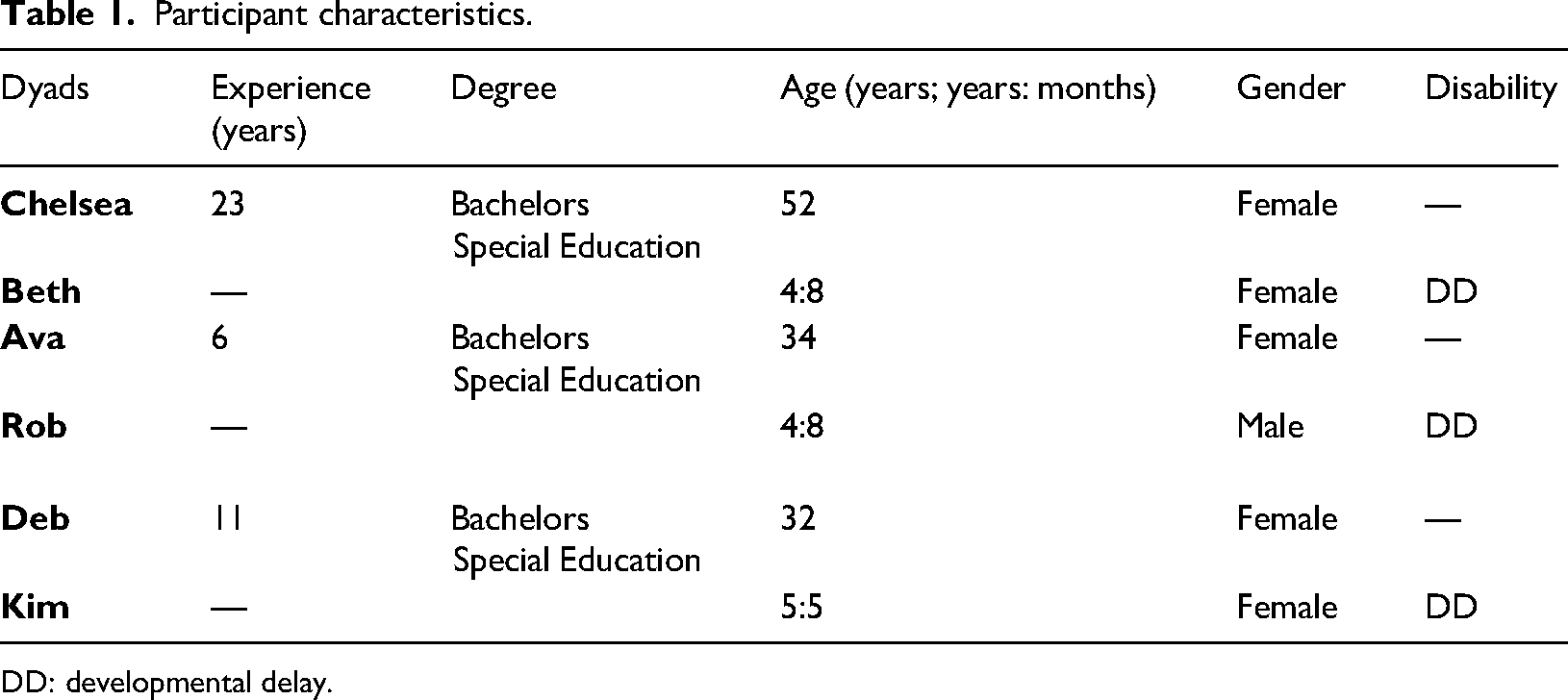
Participant characteristics.
DD: developmental delay.
The coaches conducted weekly coaching sessions after school in the individual teachers’ classrooms. Daily book reading sessions were conducted one-on-one between the teacher/child dyad. Ava and Deb conducted shared book reading sessions during nap time in quiet areas near the main classroom (e.g., adjacent space at a small round table). Chelsea conducted sessions both in (e.g., small round table) and outside the classroom (e.g., picnic table, on the playground).
All coaching and implementation materials were designed by the first author and provided to the teachers during their individual weekly coaching sessions. Coaching materials included a performance feedback sheet (i.e., graph and summary of data) and action plan form (i.e., goal and associated actions; see Author). Implementation materials included: (a) age and developmentally appropriate storybooks, (b) scripted supports specific to each storybook (i.e., resource handout), (c) iPad for use with receptive vocabulary probe (i.e., pictures), (d) video camera and SD card, and (e) vocabulary probes (i.e., expressive and receptive; pre and posttest).
Vocabulary targeted in the study met the following criteria: (a) high-utility or words children are likely to encounter in future conversation or readings (Beck et al., 2002), (b) relate to the context of the story in a significant way, and (c) can be taught effectively (i.e., defined with a child-friendly definition, illustrated, and can be connected to a number of contexts familiar to children (Kelley and Goldstein, 2015).
Dependent variable and response definitions
The primary dependent variables examined in this study were teachers’ use of: (a) literal and inferential questioning prompts with evaluation of the child response, and (b) expand and repeat. Use of literal and inferential question prompts were averaged to calculate a percentage of correct opportunities out of twelve (i.e., 8 literal; 4 inferential). Use of expand and repeat was also calculated as a percentage of correct opportunities out of twelve.
Child responses on the expressive vocabulary probe were an indirect measure of teachers’ use of SBR strategies. Changes in scores from pre to posttest were calculated to summarize the receptive and expressive vocabulary data for the child participants.
Teacher strategy use
Three book readings each week were coded to determine implementation fidelity related to the two SBR strategies. During baseline and intervention, teacher behaviors while engaged in a SBR session were coded in a binary fashion (i.e., present or absent) according to strategy use. However, during intervention, teachers were also provided with scripted supports (i.e., resource handout).
The first strategy, question and evaluate included two types of questions: (1) literal, defined as eliciting the target word and a definition of the target word), and (2) inferential defined as eliciting a response requiring integration of information from the book with prior knowledge or experiences. An evaluation of the child's response was provided after each question prompt. If the child did not respond or responded incorrectly, a binary choice was given (e.g., “Does he need a brush because he is clean or because he is dirty?”) If the child was still unable to respond or gave an incorrect response, the teacher provided a direct model (e.g., “He needs the brush to get clean.”). The second strategy, expansion and repeat, was defined as the teacher adding 1–2 words to the child's response and asking the child to repeat the full expansion (e.g., child says “Truck”, teacher responds “Yes, that is a little blue truck.”; teacher prompts the child, “Say, little blue truck.”). Prior to beginning the study, scripts were developed for all books used during intervention. Scripts included the two target strategies as well as phrasing for the binary choice and model when evaluating the child's response. See Table 2 for a sample resource handout with scripts. Target vocabulary words for each book were determined by the child's score on a vocabulary screener, described below.
Teacher resource handout for how to catch a star by oliver jeffers.
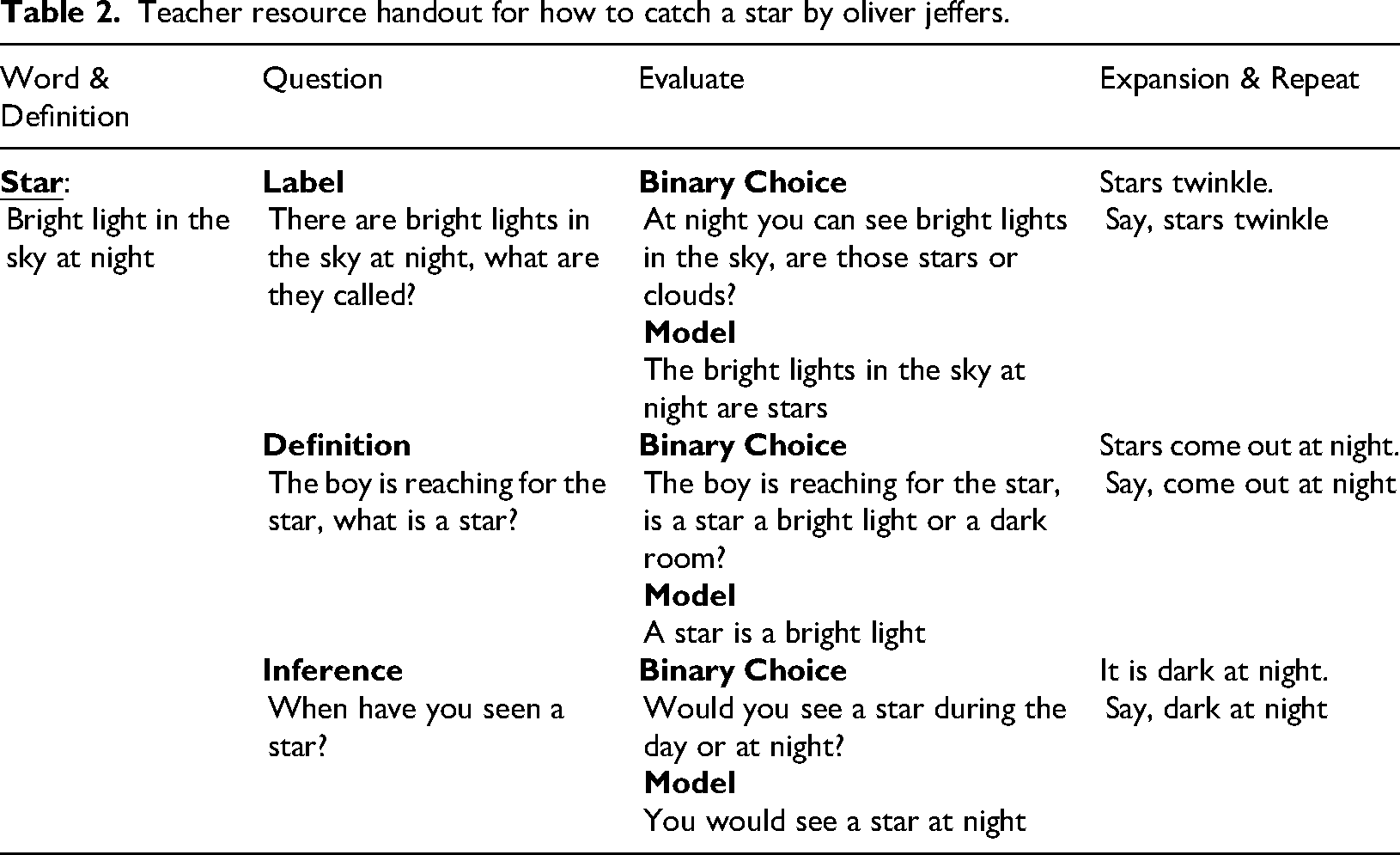
Teacher resource handout for how to catch a star by oliver jeffers.
Each child participant was screened on knowledge of target vocabulary words (i.e., between 5–6 words) prior to the introduction of each book. Children were asked to provide a definition for each word. Only words for which the child could not provide a definition or multiple examples were considered for inclusion as a target or taught vocabulary word. Four words per book were selected (e.g., star, seagull, reach, wait). A full list of words can be found in Appendix A.
Vocabulary probes were developed to assess children's understanding of target words prior to (pretest) and following (posttest) instruction (i.e., right before reading on day 1 and immediately following reading on day 3). The child received no feedback on their performance but was praised for staying on-task (e.g., “Good job!”). In each probe, the child was asked for a definition (e.g., What does X mean?) and to respond to an inference question (e.g., What could you leap over?) Responses were coded using a rating scale of 0 to 3, corresponding to depth of word knowledge. A total of 3 points could be awarded for each target word (see Table 3 for scoring criteria for both question types). Although depth of knowledge can be conceptualized in different ways, the scoring criteria used in this study progress from partial understanding of a word, to providing a clear definition or synonym (i.e., literal) and providing a reasonable response based on personal experience or background knowledge (i.e., inference) (Author; Oakhill et al., 2015).
Scoring criteria for expressive vocabulary probe.
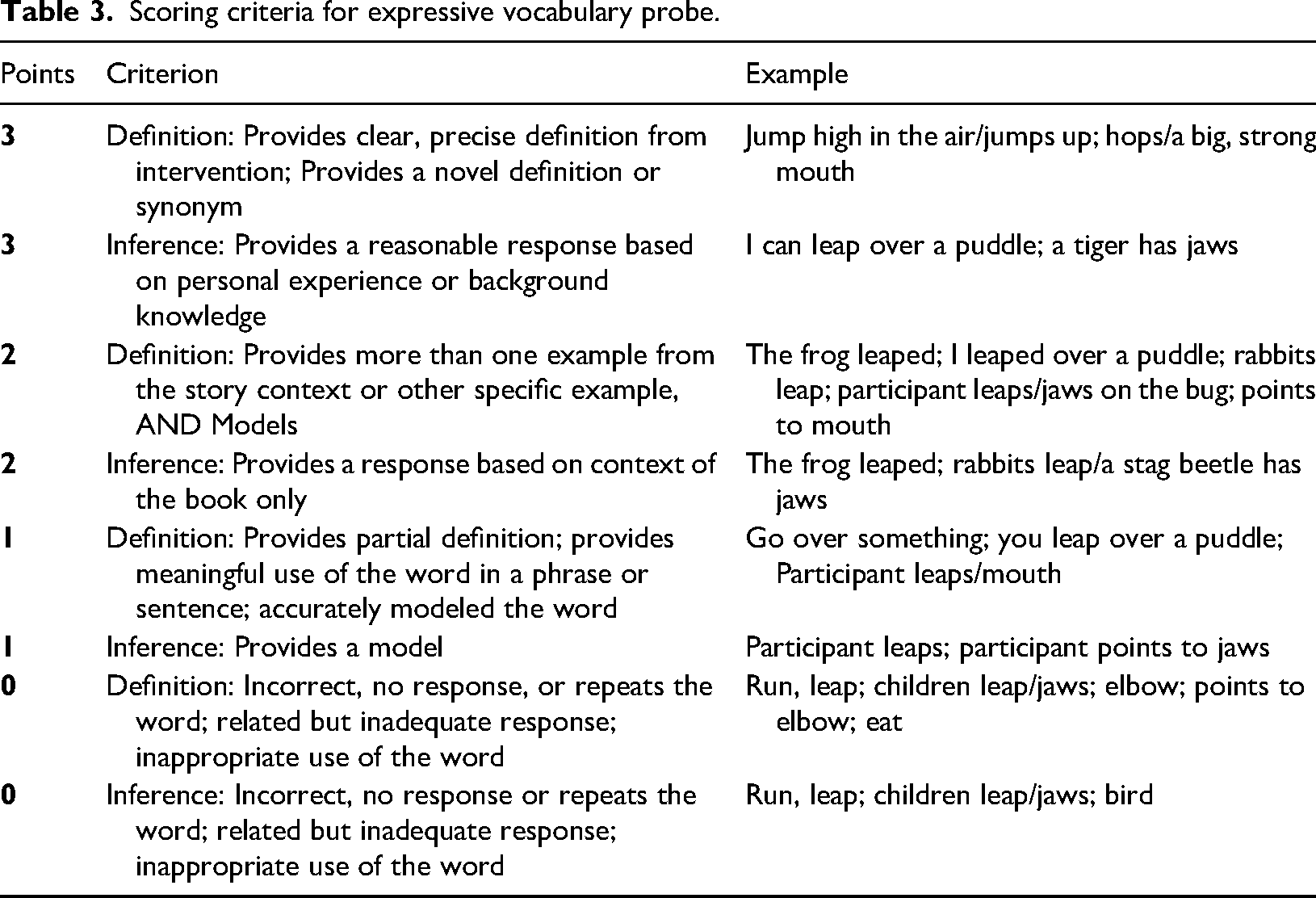
Scoring criteria for expressive vocabulary probe.
Single-case research design (SCRD) methodology is often used in special education research, where measurements of outcome (dependent variables) are recorded repeatedly for individual participants across time and varying levels of an intervention (independent variables). These varying levels of intervention are referred to as “phases,” with one phase serving as a baseline or comparison, so each participant serves as their own control. Therefore, these designs allow for rigorous experimental evaluation of intervention effects and provide a strong basis for establishing causal inferences, with a small number of participants. To examine the effects of coaching with scripted supports on teachers’ implementation of shared book reading strategies, a specific type of SCRD, a multiple baseline across participants design was used (Horner et al., 2005). A multiple-baseline design allows for staggered introduction of the independent variable on one or more dependent variables. Experimental control is demonstrated when the independent variable produces an effect at three different points in time, suggesting the design should include three tiers (Horner et al., 2005). Decisions regarding phase changes were based on visual analysis as well as time constraints. Teachers were instructed to complete book readings 3 times per week. Teachers were randomized to tiers with Chelsea entering intervention first, Ava second, and Deb third.
Procedures
Following the consent process, Chelsea, Ava, and Deb entered the baseline phase. Child level data were collected prior to reading a book on day one (i.e., pretest) and immediately following book reading on day 3 (i.e., posttest) to determine how the book-related vocabulary was affected by implementation of SBR strategies. Social validity information was collected from each teacher following the study.
Baseline
The baseline condition consisted of video-recorded observations of the teacher/child dyad. No prior training on SBR strategies was provided. Teachers were asked to select their own book (i.e., one book used for approximately 3 readings) and “read as you normally would.” All videos were coded for the question and evaluate and expand/repeat strategy.
Intervention
The independent variable for the current study was PBC with scripted supports for the questioning prompt with evaluation strategy and expand and repeat strategy. PBC consisted of a training session on the strategies and weekly coaching sessions. All training and coaching sessions were video recorded.
Interventionists
Two graduate research assistants (GRAs) were trained by the first author to serve as coaches for the study. Both were full-time doctoral students and had experience working with teachers and young children. Training involved direct instruction of the training and coaching procedures. The GRAs practiced delivering the training and coaching instruction until 100% criterion was reached on a treatment integrity checklist. The GRAs met the criteria in two sessions. Chelsea worked exclusively with one coach, Ava and Deb worked with the second.
Training sessions
After baseline and immediately prior to each teacher entering intervention, a 45-min training session using a PowerPoint presentation was conducted in-person by the coach. The PowerPoint presentations followed scripted procedures during which the strategies were identified, described, and examples/opportunities to practice provided.
Coaching sessions
Following the training session (i.e., questioning prompt with evaluation and expand and repeat strategies were introduced and taught), Chelsea was provided with one book and scripted supports to be read 3 days during the week using all three strategies. Three days of reading per week is consistent with prior literature for children with language delays engaging in SBR (Towson et al., 2017). The order of the books was randomized across weeks and SBR sessions were analyzed for percentage of correct opportunities to use the strategies. The same procedures were followed for Ava and Deb. Teachers were instructed to implement scripted prompts (i.e., 8 literal questions with evaluation, 4 inference questions with evaluation, and 12 expansions/repeat) within each storybook. Teachers were also instructed to use wait time, such that if the child did not respond within 3 s to a prompt, it was repeated. If appropriate and relevant to the prompt, teachers were also instructed to refer to illustrations within the book.
Teachers participated in weekly, in-person coaching sessions over the course of the 10-week intervention. Each session lasted 30–45 min and followed the PBC coaching framework (Snyder et al., 2011; Snyder et al., 2011). Sessions included feedback and reflection on progress toward goals using graphed data and video review, goal setting/action planning, and opportunities for practice. During coaching sessions, teachers were asked to identify specific supports needed for successful implementation of strategies and provided with guided practice and modeling, using the resource sheet. The difference between baseline and intervention sessions was that teachers participated in training and received weekly coaching with scripted supports.
Prior to each coaching session, the coach reviewed the teachers’ book reading sessions and completed a performance feedback sheet. Included on the sheet was the teachers’ goal for the week, graphed data representing progress toward the weekly goal, a written summary of the data, and video clips representing strategy use as well as missed opportunities. Together, the teacher and coach reflected on and identified procedures that went well, those that could be improved upon, and whether the weekly goal had been met. Next, the coach provided guided practice and modeling of strategy use with the resource sheet. Last, specific supports needed to meet the goal were identified by the teacher, and a timeline established for meeting the goal were recorded on the action plan form.
Interobserver agreement (IOA)
The first author trained two GRAs who completed coding of SBR sessions. One GRA coded 100% of teacher videos. To establish reliability, 20% of videos across baseline and intervention were randomly selected by the first author and independently coded in entirety by a second GRA for the use of SBR strategies. To calculate IOA, point by point agreement (Ledford et al., 2019) was calculated by taking the number of agreements, dividing it by the total number of agreements plus the total number of disagreements, and multiplying by 100. IOA was 97% for Chelsea, (range 93%–100%), 100% for Ava, and 71% for Deb (range 63%–78%).
Each teacher recorded child responses on the vocabulary probes (i.e., pre and posttest) in real time on the vocabulary probe form provided by the researcher. One hundred percent of the expressive and receptive vocabulary probes were scored independently by the first author and a trained GRA, who met to discuss disagreements.
Procedural fidelity
All training sessions were analyzed by the first author to determine adherence to the scripted procedures described above (i.e., strategies were identified, described, and examples/opportunities to practice provided), 100% fidelity was met.
Fidelity data on coaching sessions were collected by the first author and two GRAs. The first author trained the two GRAs to 100% adherence to the coaching protocol using a checklist developed by and available from the first author. The first author and one GRA coded all coaching videos. The second GRA coded 20% of randomly selected videos across participants. Coaching did not occur during the baseline phase. To calculate fidelity, the number of procedural elements correctly implemented was divided by the total number of procedural elements and then multiplied by 100. Mean fidelity was 95% for Chelsea, 100% for Ava, and 97% for Deb.
Social validity
Social validity was collected by interviewing each teacher about the coaching intervention, feasibility of implementing the strategies, as well as soliciting general feedback on the study. Interviews were video recorded and reviewed by the first author. Specific questions were as follows:
Coaching
Which coaching strategies helped you to learn the book reading procedures?
Are there strategies that would have been more helpful in learning the book reading procedures? If so, please describe.
What feedback do you have related to the coaching approach?
Teacher behaviors
Which behaviors were difficult/easier to acquire?
What changes would be helpful to more easily acquiring the behaviors?
Do you feel as though the behaviors were helpful in supporting children's language development, why or why not?
General feedback
Feedback on other aspects of the study? Books, words, definitions?
Do you foresee using any of the book reading procedures in the future? If so, please describe.
Data analysis
Use of questioning prompts with evaluation and expand and repeat were calculated as a percentage of correct opportunities. Visual analysis is the most frequently utilized data analysis method for single-case research design for evaluating the presence of a functional relation (Ledford and Gast, 2018). The effectiveness of the intervention was examined by visual inspection of the data, which included the level, trend, and variability within and across phases and the immediacy of effect and degree of overlap between baseline and intervention phases. A functional relation was determined if the data demonstrated a pattern change, replicated at least 3 times (Kratochwill et al., 2013; see Figure 1). Figure 2 displays types of questions asked during each session for each participant.
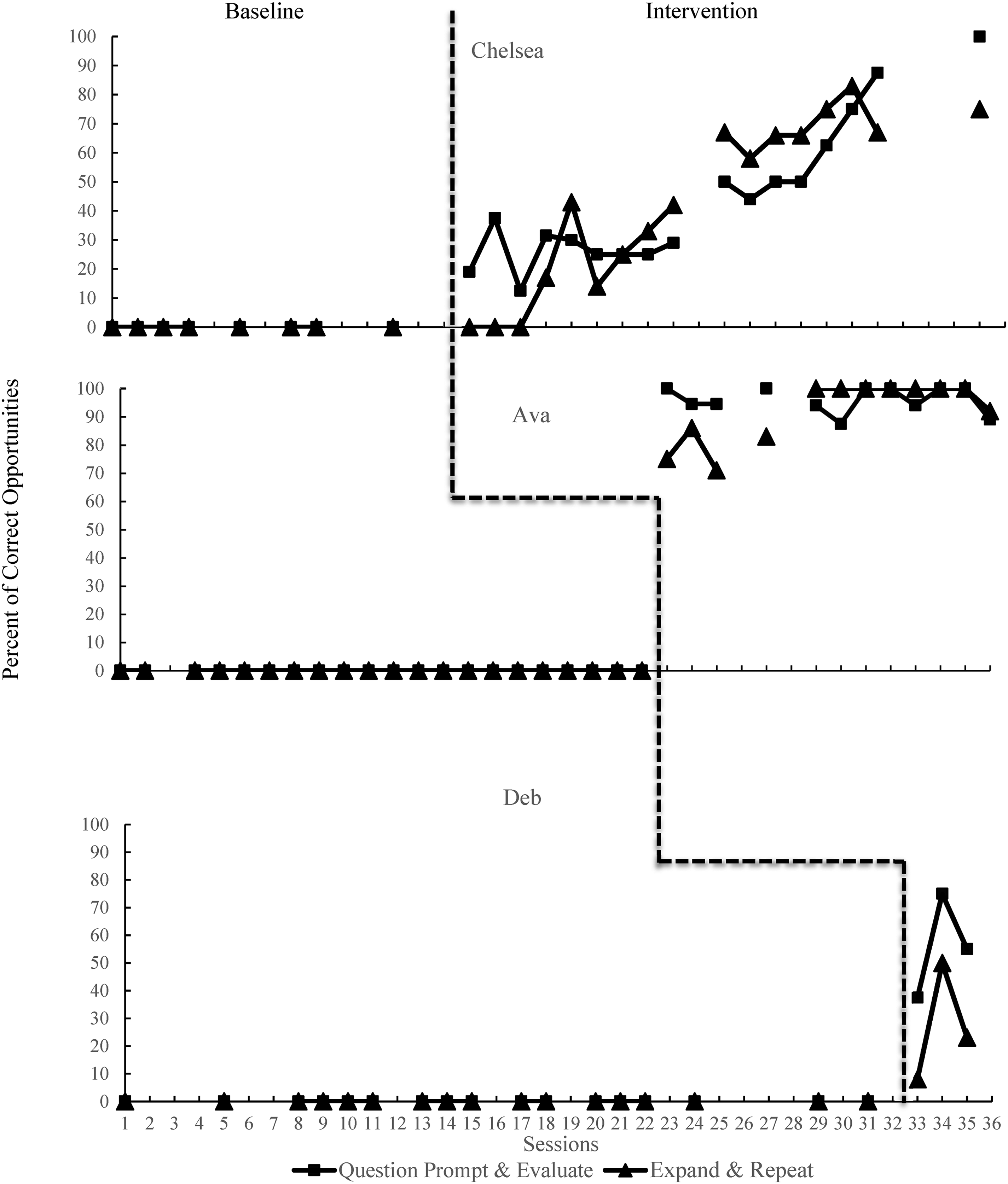
Results across teacher participants.
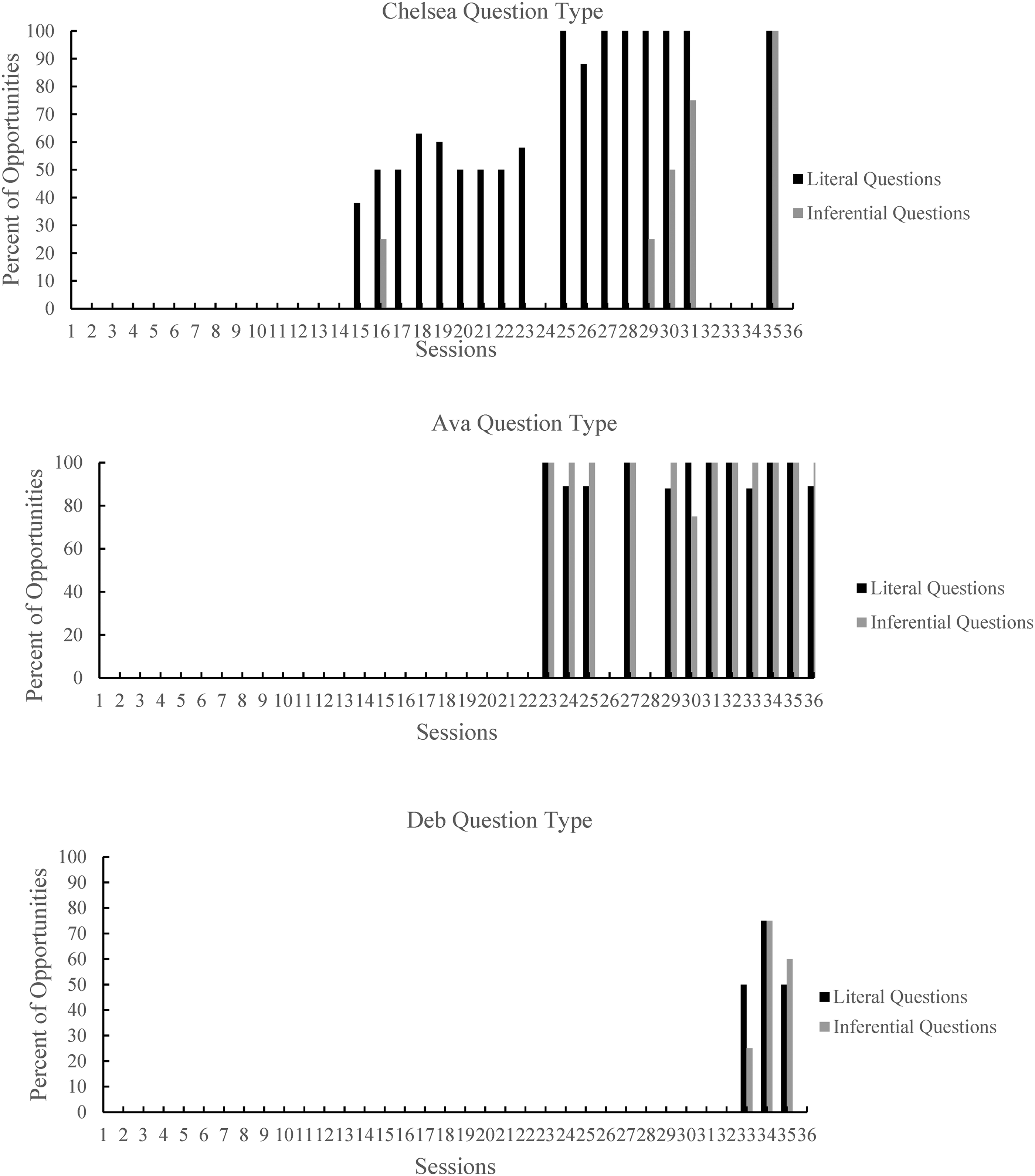
Question type across participants.
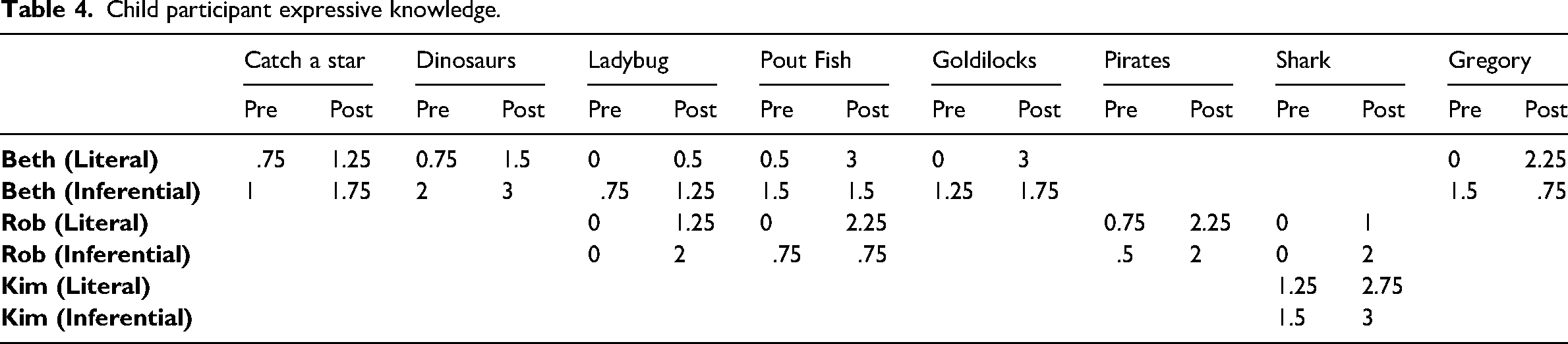
To determine the impact of implementation of SBR strategies on the child's single-word expressive vocabulary, researcher created probes were analyzed to report whether participants increased their knowledge of taught words. Increased knowledge was defined as the frequency of target word improvement or at least a 1-point gain (e.g., 0–1, 1–3, 2–3, 0–3) from pre- to posttest on the expressive probe. Table 4 presents scores for each type of question prompt (i.e., literal and inferential) per book for each participant.
Child participant expressive knowledge.
To answer the first research question (i.e., the effects of PBC and scripted supports on teachers’ implementation of SBR strategies), data for the total number of strategies used by phase were analyzed visually and calculated as a fidelity percentage (see Figure 1). Additionally, data depicting the types of questions (i.e., literal/inferential) asked by each teacher is depicted in Figure 2. To answer the second research question (i.e., does teacher implementation of SBR strategies influence receptive and expressive language of preschoolers), gain scores from the expressive and receptive vocabulary knowledge pre- and post-tests were computed.
Chelsea
During baseline, Chelsea's strategy use was low and stable. The extended baseline period was necessary due to the interruption of data collection during spring break, sickness, and scheduling challenges. Upon introduction of the independent variable (IV), a slight upward trend was seen in the questioning with evaluate strategy. Data remained variable for approximately 9 sessions (average = 26%, range = 19%–37.5%), until session 25 when the data trended upward to 50%. The data remained stable until session 29 when an increasing trend was observed, continuing through session 35 when she reached 100%. There was no overlap between baseline and intervention. Chelsea's use of the expand and repeat strategy did not demonstrate an immediacy of effect upon introduction of the IV and was variable until session 21 when data began trending upward. The remaining 10 sessions were variable, averaging 63% through the end of the intervention phase (range = 33%–83%). The first 3 sessions in intervention overlapped with baseline. Chelsea utilized significantly more literal questions (average = 74%) throughout the intervention and except for session 16, did not begin using inferential questions consistently until session 29 (average = 16%). Similar to baseline, gaps during intervention were due to sickness and scheduling challenges.
Ava
Baseline data for Ava remained at zero for both strategies. An immediacy of effect was observed upon introduction of the IV in session 23 for the question and evaluate strategy with and average strategy use of 96% (range = 87.5%–100%). Data remained high and stable, no overlap with baseline was observed. An immediacy of effect was observed for use of the expand and repeat strategy with an average use of 92.25% (range = 71%–100%). Data were slightly variable but remained high. No overlap with baseline was observed. Ava's use of both question types was consistently high during intervention, literal questions averaged 95% and inferential questions 97%.
Deb
Data were collected at three points during the intervention phase for this teacher because of the end of the school year. Baseline data was at zero, an immediacy of effect was seen for the questioning with evaluate strategy upon introduction of the IV, average strategy use was 55% and variable. Use of expand and repeat trended slightly upward upon introduction of the IV, but remained low and variable, averaging 27%. Deb's average use of literal questions was 58%, and 53% for inferential.
Child data
Beth increased her literal knowledge of taught words across the 6 weeks of intervention, averaging .33 at pretest (range = .75–2) and 1.91 (range = .5–3) at post. Inferential knowledge showed a slight increase from pre to post, averaging 1.33 (range = .75–2) and 1.66 (range = .75–3), respectively. In four weeks of intervention sessions, Rob also increased his literal knowledge from an average of .19 (range = 0–.75) at pretest to 1.69 (range = 1–2.25) at posttest. Inferential knowledge at pretest averaged .31 (range = 0–.75) for Rob, and 1.69 at posttest (range = .75–2). Due to time constraints (i.e., school year ending), Kim had one week of intervention and increased her literal knowledge from 1.25 to 2.75, and expressive knowledge from 1.5 to 3.0.
Social validity
Teacher responses to the coaching intervention and feasibility of implementing the strategies were positive. Specific to the coaching intervention, the teachers commented on the utility of the scripts and being able to review the hierarchy of possible responses to the child (e.g., binary/model) with the coach. Chelsea indicated that being able to reach the coach outside of coaching sessions was helpful, and Ava appreciated setting goals each week. Deb thought the one-on-one with the coach was valuable. Regarding the strategies taught, all 3 teachers commented on the difficulty with expansions. Ava summed this up by saying, “I never figured out how to do it right,” prior to this intervention. Chelsea also indicated literal questions were easier than inference, but she did learn to incorporate them once the coach pointed it out in their sessions. Lastly, teachers felt the continued practice was helpful in acquiring and maintaining the strategies. Teachers unanimously agreed they would continue using the strategies in the future, with both Chelsea and Ava pointing out they could use the storybooks provided in their curriculum and incorporate the “format” used in the study. Finally, teachers responded favorably when asked if they thought the behaviors were helpful in supporting their child's language development.
Discussion
The purpose of this study was to evaluate the effects of PBC with scripted supports on preschool teachers’ implementation of SBR strategies with preschool age children with disabilities. Research suggests pairing a workshop with PBC is associated with improvements in preschool teachers’ skills (e.g., Artman-Meeker et al., 2014; Fox et al., 2011). Further, direct instruction of vocabulary can support the language development of preschool children with disabilities, but consideration for the types of questions asked is also important (Pentimonti et al., 2021; Zucker et al., 2021). The results of this study align with previous research, suggesting there is potential for teachers to improve their implementation of SBR strategies (i.e., literal and inferential questions/evaluate and expand/repeat) after participating in PBC paired with scripted prompts. Additionally, all three children were able to make gains on their vocabulary knowledge, adding to previous literature suggesting SBR can impact the vocabulary development of children with disabilities (e.g., Storkel et al., 2017; Voelmle and Storkel, 2015).
With regard to research question 1, changes in level (above baseline performance) concurrent with the introduction of the independent variable were demonstrated for Ava only. The variability in Chelsea's data indicated she was not consistently successful at consolidating the targeted skills. Similar variability has been noted in previous research focused on providing PD on SBR strategies to early educators (i.e., paraprofessionals) combined with scripted supports (e.g., Towson et al., 2020). Unique to this study is a proximal measure of expressive vocabulary knowledge, demonstrating improvement on both literal and inferential knowledge for all child participants (i.e., research question 2).
Meta-analyses conducted by Bus et al. (1995) and later by Mol et al. (2008) suggest book reading can lead to increases in adult-child interactions that ultimately support children's language and literacy development. These interventions typically incorporate DR strategies that encourage the adult-child dyad to engage in book related conversations by using specific practices such as repetitions, expansions, and wh-questions; yet, practices targeting lower to higher levels of abstract language are not (Seven et al., 2020). Chelsea's greater implementation of literal questions seem to be reflected in Beth's increase in literal vocabulary knowledge; conversely, her inability to consistently implement inferential questions may have contributed to Beth's limited gains in inferential knowledge of targeted words. Social validity data for Chelsea align with these results. Ava's immediate acquisition and maintenance of both strategies at a high level seemed to impact both Rob's literal and inferential knowledge. With the end of the school year and only 3 data points in intervention, it is difficult to draw conclusions regarding Deb's long-term implementation of SBR strategies as well as subsequent impact on Kim's literal and inferential knowledge.
Overall, teachers were satisfied with the intervention program, indicating content, structure, and implementation steps were both feasible and effective. This positive feedback could be due to incorporating adult learning practices and supports perceived as helpful when implementing the program. For example, access to the coach via email and/or text as well as the ability to reflect on one's practice were mentioned by the teachers as important. Use of these techniques coupled with scripted prompts resulted in teachers’ greater use of strategies during SBR. Despite standardized delivery of the intervention program, characteristics such as teachers’ knowledge and view on learning, as well as contextual factors such as teacher or child interest in the book and/or targeted words, and events occurring before or during SBR sessions could have affected the use of strategies even when provided with scripted prompts. Future research could consider these factors, for example, the coach working in collaboration with the teacher to select books and targeted words, along with developing definitions and associated prompts.
Limitations
Several limitations to this study should be noted. First is the lack of a functional relation between the independent and dependent variables, due to variability in Chelsea's data and few data points in intervention for Deb. Second, neither maintenance nor generalization data was collected; therefore, it is not known the extent to which the educators continued to use the strategies or generalized them to novel books. Fading of coaching supports including scripts was not possible due to time constraints. Future research should address these issues to answer questions related to dosage and long-term feasibility of the intervention. Finally, PBC incorporates adult learning techniques shown to be beneficial, such as sharing information directly, using modeling, providing feedback, and incorporating prompting, guiding, or scaffolding. Still, one of the educators struggled with consistently implementing the strategies. Adopting a conceptual framework for describing how implementation is pursued, similar to that proposed by Biel et al. (2020), may lead to increased implementation fidelity in future studies in which adults are taught to facilitate child language development.
Implications for research & practice
Several suggestions can be made when conducting PD on evidence-based strategies with early childhood educators in future research. First, although all teachers increased their use of strategies, simultaneous implementation of multiple novel strategies may have contributed to the variability in results for one of the participants. A multiple-baseline design across behaviors may be more conducive for teachers to acquire and maintain a single behavior before learning additional behaviors, and future studies could employ this type of design. If teaching all behaviors at the same time is necessary, the number of sessions could be extended to allow for a focus on literal before inferential questions; for example, literal questions only during sessions 1 and 2, then adding inferential questions for sessions 3 and 4. The adult participants were lead teachers in an early childhood special education classroom in which all children were receiving special education services. Research on training of paraeducators to deliver evidence-based practices with preschool age children with disabilities continues to emerge (see Author; Towson et al., 2020). Teachers and paraeducators working together in the same classroom likely have an established relationship that could lend itself to a successful coach-coachee relationship. Recommendations for coaching practices include: (a) an established coach-coachee partnership, (b) joint planning, (c) observation, (d) practice, (e) reflection, and (f) feedback (Artman-Meeker et al., 2015; Fox et al., 2011). PBC within the context of a teacher and paraeducator dyad could be a cost-effective and feasible consideration for early childhood programs. By preparing and supporting classroom teachers to serve as coaches and the inclusion of self-monitoring for paraprofessionals to reduce observation time for the teacher, schools may be able to grow their internal capacity for coaching paraprofessionals; thus, offering a structured framework for on-the-job coaching (Gregori et al., 2022).
Supplemental Material
sj-docx-1-clt-10.1177_02656590241228429 - Supplemental material for The effects of practice-based coaching and scripted supports on teachers’ implementation of shared book reading strategies
Supplemental material, sj-docx-1-clt-10.1177_02656590241228429 for The effects of practice-based coaching and scripted supports on teachers’ implementation of shared book reading strategies by Lindsay Dennis, Jennifer Eldridge, Taryn Wade, Audrey Robbins, Maria Larkin and Erika Fundelius in Child Language Teaching and Therapy
Footnotes
Declaration of conflicting interests
The authors declared no potential conflicts of interest with respect to the research, authorship, and/or publication of this article.
Funding
The authors received no financial support for the research, authorship, and/or publication of this article.

Supplemental material
Supplemental material for this article is available online.
References
Supplementary Material
Please find the following supplemental material available below.
For Open Access articles published under a Creative Commons License, all supplemental material carries the same license as the article it is associated with.
For non-Open Access articles published, all supplemental material carries a non-exclusive license, and permission requests for re-use of supplemental material or any part of supplemental material shall be sent directly to the copyright owner as specified in the copyright notice associated with the article.
