




Abstract
The goal of the present study was to investigate the performance of four Filipino–English bilingual kindergarteners with language difficulties on a dynamic assessment of English narratives. Using a multiple case-study design, we examined the children's modifiability by detailing their responsiveness, level of skill transfer, and the amount and type of effort the examiner expended during two mediation sessions. We also assessed the children's narrative skills using the Test of Narrative Language—second edition (TNL-2). During mediation, similarities among the four children included difficulty answering wh-questions, little transfer of the newly learned skills, frequent focus on the story problem, and the need for continual prompting and repetition. However, the children showed individual learning styles, behavior when learning, and learning potential, prompting the examiner to apply different strategies to support their individual abilities. Gains on the TNL-2 were also negligible, consistent with the modifiability findings, apart from one child who showed improvement in comprehension scores. The case studies provide novel information regarding the narrative skills of Filipino bilingual children with language difficulties, an under-researched population. They can help guide expectations of such children during a dynamic assessment and suggest mediation strategies that clinicians could incorporate into their practice with other groups of bilingual children.
When bilingual children are referred for assessment due to concerns about their language development, clinicians are challenged with disentangling whether the child has a “language difference” (i.e. language development that reflects the influences of a first language or bilingualism) or a developmental language disorder 1 (DLD; Hasson et al., 2012; Peña et al., 2020). This challenge stems, in part, from the norming of many standardized language tests on monolingual speakers. Indeed, there is no gold standard for diagnosing bilingual children with a DLD (Camilleri and Botting, 2013), and the establishment of developmental norms for such children is complicated by factors such as the length and quality of their language exposure (Peña et al., 2020) and the similarities of the languages they acquire (Fuertes and Liceras, 2018).
The consequences of inadequate assessments for bilingual children have been noted in past research. Stow and Dodd (2005), for example, propose that such children may be under-referred to speech–language therapists and may thus lose opportunities to benefit from the treatment. In contrast, others have noted that bilingual children are overrepresented in speech–language services and may be receiving treatment that is unnecessary, as well as costly and emotionally burdensome for children and families (Hunt et al., 2022). Given these undesirable outcomes, researchers have sought ways to differentiate language difference and disorder. These include the use of dynamic assessment and the assessment of narratives, a discourse form that children from various cultures and linguistic backgrounds readily engage in from a young age (Owens, 2013).
Narratives of children with developmental language disorders
Children who produce well-developed and coherent narratives have better foundational skills and an academic advantage over children who produce less-developed narratives (Griffin et al., 2004). Studies have shown that many typically developing children produce well-formed stories by the time they are in first grade (see review in Heilmann et al., 2010). In contrast, children with DLD often omit critical story elements (Peterson and McCabe, 2013). Owens (2013) adds that children with DLD often demonstrate difficulties in retelling and organizing a story, produce few lengthy utterances in their stories, and include more irrelevant information. Typically developing peers of such children produce more complex narratives with greater similarities to written narratives (Kaderavek and Sulzby, 2000).
Children with difficulties in narrative expression often also exhibit difficulties in narrative comprehension as reflected in their weak encoding of causal relationships and poor recall of pictorial narratives including such relationships (Bishop and Donlan, 2005) and their greater difficulty making inferences in narrative contexts compared with typically developing peers (McClintock et al., 2014). Therefore, it is important to assess children's narrative comprehension skills to get a comprehensive picture of their abilities.
Dynamic assessment and bilingual children with DLD
Alongside narratives, researchers have looked at using dynamic assessment to distinguish bilingual children with and without DLD (e.g. Peña et al., 2014; Petersen et al., 2017). The dynamic assessment approach is grounded in Vygotsky's zone of proximal development (Vygotsky, 1978) and Feuerstein’s (1977) mediated learning experience. Its main objective is to understand children's learning needs and ability to master a skill by working with the child through short teaching sessions. In the test–teach–test approach to dynamic assessment, the teaching, also referred to as mediation, is preceded and followed by measures to determine whether targeted skills improve. This approach has been found to distinguish language difference and disorder well and to be highly useful to clinicians in planning intervention, regardless of the child's cultural and linguistic background (Peña et al., 2014).
Lidz (1991) recommended a particular set of strategies to ensure high-quality mediation: stating the purpose of the skill and its meaning to the child, supporting the child to think hypothetically and independently and develop metacognitive awareness, and helping the child plan how to use the skill and transfer it to new contexts. During mediation, the examiner rates the child's modifiability, comprised of the child's responsiveness to mediation strategies, their level of skill transfer, and the effort the examiner must put in for that transfer to occur (Peña, 2000).
While modifiability ratings have successfully distinguished children who are typically developing from those with language difficulties (e.g. Laurie and Pesco, 2023; Orellana et al., 2019; Peña et al., 2014; Petersen et al., 2017), qualitative descriptions of mediation sessions to address narrative skills that might inform clinical practice are rare. Peña et al. (2007) are an exception. The authors examined the mediation of narrative skills for a single African-American child with DLD, matched for age, gender, and ethnicity with a typically developing child. While the study provided some information regarding how the child with DLD responded to mediation, the study of a single monolingual child does not elucidate the range of difficulties a bilingual child with language difficulties might display nor the teaching strategies each child might respond to best.
The current investigation applies a multiple case-study design to examine mediation sessions in English with four bilingual Filipino–English kindergarteners with language difficulties. The main goal of the study is to investigate individual differences in children's performance during the mediation phase of the dynamic assessment and to thus inform clinical practice. To achieve this goal, we ask: How do individual Filipino–English bilingual kindergarteners with language difficulties perform according to ratings and qualitative descriptions of their responsiveness to mediation and level of skill transfer as well as examiner effort (i.e. the elements of modifiability)? A secondary goal was to explore whether children's performance on a standardized assessment, the Test of Narrative Language—second edition (Gillam and Pearson, 2017), reflected the children's performance during the mediation sessions.
Methods
Participants
Participants were selected from a larger study (Laurie and Pesco, 2023) demonstrating the accuracy of a dynamic assessment of English narratives in distinguishing bilingual children (Filipino–English) who had been identified as typically developing or as having language difficulties as described below. Ethical approval for that study was obtained by the University Human Research Ethics Committee at [removed for blinding] the University.
As were all the children in the larger study, the children in the present study were living in Canada and attending school in English, one of Canada's official languages. The first author described the study to parents at an initial visit to the home, answered any questions the parents had, and received written consent for the child's participation. Following parental consent and prior to the dynamic assessment, parents completed the Alberta Language and Development Questionnaire (ALDeQ; Paradis et al., 2010) and a questionnaire about their child's language exposure and current language abilities. The ALDeQ assesses a child's L1 abilities, developmental milestones, behavioral patterns, activity preferences, and family history of various difficulties and delays. Parents’ responses were scored according to ALDeQ guidelines and compared to an ALDeQ cutoff suggesting the presence of language difficulties. None of the parents reported that their children had other conditions that could have impacted their language ability (e.g. a global developmental delay or hearing loss). All four were of Filipino background and were acquiring both Filipino and English. The children were all exposed to Filipino as their first language at home and at familial, social, and community events. Children were also exposed to English at home to varying degrees, at school, and in the larger community. As also shown in Table 1, three of the four participants were also receiving special services in English for language before participating in the study. Maria was the sole child who was not receiving language services; however, her parents expressed concern about her English skills.
Children's ages, home language exposure, and language services.
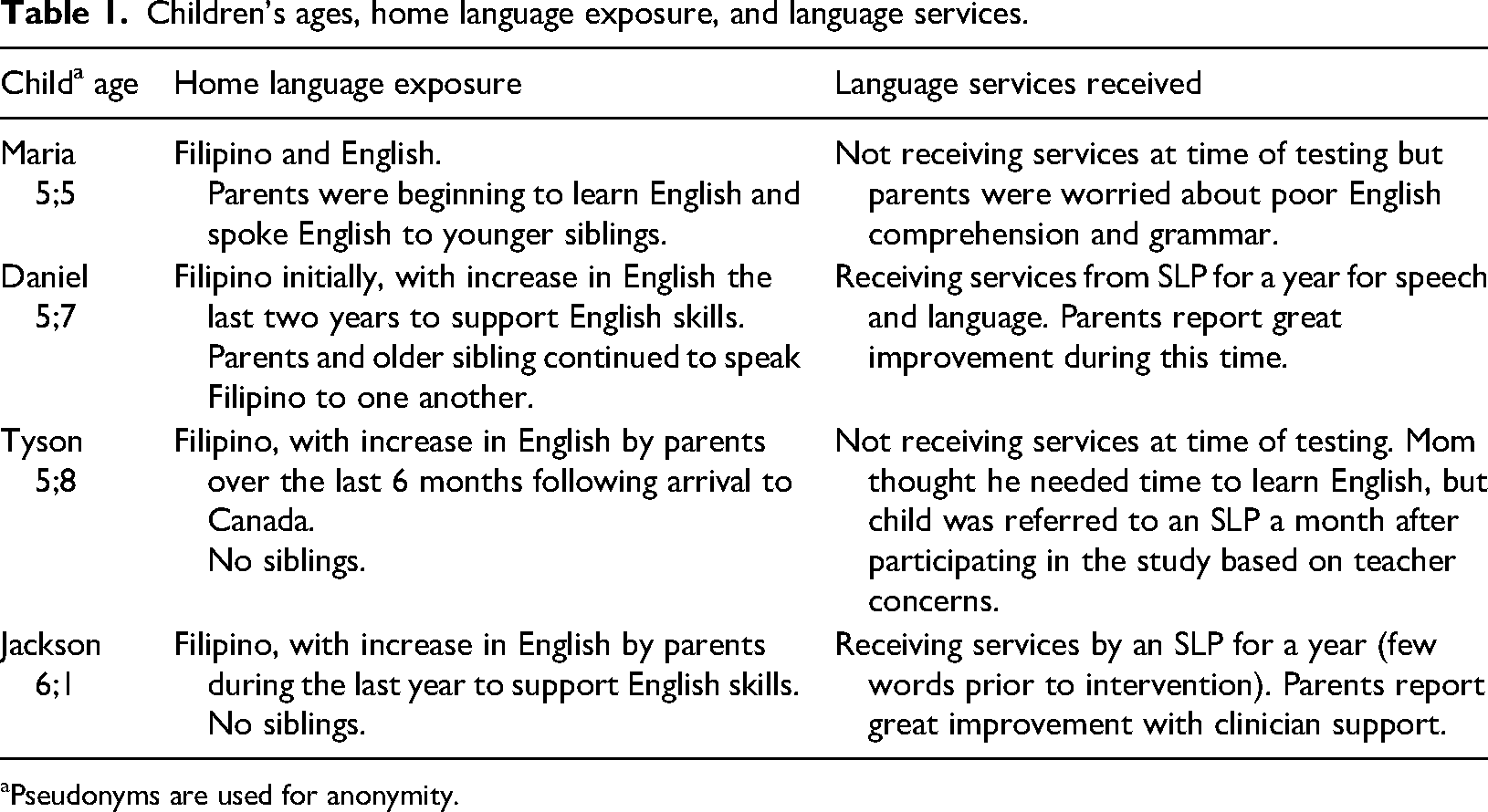
Pseudonyms are used for anonymity.
Measures and procedures
We used the test–teach–test approach to dynamic assessment presented in the literature review. The measures and procedures associated with the “test” and “teaching” phases follow, in sequence. The assessments were conducted in English, mirroring the language of the school instruction.
Testing phases (pre-mediation and post-mediation)
The pre-mediation and post-mediation assessments were administered by the first author to each child in a quiet room in the child's home, lasted 25–30 min, and were audiorecorded to allow transcription and reliability checks. They included a single-picture task to identify narrative skills for mediation and the Test of Narrative Language—second edition (Gillam and Pearson, 2017) to describe the children's narrative comprehension and production.
For the single-picture task, children were asked to generate a story based on a single picture from a children's storybook. One picture was used pre-mediation and another post-mediation to avoid practice effects. The pre-mediation picture, from the book It Was You! Blue Kangaroo (Chichester Clark, 2009), depicts a little girl with an adult woman in a kitchen who are surprised to see the sink overflowing with water. The post-mediation picture, from Jabari Jumps (Cornwall, 2017), depicts a little boy on a high diving board at a public pool with his dad looking up at him from the pool. Both pictures were unfamiliar to the children prior to participating.
The Narrative Features Rating Scale was used to score the stories children generated. The scale is based on Miller et al. (2001) but was revised to be relevant to stories generated from a single picture and to clearly distinguish the ratings. The scale addresses three narrative aspects. The first, story components, comprises the story's setting (time and place), literal character information, character's internal states, temporal order of events, and causal relationships. The second narrative aspect, story ideas and language, includes the complexity of ideas, vocabulary, grammar, and dialogue. Lastly is episode structure, which includes an initiating event, attempt, internal response, consequence, plan, and resolution. The first author transcribed then scored the children's narratives for the single-picture task according to the scale once the session was completed. The scoring reliability established for our larger sample using weighted kappas was strong for all three narrative aspects: story components, k = .80, p < .001; story ideas and language, k = .80, p < .001; episode structure components, k = .77, p < .001 (Laurie and Pesco, 2023).
The Test of Narrative Language—second edition (TNL-2; Gillam and Pearson, 2017) was also administered. The TNL-2 is a popular standardized assessment, validated with a norming sample of 1130 children across the US between the ages of 4;0 and 15;11. It has three comprehension tasks comprised of literal and inferential questions and three production tasks. The children's performance on these tasks was scored according to the TNL-2 manual, with raw scores for both comprehension and production tasks converted first to standard scores and then to the Narrative Language Ability Index, a composite score providing an overall view of children's narrative abilities. Inter-rater reliability for the TNL-2 scoring in our larger sample of Filipino children was strong, with a percentage agreement of 91.4 across various scales and scores (Laurie and Pesco, 2023).
Mediation phase
Once the children's narratives on the single-picture task were transcribed and scored, the first author selected two low-rated narrative skills for mediation (one skill per session). These were skills that appeared earliest in the children's regional English Language Arts curriculum and are widely recognized as key elements in narratives. In keeping with the dynamic assessment approach, the objective of the mediation sessions was for the children to use newly learned skills independently by the session's end. The first author (referred to hereafter as the examiner) conducted the sessions at the children's homes on two consecutive days. At the start of the first session, the child listened to the story they had produced on the single-picture task, read aloud by the examiner. At the second session, the examiner again read aloud the story, integrating the information added during the first session. The examiner–child dyad would then continue to work on the skill established for the session. The sessions were semi-scripted and lasted 25–30 min each. They were guided by Lidz's (1991) principles, outlined in the literature review, and supported with various learning materials (e.g. worksheets from children's English Language Arts curriculum and drawing materials).
The children's modifiability was scored using a rating scale provided in Laurie and Pesco (2023). The scale covers children's responsivity to teaching, scored from 0 to 3 (not at all, slightly, moderately, highly); examiner effort, scored from 0 to 3 (extreme, high–moderate, moderate, slight); and children's skill transfer, scored from 0 to 2 (no, some, yes). For each of these components, the scale includes criteria that must be met to obtain each score. An average score of the two sessions was totaled for a possible score from 0 to 8. Inter-rater reliability of the modifiability ratings, calculated on our larger sample using weighted kappa, was strong at .80, p < .001. Fidelity to mediation procedures by the examiner was excellent at 98% (Laurie and Pesco, 2023), with the remaining 2% accounted for by the intentional omission of planning and transfer strategies for a child in the present study (see results for Tyson).
Results
Mediation sessions by child
In this section, we report the children's scores on the modifiability rating scale and then describe qualitatively each child's mediation sessions based on extensive notes taken during and immediately after the sessions. In line with our expectations and the previous literature on modifiability ratings for children with language difficulties, all four children in this study received low ratings, ranging from 0 to 3.5 and averaging 1.9 across the four children (SD = 1.65), as shown in Table 2. These individual and mean ratings were lower than the mean rating of 6.6 (SD = 1.3) for the 27 bilingual Filipino participants in the typically developing group in our larger study (reported in Laurie and Pesco, 2023) and the mean rating of 4.9 (SD = .89) for five kindergarten children within the typically developing group who, like the children in the present study, were exposed to English for varying amounts of time (range two months to two years).
Children's scores on the modifiability rating scale by skill.
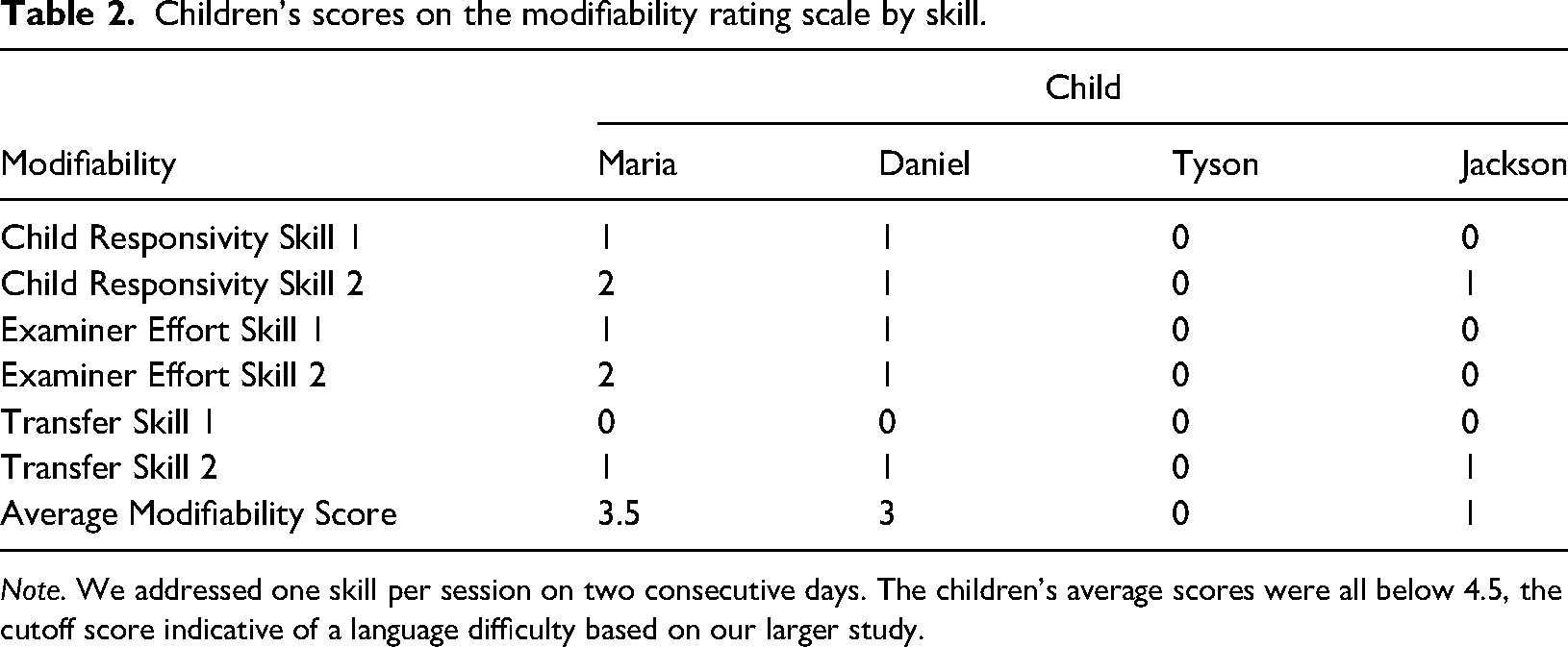
Note. We addressed one skill per session on two consecutive days. The children's average scores were all below 4.5, the cutoff score indicative of a language difficulty based on our larger study.
Maria
Maria's first pre-mediation story on the single-picture task (see Table 3) included several story grammar elements but were difficult to follow as the events were not connected clearly and the story included pronoun and other grammatical errors. The skills targeted for mediation were story setting and character information: elements that we thought would help situate listeners and thus follow Maria's stories better.
Child responsivity
Maria's difficulty in telling a fully coherent story was also observed in the mediation sessions. Additionally, she struggled to differentiate wh-questions. Consequently, many of her answers were nonsensical. Even when her responses to questions were accurate, she preceded them with “that's why”, which could confuse listeners. For instance, when asked, “Where is this story happening?” she replied, “That's why the girl is in the kitchen.”
For the setting, the examiner asked Maria to (a) draw the place and time she saw in the single picture used in the pre-mediation session (e.g. a kitchen and a sun to indicate daytime) and (b) describe it. The examiner then referred to the drawings to assist Maria in generating appropriate answers to “where” and “when” questions. Maria was then presented with a new picture and asked where the story was happening. As her answer was “That's why the girl is crying”, it was clear that she needed additional teaching. When she was asked to draw where the new story was happening, she did so and named the setting without prompting (a bedroom). However, when asked to tell the setting with no drawing, she instead proceeded to tell an entire story. A similar pattern occurred when she was asked to name the setting on a personal story about her friends at school after drawing it, and then asked to name it again without drawing.
Maria's narratives on the single-picture task.
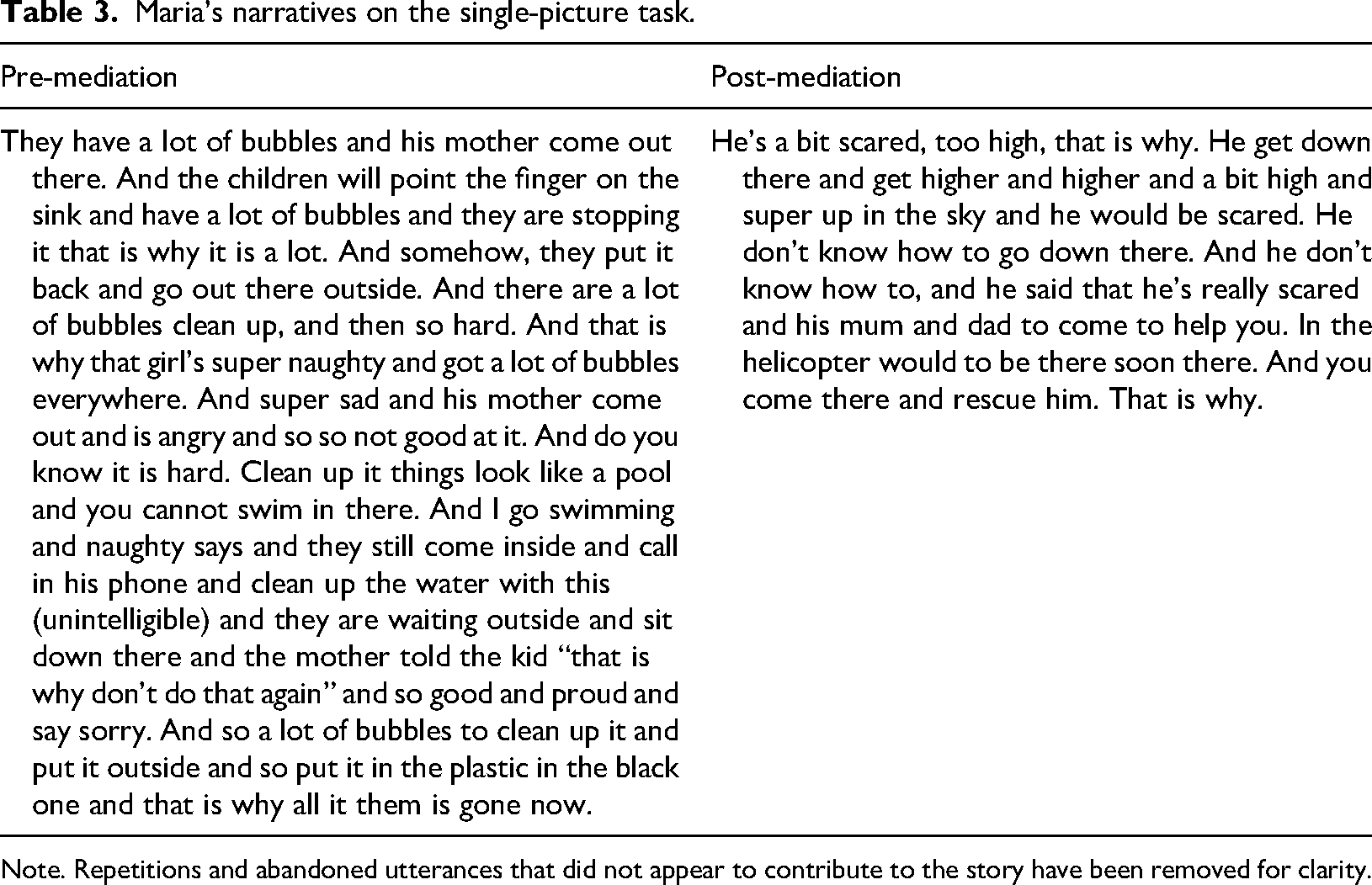
Note. Repetitions and abandoned utterances that did not appear to contribute to the story have been removed for clarity.
For character information, we again used drawing to help inspire character descriptions (e.g. the child drew a picture of a mother and daughter, and the examiner elicited details about their physical characteristics). Overall, Maria was more attentive and on task compared to the first session. She showed eagerness and the ability to tell long stories with relatively rich information, especially when given the opportunity to draw. However, as observed in the first session, when asked for the character information, she would tell the whole story unless reminded of the question's focus. Moreover, her responses remained challenging to understand.
Examiner effort
For the first session, the examiner did most of the talking as Maria was rather quiet and seemed unsure of herself unless she was telling a story. To facilitate comprehension, the examiner used slightly slowed speech. The examiner needed to request verbal imitation twice and to prompt Maria to provide on-topic answers. Overall, the examiner had to exert less effort when working on the second skill (i.e. character information). One explanation could be Maria's apparently greater interest in describing the characters versus the settings, particularly an illustrated character who resembled her (i.e. a little girl with long brown hair and a pink dress). Her initial enthusiasm for this character may have contributed to her richer answers in this session for both picture-based and personal stories. The examiner also had to work hard to distinguish wh-questions and communicate instances where Maria's use of the phrase “that's why” might be appropriate.
Transfer
For the first skill (providing setting information), Maria did not demonstrate skill transfer or an understanding of the skill by the end of the session. She showed some transfer in providing character information in response to questions and in drawing, but when asked to describe a character in a new story without stimuli or cues, she instead provided an entire story, again showing difficulties in understanding the task. When asked why describing characters was important to stories, she replied with “because everyone has a name”, a vague response that showed some but incomplete understanding.
Daniel
Daniel's story on the single-picture task was short and limited to the central story problem (see Table 4). The skills selected for mediation were character information and story attempt to help Daniel start thinking how to structure a story by expanding on the relationship between the story problem, which he presented, and the characters’ actions to solve it.
Child responsivity
For character information, the examiner worked with Daniel on giving a name to one of the main characters (i.e. the little girl in the picture). Initially, he referred to characters only as “them” or “it”. The examiner first discussed with Daniel the names of his family members and friends to make the point that everyone has a name. Later in the session, Daniel independently named the little girl in the picture “Ate” which means big sister in Filipino. The strategy of discussing people familiar to him and relating their names and physical characteristics helped him understand the importance of naming and describing characters in stories. Daniel's mother indicated that he was a strong decoder for his age. The examiner drew upon this strength, using cue cards that said “name” and “looks like” to elicit character information at the start of the first session. These were an effective strategy for Daniel to include character information but also appeared to help him organize his thoughts and stay on task. When the cue cards were removed, he was easily distracted and often interrupted the exchange in progress to tell personal stories and to ask questions unrelated to the session.
Once the examiner gradually took away the cue cards, they determined whether Daniel could a) give the characters a name and b) describe their physical characteristics, first by asking questions related to another single picture, then by eliciting the familiar Little Red Riding Hood story (unsupported by pictures). In these contexts, Daniel was fixated on recounting key events in the story (e.g. the wolf eating the grandmother). However, when the cue cards were reintroduced and verbal prompting was involved, Daniel gave answers that were accurate and creative (e.g. the wolf had pointy teeth and big gray ears).
Daniel's narratives on the single-picture task.

In the second session, targeting attempts (i.e. actions taken by characters to solve story problems), Daniel was very energetic and had difficulty sitting in place, and therefore, on task. The examiner took advantage of his energy by having Daniel act out and verbalize the actions. He responded creatively and without hesitation, albeit with some verbal prompting to keep him on task. However, when it came to independently providing character attempts based on a second picture and then in a personal story, he focused on the story problem unless he was prompted, as observed during the first session. Daniel demonstrated the ability to provide creative story information during both sessions but needed strategies to help direct his responses and stay on task (i.e. cue cards and prompting) and ones that matched his energy level (i.e. story acting).
Examiner effort
For both sessions, the effort required was high–moderate as Daniel needed considerable support. The examiner reduced their speech rate at the beginning of each session when first explaining the meaning of the skill. They also requested verbal imitation twice for the first skill and once for the second; provided several examples for each new story and modeled responses; and provided gestural cues and verbal prompts (e.g. cloze procedures or phonological cues) to guide Daniel. At times, repetition was needed to keep him on task.
Transfer
For the first skill, Daniel could verbalize what he had learned “the names and what the characters look like” but could not perform the skill independently. In answer to a question about why the skill was important for stories, he replied, “because I did great” and “so I can play LEGOS”, indicating a lack of understanding of the skill's purpose. By the end of the second session, he could verbalize the importance of attempts “to solve the problem” and come up with creative attempts. However, there was no evidence of independent skill transfer as prompts and cue cards were continuously required.
Tyson
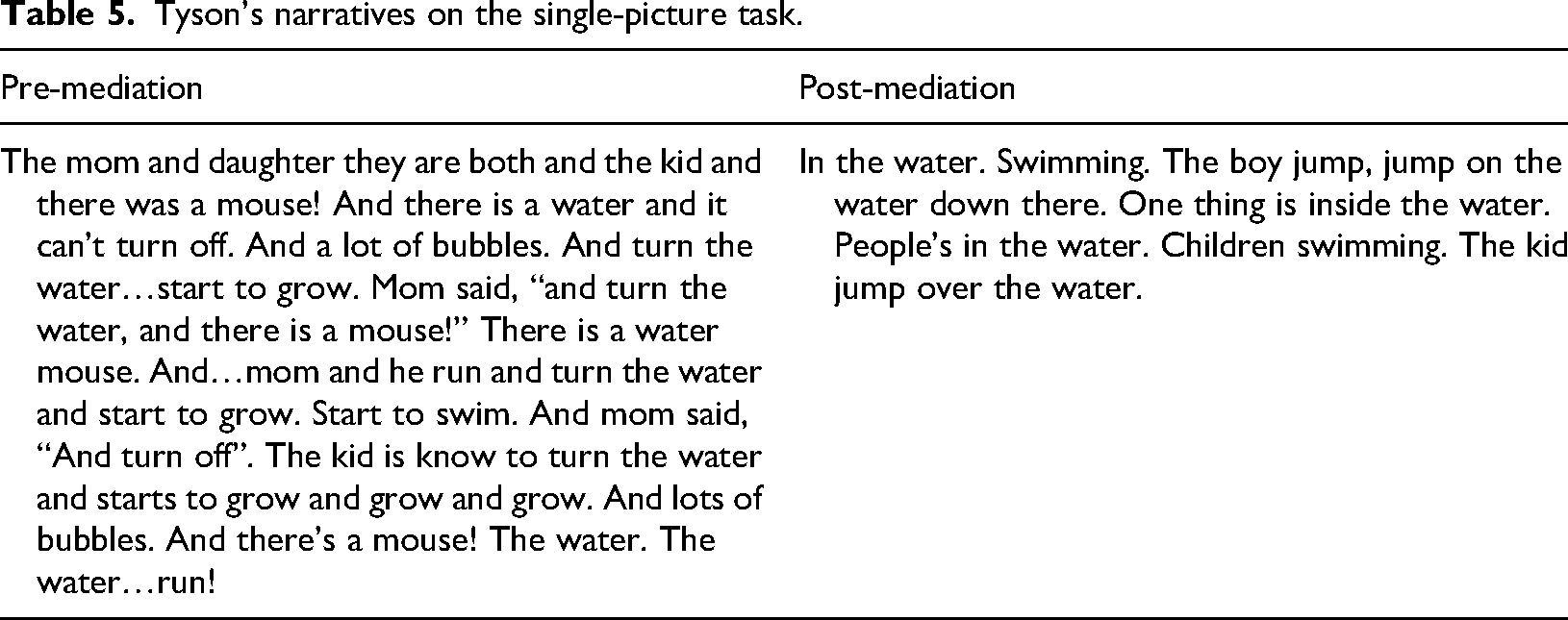
For Tyson, the first targeted skill was the story setting, an element missing from his pre-mediation story (see Table 5). The second skill was providing any story information that was not explicit in the picture (an element on the Narrative Features Rating Scale). This skill was chosen as Tyson demonstrated some instances of “going beyond the picture” during the pre-mediation session; we hoped to encourage him to talk by choosing a skill he could exhibit in various ways since he spoke only a few words at the pre-mediation session. He also took a long time to reply, spoke slowly, and paused after every few words. Consequently, the pre-mediation and post-mediation stories, though quite short, each took over 3 min to complete. Sometimes he lacked appropriate intonation.
Child responsivity
During the first meditation session, it continued to be challenging to get answers from Tyson and his responses, when given, were often inaccurate. For example, when he was presented with the picture where the kitchen sink was overflowing and asked, “Where is this story happening?” he replied with “water”. After some modeling and requests for verbal imitation, it was clear that expressing the story time was above Tyson's abilities, perhaps because it was more abstract. To see if he understood the concept of “when”, he was asked to draw a sun to indicate that the story happened in the daytime. Instead, he drew the story problem with water overflowing onto the floor. This phenomenon occurred with another picture-based story that occurred at nighttime, and therefore, was not story dependent.
By the end of the first session, Tyson could tell the story place for both picture-based stories but required repetition of the questions, prompting while pointing to the picture, and requests for verbal imitation from the examiner. Within the first session, there did not seem to be a strategy that was more effective than another for Tyson to use the skill independently. Tyson's responses in the second session were very similar; overall, he did not demonstrate any learning strategies and could only complete the task by imitating the words of the examiner.
Tyson's narratives on the single-picture task.
Examiner effort
For both sessions, as Tyson often did not respond to questions or prompts and remained fixated on the story problem, the examiner exerted maximum effort. This was reflected in the examiner slowing her speech rate, performing the task for Tyson, and frequently requesting for direct verbal imitation or ‘yes’/‘no’ answers (e.g. “Did this story happen in the jungle?”). “Why” and “how” questions were notably difficult as he would often answer with “I don’t know” even after he was provided with models of correct responses. Consequently, the sessions were very one-sided. In the second session, to avoid Tyson experiencing frustration at being unable to complete the tasks, the examiner eliminated the planning and transfer strategies.
Transfer
There was no indication of skill transfer in either session. Tyson continued to need extensive support in the form of direct verbal imitations, prompting, and examples for him to verbalize logical answers.
Jackson
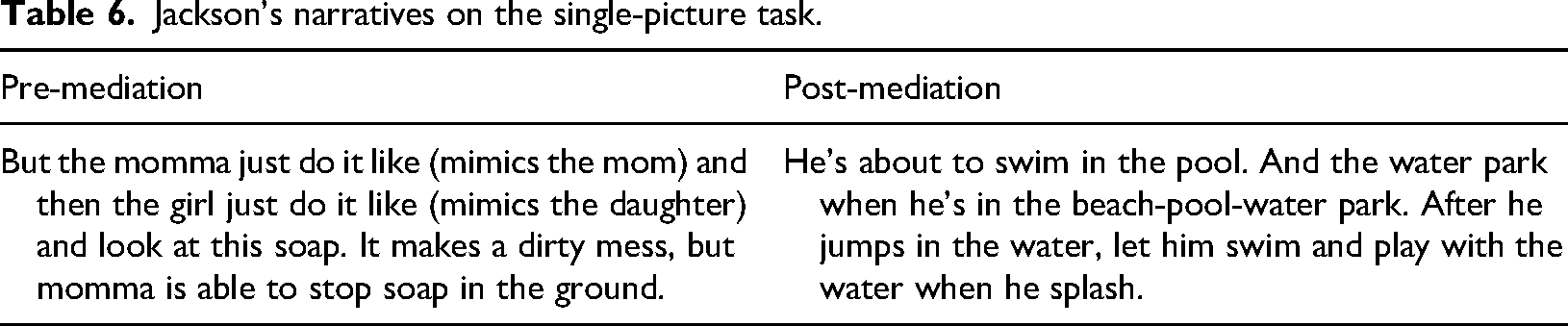
The first targeted skill for Jackson was the story setting as it was omitted from his pre-mediation story as shown in Table 6. The second targeted skill was story attempt. While Jackson identified a story problem in his pre-mediation story, he omitted actions to solve the problem.
Child responsivity
In the first session, Jackson had great difficulties staying on task. He often interrupted to tell stories about his interests (e.g. bugs and sea turtles), and it was often difficult to bring him back to the task. The examiner paused the session and gave him an opportunity to tell a story about sea turtles, hoping it would satisfy him enough to get back on track, but this was unsuccessful. Therefore, after working on the initial story, the examiner elicited setting in the context of subjects that interested Jackson (e.g. adding the setting to a story about a mother sea turtle giving birth to baby sea turtles). He provided creative and relevant information with some prompting. However, when prompts were removed, he dove into long stories without providing setting information. He also had difficulties understanding “when” and “how” questions and understood them both as “why”; thus, the examiner modeled correct responses when asking questions that began with “when” or “how”.
For the second skill, story attempts, Jackson noticed the story problem and stated that it was “a bad story that need to be fixed.” The examiner drew upon his thinking and asked Jackson what actions would be needed to ensure the character was happy by the end of the story (and to thus shift the story from “bad” to “good”). He was better at maintaining his attention to the task when the examiner's prompts began with “To make this a good story (do) we need to…”. In these instances, he was enthusiastic and determined to turn a “bad” story into a “good” story and provided more accurate answers.
Jackson's narratives on the single-picture task.
Examiner effort
For both skills, the examiner applied maximum effort to keep Jackson interested in the topic long enough to work on the skill as he was easily distracted. The examiner often rephrased questions or provided feedback to direct his attention to the task; however, Jackson continued to need extensive prompting. While he was very chatty, the examiner did most of the on-topic talking.
Transfer
Jackson did not verbalize an understanding of the setting skill by the end of the first session or show evidence of skill transfer. He demonstrated some knowledge of the skill when the topic was of interest to him but had difficulties implementing the skill in other stories whether they were picture-based or not. For the second skill, attempts (i.e. actions to solve story problems), he demonstrated some understanding of their importance by stating we need them to “solve rude stories to make it good.” Additionally, with prompting, his story actions were creative when he was on topic. Therefore, he demonstrated some knowledge and skill transfer.
Summary across children
All children were on the low end of the modifiability rating scale, and under a cutoff score that distinguished children with language difficulties from children with no language concerns in the larger study. When asked to apply the skill we had worked on during mediation to a new story, Maria and Jackson told the whole story, while Daniel and Tyson were fixated on the story problem. None of the four children could verbalize a complete understanding of the skill by the end of each session, but Maria, Daniel, and Jackson each provided a vague response regarding the importance of one of their targeted skills. None of the children implemented the targeted skill to a new story without some prompting at the very least, and thus, did not show evidence of complete transfer.
Test of Narrative Language—second edition
For the TNL-2, administered pre- and post-mediation, children's raw scores were converted to standard scores (as per the test manual); these are presented in Table 7 along with NLAI composite scores. The production and comprehension standard scores were generally below the test's mean standard score of 10 (SD = 3). Maria's higher production score led to an NLAI score just above 92, the score established by the test authors as a cutoff point to distinguish language learning difficulties, but she was weak in comprehension. A similar pattern occurred post-mediation, but Maria's NLAI score dropped below the cutoff. The three other children had NLAI scores under the 92 cutoff at both time points. While we did not conduct a statistical analysis of these means given the small sample size, in our larger study (Laurie and Pesco, 2023), a typically developing group of bilingual Filipino children showed higher scores compared to the children here and a significant increase in their means from pre-mediation (M = 102.2, SD = 9.76) to post-mediation (M = 110.7, SD = 10.98).
Pre- and post-mediation scaled and composite scores on the TNL-2.
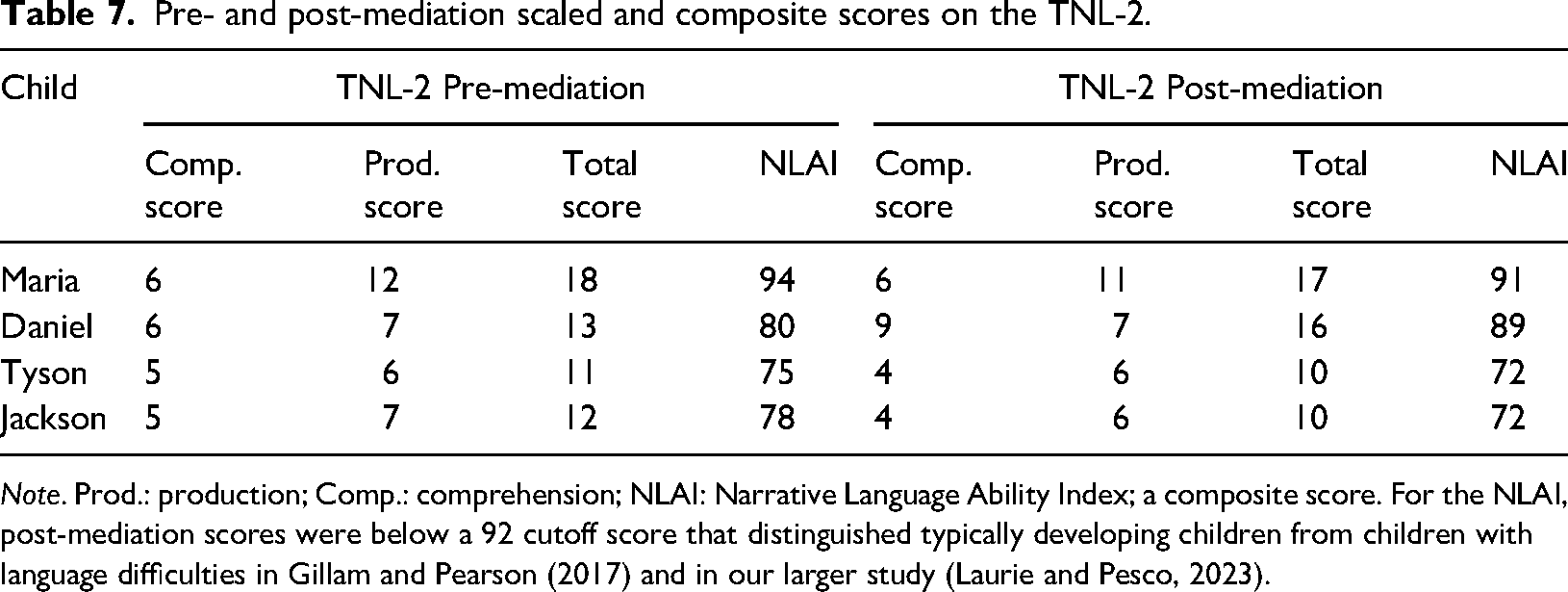
Note. Prod.: production; Comp.: comprehension; NLAI: Narrative Language Ability Index; a composite score. For the NLAI, post-mediation scores were below a 92 cutoff score that distinguished typically developing children from children with language difficulties in Gillam and Pearson (2017) and in our larger study (Laurie and Pesco, 2023).
Discussion
The present study used a multiple case-study design to examine the performance of four bilingual Filipino children with language difficulties on a dynamic assessment of narratives. Current research has centered on the effectiveness of modifiability as a variable to predict membership of children in either a typical language group or a delayed or disordered language group. However, there is a paucity of research examining how bilingual children with language difficulties perform during the mediation phase of the dynamic assessment. This study fills a gap by closely examining bilingual children's performance in terms of how responsive they were to mediation, their level of skill transfer, and the amount and type of effort the examiner exerted. This approach allowed us to identify similarities and differences across the four children. The information gathered has direct implications for clinical practices, as elaborated below.
Similarities and differences among the children
Based on past research on children with language difficulties (e.g. Peña et al., 2000; Peña et al., 2007), we expected children in our study to exhibit low responsivity and skill transfer. The findings aligned with these expectations and revealed similarities among the children. For instance, when setting was the targeted skill, and the children were asked to provide the setting in a new story after working on it, they instead provided actions or events, often focusing on the story problem. This demonstrates a lack of skill transfer to a novel task. To additionally assess skill transfer, the children were each asked why the skill is important for stories. None of the children could verbalize a clear understanding, even after repeated prompting. These results indicate that further intervention (i.e. beyond the two half-hour mediation sessions in our study) was required for the children to learn new story skills and to articulate their importance. Second, when examining the children's responsivity, we noted a result similar to that of Peña and colleagues (2007), namely that all four children had difficulties with understanding wh-questions. These difficulties were also revealed by their low comprehension scores on the TNL-2. Maria's use of that's why at the beginning of most of her answers was particularly noteworthy. Third, when the story setting was the targeted skill for mediation, learning the when (time) led to more difficulties and confusion among the children than the where (place). This difficulty could stem from temporal information being too abstract for the children's current cognitive development (Powell and Snow, 2007). Moreover, while place can be directly illustrated, time must often be inferred from visual cues (e.g. a sun or moon).
Consistent with observations of the children during mediation, there was little to no improvement on their TNL-2 scores following mediation. This result contrasts with our findings for a typically developing group of bilingual Filipino children (Laurie and Pesco, 2023) who showed an increase. Post-mediation, all four children in the present study had scores under the 92 cutoff score indicative of a “language learning disability” (Gillam and Pearson, 2017: 67). Daniel's NLAI score was the sole to increase from pre-mediation to post-mediation. Interestingly, this increase coincided with information on the parent report that stated Daniel had recently made excellent progress in therapy with a SLP and implies that intervention with the SLP would continue to benefit Daniel. There was also one important inconsistency between the mediation results and the TNL-2 scores, namely, Maria performed in the average range on the production subscale of the TNL-2 as she was able to provide several key story elements. However, she had difficulty responding appropriately to questions and integrating story elements in a coherent manner during mediation, suggesting the TNL-2 was not fully sensitive to the type of difficulties Maria displayed.
All four children had modifiability scores below the cutoff score established in our larger study of dynamic assessment. However, the children's difficulties did not manifest in the same way, and thus, required different strategies for productive mediation. For instance, while all children struggled to various extents on learning new skills, the examiner had to reduce the mediation content for Tyson as the planning and transfer strategies were above his abilities. He spoke very little and took long pauses between answers, making the interactions very one-sided favoring the examiner. If we contrast this with Jackson's performance, he was very chatty, and it was hard to keep him on task. Daniel also exhibited difficulties maintaining attention to the task but could come up with creative examples through story acting, while a sit-down approach functioned well for the others. Maria's answers were often long and complex; she provided several components and ideas in her stories, but her stories lacked coherence and cohesion and were at times incomprehensible. The inclusion of various story elements inflated her scores, especially on the pre-mediation TNL-2 NLAI on which she scored just above the test's cutoff. If one were to consider only this score, then Maria would have been misclassified as typically developing. However, the dynamic assessment revealed difficulties that would require further assessment and thus provided important information.
Implications, limitations, and future directions
This multiple case-study design has important implications for clinicians who wish to use a dynamic assessment of narratives in their practice. The qualitative description of the mediation sessions shows the value of dynamic assessment to capture children's individual learning styles, behavior when learning, strengths and weaknesses, and learning potential in two relatively short teaching sessions targeting narrative skills that are often included in Language Arts curricula, and important for children's academic success. The findings could augment the practitioners’ confidence regarding how to evaluate modifiability. Additionally, clinicians can be inspired to try some of the strategies described in their own dynamic assessments or in treating children with language difficulties. Finally, it provides information that could guide expectations of Filipino–English bilinguals with language difficulties, an under-researched population. Readers should be cautious, however, in applying the findings directly to all bilingual Filipino children with language difficulties.
Dynamic assessment research on narratives, including the current study, has investigated mainly narrative macrostructure (e.g. Laurie and Pesco, 2023; Peña et al., 2014; Petersen et al., 2017). In addition to macrostructure, microstructure (including number of different words, verb accuracy, and “first mentions”, a measure of cohesion) has also been shown to be affected in both monolingual and bilingual children with DLD (Rezzonico et al., 2015). Solely examining the macrostructure may be insufficient for understanding children's narrative skills. As we observed with Maria, for example, macrostructural scores were high despite stories that were hard to follow. By examining both macrostructure and microstructure, we can fully capture children's narrative abilities. Thus, one interesting future direction would be to further examine the microstructure for the children in this study. A second direction would be to expand the dynamic assessment to other bilingual populations, particularly under-researched groups.
Conclusion
In conclusion, the present study analyzed modifiability (i.e. children's responsivity, skill transfer, and examiner effort) during mediation for four bilingual Filipino children with language difficulties as part of a dynamic assessment of narratives. This multiple single case-study design can help guide clinicians’ expectations of bilingual children's performance and can inform and inspire clinicians who wish to administer a dynamic assessment with bilingual children by providing ideas for intervention.
Footnotes
Declaration of conflicting interests
The author(s) declared no potential conflicts of interest with respect to the research, authorship, and/or publication of this article.
Funding
The author(s) disclosed receipt of the following financial support for the research, authorship, and/or publicationof this article: The research was supported by doctoral fellowships to Anne Laurie from the Fonds de recherche du Québec – Société et culture (FRQSC) and the O'Brien Foundation, and internal awards from Concordia University.
