




Abstract
We applied marital stress and stability frameworks to investigate how spousal, family, and friend dynamics contribute to marital instability risks during the first 16 years of marriage. Using longitudinal data from the Early Years of Marriage Project and a within-person approach, we examined how family and friend relationships temper or amplify marital risks in couples’ more troublesome years. We also considered the sociocultural contexts of gender and race. Both spouses from 373 newlywed mixed-gender couples (199 Black American, 174 White American couples) completed questionnaires in Years 1, 3, 7, and 16 of marriage. Dyadic multilevel models showed marital distress and instability increased over time, while spousal responsiveness, friend support, and family support decreased across the 16 years. Wives also had poorer marital and family evaluations than husbands. In the years with less responsiveness or more marital distress, having low family support or high family-related tension intensified negative marital effect; in contrast, having more family support or less family-related tension helped protect marriages. Nevertheless, marital instability risks were lowest in years with less distress or more spousal responsiveness, regardless of family support or tension. The benefits of spousal responsiveness and negative effects of family-related tension were particularly potent for Black spouses, showing strong marital and family effects on instability, for better or worse. These findings demonstrate that more positive and less negative marital dynamics may protect spouses from unsupportive or strained families. In contrast, lacking supportive family ties may be especially harmful to spouses in less responsive or more distressing marriages.
Introduction
Couples’ relationships are embedded within multiple social contexts. When people marry, they bring and often merge social networks, including friends and family, that have important implications for each spouse’s individual and relational well-being (Fiori et al., 2017, 2018). Positive social network ties can provide access to resources and support that enhance couples’ relationships, yet social network strain carries marital risks (Orbuch et al., 2013). The quality and centrality of different social network ties also change over time, as spouses lean on friends and family at different points in their marriage (George et al., 2023; Rodrigues et al., 2017). With many couples experiencing challenges during the early-to-middle years of marriage that increase dissatisfaction and divorce risks (Bühler et al., 2021), it is important to identify how social network ties with friends and family amplify or offset these marital risks.
This study applied marital stress and stability frameworks to investigate how positive and negative ties in spousal, family, and friend relationships contribute to marital instability risks during the first 16 years of marriage. Using data from the Early Years of Marriage (EYM) Project, we examined how positive and negative aspects of spousal, family, and friend relationships changed over time and corresponded to changes in perceptions of marital instability. We extend previous research by using a within-person approach to examine how supportive family and friend ties help marital perceptions during more troublesome years, while couples’ family-related tension further wears on marriage. We also considered the important sociocultural contexts of gender and race to examine differences in how these relationships predict marital instability across the 16 years. This study, therefore, identifies how spousal, family, and friend relationships each contribute to marital instability risks, as well as how perceptions of family and friend relationships may temper or amplify these risks.
Theoretical background on couples’ relationships
Marital stress and stability frameworks discuss the importance of couple dynamics, partners’ unique features, and their broader social contexts. Both the Vulnerability-Stress-Adaptation (VSA) Model (Karney & Bradbury, 2020) and Dyadic Biobehavioral Stress Model (DBSM; Shrout, 2021) posit that adaptive relational processes and positive behaviors promote satisfaction and stability. In contrast, both models suggest that maladaptive processes, marital stress, and negative relational behaviors fuel marital risk. The VSA model and DBSM, along with their extensions (e.g., McNulty et al., 2021; Randall et al., 2023; Shrout et al., 2024), also discuss the importance of personal and contextual qualities, or developmental-contextual characteristics, for relational satisfaction and stability. These models embed couples within broader sociocultural contexts to address how systems of social stratification and broader network support influence couples’ relationships. The VSA model contends that personal and contextual qualities, such as a person’s race and gender, interact with couples’ stress and adaptive processes to influence relational stability (Karney & Bradbury, 2020; Randall et al., 2023). Likewise, the DBSM identifies several developmental-contextual factors, including gender, race, and family dynamics, that moderate the effects of couples’ behaviors on their relational outcomes (Shrout, 2021; Shrout et al., 2024).
Across both models, one positive relational mechanism or adaptive process is spousal responsiveness, or feeling loved, understood, and validated (Farrell et al., 2023; Reis et al., 2004; Shrout, 2021). Spousal responsiveness is key for building and sustaining satisfying relationships because partners feel cared for and supported—fundamental needs and feelings of belonging (Laurenceau et al., 1998; Reis et al., 2017). Spousal responsiveness has been associated with lower negative emotions during marital interactions (Shrout, Black, et al., 2023), lower relationship dissolution (Reis & Gable, 2015), and higher relationship satisfaction among committed and newlywed couples (Bar-Kalifa et al., 2015; Gadassi et al., 2016). Longitudinally, greater spousal responsiveness predicted lower negative affect reactivity and greater positive affect reactivity 10 years later (Stanton et al., 2019). Spousal responsiveness may therefore be a key relational process, protecting marriages during the early and middle years.
Negative relationship dynamics, however, can undermine relational stability. In particular, marital distress can develop over time and increase dissatisfaction and divorce risks (Birditt et al., 2017; Karney & Bradbury, 2020; Woodin, 2011). Marriages with high distress are characterized by heightened hostility, conflict, tension, and feelings of resentment, anger, and irritation (Fiori et al., 2018; Manalel et al., 2019). In their marital interactions, distressed partners are more likely to use hostile behaviors, such as sarcasm and eye rolling, which may not only provoke their partner to do the same, but ultimately foster an unhappy and dissatisfied marital environment (Kiecolt-Glaser, 2018; Kiecolt-Glaser et al., 2020). Compared to less hostile newlyweds, those who were more hostile during marital discussions were also more likely to be dissatisfied and divorced 10 years later (Kiecolt-Glaser et al., 2003). In another study, newlywed husbands’ and wives’ tension—a key aspect of marital distress—increased over time and predicted divorce (Birditt et al., 2017). Couples with an increase in tension from the previous wave and greater accumulation of tension across the waves also had higher divorce rates. Given these changes in key components of marital distress and their effects on relational outcomes, it is important to examine how marital distress not only changes over time, but how these changes correspond to changes in marital instability.
Embedding couples’ relationships within broader social networks
In line with marital stress and stability frameworks, couples’ broader environments and connections with family and friends are important for their relational outcomes. For instance, partners who reported more family and shared friends, along with more positive interactions with family and friends, also had greater relationship stability and satisfaction (George et al., 2023; Hogerbrugge et al., 2013). However, lower friend and family support predicted dissatisfaction and dissolution (George et al., 2023; Hogerbrugge et al., 2013). In previous research using EYM data, greater disapproval of a spouse’s friends and greater friend interference with a couple’s married life were associated with poorer marital quality and an increased risk of divorce (Fiori et al., 2018; Trotter et al., 2019). The timing within the marital life course may also be key: cross-sectional work has shown that friend support had stronger effects on relationship outcomes than family support in young adulthood, whereas family support outweighed friend support in middle age (George et al., 2023; Rodrigues et al., 2017). Therefore, the current study takes a within-person approach to identify how changes in family and friend support contribute to relational instability, as well as when and how their support matters.
Social network ties may also moderate how couples’ dynamics influence marital outcomes. Friends and family can provide solace in times of relational stress (Keneski et al., 2018). Alternatively, friends and family can add strain to couples’ relationships. For instance, marital quality was lower among those who talked to their friends about marital issues, rather than their spouses (Helm et al., 2003). Likewise, couples’ disagreements about their family connections exacerbated marital challenges and divorce risks (Fiori et al., 2021). These findings align with the notion that supportive networks help couples maintain satisfaction and stability, particularly during times of stress (Haggerty et al., 2022). In contrast, lacking such support outside the relationship may further increase marital risks. These moderating effects have been less examined, despite family and friend support’s direct implications for relational outcomes. We address this gap by assessing how supportive family and friend ties protect marriages in the years with more distress and less responsiveness, while experiencing tension or a lack of support exacerbate a fraught marriage and contribute to heightened instability.
Sociocultural contexts of gender and race
As posited by both the VSA and DBSM frameworks, personal and sociocultural contexts, including a person’s race and gender, are important for couples’ relational outcomes and stability (Karney & Bradbury, 2020; Shrout, 2021). Gendered socialization and inequality hypotheses suggest that women are more likely than men to monitor and think about their close relationships and are expected to resolve interpersonal and marital issues (Orbuch et al., 2013; Raval & Walker, 2019; Silverstein et al., 2006). Accordingly, less supportive and more negative marital and social network ties often take a stronger toll on women than men. For example, marital distress predicted divorce more strongly for women than men (Birditt et al., 2017; Orbuch et al., 2002). In laboratory research, women’s, but not men’s, marital evaluations were more negative if couples used hostile behaviors during marital discussions (Shrout, Renna, et al., 2023). However, positive behaviors and relational perceptions were protective for women: if couples used more positive behaviors during their discussions, women’s and men’s marital evaluations were no different. Daily fluctuations in perceived spousal responsiveness were also more strongly tied to women’s higher marital satisfaction than men’s (Gadassi et al., 2016).
Family and friend relationships are also central to women’s lives, with greater friend and family relationship quality correlating with greater romantic relationship quality (Shane et al., 2021). Women’s friendships, including more frequent contact with friends and a greater number of friends, contributed more strongly to their higher romantic relationship satisfaction than men’s friendships (George et al., 2023). However, the centrality and importance of friend and family ties for women carries greater marital risks when they are strained or interfere with their marriage. Compared to husbands, newlywed wives’ social networks included more of their spouse’s family and friends, but these network ties were lower quality and less approving of their marriage (Haggerty et al., 2023). Compared to husbands, wives reported greater interference from their spouse’s friends, which was associated with lower marital quality in Year 3 of the EYM Project (Trotter et al., 2019). Thus, women’s greater social network involvement may come with costs if such relationships are unsupportive. Alternatively, only turning to social networks to discuss relationship troubles may interfere with the romantic relationship. For example, women who talked to their friends rather than their spouses about marital concerns had lower marital quality (Helms et al., 2003). Less supportive friend and family ties may therefore exacerbate the negative effects of a strained marriage for women more than men.
Research on the sociocultural context of race in couples’ marital outcomes illustrates how the chronic stressors that Black couples face take a toll on their relationships (Ong et al., 2022; Rice, 2023). In previous research using EYM data, Black couples entered marriage with lower marital quality, experienced steeper marital quality declines, and were more likely to divorce than White couples (Brown et al., 2013; Orbuch et al., 2002). The authors discussed how systemic-based oppressive conditions like racial discrimination and financial inequality can harm relational well-being. Positive marital interactions, however, were also more protective for Black couples relative to White couples, with reduced divorce rates when husbands contributed more often to their marriage (Orbuch et al., 2002).
In research examining the makeup of couples’ social networks, White couples had more friend-focused networks, whereas Black couples had more family-focused networks (Fiori et al., 2017). These findings are consistent with prior research demonstrating that Black couples used more and had stronger familial support systems than White couples (Orbuch et al., 2002). Black couples’ strong familial ties may stem from historical and modern involuntary separation, such as enslavement and mass incarceration, that increase their will to stay together (Rice, 2023). These stronger family ties, however, can place inequitable burdens on Black women who are expected to care for their families and community, interfering with their marriages (Nelson et al., 2016; Rice et al., 2023). For White spouses, their stronger emphasis on friendship ties can also come with tradeoffs: White, but not Black, husbands’ disapproval of their wives’ friends predicted divorce over time (Fiori et al., 2018). This disapproval-divorce link may be particularly harsh for White men who tend to rely more on their spouses’ social network than the reverse (Cerrato & Cifre, 2018; Haggerty et al., 2023). We extend this previous work by testing whether friend ties have stronger direct and moderating effects on White spouses’ marital instability, while family ties are more predictive of Black spouses’ marital instability.
The present study
This study investigated how spousal, friend, and family relationship dynamics predicted marital instability during the first 16 years of Black and White American couples’ marriages. We considered how broader social networks and the sociocultural contexts of race and gender moderated the effects of marital dynamics on instability risks. We also tested between- and within-person effects to capture how changes in marital, family, and friend dynamics predicted marital instability risks from year to year and on average across the 16 years. Examining the direct and moderating effects of family and friends can reveal how close ties beyond couples’ marriages influence their marital perceptions.
In line with marital stress and stability frameworks, we hypothesized that positive ties, including spousal responsiveness, family support, and friend support, would be associated with lower marital instability from year-to-year and on average across the 16 years. Likewise, we hypothesized that negative ties, including marital distress and couples’ family-related tension, would be associated with greater marital instability from year-to-year and on average across the 16 years. Regarding the moderating effects, we hypothesized that greater family and friend support would strengthen the beneficial effects of spousal responsiveness and buffer the adverse effects of marital distress on marital instability. However, we hypothesized that greater family-related tension would amplify the marital instability risks of lower spousal responsiveness and higher marital distress. For hypotheses considering the sociocultural contexts of race and gender, we expected that marital, friend, and family dynamics would be more strongly related to marital instability for women than men. We also hypothesized that friendship effects would be stronger for White spouses, whereas family effects would be stronger for Black spouses.
Method
Participants and procedure
Data are from the Early Years of Marriage (EYM) Project, a longitudinal study of 373 newlywed couples (199 Black American, 174 White American) who applied for marriage licenses in Wayne County, Michigan in the United States from April to June 1986 and were then followed for the first 16 years of their marriage; all couples were mixed-gender (50% of participants identified as women, 50% identified as men); sexual orientation was not assessed. Couples were required to be in their first marriage, intra-racial, and the wife younger than 35 years old. In the first year, wives’ and husbands’ average age was 24 (SD = 3.88, Median = 24, range = 18–34) and 26 (SD = 4.15, Median = 26, range = 19–46) years old, respectively. Wives’ and husbands’ education was 13.13 (SD = 1.89) and 13.11 years (SD = 1.92), respectively, with an average household income of $30,933 (SD = $16,864). The sample fits the demographic profile of the county in 1986 (U.S. Census Bureau, 2004) and compares to a nationally representative sample of first-married newlywed individuals in the General Social Survey data from 1980 to 1994; thus, the EYM Project sample is considered representative of the U.S. population of first married Black and White newlywed individuals. See (blinded citation) for a full description of procedures.
Participants completed face-to-face interviews and surveys in their homes with a race-matched interviewer in Years 1, 3, 7, and 16. Interviewer-administered surveys were done to build interviewer-interviewee trust, improve data quality, increase response rates, and handle complex skip patterns that involve clarification and probing. Over the 16 years, 82% of couples were married at Year 3 (149 Black American and 155 White American), 65% were married at Year 7 (107 Black American and 135 White American), and 49% were married at Year 16 (75 Black American and 108 White American). Response rates varied across waves, with an average of 80% of the original sample participating (range = 70–93%; calculated by dividing the total number of spouses interviewed by the number who were eligible to participate). At Year 16, the average response rate was 75% (n = 528), which included 320 spouses (130 Black Americans and 190 White Americans). Attrition rates varied, with 12.5% of the original sample not located in Year 16 (tracking procedures included phone, field, and document archival tracking; see blinded citation). Attrition was due to refusal to participate, severe illness, death, or loss of contact. At Year 16, people who were deceased, widowed, or severely ill were ineligible (14 couples); four couples could not be located. This attrition rate is consistent with other longitudinal studies, such as the National Survey of Families and Households, which reports a 23% attrition rate for Black Americans and a 15% rate for White Americans from 1987 to 1994. Because half of the sample divorced by Year 16 and our analytic strategy allows for missing data, we included all data from Years in which respondents were still married to each other to maximize the sample size. Data from waves in which respondents were divorced/separated or remarried (to someone other than their original EYM spouse) were not included because they did not complete the same measures.
Measures
Marital instability was assessed using the 5-item marital instability measure (Manalel et al., 2019; Veroff et al., 1995). The items asked: how stable do you feel your marriage is (1 = very stable to 4 = not at all stable), how happy would you describe your marriage (1 = very happy to 4 = not too happy), how certain would you say you are that the two of you will be married five years from now (1 = very certain to 4 = not at all certain), how satisfied are you with your marriage (1 = very satisfied to 4 = very dissatisfied), and how often have you considered leaving in the last few months (1 = often to 4 = never). Items were coded to indicate greater marital instability. Average Cronbach’s alpha was .86 (Year 1 = .84, Year 3 = .88, Year 7 = .85, Year 16 = .86).
Spousal responsiveness was measured using a 5-item emotional and affective responsiveness scale (Orbuch et al., 2002). Items assessed how often respondents’ spouses made them feel especially cared for, good about the kind of person they are, good about having their own ideas, like their life is interesting and exciting, and like they could count on their partner (Orbuch et al., 2002). Response options ranged from 1 (often) to 4 (never) and were reverse coded so that higher scores indicate greater perceived spousal responsiveness. Cronbach’s alpha was on average .80 (Year 1 = .72, Years 3, 7 = .82, Year 16 = . 85).
Marital distress was assessed using a 6-item negative marital quality measure (Fiori et al., 2018). Five items were assessed on a scale from 1 (often) to 4 (never) and asked how often participants felt irritated or resentful about things their partner did or didn’t do, tense from fighting, arguing, or disagreeing with their partner, upset about how they and their spouse were getting along in the sexual part of their relationship, their spouse was upset about how the two of them were getting along in the sexual part of their relationship, and that they were not as good a partner as they would like to be. The sixth item, “When you think about what each of you puts in and gets out of your marriage, how angry do you feel?” was measured on a scale from 1 (very angry) to 4 (not at all angry). Items were coded so that higher scores indicate greater marital distress. Average Cronbach’s alpha was .75 (Years 1, 3 = .74, Year 7 = .72, Year 16 = .79).
Family-related tension was measured with two items that asked if respondents and their spouses had any tension or differences about relationships with their family and their spouse’s family (i.e., in-laws; 0 = no,1 = yes). Responses were summed, ranging from 0 to 2, with higher scores indicating greater family-related tension.
Supportive friend ties was assessed by asking how many good friends they could call on for advice or help if they ever needed it, and how many good friends they could call on, as a couple, for advice or help if they ever needed it (Fiori et al., 2018). Items were assessed on a scale from 1 (many) to 4 (none) and were reverse coded to indicate greater supportive friendship ties. Average Cronbach’s alpha was .71 (Year 1 = .70, Year 3 = .63, Year 7 = .78, Year 16 = .73).
Supportive family ties were assessed with the item, “As a couple, how many family members and relatives could you call on for advice or help if you needed it?” (Fiori et al., 2018); the scale ranged from 1 (many) to 4 (none) and was reverse coded to indicate greater positive family ties.
Sociodemographic predictors and covariates included race and gender, assessed at Year 1. Household income, assessed each year, asked participants their annual household income before taxes, ranging from 1 (none or less than $2,999) to 22 ($75,000 and over). To create a continuous variable, incomes were recoded as the category’s midpoint, ranging from $1,500 to $80,000 (Birditt et al., 2010). Education level, assessed each year, asked participants for the highest grade in school or year of college they had completed, ranging from 8 (less than high school) to 17+ (graduate and professional degrees).
Analysis plan
We conducted correlations, followed by preliminary dyadic growth models to examine changes in the study variables. We examined differences by gender (wives, husbands) and race (Black American, White American), along with their two- and three-way interactions. Mixed models specified that individuals were nested within couples and year was a repeated factor across couples (Kenny et al., 2006). Models included random intercepts using an unstructured covariance structure and accounted for the similarity in the residuals of the partners’ variables across the specific time points using an autoregressive structure. Year (1, 3, 7, 16), gender (wives = 0, husbands = 1), and race (Black = 0, White = 1) were included as fixed covariates. Continuous covariates (education, income) were grand mean-centered.
We examined the hypotheses that spousal, friend, and family relationships ties would predict marital instability. To parse out within (WI)- and between (BW)-person effects of these predictors, they were first person-centered so that participants’ scores each year reflected how much higher or lower their scores deviated from their own average across the years (within-person, level 1). Then, predictors were grand mean-centered to represent a participant’s average score throughout the study (between-person, level 2). Thus, we first specified a model with the main effects of these predictors at the within- and between-person levels. To test hypotheses that the effects of spousal, family, and friend predictors would differ by year, race, and gender, we tested two- and three-way interactions.
To test hypotheses that the friend and family social network variables would moderate the effects of the marital relationship on marital instability, we tested two-way interactions with each network variable in separate models; we also tested higher-order interactions with year, race, and gender to test differences in the moderation. Nonsignificant interactions were removed in constructing the final models, except when the respective within or between predictor interaction was significant to account for their variability, and when probing significant lower-order interactions. Significant interacting effects with continuous variables were probed at one standard deviation above and below the means. The Benjamini–Hochberg false discovery rate method accounted for multiple comparisons (Benjamini & Hochberg, 1995); this method controls the error rate of false positives by considering the number of significant results in a family of tests. As discussed by McDonald (2014), a false discovery rate of 0.05 is likely too low for the Benjamini–Hochberg correction, and a rate of 0.10–0.20 is suggested. All associations reported below held after FDR adjustments of .15 and a more stringent .10 FDR correction. Analyses were conducted in SPSS Version 29 using the MIXED MODELS procedure with restricted maximum likelihood estimation. Analytic code and data are available upon request from the first author.
Results
Preliminary analyses
Correlations between study variables within each wave.
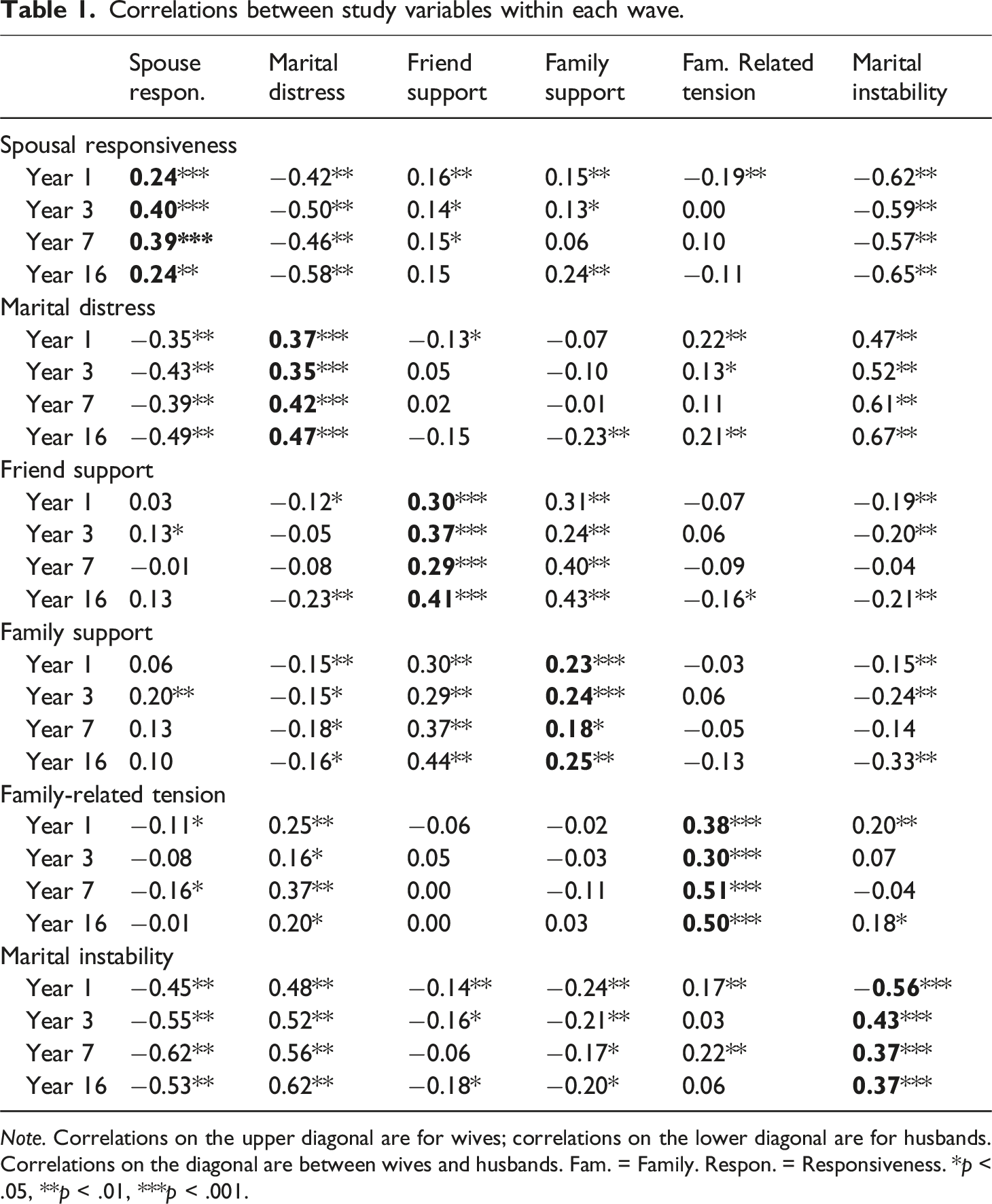
Note. Correlations on the upper diagonal are for wives; correlations on the lower diagonal are for husbands. Correlations on the diagonal are between wives and husbands. Fam. = Family. Respon. = Responsiveness. *p < .05, **p < .01, ***p < .001.
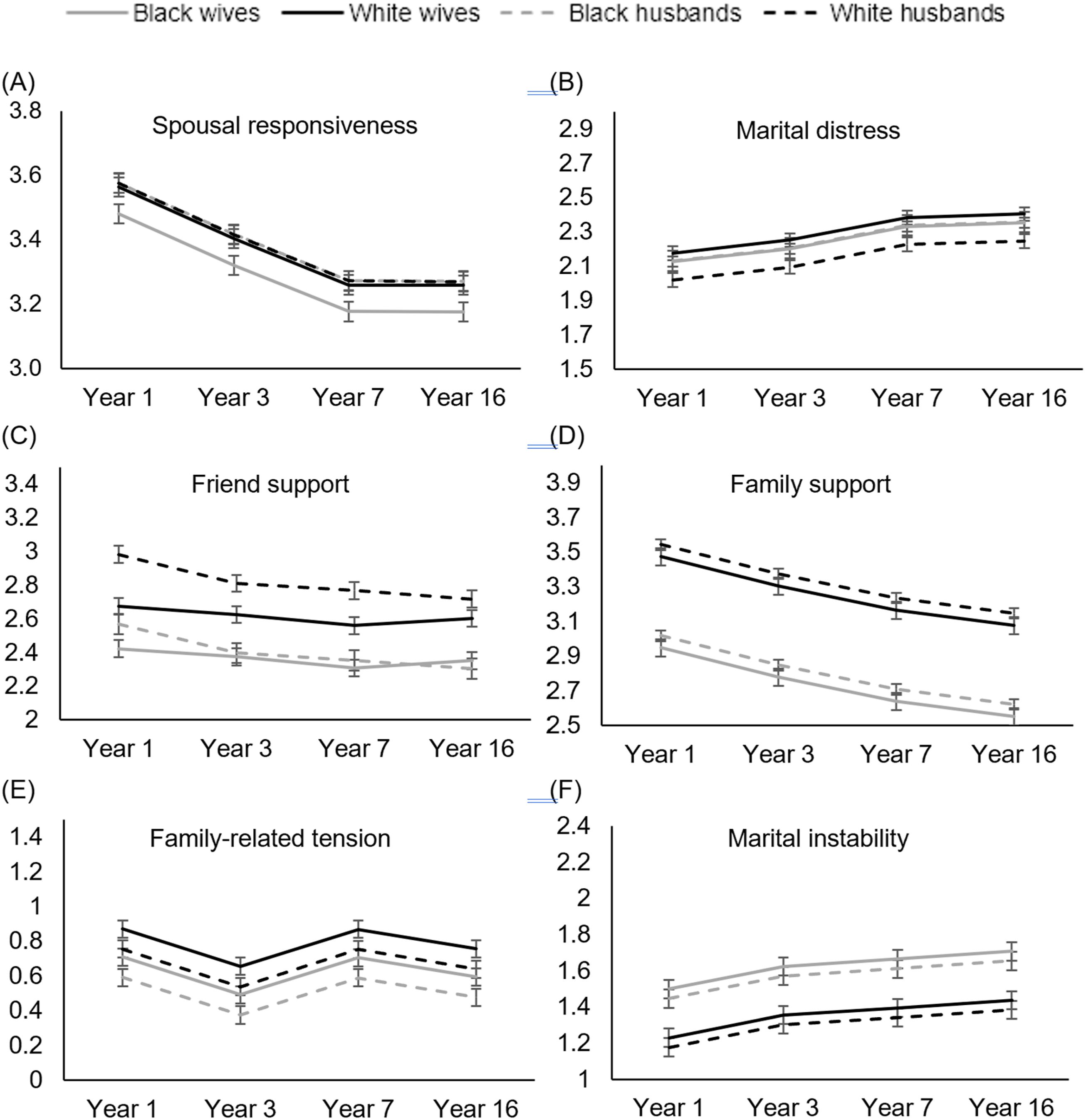
Spouses’ (a) spousal responsiveness, (b) marital distress, (c) friend support, (d) family support, (e) family-related tension, and (f) marital instability trajectories across years by race and gender. Family-related tension data are standardized. Error bars are ± 1 standard error.
Estimated marginal means and standard errors of variables across years.
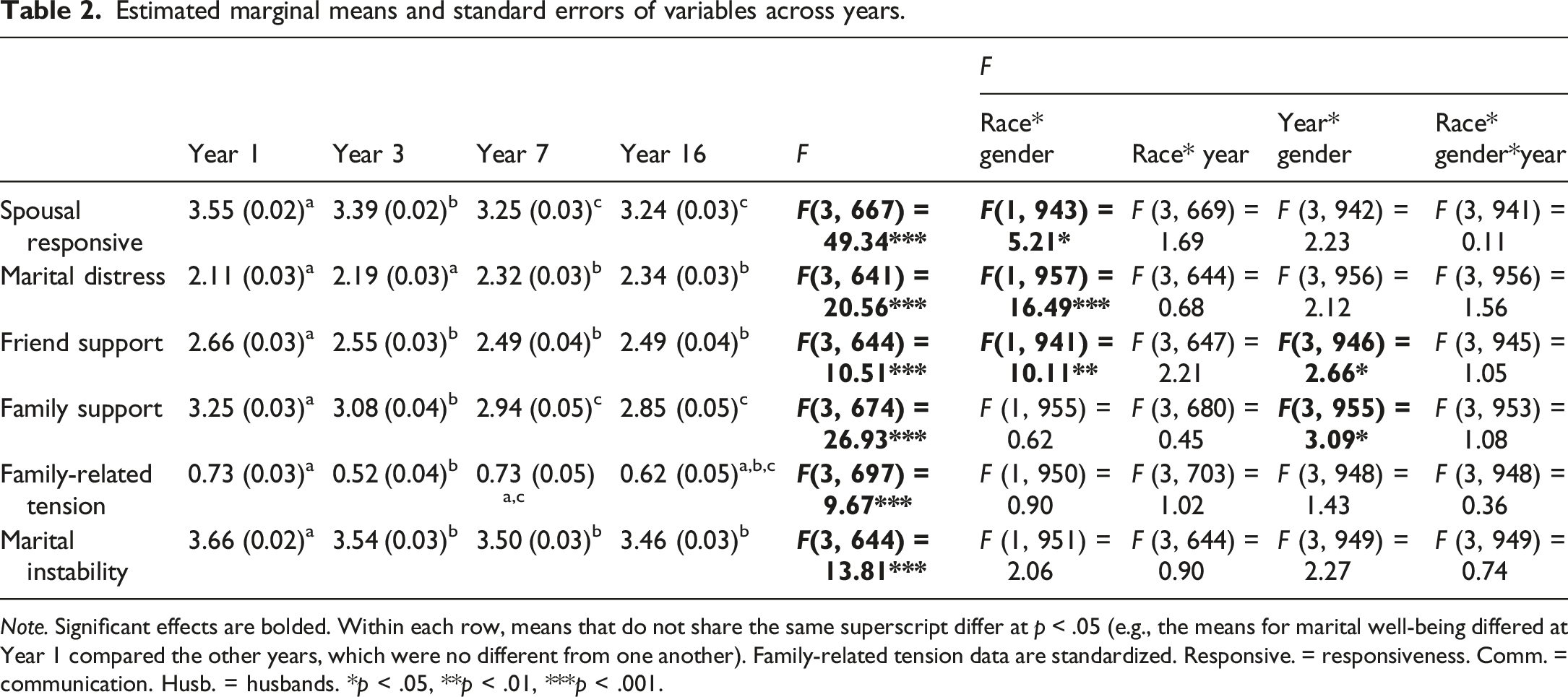
Note. Significant effects are bolded. Within each row, means that do not share the same superscript differ at p < .05 (e.g., the means for marital well-being differed at Year 1 compared the other years, which were no different from one another). Family-related tension data are standardized. Responsive. = responsiveness. Comm. = communication. Husb. = husbands. *p < .05, **p < .01, ***p < .001.
Husbands’ friend support was highest in Year 1 (ps < .001). Wives’ friend support did not change over time (ps > .14). White husbands reported the highest friend support (bs = 0.21 to 0.42, SEs = 0.03 to 0.04, ps < .001). Black wives reported lower friend support than White wives (b = −0.25, SE = 0.05, p < .001). Husbands’ family support declined over time and was lowest in Year 16 (bs = −0.21 to −0.51, SEs = 0.07 to 0.08, ps < .05). Wives’ family support was highest in Year 1 (bs = 0.22 to 0.33, SEs = 0.06 to 0.07, ps < .01). White spouses reported higher family support than Black spouses (b = 0.53, SE = 0.05, p < .001). Couples’ family-related tension was lower in Year 3 than Years 1 and 7 (bs = −0.22, SEs = 0.04 to 0.05, ps < .001). Wives reported higher family-related tension than husbands (b = 0.12, SE = 0.03, p < .001). White spouses also reported higher family-related tension than Black spouses (b = 0.16, SE = 0.05, p < .001).
Marital instability was lowest in Year 1 (bs = −0.13 to −0.20, SEs = 0.03–0.04 ps < .001). Husbands reported lower marital instability than wives (b = −0.05, SE = 0.02, p < .001). White spouses reported lower average marital instability than Black spouses (b = −0.27, SE = 0.04, p < .001).
Main effects of spousal, family, and friend variables on marital instability
Coefficients (b (SE) or F) for models predicting marital instability.
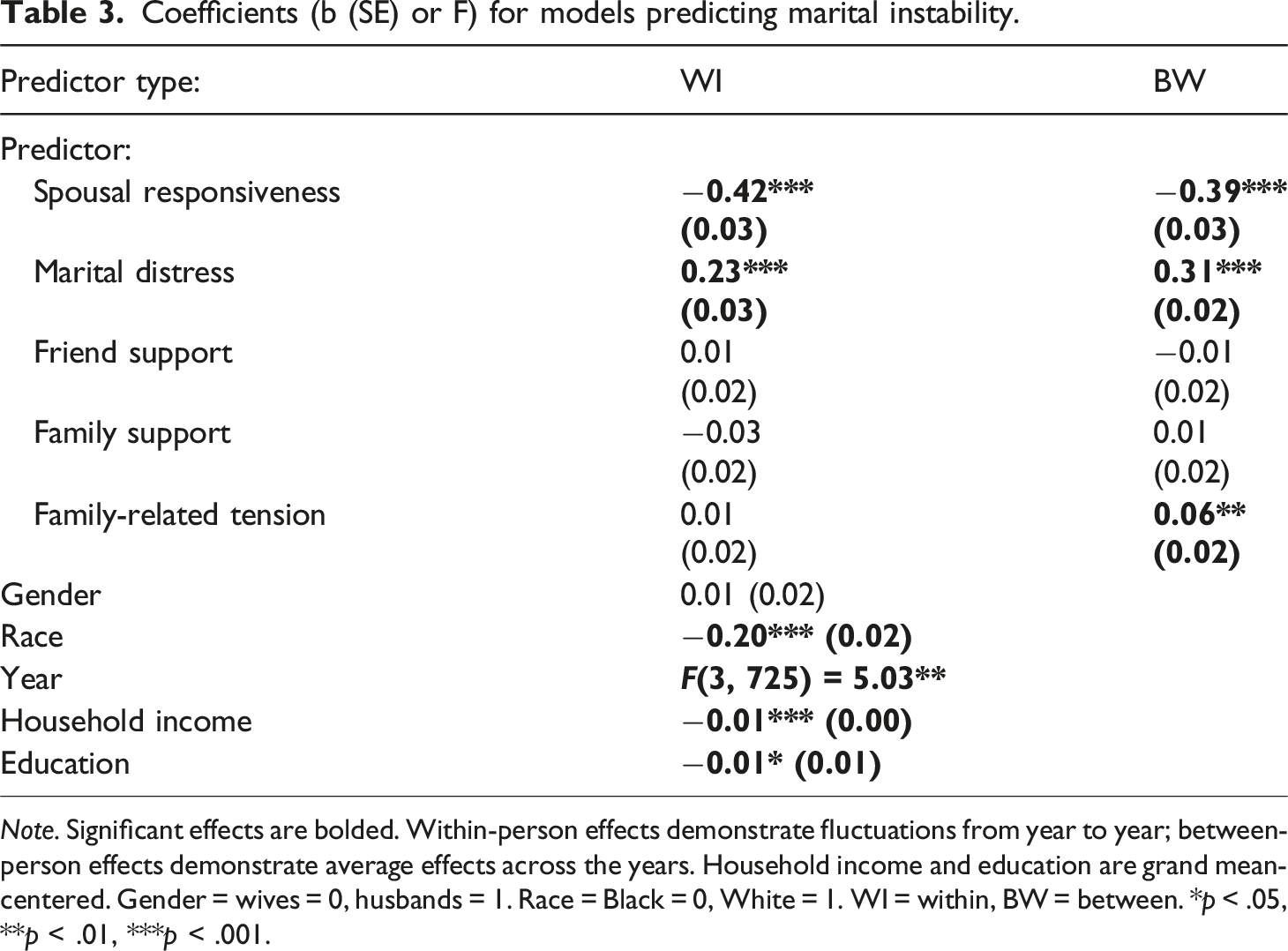
Note. Significant effects are bolded. Within-person effects demonstrate fluctuations from year to year; between-person effects demonstrate average effects across the years. Household income and education are grand mean-centered. Gender = wives = 0, husbands = 1. Race = Black = 0, White = 1. WI = within, BW = between. *p < .05, **p < .01, ***p < .001.
Moderation by gender, race, and year
Coefficients for significant moderating effects predicting marital instability.
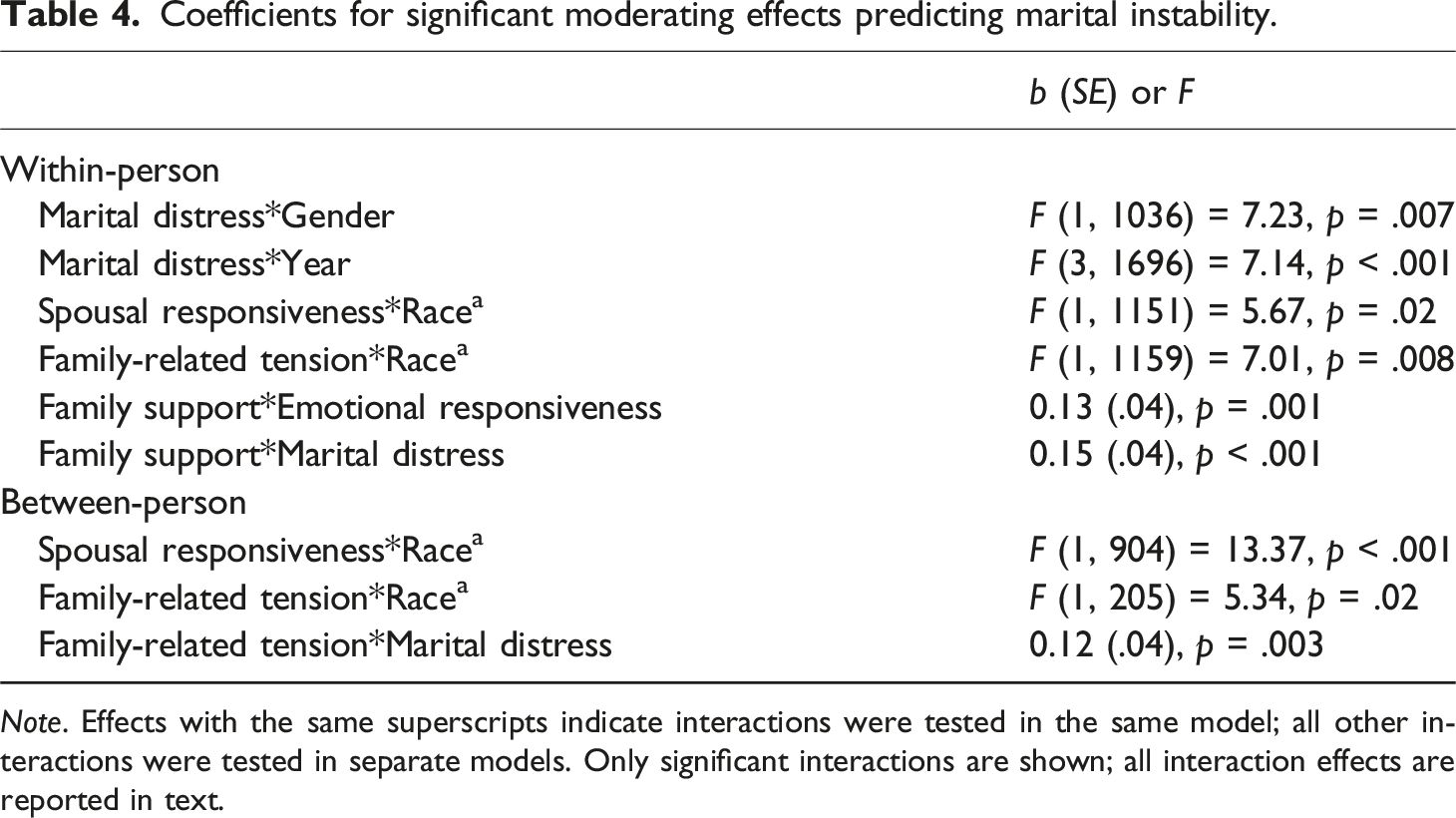
Note. Effects with the same superscripts indicate interactions were tested in the same model; all other interactions were tested in separate models. Only significant interactions are shown; all interaction effects are reported in text.
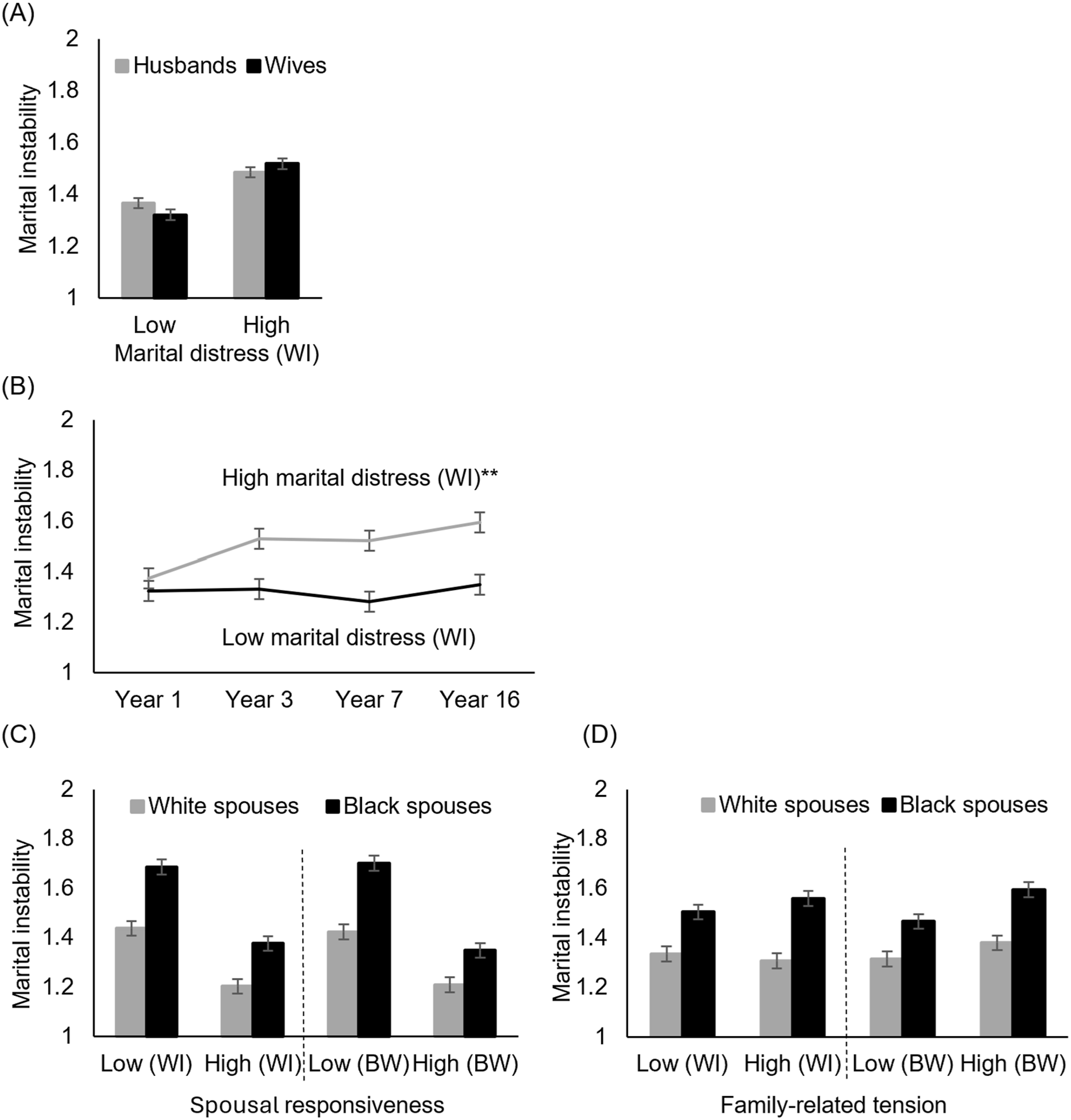
Visual depictions of two-way interactions between marital and social network ties and gender (2a), year (2b), and race (2c, 2d) and predicting marital instability. Error bars are ± 1 standard error. *p < .05; **p < .01; ***p < .001.
Figure 2(b) shows marital instability was similar in Year 1 regardless of spouses’ marital distress levels (p = .10), but in the subsequent years, spouses with more marital distress had higher marital instability than those with less marital distress (bs = 0.28 to 0.35, SEs = .05, ps < .001). Marital instability was lower at Year 1 than the subsequent years for those with more marital distress (bs = 0.15 to 0.22, SEs = .04, ps < .001). In contrast, for those with lower marital distress, marital instability did not change, remaining low across the 16 years (ps>.66).
The effects of spousal responsiveness differed by race at the WI- (p = .02) and BW- (p < .001) person levels (Figure 2(c)). Black spouses’ (WI: b = −0.47, SE = .04, p < .001; BW: b = −0.47, SE = .04, p < .001) and White spouses’ (WI: b = −0.35, SE = .04, p < .001; BW: b = −0.28, SE = .04, p < .001) marital instability was lower on average and in the years with more spousal responsiveness. At the WI and BW levels, Black spouses also reported higher marital instability than White spouses at both lower and higher levels of spousal responsiveness (bs = −0.14 to −0.28, SEs = .03, ps < .001).
Figure 2(d) shows the effects of family-related tension on marital instability differed by race at the WI (p = .008) and BW (p = .02) person levels. For Black spouses, but not White spouses (ps > .16), marital instability (WI: b = 0.06, SE = .02, p = .02; BW: b = 0.11, SE = .03, p < .001) was higher on average and in the years with more family-related tension. Black spouses also reported higher marital instability than White spouses at both lower and higher levels of family-related tension (WI and BW bs = 0.15 to 0.27, SEs = .03, ps < .001). There were no other significant interactions with gender, race, or year (ps>.08).
Moderation effects of family and friend variables
We tested how friend and family ties moderated the marital relationship’s effects on instability. Family support moderated the effects of spousal responsiveness (p = .001) and marital distress (p < .001) on marital instability at the WI-person level. Figure 3(a) shows in the years with both lower (b = −0.48, SE = .03, p < .001) and higher (b = −0.34, SE = .04, p < .001) than typical family support, spouses’ marital instability was lower if they reported more spousal responsiveness. In the years with more spousal responsiveness, there were no differences in marital instability based on their family support (p = .48). However, spouses’ marital instability was highest in years they reported both lower spousal responsiveness and lower family support (b = −0.07, SE = .01, p < .001). Visual depictions of the two-way interactions between spousal and social network ties predicting marital instability: (3a) WI spousal responsiveness and WI family support; (3b) WI marital distress and WI family support; and (3c) BW marital distress and BW family-related tension. Error bars are ± 1 standard error. *p < .05; **p < .01; ***p < .001.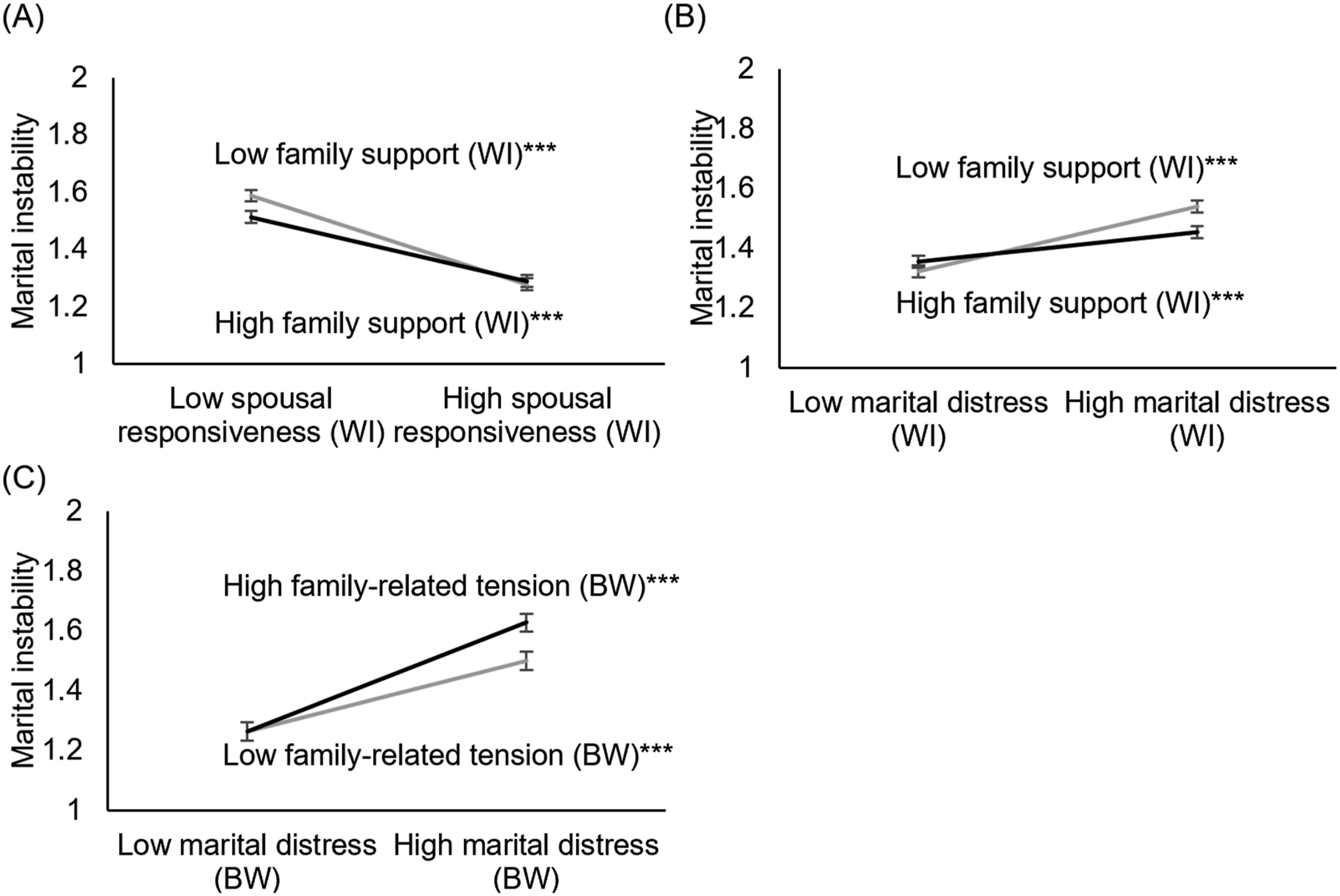
Figure 3(b) shows in the years with lower (b = 0.32, SE = .03, p < .001) or higher (b = 0.15, SE = .04, p < .001) family support, spouses’ marriages were more unstable if they reported more marital distress than usual. In the years with less marital distress, there were no differences in marital instability based on their family support (p = .19). However, spouses’ marital instability was highest in the years they reported higher marital distress and lower family support (b = −0.08, SE = .02, p < .001).
Couples’ family-related tension moderated the effects of marital distress on marital instability at the BW-person level (p = .003; Figure 3(c)). Spouses with higher marital distress had more unstable marriages than those with less marital distress, regardless of family-related tension (low tension: b = 0.25, SE = .03, p < .001; high tension: b = 0.39, SE = .04, p < .001). In the years with less marital distress, there were no differences in marital instability based on their family-related tension (p = .99). Among spouses with higher marital distress, those with more family-related tension had greater marital instability than those with less family-related tension (b = 0.11, SE = .03, p < .001), demonstrating that spouses’ marital instability was highest if they reported both higher marital distress and higher family-related tension.
Friend support did not moderate the effects of marital distress or spousal responsiveness on instability (ps>.30). There were no significant three-way interactions between the marital and social network variables and race, gender, or year (ps>.06).
Discussion
This longitudinal study of Black and White American mixed-gender intra-racial couples examined how spousal, family, and friend relationship dynamics predict marital instability during the first 16 years of marriage. Applying components of marital stress and stability frameworks (Karney & Bradbury, 2020; Shrout, 2021), we extended previous research by assessing how positive and negative marital processes contribute to marital instability, while considering broader social networks and the sociocultural contexts of race and gender. Marital distress and instability increased over time, while spousal responsiveness, friend support, and family support decreased across the 16 years. Marital instability risks were lowest in the years with higher-than-usual responsiveness or lower-than-usual distress, regardless of family perceptions. In the years with less responsiveness or more marital distress, having more family support and less family-related tension helped protect marriages; in contrast, negative marital effects were intensified if spouses also experienced less family support or more tension than usual. Women’s and Black spouses’ marital and family relationship ties were also strongly linked to marital instability, for better or worse. These findings reveal key marital and family processes that compound to both enhance and temper marital instability risks in marriage’s early-to-middle years.
Spousal, family, and friend effects on marital instability
Wives’ and husbands’ marital instability was higher on average and in the years with less spousal responsiveness and more marital distress than they typically experienced across the 16 years. In the first year of marriage, marital instability was similar regardless of marital distress levels; however, marital instability increased over time for those with more marital distress but not those with less marital distress. Marital distress fuels an unhappy marital environment (Kiecolt-Glaser, 2018; Kiecolt-Glaser et al., 2020), while spousal responsiveness is fundamental for feeling cared for and supported (Laurenceau et al., 1998; Reis et al., 2017). These findings reveal their concurrent marital effects and provide important evidence that both matter for marital stability in the early-to-middle years of marriage. We expected that marital distress would be more strongly related to marital instability for wives than husbands; however, findings revealed no gender differences in the more distressing years. It is possible that experiencing more than typical marital distress takes a strong toll on perceptions of marital stability regardless of gender. However, in less distressing years, wives had lower marital instability than husbands. Given that women are socialized to monitor their relationships (Raval & Walker, 2019; Wanic & Kulik, 2011), perceiving less marital distress than usual may have contributed to greater reductions in concerns about their marriage.
Regardless of average or higher than usual spousal responsiveness and family-related tension, Black spouses also reported higher marital instability than White spouses. However, the benefits of spousal responsiveness were particularly strong for Black spouses. This finding aligns with past work (Jenkins et al., 2025; Orbuch et al., 2002) and illustrates that Black spouses reap more benefits in the years that their partnerships are strong, further highlighting that Black spouses’ positive processes are a key relationship resource. Family-related tension’s marital detriments were shown for Black spouses but not White spouses. Since external oppressive conditions like discrimination and racism may increase Black spouses’ reliance on families (Rice, 2023), the years with more than usual family-related tension could add to an already fraught environment, taking a toll on their marital stability. In contrast, since White spouses are less likely to have family-focused networks (Fiori et al., 2017), family-related tension may not be as strongly linked to their marital instability.
Friend and family moderating effects on marital instability
Lower than usual family support exacerbated the adverse effects of both higher marital distress and lower spousal responsiveness on marital instability. Specifically, the combinations of lower than usual family support and spousal responsiveness, or lower family support and higher marital distress, were associated with higher than typical marital instability. Conversely, regardless of family support, wives’ and husbands’ marital instability was lowest in the years with more responsiveness or less marital distress than usual. Thus, having a strong marital relationship helped spouses maintain marital stability, even in the years with less family support. Results were similar for family-related tension’s average (between-person) moderating effects: wives and husbands with both greater family-related tension and marital distress had the highest marital instability on average across the 16 years. Thus, negative marital and family dynamics combined to take a toll on marriage. In contrast, regardless of their family-related tension, spouses’ marriages were more stable if they were less maritally distressed.
These results show that lacking positive marital and family ties or experiencing negative ties each carry marital risks, particularly when spouses are not accustomed to such deficits. Family support offered some protection in the current study, but it did not fully compensate for low responsiveness or high marital distress. These findings align with a conceptual model on social connection suggesting that a supportive network helps couples maintain their relationships during difficult times (Haggerty et al., 2022), but the effects may still be limited in distressed couples (Keneski et al., 2018). Conversely, our results showed higher spousal responsiveness and lower marital distress offset the marital instability risks of lower family support and higher family-related tension. Lacking supportive network ties may be more harmful to partners who are less supportive of each other compared to their more supported peers (Haggerty et al., 2022). The current study, therefore, suggests that positive marital dynamics or the lack of negative ties may buoy marriage from a less supportive or more strained family network.
Although there were small but significant correlations between greater friend support and lower marital instability across the 16 years, friend support did not predict marital instability or moderate the effects of spousal responsiveness and distress on stability. It is possible that family and marital relationships may have stronger effects in the early-to-middle years of marriage. Spouses may spend more time with each other and their families in these years, particularly if they are caring for children or aging parents (Bühler et al., 2021; Haggerty et al., 2023). Friendship measures assessing closeness, responsiveness, or tension may also reveal stronger effects on marital outcomes, and that negative ties may have greater relational impact (George et al., 2023). Last, friend support’s salutary effects may not outweigh the benefits of responsiveness or determinants of marital distress.
Changes in spousal, family, and friend processes over time
Results also showed that spousal, family, and friend ties changed over time and by race and gender. Spousal responsiveness decreased while marital distress increased in the early years of marriage and leveled off from Years 7–16. Husbands reported greater spousal responsiveness and lower marital distress and instability than wives, with White husbands reporting the lowest marital distress. In contrast, Black wives reported the lowest spousal responsiveness across the 16 years. Given that women report higher relational stress than men (Falconier et al., 2015; Rice & Ogolsky, 2024), these findings demonstrate longer-term gender differences in marital distress. Wives’ marital distress and spousal responsiveness may suffer because they are expected to provide care to partners and their families, conduct most housework, and resolve marital issues, consistent with gendered inequality hypotheses (Raval & Walker, 2019; Wanic & Kulik, 2011). Likewise, Black spouses’ greater marital instability echo research showing external stressors consume energy for Black spouses that could otherwise be directed at the relationship (Rice, 2023; Rice et al., 2023). In particular, Black wives’ lower perceived spousal responsiveness reflect research showing Black women face inequitable caregiving burdens across their romantic relationships, families, and communities that can interfere with their marriages (Nelson et al., 2016; Rice et al., 2023).
For broader network variables, friend and family support both decreased over time while family-related tension fluctuated over the 16 years. Given that spouses often experience lower satisfaction in the middle years of marriage (Bühler et al., 2021), and consistent with the current study’s findings showing poorer marital perceptions in Years 7 and 16, friend and family perceptions may also be worse in these years. The middle years of marriage are often a challenging time for couples as they advance their careers while possibly providing care for their children and aging parents (Infurna et al., 2020). This pivotal yet demanding time may also present challenges for friend and family relationships.
In addition, compared to Black spouses, White spouses reported more family and friend support, as well as more family-related tension. These findings suggest that racial inequities in marital quality and instability (Raley et al., 2015) may extend to Black spouses’ social networks. As Black spouses experience stressors that accompany racism, they may expend less energy on friend and family relationships, which could also contribute to less supportive ties. Black Americans also disproportionately experience earlier and more frequent deaths of network members, contributing to smaller networks (Umberson, 2017). Thus, Black spouses may perceive family and friend support instrumentally, rather based on social network size.
Strengths, limitations, and future directions
The representative sample of Black and White American couples allowed us to examine the role of gender and race in how spousal, family, and friend relationships contributed to marital instability. We demonstrated that marital and family ties had strong effects on wives’ and Black spouses’ marital instability. In addition, addressing positive and negative qualities across romantic relationships and broader networks revealed that supportive family ties may help reduce marital instability in the more maritally distressing and less responsive years, while lacking such support or experiencing tension exacerbates negative marital effects. These findings contribute to the growing literature on benefits of social connection—including the number of supportive friend and family ties—in people’s lives (Haggerty et al., 2022). We also capitalized on the 16 years of longitudinal data to assess within- and between-person effects, revealing spousal responsiveness, marital distress, and family-related tension as important contributors to marital instability. This longitudinal design and the analytical strategy enabled us to identify that spousal and family processes directly and synergistically contribute to marital perceptions.
One limitation is that all couples in the study were in mixed-gender, intra-racial relationships, and sexual orientation and disability status were not assessed. It is important for research and especially longitudinal panel studies to assess disability status and include and focus on same-gender couples and more sexually and gender diverse partners to capture effects across genders and sexualities. In addition, rates of interracial partnering are steadily increasing (Livingstone & Brown, 2017), and research suggests that social network approval plays a distinct role for interracial partnerships (Brooks & Ogolsky, 2017). It is important to note that race and gender are proxies for racism and sexism. That is, the systems of oppression and socialization that accompany race and gender, rather than race or gender itself, affect couples’ behaviors and outcomes.
Further, the measures assessing marital processes in this study were more specific than those capturing family and friend processes. We did not assess a negative dimension of friend relationships, such as strain or conflict, which may play an important role in couples’ long-term relationships. Likewise, the number of social network ties is one major dimension of social connection (Haggerty et al., 2022), but future research instead address how closeness or responsiveness with family and friends contribute to marital outcomes. Strained in-law relationships, in particular, have potent effects on dissatisfaction and divorce (Orbuch et al., 2013). Interestingly, whether or not spouses agreed about how close they were to each other’s in-laws predicted divorce over time (Fiori et al., 2021). Of note, divorce risks were highest among couples where husbands believed they were close to their in-laws but their wives disagreed. These discrepancies may reflect couples not being on the same page—an important aspect of couple relationships—ultimately contributing to conflict and dissolution. Accordingly, future research may consider addressing the unique role of in-law relationships on buffering or exacerbating troublesome years, as well as spouses’ concordance in their network support perceptions. Though perceptions of spousal dynamics and social network support are important for marital outcomes (Shrout et al., 2024), self-report measures may be biased and subject to social desirability. Thus, future research could incorporate more objective measures, such as behaviorally coded responsiveness, distress, and support during interactions with partners, family members, and friends.
Conclusion
Our findings identified specific marital and family processes that enhance or temper marital instability risks in the early-to-middle years of marriage. Spousal responsiveness, marital distress, and family-related tension predicted average levels or changes in marital instability, particularly for wives and Black spouses. High family support and low family-related tension also helped protect marriages in the more troublesome years, while low family support and high family-related tension intensified negative marital effects. Nevertheless, marital instability risks were lowest in years with less distress or more spousal responsiveness, regardless of family support or tension. More positive and less negative marital dynamics may protect spouses from less supportive or more strained families. In contrast, lacking supportive family ties may be especially harmful to spouses in less responsive or more distressing marriages. This work contributes to the literature by illustrating the power of responsive spousal and supportive family relationships, which can buffer marriage’s inevitable ups and downs during the early and middle years.
Footnotes
Declaration of conflicting interests
The authors declared no potential conflicts of interest with respect to the research, authorship, and/or publication of this article.
Funding
The authors disclosed receipt of the following financial support for the research, authorship, and/or publication of this article: Work on this project was supported by NIH grants K12TR004415 and HD40778.
Open science statement
As part of IARR’s encouragement of open research practices, the authors have provided the following information: This research was not pre-registered. The data and analytic code used in the research are available upon request from the first author at
