




Abstract
Caregiving is an essential component of family life. However, while much research has explored how parents provide care, limited attention has been given to understanding their experiences in receiving care. Thus, this study investigated how 26 U.S. parents in different-sex relationships (14 mothers, 12 fathers; 61.54% non-Hispanic White, primarily middle class) report experiencing both caregiving and care-receiving, with a focus on potential gendered differences. Three primary themes resulted from reflexive thematic analysis of participant semi-structured interviews: (1) “shared experiences of receiving care: caring for me is helping me care less”, capturing how parents receive care through actions that helped reduce their caregiving burdens; (2) “gendered patterns in receiving care: the romantic husband and the industrious wife”, revealing mothers’ reception of care through romantic gestures and fathers' emphasis on their wives direct care labor; and (3) “gendered patterns in providing care: mother as ‘the nurturer’; father as ‘the helper’” reflecting gendered expectations, with mothers following expectations for motherhood and fathers adopting more assistive caregiving roles. Ultimately, the findings highlight the importance of the role of reducing caregiving responsibilities, as well as the gendered nature of conceptualizations of what needs are required to be addressed, as vital yet often overlooked aspects of receiving care within the family.
Care is an essential component of family life, with a profound influence on the well-being of both caregivers and care recipients. Care-receiving involves a process in which individuals accept and respond to the care labor provided to them, whether that be physical, emotional, or practical support (Bergmann & Wagner, 2021). However, existing research on care-receiving primarily focuses on populations who are primarily only recipients of care, such as children and those in need of health care (Bergmann & Wagner, 2021; Scott, 2000; Tanaka & Matsuzoe, 2012; Zhang et al., 2025). Thus, an important population to consider is caregivers themselves, such as parents, whose experiences of care-receiving in the context of caregiving are often overlooked.
Practices of caregiving often coincide within contexts, such as the family, where caregivers themselves can expect and be recipients of care labor (Glenn, 2010; Zhang et al., 2025). Despite this, when the research turns to caregivers, it often focuses on the giving of care. For instance, caregiving is often found to be a gendered process, where mothers in different-sex relationships tend to take on the majority of their family’s caregiving responsibilities, including cognitive, emotional, and physical labor (Aviv et al., 2025; Ciciolla & Luthar, 2019; Daminger, 2019). At the same time, caring masculinity scholars have highlighted how the evolving role of fathers, particularly their involvement in caregiving activities, reflects a broader societal shift toward more inclusive understandings of masculinity in the family sphere (Bakermans-Kranenburg et al., 2019; Elliott, 2016; Hunter et al., 2017). In the context of shifts in how care is given, as well as the dearth of research on how caregivers experience care, there is a need to understand how both caregiving and care-receiving are experienced, accounting for potential (shifting) gendered dynamics.
The present study sought to take an experiential qualitative approach to exploring fathers’ and mothers’ experiences of both giving and receiving care. Here, we define care as involving the actions or activities that are intended to meet the needs of another person (José, 2016), and thus we conceptualize and investigate care as a form of labor (e.g., Bergmann & Wagner, 2021; Boyle et al., 2023; Folbre, 2006). Through the use of in-depth semi-structured interviews, we sought to understand how fathers and mothers reflect on and experience not only caring but being cared for within the family context. Thus, we aimed to expand our exploration of care by accounting for how mothers and fathers reflect not only on their caregiving, but also how, as parents who are expected to provide for others, they experience the meeting of their caring needs, such as vulnerability and emotional support within the family. By examining this dynamic between caregiving and care-receiving, future research can better understand how parents navigate their own needs for emotional and practical support, and how these experiences shape overall family care.
Caregiving: Caring mothers & fathers
Caregiving involves emotional, cognitive, and physical labor (Aviv et al., 2025; Ciciolla & Luthar, 2019; Daminger, 2019) and requires sustained attention, responsiveness, and engagement in meeting the needs of others (Midgette & Ferreira, 2024). Caregiving, particularly within the family context, involves a range of activities, from providing direct care (such as emotional and physical support) to maintaining the family’s physical environment and fostering social relationships (Glenn, 2010; Tronto, 2013). The importance of caregiving lies not only in its emotional rewards but also in its potential to foster a sense of connectedness, support, and fulfillment within families (Croft et al., 2015; Midgette & Ferreira, 2024).
In many cultural contexts, including in the U.S., mothers tend to take on the majority of the family’s caregiving responsibilities, such as cooking, cleaning, and feeding their children (Blair-Loy et al., 2015; Daminger, 2019; Perry‐Jenkins & Gerstel, 2020). Mothers tend to provide routine and physical care, such as feeding, bathing, and managing children’s schedules, while also shouldering the “mental load” of anticipating and organizing family needs (Craig, 2006; McConnon et al., 2022; Offer, 2014). Even in dual-earner families, women perform more housework and emotional labor, reinforcing the perception that caregiving is a core part of womanhood (Bianchi et al., 2012; Hochschild & Machung, 2012). Indeed, prior research finds that while fathers do engage in care for their children, their time is more often spent in play and leisure activities, whereas mothers tend to provide more routine and physical care, such as feeding, bathing, and managing daily schedules (Craig, 2006; García Román & Gracia, 2022).
On the other hand, recent research employing a caring masculinities frame (Elliott, 2016) has highlighted that fathers can adopt more central caregiving roles (Bakermans-Kranenburg et al., 2019; Hunter et al., 2017). For instance, Hunter and colleagues (2017) examined the conflict between hegemonic masculinity and a more progressive, caring masculinity among primary caregiving fathers around the world. Their study highlights the challenges men face in reconciling these roles, as they navigate societal expectations that place them in the role of breadwinners, while also embracing caregiving responsibilities such as managing daily routines, providing emotional support, and being actively involved in their children’s education and well-being. Thus, while prior research finds that mothers are more likely to take on caregiving roles, caring for both children and their spouses (Perry‐Jenkins & Gerstel, 2020), recent research suggests that fathers can also engage in direct caregiving activities (Adler, 2023; Jordan, 2020; Villa-Palomino, 2024). However, much of prior research has focused on the one-on-one direct care activities conducted by father-to-child (Adler, 2023; Bakermans-Kranenburg et al., 2019; Jordan, 2020) or mother-to-child (Aviv et al., 2025; Ciciolla & Luthar, 2019; Daminger, 2019), and thus less is known about how, in the context of co-parenting, fathers and mothers approach caring for and feeling cared for by each other.
Caring spouses
There is a notable gap in research when it comes to understanding how individuals who are typically positioned as caregivers, such as parents, experience receiving care themselves. However, quantitative and qualitative research focused on marital relationships finds that higher marital quality is often associated with more reciprocal caregiving, emotional support, and a greater willingness to take on caregiving responsibilities during times of need, such as illness or aging (Bradbury et al., 2000; Cash et al., 2018; Lavner et al., 2016; Scott, 2000). Additionally, research has shown that factors such as communication quality, emotional intimacy, shared values, and parenting stress are key contributors to marital satisfaction (Bradbury et al., 2000; Dong et al., 2022). Moreover, although not specifically focused on parental experiences of caring for each other, the love languages framework (Chapman, 2024) suggests that couples may differ in their approach to receiving and giving love: partners may differ in how they approach showing love through affirmation (verbal expressions of love and appreciation), acts of service (doing helpful or thoughtful tasks for a partner), receiving gifts (giving meaningful or symbolic items), quality time (spending focused, undivided time together), and physical touch (using touch, such as hugs or hand-holding, to convey affection). Indeed, prior work identifies gender differences in preferred love languages and intensity of expressions of love (Cabrera, 2024; Mostova et al., 2022), suggesting that there may be potential individual and gendered differences in how care is experienced and given due to differences in emotional needs and communication styles.
The present study
While existing literature has extensively examined parental caregiving, particularly in relation to children (Bergmann & Wagner, 2021; Russell et al., 2020), there remains a significant gap in understanding how parents themselves experience care-receiving within the family context. Much of the current research has focused on the ways parents provide emotional and developmental care to their children, emphasizing parental roles in fostering secure attachments and supporting child development (Baumbach et al., 2023; Tronto, 2019; Walker & Abela, 2013). However, far less attention has been given to how parents, in turn, receive care from their children or partners, and how they perceive and navigate this experience. Thus, this study aims to contribute to the literature by broadening the conceptualization of care beyond its traditional association with parental duties, ultimately providing insight into the reciprocal nature of caregiving relationships and the ways in which parents experience being cared for within the family unit. Specifically, we investigate the following two research questions: (1) How do mothers and fathers report experiencing caregiving and receiving care within the family, and (2) How are these experiences gendered?
Methods
Participant characteristics & recruitment
A total of 26 parents (14 mothers, 12 fathers) living in the United States participated in this study. A little over half (61.54%) of participants self-identified as non-Hispanic White, while the remainder of participants identified themselves as Hispanic/Spanish (15.38%), Asian (15.38%), Caribbean Black (3.85%), or Turkish Caucasian (3.85%). The majority were living in the southwest United States. A majority of participants (80.8%) reported working at least part-time, with all men indicating that they work at least 40 hours per week and listing occupations such as professor, database administrator, and software developer (Supplemental Table 1). A majority of women (64.3%) also reported working at least 40 hours per week, listing occupations such as accountant, business director, and IT manager. The remaining five women (19.2%) reported working 8 hours or less per week, with three of these women indicating their occupation as a stay-at-home mom or homemaker (including one woman who reported working 2–6 hours per week; Supplemental Table 1). A little over a third (34.6%) of participants reported at least some college education, 3.8% reported obtaining a bachelor’s degree, 23.1% reported obtaining a master’s degree, and 30.8% had completed a doctorate. Two participants (7.7%) reported obtaining a master’s degree or higher, but did not specify what degree they had obtained. Thus, the majority of participants had high levels of education and could be classified as upper-middle class (Liu et al., 2022).
Recruitment utilized purposeful sampling, focused on understanding the potentially gendered experiences of caregiving and receiving of mothers and fathers, and thus recruitment was limited to different-sex couples. Inclusion criteria included being a parent between the ages of 30–50 (M = 39, SD = 4.62), living with their co-parent of a different gender, with at least one child under their care in the household (M = 2.5, SD = 1.10), and having lived in the U.S. for at least the past ten years (M = 34.65, SD = 9.81; See Supplemental Table 1 for more detailed demographics). Recruitment occurred in February 2022 through September 2024, as part of a larger project investigating across development how children and adults experience, conceptualize, and learn about care (Midgette et al., 2025). Participants were recruited through word of mouth as well as through childcare programs and university listservs. Participants were compensated $30 for their time. This study followed the standards set by the Texas A&M Institutional Review Board (protocol number: IRB2021-1487D), where each participant provided their consent to participate.
Procedure & interview protocol
Given the focus on participant experience and meaning making and in order to accommodate parental schedules, each participant completed an online semi-structured interview as well as a demographic background questionnaire on Qualtrics (Supplemental Table 1). The interview protocol included questions on conceptualizations of care, learning about care, and, of particular focus for the current study, questions on direct experiences of addressing family needs, and reports of receiving and giving care to and by each member of their household. For example, participants were asked, “How do you show care within the family?” and “What are things that people do (within the family) to care for you?” Interviews were audio recorded and took on average an hour to complete. Interviews with mothers were conducted by various research assistants, all of whom were women, whereas all but one of the father interviews were completed by the first author, who identifies as a Chinese-Mexican American heterosexual cisgender woman who was working as an undergraduate research assistant at the time. While gender-matching interviewers to interviewees can facilitate rapport and help participants feel more comfortable, it also has the potential to limit the discussion due to assumptions of shared viewpoints between the interviewer and interviewee (Thwaites, 2017). As such, it is possible that, despite not being matched by gender, interviews with fathers may have produced more detailed discussions as the fathers were unlikely to assume that the interviewer shared their viewpoint on fatherhood.
Analytical approach
All interviews were recorded and transcribed verbatim. Given the focus on patterned responses of experiences giving and receiving care across interviews, to analyze the data, the first author employed reflexive thematic analysis under an experiential qualitative framework, following Braun and Clarke’s (2022) six-phase approach. This approach also emphasized reflexivity, where the author actively acknowledged and reflected on personal biases while inductively analyzing the data under a realist, essentialist theoretical framework. Coding was done inductively using a semantic approach to code development. The first author reflected on her positionality at the beginning of the coding process, including how her upbringing in a Christian nuclear household with a mother who performed the “second shift” (Hochschild & Machung, 2012), her cultural values around family and caregiving, and her assumptions about parental roles might influence both the follow-up questions asked during the interviews, and the interpretation of codes and themes. Follow-up questions were used throughout the interviews to encourage parents to elaborate on their care experiences, and the first author’s positionality may have influenced which aspects of caregiving and family relationships she focused on during these interviews. Reflexive writing at the beginning of the coding process helped her become aware of these potential influences. Codes and themes were developed using a reflexive analytic approach, where interpretations were continuously revisited and grounded in participants’ own words. Following the development of codes, the first author revised and reviewed codes through the presentation of code names and definitions to receive feedback from the third author, who served as her advisor on this project, and has several years of experience conducting thematic analysis and studying care within the family. Discussions with the senior author further supported critical reflection by reviewing interpretations, considering alternative explanations, and refining themes. Following this process, in the narrative writing phase, the senior author re-reviewed themes for more critical considerations, so that gendered processes were further highlighted and unpacked. Transcripts were coded through the use of Dedoose software, and continuously refined through code application and reflection. Themes were then developed based on the 40 most frequently occurring codes related to care-receiving and care-giving, focusing on patterns in the experiences of mothers and fathers. Code co-occurrence analysis was also used to examine relationships between codes and further explore gendered differences in caregiving and care-receiving. Below we present the results of the analysis, with quotes serving an exemplary function, and edited for readability.
Results
Theme 1: Shared experiences of receiving care: Caring for me is helping me care less
A major theme found in the participants’ responses when it comes to their experiences with receiving care was that both parents reported feeling cared for when they were allowed to engage in care labor less (see Table 1). This theme reflects how parents reported feeling cared for when their partners and children took on responsibilities that helped reduce their caretaking burdens, including through taking on most of a task, sharing the task, or giving brief moments of rest through taking over household and childcare responsibilities. One of the primary means by which parents reported feeling this alleviation of care burden is through the taking on of domestic responsibilities, particularly chores. For instance, a mother noted how her husband’s consistent contributions to cooking for the family not only met practical needs, but also actively reduced the burden she would have otherwise faced: He’s in charge of the kitchen in the house and you know cooking and everything. When I’m back from work, usually dinner is being cooked or ready to go. …I feel like a lot of my stress and anxiety which I would otherwise have if I had to do all of that myself. (ID#5W) Subthemes, codes, and examples for Theme 1: Shared experiences of receiving care: Caring for me is helping me care less.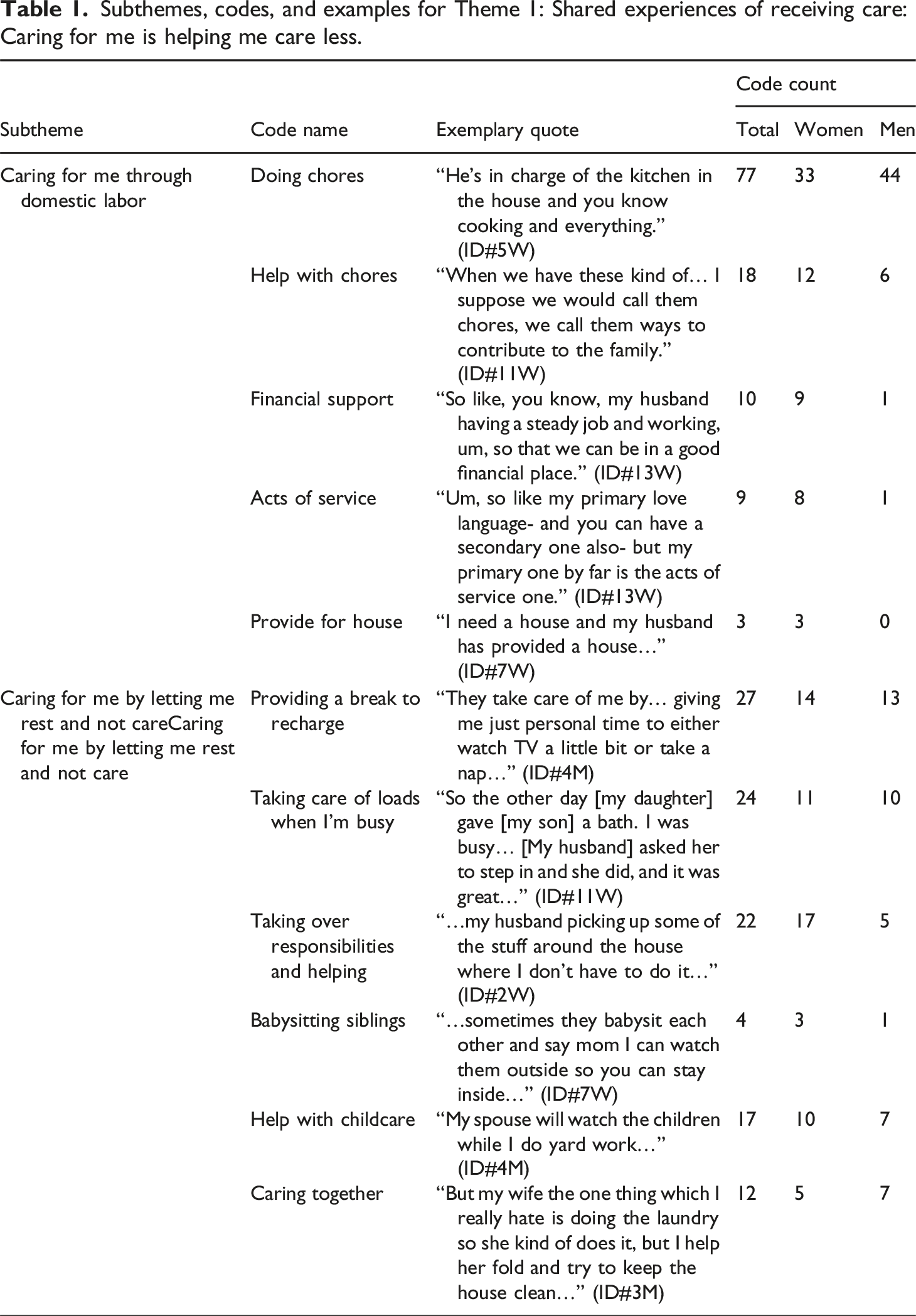
In the same vein, a father noted the value of having the co-parent provide space for them to “tap out” of the overwhelming amount of caregiving required: … you reach those places where you’re at the end of your rope with the kids in parenting and so on. And being able to tap out and let the other parent take over, who’s perhaps... doesn't feel like they’ve been slamming their head against the brick wall for an hour. (ID#8M)
Similarly, another mother noted that taking over domestic tasks that the parent saw as their responsibility was seen as a means of care, as it helped reduce her workload: It’s really awesome cause then I don’t have to do it because if you are the one that normally does something and someone steps up to do it and does the job that is not expected or not normal for them to do, then that gives me time to do something else that I want to do. (ID#7W)
Importantly, particularly when it came to partners’ involvement in chores, parents noted the value of the thoughtfulness and initiative that came from at least temporarily taking on household tasks as an act of service. For instance, a mother noted: My primary love language by far is the acts of service one… If my husband were to wake up and take the trash out, I would wake up and be like, “Oh, it’s an amazing day! He loves me!” (ID#13W)
Caring for me by letting me rest and not care
Parents felt cared for not only due to a reduced workload resulting from family members completing domestic tasks, but also when others deliberately took over their usual caregiving roles so that they could rest from their responsibilities. This transfer of duty, particularly through offering them time to recharge, was a meaningful gesture that was perceived as acknowledging the labor and emotional weight the parents carried as caregivers. For instance, one mother shared how her husband gave her space to recover after a long time with the kids by taking over childcare duties: If I tell him like, hey, it’s been a really long day or week with the kids, I need some time to go out on my own, he will make sure that he’s home to be with the kids. (ID#6W)
Similarly, parents also noted how particularly helpful it is to have the space created by their family members so that they have space to recharge, rest, and not have to do anything: A big one that’s been helpful lately is my husband picking up some of the stuff around the house where I don't have to do it, cause after driving 45 minutes to work and then 45 minutes back and working all day and running errands, I kinda just don’t feel like doing anything. (ID#2W) They take care of me by... giving me just personal time to either watch TV a little bit or take a nap. (ID#4M)
Indeed, in addition to partners, parents noted that children cared through assisting in childcare and household chores in ways that created time for parents, particularly mothers. For instance, one mother (ID#7W) noted, “They babysit each other and say mom I can watch them outside so you can stay inside and so sometimes they babysit… Anytime they do something that I don’t have to do, I find that very helpful.” However, in addition to creating time to rest, parents noted that children taking on domestic labor served the function of also freeing up their time for spending time together as a family: If they weren’t doing it, I would have to do it and then we would have no time to play games, and to, you know, sit and watch Star Wars together…. (ID#11W)
By taking on these responsibilities, children not only alleviated their parents’ workload but also allowed their parents to spend valuable quality time with their family. This participation and help in household tasks were recognized as care not only towards the parents, but towards the family, as it allowed for connection and togetherness.
In summary, throughout the interviews, when discussing what made them feel cared for, both mothers and fathers continually recognized the care of their partner, and at times, children, when they helped with domestic responsibilities. Interestingly, as seen in Table 1, the reception of care was acknowledged pretty evenly between men and women, although it was mentioned by a slightly higher percentage of women (56.3%) compared to men (43.7%). However, when noting the type of domestic labor that was taken on, men more often described feeling cared for when others took over specific responsibilities entirely, such as having meals cooked or laundry done for them, while women were more likely to mention temporary domestic assistance. This distinction reflects a subtle but meaningful gender difference, where women may interpret care as collaborative support in ongoing duties, while men may associate care with being relieved of daily tasks altogether.
Theme 2: Gendered patterns in receiving care: The romantic husband and the industrious wife
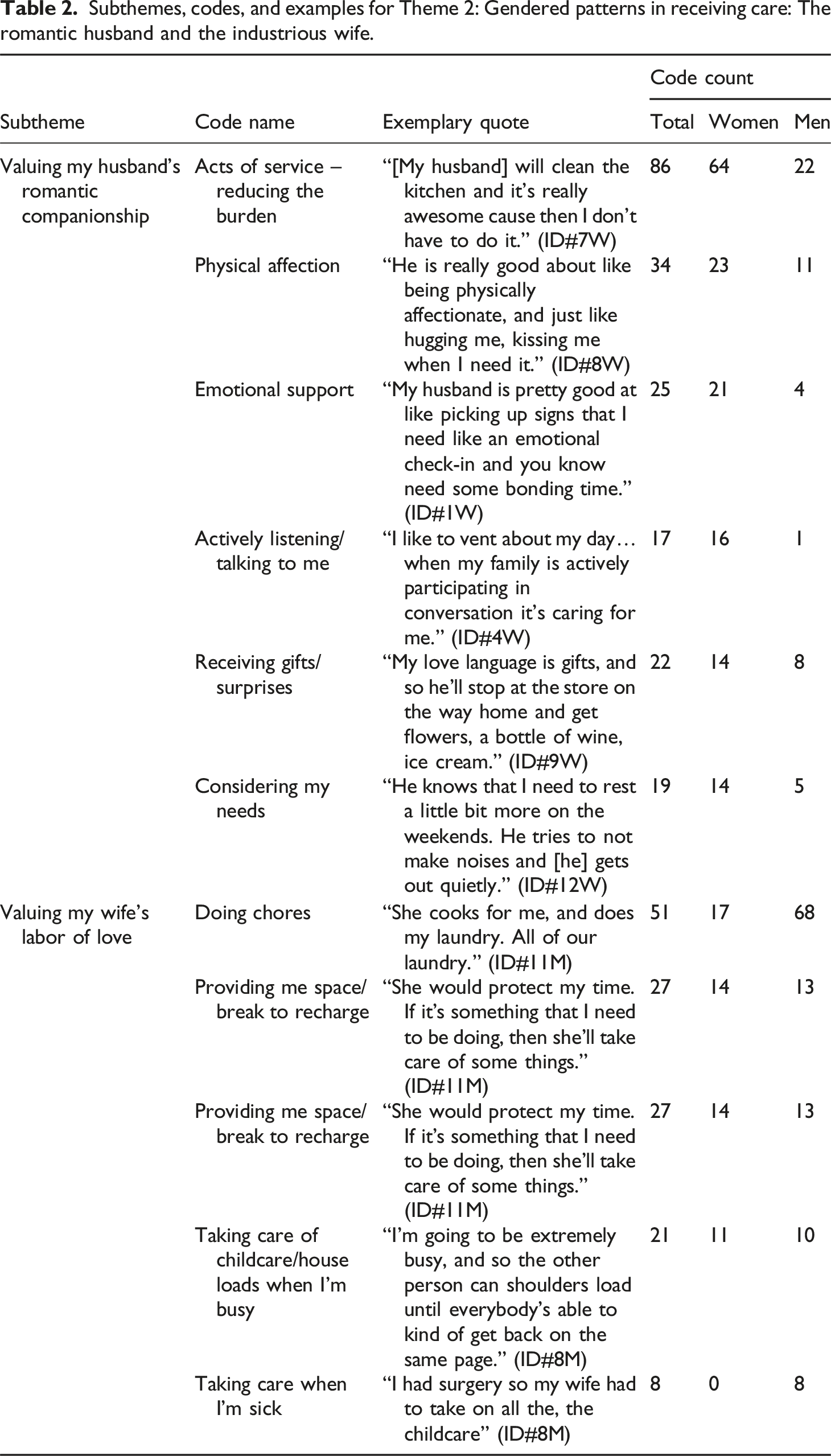
Subthemes, codes, and examples for Theme 2: Gendered patterns in receiving care: The romantic husband and the industrious wife.
Romantic care
Mothers in this study often expressed feeling cared for when their husbands displayed romantic love and affection. These romantic gestures took different forms, including compliments, gifts, and the planning of self-care activities, seen as pampering. For instance, a mother noted: “He always says that I’m beautiful, every day… He used to write me letters every day… sometimes he leaves random notes…” (ID#12W). Similarly, several mothers noted receiving gifts as a way their husband cared for them: “My love language is gifts, and so he’ll stop at the store on the way home and get flowers, um, a bottle of wine, ice cream” (ID#9W). Indeed, this romantic care was seen as a form of pampering: My husband, he pampers me all the time. … He gifted me a really nice bouquet of roses and then a couple-- two reservations for my favorite spot-- which I haven’t been to in a really long time. (ID#5W)
Mothers noted an appreciation for small acts of consideration to help them rest. For instance, a mother noted: “My husband… he knows that I need to rest a little bit more on the weekends. He tries to not make noises.” (ID#12W).
Similarly, another mother noted being cared for both by physical affection, as well as being able to have space: He is really good about like being physically affectionate, and just like hugging me, kissing me when I need it, giving me space…(ID#8W).
Thus, mothers tended to report care from their husbands as involving actions associated with romantic love. Husbands were reported as caring in ways that made mothers feel pampered, through actions that were seen to show additional attention and thoughtfulness to mothers’ social, physical, and emotional needs.
Industrious care
On the other hand, fathers frequently expressed feeling cared for through direct acts of care labor that addressed their immediate physical needs, such as their wives doing laundry, cooking, and taking care of the household. Often, fathers noted that they felt cared for by being fed. For instance, “She always wants to make sure we’re well-fed. We always have plenty of food. She always checks, like, ‘Hey, I’m going to the grocery store. Is there anything that you need?’” (ID#6M).
Fathers noted that mother’s completion of routine acts of chores provided care through addressing direct need for care as well as providing them with their own time. Several fathers noted: She would protect my time. If it’s something that I need to be doing, then she'll take care of some things. She knows what I like, so if she’s going to the store to get things, and she’ll do that. She cooks for me, and does my laundry. (ID#11M) She always makes sure that I’m well-fed. I have an allergy, so I’m very difficult. She makes sure I have time to take care of myself, even if I have to get up super early, and she ensures the kids are taken care of. (ID#2M)
While fathers often noted a laundry list of chores that mothers engaged in, the routine nature of this care was also noted to be something that may lead them to take it for granted. For instance, a father reflected: For my wife, there’s just certain things that I sometimes take for granted. I kind of have to go ‘Oh, yeah, some of my stuff is clean over here. It may not be folded, but she washed it. (ID#12M)
In addition to everyday routine care, fathers also noted feeling cared for in unsual circumstances, particularly when they were injured or sick. In these instances, a father noted that family members engaged in substitutive care labor. For instance, a father described: The nice thing is them knowing that when I am sick that the whole family will step up to obviously make sure that I'm physically taken care of but then also that my mind will be at rest because they are not letting the house turn into a big mess. (ID#5M)
The willingness of their wives and family members to take on additional responsibilities when needed reinforced these fathers’ perceptions of care. Thus, the theme “The romantic husband and the industrious wife” reflected how, for fathers, care was often embedded in the everyday, often noticed when it provided convenience or ease. In contrast, mothers tended to highlight more unique, emotionally resonant gestures, like receiving coffee in bed or a surprise hug, as meaningful demonstrations of care. This suggests a gendered difference not only in how care is received, but in what actions are credited as caring, with fathers often recognizing routine support, while mothers value intentional and emotionally expressive and romantic acts.
Theme 3: Gendered patterns in providing care: Mother as ‘The nurturer’; Father as ‘The helper’
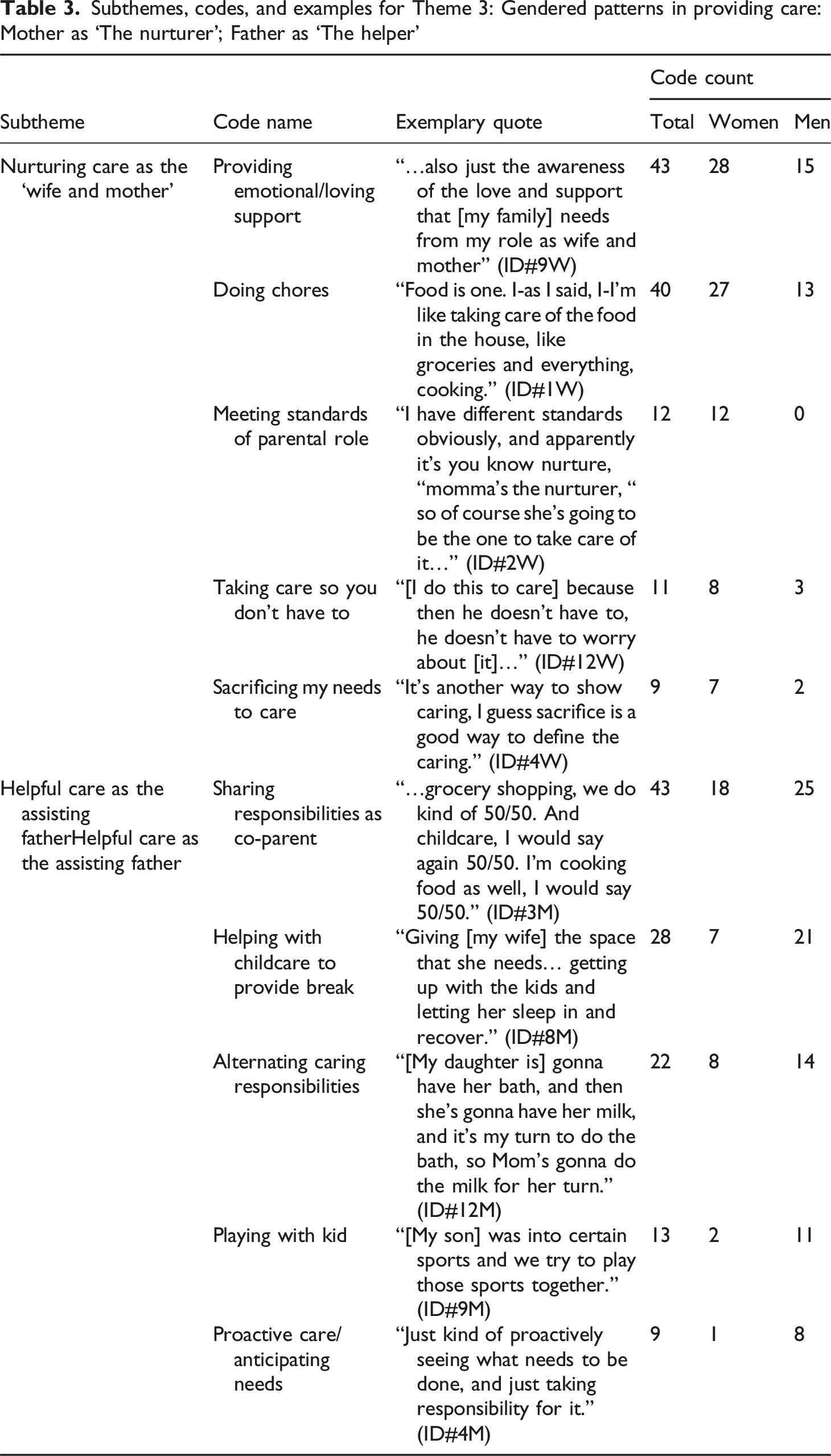
Subthemes, codes, and examples for Theme 3: Gendered patterns in providing care: Mother as ‘The nurturer’; Father as ‘The helper’
Mother as “The nurturer”
Mothers often described their caregiving as directly tied to fulfilling the “mom role,” which encompassed managing household tasks and meeting their family’s needs, both physical and emotional. For instance, one mom noted she was most responsive to her family’s needs because, “I’ve always wanted to be a mom and a wife and nurture in that way, and that’s what I’ve considered not my job but my role.” (ID#9W). Similarly, another mom noted: I mean, I feel like my big part of caring for the family is like taking on all those like mom household type jobs... doing laundry, cooking, paying the bills... really taking care of the household while [my husband] is out of the house working and making money. So I feel like that’s my role to take care of the family. (ID#13W)
Mothers thus often alluded to the expectation that mothers are expected to take on the primary care of their children. For instance, another mother noted, “I mean that’s what a mom does, is provides for the kids, I feel like meeting their basic needs is you know what I mean?” (ID#8W).
These mothers articulate that their role as caregivers is rooted in their identity as mothers and wives, fulfilling the traditional expectation of women as the primary nurturers in the home. Another mother echoed this sentiment, stating: [I address the needs of the family] cause most of the time nobody else will, and I have different standards obviously, and apparently it’s you know nurture, ‘momma’s the nurturer,’ so of course she’s going to be the one to take care of it, so typically momma’s the one that supposed to do it... (ID#2W)
Mothers also noted addressing family members’ emotional needs, in addition to physical care, as a means of caring. Indeed, most mothers noted that they both did a laundry list of chores as well as addressing emotional needs, such as showing empathy, indicating love, affirmation, and emotional support: Just the awareness of the love and support that they need from my role as wife and mother… making sure that they feel obviously, their needs are met, clothing, food, but also that they feel like Mom loves them. My husband-make sure that he knows that I love him, and not just the words I say, but how I act, and the things I do (ID#9W) I try to empathize with them because I think that empathy can sometimes be more powerful or be a gateway to comfort just making them feel seen and trying not to be dismissive. I can’t say that I always do that perfectly, but I will say that that’s probably something that I try to work really hard on. (ID#6W)
These examples illustrate how mothers embody the traditional nurturing role, taking on both physical and emotional caregiving responsibilities for their families. Their caregiving is deeply tied to their identities as mothers and wives, reinforcing societal expectations of women as primary caregivers in the family. Despite the challenges and sacrifices involved, they continue to uphold these caregiving roles, believing that taking on these roles was how they should and could demonstrate care.
Fathers stepping up to help care
On the other hand, fathers were more likely to report practicing care for their family members through assistive caregiving practices. They reported expressing caregiving within the family by taking over household and childcare responsibilities as assistants for their wives, while also proactively anticipating their wives’ needs, including lighting their wives’ mental and emotional load. Fathers often noted their caregiving as an act of assistance with taking on or sharing caregiving responsibilities (e.g., “Doing household chores, you know, sharing in the responsibilities with my spouse” (ID#4M)). This seemed to stem from an assumption that caregiving was a “need” that their wives had, which required addressing. For instance: I knew she was having a rough day. I had the kids try to do something nice for her. I’m trying to get better about kind of just being there to listen. And then also knowing kind of that she’s gonna be getting busier this school year, so I may need to help more with things around here. And then even trying to make sure that I’m available to help pick up the kids or drop them off and things like that. (ID#6M)
Fathers noted that, in fact, unlike their wives, who reported following mother role expectations, their caregiving involved an element of unexpected support. For instance, a father noted: The best way to take care of [my wife] is to meet her needs in a way that is unexpected or not asked for, I suppose. Making sure the house is clean. Taking care of the kids, so that she has, you know, around dinner time and afterwards, so she can do other things. That's the most routine thing is to do that. Cleaning the dishes. (ID#11M)
Similarly, one way fathers demonstrate care is by stepping in to handle childcare and household duties when their wives are overwhelmed or need support. In these moments, fathers take an active yet assistive role in caregiving, not by redefining the caregiving role itself, but by helping their wives carry the load. This type of support allowed their wives to rest, recharge, or focus on other responsibilities: If it’s my wife and she’s tired, then she needs a nap, and so I usually take the kids away... We usually intentionally go somewhere else. And I make sure they understand not to bother her. (ID#11M) I try to be proactive... I’m the one that usually puts the kids to bed, so I’ll try to spend time with each one of them before I put them to bed. And my wife, you know, she goes to bed earlier, so I’ll try to tidy up a little bit so the house isn’t a mess when we wake up. (ID#9M)
Thus, in keeping with Theme 1, fathers reported providing care by engaging in caregiving activities to meet family needs as well as to help reduce caregiving responsibilities for their partners. Thus, father caregiving was described as upholding the running of the household through the function of helping “step in” and at times “picking up the slack” of the need for care within the family. As one father highlighted: Don’t want to say we have assigned duties, but it’s more of we just try to survive and get things done. If somebody is traveling for work or that older children are busy with school activities, carting people around. So it’s really just the... I want to say picking up the slack because it’s not really slack, but stepping in...(ID#5M)
Overall, the experiences shared by fathers reveal that their caregiving role often manifested through assistive practices that supported their wives’ well-being by reducing their caregiving load. Rather than solely engaging in direct caregiving (E.g., feeding), fathers express care by taking over those childcare and household responsibilities, as those were seen as part of wives’ needs, and thus caregiving served the dual function of meeting household needs as well as helping offer their wives breaks from their engagement in direct caregiving.
Discussion
This study explored how US mothers and fathers in different-sex relationships experienced caregiving and care-receiving within the family context. Three primary themes resulted from reflexive thematic analysis of participant semi-structured interviews: (1) “ Shared Experiences of Receiving Care: Caring for Me is Helping Me Care Less”, capturing how parents share the experience of receiving care through actions that helped reduce their caregiving burdens; (2) “Gendered Patterns in Receiving Care: the Romantic Husband and the Industrious Wife”, revealing gendered patterns in care-receiving, where mothers received care through romantic gestures and fathers received care through their wives direct care labor; and (3) “Gendered Patterns in Providing Care: Mother as ‘The Nurturer’; Father as ‘The Helper’” reflecting gendered patterns for how care was given, with mothers internalizing nurturing standards and fathers adopting more assistive caregiving roles. Together, these themes highlight an often overlooked aspect of the practices of care– someone needs to care for the caregiver, and taking on caregiving responsibilities becomes a “need” that needs to be addressed. Implications for the field of care studies are discussed in more detail below.
To care is to help someone care less
One of the primary themes reported in parents’ shared experiences of receiving care, due to the unique nature of being caregivers themselves, was the reporting of care as reducing caregivers’ caregiving responsibilities. This is in line with Karney and Bradbury’s (2020) findings that mutual support in practical domains, such as managing household tasks, parenting responsibilities, and daily logistics, can positively impact relationship quality. This finding also suggests the value of going beyond theories of self-care (Gonzalo-Ciria et al., 2024; Oliveira et al., 2019), to highlighting how caregiving for others can have an extended effect on the family system– through caring for the household or the children, one can also contribute to caring for one’s spouse. Given that prior research has found that couples may de-emphasize or ignore the application of fairness or equality to the division of household responsibilities (Lachance-Grzela et al., 2021; Ryjova et al., 2022; Tosun, 2022), our work suggests a potentially distinct motivating strategy for contributing to more egalitarian relationships: we suggest that caring families are those where partners care together.
This finding, however, reflects several assumptions present in our sample, due to our participants’ racial/ethnic, different-sex relationship status, and class position within the United States. For instance, participants’ classed position, primarily as highly educated middle-class participants who were engaged in the labor force, meant that their caregiving was primarily being done at home by the nuclear household, between parents. That is, there was limited outsourcing of care to both paid (e.g., nannies, more present in upper-class households; Oslawski-Lopez, 2024) or unpaid caregivers (e.g., extended family, more present in lower-class households; Oslawski-Lopez, 2024). Thus, highlighting caregiving as labor placed primarily on parents’ shoulders. Moreover, given that there exists cultural and ethnic differences in who belongs to household and/or engages in childcare and other care (e.g., grandparents, aunts, other-mothers, children; Ting et al., 2016; (Wight et al., 2013), the finding that primarily reliance on partner care to reduce the care burden, reflecting the assumption that care is being addressed by only/mainly two people, may be due to our mostly U.S. White non-Hispanic sample (where care is expected to be primarily shared between two parents, e.g., Midgette et al., 2024). Moreover, given that most participants worked and were of the middle class, financial care may not have been considered as a form of care, especially in light of other research that finds that while parents feel responsibility to take care of their family’s economic well-being, caregiving and care-receiving were not reflected in their construction of paid work (Schmidt, 2018). Furthermore, this theme relies on the assumption that the couple has sufficient economic stability to avoid working multiple jobs and engaging in shift work, facilitating the ability to provide time off from both paid and unpaid labor. Together, while our work highlights an important element of caregiving as a need that requires addressing for parents who are primary caregivers who are also often employed, we expect that in households where care is outsourced outside the immediate couple, care-receiving needs may be conceptualized and experienced differently. Furthermore, we expect that care-receiving needs may differ in working-class households, in which care labor may not be easily redistributed, such that care-receiving is conceptualized in terms of emotional and financial support. Thus, future research should investigate how experiences of feeling cared for may differ based on the variety of external support and the intensity of caregiving burden that caregivers may experience.
Gendering in receiving & giving care
Consistent with prior research (Craig, 2006; Craig & Mullan, 2011; Dhungel et al., 2023; Norman et al., 2018), we find that fathers and mothers report caregiving in distinctly gendered ways. Perhaps unsurprisingly, we find complementarity between how participants receive and give care, following similarly gendered patterns. For care-receiving, mothers often interpreted care as involving feeling loved, and relied on the love languages framework (Chapman, 2024), such as citing feeling cared for by acts of gift giving, affection, and acts of service. On the other hand, in terms of caregiving, mothers reported following expectations for maternal care (Powell & Karraker, 2019; Valiquette-Tessier et al., 2019), while fathers reported taking on helper roles (Craig & Mullan, 2011; Dhungel et al., 2023; Norman et al., 2018). This finding is particularly relevant in light of previous research that finds that “help” and “helping” with household labor often signal a limited involvement in that labor (Midgette, 2020). However, this finding may reflect assumptions held by our participants related to their class position within the United States, given evidence college educated individuals are more likely to agree that men should help with chores (Miller & Carlson, 2016). While this theme highlights an important way in which receiving care is gendered and the gendered roles associated with care, we expect that care may be conceptualized and experienced differently for parents who do not hold a college education. Future research should investigate how class differences may play an important role in how caregiving and receiving are experienced. Moreover, the complementarity we find in couples reporting caring as practiced and received through husbands who are romantic and helpful and wives that do direct care labor and take on the nurturer roles, we expect that other samples, such as divorced or non-cohabitating parents (Carlson et al., 2008; Van der Wiel et al., 2021), may not experience the same complementarity between caregiving and caregiving due to emotional and spatial barriers to relieving another’s care labor.
Of particular interest to our understanding of caregiving, through the combined analysis of themes related to caregiving and care-receiving, our findings highlight that fathers and mothers both viewed caregiving as a type of “need” that mothers, rather than fathers, have. Given prior research that has indicated cultural differences in notions of what needs require addressing through care (Midgette & Ferreira, 2024), our current findings suggest needs themselves can also be gendered. In other words, while fathers are seen as receiving care as meeting direct physical and emotional needs, mothers are seen as more likely to have the need to care (e.g., maternal role), and thus to care for mothers is to reduce their caregiving burden indirectly through practicing care. These findings provide one explanation for women’s default-carer status, in which many dual-earner heterosexual parents expect the mother to be the primary caregiver by default (Calarco et al., 2021). Our work suggests that viewing mothers as the ones needing to care, and fathers as the ones caring for mothers through reducing their caregiving need, rather than having the need to care for others as a personal need, contributes to placing women as the default caregivers. Doing so frames caregiving as women’s primary responsibility, where fathers are seen as assisting, rather than taking on full responsibility (McConnon et al., 2022). Moreover, given the finding that fathers reflect feeling cared for through the direct reception of women’s care, while mothers expect romantic rather than direct care, this may reflect further men’s privileged irresponsibility (Tronto, 2015), where fathers are freed from caregiving responsibility. This framing of care as a mother’s need may further maintain perceptions that fathers, but not mothers, are entitled to receive direct care labor as more socially privileged individuals. Given this finding, future research should investigate whether the number of needs that women and men are envisioned to have differ, and if so, whether this directly contributes to gender differences in how many needs are addressed within the family. In addition, future research should examine the relationship between the perceived need for mothers to engage in caregiving and her role as the default carer within the family. Furthermore, the conceptualization of receiving care from husbands through romantic gestures may be reflective of our sample’s middle-class status, as these couples are more likely to have disposable income (Pressman, 2015) with which to purchase gifts and go on dates. Additionally, most of our sample reported only one occupation, indicating that they may have sufficient income to avoid working multiple jobs, creating more time for engaging in care labor. As such, future research should examine the ways in which this conceptualization of receiving care may be influenced by class.
Our work suggests that women may receive less direct care within the family due to two gendered processes: (1) the expectations that mothers are primarily responsible for caregiving, and thus to care for them is to reduce their caregiving rather than to directly care for them (thus limiting the actual amount of direct care they receive); and (2) the expectation that mothers should receive romantic, non-routine gestures of care, rather than direct acts of care (e.g., cooking for them). Given our findings, we recommend that programs aimed at contributing to more egalitarian divisions also unpack assumptions about what are the needs present within the family, moving beyond encouraging greater involvement in childcare and housework (“helper husbands”) to approaching caring for each individual member (e.g., mothers need direct care too), with considerations for how these care needs may be gendered and reflective of gendered assumptions. Specifically, we recommend that practitioners, such as couple therapists or parenting educators, guide clients to consider each other’s needs and practice care through taking on care labor from each other, with an emphasis on fathers as caregivers, providing direct care to mothers and their family, as opposed to “helpers.” Furthermore, we recommend the implementation of policies that combat the default-carer status of mothers and consider their needs inclusive of and beyond caregiving responsibilities, such as paid family leave policies that allow fathers to take time off to care for their wives, not just their children, as well as consider that mothers’ are not caring just for their children, but often for their spouses and beyond.
Theoretical implications
While previous research on caring masculinities highlights the ways in which fathers engage in caring for their children (Adler, 2023; Bakermans-Kranenburg et al., 2019; Jordan, 2020), the present research extends this work to examine how fathers engage in caring for their wives. According to wives’ reports, fathers’ caring occurs through romantic gestures, suggesting that caring masculinities in heterosexual relationships may still follow normative scripts of care (Elliott, 2016). Future scholarship should consider how caring masculinities may be reframed and challenge what a caring partner may be, going beyond scripts for romance, to consider other needs that partners may have. Indeed, our work suggests that fathers recognize reducing care burden as a form of care, thus potentially extending caring masculinity to include going beyond direct care. However, this type of care is not one of full responsibility. As supported by previous research that finds that young adults expect fathers to take on a “helping” role in household labor (McConnon et al., 2022), fathers report engaging in caregiving by helping their wives, particularly in terms of taking on household duties and childcare when their wives are overwhelmed. Though previous research suggests that fathers are increasingly engaging in direct caregiving activities (Adler, 2023; Jordan, 2020; Villa-Palomino, 2024), our findings suggest that some fathers may also still view themselves as helpers, engaging in caring for their wives by assisting with household and childcare labor. However, given previous findings that factors such as time scarcity and traditional masculine identity influence fathers’ involvement with caring for their children (Adler, 2023), it is likely that these factors also play a role in fathers’ caregiving toward their spouses. Specifically, it is possible that the time scarcity generated by both parents’ full-time employment, which increases fathers’ involvement with childcare (Adler, 2023), shifts fathers’ perspectives of themselves as “helpers” to caregivers. On the other hand, endorsement of a traditional masculine identity is associated with lower participation in childcare (Adler, 2023) and may also be associated with viewing fathers as not primarily responsible for care. Thus, while the present research finds that fathers tend to understand their own caregiving through the lens of helping, future research should examine how fathers who are more engaged in direct caregiving envision providing care to their partners. Additionally, given that this study focuses on examining experiences of care in married heterosexual couples, these findings unsurprisingly reflect heteronormative constructions of family (Thomas, 1993). As such, we expect that conceptualizations and experiences of care may differ for different sex mixed-orientation parents and same-sex parents.
Furthermore, this research has important theoretical implications for understanding the “second shift,” in which working mothers come home to work a “second shift” of childcare and housework (Hochschild & Machung, 2012). Though previous research finds evidence that the leisure gap is decreasing between women and men, women continue to spend more time on housework and childcare while men spend more time engaging in paid work (Blair-Loy et al., 2015). The present findings support existing understandings of the second shift and demonstrate ways in which taking on the burden of the second shift is perceived as care by both the giver and the receiver. Theme 1, Shared Experiences of Receiving Care: Caring for Me is Helping Me Care Less, indicates that taking on or sharing tasks associated with the second shift and providing opportunities for leisure is one way that spouses perceive being cared for. Furthermore, Theme 2, Gendered Patterns in Receibing Care: The Romantic Husband and The Industrious Wife, supports the gendered nature of the second shift. While wives feel cared for when husbands engage in romantic gestures, husbands feel cared for when wives engage in direct acts of care labor, taking on the burden of the second shift. It is possible that women’s greater involvement in the second shift contributes to men’s understanding of care-receiving as addressing physical needs through care labor. Additionally, Theme 3, Gendered Patterns in Providing Care: Mother as ‘The Nurturer’; Father as ‘The Helper’ indicates that mothers understand taking on the burden of the second shift as a means of caregiving, while fathers may view helping with the second shift as a form of caregiving. Given these findings, future research should aim to more explicitly examine the connection between participation in the second shift and perceptions of caregiving and receiving.
Limitations & future directions
While this study contributes to the field of family care by highlighting the importance of considering how caregivers receive care, this study had several limitations. One primary limitation was that this data was collected at a single time point, which restricts insight into how caregiving dynamics may evolve over time. Additionally, this study utilized interviews, which may be influenced by a variety of factors, including interviewer gender (Thwaites, 2017). All interviews included here were conducted by women-identifying researchers. While this may have had the benefit of making female interviewees more comfortable and more likely to speak freely, it may have also limited the discussion due to assumptions of shared viewpoints between the interviewer and interviewee (Thwaites, 2017). Furthermore, while being interviewed by a female researcher may have made male participants feel less comfortable, it may have also allowed men to be less likely to perform masculinity (Sallee & Harris, 2011) and be more open to sharing their experiences because they were unlikely to assume that the interviewer shared their viewpoint on fatherhood. Given the benefits and drawbacks of both gender-matched and gender-mismatched interviews, future research may benefit from exploring how discussions of care differ based on the gender of the interlocutors. This study was also limited to self-report, and thus, it may be particularly fruitful to investigate how caregiving and receiving occur behaviorally in reciprocal micro-dynamic interactions. In addition, given that our focus was on gendered processes of care, the study was limited to different-sex, two-parent households, living in the US, and did not investigate potential racial/ethnic or class differences, as the sample was largely non-Hispanic White and middle-class. While we expect our results may be transferable (Drisko, 2025) to many parents in the United States, given that our sample is representative of non-Hispanic White parents (61.54% in our sample vs 61.6% nationally in 2020; U.S. Census Bureau, 2021), we did not investigate racial-ethnic differences in experiences of giving and receiving care. Additionally, we did not collect information about parents’ ability status, and thus, did not investigate how disability may relate to caregiving and receiving experiences. Furthermore, the sample was largely made up of working parents, preventing comparison of the perceptions of care between working and non-working parents. As such, while our findings are expected to be transferable to many parents in the US, they may not be transferable to same-sex, single-parent, or divorced households. Future research should investigate how the receiving of care, in particular, may differ through considerations of class, race/ethnicity, and sexuality. Given that gendered processes of household and childcare labor are found across cultures and ethnicities (Craig & Mullan, 2011; García Román & Gracia, 2022; Midgette, 2020), we expect there to be some similarities in how care is given and received across cultures. Furthermore, we expect similarities in samples of same-sex parents based on previous research that finds that while same-sex couples tend to divide household labor equally (Bauer, 2016), they often have a primary and secondary caregiver structure (Carone & Lingiardi, 2022), and thus may feel cared for when allowed to do less childcare labor. Given findings that more affluent families have a greater ability to outsource care labor by hiring nannies or housekeepers (Oslawski-Lopez, 2024), it is possible that our findings are less transferable to upper-class families, but remain relevant to middle and lower-class families. Finally, the study was limited to only one partner’s report of experiences of giving and receiving care. Future research should investigate levels of couple (and child) agreement on how care is received and given. While this study utilizes a caregiving approach to study the ways in which care as labor is provided (José, 2016), care can also be conceptualized as a feeling state (e.g., emotion, love; José, 2016). As such, future research should examine how parents’ experiences of care as labor interact with care as a feeling state.
Conclusion
This study provided valuable insights into how mothers and fathers uniquely experience caregiving and care-receiving within the family context. Importantly, parents reported feeling cared for when family members actively alleviated their caregiving responsibilities, highlighting the unique role that caregiving plays in individuals’ needs for care. These experiences highlight the significance of understanding parents not only as caregivers but also as care recipients—an area insufficiently explored in previous literature. Moreover, this study also highlights the gendered nature of not only caregiving, but also care-receiving, partly due to the fact that mothers are seen as having the “need” to care. Thus, the study’s findings indicate the need for further unpacking how expectations for caregiving play a role in how caregivers are able to receive and be cared for within their families.
Supplemental material
Supplemental Material - “Caring for me is helping me care less”: A qualitative exploration of parents’ experiences of giving and receiving care
Supplemental Material for “Caring for me is helping me care less”: A qualitative exploration of parents’ experiences of giving and receiving care by Kaylie Sauceda, Percy Gresham, Allegra Midgette in Journal of Social and Personal Relationships
Footnotes
Acknowledgements
We would like to thank our lab managers, Mirka Dirzo and Caitlin Geller, for making data collection possible, and the research assistants for helping transcribe and collect the data.
Declaration of conflicting interests
The authors declared no potential conflicts of interest with respect to the research, authorship, and/or publication of this article.
Funding
The authors disclosed receipt of the following financial support for the research, authorship, and/or publication of this article: This study was funded by a start-up provided to the last author, from the College of Arts and Sciences, Texas A&M University.
Open research statement
As part of IARR’s encouragement of open research practices, the author(s) have provided the following information: This research was not pre-registered. No aspects of the study were pre-registered. The data used in the research cannot be publicly shared, but are available upon request because it is qualitative personal data, which we did not ask and did not receive consent from participants to share publicly. The data can be obtained by emailing:
Ethical considerations
This study received ethical approval from the Texas A&M University IRB (TAMU IRB #: IRB2021-1487D).
Consent to participate
Participants consented to participate in this research.

Data Availability Statement
The datasets generated during and/or analyzed during the current study are available from the corresponding author on reasonable request.
Supplemental material
Supplemental material for this article is available online.
References
Supplementary Material
Please find the following supplemental material available below.
For Open Access articles published under a Creative Commons License, all supplemental material carries the same license as the article it is associated with.
For non-Open Access articles published, all supplemental material carries a non-exclusive license, and permission requests for re-use of supplemental material or any part of supplemental material shall be sent directly to the copyright owner as specified in the copyright notice associated with the article.
