




Abstract
Cross-sectional associations between greater attachment insecurities (i.e., anxiety and avoidance) and lower sexual satisfaction are well documented. However, little is known about these associations over time and their explanatory mechanisms. One such potential mechanism is sexual communication, given that attachment insecurities can complicate discussing sexual matters and that positive sexual communication is a pathway toward greater sexual satisfaction. The current study examined whether negative (e.g., blame, avoidance) or collaborative (e.g., problem-solving, sharing feelings) sexual communication patterns (SCP) explained the longitudinal associations between attachment insecurities and sexual satisfaction, using cross-lagged mediation panel analyses. A sample of 441 community adults involved in a romantic relationship completed online questionnaires assessing attachment, SCP and sexual satisfaction at three time points over one year. Results yielded two direct associations showing that individuals with greater attachment avoidance at baseline used more negative SCP six months later and that greater use of collaborative SCP predicted greater sexual satisfaction six months later. One significant indirect association from greater attachment anxiety to lower sexual satisfaction via lower collaborative SCP was also found. These longitudinal findings extend the understanding of mechanisms linking attachment and sexual satisfaction and underline the relevance of targeting how partners communicate about their sexuality in order to improve their sexual satisfaction over time.
Keywords
Introduction
Cross-sectional associations between greater attachment insecurities (i.e., avoidance anxiety) and lower sexual satisfaction are well documented in community and clinical samples of couples and individuals (Brassard et al., 2012; Gewirtz-Meydan & Finzi-Dottan, 2018; Lafortune et al., 2022). It has been proposed that more insecure individuals may have less satisfying close relationships due to their use of fewer constructive strategies when resolving conflicts, less self-disclosure and less positive forms of emotional expression compared to more secure individuals (Guerrero, 2021). Yet, whether these mechanisms apply to sexual satisfaction has received little empirical attention. Discussing sexual matters may be particularly threatening, as it requires vulnerability and openness both individually and as a couple (Rehman et al., 2017), and this process may be more challenging for those with less secure attachment bonds (Davis et al., 2006; McNeil et al., 2018; Timm & Keiley, 2011). Although some studies have shown that positive sexual communication is linked to greater sexual satisfaction, their designs did not allow for a detailed understanding of the ways people might discuss those topics (Mallory, 2022) and how this in turn could relate to sexual satisfaction. Gaining insights into which distal and proximal factors may be linked to sexual satisfaction is especially important considering sexual wellbeing is a key contributor to quality of life and relationship satisfaction (Flynn et al., 2016; Joel et al., 2020). However, studies to date mostly focused on heterosexual individuals and couples, used cross-sectional designs and measured sexual communication using indirect, unidimensional conceptualizations, such as sexual assertiveness (Goldsmith et al., 2016; Khoury & Findlay, 2014; Leclerc et al., 2015). Using a longitudinal design and a large diverse sample of partnered adults, the present study examined the mediating role of sexual communication patterns (i.e., negative and collaborative SCP, respectively, criticism/withdrawing and problem-solving/sharing feelings) in the associations between attachment insecurities and sexual satisfaction.
Attachment and sexuality
According to attachment theory (Bowlby, 1969), a widely used conceptual framework to understand adult romantic relationships (Beaulieu et al., 2022; McNeil et al., 2018), representations of oneself and others that stem from the bond between an infant and their caregiver guide one’s attitudes and behaviors in adult romantic relationships. Those representations develop along two dimensions: attachment-related anxiety and avoidance (Brennan et al., 1998; Mikulincer & Shaver, 2019). Anxiety is characterized by negative internal models of self, whereby one tends to doubt their own worth and have a fear of being abandoned by others. This translates into a need for reassurance within intimate relationships (Brennan et al., 1998; Mikulincer & Shaver, 2019). Avoidance involves negative internal models of others, suggesting people high on this dimension tend to rely mostly on themselves, as others are perceived to be untrustworthy or unavailable. They also tend to avoid emotional intimacy and vulnerability (Brennan et al., 1998; Mikulincer & Shaver, 2019). Theoretical and empirical work on romantic attachment shows that three systems (i.e., attachment, caregiving and sexual) are at play in romantic relationships (Mikulincer & Shaver, 2010; Péloquin et al., 2013; Shaver et al., 1988). All three systems, although conceptually distinct, interact with each other and gain complexity over time via the individuals’ interactions with others. Since the attachment system is at the basis of the two others, a disruption of this system in childhood, such as the absence of safety and proximity with a caregiver, could explain subsequent difficulties in the sexual system in adulthood (Beaulieu et al., 2022; Hazan & Shaver, 1994).
Low sexual satisfaction is one of several sexual difficulties one can experience. This can be damaging to intimate relationships as sexual satisfaction (i.e., the subjective evaluation of the positive and negative aspects of one’s sexual relationship; Lawrance & Byers, 1995) is a key predictor of relationship quality (Joel et al., 2020; Quinn-Nilas, 2020; Sánchez-Fuentes et al., 2014). Two systematic reviews covering a total of 401 studies found associations between greater attachment insecurities and lower sexual satisfaction in men and women (Rausch & Rettenberger, 2021; Sánchez-Fuentes et al., 2014). Importantly, both concluded that future work should explore possible explanatory mechanisms of these associations, expand upon cross-sectional findings, and be grounded in established theoretical conceptualizations.
Sexual communication
The Interpersonal Exchange Model of Sexual Satisfaction (IEMSS; Lawrance & Byers, 1995; MacNeil & Byers, 2005), a well-known interpersonal model, suggests that sexual communication is one of the potential variables that could explain why greater attachment insecurities would relate to lower sexual satisfaction. Sexual communication, i.e., how partners discuss sexual matters (e.g., disclosure of sexual preferences and desires, discussion of sexual problems; Mark & Jozkowski, 2013; Rancourt et al., 2016), has been shown to be related cross-sectionally to attachment insecurities in various samples of single and married individuals as well as couples (Davis et al., 2006; McNeil et al., 2018; Timm & Keiley, 2011). Indeed, a study among 1989 individuals showed that greater attachment avoidance and anxiety were significantly linked to more inhibited sexual communication, measured using an investigator-derived questionnaire assessing inhibition when talking about sexual matters (Davis et al., 2006). An observational study of 81 heterosexual couples showed that greater attachment avoidance was linked to more negative (i.e., hostility, negative affect, and unskilled communication behaviors) and less positive (i.e., positive affect, offering solutions, and responsiveness) sexual communication for both partners, but no results were found for attachment anxiety (McNeil et al., 2018). Another study among 205 married individuals showed that a secure attachment style was linked to greater sexual communication satisfaction, yet the dimensions of adult attachment were not examined (Timm & Keiley, 2011). Several studies have also highlighted associations between sexual communication and sexual satisfaction. Notably, a meta-analysis of 93 studies among individuals involved in a romantic relationship showed a positive association between sexual communication and sexual satisfaction (Mallory, 2022). Similar results were also found in more recent studies using cross-sectional data from mostly heterosexual samples of adults and couples (Bibby & Davila, 2024; Roels & Janssen, 2020; Øverup et al., 2024).
Despite the documented associations between sexual communication and both attachment insecurities and sexual satisfaction, only three cross-sectional studies examined those variables within one integrative model. First, Goldsmith et al. (2016) showed that sexual communication was an explanatory variable in the association between greater attachment insecurities (i.e., anxiety, avoidance) and lower sexual satisfaction in undergraduate students using a global sexual communication scale that measured how respondents perceived the discussion of sexual matters, without distinguishing among the different ways people communicate during those discussions. Second, Timm and Keiley (2011) found an association between lower attachment insecurity and greater sexual satisfaction in married individuals via greater sexual communication satisfaction. Third, Khoury and Findlay (2014) showed that higher attachment avoidance was associated with lower sexual communication (i.e., measured as inhibition of need expression) which, in turn, was linked to poorer sexual satisfaction among 125 community adults involved in a relationship. In addition to using more general measures without clear indicators of successful sexual communication and focusing mainly on heterosexual men and women, these studies did not use longitudinal designs, which would allow for the examination of the temporal associations between attachment, sexual communication and sexual satisfaction and thus, provide a clearer understanding of how they relate to each other over time.
Sexual communication patterns
Although there are many ways to measure sexual communication, few studies have examined how the message regarding the sexual aspects of the relationship is conveyed during those discussions (Mallory, 2022). Yet, many studies on general communication in close relationships have highlighted how different patterns of communication may have different relational outcomes (Schrodt et al., 2014). For example, more collaborative patterns, such as expressing understanding and compromising when encountering concerns or stressors, were associated with better outcomes such as higher relationship satisfaction in a sample of women with early stage breast cancer and their partners (Manne et al., 2006). In contrast, more negative patterns, such as criticism and withdrawal, were associated with negative relationship outcomes such as relationship dissatisfaction, according to a meta-analysis that included 74 studies (Schrodt et al., 2014).
Nevertheless, these studies on general communication patterns and relationship satisfaction did not account for the discussion of the sexual aspects of a relationship, limiting our understanding of how different patterns of communicating about sex can relate to varying levels of sexual satisfaction. One cross-sectional dyadic study among a sample of couples coping with genito-pelvic pain adapted a well-known measure of communication patterns to sexual matters to verify whether such patterns were associated with women’s pain as well as both partners’ relationship and sexual satisfaction (Rancourt et al., 2017). Specifically, negative sexual communication patterns referred to withdrawing and criticizing each other, whereas collaborative sexual communication patterns referred to problem-solving and sharing feelings with one another. Actor effects showed that greater use of collaborative sexual communication patterns was associated with higher relationship satisfaction in both women and their partners and to higher sexual satisfaction in women only. For women as well as for partners, greater use of negative sexual communication patterns was associated with their own lower relationship satisfaction. No partner effect was found from one person’s SCP to women or partners’ sexual function or women’s pain.
Attachment, sexual communication and sexual satisfaction
Despite efforts to examine associations between attachment, sexual communication and sexual satisfaction, prior studies have mostly focused on specific populations of heterosexual individuals and couples, such as university students or clinical populations of couples coping with pain, in addition to using cross-sectional designs and broad, unidimensional conceptualizations of sexual communication without distinguishing collaborative from negative patterns (Goldsmith et al., 2016; Khoury & Findlay, 2014; Leclerc et al., 2015; Rancourt et al., 2017). Importantly, no studies focused on the mediating role of sexual communication patterns in the associations between attachment and sexual satisfaction over time in a diverse sample of community adults. Yet, studying the links between attachment insecurities and sexual communication is relevant considering that, on the one hand, individuals with attachment anxiety could find it more challenging to share their sexual preferences for fear of rejection (McNeil et al., 2018; Mikulincer & Shaver, 2019; Rehman et al., 2017). Also, in the context of a conflict, anxious individuals tend to make negative attributions towards their partner and be more demanding and clingy (Feeney & Karantzas, 2017). On the other hand, those with attachment avoidance could withhold communicating their preferences or hearing their partner’s, considering their discomfort with disclosure, vulnerability or affection. They tend to disclose less, be more distant and defensive and be less satisfied with communication in the context of conflicts (Feeney & Karantzas, 2017). Those behaviors could lead to more negative sexual communication patterns in individuals with both types of attachment insecurities. In turn, not stating one’s sexual preferences can lead to engaging in sexual activities that are less appreciated and therefore less satisfying (MacNeil & Byers, 2005). A prospective investigation of sexual communication patterns could contribute to a better understanding of the mechanisms underlying sexual satisfaction in romantic relationships (Schmiedeberg & Schröder, 2016) by examining not only whether people communicate or not, but how they do so, which could then provide concrete markers for intervention.
The present study
The present study’s first aim was to examine the longitudinal associations between attachment insecurities and sexual satisfaction across three time points (i.e., baseline survey – T1, 6-month follow-up – T2 and 12-month follow-up – T3) in a diverse sample of partnered adults from the community. It was expected that attachment insecurities would be linked to lower sexual satisfaction over time (H1). The second aim was to examine whether negative or collaborative sexual communication patterns explained the associations between attachment insecurities and sexual satisfaction over time. Cross-lagged mediation panel analyses were performed to examine the temporal associations between attachment, sexual communication patterns and sexual satisfaction across all three time points (Kessler & Greenberg, 1981). Two models (i.e., one for each pattern of sexual communication) were tested and, given that sexual satisfaction tends to decline in longer-term relationships, relationship duration was included as a covariate (Schmiedeberg & Schröder, 2016). It was expected that higher levels of attachment insecurities (i.e., anxiety and avoidance) would be associated with greater negative sexual communication patterns (H2a) and lower collaborative sexual communication patterns (H2b) six months later, which in turn would be associated with lower levels of sexual satisfaction at one year (T3).
Method
Participants and procedure
The present paper is based on data from a longitudinal study which involved three measurement times over a one-year period (i.e., baseline survey – T1, 6-month follow-up – T2 and 12-month follow-up – T3). The background, study questions, hypotheses and data analytic plan were pre-registered on Open Science Framework (OSF) in August 2024. All related files are available via this link: https://osf.io/4a3uf/overview?view_only=b3a451b60cc246eda4145c079b783dd7. Participants were recruited via online advertisements on psychology mailing lists and social media platforms such as Facebook. Individuals who had previously taken part in research projects conducted within the laboratory and given their consent to be contacted for future studies were also invited to participate. Participants had the option of contacting us directly by email or filling in a short contact form to indicate their interest in taking part in the study. They were then contacted via email by the research team to schedule a phone call to explain the objectives and implications of their contribution as well as to confirm their eligibility. Once their eligibility was confirmed, the individualized link to the baseline survey was emailed to them. This link included the consent form and participants had to provide their written consent. Participants also had to provide consent to have their de-identified data made available on OSF. Eighteen participants refused, hence their data were removed from the dataset available on OSF, but were included in the analyses that were performed.
The secure experience management platform Qualtrics was used. Three attention-check questions were included in each of the surveys (T1-T2-T3). When participants failed two or more of those questions, they were excluded from the study and their data were removed from the analyses. To ensure the completion of the surveys within a 30-day timeframe, the research team made two follow-up calls, three and 17 days after the survey was sent out, and scheduled weekly email reminders via Qualtrics for the first three weeks. The baseline survey took between 40 and 60 minutes to complete, whereas the other follow-up surveys could be completed within 25–40 minutes. For each survey completed, an electronic transfer of $10 CAD was sent to participants as compensation, up to a maximum of $30 CAD if all three surveys were completed. Mental health resources were offered to all individuals participating in the study at the end of each survey. Ethics approval was obtained through the University of Montreal’s Psychology and Education Research Ethics Committee (#CEREP-21-089-D).
Participants were recruited between September 2021 and March 2023 in Quebec, Canada. To be eligible, individuals had to: (a) be 18 or older; (b) be able to read and write in French; (c) have been in a relationship for at least one year prior to their participation; (d) engage or have ever engaged in sexual activities (i.e., having exchanged manual or oral caresses, and/or had penetrative sexual activity with their consent at least once) with their current partner; and (e) reside in Canada. Relationship length of one year was used as an inclusion criterion, as in prior studies (Dugal et al., 2021; Vaccarino et al., 2023), to ensure that participating couples had moved beyond the “honeymoon phase”, a stage typically characterized by idealization of one’s partner (Hurley & Reese-Weber, 2012; Reese-Weber, 2015). There were no exclusion criteria for the present study.
A detailed description of the flow of participants throughout the study can be found in Figure 1. Initially, 845 individuals contacted us via email and 636 participants from previous studies were contacted by the research team. From this number, 492 people completed the eligibility screening. Following this screening, some participants declined, and some were removed for various reasons such as failing the attention-check questions. Therefore, the final sample consisted of 441 participants. Flowchart of participation. Notes. Time 1 (T1) refers to the baseline survey, Time 2 (T2) refers to the 6-month follow-up survey, and Time 3 (T3) refers to the 12-month follow-up survey. *Data from T2 and T3 removed due to the participant not having completed the baseline survey after revision.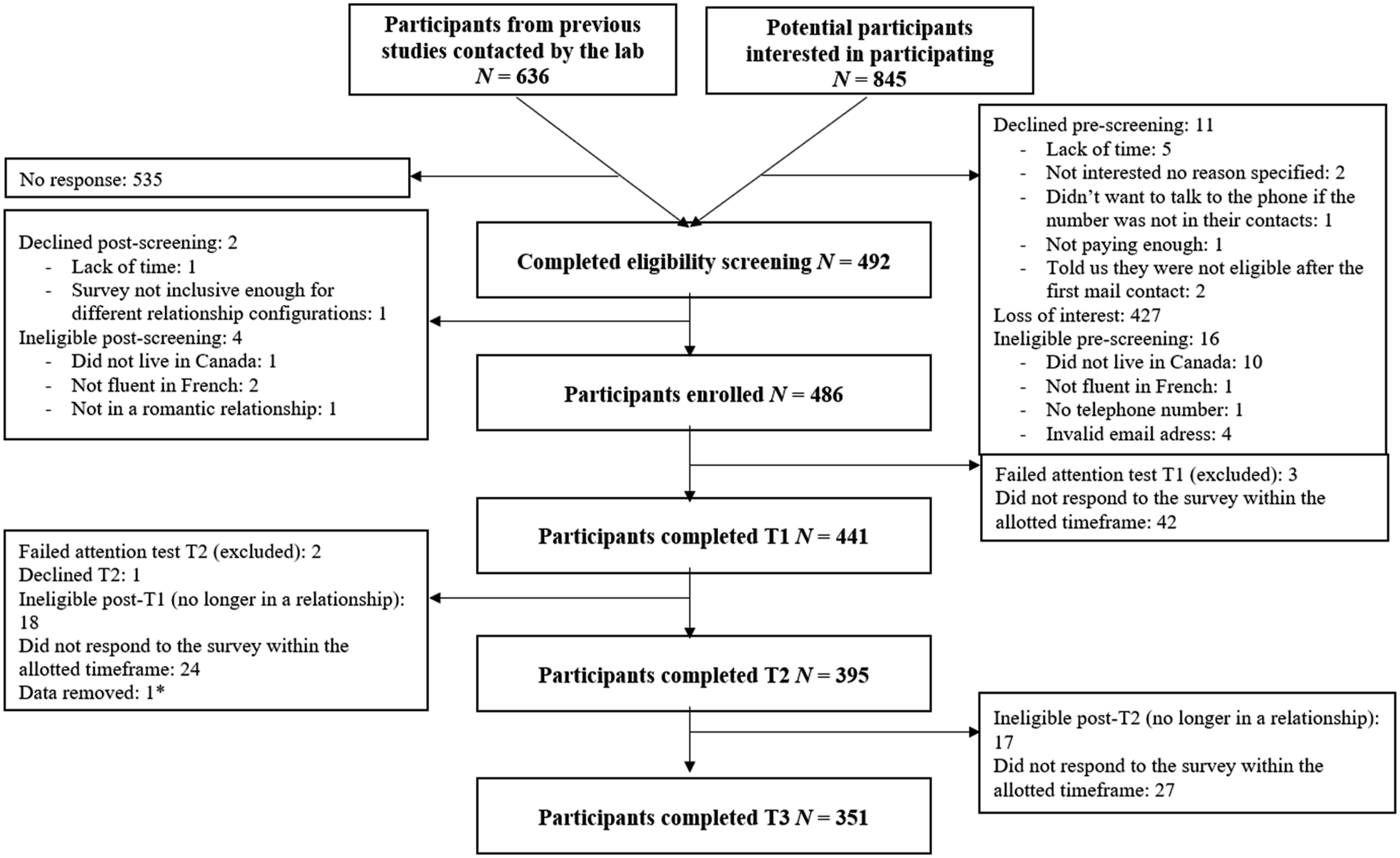
Measures
Sociodemographic data
Sociodemographic Characteristics of the sample (N = 441).
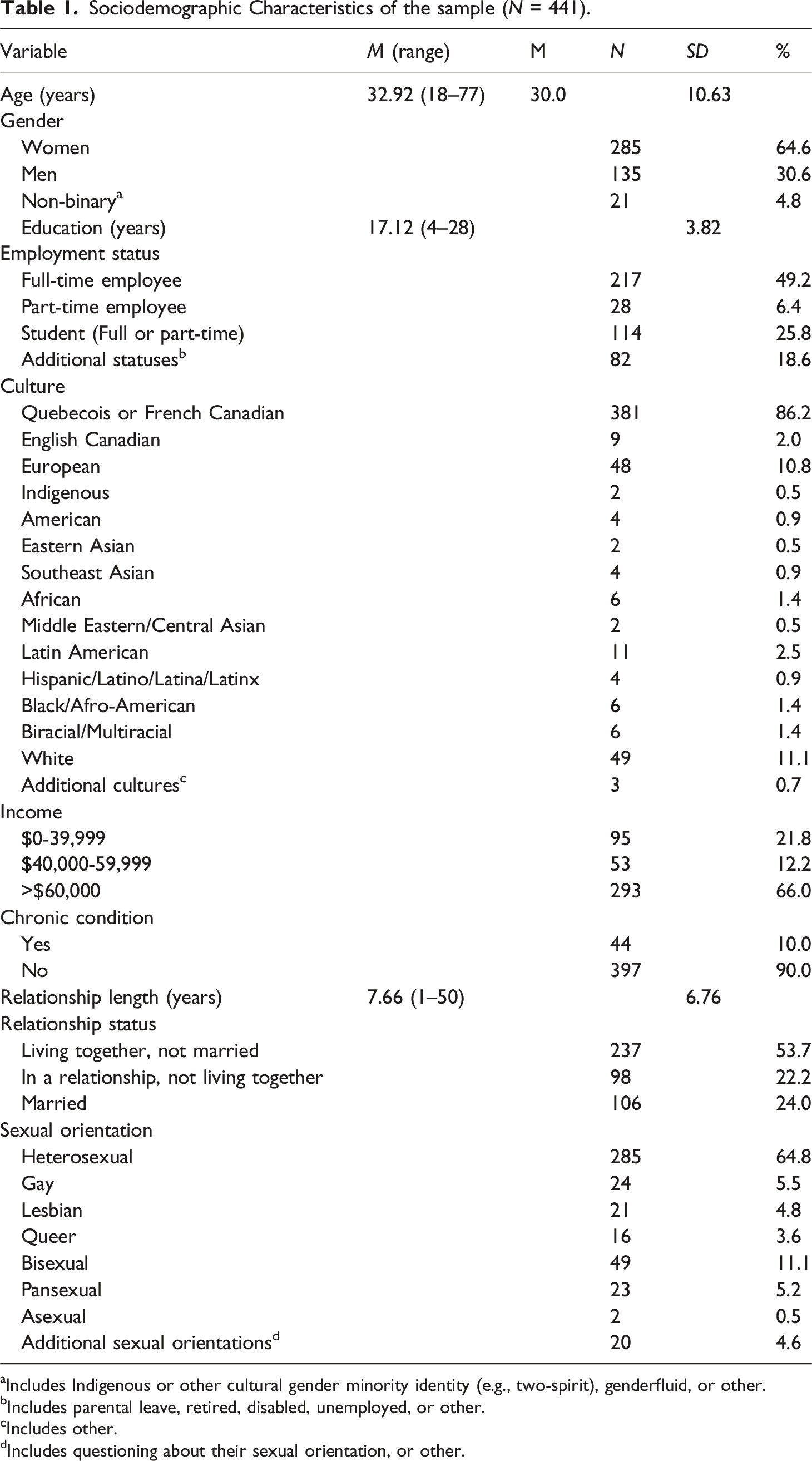
aIncludes Indigenous or other cultural gender minority identity (e.g., two-spirit), genderfluid, or other.
bIncludes parental leave, retired, disabled, unemployed, or other.
cIncludes other.
dIncludes questioning about their sexual orientation, or other.
Romantic attachment
Romantic attachment was measured using the Experiences in Close Relationship Scale – Short form (Wei et al., 2007). The 12-item questionnaire measures two dimensions of attachment: anxiety (six items) and avoidance (six items). Each item (e.g., anxiety: “I need a lot of reassurance that I am loved by my partner.”; avoidance: “I try to avoid getting too close to my partner.”) is rated on a seven-point Likert scale (1 = strongly disagree; 7 = strongly agree). Mean scores for each dimension were calculated and a high level of anxiety and/or avoidance was determined by a higher score on its associated dimension. The ECR-S validation study showed adequate internal consistency (anxiety: α = .77 to .86; avoidance: α = .78 to .88), adequate test-retest reliability indices over a one-month period (anxiety: r = .80; avoidance: r = .83) and its construct validity was supported using exploratory factor analyses on samples of graduate students (Wei et al., 2007). In the present study, Cronbach’s alphas for the anxiety subscale were .76 at baseline, .73 at 6-month follow-up and .75 at 12-month follow-up. As for the avoidance subscale, Cronbach’s alphas were .78 at baseline and .79 at both 6-month and 12-month follow-ups.
Sexual communication patterns
The Sexual Communication Patterns Questionnaire (S-CPQ; Rancourt & Rosen, 2019) was used to assess sexual communication patterns. The 22-item questionnaire consists of three distinct sections and measures couples’ communication patterns when discussing sexual problems through two subscales, negative and collaborative sexual communication patterns (SCP). The three sections are divided as follows: (a) when sexual problems arise within the relationship (3 items); (b) during the discussion (10 items); and (c) after the discussion (9 items). The negative SCP subscale, which consists of 14 items, measures the use of negative behaviors like avoidance and the expression of negative affect while discussing sexual matters (e.g., “Your partner tries to start a discussion about the sexual problem while you try to avoid the discussion”), whereas the collaborative SCP subscale consists of eight items and measures the use of positive approach behaviors, such as problem-solving and sharing feelings (e.g., “Both members express feelings to each other”).
Each item, rated on a nine-point Likert scale ranging from 1 (very unlikely) to 9 (very likely), refers to both partners’ behavior and whether they use similar strategies or not when discussing sexual problems. A sum is calculated for each subscale and scores range from 14 to 126 for the negative SCP subscale and from 8 to 72 for the collaborative SCP subscale. A higher score on one of the two subscales indicates a greater likelihood of using this SCP. The S-CPQ has shown good to excellent internal consistency (α = .93 and .89 for the negative and collaborative subscales respectively) in a community sample of couples coping with provoked vestibulodynia (Rancourt et al., 2017). In the present study, Cronbach’s alphas for the negative SCP subscale were .83 at baseline, .85 at 6-month follow-up and .87 at 12-month follow-up. As for the collaborative SCP subscale, Cronbach’s alphas were .75 at baseline, .77 at 6-month follow-up and .78 at 12-month follow-up.
Sexual satisfaction
Sexual satisfaction was assessed using the Global Measure of Sexual Satisfaction (GMSEX; Lawrance & Byers, 1992; Lawrance et al., 2011). The respondents were instructed to describe their sexuality through five dimensions (i.e., good – bad, pleasant – unpleasant, positive – negative, satisfying – unsatisfying and valuable – worthless) rated on a seven-point bipolar scale. Summed total scores range from 5 to 35, with higher scores indicating greater sexual satisfaction. The GMSEX demonstrated excellent internal consistency in both adolescent and adult samples (α = .92 and .94; Bigras et al., 2023; Mark et al., 2014) and test-retest reliability was adequate in the adult sample over a two-month period (r = .72; Mark et al., 2014). In the present study, Cronbach’s alphas were .89 at baseline, .90 at 6-month follow-up and .89 at 12-month follow-up.
Data analyses
Descriptive analyses, mean comparisons of all three variables at the different time points and Pearsons’ correlations were performed using SPSS 29 (IBM Corp., 2023). Patterns of missing data were examined using the MCAR test (Little, 1988) and were handled using Full Information Maximum Likelihood (FIML). The normality of the distribution in the main variables was assessed using skewness and kurtosis indices and all distributions were normal.
Cross-lagged mediation analyses, a type of path analysis that examines reciprocal, longitudinal relationships among a set of interrelated variables were performed with Mplus 8.10 (Muthén & Muthén, 1998-2017) to test the main mediation hypothesis using longitudinal data from three measurement points. In the cross-lagged panel models, all the variables at each timepoint are considered interrelated. Autoregressive paths (i.e., paths that link a variable between each measurement point, e.g., attachment anxiety at T1–attachment anxiety at T2, attachment anxiety at T2– attachment anxiety at T3) indicate the construct’s relative stability, with higher values reflecting greater stability. Cross-lagged paths (i.e., paths between different variables at different time points, e.g., attachment anxiety at T1–sexual satisfaction at T2) offer insights into how variables influence each other over time (i.e., temporal relationships).
To assess mediations and indirect effects, bootstrap resampling procedures were employed (MacKinnon et al., 2004). Specifically, bias-corrected bootstrap 95% confidence intervals for the unstandardized effects were utilized, as this method is considered more appropriate for accurately estimating indirect effects (MacKinnon et al., 2004). Bootstrap estimates were based on 10,000 bootstrap samples, following the approach commonly used in previous studies (Preacher & Hayes, 2008). The fit of the model was assessed using the following criteria from Kline (2023): comparative fit index (CFI) and Tucker–Lewis index (TLI) values higher than .95, a root mean square error of approximation (RMSEA) value below .05, a standardized root mean square residual (SRMR) value below .08 and a non-statistically significant chi-square test (χ2), although this criterion is sample size-sensitive.
Results
Descriptive statistics and correlations
Means, standard Deviations and mean comparisons.
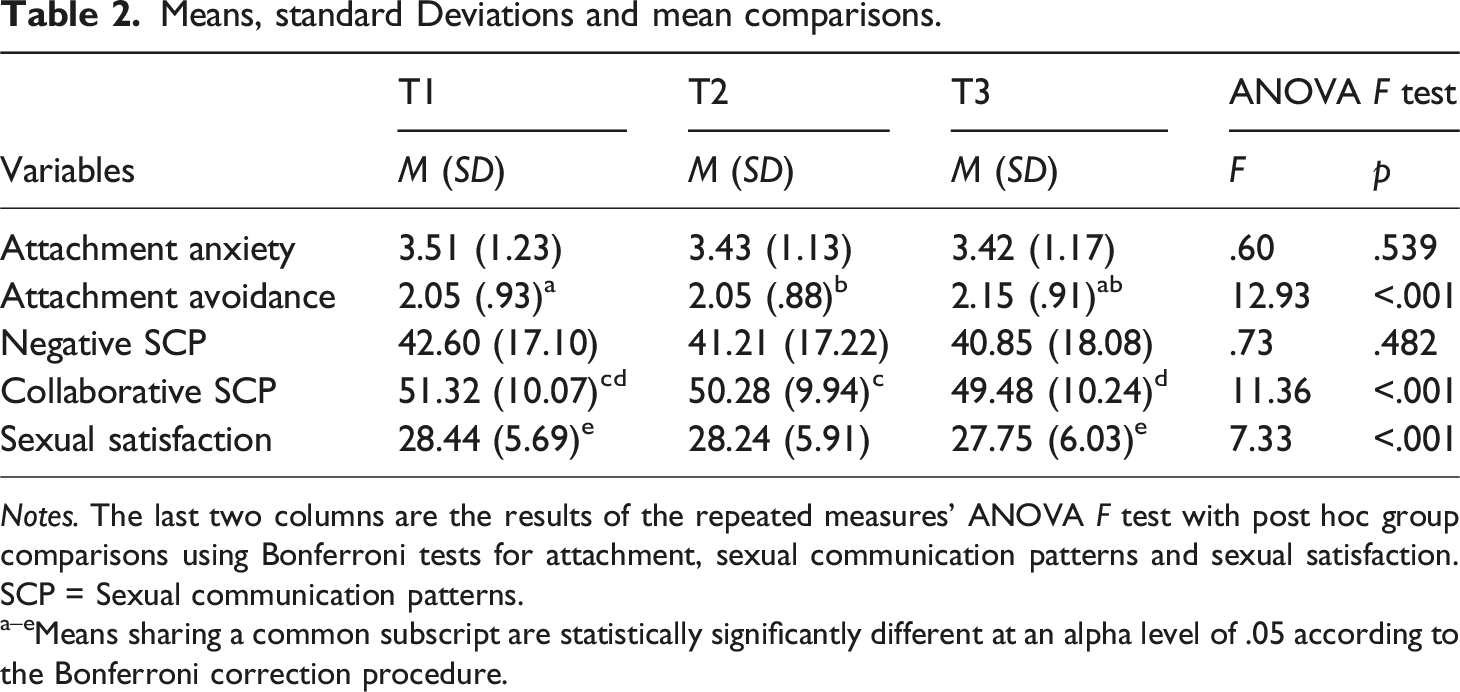
Notes. The last two columns are the results of the repeated measures’ ANOVA F test with post hoc group comparisons using Bonferroni tests for attachment, sexual communication patterns and sexual satisfaction. SCP = Sexual communication patterns.
a–eMeans sharing a common subscript are statistically significantly different at an alpha level of .05 according to the Bonferroni correction procedure.
Bivariate correlations between attachment insecurities, sexual communications patterns and sexual satisfaction.
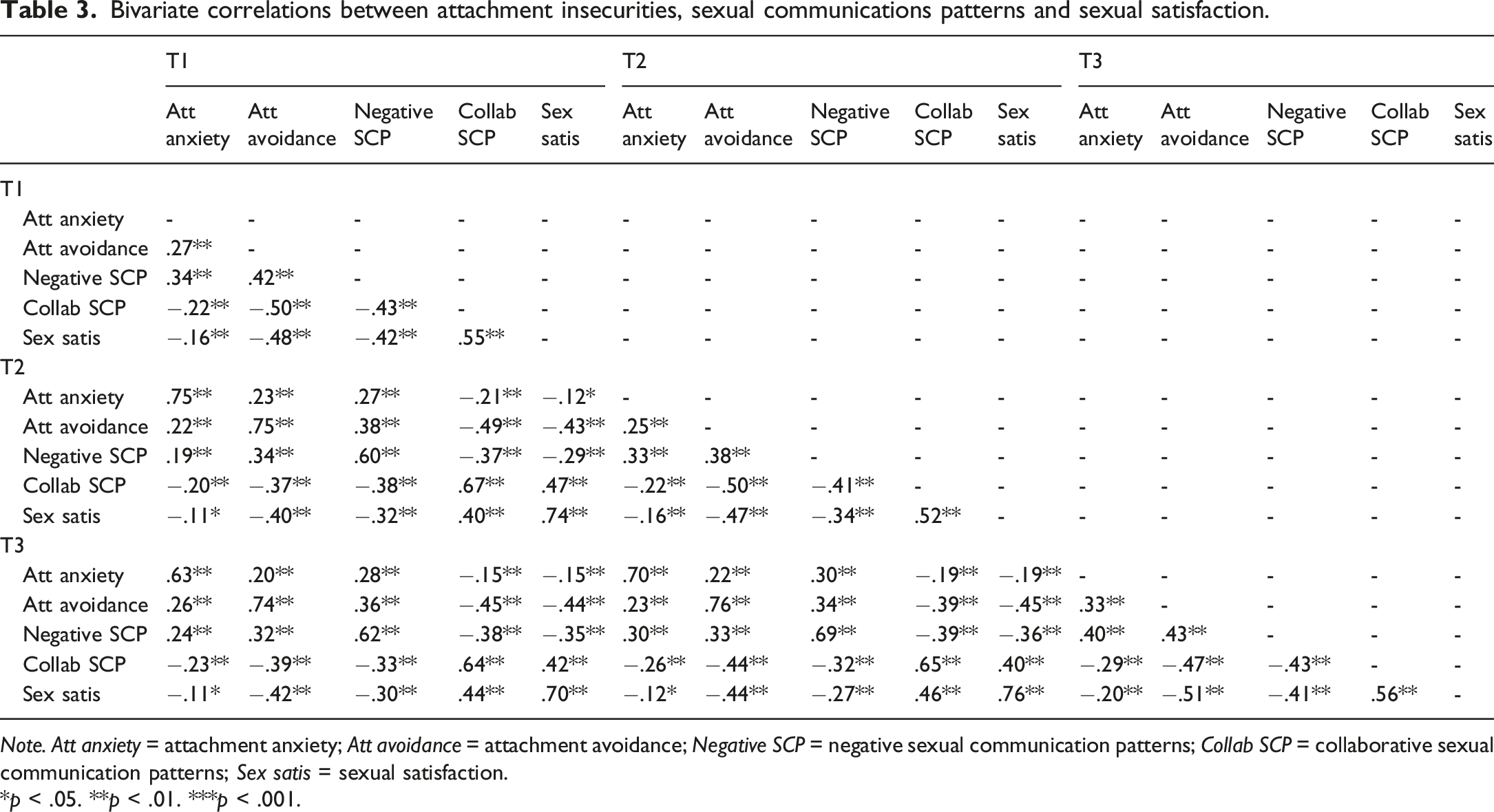
Note. Att anxiety = attachment anxiety; Att avoidance = attachment avoidance; Negative SCP = negative sexual communication patterns; Collab SCP = collaborative sexual communication patterns; Sex satis = sexual satisfaction.
*p < .05. **p < .01. ***p < .001.
Cross-lagged mediation panel model
Two models were tested, one for each pattern of sexual communication (i.e., negative and collaborative SCP.
Attachment, negative SCP and sexual satisfaction
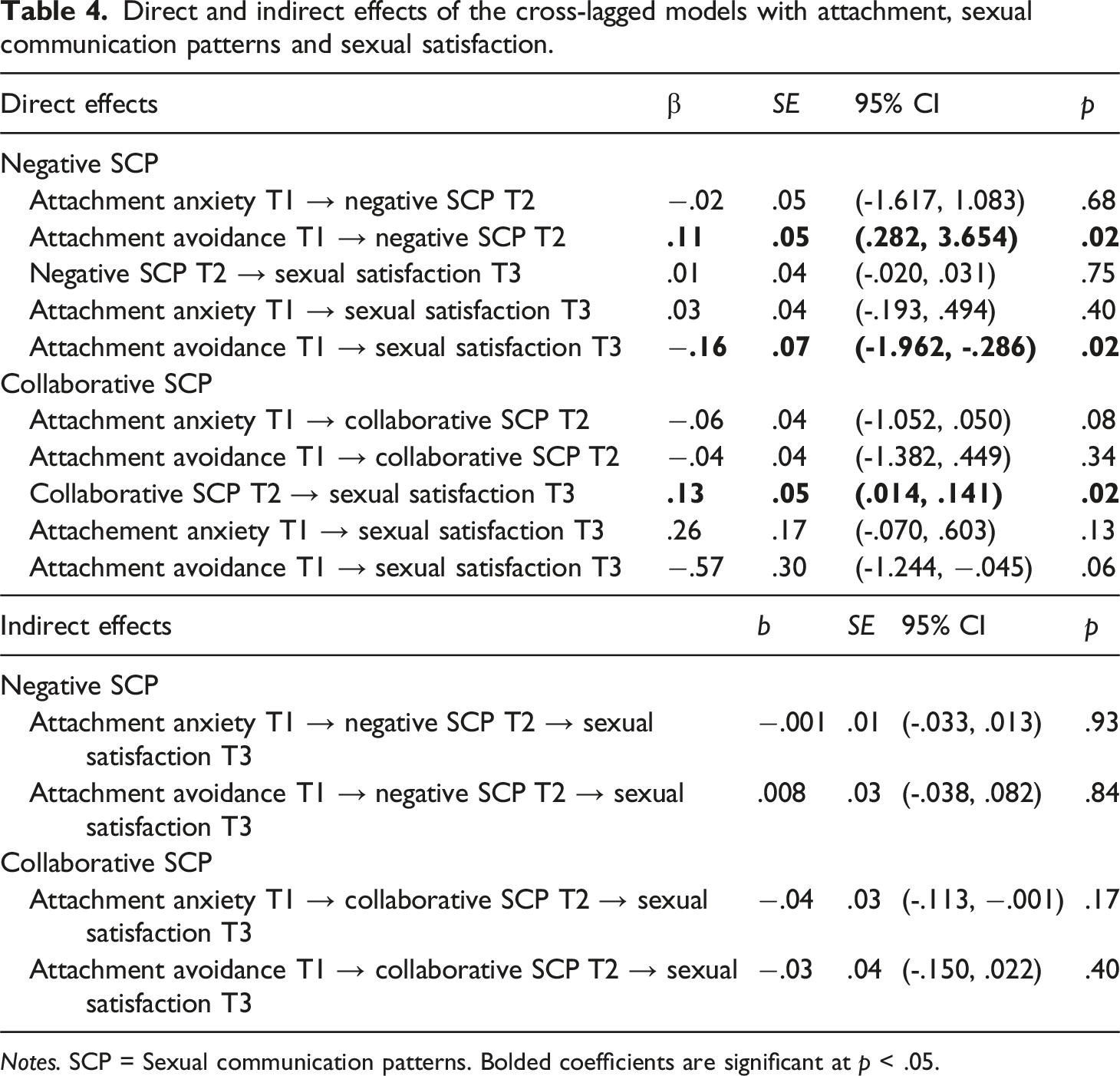
The auto-regressive model was tested first and had an acceptable fit to the data (χ2 (39) = 151.373, p = .000; CFI = .957; TLI = .934; RMSEA = .081, 90% CI [.067, .095]; SRMR = .090). Then, the cross-lagged paths were included to the model. The model had an acceptable fit to the data (χ2 (34) = 130.074, p = .000; CFI = .963; TLI = .935; RMSEA = .080, 90% CI [.066, .095]; SRMR = .075). Results showed that higher attachment avoidance at baseline predicted greater use of negative SCP at 6-month follow-up (H2a; β = .11, p = .024) and lower sexual satisfaction at 12-month follow-up (H1; β = −.16, p = .021).
Direct and indirect effects of the cross-lagged models with attachment, sexual communication patterns and sexual satisfaction.
Notes. SCP = Sexual communication patterns. Bolded coefficients are significant at p < .05.
Attachment, collaborative SCP and sexual satisfaction
The auto-regressive model was tested first and had an acceptable fit to the data (χ2 (38) = 174.759, p = .000; CFI = .949; TLI = .920; RMSEA = .090, 90% CI [.077, .104], SRMR = .106). Then, the collaborative SCP model including the cross-lagged paths was tested. The model had an acceptable fit to the data (χ2 (33) = 134.009, p = .000; CFI = .954; TLI = .917; RMSEA = .083, 90% CI [.069, .098]; SRMR = .087). We found that greater use of collaborative SCP at 6-month follow-up predicted higher sexual satisfaction at 12-month follow-up (β = .13, p = .020).
Bootstrap analyses revealed one significant indirect effect such that greater attachment anxiety at baseline was linked to lower sexual satisfaction at 12-month follow-up via lower collaborative SCP (H2b; b = −.04, 95% CI [−.113, −.001]). The coefficients, standard errors, confidence intervals and p-values for direct and indirect effects are shown in Table 4.
Discussion
The present study aimed to examine the mediating role of negative and collaborative sexual communication patterns in the longitudinal associations between attachment insecurities and sexual satisfaction. Results partially supported our hypotheses. Greater attachment avoidance at baseline was associated with lower sexual satisfaction 12 months later. In addition, two direct associations were found: greater attachment avoidance was associated with greater use of negative SCP six months later, and greater collaborative SCP was associated with greater sexual satisfaction six months later. Finally, one significant indirect effect was found and showed that lower collaborative SCP mediated the association between greater attachment anxiety and lower sexual satisfaction. These longitudinal findings extend the understanding of the mediating mechanisms between attachment and sexual satisfaction and underline the relevance of targeting how partners communicate about their sexuality in order to improve their sexual satisfaction over time.
The first hypothesis, which stated that attachment insecurities would be linked to lower sexual satisfaction over time, was partially supported as only greater attachment avoidance at baseline was associated with lower sexual satisfaction 12 months later. This novel result extends past cross-sectional findings (Rausch & Rettenberger, 2021) by showing that the association between avoidance and sexual satisfaction is robust over time, and suggests enduring effects of attachment avoidance on partnered individuals’ sexuality. Indeed, given avoidant individuals feel uncomfortable being close to others and tend to avoid sexual encounters, this could explain their lower sexual satisfaction.
In the indirect effects’ model, the first direct association showing that only greater attachment avoidance, and not anxiety, at baseline was associated with greater negative SCP six months later partially supported our second hypothesis. According to attachment theory (Bowlby, 1969), avoidant individuals tend to use deactivating strategies when their system detects a potential relational threat, meaning they will disengage to avoid feeling the frustration and distress caused by a situation (Mikulincer & Shaver, 2019). Other studies also showed that in comparison to less avoidant individuals, those who are more avoidant tend to overestimate the intensity of their partners’ negative emotions, which leads to an increase in their own hostile and defensive behavior (Feeney & Fitzgerald, 2019). Therefore, when a sexual problem arises, they might suppress it until it reaches a certain threshold and doing so might lead to the use of more negative SCP including blaming their partner and being dismissive of their feelings once they do try to discuss the issue, due to their built-up frustration and discomfort with intimacy – sexuality being a particularly intimate discussion topic among couples (Rehman et al., 2017).
The second direct association showed that greater collaborative SCP at the 6-month follow-up was associated with greater sexual satisfaction at 12 months. This result can be explained by the Interpersonal Exchange Model of Sexual Satisfaction (IEMSS; MacNeil & Byers, 2005), which suggests that sexual communication influences sexual satisfaction via two pathways. First, the expressive pathway suggests that sexual disclosure increases intimacy, which then increases sexual satisfaction. Beaulieu et al. (2022) have shown that the association between intimacy and sexual satisfaction is bidirectional. Therefore, the authors suggest that intimacy behaviors, such as self-disclosure, increase sexual satisfaction, but higher sexual satisfaction also leads to more intimacy behaviors as the individual might feel even more comfortable opening up due to the sense of security and trust that is established within the relationship. Second, the instrumental pathway proposes that sexual satisfaction is increased via a shift in sexual scripts that happens when partners discuss their preferences and develop a better understanding of each other’s needs (MacNeil & Byers, 2005). While both pathways suggested by the IEMSS used sexual communication measured as sexual self-disclosure, the result from the present study aligns with a meta-analysis showing that quality of sexual communication has a greater influence on sexual satisfaction than frequency of sexual communication and sexual self-disclosure (Mallory, 2022). Whereas our SCP measure focused on the behaviors of both partners before, during and after a discussion on sexual matters (Rancourt & Rosen, 2019), measures of sexual self-disclosure focus on self-disclosure regarding, for example, liking or disliking various sexual activities (Byers & Demmons, 1999). Although sexual self-disclosure increases sexual satisfaction, it has to be done in a positive and comprehensive way in order for partners to feel heard and comfortable sharing more (MacNeil & Byers, 2009), which demonstrates the importance of focusing on the way people discuss sexual matters more than the content of the discussion itself, which is what the present study aimed to do.
The second hypothesis concerning the mediating role of sexual communication patterns in the associations between attachment insecurities and sexual satisfaction was partially supported. Indeed, one mediation effect from greater attachment anxiety to lower sexual satisfaction via lower collaborative SCP was found. Collaborative SCP could explain this association as individuals higher in attachment anxiety may bring up sexual issues to reduce their anxiety and maintain connection, but perhaps their system’s hyperactivation prevents them from using collaborative strategies to resolve the issue (Mikulincer & Shaver, 2019). Therefore, they might be more eager and insistent in their attempts to discuss sexual problems that it becomes frustrating for both partners. The current study showed that anxious individuals might generally demonstrate behaviors that are less positive, such as being insistent and not being as understanding as sexuality-related conversations may require from both partners. This would be in line with previous findings showing that they are more likely to use insistent attempts to get close to their partner (Schrodt et al., 2014), in relation to their need for reassurance (Brennan et al., 1998). Given that their partner might not always be able to respond adequately to their demands – although without necessarily falling into negative behaviors such as blaming and critiquing – anxious individuals’ needs might not be fully met, which could lead to their using less collaborative sexual communication patterns. For example, they might be less inclined to propose solutions or share their feelings, while still being open to having a discussion.
Strengths, limitations and future studies
The present pre-registered study is the first to our knowledge to examine the longitudinal associations between attachment insecurities, SCP, and sexual satisfaction in a large and diverse sample of adults in romantic relationships, while accounting for the stability of these variables over time. By employing a cross-lagged mediation panel, we provided a robust method for understanding the dynamic, temporal relationships among these factors. Moreover, the large sample was inclusive in terms of sexual and gender diverse individuals compared to previous work on the study variables, which mainly focused on heterosexual men and women (Goldsmith et al., 2016; Khoury & Findlay, 2014; Timm & Keiley, 2011). Nevertheless, results must be interpreted in light of some limitations. First, the use of retrospective measures may have induced recall bias. Therefore, future studies should investigate sexual communication using observational or daily diary designs to increase ecological validity. Second, although participants needed to be in a committed relationship for at least one year and answered the surveys based on their own subjective experiences within their current relationship, both partners of the couple were not included, limiting our understanding of the couple’s dynamic. Third, fit indices were not excellent, highlighting the need to interpret the current results with caution. Lastly, given that only one mediation effect was found, the associations between attachment insecurities and sexual satisfaction could be explained by other variables that should be studied as possible mediators, such as emotion regulation.
Clinical implications
Findings highlight the importance for professionals helping more avoidant individuals in romantic relationships develop better communication skills when it comes to discussing their sexuality, as reducing their use of negative SCP could benefit their sexual satisfaction over time. Emotionally Focused Couples Therapy (EFCT, Feeney & Fitzgerald, 2019) could be one relevant intervention as its purpose is to shift the couples’ dynamics towards more secure bonds via the implementation of a safe space allowing for better support between partners and eventually, better communication (Feeney & Fitzgerald, 2019). In addition, directly fostering the use of collaborative SCP through sex and couple therapy intervention could enhance sexual satisfaction over time. Indeed, a randomized clinical trial assessing mediators of change in cognitive-behavioral couple therapy (CBCT) for genito-pelvic pain showed that helping couples develop more collaborative ways of discussing sexual problems, i.e., collaborative SCP, was a mechanism of change that contributed to both partners’ greater sexual well-being, including sexual satisfaction (Rancourt et al., 2022).
Conclusion
Findings of the present longitudinal study showed that attachment avoidance was linked to lower sexual satisfaction one year later and greater use of negative sexual communication patterns six months later. We also found that collaborative sexual communication patterns were associated with greater sexual satisfaction six months later. Further, results showed that greater attachment anxiety was associated with lower sexual satisfaction via lower collaborative SCP. Beyond contributing novel empirical evidence concerning the longitudinal associations between attachment, sexual communication and sexual satisfaction, these findings could provide new clinical targets for promoting a fulfilling sex life in individuals with attachment insecurities.
Footnotes
Declaration of conflicting interests
The authors declared no potential conflicts of interest with respect to the research, authorship, and/or publication of this article.
Funding
The authors disclosed receipt of the following financial support for the research, authorship, and/or publication of this article: Lydia Pedneault was supported by a Master’s level grant from the Social Sciences and Humanities Research Council (SSHRC) Canada Graduate Scholarships – Master’s (CGS M). This study was funded by a Canada Research Chair awarded to Sophie Bergeron.
Open Research Statement
As part of IARR’s encouragement of open research practices, the authors have provided the following information: The research was pre-registered. The aspects of the research that were pre-registered were the background, study questions, hypotheses and data analytic plan. The registration was submitted to Open Science Framework. The data and the material used in the research can be publicly posted and can be obtained at:  .
.
Ethical approval
This study was approved by the Université de Montréal’s Psychology and Education Research Ethics Committee (#CEREP-21-089-D) on September 2, 2021.
Informed consent
All participants provided written informed consent prior to participating.