




Abstract
Pet ownership and interactions with pets might influence humans’ positive affect and interactions with other humans. Some evidence suggests that there is a positive link between pet ownership and humans’ romantic relationship and friendship quality, but there has been very limited research. This experiment investigated the immediate and subsequent effects of pet presence and interactions with pets on adults’ positive facial emotional display and mood while they interacted with their romantic partner or friend (n = 164; 74 in romantic couple dyads and 90 in friend dyads) compared with a control object (stuffed dog toy). A standardized behavior coding tool developed for human-animal interaction research (OHAIRE-v3) was used to analyze the video data. The results showed that pet presence was linked to more positive facial expressions compared with stuffed animal toy presence, which seemed to be a short-term effect for those interacting with a friend and to have a lingering effect for those interacting with a romantic partner. The largest differences in positive facial expressions were observed between pet owners who had pet presence and non-pet owners who had toy presence, while there were smaller differences between pet owners who had pet presence and pet owners who had toy presence. Moreover, pet presence was linked to increased mood only in those interacting with a friend. The exploratory findings suggest that the cognitive presence of a pet might potentially still affect humans’ emotional displays while interacting with romantic partners, while the physical presence of a pet could have a more substantial effect on emotional displays. Participants’ perceived interactions with the pet during the experiment were positively linked to their facial expressions, while their observed interactions were not. Limitations of the existing measures and potential importance of pets’ interactive behaviors toward humans are highlighted.
Introduction
Human-animal interaction (HAI) research has been growing rapidly, and mixed findings regarding the benefits of pet ownership have been reported (Herzog, 2011; Scoresby et al., 2021). While some studies have found potential positive effects, such as better cognitive health and higher life satisfaction (Bao & Schreer, 2016; McDonough et al., 2022), other studies showed no effects or negative effects, including more depressive symptoms (Gilbey et al., 2007; Mueller et al., 2021; Parslow et al., 2005). Recent findings show that only specific elements of human-pet relationships (e.g., the frequency of pet presence during daily activities) might be linked to higher well-being rather than pet ownership on its own (Bennett et al., 2015; Cheung & Kam, 2018; Janssens et al., 2020), which might explain the contradictory findings. Moreover, HAI research has been frequently criticized for the use of weak methodology and lack of standardized measures (McCune et al., 2014; Rodriguez et al., 2018). The examination of behavioral data through observations in naturalistic settings is one of the main areas that requires further attention (Griffin et al., 2019). Therefore, this study aimed to observe the interactions between humans and their pets as well as human-human interactions in the presence of pets to examine their potential benefits.
Pets and human relationships
Pets are often considered members of the family and facilitate social interactions between humans (Schaefer, 2019). They can also influence how humans evaluate potential romantic partners, such as some people being more likely to be attracted to someone due to them having a pet and judging dates based on how they interacted with their pet (Gray et al., 2015). Cross-sectional research suggests that pets might be beneficial for both romantic relationships and friendships. Tallichet et al. (2023) found that the majority of dog owners believed that their dog enhanced their romantic relationships, although some also noted negative outcomes, such as jealousy and spending less time together. Although not regular pets, service dogs were also reported to have positive effects on the relationships between veterans and their romantic partners, such as increased affection and closeness (Williamson et al., 2024). Pet ownership was linked to greater overall relationship quality and partner responsiveness in adults (Cloutier & Peetz, 2016), and pet attachment was positively linked to communication with best friends (e.g., being able to talk about things that bother them) in adolescents (Marsa-Sambola et al., 2017). In previous research, the presence of a dog was linked to more frequent social interactions with strangers in adults (McNicholas & Collis, 2000), and many pet owners reported getting to know people in their neighborhoods and forming friendships with people they meet through their pets, particularly dogs (Wood et al., 2015). Moreover, they might receive several forms of social support (e.g., emotional, informational, and instrumental) through the friends they made through their pets. However, there has been limited research, and it is not clear how or why pets might positively impact human relationships.
Romantic relationship satisfaction has been found to be a significant predictor of well-being, including higher levels of life satisfaction and positive affect and lower levels of negative affect (Gómez-López et al., 2019; Londero-Santos et al., 2021). A recent systematic review also showed that friendship quality and socialization with friends were overall positively linked to humans’ well-being (Pezirkianidis et al., 2023). The presence of pets or interactions with pets could have a positive influence on the interactions between romantic couples and friends via increased positive affect, which could ultimately be linked to greater well-being.
Pets and positive affect
Observational studies using video recordings found that physical closeness and physical contact with dogs were linked to higher positive affect in pet owners during human-dog play sessions (Horowitz & Hecht, 2016), and daily interactions with a pet dog were positively linked to children’s levels of positive affect (Kerns et al., 2023). An experiment by Yoo et al. (2024) also found that interacting with an unfamiliar dog had a positive impact on humans’ moods, and Matijczak et al. (2024) found that interacting with one’s own dog after a stress-inducing task was linked to higher self-reported positive affect compared with the control conditions.
The presence of an animal was linked to higher levels of positive emotional display and more social behaviors toward other humans in both neurotypical and neurodiverse children compared with control experiments with objects (e.g., stuffed animal toys) in studies where a new standardized and validated coding tool, the Observation of Human-Animal Interaction for Research (OHAIRE), was used (Germone et al., 2019; Guérin et al., 2018; O’Haire et al., 2013). Behaviors and emotional display immediately before and after a session involving human-animal interactions, without the animal present, were only investigated in a study with horses, while the studies with other animals (e.g., dogs and guinea pigs) included observations only when the animal was present in the room. Pets could have a positive impact on humans’ romantic relationships and friendships by increasing the level of positive emotions displayed while interacting with others.
To our knowledge, there has been no observational study examining the effect of pets on emotional displays and mood during interactions between adult romantic couples or friends. Moreover, there has been no study on the effect of cats on humans’ emotional display and mood during interactions with others in general. These findings could inform friendship/relationship enhancement activities and couples therapy, particularly by encouraging partners to consider adopting a companion animal together, if it aligns with their lifestyles, to strengthen their bond. Previous studies that used the OHAIRE coding tool also did not examine the role of pet ownership, and most animals in the experiments were unrelated and unfamiliar to the participants. Overall, experimental HAI research has had a greater focus on the benefits of animal-assisted interventions and therapeutic contexts rather than the benefits of companion animals in the general population (Barrett et al., 2024).
Current research
This study used combined measures, addressing the methodological weaknesses identified in HAI research, to investigate how pet presence and interactions with pets might play a role in romantic relationships and friendships. Facial emotional displays of adult romantic couples and friend dyads in the presence of their pet dog or cat or a stuffed animal toy (control object) and immediately before and after being in the presence of/interacting with a pet or stuffed animal toy (without their presence) were coded using a standardized and validated behavioral coding tool and analyzed to explore how pets might affect the interactions between close humans. Human-pet interactions during the experiment were also measured with both the coding tool and self-reports of humans’ perceived interactions with the pet. Moods before and after interactions, pet attachment, attitudes toward pets in non-pet owners, relationship/friendship satisfaction, and well-being were also examined.
The primary hypotheses were: • H1. Being in the presence of a pet and interacting with a pet would be associated with both immediate and subsequent (when the pet is no longer present) increases in positive facial emotional display during interactions between romantic couples and between friends, which would be higher than what is observed in the presence of a stuffed dog toy (control object). • H2. Pet presence and interactions with a pet would have greater immediate and subsequent positive effects on mood than stuffed dog toy presence.
The secondary hypotheses were: • H3. Higher levels of human-pet interactions would be linked to higher levels of overall well-being and relationship/friendship satisfaction. • H4. Pet ownership, higher levels of pet attachment, and more positive attitudes toward pets in non-pet owners would be linked to greater romantic relationship satisfaction.
Method
The study received a favorable opinion from the University Research Ethics Committee (#2923-2021).
Participants
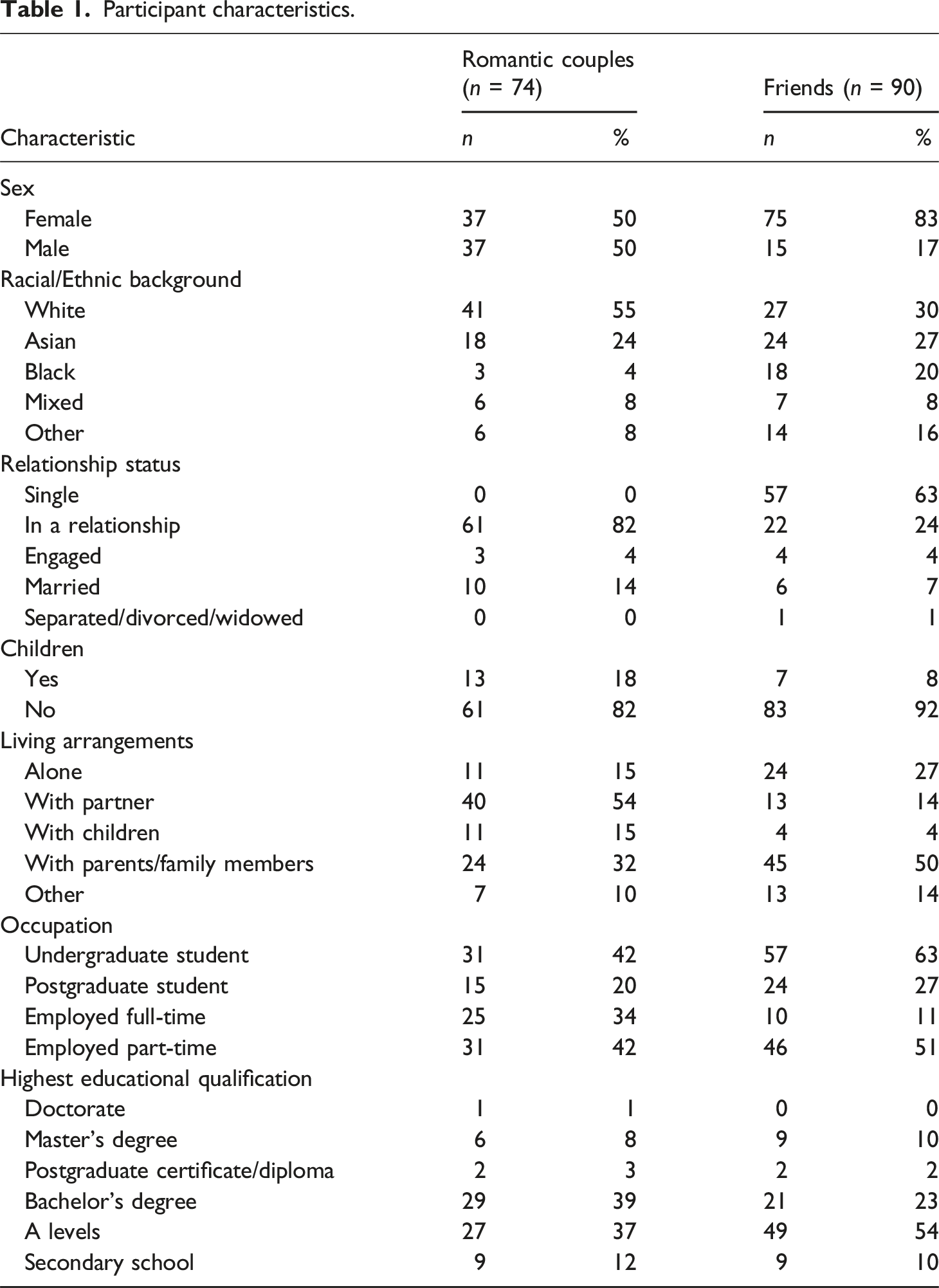
There were 164 participants (74 in romantic couple dyads and 90 in friend dyads), ranging in age from 18 to 63 years (M = 26.76, SD = 11.03). Overall, romantic couples were older (M = 30.12, SD = 13.32) than friends (M = 23.99, SD = 7.75), t (112) = 3.50, p < .001. The power analysis can be found in the supplemental materials.
Participant characteristics.
Pets and dyads
Twenty-five romantic couples involved at least one individual who had a pet cat or dog, and 12 couples were non-pet owners. One couple was excluded from the experiment analyses due to technical errors during data collection. Thirty friend dyads involved at least one individual who had a pet cat or dog, and 15 dyads were non-pet owners. Among current pet owners in the full sample, 65.5% had a dog, 54% had a cat, 19.5% had both a dog and cat, and 17.2% also had another type of pet (e.g., rabbit) in addition to their dog and/or cat. The length of current pet ownership for dogs and cats ranged from 1 month to 15 years (M = 5.05 years, SD = 3.88 years).
Dyads involving pet owners were randomized to one of two groups. Half of them brought their pet dog or cat to the session in the observation suite, and the other half did not bring their dog or cat (control group; stuffed animal toy used instead of a pet). Participant groups are shown in Figure 1. The three experiment groups will be referred to as PP (pet owners with a pet in lab), PT (pet owners with a toy in lab), and NT (non-pet owners with a toy in lab). Participant groups.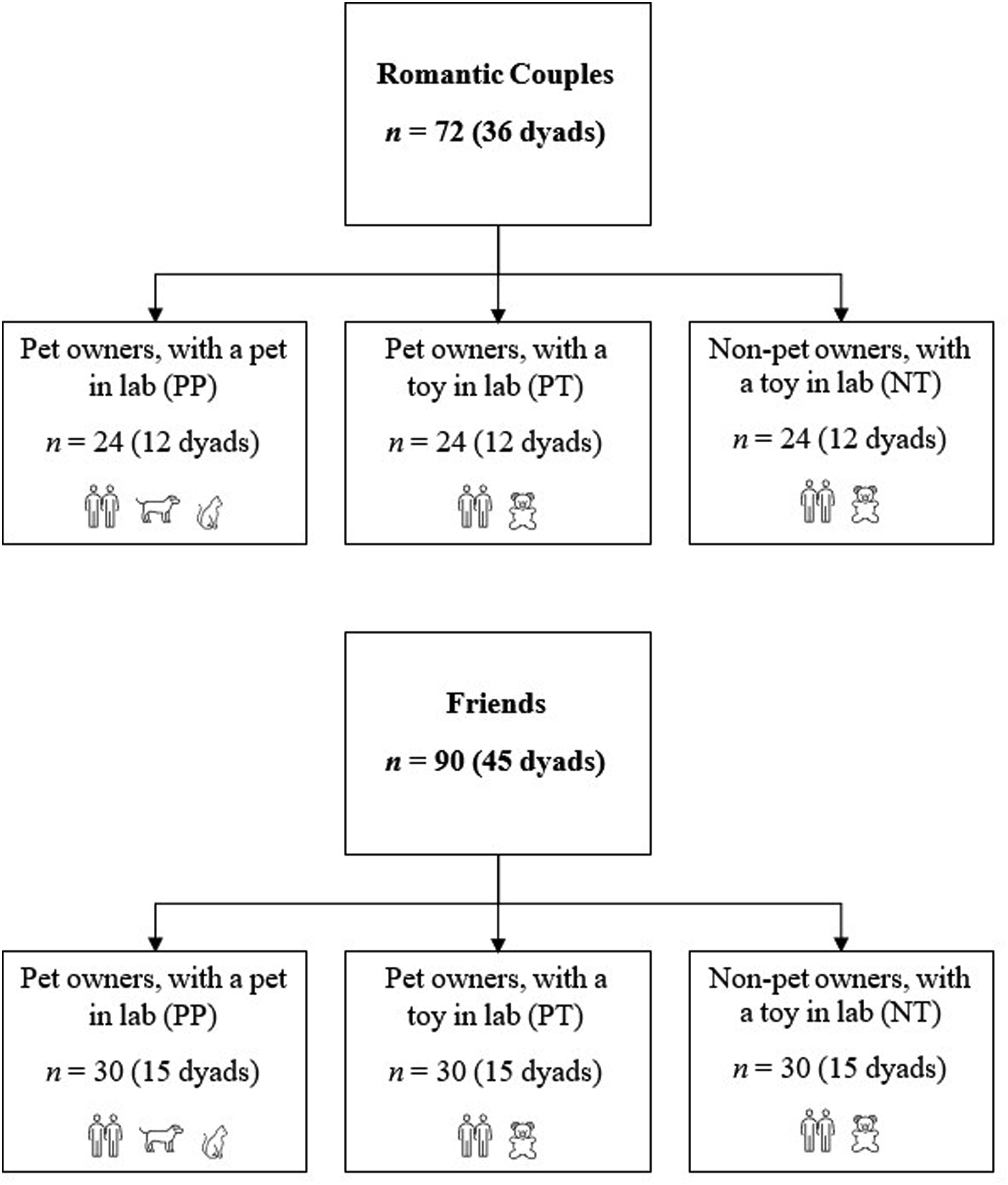
Pet owner control groups (PT) were included to explore whether pet owners might behave differently in their interactions with close others even without the presence of a pet or the effect of recent interactions with a pet, which could reveal the mechanisms underlying their potential links to positive romantic relationship and friendship outcomes.
Among the sessions with a pet in the lab, 18 involved a dog (8 in couples and 10 in friend dyads), and 9 involved a cat (4 in couples and 5 in friend dyads), with a wide variety in breed and size.
Measures
Behavioral analysis of social interactions
The experiment involved three unstructured 5-min sessions with video and audio recording. In Session 1 (S1; control 1), the dyad interacted with each other freely for 5 minutes (there was no pet or toy in the room). This was followed by Session 2 (S2; test), where the dyad interacted freely for 5 minutes in the presence of a pet dog or cat (or a large stuffed dog toy). Lastly, in Session 3 (S3; control 2), the pet or stuffed dog toy was removed from the room, and the first step was repeated with the pairs freely interacting for 5 minutes.
Objects that could facilitate both solitary activities (i.e., two magazines) and dyad activities (i.e., Connect Four board game) were present in the room in all sessions. In S2 where a pet was involved, dog or cat treats and toys were also placed in the room to enable varied interactions.
The behaviors observed in the video recordings of couples and friend dyads were coded using The Observation of Human-Animal Interaction for Research – Version 3 (OHAIRE-v3; Guérin et al., 2018). OHAIRE-v3 is the first and currently only published and validated standardized coding tool that measures human-animal interactions and humans’ emotional display in the presence of animals and immediately before and after interactions with animals. It is assumed to be suitable for use with most domesticated animal species, and the sessions that are coded are unstructured to allow free and willful interactions. It is designed to capture whether a certain behavior occurred in timed segments (one-zero sampling), where each minute of video is divided into 10-s intervals and each behavior receives a score between 0-6 in 1 minute of video. The OHAIRE coding tool was previously used with dogs, guinea pigs, and horses in samples of typically developing children, children with autism, and children with attention-deficit hyperactivity disorder between the ages of 5 and 18 years, with sessions ranging from 1 to 20 minutes (Germone et al., 2019; Guérin et al., 2018; O’Haire et al., 2013).
Positive facial emotional display
Participants’ positive facial emotional display (also referred to as “positive facial expressions”) in all sessions was examined. The score is determined by whether the participant smiled or laughed in each 10-s interval. The range of possible scores is 0–6 in each minute of video.
Human-animal interactions
Participants’ interactive behaviors with the pet (i.e., talk, look, gesture, touch, affection, and prosocial) were examined. The range of possible scores is 0–6 in each 10-s interval, with a final score between 0-36 in each minute of video. The “touch” behavior involves any intentional or unintentional physical contact, while “affection” involves physical or verbal affection (e.g., petting the animal or saying “you are so cute” to the animal). The “prosocial” behavior involves actions such as feeding or grooming the animal or picking up a toy the animal has dropped.
Questionnaires
Perceived human-animal interactions
Immediately after S2 where a pet was involved, participants were asked to complete the Human–Animal Interaction Scale (HAIS; Fournier et al., 2016). The HAIS measures the perceived behaviors displayed by both the human (14 items, including talking to the animal and hugging the animal) and the animal (10 items, such as making friendly sounds and licking the human). Participants rated the amount of interaction they experienced for each behavior on a 5-point scale, ranging from “not at all” to “a great deal”. The scale has demonstrated strong internal consistency in this study (Cronbach’s alpha = 0.81).
Mood before and after human-animal interactions
The Brief Mood Introspection Scale (BMIS; Mayer & Gaschke, 1988) was completed by each participant after the first, second, and third sessions as well as before the first session as a baseline measure (at four time points) to examine changes in mood. The Pleasant-Unpleasant scale of BMIS was examined, which involves 8 negative emotions (e.g., sad and grouchy) and 8 positive emotions (e.g., happy and calm). Participants rated how much they felt each emotion in the present moment on a 4-point scale, ranging from “definitely do not feel” to “definitely feel”. Cronbach’s alpha was 0.82.
The following questionnaires were all completed before the experiment.
Well-being
The WHO-5 Well-Being Index (WHO-5; Bech et al., 2003) was used to measure well-being. It has five statements (e.g., “I woke up feeling fresh and rested”). Participants rated how much each statement reflected how they had been feeling in the last two weeks on a 6-point scale, ranging from “all of the time” to “at no time”. Cronbach’s alpha was 0.80.
Relationship and friendship satisfaction
The Relationship Assessment Scale (RAS; Hendrick, 1988) was used to measure relationship satisfaction for romantic couples. It has seven items, such as “In general, how satisfied are you with your relationship?” and “How many problems are there in your relationship?”. Participants responded to each item on a 5-point scale, ranging from “low” to “high”. Cronbach’s alpha was 0.82.
The modified generic version of the RAS (RAS-G; Renshaw et al., 2011) was used to measure friendship satisfaction for the friend dyads. Similar to the original RAS, it has 7 items, including “In general, how satisfied are you with your relationship with your friend?”, which are responded to on a 5-point scale. Cronbach’s alpha was 0.73.
Pet attachment
The Lexington Attachment to Pets Scale (LAPS; Johnson et al., 1992) was completed by all pet owners. It has 23 items and three subscales: general attachment, people substituting, and animal rights/animal welfare. The general attachment subscale has 11 items, which include “My pet and I have a very close relationship”. The people substituting subscale involves seven items, such as “My pet means more to me than any of my friends”. The animal rights/animal welfare subscale consists of five items, which include “I feel that my pet is a part of my family”. Thinking about their current favorite pet (dog or cat), participants rated their agreement with each statement on a 4-point scale, ranging from “strongly disagree” to “strongly agree”. Cronbach’s alpha was 0.92 for total scale and 0.86 for general attachment, 0.83 for people substituting, and 0.73 for animal rights/welfare.
Attitudes toward pets
The Pet Attitude Scale-Modified (PAS-M; Munsell et al., 2004; Templer et al., 1981) was completed by all non-pet owners. It has 18 items, such as “I like house pets” and “Having pets is a waste of money”. Participants rated their agreement with each statement on a 7-point scale, ranging from “strongly disagree” to “strongly agree”. Cronbach’s alpha was 0.91.
Procedure
Participants were recruited via the university’s research participation system (SONA) and from local communities. Several participants were psychology students at the university and received course credit for their participation. There was no renumeration for participants from the community. The pets had no behavior problems or history of aggression, and all dogs were trained to respond to basic commands (e.g., “sit”). Data were collected between November 2021 and January 2024.
Participation was voluntary. After providing written consent, participants completed a demographic questionnaire and standardized questionnaires (i.e., WHO-5, RAS/RAS-G, and LAPS/PAS-M) via Qualtrics on computers in two separate research rooms where they had privacy. Then the experimental section of the study (please see the Measures section for details) took place in the observation suite, which was a large, carpeted room equipped with a couch, coffee table, and three cameras that captured different angles and were linked to a media recorder software on a computer in an adjacent room. The cameras were attached to the ceiling, creating a more naturalistic setting, and participants and their pets could move around the room freely in S2. The researcher was in a separate room, not visible to the participants, controlling the recording throughout all sessions. When participants brought a pet, the pet also stayed in that room with the researcher during S1 and S3. Participants generally sat on the couch, and the stuffed dog toy was placed on the coffee table in S2 control, where they could choose whether to engage with it.
Data analysis
The primary rater (first author) and a secondary rater (MSc Psychology student) completed the official OHAIRE-v3 training course prior to coding. The secondary rater was blinded to the study aims, design, hypotheses, analyses, and outcomes, although they were inevitably aware that some videos involved a pet or stuffed animal. In each 5-min video, the 60-s segments from minutes 0-1, 2-3, and 4-5 were coded in line with previous research (Ohaire et al., 2013), and the sum of scores from those three segments were calculated for each session. The ELAN software (2024) was used for precise timings of 10-s intervals as suggested by Guérin et al. (2018).
In total, 1458 minutes of video (9 minutes per individual, involving 3 minutes per session) were coded using the OHAIRE-v3. The primary rater coded all videos, and only their codes were used in the analyses. The secondary rater coded 20% of the videos, which involved all videos for 16 dyads. They were randomly selected and evenly distributed across romantic couple/friend and pet/no pet groups. Cohen’s kappa showed excellent inter-rater reliability between the coders (k = .90, p < .001).
There were minimal missing data (<15% items on the scale for one participant each for baseline mood, post-S1 mood, and HAIS and two participants for post-S3 mood), and the mean of the items answered by those participants was taken. The OHAIRE-v3 measures had wide ranges (0-18 in each session for positive facial expressions and 0-108 for human-pet interactions) and approximately normal distributions. Between-subjects and within-subjects (repeated measures) ANOVA analyses with Bonferroni adjustments were performed to examine differences in positive facial emotional display and mood between the three experiment groups (PP – pet owners with a pet in lab, PT – pet owners with a stuffed dog toy, and NT – non-pet owners with a stuffed dog toy) and across the three observation sessions in the full sample and the romantic couple and friend groups separately for a more detailed examination. In between-subjects comparisons, one outlier (identified as more than 3 standard deviations from the mean) was excluded from the S2 facial display analyses in the full sample and romantic couple subsample, and three outliers were excluded in the friend subsample. One outlier was excluded from the S3 mood analyses in the romantic couple subsample. In within-subjects comparisons, one outlier (identified with Mahalanobis distance) was excluded from the facial display and mood analyses in the full sample PP group, mood analyses in the full sample PT group and romantic couple subsample PP group, and facial display analyses in the friend subsample PP group.
Pearson’s correlations were performed to examine the relationships between observed human-pet interactions (OHAIRE-v3), perceived human-pet interactions (HAIS), positive facial expressions, mood, well-being, relationship/friendship satisfaction, pet attachment, length of pet ownership, and attitudes toward pets. Independent samples t tests were performed to examine differences in relationship/friendship satisfaction and well-being between pet owners and non-pet owners.
Results
Pet presence and positive facial expressions (H1)
Between-subjects differences
In the full sample, there were significant differences in positive facial emotional display between the three experiment groups during S2 and S3 (Figure 2(a) and Table 2). Post hoc pairwise comparisons showed that those who had pet presence in S2 had higher levels of positive facial expressions both while the pet was there and after the pet was removed in S3 compared with non-pet owners who had toy presence in S2. They also had more positive facial expressions than those in the pet owner control group during S2. Differences in positive facial emotional display in (a) Full sample, (b) Romantic couples, and (c) Friends across the three observation sessions. Note. Error bars represent standard errors (+/− 1). Between-subjects differences in positive facial emotional display and mood across the three observational sessions. Note. PP = pet owners – pet present in S2; NT = non-pet owners – toy present in S2; PT = pet owners – toy present in S2.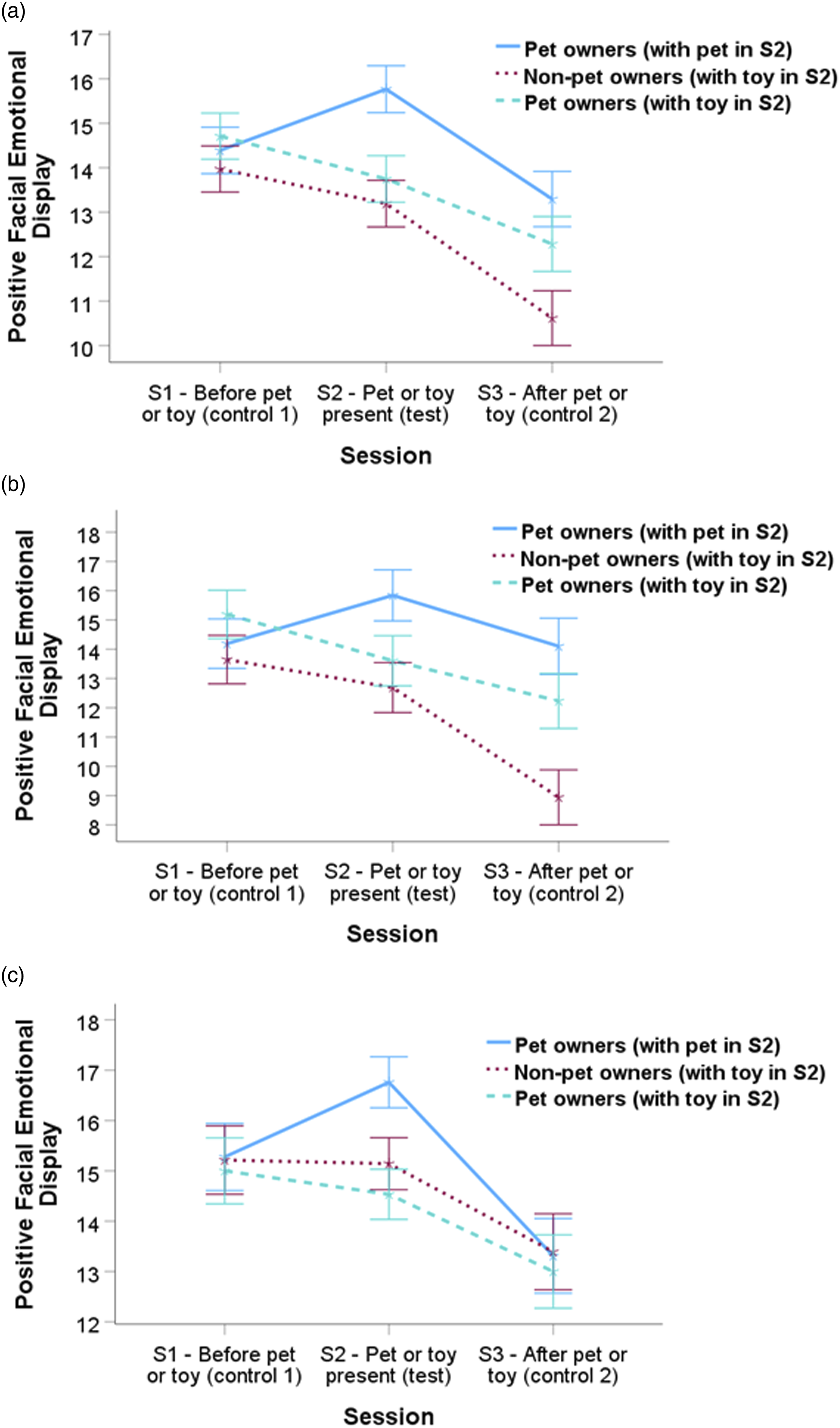
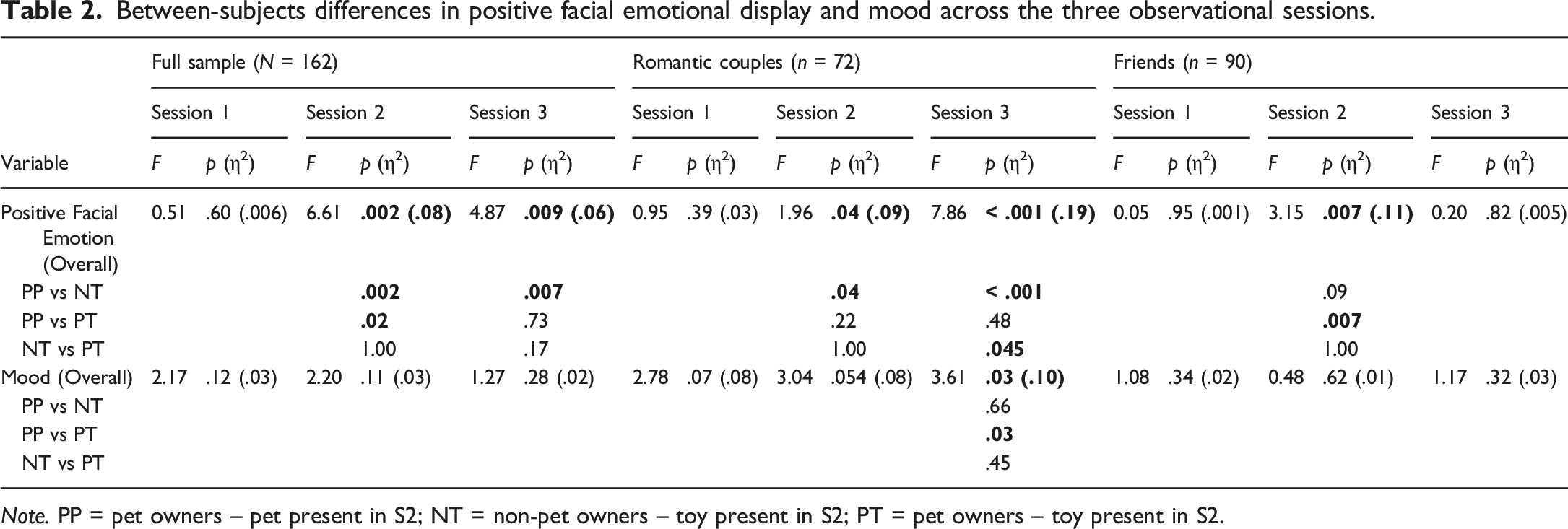
The data from romantic couples showed significant differences in S2 and S3 (Figure 2(b)). Post hoc comparisons revealed that those who had pet presence in S2 had higher levels of positive facial expressions both immediately and subsequently compared with non-pet owners who had toy presence, but not higher when compared with pet owners who had toy presence. Between the control groups with toy presence, pet owners had significantly higher levels of positive expressions than non-pet owners in S3.
The data from friends showed differences only in S2, with post hoc comparisons revealing higher levels of positive facial expressions in pet owners who had pet presence compared with pet owners who had toy presence (Figure 2(c)).
Within-subjects differences
Within-subjects differences in positive facial emotional display and mood across the three observational sessions.
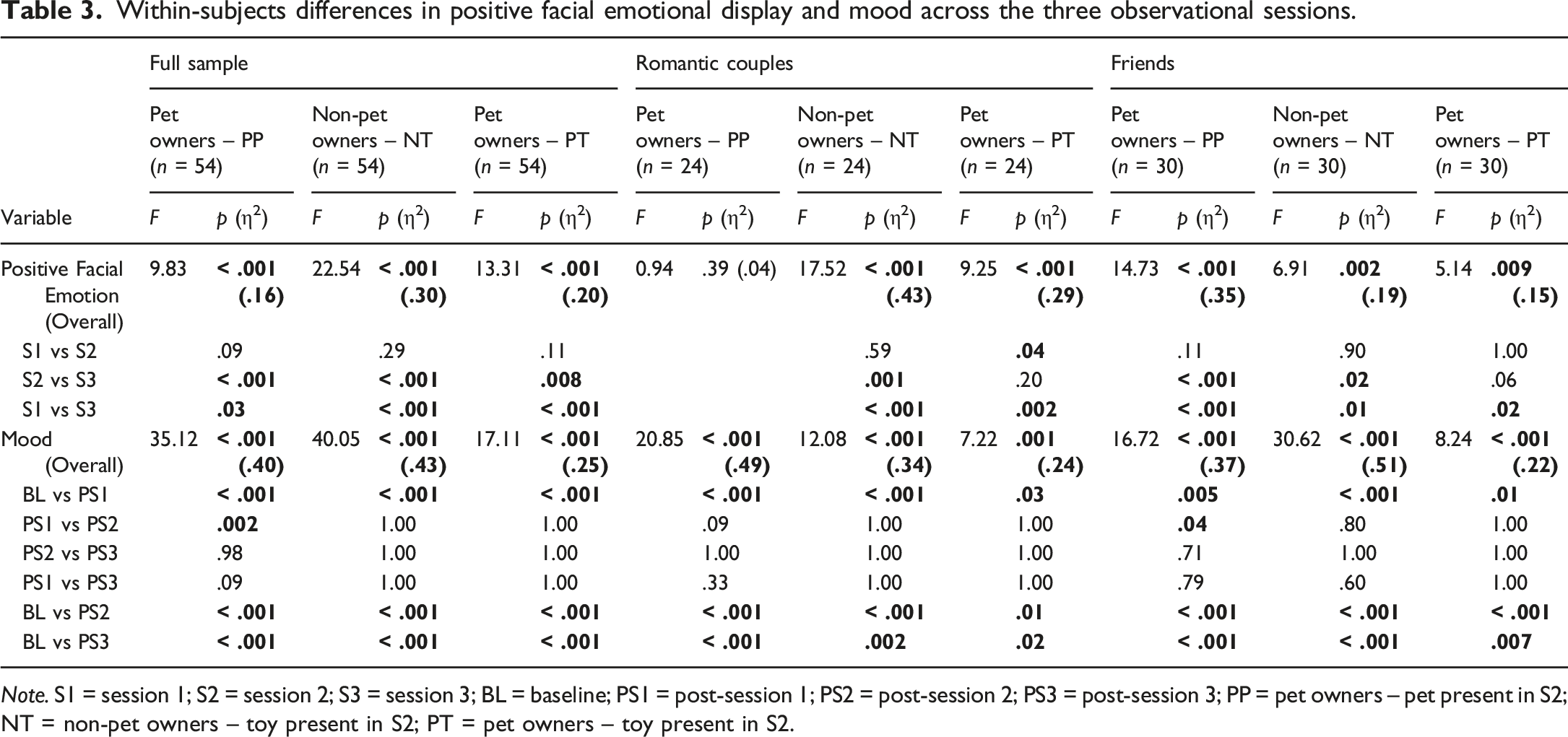
Note. S1 = session 1; S2 = session 2; S3 = session 3; BL = baseline; PS1 = post-session 1; PS2 = post-session 2; PS3 = post-session 3; PP = pet owners – pet present in S2; NT = non-pet owners – toy present in S2; PT = pet owners – toy present in S2.
The data from romantic couples showed differences only in the PT and NT groups (Figure 2(b)). Those in the control groups with toy presence had significantly lower levels of positive facial expressions in S3 than S1, while those in the PP group maintained similar levels of positive facial expressions across the three sessions. Pet owners who had toy presence had reduced levels of positive facial expressions in S2 compared with S1, but they maintained similar levels between S2 and S3.
The data from friends showed differences in all three experiment groups (Figure 2(c)). Post hoc comparisons revealed that pet or toy presence in S2 did not result in a significant change in any group compared with S1, but all experiment groups had lower levels of positive facial expressions in S3 compared with S1.
As secondary analyses, independent samples t tests showed that when a pet was present in S2, participants had similar levels of positive facial expressions whether they were participating with a partner (M = 15.02, SD = 4.41) or friend (M = 16.37, SD = 2.79), t (52) = 1.35, p = .18. Those participating with a partner (M = 13.92, SD = 4.18) and those participating with a friend (M = 13.33, SD = 3.99) also did not differ in their positive facial expressions in S3 after they had a pet present during S2, t (52) = −0.52, p = .60. Moreover, those who participated in the experiment with a romantic partner (M = 31.43, SD = 3.78) and those who participated with a friend (M = 31.93, SD = 2.70) had similar levels of relationship/friendship satisfaction, t (128.55) = 0.96, p = .34.
Pet presence and mood (H2)
Between-subjects differences
In the full sample and friend subsample, there were no significant differences in mood between the experiment groups after any session (Figure 3(a), and 3(c), and Table 2). Differences in mood in (a) Full sample, (b) Romantic couples, and (c) Friends at baseline and after each observation session. Note. Error bars represent standard errors (+/−1).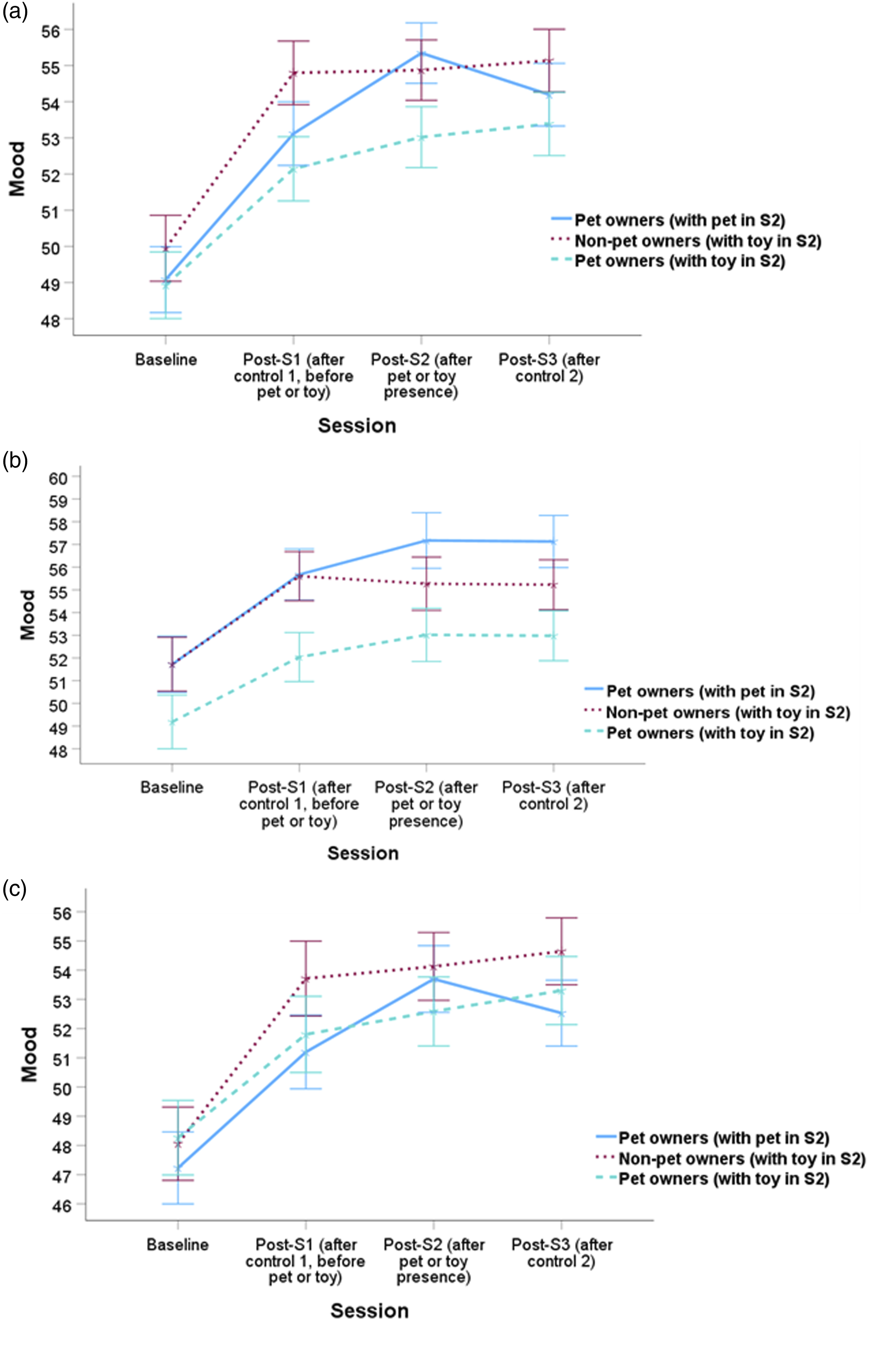
The data from romantic couples showed that pet owners who had pet presence in S2 had significantly higher moods after S3 compared with pet owners who had toy presence, but those who had toy presence also had a lower baseline mood and less pronounced increase across the sessions (Figure 3(b)).
Within-subjects differences
In the full sample, participants’ mood improved from baseline to post-S1 (Table 3 and Figure 3(a)). The difference in mood between post-S1 and post-S2 was only significant in the PP group, where participants’ mood increased immediately after pet presence. That difference was still significant in the friend subsample (Figure 3(c)), while pet or toy presence in S2 did not have a significant impact on mood in those participating with a romantic partner (Figure 3(b)).
Human-animal interactions, positive facial expressions, and mood (H1, H2)
There was a positive correlation between observed human-animal interactions (OHAIRE-v3) and participants’ perceived interactions with animals (HAIS), r (52) = .42, p = .001.
Participants’ positive facial emotional display in S1 was not linked to their observed interactions with the pet, r (52) = −.13, p = .37, or perceived interactions with the pet, r (52) = −.003, p = .98, in S2. Participants’ perceived interactions with the pet were positively correlated with their positive facial expressions in S2, r (52) = .27, p = .048, while their observed interactions were not, r (52) = .06, p = .68. Perceived interactions with the pet were not correlated with subsequent positive facial expressions in S3, r (52) = −.03, p = .84, and neither were observed interactions, r (52) = −.10, p = .47.
Participants’ observed interactions with the pet were not correlated with their self-reported mood immediately after S2, r (52) = .06, p = .65. Their perceived interactions were also not correlated with their mood after S2, r (52) = .02, p = .87.
Secondary hypothesis findings - Well-being, relationship/friendship satisfaction, pet ownership length, pet attachment, and attitudes toward pets (H3, H4)
Participants’ observed interactions with the pet in S2 were not correlated with their overall well-being (H3), r (52) = −.03, p = .81. Their perceived interactions were also not correlated with their well-being, r (52) = −.09, p = .54.
Romantic relationship satisfaction was not correlated with observed interactions (H3), r (22) = −.30, p = .16, or perceived interactions with the pet in S2, r (22) = .18, p = .41. Friendship satisfaction was not correlated with observed interactions with the pet in S2, r (28) = −.10, p = .59, but it was negatively correlated with perceived interactions, r (28) = −.39, p = .03.
Observed interactions with the pet in S2 were not linked to participants’ levels of pet attachment (total score), r (45) = .04, p = .79, general attachment, r (45) = .10, p = .51, people substituting, r (45) = .01, p = .97, or the animal rights/welfare subscale, r (45) = −.05, p = .76. Perceived interactions with the pet were also not linked to total pet attachment, r (45) = .20, p = .17, people substituting, r (45) = .13, p = .38, or animal rights/welfare, r (45) = −.07, p = .66. However, general attachment was positively correlated with perceived interactions with the pet in S2, r (45) = .33, p = .03.
There were no differences in well-being between pet owners (M = 14.39, SD = 4.71) and non-pet owners (M = 14.45, SD = 3.91), t (162) = 0.09, p = .93. The total length of pet ownership over the course of life was not linked to well-being, r (122) = −.03, p = .73. Well-being was also not linked to pet attachment, r (85) = −.02, p = .86, or attitudes toward pets, r (75) = −.03, p = .80. Friendship satisfaction was not linked to well-being, r (88) = .03, p = .78. However, romantic relationship satisfaction was positively correlated with well-being, r (72) = .34, p = .003.
There were no differences in romantic relationship satisfaction between pet owners (M = 30.71, SD = 4.34) and non-pet owners (M = 32.38, SD = 2.67), t (72) = 1.91, p = .06 (H4). There were also no differences in friendship satisfaction between pet owners (M = 32.37, SD = 2.88) and non-pet owners (M = 31.49, SD = 2.46), t (88) = −1.57, p = .12.
Only the people substituting subscale of pet attachment was positively correlated with romantic relationship satisfaction (H4), r (40) = .33, p = .03, while there were no associations with total pet attachment, r (40) = .26, p = .10, general attachment, r (40) = .18, p = .24, or animal rights/welfare, r (40) = .10, p = .54. Friendship satisfaction was not linked to total pet attachment, r (43) = .13, p = .41, general attachment, r (43) = .13, p = .39, people substituting, r (43) = .07, p = .64, or animal rights/welfare, r (43) = .17, p = .27.
Among non-pet owners, more positive attitudes toward pets were linked to higher levels of romantic relationship satisfaction (H4), r (30) = .47, p = .006, but not friendship satisfaction, r (43) = −.01, p = .95. The total length of pet ownership over the course of life was not linked to relationship satisfaction, r (59) = .15, p = .27, or friendship satisfaction, r (61) = .08, p = .55.
Discussion
This study investigated the effects of pet presence and human-animal interactions on adults’ positive facial emotional display and mood while interacting with a romantic partner or friend and explored the relationships between well-being, relationship/friendship satisfaction, pet attachment, length of pet ownership over the course of life, and attitudes toward pets. In the full sample, individuals who had a pet dog or cat in the room while interacting with their romantic partner or friend had higher levels of positive facial emotional display (i.e., smiling or laughing) than those who had a stuffed dog toy in the room, which supports the first hypothesis. This is consistent with previous findings that the presence of an animal (e.g., dogs and guinea pigs) and interactions with an animal might be linked to higher positive affect (Horowitz & Hecht, 2016; Kerns et al., 2023), including while in the presence of other people in interventions (O’Haire et al., 2013). Although there were no differences in mood between the experiment groups after any of the observational sessions in the full sample, those who had a pet in the room had an increase in their mood immediately after that session, while those who had a stuffed dog toy did not report mood changes. The mood increase seemed to be only significant among those who participated with a friend. These findings could provide some explanation for why pets might have a positive impact on friendships (Marsa-Sambola et al., 2017), depending on how much time friends spend together in the presence of their pets and their pet attachment levels.
There was also evidence for a lingering effect of the previous presence of a pet, where those who interacted with a romantic partner and had a pet in the room continued to display similar levels of positive emotions even after the pet was removed from the room, while positive facial expressions significantly reduced among romantic couples who were non-pet owners after the stuffed dog toy was removed. Interestingly, pet owners who had toy presence (control group) did not have a significant reduction in their positive facial expressions, which suggests that there might be some differences in the way pet owners interact with close others compared with non-pet owners that are independent from the physical presence of a pet. A potential explanation for this could be that pet owners who did not bring their pet to the lab seemed to often talk about their pet during the session with the stuffed dog toy, as they were aware that the study was about pet ownership. Similarly, Zilcha-Mano et al. (2012) found that humans who were securely attached to their pet dogs or cats had similar psychological and physiological benefits during distress-eliciting tasks whether their pet was physically in the room or cognitively present after they were asked to write a description of their pet and their relationship with it (without the pet in the room). This suggests that both the cognitive and physical presence of a pet could have protective effects on humans and might explain the differences between pet owners in the control condition and non-pet owners. The lingering effect of pet presence could provide some explanation for why pet ownership might be positively linked to romantic relationship quality (Cloutier & Peetz, 2016). In contrast, there was a significant reduction in positive facial emotional display among friends after the pet was removed from the room, suggesting that the lingering effect of pet presence might be specific to interactions between romantic couples. Therefore, pets might have a more short-term effect and be a greater social lubricant between friends in comparison with romantic couples who may have more intimate relationships. It is important to note that while all participants had been friends or in a romantic relationship for at least 3 months, those participating with a friend were not required to identify themselves as close friends or best friends. However, friendship and relationship satisfaction levels were similar between the groups.
Interestingly, participants’ observed interactions with the pet were not linked to their positive emotional display, but there was a positive link between their perceived interactions with the pet and positive emotional display. While the OHAIRE-v3 coding tool focuses on humans’ behaviors toward animals, the HAIS self-report questionnaire also captures animals’ behaviors toward humans, such as whether they initiated friendly interaction or accepted food. It also includes negative behaviors, such as the animal declining or avoiding interaction. These findings highlight some limitations of the OHAIRE-v3 coding tool and the importance of animals’ behaviors toward humans in human-animal interactions. On the other hand, observed or perceived interactions with the pet were not linked to humans’ self-reported mood, which does not support the hypothesis. While positive facial emotional displays were observations, participants’ moods were their perceptions, and combining both types of measures is a strength of this study.
Higher levels of human-pet interactions during the experiment were not associated with participants’ overall well-being or romantic relationship satisfaction. Interestingly, friends who had lower friendship satisfaction with their pair had higher levels of perceived interactions with the pet during the experiment. This could be because the lower quality they perceived their friendship to be, the more they focused on the animal in the room rather than their friend. There were no differences in relationship satisfaction between pet owners and non-pet owners. However, among romantic couples, non-pet owners who had more positive attitudes toward pets and pet owners who had higher levels of people substituting attachment to their pets had higher levels of relationship satisfaction with their partners. Moreover, relationship satisfaction was positively linked to well-being. This indicates that people substituting might not necessarily be an unhealthy type of pet attachment for everyone despite its overall negative links to well-being and resilience in previous research (Barklam & Felisberti, 2023). While that subscale suggests that the pet plays a more central role than humans in the owner’s life, romantic partners might be an exception to this, as the items in the subscale include “My pet means more to me than any of my friends” and “I love my pet because he/she is more loyal to me than most of the people in my life”. Pet ownership, pet attachment, and positive attitudes toward pets were not associated with friendship satisfaction. These findings also support the idea that pets and personal characteristics linked to having affinity for pets might have longer-term effects on romantic couples than friends, although there could be different results for close friends or best friends, and it is important to note the correlational nature of some of these results.
Observational studies with randomized designs and control conditions have advantages over self-reported surveys (Griffin et al., 2019; Rodriguez et al., 2018). However, although participants did not know the hypotheses, they were aware that they were in an experiment and being filmed, which might have led to interactions and emotional displays that might differ from how they behave when they are not being observed (McCambridge et al., 2014). This is expected to have been attenuated by the discreet placement of the cameras in the experiment room. Another limitation is that participation was voluntary, and most participants had high levels of relationship and friendship satisfaction. Future studies should examine the effects of pet presence and human-pet interactions on romantic couples who have low or moderate relationship satisfaction. Although care was taken by examining intraclass coefficients for independence and cross-checking the results with an alternative summary-statistics approach (using dyadic-level data with average scores) that led to our decision to use the full sample of individuals to preserve statistical power in this exploratory study (Kenny et al., 1998; McNabb & Murayama, 2021), future research with dyads should obtain larger samples and consider other statistical methods as appropriate. The experiment in this study seemed to work well with both dogs and cats, as the cats were also open to exploring the room and interacting with their owners and their friend/partner as well as the cat toys and treats provided, which should be encouraging for future researchers.
Conclusions
This exploratory study investigated the effects of pet presence and interactions with pets on humans’ emotional display and mood while they interacted with their romantic partner or friend. The findings suggest that the effects of pet presence on humans’ positive facial expressions might be more immediate and short-term during interactions between friends, while there might be a lingering effect for romantic couples. Pet presence also seemed to improve mood, particularly for those who interacted with a friend. Observed or perceived human-animal interactions were not linked to well-being or relationship satisfaction. However, non-pet owners who had more positive attitudes toward pets and pet owners with higher levels of people substituting attachment to their pets had higher romantic relationship satisfaction, warranting a more detailed examination of different types of pet attachment. Humans’ perceived interactions with the pet were positively linked to their facial expressions, while their observed interactions were not, which highlights limitations of the OHAIRE-v3. Researchers should incorporate animals’ behaviors toward humans in future standardized coding tools to be more comprehensive. These findings may have meaningful applications for interpersonal relationships in daily life, where individuals could explore spending more time with their partner or friends in the presence of their pets to potentially enhance their moods and interactions. Therapeutic approaches could involve discussions about whether having a companion animal together may enhance communication and relational satisfaction between partners.
Supplemental Material
Supplemental Material - The effects of pets and human-pet interactions on humans’ romantic relationships and friendships
Supplemental Material for The effects of pets and human-pet interactions on humans’ romantic relationships and friendships by Ece Beren Barklam and Fatima Maria Felisberti in Journal of Social and Personal Relationships.
Footnotes
Acknowledgements
The authors would like to thank the participants and their pets.
Declaration of conflicting interests
The authors declared no potential conflicts of interest with respect to the research, authorship, and/or publication of this article.
Funding
Ece Beren Barklam was awarded funding for the experiment materials by the Kingston University Graduate Research School.
Ethical approval
The study received a favorable opinion from the Kingston University Research Ethics Committee (#2923-2021).
Consent to participate
All participants provided written informed consent prior to participating.
Open research statement
As part of IARR’s encouragement of open research practices, the author(s) have provided the following information: The research was not pre-registered. The data used in the research are publicly accessible at: https://osf.io/nzug3/?view_only=60248ccc475243819af520ee06203198. The materials used in the research (standardized questionnaires and coding tool) are copyrighted by the original researchers/publishers. The questionnaires can be found in the original articles that are referenced in the manuscript, and more information about the OHAIRE-v3 training course, which includes the coding manual, can be found here: 
Data Availability Statement
Supplemental Material
Supplemental material for this article is available online.
References
Supplementary Material
Please find the following supplemental material available below.
For Open Access articles published under a Creative Commons License, all supplemental material carries the same license as the article it is associated with.
For non-Open Access articles published, all supplemental material carries a non-exclusive license, and permission requests for re-use of supplemental material or any part of supplemental material shall be sent directly to the copyright owner as specified in the copyright notice associated with the article.
