




Abstract
Decision making is a fundamental aspect of relationships, as romantic partners often evaluate costs and benefits of their relationship and contemplate whether to maintain it. A key factor that has repeatedly been shown to influence decision-making processes is need for closure, that is, the desire to quickly obtain a definitive answer or solution. Individuals who strongly desire closure prefer the status quo, seek familiarity, and dislike uncertainty, which might strengthen their intention to maintain an enduring relationship. Across five studies recruiting university students and community samples, we explored, for the first time, the role of need for closure in relationship commitment. In Study 1, individuals with a higher need for closure reported greater commitment to their romantic relationships. Studies 2a and 2b replicated these findings and showed that relationship satisfaction and investment, but not alternative quality, may explain the link between need for closure and commitment. Study 3 revealed that need for closure was linked with willingness to sacrifice—a downstream consequence of commitment. Using a three-wave longitudinal design, Study 4 found that within-person variation in need for closure was small, and need for closure explained mainly between- (but not within-) person differences in commitment. This study failed to replicate the mediating role of relationship satisfaction and investment observed in Studies 2a and 2b, thereby indicating caution in interpreting mechanisms suggested by our prior studies. Overall, the findings demonstrated a consistent between-person association of need for closure with relationship commitment, and revealed important research avenues to further understand how individual differences in decision making predict commitment.
Introduction
Romantic relationships rarely resemble the perfect happily ever afters in movies. Once people find “the one” they have to continuously decide, either at a conscious or an unconscious level, whether to maintain the relationship. They might do so by contemplating the relationship’s costs and benefits. If remaining in the relationship is perceived as more rewarding than costly, people are more willing to maintain their relationship and are more committed to it (Interdependence Theory; Thibaut & Kelley, 1959). However, according to judgment and decision-making research, people are not always rational when assessing costs and benefits (Kahneman et al., 1991). A key factor that has repeatedly been shown to bias cost-benefit assessments in decision making is need for closure, which is characterized by a desire to quickly obtain a definitive answer or solution (Kruglanski & Webster, 1996). Individuals high in need for closure tend to prefer the status quo, seek familiarity, and dislike uncertainty (Kruglanski, 2004; Mannetti et al., 2007; Otto et al., 2016)—processes that are also known to affect interpersonal relationships (Gunaydin et al., 2018; Joel et al., 2013; Joel & MacDonald, 2021). Although the correlates of need for closure have been widely investigated in decision-making research, this dispositional difference has so far received no attention from relationship scientists. Given that decision making is a fundamental aspect of relationships and decision strategies used in romantic relationships are similar to those used in other decision-making domains (Joel et al., 2013), the present research aimed to examine, for the first time, the role of need for closure in relationship commitment.
Need for closure and relationship commitment
Need for closure (NFC) is the motivation to obtain a definite answer to a question or a solution to a problem and makes people behave in ways that will quickly achieve and preserve closure (Kruglanski, 1989; Kruglanski & Webster, 1996). When faced with uncertainty, high NFC individuals experience increased arousal (Roets & Van Hiel, 2008) and hence put significant effort into rapidly arriving at a decision to avoid uncertainty (Jaśko et al., 2015; Kruglanski, 2004). Uncertainty avoidance of high NFC individuals might make them averse to romantic breakups because the prospect of leaving behind a relationship brings about considerable uncertainty such as how to restructure life without one’s partner (Berger & Calabrese, 1975; Tong, 2013). Therefore, high NFC individuals might show greater commitment to their existing relationship in an effort to avoid uncertainties associated with a breakup.
Once closure is achieved, high NFC individuals rely on their current state to make it enduring (Kruglanski & Webster, 1996). As a result, high NFC individuals attribute greater value to their existing state (endowment effect; Kahneman et al., 1991; Thaler, 1980), are unwilling to initiate change (status quo bias; Samuelson & Zeckhauser, 1988) and put more emphasis on losses associated with changes than gains (loss aversion; Kahneman & Tversky, 1984), thus demonstrating a strong preference for the status quo (Kruglanski & Webster, 1996; Otto et al., 2016). In romantic relationships too, high NFC individuals might be more inclined to preserve the status quo, which in this case is their existing relationship (Gunaydin et al., 2018), and this might manifest itself as high relationship commitment.
Finally, high NFC individuals tend to prefer familiar options in an effort to avoid ambiguity and uncertainty, and experience considerable regret after choosing unfamiliar options (Mannetti et al., 2007). In the romantic realm, one’s current relationship provides a sense of familiarity and safety (Holmes & Johnson, 2009; Klohnen & Luo, 2003). Therefore, familiarity seeking of high NFC individuals might be translated into wanting to stay in the same relationship for a long while and being averse to initiating a breakup. Overall, our theoretical analysis suggests that qualities of high NFC individuals—status quo preference, uncertainty avoidance, and familiarity seeking—might strengthen their intention to maintain an enduring relationship. Therefore, we predicted that high NFC individuals would be more committed to their current romantic relationship.
Strong relationship commitment experienced by high NFC individuals may also motivate them to engage in relationship maintenance behaviors such as willingness to sacrifice. Romantic partners do not always share the same preferences, and they experience greater stress, negative affect, and lower relationship satisfaction when they encounter situations in which their interests diverge (Righetti & Impett, 2017). One way to resolve these situations, which helps maintain the relationship, is for partners to sacrifice their self-interest for the greater good of the relationship (Van Lange et al., 1997). However, people are not willing to sacrifice to the same extent; while certain individuals readily forego their self-interests, others become hesitant to do so. One robust predictor of willingness to sacrifice has been shown to be relationship commitment (Powell & Van Vugt, 2003; Wieselquist et al., 1999). Individuals highly committed to their relationship rely more on their partner and become more willing to sacrifice to maintain their relationship. If high NFC individuals are more committed to the relationship, they may also be motivated to act in ways that would help maintain it. Therefore, high NFC individuals might show greater willingness to sacrifice via higher relationship commitment.
Exploring mechanisms linking need for closure to commitment
Relationship satisfaction, investment size, and quality of alternatives, which according to the Investment Model are robust predictors of relationship commitment (Rusbult, 1980), might mediate the association between NFC and commitment. Based on characteristics of high NFC individuals, there are theoretical reasons to believe that NFC would predict relationship satisfaction, investment size, and quality of alternatives.
First, individuals high in NFC may experience greater relationship satisfaction due to their preference to maintain the status quo. One of the hallmarks of status quo preference is ascribing greater value to the status quo, especially when one identifies with (Dommer & Swaminathan, 2013) and develops an emotional attachment to it (Shu & Peck, 2011). In romantic relationships, the status quo is staying with our current partners (Gunaydin et al., 2018), who we include in our self-concepts and show deep emotional attachment to (Aron & Fraley, 1999). Therefore, individuals who show greater status quo preference in romantic decisions might also value their current romantic relationship to a greater extent. Indeed, individuals who showed stronger status quo preference in romantic scenarios also tended to ascribe more positive and fewer negative traits to their current partner (Gunaydin et al., 2018). Given that high NFC individuals tend to show strong status quo preference (Otto et al., 2016), they might value their current relationship to a greater extent, which might manifest itself as greater relationship satisfaction. Therefore, we expected that high NFC individuals would demonstrate greater relationship satisfaction, which, in turn, would be associated with greater relationship commitment.
Second, high NFC individuals may tend to invest more in their romantic relationships due to high uncertainty avoidance (Jaśko et al., 2015). When individuals invest in their romantic relationships, many aspects of their lives—such as social networks, finances, and leisure time activities—become inextricably intertwined with the partner, providing a sense of structure that might help reduce uncertainties in the relationship. Perhaps the quintessential source of uncertainty in a relationship is the prospect of a breakup. Ending a romantic relationship creates considerable turmoil in one’s life (Field, 2011; Sbarra & Ferrer, 2006) and even leaves individuals uncertain about who they are without their partner (Slotter et al., 2010). To prevent uncertainties associated with the prospect of a breakup, individuals who desire closure may be motivated to invest more in their relationship in an effort to make it more long-lasting. Therefore, we predicted that high NFC individuals would report investing more in their relationships, which, in turn, would be associated with greater commitment.
Finally, high NFC individuals may be inclined to derogate alternatives to the relationship due to their familiarity seeking. Past work on interpersonal attraction showed that individuals prefer familiar (vs. unfamiliar) others (Moreland & Zajonc, 1982), partly because familiarity helps one cope with stress and arousal induced by uncertainty (Lee, 2001; Vanbeselaere, 1980). This preference is exacerbated for high NFC individuals who seek familiarity in an effort to avoid ambiguity and uncertainty (Mannetti et al., 2007). Since romantic alternatives are much less familiar than one’s current partner, high NFC individuals may perceive alternative mates as relatively unappealing. Therefore, we predicted that people with high NFC would derogate alternatives to the relationship, which, in turn, would predict greater relationship commitment.
Based on these arguments, we explored whether relationship satisfaction, investment size, and alternative quality mediated the association between NFC and commitment.
Research overview
To study the role of NFC in relationship commitment and willingness to sacrifice as well as to explore the mechanisms linking NFC to commitment, we conducted four cross-sectional studies and one longitudinal study. In Study 1, we tested the direct association between NFC and relationship commitment in a sample of university students from Turkey (N = 357). Next, we tested whether the Study 1 findings would replicate in a second sample of university students residing in Turkey (Study 2a; N = 380) and a sample of panel respondents (recruited via Prolific) residing primarily in the United Kingdom (Study 2b; N = 598). Studies 2a-b also explored the potential mechanisms accounting for the association between NFC and commitment–namely, relationship satisfaction, investment size, and quality of alternatives. Given past work linking Big-Five personality traits to NFC (Neuberg et al., 1997; Stalder, 2007; Weary & Edwards, 1994), Study 2a analyses also controlled for Big-Five traits to rule out their possible role in the link between NFC and commitment. In Study 3, we recruited a community sample from Turkey (N = 508) to explore whether NFC is associated with a relationship maintenance behavior—willingness to sacrifice—through commitment. In Study 4 (N = 270), we recruited another community sample from Turkey and tested the longitudinal association between NFC and commitment using three waves of data over a three-month period to explore the direction of the association between the two constructs 1 .
All materials, data, and analytic code are available at the Open Science Framework Database, https://osf.io/rzdh7/?view_only=2dc39444b36f4084a4b14d71d70b5e8f.
Study 1
Method
Participants
Three hundred and fifty-eight university students from Istanbul, Turkey completed an online survey for course credit. We excluded one participant who was not in a romantic relationship, leaving 357 participants (231 women) whose age ranged from 18 to 43 years old (M = 21.70, Median = 22, SD = 2.00) and who were currently in a relationship (88.8% dating, 9.2% living together, 1.4% engaged, 0.6% married; relationship duration ranged from .50 months to 19.33 years, M = 1.83 years, Median = 1.33, SD = 1.84). A sensitivity power analysis using G*Power (Faul et al., 2007) revealed that the minimum standardized association that our sample could detect with 80% power and alpha = .05 was .14.
Measures
Need for closure
Participants responded to the 41-item Revised Need for Closure Scale (Roets & Van Hiel, 2007; Webster & Kruglanski, 1994) on a Likert scale from 1 (strongly disagree) to 7 (strongly agree). The measure included five subscales: order (e.g., “I enjoy having a clear and structured mode of life.“), predictability (e.g., “I don’t like to be with people who are capable of unexpected actions.''), decisiveness (e.g., “When I have made a decision, I feel relieved.”), ambiguity (e.g., “I don’t like situations that are uncertain.“), and closed-mindedness (e.g., “I do not usually consult many different opinions before forming my own view.“). Items were reverse coded when needed such that higher numbers indicated greater NFC. Items assessing order, predictability, decisiveness, and ambiguity were averaged to calculate NFC (M = 4.99, SD = .68, α = .87) 2 .
Commitment
Participants completed the commitment subscale of the Investment Model Scales (Rusbult et al., 1998). Participants rated 7 items (e.g., “I am committed to maintaining my relationship with my partner.”) on a Likert scale from 1 (strongly disagree) to 7 (strongly agree), which were averaged to calculate commitment (M = 5.66, SD = 1.09, α = .87).
Results
A simple regression analysis revealed that NFC was positively associated with commitment. The more individuals desired to achieve closure, the more they reported being committed to their romantic relationship (B = .400, β = .25, 95% CI [.238, .563], p < .001) 3 .
Studies 2a-b
Studies 2a-b aimed to replicate the Study 1 findings across two different geographical locations and extend them by exploring whether relationship satisfaction, investment size, and quality of alternatives mediate the link between NFC and commitment. In addition, to rule out that the link between NFC and commitment might be explained by personality, Study 2a controlled for Big-Five personality factors, which past research has shown to be associated with NFC (Neuberg et al., 1997; Stalder, 2007).
Method
Participants
Study 2a participants were 380 university students from Istanbul, Turkey (214 women) whose age ranged from 19 to 26 years (M = 22.04, Median = 22 years, SD = 1.46) and who completed the study for course credit. All participants reported currently being in a romantic relationship (91.1% dating, 6.5% living together, 2.1% engaged, 0.3% married; relationship duration ranged from .00 months to 7.42 years, M = 1.58, Median = 1.17, SD = 1.43). Sensitivity power analyses using G*Power (Faul et al., 2007) revealed that the minimum detectable standardized direct association with 80% power and alpha = .05 was .14. To estimate the minimum indirect association in a model with three parallel mediators, we performed Monte Carlo simulations (Schoemann et al., 2017). Assuming correlations of .40 among the investment model constructs (Rusbult et al., 1998) and a correlation of .19 (median average correlation in psychology studies; Stanley et al., 2018) between NFC and the investment model constructs, the current sample size provided 90% power to detect indirect associations.
Study 2b recruited a community sample via Prolific. Although 604 individuals filled out the survey, we had to exclude six participants who were not in a romantic relationship. The final analytic sample consisted of 598 participants (378 women) whose age ranged from 18 to 72 years (M = 29.93, Median = 27, SD = 10.15) and who were currently in a romantic relationship (42% exclusively dating, 54.8% living together, 2% other, 0.8% married, 0.3% casually dating; relationship duration ranged from .50 months to 42.17 years, M = 5.30, Median = 3.50, SD = 5.73). The majority of participants were from the United Kingdom (98.5%; United States: 1.3%; Portugal: 0.2%) who primarily self-identified as being “White” (84.8%; Mixed/Other: 7.8%; Asian: 5.1%; Black: 2.2%). The minimum detectable standardized direct association with 80% power and alpha = .05 was .10. Using the same parameters as in Study 2a, the sample size afforded 98% power to detect indirect associations in a model with three parallel mediators.
Measures
Descriptive statistics and zero-order correlations for studies 2a and 2b.
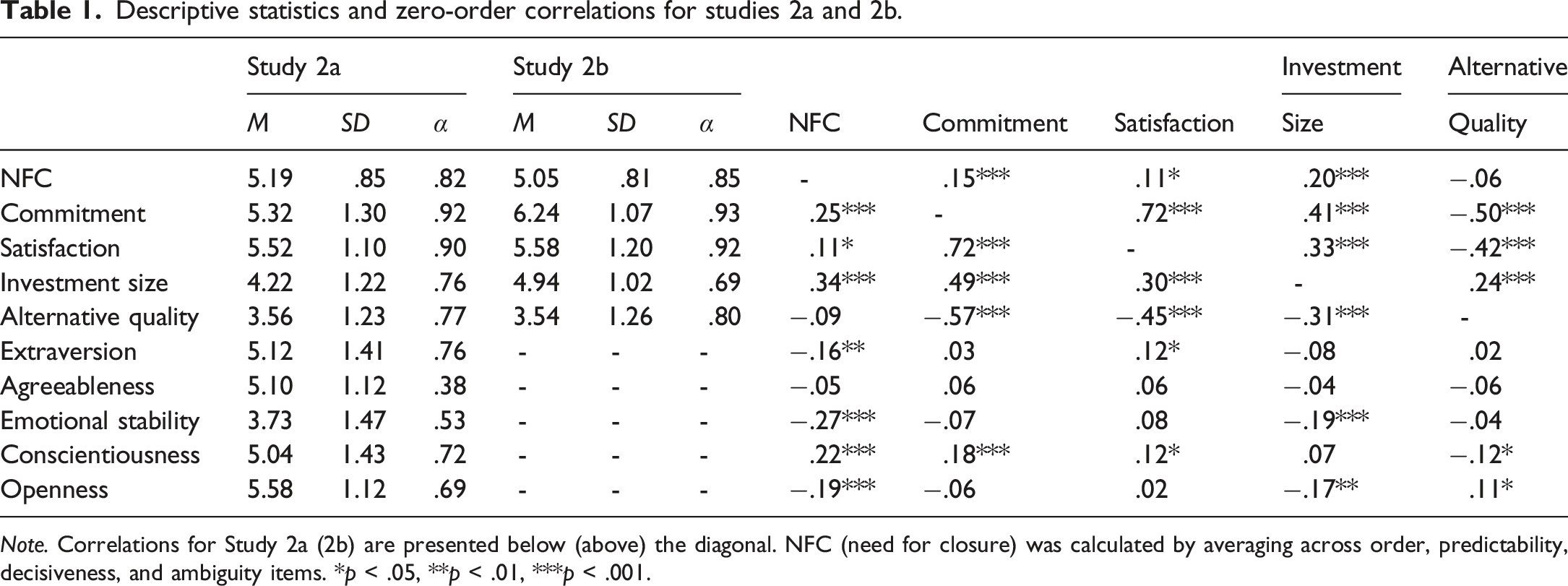
Note. Correlations for Study 2a (2b) are presented below (above) the diagonal. NFC (need for closure) was calculated by averaging across order, predictability, decisiveness, and ambiguity items. *p < .05, **p < .01, ***p < .001.
Need for closure
Participants completed the 15-item Revised Need for Closure Scale (Roets & Van Hiel, 2011) on a Likert scale from 1 (strongly disagree) to 7 (strongly agree). We again averaged across items assessing order, predictability, decisiveness, and ambiguity to calculate NFC.
Commitment
In Study 2a, commitment was assessed using the same seven items as in Study 1. In Study 2b, five of these items were used to assess commitment.
Mediators
Participants responded to the global items of the Investment Model Scale (IMS; Rusbult et al., 1998) measuring relationship satisfaction (e.g., “I feel satisfied with our relationship”), investment size (e.g., “I have put a great deal into my relationship”), and quality of alternatives (e.g., “The people other than my partner with whom I might become involved are very appealing”) on a Likert scale from 1 (strongly disagree) to 7 (strongly agree). Each subscale was measured with five items.
Personality
In Study 2a only, participants completed the Ten Item Personality Inventory (TIPI; Gosling et al., 2003) measuring Big-Five personality traits extraversion, agreeableness, emotional stability, conscientiousness, and openness.
Results
Both studies replicated the findings of Study 1. NFC was positively associated with relationship commitment (B = .375, 95% CI [.225, .525], p < .001 for Study 2a and B = .196, 95% CI [.092, .301], p < .001 for Study 2b). The association between NFC and commitment held when we controlled for Big-Five personality traits in Study 2a (B = .322, 95% CI [.158, .485], p < .001).
Next, we tested whether relationship satisfaction, investment size, and quality of alternatives explained the association between NFC and commitment using the PROCESS macro for SPSS (Version 3.5, Model 4; Hayes, 2013). We constructed bias-corrected 95% confidence intervals based on 5000 bootstrap samples. In both studies, NFC showed a significant positive association with investment size, which, in turn, was positively linked with commitment (indirect association: B = .117, 95% CI [.071, .174] for Study 2a and B = .042, 95% CI [.021, .067] for Study 2b). NFC also showed a significant positive association with relationship satisfaction, which, in turn, was positively linked with commitment (indirect association: B = .089, 95% CI [.003, .176] for Study 2a and B = .080, 95% CI [.014, .153] for Study 2b). Although quality of alternatives was negatively linked with commitment in line with past work (Rusbult et al., 1998), NFC did not show a significant association with commitment through quality of alternatives (indirect association: B = .036, 95% CI [-.008, .076] for Study 2a and B = .016, 95% CI [-.007, .039] for Study 2b; see Figure 1). Indirect associations between need for closure and commitment via relationship satisfaction, investment size, and quality of alternatives in Studies 2a-b. Note. Study 2a and 2b unstandardized coefficients are presented as S2a and S2b, respectively. The direct association reflects the association between NFC and relationship commitment when all mediators are included in the model.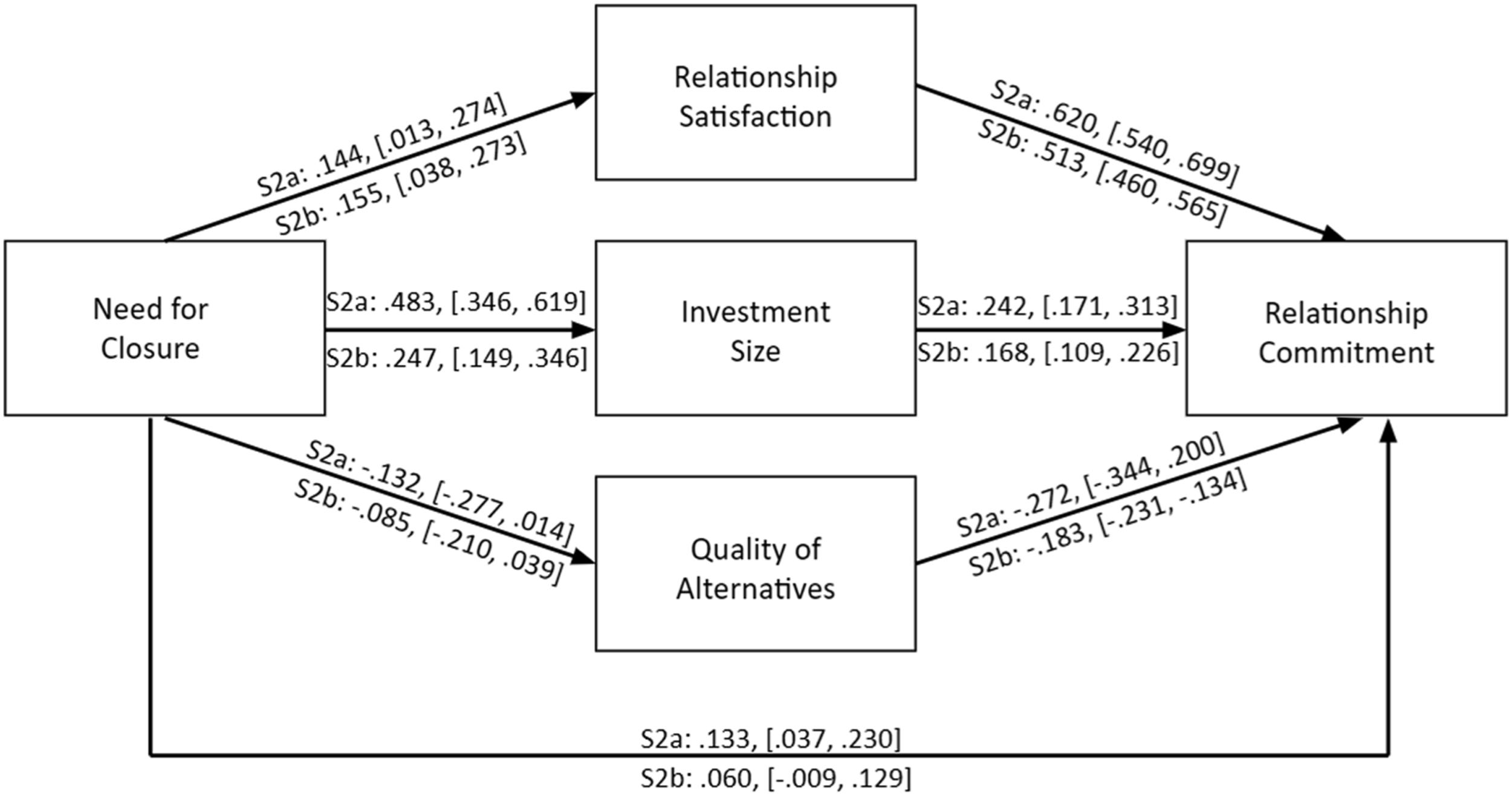
Study 3
Study 3 recruited a community sample from Turkey to examine whether NFC is associated with a behavioral tendency that is thought to be a downstream consequence of commitment–namely, willingness to sacrifice (Van Lange et al., 1997). We also explored whether commitment mediated the association between NFC and willingness to sacrifice.
Method
Participants
Five hundred and thirty-four participants started the survey, with 508 participants (421 women) who were in a romantic relationship (71.4% dating, 15% married, 8.9% living together, 4.7% engaged; relationship duration ranging from .50 months to 15.25 years, M = 2.89, Median = 2.17, SD = 2.61) completing all measures of interest. Participants’ age ranged from 18 to 52 years (M = 24.58, Median = 24, SD = 4.07). The minimum detectable standardized direct association with 80% power and alpha = .05 was .13 (Faul et al., 2007). Monte Carlo simulations assuming a correlation of .40 between willingness to sacrifice and commitment (Van Lange et al., 1997) and correlations of .19 (median average correlation in psychology studies; Stanley et al., 2018) between NFC and willingness to sacrifice as well as commitment revealed that the sample size afforded 99% power to detect an indirect association (Schoemann et al., 2017).
Measures
Descriptive statistics and zero-order correlations for study 3.
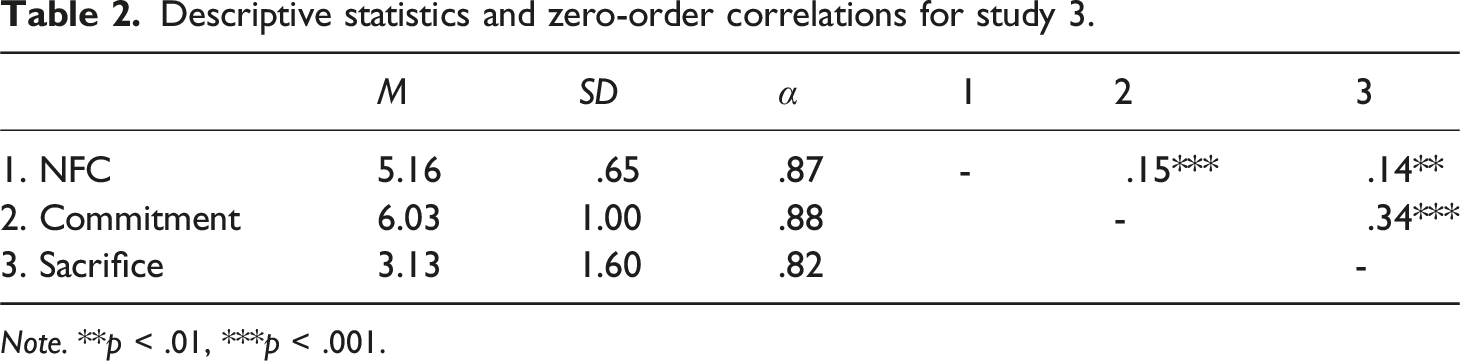
Note. **p < .01, ***p < .001.
Need for closure
Participants responded to the same 41-item measure of NFC used in Study 1. As in previous studies, order, predictability, decisiveness, and ambiguity subscales were included in the NFC composite.
Commitment
Commitment was assessed using the same measure as in Study 1.
Willingness to sacrifice
Participants completed the willingness to sacrifice measure developed by Van Lange and colleagues (1997). First, they reported the four most important activities in their life outside their romantic relationship in order of importance. Then, participants were asked to imagine that if they engaged in each activity they listed, they would not be able to maintain their relationship with their partner. Finally, they reported for each activity to what extent they agree with the statement, “If I were in this situation, I would give up the activity” (1 = strongly disagree to 7 = strongly agree).
Results
Replicating previous studies, NFC showed a positive association with relationship commitment (B = .232, 95% CI [.100, .365], p < .001). NFC was also positively linked with willingness to sacrifice (B = .339, p = .002, 95% CI [.127, .551]). The more individuals desired closure, the more they were willing to sacrifice for their relationship.
Next, we explored whether commitment explained the association between NFC and willingness to sacrifice using the PROCESS macro for SPSS (Version 4.0, Model 4; Hayes, 2013). We constructed bias-corrected 95% confidence intervals based on 5000 bootstrap samples. Results showed that NFC was positively associated with commitment, which, in turn, was positively associated with willingness to sacrifice (indirect association: B = .123, 95% CI [.051, .204], see Figure 2). Indirect association between need for closure and willingness to sacrifice via commitment in Study 3. Note. The direct association refers to the association between need for closure and willingness to sacrifice when commitment was included in the model.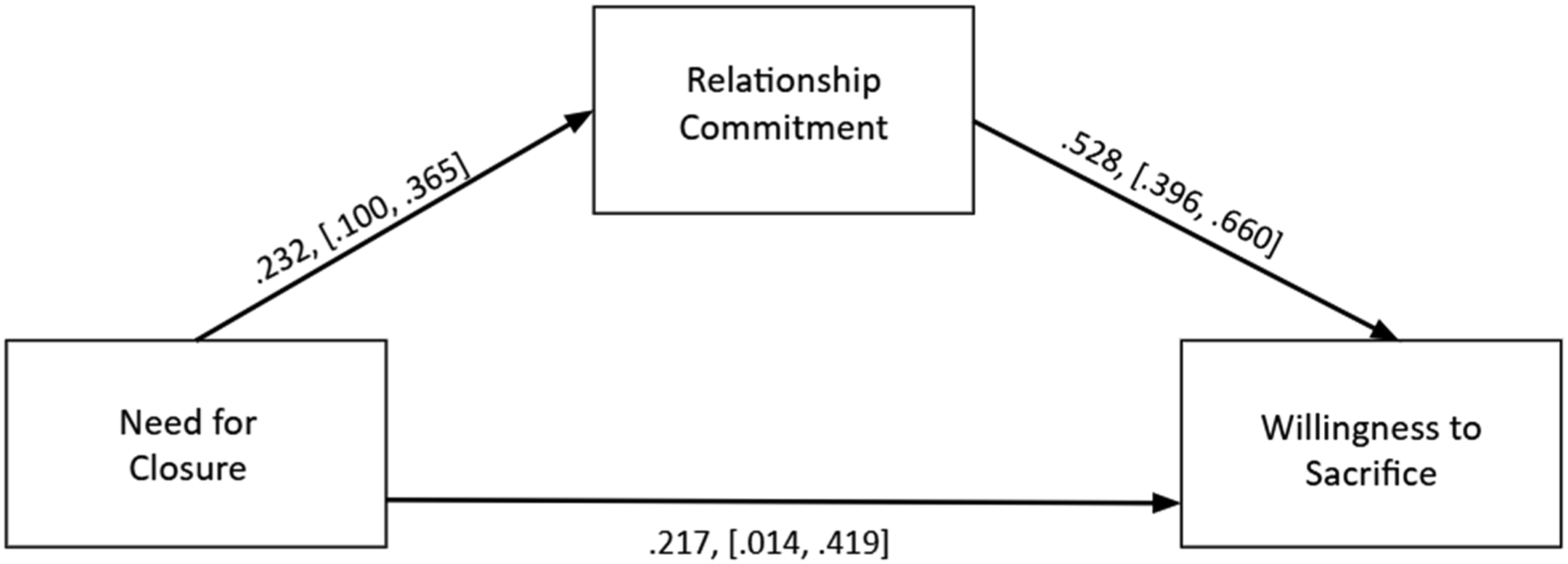
Study 4
Studies 1–3 focused on between-person differences. Using a three-wave longitudinal design, Study 4 explored whether NFC predicted within-person lagged changes in commitment. The theoretical analysis we presented in the introduction suggests that earlier NFC would predict lagged changes in commitment. However, most research on NFC has been cross-sectional and its association with commitment has never been studied. So, we also explored associations in the reverse direction. At three assessment waves each separated by a month, respondents completed measures of NFC, commitment, and the two investment model mediators (relationship satisfaction and investment size) that explained the association between NFC and commitment in Studies 2a-b. The design allowed us to examine both the direct lagged associations between NFC and commitment and the indirect ones through the mediators.
Method
Participants
Study 4 recruited a community sample from Turkey. Three hundred and three participants began the study. Three of them dropped out after completing the first monthly survey. We excluded 29 participants–one reported not having a relationship, one reported having an open relationship with multiple partners, 15 broke up before completing the second monthly survey, and 12 broke up before completing the third monthly survey. In the remaining sample of 271 participants, one did not provide complete data for all three waves, reducing the final sample to 270 participants (236 women) whose age ranged from 18 to 44 years (M = 25.41, Median = 25, SD = 4.26) and who remained with the same partner through all three waves (59.9% dating, 18.6% married, 13.4% living together, 8.1% engaged; relationship duration ranged from .50 months to 14.75 years, M = 3.04 years, Median = 2.25, SD = 2.76) and completed all measures of interest in all surveys. The majority of participants had a college education or more (98.1%) and the rest completed high school or less (1.9%).
We tested the lagged associations using random intercept cross-lagged panel models (RICLPM) which allow separating between- and within-person variation (see the Data Analytic Strategy section for details). We used the powRICLPM package in R (Mulder, 2023) to estimate statistical power. To determine the minimum detectable standardized effect, we performed power analyses in a loop such that power was estimated for different parameter specifications (see Lane & Hennes, 2018 for applications of this approach in relationship research). We found that the minimum detectable standardized cross-lagged association with 80% power and alpha = .05 was .12. For the mediation model with two parallel mediators, we performed Monte Carlo simulations (Schoemann et al., 2017). Similar to Study 2, assuming correlations of .40 among the investment model constructs and a correlation of .19 between NFC and the investment model constructs, the current sample size provided 89% power to detect indirect associations.
Measures
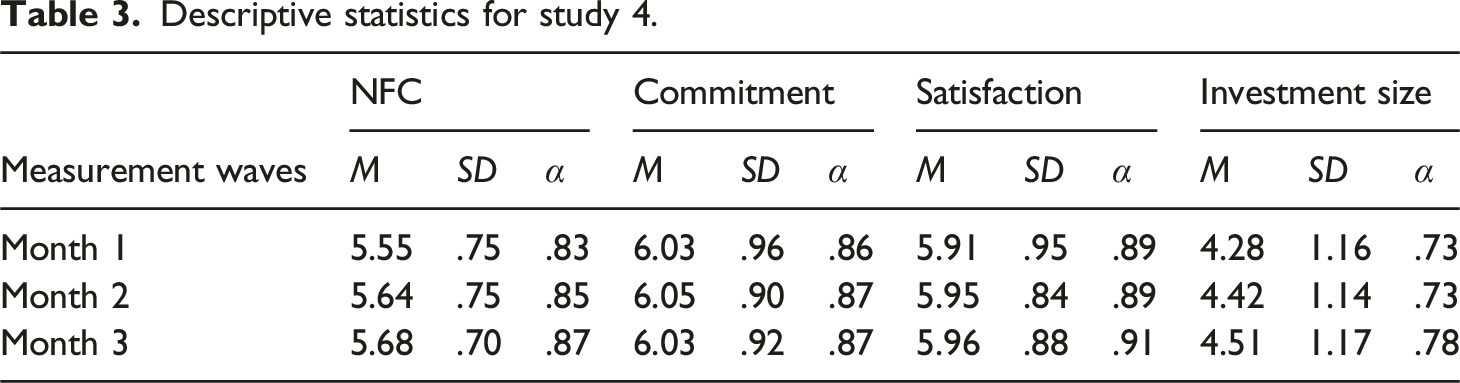
Descriptive statistics for study 4.
Need for closure
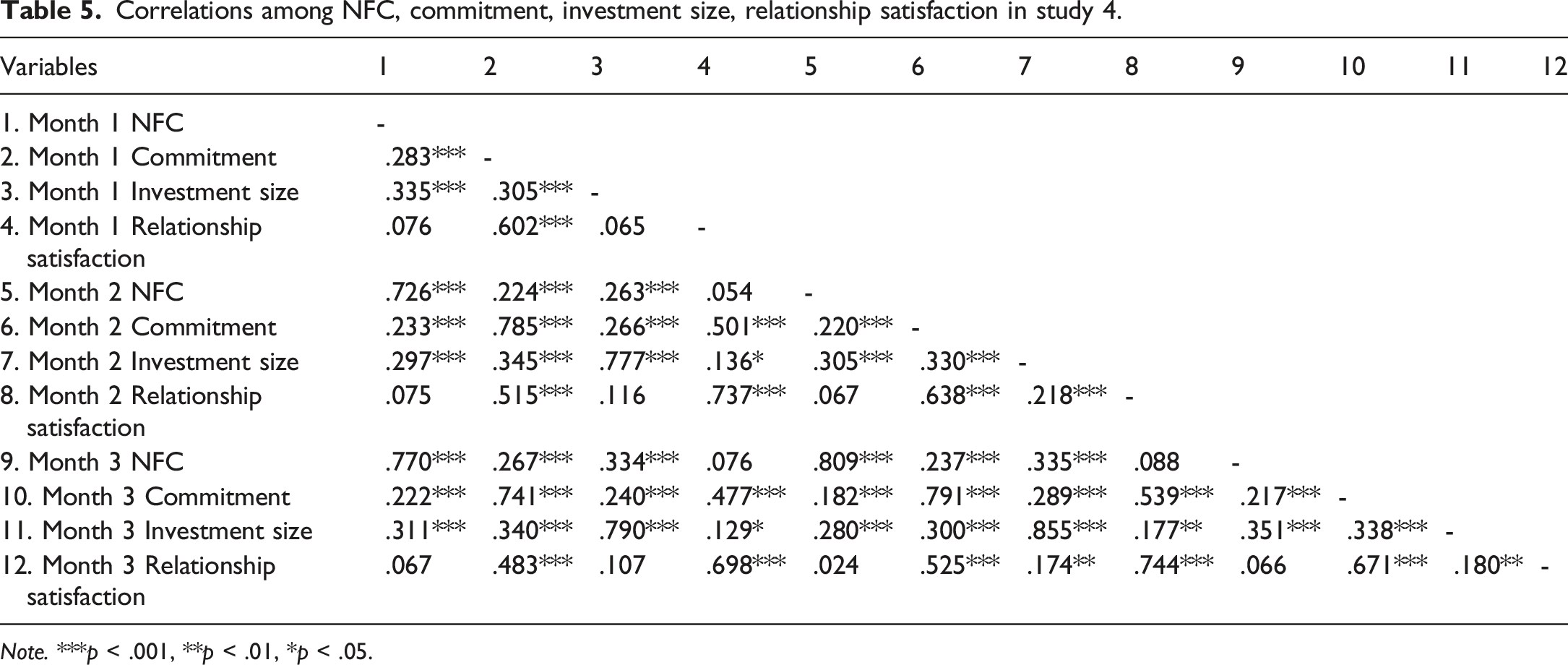
Participants completed the same short measure of NFC used in Study 2, excluding the closed-mindedness items. The average correlation between NFC scores was .768 (range = .083) across three measurement waves.
Commitment
Commitment was assessed using the same items as in Study 1. The average correlation between commitment scores was .773 (range = .050) across three measurement waves.
Mediators
Relationship satisfaction and investment size was assessed using the same measures as in Study 2. Given the longitudinal nature of this study, we aimed to keep the survey short to minimize incomplete responses and attrition, and therefore did not measure quality of alternatives, as it did not show any significant association with NFC in our previous studies. The average correlation between relationship satisfaction scores was .727 (range = .046) and the average correlation between investment size scores was .806 (range = .078) across three measurement waves.
Data Analytic Strategy
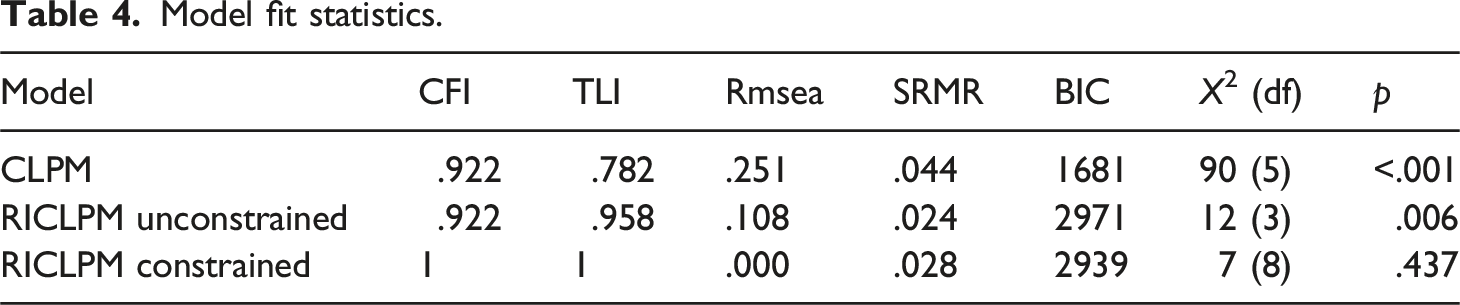
To explore the directionality between NFC and commitment, we used random intercept cross-lagged panel models (RICLPM; Hamaker et al., 2015). The RICLPM builds on traditional cross-lagged panel models (CLPM) and disentangles within-person variation from between-person variation. An additional advantage of RICLPM is its ability to explore cross-lagged associations between deviations from the usual level. Thus, it is particularly valuable when the time intervals between assessments are too short to detect permanent changes in variables. Considering the relatively short time interval between assessments in our study (1 month), we found RICLPM to be useful for interpreting our data.
Before conducting RICLPM, we examined the percentage of variance at the within- and between-person levels for all variables. Most of the variation in the constructs were due to individual differences (i.e., stable trait-like components) and within-person variation was relatively small, with 10% for NFC, 9% for commitment, 8% for investment size, and 12% for relationship satisfaction.
In the RICLPM, we first estimated latent between-person variables, which represented the stable trait-like components of the variables, using scores at all waves and constraining their factor loadings to 1. Next, we estimated latent within-person variables, representing the deviation from the usual level, using the corresponding score at each wave while constraining their factor loadings to 1. Then, we included autoregressive paths, cross-lagged paths, and within-wave error correlations at the within-person level.
Model fit statistics.
In our tests for mediation, we used the Monte Carlo method (Selig & Preacher, 2008) to generate 95% confidence intervals with 5000 bootstrap samples to assess the association of NFC in Month 1 with commitment in Month 3 through investment size and relationship satisfaction in Month 2. By temporally separating all three constructs (i.e., the focal predictor, the mediator, and the outcome), we were able to avoid a half-longitudinal design where one part of the model becomes cross-sectional, with either the predictor’s association with the mediator or the mediator’s association with the outcome is assessed simultaneously (Cole & Maxwell, 2003; Haider et al., 2020). This allowed us to conduct the most conservative test of the proposed mediational model.
In line with Maxwell and colleagues’ (2011) suggestions to test longitudinal mediation, we examined two models: one testing the link from Month 1 NFC to Month 2 investment size and relationship satisfaction, while controlling for Month 1 investment size and relationship satisfaction (path a), and the other testing the link from Month 2 investment size and relationship satisfaction to Month 3 commitment, while controlling for Month 1 NFC and Month 2 commitment (path b).
Preliminary analyses
First, we examined whether NFC and commitment changed over time. We did not observe any significant changes in commitment (B = .000, 95% CI [−.037, .038], p = .989). However, there was a slight linear increase in NFC throughout the study (B = .065, 95% CI [.036, .095], p < .001).
Correlations among NFC, commitment, investment size, relationship satisfaction in study 4.
Note. ***p < .001, **p < .01, *p < .05.
Main analyses
In the RICLPM, we constrained our model by keeping all autoregressive and cross-lagged effects constant across waves. At the between-person level, consistent with our previous studies, we found that NFC was significantly associated with commitment (B = .165, 95% CI [.080, .250], p < .001). On average, people with higher levels of NFC also reported higher levels of commitment. At the within-person level, we observed significant autoregressive effects both for NFC (B = .730, 95% CI [.676, .784], p < .001) and commitment (B = .768, 95% CI [.715, .821], p < .001). That is, deviations from the usual levels of NFC and commitment at a given wave were related to deviation in the same variable at the next wave. We did not find any cross-lagged effects from NFC to commitment (B = .010, 95% CI [-.055, .075], p = .765) or vice versa (B = .031, 95% CI [-.013, .075], p = .166). This indicates that deviations from usual levels of NFC were not related to deviations from usual levels of commitment at the next wave, or vice versa. Overall, these results show NFC primarily accounted for between- (rather than within-) person variations in commitment.
Next, we explored whether relationship satisfaction and investment size mediated the association between NFC and commitment. The results revealed that there was no indirect lagged association through relationship satisfaction (indirect effect: B = .067, 95% CI [-.039, .172], p = .213) or investment size (indirect effect: B = .016, 95% CI [-.048, .081], p = .618).
General discussion
The current research is the first to investigate the implications of need for closure (NFC), a dispositional trait widely studied in decision-making research, for relationship processes. Across five studies, we provided replicated evidence that high NFC individuals are more committed to their romantic relationships and this association held controlling for major personality traits (Study 2a). Studies 2a and 2b suggested that relationship satisfaction and investment size explained the association of NFC with commitment, aligned with an investment model account (Rusbult et al., 1998). Finally, the more individuals desired closure, the more they were willing to sacrifice for their relationship (Study 3).
The suggestive evidence we obtained in Studies 2a-b pointed to the mediating role of two investment model constructs–relationship satisfaction and investment size–but not quality of alternatives. Quality of alternatives might not have appeared as a mediator because high NFC individuals might not readily notice alternatives to their relationship. Generating alternatives may be effortful—superior alternatives often do not readily come to mind, and people need to spend adequate time and effort to find them (Siebert & Keeney, 2015). Considering that people with high NFC are reluctant to put in further effort once they achieve closure (Kruglanski & Webster, 1996), they may not deeply process alternatives to their relationship, weakening the link between NFC and alternative quality. If this is the case, it may take a much larger sample to detect an indirect association through alternative quality. To explore this possibility, we performed an integrative data analysis (IDA) combining Studies 2a and 2b for greater statistical power. The analysis indeed yielded a significant indirect association between NFC and commitment through alternative quality (see the Study 2 Integrative Data Analysis section in the OSM). These results suggest that quality of alternatives may play a mediating role, albeit a smaller one. However, given differences across Study 2a and 2b samples, we urge caution in drawing firm conclusions.
The finding linking NFC to willingness to sacrifice suggests that the role of NFC may extend to downstream correlates of relationship commitment. However, it is important to note that NFC’s role in relationship maintenance behaviors may vary depending on the specific behavior. For example, in our exploratory analysis using Study 1 data, we found a significant negative association between NFC and forgiveness (see the Study 1 Exploratory Analyses section in the OSM). This suggests that NFC may not consistently promote all relationship maintenance behaviors. While NFC may facilitate behaviors like sacrifice, which is a preemptive action aimed at preventing conflict before it arises, it may hinder behaviors like forgiveness, which is a reactive action aimed at restoring trust after a violation of relationship norms (Finkel et al., 2002). However, this interpretation should be treated with caution because the same data did not replicate the well-established link between commitment and forgiveness in Western samples (Finkel et al., 2002; Karremans et al., 2003; McCullough et al., 1998). Future research should clarify the association between NFC and forgiveness across different samples, and investigate the conditions under which NFC promotes or inhibits other relationship maintenance behaviors such as accommodation (Rusbult et al., 1991) and stay/leave decisions (Joel et al., 2018).
We also explored whether the between-person associations observed in Studies 1–3 would be evident at the within-person level. In the three-wave longitudinal data collected in Study 4, we observed that NFC and commitment mainly varied across respondents but monthly variations within respondents were relatively small. When we disentangled the two sources of variation, we found that NFC primarily explained between-person differences in commitment. In contrast, earlier NFC did not predict within-person changes in commitment from one month to the next. One reason why we did not detect any lagged associations may be the fairly stable nature of relationship commitment throughout the study. Although commitment is thought to vary depending on changes in partners’ perceptions of relational circumstances (Sprecher, 1999), within-person variation in commitment was relatively small in our study and average commitment levels did not appreciably change during the study period. Previous studies showing that relationship commitment fluctuates over time measured commitment at several time points over extended periods, ranging from eight months (Arriaga et al., 2006) to three years (Knopp et al., 2014). In retrospect, the relatively brief duration of our study (i.e., three months) might not have been sufficient to adequately capture changes in commitment. Lack of a significant variation in commitment, in turn, might have limited our ability to make inferences regarding whether NFC predicted changes in commitment, either directly or indirectly through relationship satisfaction or investment size.
While we did not find any evidence for a linear change in commitment during the study period, we did find a linear increase in NFC. Individuals may need greater closure when confronted with situations that necessitate decision making in the face of uncertainty (Kruglanski & Webster, 1996). For example, uncertainty evoked during national elections was shown to elevate NFC levels (Kossowska et al., 2018). Indeed, during the time of our longitudinal study, Turkey was going through the high-stakes 2023 presidential election, which may potentially explain why we observed an increase in NFC.
The failure to detect lagged associations in Study 4 precluded any inferences of directionality in the association between NFC and commitment. Similarly, the lack of a within-person indirect pathway temporally separating NFC, the mediators, and commitment makes the mediation evidence in Studies 2a-b suggestive rather than conclusive. It is important to note that cross-sectional examinations of mediation typically generate biased estimates of longitudinal mediation parameters, as they fail to account for the role of time in the formation and interpretation of mediation (Maxwell & Cole, 2007). Even with large sample sizes, cross-sectional estimates can substantially overestimate actual longitudinal effects. Furthermore, we cannot determine if using a longitudinal approach over an extended time period would have led to more accuracy within our mediational findings. Given these limitations, mediation analyses reported in Studies 2a-b should be interpreted with caution. Future research with greater statistical power and more data points may provide a more robust and cohesive interpretation of mediation.
Another limitation of the current work is not measuring participants’ city of residence (except in studies with student samples), income, education (except in Study 4), disability status, non-binary gender identity (except in Study 2b), and sexual orientation. Future research should incorporate a more comprehensive set of demographic questions to better understand the characteristics of the samples to which the current results may generalize.
Conclusion
Decision making is a fundamental aspect of relationships, with partners regularly weighing advantages and disadvantages before deciding whether to continue or end their relationship. However, some individuals may seek to avoid this process, in an attempt to unhesitatingly commit to their relationship and maintain certainty in their lives. Across five studies, we consistently observed that individuals with greater need for closure tended to be more committed to their relationships. We also provided suggestive evidence that the link between need for closure and commitment may be explained by higher satisfaction and investment in the relationship although future research should corroborate this evidence using longitudinal designs spanning a longer time period. Moreover, we found that greater need for closure predicted a downstream correlate of commitment—willingness to sacrifice. We hope that our findings encourage researchers to further examine how need for closure and other dispositional tendencies affecting decision-making processes shape relationship commitment, which will advance our understanding of relational dynamics from a decision-making lens.
Supplemental Material
Supplemental Material - Sealed with certainty: The role of need for closure in relationship commitment
Supplemental Material for Sealed with certainty: The role of need for closure in relationship commitment by Ovgun Ses, Gul Gunaydin, Emre Selcuk and Esra Ascigil in Journal of Social and Personal Relationships.
Footnotes
Declaration of Conflicting Interests
The author(s) declared no potential conflicts of interest with respect to the research, authorship, and/or publication of this article.
Funding
The author(s) disclosed receipt of the following financial support for the research, authorship, and/or publication of this article: This research was supported by Sabanci University Integration Grant B.A.CG-20–02170 and the Science Academy’s Young Scientist Award (BAGEP) to Gul Gunaydin.
Open research statement

Ethical statement
Supplemental Material
Supplemental material for this article is available online.
Notes
References
Supplementary Material
Please find the following supplemental material available below.
For Open Access articles published under a Creative Commons License, all supplemental material carries the same license as the article it is associated with.
For non-Open Access articles published, all supplemental material carries a non-exclusive license, and permission requests for re-use of supplemental material or any part of supplemental material shall be sent directly to the copyright owner as specified in the copyright notice associated with the article.
