




Abstract
Relational forms of romantic victimization characterized by attempts to ignore, exclude, or covertly manipulate a romantic partner is an understudied and often overlooked form of intimate partner violence. While cross sectional research demonstrates associations with mental health difficulties, longitudinal patterns of romantic relational victimization (RRV) independent of physical forms of aggression have received relatively less attention, particularly with regards to how patterns of RRV change over the course of adolescence to young adulthood. The current study identifies longitudinal trajectories of RRV in a sample of adolescents (ages 12–18) followed biennially across 10 years (N = 532). We also assessed how changes in youths’ perceptions of personal mastery and control (i.e., environmental mastery) relate to differences in youths’ longitudinal trajectories of RRV as developmental gains in these competencies may mitigate RRV. Findings from growth mixture models revealed three patterns of RRV characterized by low stable levels across adolescence and young adulthood (87.4%); an adolescent limited trajectory where RRV peaks in adolescence and declines into young adulthood (9.4%); and a young adulthood limited trajectory where RRV increases during young adulthood (3.2%). Our results show that diminished environmental mastery at both life stages was associated with higher rates of victimization. Moreover, the change in mastery over time was also associated with victimization. Trajectories were also associated with relational worries and additional forms of victimization, offering insight into poly-victimization and its negative effects. Our findings reveal heterogeneous patterns of RRV during the transition from adolescence to young adulthood that are differentially related to changes in youths’ development of mastery and control. These findings offer potential targets for prevention.
Introduction
Over the last couple of decades, the field of aggression has expanded to include many different forms of violence and is often categorized based on the developmental period of the individuals involved. Violence within adolescence (ages 10–24; Sawyer et al., 2018) and emerging adulthood (ages 18–29; Arnett, 2018) fall under the term dating violence (DV), which entails a wide range of in-person actions, including physical violence (e.g., hitting one’s partner), sexual violence (e.g., forcing one’s partner to engage in sexual acts), coercive control (e.g., insisting on knowing a partner’s whereabouts at all times; Catallozzi et al., 2011), and psychological violence (e.g., emotionally manipulating one’s romantic partner).
One form of violence that has been examined less extensively is relational aggression, defined as a nonphysical form of aggression that can occur in relationships consistent of direct and indirect methods (Wright & Benson, 2010). These forms of aggression can emerge as early as 3 years old and continue to develop in sophistication (Crick et al., 2007). Theorists have claimed that relational aggression and victimization peak in adolescence due to developmental milestones, such as increased social sophistication (Yoon et al., 2004) and the ability to understand others’ mental states (Card et al., 2008). Adolescents may begin to utilize covert forms of aggression as direct aggression becomes less developmentally appropriate and elicit greater consequences from parents, teachers, and peers (Card et al., 2008). While relational aggression includes a broad spectrum of relationship pairings (i.e., friends, classmates; Crick et al., 2007), relational aggression in adolescent romantic relationships has been relatively understudied, particularly in terms of victimization (Goldstein, 2011). This project aims to identify distinct patterns of romantic relational victimization from adolescence to young adulthood and to examine the risk and protective factors associated with these trajectories. Specifically, we will explore romantic relational victimization both as a predictor (e.g., shaping developmental trajectories) and as an outcome (e.g., identifying risk factors associated with trajectory assignment).
Romantic relational aggression (RRA) is defined as the perpetration of relational aggression to harm the feeling of love and acceptance of one’s romantic partner, and victimization is being the target of such aggressive acts (Wright & Benson, 2010). Examples of these aggressive behaviours include flirting with others to make one’s partner jealous, refusing to respond during conflict, and threatening to break up with one’s partner if the partner is refusing to comply (Linder et al., 2002). The growing body of research examining violent behaviours has resulted in a lack of consensus on terminology, especially regarding non-physical acts of violence (Voulgaridou & Kokkinos, 2015). Some researchers advocate for a conceptualization known as indirect aggression, which refers to solely covert tactics (e.g., exclusion that occurs “behind one’s back”) used to harm others. Others have examined similar behaviours under the term social aggression, which includes both covert and overt strategies aimed at manipulating social standing (e.g., gossip; Underwood, 2003). Unlike other terms, social aggression also encompasses behaviours such as negative facial expressions (Heilbron & Prinstein, 2008).
Relational aggression is distinct in that it specifically targets the relationship itself. It can involve both confrontational (e.g., social exclusion) and non-confrontational (e.g., damaging one’s reputation) behaviours and may extend beyond individauls to larger social groups, such as friend circles (Archer & Coyne, 2005). However, these broader conceptualizations often overlook the romantic relational context, a critically understudied target of aggression in adolescence and young adulthood (Linder et al., 2002).
While some behaviours classified as indirect aggression, social aggression, or relational aggression may overlap with romantic relational aggression (RRA), RRA specifically targets romantic relationship dynamics. It often involves relational tactics to manipulate one’s partner, rather than solely harming an individual (Voulgaridou & Kokkinos, 2015). Despite its significance, RRA remains understudied, as large-scale research on relational aggression has primarily focused on friednships and often excludes romantic realtionships from analysis (e.g., Voulgaridou & Kokkinos, 2019).
Victimization within the context of RRA is known as romantic relational victimization (RRV). It is also important to note that other forms of victimization, such as being a recipient of coercive control, are typically framed around notions of power and control (Stark & Hester, 2019) and are often observed in more established relationship types comprised of long-term subjugation of one partner by another (Stark, 2007). This further distinguishes RRA/RRV from violence based on power imbalance. Understanding RRV during adolescence is particularly important, as it may parallel more severe forms of violence, including including intimate partner violence in later life. Given evidence that psychological aggression can escalate into physical violence in adulthood (Murphy & O’Leary, 1989), examining the developmental course of RRA/RRV could provide insight into the severity and progression of relationship violence over time.
Another added benefit of examining romantic relational victimization (RRV) as a subtype of violent victimization, especially during adolescence, is the developmental salience of these behaviours. RRV captures aggressive behaviours that are more immediate and relevant during adolescence, such as being the recipient of rejection, exclusion, and manipulation by romantic partners, which can be pivotal in shaping long-term relational patterns and its downstream impact on well-being (Sánchez-Zafra et al., 2024). These specific forms of victimization also mirror developmental gains in the social and cognitive domains during adolescence. For example, adolescence is marked by a period of emotional and cognitive growth, and the nature of violence in romantic relationships during this time tend to be more covert in nature (Card et al., 2008). Moreover, RRV focuses on the direct and indirect forms of aggression directed towards one’s romantic partner, capturing the more complex forms of victimization that occur in adolescence (Crick et al., 2001). Broader forms of violence might miss these subtle, developmentally salient behaviours that are crucial to understand how victimization unfolds across adolescence into young adulthood and the targets of aggressive acts.
Experiencing violence within romantic relationships during adolescence is a risk factor for intimate partner violence in later adulthood (Greenman & Matsuda, 2016). Yet, studies involving adolescent or young adult samples often combine relational and physical forms of victimization in romantic relationships as indicators of intimate partner violence (Capaldi et al., 2001; Fergusson et al., 2008). Given the differences in prevalence rates (ranging from 1% up to 33% in the last year; Tomaszewska & Schuster, 2021) and consequences (Campo-Tena et al., 2024), coupled with limited longitudinal studies in the field (Sánchez-Zafra et al., 2024), understanding how rates of victimization change over adolescence is needed. Determining what predicts differences in these rates of change is also warranted in order to identify potential demographic risk factors and protective mechanisms. Examining demographic factors such as age, ethnicity/race, and socioeconomic status have been inconsistently associated with longitudinal patterns of victimization. Given that individuals from lower socioeconomic statuses and members of minoritized groups are generally at risk for victimization (Allen et al., 2019), understanding how these factors are associated with victimization over time is warranted.
Protective factors should also be examined in greater depth. For example, while adolescence represents a developmental period of vulnerability where youth are more susceptible to mental health problems (Yoon et al., 2023), the transition to young adulthood can bring about increases in autonomy (Ratelle & Duchesne, 2014), self-esteem (Kiviruusu et al., 2015), and a sense of purpose in life (Sukhawathanakul et al., 2020) as youth expand their social networks, transition into new educational or occupational roles, and refine their identity (Arnett, 2015). Developmental gains in these competencies may help youth identify, resist, and seek out support to address relational forms of aggression in their romantic relationships. Developing a sense of environmental mastery during this developmental transition for example, an integral dimension of psychological well-being (Ryff, 2013) which describes an individual’s ability to manage their environment, take advantage of opportunities in the environment, create and control the environment according to their needs, may be protective against romantic relational victimization. On the other hand, experiencing romantic relational victimization may diminish or dampen gains in environmental mastery across this developmental transition. Experiences of romantic relational victimization may have spill-over effects on youth mastery, impairing their ability to feel like they can improve the quality of the surrounding environment or take advantage of opportunities and possibilities in the surrounding environment.
In order to assess these relationships, we first identity trajectories of romantic relational victimization (RRV) in a sample of 662 youth (aged 12–18) followed biennially over a 10-year period using a person-centered approach. We then identify the risk factors and negative outcomes associated with patterns of RRV. First, we capture the longitudinal patterns of RRV and subsequently examine the patterns’ associations with constructs including environmental mastery and autonomy, other forms of violence (e.g., dating aggression perpetration, overt dating victimization), and relationship factors (e.g., dating worries, relationship quality) at developmentally salient time points (e.g., adolescence and young adulthood). We also examine demographic risk factors (e.g., race/ethnicity) that are associated with patterns of broad forms of victimization longitudinally, but have inconsistent effects on RRV in the literature. The unique contribution of this study is the specific examination of RRV, which is often conflated with other measures of violence. RRV is developmentally salient to adolescence and the longitudinal patterns of RRV have not been examined in relation to protective factors (e.g., mastery) and demographic characteristics (race/ethnicity).
Romantic relational victimization from adolescence into young adulthood
It has been well established that dating violence in adolescence can increase risk for violence in adulthood. For example, compared to adolescents who reported no dating violence, those who did were more likely to experience physical intimate partner violence up to 12 years later, regardless of gender (Exner-Cortens, 2014). Continuity of violence can occur within the same relationship over time (O’Leary et al., 1989), as well as across different relationships (Whitaker et al., 2010). In addition, victimization in romantic relationships can increase the likelihood of perpetrating violence and vice versa (Richards & Gillespie, 2021), and has been associated with increased violence severity over time (Martsolf et al., 2012). However, few studies have examined the patterns of victimization from adolescence into young adulthood, and whether these patterns predict differences in types of violence used into adulthood.
Patterns of romantic relational victimization from adolescence into young adulthood have not been examined directly (Sánchez-Zafra et al., 2024), but are thought to follow a similar age pattern as various forms of dating violence perpetration, such that it peaks in late adolescence and declines (Macmillan, 2001). This has been supported empirically through studies that examine psychological victimization (Orpinas et al., 2013), physical victimization (Brooks-Russell et al., 2013), and physical and psychological victimization in tandem (DeCamp & Zaykowski, 2015).
Patterns of victimization
Extant longitudinal research has typically identified three main patterns of dating violence victimization across adolescence: low and stable, moderate and increasing, and high and decreasing groups. For example, Orpinas and colleagues (2012) examined psychological dating violence victimization (methods used to control or dominate a partner), identifying a high victimization group (17% of sample), an increasing victimization group (49% of sample), and a low victimization group (34% of sample) that were not separated by gender. Brooks-Russell and colleagues (2013) separated by gender, finding a high victimization group (3.4% of sample), moderate victimization group (7.8% of sample), and low stable group (88.8% of sample) for boys. Girls’ physical victimization tended to peak in Grade 10 and then decline (5.7% of sample), following a curvilinear trajectory, or remain low and stable across adolescence (94.3% of sample). DeCamp and Zaykowski (2015) examined dating violence victimization more broadly, referring to both psychological (e.g., verbal threats) and physical (e.g., using force) forms of victimization. Their findings identified four main trajectories, with most of the sample reporting low victimization that was stable over time (61% of sample). They found two moderate decreasing groups (19% and 20% of sample) and one group that peaked at age 20 and then declined (1% of sample).
Other research on victimization trajectories have focused on theoretical models to explain persistence, but are largely based on cross-sectional studies. For example, the heterogeneity model focuses on time-stable personal characteristics (e.g., depression), relationship characteristics (e.g., partners prone to aggression), and social contexts that lead to increased victimization (Nagin & Paternoster, 2000). The state dependence model complements the heterogeneity model by asserting that victimization itself can change aspects of the individual and/or their social context that can lead to increases in victimization (Nagin & Paternoster, 2000). However, there can be discrepancies of attributing certain elements to either heterogeneity or state dependence models. For example, depression has been associated with both an antecedent and consequence of victimization (Halpern et al., 2009). Understanding the trajectory of victimization, therefore, requires the concurrent examination of both state and trait characteristics and how they might modulate or precipitate victimization over time.
Adolescent risk factors
Understanding the risk factors for dating violence (DV) more broadly is difficult to ascertain because studies are inconsistent in their definition of DV; while some use global or combined indices of DV, others focus on specific forms of violence. A recent meta-analysis of DV found that gender and age-group moderated a couple of the findings between risk factors and DV victimization (Hébert et al., 2019). They found that gender moderated the relationship between peer sexual harassment and childhood sexual abuse and its association with DV, with higher effect sizes for girls than boys. Growing up in a violent home was a stronger predictor of later romantic victimization for women than men. Finally, the association between neglect and DV was only significant in adolescent samples.
In terms of gender and age differences in victimization over time, mixed results exist in the literature. Orpinas et al. (2012) found that girls were less likely than boys to be in low victimization patterns over time and more likely to be in patterns that increased in victimization. These gender differences were highlighted in Brooks-Russell and colleagues’ (2013) study identifying two patterns of victimization that peaked in 10th grade for boys, but identifying only one pattern of increasing victimization for girls. Whereas gender differences and their trajectories are apparent, the age-related patterns of victimization are quite consistent across the literature. Numerous studies have found that victimization tends to peak in adolescence, either desisting (Brooks-Russell et al., 2013; Halpern et al., 2009; Orpinas et al., 2012, 2013) or remaining stable into young adulthood (Exner-Cortens et al., 2017). Therefore, understanding the unique factors that contribute to the marked increase in victimization during adolescence is warranted.
Theories of romantic victimization during adolescence
Exner-Cortens (2014) outlined multiple theories that are pertinent to understanding adolescent development and romantic relational victimization. Sullivan's (2010) interpersonal theory of psychiatry focuses on interpersonal communications and its influence on personality development; they also focus on anxiety and its ability to disrupt interpersonal relations during adolescence. Erikson’s (1963) theory of psychosocial development focuses on personality development caused by stage-specific psychosocial crises. Exner-Cortens (2014) applied Erikson’s tenets of interpersonal identity exploration and commitment as proposed markers to assess victimization, such that interpersonal identity status could affect victimization risk. Kegan’s (1980) constructive-developmental framework focuses on personality development through meaning-making activities that are influenced by cognitive, affective, and social aspects.
While extant theories approach the development of adolescents from differing viewpoints, they converge on the importance of interpersonal relationships in shaping self-concept and future relationship dynamics. The stage-based theories contend that adolescents define themselves through their interpersonal relationships which can explain enduring cycles of victimization (Exner-Cortens, 2014). For example, victimization during adolescence can disrupt interpersonal patterns of dating norms, affect socialization processes and the development of relationship skills, and hinder the normative period of exploration and identity formation (Erikson, 1963). A key aspect of this disruption involves the developmentally salient tasks of fostering intimacy and positive scaffolding in romantic relationships through the mechanisms of fostering autonomy and environmental mastery. These are critical components of adolescent growth that allow individuals to navigate romantic relationships with confidence (Vagi et al., 2013). For example, Sullivan’s theory (2010) contends that victimization can lead to negative evaluations of the self, affecting the ability to be intimate with others.
Establishing a secure sense of autonomy and mastery over one’s surroundings might therefore be crucial during this developmental period. For example, having security in one’s opinions and feeling in control of one’s surroundings could act as protective measures against victimization. However, romantic relational victimization (RRV) may be particularly detrimental to these developmental processes, as it involves tactics specifically aimed at destabilizing romantic bonds. This form of victimization can erode an individual’s ability to assert boundaries, navigate relationship milestones, and maintain autonomy within their relationships. For example, exposure to RRV could foster relational dependency and self doubt, aligning with Erikson’s (1963) and Kegan’s (1980) perspectives that problematic adolescent relationships can lead to overdependency. Moreover, diminished mastery, characterized by a reduced sense of control over one’s surroundings (Ryff & Singer, 2008), may perpetuate cycles of victimization, as adolescents who already feel powerless may struggle to disengage from harmful relationships.
From a state dependence model of victimization (Nagin & Paternoster, 2000), victimization itself can affect perceptions of control and self-efficacy, leading to increased relationship insecurity over time. Since RRV involves tactics aimed at undermining the relationship bond, repeated victimization may reduce one’s confidence in navigating romantic relationships, further increasing insecurity. Understanding these processes is critical, as low levels of autonomy and mastery may serve as both precursors to and consequences of victimization. Identifying these personal characteristics alongside patterns of victimization could help disrupt cycles of victimization and inform strategies to promote healthier relationship dynamics.
Protective aspects of autonomy and mastery
Risk factors that predict victimization receive relatively more empirical focus compared to protective factors. For example, Vagi and colleagues (2013) identified three studies in that explored protective factors of dating violence compared to over 53 risk factors linked to partner violence. Developmental gains in autonomy and mastery during the transition from adolescence to young adulthood could be protective against victimization as they play a critical role in identity formation and contribute to psychological well-being. Ryff and Singer (2008) describe psychological well-being as comprising of 6 important dimensions that determine healthy psychological functioning including the degree of self-acceptance (i.e., positive attitude about oneself), positive relations with others (i.e., having fulfilling relationships with others), personal growth (i.e., the feeling that one is improving), purpose in life (i.e., having goals and purpose), as well as autonomy (i.e., ability to think for oneself, resisting social pressures) and environmental mastery (i.e., feeling in control over one’s surroundings. The latter two dimensions have been identified as important predictors of helping victims recognize signs of aggression and seek support. Self-determination theory (SDT; Deci & Ryan, 2008) also emphasizes the need to examine these measures alongside victimization. This theory posits that autonomy, competence, and relatedness are three fundamental psychological needs in human (Deci & Ryan, 2008). In line with SDT, individuals with higher autonomy and mastery in adolescence might be less likely to experience persistent patterns of victimization into young adulthood, as autonomy can assist with decision making and boundary setting, mastery can assist with competence and resilience, and both might promote healthy relationship choices (Knee et al., 2013).
Research examining the potential protective aspects of autonomy and mastery are largely retrospective. For example, in a phenomenological study assessing the experiences of women who had suffered intimate partner violence and left their relationships, four themes emerged (Little, 2014). One notable theme was creating mastery, which meant equipping oneself by acquiring autonomy in one’s daily life. The participants highlighted the importance of creating mastery by regaining control over their lives when enabled them to cope effectively with their stress and increase their self-esteem. Therefore, mastery and autonomy can be important protective avenues to assess patterns of victimization. As youths’ levels of autonomy and mastery increase over the course of adolescence to young adulthood (De-Juanas et al., 2020), examining how autonomy and mastery influence trajectories of relational victimization during this developmental transition can help understand how gains in these individual competencies mitigate other forms of aggression (e.g., overt physical aggression).
The current study
The current study uses a person-centered approach with growth mixture models to longitudinally assess the heterogeneity in relational victimization trajectories in a sample of youth aged 12–18 followed biennially across a 10-year period. Person-centered approaches circumvent the assumption that a single pattern is representative of the population, and classifies participants into distinct subgroups. This classification minimizes within-group variance, identifying patterns of similarity within the larger sample (Muthén & Muthén, 2000). After identifying subgroups, we then assessed their associations with potential risk factors (e.g., gender, age at first timepoint), psychological well-being measures (environmental mastery and autonomy), and other forms of violence (e.g., dating aggression). We hypothesize that distinct patterns of relational dating victimization from adolescence into young adulthood will emerge; and these different patterns of relational victimization will be differentially associated with longitudinal patterns of environmental mastery and autonomy.
Method
Participants
Participants were a subset of individuals drawn from the Victoria Healthy Youth Survey (V-HYS). The V-HYS was administered in 2003 (T1), 2005 (T2), 2007 (T3), 2009 (T4), 2011 (T5), and 2013 (T6) in the medium-sized urban community in Western Canada (Leadbeater et al., 2012). Participants were recruited from telephone listings where eligible youth (those aged 12–18 years) were identified (N = 662). The participants of the V-HYS that consented were representative of the population from which they were drawn. To assess the rates of romantic relational victimization over time (T1 to T6), our analyses used a subsample of participants based on their relationship status at each timepoint. Participants indicated if they were currently in a romantic relationship by asking if they were “seeing someone or going out with someone who is more than just a friend (could be a ‘boyfriend, ‘girlfriend’, or ‘partner’)”.
Descriptive statistics of participants (N = 532).
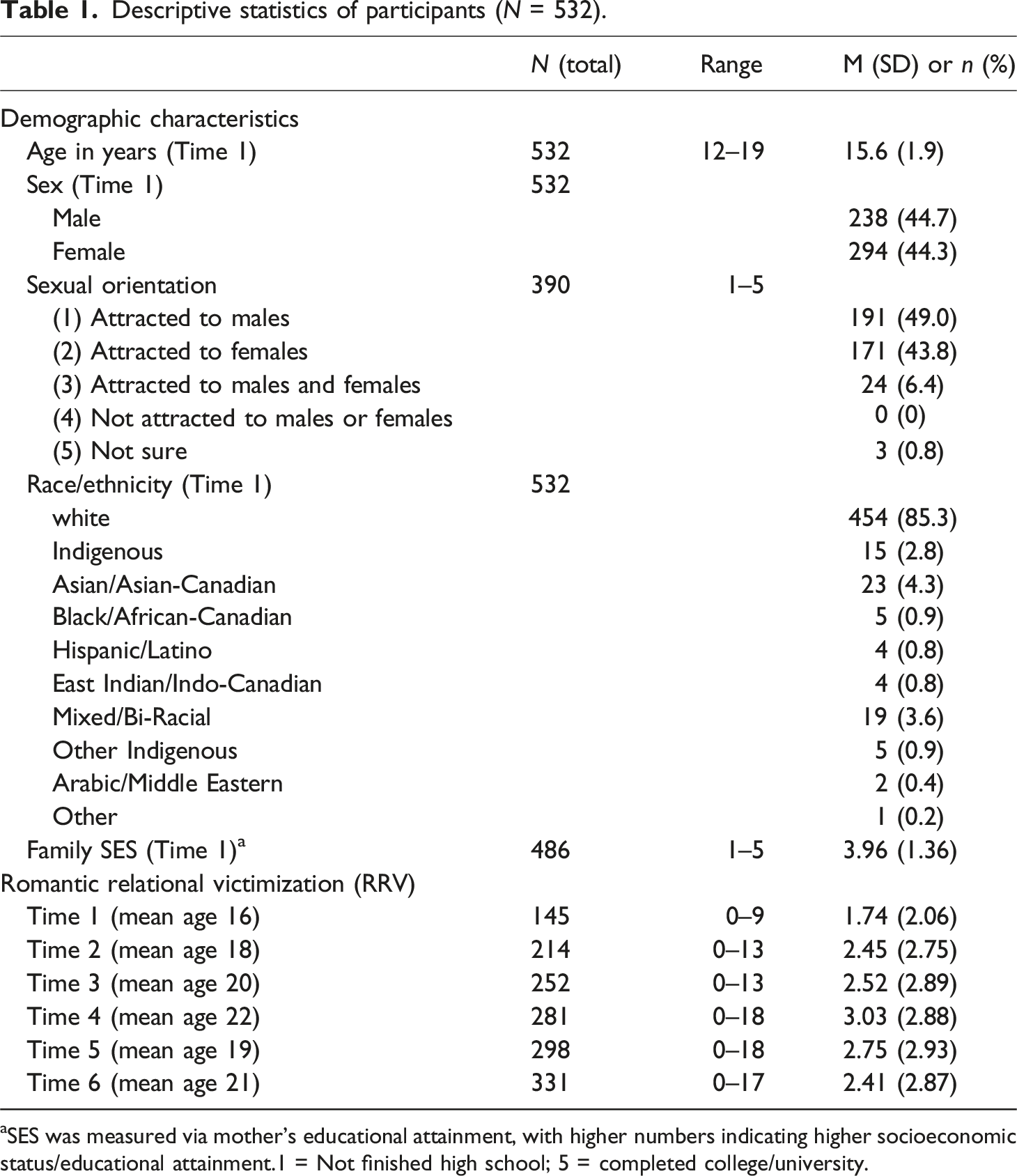
aSES was measured via mother’s educational attainment, with higher numbers indicating higher socioeconomic status/educational attainment.1 = Not finished high school; 5 = completed college/university.
In this subsample, 45% of the sample was male, 55% was female, and the average age was 16 years old at Time 1. In terms of ethnicity, 85% of the sample was white, 4% were Asian/Asian-Canadian, 4% were Mixed/Bi-Racial, and 3% were Indigenous. The remaining sample identified as Black/African-Canadian (1%), Hispanic/Latinx (1%), East Indian/Indo-Canadian (1%), or other mixed identities (1%). Most participants came from relatively high SES backgrounds, with majority of the sample reporting that their mother had finished college/university (55%). In terms of sexual orientation at baseline, 49% of the sample was attracted to males, 43.8% were attracted to females, 6.4% were attracted to both males and females, 0% said they were not attracted to either males or females, and 0.8% were not sure (see Table 1 for a list of demographic characteristics).
Procedure
Youth and their parent/guardian, if under 18 years of age, provided written consent for their participation at each wave of the study. A trained interviewer administered the V-HYS at the youth’s home or at a private location. Certain measures were self-reported (e.g., romantic relational victimization, psychological well-being, overt dating aggression, etc.) and were placed in a sealed envelope to maintain confidentiality. After each wave, participants received a gift certificate for their participation. All procedures were approved by the Human Research Ethics Board at the University of Victoria (UVic).
Measures
Demographic variables
Means, standard deviations, and correlations for study variables.
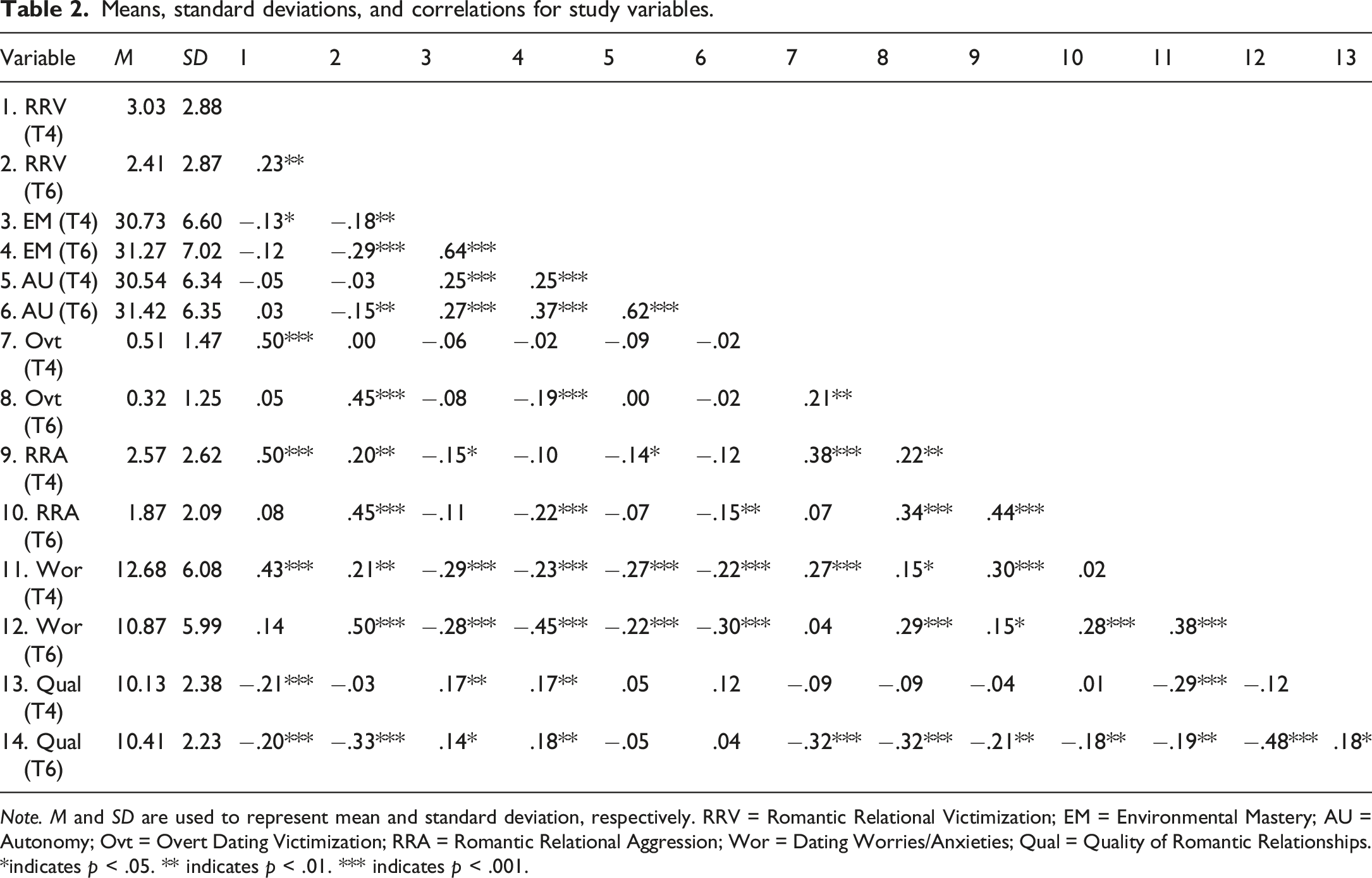
Note. M and SD are used to represent mean and standard deviation, respectively. RRV = Romantic Relational Victimization; EM = Environmental Mastery; AU = Autonomy; Ovt = Overt Dating Victimization; RRA = Romantic Relational Aggression; Wor = Dating Worries/Anxieties; Qual = Quality of Romantic Relationships.
*indicates p < .05. ** indicates p < .01. *** indicates p < .001.
Romantic relational victimization
Five items were used to assess the participants’ perception of their partner ignoring, excluding, or covertly attempting to manipulate the participant within the context of the dating relationship. Participants were asked to rate how true each statement was for them, from 1 (not at all true) to 5 (very true). Items were (i) “My dating partner tries to make me feel jealous as a way of getting back at me”, (ii) “When my partner wants something, s/he will ignore me until I give in”, (iii) “My partner has threatened to break up with me in order to get to do what s/he wants”, (iv) “My partner doesn’t pay attention to me when s/he is mad at me”, (v) “When my partner is made at me, s/he won’t invite me to do things with our friends”. These questions are consistent with other measures that assess multiple forms of violence (e.g., the Conflict in Adolescent Dating Relationships Inventory (CADRI) relational victimization subscale; Wolfe et al., 2001) but focuses on relational acts that are intended to victimize an individual. Average scores were computed by summing each adolescent’s scores for the items within the romantic relational victimization (RRV) scale (recoded range from 0 to 20 for this scale). Filler items included three items that assessed dating commitment (e.g., “I feel a strong bond with my partner”). Cronbach’s alpha ranged from .66 to .87 across the six timepoints. While some internal consistencies are modest, the endorsement of specific victimization behaviours (e.g., being a victim of exclusion) have considerable face validity and not every behaviour is expected to be present in a given relationship. The number of questions in this measure aligns with other studies examining longitudinal patterns of victimization in adolescence (e.g., Orpinas et al., 2012).
Romantic relational aggression
Five items were used to assess the participants’ behaviours of ignoring, excluding, or covertly attempting to manipulate their partner within the context of the dating relationship. Participants were asked to rate how true each statement was for them, from 1 (not at all true) to 5 (very true). Items included efforts to create jealousy (e.g., “I have cheated on my dating partner because I was angry at her/him”), ignoring one’s partner (e.g., “I give my dating partner the silent treatment when he or she hurts my feelings in some way”), and threatening to end the relationship (e.g., I have threatened to break up with my dating partner in order to get her/him to do what I wanted”). Measures of relational dating aggression were analyzed at T4 (
Autonomy
Nine items were used to assess the participants’ levels of autonomy from Ryff’s (1989) psychological well-being scale, which measures the extent to which participants view themselves as being independent. Measures of autonomy (and subsequent variables) were only reported in the last three waves (T4-T6). Therefore, we chose to analyze the period of adolescence (T4) and young adulthood (T6) as they were developmentally salient to both identity formation and relationship factors. For consistency, we chose to examine subsequent variables at these two timepoints. Participants were asked to rate how much they agree with each statement, ranging from 1 (Strongly Disagree) to 6 (Strongly Agree). An example question includes “I am not afraid to voice my opinions, even when they are in opposition to the opinions of most people”. Certain items were also reversed scored. Items were summed to create a composite score, with higher scores indicating greater reports of autonomy. Internal consistencies were adequate in adolescence (T4; .75) and young adulthood (T6; .76).
Environmental mastery
Nine items were used to assess the participants’ levels of environmental mastery from Ryff’s (1989) psychological well-being scale, which measures the extent to which participants feel in control of and are able to act in their environment. Participants were asked to rate how much they agree with each statement, ranging from 1 (Strongly Disagree) to 6 (Strongly Agree). An example question includes “In general, I feel I am in charge of the situation in which I live”. Certain items were also reversed scored. Items were summed to create a composite score, with higher scores indicating greater reports of environmental mastery. Internal consistencies were adequate in adolescence (T4; .78) and young adulthood (T6; .82).
Dating worries/anxieties
This scale was created by the research team and assessed how often one worries about their romantic relationship. Questions probed into worries about commitment (“whether he/she is committed to the relationship?”; “whether he/she is cheating on you?”), physical attractiveness (“whether he/she likes your physical appearance?”), and worries about the longevity of the relationship (“whether you should leave the relationship or not?”; “whether the relationship will last?”). Participants rated how true each statement was on a Likert scale ranging from 1 = Never to 5 = Always. Average scores were computed by summing individual items to create a composite score of dating worries/anxieties, with higher scores indicating greater worries in one’s romantic relationship. This scale had adequate reliability at T4 (
Quality of romantic relationships
This measure assessed the quality of one’s current romantic relationship, assessing connection (“I still feel a strong connection with my partner”), commitment (“If I had my life to live over, I would stay with the same person”), and the positive aspects that accompany the relationship (“I have a warm and comfortable relationship with my partner”). Participants rated each question on a Likert scale ranging from 1 = Not at all true to 6 = Completely true, with higher scores indicating a higher quality romantic relationship. Cronbach’s alpha was .79 at T4 and .70 at T6.
Overt dating victimization
Three items were used to assess whether one’s partner has directly pushed/shoved or made threats of verbal harm to their partner. Items include (i) “My dating partner has threatened to physically harm me in order to control me” (ii) “My dating partner has tried to get her/his own way through physical intimidation” (iii) “My dating partner has pushed or shoved me in order to get me to do what s/he wants”. Measures of overt dating victimization were analyzed at T4 and T6. Participants rated how true each statement was on a five-point scale ranging from 1 = not at all true to 5 = very true. Average scores were computed by summing each participant’s scores for the items within the overt dating victimization scale (recoded range from 0 to 12 for this scale). Cronbach’s alpha for overt dating victimization was .81 at T4 and .82 at T6.
Data analysis plan
All analyses were performed using R Statistical Software (v4.2.1; R Core Team, 2022) using the lcmm R package (v2.0.2; Proust-Lima et al., 2015) and the tidymodels R package (v1.1.1; Kuhn & Wickham, 2020). Growth mixture modeling (Ram & Grimm, 2007) was used to identify subgroups of youth based on different patterns of change in relational intimate partner victimization across adolescence to young adulthood. First, an unconditional latent growth curve model (LGCM) was specified to determine an accurate representation of change before specifying latent groups. Given the six time points, we modelled intercept only, linear, quadratic, and cubic growth curve models. Model fit was assessed using the comparative fit index (CFI > 0.95), root mean square error of approximation (RMSEA < .05), and standardized root mean square residual (SRMR < .08; Hu & Bentler, 1999). After, we identified the number of groups by incrementally increasing the number of latent trajectories. Based on previous studies that found three trajectories of victimization (e.g., Brooks-Russell et al., 2013; Orpinas et al., 2012), we specified 1-4 latent classes. Several indices were used to determine the optimal number of trajectory classes that best represented the sample including the Bayes Information Criterion (BIC; Schwarz, 1978), Akaike Information Criterion (AIC; Akaike, 1998), and entropy values. Smaller BIC and AIC values suggest a better fitting model. Entropy ranges from zero to one and values close to one indicate distinguishable classes. After determining the optimal number of trajectory classes, each participant was assigned to a class based on the posterior class membership probability. Model fit was confirmed with an average posterior probability of group membership >.7 for each group and opting for the most parsimonious and interpretable solution (Nagin, 2005).
Each step was estimated with R Studio using maximum likelihood for robust standard errors (MLR) estimators, which is robust to non-normality in the data. After specifying the latent growth curve model, univariate analyses using Pearson’s chi squared test and two-way ANOVAs were then used to assess whether the trajectory groups differed on demographic characteristics (e.g., age, gender, sexual orientation, SES). If any of the demographic variables significantly differed between groups, they were controlled in subsequent analyses. Finally, we used multinomial logistic regression models to examine differences in our variables of interest, including measures of well-being (environmental mastery and autonomy) and other relationship characteristics (e.g., overt dating victimization, romantic relational aggression). We ran 3 separate models, one with well-being measures (at T4, T6, and the change between these time points), one with adolescent specific violence and relationship factors (measured at T4), and another model with young adulthood specific violence and relationship factors (measured at T6). Odds ratios (OR) and their corresponding 95% confidence intervals were estimated. If any demographic variables were related to group trajectory assignment, they were controlled for in subsequent analyses. Odds ratios (OR) indicate the likelihood of being assigned to a certain group compared to others for an increase in a given predictor variable. If the OR for a predictor variable is greater than 1, it suggests an increased odds of being in the designated group compared to the reference group. An OR of less than 1 indicates decreased odds.
Results
Trajectories of romantic relational victimization
Fit indices were inadequate for the intercept only model (CFI = .44; RMSEA = .09; SRMR = .17) and the linear model (CFI = .75; RMSEA = .07; SRMR = .10). After adding the quadratic term, the model fit improved (CFI = 1.00; RMSEA = .01; SRMR = .05) and was significantly better than the linear model (
Romantic relational victimization trajectories and model diagnostics from adolescence into young adulthood.
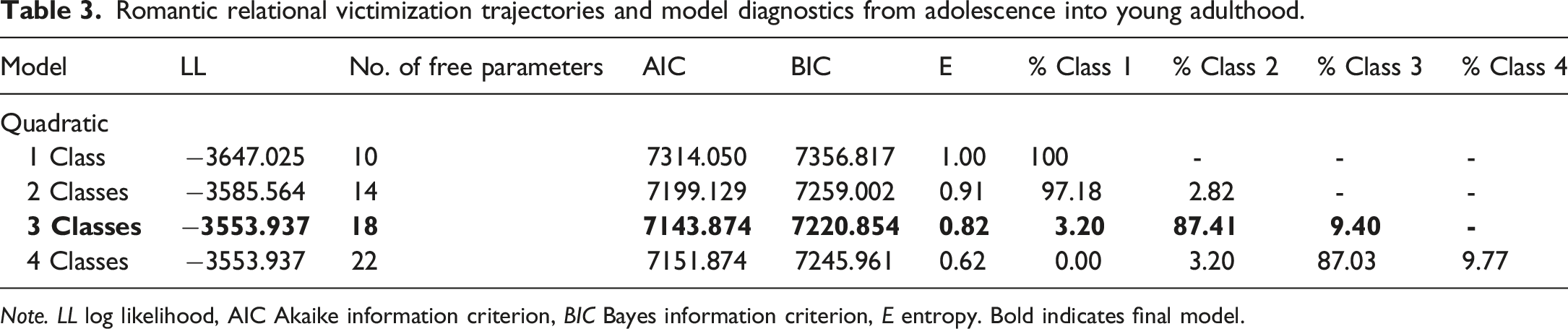
Note. LL log likelihood, AIC Akaike information criterion, BIC Bayes information criterion, E entropy. Bold indicates final model.
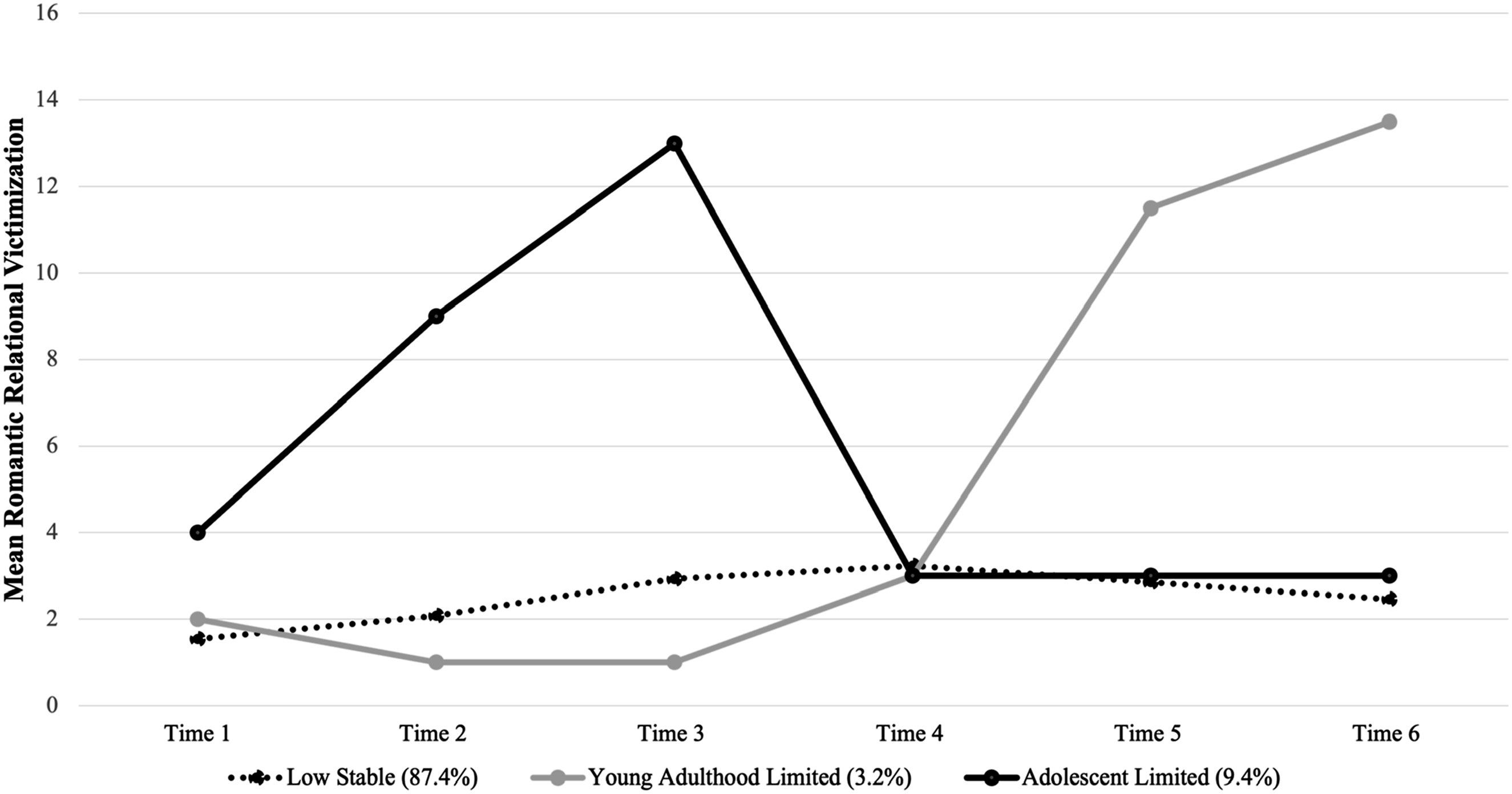
Trajectory groups of romantic relational victimization from adolescence into young adulthood.
Demographic risk factors for romantic relational victimization assignment
In univariate analysis, there were no differences in by sex (
Environmental mastery and autonomy predicting group assignment
Multinomial logistic regression models predicting romantic relational victimization trajectories.
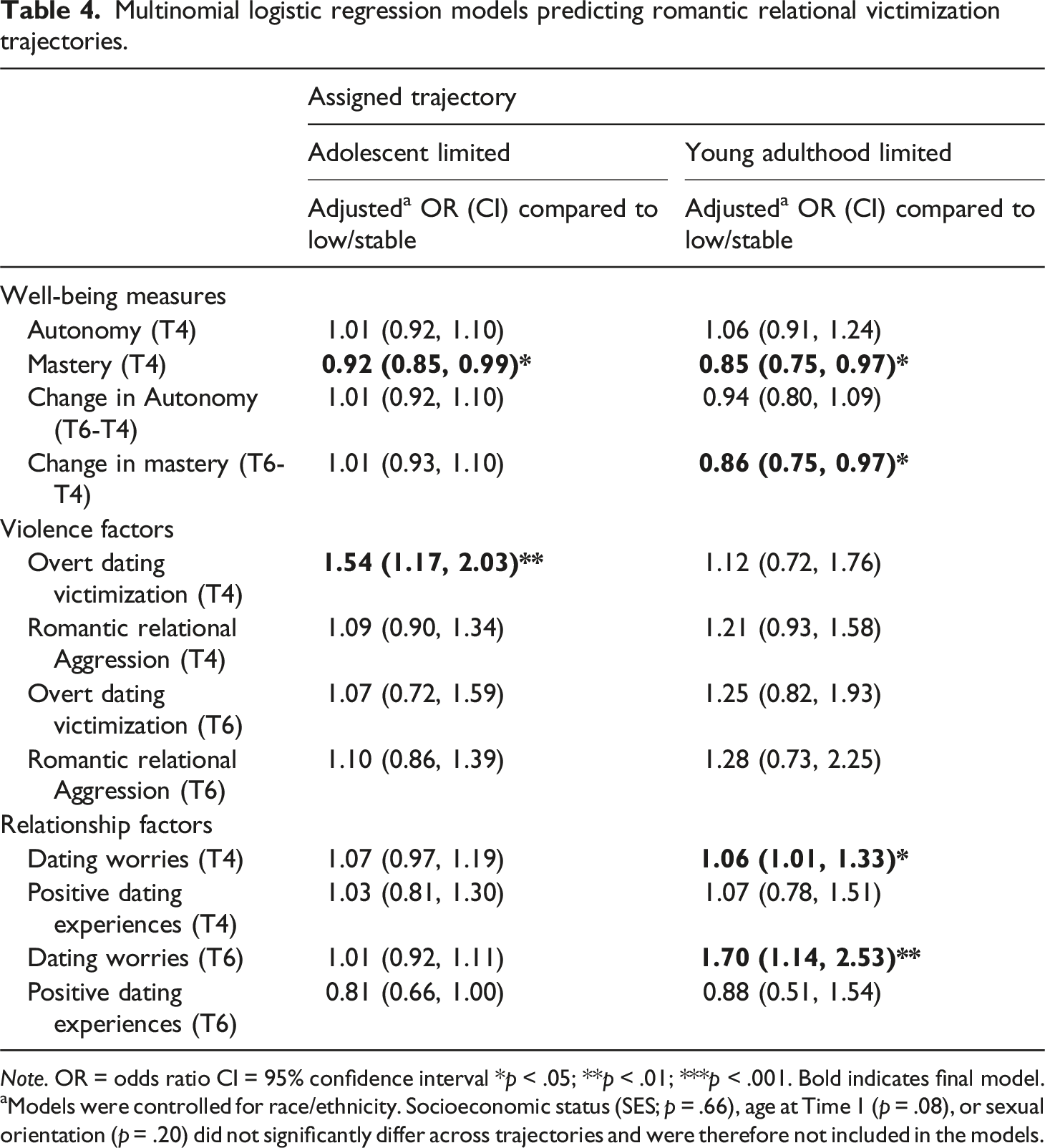
Note. OR = odds ratio CI = 95% confidence interval *p < .05; **p < .01; ***p < .001. Bold indicates final model.
aModels were controlled for race/ethnicity. Socioeconomic status (SES; p = .66), age at Time 1 (p = .08), or sexual orientation (p = .20) did not significantly differ across trajectories and were therefore not included in the models.
Other forms of violence predicting group assignment
Only overt dating victimization during adolescence (at T4) was associated with assignment to the adolescent limited trajectory
Romantic relationship factors predicting group assignment
Having dating worries during adolescence (at T4; OR = 1.06, 95% CI = 1.01, 1.33) and young adulthood (at T6; OR = 1.70, 95% CI = 1.14, 2.53) served as predictors for assignment to the young adulthood limited trajectory compared to the low/stable victimization trajectory. Quality of romantic relationships was not associated with assignment to either trajectory.
Discussion
The current study aimed to assess an understudied type of victimization, romantic relational victimization, and identify distinct trajectories from adolescence through young adulthood. We also assessed whether trajectories were differentially linked to relationship risk factors and negative outcomes while also uncovering potential protective factors that could aid in intervention research on victimization in romantic relationships. Our findings suggest that there are different patterns of romantic relational victimization across adolescence and young adulthood, highlighting the heterogeneity of victimization experiences over time. While longitudinal examinations of victimization are often limited to physical tactics (e.g., pushing, shoving, etc.; DeCamp & Zaykowski, 2015; Semenza, 2021), our findings highlight the presence of relationally targeted forms of romantic aggression, such as romantic relational aggression, during this developmental period. Although the prevalence of these behaviours was relatively low on average, their focus on disrupting the dynamics of the romantic relationship, rather than solely targeting the individual, underscores their potential significance. These findings emphasize the importance of investigating relationally oriented victimization, which may uniquely impact both individual functioning and relationship dynamics.
Trajectories of romantic relational victimization from adolescence to young adulthood
Specifically, three distinct trajectories were identified consisting of youth who follow low/stable victimization, adolescent limited victimization, and young adulthood limited victimization. While the number of trajectories mirror past research that have examined non-violent forms of victimization, our specific age-peaking patterns align with studies examining violent subtypes. Much like the current findings, Semenza and colleagues (2021) identified adolescent limited (14.1% of sample) and young adulthood increasing (8.1%) trajectories when assessing violent victimization in adolescents through to young adulthood. Although these studies typically focus on physical aggression, romantic relational victimization, as explored here, underscores the unique implications of aggression targeted specifically at the dynamics of the romantic relationship.
Violent victimization trajectories (VVT) have been associated with numerous risk factors, such as ethnicity/race (Mehari & Farrell, 2015), age (Vezina & Hebert, 2007), and socioeconomic status (Tippett & Wolke, 2014); however, these risk factors have not been noted across all victimization types. For example, Mehari and colleagues (2015) found that neither overt nor relational victimization was related to an adolescents’ majority or minority status. However, our study found supporting evidence of racial identification being associated with greater likelihood of young adulthood victimization, indicating that relational vulnerabilities, particularly in marginalized communities, may persist or escalate as individuals age.
These findings stress the need to further examine the intersection of demographic factors, given that the experience of RRV may be compounded by broader social and economic disadvantages. For example, members of minoritized groups are at a much greater risk of victimization compared to non-minoritized counterparts (Allen et al., 2019), which is further exacerbated by economic and social disadvantages that perpetuate health disparities (Williams et al., 2010). The relational implications of victimization in these contexts may exacerbate feelings of powerlessness and dependency in relationships, potentially increasing the risk of continued victimization. Identifying both risk and protective factors that might mitigate the detrimental impacts of victimization across the lifespan is warranted given the inconsistent findings in the field.
Associations with environmental mastery and autonomy
Lower environmental mastery, not autonomy, was associated with assignment to both trajectories of victimization. Moreover, decreases in mastery from adolescence through to young adulthood were associated with assignment to the young adulthood trajectory. These findings suggests that environmental mastery is particularly relevant when examining romantic relational victimization. While similar to autonomy, environmental mastery has the added component of assessing one’s ability to successfully handle external demands, which include the dynamics of romantic relationships. Experiencing romantic relational victimization (RRV) can disrupt this sense of mastery, as the relational target of the victimization often impairs relational stability and dynamics. In such instances, individuals might internalize the victimization as a reflection of their inability to manage or control relational circumstances, which can lead to a diminished sense of efficacy and a reduced ability to navigate relationship challenges.
RRV’s focus on the relationship, rather than just the individual, could exacerbate this erosion of mastery, as it may create fears or doubts about one’s worth in romantic contexts. These relationally-focused forms of victimization could shape one’s perceptions of being incapable of maintaining a healthy relationship, which further impedes environmental mastery. This is especially pertinent during the transition from adolescence to young adulthood, as individuals begin making important life decisions and prepare for newfound roles and responsibilities. This developmental period is characterized by relational shifts, including increases in romantic commitment and the navigation of longer-term partnerships (Connolly et al., 2023). The findings that diminished mastery was associated with victimization at both adolescence and young adulthood underscores the relevance of mastery in predicting victimization patterns.
In addition to the cross-sectional findings, we also found that decreases in mastery over time were associated with increased risk of young adulthood victimization. Research examining risk factors for victimization have often taken the perspective of population heterogeneity (Nagin & Paternoster, 2000), suggesting that individual level differences in victimization are associated with time-stable factors (e.g., self-control; Gottfredson & Hirschi, 1990). However, our findings suggest that the change in these characteristics is also associated with victimization risk. While our results suggest a decrease in mastery is associated with increased victimization, perhaps the reverse is also true. This has been suggested by Turner and colleagues (2017), as they found that when victimization desisted, youth were able to restore their sense of personal control, improving their environmental mastery and overall well-being. These findings, along with the current study, lend support to environmental mastery serving as a target of intervention. For example, restoring relational environmental mastery by addressing RRV within romantic partnerships, could be a potential intervention target to reduce future victimization.
Individuals who experience declines in mastery during this transition might be more vulnerable to the stressors and challenges associated with young adulthood, especially as it pertains to the ever-changing landscape of romantic relationships. They may struggle to assert control over relationship dynamics, leading to increased exposure to romantic victimization, further diminishing their sense of self-efficacy.
Associations with relationship-specific factors
We also identified relationship-specific factors that predicted trajectory assignment. We found that overt dating victimization during adolescence was associated with increased risk of being assigned the adolescent limited trajectory. These findings lend support to the theory of heterotypic continuity, which proposes that different forms of victimization are interrelated through a latent factor that manifests in distinct but related patterns (Kagan, 1969). This has been examined in rates of perpetration, such that bullying beginning in pre-adolescence has been associated with multiple forms of aggression in young adulthood; the form of aggression changes as an individual develops (from bullying to sexual harassment and dating violence; Humphrey & Vaillancourt, 2020). However, little attention has been paid to heterotypic continuity in patterns of victimization, although some findings lend support to this theory. For example, studies have found positive associations between sexual harassment and physical aggression victimization (Chiodo et al., 2009) as well as bullying and sexual harassment victimization (Ashbaughm & Cornell, 2008). Our findings suggest that romantic relational victimization may lay the groundwork for patterns of poly-victimization, where multiple forms of victimization co-occur (Turner et al., 2017). Participants experiencing romantic relational victimization also reported overt victimization (e.g., physical aggression), but was only seen in the adolescent limited trajectory. This could reflect an underlying construct that might predict the co-occurrence of multiple forms of victimization. It might also lend support to the negative outcomes associated with romantic relational victimization (e.g., diminished environmental mastery), increasing the vulnerability for further victimization.
Finally, our results suggest that greater dating worries during both adolescence and young adulthood was associated with young adulthood victimization, offering insight into the interplay between mastery and views on romantic relationships. Dating worries, characterized by uncertainty, fears surrounding commitment, and inadequacy as a romantic partner, may undermine an individual’s ability to develop secure attachments within their romantic relationship. When coupled with a diminished sense of mastery, these worries may heighten the likelihood of victimization over time. While our results do not confirm causal associations, they do suggest that mastery and dating worries are associated with young adulthood victimization patterns.
Strengths and limitations
This study had several strengths. Longitudinal data offers the opportunity to study individual change over time. The time frame of the study itself provided the opportunity to understand rates of victimization during a pivotal transition period from adolescence into young adulthood, which has been examined less extensively in the literature. The use of growth mixture modeling is another strength, allowing the modeling of individual heterogeneity over time while simultaneously grouping individuals who share similar patterns of change.
There were also limitations in the study. One limitation pertains to the self-reports of romantic relational victimization, autonomy, and environmental mastery, such that the reports could have been biased. Individuals might have over-estimated their reports of autonomy and mastery, or underreported their romantic relational victimization rates based on social desirability. However, self-reports often are more accurate than other approaches, especially when capturing sensitive information in adolescence (Bradford & Rickwood, 2012). While the reports of romantic relational victimization were quite low, this is not uncommon in terms of other studies examining violent victimization (e.g., Moroń & Mandal., 2021). Some analyses might be influenced by statistical power and stability of estimates, given the discrepancies in group sizes. However, utilizing the larger low/stable group as the reference category allowed clear comparisons between the smaller groups.
In terms of relationship status, there was no way of knowing if the participant was in the same relationship as the previous time point. Regardless of the continuity of relationships, this study identified patterns of victimization that persisted across relationship types, highlighting the potential pattern of victimization from adolescence into young adulthood. Perhaps victimization reports are not relationship specific. In addition, the current study was not able to concurrently assess participants’ partners and their rates of perpetration, which could corroborate the reports of victimization. This could provide a more complete picture in terms of the dyadic effects of relationship dysfunction. Finally, while this study included certain demographic characteristics, we did not assess additional factors such as disability, gender identity, and other demographics that could have added to the insights of this manuscript.
Conclusions and policy implications
Overall, the findings highlight the heterogeneity of romantic relational victimization over time. This underscores the importance of examining the longitudinal patterns of victimization from adolescence into young adulthood, focusing on who is at risk of victimization during this period. These trajectories can be useful for tailoring interventions, especially to inform the timing of implementation efforts. For example, the findings that environmental mastery is associated with victimization trajectories offers preliminary evidence that targeting adolescents’ well-being could serve as a protective mechanism against victimization, promoting healthy romantic relationships. Future research should examine the interplay between these constructs, such that bolstered well-being could increase relationship quality, and vice-versa. The current research also underscores the developmental approach that must be considered when informing effective interventions. Our study found three distinct patterns of victimization during adolescence and young adulthood. Understanding the idiosyncrasies of romantic relationship characteristics at this time could be one avenue to assist with reducing victimization across the life course.
Footnotes
Declaration of conflicting interests
The author(s) declared no potential conflicts of interest with respect to the research, authorship, and/or publication of this article.
Funding
The author(s) disclosed receipt of the following financial support for the research, authorship, and/or publication of this article: This work was supported by the Canadian Institutes of Health Research under Grants #838-20000-075, #79917, and #93533
Open research statement
As part of IARR’s encouragement of open research practices, the authors have provided the following information: This research was not pre-registered. The data used in the research cannot be publicly shared due to restrictions relating to the privacy of research participants. The materials used in the research cannot be publicly shared. Both materials and data are available on request from the corresponding author by emailing:

Data availability statement
The data used in the research cannot be publicly shared due to restrictions relating to the privacy of research participants. Data are available on request from the corresponding author.