




Abstract
Objectification theory posits that women are treated merely as a body, valued for its use, pleasure and consumption by and for others, mainly men. Women are also disadvantaged relative to men when it comes to sexually pleasurable experiences, including lower orgasm rates and a higher burden of performing sexual emotional labour (e.g., faking orgasm, performing desire for the partner, tolerating discomfort or pain during sex). We tested the hypothesis that objectification within romantic relationships (i.e., partner-objectification) may contribute to this tendency. Using data from 160 heterosexual couples, we aimed to explore how women’s self-objectification, perceived partner-objectification, and men’s self-reported partner-objectification are related to women’s orgasm rates and performance of sexual emotional labour. Self-objectification predicted women’s performance of sexual emotional labour but did not predict women’s orgasm rates. Our results further indicate that to the extent that women perceived themselves as being objectified by their male partner, they tend to report lower orgasm rates and greater performance of emotional labour. However, men’s self-reported partner-objectification did not. These findings suggest that women’s meta-perceptions are of greater importance for women’s sexual well-being than men’s self-reports. The research has implications for societal interventions aimed at preventing the consequences of partner-objectification, as well as for discussions in sex and relationship therapy for couples.
Keywords
Introduction
Women in the Western world live within in a society where the female body is subjected to objectification (e.g., Bartky, 1990; Dworkin, 1974), leading girls and women socialized to view themselves as objects, evaluated based on their appearance (Fredrickson & Roberts, 1997; for a review see Kahalon et al., 2018). Accordingly, objectification theory suggests that women are often treated merely as a body, valued for its use, pleasure and consumption by and for others, mainly men (Fredrickson & Roberts, 1997). Women tend to adopt this objectifying view of the self, in a process called self-objectification. Self-objectification has been theorized to contribute to women’s experiences of depression (for a review see Jones & Griffiths, 2015), eating disorders (for a review see Tiggemann, 2011) and sexual dysfunction (Kahalon, Klein, et al., 2024). The link between self-objectification and sexual dysfunction is thought to arise because of greater body shame, greater appearance anxiety, reduced “flow” experiences (i.e., being fully immersed in a rewarding activity) and lower internal body awareness (i.e., inner physical experiences such as hunger or sexual arousal; Fredrickson & Roberts, 1997).
Given that objectification has been theoretically associated with the sexual experiences of women and that research has expanded to encompass more than just sexual dysfunction (e.g., Calogero & Thompson, 2009; Clapp & Syed, 2021; Claudat & Warren, 2014; Grower & Ward, 2018), it seems reasonable to consider its potential impact on other aspects of impaired sexual pleasure. Expanding previous research, we propose that within the heterosexual context, objectification processes are likely to significantly impact two gender disparities related to sexuality that put women at a disadvantage: the orgasm gap and women’s engagement in sexual emotional labour. Women not only encounter lower rates of orgasms compared to men (e.g., Frederick et al., 2018) but also engage more in sexual emotional labour which we define in the present study as women’s prioritization of the well-being of one’s partner over one’s own emotions or sexual pleasure (Oschatz et al., 2024). Recognizing that women’s sexuality exists within a sociocultural context, we examined the role of the male partner (i.e., women’s perceived and male partners’ self-reported objectification) to better understand those two types of gender-based inequality present in intimate settings.
The orgasm gap
Men are more likely to orgasm than women in the heterosexual context – a term referred to as the ‘orgasm gap’ (Andrejek & Fetner, 2019; Frederick et al., 2018; Jones et al., 2018; Leonhardt et al., 2018; Piemonte et al., 2019; Struckman-Johnson et al., 2017). Researchers have emphasized the need to refute the biological explanations that are often wrongly used to comprehend the orgasm gap and instead explore and design interventions based on sociocultural explanations (Laan et al., 2021; Mahar, Mintz, & Akers, 2020). Orgasm frequency has been shown to be associated with women’s sexual and relationship satisfaction (e.g., Dienberg et al., 2023; Mahar et al., 2020), emphasizing the need to reduce the orgasm gap to promote women’s sexual functioning, pleasure, and general satisfaction within their relationships. Objectification theory provides a framework for understanding the orgasm gap. Being attuned and responsive to the internal bodily cues of sexual arousal is essential for experiencing an orgasm (e.g., Adams et al., 1985). Women’s self-objectification, associated self-conscious body monitoring and attentiveness to physical appearance (e.g., Felig, 2022) distract from attending to (or merely the occurrence) of required internal bodily signals. Engaging in self-objectification specifically during sexual activity (sometimes referred to as sexual self-consciousness) has been thought to consequently hinder women’s orgasm experiences (Claudat & Warren, 2014). Similarly, in intimate encounters, women might prioritise how they appear to their partner over their own sexual pleasure (Gervais & Eagan, 2017). Women high on self-objectification seem to internalize an inferior role, thereby constraining their sexual pleasure. Supporting this assumption, a recent study found that women’s self-objectification was associated with a lack of agency and entitlement among heterosexual women (Kahalon et al., 2024). Accordingly, women with high self-objectification perceive themselves as less deserving of pleasure and struggle with expressing and communicating their sexual desires and preferences to their partner (Kahalon et al., 2024), which could also potentially contribute to the orgasm gap.
Women’s sexual emotional labor
Besides lower orgasm rates, women also face limitations in other aspects of their sexual well-being compared to men (Conley & Klein, 2022; Laan et al., 2021). The dimension of emotional labour as a contributing factor has been a recent topic of discussion in this context. In this paper, we propose that objectification theory is valuable not only in understanding women’s lower orgasm rates but also in women’s performance of sexual emotional labour. Emotional labour encompasses a variety of activities geared towards improving the emotional well-being of others and providing them with emotional support (Erickson, 1993). Given gendered expectations, within romantic heterosexual relationships, women may be more prone than men to repress their emotions to improve the wellbeing of others (Hochschild, 1983) and may perform greater emotional labour than their partners (Duncombe & Marsden, 1993; Fahs & Swank, 2016; Umberson et al., 2015). Emotional labour in relationships can be experienced in many different forms (e.g., child-related, housework-related), including sexuality-related experiences. Briefly, sexual emotional labour can be defined as a fundamental, but frequently hidden, component of gender inequalities in sexuality, which prioritises the well-being of one’s partner over one’s own emotions or sexual pleasure (Fahs & Swank, 2016; Oschatz et al., 2024). For instance, women are more likely than men to report engaging in sexual activity for the sake of their partner’s desire rather than their own desire (Laan et al., 2021). Women fake orgasms to reassure their partner and avoid hurting their partners’ feelings (Fahs, 2014; Goodman et al., 2017) or tolerate painful sex to satisfy their partner’s needs (Fahs & Swank, 2016). In the current study, we operationalized sexual emotional labour as faking orgasm, performing desire for the partner, tolerating discomfort or pain during sex, and partner-referenced sexual satisfaction.
Women’s self-objectification and the role of the male partner
A growing body of research indicates that the relationship context can initiate self-objectification among women (Garcia et al., 2016; Guo et al., 2022; Mahar, Webster, & Markey, 2020; Pecini et al., 2022, 2023; Riemer et al., 2021). Both correlational and experimental research highlight the reported existence of partner-objectification within both dating and ‘regular’ couple interactions and its consequences for women. For instance, a study using heterosexual couples found that women reported higher levels of self-objectification during a fabricated argument when their male partner was asked to focus on her appearance, compared to thinking of her personality in an activity prior to their interaction (Riemer et al., 2021). Hence, the male partner holds a pivotal position in the women’s self-objectification process.
Sexual behaviour does not occur in a vacuum, and to gain a better understanding of how (self-)-objectification is related to women’s sexual outcomes, it is essential to consider the interpersonal context, especially intimate relationships in which sexual attraction occurs and importance or interest is placed on the other person appearance to some extent (Kozee et al., 2007; Ramsey & Hoyt, 2015). Moreover, previous research indicates that sexual activity (Steer & Tiggemann, 2008; Vandenbosch & Eggermont, 2014) especially with a romantic partner (Calogero & Thompson, 2009) can create a context for self-objectification in women (e.g., Sáez et al., 2019; Sanchez & Broccoli, 2008). While most research has focused on how (sexual)-relationships can trigger women’s self-objectification, the theory expands to consider how the objectification of the person who objectifies, in this case, the male partner (i.e., partner-objectification), might lead to a lack of concern for women’s pleasure. Women’s sexuality is embedded in a social context sauntered from traditional sexual scripts for heterosexual sex, which overvalue male pleasure over women’s satisfaction and/or pleasure in sexual relationships (Conley & Klein, 2022). From a theoretical standpoint, objectification functions as a mechanism through which women are reduced to mere sexual body parts, perceived as objects solely for the sexual pleasure of others (Gervais & Eagan, 2017). To sexually objectify a woman entails mentally separating her physical attributes from her mental and emotional aspects, directing attention solely to her sexual body parts. In this state, her bodily features lose their connection to her individuality and feelings, becoming perceived as tools intended for the use of others (Bartky, 1990). Thus, men who objectify their partners may not only exploit women for their own pleasure but could also hinder their female partner’s ability to express their sexual needs, consequently shifting the focus more onto their male partner’s pleasure rather than themselves. This, in turn, could result in lower orgasm rates for women and their increased performance of sexual emotional labour.
Men’s self-reported partner-objectification, perceived partner-objectification and women’s sexual and relationship outcomes
Although male partners can introduce self-objectification, there is a dearth of literature on their contributions to women’s sexuality, with recent studies predominantly focusing on the exploration of the role of male partner-objectification within heterosexual couples on relationship-related variables. Partner-objectification has often been operationalised as monitoring of one’s partner’s outward appearance (e.g., Guo et al., 2022; Mahar, Webster, & Markey, 2020) but has also considered evaluating and placing greater importance on appearance versus physical competence (e.g., Pecini et al., 2022). Whilst some have found no negative effects of male partner-objectification on women’s reported relationship quality (Mahar, Webster, & Markey, 2020), others have found it has an association both directly (Guo et al., 2022) and indirectly (via increased self-objectification) with women’s life satisfaction (Pecini et al., 2022).
While no research so far has explored men’s self-reported partner-objectification related to women’s sexual experiences, women’s perception of being objectified by their male partner (i.e., perceived partner-objectification) has received some research attention. Greater perceived partner-objectification has been linked to women’s increased self-objectification (Guo et al., 2022), which in turn relates to increased body shame, decreased body acceptance in a partner’s presence, decreased ability to refuse sex from a partner and decreased interest or desire in sex (Ramsey & Hoyt, 2015). Moreover, perceived partner-objectification by women has been found to be negatively associated with their relationship satisfaction (Guo et al., 2022; Ramsey et al., 2017; Sáez et al., 2019). These findings imply consequences of perceived partner-objectification on women’s relational and sexual outcomes.
Men’s self-reported partner-objectification versus perceived partner-objectification
In objectification research, there has been some discussion regarding whether perceived or men’s self-reported objectification of their female partner has a more significant impact on women. Whilst men’s self-reported partner-objectification has been thought to represent the actual partner-objectification taking place (e.g., Pecini et al., 2022), this may not be true. In other words, it is reasonable to assume that men might also underestimate their perpetration of partner-objectification towards their female partners. This has been implied by findings from an experimental study with couples (Riemer et al., 2021). Male partners were assigned to either an appearance or personality-focused condition (instructed to think about their partner and write their thoughts either relating to their appearance or personality) before being instructed to have a discussion with their female partner regarding topics on which they disagreed (Riemer et al., 2021). Male partners’ reported partner-objectification did not affect women’s reported self-objectification. However, despite there being no difference in reported male partner-objectification between experimental conditions, female partners reported high self-objectification when their couple was assigned to the appearance-focused condition. This suggested that the experimental manipulation to induce self-objectification did work, albeit not explicitly detected and self-reported by the male partners themselves. Accordingly, some researchers have suggested that, for women’s relational and sexual outcomes, the perceived partner-objectification could be particularly significant, rather than the actual partner-objectification itself (Mahar, Webster, & Markey, 2020). For example, Guo et al. (2022) found women’s perceived partner-objectification mediated the association between men’s self-reported partner-objectification and women’s self-objectification, in that men’s greater self-reported partner-objectification was linked to women’s greater perceived partner-objectification and their consequent increased self-objectification. To summarize, the inclusion of perceived partner-objectification measures may be useful to mitigate men’s self-reporting inaccuracy.
The present research
Using objectification theory as a framework, the overarching goal was to explore how male self-reported and perceived partner-objectification affects prioritizing male pleasure over women’s satisfaction (i.e., potentially leading to the orgasm gap, performing sexual emotional labour). More concrete, we explored how women’s self-objectification, women’s perceived partner-objectification, and men’s self-reported partner-objectification are related to women’s orgasm rates and performance of sexual emotional labour. We addressed important previous shortcomings in the objectification literature by: (a) examining for the first time the specific influence of the male partner and how male self-reported objectification influences women’s sexual outcomes; (b) differentiating between perceived partner-objectification and male partner’s self-reported partner-objectification, and (c) explicitly focusing on the relationship between self-objectification and women’s reduced sexual outcomes, particularly orgasm rates and sexual emotional labour. To do so, we analysed couples’ data to examine both the perspectives of women and men within the couples.
The study was pre-registered: https://aspredicted.org/ndh4-n9x4.pdf. We tested the association between (a) women’s self-objectification, (b) perceived partner-objectification, and (c) men’s self-reported partner-objectification, as well as the interactions among these variables, with the two sexual outcomes of interest (i.e., women’s orgasm frequency and sexual emotional labour). First, we hypothesised to find a main effect for self-objectification. Second, we hypothesised that women’s perceived, rather than men’s self-reported partner-objectification, will interact with self-objectification to predict lower orgasm frequency and higher sexual emotional labour. Data are publicly available on the Open Science Framework: https://osf.io/9p5gb/.
Method
Participants and procedure
Participants were recruited via the Prolific survey platform. Inclusion criteria required that participants were in a heterosexual cohabiting relationship, who considered themselves sexually active, located in the UK or the USA and that both members of the couple had Prolific account and were willing to participate together. We recruited 162 couples, however, two female participants expressed ‘no sexual activity’ during partnered sex and were therefore excluded from the analyses. For the main multiple regression analyses, to detect small-size effects (r = .15), at least 119 participants were required to achieve 95% power with three predictors (α = .05).
Demographic characteristics of the study sample.
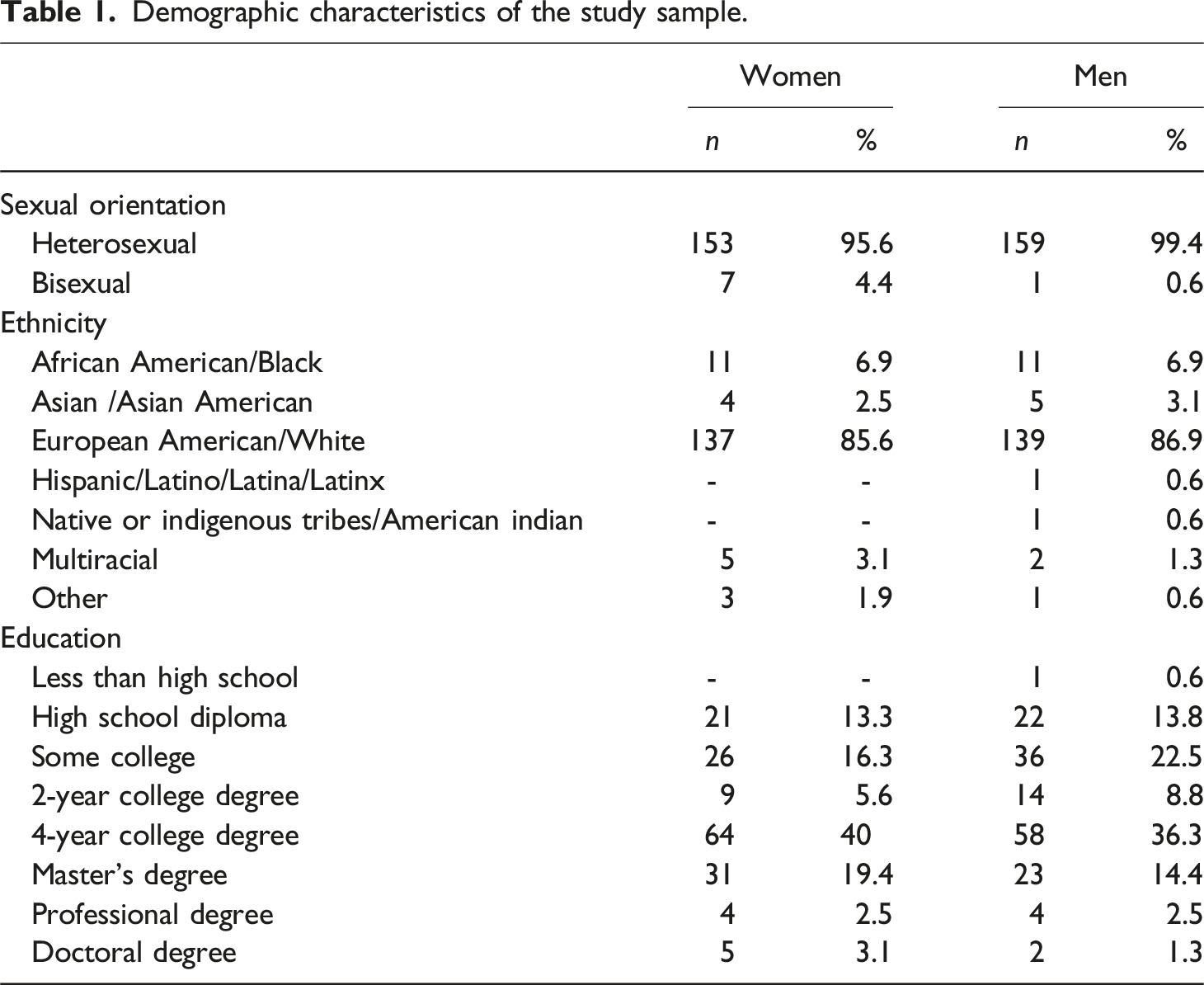
Prolific pre-screening tools were chosen to aid recruitment per the above-mentioned inclusion criteria (i.e., only presenting the study advert to those selecting “participating together with a romantic partner on Prolific”). A screening survey specific to the current study was used to check the eligibility and willingness of both partners to participate in the main survey study. Screening questions asked whether participants had a Prolific account-using romantic partner willing to take part, of whom they could provide their partners’ Prolific ID, in addition to age, gender, sexual orientation, and partner’s gender. Following screening completion, we checked for partners’ eligibility and that the information provided by both partners matched (i.e., gender, Prolific IDs). Couples that met inclusion criteria were simultaneously invited to the main survey, with instructions to complete it independently. At the beginning of the main study, participants were provided with the information sheet which outlined the study. After informed consent, participants responded to the measures concerning their relationship, and sexuality-related measures. Participants also completed a ‘CAPTCHA’ check, a method of examining participants’ responses to identify bots (Teitcher et al., 2015).
Participants were granted £0.25 for participation in the screener survey (irrespective of inclusion/exclusion criteria) and a further £2.00 for participation in the main study.
Measures
Men only filled out the self-reported partner-objectification measure, and women completed all other scales reported in the measures section. All participants completed demographic questions.
Self-objectification
Self-objectification was assessed using the Self-Objectification Beliefs and Behaviours Scale (SOBBS; Lindner & Tantleff-Dunn, 2017), a newer measure with better psychometric properties and content validity of self-objectification components in comparison to previous measures (e.g., McKinley & Hyde, 1996; Noll & Fredrickson, 1998). The SOBBS has been shown to be significantly correlated to sexual functioning (Kahalon, Klein, et al., 2024; Lindner & Tantleff-Dunn, 2017). The SOBBS contains two factors. Factor 1 includes 7 items about internalising an observer’s perspective of the body (e.g., “I often think about how my body must look to others”), whereas Factor 2 contains 7 items that represent treating the body as if it is capable of representing the self, including valuing physical appearance above that of other capabilities and feelings (e.g., “My body is what gives me value to other people”). Participants were asked to rate their level of agreement with 14 items using a 5-point Likert-type scale (1 = strongly disagree, 3 = neither agree nor disagree, and 5 = strongly agree). The total score was calculated, with a higher score indicating greater self-objectification. The internal consistency of the total SOBBS score (α = .93) was excellent, similar to the instruments’ validation study (α = .92, Lindner & Tantleff-Dunn, 2017).
Perceived partner-objectification
Perceived partner-objectification was measured using the adapted Objectified Body Consciousness Scale (OBCS)-Surveillance subscale (McKinley & Hyde, 1996) for assessing an individual’s perception of how much their partner objectifies them (Ramsey et al., 2017; Ramsey & Hoyt, 2015). The items from the original OBCS-Surveillance subscale, such as “I rarely think about how I look. (R),” were adapted to shift the perspective to the male partner’s viewpoint (e.g., “My partner rarely thinks about how I look. (R).” Participants were asked to rate their level of agreement with 8 items (e.g., “My partner rarely thinks about how I look. (R)”; “My partner often worries about whether the clothes I am wearing make me look good.”) using a 7-point Likert-type scale (1 = disagree strongly, 4 = neither agree nor disagree, and 7 = agree strongly). Total scores were calculated, with higher scores indicating greater perceived levels of objectification from one’s partner. The internal consistency was acceptable (α = .75) similar to that of past research (α = .71-.72, Ramsey et al., 2017).
Men’s self-reported partner-objectification
Men’s self-reported partner-objectification was assessed using the Surveillance subscale of the OBCS (McKinley & Hyde, 1996), adapted to assess partner-objectification (Zurbriggen et al., 2011). The adaption of the OBCS has been used previously in research exploring partner-objectification (e.g., Mahar, Webster, & Markey, 2020; Ramsey & Hoyt, 2015; Riemer et al., 2021). Male participants were asked to rate their level of agreement with 8 items (e.g., “I rarely think about how my partner looks. (R)”; “I often worry about whether the clothes my partner is wearing make my partner look good.”) using a 7-point Likert-type scale (1 = disagree strongly, 4 = neither agree nor disagree, and 7 = agree strongly). Total scores were calculated, with higher scores indicating greater levels of objectification towards one’s partner. Prior to conducting analyses, it was discovered the internal consistency of the measure was initially unsatisfactory (α = .69), despite being higher than when first used (α = .67, Zurbriggen et al., 2011). Similar to past research (i.e., Riemer et al., 2021), inspection of item-total statistics prompted the removal of one item (“During the day, I think about how my partner looks many times.”) which increased the internal reliability to a satisfactory level (α = .74).
Orgasm frequency
Women’s orgasm was measured with two items. We asked participants: “Generally speaking, please indicate how often the following things happen during sexual encounters with your partner: I have an orgasm”. Participants responded with their level of agreement on a 5-point Likert-type scale (1 = never, 5 = always). Additionally, we used one orgasm item “Generally, when you have sexual stimulation or intercourse with your partner, how often do you reach orgasm (climax)?” of the validated 6-item version (Isidori et al., 2010) of the Female Sexual Function Index (FSFI; Rosen et al., 2000). The FSFI is a well-established measure to assess sexual functioning in previous research (González et al., 2006; Kahalon, Klein, et al., 2024; Steer & Tiggemann, 2008; Tiggemann & Williams, 2012; van Lankveld & Bergh, 2008; Vencill et al., 2015). Female participants were asked to respond on a 5-point Likert-type scale (1 = almost never or never, 5 = almost always or always) with the option to select “no sexual activity”. As opposed to the original scoring of the FSFI in which higher scores indicate greater dysfunction (Isidori et al., 2010), for ease of interpretation, scoring was coded in that higher scores represented greater frequency of orgasm, and lower scores represented lower frequency. An orgasm frequency score was created by summing the two items, higher scores indicate greater frequency of orgasm. The internal consistency for the total scale was good (α = .88).
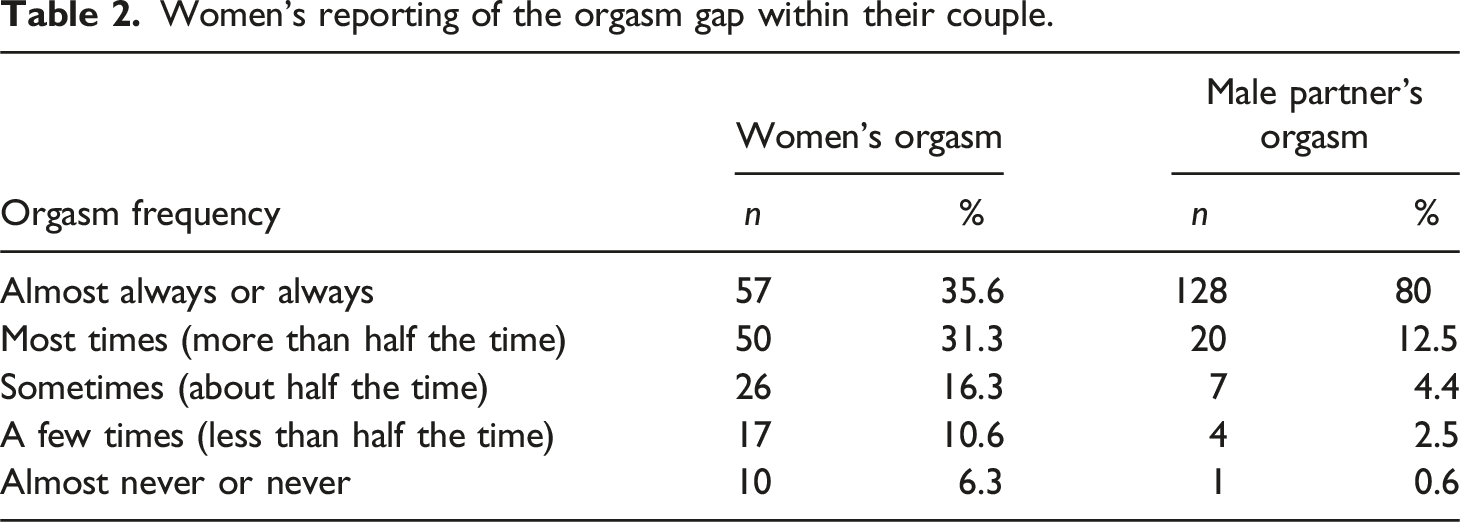
To conduct a descriptive analysis of the orgasm gap within couples, we additionally assessed male partner’s orgasm experience as reported by their female partner “Generally, when you have sexual stimulation or intercourse with your partner, how often do they reach orgasm (climax)?” This too was an adaptation of the FSFI and scored identically.
Sexual emotional labour
Women’s Sexual Emotional Labor Assessment (WOSELA, Oschatz et al., 2024) was used to measure women’s sexual emotional labour. The WOSELA includes four subscales: Faking orgasm (e.g., “I fake orgasms to make my partner feel good.”), Performing desire (e.g., “I have sex even when I do not really feel like it.”), Tolerating discomfort or pain (e.g., “When I experience discomfort or pain during sex, I continue having sex.”), and Partner-referenced sexual satisfaction (e.g., “When we have sex, my partner’s sexual satisfaction is more important than my own satisfaction.”). The 12 items are scored on a 6-point Likert-type scale (1 = strongly disagree, 6 = strongly agree, or 1 = extremely unlikely, 6 = extremely likely). The scale’s total score was calculated by summing all items; higher scores indicate higher performance of sexual emotional labour (Oschatz et al., 2024). The internal consistency for the total scale was good (α = .83).
Data analysis
Given that research indicates that perceived partner-objectification may be more important to self-objectification than men’s self-reported partner-objectification (e.g., Mahar, Webster, & Markey, 2020), we conducted four multiple linear regression analyses 1 . We considered testing mediation models as done in previous research (e.g., Guo et al., 2022); however, given that alternative causal pathways have been proposed—such that women’s self-objectification preceding perceived partner-objectification (e.g., Ramsey et al., 2017)—we opted to use moderation. This approach allows us to examine how the interaction between these variables may predict outcomes beyond their individual effects. By employing multiple regression to explore moderation, we can assess whether varying levels of one variable (e.g., women’s perceived partner-objectification) may amplify or buffer the impact of the other (e.g., men’s self-reported partner-objectification) on the outcome. This framework captures the conditional and potentially reciprocal influences within these relational dynamics, which are often complex and not strictly directional. First, we explored the associations between self-objectification, perceived partner-objectification and their interaction with orgasm frequency (1) and sexual emotional labour (2). Additional multiple linear regressions were used to test the association between self-objectification, men’s self-reported partner-objectification and their interaction with orgasm frequency (3) and sexual emotional labour (4). The independent variables (perceived partner-objectification, self-objectification, men's self-reported partner-objectification, and their interactions) were grand-mean centred. There were no missing values.
We also tested both forms of objectification (perceived partner-objectification, and men’s self-reported partner-objectification) and their interaction in a single regression for a more precise comparison of the associations between the two partner objectification variables and the dependent variables orgasm frequency (1) and sexual emotional labour (2).
Results
Orgasm gap
Women’s reporting of the orgasm gap within their couple.
Bivariate correlations
Descriptive statistics and correlations for study variables.
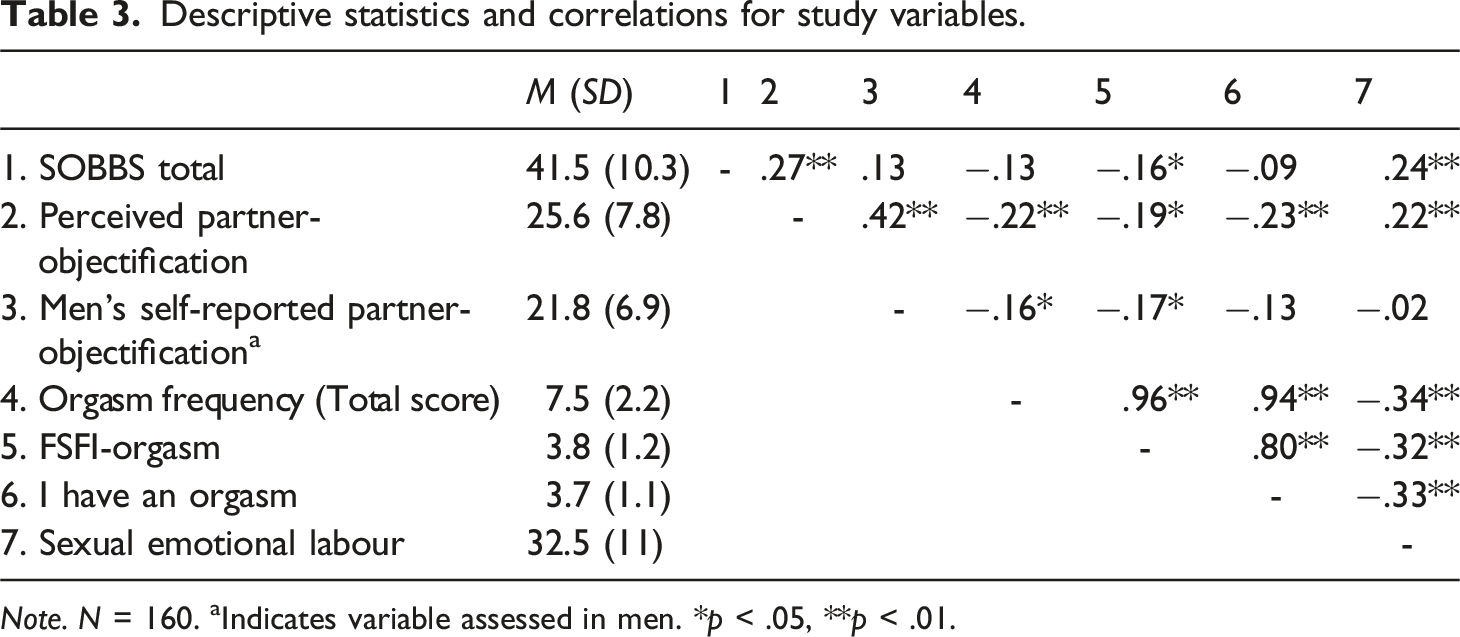
Note. N = 160. aIndicates variable assessed in men. *p < .05, **p < .01.
Interestingly, self-objectification was not significantly correlated with men’s self-reported partner-objectification. However, men’s self-reported partner-objectification was positively correlated with perceived partner-objectification. Perceived partner-objectification showed an expected negative correlation with women’s orgasm frequency and a positive correlation with engaging in sexual emotional labour. In other words, women reporting higher perceived partner-objectification report more self-objectification, lower orgasm frequency, and more emotional labour during sex. Men’s self-reported partner-objectification showed only a negative correlation with orgasm frequency. As such, women whose partners reported greater partner-objectification were more likely to report lower orgasm frequency.
Regressions: Women’s perceived partner-objectification
Model 1: Women’s self-objectification, perceived partner-objectification and women’s orgasm frequency
Women’s perceived partner-objectification and self- objectification.
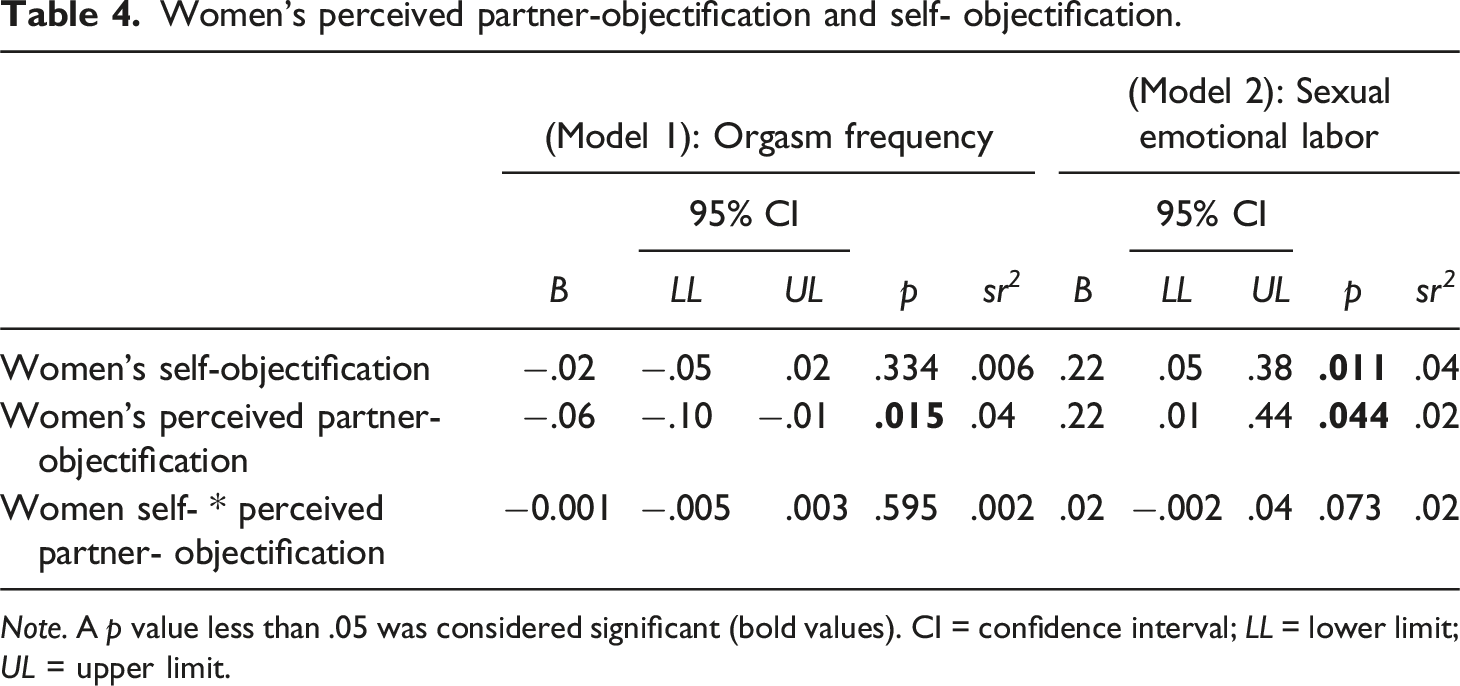
Note. A p value less than .05 was considered significant (bold values). CI = confidence interval; LL = lower limit; UL = upper limit.
Model 2: Women’s self-objectification, perceived partner-objectification, and women’s sexual emotional labour
We ran an additional regression with self-objectification, perceived partner-objectification, and their interaction as predictors and women’s sexual emotional labour as the dependent variable. The overall model was significant and explained 10.2% of the variance for women’s sexual emotional labour, R 2 = .10., F(3, 156) = 5.93, p < 01. Higher self-objectification and greater perceived partner-objectification were independently associated with women’s sexual emotional labour, but their interaction was not significant (Table 4).
Regressions: Men’s self-reported partner-objectification
Model 3: Women’s self-objectification, men’s self-reported partner-objectification and women’s orgasm frequency
Men’s self-reported partner-objectification and Women’s self-objectification.
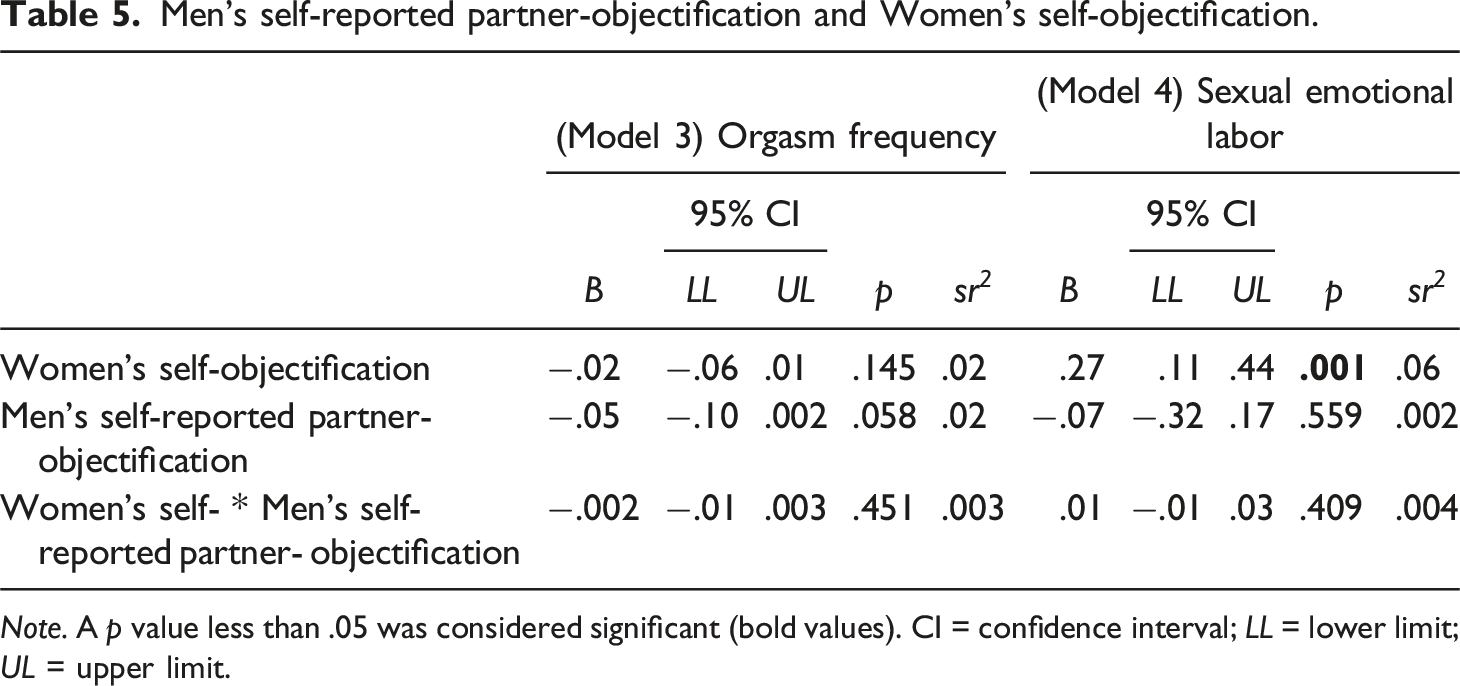
Note. A p value less than .05 was considered significant (bold values). CI = confidence interval; LL = lower limit; UL = upper limit.
Model 4: Women’s self-objectification, men’s self-reported partner-objectification, and women’s sexual emotional labor
Another regression was performed, including self-objectification, men’s self-reported partner-objectification, and their interaction as predictors and women’s sexual emotional labour as the dependent variable. The overall model was significant and explained 7% of the variance for women’s sexual emotional labour, R 2 = .07, F(3, 156) = 3.70, p = .013. Women’s greater self-objectification was independently associated with women’s sexual emotional labour. Neither the effect of men’s self-reported partner-objectification, nor its interaction with women’s self-objectification reached significance (Table 5).
As a robustness check, we repeated the regression analyses while controlling for relationship length. The pattern of results was similar with no change in statistical conclusions when this variable was controlled for (see OSF).
Additional analyses
To achieve a more precise comparison of both forms of objectification—perceived partner-objectification and men’s self-reported partner-objectification—and their associations with the dependent variables, we conducted two additional regression analyses including both as predictors as well as their interaction.
Women’s perceived partner-objectification was negatively associated with orgasm frequency, B = −.06, p = .015, sr 2 = .03, 95% CI = [−.11, −.01], whereas men’s self-reported partner-objectification was not (p = .281). Also, the interaction between perceived partner-objectification and men’s self-reported partner-objectification was not significant in predicting women’s orgasm rates (p = .121).
A similar pattern emerged for emotional labour as the dependent variable: Women’s perceived partner-objectification predicted emotional labour, B = .37, p = .003, sr 2 = .12, 95% CI = [.13, .61], whereas men’s self-reported partner-objectification did not (p = .116). The interaction between perceived partner-objectification and men’s self-reported partner-objectification was also not associated with women’s sexual emotional labour (p = .689).
In sum, whereas perceived partner-objectification was associated with women’s orgasm rates and greater sexual emotional labour, men’s self-reported partner-objectification was not associated with women’s sexual outcomes.
Discussion
Women are disadvantaged relative to men when it comes to sexually pleasurable experiences (Conley & Klein, 2022), including lower orgasm rates and a higher burden of performing sexual emotional labour. In the current research, we tested the hypothesis that self-objectification, and objectification within romantic relationships may contribute to this tendency. Our results indicate that to the extent that women perceived being objectified by their male partner, they tend to report lower orgasm rates and more performance of sexual emotional labour. However, men’s self-reported partner-objectification was not associated with women’s detrimental sexual outcomes.
Self-objectification and women’s sexual outcomes
Women’s self-objectification was negatively correlated with orgasm frequency and positively correlated with performance of sexual emotional labour. Although contrary to previous research (Vencill et al., 2015), we found a negative correlation between self-objectification and orgasm rates. However, in regression analyses, self-objectification predicted women’s performance of sexual emotional labour but did not predict women’s orgasm rates. These findings suggest that sexual emotional labour might be more prone to women’s self-objectification than orgasm frequency. Sexual emotional labour is an effort to act for and prioritise the sexual pleasure of the partner (Fahs & Swank, 2016; Oschatz et al., 2024), consequently, when women feel more objectified, they might consider certain sexual behaviours as duty, and/or they might feel responsible for the partners’ sexual satisfaction and pleasure further strengthened by the general sexual scripts overvaluing men’s pleasure.
Overall, our results add to the growing research investigating objectification theory and women’s sexual outcomes such as overall sexual functioning (Robbins & Reissing, 2018), sexual satisfaction (Sáez et al., 2019; Vencill et al., 2015; Zurbriggen et al., 2011), sexual self-esteem (Calogero & Thompson, 2009), entitlement to sexual pleasure (Grower & Ward, 2018), and sexual desire (Cherkasskaya & Rosario, 2017). Our study contributes additional evidence reinforcing the negative connections between women’s self-objectification and their sexual well-being. More crucially, self-objectification appears to stem from the internalisation of women’s inferior roles, which manifests in prioritising male pleasure within the context of (hetero)sexual encounters (Fahs, 2014; Nicolson & Burr, 2003).
The role of the male partner
More crucially, our findings highlight that women’s perception of their partners’ partner-objectification predicted their orgasm frequency and sexual emotional labour, whereas their male partner’s self-reported partner-objectification did not. Interestingly, our findings do not suggest men’s self-reported partner-objectification contributes to women’s orgasm frequency, sexual emotional labour or even women’s self-objectification itself, challenging some past evidence from which our hypotheses were based (Calogero & Thompson, 2009; Pecini et al., 2022). Considering both members of the couple were seemingly reporting on the male partner’s perpetration of partner-objectification, the correlation between women’s perceived partner-objectification and men’s self-reported partner-objectification (despite being significantly correlated) was just moderate. This perhaps calls into question our couples’ accuracy in reporting within the context of their relationship, a question that is commonly asked (Stern & West, 2018). There are several explanations for men’s inaccuracy in reporting (or at least discrepant reporting to their female partner) about their partner-objectification. In the context of romantic relationships, men have historically been inaccurate in reporting their female partner’s behaviours and attitudes in several domains: overestimating their benevolent sexism, underestimating their hostile sexism (Waddell & Overall, 2023), underestimating their partner’s sexual advances (Dobson et al., 2018) and substantially (and rather famously) underreporting the size of the orgasm gap in their relationship (Leonhardt et al., 2018; Wetzel et al., 2022). In a similar way, Rothgerber et al. (2021) explored gender differences in reporting and identification of sexual harassment between women and men and suggested reasons which could potentially transfer and explain men’s inaccuracy in reporting (or at least discrepant reporting to their female partner) in relation to their partner-objectification. They suggested that men’s difficulty envisioning themselves as harassment victims could lead to underestimations of its frequency and severity. It is likely that a similar dynamic plays out in the context of partner-objectification. Given that objectification is rooted in the heterosexual male gaze, men may find it challenging to relate to and then may consequently underestimate its prevalence and their own perpetration of partner-objectification. Furthermore, this discrepancy and underestimation may be perpetuated by the subjectivity surrounding objectification as seen similarly in reporting sexual harassment (e.g., Rothgerber et al., 2021). Indeed, some research has found attention to a woman’s body is not associated with negative consequences within the context of romantic relationships (e.g., Meltzer, 2020), perhaps diluting the perception of its potential harm.
The discrepancy in partner-objectification reports within couples could also be explained by the women’s point of view. In comparison to men, women report less perpetration of partner-objectification (Zurbriggen et al., 2011), perceive a wider range of situations as sexual harassment (Rothgerber et al., 2021) and within romantic relationships, have overestimated their partner’s hostile sexism (Waddell & Overall, 2023) and sexual advance behaviours (Dobson et al., 2018). Waddell and Overall (2023) proposed this is likely a protective strategy, as a woman’s underestimation of her partner’s negative behaviours or attitudes may render her vulnerable. Perhaps in the current research, a woman’s unawareness of her partner’s objectification may lead to negative outcomes, prompting her to overestimate as a potential form of self-protection. All the explanations discussed could have simultaneously contributed to the discrepancy within and between couples. Our findings suggest that women’s meta-perceptions play a more significant role in sexual outcomes compared to men’s self-reported objectification of their female partners (Mahar, Webster, & Markey, 2020).
Tension between researchers exists concerning the process of self- and partner-objectification, with some suggesting women’s self-objectification results from partner-objectification (Pecini et al., 2022), and others arguing women’s higher self-objectification is a precursor of higher perceived partner-objectification (Ramsey et al., 2017) which further perpetuates the already existing partner-objectification experienced. Differently, previous research indicates that individuals who self-objectify are more likely to objectify their partners and have partners who objectify them - suggesting a form of objectification triangulation within certain couples (Strelan & Pagoudis, 2018). Consequently, women with high self-objectification may also have partners who objectify them, potentially explaining their detrimental sexual outcomes. With any of the aforementioned thought streams, it would be expected that there would be an interaction between self-objectification and women’s perceived partner-objectification, or men’s self-reported partner-objectification. Interestingly, we did not observe any interaction effects between self-objectification and perceived partner-objectification, or men’s self-reported partner-objectification. Our results consequently suggest that self- and other-objectification processes may be more independent of each other than previously assumed. Further research is needed to fully understand this phenomenon.
Practical implications
Often, past objectification theory research has suggested implications that include interventions targeted at women, implying how women themselves can influence their self-objectification and consequent outcomes (e.g., Tavares et al., 2017; Tiggemann & Williams, 2012; Vencill et al., 2015), ignoring the role of society and interpersonal relationships. Although the current research only found support for women’s meta-perceptions of partner-objectification in influencing self-objectification, sexual emotional labour, and orgasm (and not the male partner’s self-reported partner-objectification), it highlights how a male partner (albeit the perception of his thoughts) has consequences for his female partner. Furthermore, men’s perpetration of partner-objectification has also been found to relate to their own relationship and sexual satisfaction (Sáez et al., 2019; Zurbriggen et al., 2011) and therefore minimisation of their perpetration also has personal incentive. Consistent with emerging partner-objectification research (i.e., Pecini et al., 2023; Ramsey & Hoyt, 2015; Sáez et al., 2019) these findings support the need for targeting men in interventions aimed at reducing objectification. Our results can inform practice for a range of professionals (i.e., clinicians, school professionals, sex and relationship therapists, and psychologists) involved in issues that are relationship orientated. To target the perpetration of objectification and partner-objectification at a wider societal level, interventions aimed at adolescents of all gender identities in schools could be used to reduce the likelihood of partner-objectification to occur in later, adult romantic relationships.
Heterosexual couples who have approached sex or relationship therapists with problems of female sexual difficulties (especially if related to orgasm or sexual pleasure) would benefit from discussing the occurrence (or perception) of the male partner’s partner-objectification and how this shapes the female partner’s self-objectification and sexual outcomes. Addressing the implication of this research at the couple level, for those who are help-seeking, may be more useful and less likely to place unwarranted pressure on women, especially considering not all women expect or deem orgasm important (Mahar, Mintz, & Akers, 2020). This being said, women’s orgasm frequency has been found to be related to their relationship and sexual satisfaction (Dienberg et al., 2023) and therefore interventions targeted at reducing partner-objectification to minimise women’s self-objectification and sexual emotional labour and boost orgasm frequency are also likely to positively impact women’s broader relational and sexual outcomes.
Strengths, limitations and future directions
A novelty and strength of the current study is that it responded to calls for more research using romantic couples in objectification research (e.g., Tiggemann & Williams, 2012; Woertman & van den Brink, 2012; Zurbriggen et al., 2011). Another novel aspect of the current research was the measurement of both men’s self-reported partner-objectification and women’s meta-perceptions of their male partner’s objectification towards them. A common criticism of objectification research is that it typically uses samples of young undergraduate women (see Moradi & Huang, 2008). Similar to more recent research (e.g., Pecini et al., 2022; Tavares et al., 2017; Vencill et al., 2015) another strength of the current study is that a range of ages was captured, broadening the generalisability of our findings. Also, the current study included couples whose relationship length ranged from one to 46 years. This is a strength in comparison to past dyadic research including couples with shorter relationship durations (i.e., Mahar, Webster, & Markey, 2020).
However, the characteristics of the sample in the current study also have some limitations. Firstly, the study collected data on mainly white, heterosexual, cisgender women and their partners. Whilst this is typical of past research (e.g., Mahar, Webster, & Markey, 2020; Pecini et al., 2022), this does not allow for representation or recognition of the heterogeneity in experiences relating to ethnicity, sexual orientation; those who identify as attracted to men show higher levels of self-objectification (Kahalon, Hässler, & Eisner, 2024), and more recently gender identity; those who identify as a gender different to that assigned at birth are thought to be at greater risk of self-objectification (Pecini et al., 2023). Second, couples who experience sexual difficulties might be less likely to volunteer in sex research (Corsini-Munt et al., 2017), and this may have influenced the lack of diversity in our data.
Whilst findings from the current research provide partial support for objectification theory’s process (via self-objectification) in explaining the orgasm gap and gendered sexual emotional labour in particular, differences highlighted between men’s self-reported partner-objectification and women’s meta-perceptions not only warrant further questions to be answered but also have important implications for future research with romantic couples. Future research should seek to explore this discrepancy in partner-objectification reports in greater detail and how other ways partner-objectification (and women’s perception of it) as a source of objectification can influence women’s self-objectification and sexual outcomes. For instance, future studies should use more sophisticated ways to assess the level of discrepancy, such as employing an “analysis of agreement” within couples as utilised by Brousseau et al. (2011). This method could help identify instances where partners’ reports diverge, offering valuable insights into potential inaccuracies in reporting.
Future research could also benefit from using longitudinal studies that assess women’s self-objectification in the transition from singlehood to a relationship to shed light on the relationship between men’s self-reported partner-objectification, women’s meta-perceptions of it, and women’s self-objectification. This approach would address uncertainties in the ordering of these concepts and allow exploration of potential bidirectionality.
Conclusion
The current study emphasises the relevance of objectification in interpersonal relations and perceptions of one’s partner in the context of heterosexual romantic relationships when exploring women’s sexuality. Our results highlighted a discrepancy and inaccuracy of reports of partner-objectification within heterosexual couples and suggested women’s meta-perceptions are of greater importance. Exploring the perceptions and consequences of partner-objectification can increase awareness of its role within heterosexual relationships and prompt initiatives to prevent and limit consequences for women such as – in this case –heightened performance of sexual emotional labour and lowered orgasm frequency.
Footnotes
Declaration of conflicting interests
The author(s) declared no potential conflicts of interest with respect to the research, authorship, and/or publication of this article.
Funding
The author(s) received no financial support for the research, authorship, and/or publication of this article.
Open research statement
As part of IARR’s encouragement of open research practices, the author(s) have provided the following information: This research was pre-registered. The aspects of the research that were pre-registered were the hypotheses and methods of the research. The pre-registration was submitted to: https://aspredicted.org/ndh4-n9x4.pdf. The data used in the research are available. The data can be obtained at:  or by emailing: