




Abstract
Research has shown that individuals from sexual and gender minorities are more likely to be stigmatized. Taking the perceiver’s perspective, we conducted two experimental studies to examine gender nonconformity stigma and the conditions under which such stigma is more (or less) likely to emerge. In both studies, participants were asked to read descriptions of targets varying in gender (non)conformity and assigned sex (Study 1; N = 337) or sexual identity (Study 2; N = 406). Results from both studies showed that participants preferred more social distance from gender nonconforming (vs. conforming) targets, tended to dehumanize them (i.e., attributed them more primary and less secondary emotions), and reported less anti-violence behavioral intentions and justifications. In both studies, results further showed that having more frequent and positive personal contact with gender nonconforming individuals helps buffer against gender nonconformity bias. Unexpectedly, results from Study 2 showed that humanizing gender nonconforming targets (rather than dehumanizing them) was associated with more violence predispositions for participants who reported having more negative personal contact with gender nonconforming individuals. No differences were found according to the targets’ assigned sex or sexual identity. Taken together, our findings highlight the need to understand the causes and boundaries of gender nonconformity bias.
Introduction
Gender tends to be socially construed as a binary category that emerges at very early ages (Toomey et al., 2012; Xiao et al., 2019), and is often based on stereotypes, norms, and expected roles (Diamond, 2020; Lindqvist et al., 2021). The ways through which individuals express their gender (e.g., physical appearance, behaviors) can either be aligned with social norms (i.e., gender conforming) or not (i.e., gender nonconforming [GNC]). By departing from social norms and expressing themselves in ways that reject the gender binary, GNC individuals are targets of discrimination and report being victims of threat and violence, which have been shown to contribute to the experience of worse mental health and relationship outcomes (Bränström et al., 2023; Thoma et al., 2021; Valentine & Shipherd, 2018).
Research has been primarily focused on the perceptions and lived experiences of GNC individuals in relation to the social pressure to conform and the discrimination they feel. In contrast, only a handful of studies have examined gender nonconformity stigma from the perceiver’s perspective. We contributed to the latter line of research, by examining different ways through which GNC individuals may be stigmatized and the conditions under which stigma is more or less likely to occur. Gender nonconformity was defined as the departure from gender-stereotypical expectations of appearance and expression, and gender nonconformity stigma was defined as negative appraisals and discrimination against GNC individuals. We innovate by exploring more explicit outcomes of stigmatization, such as negative behavioral intentions toward GNC individuals (i.e., preferred social distance; violence aggression intentions; and violence justification), but also more subtle outcomes, such as negative appraisals of GNC individuals’ experiences (i.e., emotion-based dehumanization). We also innovate by considering the interplay between perceiver’s ratings and personal experiences with GNC individuals, as social categorization processes are not solely determined by the perception of external cues (Kawakami et al., 2017). In two experimental studies, we tested if participants were more likely to stigmatize GNC (vs. gender conforming) targets and whether having more personal contact with GNC individuals helped buffer gender nonconformity stigma.
Gender and sexual minority stigma
Social stigmatization can be broadly defined as a negative appraisal directed at other individuals, which can have several deleterious consequences for their individual, relational, and social functioning (Frost, 2011). Because GNC individuals express themselves in ways that depart from gender-based social expectations (e.g., through their physical appearance), external cues become readily available sources of information that can increase the risk of gender nonconformity stigma. Indeed, individuals with counter-stereotypical behaviors (e.g., women in leadership positions) and expressions (e.g., men wearing high heels) are often stigmatized. For example, Broussard and Warner (2019) found that young adults disliked GNC (vs. gender conforming) targets to a greater extent, and perceived them to threaten the socially shared gender binary ideology. Worth noting, gender nonconformity is often conflated with gender identity or sexual identity, such that individuals from gender (e.g., nonbinary or transgender individuals) and sexual minorities (e.g., lesbian, gay, or bisexual individuals) tend to be perceived as more GNC, and individuals who depart from expected gender roles tend to be perceived as gender and sexual minorities (Gordon & Meyer, 2007; Khanna & Meadow, 2023; Klemmer et al., 2021; Rieger et al., 2008). However, research disentangling these factors has revealed unique effects of perceived gender nonconformity on stigma outcomes. For example, Morgenroth and colleagues (2024) found that adults were more likely to misgender targets whose physical presentation was incongruent (vs. congruent) with their assigned sex (e.g., a female assigned target with a masculine presentation). These effects were observed regardless of whether targets were described as cisgender or transgender. In another study, Heinze and Horn (2014; see also Horn, 2007) found that adolescents were more likely to accept targets who conformed to the expected gender roles (particularly heterosexual targets). In contrast, heterosexual and sexual minority targets with a GNC appearance were the least accepted, and their social exclusion was deemed more justifiable. These studies indicate that gender nonconformity stigma is independent of how GNC individuals identify themselves and is a pervasive phenomenon across different age groups.
While navigating their social lives, GNC individuals report experiencing different forms of stigma perpetrated by peers and strangers, which can vary in intensity (e.g., misgendering, name-calling, social distancing, psychological aggression, and even physical violence; Hu et al., 2024; Morgenroth & Ryan, 2021). In their study, Masters and colleagues (2021) found that early adolescents considered that targets with a GNC appearance incur more social costs (e.g., are more likely to spend time alone or have rumors spread about them) when compared to targets whose appearance conformed to gender expectations. Researchers also found that young children from different cultural contexts were more likely to stigmatize GNC (vs. gender conforming) targets, by perceiving them as less popular, wanting to share fewer stickers with them, and having weaker friendship intentions (Kwan et al., 2020; Nabbijohn et al., 2020; Qian et al., 2021). In another study, adolescents perceived by their peers as more GNC had stronger concerns for their safety at school, experienced worse psychological outcomes, more bullying, and received more physical threats, in comparison to adolescents perceived as gender conforming (Chan, 2022; Klemmer et al., 2021; Lowry et al., 2020). In line with this, Sloan and colleagues (2015) found that participants tended to administer shocks more often, with higher intensity, and for a longer period of time to a fictitious male opponent in a competitive scenario, particularly if the opponent had a GNC (vs. gender conforming) appearance.
Particularly relevant to our current work, research has shown that aggressiveness perpetration can be rooted in the dehumanization of individuals from minority groups (Haslam & Loughnan, 2016; Kteily & Bruneau, 2017; Rai et al., 2017). Dehumanization occurs when someone or a group of individuals are deprived of human qualities, traits, or dignity (Haslam & Loughnan, 2014; Kteily & Landry, 2022). We chose to focus on emotion-based dehumanization (also called infrahumanizartion; Leyens et al., 2001), a more subtle and unintentional form of humanness deprivation (cf. ascent of man; Kteily et al., 2015). Specifically, dehumanization occurs when individuals attribute outgroup members simpler emotions that are shared with other non-human animals (i.e., being perceived as more likely to experience primary emotions that require a lower level of processing) and deny them more complex emotions that are specific to human beings (i.e., being perceived as less likely to experience secondary emotions that require a higher level of processing; Giner-Sorolla et al., 2023; Haslam & Stratemeyer, 2016). In other words, individuals dehumanize others by resembling their emotional experiences to those of other non-human animals and distancing them from the experience of uniquely human emotions. This can occur regardless of whether targets are described as lacking human uniqueness traits (e.g., civility or refinement, i.e., animalistic dehumanization) or human nature qualities (e.g., emotion recognition skills, i.e., mechanistic dehumanization; Martínez et al., 2017). For example, individuals from gender and sexual minority groups (e.g., those who identify as asexual; MacInnis & Hodson, 2012), and relational minority groups (e.g., those who are in consensual non-monogamous relationships; Rodrigues et al., 2018, 2021) tend to be dehumanized when compared to individuals from majority groups. Specifically, these individuals were perceived to lack uniquely human (e.g., conscientious) and human nature traits (e.g., friendly), and as less likely to experience uniquely human (e.g., optimism) and human nature emotions (e.g., happiness). By being targets of dehumanization, individuals from different minority groups are more exposed to violence and aggression perpetration. For example, Bevens and Loughnan (2019) found that men who dehumanized women to a greater extent (i.e., perceive them to lack uniquely human emotional expressions) also reported more rape proclivity and less favorable attitudes toward rape victims. Examining the personal experiences of transgender individuals and nonbinary individuals, Anzani and colleagues (2021) found that being objectified by others (a proxy for dehumanization; Vaes et al., 2013) is often related to microaggressions (e.g., being treated as a sex toy; identity denial). Based on these findings, we argue that GNC individuals are at risk of being targets of emotion-based dehumanization for their departure from gender-based expectations, and that such dehumanization is likely associated with violence and aggressiveness directed at them.
Drawing from intergroup relations literature, positive experiences and interactions with GNC individuals can help decrease social stigma, including dehumanization (Borinca et al., 2023; Bruneau et al., 2021; Prati et al., 2023). Personal contact is particularly relevant to decrease the likelihood of stigmatization, through increased knowledge and empathy, and reduced anxiety (Pettigrew & Tropp, 2006, 2008). For example, having at least one (vs. none) transgender friend, chatting online with a transgender (vs. cisgender) individual, or having more (vs. less) positive contact with transgender individuals has been shown to foster positive attitudes, increase empathy, and improve behavioral intentions (e.g., endorsing more public support) toward transgender individuals (Barbir et al., 2017; Boccanfuso et al., 2021; Hoffarth & Hodson, 2018). Research examining the benefits of personal contact to decrease gender nonconformity stigma is still scarce. Still, Fine and colleagues (2023) found that people who reported having more contact with GNC individuals had a more inclusive view of gender identity (i.e., less gender essentialism beliefs). Building upon this evidence, we argue that having personal contact with GNC individuals may also buffer other gender nonconformity stigma outcomes, including the link between dehumanization and violence predispositions.
Overview of the studies
Across two experimental studies, we used descriptions to manipulate targets’ gender (non)conformity (using physical appearance cues and pronoun use; Studies 1 and 2), assigned sex (Study 1), and sexual identity (Study 2). We then examined different indicators of gender nonconformity stigma in the forms of preferred social distance (Study 1), emotion-based dehumanization (Studies 1 and 2), and violence outcomes (i.e., aggressive behavior intentions and violence justification; Study 2). We also assessed whether the quantity and quality of personal contact with GNC individuals buffered gender nonconformity stigma outcomes (Study 1) and weakened the association between dehumanization and violence outcomes (Study 2).
Study 1
Participants were asked to read the description of several targets varying in gender (non)conformity and assigned sex. We expected a main effect of gender nonconformity on both stigma outcomes, such that slightly and highly GNC (vs. gender conforming) targets should elicit more preferred social distance (H1) and more dehumanization (i.e., attribution of more primary and less secondary emotions; H2). We also expected an interaction between gender nonconformity and personal contact with GNC individuals on both stigma outcomes (H3), such that gender nonconformity stigma toward GNC (vs. gender conforming) targets should be particularly evident among participants with less (vs. more) personal contact.
Lastly, research has shown that male-assigned (vs. female-assigned) individuals perceived as GNC experience more victimization (Chan, 2022; Lowry et al., 2020; Sirin et al., 2004) and have more negative attitudes directed at them (Carrera-Fernández et al., 2014). Hence, we additionally expected gender nonconformity stigma to be stronger for male (vs. female) targets (H4).
Method
Participants and design
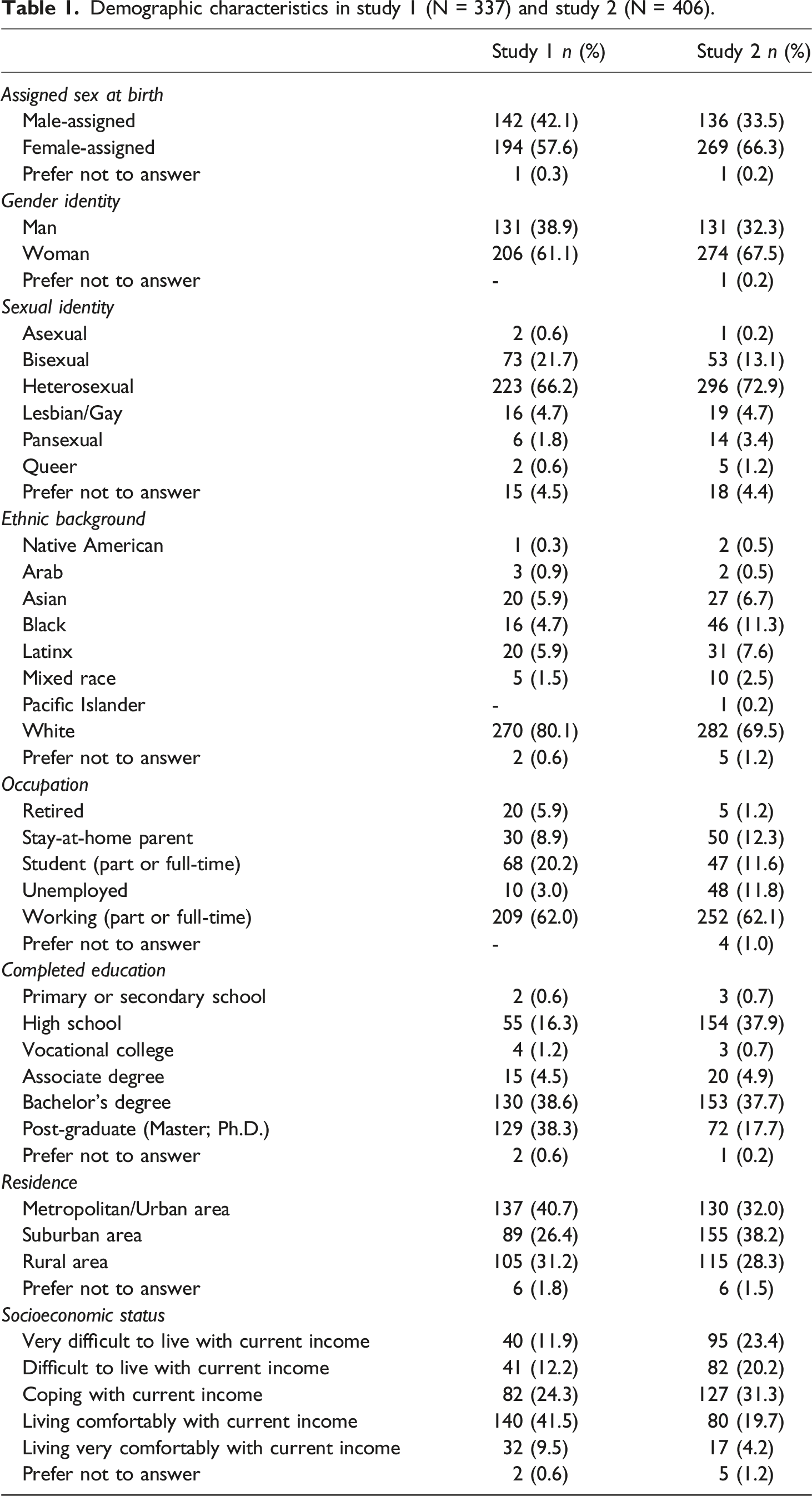
Demographic characteristics in study 1 (N = 337) and study 2 (N = 406).
Participants were randomly presented with all the conditions in a 3 (target’s gender conformity: conforming vs. slightly non-conforming vs. highly non-conforming) x 2 (target’s assigned sex: male vs. female) within-participants factorial design.
Materials
Descriptions of targets according to the experimental conditions in studies 1 and 2.
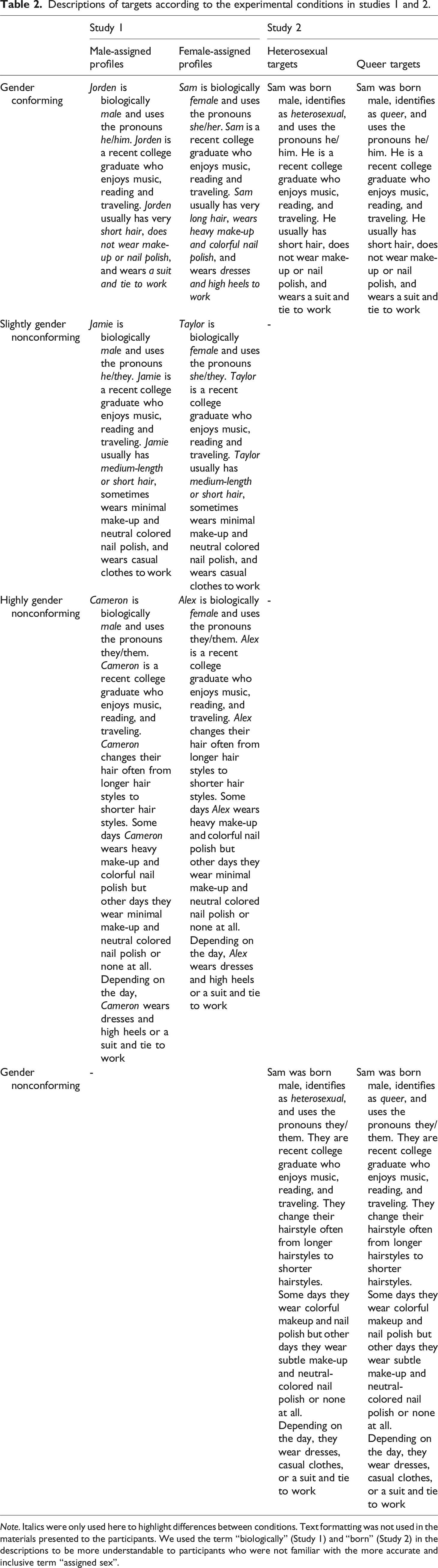
Note. Italics were only used here to highlight differences between conditions. Text formatting was not used in the materials presented to the participants. We used the term “biologically” (Study 1) and “born” (Study 2) in the descriptions to be more understandable to participants who were not familiar with the more accurate and inclusive term “assigned sex”.
Procedure and measures
Data were collected between May and August 2022. Prospective participants were recruited from the Clickworker online platform, a crowdsourcing platform for online data collection with users across over 136 countries worldwide (https://www.clickworker.com). Users who were over the age of 18, lived in the United States, and spoke English fluently were invited to collaborate on a study about social perceptions. Participants were informed about their rights and duties and were required to give their consent before proceeding with the study. The survey started with demographic questions (for variables and response options, see Table 1; all questions included an open-ended response option). Given our research goals, participants who identified as non-binary or GNC were thanked for their interest and redirected to the end of the survey. Eligible participants were then presented with the description of the six targets (in random order; see Table 2), each followed by our main dependent measures. First, participants indicated their preferred social distance by being prompted with “I would be willing to accept [target’s name] as a…” and asked to select one of the options: 1 = A close relative by marriage, 2 = A close personal friend, 3 = A neighbor who lives on my street, 4 = A coworker, 5 = A citizen in my country, 6 = A noncitizen visitor in my country, and 7 = I would not allow this person in my country (Bogardus, 1933). Higher scores indicated more preferred social distance. Second, participants were asked “To what extent do you think [target’s name] experiences the following emotions…” followed by a list of 16 emotions also presented in random order (retrieved from Martínez et al., 2017). This list included eight negative (i.e., fear, sadness, tension, and boredom) and positive (i.e., cheerfulness, fun, tranquility, and enthusiasm) primary emotions, and eight negative (i.e., bitterness, melancholy, worry, and shame) and positive (i.e., love, hope, optimism, and contentment) secondary emotions. Responses to each emotion were given in 7-point rating scales (1 = Not at all to 7 = A lot). Research has shown that dehumanization occurs independently of the emotion valence (Leyens et al., 2007; Rodrigues et al., 2018; Viki et al., 2013). Hence, responses were mean averaged for each emotion, with higher scores indicating the attribution of more primary (α ≥ .69 across targets) and secondary emotions (α ≥ .72 across targets). We computed an index by subtracting secondary from primary emotions scores, such that higher scores indicated more dehumanization (i.e., the attribution of more primary and less secondary emotions), whereas lower scores indicated more humanization (i.e., the attribution of more secondary and less primary emotions; for a similar procedure, see Rodrigues et al., 2021).
After the presentation of all descriptions, participants indicated how frequently they interact with GNC individuals in their daily lives. Specifically, we asked, “Please indicate if you personally interact with individuals who are…” followed by two items: “…slightly gender nonconforming” and “…highly gender nonconforming” (each item: 1 = I never interacted to 7 = I interact often). Because items were highly correlated, r = .62, p < .001, responses were averaged with higher scores indicating more frequent personal contact with GNC individuals (M = 4.60, SE = 1.78). Dependent variable questions were not mandatory, meaning participants could proceed with the study even if they chose not to answer a particular question. At the end of the survey, participants were debriefed about the goals of the study, provided with the contact of the research team, and received $1 on their user account. Participants took on average 15 minutes to complete the survey.
Data analytic plan
We computed two linear mixed models using JASP (Version 0.18), to test for differences in preferred social distance (Model 1) and dehumanization (i.e., attribution of more primary and less secondary emotions; Model 2), and whether these expected differences were moderated by personal contact with GNC individuals. In both models, the experimental manipulations of the targets’ gender conformity (conforming vs. slightly non-conforming vs. highly non-conforming) and assigned sex (female vs. male) were entered as categorical variables, whereas personal contact scores were entered as a continuous variable. Main effects and interactions between variables were also entered as fixed effects, and by-participant random intercepts were included to account for the repeated-measures design. Significant main effects and interactions of the experimental conditions were probed by computing and plotting contrasts with Holm adjustment, which allowed us to control the family-wise error rate resulting from multiple comparisons. Significant main effects of, and interactions with, personal contact were probed by computing and plotting simple slopes for participants with less (−1 SD) and more frequent contact (+1 SD) with GNC individuals (Aiken & West, 1991).
Results
Descriptive statistics (Study 1).
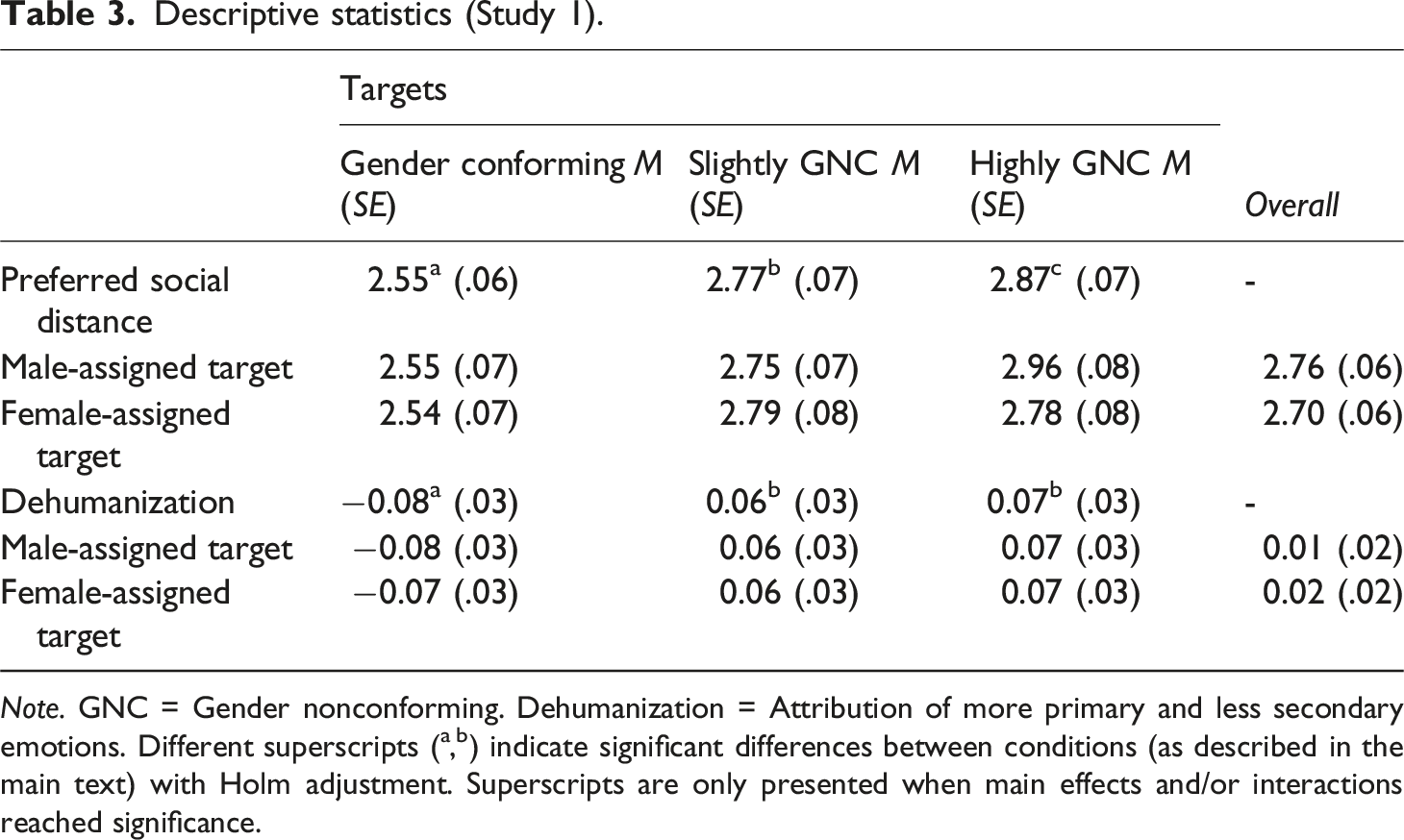
Note. GNC = Gender nonconforming. Dehumanization = Attribution of more primary and less secondary emotions. Different superscripts (a,b) indicate significant differences between conditions (as described in the main text) with Holm adjustment. Superscripts are only presented when main effects and/or interactions reached significance.
Social distance and personal contact
We found a main effect of gender conformity, F(2, 343.25) = 31.71, p < .001, such that participants preferred more social distance from both GNC (vs. gender conforming) targets, both p < .001, and more social distance from highly (vs. slightly) GNC targets, p = .048. There was also a main effect of personal contact, F(2, 335) = 15.09, p < .001, indicating that participants with more personal contact with GNC individuals preferred less social distance overall (M = 2.50, SE = .08) than participants with less personal contact (M = 2.96, SE = .08). Lastly, the interaction between both factors was also significant, F(2, 343.25) = 20.63, p < .001. As detailed in Figure 1, simple slope analyses showed that participants with less personal contact with GNC individuals preferred more social distance from both GNC (vs. gender conforming) targets, both p < .001. No differences emerged between GNC targets, p = .360. For participants with more personal contact, no differences between conditions were found, all p = .771. Preferred Social Distance According to Personal Contact with Gender Nonconforming (GNC) Individuals (Study 1). Note. Errors bars indicate standard errors.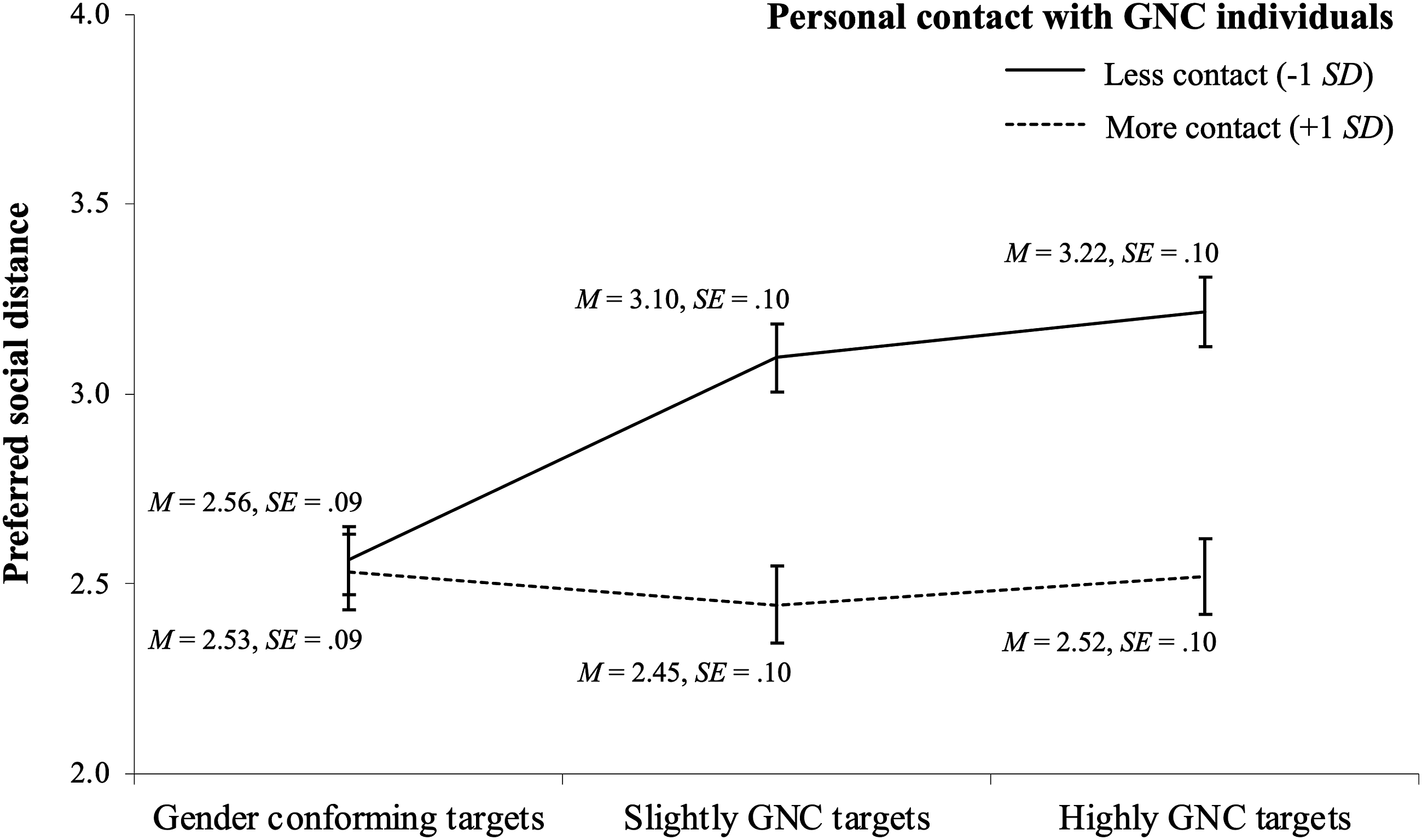
Dehumanization and personal contact
We found a main effect of gender conformity, F(2, 338.86) = 7.52, p < .001, such that participants were more likely to dehumanize both GNC (vs. gender conforming) targets, both p < .001. No differences emerged between GNC targets, p = .685. We also found an interaction between gender conformity and personal contact, F(2, 338.84) = 3.08, p = .047. As detailed in Figure 2, simple slope analyses showed that participants with less personal contact with GNC individuals dehumanized both GNC (vs. gender conforming) targets to a greater extent, both p < .001. Again, no differences were found between GNC targets, p > .999. For participants with more personal contact, no significant differences between conditions were found, all p ≥ .668. Primary Emotions Attribution According to Personal Contact with Gender Nonconforming (GNC) Individuals (Study 1). Note. Errors bars indicate standard errors.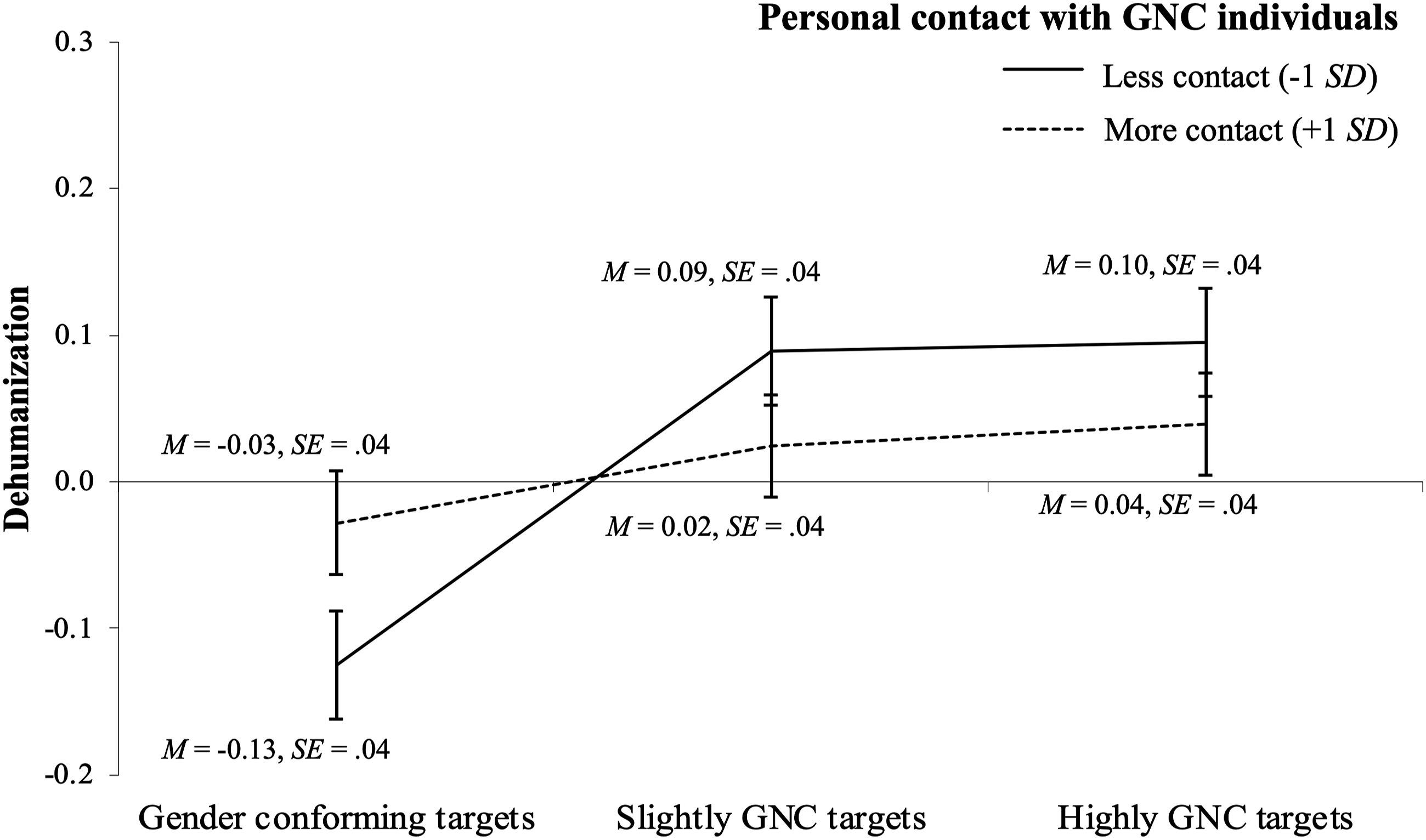
Discussion
The results of this study supported most of our hypotheses and showed that GNC individuals are at risk of experiencing stigmatization. Specifically, we found that targets who were slightly or highly GNC in their appearance tended to be socially stigmatized and dehumanized compared to gender conforming targets (H1 and H2). Moreover, having less (and not more) personal contact with GNC individuals was the condition under which gender nonconformity stigma was likely to occur (H3). Not only did we replicate past research, but we also showed gender nonconformity stigma to also include dehumanization. Unexpectedly, we found no evidence that targets’ assigned sex influenced gender nonconformity stigma (H4).
These contributions notwithstanding, we must acknowledge three limitations that might have biased our results. First, the within-participants design could have facilitated target comparisons and made the goal of our study salient. Second, we did not include sexual identity information when describing the targets and participants may have confounded gender nonconformity with sexual identity. Third, we assessed the quantity (instead of quality) of personal interactions with GNC individuals. These limitations were addressed in the next study.
Study 2
We used a between-participants design to address some of the limitations identified in the previous study. As this type of study requires a large sample size, the experimental design was simplified by including only two levels of gender (non)conformity. This decision was informed by the results from Study 1, in which the comparisons between both GNC targets, and between both target’s assigned sex conditions, were largely non-significant. We also decided to use only a male target, based on the evidence that male-assigned (vs. female-assigned) GNC individuals experience more stigmatization (Chan, 2022; Lowry et al., 2020; Sirin et al., 2004). Lastly, we addressed the potential confound between gender nonconformity and sexual identity (Heinze & Horn, 2014; Horn, 2007) by manipulating the target’s sexual identity. Hence, participants were asked to read the description of a male target that could vary in gender (non)conformity and sexual identity. Replicating and extending the results from Study 1, we expected a main effect of gender nonconformity on dehumanization and violence outcomes. Specifically, participants should dehumanize GNC (vs. gender conforming) targets to a greater extent (i.e., attribute more primary and less secondary emotions; H1), report more aggression intentions toward these targets (H2), and consider violent acts toward these targets more justifiable (H3).
Perceiving outgroup members as “less human” can drive violence perpetration (Kteily & Bruneau, 2017; Rai et al., 2017) and victimization experiences among stigmatized groups (e.g., Anzani et al., 2021; Bevens & Loughnan, 2019), especially when individuals lack (or have negative) interactions with these outgroup members (Borinca et al., 2023; Bruneau et al., 2021; Prati et al., 2023). Building upon this evidence, we focused on the GNC experimental conditions to examine whether the association between dehumanization and violence outcomes was buffered by the quality of personal contact with GNC individuals. Specifically, participants who dehumanized GNC targets to a greater extent were expected to report more aggressive intentions and violence justification, but only if they reported having more negative (vs. positive) personal contact with GNC individuals (H4).
Lastly, research has shown that queer (vs. heterosexual) male-assigned individuals who are perceived as GNC are at increased risk of stigmatization and violence (D’haese et al., 2016). Hence, we additionally explored if the expected gender nonconformity stigma was stronger for queer (vs. heterosexual) targets (H5).
Method
Participants and design
A total of 477 individuals accessed the online survey, of which 48 failed to complete the survey and 23 failed the attention checks. The final sample included 406 individuals from the United States, with ages between 18 and 63 (M = 36.65, SD = 9.34). Most participants were assigned female at birth, identified as women, identified as heterosexual, indicated to be White, were currently working, completed high school or had a bachelor’s degree, resided in metropolitan or suburban areas, and were struggling or coping with their current income. A detailed description of the demographic characteristics can be found in Table 1.
Participants were randomly distributed to one of the conditions in a 2 (target’s gender conformity: conforming vs. nonconforming) x 2 (target’s sexual identity: heterosexual vs. queer) between-participants factorial design.
Materials
Descriptions of the targets were similar to those used in Study 1, except that all targets were described as male and we manipulated their sexual identity (for details, see Table 2).
Procedure and measures
Data were collected in August 2023. The overall procedure was also similar to Study 1, except that participants were shown only one of the descriptions and most measures were developed for this study. Participants were first asked to attribute emotions to the target using the measure from the previous study. We computed scores for primary (α = .63) and secondary emotions (α = .66), and the index of dehumanization (i.e., attribution of more primary and less secondary emotions; see Study 1 for details). To assess aggressive behavior intentions, we adapted three items from past research (Heinze & Horn, 2014; Hill & Willoughby, 2005). Participants were asked “Based on Sam’s appearance and behaviors, how likely were you to…”, followed by three items: “…tease Sam in front of your friends”, “…beat up Sam”, and “…behave violently toward Sam” (each item: 1 = Not at all likely to 7 = Very likely). Responses to these items were mean averaged (α = .95), with higher scores indicating stronger aggressive behavior intentions. To assess violence justification, we adapted two items from past research (Faragó et al., 2019). We asked participants “How justifiable would it be to…”, followed by two items: “…use psychological violence against Sam (such as name-calling)?” and “…use physical violence against Sam (such as slapping)?” (each item: 1 = Completely unjustifiable to 7 = Completely justifiable). Responses to both items were mean averaged, r = .88, p < .001, with higher scores indicating more violence justification. We then assessed the quality of interactions with GNC individuals adapting two items from past research (Kotzur & Wagner, 2021). Specifically, we asked participants “Do you personally interact with individuals who are gender non-conforming? If so…”, followed by two items: “…how often are these interactions positive?” and “…how often are these interactions negative?” (each item: 1 = None of my interactions to 7 = All of my interactions). We computed an index by subtracting negative interactions from positive interactions scores, such that higher scores indicate more positive personal contact (M = 1.16, SE = 2.52).
As a manipulation check, we assessed perceived gender (non)conformity using items adapted from past research (Wylie et al., 2010) 1 . Participants were asked “Sam’s appearance and style could be described as…” and “Sam’s mannerisms (such as the way of talking or walking) could be described as…”, each item using a 7-point response scale (1 = Very masculine to 4 = Equally masculine and feminine to 7 = Very feminine). Given the correlation between the items, r = .76, p < .001, responses were mean averaged, with higher scores indicating more socially assigned gender nonconformity. Participants took on average 6 minutes to complete the survey. As in Study 1, dependent variable questions were not mandatory.
Data analytic plan
All analyses were conducted using JASP (Version 0.18). First, we checked our manipulation by testing for differences in socially assigned gender nonconformity using a 2 (target’s gender conformity) × 2 (target’s sexual identity) ANOVA. Significant interactions were probed using contrasts with Holm adjustment. Second, we tested our hypotheses by computing 2 (target’s gender conformity) × 2 (target’s sexual identity) ANOVAs to examine dehumanization (i.e., attribution of more primary and less secondary emotions) and violence outcomes (i.e., aggressive behavior intentions and violence justification). In the latter analyses, significant interactions were again probed using contrasts with Holm adjustment. Lastly, we computed two generalized linear models with participants from the GNC experimental conditions (n = 201), to determine whether dehumanization was differently associated with each violence outcome, depending on the quality of personal contact with GNC individuals. In both models, the experimental manipulation of the targets’ sexual identity (heterosexual vs. queer) was entered as a categorical variable, whereas dehumanization scores (i.e., attribution of more primary and less negative emotions), positive personal contact scores, and their respective interaction were entered as continuous variables. Significant main effects of our experimental condition were probed by computing and plotting contrasts with Holm adjustment. Significant main effects of, and interactions with, quality of contact were probed by computing and plotting simple slopes for participants with less (−1 SD) and more positive contact (+1 SD) with GNC individuals (Aiken & West, 1991).
Results
Descriptive statistics (Study 2).
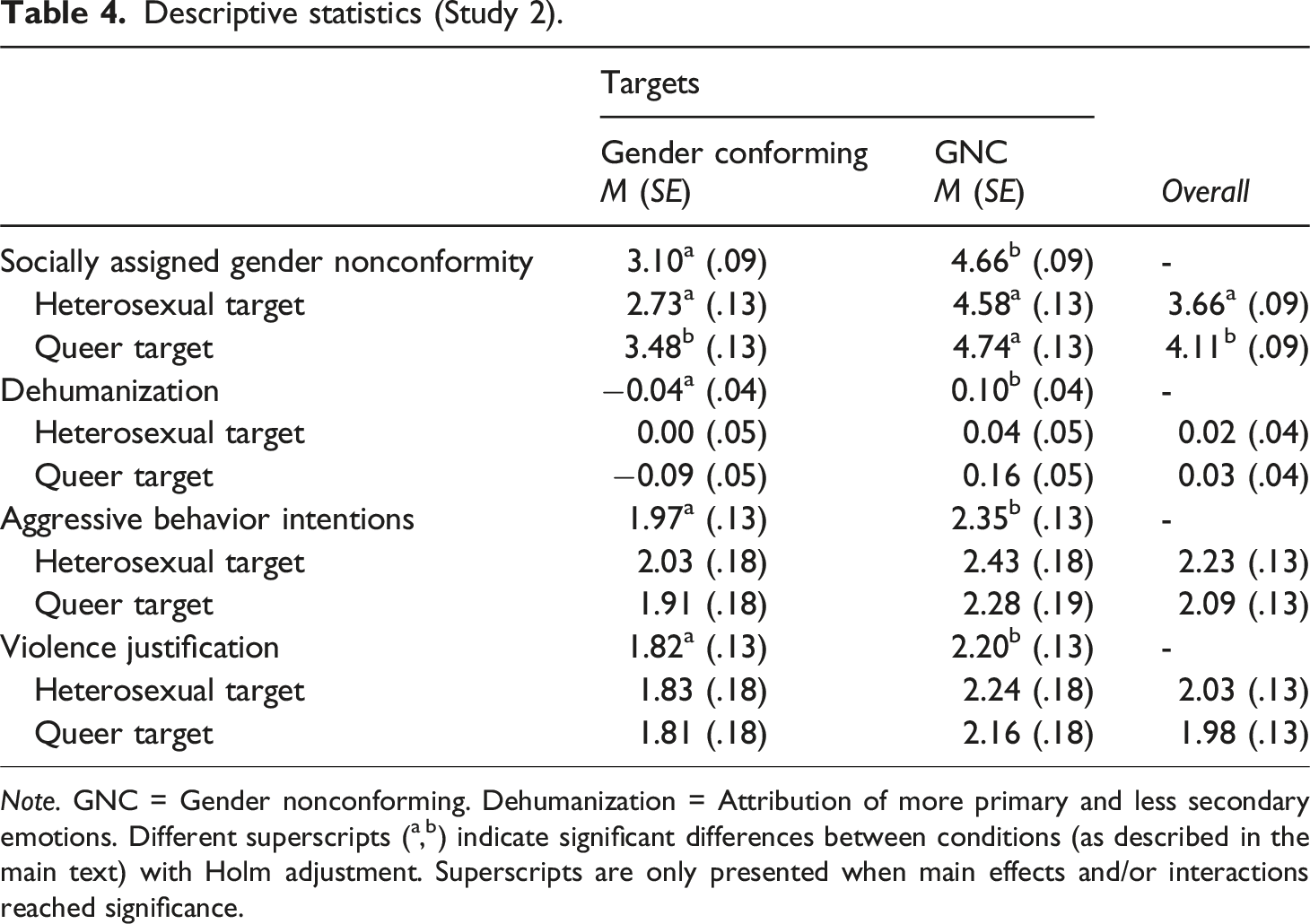
Note. GNC = Gender nonconforming. Dehumanization = Attribution of more primary and less secondary emotions. Different superscripts (a,b) indicate significant differences between conditions (as described in the main text) with Holm adjustment. Superscripts are only presented when main effects and/or interactions reached significance.
Associations between dehumanization and violence outcomes for gender nonconforming targets depending on participants’ quality of contact with GNC individuals (Study 2).
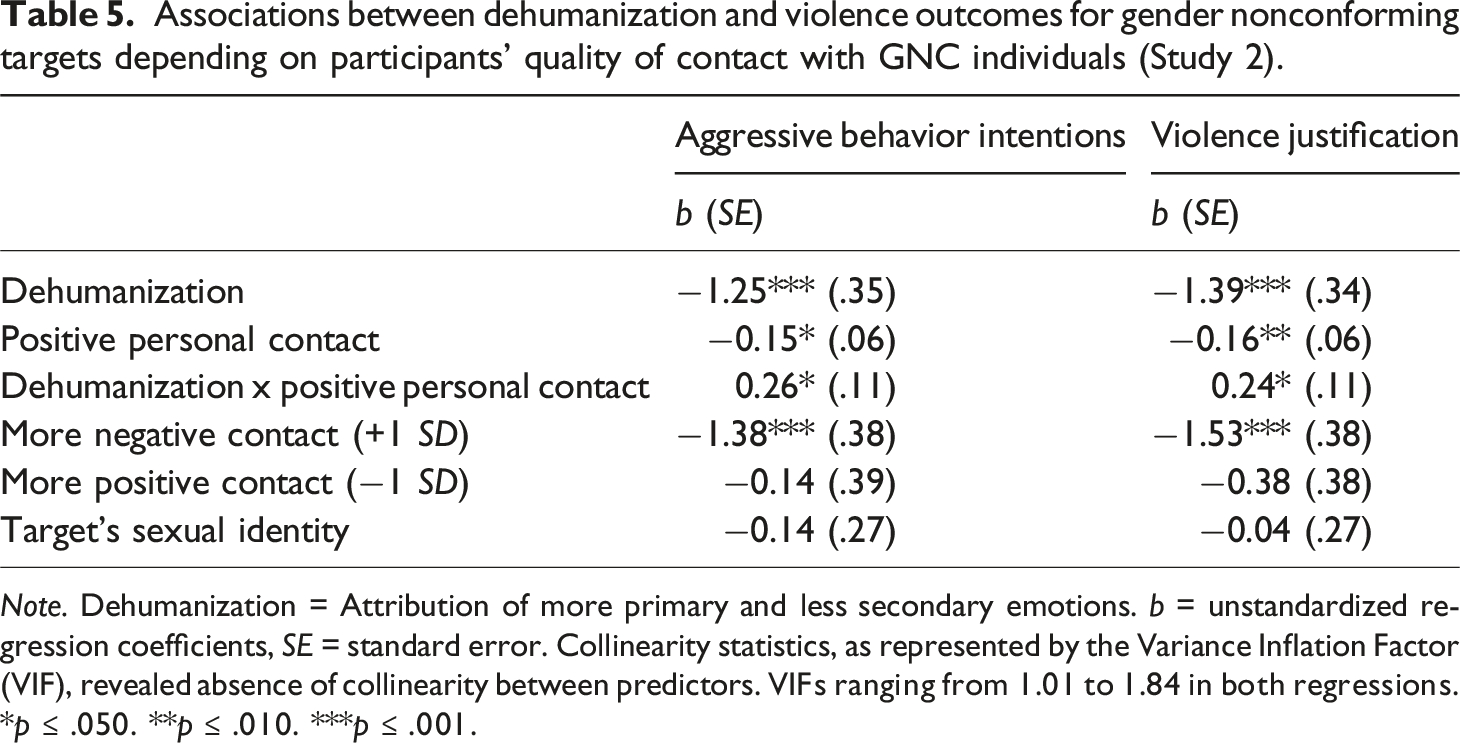
Note. Dehumanization = Attribution of more primary and less secondary emotions. b = unstandardized regression coefficients, SE = standard error. Collinearity statistics, as represented by the Variance Inflation Factor (VIF), revealed absence of collinearity between predictors. VIFs ranging from 1.01 to 1.84 in both regressions. *p ≤ .050. **p ≤ .010. ***p ≤ .001.
Manipulation check: Socially assigned gender nonconformity
We found main effects of gender conformity, F(1, 402) = 150.19, p < .001, ηp2 = .272, and sexual identity, F(1, 402) = 12.63, p < .001, ηp2 = .030, on socially assigned gender nonconformity. Specifically, participants attributed a more feminine gender expression to GNC than to gender conforming targets, as well as to queer than to heterosexual targets. There was also an interaction between both factors, F(1, 402) = 5.36, p = .021, ηp2 = .010, indicating that participants attributed a more feminine gender expression to queer than to heterosexual gender conforming targets, p < .001. No differences emerged between queer and heterosexual GNC targets, p = .385.
Dehumanization
We found only a main effect of gender conformity, F(1, 402) = 7.42, p = .007, ηp2 = .018. Results showed that participants attributed more primary emotions to GNC targets than to gender conforming targets.
Violence outcomes
We found only a main effect of gender conformity in aggressive behavior intentions, F(1, 402) = 4.49, p = .035, ηp2 = .011, and violence justification, F(1, 402) = 4.47, p = .035, ηp2 = .011. Specifically, GNC targets elicited higher aggressive behavior intentions and violence justification scores, when compared to gender conforming targets.
Positive personal contact as buffer between dehumanization and violence outcomes
Results of the linear models showed that participants who dehumanized GNC targets to a greater extent (i.e., attributed more primary and less secondary emotions) reported weaker aggressive behavior intentions, p < .001, and considered violence toward these targets to be less justified, p < .001. Participants who reported having more positive personal contact with GNC individuals also reported weaker aggressive behavior intentions, p = .013, and considered violence toward these targets to be less justified, p = .009. There were also interactions between factors for aggressive behavior intentions, p = .025, and violence justification, p = .036. As shown in Figure 3, simple slope analyses showed that participants who dehumanized GNC targets to a greater (vs. lesser) extent reported weaker aggressive behavior intentions and considered violence to be less justified, but only if they reported having more negative personal contact with GNC individuals, both p < .001. No differences according to dehumanization likelihood emerged for participants with more positive personal contact, both p ≥ .317. Interaction Between the Dehumanization of Gender Nonconforming Targets and Participants’ Quality of Contact with GNC Individuals on Aggressive Behavior Intentions (Left Pane) and Violence Justification (Right Pane) (Study 2). Note. GNC = Gender nonconforming. Dehumanization = Attribution of more primary and less secondary emotions. Error bars indicate standard errors.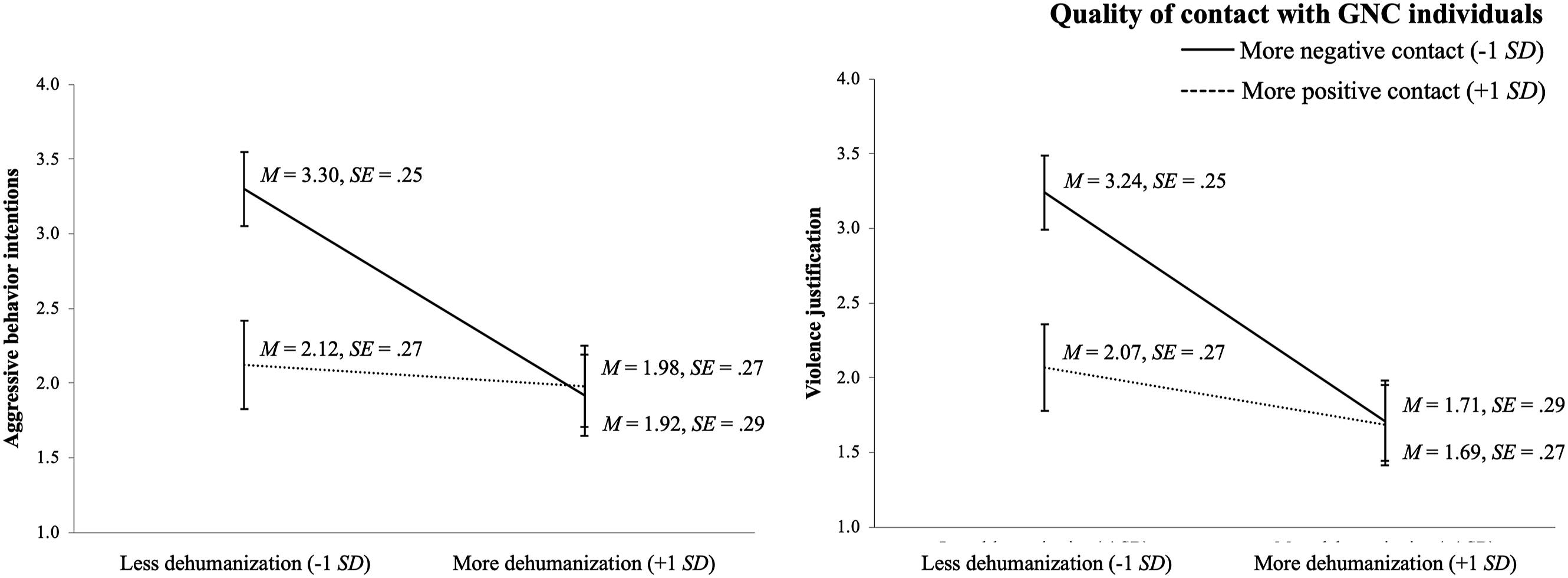
Discussion
Validating our manipulation, we found that participants attributed a more feminine gender expression to targets described as having more GNC (vs. gender conforming) appearances. We also found partial support for our hypotheses. Replicating and extending the results from Study 1, we showed that GNC targets were more likely to be dehumanized (H1) relative to gender conforming targets. We also found higher scores on both violence outcomes toward GNC targets (H2 and H3). Having positive (and not negative) personal contact with GNC individuals was associated with lower scores on both violence outcomes. Contrary to our hypothesis (H4), however, negative personal contact increased the violence predispositions of participants who humanized GNC targets to a greater extent. Unexpectedly, no differences according to sexual identity emerged in our analyses (H5).
General discussion
The results of two experimental studies offered novel insights into gender nonconformity stigma by showing that GNC individuals are at risk of suffering multiple forms of stigmatization. Aligned with past research, our results showed some of the consequences of GNC appearance for socialization (Heinze & Horn, 2014; Horn, 2007; Masters et al., 2021) and victimization (Chan, 2022; Hu et al., 2024; Klemmer et al., 2021; Kwan et al., 2020; Lowry et al., 2020; Nabbijohn et al., 2020; Qian et al., 2021). Using more explicit measures of stigmatization, we found that participants preferred more social distance toward GNC targets (i.e., preferred highly GNC target to be a neighbor or a coworker vs. a close relative or personal friend), and tended to have less strict anti-violence predispositions towards these targets (i.e., were less likely to avoid aggressive behaviors and less likely to consider violence as unjustified). We extended this line of work by showing for the first time that gender nonconformity stigma also includes emotion-based dehumanization, a more subtle form of denying human uniqueness (Haslam & Loughnan, 2014; Leyens et al., 2001). Indeed, we found that participants were more likely to consider that GNC targets experience more emotions that are shared with other non-human animals (i.e., more primary emotions) and less uniquely human emotions (i.e., less secondary emotions).
We also extended past research on intergroup relations and contact quality (Pettigrew & Tropp, 2006, 2008), by showing that having more frequent and positive personal contact with GNC individuals changes not only how people conceptualize gender (Fine et al., 2023) but also decreases the likelihood of enacting gender nonconformity stigma. In other words, individuals who decide not to adhere to expected social or gender norms (e.g., hairstyle, use of makeup, or clothing choices) face an increased risk of being socially rejected, dehumanized, misperceived, and victimized, by people who interact less often with GNC individuals in their daily lives. However, when we examined the association between dehumanization and violence outcomes (Haslam & Loughnan, 2016; Kteily & Bruneau, 2017; Rai et al., 2017), and whether this association was buffered by the quality of personal contact with GNC individuals (Borinca et al., 2023; Bruneau et al., 2021; Prati et al., 2023), two unexpected results emerged. First, we found that participants who humanized GNC targets (i.e., attributed more secondary and less primary emotions) also reported lesser anti-violence outcomes (i.e., reported more aggressive behavior intentions and violence justification). Second, we found that having more negative contact with GNC individuals heightened this association. We advance two possible explanations for these results. Given evidence that GNC individuals are perceived as threatening the gender norms and expectations (Broussard & Warner, 2019), the humanization of hypothetical GNC individuals might have also been perceived by participants as a threat to the status quo. Alternatively, participants might have experienced cognitive dissonance (Harmon-Jones & Harmon-Jones, 2007) and felt motivated to reestablish cognitive consistency and a sense of control (Brannon & Gawronski, 2018; Plaks et al., 2005). In this case, past negative experiences with GNC individuals might have gained salience over any favorable views toward GNC targets and motivated participants to rely on previous conceptions about gender nonconformity, thus fostering more ambiguous anti-violence predispositions. Researchers could test these hypotheses by assessing perceived threats (e.g., social threat; personal threat), emotional reactions (e.g., positive and negative emotions), personal differences (e.g., adherence to gender role beliefs), and behavioral intentions (e.g., desired interaction). This could offer insights into the potential underlying mechanisms of gender nonconformity stigma.
Our results showed no differences in any of the stigma outcomes when we considered the level at which targets moved away from gender conformity (i.e., slightly or highly GNC), their assigned sex (i.e., male or female), or their sexual identity (i.e., heterosexual or queer). Although not aligned with past research (Chan, 2022; D’haese et al., 2016; Lowry et al., 2020; Sirin et al., 2004), these results suggest that departures from expected gender norms are more salient to gender nonconformity stigma, compared to departures from other norms or expectations (e.g., heteronormativity; for a similar argument, see Rodrigues et al., 2018, 2021). Albeit unforeseen, our results also contribute to extending the argument that femmephobia is one of the reasons why individuals from sexual and gender minorities are stigmatized (Hoskin, 2020). In our studies, male-assigned GNC targets were dehumanized and perceived as having a more feminine gender expression regardless of their sexual identity. Being attributed feminine traits or qualities in a derogatory way, then, can motivate stigmatization and violence perpetration from others. This may be particularly relevant in the case of male-assigned GNC individuals, who are socially expected to have a “masculine” or “dominant” gender expression.
Limitations and future studies
Despite having found empirical support for our hypotheses, results should be taken with caution given that our sample was mostly WEIRD (i.e., western, educated, industrialized, rich, and democratic), effect sizes were small-to-moderate, and average scores in our dependent variables were overall low. For example, results of the social distance (Study 1) and violence outcomes (Study 2) arguably fail to reveal evidence of strong gender nonconformity stigmatization. Future research could seek to replicate and extend our results by using other measures of dehumanization (e.g., dehumanization propensity; Lantos, 2023), different measures of stigmatization and violence (e.g., microaggression enactment; Williams, 2021), and more complete measures to assess the quality of personal contact (e.g., intimacy; interdependence).
We also used both gender-based external cues and gendered pronouns to describe our targets. This methodological choice prevented us from determining if the mere use of neutral pronouns (i.e., they/them) is a sufficient condition to elicit gender nonconformity stigma, or if instead GNC individuals are stigmatized simply because they express themselves in ways that depart from gender-based social expectations. Future studies could seek to test this hypothesis and further explore alternative mechanisms driving gender nonconformity stigma (e.g., gender essentialism; genderphobia), to better understand if and why different forms of self-expression increase the risk of stigmatization and victimization.
Moreover, we cannot guarantee that participants were familiar with, and knowledgeable of, gender nonconformity because no definition was offered when assessing personal contact with GNC individuals. Arguably, some participants might have interpreted gender nonconformity as gender expression (i.e., based on their physical appearance) or gender identity (i.e., based on having a nonbinary identity), but others might have confounded gender conformity with sexual identity (e.g., a gay man perceived as more effeminate). As such, future studies should provide clear definitions of gender nonconformity before assessing personal contact (and quality of contact) with GNC individuals. Relatedly, we asked participants to rate the quality of their interactions with GNC individuals, but we did not directly assess whether they had any prior interactions to report on. We assumed that the absence of positive or negative interactions indicated neutrality. However, it is possible that some participants lacked past experiences and used the lower end of both rating scales as their response options (instead of choosing to skip the questions, for example). Future studies could seek to replicate our findings to disentangle past interactions and the quality of such contact, and consider manipulating the degree of proximity between GNC targets (e.g., hypothetical targets, friends, co-workers, and spokespersons) to identify additional conditions under which such stigma is more (or less) likely to emerge. This would allow researchers to determine if having more intimate relationships with GNC targets is a necessary condition to buffer against gender nonconformity stigma, or if having positive attitudes toward gender nonconformity is a sufficient condition to decrease the likelihood of enacting such stigma (e.g., Barbir et al., 2017; Willoughby et al., 2010).
Lastly, participants were asked to indicate their assigned sex at birth and their gender identity, and results from a crosstabulation revealed that responses failed to match for ∼10% of our sample in each study. This raises some questions as to whether our samples included participants who identify as transgender. Also, participants used the gender binary to indicate their gender identity (i.e., none of the participants used the available open-ended response option to write down their own identity terms). And yet, some of our participants (including those who arguably identify as transgender) might have a nonconforming gender expression similar to our targets. Future studies could seek to have more comprehensive and inclusive measurements of sex assigned at birth, gender identity, and gender expression (e.g., Beischel et al., 2023). By making this assessment, researchers could also reliably examine whether the stigmatization of people from sexual and gender minority groups depends on the gender and/or sexual identity of potential perpetrators.
Conclusion
The current studies contribute to an expanding body of work examining how perceiving and socially assigning gender nonconformity to individuals can increase multiple forms of stigma. This line of work is important by informing ways through which gender nonconformity stigma can be counteracted. For example, our findings can inform policymakers in the development of guidelines for practitioners (e.g., mental health professionals) and evidence-based interventions for the public (e.g., adolescents and young adults) aimed at questioning binary views of gender. As interventions may be accepted differently depending on personal and contextual factors, policymakers and spokespersons can use different framings to address individuals’ expectations, threats, and fears, to increase message efficacy. Note that less anti-violence predispositions were reported by participants who humanized GNC targets and reported worse quality interactions with GNC individuals. As such, having negative interactions seems to be a risk factor for stigmatization even when holding favorable gender nonconformity views. Efforts to decrease gender nonconformity stigma could work to help individuals understand why past negative interactions with GNC individuals occurred (e.g., motivated by fear or morality values; mere lack of knowledge) in order to address and reframe these experiences (e.g., receiving accurate information about gender nonconformity). This work could then be complemented with perspective-taking exercises to develop empathy or interactions and informed discussions with GNC individuals in safe environments, aimed at promoting more inclusive attitudes and behaviors. Together with our current findings, this applied work can ultimately contribute to improving the health and well-being of GNC individuals who face stigmatization on a daily basis.
Supplemental Material
Supplemental Material - Conformed to Gender Conformity? Gender Nonconformity Stigma is Buffered by Personal Contact
Supplemental Material for Conformed to Gender Conformity? Gender Nonconformity Stigma is Buffered by Personal Contact by David L. Rodrigues in Journal of Social and Personal Relationships
Footnotes
Acknowledgements
I want to thank Leah N. Chaney for helping with data collection for Study 1.
Declaration of conflicting interests
The author(s) declared no potential conflicts of interest with respect to the research, authorship, and/or publication of this article.
Funding
The author(s) disclosed receipt of the following financial support for the research, authorship, and/or publication of this article: Part of this work was funded by a grant awarded by Fundação para a Ciência e a Tecnologia (Ref.: 2020.00523.CEECIND).
Open research statement
As part of IARR’s encouragement of open research practices, the author has provided the following information: This research was not pre-registered. The materials and data used in the research and are available and can be obtained by emailing:
Ethical statement

Data Availability Statement
Materials, anonymized data, and outputs that support the findings herein reported are available upon request from the first author.
Supplemental Material
Supplemental material for this article is available online.
Note
References
Supplementary Material
Please find the following supplemental material available below.
For Open Access articles published under a Creative Commons License, all supplemental material carries the same license as the article it is associated with.
For non-Open Access articles published, all supplemental material carries a non-exclusive license, and permission requests for re-use of supplemental material or any part of supplemental material shall be sent directly to the copyright owner as specified in the copyright notice associated with the article.
