




Abstract
The transition to parenthood is characterized by physical changes and altered sexual dynamics that may be associated with a tendency for new parents to underestimate their partner’s physical attraction to them and/or be more attuned to daily changes in their partner’s attraction. To examine this possibility, this study assessed directional bias and tracking accuracy in new parents’ perceptions of their partner’s daily physical attraction to them. Fifty-nine couples completed 21-day diary tasks during pregnancy, 2 weeks after childbirth, and 15 weeks after childbirth (i.e., up to 63 diary days). Both mothers and fathers experienced increased appearance insecurity and decreased sexual frequency and sexual satisfaction across the transition. Moreover, at times when new parents reported higher appearance insecurity or lower sexual satisfaction, they underestimated their partner’s physical attraction to them, but were not more likely to notice day-to-day fluctuations in their partner’s attraction. Results highlight the misperceptions that can occur during this pivotal life transition.
Keywords
Introduction
The transition to parenthood can be a joyous chapter for couples, yet it also introduces unique stressors as partners adapt to the demands of infant caregiving and renegotiate their relationship expectations. Consequently, during this period couples often report declines in their relationship confidence and happiness (Kluwer, 2010). These changes in relationship quality are commonly attributed to the “practical symptoms” of new parenthood, including fatigue and increased conflict regarding the division of labor and the establishment of new routines (Doss & Rhoades, 2017; Lévesque et al., 2020). However, less consideration has been given to the physical changes and disruptions to sexual intimacy that typically occur during this transition (Hodgkinson et al., 2014; Jawed-Wessel et al., 2017) and may be linked to parents’ views of their partner’s attraction to them. Specifically, the transition to parenthood may be a time when concerns regarding a partner’s physical attraction to oneself are especially likely.
Giving birth involves rapid physical changes that are often coupled with sociocultural pressures for new mothers to quickly recapture their former physiques (Watson et al., 2015). Consequently, many women experience feelings of body dissatisfaction during this time (Rallis et al., 2007) and may question whether their partners find them physically attractive. Given these physical changes, the few studies examining appearance-related insecurities during this period have focused on mothers. Yet, as sexual dynamics are often disrupted during this time, fathers may also worry about their appearance and feel concerned that their partners are less attracted to them (e.g., van den Brink et al., 2018). In other words, new parenthood may be a time when both mothers and fathers feel particularly sensitive about their physical attractiveness in the eyes of the other, a phenomenon that has received little empirical attention. Thus, the current study addressed two overarching goals. First, we examined whether new parents’ feelings of appearance insecurity, sexual frequency, sexual satisfaction, and perceptions of their partners’ physical attraction to them change across the early phases of the transition to parenthood (i.e., pregnancy, newborn, and infancy phases). Second, we examined whether appearance insecurity, sexual frequency, and sexual dissatisfaction moderate the extent to which new parents misperceive and/or detect changes in their partner’s physical attraction to them across these early phases.
Mothers’ insecurities during the transition to parenthood
Research on appearance insecurities occurring outside the context of new parenthood indicates that individuals’ own feelings of physical attractiveness can shape their perceptions of their partner’s physical attraction to them. On average, individuals who feel positively about their appearance believe their partners also feel positively about them, and, in fact, tend to overestimate their partner’s satisfaction with their appearance (Bowsfield et al., 2019). However, when insecurities arise and individuals feel less attractive, the inverse pattern emerges. For example, studies of women have shown that women who feel unhappy with their weight (Miller, 2001) or sexually unattractive (Meltzer & McNulty, 2010) believe their partner also holds these negative views about them and are more likely to underestimate their partner’s satisfaction with their appearance (Bowsfield et al., 2019; Markey et al., 2004). According to theories of risk regulation (Murray et al., 2006), these insecurities may also sensitize individuals to possible instances of rejection from their partner; that is, individuals who feel insecure about their appearance might become vigilant for signs that their partner may not find them physically attractive. Therefore, when individuals feel insecure about their appearance, they may not only generally underestimate their partner’s physical attraction, but also be more likely to notice daily changes in their partner’s attraction, which together could undermine relationship quality over time.
Given the potential consequences of appearance insecurities (e.g., Meltzer & McNulty, 2010), it is important to consider these processes during a time when individuals’ evaluations of their appearance are especially likely to be salient and in flux – namely, during the transition to parenthood (Watson et al., 2015). For instance, research suggests that new mothers’ feelings about their appearance are frequently tied to the major physical changes they experience across this transition (Watson et al., 2015). During pregnancy, sociocultural expectations for women to be thin may be suspended (Hodgkinson et al., 2014) and women can generally feel appreciative of their body’s growing shape during this time (Clark et al., 2009). Indeed, one study found that women’s ratings of their own physical attractiveness remained relatively high throughout pregnancy (Skouteris et al., 2005). Unfortunately, mothers’ positive appraisals of their appearance may dissipate following childbirth. Postpartum mothers commonly perceive a sociocultural expectation to “bounce back” to their former physique and yet, due to physiological limitations and the demands of infant caregiving, many mothers regard this expectation as unattainable (Lovering et al., 2018; Upton & Han, 2003). Not surprisingly, then, feelings of body dissatisfaction are common among postpartum mothers (Rallis et al., 2007). In this way, the transition from pregnancy to postpartum represents a unique period of physical changes during which women’s insecurities regarding their appearance may rapidly change.
As appearance insecurities have been linked to appraisals of a partner’s attraction (e.g., Hockey et al., 2022), new mothers’ tendencies to underestimate and/or detect changes in their partner’s physical attraction to them may exhibit corresponding shifts over the transition to motherhood. Although no studies have directly examined this possibility, qualitative research suggests many new mothers do worry that their partners might not view their postpartum appearance as sexually attractive (Hodgkinson et al., 2014). Yet, in a longitudinal study examining mothers’ and fathers’ attitudes towards mothers’ bodies from pregnancy through six months postpartum, men reported stably high appraisals of mothers’ bodies even as mothers’ own body appraisals worsened over time (Tavares et al., 2023). Thus, the postpartum period may be a time when new mothers who question their own physical attractiveness are more likely to underestimate their partner’s appraisals of the same. Supporting this notion, one cross-sectional study, which to our knowledge is the only dyadic work to include measures of both own body satisfaction and perceptions of a partner’s appraisals among first-time parents, suggested that mothers may underestimate their partner’s satisfaction with mothers’ appearance at nine months postpartum (Mickelson & Joseph, 2012). Extending these findings, the current study examined whether new mothers may feel less attractive and become more doubtful of their partner’s physical attraction to them as they progress from the pregnancy to postpartum period. Moreover, we examined whether new parents – and especially mothers - may be more likely to underestimate their partner’s feelings of physical attraction and/or notice day-to-day changes in their partner’s physical attraction during time periods when they have generally lower appraisals of their own appearance (i.e. higher appearance insecurity).
Fathers’ insecurities during the transition to parenthood
Unlike women, men typically do not experience notable changes in their physical appearance when becoming first-time fathers. Nonetheless, new fathers also may experience appearance insecurities and question their partner’s physical attraction to them as the transition to parenthood is a time when couples’ sexual dynamics tend to change (Rosen et al., 2021). Although prior work rarely considers men’s understanding of their partner’s physical attraction to them, growing evidence indicates that men’s evaluations of their own attractiveness may be linked to what is occurring in their sexual lives (Milhausen et al., 2015). For instance, some research indicates that sexual frequency is associated with own feelings of attractiveness for men, but not for women (Amos & McCabe, 2016). Relatedly, men who feel more sexually satisfied appraise their appearance more positively (van den Brink et al., 2018) and one study found that new fathers’ sexual dissatisfaction was linked to lower appraisals of their own appearance at nine months postpartum (Mickelson & Joseph, 2012). As appearance insecurities are associated with individuals’ assessments of whether their partner finds them physically attractive (Bowsfield et al., 2019), these findings suggest that sexual frequency and sexual satisfaction may also be linked to perceptions of a partner’s attraction, particularly for men.
Notably, the transition to parenthood represents a unique time when sexual frequency often declines (Rosen et al., 2021) and men’s evaluations of the sexual aspects of their relationship may be in rapid flux. Given that reductions in sexual activity are normative during this transition, particularly immediately following childbirth, new fathers may feel less concerned about sexual disruptions at this stage. For example, qualitative work revealed that when their children were newborns, some new fathers anticipated their sexual lives would eventually restabilize and were therefore less dissatisfied with the frequency of sex in the relationship (MacAdam et al., 2011; Olsson et al., 2010). In this way, the early phases of this transition may be a time when the typical association between sexual frequency and sexual satisfaction (e.g., McNulty et al., 2016) is attenuated. However, as couples progress further into the postpartum period, fathers’ sexual dissatisfaction may grow. One longitudinal study reported that first-time fathers were significantly less sexually satisfied at twelve months postpartum than they were during pregnancy and that many fathers had anticipated increases in sexual activity that did not materialize (Condon et al., 2004).
Building on this work, the current study is the first to examine whether new fathers also feel less attractive and become more doubtful of their partner’s attraction to them as they progress from the pregnancy to postpartum period, similar to new mothers. In addition, we examined whether new parents – and especially fathers – may be more likely to underestimate their partner’s physical attraction and/or notice daily changes in their partner’s attraction during time periods when sexual frequency or sexual satisfaction is lower. However, given that reductions in sexual activity are generally considered normative in the early stages of the transition to parenthood, it is possible that sexual satisfaction may be more strongly associated with perceptions of a partner’s physical attraction than is sexual frequency.
Overview of the current study
The current study examined whether the transition to parenthood, a time of rapid physical changes and altered sexual dynamics, may also be a time when new parents’ perceptions of their partner’s physical attraction to them are in flux. To examine this idea, we used a sample of first-time parents who completed a 21-day daily diary task at three distinct time periods: late pregnancy, when their child was a newborn (approximately two weeks old), and when their child was an infant (approximately 15 weeks old). Thus, each parent could provide up to 63 days of data. The diary task assessed individuals’ perception of their own physical attractiveness, how physically attractive they found their partner, how physically attractive they believed their partner found them, sexual frequency, and sexual satisfaction. Using this data, we addressed three specific questions.
First, do new parents’ views of their own and their partner’s physical attractiveness, their perception of their partner’s physical attraction to them, and their sexual frequency and sexual satisfaction change across this transition? Although few studies have directly examined trajectories of change in these aspects across the early phases of the transition to parenthood, some evidence suggests that, on average, both mothers and fathers may exhibit decreased feelings of attractiveness and perceive their partners as less physically attracted to them from the pregnancy to the infancy period. Additionally, on average, new parents may exhibit decreased sexual frequency and sexual satisfaction across the three phases. Potential gender differences were explored.
Second, and relatedly, do new parents become more likely to both underestimate their partners’ physical attraction and detect daily fluctuations in their partner’s physical attraction to them across the transition? To examine this question, we assessed the degree of directional bias and tracking accuracy in new parents’ perceptions of their partner’s physical attraction within each phase. Directional bias refers to the extent to which individuals generally over- or underestimate their partner’s level of attraction to them, whereas tracking accuracy refers to the extent to which individuals accurately detect daily changes in their partner’s level of attraction to them across time (West & Kenny, 2011). We predicted that both mothers and fathers would become more likely to underestimate their partner’s level of physical attraction to them (i.e., exhibit more negative directional bias) and more perceptive to day-to-day changes in their partner’s attraction (i.e., exhibit stronger tracking accuracy) as they progress from the pregnancy to infancy period.
Third, do appearance insecurity, sexual frequency, and sexual satisfaction moderate the degree to which new parents exhibit directional bias and tracking accuracy in their perceptions of their partner’s physical attraction to them across the three phases? When examining these associations over time, we expected that during phases when new parents reported greater appearance insecurity, lower sexual frequency, or lower sexual satisfaction, they would be more likely to underestimate and accurately track their partner’s physical attraction to them compared to phases when they reported lower insecurity, greater sexual frequency, or greater sexual satisfaction. Moreover, as women’s evaluations of their own appearance may be especially important to their perceptions of a partner’s physical attraction (e.g., Markey et al., 2004), the effect of appearance insecurity on directional bias and tracking accuracy might be stronger in new mothers compared to new fathers. Likewise, as men’s feelings of physical attractiveness may rely more heavily on sex-based signals (van den Brink et al., 2018), the effect of sexual frequency and sexual satisfaction on directional bias and tracking accuracy might be stronger in new fathers compared to new mothers. The pre-registration of the hypotheses and analytic plan for this study can be found here (https://osf.io/dyg7b).
Method
Participants
One hundred and twenty-four individuals (62 couples) who were expecting their first child participated in a broader study of the transition into parenthood which occurred between 2016 and 2019. Participants were recruited from the Austin, Texas area via announcements posted in social media groups and through flyers displayed at local businesses. To participate, couples were required to be at least 18-year-old, expecting their first child within the next three months, not have any children from their previous relationships, and have internet access. Given our focus on gender differences, one same-gender (female) couple was dropped from the sample. Additionally, two couples in which one partner (both fathers) did not participate in the diary portions of the study were dropped as estimations of directional bias and tracking accuracy require data from both couple members. The final sample consisted of 59 mixed-gender couples.
On average, mothers were 30.25 years old (SD = 4.05; Median = 31; Range: 20–39) and fathers were 32.20 years old (SD = 5.69; Median = 32; Range: 23–55). Most couples (92%) were married and had been together approximately seven years (SD = 3.74). Most couples (62.7%) reported having actively tried for the pregnancy and 37.3% reported not trying. Mothers identified as white (78%), Latina (8%), Asian (3.4%), African American (1.7%), American Indian (1.7%), Pacific Islander (1.7%), and a race/ethnicity not specified (1.7%); 3.4% chose not to respond. Fathers identified as white (86%), Latino (15%), Asian (3.4%), and African American (3.4%); 3.4% chose not to respond. As participants could report multiple identities, the cumulative numbers are higher than the number of participants. Participants were highly educated; most mothers (92%) had a bachelor’s degree or higher, 5% had an associate degree, and 3% had a high school diploma or GED, while 83% of fathers had a bachelor’s degree or higher, 8% had an associate degree, and 8% had a high school diploma or GED. Couples’ median household income was approximately $99,999 USD. Unfortunately, disability status, sexual orientation, and the full spectrum of possible gender identities were not assessed.
Procedure
Participating couples attended an initial lab session during the third trimester of pregnancy where they completed a background survey and were familiarized with the study. Participants then completed the first of three 21-day daily diary tasks. For each diary task, participants were sent a secure Qualtrics link each evening that gave them access to the daily diary from 5:00 p.m. to 2:00 a.m. The median start dates for the diary tasks were 62 days prior to birth (pregnancy) for the first diary task, 14 days after birth (newborn) for the second task, and 117 days after birth (infancy) for the third task. Individuals earned up to $180 USD in gift cards for completing the study. The full protocol for the larger project can be found here: https://osf.io/2qhma/.
Daily diary compliance
Overall, 102 participants (51 couples; 86.4%) participated in the newborn diary task and 72 participants (36 couples; 61%) participated in the infancy diary task. On average, participants completed approximately 17 diary surveys within each diary phase. Across all three phases, participants provided a total of 5,140 daily diary surveys (mothers = 2,690; fathers = 2,450). Participants who completed all diary phases did not differ on our variables of interest during the pregnancy phase from those who did not complete all diary phases.
Measures
Daily metaperception of partner’s physical attraction to self
To assess individuals’ metaperceptions of their partner’s level of attraction to them, individuals responded to the item “How physically attractive do you think your partner found you today?” (0 = Not at all, 4 = Extremely).
Daily physical attraction to partner
Individuals’ attraction to their partner was assessed using the item “How physically attractive did you find your partner today?” (0 = Not at all, 4 = Extremely).
Daily own physical attractiveness
To assess individuals’ perceptions of their own attractiveness, individuals responded to the item “How physically attractive did you feel today?” (0 = Not at all, 4 = Extremely).
Phase
Study phase was coded as pregnancy = −1, newborn = 0, and infancy = 1. Thus, the newborn phase was the referent phase in all models.
General appearance insecurity
Throughout the literature, measures of appearance insecurity and body image typically include an assessment of individuals’ affective evaluations of their physical attractiveness (see Supplemental Materials). Drawing from this literature, appearance insecurity was operationalized as the average of individuals’ daily judgements of their own physical attractiveness within each phase. For ease of interpretation, scores were reverse coded with higher values reflecting greater average appearance insecurity.
Sexual frequency
The number of days on which individuals responded “yes” to the item “Have you engaged in any sexual behavior with your partner since completing the survey last night?” captured sexual frequency within each phase.
General sexual satisfaction
Each day, participants responded to the item “Overall, today how satisfied are you with your sex life?” (0 = Not at all, 4 = Completely). General sexual satisfaction was operationalized as the average of individuals’ daily judgements of their own sexual satisfaction within each phase.
Analytic plan
Multilevel models (MLM) were conducted in SAS 9.4 (SAS Institute, 2020) using the MIXED procedure. We employed a dual intercept approach that estimated mothers’ and fathers’ coefficients simultaneously and separately with a residual covariance matrix structured such that same-day correlations allowed for residuals within each couple while cross-day correlations with a first-order autoregressive pattern allowed for residuals within each person, accounting for dependency within couples and across days (Bolger & Laurenceau, 2013). We adjusted for the temporal effects of participating in a daily diary design by including day in the study within each phase (e.g., Shrout et al., 2018). A strength of the MLM approach is that individuals with missing days can be retained in the analyses. Contrast analyses were used to investigate whether the coefficients for mothers and fathers significantly differed. Note that all patterns of results reported below held when adjusting for three potential covariates (i.e. child age, daily health problems, and mode of delivery; see pages 5–6 and Tables S2-S5 in the supplemental materials for additional detail).
A sensitivity analysis using parameters (e.g., coefficients, means, variances, and effect sizes) from our models (Lane & Hennes, 2018) indicated that a replication of this study using the same sample size (both between and within) would be sufficiently powered to detect all effects of interest for fathers (power ranged from .84 to 1). However, to ensure adequate power of .80 a replication study would require approximately 10–20 more mothers in the sample.
Results
Changes across the transition to parenthood
Descriptive Statistics of All Variables Averaged Within Each Phase
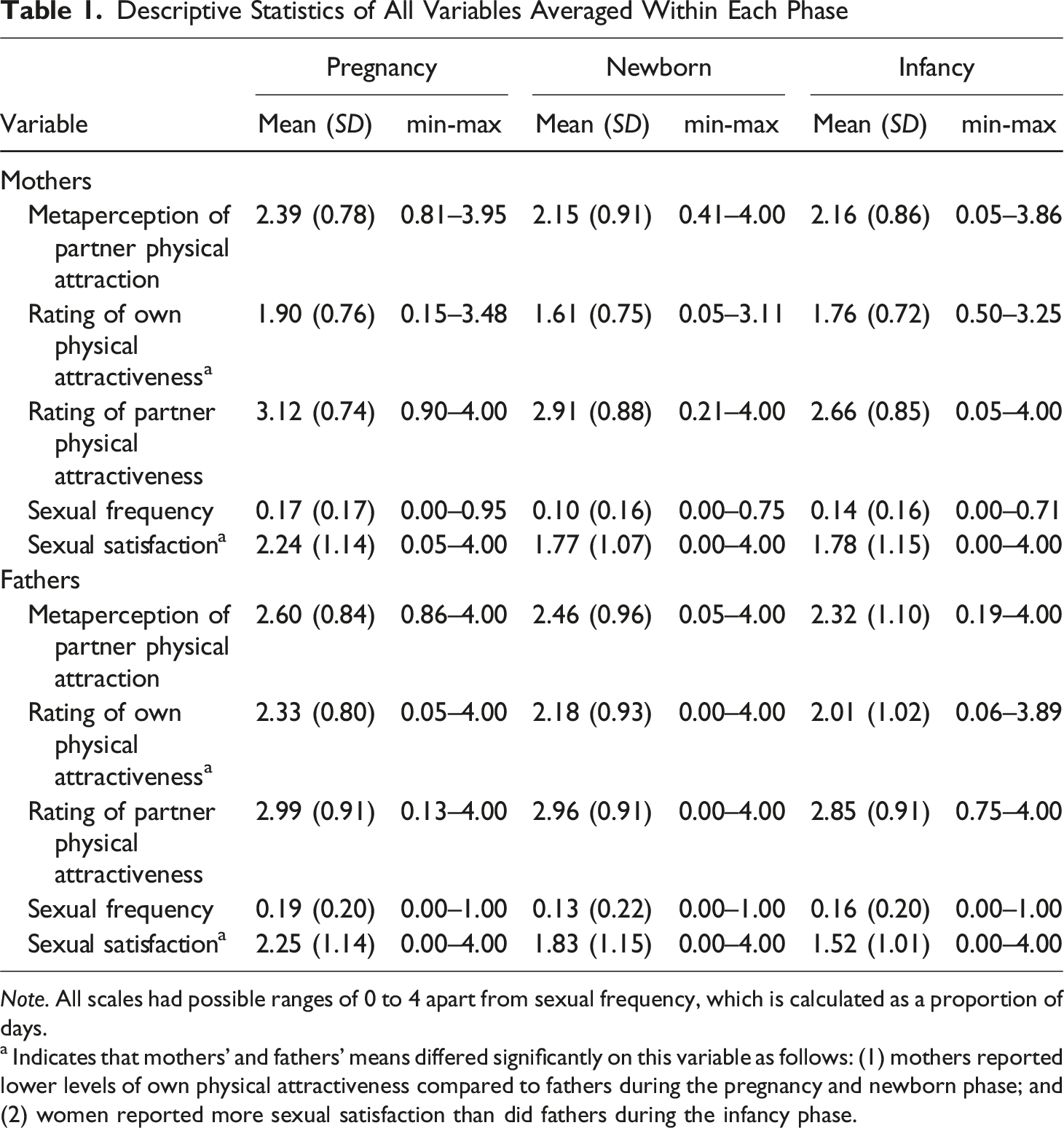
Note. All scales had possible ranges of 0 to 4 apart from sexual frequency, which is calculated as a proportion of days.
a Indicates that mothers’ and fathers’ means differed significantly on this variable as follows: (1) mothers reported lower levels of own physical attractiveness compared to fathers during the pregnancy and newborn phase; and (2) women reported more sexual satisfaction than did fathers during the infancy phase.
Examining Trajectories of Key Variables Across the Three Phases
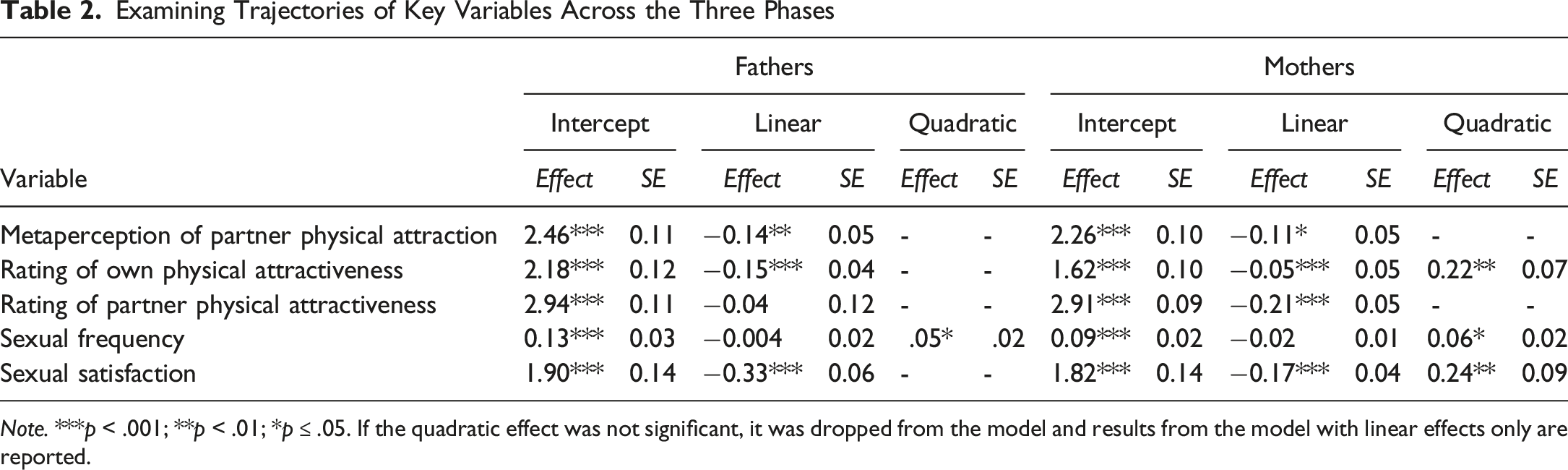
Note. ***p < .001; **p < .01; *p ≤ .05. If the quadratic effect was not significant, it was dropped from the model and results from the model with linear effects only are reported.
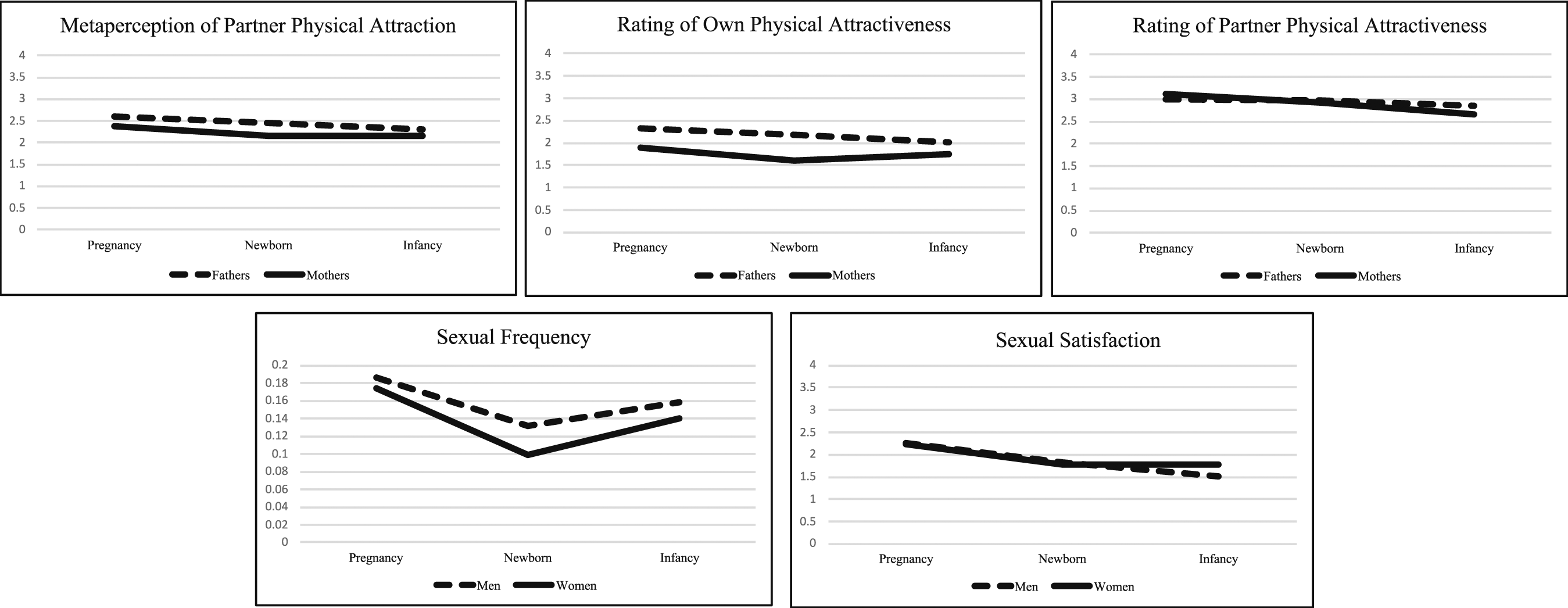
Average Within-Person Changes in Key Variables Across the Three Phases
Bias and tracking accuracy in parents’ perceptions of partners’ daily physical attraction
To examine whether new parents also exhibited changes in their tendencies to underestimate and/or accurately track their partner’s physical attraction to them across the transition, we estimated the degree of directional bias and tracking accuracy in new parents’ perceptions of their partner’s physical attraction to them across the three diary phases using the Truth and Bias Model developed by West and Kenny (2011):
Note that the above equation only presents mothers’ coefficients; the full model repeats these coefficients for fathers and the subscript m becomes an f. When the outcome is for a mother, all b coefficients with a subscript m are selected; when the outcome is for a father, all b coefficients with a subscript f are selected. The dependent variable MP jk represents an individual’s rating of how physically attractive they think their partner found them today for individual i (when i = 1; the outcome is for mothers; and when i = 2, the outcome is for fathers), in couple j on day k.
Following recommendations by West and Kenny (2011), the outcome variable (i.e., individuals’ metaperception of their partner’s physical attraction), individuals’ self-rating of own physical attractiveness, and partners’ reports of actual physical attraction to individuals were grand-mean centered on partners’ average rating of physical attraction across diary days; thus, all three variables were centered on the same mean. When using this centering strategy, the intercept for mothers and fathers (i.e., b0mj and b0fj) represents directional bias. A significant positive intercept suggests an overestimation of a partner’s physical attraction, whereas a significant negative intercept suggests an underestimation of a partner’s physical attraction. The b3mj and b3fj coefficients represent tracking accuracy, or the degree to which individuals accurately notice day-to-day changes in their partner’s physical attraction to them. The b4mj and b4fj coefficients capture the extent to which individuals’ own feelings of attractiveness are associated with their perceptions of their partner’s attraction. When estimating bias and accuracy, it is typically recommended to include this coefficient to statistically adjust for a potential similarity effect (i.e., assumed similarity), as doing so allows for a more reliable estimate of tracking accuracy (West & Kenny, 2011). Thus, we included this coefficient in all models, however, we did not interpret this effect.
To examine changes across the transition to parenthood, study phase was included as a main effect (b2mj and b2fj) and as an interactive term with both tracking accuracy (b5mj and b5fj) and the similarity effect (b6mj and b6fj). Notably, due to the unique centering strategy of the Truth and Bias Model (West & Kenny, 2011), the main effect of study phase indicates whether it is associated with directional bias (i.e. the intercept). The model also adjusted for diary day within each wave (b1mj and b1fj) and included random effects for the directional bias, tracking accuracy, and similarity effect coefficients.
Do Directional Bias and Tracking Accuracy Change Across the Transition to Parenthood?
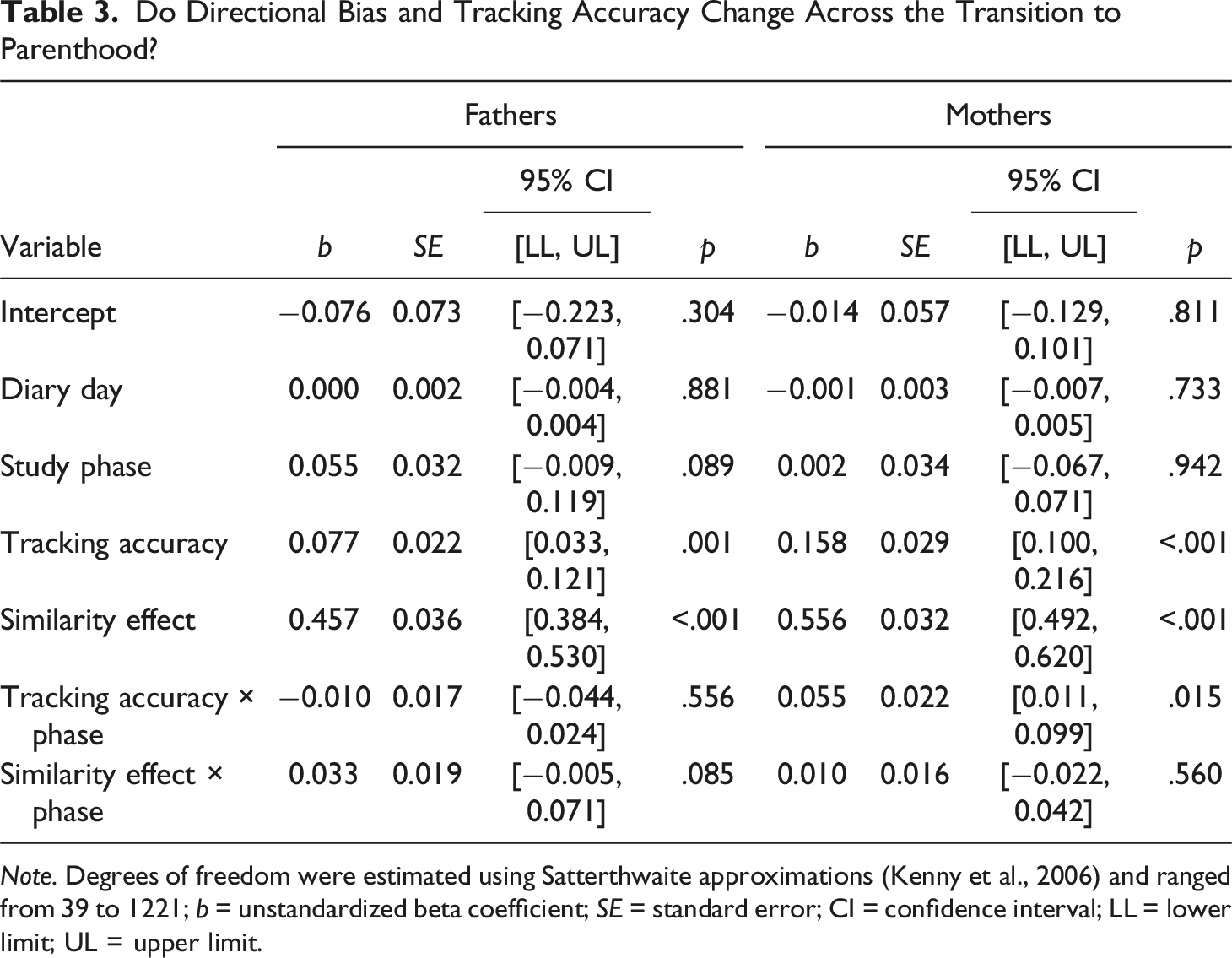
Note. Degrees of freedom were estimated using Satterthwaite approximations (Kenny et al., 2006) and ranged from 39 to 1221; b = unstandardized beta coefficient; SE = standard error; CI = confidence interval; LL = lower limit; UL = upper limit.
Appearance insecurity, sexual frequency, and sexual satisfaction as moderators of bias and tracking accuracy
We next examined whether appearance insecurity, sexual frequency, and/or sexual satisfaction moderated the extent to which new parents exhibited bias and accuracy in their perceptions of their partner’s physical attraction across phases. For these analyses, appearance insecurity, sexual frequency, and sexual satisfaction were grand mean centered within each phase and added to the previously described model. The main effects of appearance insecurity, sexual frequency, and sexual satisfaction capture the effect of each variable on directional bias (i.e. the intercept). The interactions between each variable and the partner’s actual physical attraction capture the effect on tracking accuracy.
Appearance insecurity
Does Appearance Insecurity Moderate the Degree of Directional Bias and Tracking Accuracy in Individuals’ Perceptions of Their Partner’s Daily Physical Attraction to Them Across Phases?
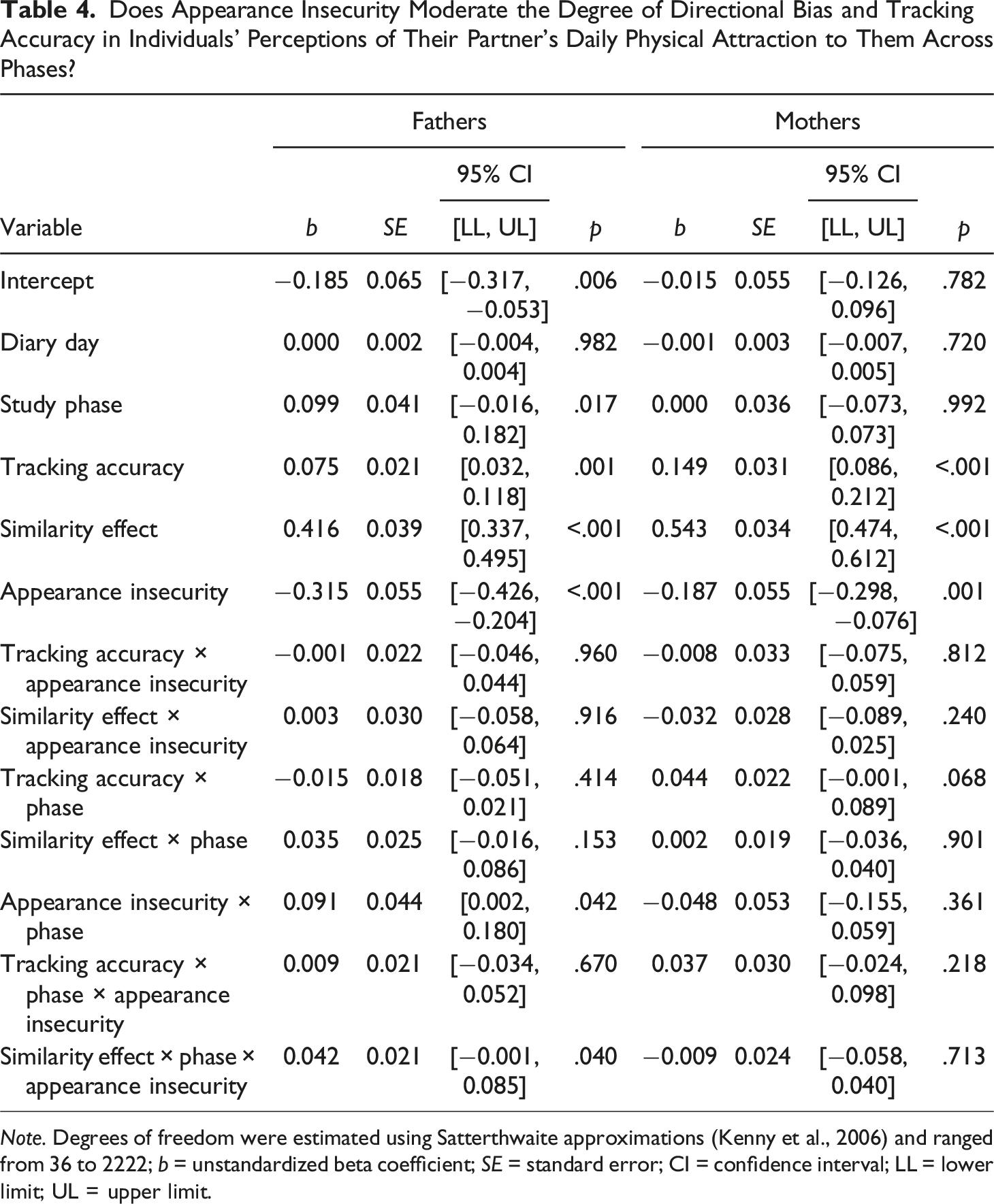
Note. Degrees of freedom were estimated using Satterthwaite approximations (Kenny et al., 2006) and ranged from 36 to 2222; b = unstandardized beta coefficient; SE = standard error; CI = confidence interval; LL = lower limit; UL = upper limit.
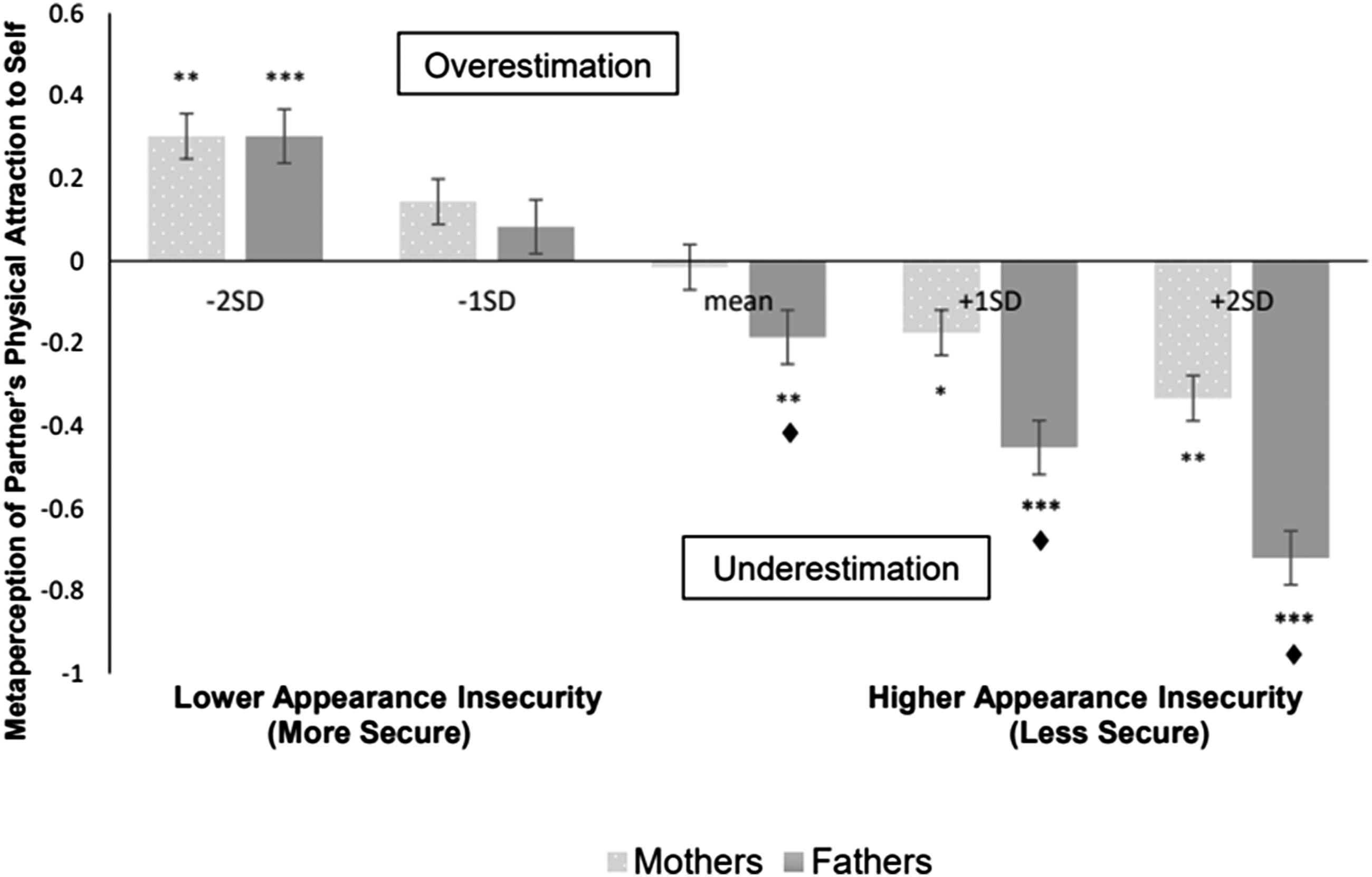
Association Between Appearance Insecurity and Directional Bias in Individuals’ Perceptions of Their Partner’s Daily Physical Attraction to Them Across Phases
Sexual frequency
Does Sexual Frequency Moderate the Degree of Directional Bias and Tracking Accuracy in Individuals’ Perceptions of Their Partner’s Daily Physical Attraction to Them Across Phases?
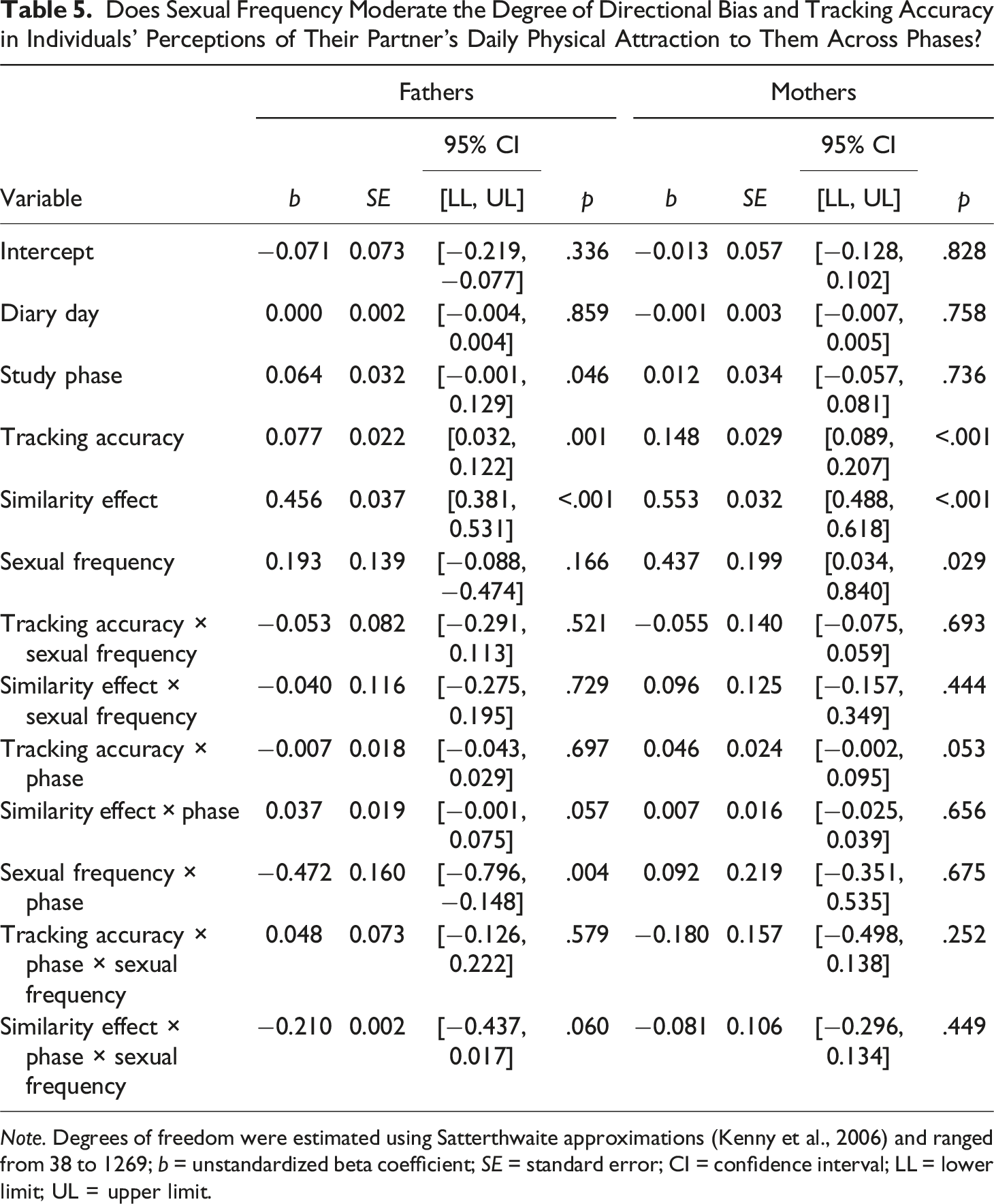
Note. Degrees of freedom were estimated using Satterthwaite approximations (Kenny et al., 2006) and ranged from 38 to 1269; b = unstandardized beta coefficient; SE = standard error; CI = confidence interval; LL = lower limit; UL = upper limit.
Sexual satisfaction
Does Sexual Satisfaction Moderate the Degree of Directional Bias and Tracking Accuracy in Individuals’ Perceptions of Their Partner’s Daily Physical Attraction to Them Across Phases?
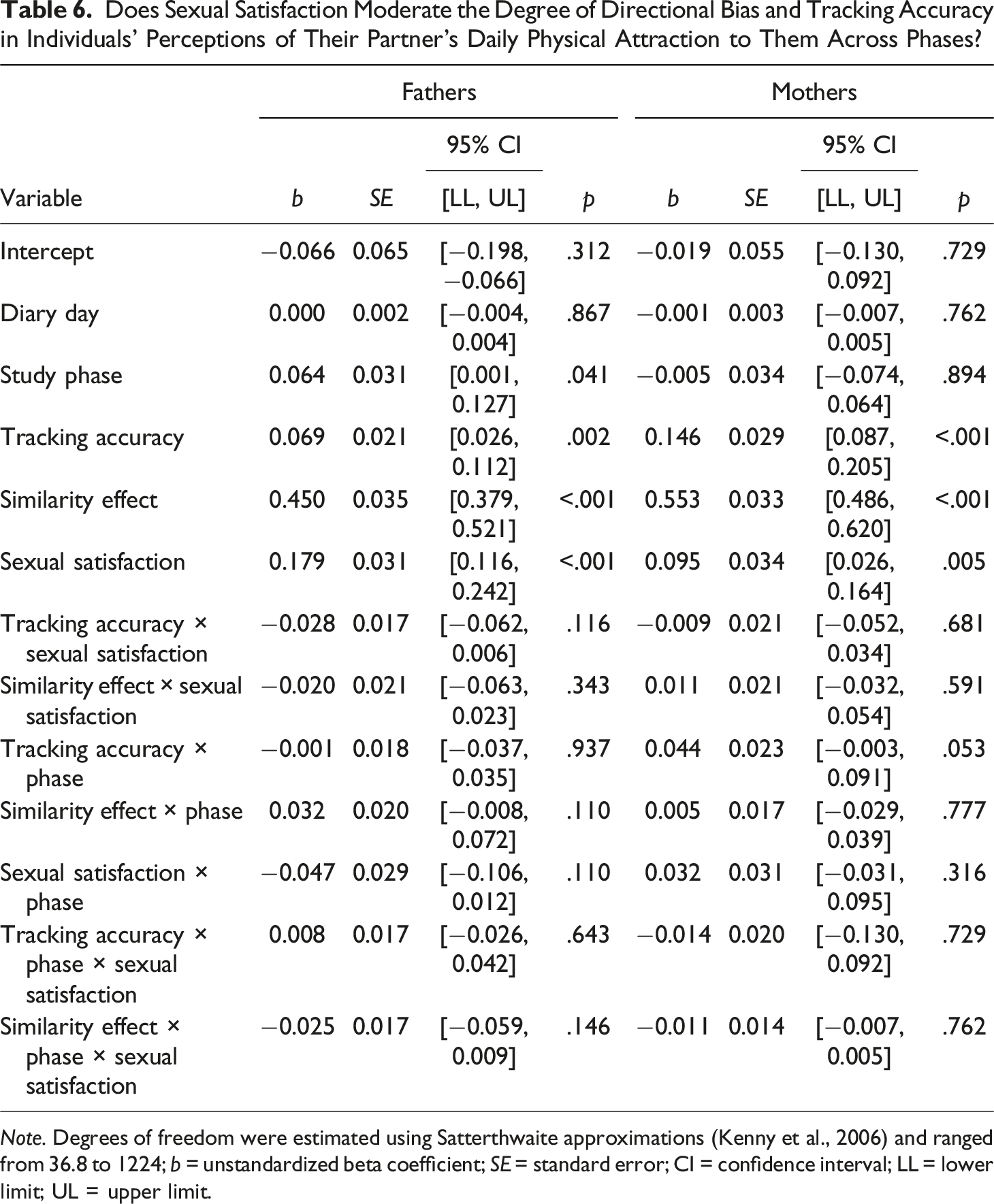
Note. Degrees of freedom were estimated using Satterthwaite approximations (Kenny et al., 2006) and ranged from 36.8 to 1224; b = unstandardized beta coefficient; SE = standard error; CI = confidence interval; LL = lower limit; UL = upper limit.
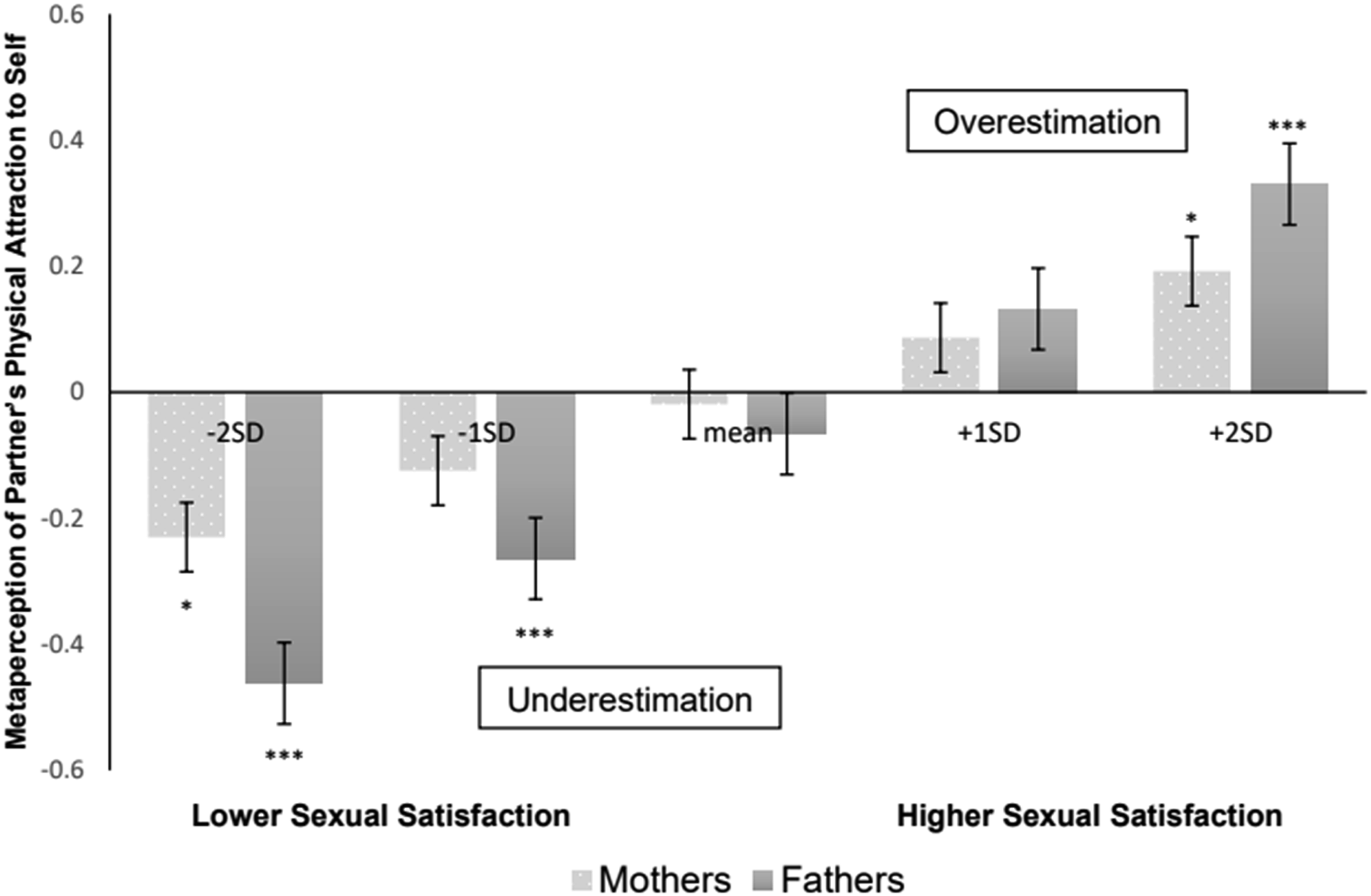
Association Between Sexual Satisfaction and Directional Bias in Individuals’ Perceptions of Their Partner’s Daily Physical Attraction to Them Across Phases
Discussion
The transition from pregnancy to the early phases of parenthood is a turbulent, yet underexamined period for first-time parents. To our knowledge, this is the first study to examine whether the appearance insecurities and disruptions to sexual intimacy commonly experienced during this time (Hodgkinson et al., 2014; Jawed-Wessel et al., 2017) may be linked to new parents’ day-to-day feelings of their partner’s physical attraction to them. Extending prior work, the current findings not only emphasize that both mothers and fathers may question their physical attractiveness during this pivotal life transition, but also highlight when misperceptions regarding a partner’s attraction are most likely to arise.
Changes in perceptions of a partner’s physical attraction across the transition
As new parents progressed from the pregnancy to early infancy stages, they generally perceived their partners as less physically attracted to them. Notably, these declining appraisals of a partner’s attraction did not appear entirely unwarranted, as new mothers, though not new fathers, also reported feeling less physically attracted to their partner over time. Moreover, analyses directly assessing the degree of directional bias and tracking accuracy in individuals’ perceptions of their partner’s physical attraction revealed that, contrary to our expectations, new parents did not exhibit significant directional bias in their perceptions of their partner’s physical attraction to them on average, nor did parents become more likely to underestimate their partner’s attraction to them over time. New parents did, however, accurately track day-to-day changes in their partner’s physical attraction to them within each phase, suggesting that mothers and fathers were noticing their partner’s evaluations of them. Furthermore, mothers, but not fathers, became increasingly attuned to those daily changes in their partner’s attraction over time, though this effect did not remain significant in models examining moderation among our factors of interest.
These findings, then, differ from prior work documenting a tendency for new parents to underestimate their partner’s attraction to them at nine months postpartum (Mickelson & Joseph, 2012). Given that the current study examined these ideas during the earliest phases of the transition to parenthood, the fact that couples were generally not biased in their perceptions of their partner’s physical attraction raises interesting questions about when during the transition these biases may emerge. It may be that concerns regarding a partner’s physical attraction become more pronounced once parents have moved beyond the initial turbulence of the earliest phases of new parenthood and have settled into more established routines. Thus, to pinpoint the onset of potential misperceptions, future work may wish to include additional assessments in the later phases of the transition.
Appearance insecurity and sexual dynamics as moderators of bias and accuracy
Although new parents were not biased on average, results did underscore the conditions under which misperceptions may occur. Unexpectedly, neither appearance insecurity, sexual frequency, nor sexual satisfaction were associated with new parents’ tracking of day-to-day changes in their partner’s physical attraction to them. However, and as expected, appearance insecurity and sexual satisfaction significantly moderated directional bias for both mothers and fathers across phases.
Appearance insecurities during the transition to parenthood
Interestingly, fathers’ ratings of their own physical attractiveness declined linearly over time while mothers’ self-rated attractiveness declined from the pregnancy to the newborn phases before leveling out between the newborn and infancy phases. As appearance insecurities are most often examined among new mothers (e.g., Hodgkinson et al., 2014), the fact that men’s appraisals of their own appearance suffered during this period offers a novel insight into fathers’ postpartum experiences. Additional analyses revealed that during phases when mothers and fathers felt more secure in their appearance, they overestimated their partner’s level of physical attraction. Conversely, when both mothers and fathers experienced greater insecurity about their appearance, they underestimated their partner’s physical attraction. By examining the association between appearance insecurity and directional biases over time during a critical period when appearance insecurity is in flux, the current study builds on work demonstrating these patterns cross-sectionally in general populations (Bowsfield et al., 2019; Hockey et al., 2022).
Notably, and contrary to expectations, the strength of the association between appearance insecurity and directional bias was stronger for fathers than for mothers. This finding complements the only other study to investigate appearance satisfaction among new fathers (Mickelson & Joseph, 2012), which found that men’s body satisfaction was more strongly linked to couples’ intimacy satisfaction at nine months postpartum than was women’s body satisfaction. Together, these findings add to a small, but growing literature underscoring men’s difficulties when adjusting to first-time fatherhood. For instance, recent work demonstrates that, similar to mothers, fathers may also be at risk of developing postpartum depression (Ansari et al., 2021). Concerns with one’s appearance may represent a particular challenge fathers face during this transition, and further understanding the implications of this appearance insecurity for fathers’ well-being and relationship happiness represents a compelling direction for future research.
Sexual dynamics during the transition to parenthood
Turning to couples’ sexual dynamics across the transition, couples’ sexual frequency declined from the pregnancy to the newborn phase, before rebounding from the newborn to infancy phase. Although mothers’ sexual satisfaction followed a similar pattern, fathers nonetheless felt increasingly sexually dissatisfied over time. While this finding aligns with some longitudinal patterns observed among fathers in prior work (Condon et al., 2004), other research found that most fathers remained highly sexually satisfied across the transition (Rosen et al., 2021). Hence, future work may wish to explore factors that could explain this heterogeneity in men’s appraisals of their sexual lives when becoming fathers, such as expectations for when their sexual lives will improve following the birth of their child.
Results also indicated that sexual frequency was not associated with new parents’ tendency to misperceive their partner’s physical attraction. However, as expected, during phases in which new parents felt less sexually satisfied, they were more likely to underestimate how physically attracted their partners were to them. Contrary to predictions, the strength of this association did not significantly differ between mothers and fathers. Although research often focuses on fathers’ concerns regarding sexual disruptions during new parenthood, this lack of gender difference supports recent work indicating that feelings of sexual satisfaction may be just as relevant for women’s relationship well-being as they are for men (McNulty et al., 2016). Moreover, these findings suggest that during the earliest phases of the transition to parenthood when sexual disruptions are normative, mothers’ and fathers’ evaluations of their sexual lives, rather than the frequency of sexual activity per se, may be more meaningful for their understanding of their partner’s physical attraction.
This idea complements research suggesting that couples who recognize the distinct and temporary circumstances that often characterize the transition to parenthood are also more resilient to changing relationship dynamics across the transition (Kluwer, 2010). Consistent with work revealing that couples who can attribute their relationship issues to external stressors tend to fare better during turbulent time periods (e.g., Neff et al., 2022), it may be that during times when new parents are able to attribute any disruptions to their sexual lives to the unique nature of the transition, they appraise their sexual lives more positively. However, during times when couples appraise any sexual disruptions as especially unsatisfying, they may also be more likely to misperceive that a partner is less physically attracted to them. Future work should explore the role of attributions on the new-parent sexual relationship and whether attributions change across the transition to parenthood.
Strengths and limitations
The current study is the first to offer an intensive longitudinal and dyadic representation of couples’ physical attraction appraisals during the very early phases of the transition to parenthood. This work is especially noteworthy considering the sensitivity of the time period, which prior studies have predominantly explored using cross-sectional and retrospective designs. However, the intensity of participating in the study led to a smaller and somewhat homogenous sample of new parents. Although notable effects were detected within this sample, it is important that future work investigate these effects using larger and more diverse new-parent samples.
Conclusion
Theories of relationships call attention to the fact that individuals’ own insecurities can influence their perceptions of a partner’s regard (Murray et al., 2006). The transition to parenthood is a context particularly suited for examining this idea, as this is a time of rapid physical changes and altered sexual dynamics, and thus can be a turbulent period when couples may be especially sensitive to a partner’s attraction. The current study leveraged these unique circumstances to highlight broad patterns of change in appearance insecurity and sexual satisfaction over time, and the ways these factors moderate new parents’ perceptions of their partner’s physical attraction. These findings advance our understanding of individuals’ appraisals of their partners’ physical attraction to them during a critical, yet normative life stage.
Supplemental Material
Supplemental Material - Do you still find me physically attractive? Partners’ daily perceptions of attractiveness during the transition to parenthood
Supplemental Material for Do you still find me physically attractive? Partners’ daily perceptions of attractiveness during the transition to parenthood by Rachel S. Blickman, Marci E. J. Gleason, and Lisa A. Neff in Journal of Social and Personal Relationships
Footnotes
Declaration of conflicting interests
The author(s) declared no potential conflicts of interest with respect to the research, authorship, and/or publication of this article.
Funding
The author(s) disclosed receipt of the following financial support for the research, authorship, and/or publication of this article: Preparation of this article was supported by a grant from the United States-Israel Binational Science Foundation (Award Number 2013324) awarded to the second author.
Open research statement
As part of IARR’s encouragement of open research practices, the authors have provided the following information: Portions of this research were pre-registered. Although the data were drawn from a preexisting dataset for which the study design was not pre-registered, the study hypotheses and proposed analyses for this project were pre-registered. A fully anonymized dataset containing the primary variables used in this project is publicly available on OSF ( ). For a dataset complete with demographic information, please contact
Supplemental Material
Supplemental material for this article is available online.
References
Supplementary Material
Please find the following supplemental material available below.
For Open Access articles published under a Creative Commons License, all supplemental material carries the same license as the article it is associated with.
For non-Open Access articles published, all supplemental material carries a non-exclusive license, and permission requests for re-use of supplemental material or any part of supplemental material shall be sent directly to the copyright owner as specified in the copyright notice associated with the article.
